Tag: 2024

  • Keir Starmer – 2024 Speech on the Loyal Address

    Keir Starmer – 2024 Speech on the Loyal Address

    The speech made by Keir Starmer, the Prime Minister, on 17 July 2024.

    Thank you, Mr Speaker. I join the Leader of the Opposition in his tribute to His Majesty the King. It is so heartening to see him in his rightful place, delivering the Gracious Speech. I am sure that the whole House will not mind once again wishing him a speedy recovery. I also join the right hon. Gentleman in wishing Her Majesty the Queen a happy birthday.

    We also wish President Trump a speedy recovery from the appalling attempt on his life at the weekend. I spoke with President Trump on Sunday night, to pass on our best wishes and also to share our revulsion at the senseless violence which has no place in democracy. The last time that we debated the Loyal Address and I stood at the Opposition Dispatch Box, I could see for the first time the then new plaque, now behind me, commemorating the memory of Sir David Amess. I know how hard that loss was for Conservative Members. Now, standing on this side of the House, I can see for the first time, in front of me, the plaque to our dear friend Jo Cox, with her words that catch the air of this Chamber even more at a moment like this: “More in Common”. While our thoughts at this time are of course with President Trump and the American people, we cannot think that this is something that only happens elsewhere. We must heed the words of President Biden to lower the temperature of our democracy, work across our disagreements and find each other’s common decency.

    I congratulate the England football team on their achievements in the Euros, which the Leader of the Opposition and I were talking about this morning. Yes, the trophy eluded us again, but the team can be proud of another exceptional performance—something I am sure the whole House would be only too pleased to recognise. We pay tribute to Gareth Southgate, who shouldered the burden of national leadership with such dignity.

    This Government have been elected to deliver nothing less than national renewal, to stop the chaos of the past 14 years, turn the page on an era of politics as noisy performance, and return it to public service and start the work of rebuilding our country—a determined rebuilding, a patient rebuilding, a calm rebuilding. It is a rejection, in this complicated and volatile world, of those who can only offer the easy answer, the snake oil charm of populism. As the past 14 years have shown, that road is a dead end for this country. It does nothing to fix our foundations, and the British people have rejected it, as they have throughout our history.

    What people really want is change, and change is what this Government of service will deliver: a King’s Speech that takes the brakes off our economy and shows to the British people that politics can be a force for good; the vehicle for improving the lives of millions, no matter who they voted for.

    This is a day when we get on with the serious business of government, yet a House with no time for levity would go against the grain of our traditions, so it was fantastic to hear my hon. Friend the Member for Bootle (Peter Dowd) in such fine fettle today when he proposed the Humble Address. He spoke with great passion, as he always does, for his constituency, which is famous, as he mentioned, for the Antony Gormley sculptures on Crosby beach. That work of art is entitled “Another Place”: a collection of gently rusting figures for whom the tide is perpetually coming in—a solid grounding should my hon. Friend ever consider a career in the other place.

    I am sure that the House will agree that my hon. Friend is also one of the warmest and most generous Members. That generosity extended, ahead of a previous election, to an offer to hand-deliver Conservative leaflets—a commitment to the democratic process that should be applauded, not least because it resulted in a stonking increase in his majority for Labour.

    As anyone who knows my hon. Friend will confirm, although he does like to relax with a glass of wine and listen to Engelbert Humperdinck, for him family always comes first. The Leader of the Opposition referred to my hon. Friend’s daughter, and growing up he was cared for by his four sisters. Now, he is never happier than when he is with his grandchildren, who are convinced that he knows Mary Poppins personally—a belief that, I note, he has never discouraged. He has been a tremendous servant to our family—the Labour family—and we thank him for his outstanding speech today.

    The address was seconded by my hon. Friend the Member for Vauxhall and Camberwell Green (Florence Eshalomi). It was a fitting tribute for a royal occasion, as I am told that she is known as “Queen Flo” on Instagram. The House will know her as a tireless champion for her community, as well as a founding member of one of our most vital affiliates: the Labour friends of karaoke. In fact, I am reliably told that Queen Flo does a mean Queen Bee, which we look forward to hearing at Labour conference.

    Truly, it was a fantastic speech—another demonstration that my hon. Friend is a shining example of our movement. She was a young carer when growing up, and is a fighter for their causes, on AIDS and HIV, on the health inequalities that still deliver poorer outcomes for black women, and on sickle cell, which her late mum suffered from. I know what it is like to watch your mum move in and out of hospital as a child, so I respect and admire the way my hon. Friend now champions young people from poorer households and fights for the opportunities that they deserve.

    Perhaps most powerfully of all, my hon. Friend has spoken about her own experience of arriving at the scene of a stabbing, and has rightly demanded that we never allow ourselves to become desensitised to the tragedy of knife crime. As a fellow inner-London MP, I know how much this is hurting our city, as it is hurting towns and cities across the country. I know how much potential is lost, and how many families fear that their child could be next. So be under no doubt: turning the tide on this violence is absolutely central—a key mission that this Government of service will take on.

    Both speeches were in the finest traditions of this House. Let me follow the Leader of the Opposition and mark the passing of our colleagues in the traditional way. Since the last Gracious Speech, the Labour party has lost a stalwart of our movement with the passing of Tony Lloyd, who served, in 36 years of distinction, the communities of Rochdale, Manchester Central and Stretford. I had the chance to speak to Tony just days before he left us, when he was leaving hospital to go home. He knew that it was for the last time and that he would not see a day like this. Without being partisan, I can tell you that he would have loved to have seen the House set up as it is today. He would have told us, using his experience, to use every precious moment that we have to serve those communities that he held so dear. That is what he stood for: the best of our movement. He was a champion of politics as a force for good.

    That is the great test of our times. The fight for trust is the battle that defines our political era. It is a task not just for the Government but for the whole Parliament. We are all responsible for the tone and standards that we set. I want to thank the right hon. Gentleman, the Leader of the Opposition, because in every exchange that we have had since the election and in his words today, he has gone well beyond the usual standards of generosity. I thank him for that.

    In that spirit, this King’s Speech picks up some of the important business not concluded in the last Session. On football governance and the reduction of smoking, we hope to proceed in a manner that recognises the previous consensus. We will also carry forward the Holocaust Memorial Bill so that we build that memorial next to this Parliament and ensure that every generation reaffirms our commitment to “never again”.

    We will also honour the promises that I and the Leader of the Opposition made to the family of Martyn Hett and all the families affected by the horrific events in Manchester that day. Figen Murray, Martyn’s mum, walked 200 miles to tell us that Britain needs that law quickly. I told her then that she would get that from a Labour Government, and we honour that promise today. I am grateful for the indication of the cross-party support that we will have on that important provision, because the security of the British people is the most fundamental priority of any Government, and whether our fight is against terrorists, the vile criminal smuggling gangs that weaken our borders or foreign powers that threaten the security of this nation, we will leave no stone unturned when it comes to keeping the British people safe.

    We will recognise the bravery of those on the frontline of keeping us safe with a new armed forces commissioner. That is not just a name or a role, but a strong and independent champion for those who have committed to the ultimate service as a way in which we can show our respect.

    We will also move quickly on the lessons from the infected blood scandal that the House debated in almost the final act of the last Session: a day when we—all of us—undertook a solemn responsibility not just to deliver justice to those people, but to take on the work of prevention, to ensure that those lessons shape the future of public service in our country. Because scandals like infected blood, Windrush, Horizon and Hillsborough are united not just by the scale of the injustice, but by the indignity that the victims and their families have been put through merely for standing up for truth and justice. So it is high time to bring in a duty of candour—the Hillsborough law—because a Government of service must also be a Government of accountability and justice. That is what service means.

    Sarah Owen (Luton North) (Lab)

    I thank the Prime Minister for giving way during his excellent speech, outlining the hope and renewal within the King’s Speech, which is much needed in constituencies such as mine, Luton North, where over 45% of children are growing up in relative poverty. What reassurances can he give me and my constituents that he personally takes this issue seriously and that his Government will address it?

    The Prime Minister

    Let me reassure my hon. Friend and the whole House that I take child poverty extremely seriously. I am proud of the last Labour Government’s record on reducing child poverty; they clearly had a strategy, and we will have a strategy. I am very pleased to have announced today the taskforce that will lead our strategy to reduce child poverty. No child should grow up in poverty. We will work across the House on that issue.

    Stephen Flynn (Aberdeen South) (SNP)

    I am grateful to the Prime Minister for giving way on his newly announced taskforce, which Beth Rigby announced on Twitter as we were all in this Chamber. Can the Prime Minister outline how many children will remain in poverty while that taskforce undertakes its work, which ultimately will lead to the same conclusion that we are proposing—to scrap the two-child benefit cap?

    The Prime Minister

    I do welcome this, and I know that it is an issue across the whole House—I do not think there is a single Member who does not care about child poverty. The point of the taskforce is to devise a strategy, as we did when we were last in government, to drive those numbers down. It cannot be a single issue, but one that crosses a number of strands, and we will work with people across the House in order to tackle it. What matters is the commitment to drive those numbers down. That is what we did when last in government, and we will do it again.

    Graham Stuart (Beverley and Holderness) (Con) rose—

    The Prime Minister

    I will make some progress and then give way.

    I respect the tone of the Leader of the Opposition’s contribution, but I cannot stop my mind from wandering back to nine months ago when he was at this Dispatch Box. His great political hero, Nigel Lawson, once said, “To govern is to choose.” Every day serving the people of this country is a chance to make a difference for them. The last King’s Speech was the day when the veil of his choices slipped, and we all saw his party content to let our country’s problems fester and to push aside the national interest as they focused almost entirely on trying to save their own skins.

    We will have time over the weeks, months and years ahead to debate the measures in this King’s Speech and the choices of this Government, but I defy anyone on the Opposition Benches or elsewhere to look at the ambition and purpose of our intent and not to see a return to the serious business of government. No more wedges issues; no more gimmicks; no more party political strategy masquerading as policy. This is an agenda focused entirely on delivering for the people of this country—legislation for the national interest that seeks only to fix our foundations and make people better off, and to solve problems, not exploit them.

    Graham Stuart rose—

    The Prime Minister

    I will just make some progress.

    With each day that passes, my Government are finding new and unexpected marks of their chaos: scars of the past 14 years, where politics was put above the national interest, and decline deep in the marrow of our institutions. We have seen that in our prisons, writ large. We have seen it in our rivers and seas, even worse than we thought. We have seen it in our councils, pushed to the brink by the previous Government and now unable to deliver even basic services to children with special educational needs. We have already taken the first steps on so many of the priorities we put before the British people. The work of change has begun, but we know—as they do—that national renewal is not a quick fix. The rot of 14 years will take time to repair.

    Graham Stuart

    I am grateful to the Prime Minister for giving way. He talks about priorities. Of course, people in rural communities around the country see the vast majority that the right hon. and learned Gentleman has assembled, and they are afraid. They see a manifesto in which just 87 words are about farming. They see a King’s Speech with no mention of rural communities or priorities. Will the Prime Minister please take this opportunity to reassure people in rural and farming communities that his Labour Government will take notice of them?

    Mr Speaker

    Order. Interventions are one thing, but this is not the best time to actually make a speech.

    The Prime Minister

    Let me take this opportunity to reassure those in rural communities. I grew up in a rural community myself. If we look at the places now represented on the Labour Benches, we can see the reassurance that has been given and will be given again.

    The King’s Speech that we have brought to the House today is a marker of our intent: not only a certain destination for the future of this country, but a new way of governing; a Government of service guided by clear missions, with a long-term plan to fix the foundations; a plan that starts, as it must, with our economy. Under the watch of the right hon. Member for Richmond and Northallerton (Rishi Sunak), the last Parliament was the first in modern history to leave living standards in a worse place than it found them—the consequence not just of Tory irresponsibility, but of a more pervasive inability to face the future; a ducking of the hard choices; eyes fixed always on the horse trading of Westminster politics, rather than the long-term national interest.

    Dr Luke Evans (Hinckley and Bosworth) (Con)

    Will the Prime Minister give way?

    The Prime Minister

    I will in a moment.

    We do not just turn the page on that today; we close the door on it forever. The Budget responsibility Bill will protect the living standards of working people from the chaos they endured under the last Government—a commitment, no matter how fierce the storms, to economic stability as the foundation we build on. That is a changed Labour party at work. And then, on that foundation, we take the brakes off Britain and go further and faster on measures to generate higher economic growth—workers and business united in the cause of wealth creation. We will reform the planning rules, a choice ignored for 14 years, to build the homes and infrastructure that Britain needs. We will level up rights at work, a choice ignored for 14 years, to deliver security and dignity at work. We will create a new industrial strategy; invest in cleaner, cheaper British energy; harness the power of artificial intelligence; improve our public transport; confront our historic challenges on technical education; transform our skills agenda in partnership with business; and push forward devolution to the cities, regions and councils of England. A plan for wealth creation that will finally lead us out of the pay more, get less doom loop that is the last Government’s legacy.

    Let me be clear: we will work with anyone invested in the future of our country.

    Dr Luke Evans

    Will the Prime Minister give way on that point?

    The Prime Minister

    I will just complete this point.

    I said that we would serve everyone, whether they voted for us or not, and I meant it. Let me say directly to those on the Opposition Benches that if you are invested in the success of your community, we will work with you. This is a new era. We are turning the page, returning politics to service, because that is what the people of this country want to see from their politicians. And service is a stronger bond than political self-interest. That is what “country first” means—the only way we can restore trust and the reason this Government of service were elected.

    We were also elected to repair our public services with investment and reform to make them once again beacons of justice for the communities they serve—a signal to our country of the cause that fires national renewal. My determination is for everyone in our country—England, Scotland, Northern Ireland, Wales; no matter where they started in life—to feel that success belongs to them. It is a cause that I believe unites this House and indeed the people of this great nation.

    Jim Shannon (Strangford) (DUP)

    Will the Prime Minister give way?

    The Prime Minister

    I will. [Hon. Members: “Hooray!”]

    Jim Shannon

    May I commend the Prime Minister? There are many in this House, on both sides of the Chamber—not only in his party, but on the Opposition Benches—who welcome his election as Prime Minister and look forward to the delivery of some feel-good factor for all of this great nation of the United Kingdom of Great Britain and Northern Ireland. Better together is what I always say. Perhaps even those in the Chamber who have different ideas think the same. In my provincial paper two weeks ago, it was recognised that Northern Ireland was very much part of the Prime Minister’s 10-year plan. Will he outline exactly what that plan will be for Northern Ireland? Can he ensure us that our position will never weaken and always get stronger?

    Mr Speaker

    Jim, you will definitely be at the bottom of the list now—don’t worry!

    The Prime Minister

    I am grateful for that intervention. It was very important to me, and to my Government, that within days of being elected I went to Scotland, Northern Ireland and Wales with that message about working together. As the hon. Gentleman will know, I worked in Northern Ireland for five years on reforms to the Police Service in Northern Ireland. It matters to me that we make progress on all matters across all our nations, and that is the way in which we will operate as a Government. It was a statement of intent that I made in those early days, and let me say, in direct answer to the hon. Gentleman’s question, that I will continue in that vein.

    As well as maintaining our plan to cut waiting times, we will modernise the Mental Health Act 1983 and finally drag it into the 21st century. We will raise standards in our schools and improve the confidence, the wellbeing and the happiness of our children, because that is so often the barrier that holds them back. We will also work on landmark legislation on race equality, and tackle the structural injustice of unfair, discriminatory pay. Britain has come a long way on such matters—one look at this Parliament shows that we are moving forward, and I recognise the efforts of so many in this House, on all sides, to tackle this injustice—but we can still do more, and therefore we must and we will. We will also begin work on banning conversion practices, and will bring forward tough new protections for renters. Those are promises that have lingered in the lobby of good intentions for far too long.

    We will signal our intent to transform society with measures on crime and justice that will not only rid our streets of antisocial behaviour, but launch a new mission to reduce violence against women and girls by 50%. In this, we are inspired by the work of unbelievable campaigners: Mina Smallman, Claire Waxman, Melanie Brown, and my friends John and Penny Clough. I will never forget the day John and Penny came to my office and told me what they had been through just to get justice for their daughter Jane, murdered in the car park of the Blackpool hospital where she worked by the man awaiting trial on multiple charges of raping her. I gave them my word then that I would do what I could, not just for John and Penny and Jane but for all the Johns, Pennys and Janes in our country; but it is an enormous undertaking. I wish it were not, but it is. Just listen to the contribution made every year in this House by my hon. Friend the Member for Birmingham Yardley (Jess Phillips), a grim reminder of just how many women are killed every year by domestic violence. And yet, as everybody who works in public service knows, Government can make or break a life. I have seen it myself, as a public servant, and I also know from those campaigners what service can do when it listens and empowers people far beyond the walls of the state.

    So this is how we will go about our business: mission-driven, focused on ambitious goals, bringing together the best of our country, committed to the practical difference—big and small—that we can make together. That is the reward and the hope of service, the business of change, and the work of this Government of service that we will take on. We will stop the chaos, fix our foundations, and take the brakes off Britain. This is a King’s Speech that returns politics to serious government, that returns government to public service, and that returns public service to the interests of working people. That is the path of national renewal, the rebuilding of our country, and we take another step today.

  • Rishi Sunak – 2024 Speech on the Loyal Address

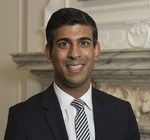
    Rishi Sunak – 2024 Speech on the Loyal Address

    The speech made by Rishi Sunak, the Leader of the Opposition, in the House of Commons on 17 July 2024.

    Before I turn to the Address, I am sure the whole House would like to join me in paying tribute to His Majesty the King. It is typical of his dedication to duty that, despite the medical challenges he has faced, he was here today to open Parliament and will travel to the Commonwealth Heads of Government meeting in Samoa and to Australia this autumn. The King is a true model of public service. I know the Prime Minister will value his audiences with His Majesty as much as I did. We all recognise that the King is aided by the constant support of Her Majesty the Queen, and I know the whole House will join me in wishing her a very happy birthday.

    Today we also pay tribute to Tony Lloyd. Tony served the people of Greater Manchester for 45 years, and for 36 of those as a Member of this House. He was a great parliamentarian, kind and wise. His family should have enormous pride in the contribution he made to this place and to the community he loved and served. They are in all our thoughts today.

    I welcome all new Members to their places. Being elected as a Member of Parliament is a great honour and a great responsibility. We serve our communities and our United Kingdom. I know, whatever our political differences might be, we are all motivated by a desire to make life better for our constituents and to make our country stronger. I know the whole House will join me in deploring the assassination attempt on President Trump. Our thoughts are with the victims. Violence and intimidation have no place in the democratic process.

    I commend the proposer of the Address on his excellent speech. I know the whole House will agree that the hon. Member for Bootle (Peter Dowd) has set a high bar for speeches in this Parliament. My little sister always reminds me that being the youngest means having to learn how to make oneself heard—well, the hon. Gentleman is the youngest of eight, and it really shows. I had the good fortune to get to know him when he was shadow Chief Secretary to the Treasury, and he was always courteous and pleasant as my opposite number. As he outlined, he comes from a family committed to public service. Both his great-uncles were Members of this House and, although he was very modest about it, he has been in public service for more than 40 years. The new Members of the House have much to learn from him. I know that I speak for the whole House in saying how much we all admire his personal bravery in campaigning for more victim support following the tragic death of his daughter in a hit-and-run accident.

    Not only is the hon. Gentleman one of the more popular Members of the House, as we heard, but he is also the most popular constituency MP, enjoying the biggest majority of any Member of this place. In a recent election, he even won an astonishing 84% of the vote. He might be the only person who can persuade Kim Jong-un of the benefits of democracy—although “The People’s Republic of Bootle” doesn’t quite have the same ring to it.

    I wonder whether the hon. Gentleman was chosen to speak today to head off the reintroduction of his ten-minute rule Bill. I speak of course of his Bill for a four-day week. I am not sure whether he has consulted his Whips on how compatible that would be with their desire to make Fridays a new norm sitting day. I will say this to him: if they will not let him have his ten-minute rule Bill, he should work to rule—although I suspect that as a Labour Member for Merseyside he needs no tips on trade union organising from a former banker.

    The hon. Member for Vauxhall and Camberwell Green (Florence Eshalomi) spoke with typical verve. She is inspired by a desire to serve and her strong faith, but she never lets any of this go to her head. Today, she was chosen because of the high regard that she is held in, but she is also one of the kindest Members of this House, regularly baking Victoria sponges for her staff and others—although post the election result, perhaps red velvet might now be on the menu. She has campaigned bravely against gang violence, in both the London Assembly and this House, and she is so right that we must not become desensitised to knife crime. She represents the place where she grew up, and does so with passion and determination.

    Now that I have a lot more time on my hands, I intend to be a regular visitor to the hon. Lady’s constituency—especially in the summer months. One of my favourite places to watch cricket is of course the Oval; as Prime Minister, I had the privilege of playing there with the wonderful Ebony Rainford-Brent and the young black cricketers of the African Caribbean Engagement programme. I applaud the hon. Lady for her work with that scheme. I can reassure her that I will not go as far as the last Conservative Prime Minister to speak from this Dispatch Box, who proposed removing that part of her constituency to a desert island, along with his eight favourite records.

    The hon. Lady’s story is truly an inspirational one. To go from caring for her mother as a teenager to being a Member of this House shows what is possible in our country. But the online abuse that she has received—an experience that is far too common in this House—shows one of the challenges facing our democracy. The intimidation that some candidates received in this election, both physical and digital, was completely unacceptable and is a threat to our electoral process. There can be no excuse for threats of physical violence or intimidatory protests outside politicians’ homes.

    The hon. Lady will have been picked to second the Loyal Address because the Whips Office has her down as one who will go far. May I offer some words of advice to Labour Members? On the Government Benches, life comes at you fast. Soon, you might be fortunate enough to be tapped on the shoulder and offered a junior ministerial role. Then, you will find yourself attending Cabinet, and then in the Cabinet. Then, when the Prime Minister’s position becomes untenable, you might end up being called to the highest office, and before you know it, you have a bright future behind you and are left wondering whether you can credibly be an elder statesman at the age of 44. [Laughter.]

    It is right to begin by congratulating the Prime Minister on his decisive victory in the election. He deserves the good will of us all in this House as he takes on the most demanding of jobs in the increasingly uncertain world in which we now live. The Labour party has successfully tapped into the public’s desire for change, but it must now deliver change, and we in the Opposition will hold it accountable for delivering on the commitments that it made to the British people.

    In the national interest, we will not oppose for the sake of it, but when we disagree with the Government, it is our responsibility as the Opposition to say so. What will guide us will be our principles: sound public finances; a belief that people know how to spend their own money better than Governments do, and that private enterprise, not state intervention, is the key to delivering growth and prosperity; public services that work for those who need them; an education system that gives everyone the best start in life; secure borders; and a strong national defence.

    I welcome the Government’s decision to bring forward Martyn’s law. I am sure that the Prime Minister will find, as I did, that one of the most humbling parts of the job is seeing people whose lives have been touched by tragedy not turn to anger or bitterness, but campaign to ensure that other families do not have to endure the same pain. I particularly commend Figen Murray for her work to get this law on to the statute book. I can assure her that this measure will command consensus in this House, and we will work with the Government to make sure that it becomes law as soon as possible.

    I am also glad that the Government will continue with plans for a smokefree generation. I know there are deeply held views on both sides of this issue, and I have deep respect for those—especially on my own Benches—who disagree with me on this question. Measures that end access to products are never easy, but I believe that ensuring that our children can be the first generation that does not have to suffer the false choice between quitting smoking and not, because they will have never started, is a truly worthy aim. It will make us a healthier, fairer country where people live longer and better lives.

    The first duty of Government is the defence of the realm, and we are fortunate in our country to be protected by armed forces who are unrivalled in the world for their professionalism, bravery and skill. I know the whole House will agree that they are truly the best of us.

    Every month in my previous job, I became more concerned about the threats to our country’s security. We live in an increasingly uncertain world. We need greater investment in our military if we are to deter our enemies and defend our interests. As I warned earlier this year, there is an axis of authoritarian states that are a threat to our values—freedom, democracy and the rule of law—and we must collectively stand up to them. The world is more dangerous now than it has been at any time since the end of the cold war, so I urge the Prime Minister to commit to boosting defence spending to 2.5% of GDP by 2030. If we lead the way on this issue, we can make 2.5% the new NATO benchmark for defence investment. That is the single best way to strengthen the alliance. It would show the Americans that we do not expect them to bear every burden, and would show President Putin that NATO is serious about bolstering its defences, and be the most effective way to deter further acts of Russian aggression.

    In the past few years, there has been an impressive amount of consensus across the House on foreign policy—on the importance of supporting Ukraine, and on the centrality of NATO to our national defence. In that spirit, I commend the Prime Minister for his work at the NATO summit, and I am glad that he and the Secretary of State for Defence have taken such rapid steps to demonstrate that, although the Government have changed, this country’s commitment to Ukraine’s security remains constant. I also welcome the visit of the right hon. Member for Tottenham (Mr Lammy) to the middle east. It is of fundamental importance to this country that, as we make real progress towards a two-state solution, our friend and ally Israel has a right to defend itself and to live in peace.

    Let me turn next to another crucial issue facing not just our country but the broader western world: illegal migration. The fundamental question is what to do with people who arrive here illegally but cannot be returned to their home country. Our approach was to send them to a safe third country; the Prime Minister was clear that he would scrap those plans, and I acknowledge that. Our fear remains that without such a deterrent the country will end up having to accept that a large number of those who cross the channel illegally will end up remaining here. How to prevent that is something that the Government, I know, will soon look to address. When it comes to legal migration, I urge the Home Secretary to retain the measures that we implemented, which are forecast to halve net migration in the next 12 months.

    If I may turn next to the economy, I understand well that the Chancellor is keen to paint as bleak a picture as possible, but I would gently point out that that is not exactly what the facts say. With inflation at 2%, unemployment at 4% and the fastest growing economy in the G7 so far this year, the Labour party has inherited an economy that is already on an upward trajectory.

    The Government have set out plans to strengthen the role of the Office for Budget Responsibility, and we will examine those proposals carefully, but the work of the OBR already means that Labour Members had the full details of the public finances when they set out their manifesto. The OBR has rightly taken away from Governments the ability to make forecasts say what they want them to say, but that has also taken away from Oppositions coming into government the ability to say that they did not know the true state of the public finances. As Paul Johnson of the Institute for Fiscal Studies has said:

    “The books are wide open, fully transparent.”

    In his words, trying to pretend that things are worse than expected “really won’t wash”.

    Labour Members promised no tax rises on working people and no plans for tax rises beyond what is in their manifesto in full knowledge of the public finances. It would be difficult for them to claim that things are worse than they thought and then renege on those pledges, and we will hold the Government to their promises come the Budget.

    I note the plans for new employment legislation. In this country, our unemployment rate is far lower than the European average, and that is thanks in part to our flexible labour market. I urge Labour not to impose new burdens on businesses. Business leaders themselves have warned of the unintended consequences of those plans—that they could lead to firms being less likely to invest and less likely to hire, so increasing unemployment in the long term.

    I further note the Government’s desire to impose new, potentially rigid legislation on technologies such as artificial intelligence. We are third only to the US and China in the size of our fast-growing technology sector, and we lead the world when it comes to AI safety. We should all in this House be careful not to endanger this country’s leading position in this field, which will drive growth and prosperity for decades to come.

    Although today’s King’s Speech contained a slew of Bills, what was missing was a concrete plan to tackle the unsustainable post-covid rise in the welfare bill. Without action, the cost of providing benefits to the working-age population with a disability or health condition will rise to £90 billion—more than we spend on our national defence, schools or policing. That is not only unsustainable, but unfair to taxpayers. That is why in government we had laid out a plan to reduce the welfare bill significantly, but crucially to support all those who could do so to go back into work. I hope the Government look at those proposals when they have the time to study them in detail. On the Conservative Benches we will continue to advocate for a welfare system that is compassionate and fair to those who need it, but fair too to those who pay for it.

    The Government have set out plans to change the planning system. We will of course study those thoroughly as well, as we all wish to see more homes built and the planning process speeded up. However, I would say that a system that does not allow local people to have a say will damage public consent for more housing in the long term. I regret that there was no mention in the King’s Speech of farming and rural communities, much like my own, but I hope in time that the Government will bring forward proposals.

    Turning to net zero, this country has decarbonised quicker than any other major country, and we have managed to do that while growing the economy. As a country and across this whole House, I know we will all be proud of that achievement. The Government plan to decarbonise the grid by 2030, but there is a real danger that, if the Government put the speed of doing that ahead of family finances and our energy security, we will again lose public consent for the measures necessary to ensure that we actually reach our 2050 net zero target—a target on which there is genuine consensus between our two parties. As even one of the Prime Minister’s own supporters has warned, this 2030 plan

    “just means we have to import our energy. Strategically we become more vulnerable. We pay more money for our energy.”

    I hope that the Energy Secretary reflects on those thoughts.

    Lastly, the Government have set out plans for reforms to the other place. Looking at the Government Benches, there can be no doubt about their ability to get them through this House, but the effects of the changes will last long beyond this Parliament and long beyond our tenures in these jobs. I would suggest that, when it comes to constitutional reform, it would be good to proceed on a cross-party basis, rather than to use a simple majority in this House to push things through. That consensus should include the Cross Benchers, whose convenor would be removed by the Government’s proposals.

    I also suspect that the public would prefer the Government to prioritise practical, real-world issues over constitutional wrangling. However, I welcome the news that the Government have paused their plan to force Members of the other place to retire at 80. That proposal always felt like it would be a blunt instrument. Indeed, in the Dissolution honours, the Prime Minister nominated, rightly, the former right hon. Member for Derby South, who will be a strong addition to the other place, despite the right hon. Lady being already over the retirement age that the Labour manifesto proposed.

    Let me close by saying that we of course recognise that the British people have entrusted the Labour party with the task of governing our country. On our side of the House, we will fulfil our duties, as the loyal Opposition, professionally and effectively. Across this House, we are all, first and foremost, patriots. We all wish to see our country and our people flourish and succeed. In that spirit, I wish the new Prime Minister and the new Government well.

  • Florence Eshalomi – 2024 Speech on the Loyal Address

    Florence Eshalomi – 2024 Speech on the Loyal Address

    The speech made by Florence Eshalomi, the Labour MP for Vauxhall and Camberwell Green, in the House of Commons on 17 July 2024.

    May I start by congratulating my hon. Friend the Member for Bootle (Peter Dowd) on his fantastic speech? As the eldest of three girls, we like the last ones because we can blame them for everything.

    It is an honour to follow my hon. Friend and to second the Loyal Address, not only for me but for my constituents across Vauxhall and Camberwell Green. When I was asked by the Chief Whip, my excitement was quickly replaced by fear because I remembered my attempt to make a Big Shaq reference during Second Reading of the Procurement Bill, which went completely over the head of the hon. Member for Brentwood and Ongar (Alex Burghart) and indeed many other Members in the Chamber. I nearly backed out, but then I remembered that this is my opportunity to get on record that Nigerian jollof is the best jollof, before my hon. Friend the Member for Erith and Thamesmead (Abena Oppong-Asare) puts forward any other ideas.

    It is nearly 15 years since a Labour Member seconded a Loyal Address; the last Labour Member to do so was my right hon. Friend the Member for Islington South and Finsbury (Emily Thornberry), my good friend. I have to say that the notices I receive when she visits my constituency are perhaps my favourite. I remember receiving a note from her office saying that she was going to tour the Beefeater Gin Distillery in my constituency the next evening and that I should join her. Sadly, I do not drink gin—but I know that she drank my share! I can only say that I look forward to welcoming other Members to my constituency many more times during this Parliament. Can I remind all Members that it is their duty to let me know if they are attending one of the many fabulous parties in Vauxhall and Camberwell Green—otherwise I will be complaining to Mr Speaker.

    It truly is a wonderful constituency. We have the National theatre, the British Film Institute, the Southbank centre, the Young Vic and the Old Vic, which is currently hosting a play about the life of an MP in which James Corden turns out to be one of their constituents—although I believe he lives in California, so perhaps he should get in touch with the Leader of the Opposition.

    We also have the London Eye. I am sure the whole House will be delighted to know that it received permanent planning status in May this year. That keeps it safe even from the clutches and planning reforms of the Chancellor and the Deputy Prime Minister. We have communities from all over the world. Even among the sea of England shirts on Sunday, there were a few brave Spanish fans proudly wearing their colours—although they may have just been SNP MPs.

    We are also home to a number of MPs, advocacy groups and journalists, which means, when I am trying to avoid a journalist or to politely decline an invitation, I often get hit with the dreaded line, “Oh, but I am a constituent as well”. I do warn journalists and Members that I shall continue my policy of giving no special treatment when they come up to me with any casework.

    Like many continuing MPs, the area that I represent changed significantly at this election following the boundary review. Sadly, this means that I no longer represent one of the Brixton estates that I grew up on, my church and my old primary school. The church is central to my life and it is a microcosm of Lambeth. After mass, I can see the impatience on the faces of my family as I often discuss varied casework from the congregation. I just want to reassure my hon. Friend the Member for Clapham and Brixton Hill (Bell Ribeiro-Addy) that she is going to receive multiple blessings for all that varied casework. I know the wards that I have lost will be well represented by her. Then again, based on past experience, not all the lobby journalists will notice that anything has changed.

    If the House will indulge me, I wish to speak briefly to a couple of policy issues that are close to my heart and to the hearts of my constituents and that I am looking forward to working with the new Labour Government on. As an MP, one of the hardest conversations that any of us will have is with the victims of violent crime. I have sat in many front rooms holding grieving mothers and fathers as they tell me about their loved ones who have been taken from them too soon. With every hug and tear wiped away, I can feel their pain and the impact that that has on the siblings and other family members. Crime rips communities apart, leaving too many people vulnerable and open to exploitation.

    One area that I am proud to work on is preventing abuse of gang-associated girls. Sadly, their mistreatment is just one example of why our streets need to be safer. The Home Secretary’s commitment to halving rates of violence against women and improving the support for victims should be welcomed across the House.

    Over the last couple of years, I have seen at first hand the impact of the cost of living crisis on my constituents in Vauxhall and Camberwell Green and on communities right across the country. We also know that tackling climate change is one of the most urgent issues facing the world, and that we cannot delay meaningful action any longer. I am therefore very pleased that the Government are committed to addressing both issues with an investment in the clean energy transition that will lower energy bills for households and restore the UK’s reputation as a climate leader.

    But for millions of working people, real change will not come without action on housing. That is why I welcome the Deputy Prime Minister’s plans to build 1.5 million new homes across the country, including a new wave of council houses, like the one that gave me and my family security. I still remember that daily commute from a B&B in King’s Cross, and the excitement on my mum’s face when we received the keys to permanent housing—we no longer had to lug our belongings around in black bin bags. Sadly, in 2024, that is still the case for so many people. Vauxhall and Camberwell Green is also home to a high number of young people, many of whom are private renters. The power that section 21 gives immoral landlords to evict tenants for no reason is an outrage. I am glad that the Government will finally ban no-fault evictions for good.

    Lastly, I am proud to be an advocate for the eradication of HIV and AIDS—an issue on which we have made so much progress recently. Alongside my fellow co-chairs of the all-party parliamentary group on HIV and AIDS, in November last year I had the honour of hosting a reception in Mr Speaker’s House to thank Sir Elton John for his work in this field over the last 40 years. It was a fantastic event, at which our new Prime Minister reaffirmed his commitment to ending new HIV transmissions in the UK by 2030. It also means that today’s royal event is the second in the last 12 months at which I have had the privilege of speaking—because we can all agree that Sir Elton is music royalty!

    This Parliament sees a large churn of MPs, so may I take this opportunity to congratulate and welcome new Members? Don’t worry if you get lost; I have been here almost five years and I still get lost. My one piece of advice is this: make sure you know where Westminster Hall is, because you will always find the hon. Member for Strangford (Jim Shannon) there, on hand to point you in the right direction—after he has finished speaking in whatever debate is going on that day!

    Although it was wonderful seeing so many Labour MPs winning on 4 July, it was mixed with a slight sadness that we had to say goodbye to colleagues who worked across the House for their constituents with great dedication. Although I am delighted to see my hon. Friend the Member for Cities of London and Westminster (Rachel Blake) in her place on these Benches, I want to refer to the important work I did with her predecessor, my friend Nickie Aiken. As the two MPs responsible for Westminster bridge, we worked together in the last Parliament to commemorate the horrific 2017 Westminster bridge attack, in which six people sadly lost their lives, including the late PC Keith Palmer, and to improve the safety of a very busy and active part of London. Nickie also worked tirelessly to ensure that the Pedicabs (London) Act 2024 was brought into law, despite the persistent objections of the hon. Member for Christchurch (Sir Christopher Chope), which I am sure many new Members will also get used to.

    I also pay tribute to the outgoing Father of the House, Sir Peter Bottomley. I remember, as a new MP, walking into a meeting of the all-party parliamentary group on votes at 16. The room was buzzing with excitement, energy and all these young people, and—to my surprise—Sir Peter was in the chair; he really proved that age is just a number.

    I must mention my good friend and former constituency neighbour, the new Baroness Harriet Harman. Her 42 years in office blazed a trail for the rights of women in politics and wider society. When Harriet was elected, just 3% of MPs were women; that figure now stands at 40%. While there is some way to go, that rise is a testament to Harriet’s unending work and drive never to take no for an answer. While I am daunted to have the responsibility of representing parts of her former constituency in Camberwell Green, I could not have had a better example to learn from. My pledge to her and my new constituents is that I will do my best to carry on her legacy and be a strong voice in Parliament for those communities.

    Lastly, I cannot think of a more fitting replacement as the Mother of the House than my good friend, our auntie, my right hon. Friend the Member for Hackney North and Stoke Newington (Ms Abbott). She was elected when I was just six years old, and seeing her in the media, making the voice of black women heard in Parliament, gave me the confidence that I could stand here and ensure people in my community had a voice in the decisions that impacted them. I say to her, “We stand on your shoulders, and we respect and salute you. Thank you.”

    I welcome the Government’s plan to introduce draft race equalities legislation to build on that work, and I look forward to working with Ministers to develop it. We should not underestimate the difficulties that both Baroness Harman and my right hon. Friend have gone through to make their voices heard, or the challenges they face even now, but their trailblazing examples mean that those of us elected today face fewer challenges in representing our communities, and we have more friends to go through those challenges with. Because of them, Mr Speaker, a black working-class girl from a south London estate can stand before you today with the honour of seconding this Loyal Address.

  • Peter Dowd – 2024 Speech on the Loyal Address

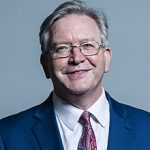
    Peter Dowd – 2024 Speech on the Loyal Address

    The speech made by Peter Dowd, the Labour MP for Bootle, in the House of Commons on 17 July 2024.

    I beg to move,

    That an humble Address be presented to His Majesty, as follows:

    Most Gracious Sovereign,

    We, Your Majesty’s most dutiful and loyal subjects, the Commons of the United Kingdom of Great Britain and Northern Ireland, in Parliament assembled, beg leave to offer our humble thanks to Your Majesty for the Gracious Speech which Your Majesty has addressed to both Houses of Parliament.

    Happy birthday to Her Majesty the Queen today. [Hon. Members: “Hear, hear.] It is an honour to be asked to give thanks to His Majesty. I start by congratulating you, Mr Speaker, on your election and a warm welcome to new and returning Members, including my right hon. Friend the “late” Member for Stalybridge and Hyde (Jonathan Reynolds). Congratulations to the Prime Minister and members of his new Government.

    It is worthwhile putting into context how I came to be moving the motion on the King’s Speech this afternoon. Last Thursday morning, I was standing outside the Library minding my own business, watching somewhat bewildered hon. Members wandering up and down the corridors, tentatively putting their heads into the odd room that may or may not have been a broom cupboard. And they were actually the returning Members! [Laughter.] I cannot imagine what it must have been like for the hundreds of new Members. It brought back memories of when I undertook similar meanderings in the corridors of power.

    Then came the call from the Chief Whip. My first thoughts were, “Oh dear, what have I done?” Or not done, as the case may be. Fortunately, those thoughts soon dissolved when he kindly asked me if I would undertake the Humble Address, which I was delighted and relieved to accept. Unfortunately, I am not the most competitive sort, which is just as well. I am afraid I cannot claim to be the first to achieve virtually anything in my family.

    It started at birth as I was the last-born child. Although I was a councillor at a relatively young age, alas, I was not the first, by a long measure, from my family. I was the leader of a council, but not the first in my family, nor even the first to unveil a plaque on a new public building—that was pretty routine among my forebears. Nor will I be able to look forward to being the first person in my family to reach 100 years of age—my late grandmother, Nin, ticked that box in 1984 and drove the point home by living until she was 105. As for being the first MP in my family, I cannot claim that accolade either as there were two before me. One was the Member—no prizes for guessing—for Bootle. Until today, my position at the back of the family queue has held sway for decades. Thanks to a good samaritan in the form of the Chief Whip, I am the first in my family to move the Humble Address to His Majesty. I am, as we say in Merseyside, made up.

    It goes without saying that being a Member of Parliament is an honour, but representing the town I was born in is the icing on the cake. For those who do not know where my constituency is, it used to be a small fishing village before becoming a bathing resort for wealthy merchants just north of Liverpool—how times change. Today, my constituency comprises a number of close-knit communities that until after the war were on farmland. Ford, Litherland, Netherton and Old Roan housed thousands of families after the challenges of the war, and I think that vision can be renewed. Another part of my constituency, Seaforth, is home to the port of Liverpool, to which I will return in future debates.

    The country home of the Gladstone family was in Seaforth. Indeed, Gladstone wrote about how he had seen

    “wild roses growing upon the very ground that is now the centre of Bootle.”

    Another community, Orrell, expanded as time went by. Then there is the lovely coastline of Liverpool bay, which has Waterloo and Crosby running along its shoreline, with beautiful views across to the hills of north Wales. It is also home to Antony Gormley’s “iron men” statues.

    Bootle town centre is now home to many Government offices, including the Charity Commission, the Health and Safety Executive and even the Office for Nuclear Regulation. Given its location and major dock system, during the war, Bootle was a major target of the Luftwaffe. It was left badly scarred, with as many as 85% of buildings destroyed or damaged. It paid more than its fair share during that conflict. So I am proud of my communities and their history, and I want the content of the Gracious Speech to be part of their future.

    As much as I would like to think that the Bootle constituency having the largest majority in the country, so I am told, is down to my character, charm and charisma—[Hon. Members: “Hear, hear!”]—which are well known to my colleagues, I really know that it is down to the ambitious programme trailed in the general election campaign and now formally set out in the Gracious Speech. I welcome a legislative programme based on security, fairness and opportunity for all, on investment, stability and reform—that is not a reference to the Members opposite—and, above all, on service to our communities, our constituencies and our country. It is about securing economic growth, raising living standards and getting Britain building again with planning reform and quality infrastructure, recognising the challenges of climate change and harnessing technology and the clean energy transition. Great British Energy advancing investment into renewable energy is fundamental.

    If you like, Mr Speaker, it is a new social contract that delivers attainment in education, challenges antisocial behaviour, refreshes support for victims of crime, protects our borders, enhances renters’ rights, offers a new deal for working people and reinvigorates our NHS, among many other proposals. A renewed local democratic settlement through the devolution proposals set out in the Gracious Speech is welcome. In short, Westminster and Whitehall do not always know best.

    On a day-to-day basis, I am looking forward to getting back to work, especially with new Members—the hundreds of them. I will continue to work on the various all-party parliamentary groups with which I am involved. The Gracious Speech includes proposals for a Bill to champion our armed forces and their families, with families being the key element in those proposals. I use that as a prompt to mention the armed forces APPG, of which I am a member. As an associate member of my local Crosby Royal Naval Association, I have links with local veterans, of whom there are over 12,000 in my constituency. In addition, members of my family have been in the armed forces, and my mother and grandmother both received war widows’ pensions for decades, so the least I can do is participate in the armed forces APPG.

    In the last year, I have participated in the armed forces parliamentary scheme with the RAF cohort, until that was so rudely interrupted by the general election. While I am always impressed by inter-service collaboration, I am even more impressed by the rivalry between the services. Before I bring a veil down on this part of my contribution, I want to relate to the House an anecdote—just one of many I could relate since participating in the scheme—about the nonchalant and insouciant rivalry between the services. When a Member joins the scheme—and it is well worth joining—they will be asked to go to the Wellington barracks, nearby, to be measured up for a uniform. When I arrived, I was led through the barracks to the stores. My conversation with a member of personnel who, it must be noted, was from the army went as follows:

    “Good morning, sir. How can I help you?”

    “Good morning. I’m here to be measured up for a uniform.”

    “And which service will you be with serving with, sir?”

    “The Royal Air Force.”

    “In that case, sir, you’ll be needing a set of silk pyjamas and a smoking jacket.”

    [Laughter.] They fit like a dream, Mr Speaker.

    Our country faces so many challenges and I believe the wide-ranging proposals in the King’s Speech will go a good deal of the way to tackling those challenges, both at home and abroad.

    Only on Saturday evening, I was at a function for one of my local charities, Sefton Women and Children’s Aid, at Liverpool FC’s Anfield stadium, which was a real stretch as I am an Everton supporter. While I was there, I paid a visit to the memorial to the 97 victims of Hillsborough, so I want to pay particular attention to the inclusion of what has become known as the Hillsborough law in the Gracious Speech. I thank the many individuals, families, survivors and the coalition of other organisations who have campaigned selflessly for decades to achieve this outcome, including Members of this House. It means so much to the families of the victims of those who died and the survivors, from our city region and beyond, that the Government will be fulfilling their promise to ensure a duty of candour on public servants. Justice and respect at last.

  • Lindsay Hoyle – 2024 Statement for New Members

    Lindsay Hoyle – 2024 Statement for New Members

    The statement made by Lindsay Hoyle, the Speaker of the House of Commons, on 17 July 2024.

    The House has directed the Speaker to make a statement at the beginning of each Session about the duties and responsibilities of hon. Members. I begin by reminding Members of their duty to observe the code of conduct and the behaviour code agreed by the House and to behave with civility and fairness in all their dealings. Unacceptable behaviour will be dealt with seriously, independently and with effective sanctions.

    The House asserts its privilege of freedom of speech. That privilege is enjoyed by Members of Parliament only in their work in this House as private individuals. We are equal under the law with those whom we represent. The privilege is there to ensure that our constituents can be represented by us without fear or favour. It is an obligation upon all of us to exercise the privilege responsibly.

    It is incumbent on Members to be accurate in what they say in this House and to correct any mistakes as soon as possible. All Members can now submit written correspondence directly to Hansard to amend errors of fact in their contributions, as well as being able to correct the record by a point of order. The Speaker does not have the power to police the accuracy of Members’ contributions—if only I could—and I reflect that to the media, as well.

    On courtesy and temperate language, I draw the House’s attention to the guidance on rules of behaviour and courtesies in this House of Commons. Members must be mindful of the impact of what we say not only on other Members, but on others who follow our proceedings. Members should be heard courteously, whatever their views. In particular, Members should address the Chair, rather than each other directly, and I say to hon. Gentlemen, please wear a tie or you just might not catch my eye. Members should remain in the Chamber for at least the next two speeches, or in Question Time, for two substantive questions after their own. Show respect to other Members.

    Of course, I understand that new Members may need a bit of time to familiarise themselves with the conventions and courtesies of the House, and I will take that into account when I am in the Chair, but I urge every Member to study the guidance carefully. The use of mobile phones in this House is a privilege. Please try to think about when you need them and when you use them. Members should be able to ask a question without reading it. Let us show the ability of this House. Let us show what we can do by working together. As I say, new Members will need a bit of time, and I will work with all new Members and take that into account when I am in the Chair, but I urge every Member to study the guidance. Please read it. If any advice is needed, come and check with me and the Clerks.

    On the criticism of other Members, in this place we are honourable Members, and the language that we use about each other should reflect that. If a Member falls short of the standards expected of us all, there are ways of dealing with that—not by accusations made as sideswipes during questions or debates. If we fail to treat each other with respect in debates, that diminishes our work. It also risks raising the temperature of discussions outside this place, particularly on social media, where discussions already too often descend into online abuse against hon. Members. My job is to look after all Members. If we show respect to each other here, I believe that the public should also show respect to Members, so please let us get it right and let us work together. I do not want people to agree with each other—this could be the most boring Chamber that I have ever seen, and that would not be good for me either—but please let us make tolerance and respect our main aim.

    It is important that hon. Members can raise matters with me freely. For that reason, I keep such correspondence confidential. That includes applications for urgent questions. I remind hon. Members that it is equally important that my response, particularly on matters of privilege, is treated with the same respect.

    I also wish to give some advice about seeking to speak in the Chamber. I take into account a number of factors when determining who to call. One of those is how often a Member speaks. In other words, if you have spoken much more than colleagues, others will be called before you; I ask Jim Shannon to remember that. [Hon. Members: “Hear, hear!”] I think that falls on deaf ears—[Laughter.]—but colleagues are more likely to be called in the next debate for which they apply if they missed out in the last one.

    I know that it can be frustrating not to be called in a debate, or to be called very late. Prioritising the debates, Question Times, urgent questions and statements in which you seek to participate is one way of trying to avoid that happening. Staff in my office can always offer further advice. It will be very frustrating for Government Members, as there are so many of you, so remember that. Do not take it out on my office; please blame me at any time.

    Finally, I want all Members and everyone in the parliamentary community to be able to go about their work safely, both online and here in Westminster. The security of this building and those who work here depends on us all. We have a duty to be vigilant, and to assist those whose job it is to maintain this place as a safe place of work, but I also know that being a constituency MP is about meeting constituents and being able to represent them within our constituencies, and I take that seriously. Two Members lost their lives not in this House but in their constituency, so whatever I can do to support you, I will. Make sure that you follow all the security measures. I never want to receive another phone call like those I have previously, so please look after yourselves and follow the advice. Your families matter, your staff matter, and this House matters. Security is at the top of my agenda.

    Before moving to the first business of the new Session, I express my best wishes to all hon. Members and all those who work in the House. I thank all the staff who have made this transition happen; I really appreciate it. Please, let us enjoy the next Session.

  • King Charles III – 2024 King’s Speech to Parliament

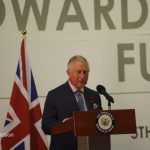
    King Charles III – 2024 King’s Speech to Parliament

    The speech made by King Charles III to Parliament on 17 July 2024.

    My Lords and Members of the House of Commons, My Government will govern in service to the country.

    My Government’s legislative programme will be mission led and based upon the principles of security, fairness and opportunity for all.

    Stability will be the cornerstone of my Government’s economic policy and every decision will be consistent with its fiscal rules. It will legislate to ensure that all significant tax and spending changes are subject to an independent assessment by the Office for Budget Responsibility [Budget Responsibility Bill]. Bills will be brought forward to strengthen audit and corporate governance, alongside pension investment [Draft Audit Reform and Corporate Governance Bill, Pension Schemes Bill].

    Securing economic growth will be a fundamental mission. My Government will seek a new partnership with both business and working people and help the country move on from the recent cost of living challenges by prioritising wealth creation for all communities. My Ministers will establish an Industrial Strategy Council. It is my Government’s objective to see rising living standards in all nations and regions in the United Kingdom.

    My Ministers will get Britain building, including through planning reform, as they seek to accelerate the delivery of high quality infrastructure and housing [Planning and Infrastructure Bill]. They will also pursue sustainable growth by encouraging investment in industry, skills and new technologies.

    My Government is committed to making work pay and will legislate to introduce a new deal for working people to ban exploitative practices and enhance employment rights [Employment Rights Bill]. It will seek to establish the appropriate legislation to place requirements on those working to develop the most powerful artificial intelligence models.

    My Government believes that greater devolution of decision making is at the heart of a modern dynamic economy and is a key driver of economic growth and my Ministers will introduce an English Devolution Bill [English Devolution Bill]. Legislation will be introduced to give new powers to metro mayors and combined authorities. This will support local growth plans that bring economic benefit to communities.

    A Bill will be introduced to allow local leaders to take control of their local bus services [Better Buses Bill]. My Ministers will bring forward legislation to improve the railways by reforming rail franchising, establishing Great British Railways and bringing train 8 operators into public ownership [Passenger Railway Services (Public Ownership) Bill, Rail Reform Bill].

    Taken together these policies will enhance Britain’s position as a leading industrial nation and enable the country to take advantage of new opportunities that can promote growth and wealth creation.

    My Government recognises the urgency of the global climate challenge and the new job opportunities that can come from leading the development of the technologies of the future. It is committed to a clean energy transition which will lower energy bills for consumers over time. A Bill will be introduced to set up Great British Energy, a publicly owned clean power company headquartered in Scotland, which will help accelerate investment in renewable energy such as offshore wind [Great British Energy Bill]. Legislation will be brought forward to help the country achieve energy independence and unlock investment in energy infrastructure. A Bill will be introduced to support sustainable aviation fuel production [Sustainable Aviation Fuel (Revenue Support Mechanism) Bill]. My Government recognises the need to improve water quality and a Bill will be introduced to strengthen the powers of the water regulator [Water (Special Measures) Bill].

    My Government will seek to strengthen the border and make streets safer. A Bill will be introduced to modernise the asylum and immigration system, establishing a new Border Security Command and delivering enhanced counter terror powers to tackle organised immigration crime [Border Security, Asylum and Immigration Bill]. Legislation will be brought forward to strengthen community policing, give the police greater powers to deal with anti social behaviour and strengthen support for victims [Crime and Policing Bill, Victims, Courts and Public Protection Bill].

    Measures will be introduced to improve the safety and security of public venues and help keep the British public safe from terrorism [Terrorism (Protection of Premises) Bill]. My Government will bring forward plans to halve violence against women and girls.

    My Ministers will seek to raise educational standards and break down barriers to opportunity. Action will be taken to get people back in employment following the impact of the pandemic. A Bill will be introduced to raise standards in education and promote children’s wellbeing [Children’s Wellbeing Bill]. Measures will be brought forward to remove the exemption from Value Added Tax for private school fees, which will enable the funding of six and a half thousand new teachers. My Government will establish Skills England which will have a new partnership with employers at its heart [Skills England Bill], and my Ministers will reform the apprenticeship levy.

    Legislation will be introduced to give greater rights and protections to people renting their homes, including ending no fault evictions and reforming grounds for possession 9 [Renters’ Rights Bill]. Draft legislation will be published on leasehold and commonhold reform [Draft Leasehold and Commonhold Reform Bill].

    A Bill will be introduced to establish an independent football regulator to ensure greater sustainability in the game and strengthen protections for fans [Football Governance Bill].

    My Government will improve the National Health Service as a service for all, providing care on the basis of need regardless of the ability to pay. It will seek to reduce the waiting times, focus on prevention and improve mental health provision for young people. It will ensure mental health is given the same attention and focus as physical health. My ministers will legislate to modernise the Mental Health Act so it is fit for the twenty first century [Mental Health Bill]. A Bill will be introduced to progressively increase the age at which people can buy cigarettes and impose limits on the sale and marketing of vapes [Tobacco and Vapes Bill]. My Ministers will also legislate to restrict advertising of junk food to children along with the sale of high caffeine energy drinks to children. A draft Bill will be brought forward to ban conversion practices [Draft Conversion Practices Bill].

    My Government will take steps to help rebuild trust and foster respect. Legislation will be brought forward to introduce a duty of candour for public servants [Hillsborough Law]. A Bill will be introduced to establish a statutory Armed Forces Commissioner to act as a strong independent champion for our gallant Armed Forces and their families [Armed Forces Commissioner Bill].

    Legislation on race equality will be published in draft to enshrine the full right to equal pay in law [Draft Equality (Race and Disability) Bill].

    My Government will strengthen its work with the devolved governments in Scotland, Wales and Northern Ireland so that the best outcomes possible are delivered for citizens across the United Kingdom. My Ministers will establish a new Council of the Nations and Regions to renew opportunities for the Prime Minister, heads of devolved governments and mayors of combined authorities to collaborate with each other.

    My Government will continue to support the political institutions and devolved government in Northern Ireland. In consultation with all parties, measures will be brought forward to begin the process of repealing and replacing the Northern Ireland Troubles (Legacy and Reconciliation) Act 2023 [Northern Ireland Legacy Legislation].

    Measures to modernise the constitution will be introduced including House of Lords reform to remove the right of hereditary peers to sit and vote in the Lords [House of Lords (Hereditary Peers) Bill]. My ministers will strengthen the integrity of elections and encourage wide participation in the democratic process.

    The Government will propose a modernisation committee of the House of Commons which will be tasked with driving up standards, improving work practices and reforming procedures.

    My Government will ensure a strong defence based on the North Atlantic Treaty Organisation’s common values of individual liberty, democracy, human rights and the rule of law. Its commitment to NATO will remain unshakeable. It will maintain a strong Armed Forces, including the nuclear deterrent. To ensure that the United Kingdom’s defence capabilities are matched to the changing nature of global strategic threats, my Government will conduct a Strategic Defence Review.

    My Government will continue to give its full support to Ukraine and its people and it will endeavour to play a leading role in providing Ukraine with a clear path to NATO membership.

    My Government will seek to reset the relationship with European partners and work to improve the United Kingdom’s trade and investment relationship with the European Union. My Ministers will seek a new security pact to strengthen cooperation on the mutual threats faced by the United Kingdom and the European Union.

    My Government will play its part in trying to secure long term peace and security in the Middle East. It is committed to a two state solution with a safe and secure Israel alongside a viable and sovereign Palestinian state.

    Later this week, my Government will host the European Political Community meeting at Blenheim Palace. The Queen and I look forward to our Visit to Samoa alongside the Commonwealth Heads of Government Meeting in October, and our Visit to Australia.

    Members of the House of Commons

    Estimates for the public services will be laid before you.

    My Lords and Members of the House of Commons

    Other measures will be laid before you.

    I pray that the blessing of Almighty God may rest upon your counsels.

  • Yvette Cooper – 2024 Speech at the Police Bravery Awards

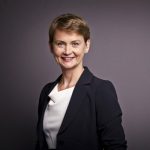
    Yvette Cooper – 2024 Speech at the Police Bravery Awards

    The speech made by Yvette Cooper, the Home Secretary, at the Royal Lancaster Hotel on 11 July 2024.

    Thank you very much, and good evening everybody. It is such an enormous privilege to be here this evening.

    As we all know, really the very best and bravest of British policing. Tiffany was saying this is the 29th annual Bravery Awards. Feel that means I’ve actually been here for half of them.

    So this is my 14th annual Bravery Awards. So I want to thank the Police Federation, Police Mutual, and of course, the unstoppable Mark Durden-Smith who will be with us later on, who’s been coming probably even longer than I have.

    There has been a huge amount of work to make this happen. This is going to be an evening of tributes to some incredible bravery, some incredible stories of heroism.

    But can I also just start by saying thank you, to all of the partners, all of the relatives, all of the families who are also here this evening because the work that your partners do, that I know you will feel so proud of, is actually only possible because of your love and support. And I know sometimes that can be the hardest of thing to do and to deal with.

    It was a pleasure to meet so many of you this morning in the reception that we had in Downing Street. One of the officers I was speaking to said “Oh, it’s really surreal being here in Downing Street. And I had to say “yeah, you and me both!”

    I’m still getting used to the change in roles. Yesterday morning, so I wake up, I always have the radio on, the alarm on in the morning. I woke up with the voice on the radio saying “and the shadow Home Secretary has said major changes need to be made in the party after the election.” I leapt up thinking “oh my God, what have I said now?”

    So it is a real honour to be able to come out of the shadows after such a long time and to be here to support you and to pay tribute to you as your Home Secretary this year.

    This morning’s reception, I’m told it was actually the first Downing Street reception that the new government has held and I think that could not be more fitting. I could not think of a more fitting group of people to be there being honoured in Downing Street this morning. I bring you good wishes from the Prime Minister who’s obviously abroad today and pays tribute as well, because the reason I have attended so many Police Bravery Awards in so many different roles in the past is because I think it’s so important to respect and recognise the work you do, and because the stories are always so inspirational, often so difficult.

    Incredibly difficult situations that you will have faced, the extreme violence that you will have had to walk towards, the dangerous rescues that many of you have undertaken. And, they are a reminder of the work that not just you, but this is right across the country during every single day to keep us safe. We will hear so many more of those stories during the course of this evening.

    But I just want to reflect briefly on last year’s awards. And last year, I had the honour of presenting an award to officers from the West Midlands who had shown extraordinary courage wading into the icy waters at Babbs Mill Lake in an effort to save 4 children who had fallen through the ice.

    Their overwhelming emotion as they collected their reward was actually deep distress, that those young lives had been lost despite their efforts, and their thoughts with the families who had been left bereft.

    For me, that moment did capture what is so important about British policing because it was the selfless service that those officers have shown, in the most dangerous situations, and their determination to do everything that they could to try to help, and also their compassion for those who needed their help, and for those who have sought to protect, and their loved ones.

    And it’s that combination that is so special about British policing. And Tiff has said already, we do hear it so often and I heard it again this morning from I think four different people that I spoke to “well I was just doing my job.” “Well it’s just the job, anybody would have done it.”

    It’s not just a job. This isn’t a normal job. This really is a job like no other. And those of you who have been nominated tonight, have responded like no other and really gone above and beyond. To keep us safe. And that is why we all owe you so much thanks.

    So I wanted to pay tribute to all of the officers and staff across the country, who are working this evening, who are working tonight and will be working through the night to keep our community safe.

    We all know policing has faced challenges in recent years and confidence has fallen. What I want to say is that I will be with you every step of the way as we work to restore confidence, as we work to raise standards, as we work to shine a light on the incredible bravery and the incredible heroism and the sense of duty, the selfless duty, that policing shows every single day, and I will be with you in that work.

    And I will say one more thing, which is that putting the safety and well-being of others above your own out of duty can take its toll. And I have seen the tears sometimes in eyes of officers coming up to collect these awards, as they have to relive what happened and sometimes traumatic events. I know that being a police officer, it’s a great toll as a result of the things that you have to do, so that the rest of us don’t. And we owe you for that.

    And that’s why I also want to work with the Police Federation and with all of you to support police officers and staff through every step of the way. It’s why we supported Bryn Hughes’ campaign, and why I’m so pleased that we will have the Elizabeth Emblems, the first ones been given out in the course of this year, but also why I will work with you to make sure that the Police Covenant is properly implemented and respected, so we can support police officers in everything that they do.

    So 6 days into the job. The sun’s been shining. England are in the Euros. Someone told me they haven’t actually lost a match under a Labour Government.

    We have optimism and determination so we know there’s going to be serious challenges ahead, we know there will be issues around resources, there will be issues around so many different things, but actually when we stand together, with pride in that tradition, that British policing tradition, policing by consent. I’m proud, I’m so proud of British policing. I’m so proud of the work that you do. And I’m so proud as we move now, to be able to give the Inspiration Award, to be able to celebrate and pay tribute to all of you tonight, to all of you for being inspirational.

    Thank you very much.

  • PRESS RELEASE : Report by OSCE Head of Centre in Ashgabat – UK response [July 2024]

    PRESS RELEASE : Report by OSCE Head of Centre in Ashgabat – UK response [July 2024]

    The press release issued by the Foreign Office on 12 July 2024.

    Deputy Ambassador Deirdre Brown voices UK support for the OSCE Centre’s work in Turkmenistan, especially on border management, environment, gender, and cybercrime.

    Ambassador MacGregor, welcome back to the Permanent Council. I am struck again by the positive work you and your team have led.

    As you know, the UK appreciates the work of the Centre in Ashgabat, engages closely with the Centre, and values our deepening partnership with Turkmenistan. This year, our former Foreign Secretary Lord Cameron visited Ashgabat and met Foreign Minister Meredov and President Berdimuhamedov, demonstrating UK-Turkmenistan cooperation. We look forward to this developing further, with a dialogue based on trust and partnership.

    The UK welcomes the centre’s diverse and balanced portfolio of projects, with excellent cooperation with the host government. I would like to highlight four areas of the Centre’s work.

    Firstly, work to promote gender equality and support those affected by domestic violence. The UK and the Centre have coordinated closely on this issue in recent years, and we hope that the Centre’s work developing understanding of gender-based violence continues in Turkmenistan. Women’s rights are a high priority for the UK and we particularly encourage work on transparent access to driving testing and licences for women.

    Secondly, on border security and capability. The UK is committed to working with Turkmenistan, its neighbours and the OSCE to mitigate the challenges arising from Afghanistan.

    Third, waste management legislation; environmental auditing; and promoting the UN Convention on Environmental Impact Assessment in a Transboundary Context. We note that President Berdimuhamedov committed Turkmenistan to the Global Methane Pledge. We encourage the Centre to look at how they could support the government’s implementation of the Pledge.

    Finally, I would like to welcome the work of the Centre in addressing issues of cybercrime and terrorist financing. Adherence to international standards and improving our understanding of cybercrime is a key challenge.

    On corporate issues, we were pleased to see for ourselves from your video that the renovated premises are now fully functional and we thank the Government of Turkmenistan for providing them. But it is important to underline again the negative impact the continued non-agreement of the Unified Budget is having on the work of OSCE field operations, as highlighted in this Report. It is vital that field missions are adequately financed.

    Ambassador MacGregor, thank you again for presenting your report today.

  • Keir Starmer – 2024 Speech at the NATO Summit Press Conference

    Keir Starmer – 2024 Speech at the NATO Summit Press Conference

    The speech made by Keir Starmer, the Prime Minister, on 12 July 2024.

    Good evening thank you for being here, I really appreciate it. This is of course my first week as Prime Minister…

    But I’ve come here to Washington, three and half thousand miles from home…

    For a very simple reason.

    Because every policy we have in pursuit of our missions…

    Everything we’re going to do to improve people’s lives…

    All that we hold dear…

    Depends on our security.

    That is our first priority…

    It is always our first priority…

    I made that crystal clear to the British people in our campaign…

    And so I also came to this summit with a clear message.

    A message of enduring and unwavering commitment…

    To the NATO alliance.

    To Ukraine.

    To the collective security of our country, our continent, and our allies around the world.

    I’m proud to represent a party that was instrumental in creating NATO 75 years ago.

    It was Labour Prime Minister, Clement Attlee…

    And a Labour Foreign Secretary, Ernie Bevin…

    Who fought so hard to make this a reality.

    This is our history – and we’re proud of it…

    And I am determined to take that pride forward into the future.

    So have no doubt – we will match our words with action.

    We live in a new and dangerous era…

    One defined by volatility and insecurity.

    We face the generational threat of Russia…

    Aided by the likes of North Korea and Iran.

    Conflicts – rage across the Middle East and North Africa.

    The challenge of China.

    Terrorism.

    And international institutions, that should be at the heart of the response…

    Are being undermined.

    Our collective reaction to this moment, will shape the world for decades to come.

    So we must stand up for our interests.

    But we must also stand up for our values.

    Because it was that insight…

    That unity of interests and values…

    That guided Attlee and Truman in creating NATO 75 years ago.

    We must mobilise what Bevin called…

    Our “collective moral and material force.”

    Because our values are not a point of weakness, as Putin may think…

    They are the source of our strength.

    NATO has become the most successful alliance in history…

    Precisely because democracy, freedom and the rule of law…

    were hardwired into the NATO Charter.

    And that is the legacy we inherit today…

    An inheritance not just of an institution…

    But of a duty and of service.

    And it is our duty now…

    To take these fundamental principles…

    And adapt them to meet the test of our times.

    That starts in Ukraine.

    Together with our allies today…

    We have reaffirmed our unshakeable support…

    For Ukraine’s ultimate victory.

    Our determination – to deliver justice for the awful crimes that Russia has committed.

    You will have all seen the scenes this week in Kyiv…

    Russia using some of the deadliest weapons in its arsenal…

    On innocent children.

    Striking a hospital.

    When I went to Kyiv, I saw for myself the devastation and inhumanity of Russian aggression.

    I went to Bucha, just outside Kyiv and spoke to some of the people there

    who described to me and pointed to me on the road

    Where they had picked up the bodies of their friends

    their family members

    who had been killed, many of them handcuffed

    And had to transport them to find graves for them

    It’s In shopping trollies, they told me, that is the only way they could move those bodies

    And that had a profound effect on me as they dug those graves – mass graves – of people who had been shot and left on their own.

    The alternative to Ukraine’s victory is unthinkable.

    Not only an afront to our values…

    A green light to aggressors everywhere.

    And the fate of Ukraine is a cause that unites Britain.

    And that is why we will deliver…

    £3 billion worth of support to Ukraine each year… for as long as it takes.

    We will speed up our delivery of military aid.

    And together with our NATO allies…

    We have pledged €40 billion of support to Ukraine every year…

    We’ve established a new body to coordinate that support…

    Agreed to ramp up industrial production…

    And confirmed Ukraine’s irreversible path to full NATO membership.

    As I told President Zelensky today…

    NATO will be stronger with Ukraine as a member.

    And because of the generational threat from Russia, that demands a generational response…

    So we will increase NATO’s focus on future threats around the world…

    With Britain playing its full role.

    We will continue to put our armed forces at NATO’s disposal…

    Maintain our presence in Estonia and Poland…

    Lead the land arm of the Allied Response Force this year…

    And maintain and modernise our nuclear deterrent.

    Today, this alliance is stronger than ever.

    23 members are now spending 2% of their GDP on defence.

    But in light of the grave threats to our security, we must go further.

    So we will conduct a Strategic Defence Review…

    To strengthen our armed forces…

    And protect our national security.

    And we will set out a clear path to spending 2.5% of our GDP on defence.

    And I say with candour to all our allies…

    We must understand that this is now essential.

    This is a defensive alliance.

    We do not seek conflict.

    But we know that the best way to avoid it is to prepare for it…

    And to lead.

    Britain belongs on the world stage…

    So I am determined…

    To reset our relationship with Europe…

    Return to leadership on climate change…

    And engage more deeply with the global south.

    Because whether the challenges we face are military…

    Or global challenges like climate change, cyber and energy security…

    We will meet them head on.

    Stand – shoulder-to-shoulder with our friends and allies.

    Because history shows – we are stronger when we do.

    This morning I laid a wreath…

    At the Tomb of the Unknown Solider at Arlington Cemetery.

    It was an incredibly moving moment, just being there, seeing the very, very many graves

    And that wreath laying

    To honour the sacrifice made by so many Americans…

    Side by side with British troops…

    In defence of our freedom.

    It is a reminder of our unbreakable bond with the United States.

    A bond which I reaffirmed here with President Biden.

    And a reminder…

    That we must honour the service and sacrifice of our veterans…

    With the decisions that we take today.

    So we meet this moment with a new resolve…

    Determined to renew Britain’s place on the world stage…

    Proud of what we have to offer…

    Confident, not just in the value of our strength…

    But in the strength of our values.

    Britain was at the heart of creating NATO 75 years ago.

    And our commitment remains unshakeable…

    The foundation of our security and prosperity for many years to come.

    Thank you.

  • Jeremy Miles – 2024 Resignation Statement

    Jeremy Miles – 2024 Resignation Statement

    The resignation statement by Jeremy Miles, issued on 16 July 2024.