Tag: 2024

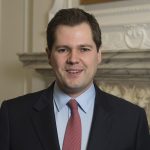
  • Mark Hendrick – 2024 Speech on the Loyal Address

    Mark Hendrick – 2024 Speech on the Loyal Address

    The speech made by Mark Hendrick, the Labour MP for Preston, in the House of Commons on 17 July 2024.

    Today’s King’s Speech has laid before us an ambitious and exciting vision that will benefit our country and my Preston constituents for decades to come. In particular, I welcome the announcement that the Government will be introducing a new publicly owned company, Great British Energy. As a first step, it will take back control of our energy supply, producing cheaper power for our country, and ensure that profits go back into our communities. As a Co-operative party MP, I want to see more community energy companies based on the Co-operative model.

    Not only will Great British Energy generate clean energy, but it will cut energy bills and deliver good jobs. This news comes when our constituents are desperately in need of support. For too long, they have been exposed to the energy insecurity created under the previous Government, which has seen a cost of living crisis and bills skyrocketing to eye-watering prices.

    Every family and business in Britain are still paying the price of 14 years of Conservative failure with sky-high energy bills. The Conservatives have squandered our advantage in clean energy and left the country dangerously exposed to international energy markets manipulated by dictators such as Vladimir Putin.

    Under Labour’s plans, oil and gas giants that have made record profits from energy insecurity in this country will now be held accountable. A windfall tax on their excess profits will benefit the entire nation, lifting the burden off the public. Working alongside the private sector, we have the opportunity to double onshore wind, triple solar power and quadruple offshore wind by 2030. That investment in renewable energy is an investment in our future. We need to harness the advantage of our long coastline along with our engineering capabilities to become energy independent again. We need to invest in carbon capture and storage, hydrogen and marine energy to ensure that we have the long-term energy storage that our country needs. We need to accelerate investment in energy infrastructure. That can be achieved by the Government’s green prosperity plan, which involves investing in cutting-edge green technology to create 650,000 jobs in the industries of the future by 2030.

    The previous Government were slipping more and more towards climate denial, but it is critical—now more than ever—that the UK commits to our future by doing all that we can to achieve net zero, setting a good example to the rest of the world. I have been extremely fortunate to experience first hand the progress that has been made on that over the years. As someone who worked as a professional electrical engineer before entering full-time politics, I have always been very conscious of energy consumption issues and their impact on the environment. I also served as a Member of the European Parliament, where I sat on the Environment and Consumer Protection Committee, where we helped to develop the European emissions trading scheme. I am strongly in favour of clean energy and our mission to move towards a clean energy transition as a matter of urgency.

    Under the previous Government, I sat on the Energy Security and Net Zero Committee from its inception, where I worked with colleagues to hold the then Government to account and focus on the issues so acutely felt by the public, particularly their soaring energy costs. During the Blair years, as Parliamentary Private Secretary to the former Member for Derby South during her three years as the Environment Secretary in the Cabinet, I became extremely aware of the crucial importance of reducing emissions as quickly as possible. Indeed, when the former Member for Derby South became Foreign Secretary, she achieved the huge goal of placing climate change on to the UN Security Council’s agenda for the first time. Since then, the seriousness and urgency of the global challenge of climate change has only accelerated. It is not just a green issue now; it is a security issue.

    I am proud and energised by the fact that this Government are committed to tackling climate change and doing so in a way that brings the public with us and encourages international collaboration. By creating jobs and opportunities that stimulate the economy and slash energy bills, we are ensuring that, together, we can become a clean energy superpower, become energy independent, reach our net zero goals and secure our future for generations to come.

  • Robert Jenrick – 2024 Speech on the Loyal Address

    Robert Jenrick – 2024 Speech on the Loyal Address

    The speech made by Robert Jenrick, the Conservative MP for Newark, in the House of Commons on 17 July 2024.

    May I begin by congratulating the hon. Member for Bolton North East (Kirith Entwistle) on her maiden speech? It is clearly a real achievement to be the first to make a maiden speech in this Parliament, and I am sure that Members on both sides of the House will join me in congratulating her and wishing her well in the years ahead here in Parliament.

    I welcome all new Members to this House, not least because some of them make me look older, which I have been looking forward to for some time. I remember when I was first sworn into the House. I entered at a by-election and so swore in on my own, in a class of one. There was a real heckle on that occasion from the beast of Bolsover. He asked if I was here on work experience and everyone laughed. I have a few more grey hairs now, 10 years on, and have just been through a difficult general election in north Nottinghamshire. I want to begin by saying a special thank you to my constituents for doing me the great honour and privilege of re-electing me, all the more so on what was clearly a difficult night for my party. During this Parliament, I will represent my constituents with all of my vim and vigour.

    Having served as a Minister under each of the last five Prime Ministers, I know what a special privilege it is to serve as a Minister, so I wish our successors in office all best wishes and good luck in the years ahead. As patriots, we all know that this Government’s success is our success, and we want them to tackle the great challenges facing our country. I want them to enjoy their time in ministerial office as much as I did.

    The general election made a number of things clear to me. I am deeply proud of many of our Government’s achievements, which I will fiercely defend in the months and years ahead. We took a bankrupt country and righted our public services and public finances. We ensured a decade of good employment after inheriting high unemployment, particularly among young people. We led Europe in the defence of Ukraine. We reformed our education system, and we now outstrip countries all over the world in the literacy and numeracy of our children. We were one of the world’s greatest countries in tackling environmental challenges, decarbonising faster than any other G7 country. For those and other reasons, I will always defend the record of the last Conservative Government, but I will come on to some of the lessons I have learned from their failings.

    Neil Coyle

    Is the right hon. Gentleman suggesting that voters were ungrateful on 4 July?

    Robert Jenrick

    I cannot quite hear the hon. Gentleman. If he is asking whether the electorate were wrong, the answer is no. No politician should ever doubt the electorate, but it is right that we defend the things we did well in government so that there is a proper diagnosis of what we got right and what we got wrong.

    I think we did get some things wrong. We promised to get Brexit done when we stood in 2019, and we did. We got Brexit done and restored our sovereignty as a nation, which is a great and lasting achievement, but we also promised that we would secure our borders and that we would ensure a strong economy, lower taxes and a strong NHS and public services, which the public rightly expect. On those counts, we did not deliver the public services, the lower taxes, the economic growth and the migration system that we promised and the public rightly expect.

    The baton now passes to this Labour Government. Where they succeed, I will welcome and support them; and where they fall short, I will challenge them. We want to ensure that the great issues facing our country are properly addressed. We live in one of the greatest times to be alive, but it is a time of immense change. There is a power shift from west to east, and new technology, like artificial intelligence, is upending old industries. It is an age of mass migration, which is challenging the pace of change in our country, creating huge pressures on housing, public services and integration, and making it harder to build the united country that we all want to see.

    I worry that this King’s Speech falls short on some of those great challenges. There are undoubtedly Bills that I welcome, and I am delighted that the new Government are taking forward the Bill for a Holocaust memorial, a project in which I have been involved for many years. Some of the Bills are radical, such as the changes to our energy policy, and I worry that they are radical for all the wrong reasons. Despite having decarbonised faster than other countries, and despite being responsible for only 1% of global emissions, we now find ourselves with a Government pursuing, for ideological reasons, a net zero policy that will make it harder for our own consumers to afford their bills. The policy will further erode our industrial base and leave us in hock to Chinese technology. We are trading dependence on Russian hydrocarbons for dependence on Chinese electric vehicles, smart meters and solar panels that will despoil our countryside. New quangos, such as Great British Energy, will spring up, serving no apparent purpose and taking inspiration from predecessors such as Robin Hood Energy in Nottingham, in my part of the world. That failed project wasted £50 million of taxpayers’ money.

    I worry that 200,000 jobs in the oil and gas sector have been put in danger in the first few days of this Government, at a time when they are rightly saying that they want to fuel our economy, create jobs and change the dynamics that the country has seen since the 2008 financial crash and after 20 or 30 years of low productivity growth and unsatisfactory economic growth. We should all be working to find ways to do that and to make that possible.

    I worry about the message we are hearing on the economy. We want economic growth, but economic growth is founded on harnessing the entrepreneurship of our people. It is about creating a start-up country and helping small business people to found businesses around their kitchen tables, like my parents did. It is not a statist vision of this country. It is not about using new quangos or a national wealth fund, which is an oxymoron because it is going to borrow the money it seeks to invest. It is not about changing our employment laws, which will make us less competitive and drive the kind of higher structural levels of unemployment we see in Europe that we have mercifully avoided over the last 10 years.

    And I worry about immigration, because we live in an age of mass migration. I have been honest—painfully honest—about the failings of the last Government on this topic, but I worry that the same or worse mistakes are about to be made again. What we are seeing in the channel is a national security emergency. We are seeing tens of thousands of people about whom we know next to nothing crossing into our country, breaking into our country, in flagrant abuse of our laws. Some of them are subjects of interest being followed by our security services. This has to stop. Scrapping the only known credible deterrent, with nothing else to put in its place, is going to surrender to the people smuggling gangs. That is wrong, it is a mistake and I worry that we are going to rue the day that we did that.

    I also hope that the Government will take legal migration seriously. We have to accept that the public in most parts of our country have been voting for 20 or 30 years, in elections and referendums, for Governments that promise to control and reduce the level of legal migration, only for Governments of all political colours to do precisely the opposite. That is immensely corrosive to public trust and confidence in politics and in democracy. As one of our colleagues said earlier, about the rise of far-right parties around the world, if we centrist parties on the left and the right do nothing about this, we will see the rise of far-right parties in this country. That would be a great mistake.

    I hope the reforms I started, to reduce the number of people coming into this country legally, are taken forward, and that we further reduce those numbers. We could have used the King’s Speech today to implement a legal cap on net migration, embedded by Parliament in law. We have not done that, which will mean further pressure on housing, public services and the pace of change.

    Let me close with this: the Prime Minister has said he wants this to be a new era, in which politics is defined by service. I think we will all agree on that point—it should be—but the question is who do we serve. I do not think we come to this place to serve the interests of new quangos, commissions and reviews, the legal fraternity in contested notions of international law, or the new and worrying rise in sectarian politics, represented in this House for the first time in my lifetime, which again should worry us. We are sent here to serve the interests of our constituents. I choose them; I choose to ensure the working people of Newark and Nottinghamshire are always represented. They sent me here with a few clear messages: secure our border; reduce immigration; lower our taxes; stop the crime; build homes; build a more united country, cohesive and integrated, not riddled by the poison of left-wing identity politics. That is what I am here to fight. Where this Government do that and live up to that test, I will support them. Where they do not, I will fiercely challenge them.

  • Kirith Entwistle – 2024 Speech on the Loyal Address and Maiden Speech

    Kirith Entwistle – 2024 Speech on the Loyal Address and Maiden Speech

    The maiden speech made by Kirith Entwistle, the Labour MP for Bolton North East, in the House of Commons on 17 July 2024.

    Thank you, Mr Deputy Speaker, and I thank the right hon. Member for Witham (Priti Patel) for her contribution to the debate. I congratulate my hon. Friends the Members for Bootle (Peter Dowd) and for Vauxhall and Camberwell Green (Florence Eshalomi) on their excellent contributions, and I join colleagues in congratulating all the new MPs who have joined me in this House for this Parliament.

    I thank all the staff and Members who have welcomed me so kindly to this House. As a new MP, I want to reach across the political divide and find the things that unite us all; indeed, this King’s Speech offers hope that we can come together to tackle the issues of today for the good of this country. I had the rare honour in the recent election of having the support of both of Bolton North East’s living previous MPs, both Labour and Conservative. I share one ambition with both of them: for Bolton to be better connected within the region and with the rest of the country. I welcome the announcements on transport in today’s King’s Speech.

    Sir David Crausby had a long-standing interest in improving the railways in our region—something I hope to continue work on, having experienced cancellations on day one of travelling down to this place. Sir David has been a great mentor of mine, and I hope to build on his legacy and do the people of Bolton North East proud. I wish him, his wife Enid and their family well, and I cannot thank them enough for their ongoing support.

    My predecessor, Mark Logan, who has as thick a Boltonian accent as mine, aspired to work hard to make the required Metrolink from Bolton to Manchester a reality. We have a shared vision of improving connectivity for the town in which neither of us was born or bred, but which we both call home. I hope to work with our ambitious metro mayor for Greater Manchester in making this vision a reality, and I thank Mark Logan for his service to the people of Bolton and, indeed, for his support during my general election campaign. I wish him and his family well.

    I am the new Member of Parliament for Bolton North East, the first woman to represent this great constituency, and the first Ahluwalia in Parliament. I had also hoped to be the first Entwistle. However, Major Sir Cyril Fullard Entwistle—I thought Kirith Kaur Ahluwalia Entwistle was long—beat me to it in 1918. Indeed, he later returned to represent the great town of Bolton in 1931. Sir Cyril and I share some similarities. He was born in Bombay in 1887 to a cotton manufacturer and came to Bolton where he was educated at Bolton grammar school in my constituency. How fitting is it then that, all these years later, a second-generation Indian immigrant would move to Bolton, settle down and then represent our great town in Westminster?

    Sir Cyril was also an early advocate for equal rights, introducing the Matrimonial Causes Act 1923 as a private Member’s Bill to give women legal equality in divorce cases. We have come a long way since then, as a nation and a society, in improving the rights of women and of those from ethnic minority backgrounds such as myself. It is my hope that I can go further during my time here and support great initiatives such as the Pregnant then Screwed campaign, play my part in closing the gender and ethnicity pay gap, improve parental rights and continue to shape a country that is more accessible, accommodating and inclusive.

    Bolton is a town of great innovation, entrepreneurship and industry, being the birthplace of the spinning mule, invented by the late, great Samuel Crompton. Having had the privilege of meeting so many fantastic entrepreneurs throughout my campaign, I want to pay particular tribute to the great female entrepreneurs I encountered: Allison Angel, a female mentor who has helped women launch, grow and develop sustainable businesses, and Mrs Farida Patel, who owns the shop Mum’s Mate in Halliwell, a particularly formidable woman who, alongside her daughters Naaznin and Mehzabeen, goes above and beyond for the local community.

    I also had the privilege of meeting Anita, who set up the Bolton Women in Business awards. She voted for the first time in this election and decided to put her faith in me. I also want to mention the inspirational organisation, Fortalice, a Bolton-based charity providing frontline services for people who are, or have been, affected by domestic abuse and violence. These women helping women, standing up and being exceptional role models in our town are the reason I am so proud to stand here today, to tell their stories, to do what I can to support them and to highlight the incredible work that Boltonians have done and are doing.

    I am also the first Sikh to represent the constituency of Bolton North East. The Sikh values of seva—service for the betterment of others—and humility are visible throughout Bolton. They are in our history, and they have been woven through the very fabric of our town. Community assets such as the Bolton Lads and Girls club, the Octagon theatre and Bolton museum and library are testament to this. I will do my utmost to keep them at the heart of everything that I do here. I will do my best to protect them and restore rich heritage centres such as the Hall i’ th’ Wood museum.

    I have found a great source of pride in Bolton, and it is this pride for our great town that I wish to reflect here in Westminster. I have both the desire and the determination to improve our town—in particular our town centre, which I wish to see revitalised and renewed—to give our young people hope and the chance of a brighter future again and, finally, to see our history and heritage rightly celebrated. For this little Indian girl from culture-rich Southall, it is a great honour and privilege to represent this fascinating and heritage-rich town of Bolton. It is time for me to get to work on the role that the wonderful and humble people of Bolton North East have sent me here to do.

  • Priti Patel – 2024 Speech on the Loyal Address

    Priti Patel – 2024 Speech on the Loyal Address

    The speech made by Priti Patel, the Conservative MP for Witham, in the House of Commons on 17 July 2024.

    It is good to take part in this debate on the Loyal Address. In particular, it was good to see His Majesty attend the House today. I wish him well in his recovery and pay tribute to his record of service to our nation.

    I congratulate all new Members who have entered the House. I thank the proposer and the seconder of the motion, the hon. Members for Bootle (Peter Dowd) and for Vauxhall and Camberwell Green (Florence Eshalomi), who are no longer in their places. It is fair to say—this is a note for all new Members, as well as existing Members—that their speeches were made in the finest traditions of the House. The start of the Parliament is one of the few moments we have to unite, to respect each other’s speeches and contributions, and to become accustomed to the traditions, formalities and conventions of the House.

    At the same time, we get to do the greatest thing that we all love: representing our constituents. For new Members, in particular, this will become the regular pattern of their work in this House and a reflection of the hard graft that goes in. We have all come fresh from a general election campaign where a lot of graft was put in, but we are now here, elected to represent our constituents, in the normal tradition, on the issues that may sometimes divide us, but where we can advance their cause through legislation.

    I want to begin my contribution on the Loyal Address by saying a few words about the new Government’s tone over the past 12 days. It is an inevitable feature of a new Government that they spend their first few weeks continuing campaign rhetoric—we will hear it a lot—and talking down the record of the previous Government. However, much was advanced over the last 14 years.

    We are proud of our record and the transformation we led, including on public finances. These are big things that do not just happen over a few weeks and months. We are proud that we transformed the public finances, from the Government borrowing £1 in every £4 to a much better fiscal position today. It is not easy to get into these fiscal positions and those on the Labour Benches should reflect on the fiscal position they inherit. We are proud of supporting the creation of 800 jobs per day, on average, having faster economic growth than many of our competitors, cutting the tax burden on incomes and fuel duty, overseeing an increase in doctors and nurses working in our NHS, more teachers, schools raising standards, and, on law and order, getting more police officers on our streets fighting crime. That is a record we are proud of. It is important to reflect on that. If I may say so, in a very subtle, gentle and polite way to those now on the Government Front Bench, it is all very well trying to rewrite history through slogans. It sometimes takes attention away from the responsibility of having to govern and make the big decisions and choices.

    Let me touch on some policy areas. The Government have already presented a programme in one area of which I have some experience, having been Home Secretary for more than three years. We have heard quite a bit about immigration and crime, but although we have not seen the details, what we have heard from the Government so far differs little from some of the measures that were already in place. One example is the proposed UK border security command, which we actually set up just over four years ago to co-operate with international partners. Some of my colleagues who followed me in the Home Office will recognise much of this. They will recognise the need to take action in the English channel and work with our intelligence and security agencies in order to do so, and they will recognise the appointment of a clandestine channel threat commander and the establishment of joint interagency task forces, because they happened under the last Government.

    I want to commend the work of our international law enforcement agencies and our international partners. Not only do they work at an exceptional level, but they work to save lives, and I think we should reflect on that, because only last week we saw more lives lost in the channel. We also introduced robust measures to tackle criminal gangs and county lines and put together safer streets policies together to protect our constituents, but some of those measures were opposed by those who are now in government when they sat on these Benches.

    It is important to recognise that some things do not happen overnight. There is no single solution to some of these issues, but through collaboration we can drive the right outcomes. We heard the Prime Minister speak about law and order today, and I welcome many of his comments about the importance of safer streets and tackling terrorism, but also the need to address those appalling problems that we still see and will continue to see: violence on our streets and domestic abuse, with victims suffering at the hands of criminals. None of us wants prisoners to be released early, but it is important to focus on the victims of crime and to have the right punishments in place to ensure that the perpetrators are given tough sentences. Again, I noted that those measures were opposed in the last Parliament. It is important for us to get fairness back into our system when it comes to law and order.

    One of the great achievements of the last Government was the expansion of renewable energy generation. We can be proud of our record in that regard and proud to be world leaders, given that the energy generated by a mix of renewables passed the 40% mark. That is a huge improvement on the situation in 2010. My hon. Friend the Member for Harwich and North Essex (Sir Bernard Jenkin) has already touched on the question of how we can generate new technology for energy purposes, and I genuinely believe that technology, rather than taxation, is the path to a much more sustainable future.

    I think that our colleagues in the Government will recognise the reality of some of the projects that already exist and will now be dominating their inboxes, such as the National Grid’s attempts, through its Norwich to Tilbury plans, to impose more than 100 miles of pylons and overheard power lines across the east of England. It is pressing those proposals, but my hon. Friend the Member for Harwich and North Essex and I are working to find alternatives through technology and ways in which we can upgrade the grid without destroying the East Anglian countryside. National Grid’s plans will affect farmers and community facilities such as White Notley football club, which will lose community pitches if the pylons are built across our constituencies. That will mean a huge loss of local amenity, which is deeply concerning. My constituents, and constituents throughout Essex and East Anglia, want to see alternatives such as an offshore grid or the use of more tunnelling to build up grid infrastructure capacity. The proposed infrastructure and planning Bill will be considered in great detail. It must receive the right level of scrutiny, along with the legislation on planning and new housing, and we must ensure that local views—the views of our constituents—are not simply disregarded.

    I am aware that those on the Government Front Bench are already proposing a consultation in this area. If I may give them some subtle and gentle advice, listening to the views expressed in that consultation will be incredibly important, because this is not about saying that people do not want homes; in fact, constituencies such as mine have put forward so many plans for new homes. We have actually built over 10,000 new family homes over the last decade, which has helped my constituency to become a very good commuter town and successful when it comes to schools. Families want to move to our area, but it is a case of getting the balance right. That is incredibly important.

    In the minute I have left, I want to make a point about economic growth. Of course, everybody across the country and in this House fundamentally believes in securing higher levels of economic growth, which every Government want—name me a Government who do not want that. We want more jobs, we want more job creation and we want more successful businesses, but it is about being on the side of businesses and how we can effectively support them to employ people.

    Over 80% of my constituents are employed by small and medium-sized businesses. We are incredibly proud of that, but the minute that more regulatory burden comes upon those businesses, I am afraid they will lose the ability to grow and to employ local people. Of course, small businesses are the backbone of our economy. On a day like today, when we see new Bills coming forward through the Loyal Address and the King’s Speech, it is right that we are given the appropriate time to scrutinise them as we go forward through this Session of Parliament. Fundamentally, however, we need to make sure that, as His Majesty’s loyal Opposition, we Members of Parliament on this side of the Chamber provide scrutiny, but also redress, to ensure that constituents’ voices are heard—whether on planning, development or economic growth. Fundamentally, we need to make sure that Britain advances in the right way.

  • Derek Twigg – 2024 Speech on the Loyal Address

    Derek Twigg – 2024 Speech on the Loyal Address

    The speech made by Derek Twigg, the Labour MP for Widnes and Halewood, in the House of Commons on 17 July 2024.

    It is a real pleasure to speak in the King’s Speech debate, setting out Labour’s new programme for government after 14 years of disastrous Tory Government. It is also an honour to take part as the MP for the new constituency of Widnes and Halewood, in which I was born and bred.

    The Prime Minister has made it clear that the Labour Government will be one of service, with a clear mandate to deliver the change that the country desperately needs. The King’s Speech shows that Labour plans to govern with serious solutions. Labour will make the difficult decisions needed to fix the basic problems facing the country. I am really pleased that we have made growth a central plank of the Government’s policy, including of course the development of an incredible industrial strategy. We must also address the serious and long-term productivity problem that the country has faced. I hope that the new Government will get on to that quickly, because it is really holding us back.

    The new Labour Government of ours have a daunting job in tackling the many challenges facing the country after 14 years of mismanagement of our economy, epitomised by the disastrous Liz Truss Budget as well as the running down and underfunding of our public services. The NHS and social care are in crisis, with people dying because of delays in treatment. Waiting in hospital corridors is now the norm. Local authorities are also struggling to remain financially viable.

    Rather than stick our heads in the sand or pull the wool over people’s eyes as the Tories did, Labour will be straight with people about the problems that we have inherited. The truth is, there is not a switch that we can flick to fix the country’s problems overnight.

    This is a packed King’s Speech, but, as there is limited time to speak, I will focus on just a few areas. I really welcome the decision to bring rail services back into public ownership—to improve passenger journeys and deliver better value for taxpayers—and to establish Great British Railways. Anyone who has travelled on Avanti West Coast will know of the many and continuing problems it has had over a long period of time, whether it is the fact that trains are late or cancelled, the wi-fi does not work, they do not have any hot water or whatever. We know that it has been a failure, so I welcome a decision on that.

    The announcement of a Hillsborough law is really important. It would place a legal duty of candour on public services and authorities. This Government are determined to rebuild trust, foster respect, improve transparency and accountability, and address the culture of defensiveness in the public sector. I pay particular tribute to my right hon. Friend the Member for Liverpool Garston (Maria Eagle), who has worked tirelessly to get to this stage, and I am pleased that the Government have adopted it. Many colleagues worked with her and others on this particular policy. She and I go back many years and have worked closely with the Hillsborough families. I was at the Hillsborough disaster. We know how terrible the experience has been for those families, and the fight they have had over the years. The way that they were treated by the establishment is a scandal. I hope that they will be somewhat relieved and pleased to see this progress.

    Tackling the mental health crisis and modernising the Mental Health Act to make it fit for the 21st century will help deliver the Government’s mission to see people live healthy lives for longer, and will put patients at the centre of decisions about their health. I also want to raise the massive challenge of children and adolescents’ mental health waiting lists and the service itself. I would like the Government to focus on that particular part. I am sure that every Member of Parliament here will have many constituents coming to them about this issue. We must also have a proper plan to try to do all we can to reduce suicides, particularly among young men. I welcome any changes and involvement from the Government.

    A lot has been said about planning, but high streets have not really been mentioned. Many of us in our constituencies face real issues with high streets, which have been under massive pressure, with many shops closing down. There is a need for renewal and regeneration. I hope that the planning Bill will look at that. I welcome the reform of bus services. Particularly over the past 10 to 15 years, many communities have become more isolated because bus services have been cancelled or reduced. I hope that with this change in policy we can make some improvements to the many communities who feel isolated across this country, not least in my constituency.

    In the King’s Speech, the Government made a clear commitment to NATO. They said that it remains unshakeable and that they will retain a strong armed forces, including a nuclear deterrent. I welcome that from the Prime Minister and the Government. The strategic defence review, which has been commissioned by the Prime Minister and will be overseen by the Defence Secretary, is very welcome as a root and branch review. Those of us who have been around here for some time and have had to put up with a Conservative Government who have let down the armed forces, putting this country’s defence and security at risk, will welcome this review. We must look at the situation: we have the smallest Army since Napoleonic times. Even a previous Conservative Secretary of State said that the armed forces have been hollowed out. We have a shortage of munitions. There are major problems with procurement and wasted money, which need to be addressed. I am sure that they will be a priority of this new Government.

    The focus has always been and will continue to be on Ukraine, and I was pleased to see the commitment to Ukraine in the King’s Speech. We face a real problem with Russia, China and North Korea and the threat they pose to world order and to democracies in particular. These are some big challenges that we must get to grips with. We must look again at our armed forces and how we can improve them, get better funding and, importantly, ensure that the funding they get is spent correctly and efficiently, and not wasted. That is important for the future.

    Jim Shannon (Strangford) (DUP)

    I commend the hon. Gentleman for what he says about the armed forces. In Northern Ireland we have always had a large recruitment, both to the regular forces and to the territorials. Does he agree that when it comes to recruitment for Northern Ireland, extra money should be made available to ensure that those who want to join can do so?

    Derek Twigg

    I understand the hon. Member’s pitch for extra resources for Northern Ireland, but I think he will recognise that there is now a major recruitment crisis in the armed forces that has been ongoing for many years. It is not just an issue of recruitment; it is also about retaining good, experienced people. That is what we have to really focus on. I am sure the defence review will look at that. It is also about looking after our service personnel, ensuring that they have better housing and better facilities, and that their pay is right, and ensuring that we have proper services and support for our veterans. I agree with him that recruitment is a challenge. We have to sort that out, because it is weakening our armed forces.

    I know that time is getting on, so I just want to say a couple of things in conclusion. We still have a cost of living crisis. Living standards were lower at the end of the last Parliament than they were at the beginning of the last Parliament, and the tax burden is at its highest rate for years. Our first King’s Speech will be a downpayment: just the start of the legislative plans that Labour will set out over the next five years. To transform our country, we will need to be patient and have focused work over a long period of time. As the Prime Minister has made clear, this will be a Government of service that will do things differently and properly. Rather than gimmicks and Bills that do not work, Labour will be focused on real change for working people.

  • Bernard Jenkin – 2024 Speech on the Loyal Address

    Bernard Jenkin – 2024 Speech on the Loyal Address

    The speech made by Bernard Jenkin, the Conservative MP for Harwich and North Essex, in the House of Commons on 17 July 2024.

    It is a pleasure to see you in the Chair this afternoon, Mr Deputy Speaker, and an honour to speak so early in this debate and to follow the right hon. Member for Hayes and Harlington (John McDonnell). His speech was preceded by the contributions of two Opposition party leaders, the right hon. Members for Kingston and Surbiton (Ed Davey) and for Aberdeen South (Stephen Flynn). They all demonstrated that you cannot keep a good Parliament down, Mr Deputy Speaker. We already have the Liberal Democrats trying to rerun the referendum on proportional representation; the Scottish National party wants to rerun the referendum on Brexit and, of course, on Scottish independence; and I encourage the right hon. Member for Hayes and Harlington to continue a healthy debate about matters such as the two child policy, because his speech has just brought into question the argument that the bigger someone’s majority, the more control they have over their party. I look forward to an entertaining Parliament in that respect.

    This is my first opportunity to draw the House’s attention to a report produced by the Liaison Committee in its dying moments in the previous Parliament—it was actually published after Parliament had risen but before Dissolution—about strategic thinking in government. I ask myself whether the King’s Speech reflects comprehensive strategic thinking in government. I think it does in parts, but certainly not in others.

    It is a significant moment when a newly elected Government’s Gracious Speech is delivered, because that is when the rhetoric of the campaigning hits the reality of governing. How strategic are this Government? Much of the speech is good. Budget responsibility and the prioritising of wealth creation are good things, but how is that to be achieved with enhanced employment rights, which we know are a threat to the flexibility of the labour market and which businesses are already warning will destroy jobs?

    What about all the new super-quangos, which are rather an echo of Labour Governments past? What about a new Great British Railways, like the failed Strategic Rail Authority under John Prescott? What about a new Great British Energy? I do not suppose that is going to be quite like the old Central Electricity Generating Board, but the limits on its authority and spending power make it rather less significant, as the SNP leader, the right hon. Member for Aberdeen South pointed out. What about a new industrial strategy council, which is rather like the unlamented National Enterprise Board set up by Tony Benn in 1975? The Prime Minister claimed that this is

    “nothing less than national renewal”,

    but I suggest that these are little more than the recycling of old, failed ideas.

    I did not think Lords reform was going to be a first-term priority for a Labour Government. It is probably just red meat for a few Labour MPs. There is to be a new House of Commons modernisation committee, but that is 25 years out of date. The House of Commons modernises itself without having a modernisation committee. Is that really deserving of such prominence in a King’s Speech as a strategic priority of the Government?

    The Government appear to be deaf to the ironies of the conflicts within their own programme. They say that

    “greater devolution of decision making is at the heart of a modern dynamic economy”,

    and I welcome that, but it is only to do things like taking control of buses. It is certainly not to take control of where the houses are built and of the housing targets in different areas.

    I welcome the commitment to speeding up infrastructure investment. To that extent, I hope the Government will welcome the inheritance from the previous Government of the freeports, particularly the Harwich and Felixstowe one in my constituency. That freeport is an initiative that the Government should be pleased to advance. It has the support of all the political parties in Harwich, which are committed to its success. Given the new Government’s commitment to funding infrastructure, I look forward to meeting the new Minister to discuss how we can develop the Bathside bay to generate industry and jobs for local people.

    I think the Government will find that the Norwich-to-Tilbury pylons proposal is a less welcome inheritance. I welcome their objective to

    “unlock investment in energy infrastructure”,

    but I would like to assist with that, because it does not mean that the Government must blindly approve of anything that National Grid produces at first flush and thinks is a good idea. The Norwich-to-Tilbury pylons proposal has been much in the national news because of the local campaign against the desecration of unspoiled countryside. This is not opposition for its own sake. The submission that I will make later this week in response to the current consultation will set out how the objectives for Norwich to Tilbury cannot be achieved with the current proposals, and can be achieved more quickly and at a lower lifetime cost than that of the current proposals.

    Despite what the Prime Minister tries to insist is his programme, it is still dominated by the short-term tactics of gaining power and retaining it. We heard that in his jibes at the Conservative party rather than addressing the fundamental challenges that threaten our national survival—and I put it at no less than that. What are those challenges? They can be summarised as the six big Ds: debt; digitisation, which is transforming the way we live our lives; decarbonisation; deglobalisation, which has thrown globalisation into reverse as a result of the pandemic and rising international tensions; demographics, which are afflicting every OECD country; and defence.

    I very much welcome the appointment of Lord Robertson to help oversee a bipartisan defence review. It will find that we need to commit far more than 2.5% of GDP to defence to help prevent another major war. I urge hon. Members to keep thinking about Ukraine; I am very glad the Prime Minister mentioned it in his remarks. If Russia succeeds in Ukraine, we can say goodbye to European and transatlantic security.

    One of the findings of the Liaison Committee’s report on strategic thinking in government is that long-term strategy can be truly sustained only if it lasts across successive Parliaments and periodic changes in government. What comes to mind includes continuous at-sea deterrence, the counter-terrorism strategy, the operation of GCHQ and indeed the survival and continuation of the national health service and the achievement of net zero.

    I hope that the Government will use their considerable majority to offer to make the radical reforms which, for example, the NHS needs, by finding the cross-party consent and consensus needed to drive through such reforms, as they will undoubtedly create divisions in both parties. The Government have an unrivalled opportunity finally to tackle the social care question, but, if we want it to stick, it must be agreed across the House.

    The report covers the capacity of Whitehall for strategic thinking, how the centre of Government can lead strategy more effectively, how strategy must engage the public—particularly younger generations—in governing for the future, and how scrutiny by Select Committees can promote strategic thinking in government. I very much hope that if right hon. and hon. Members have not already read just the first chapter of the report, they will do so, because it is a manifesto for how Parliament and Government should work together to help promote the kind of country that we want, which is so threatened by the international events that we see.

    I see Ministers sagely nodding—and I appreciate that—but the Government have yet to respond to the report. There are two proposals in it that I very much hope they will adopt. One is that they will recreate a national school for government to train our civil servants and spads—and even Members of Parliament—in what strategic thinking really is instead of just scrabbling around with focus groups and opinion polls to tell us what to do. The other is that the House should establish a committee for the future, as is happening in other Parliaments around the world—we drew a lot on international experience —which should be looking much further ahead than most Select Committees have time to look. That would be a great reform for the Government to bring in.

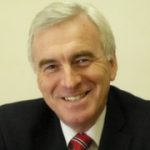
  • John McDonnell – 2024 Speech on the Loyal Address

    John McDonnell – 2024 Speech on the Loyal Address

    The speech made by John McDonnell, the Labour MP for Hayes and Harlington, in the House of Commons on 17 July 2024.

    I add my commendations for the speeches that introduced this debate. I have only one anecdote about my hon. Friend the Member for Bootle (Peter Dowd), who was in my Treasury team: he is a fan of Shostakovich, and on one occasion, we went to the Royal Albert Hall to listen to a Shostakovich symphony. It was the symphony with which Dmitri Shostakovich upset Stalin, and it almost cost him his life. We thought the performance was superb, but there were two grumpy old men in front of us, and at the end of the symphony, one turned to the other and said, “Stalin may have had a point.” We enjoyed it. I thought the speeches today were superb.

    I want to get to the business of the next few days: examining the King’s Speech. We all come to this House with a mandate from our constituents, so it important that we bring to the House their experience. When the exit poll landed on election night, in my community, there was almost a collective sigh of relief that we were ending 14 years of Conservative Government. My constituency, like many others—my hon. Friend the Member for Hackney South and Shoreditch (Dame Meg Hillier) has said this—could not take any more, to be frank.

    In my constituency, like that of my hon. Friend, one in three children are living in poverty; according to the statistics, some of them are living in destitution. I have got a housing crisis, even though 4,000 properties are being built in the centre of my constituency. Most of my constituents cannot afford them; those who have scraped the money together and have got leaseholder access to those properties are now being hit by massive increases in service charges, and some of them want to hand the keys back. I have got rents spiralling out of all control, and I have got slum housing reappearing. The back-to-back has been reinvented in my constituency, where one family will rent the front of a normal house and another family will rent another floor or the back.

    Turning to employment for my constituents, wages have virtually been frozen for the past 14 years. I have Heathrow in my constituency; people would fight to get a job at Heathrow because the wages were so good, but not any more. We are running low pay campaigns, and insecure work is endemic in my constituency: it was Heathrow Ltd that started fire and rehire. The same could be said about public services—we will all say this. In my area, the NHS is on its knees. I just do not know how the staff have coped. In the teaching profession, the stress is such that we cannot retain teachers: no matter how committed they are, they do not survive under that sort of pressure. For many of our areas, social care is almost non-existent, and I meet family members who are caring for other family members and unpaid carers. It is now almost inevitable that if you are looking after someone in your family—someone who has a disability or whatever—you are living in poverty as a result of the lack of support.

    Yes, people voted for change, but we on the Labour Benches have to be realistic and have some humility in our assessment of the election. Only one in five of the population voted for us, and what worries me in my constituency is that our turnout has gone from 70% when I was elected in the 1990s to 51% in this election. We need to be wary of that, and to understand the reasons for it. The More in Common poll that was published this week confirms the scale of disillusionment that there is with politics overall, which has been reflected in some of today’s debate. My fear is that we now have others on the political scene, in this country and elsewhere, who will feed on that disillusionment. We should guard against the far right mobilising again, as has happened in Germany, France and Italy.

    We as a Labour Government have to deliver. As for all Governments, the honeymoon will inevitably be short-lived, but I welcome the King’s Speech because it does set out the elements of a programme for rebuilding our country. I must say that there are elements I have to smile over in that much has been drawn from the 2017 and 2019 manifestos—but maybe we should not mention that—such as on employment rights, the new deal, rail nationalisation, buses, Great British Energy and the national investment fund, which reflects the national investment bank that we put forward then. In fact, there are sections of the King’s Speech that could almost be the work of my hon. Friend the Member for Middlesbrough and Thornaby East (Andy McDonald).

    People want and expect delivery sooner rather than later. I want to focus on four areas of policy on which I am desperate to see change. The first is poverty. Child poverty has to be our priority. There are 14 million people living in poverty, including 4.3 million children, with 1 million in destitution. I never thought that, in my lifetime, we would ever debate destitution again in this House, but destitution there is. I welcome the announcement today of the taskforce that will look at poverty overall, but I have to say that setting up a taskforce is one thing, and acting is another.

    There is one simple act, and we all know it, that could lift 300,000 children out of poverty this month: scrapping the two-child limit. I was in this House when the Tories introduced it, and it was introduced as part of stigmatising all those on benefits. In my speech I said that

    “I would swim through vomit to vote against the Bill”.—[Official Report, 20 July 2015; Vol. 598, c. 1314.]

    Given some of the speeches from the Tories at the time, I almost had to. It was an appalling form of attack on the poorest in our community. We need to lift that stigma—that impact—but we need to do it quickly.

    Yes, let us set up a taskforce by all means, but we must produce a timetable that within weeks we will scrap the two-child limit. The argument is whether we can afford it and whether it will be within our fiscal rules. Many Members will know that, over the last few weeks, the OBR has lifted or revised its growth figures upwards. The International Monetary Fund has dramatically increased the growth figures upwards. That has nothing to do with the Tories building a new economy or anything like that; it is the natural business cycle, and it is also part and parcel of some companies recognising that a Labour Government were coming. Let us take the benefit of that. It is no longer an offence against the fiscal rule: the resources are there and we can lift those poor children out of poverty with this simple act. So I appeal to my own party—to the Labour Front Bench—to by all means get the taskforce working, but to now commit ourselves to scrapping the two-child limit and doing it rapidly.

    On employment, the new deal for workers, which we developed when we were in opposition, is now going to be legislated on. I want no more watering down, and at the same time I do not want it delayed by endless consultations. We have consulted at length for five years nearly: it is there and it is ready. We want to scrap fire and rehire and we want to scrap zero-hours contracts, but one of the most important ingredients of that legislation should be the extension of sectoral collective pay bargaining. So far, we have committed to doing that in the social care sector, and I welcome it, because that is where poverty wages really are being paid. However, we now need to start, as we promised before, to extend that across the economy. We can build into the Bill the mechanisms for doing that stage by stage—yes, with discussions and so on, but it can be done effectively. In some areas, sectoral collective bargaining was scrapped only a few years ago, for example in agriculture. One area in which I would like to ensure that we have that is transport, and then we would have no more P&Os.

    We need to be honest about the state of our public services, in terms not only of their delivery but of their finances. I did a report last September with Andrew Fischer on the incoming Labour Government’s in-tray. It is calculated that, between 2010 and now, the Conservatives cut £80 billion. No one expects that £80 billion to be discovered overnight, but we need a plan for reinvestment over the length of this Parliament. That means being honest about the debate that we must have about not just this Budget but future Budgets.

    People recognise that we will need to find the money. Yes, we will get some from growth, but 1% of growth brings in about £12.5 billion. To achieve 1% of growth is hard work; it requires investment and it takes time. If we can get back up to 2%, fine, but that will take time. In the meantime, we need the resources for our public services, and that means that we have to have an honest debate about taxation and the distribution of wealth in our country. It means, for example, that we need to grasp the nettle of levelling capital gains tax with income tax, making sure that our tax reliefs and the corporate welfare that is going on is effective and not simply subsidising profits. In addition, I believe we must have a discussion at some stage about what we do about wealth distribution overall.

    There has been a lot of discussion about reform of public services. I agree with that, but I want reform to be placed in the hands of the frontline staff themselves—the experts in delivering the service—and for them to then work with the recipients of those services, the patients and others, so that there is co-production. The disability movement has developed the theme of “Nothing about us without us”, and that should apply to every sector of public service, so that we work not just with those who deliver the service, but with those who receive it. I also agree with what has been said about unpaid carers and the way in which we treat disabled people who, I am afraid, now live in poverty and were stigmatised under the previous Government. We can come to those debates as we run to the next Budget. My conclusion is carpe diem—seize the moment. We have a large majority. We must beware the danger of the far right mobilising if we fail, but we must also recognise the potential that we now have.

    Finally, I do not know what it was like in other constituencies, but overhanging our whole debate was the humanitarian crisis in Gaza, coming in night after night and seeing more children being slaughtered and war crimes being committed. I do not think we will solve this problem unless we seek an immediate ceasefire that will enable us to have the hostages released. However, I think we can take some immediate steps: stopping the arms sales to Israel, respecting the International Criminal Court and ensuring that we recognise that war crimes should be punished.

    Since January, I tried to mobilise the previous Government to accept, as other Governments across the world have been doing, seriously injured children from Gaza so that they could come here for treatment, but not one visa has been issued to a Palestinian child for that purpose. I have written to the Foreign Secretary and the Home Secretary, and I hope that our Government can welcome those children here so that they can receive the treatment they need, before hopefully they can be returned to a Palestinian state that we recognise and that lives in peace.

  • Stephen Flynn – 2024 Speech on the Loyal Address

    Stephen Flynn – 2024 Speech on the Loyal Address

    The speech made by Stephen Flynn, the Leader of the SNP, in the House of Commons on 17 July 2024.

    I begin by congratulating the Prime Minister on his first King’s Speech. I am sure it is an incredibly important moment for him and his family and I wish him well over the months to come. I am sure it will be an incredibly challenging time, but I repeat my best wishes to him and all his new colleagues beside him on the Government Benches.

    I want to reflect first that, at Prime Minister’s questions on the day the election was called, I perhaps goaded the former Prime Minister in respect of calling a general election—indeed, I think I referred to him as being feart should he not do that. I am not sure entirely who out of the two of us fared worse from his decision to do so; maybe that is something we can both reflect upon in due course.

    The opportunity now in front of this Labour Government is enormous. They have a parliamentary majority that will go down in history, and that majority affords them something incredibly important: the ability to deliver change. What that change looks like, and perhaps more importantly what it feels like, for people in their homes is so important. My colleagues and I on the SNP Benches will do everything we possibly can to be as constructive as we can—[Interruption.] We will! However, I was a bit disappointed today, not necessarily by some of the things that were in the King’s Speech, but by some of those things that were not.

    In that regard, I bring the House’s attention to the amendment that my colleagues and I, ably supported by other Members from across the Chamber, have tabled in relation to the two-child benefit cap. That iniquitous, heinous policy was brought in by the former Conservative Government in 2015. Each and every one of us in this Chamber notes that it retains children in poverty—hundreds of thousands of children across these isles. In Scotland alone, it impacts 27,000 households and it is estimated that 14,000 children would immediately be taken out of poverty were it to be scrapped, but it was not mentioned in the Government’s programme for government today.

    Instead, all we have heard is that a taskforce will be created, with no timeframe for that taskforce and no indication when it will conclude. All the while, those children will remain in poverty. Surely it should be the bare minimum expectation of a Labour Government that they would seek to do everything they possibly can immediately to lift children out of poverty, and I am particularly interested in the views of Scottish Members of Parliament from the Labour party in this regard.

    Barry Gardiner (Brent West) (Lab)

    Could the hon. Gentleman explain to the House why the SNP Government in Scotland, who have the power to do that, have not?

    Stephen Flynn

    I would be more than happy to enlighten the hon. Gentleman in that regard. As he knows, in the UK, we have reserved policies and we have devolved policies, and some 70% of welfare policies are reserved to this Parliament. The Scottish Government have sought over recent years to mitigate the worst excesses of the Conservatives. With some £8 million-worth of money that we could spend on other things, we choose to mitigate Tory policies—including, of course, the likes of the bedroom tax; I am sure he would be keen to see those on his own Front Bench mitigate and end that particular policy.

    However, we do that within the confines of the financial remit set, in large part, by this place.

    If the hon. Gentleman is suggesting—and I am sure some of his Scottish colleagues would agree with him—that the Scottish Government should mitigate, he and the Government should outline where that money should come from. Should it come from Scotland’s NHS, our schools, our police or our budget for young people? The reality is that the constraints placed upon Scotland by this place do not afford us the opportunity to mitigate, and frankly, I find it absurd and deeply disingenuous to suggest that the remit of Scotland’s Parliament should be to mitigate Westminster. Our horizons should be so much greater than that.

    I return to the point that I was making. Scottish Labour Members supposedly agree with the Scottish National party that the two-child cap should and must be scrapped, so how will they vote? Will they follow the lead of their Prime Minister in London, or will they follow the lead of the leader in Scotland and respect the views of the people they were sent here to represent?

    Despite my great disappointment, there is one area in which I hope the Prime Minister can put a smile on my face: GB Energy. I am moderately surprised that we have not yet had an announcement that it is to be headquartered in Aberdeen—perhaps in the Aberdeen South constituency that I represent. Indeed, Aberdeen and Grampian chamber of commerce hired a van that has been patrolling the streets outside Parliament today calling for it to come home—that is the only time I will ever use those words—and it should come home straight to the energy capital of Europe.

    Although I would welcome GB Energy’s placement in Aberdeen, I also want to see much more detail about what it will deliver. If I have read correctly, a cumulative £8.3 billion will go towards GB Energy over the next five years—£1.6 billion each and every year—but one hydro pump storage project in Scotland would almost blow that entire budget apart. We know that GB Energy will not sell energy, we know that it will not distribute energy, and it appears that it will not generate energy. It has been suggested that it will be an investment vehicle for projects to go forward, but if it is capped at £1.6 billion a year, I must question the Government’s ambition. How does that deliver the change that is required? The change that they previously agreed to requires some £28 billion each and every year. What a contrast with the ambitions that they once had. Of course, net zero will be absolutely crucial to our economic future—to the growth and prosperity that we all want—but ultimately that growth can come about only through productivity.

    I would like to hear more from the Labour Government, who have a significant majority, about what they will do to reverse some of the Conservative party’s policies on migration. Migration dramatically and drastically impacts on higher education institutions in Scotland and in the constituencies of each and every Labour Member. We know that universities are a key driver of productivity. I wish to seek consensus across the House on migration, which might be moderately difficult given some of the people who now sit behind me. We need to stand up and be bold and brave in the face of those who seek to demonise migration and other those who come to work in our public and private sectors, care for us in our hospitals and teach our children. We should seek to increase migration, increase our economic output, grow our economy and enhance our communities. Brave politicians would do that, and I hope that Labour Members share that bravery.

    Of course, our economy is not just about net zero, productivity or migration; it is also intrinsically linked to our relationship with the European Union. I look forward to seeing what the Government come forward with in respect of their proposed new relationship with our friends and allies in Europe. We should be seeking to rejoin the European single market; we should be seeking to rejoin the European customs union. It makes sense to all of us. The politicians in this House are afraid of doing so, but they will come to realise that the only way to achieve the aims that they want to achieve is to do just that.

    On all those issues and so many more, we will seek to be a voice of reason in this House and to work constructively with Government Members. Over the coming hours and days, I look forward to hearing their contributions and what they intend to bring to our national discourse, as we all try to improve the lives of the people who we are so fortunate to represent.

  • Meg Hillier – 2024 Speech on the Loyal Address

    Meg Hillier – 2024 Speech on the Loyal Address

    The speech made by Meg Hillier, the Labour MP for Hackney South and Shoreditch, in the House of Commons on 17 July 2024.

    It is a pleasure to follow the right hon. Member for Kingston and Surbiton (Ed Davey), but I confess I am a little disappointed with him because today he walked into the Chamber. He could at least have tried a bungee jump or maybe freewheeling on a bicycle. I applaud him for his efforts in the campaign; they kept us all entertained and, looking at the number of Members on the Liberal Democrat Benches, clearly paid dividends.

    I welcome and thank my hon. Friends who proposed and seconded the Humble Address, but I say to my hon. Friend the Member for Bootle (Peter Dowd) that he may be the youngest of eight, but I am the second of 10. New Members of the House will hear a lot about Big Brother, but I can tell them that they have a big sister here to support them; I am sure my hon. Friend will support them too. After 19 years in this place, I know my way around a bit, although I too still get lost, so they should not be worried about that.

    I was delighted to hear the speech of my hon. Friend the Member for Vauxhall and Camberwell Green (Florence Eshalomi). I first came across her when she was a Member of the London Assembly. I knew then that she had something special about her and we saw that here today.

    I draw the House’s attention to my entry in the Register of Members’ Financial Interests. I spent nearly a decade chairing the Public Accounts Committee in this place, in the last Parliament and the previous two. In that role, I saw many egregious examples of incompetence, bungling and waste, whether it was water companies, school buildings with reinforced concrete and other things falling down, the running sore of rail infrastructure, the national embarrassment of defence procurement and the scandal of personal protective equipment procurement during covid. Time and again, we saw Government bungles, poorly drafted contracts, lack of oversight, dodged responsibility, endless excuses, and the taxpayer picking up the tab. No wonder people were so angry at the election. No wonder they voted for change and for my right hon. and learned Friend the Prime Minister.

    Now the true extent of the Tory mess is coming to light. As my right hon. Friend the Chancellor has revealed, it is even worse than we thought. She has opened the books, looked under the bonnet and seen the true extent of the mess that is now for a Labour Government to clear up. The previous Government partied, squabbled and helped their mates, but they did not fix the roof when the sun shone. They trashed the joint. From austerity to the PPE scandal and Trussonomics—remember that?—they weakened the fundamentals of our economy and stretched our public services to breaking point.

    In my annual report, which was one of my last reports as the Chair of the Public Accounts Committee, I listed what I called the “big nasties”, some of which the Chancellor is revealing to us now: 700,000 pupils are in schools that are not fit for purpose; there were in fact far fewer new hospitals than the 40 that were much vaunted and they were never going to be delivered to the promised timetable; and the gaping hole in our defence budget. I certainly applaud the approach of this Government, and it seems some consensus from the Opposition Benches, that we need to see an increase in defence spending.

    The consequences of the mess that has been left behind by the previous Government are human. According to the House of Commons Library, nearly one fifth of children in my borough of Hackney live in absolute poverty. Four in 10 children in Hackney live in poverty after housing costs are taken into account, according to the Joseph Rowntree Foundation’s recent figures. My constituency is in the top 5% of English constituencies with children who are income deprived. That is the shameful legacy of 14 years of failure.

    In one of the world’s greatest and richest cities—a bus ride from the financial powerhouse of Liverpool Street—no child should be cold or hungry, or lack a winter coat or decent shoes. Schools in Hackney have kit rooms for the children who turn up without the requisite uniform and lend it for the day in return for a token like their Oyster card. No parent should be having to skip meals to feed their kids, which is happening too often in Hackney and elsewhere in the country. No child should be arriving at school with a rumbling tummy, which is why I welcome the breakfast clubs that we already have in Hackney and the fact that one of the first acts of this Labour Government will be to make sure that every child in primary school has a decent breakfast.

    When we talk about stagnant wages, low productivity, flattening growth, lack of investment in skills and schools, the abolition of Sure Start, and the gig economy, there is this human cost. Right now, in a Hackney school, there is a hungry child whose huge potential is being wasted, whose opportunities are stunted and whose life chances are hobbled. When I first arrived in this place 19 years ago, I had to tell people about the good things that were going on in Hackney, because people had written off my borough as a poor and deprived area where things did not happen. Now people think of the Shoreditch hipster, the tech companies and the city fringe, but underneath that there is this huge poverty and opportunity being stunted for our children. This is the mess that this Government now have to clear up.

    Another example of that is the housing crisis. A safe, warm and affordable place in which to live should be, and is, a basic right. We all need a roof over our heads before we can do anything else in our life—whether it be study, work, or bringing up our families—yet, after 14 years, my constituents face a housing crisis whatever the tenure.

    According to Hackney council, the median household income in Hackney is just under £36,500 a year, yet the median house price in my constituency—which has doubled since 2010—is £610,000. For those who have not caught up on the maths yet, this means that a house costs more than 16 times the median household income. According to the Land Registry, the average first-time buyer in Hackney paid just under £600,000: over half a million pounds for a first-time buyer. Well, that’s not most first-time buyers, is it? It is the lucky few who either have a very good job, or have got help from the bank of mum and dad or other family members. I do not deny them that help, but it should be an opportunity available to all.

    It is utterly ridiculous that we are in this situation. Young professionals with double incomes are simply unable to afford a deposit to get a place of their own and are often stuck living with family members into their 30s. Others are forced into rented accommodation, with no security of tenure and rents so high that there is no spare money to save to get on the housing ladder.

    According to the work of the Public Accounts Committee, around 13% of privately rented properties—589,000 properties—pose a serious threat to health, so landlords are getting the rent but landing their tenants in hospital with lung diseases, mental illness or physical injury. I hope the Chancellor’s ears are pricking up, because the Public Accounts Committee estimated that this situation costs the NHS £340 million a year. That goes to the broader point: economic inefficiency, child poverty, the housing crisis and failing public services all cost us more money. The economics of decline is an expensive business, but—we see hope now, with this Labour Government—investment in jobs, homes, schools, skills, roads, the NHS and tackling crime saves the public money down the line. As I was often saying when I had the honour of holding the role of Chair of the Public Accounts Committee, a penny of waste is theft from working people’s pockets, and a fair economy is also an efficient one.

    I warmly welcome the measures in this King’s Speech under a Labour Government; how nice it is to say those words after 14 years. Since 5 July my colleagues in the Cabinet—I was about to say the shadow Cabinet; old habits die hard—including Labour Secretaries of State, have moved into action from the inertia of what went before, and that means that we are on the road to recovery. It is going to be a long haul, but I welcome the measures to support start-ups and tech companies, particularly as I represent Shoreditch, where so many are based; to revive skills; to modernise our health services, particularly prioritising mental health; to get more teachers into Hackney schools; and, crucially, to build more affordable homes.

    We need many affordable homes in inner London, in constituencies such as mine, where social housing is the only option for so many people. Only last week, a woman came to my surgery who had four children in a one-bedroom flat, and her elderly, sick father had had to come to live with them. That is how the family lived—four children in a one-bedroom flat—and it is not uncommon at all. We need to drive change to deliver housing around the country, but particularly in the inner city.

    I also recognise the lead and step change in tackling the issue of net zero to decarbonise our economy with investment in renewables, insulation, carbon capture, and green jobs—things I have examined a lot over the last decade and on which we have seen the previous Government fail so often.

    Above all, I welcome the commitment of His Majesty’s Government—our Labour Government—to kickstart growth in our economy. Without steady, sustainable economic growth and without the proceeds of growth fairly shared across the nation, we will continue our national decline. Instead, in this King’s Speech, we are offered a hopeful prospectus for change, the prospect of progress, and a new sense of national renewal and hope after 14 years. We know it will not be easy, nor will it be as quick as we all impatiently want it to be. As a former Minister and having been a member of the Public Accounts Committee for 13 years, I know that modernisation and reform can be frustratingly slow. I have seen many good ambitions frustrated by poor delivery.

    If I may proffer a word of advice for those on the Treasury Bench, finding themselves newly surrounded by eager officials, many of whom came in front of my Committee, and red boxes, it is this: “Please stay focused. Look up at that horizon. Think of the people who sent us here, who voted for that change you want to deliver and we all want to see. Keep an eye on that guiding goal of growth. Test every proposition that comes across your desk against that simple question, ‘Does this promote or hinder growth?’”

    Successful government, as the Prime Minister said, is mission led. Of course we want to tackle poverty, build homes and transform our NHS, but the main mission is growth, because without that we cannot deliver any of the others.

  • Ed Davey – 2024 Speech on the Loyal Address

    Ed Davey – 2024 Speech on the Loyal Address

    The speech made by Ed Davey, the Leader of the Liberal Democrats, in the House of Commons on 17 July 2024.

    On behalf of the Liberal Democrats, I add our sincere thanks to His Majesty King Charles for his Gracious Speech. Like other party leaders, I wish him well as he continues his recovery, and I join them in sending our happy returns on the birthday of Her Majesty.

    As we remember Members who were killed in service and condemn the appalling assassination attempt on President Trump, we should all commit ourselves to a new politics, whereby we disagree with respect, listen to each other and try to bring together the dialogue on politics in our country following the divisions we have seen.

    May I join others in paying tribute to the late Tony Lloyd, who championed many campaigns and issues in this House? I had the huge privilege of joining him on an all-party trip to Israel and Gaza, and one of his commitments was to peace in the middle east. He wanted justice for the Palestinians and a two-state solution, and let us all commit ourselves to that again.

    I also pay tribute to the hon. Members for Bootle (Peter Dowd) and for Vauxhall and Camberwell Green (Florence Eshalomi) for their accomplished speeches in proposing and seconding the Loyal Address. I know the hon. Member for Bootle comes from a political family—he explained that in some detail—and I believe that his great-uncle Peter, who was once the Labour MP for Preston South, later became a Liberal councillor in Liverpool. So may I say to the hon. Gentleman that if he does follow in his great-uncle’s footsteps, he will not be the first in his family to see the Liberal light? Our door is always open.

    The hon. Member for Vauxhall and Camberwell Green made an impressive mark in her first Parliament, as she campaigned on issues such as knife crime, the NHS and housing. She spoke eloquently on an issue that is close to her heart and mine: care. She spoke movingly about how she cared for her mum when she was just a very young child, and about how she learned at a young age about all the different painkillers needed to treat her mum. As someone who believes that we need to hear the voice of carers in this Chamber far more often, it was a pleasure to listen to her speech today. I am left in no doubt that she will make an even bigger mark in her second Parliament.

    While I am paying tribute, let me add our thanks to the Three Lions, who captivated the whole nation and came so agonisingly close to ending all those years of hurt. They did us proud, and let us hope the Lionesses retain their European crown next year.

    I welcome the Prime Minister to his place, and congratulate him and his party on their election victory. As he says, they now have an enormous undertaking, and we wish them well. I read somewhere that the Prime Minister apparently surfed to power on a wave of Conservative failure, but may I say to him gently, and with a pang of envy, that watersports are my thing?

    The challenges awaiting the new Government are certainly great. Set against the challenging backdrop, there is much to welcome in the programme set out today, not least the Government’s focus on getting our economy growing strongly again. The Prime Minister is right to say that building more homes is an essential part of that, as we can see from the work of many brilliant Liberal Democrat councils, from Cumbria to Eastleigh and, in my own area, the royal borough of Kingston. The best way to build the many extra homes we need, especially social and affordable homes, is to properly engage local people and communities, and bring them along with us. That is the community-led approach that we on the Liberal Democrat Benches will continue to champion.

    Paul Holmes (Hamble Valley) (Con)

    I am delighted to see that the leader of the Liberal Democrats seems to be openly advocating the work of Eastleigh borough council. May I just remind him that the council is building double the number of houses required only because his party leadership has got it into £800 million-worth of debt and it needs to pay off the debts that it accrued?

    Ed Davey

    I am delighted to say that today we welcome my hon. Friend the Member for Eastleigh (Liz Jarvis), the new Member for that constituency, to the Liberal Democrat Benches. I am sure she will have all the answers that the hon. Gentleman needs.

    But growth and house building are not the only challenges, crucial though they are. I am sure that all of us across the House, as we knocked on doors during the election campaign, heard the same common refrain from people of all backgrounds and all walks of life: that nothing seems to be working as it should, from the health and care crisis to the sewage scandal to the cost of living. The British people have overwhelmingly rejected the past out-of-touch Conservative Government. They have gone, but after so many years of being taken for granted, many people have simply lost faith in our political system to solve their problems.

    We on the Liberal Democrat Benches recognise the scale of the challenge now facing the new Government. They have a big job to do, and so do we. We will work hard on behalf of our constituents. We will scrutinise the Government’s plans carefully and strive to improve them, and we will oppose them when we think they have got it wrong, but where they act in the national interest to solve these problems and improve people’s lives, we will support them.

    One issue that came up more than any other at door after door—I am sure it was the same for Members of all parties—was the issue of health and care. Patients are waiting weeks to see a GP or an NHS dentist, if they can find one; more than 6 million people are waiting on NHS waiting lists; tens of thousands of cancer patients are waiting months to start urgent treatment; patients are stuck in hospital sometimes for weeks, ready and wanting to leave but unable to do so because the care home place is not there or the care worker or support for the family carer is not in place. Fixing this crisis in our NHS is essential, not only for people’s health and wellbeing but for the economy and for growth. Only if we get people off the waiting lists and into work can we get our economy growing strongly again.

    Neil Coyle (Bermondsey and Old Southwark) (Lab)

    The right hon. Gentleman mentions the delays and waiting times in the NHS and social care, but how much does he regret his role in the five years he spent in a coalition with the Conservatives creating that situation?

    Ed Davey

    I am disappointed in the hon. Gentleman’s intervention. We can all go back to things that other parties did in government and say that they were wrong. I would just say to him that I come to this task now in a spirit of constructive opposition to work for the best for our country, and I hope that he and other Members will do that too.

    I welcome a number of the measures for the NHS in the King’s Speech, including on reducing waiting times and particularly on mental health. I want to work with the Government to improve those; they are long overdue. Of course, I also urge the Government to look at the proposals on the NHS in our manifesto, on boosting GP numbers so everyone can get an apartment within seven days or 24 hours if it is urgent, on improving access to dentists and crucially to local pharmacists—if more people can get the care they need early and locally, fewer people go into hospital—and on giving cancer patients the care they deserve with a cast-iron guarantee that they will start treatment within two months after diagnosis. This is the scale of the ambition we need for our NHS right now, and I hope the Government will show it.

    There is another part of this crisis that needs to be fixed through urgent attention, and it is care. I spoke during the election about my own caring journey, first for my mum when I was a teenager, then for my dear nana, and now as Emily and I care for our severely disabled son, John. I have been incredibly touched by the response from colleagues across the House who have reached out to tell me how important it is that we speak out on care, for people who need care and for carers, both professional social care workers and the family carers who are looking after their loved ones.

    I have had the chance to hear from carers of all ages all over the country as they shared personal stories with me. They include the couple who care for a son with similar care needs to John’s, who reached out to say that they know what it is like to worry about what will happen when they are no longer there to look after their disabled son. They offered me advice, and I was touched by their kindness and generosity.

    Each care story is so different yet, in many ways, they have much in common. We all share a special, wonderful bond with the ones we care for, and we all share the feeling that no one else understands us. Caring has been in the shadows for far too long. Let this be the Parliament in which carers’ voices are heard and we become the caring nation.

    Caring means people doing extraordinary things every day for the ones they love, often in the face of difficult circumstances, physical challenges, no breaks, mountains of paperwork, countless appointments and endless phone calls. They try to navigate a broken system that is simply not designed to work for carers. We on the Liberal Democrat Benches will do our very best to get a fair deal for carers, whether on carer’s allowance or on the big challenge of fixing social care, so that our loved ones get the support they need, when and where they need it.

    Of course, this will not be easy. Fixing social care after years of neglect will be incredibly complicated, but we cannot shy away from it. Although it was not in the King’s Speech, I am encouraged by the reports that the Government are planning a cross-party commission on social care, which we urgently need to find a solution that stands the test of time. I hope we will hear more about that from the Government very soon. Fixing social care is not only essential to give people the care and dignity they deserve and to support family carers. Without it, we cannot fix our NHS.

    It would be a big enough task if health and care were the only major crisis facing the Government, but clearly it is not. Inflation may have finally come down to normal levels, but the cost of living crisis persists. Families and pensioners still face record energy bills and sky-high housing costs and food bills. They need support and understanding, which begins with the Government’s promise to be fiscally responsible—that would mark a big and welcome shift from the previous Government’s rather reckless approach to the Budget. With energy bills forecast to rise by 10% in October, clearly we need bold action to bring down costs, from insulating homes to expanding renewable power.

    The Liberal Democrats have a proud record of investing in renewable power, almost quadrupling it when we ran energy policy. Our policy drove the cost of renewable electricity below the cost of fossil fuel-generated power. I hope the Government will act with the same level of ambition to tackle not only the cost of living crisis but climate change too, because urgent action is needed to prevent catastrophic climate change. We have shown how it can be done, and how doing it well will benefit consumers, the economy and the environment. We welcome the Government’s focus on this challenge, and we will push them to meet it.

    We will also push the Government on another environmental challenge: ending the sewage crisis. For anyone who still doubted, the election campaign clearly showed the strength of public anger about the pollution of our rivers, lakes and beaches. The Government have made welcome noises about holding the water companies to account and making sure they put these environmental issues before profit, but the Liberal Democrats will push Ministers to act as quickly and decisively as possible to put an end to this appalling scandal.

    Health and care, the cost of living, climate change and sewage, these big crises just got worse and worse over the last years of the previous Government, whose failure to address them is a big part of why people’s trust in politics is so low. This year’s British social attitudes survey found that 45% of people—a record high—almost never trust the Government to put the national interest first. I am sure I speak for everyone in the House when I hope that this Government will prove that wrong. But restoring public trust and confidence in our politics is a major task for us all, right across this House, no matter our party.

    I think there are two parts to how we restore that trust. The first is by tackling the root causes of the many scandals that have caused so much harm and done so much damage to public trust, from Hillsborough to Horizon to infected blood. We welcome the promised Hillsborough law, with its statutory duty of candour on public officials, but we urge the Government to go further in this area. Given the vital role that whistleblowers have played in exposing these scandals, I urge Ministers to look at our proposals for stronger protections for whistleblowers, including a new office of the whistleblower.

    The second way to restore trust is by transforming our politics, so they are relevant, engaging and responsive to people’s needs and dreams. The measures that the Government have promised to strengthen democratic rights and participation are therefore welcome, as is the principle of shifting more power out of Westminster and Whitehall, so local decisions are made by the people for them and the communities they live in. I am sure the Prime Minister knows that the devil is in the detail, so we will scrutinise those plans carefully when they come. We fear they will not go far enough.

    It will not surprise anyone in the House to hear that we on the Liberal Democrat Benches believe that political reform must include electoral reform: proportional representation giving everyone equal power to hold Members of Parliament properly to account. Maybe even the Conservatives support that these days. I note that according to the same survey on British social attitudes, the majority of the public agrees with us.

    I have focused on the many big domestic challenges facing us, but I will conclude by touching on the enormously challenging international picture. From Vladimir Putin’s appalling war in Ukraine to the dreadful conflict in Israel and Gaza, with the terrible humanitarian catastrophe there and hostages still being held by Hamas, these are tumultuous times indeed. They demand that we work together with our allies through international institutions. And yes, that means working constructively with our European neighbours, to rebuild the ties of trust, trade and friendship with our European friends that have been so badly damaged by the Conservatives.

    As liberals, we believe that the UK can be an incredible force for good when we stand tall on the world stage, championing the vital British values of democracy, liberty, human rights and the rule of law. When the Government do that, they will have our full support. I close by paying tribute to those on the frontline of that effort: our armed forces, deployed around the world. Whether securing NATO’s flanks in eastern Europe, combating Daesh terrorists in the middle east or supporting peacekeeping missions in Africa, they serve our country with incredible courage and professionalism, and we all owe them an eternal debt.