Tag: 2024

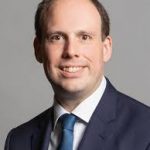
  • Greg Smith – 2024 Comments on Prison Capacity

    Greg Smith – 2024 Comments on Prison Capacity

    The comments made by Greg Smith, the Conservative MP for Mid-Buckinghamshire, in the House of Commons on 18 July 2024.

    I listened very carefully to the Lord Chancellor’s comments about Members present and past who had legitimate concerns about new-build prison proposals in their constituencies. She will no doubt be aware of the proposals for a new mega-prison in Buckinghamshire on farmland adjacent to HMP Spring Hill and HMP Grendon. Those proposals are deeply unpopular in my constituency, first, on fairness grounds—they are affecting communities just one mile from the construction of HS2, which are already under siege from big construction—and, secondly, because the prisons in Buckinghamshire cannot recruit to the vacancies that they already have. Fully staffing a brand new prison is just not going to happen, so I ask the new Lord Chancellor to do my constituents the courtesy of sitting down with me so that she can hear why this particular proposal just will not work.

    Shabana Mahmood

    I thank the hon. Member for his question. May I gently say that this is part of the problem? I am not going to get into the specifics of his particular constituency or those particular planning proposals—those proposals are already within the planning system, as the shadow Lord Chancellor, the right hon. Member for Melton and Syston (Edward Argar), alluded to in his remarks—but prisons have to be built in this country. We have to do more building, we have to do it more quickly, and we have rightly said that we will always treat prisons as of national importance. That was actually a change brought in by the previous Government to unlock the delays that they had faced for many years, particularly when concerns were raised by their own Members of Parliament.

    We take too long to build any kind of infrastructure in this country. That will not be the approach of this Government, so while I am very happy to consider any proposals that any Members of this House have about specifics in their constituency, the reality is that prisons will always be deemed by this Government to be of national importance, and they will be built.

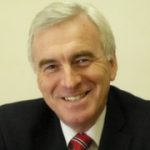
  • John McDonnell – 2024 Comments on Prison Capacity

    John McDonnell – 2024 Comments on Prison Capacity

    The comments made by John McDonnell, the Labour MP for Hayes and Harlington, in the House of Commons on 18 July 2024.

    I declare a non-pecuniary interest: I am an honorary life member of the Prison Officers’ Association.

    In seeking to be fair, as she always is, my right hon. Friend is being too kind on the last Government. They brought about a staffing crisis in our prisons that has brought rehabilitation to an end and levels of violence that we have never seen before. Will she bring forward as soon as possible a workforce strategy for our prisons and probation? As a matter of urgency, will she look in particular at Feltham young offenders institution, which has become a violent emergency for staff and for prisoners themselves?

    Shabana Mahmood

    My right hon. Friend is right. I take this opportunity to pay tribute to all the staff in our prisons, who do an excellent job under very difficult circumstances. He is right to acknowledge that the levels of violence in our prisons have been increasing, placing those staff at ever greater risk. This is similar to the question that I just answered on probation. When prisons are so badly overcrowded, it is incredibly difficult to run any kind of regime that can do good work on rehabilitation, or provide a safe atmosphere for the staff who work in them.

    I will, of course, have conversations in the usual way when it comes to discussions about the spending review and other measures that the Chancellor will bring forward. I hope that I need not tell my right hon. Friend that I will bat hard for our Department and the people I represent. That will all happen in the usual way. We are committed to publishing our 10-year capacity strategy as quickly as possible so that we can begin the process of returning our system to some sort of health. I thank him for raising Feltham; I will look at that and write to him.

  • NHS England – 2024 Statement on IT Outages

    NHS England – 2024 Statement on IT Outages

    The statement made by NHS England on 19 July 2024.

    The NHS is aware of a global IT outage and an issue with EMIS, an appointment and patient record system, which is causing disruption in the majority of GP practices.

    The NHS has long-standing measures in place to manage the disruption, including using paper patient records and handwritten prescriptions, and the usual phone systems to contact your GP.

    There is currently no known impact on 999 or emergency services, so people should use these services as they usually would.

    Patients should attend appointments unless told otherwise. Only contact your GP if it’s urgent, and otherwise please use 111 online or call 111.

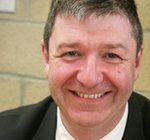
  • Alistair Carmichael – 2024 Speech on Prison Capacity

    Alistair Carmichael – 2024 Speech on Prison Capacity

    The speech made by Alistair Carmichael, the Liberal Democrat Justice spokesperson, in the House of Commons on 18 July 2024.

    I also welcome the Lord Chancellor to her new position, and thank her for advance sight of her statement.

    It has been apparent for months that measures of this sort would be necessary. These are described as temporary measures, but 18 months is a very long time for temporary measures. There would be a real danger of damaging public confidence in our criminal system if the measures were to be extended beyond that point.

    The answer surely has to be more than just building more prison capacity. The problem is not that our prison estate is too small; it is that we send too many people to prison, and that the time they spend there does nothing to tackle the problems of drug and alcohol dependency, poor literacy and numeracy skills, and poor mental health, which led to their incarceration. Can we hope to hear in the very near future the Government’s comprehensive plan to tackle the issue of the time that people spend in prison?

    Finally, may I bring to the Lord Chancellor’s attention the report published this morning by His Majesty’s inspectorate of probation on the failings of the Cambridgeshire and Peterborough probation delivery unit? That report outlined that our duty of care to those whom we lock up should not end the day they leave custody. When will we have a response to that report?

    Shabana Mahmood

    I welcome the right hon. Gentleman to his place. On the 18-month period, we have inherited a criminal justice system in complete crisis and at risk of total breakdown and collapse. It will take some time, by necessity, for us to be able to put that right. I do not want to mislead the public that somehow these changes will have a quick effect. The system is in dire straits and it will take time to repair it. It is right that we are up front and honest about that time, and I will update the House regularly.

    As I say, this Government’s approach will be very different from that of the last Government. We will have a regular release of data, and I anticipate that I will regularly appear before Members to talk about that data, but I welcome that opportunity because it is important that the public are kept updated, and that their representatives in this place are able to scrutinise what is happening and hold us to account. We will need time for the measures to take effect to enable us to move the system to a position of greater health.

    In terms of who goes to prison, why and for how long, when we have overcrowded prisons, there is no capacity to do much other than hold people in their cells. The activity that we know is important to help people in the prison system to turn their lives around, come out as better citizens and make better choices, having made amends to society, cannot happen in deeply overcrowded prisons. That is why dealing with the capacity crisis is so necessary not just to prevent the collapse of the criminal justice system but to cut reoffending in the long term. Creating some space will allow us to introduce proposals to bring down reoffending rates in the country.

    On probation, I pay tribute to all probation staff for their tremendous work. My first visit in my new role was to meet probation staff in Bedfordshire. I recognise that they have been working in a system and a service under extreme strain and facing real difficulty. That is why we will onboard 1,000 new trainee probation officers before March 2025 to add extra capacity, and why returning the probation system to health will be a key priority for this Government.

  • Edward Argar – 2024 Speech on Prison Capacity

    Edward Argar – 2024 Speech on Prison Capacity

    The speech made by Edward Argar, the Conservative MP for Melton and Syston, in the House of Commons on 18 July 2024.

    I am grateful to the Lord Chancellor for very timely advance sight of her statement. May I take this opportunity to congratulate her on her appointment, as well as the Under-Secretary of State for Justice, the hon. Member for Pontypridd (Alex Davies-Jones)? I congratulate the Minister of State, Ministry of Justice, the hon. Member for Swindon South (Heidi Alexander) on her return to this place. Notwithstanding the occasional tussle across the Dispatch Box, I look forward to working constructively with Lord Chancellor, and to holding her and the Government to account. She is of course a decent, courteous, and incredibly able person, and I wish her well in her role.

    We recognise the challenges and pressures facing the prison and criminal justice system, and the need to ensure that our prisons function effectively. Of course, the Government were well aware of those things when they were in opposition, as I know from challenging oral question sessions. In Government, we took the right decisions to significantly toughen up sentences for those who commit the worst crimes, in order to ensure that society was protected. To reflect that, we set in train the biggest prison building programme since the Victorian era. More than 13,000 additional prison places were delivered while we were in government. Two new prisons opened; one prison is under construction; there are two prisons with planning permission; and one prison is on the cusp of a decision. Labour’s planning permission proposal for prisons would not impact any of those developments. In that respect, it is simply a gimmick.

    Crucially, in the covid pandemic, supported by the then Opposition, we made the tough but correct decision not to mass-release prisoners as other countries did, and we maintained that bedrock of our justice system, trial by jury. Those correct decisions meant less space, and the number of people on remand waiting for trial or sentencing dramatically increasing from around 9,000 to 16,500, with resulting additional pressures.

    In deciding to reduce capacity pressure, the paramount consideration for the Lord Chancellor must always be public protection. With that in mind, although we will of course have to scrutinise the detail of her proposed sentence reduction scheme, I must say that we have significant public protection concerns about what she has announced so far, and I hope that she will be able to address those concerns today.

    The Lord Chancellor set out plans for limited exclusions relating to domestic abuse, but can she confirm that if a domestic abuser is convicted of, say, common assault, as is often the case, they would not be exempt from this policy? What exclusions does she plan to put in place to ensure that the worst, persistent, repeat offenders cannot benefit from this scheme? She set out that this was a temporary measure that will be reviewed after 18 months. What criteria will she set for its ending? Better still, will she commit to sunsetting the measure in the delegated legislation, and to returning to the House on this afresh in 18 months, if needed?

    What additional resources are being made available to probation? We hear what the Lord Chancellor says about getting 1,000 more trainee probation staff by March 2025, but how many of those will actually be new? How many will be additional to those whom we already planned to have in place through the existing trajectory for new trainees? Can she guarantee that no prisoners will benefit from her early release scheme without GPS tags and strict conditions? Indeed, will she mandate the imposition of GPS tracking? Can she confirm to the House progress on bringing HMP Dartmoor’s places back into use, and her long-term plans for HMP Dartmoor’s places? The previous Government committed £30 million to acquire land for building new prisons, and had already begun drawing up a site longlist. Is she expanding that fund, or merely re-announcing the same thing?

    More widely, the Lord Chancellor states that this is a temporary measure to ease pressure, so what are her long-term plans for meeting demand? Is she planning to scrap the tougher sentences for serious crimes that the Conservatives put in place to protect the public, and so to reverse our changes, or is she planning to build more prisons over and above the six that we committed to funding, to meet future demand? If it is the latter, has the Chancellor agreed the significant extra funding needed? Those are the long-term questions to which she and the Government owe this House and the public answers, given the changes that she is making today. I hope that she will be able to give clear answers.

    Shabana Mahmood

    I welcome the shadow Lord Chancellor to his place; we have always worked constructively together wherever appropriate, and I look forward to continuing to do so while he is in post. He made a heroic attempt to gloss over many years of failure in planning by the previous Government. I was surprised that he managed to say it all with a straight face. He knows full well that for many years the previous Government struggled to get such measures past many of their Back-Benchers, not all of whom have returned post the general election, but some of whom remain here, and remain implacable opponents of any kind of planning developments in their constituency. They think that national infrastructure is a good thing as long as it is elsewhere. I look forward to seeing whether there is a change of heart among those on the Opposition Benches. It would be welcome, because this Government will not allow the planning system to prevent our country from having either the prison places or the national infrastructure that we so desperately need. He also knows full well that of the 20,000 places that were supposed to have been provided by the previous Government by 2025, only 6,000 have been delivered.

    I am concerned about the position relating to prisoners on remand. The shadow Lord Chancellor rightly notes that the number of those on remand in our prison estate is around 16,000. Of course, judges need to be able to remand people to prison for public protection reasons. That will not change. He will know, given his former role in the Department, that there are no immediate solutions, because many of those individuals will in the end be sentenced to custody. I am considering all options available to me for driving that number down as much as possible. In the end, we will need our 10-year capacity plan to take account of what we expect the sentenced population to look like.

    On the sentences that are covered by this measure, the shadow Lord Chancellor will know that in order to make a change by means of a statutory instrument, it has to relate to specific offences. That is why we have taken every precaution and every option available to us to exclude sentences connected to domestic abuse. He knows that those will include—I am sure that he has seen the draft statutory instrument—offences related to the breaching of a non-molestation order; stalking, which I mentioned in my statement, including stalking involving the fear of violence, serious alarm or distress; strangulation or suffocation; controlling or coercive behaviour in an intimate or family relationship; the breaching of a restraining order; and a breach of a domestic abuse protection order. The common offences that we know are connected to domestic abuse are caught in the statutory instrument. On multiple and repeat offences, he will know that the decision relies on the combination that is reviewed when the sentencing calculation is done.

    As I said in my statement, I will return in 18 months to update the House. We want to remove this temporary measure as quickly as possible, and we will be transparent throughout. The shadow Lord Chancellor will not need to chase me around this building trying to find out what is happening, as I had to when I was in his position and we were considering the previous Government’s early release scheme. We will be transparent in a way that the previous Government simply were not. We will do a quarterly release of all the data, and we will update the House regularly.

    I am sure that the right hon. Gentleman followed the announcement on Friday closely, so he will know that the announcement on probation does not involve new money. It is a re-prioritisation of resources, because strengthening probation to make sure that it is in the strongest possible position to deal with the early release scheme is incredibly important to us.

    On Dartmoor, the right hon. Gentleman knows the history very well. Safety is our No. 1 priority, and after close monitoring of the situation at HMP Dartmoor, it has been decided that prison will be temporarily closed. I will update the House as the situation develops. I say to him gently that we have committed to a 10-year capacity strategy. We recognise that we need to make sure that this country has the prison places that it needs. We will deliver where the previous Government failed, and we will never allow the planning process to get in the way of having the prisons that we need in this country.

    Longer term, however, we will also look at driving down reoffending, because the entrenched cycle of reoffending creates more victims and more crime, and it has big impacts on our ability to have the capacity that we need in our prison estate. That is why this Government will make it a key priority to drive down reoffending. That is a strategy for creating better citizens, not better criminals. It is a strategy for cutting crime, and in the long term, it will deal with our capacity problems for years to come.

    Bambos Charalambous (Southgate and Wood Green) (Lab)

    I welcome my right hon. Friend to her place on the Government Front Bench. The imprisonment for public protection prison population is more than 2,700; 99% of those people are over tariff, and more than 700 prisoners are now 10 years over their original tariff. Can she accelerate the Ministry of Justice’s refreshed IPP action plan to help to reduce the prison population and right that wrong?

    Shabana Mahmood

    I thank my hon. Friend for that question. The situation with IPP prisoners is of great concern, and I know that huge numbers of Members on both sides of this House care about it deeply. I share that concern. IPP prisoners are not caught in the changes that we are putting forward; those are indeterminate sentences, not standard determinate sentences. We supported the previous Government in what we thought were sensible changes to the licence period and the action plan, and we will continue that work. However, any changes made have to account for public protection risks, first and foremost. We want to make progress with that cohort of prisoners, but not in a way that impacts public protection.

  • Shabana Mahmood – 2024 Statement on Prison Capacity

    Shabana Mahmood – 2024 Statement on Prison Capacity

    The statement made by Shabana Mahmood, the Lord Chancellor and Secretary of State for Justice, in the House of Commons on 18 July 2024.

    With permission, Mr Speaker, I will make a statement about prison capacity in England and Wales.

    As you know, Mr Speaker, I wanted to make this announcement first in this House. However, given the scale of the emergency facing our prisons, I was forced to set out these measures before Parliament returned.

    Since this Government took office two weeks ago, it has become clear that our prisons are in crisis and are at the point of collapse. The male prison estate has been running at over 99% capacity for the last 18 months. We now know that my predecessor warned No. 10 Downing Street but, rather than address this crisis, the former Prime Minister called an election, leaving a ticking time bomb. If that bomb were to go off—if our prisons were to run out of space—the courts would grind to a halt, suspects could not be held in custody and police officers would be unable to make arrests, leaving criminals free to act without consequence. In short, if we fail to act now, we face the prospect of a total breakdown of law and order.

    Rather than act, the last Prime Minister allowed us to edge ever closer to catastrophe. Last week, there were around 700 spaces remaining in the male prison estate. With 300 places left, we reach critical capacity. At that point, the smallest change could trigger the chain of events I just set out. With the prison population rising, it is now clear that by September this year, our prisons will overflow. That means there is now only one way to avert disaster.

    As the House knows, most of those serving standard determinate sentences leave prison at the halfway point, serving the rest of their sentence in the community. The Government now have no option but to introduce a temporary change in the law. Yesterday, we laid a statutory instrument in draft. Subject to the agreement of both Houses, those serving eligible standard determinate sentences will leave prison after serving 40%, rather than 50%, of their sentence in custody, and will serve the rest on licence. Our impact assessment estimates that around 5,500 offenders will be released in September and October. From that time until we are able to reverse this emergency measure, 40% will be the new point of automatic release for eligible standard determinate sentences.

    The Government do not take this decision lightly, but to disguise reality and delay any further, as the last Government did, is unconscionable. We are clear that this is the safest way forward. In the words of the Metropolitan Police Commissioner, Sir Mark Rowley, these steps are “the least worst option”. He went on to say that

    “the worst possible thing would be for the system to block”,

    and that any alternative to these measures would be “dangerous for the public”.

    I understand that some may feel worried by this decision, but I can assure the House that we are taking every precaution available to us. There will be important exclusions. Sentences for the most dangerous crimes—for sexual and serious violent offences—will not change. That will also be the case for a series of offences linked to domestic violence, including stalking, controlling or coercive behaviour and non-fatal strangulation, as well as those related to national security.

    We will also implement stringent protections. First, this change will not take effect until early September, giving the probation service time to prepare. Secondly, all offenders released will be subject to strict licence conditions, to ensure they can be managed safely in the community. Thirdly, offenders can be ordered to wear electronic tags, and curfews will be imposed where appropriate. Finally, if offenders breach the conditions of their licence, they can be returned to prison immediately.

    Let me be clear: this is an emergency measure, not a permanent change. This Government are clear that criminals must be punished. We do not intend to allow the 40% release point to stand in perpetuity. That is why I will review these measures again, in 18 months’ time, when the situation in our prisons will have stabilised. Throughout, this Government will be transparent. We will publish data on the number of offenders released on a quarterly basis, and we will publish an annual prison capacity statement, legislating to make this a statutory requirement.

    When we implement this change, we will stop the end of custody supervised licence scheme introduced by the last Government, which operated under a veil of secrecy. From the Opposition Benches, I was forced to demand more information about who was being released and what crimes they had committed. This Government have now released that data, showing that over 10,000 offenders were released early, often with very little warning to probation officers, placing them under enormous strain. This was only ever a short-term fix. It was one of a series of decisions this Government believe must be examined more fully, which is why we are announcing a review into how this capacity crisis was allowed to happen and why the necessary decisions were not taken at critical moments.

    The measures I have set out today are not a silver bullet. The capacity crisis will not disappear immediately, and these measures will take time to take effect. But when they do, they will give us the time to address the prisons crisis, not just today but for years to come. This includes accelerating the prison building programme to ensure we have the cells we need. Later this year, we will publish a ten-year capacity strategy. That strategy will outline the steps that the Government will take to acquire land for new prison sites, and will classify prisons as being of national importance, placing decision making in Ministers’ hands. The Government are also committed to longer-term reform and cutting reoffending.

    Too often, our prisons create better criminals, not better citizens, and nearly 80% of offending is reoffending, all at immense cost to communities and the taxpayer. As Lord Chancellor, my priority is to drive down that number. To do that, the Government will strengthen probation, starting with the recruitment of at least 1,000 new trainee probation officers by the end of March 2025. We will work with prisons to improve offenders’ access to learning and other training, as well as bringing together prison governors, local employers and the voluntary sector to get ex-offenders into work. We know that if an offender has a job within a year of release, they are less likely to reoffend. It is only by driving down reoffending that we will find a sustainable solution to the prisons crisis.

    In a speech last week, I called the previous occupants of Downing Street “the guilty men”. I did not use that analogy flippantly. I believe that they placed the country in grave danger. Their legacy is a prison system in crisis, moments from catastrophic disaster. It was only by pure luck, and the heroic efforts of prison and probation staff, that disaster did not strike while they were in office. The legacy of this Government will be different. We will see a prison system brought under control; a probation service that keeps the public safe; enough prison places to meet our needs; and prisons, probation and other services working together to break the cycle of reoffending and so cut crime.

    I never thought that I would have to announce the measures that I have set out today, but the scale of this emergency has forced this Government to act now, rather than delay any longer. This Government will always put the country and its safety first. I commend this statement to the House.

  • Justin Madders – 2024 Statement on the Post Office Horizon Scandal

    Justin Madders – 2024 Statement on the Post Office Horizon Scandal

    The statement made by Justin Madders, the Parliamentary Under-Secretary of State for Business and Trade, in the House of Commons on 18 July 2024.

    I congratulate the shadow Secretary of State on his new position and on securing the first urgent question of this Parliament.

    Members will know that the Government made a key manifesto commitment to ensure that justice and compensation are delivered as swiftly as possible for every postmaster caught up in the Horizon scandal. The Secretary of State has already met Sir Alan Bates, Kevan Jones and the chair of the Post Office, Nigel Railton, to discuss the progress being made and what more can be done. The Government intend to make a significant announcement on the new redress scheme before the summer recess. This scheme will apply to postmasters whose convictions have been overturned by the Post Office (Horizon System) Offences Act 2024 passed in the last Parliament.

    Kevin Hollinrake

    I welcome the Minister to his role. I say in all sincerity that I wish him the very best of luck. We on the Opposition Benches, in the national interest, wish the Government to succeed. It is vital that his Department succeeds in its brief. When British businesses do well, we all do well.

    I hope this urgent question, on a matter on which the House has been in agreement, will set us off on the right foot in working together in the national interest. That matter is of course compensation for sub-postmasters affected by the Horizon scandal. I was the previous Post Office Minister, and the House will know of my commitment and my party’s commitment to the individuals whose lives have been torn apart by this scandal.

    It is right that the Post Office (Horizon System) Offences Act received Royal Assent during wash-up to quash the convictions of hundreds of affected postmasters, but the Minister will know that the Act itself does not provide compensation, which is why, alongside that legislation, we announced plans for a new Horizon convictions redress scheme. This scheme will make compensation payments to those who have had convictions quashed by the Act.

    In government, we ensured that Royal Assent was achieved as soon as possible so that there was no gap in the availability of compensation. It is only right that postmasters have access to swift and fair compensation. That is why we overturned those convictions. Those with overturned convictions have the option of immediately taking a fixed and final offer of £600,000. It is also why, in government, we changed the rules for those in the Horizon shortfall scheme so that they are entitled to a £75,000 fixed-sum award, bypassing the assessment process; so that all full and final settlements below that figure would be automatically topped up; and so that an appeal process for those in the HSS is also considered.

    Although I am pleased that, as of 31 May, approximately £222 million has been paid to over 2,800 claimants across the scheme, I must push the Government for more detail on when the redress payments set out by the Horizon convictions redress scheme can be expected—we were told that it would be by July. I also note that the Department for Business and Trade has said that it “continues to work” on the new Horizon convictions redress scheme.

    I ask the Minister—[Interruption]—when will the scheme be up and running? When does he expect the £75,000 top-ups and the HSS appeal process to be implemented, and the victims to be contacted to that effect? When will he open the scheme? Will he announce a date for full compensation under the Horizon convictions redress scheme?

    Mr Speaker

    Order. I gently say to the Chamber that it is a new beginning, and we want to start on the right foot, not the wrong foot. It is difficult to go from Government to Opposition, but there is a two-minute limit for the Opposition and a one-minute limit for the third largest party. Please let’s stick to the rules and start as we mean to go on.

    Justin Madders

    Thank you, Mr Speaker.

    The shadow Secretary of State set out the intent he had in government, which we intend to carry on. We also believe there is absolutely no reason why we should not continue to work on a cross-party basis, as we agree with him on the importance of delivering fast and fair compensation, which is at the heart of all we are trying to achieve. We will be making a statement by the end of July, before the summer recess. As the shadow Secretary of State has already noted, we have committed to do that. We are working at pace with officials, victims and those who have been affected by the scandal to work up the detail, and an announcement will be made in due course.

    Jon Trickett (Normanton and Hemsworth) (Lab)

    It is good to see you back in your place, Mr Speaker. The new Minister will recall the old saying that a new broom sweeps clean, and I am sure he will make progress very quickly indeed. It seems to me that the Post Office scandal reveals a wider problem in British society. Whether it is Orgreave, Grenfell, contaminated blood or the problems at Hillsborough, the British establishment seems incapable of listening to the voices of ordinary people. Will he raise that matter with other Ministers and see whether there is a way for this Government to ensure that is not repeated?

    Justin Madders

    My hon. Friend raises an interesting point. In recent years, we, as Members, have reflected on the question of political accountability for decisions that have been taken and actions that have taken place over many years. We will be reflecting on how best to ensure there is genuine political accountability in the system.

    Mr Speaker

    I call the Liberal Democrat spokesperson.

    Mr Alistair Carmichael (Orkney and Shetland) (LD)

    I also welcome you back to your place, Mr Speaker. It is a genuine pleasure for me, as the Liberal Democrat spokesperson, to be addressing the House on behalf of the third largest political grouping. My party will use the privilege of that position to hold the Government and Ministers to account. We will not be using it simply to stoke division and manufacture grievance. That is what the people of the United Kingdom, and Scotland in particular, voted for.

    At the heart of the Horizon scandal was the culture at the centre of the organisation that failed to respect the work that was being done by sub-postmasters at the frontline. The Minister and the Secretary of State will meet with the chief executive of the Post Office. What evidence have they seen that that culture has actually changed?

    Justin Madders

    I do not know if the right hon. Gentleman is aware that the current chief executive officer has stepped aside for a brief period to concentrate on the inquiry. Over the coming months, we will be reflecting on the important questions that the right hon. Gentleman raises, particularly when the outcome of the inquiry is known.

    Gareth Snell (Stoke-on-Trent Central) (Lab/Co-op)

    Referring to the point raised by my hon. Friend the Member for Normanton and Hemsworth (Jon Trickett), what role does the Minister think this Government can find for third party organisations, such as WhistleblowersUK or those organisations that work with people to highlight such scandals? As my hon. Friend pointed out, this was a systematic failure across Government and society, and we simply cannot allow it to happen again.

    Justin Madders

    My understanding is that the last Government undertook a consultation on whistleblowing. We are reflecting on the outcome of that and on the important point my hon. Friend raises. Across a whole range of bodies in this country, whistleblowers have not been heard. We need to consider whether the current legislation gives them sufficient confidence to speak out, and whether their actions and concerns are being addressed.

    David Mundell (Dumfriesshire, Clydesdale and Tweeddale) (Con)

    Many congratulations on your re-election, Mr Speaker. I congratulate the Minister on his appointment. I know he is genuinely committed to promoting British business at home and abroad, but is he aware of a serious issue flowing from the Horizon scandal that is now affecting current postmasters? In order to express their disgust at what has happened in relation to Horizon, some members of the public are not using the Post Office in the way they did previously. Will he and the Government commit to promote the view that the Post Office is safe to use, because the scandal has been resolved and because using post offices is good for the community?

    Justin Madders

    I am concerned to hear about such incidents. It should go without saying that the postmasters are not the ones who should take the opprobrium of the public on this matter. They are doing a fantastic job. They hold communities together and provide a public service. We should celebrate that and encourage people to use their facilities as much as possible. If the right hon. Gentleman has specific examples of postmasters receiving abuse or people being discouraged to use their services because of the scandal, I would be interested to hear about them.

    Caroline Nokes (Romsey and Southampton North) (Con)

    It is a delight to see you back in the Chair, Mr Speaker. There were many sub-postmasters and mistresses who were not convicted, but who are seriously out of pocket due to the shortfalls that they themselves made up and deeply traumatised by the experience that they went through. Can the Minister provide reassurance that the Department will seek to ensure that they are supported, and that the compensation scheme is swift, effective but also very straightforward for them?

    Justin Madders

    I thank the right hon. Member for her question. Those are the principles that we want to address and carry on with from the previous Government: the system should be fair, swift and simple. We know that postmasters have already gone through an incredibly difficult time. We do not want to make it even harder by having a convoluted system. We absolutely agree that justice should be fair, quick, complete and straightforward for people.

    Kit Malthouse (North West Hampshire) (Con)

    Beyond compensation, one of the most important things that campaigners are looking for is consequences for those people who played a part in the creation of this scandal. The Prime Minister has made much about the integrity and accountability of his Government. Presumably that is retrospective. What consequence does the Minister envisage for those current serving Government Ministers who are deemed by the inquiry to have been negligent in their conduct in ministerial office in the past?

    Justin Madders

    That is a very important question. It would be premature of us to draw conclusions before the inquiry has been completed but, absolutely, we should be looking very carefully at all those individuals whose behaviour unfortunately led to the scandal happening and to it taking far too long to address. That is a matter for the inquiry to make recommendations on and, certainly, we will be looking to follow those up.

    Jim Shannon (Strangford) (DUP)

    I welcome the Minister to his place. I know that he was vociferous on this issue when he was on the Opposition Back Benches, so I have absolutely no doubt that he will deliver on it.

    Some 26 postmasters implicated in the scandal in Northern Ireland are worried and concerned. It is imperative that all postmasters feel that they can have an open and frank discussion with no fear of repercussion in the upcoming investigations, and there can be no further unwarranted delays. Can the Minister confirm that, as a priority, he will make sure that postmasters have access at every level to ensure that their concerns are addressed and that he will make every effort to take steps in the right direction? Thank you so much, Mr Speaker.

    Mr Speaker

    I do not see why that point should have come last. [Laughter.]

    Justin Madders

    What a surprise to see the hon. Member in his place today. I am sure that this will not be last time that we have an exchange across the Dispatch Box, but he does raise an important point. We absolutely agree that we need to make it as easy as possible for postmasters to raise their concerns and to get the justice that they have so long waited for.

    Mr Richard Holden (Basildon and Billericay) (Con)

    I congratulate you, Mr Speaker, on your return to your place, and the Minister on taking up his appointment.

    Compensation is one part of this, but what victims of this scandal, such as Betty whom I met, want to see are truth and accountability. I am referring not just to Ministers, to whom my right hon. Friend the Member for North West Hampshire (Kit Malthouse) referred, but to those involved in the scandal. What can the Minister say to people in the Post Office and to Betty, who want to see those responsible in the Post Office properly held to account, as well as the compensation for their suffering?

    Justin Madders

    I thank the hon. Member for his question. He makes an important point. Justice is one side of the coin, but there is also accountability for what has happened. A lot of people want to see that: not just those directly affected, but everyone who has been outraged by the years of inertia and obfuscation that we have seen in this scandal. The purpose of the inquiry is to get to the heart of who knew what, who did what and who did not do what they should have done, and whether individuals should take some responsibility for their actions. I have no doubt that, when those recommendations are released, we will want to see some very swift action on the back of that.

    Andrew George (St Ives) (LD)

    I was privileged to be one of those MPs who, a decade ago, was campaigning on this issue in Parliament with the now Lord Arbuthnot and campaigning on cases in my constituency—people had been treated appallingly. Those people have not yet received compensation. If there is going to be any kind of delay in compensation to those who have suffered, is there any way that early, interim payments can be made to those who need the support now and certainly before too long?

    Justin Madders

    I thank the hon. Member for his question, and join him in praising Lord Arbuthnot’s work in this area. As of 31 May, £222 million has already been paid out in compensation. There have actually been significant interim payments as well. We understand that, while this is a very large scheme, it is important that we get early payments, so I assure the hon. Member that interim payments are a very large part of this programme.

    Dr Kieran Mullan (Bexhill and Battle) (Con)

    The legislation that we passed was a blanket measure. It might be clear to us who is or is not included, but for the individuals affected it will not necessarily have been clear. Will the Minister update the House on the progress that has been made in identifying them and writing to them to confirm that their convictions have been quashed?

    Justin Madders

    I thank the hon. Member for his important question. We have been working closely with colleagues in the Ministry of Justice to identify those people who are affected by the legislation, and they will be contacted in due course if they have not been already.

  • Karin Smyth – 2024 Speech on Health Services in Rural Areas

    Karin Smyth – 2024 Speech on Health Services in Rural Areas

    The speech made by Karin Smyth, the Minister of State at the Department of Health and Social Care, in the House of Commons on 17 July 2024.

    It is a privilege to be the first Minister of this new Labour Government to respond to an Adjournment debate. I am grateful to the hon. Member for Caithness, Sutherland and Easter Ross (Jamie Stone) for raising this important matter and, indeed, for his kind words.

    I hope we can begin this Parliament as we mean to go on, by being candid about the formidable challenges that the NHS faces. As my right hon. Friend the Secretary of State said on his first day in the job, the NHS is broken, and it will be the task of this Government to build a new NHS for the future. That means the NHS in our rural and coastal areas no less than the NHS in our towns and cities. I agree with the hon. Member for Strangford (Jim Shannon) on that point.

    Facing these hard truths does not take away from the heroic efforts of the people working in health and care, who have done their utmost in incredibly difficult circumstances. We all owe them, on behalf of our constituents, a debt of unending gratitude.

    Instead, we want to focus our attention on what needs to be done, including early action to improve access to primary care, dentistry and dental health services in particular. We await the conclusions of a thorough investigation undertaken by the distinguished surgeon Lord Darzi to properly understand the scale of the problem. The Government will then begin work on an ambitious programme of action—a 10-year plan to put the NHS back on its feet. It is a privilege to be part of a Labour Government who are committed to fixing the NHS and making it fit for the future.

    As the hon. Member for Caithness, Sutherland and Easter Ross said, the Department’s responsibility stretches only to the NHS in England. Healthcare is devolved in Scotland, Wales and Northern Ireland, and it will continue to be so.

    I congratulate the hon. Gentleman on being first out of the traps to secure this debate on behalf of his constituents. As a committed advocate for his constituents in one of the most rural parts of Scotland, he has a deep understanding of matters affecting rural communities, as we have heard this evening. He also has a deep understanding of care, about which I have often heard him speak in this Chamber. It is good to see him back again doing just that.

    I cannot speak in detail about the NHS in Scotland, of course, but I can speak about many of the common issues affecting access to care that are relevant to rural constituencies in England, Scotland, Northern Ireland and Wales. I know how rural the hon. Gentleman’s constituency is, and I know the particular challenges that creates in accessing GPs, dentists and emergency care, and in accessing women’s health and maternity services—an issue he has been passionately raising for so long. Maternity services are a problem across the United Kingdom, but I accept the examples he outlined.

    Few places in England are as remote as the hon. Gentleman’s constituency, but I am very aware of similar issues affecting more rural areas near my Bristol South constituency. We have heard from the hon. Members for Glastonbury and Somerton (Sarah Dyke) and for St Ives (Andrew George) about morale and the difficulties we face in the south-west.

    I hope that, in the years ahead, we can share and learn from one another across all of our borders. In many rural areas, the challenge of improving access to services is compounded by travel times and by the recruitment and retention of staff. We must recognise the importance of designing services that reflect an area’s particular circumstances, which is a growing challenge. As the chief medical officer has pointed out in his reports, people are moving out of towns and cities to coastal, semi-rural and rural areas as they age. At the time that people are most likely to need care, they are increasingly living in the places where it is most difficult to provide that care.

    In England, integrated care systems will have a key role to play in designing services that meet the needs of local people. To do this, they will need to work with clinicians and local communities at place or neighbourhood level. We know that excellent primary care is an essential foundation for improving access, tackling the root causes of poor health and tackling problems early so that people remain in better health for longer, and hopefully do not need to access secondary and tertiary care at the same level. That is why Labour has pledged, as part of our health mission, to train thousands more GPs and bring back the family doctor, and that applies to all the nations.

    We are also doing more to use the transformative power of technology. There is enormous potential in ideas such as virtual wards, which allow care to be delivered in people’s own homes. Such models of care can have disproportionate benefit in areas where rurality is a barrier to care.

    Equally, we are committed to seeing the NHS app reach its full potential under the new Government. We understand that some people will need support to use that technology and we are aware of the challenges of rural broadband, but we are committed to making the benefits accessible to all.

    Andrew George

    The Minister has committed the new Labour Government to address those issues, but will she specifically address the matter of the two coroners’ reports into avoidable excess deaths as a result of very long waits for emergency services in Cornwall? They were never addressed by the previous Conservative Government. The reports were about not just the hours spent waiting—sometimes elderly, frail people were on the floors for 10 or more hours—but the fact that sometimes 20 or more ambulances greeted patients when they arrived at the emergency department. Two coroners’ reports were sent to the then Secretary of State, but there was never an adequate response. I very much hope the new Labour Government will review the failings of the previous Government and address those very serious concerns, which affect many other rural areas.

    Karin Smyth

    I am aware of the issues facing the south-west and, when in Opposition, I spoke in the local media about some of the ambulance challenges. I am not aware of those reports, but if the hon. Gentleman writes to me with the details, I will happily look into the issue and get back to him.

    We also recognise the additional cost of providing services in rural areas, for example in travel and staff time. That is why the funding formula used by NHS England to allocate funds to integrated care boards includes an element to better reflect needs in some rural, coastal and remote areas.

    The NHS faces significant challenges. It needs fundamental reform. The Prime Minister is personally committed to resetting the UK Government’s relationship with devolved Governments in Scotland, Wales and Northern Ireland. I echo the Prime Minister’s words today about our commitment to rural constituencies across the entire country and I hope we can work with hon. Members from across the House, including the hon. Member for Caithness, Sutherland and Easter Ross.

    Jim Shannon

    I welcome the Minister’s clear commitment to England, Scotland, Wales and Northern Ireland—and particularly to Northern Ireland. Let me declare an interest: I am a member of the Ulster Farmers Union. I know that the Ulster Farmers Union back home, in conjunction with the NFU here, has been trying to work with the health service and with all those with responsibility in this area on the issue of suicides. Farmers mostly work on their own and suffer from anxiety and depression. They face pressures from finance and pressures from the bureaucracy that exists in farming. I know the Minister is compassionate and understanding—I mean that honestly. When it comes to addressing that issue, does she think that it must be done in conjunction with the farmers unions? Trying to work together to make things better must be a step in the right direction.

    Karin Smyth

    As ever, the hon. Gentleman makes a valid point. I shall certainly ask my colleagues in the Department for Environment, Food and Rural Affairs about that. His point is extremely well made. I know his constituency in Northern Ireland very well. Let me say that we are very committed to working with hon. Members across the House to share ideas. The hon. Member for Caithness, Sutherland and Easter Ross has put forward more ideas about how that can happen. I do not promise to implement all of those things, but I will certainly look at them. We want to work very closely across all jurisdictions so that we can make progress for all our constituents to improve the health outcomes across the four nations of the United Kingdom.

  • Jamie Stone – 2024 Speech on Health Services in Rural Areas

    Jamie Stone – 2024 Speech on Health Services in Rural Areas

    The speech made by Jamie Stone, the Liberal Democrat MP for Caithness, Sutherland and Easter Ross, in the House of Commons on 17 July 2024.

    Let me get my specs on properly, Madam Deputy Speaker. They have a wonky leg that sticks out sideways.

    I must say at the outset that I have heard some excellent maiden speeches today. It is a bit worrying to hear such good maiden speeches, because it makes one feel somewhat mundane in comparison. Let me also welcome the Minister to her place: it is a pleasure to see her sitting opposite me.

    This Adjournment debate is the first of the new Parliament, and I am grateful to the Speaker for granting it. It concerns a topic that is important not only to my constituents in the highlands, but to constituents in every rural area in the country. I thank the Minister for her attendance, and look forward to hearing what she has to say. I hope that the debate sets the tone for how a Government and an Opposition can work together to meet the needs of every citizen of the United Kingdom, no matter where they live.

    I recently had the great honour of being re-elected to represent Caithness, Sutherland and Easter Ross, which is now the largest constituency in the United Kingdom. It measures a staggering 11,798 sq km, more than half the size of Wales. We are here tonight to discuss the adequacy of healthcare services in rural areas, and for fear of being predictable I am afraid to say that the health services in the highlands are not even faintly adequate. I recognise, of course, that health is devolved, but 17 years of centralisation have wreaked havoc on my part of the world. Health services have been stripped back and gutted, leaving my constituents with access to far too few local services.

    Let me begin with general practices. In Scotland, we have seen changes in vaccination services because, in an effort to reduce GPs’ workload, GP contract Scotland removed their vaccination capabilities. That is of huge concern to crofters in my constituency who might cut themselves on a piece of barbed wire and need a tetanus vaccination as quickly as possible. The same goes for anyone in need of shingles, flu, covid or travel vaccines. They must travel a staggering 70 miles or more to the nearest A&E, where they will face further waits owing to backlogs resulting from heavy workloads.

    Jim Shannon (Strangford) (DUP)

    I want to keep the tradition alive, Madam Deputy Speaker. This is my first intervention during an Adjournment debate in the new Parliament.

    I commend the hon. Member for Caithness, Sutherland and Easter Ross (Jamie Stone) for raising an issue that is very important to me and to my constituency. I also congratulate him on his excellent victory in the polls: he has done exceptionally well. I hail from a rural constituency where my own doctor has to service a huge number of people, and the inadequacy of help for rural constituents is abundantly clear to me. Does the hon. Member not agree that the current postcode lottery must end, and that access to GPs, physiotherapists, nutritionists and mental health services for farming and other rural communities must be at least on a par with those in cities and large towns? Why should those in rural communities be second-class citizens in their own country?

    Jamie Stone

    The hon. Member makes his point with his customary charm. It is no wonder that he is so well liked in this place, because he always speaks for his constituents.

    I have talked about the delays in vaccinations, which also applies to the lifesaving vaccinations that babies must have. The Scottish Government take a one-size-fits-all approach that, frankly, does not work in remote rural areas such as mine. The retention and recruitment of GPs and other healthcare workers is crucial, but poor wages and terms and conditions, and a lack of proper travel reimbursement, all lead to a general impression that the game is simply not worth the candle. That is why we are missing key workers and doctors, and why we are paying through the nose for locum and temporary staff. Madam Deputy Speaker, can you believe that NHS Highland has spent £21 million on locum staffing in the past year? That is almost 3% of its entire budget—an eye-watering sum. Could that money not have been spent much better, for example on care homes, hospitals or pain clinics that have been forced to close?

    Sarah Dyke (Glastonbury and Somerton) (LD)

    I apologise for coming a bit late to this debate. Primary care is asked to do more in rural areas than in urban settings, piling pressure on GPs, pharmacists and dentists, yet they struggle to recruit staff, as my hon. Friend said. A dental practice in Street, in my constituency, has been without an NHS dentist on its books for 18 months, despite its best efforts. Does my hon. Friend agree that we must explore ways in which we can incentivise healthcare professionals to practise in rural areas?

    Jamie Stone

    I absolutely endorse that. I am glad that I said in my opening remarks that my experience in a very remote part of Scotland applies to other parts of the United Kingdom. What we have just heard proves that this is the case.

    NHS Scotland has halted all new builds and repairs to health centres across the entire country, which is another problem for healthcare. I have said already how big my constituency is. Just by commuting or doing house visits, healthcare staff will rack up 3,500 miles easily, because the distances are so great. At that point, their reimbursement per mile is more than halved, which does not encourage people to get involved. It is, in fact, discrimination against healthcare professionals who live in rural communities. Training is overwhelmingly based in urban areas, and there is very little incentive to get people to come and work in rural areas. Other factors, such as a lack of housing and job opportunities, feed into this problem.

    There is another issue I want to raise: the lack of women’s health provision, which is pretty severe. In my maiden speech in 2017 I spoke about the need to restore maternity services to Caithness. Seven years later, that is more important than ever. Caithness general hospital used to have a consultant-led maternity service, which meant that expectant mothers could have their babies locally in the far north of Scotland. It was downgraded when I was my constituency’s Member of the Scottish Parliament. At that time, I had more influence and I got it restored. Since then, however, the maternity services have been downgraded again, and there appears to be no movement from the Scottish Government to reverse that. I wish that some Members from the party of the Scottish Government were present today.

    Let me give an example of what this situation means: pregnant mothers have to make a 200-mile round trip in the car to deliver their babies. Imagine a trip like that in the middle of winter, and on rickety-rackety roads in the highlands. In 2019, a pair of twins were born—one was born in Golspie, and the other was born 50 miles away, in Inverness. It is a miracle that those children survived, and that neither a mother nor a child has perished. I have been calling for a safety audit all along, but there has never been one. We know perfectly well what the result would be: the arrangements would be deemed unsafe, if not a breach of human rights.

    It is not just about maternity services; women’s health has been removed from the far north. A routine trip to see a gynaecologist and get a diagnosis for a life-threatening ovarian cyst, or for endometriosis, means travelling the same huge distance—if a woman is lucky enough to get an appointment before her condition has progressed too far for her safety. I wonder what we can do to encourage healthcare professionals to relocate to remote areas, because the health and wellbeing of their wives and daughters must surely be a factor when they consider moving.

    For children growing up in the far north, it is no better. The waiting list for child and adolescent mental health assessments is three years. For neurodevelopmental screenings—for the diagnosis of dyslexia, autism, attention deficit hyperactivity disorder and so on—it is four years. That is the majority of their time at school. One family I spoke to during the election had waited 13 years for a diagnosis. That is a disaster. Dentistry has already been mentioned, and we know that intervention is crucial for long-term dental health

    Andrew George (St Ives) (LD)

    I am grateful to my hon. Friend for giving way, and I apologise to him for being caught out by the early start of this Adjournment debate. Does he agree that it would be really helpful if the new Government achieved a quick win to raise morale in rural areas where services have been so depleted for so long? This applies in west Cornwall, for example, where we cannot call on services from the north or south or west very easily. In those areas, as in others, we have a dentistry desert and the NHS and care services are experiencing their biggest crisis in their history. What we need, for example, is for the West Cornwall hospital to re-establish the urgent treatment centre overnight. Those kinds of quick wins could achieve the lifting of morale within the service and start moving things forward and upward from where they are at present.

    Jamie Stone

    My hon. Friend makes a good point, and I shall touch upon his sentiments in my closing remarks.

    As many in the Chamber know—perhaps new Members do not—I myself am a carer: I am a carer for my wife. So I am very happy that my party has put carers at the top of our agenda. My party leader has spoken about being a carer himself. We desperately need reform, and I believe that the carers allowance should be introduced at a higher rate. In a way, I am declaring an interest here, in that I am an unpaid carer, but we have to look at this. I was recently informed of a constituent who was moved from one care home to another one 123 miles away in the highlands. That is a three-and-a-bit-hour journey each way for the loved ones to go and visit that old man. We can see why this is not great for morale.

    I am from the highlands. I love my native highlands and I care passionately about where I come from, but I think that we need urgent intervention. This is my ask of the Minister. I recognise the nobility of the intent to address these problems at UK level, and I look forward to working with the Government in these endeavours, but the fact is that there is not the delivery under devolution that there should be. I am sorry that no Scottish National party Members are here. I am a committed devolutionist. I was part of the Scottish Constitutional Convention and my name is on the claim of right for Scotland, yet I find it incredibly disappointing that the outcomes are a lot worse than they were.

    When I was in government in the Scottish Parliament, in coalition with the Labour party, we saw progress between 1999 and 2007, when the SNP came in. Now we see that things have gone backwards. This was the main issue on the doorsteps in Scotland, so I hope that the Labour Government can work hard at improving things. I ask them in a cordial way to do everything that can be done to improve the relationship with the Scottish Government, and perhaps encourage the Scottish Government to look at best practice in the rest of the UK and adopt that. I am not talking about hypothecation or about unrolling devolution, but by working together perhaps we can achieve something.

    Also, it would be great if we could encourage NHS England to work closely with NHS Scotland, because it is complete and utter nonsense that people who could cross the border and get treatment have been prevented from doing so by bureaucracy, sometimes by politics of the not-so-clever sort, or by the computer systems not matching. That is nonsense. If someone living in the south of Scotland can get their operation done in Newcastle, let us just go for it.

    I look forward to a Labour Government giving extra money to the health service, and I am sure they will. We will be looking closely at how that happens. There will, of course, be Barnett consequentials that will put that money into the devolved Welsh Assembly, the Scottish Parliament and the Northern Ireland Assembly. I hope that the UK Government will look closely at where those Barnett consequentials go. Will they go where we would hope they would go—namely, to improve the health service, to shorten waiting lists, to sort out the nonsense, and to give the standard of health service that my constituents and I believe everyone in rural parts of the UK is crying out for?

  • Jim Shannon – 2024 Speech on the Loyal Address

    Jim Shannon – 2024 Speech on the Loyal Address

    The speech made by Jim Shannon, the DUP MP for Strangford, in the House of Commons on 17 July 2024.

    Mr Deputy Speaker, I thank you for calling me and all hon. Members who have made contributions so far; I am glad to see you in your place and I am glad to be in mine. I thank the good people of Strangford for voting for me in the election, and I wish all Members in this House God’s richest blessing for this term and the years ahead. I am very pleased to see the Labour party and the Prime Minister in their place. I believe that all of us across the House and out in the nation we represent wish for things to go well—there is good will and a wish to see things in a better way.

    I was delighted to hear in the King’s Speech the Prime Minister’s goal of taking the brakes off Britain, which is a goal that every party can get behind. Yet the Unionist in me would gently remind the Prime Minister and the Labour party that that responsibility applies equally to the whole United Kingdom, not simply to mainland Britain. We need to remove the brakes, wherever they may be, within the United Kingdom of Great Britain and Northern Ireland. One brake that springs to mind at this moment is that mentioned by my right hon. Friend the Member for Belfast East (Gavin Robinson): the one holding back Harland & Wolff from providing jobs and financial stability by not fulfilling the contract promised by the last Government. Security on the loan is critical to prevent the removal of economic growth, and I do hope that brake will be released urgently.

    I also welcome the indication that the creation of wealth is to be a Labour party priority, as that is foundational for any nation. I look forward to working with the Labour Government to ensure that it is spread across the whole United Kingdom, of which Northern Ireland is an integral part. There is work to be done when it comes to Northern Ireland’s place in the Union. In response to my intervention on the Prime Minister today, he quite clearly committed to ensuring that Northern Ireland’s position within the United Kingdom is strengthened. If that is the case, it is good news, but I look forward to seeing those words become action. My colleagues and I are anxious to continue the work of ensuring that our constituents have the same treatment as the rest of the UK, from shopping to post, to imports and border controls. I look forward to meeting our new Secretary of State for Northern Ireland, who is in a position to establish that working relationship to the benefit of all within the United Kingdom. There is work to be done on the remnants of the protocol, and I know that must be a priority for this new Government.

    There is also work to be done on establishing an adequate formula for funding, which both my right hon. Friends the Members for East Antrim (Sammy Wilson) and for Belfast East referred to. When I was a member of the Northern Ireland Affairs Committee, along with other colleagues, all parties on the Committee and the Government officials were clear that the funding formula was wrong and had to be addressed. We are £500 million to £600 million shy of what other parts of the United Kingdom are getting, and there was a commitment given to ensuring that that would come through.

    My request to the Labour Government, and in particular to the Secretary of State for Northern Ireland, will be to ensure that that £600 million gaping hole in Northern Ireland’s finances is addressed. With great respect, I say this: we do not need a vanity project of Casement Park, at a cost of more than £300 million, when the very basics of life are being neglected.

    I was pleased to hear the aim of improving mental health services, which other Members have referred to, particularly for our young people. In Northern Ireland we have the largest prevalence of mental health problems in the whole of the United Kingdom. My request to the Labour Government and to my Prime Minister, as he is, is to ensure that his mental health programme can work in conjunction with the Northern Ireland Assembly so that we can address mental health issues for our young people head-on. Again, there is a way of doing that, if we do it here at Westminster and ensure that the Northern Ireland Assembly are working alongside us in that partnership. I am very keen to ensure that happens.

    I also put in a plea for peace in the middle east to be an aim of the Government. I would gently highlight that calling for a ceasefire when hostages remain in unimaginably cruel captivity, and without ensuring that Hamas terrorists can never inflict that kind of savage damage again, must surely be premature. There is a solution, and it can be found; I know that is the desire of all our constituents, as well as our friends in Israel and on both sides of the Gaza strip. I believe that the Government must consider maintaining the previous Government’s procedural challenge to the International Criminal Court’s jurisdiction in Israel and in the Palestinian Territories. It is important that the ICC retains its proper role within the law and exercises jurisdiction based on its own statutes and in accordance with the principle of complementarity.

    As long as I have been in Parliament, there has always been a plea from both sides of the Chamber for the Islamic Revolutionary Guard Corps to be condemned and made illegal. Those pleas came from the Opposition side when the Labour party was in opposition. Now that Labour is in government, I hope those pleas will be answered. The IRGC is the world’s most powerful terrorist group, committed to the conversion or murder of Jews, Christians, Zoroastrians and others it considers to be infidels, and for 40 years it has pursued its repugnant goals through violence on a global scale. It is time for it to be proscribed, and I ask for that to happen as soon as humanly possible.

    I am afraid I do not have time to go through all the things I wanted to speak to, but I will quickly mention the issue of conversion practices. I just say this gently. I think the Minister responsible has got it. There will be a consultation beforehand—there has to be—and there are many of us who have Christian faith and beliefs, and who wish to ensure that the beliefs to which we hold fast are considered fully when it comes to making any decisions.

    I also make a plea, as have the hon. Member for Salford (Rebecca Long Bailey) and others, for the WASPI women. As you probably know, Mr Deputy Speaker, I led a debate on the issue, and I believe the Government need to deliver for the WASPI women. I have some 5,500 of them in my constituency, and there are 76,000 in Northern Ireland. We have an obligation to everyone across this great United Kingdom of Great Britain and Northern Ireland to deliver.

    This is a new Government, with new ways of doing things and new aims, but there are also new opportunities. I, for one, will do all I can, working alongside the Government, to achieve the aims of making this wonderful United Kingdom of Great Britain and Northern Ireland a wonderful place to live, educate our children, work and thrive. I believe that all of us in this House can work together to see that goal realised and people’s lives made better as a result.