Tag: 2024

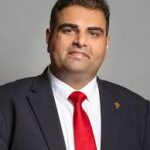
  • Navendu Mishra – 2024 Speech on Foreign Affairs and Defence

    Navendu Mishra – 2024 Speech on Foreign Affairs and Defence

    The speech made by Navendu Mishra, the Labour MP for Stockport, in the House of Commons on 18 July 2024.

    I congratulate all the hon. Members who have made their maiden speeches. I grew up in Bristol, so I wish the new hon. Member for Bristol Central (Carla Denyer) well in her parliamentary career. Her predecessor was a good friend of mine, and I wish her well as well. I also congratulate my hon. Friend the Member for Ealing Southall (Deirdre Costigan), who I know will be very successful in delivering for her constituency. Her predecessor was a very good friend of mine—I talk about him in the past tense, but I should not, because he continues to be a very good friend of mine! My hon. Friends the Members for Doncaster East and the Isle of Axholme (Lee Pitcher) and for Kensington and Bayswater (Joe Powell) also made excellent speeches. I remember making my maiden speech in 2020 and how unnerving it was, so I congratulate them all.

    There were a lot of positive announcements in the King’s Speech—in fact all the announcements in the King’s Speech are positive. I am so glad after that after my four and a half to five years on the Opposition Benches, Labour has transitioned to the Government Benches. I congratulate the Secretary of State for Defence, now that he has taken office, and I echo his remarks about serving personnel, and non-uniformed personnel, who serve Britain both within our borders and abroad. They make an enormous contribution and everyone should recognise that.

    I am grateful to the people of Stockport for re-electing me as their Labour Member of Parliament. The constituency boundaries were slightly different, with Reddish coming in and the Manor ward going into the Hazel Grove constituency. I place on record my thanks to all Labour activists, members and supporters for their commitment during the campaign and for returning me to the House of Commons.

    The topic I want to start with is housing, which continues to be the single biggest issue that people contact me about. Sadly, Stockport council is not part of the Greater Manchester spatial framework, because the Liberal Democrat councillors in Stockport aligned with the Conservatives and voted together in December 2020 against Labour’s proposal to join the framework. That means that the borough of Stockport is massively behind on housing targets. When Stockport withdrew from the Greater Manchester spatial framework, the borough needed to build 793 homes per year. In September 2022, Place North West estimated that that figure had risen to almost 1,200 homes per year. The council is on schedule to fall short of its target by 6,000 homes.

    We are in a housing emergency. I welcome the Labour Government’s commitment to building 1.5 million homes and decent, affordable housing for everyone. In my view, Stockport does not need any more developments for investors; it needs housing for families and young people so that they can get on the housing ladder and have the dignity and respect of safe housing. People are desperate for secure, safe and affordable homes. Far too many face homelessness or being placed outside Stockport, far from their families, support networks and schools. I am familiar with a case that came through my office last week. A person experiencing homelessness was offered a place to live in Birmingham, which is almost 100 miles from Stockport—that is simply not acceptable. Many private landlords in Stockport and across the UK have ensured that renting is unaffordable for many. There are bidding wars for properties. It is vital that rents are controlled and rent caps implemented. I urge the Government to go further.

    On healthcare, it is fantastic that the new Health Secretary has met the British Dental Association. NHS dentistry is in crisis. So many people in Stockport and across Greater Manchester simply cannot even register with an NHS dentist, let alone get an appointment. One of the first steps that the Health Secretary took was to meet the British Dental Association, which has a long track record of campaigning for proper funding for NHS dentistry to ensure that people can access high-quality dental care regardless of their circumstances.

    Let me mention the case of someone who contacted my office. My paperwork states:

    “A young mother was unable to find an NHS dentist when pregnant. She is distressed that she cannot access NHS dentistry for her now six-month-old daughter, for when she gets her first teeth, as she is on the waiting list for heart surgery at Alder Hey hospital. Her daughter should be checked by a dentist prior to surgery due to an increased risk of infection of the heart. Children with heart conditions need proactive dental care and many parents are simply unable to pay for private dental care.”

    NHS dentistry is in crisis. I am so pleased that the new Health Secretary and the team at the Department for Health and Social Care are making efforts to address that serious issue.

    Stepping Hill hospital serves the borough of Stockport, although it is not in my constituency but just over the border in Cheadle. I raised the state of that hospital with the former Prime Minister just a few months ago. The buildings are in desperate need of refurbishment and capital investment. Again, I thank the new Secretary of State for his Department’s announcement of funding for local hospitals, including Stepping Hill—an example of Labour in government making a real difference to people’s lives.

    I will not take up too much of the House’s time, but I wish to mention two issues quickly. On railways, I thank the Friends of Reddish South Station for meeting me on several occasions. I will campaign to restore proper rail services to Reddish South station, which has one service a week—that is simply not acceptable. I also want to see disabled access at all train stations, starting of course in my constituency. Brinnington, Heaton Chapel, Reddish North and Reddish South stations all need proper disabled access.

    We must also invest in Stockport station, which is quite old and worn out. It is a wonderful asset, offering services to London, Birmingham, Wales and across England. In 2022-23, passengers entered and exited Stockport station a total of 3.2 million times. It is vital that our regional and national rail infrastructure is protected and invested in. The station is dated, the lifts are often faulty and it is a poor experience for passengers and for the staff working there.

    The commitment to Great British Railways in the Labour party manifesto and from the new Secretary of State for Transport is welcome. Anyone who has travelled with Avanti will be familiar with the service that it offers, and everyone—employees as well as passengers—is unhappy with it. The ticket prices are too expensive, the services are unreliable, and it is just a negative experience overall. Avanti is holding back regional growth for Greater Manchester—it is holding people back from making the commute for business reasons, or to meet family or friends. Labour’s plan for a simplified and unified governance structure places passengers at the heart of the railway. The new Government will bring train operators under public ownership and control, which I welcome.

    The final point I will make is on the employment rights Bill. We have far too many employers exploiting people and paying them poverty wages; we need to make sure that people get respectable wages, so that they can bring up their family with pride and have the dignity of work. The Bill announced in the King’s Speech will address that issue, and I welcome it.

  • Carla Denyer – 2024 Maiden Speech on Foreign Affairs and Defence

    Carla Denyer – 2024 Maiden Speech on Foreign Affairs and Defence

    The maiden speech made by Carla Denyer, the Green MP for Bristol Central, in the House of Commons on 18 July 2024.

    I am most grateful to you, Mr Deputy Speaker, for calling me to speak in today’s debate.

    Good afternoon, colleagues. My name is Carla Denyer. My pronouns are she/her, and I am very much looking forward to getting to know you all. I congratulate the hon. Members for Ealing Southall (Deirdre Costigan), for Doncaster East and the Isle of Axholme (Lee Pitcher), and for Kensington and Bayswater (Joe Powell) on their interesting maiden speeches. I also want to take a moment to honour the hon. Member for Oxford West and Abingdon (Layla Moran) for her very compelling speech about the route to peace in Gaza and Israel.

    I look forward to working with all the newly elected MPs, and, in fact, everybody in this place, in pursuit of a better future for our constituents. I will return to the shape of that future shortly, but first I want to look back for a moment and to thank the people of Bristol Central for making history and electing me as the first Green MP for the city and also, as far as I am aware, the first bisexual MP for the constituency. We are, as a city, rightly proud of our firsts. In 1371—do not worry, I will not be doing every year—the town of Bristol was the first in England to be given the status of a county. In 1739, John Wesley founded the very first Methodist chapel, The New Room, in what is now the very heart of my constituency.

    In 2015, the city became the first in the UK to be given the European Green Capital award. In 2016, the city elected Marvin Rees, and thus became the first major European city to elect a mayor of black African heritage. And what is widely agreed to be Banksy’s first large stencil mural—The Mild Mild West—was painted in 1999, in Stokes Croft in my constituency. In fact, it is on a wall just around the corner from where I first met a member of the Green party—a meeting that rather changed the course of my life.

    Unfortunately, the history of Bristol cannot, and must not, be disentangled from the UK’s shameful and immoral history of colonialism and slavery. A 1499 voyage, led by merchant William Weston of Bristol, was the first expedition commanded by an Englishman to North America. And rich Bristol merchants financed more than 2,000 slaving voyages between 1698 and 1807. Those ships carried over 500,000 enslaved Africans from Africa to slave labour in the Americas.

    A blue plaque on the Seven Stars Inn on Thomas Lane in the city centre marks how Thomas Clarkson, an anti-slavery activist, together with the Seven Stars’ landlord, collected testimonies from sailors in 1787 that were used as evidence here in Parliament. These statements played a role in the passing of the 1807 Slave Trade Act, which eventually led to the historic end of the transatlantic trade in enslaved Africans. Bristol Central’s hugely successful M Shed museum highlights the anti-slavery movement, alongside its exhibition about modern public protests, including the Bristol bus boycott, and it holds the infamous, now-toppled Colston statue. The exhibition points to the abolition campaign as the start of a British tradition of society campaigning for change. Today, the city that I have proudly called home for 15 years, and part of which I am now immensely proud to represent here in Parliament, is beginning to take responsibility for its history, and continuing to lead the way when it comes to demanding change.

    Like most of the other esteemed Members making their maiden speeches, I got the Library note advising me that my remarks should not be politically contentious or critical. I admit to having struggled a little with how to define that, given that I am here first and foremost to demand and create change on behalf of my constituents. In 1943, a slightly different-shaped version of Bristol Central elected its first woman MP. I can applaud that landmark moment, though not Lady Apsley’s reported radical right-wing conservatism, imperialist, racist and antisemitic views, or the fact that she apparently considered women first and foremost as wives and mothers. She made her maiden speech to the Commons from her wheelchair and, it is widely reported, defied convention by making a passionate appeal for the better treatment of disabled people. That is one thing on which I can agree with her, though I do not think that championing disabled rights should ever be considered controversial. I hope that in this Parliament it never will be.

    Nor do I think that a voting system that makes every vote count is an especially controversial proposition, so I agree strongly with another of my predecessors: Stephen Williams, the first Liberal Democrat ever to represent what was then Bristol West. He used his maiden speech to call for, as he put it, radical electoral reform and for first past the post to be swept away and replaced with a system of fair votes. Now is a good moment to recognise the contribution to Parliament made by my immediate predecessor, Thangam Debbonaire, including as shadow Leader of the House. I pay tribute to her work on behalf of Bristolians, particularly in support of the city’s amazing creative industries as shadow Secretary of State for Culture, Media and Sport, and her groundbreaking move to hold what is believed to have been the first-ever constituency surgery for people on the autistic spectrum. Thank you, Thangam, for your service to the city.

    What unites all these threads is the idea of speaking up for what we believe in regardless of whether others might find it contentious, or whether we are swimming against the popular tide. As an MP, I am determined to fully honour Bristol Central’s history of doing exactly that: using my voice as a force for good, for real change and for real hope, to create a brighter future for my constituents and for us all—the kind of future that the King’s Speech represents an opportunity to build. That bright future depends on the Government taking bold action to tackle inequality and poverty through measures such as lifting the two-child benefit cap, a mass council-house building programme, and giving councils the power to keep private rents under control. Private rents in Bristol have increased by 52% over the last decade, while wages have not even increased by a quarter. This is an untenable situation, but one that around half my constituents find themselves in as private renters.

    The bright future that I talked about depends on defending and restoring our public services, from hospitals to dentists, schools and youth services, and it means looking to restore the UK’s reputation on the world stage. This is a reputation that has been sorely damaged by Brexit. I know that I speak for the majority of Bristol Central when I say that we must be open and active in our efforts to rebuild stronger links with Europe and work eventually towards a future where the UK can rejoin the EU. It is a reputation too that has been compromised by our Government’s refusal to clearly condemn the Israeli Government’s disproportionate response to the horrific terrorist attacks of 7 October, and in particular by the UK’s continuing arms sales for use against Palestinians, in persistent breach of international law. I am clear that that must stop, and I am clear too that demanding it should not be controversial.

    Finally, it is a reputation that has been seriously eroded in relation to climate action. As a councillor I was responsible for proposing the UK’s first climate emergency motion in autumn 2018—another first for Bristol. I know what the climate science requires that we get done in the lifetime of this Parliament, as this critical decade for the climate marches on. The brighter future we all want for our constituents and our country demands that we urgently secure a liveable future. Our warming planet has just passed another milestone. For the first time, global temperatures were above the crucial 1.5°C limit for an entire year. I hope this House will agree that that is one first that we all have a responsibility to try to ensure is also a last.

    The last Government sought to break the climate consensus, to weaponise culture wars and to spread lies and misinformation about what a net zero future will be like. This Government must reverse the damage and have the courage to show genuine climate leadership at this critical time in our planet’s history. I will stand with the Government if they do that, but I will not be afraid to speak up where I think they might need to go a little faster. We have heard in the King’s Speech a commitment to a cleaner energy transition and public ownership of public transport, and I hope more will be forthcoming across the weeks and months ahead of us.

    I stand ready to work across party lines to help to secure the ambitious changes we need for our climate and our natural world and to make the UK a fairer place. In fact I have already begun that cross-party work, so I say a big thank you to the hon. Members of other parties and none who have signed my amendment to the Loyal Address already, and well done to those MPs whose amendments and motions I have in turn supported. The challenges that we face together, and that our constituents face daily, are too important for us to fall victim to political tribalism. As Bristol Central’s many firsts illustrate, all our choices today will become part of history. As a Green MP, I feel that responsibility on my shoulders. I will do everything I can to carry it responsibly and repay the enormous trust put in me by the people of Bristol Central.

  • Andy McDonald – 2024 Speech on Foreign Affairs and Defence

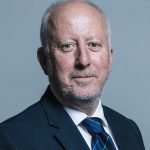
    Andy McDonald – 2024 Speech on Foreign Affairs and Defence

    The speech made by Andy McDonald, the Labour MP for Middlesbrough and Thornaby East, in the House of Commons on 18 July 2024.

    It is a pleasure to follow the right hon. Member for Dumfriesshire, Clydesdale and Tweeddale (David Mundell). It is also a pleasure to finally sit on the Government Benches with my Labour colleagues. The view is so much better from here.

    It is an honour to have heard such incredibly powerful maiden speeches from my hon. Friends the Members for Ealing Southall (Deirdre Costigan), for Doncaster East and the Isle of Axholme (Lee Pitcher), and for Kensington and Bayswater (Joe Powell). They have raised the bar. It will be difficult for us to match them.

    In my acceptance speech on election night, I spoke about how the Conservative austerity agenda had so badly damaged this nation over 14 years. That agenda’s destruction of our public services and people’s incomes devastated communities like mine, so it is incredibly welcome to hear the King’s Speech of a Labour Government who will immediately begin to address those matters.

    I am particularly pleased to welcome the employment rights Bill. In 2021, as shadow Secretary of State for Employment Rights and Protections, I was honoured to accept the invitation of the then Leader of the Opposition, now Prime Minister, to chair a taskforce that ultimately led to Labour’s Green Paper heralding the new deal for working people. For their hard work and dedication, I must thank Labour’s affiliated trade unions, the non-affiliated unions, the TUC and the then Leader of the Opposition’s office. I must also mention the expertise of my noble Friend Lord John Hendy and the Institute of Employment Rights, who worked on this agenda over many years, and my staff, Karl Hansen and Eli Machover.

    It is right for us to take action to ban exploitative zero-hour contracts and to end the scourge of fire and rehire. While we are at it, we should pay attention to P&O’s “fire and replace”; it sacked 800 workers over Zoom. Those concerned have to be held responsible for their despicable acts.

    I was pleased to import from New Zealand the concept of fair pay agreements. I am delighted to see my right hon. and hon. Friends engross the proposal, starting with the introduction of FPAs in the social care sector. Hopefully, that will mark the full restoration of sectoral collective bargaining. Over 25 years ago, 80% of our economy was represented by collective bargaining, but now it is less than 25%. That must be corrected.

    There is a great deal of work to do, but the introduction of a single status of “worker” will be transformative for the millions of workers in precarious and fragile employment, who currently struggle to make ends meet and have no hope of planning their future. All of that changes with the new deal. As we update trade union legislation, we look forward to the repeal of the unworkable and ill-advised Strikes (Minimum Service Levels) Act 2023 and the Trade Union Act 2016.

    Elsewhere in the King’s Speech, I very much welcome the two railway Bills and the better buses Bill. Having produced, as shadow Transport Secretary, the White Paper setting out Labour’s plan for a nationally integrated, publicly owned railway, I am delighted that the Secretary of State for Transport has been so quick off the mark in tabling the necessary Bills.

    I place on record my heartfelt thanks to the incredible Dr Ian Taylor, formerly of Transport for Quality of Life, for his great expertise and sheer hard work in progressing the agenda on rail reconfiguration and the re-regulation of buses. It is right that we get on with establishing Great British Railways under public ownership. I welcome Lord Peter Hendy—I mentioned his brother—to the role of railways Minister, which is undoubtedly an excellent appointment.

    I cannot fail to mention that in my Middlesbrough and Thornaby East constituency we have some of the worst child poverty in Britain. The Prime Minister is right to say that the abolition of the two-child cap is merely one lever for tackling the abomination of child poverty, as all Labour Governments are destined to do, but the cap is undoubtedly the most cruel and draconian measure to be visited on low income households by the party in opposition. I hope that my colleagues on the Front Bench will pull that lever as a priority, and abolish this grotesquely punishing measure at the earliest opportunity.

    We need a serious approach to public sector pay restoration and outsourcing. I very much welcome the Chancellor’s commitment to the largest programme of insourcing in British history, as well as the Health Secretary’s intervention; he is doing what his predecessor did not do: meet junior doctors in an attempt to bring the dispute to an end.

    We need to grow our economy, but we cannot shy away from the fact that our taxation system is grossly unfair. I trust that the glaring anomalies will be addressed early on. I welcome the focus on devolution. There are powers that we want to take away from this place and give to our nations and regions, but my goodness, that has to come with accountability, transparency and openness. Sadly, too often that has been lacking, and that must be addressed.

    Finally, on foreign affairs, it is perhaps a statement of the obvious, but our foreign policy must be based on human rights and adherence to international humanitarian law. On Gaza, I welcome the Foreign Secretary this week calling for an immediate ceasefire, for hostages to be released and for aid to reach the people of Gaza, but the question is how we will apply pressure to achieve these goals. We must have clarity in a number of areas.

    First, I urge the Government to set out how they will use all the necessary levers to achieve the ceasefire, including the end of arms export licensing. Secondly, I trust that this Government can provide the House with early confirmation of the re-establishing of direct funding to the United Nations Relief and Works Agency.

    Thirdly, I ask the Government to clarify that they support the processes that will prosecute war crimes, and that the UK accepts the International Criminal Court jurisdiction over Israel and has no truck with the nonsensical legal argument that Israel is exempt from international law. We have seen that time and again. I do not think that anybody in this House was not shaken to the core by the vision of that young man with Down’s syndrome who, having been attacked by IDF soldiers, was savaged by dogs and then bled to death. We have seen such scenes over and over, and the justification that it is okay to kill 110 people—innocent children, women and men—in the pursuit of a military target is an abomination. I hope the Foreign Secretary will quickly clarify the new Government’s approach to the early recognition of the state of Palestine. We need equality and fairness to resolve this crisis, and it will not be resolved without the recognition of Palestine.

    There is so much in this King’s Speech. We have an awful lot to be happy about, and a lot of optimism pours from it. There is much to do, but we are indeed up and running.

  • David Mundell – 2024 Speech on Foreign Affairs and Defence

    David Mundell – 2024 Speech on Foreign Affairs and Defence

    The speech made by David Mundell, the Conservative MP for Dumfriesshire, Clydesdale and Tweeddale, in the House of Commons on 18 July 2024.

    What a pleasure to have heard three such effective maiden speeches! I commend the hon. Member for Kensington and Bayswater (Joe Powell) for surviving not only the election, but the birth of twins. I wish his family well. I wish the hon. Member for Doncaster East and the Isle of Axholme (Lee Pitcher) a happy birthday. I do not think that making a speech in the House of Commons on future birthdays will have the same allure, somehow.

    I regarded Virendra Sharma as a great friend in the House of Commons. I never quite saw him as a mafia don, but I did see him as a very effective operator. All new MPs, and indeed returning MPs, could learn a lot from Virendra about how to get things done in Parliament.

    I commend the new teams at the Foreign, Commonwealth and Development Office and the Ministry of Defence. I am particularly pleased to see the noble Lord Collins of Highbury becoming an Under-Secretary in the Department. I have worked closely with him on development-related issues over the past five years, particularly as his co-chair of the all-party parliamentary group on nutrition for development. Lord Collins championed those issues in opposition; I am confident that he will now do so within the FCDO, along with the Minister of State, the right hon. Member for Oxford East (Anneliese Dodds), whom I congratulate on her appointment.

    I want to concentrate on international development, although I note that there was no specific mention of it—nor any ambition to return to spending 0.7% on it—in the King’s Speech. I commend my long-standing right hon. Friend the Member for Sutton Coldfield (Mr Mitchell) for his efforts in the previous Government. Not only did he bring his usual vigour and drive to his time as Minister for International Development, but he stabilised what all the evidence presented to the Select Committee on International Development showed had been a chaotically managed merger of the Department for International Development and the Foreign and Commonwealth Office. Whatever the rights and wrongs of the thinking behind the merger, we cannot pretend that it was well executed, or that the randomness of some of the decisions and the scale of the funding cuts were not seriously damaging to frontline programmes and the UK’s reputation as a reliable development partner.

    Thank to my right hon. Friend, that is behind us. I listen to his warning about the need for a plan B, although the last thing those delivering aid on the frontline need is the distraction and disruption of further organisational change in the FCDO. However, I am sure that they want to know this Government’s criteria and anticipated timescale for returning to 0.7%. In opposition, Labour Members rightly highlighted the cuts to the aid budget, and the impact on that budget of spending on refugees in the UK, but in government they need to put their money where their mouth is, so I look forward to hearing some detail on that spending in the Minister’s winding-up speech.

    If we are to make meaningful progress on achieving the sustainable development goals by 2030, the Government should embrace the White Paper published by my right hon. Friend the Member for Sutton Coldfield. It was well received across the development community in the UK and internationally. Although it is understandable that a new Government might want to put their own bells and whistles on it, I hope the core objectives of ending extreme poverty and tackling climate change will remain, along with the framework for doing so.

    Mr Mitchell

    I assure my right hon. Friend that there are bells and whistles from across the House in the international development White Paper.

    David Mundell

    Indeed, and I see the White Paper as an important part of building a new consensus on development, and of re-engaging the wider public with that agenda. A cross-party approach is the best way to build public support for development and confidence that funding is being spent effectively, which is a legitimate concern of our constituents.

    All of us in this place who care about development should set ourselves the objective of increasing public engagement in the UK, as should those who work in the sector. In recent years, too many non-governmental organisations have gone down an overtly corporate route and lost touch with their members and supporters, who are often the most powerful advocates for aid in their communities.

    Having listened to Mr Deputy Speaker’s guidance, I think I do not have time to go into detail on what I think the specific priorities should be, but having co-chaired the all-party parliamentary groups on HIV/AIDS and nutrition for development, I am absolutely clear that those must be at the heart of the Government’s approach to international development.

    The Economist has highlighted this week that spending on nutrition delivers the best outcomes for the money spent. As the Government move forward on delivering the sustainable development goals, which we seem far from achieving by 2030, I hope that nutrition will be at the heart of the agenda, and that the Government will take the opportunity of the forthcoming Nutrition for Growth conference in Paris to restate their commitment not just to nutrition, but to international development.

  • Joe Powell – 2024 Maiden Speech on Foreign Affairs and Defence

    Joe Powell – 2024 Maiden Speech on Foreign Affairs and Defence

    The maiden speech made by Joe Powell, the Labour MP for Kensington and Baywater, in the House of Commons on 18 July 2024.

    Thank you, Mr Deputy Speaker. It is a great pleasure to follow the right hon. Member for Wetherby and Easingwold (Sir Alec Shelbrooke), and the excellent maiden speeches by my hon. Friends the Members for Ealing Southall (Deirdre Costigan) and for Doncaster East and the Isle of Axholme (Lee Pitcher).

    It gives me great delight to address this House as the new Member of Parliament for Kensington and Bayswater. I doubt that, for any of us, the last seven weeks have been easy. I know that many hon. Members will still be catching up on their sleep after the campaign trail, but having our twins born in the first week of the general election campaign took things to another level. If timing is everything in politics, that is certainly not a combination I would recommend anyone repeat—but my children will obviously have a great story to tell when they are older.

    I want to take a moment to thank the team at Queen Charlotte’s hospital and across the Imperial College NHS trust for their incredible care. Our NHS staff deserve our utmost respect and support, and I hope in the future that Saint Mary’s, Hammersmith and Charing Cross hospitals will finally get what they need to become the first-class premises that patients and staff in our community deserve, including the delivering of plans for a brand-new St Mary’s hospital.

    I pay tribute to my two predecessors in this new constituency. Felicity Buchan worked hard for the residents of Kensington over the past five years, and I particularly commend her for her work on the Homes for Ukraine programme. Some issues are central to our national and international security, which transcends party politics, and supporting the struggle for a free Ukraine is one of them. I am grateful for her work on this issue. In Kensington and Bayswater, we have a Ukrainian cultural centre, the Ukraine embassy and a substantial Ukrainian population. Having personally worked to support democracy and anti-corruption in Ukraine for many years, I will make sure that our Ukrainian community continues to have a strong advocate in Parliament.

    I was also fortunate enough to inherit part of Dame Karen Buck’s former constituency of Westminster North. Under previous boundaries, she represented north Kensington for many years. I know from experience that tens of thousands of residents have been directly assisted by Karen with expertise and empathy. I hope I can emulate even a small part of her unwavering focus on tackling poverty and our housing crisis, whether that is by holding our social housing landlords to account, by protecting private renters, including by abolishing section 21 no-fault evictions, or by finally ending the outdated feudal leasehold system. Karen did a monumental amount of work to advance those causes, and I am sure she was absolutely delighted with their inclusion in the King’s Speech. She has always exemplified public service over self-interest. I will do my best, along with my other colleagues who are inheriting her constituency, to live up to her legacy. I know how grateful we are for her 27 years of service in this House.

    Kensington and Bayswater is an incredible part of London, as many hon. Members will already know—indeed, I canvassed many of them during the campaign and have already been picking up casework in the corridors. We are an amazing community, with fantastic campaigners and organisations, businesses, entrepreneurs, charities, heritage, music, parks and schools. There is so much going for it, but there is also a deep inequality that has widened in recent years.

    There is now a 19-year gap in life expectancy between a woman born in Notting Dale in North Kensington and one born in Holland Park, only a third of a mile away. That gap that has increased by five years in the past decade alone. Over 6,000 children are living in poverty and over 3,000 families are on a growing housing waiting list. We are rightly proud of our contribution to the nation’s economy in terms of growth, talent, innovation and finance in so many different industries, and we celebrate the tourists who come to visit our museums, Portobello Road and our parks, but we must also tackle the underlying causes of the inequality that prevents too many people in my constituency from reaching their full potential, whether they are housing, education or employment opportunities.

    I know from the thousands of people I have met across our constituency that far too many feel like government is not working for them. They see too many politicians putting political party before country and self-interest before community. I know that trust in government and politicians has plummeted as a result, but it does not have to be this way. I have spent my career working to make democracy work better in dozens of countries around the world by supporting reformers in government to work with civil society to be more transparent, more inclusive and more accountable and to deliver for people on the priorities that they care about. In Kensington and Bayswater, that means, for example, getting a grip on the dirty money in luxury property that still stains our community.

    Despite recent progress in legislation, and despite the leadership that Baroness Hodge, the right hon. Member for Sutton Coldfield (Mr Mitchell) and many others have shown on this topic, we still have in our constituency one of the highest numbers of anonymously owned properties registered in tax havens, with loopholes allowing autocrats and kleptocrats to continue shielding their ownership. Many of those properties sit empty, hurting our local businesses and schools and hollowing out our sense of community. I agree that those that are frozen under sanctions should be utilised as soon as possible, so I am determined to build on our Kensington Against Dirty Money campaign and continue advocating for London to end its reputation as the dirty money capital of the world, and instead become the anti-corruption capital of the world.

    There is no worse example of what happens when government stops listening to people and when transparency and accountability are discarded than what happened at Grenfell Tower over seven years ago. Seventy-two people lost their life in an entirely preventable tragedy, yet we still do not have truth, justice and change for the bereaved, survivors and affected community. These are people whose lives were changed forever on 14 June 2017 and who have had to wait far too long for justice and for those responsible to be held to account. In the coming weeks, the second phase of the public inquiry will report. I know that hon. Members here will join me in looking to those recommendations to ensure that a tragedy like Grenfell can never happen again.

    I warmly welcome the inclusion in the King’s Speech of the duty of candour law for public servants. I applaud the effective campaigning of those affected by Grenfell, Hillsborough, infected blood and Windrush, and of others who have suffered because of an unacceptable defensive culture across many of our public institutions. I hope we can look at further measures to ensure robust oversight of the implementation of the recommendations from those inquiries.

    Kensington and Bayswater is a special place making a huge contribution to our national life in so many ways. My hope is that, under this Labour Government, we will become a fairer place too, building on our strengths and addressing the inequalities that have held us back. It will not be easy and it will not happen overnight—as a QPR fan, I have learned over many years to be realistic—but we have an opportunity now to restore faith and trust in government and democracy, and to restore our reputation internationally too.

  • Alec Shelbrooke – 2024 Speech on Foreign Affairs and Defence

    Alec Shelbrooke – 2024 Speech on Foreign Affairs and Defence

    The speech made by Alex Shelbrooke, the Conservative MP for Wetherby and Easingwold, in the House of Commons on 18 July 2024.

    It is a real pleasure to follow the maiden speech of the hon. Member for Doncaster East and the Isle of Axholme (Lee Pitcher). It is also a great pleasure to have another Yorkshire Hammer in the House, but let me give him some friendly advice: he might not want to have my neighbour, the hon. Member for Leeds East (Richard Burgon), sitting behind him next time. If the hon. Gentleman does give him any trouble, he should just ask to compare their teams’ European cabinets.

    As the current leader of the UK delegation to the NATO Parliamentary Assembly, I want to say something about defence in an ever-changing world. I hope there is not too much of a pause in the defence reviews that have already taken place, and there has been some debate about that. I understand why a new defence review is taking place under a new Government, but I think it worth noting that we have moved to a 360° view of NATO and the threats that it faces.

    We may well see a change of Administration in the United States, and with any change of Administration it takes time to work out the direction that the new Administration want to take. I do not feel as fearful as some about President Trump returning to the White House, because during his last tenure he invested heavily in NATO and did not undermine it. We know that while his habit is to create great upset and make big statements, the reality turns out to be somewhat different, and he works towards building on that. Nevertheless, this is something that will have to be considered. What Trump did succeed in doing was getting European allies to build their defence strategies and budgets, and we cannot escape the fact that the demands on the defence of Europe are growing and growing, not just on land but at sea.

    We know that Russia has mapped the bed of the North sea. It has mapped the fuel pipelines and the data cables, and obviously the surface platforms are at risk. We know that the Royal Navy and our allies spend a great deal of time counteracting that, and I am proud that the Conservative Government established a huge shipbuilding programme the likes of which had not been seen for very many years. It provides long-term contracts that allow the shipyards and the companies to invest, and, crucially, allow the Royal Navy to be the capable force that it needs to be. That must be key not just to the maintaining of a maritime nation, but to where the maritime interests lie in the world.

    Climate change has already been mentioned today. An undeniable fact in that connection is the opening up of the High North and the north-east passage. Another undeniable fact is that the Russians have been rebuilding and revamping bases along their northern shoreline, and yet another undeniable fact is that the Ukraine war that Vladimir Putin illegally started, thinking he would be able to walk in and dominate that country in a very short space of time, has decimated his economy in the long run. Going to war will always decimate an economy, but this war has decimated Russia’s military, costing it a huge number of military personnel, and has made Putin reliant on other countries, such as China. It is notable that before the Ukraine war Chinese vessels never really went into the High North, but they do now because Russia lets them in.

    Tension will build in the High North, and we have to be ready for it. I think we are ready for it—we have taken part in vital exercises in the area—but that just goes to show how vital the Royal Navy is. It is, of course, also vital that we have a functioning air force, and that we continue with the procurement of F-35s. Russian jets try to violate our airspace—certainly NATO airspace—on, I think, a daily basis, and they need to be met with confrontation. NATO is a deterrent rather than an aggressive force, but deterrence can only happen if those concerned feel the consequences of the balance of power. I believe that NATO is strong enough at the moment. No other combined maritime force in the world constantly has at least 36 ships patrolling the sea; that is what NATO is able to bring together. However, it is vital that when we carry out the strategic defence review, we analyse not just what we need in maritime terms today, but what will come in the future; not just how we patrol the airspace today, but what will come in the future.

    We must also address the position of the Army, which has been under discussion for decades. It is all very well to talk about hollowing out the armed forces and going for the lowest number of personnel. This was, in many ways, the post-cold war dividend, and that dividend has gone, as a number of us warned that it would before the conflict in Ukraine, and it will not come back. That leads to some tough choices. There has to be honesty in the conversation about how much of our GDP we should be spending, because it will add up to 100%, and that means that the budget must be cut somewhere else. I am proud that we have the track to get to 2.5%, but, as I was trying to ask in my intervention on the Secretary of State, if this review adds up to more than 2.5%—if it says, “This is what we need to be able to defend a changing arena”—will the Government spend that money? We cannot on one the hand say that we aim to get to 2.5%, rather than giving a specific date, and on the other hand say, “We are going to have a strategic defence review, but what if it costs 3%?” Will this actually be achieved? That is an important question.

    Jamie Stone (Caithness, Sutherland and Easter Ross) (LD)

    The right hon. Member is making a most interesting speech. Does he agree that the present size of the British Army is militating against recruitment? A great many people who might be good in the Army and have considered it as a career option are saying, “Actually, if I could get another job I might do better,” and that is very, very dangerous.

    Sir Alec Shelbrooke

    Recruitment has become a big problem in the armed forces, especially now that unemployment is at historically low levels. One of my colleagues said to me recently that it was not officers but the ranks who were difficult to recruit. I do not have an immediate answer on how we can change that, but I can say this. In my short tenure as the procurement Minister at the MOD, it became blatantly obvious within 24 hours from looking at the letters and written questions on my desk that accommodation is one of the biggest issues facing the services. I make no criticism of any of my successors or predecessors in that role for trying to handle the issue of accommodation, because I quickly discovered just how difficult it is. I wanted to make front-loading the capital expenditure budget a priority in order to sort out accommodation, but there are so many legal hurdles in the deals that have been done in the past that it becomes difficult.

    I want to put on the record that I see service accommodation as a defence capability, and it should be treated like all other defence capabilities. If we are asking our service personnel to go to war, do we want the last thing they hear before they go on to the battlefield to be that their family are moving out and going somewhere else because they cannot live in such conditions any more? Do we want the last thing our personnel on Trident hear before disappearing for four months to be, “I’m leaving; I’m going back to my family home with the kids. We can’t live like this”? That means it has become an issue of operational capability. We need our highly trained and highly professional personnel to know that they are being looked after, which starts with accommodation.

    I wish the Government all success in trying to grasp this issue and take it forward, because it is exceptionally complex. I am looking at the shadow Secretary of State for Defence, my hon. Friend the Member for South Suffolk (James Cartlidge), who was one of my successors. I know that he personally tried very hard to sort this issue out and carry it forward. I know there is a body of work taking place, but this is a priority and needs to be sorted. I hope that the new Minister for the Armed Forces, the hon. Member for Plymouth Sutton and Devonport (Luke Pollard), makes good on the 50 written questions he submitted on 23 and 24 May this year about accommodation, and on the several questions tabled by the now Secretary of State. They obviously recognise that it is a huge concern, and we look forward to finding out how they will approach that as soon as possible.

    I will move on to foreign affairs. Without a shadow of a doubt, one of the most contentious issues in the previous Parliament, as well as outside and during the general election, was the war between Israel and Gaza, which has inflamed passions on all sides. I fear that the general election campaign showed that some of the militant pro-Palestinian protesters are stepping over the mark. That does not apply to all pro-Palestinian protesters—there are very different sets of people—but I am talking about the militant pro-Palestinian protesters who seek to use fear and intimidation to try to achieve their objectives.

    Mr Deputy Speaker, I have not given notice to the hon. Member for Birmingham Yardley (Jess Phillips) about what I am about to say, but it is not a criticism, so I hope she will accept it. As she pointed out in her acceptance speech, it was one of the most horrific campaigns she had ever been through. Nobody putting themselves forward in a democracy, let alone for public service, should have to experience what not just she but several other people experienced. Do you know what most of them had in common, Mr Deputy Speaker? They were women. Female candidates in the election, especially Labour female candidates, had the most horrific, misogynistic abuse hurled at them over the issue of Gaza and Israel, and we have to call that out.

    Everybody elected to this place is here as a parliamentarian to speak up for the things they passionately believe in, and no one should ever dismiss someone’s passionate views about a particular subject, even if we ferociously disagree with them. However, it is incumbent on all of us to call it out when we see, in what should be a fair democracy, people having their tyres slashed, being screamed at and being intimidated, which happens to women especially. If we want to have a strong democracy, we have to make sure that this House says with one voice that everybody who wants to stand for Parliament, whatever their views, has the right to campaign safely and put their views across. As a country, we have fallen a long way behind that. Whatever anybody’s view, we have to call that out.

    I am a strong defender and supporter of Israel. I believe that Israel has a right to exist, and a right to defend itself. I believe that a close eye must be kept on whether international humanitarian law is being broken. If it is, the people who are responsible must be brought before the courts and prosecuted.

    The hon. Member for Oxford West and Abingdon (Layla Moran) made a very powerful speech, and I listened intently to every word she said. Her personal experiences bring value to this House, as she is able to talk about what the Israel-Gaza conflict means to her, given that her family are on the ground. Who in this House does not want to see a ceasefire? We all want to see a ceasefire, but there are two sides to the coin. It is still Hamas’s objective to wipe out the state of Israel, which we have to address. We have to keep a balance. As the shadow Foreign Secretary, my right hon. Friend the Member for Sutton Coldfield (Mr Mitchell), said, a pogrom was launched on 7 October, and we must make absolutely sure that what happened on that day cannot happen again.

    This House has always pushed for a two-state solution, but it cannot be down to Israel alone to make the ceasefire happen. I will carry on defending Israel’s right to defend itself and maintain its security. I will also carry on defending international law and making sure it is abided by. If it is not, I will hold people to account. But the call for a ceasefire cannot just be on one side. Hamas have to release the hostages and give up their objective of wiping out Israel, and then we may be able to move things forward.

  • PRESS RELEASE : Government introduces new Fiscal Lock Law to deliver economic stability and protect family finances [July 2024]

    PRESS RELEASE : Government introduces new Fiscal Lock Law to deliver economic stability and protect family finances [July 2024]

    The press release issued by HM Treasury on 18 July 2024.

    New law bringing economic stability introduced to the House of Commons following the King’s Speech.

    • New law to deliver economic stability by ensuring that no future Government can sideline the Office for Budget Responsibility (OBR).
    • Future fiscal announcements making significant, permanent tax and spend changes will now be subject to an independent assessment by the OBR.
    • This “fiscal lock” will fix the foundations of the economy, helping protect family finances and creating the conditions for growth.

    A new law to bring economic stability and help protect family finances introduced to the House of Commons following the King’s Speech.

    The new law will mean the Office for Budget Responsibility – the independent watchdog for public finances – will be given the power to make an independent assessment of any single major tax and spending announcement, or series of announcements over the course of a single financial year, which make permanent tax or spending commitments worth more than 1.0% of the UK’s GDP, or around £30 billion.

    The Budget Responsibility Bill will ensure that any major future fiscal announcement will be subject to an independent assessment, as a form of ‘fiscal lock’.

    The Growth plan set out in 2022, which announced £46bn worth of unfunded tax cuts, led to an unprecedented increase in borrowing costs.

    Rachel Reeves, Chancellor of the Exchequer, said:

    This Government’s defining mission is to deliver economic growth. However, growth can only come through economic stability and a commitment to sound public money so never again can a government play fast and loose with the public finances.

    This new law is part of our plan to fix the foundation of our economy so we can rebuild Britain and make every part of the country better off.

    Emergency, temporary measures lasting fewer than two years will not require an OBR assessment, such as the response to the Covid-19 pandemic.

    If the government wanted to announce fiscally significant measures but did not ask for an OBR forecast, the fiscal lock would be triggered.

    The legislation gives the OBR a new power to independently decide to produce a full fiscal forecast or assessment, at the OBR’s discretion, if they judge the lock has been triggered.

    The OBR would alert the Treasury Committee in the event of a breach and notify them of their intent to publish an assessment or updated forecast. Any fiscal event accompanied by an OBR forecast in the usual way will not be subject to the lock.

    Louise Hellem, Chief Economist, CBI said:

    Market stability is a key foundation to enabling economic growth and business investment. Ensuring large changes in tax and spending policy are always subject to an independent assessment by the Office for Budget Responsibility will give businesses and investors additional confidence in the stability of the public finances.

    Growth is the urgent business of the day and fixing our economic foundations at home as well as strengthening the UK’s pitch to the world can rapidly shift UK growth and productivity.

  • PRESS RELEASE : Report of the External Auditor, Audit Committee and Financial Report – UK statement to the OSCE [July 2024]

    PRESS RELEASE : Report of the External Auditor, Audit Committee and Financial Report – UK statement to the OSCE [July 2024]

    The press release issued by the Foreign Office on 18 July 2024.

    Ambassador Holland thanks Austria’s Court of Audit for their professional work as External Auditor, and underlines the importance of the urgent adoption of the 2024 Unified Budget.

    Thank you, Madam Chair.

    The United Kingdom thanks the Secretary General, and representatives of the Austrian Court of Audit and the Audit Committee for their presentations today and their comprehensive reports.

    The External Auditor and Audit Committee reports provide an important overview of the OSCE’s financial health, and a useful oversight of the organisation’s administration and internal controls. We recognise that the audit assessments have been made in the context of significant ongoing challenges, including the impact of Russia’s illegal and unjustified war of aggression against Ukraine, the continued non-agreement of the OSCE Unified Budget, and the gap prior to the appointment of the current External Auditor.

    The UK welcomes the unqualified opinion of the External Auditor that the OSCE’s financial statements for 2023 presented fairly the financial position of the organisation. We appreciate the professional work of the Austrian Court of Audit in this role, particularly having taken this on at such short notice. We hope you will be able to consider an extension beyond September.

    Madam Chair, the Reports and presentations this morning further underline that approval of the Unified Budget remains one of the most pressing issues facing this organisation. As, the Financial Report states, the lack of budget approval is continuing to damage the reputation of the OSCE, and the lack of an updated and approved Post Table hampers the organisation’s ability to deliver its mandate.

    The United Kingdom deeply regrets that successive years of non-agreement of budgets have left the OSCE’s finances in such a parlous state – constrained by monthly allotments and uncertainty, amid high levels of inflation and rising costs. It is now almost three years since the agreement of the 2021 Unified Budget – which was itself agreed 8 months late. Such unacceptable delays are primarily due to political will, and the use of the budget as a political tool by some participating States.

    The UK again urges the swift adoption of the 2024 Unified Budget, and for participating States to engage constructively, pay their arrears, and ensure the OSCE is able to carry out its work effectively in line with the OSCE principles we have all signed up to.

    We commend the OSCE executive structures for your ongoing work to adapt to the financial challenges facing the organisation, and for helping to maintain continuity of business. We also appreciate the leadership and tireless efforts of successive Chairs-in-Office – North Macedonia and Malta – towards reaching agreement.

    Thank you again to the Austrian Court of Audit and the Audit Committee for the comprehensive reports. As always, the UK looks forward to engaging constructively on the report recommendations.

    Thank you, Madam Chair.

  • Keir Starmer – 2024 Speech at the Opening Plenary Session of the European Political Community

    Keir Starmer – 2024 Speech at the Opening Plenary Session of the European Political Community

    The speech made by Keir Starmer, the Prime Minister, at Blenheim Palace on 18 July 2024.

    Friends, fellow Europeans…

    Welcome to Britain…

    And welcome to the splendour of Blenheim Palace.

    I hope you enjoyed the weather, the drive, and the architecture of this beautiful place.

    Thank you so much for being here.

    It is of course the birthplace of Winston Churchill …

    And we stand for the values that he embodies around the world.

    Liberty and democracy, yes, of course…

    But also defiance and resolve in their defence.

    And today, as a new storm gathers over our continent…

    We choose to meet it in that same spirit…

    And we choose to meet it together.

    And that is the choice of the government that I lead. Now two weeks old.

    We want to work with all of you…

    To reset relationships…

    Rediscover our common interest…

    And renew the bonds of trust and friendship…

    That brighten the fabric of European life.

    And the task is urgent…

    Because our security is on the line.

    Every day Ukraine fights to protect not just the Ukrainian people…

    But the European people.

    A continent where our belief…

    In freedom, democracy and the rule of law…

    Was hard-won.

    And that wants to live in peace.

    So President Zelenskyy, in your struggle to uphold those values…

    I, we, salute you, once again.

    Have no doubt: we will stand with you for as long as it takes.

    Because I was struck by something that you said in fact during the NATO summit last week.

    When you said that Ukraine needs more air defence, and then you said used words: before the new school year starts.

    And that really struck me…

    Because returning to school after the summer break…

    That should be a moment of joy and excitement for children.

    New uniforms, new exercise books, seeing how much their friends have grown over the summer holidays, and reuniting with friends.

    How could anyone consider that them a target?

    So our first task here today…

    Is to confirm our steadfast support for Ukraine…

    To unite once again behind those values that we cherish…

    And to say, we will face down aggression on this continent – together.

    Because the threat from Russia reaches right across Europe.

    Many of us have seen attacks on our own democracy.

    People targeted on our streets.

    Military planes entering our airspace.

    Ships patrolling our coastlines.

    And in Moldova and the Western Balkans…

    The threat is obviously even more acute.

    So this is the moment for us all to do more.

    And I’m proud of Britain’s role in maintaining European security.

    Through NATO, through the Joint Expeditionary Force, and more.

    We stand together.

    We guard Europe’s frontiers.

    And now we must find new, more ambitious ways of working together…

    Firing up our industries…

    Meeting, not just the military challenge….

    But the challenge to our economic, cyber and energy security as well.

    I take a practical view of how the UK can meet this moment.

    I’m not driven by ideology – but by what is best for my country.

    And so we will strengthen our existing relationships…

    And we will build new ones.

    This includes resetting our relationship with the EU.

    Because I believe that the UK and the EU…

    Working together as sovereign partners…

    Are a powerful force for good across our continent.

    For peace, for security, for prosperity…

    For all our people.

    We have shown this I think in the G7…

    Where we are using Russian assets…

    To ensure they pay for the devastation they have brought to Ukraine…

    We’re placing unprecedented sanctions on Russia…

    And reducing our collective dependence on Russian oil and gas.

    And I think we should take pride in the steps our continent has taken on this.

    But now we must see the job through.

    We must use this moment…

    To accelerate towards clean energy…

    Support Ukraine to meet its energy needs ahead of winter…

    And tackle the ships that are helping Russia to evade sanctions.

    We know what we can achieve together.

    But it’s also time that we bring this resolve to another challenge facing our continent…

    The vile trade of people smuggling.

    Let’s be frank – “challenge” – is the wrong word.

    It is now, I think, a crisis.

    As we speak, as we gather here…

    A criminal empire is at work in every country represented here today.

    Profiting off human misery and desperation.

    Prepared to send infants, babies, pregnant mothers…

    Innocent people…

    To their deaths.

    And last week four more souls…

    And actually, last night another one…

    Were lost in the waters of the English Channel.

    A chilling reminder of the human cost of this vile trade.

    And this summit is an opportunity to set a new path on illegal migration.

    To transform the way that we work together…

    On border security…

    And law enforcement.

    And to say, together: no more.

    And in the UK our new Border Security Command will work in partnership with you.

    We must combine our resources…

    Share intelligence, share tactics…

    Shut down the smuggling routes…

    And smash the gangs.

    Before I came into politics, I was the Director of Public Prosecutions in Britain…

    A job I held for five years.

    And I saw the work that can be done, across borders…

    On issues like counter terrorism.

    Sophisticated gangs working across our borders.

    And we used those same techniques to take those gangs down to ensure the safety of citizens across Europe.

    And so I for one simply do not accept and will never accept that we can’t do the same with the smuggling gangs…

    That somehow, they are the only gangs that can operate across Europe with impunity.

    I just never will accept that, having been involved myself in the taking down of terrorist gangs.

    So we must do more, together.

    We must also do more to tackle the problem, of course, at source…

    To recognise the root causes…

    We know what they are.

    Conflict, climate change, extreme poverty.

    The crisis we face is the fault of the gangs – no question.

    But the decisions people take to leave their homes cannot be separated from these wider issues.

    It is global inequality…

    And that deserves our attention as well.

    So let me say something very clearly.

    We are resetting our approach here.

    This Government will not commit taxpayer money to gimmicks…

    We are here to serve our country in the national interest…

    In pursuit of solutions that will actually deliver results.

    And more than that…

    We will approach this issue with humanity…

    And with profound respect for international law.

    And that’s why my government scrapped the unworkable Rwanda scheme on day one.

    And it’s why we will never withdraw from the European Convention on Human Rights.

    Churchill himself was among the chief architects of the Convention.

    It was built on the blood bond of 1945…

    And our shared sacrifice for freedom.

    I myself first read about these principles of the Convention and international law in a law library in Leeds, well 40 years ago now.

    And that inspired me in everything I have done since then…

    And I still draw strength from it and value from it everyday.

    Because they speak about the dignity of every human being…

    And that word “dignity” is there in the Universal Declaration of Human Rights, one of the most important words in it.

    Dignity of every human being.

    The very essence of what it is to be human.

    And that is our legacy…

    And so the nations of Europe must lead again today.

    Together we have the opportunity to make the world safer, fairer and more prosperous.

    So let’s use this moment…

    To do more for Ukraine…

    Defend our democracies…

    Secure our energy supplies…

    And tackle illegal immigration…

    It is a pleasure today, on behalf of my country…

    To extend a hand to all of you.

    To say that, under my leadership…

    Britain will be a friend and a partner….

    Ready to work with you.

    Not part of the European Union…

    But very much a part of Europe.

    Not focused on the differences between us…

    But on the values that we share…

    United by our determination to defend them…

    And certain about what we can achieve together.

    And now I’d like to invite a true champion of European freedom…

    …to address the plenary.

    Our friend, President Zelenskyy.

    Slava Ukraini!

  • PRESS RELEASE : UK calls for Russia to release immediately OSCE officials detained in Ukraine: UK statement to the OSCE [July 2024]

    PRESS RELEASE : UK calls for Russia to release immediately OSCE officials detained in Ukraine: UK statement to the OSCE [July 2024]

    The press release issued by the Foreign Office on 18 July 2024.

    Following the sentencing of Vadym Golda, a member of the OSCE’s Special Monitoring Mission, Ambassador Holland condemns Russia’s detention and treatment of OSCE officials in Ukraine.

    Thank you, Mister Chair.  We join the Chair-in-Office and the Secretary General in unequivocally condemning the sentencing last week of Vadym Golda to 14 years in prison.

    The detention and treatment of Vadym and his colleagues from the Special Monitoring Mission in Ukraine are a violation of well-established international principles, including the Helsinki Final Act.  These are there to keep our fellow citizens safe when they are fulfilling their responsibilities under an international mandate. What is more, these are our colleagues.  Russia’s actions set a terrible precedent which should be of grave concern to us all.

    Madam Chair, I repeat my government’s sincere gratitude to the brave women and men of the SMM in Ukraine. They performed their OSCE-mandated roles with integrity and professionalism.

    The unlawful detention of our colleagues is truly shocking. The suffering that they and their loved ones are enduring remains a constant concern to us.

    We call on Russia to end the unlawful detention of Vadym, Maxim and Dmytro and that of all Ukrainian citizens it has illegally detained. Thank you.