Tag: 2024

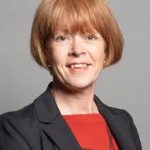
  • Wendy Morton – 2024 Speech on Planning, the Green Belt and Rural Affairs

    Wendy Morton – 2024 Speech on Planning, the Green Belt and Rural Affairs

    The speech made by Wendy Morton, the Conservative MP for Aldridge-Brownhills, in the House of Commons on 19 July 2024.

    It is a pleasure to be in the Chamber today, and I congratulate all new and returning Members on their election successes. It is an honour to be back in this place and to be called to speak in this debate on the King’s Speech. I start by thanking my constituents in Aldridge-Brownhills for returning me to this place for a fourth time. I thank the residents of Pheasey Park Farm, Park Hall, Nether Hall and Orchard Hills for returning me for the first time following the boundary changes.

    There is much to consider in this King’s Speech, and rest assured that I will welcome those elements that benefit my constituents. However, my job on the Opposition Benches remains to get the best for my constituency and my constituents. Where the Government’s legislation and plans harm my constituency, I will stand up and be my constituents’ voice and fight for their interests. That brings me nicely on to the areas that I wish to raise today.

    Starting with housing, we need homes, but we need the right homes, built in the right places and with the right infrastructure to support them and their communities, and we need local decision making. What we do not need to see is swathes of houses—the wrong homes, in the wrong mix and in the wrong place, driven by top-down mandatory targets. That is not nimbyism, but common sense. That is why I have always advocated for a brownfield-first approach, because the minute the green belt is released, that is it. When it is gone, it is gone forever, taking away the integrity of our communities and the sense of amenity and belonging, which we all believe are vital.

    It concerns me that while Government Members say they will prioritise brownfield sites—they have coined this phrase “grey-belt land”—to meet their target, they are also telling local authorities to identify areas with green-belt collars to build on. That surely is wrong. It simply risks nibbling away at our green belt until it is gone.

    The definition of green belt, in case we need a reminder, is that it is a buffer zone between towns and between towns and countryside. It is a planning tool to prevent urban sprawl. In the case of my constituency, it prevents us from being subsumed into the suburbs of a greater Birmingham. The green belt is not a nostalgic vision, but a future vision for future generations. The former mayor, Andy Street, had a vision for it. It is thanks to him, his leadership and his brownfield-first approach that we have seen 16,000 new homes built and thousands of jobs created on brownfield land, which has benefited many, including those in the Walsall borough. We need to see more of that approach. Surely we should build out the brownfield sites first before we release any green belt, with more financial incentives for land remediation funds.

    We also need to understand what the new Government mean by “grey belt”. Is it simply another grey area? I, for one, sincerely hope not. One specific area that I seek clarity on is the new powers for compulsory purchase. I hope that can unlock some of the brownfield sites. In my constituency, there are some small derelict sites—often pubs in town centres—so let us look at working with local communities to unlock some of them.

    Communities also need transport. It is inherently linked to communities and is key to jobs and opportunities. The Government have set out that they will get Britain moving, but I am deeply concerned, to put it mildly, that the new Labour Mayor of the West Midlands has said that he will review the decision for a train station in Aldridge. What has happened to the money that the former mayor Andy Street and I secured for that project? In the absence of any confirmation that it will be completed on time by 2027, within the budget allocated, I can only assume that the new mayor has no intention of delivering the project. It is 65 years since Aldridge had passenger trains. Today we have the track, freight trains and the land for a car park. Various partners are already working on it. It might not be a big deal to Mayor Parker, but it certainly is to the residents of Aldridge and to me.

    I am conscious of time, but I want to touch briefly on crime and justice, as they matter to my constituents. Communities need police officers and police stations. I will continue my campaign to keep Aldridge police station. With a “for sale” board appearing recently at Sutton Coldfield, it is time for the Labour police and crime commissioner to come clean about his intentions for Aldridge police station. We need our police station as a base for our local bobbies, to increase the safety of our residents and to support our communities.

  • Keir Starmer – 2024 Statement on Rioting and Attacks on Police

    Keir Starmer – 2024 Statement on Rioting and Attacks on Police

    The statement made by Keir Starmer, the Prime Minister, on 4 August 2024.

    I utterly condemn the far-right thuggery we have seen this weekend.

    Be in no doubt: those who have participated in this violence will face the full force of the law.

    The police will be making arrests.

    Individuals will be held on remand.

    Charges will follow. And convictions will follow.

    I guarantee you will regret taking part in this disorder.

    Whether directly or those whipping up this action online, and then running away themselves.

    This is not protest. It is organised, violent thuggery.

    And it has no place on our street or online.

    Right now, there are attacks happening on a hotel in Rotherham.

    Marauding gangs intent on law breaking. Or worse.

    Windows smashed.

    Fires set ablaze.

    Residents and staff in absolute fear.

    There is no justification – none – for taking this action.

    And all right-minded people should be condemning this sort of violence.

    People in this country have a right to be safe.

    And yet, we’ve seen Muslim communities targeted.

    Attacks on Mosques.

    Other minority communities singled out.

    Nazi salutes in the street.

    Attacks on the police.

    Wanton violence alongside racist rhetoric.

    So, no, I won’t shy away from calling this what it is:

    Far-right thuggery.

    To those who feel targeted because of the colour of your skin…

    Or your faith…

    I know how frightening this must be.

    I want you to know this violent mob do not represent our country.

    And we will bring them to justice.

    Our police deserve our support, as they tackle any and all violent disorder that flares up.

    Whatever the apparent cause or motivation we make no distinction.

    Crime is crime.

    And this government will tackle it.

    Thank you.

  • Sharon Hodgson – 2024 Speech on Planning, the Green Belt and Rural Affairs

    Sharon Hodgson – 2024 Speech on Planning, the Green Belt and Rural Affairs

    The speech made by Sharon Hodgson, the Labour MP for Washington and Gateshead South, in the House of Commons on 19 July 2024.

    It is a pleasure to follow the hon. Member for Gordon and Buchan (Harriet Cross), who made an excellent maiden speech, which I enjoyed. I also have to mention the excellent maiden speeches from my north-east colleagues, my hon. Friend the Member for Cramlington and Killingworth (Emma Foody)—she represents a new constituency—and my hon. Friend the Member for Bishop Auckland (Sam Rushworth). I look forward to hearing more from them in the weeks, months and years to come.

    Having entered the House 19 years ago, I am honoured to have once again been elected to serve my constituents in Washington and Gateshead South—another new constituency name. It is fantastic to see so many new faces around the estate, and my door is always open if new Members, or indeed old ones, want to pop in for a bit of advice, a cup of tea, or just to see a friendly face.

    This King’s Speech ushers in a new era of government—one based on service of the people, and focused on building back trust in politics, which is greatly needed, by, as stated in the King’s Speech, adhering to

    “the principles of security, fairness and opportunity for all.”

    We will start that process by bringing in legislation to transform the rights of every worker in this country. As a trade unionist, I believe that workers must have the right to access trade union representation, as well as the repeal of the disastrous minimum service levels legislation, which failed to protect public service users and workers alike.

    We will ban all exploitative zero-hours contracts that leave people in uncertain and unstable employment. We will definitively ban fire and rehire practices, which my hon. Friend the Member for Brent West (Barry Gardiner) led the way on tackling with his excellent private Member’s Bill, which sadly did not make it. We will protect workers’ wellbeing by ending short-notice shift cancellations, and we will introduce the right to switch off, so that workers can enjoy a healthier, structured work-life balance—I think we could do with a bit of that sometimes as well. Finally, we will establish rights such as paternity pay and the right to challenge unfair dismissal as rights from day one. The basic rights of a worker are not a reward earned after years of service; they are rights from day one.

    The Government have already got the ball rolling, building on the excellent work of former Labour Governments to truly deliver devolved power. It was excellent to see that, just days after moving in, the Prime Minister welcomed all Labour and Conservative metro mayors—thankfully, they were mostly Labour—to Downing Street to discuss how to kick-start growth in all parts of the country. Nine times out of 10, local knowledge is superior to departmental control, so it is only right that we bring power back to communities.

    Among the mayors invited to meet the Prime Minister was our excellent new Mayor of the North East, Kim McGuinness, who I have worked with in my long-running campaign to reopen the Leamside line and extend the metro to Washington. I am sure that Members have all heard me say this, but Washington is one of the largest towns in the UK without a direct rail link. [Interruption.] It is. We see wasted opportunities, with people unable to travel easily for work, school or university or even to see loved ones. To quote the former Conservative Member for Sedgefield, with whom I co-chaired the Leamside line all-party parliamentary group, “Without physical mobility, there can be no social mobility”—now that he is not here, I am going to nick that line. I am pleased that, with a Labour Government and a Labour mayor, that project will at long last become a reality.

    I grew up in a council house, and my family was totally reliant on social security. Free school meals were a lifeline for us, but I know that, in many ways, it is more important to have a warm, safe and secure house; that is what saved my family more than anything else. That is why, throughout this general election campaign and when I was listening to the King’s Speech, I was so pleased to see Labour’s commitment to building 1.5 million new homes—not just houses, but social and affordable housing—based on five key principles that will enable those houses to turn into secure homes, and those homes to turn into stable and thriving communities.

    We will also deliver for our children, with policies intended to tackle childhood health and obesity head-on. Our plans to deliver free breakfast clubs in every primary school in England will ensure that kids can start school with a meal in their bellies, ready to learn. But we know that child feeding does not start and end with the school day, so we will also tackle the crisis of youth nutrition outside school by restricting the advertisement of junk food and the sale of high-caffeine energy drinks to children—both things I long called for when I was shadow Minister for public health for four years, and shadow Minister for children and families for four years, and as the chair of the all-party parliamentary group on school food from 2010. I could not welcome these developments more fervently. We cannot shy away from protecting our children’s health, which is why I also welcome our tobacco and vapes Bill—carrying on the work of the former Government, I have to say—to phase out smoking. That will ensure that our children live a healthier future.

    As we look to the coming years of our Government, I am excited not only to see these policies, and more, come to fruition and deliver the change that this Government were elected to bring, but to work with Members across the House to deliver these things together, because we need them for the benefit of all our constituents.

  • Harriet Cross – 2024 Maiden Speech on Planning, the Green Belt and Rural Affairs

    Harriet Cross – 2024 Maiden Speech on Planning, the Green Belt and Rural Affairs

    The maiden speech made by Harriet Cross, the Conservative MP for Gordon and Buchan, in the House of Commons on 19 July 2024.

    Thank you for calling me to speak, Mr Deputy Speaker. It is an honour to follow the hon. Member for Cramlington and Killingworth (Emma Foody)—she is clearly very proud of her roots and of what she has achieved in the area. It is lovely to follow another girl from the north-east—although in my case it is the north-east of Scotland.

    It is an incredible honour to be elected to this place to serve the great people of Gordon and Buchan. Having moved homes many times in my lifetime—more than I can remember—from Yorkshire to Ireland to Scotland and many times in between, I have seen my fair share of houses, but I can definitely say that this one will take the most getting used to. As Members are all aware, you are not a true Scottish MP if you do not proclaim that your constituency is the most beautiful, so: from the beaches of Balmedie and Newburgh through the fertile farmland of Formartine, Garioch, Huntly and Turriff, to the heights of the Correen hills and the Bennachie range, Gordon and Buchan has it all. I can tell Members in all seriousness that it really is the most beautiful constituency, and not just in Scotland but in the whole of the UK.

    Those of us who are blessed to live north of the Watford gap know that there is a direct correlation between how far north you get and being approachable and determined, having a dry sense of humour and being great company. As such, I am also delighted to say that I am the Conservative Member with the most northerly constituency.

    First, I must reflect on my predecessors, beginning with the most recent Conservative Members from the two former constituencies that have now been combined to make Gordon and Buchan: Colin Clark in Gordon and David Duguid in Banff and Buchan. Both Colin and David were embedded in our rural communities. They are unwavering champions for our region, in particular being loud, constructive and prominent voices for our farmers, fishermen and distilleries, and for the energy sector. I also want to take the opportunity to wish David Duguid and his family all the very best in his ongoing recovery.

    It would be wrong of me not to mention Malcolm Bruce, now Baron Bruce of Bennachie, who served Gordon for 22 years up until 2015. It is a show of the mark that he left on the area that his name was mentioned to me on the doorsteps many times during this election campaign, always very fondly. Finally, the former SNP Member for Gordon and my immediate predecessor, Richard Thomson, has long served the people of Gordon and Buchan and of Aberdeenshire, both in this place and on Aberdeenshire council as both leader and opposition leader. While he and I will not pretend that we see eye to eye on the means, we both agree that we want the very best for our special corner of Aberdeenshire, now and in the future.

    Much was achieved for Gordon and Buchan and the north-east of Scotland in the last Parliament. I wish to draw attention to the north-east investment zone, an £80 million investment in our region made as part of the last Conservative Government’s levelling-up agenda. It is a real investment in our area’s growth, development and potential—an investment in our future. The north-east shines with energy in every way. Indeed, the energy sector is what first brought my family to Inverurie, the largest town in Gordon and Buchan, 50 years ago this year. My grandfather, having been medically discharged from the Navy, never lost his love of service or the sea, so he channelled that love into creating in Aberdeen the International Association for Safety and Survival Training, whose courses are still used today by each and every offshore worker in our oil and gas sector. I am sure that if he were still here today he could give me some sound advice on surviving in this place.

    The energy sector powers Aberdeenshire, from direct jobs and high-skilled employment to the associated services and hospitality sectors that rely on it. To the people of Gordon and Buchan and the north-east of Scotland, the debate on the future of the oil and gas sector is not really about energy security, markets or net zero; it is about our jobs and our livelihoods. It is about knowing that we have secure employment for the years to come and that our children will not have to move away to start their career, or that the bottom will not fall out of our local economy. I cannot imagine that any hon. Member would sit here and allow their constituency’s key employment sector to be run down or conceded, and I will not do that either.

    Our rural communities are the beating heart of Gordon and Buchan. Indeed, three quarters of the land in the constituency is classed as agricultural, a fifth is forestry and only 2% is thought of as built up. If someone drops a pin on a map, it is more likely to land in a field or forest than on a house. Before being elected, I worked as a rural surveyor, meeting farmers across Aberdeenshire, many of whom I am now proud to call my constituents. As intimidating as it might be being on the Opposition side looking across at the Government Benches, that is nothing compared with sitting at a farmhouse table trying to tell farming clients that no, their farm is not worth three times what they think it is worth or that their worse-for-wear heifer will not get top figures at next week’s sale.

    I am delighted that my first contribution in the House is in this rural affairs debate. I know, and my constituents know, that rural living is unique, rewarding and, in my opinion, far superior to urban life. We also know that it is not all about green fields, welly boots and labradors, idyllic as that might sound. The reality is locals waiting in villages such as Fyvie, Auchleven and New Deer for the only bus of the day, which never arrives. It is the only healthcare facilities for many miles closing down. It is children having to move away to build their career. It is poor-quality, unsuitable roads. Or it is the lack of housing, or houses without gas, poor broadband and no phone coverage.

    We in the UK quite rightly hold our rural landscapes up in lights: our green and pleasant lands, which bring ecological benefits as well as much-needed tourism to remote areas. But rural communities are not there solely to be an escape or plaything for others; they are where my constituents make their homes and livelihoods, and where they grow up and grow old. We need tailored policies for our rural communities that help industries such as farming and food and drink producers, and the numerous small and medium-sized enterprises across Gordon and Buchan that bring so much not just to the immediate area but to the region and to the UK as a whole. Yes, we are less densely populated and yes, understandably, we have less choice in services and on where to find work, but we have no less aspiration.

    I am proud to have been sent here by the people of Gordon and Buchan to represent them, to fight for them, and always to keep their interests at the top of the agenda.

  • Keir Starmer – 2024 Statement on Rioting

    Keir Starmer – 2024 Statement on Rioting

    The statement made by Keir Starmer, the Prime Minister, on 1 August 2024.

    This week – we are a nation in shock.

    A country coming to terms with an attack so inexplicably vile…

    That fear is an understandable reaction.

    Our first thoughts of course are with the families at the heart of this…

    Their pain is unimaginable.

    And so I call on everyone to give them and indeed the wider community at Southport…

    The space to grieve.

    And time for the authorities in Merseyside…

    To do their job.

    There will be a time for questions.

    And we will make sure that the victims and families in Southport…

    Are at the heart of that process…

    That’s the very least that we owe these families.

    But we also owe them justice.

    So while there’s a prosecution that must not be prejudiced…

    For them to receive the justice that they deserve…

    The time for answering those questions is not now.

    And I remind everyone that the price for a trial that is prejudiced…

    Is ultimately paid by the victims and their families.

    Who are deprived of the justice that they deserve.

    Let me turn now to the actions of a tiny, mindless minority in our society.

    Because in the aftermath of this attack

    The community of Southport had to suffer twice.

    A gang of thugs, got on trains and busses…

    Went to a community that is not their own…

    A community grieving the most horrific tragedy…

    And then proceeded to throw bricks at police officers.

    Police officers who just 24 hours earlier…

    Had been having to deal with an attack on children in their community.

    Their community.

    And make no mistake…

    Whether it’s in Southport, London – or Hartlepool…

    These people are showing our country exactly who they are.

    Mosques targeted because they are Mosques.

    Flares thrown at the statue of Winston Churchill.

    A Nazi salute at the Cenotaph.

    And so I’ve just held a meeting with senior police and law enforcement leaders…

    Where we’ve resolved to show who we are.

    A country – that will not allow understandable fear…

    To curdle into division and hate in our communities.

    And that will not permit, under any circumstances…

    A breakdown in law and order on our streets.

    Because let’s be very clear about this.

    It’s not protest.

    It’s not legitimate.

    It’s crime…

    Violent disorder.

    An assault on the rule of law and the execution of justice.

    And so on behalf of the British people…

    Who expect their values and their security to be upheld…

    We will put a stop to it.

    I want to thank all of the police officers, across the country…

    Who have already, as they so often do…

    Stood up to intimidation and violence in the past few days…

    And indeed, throughout the summer.

    And let me be clear – the meeting this afternoon was not about pointing the finger of blame…

    That is not how this Government of Service conducts its business…

    Because it doesn’t work.

    Rather – this was a meeting to pull together our response…

    A response both to the immediate challenge…

    Which is clearly driven by far-right hatred.

    But also – all violent disorder that flares up.

    Whatever the apparent cause or motivation – we make no distinction…

    Crime is crime.

    And so – to that end…

    I can announce today, that following this meeting…

    we will establish a national capability, across police forces…

    To tackle violent disorder.

    These thugs are mobile…

    They move from community to community…

    And we must have a policing response that can do the same.

    Shared intelligence…

    Wider deployment of facial recognition technology…

    And preventive action – criminal behaviour orders…

    To restrict their movements…

    Before they can even board a train…

    In just the same way we do with football hooligans.

    And let me also say to large social media companies and those who run them…

    Violent disorder clearly whipped up online…

    That is also a crime.

    It’s happening on your premises.

    And the law must be upheld everywhere.

    That is the single most important duty of Government…

    Service rests on security.

    And we will take all necessary action…

    To keep our streets safe.

  • Emma Foody – 2024 Maiden Speech on Planning, the Green Belt and Rural Affairs

    Emma Foody – 2024 Maiden Speech on Planning, the Green Belt and Rural Affairs

    The maiden speech made by Emma Foody, the Labour MP for Cramlington and Killingworth, in the House of Commons on 19 July 2024.

    I thank the hon. Member for Beaconsfield (Joy Morrissey), who spoke passionately about her communities. It has been wonderful to hear so many Members make their maiden speech today and over the preceding days, speaking with great pride about their constituency. I stand here today representing my home constituency of Cramlington and Killingworth, and I speak with similar pride. It is the place that generations of my family have hailed from, worked in and loved, and it is a great honour to represent it here today.

    My home, and where I grew up, is a little place called Wideopen. It was once represented by Margaret Bondfield, a giant of our Labour movement. She was a shop worker and trade unionist who was the first ever woman in the Cabinet. As a former shop worker, and a trade unionist and Co-operative Member, it is pleasure for me to see in the Gracious Speech provision for the protections that shop workers deserve and need in order to make our high streets stronger.

    Cramlington and Killingworth constituency was newly formed at this election. Dominated by our two new towns, the seat is made up of a further 25 villages and settlements—every single one a community in its own right. Although I do not propose to list each and every one of them now, I will fight for the support and success of them all. Our area and our communities are places of industry, innovation and creativity. Whether through coalmines, factories or the arts, my community has contributed a lot that has put it on the map.

    There is a certain mention today for George Stephenson, the father of the British railways. Although the Rocket might be in Shildon, he learned his trade and started his inventions in my constituency, where my ancestors worked alongside him to build our railroads. Colleagues may recall that in “Whatever Happened to the Likely Lads?”—a favourite of yours, I am sure, Mr Deputy Speaker—Bob and Thelma’s new starter home on a nice new estate was in Killingworth. We also have notable public art in the shape of a giant spoon, a herd of concrete hippos, and a Lady of the North in Northumberlandia.

    Members my age may recall the absolutely iconic BBC children’s TV programme “Geordie Racer”. Spuggy and Wordy got up to hi-jinks at Seaton Delaval hall, our stunning National Trust property. I am sorry that those familiar with the programme will now have the theme tune in their head all day. More recently, those who watched the popular detective show “Vera” may have noticed the stunning coastline and cliffs; all too often, a body is found at the bottom of them. Those cliffs and beaches, along the coastline of south-east Northumberland, including Seaton Sluice and Old Hartley, are second to none, and they are ours. The crime rate is much lower than ITV would have us believe.

    As is tradition, I will pay tribute to the previous MPs, but as mine is a newly created constituency, I pay tribute not to one but to four current and previous Members of this House. I will start with my predecessor but one, Ronnie Campbell, who was the MP for Blyth Valley for over 30 years and a great friend to many in this place. Locally, we still feel his loss. Ian Levy was elected as the first ever Conservative for Blyth Valley in 2019. I know that he cares deeply for our area, and that he will want it to prosper and our communities to thrive.

    My right hon. Friend the Member for Tynemouth (Sir Alan Campbell), of course, is also our Chief Whip. It says here in my speech that he has shown me great kindness and generosity, which I can only assume was a late Whips Office edit. In all seriousness, he has been a great support to me.

    Finally, I pay tribute to my hon. Friends the Members for Newcastle upon Tyne North (Catherine McKinnell) and for Newcastle upon Tyne East and Wallsend (Mary Glindon), who are both phenomenal advocates for the north-east, and from whose constituencies we took a variety of towns, settlements and villages. When I first got involved in politics, I was warned that it could be a boys’ club. Well, those people underestimate the girls of Sacred Heart high school, which all three of us attended. There, we were told in no uncertain terms that places like this are meant for people like us. To serve alongside my hon. Friends is a tremendous privilege.

    I am proud to be in this place today, and to be able to speak on behalf of my communities on this most Gracious Speech—a wide-ranging set of commitments and actions that I know will deliver, not only for my community but across the country, and not just in housing and, crucially, leasehold reform but for our economy, our energy security and policing. I am particularly proud of the measures to support our national health service. As a former 999 call taker at the North East Ambulance Service, I know how my former colleagues work tirelessly to serve people, often in the most challenging and desperate of circumstances. It is an honour to be here and to have their back in this place. I believe passionately in the measures in this most Gracious Address, which we fought so hard to earn the country’s support for, and I cannot wait to get to work.

  • Joy Morrissey – 2024 Speech on Planning, the Green Belt and Rural Affairs

    Joy Morrissey – 2024 Speech on Planning, the Green Belt and Rural Affairs

    The speech made by Joy Morrissey, the Conseravtive MP for Beaconsfield, in the House of Commons on 19 July 2024.

    I congratulate the hon. Member for Edinburgh South West (Dr Arthur) on his maiden speech. It was wonderful to hear him champion so many local charities and causes, particularly for young people. It is great to hear that he cares about the mental health and wellbeing of young people. I also congratulate the new hon. Member for Bishop Auckland (Sam Rushworth) on his speech, and his drive-by of the entire constituency and the wonderful things that people can see and experience in his patch. What I loved about both speeches is that both hon. Members put their constituents first and talked about being a local champion. I will support anyone, whatever party or part of the House they are from, who wants to put their constituents first and be an advocate for them in this House.

    On that subject, I am here because the people of Beaconsfield, Marlow and the south Bucks villages sent a clear message to me during the general election that they want me to stand up and defend the green belt. I made a promise to them back in 2019 and again in 2024 that I would stand up and defend the green belt. I will continue to do so. For my constituents, the green belt is not just special; it is vital. It acts as the lungs of London. It is vital because for my constituents it is the buffer between the sprawl of London and Slough; because green space provides much-needed mental health and wellbeing space for my constituents; and because it provides the biodiversity and nature conservation areas that we need between London and the home counties. It is essential that we protect nature, and I want to be a champion for that as well. Once our green belt is lost, it is lost forever and we cannot get it back.

    I want to be clear: I believe in the right housing, in the right place, with the right infrastructure. It is entirely a false prospectus to think that people who defend the green belt are somehow anti-growth and anti-housing. That is not true. Here is the truth: the Government seem determined to deny that the green belt is green space, but any attempt by the Government to use some Orwellian twisting of words to make it grey belt will fail in the sunlight of simple truth.

    In Marlow in my constituency, we fought together with local community groups to stop the Marlow film studios being built on green-belt space. We worked tirelessly to protect the green belt, so that future generations could enjoy that beautiful green area. We fought as a community, and the proposal was rightly rejected. If the Government try to bring it back, I and the residents will fight it every inch of the way.

    The Government established their intent in their first three days of existence: the Government know best and communities will be ignored. The Chancellor—not, funnily enough, the Deputy Prime Minister—announced that the Government were calling in an application, rejected by planners and the Planning Inspectorate, to build a data centre in the Ivers, right up against London. It was a blatant attack on local opinion and professional planning officers. Do Ministers really believe that there are no better sites for a data centre than directly on the only green belt that separates us from London? I say to the Government: you will soon discover that you are on the wrong side of this debate. Our green belt in south Bucks is not a political, ideological prize to be won. Residents will make their voices heard, and I will be right there by their side. It matters to my constituents and the generations to follow who will grow up and live in the beautiful area of Beaconsfield, Marlow and the south Bucks villages. I urge the Government to think again. Leave our green belt alone.

  • Scott Arthur – 2024 Maiden Speech on Planning, the Green Belt and Rural Affairs

    Scott Arthur – 2024 Maiden Speech on Planning, the Green Belt and Rural Affairs

    The maiden speech made by Scott Arthur, the Labour MP for Edinburgh South West, in the House of Commons on 19 July 2024.

    I am obliged to you, Mr Deputy Speaker, for giving me the opportunity to make my maiden speech. I would like to start by thanking the hon. Member for Brigg and Immingham (Martin Vickers) for a fantastic speech, but I fear that he has made my job only a little more difficult. I have to say that it is a delight to give my maiden speech in a debate led by our fantastic Deputy Prime Minister.

    It is an honour and a privilege to stand before this House as the representative for Edinburgh South West. I am deeply grateful to my constituents for placing their trust in me and also to my church for praying for me, although I know that they prayed more after I won the election than before it. I am committed to serving them all with dedication and integrity.

    Before I address the subject matter of the King’s Speech, I would like to pay tribute to my immediate predecessor, Joanna Cherry KC, who represented the constituency for nine years. I had many dealings with her office in my role as a councillor, and I always found her team to be utterly professional. I wish them all well. Joanna Cherry herself was a formidable parliamentarian. Members will recall that, during the Brexit crisis, she worked hard to ensure that Government decision making remained transparent and subject to parliamentary scrutiny. We all owe her a huge debt for that. I must also say that, although I disagree with her on many issues, I am happy to stand in complete solidarity with her in the face of the threats that she has faced. It pains me that, since coming here, so many others have spoken about threats and intimidation as well. This is an issue that we must take seriously. I must, however, tell the House that the campaign for Edinburgh South West between Joanna Cherry and myself was conducted entirely on the issues that matter to local people there, which is perhaps why I am so proud to be here to address the House today.

    I must also pay tribute to my predecessor’s predecessor. Alistair Darling was one of the greatest public servants of my lifetime. He sat here from 1987 to 2015. Like me, he was a councillor in Edinburgh, and convener of the city’s transport committee before he went on to serve as MP for Edinburgh South West. The similarities may end there. Indeed, we must all hope that I am never called on, as he was, to save the Bank of England. I know that Alistair is still much missed and I am proud to follow in his footsteps—indeed, without his help I doubt that I would have been elected as a councillor in 2017.

    Before I address myself to the debate, I would like to take the opportunity to pay tribute to my constituency, its institutions and its people. At this point, Members may need a map. Edinburgh South West is the best part of the greatest city in the world. It stretches from the west end of Princes Street to the East Cairn hill, some 18 km to the south-west. Along its length, the constituency moves from dense urban communities—places such as Gorgie, the home of Hearts football club, Dalry, Parkhead, Wester Hailes, Sighthill and Oxgangs—to suburban settlements such as Colinton, Craiglockhart, Swanston and Baberton Mains, and to the semi-rural Water of Leith villages of Currie, Juniper Green and Balerno.

    Of all those, Oxgangs is perhaps the place I know and love most. Many people there struggle in temporary and overcrowded accommodation; that is why it has been so important today to hear about the Deputy Prime Minister’s ambition to build affordable homes. In Edinburgh, we have worked with the whole city and set aside land for 37,000 new homes. The land is there and the planning is there, but the barrier to building those new homes is the lack of funding from the Scottish Government. I hope that they can now follow what we are doing here, and show more ambition on affordable housing in Scotland.

    When it comes to natural beauty, the Pentland hills and the Water of Leith dominate my constituency, and the habitats along the Union canal should not be forgotten. But of course it is the people who make my constituency so special, such as those who volunteer at the Water of Leith Conservation Trust or who converted a disused railway tunnel into Scotland’s largest historical mural—the Colinton tunnel; please google it later. I must also mention Tiphereth, a unique charity that delivers residential and day services for people with learning difficulties. It really is unique.

    The Edinburgh campus of Heriot-Watt University is perhaps the biggest employer in my constituency. It supported and developed me every day from when I started working there in 1996 until I was elected to this place. I shall miss my civil engineering colleagues and the many students it welcomes to Scotland from around the world. I hope to use some of my time here to support higher education, particularly the wellbeing of students. Mental health support in Scotland is failing its young people and acting as a barrier to many of them reaching their full potential. I will work with anyone and everyone to address that and the many other challenges facing students across the UK.

    Other large employers in my constituency include Lothian Buses, a bus company owned by the people of Edinburgh that defines the city just as much as the castle. I should stress that the castle is not in my constituency. If some Members question municipal ownership of public transport, or the importance of collaborative working between trade unions and management, they should speak to some of the 2 million passengers that Lothian Buses carries every week without any subsidy. Big businesses are also important in my constituency, but it is the small ones that define it. They are at the heart of many of the neighbourhoods. Many have high hopes that the UK and Scottish Governments will now work together to support them more.

    I am also proud to say that there are two infantry barracks in my constituency: Dreghorn and Redford. Both are valued by local residents as real assets, and they never caused me a problem as a councillor. The proposal in the King’s Speech for an armed forces commissioner will be supported by many in my constituency, particularly if it helps improve the living quarters for our service personnel and supports spouses at the point of relationship breakdown, particularly when domestic abuse has been an issue.

    Elections are a reminder that we are all equal in this country, but it pained me that many constituents felt that they were less equal than others during the election campaign. That is why local groups in my constituency such as Soul Food Oxgangs, Best Bib n Tucker and Whale Arts must be mentioned in my speech, as they all work hard to ensure that people feel included and valued. That is our job too, of course—indeed, all of us here have a duty to keep on listening to voters now that the election is over. The first-past-the-post system means that I was elected on just 40.9% of the vote—I still cannot believe it, to be honest—and I know that some of those voters still want to be reassured that they did the right thing. I am here only because I promised to work with other parties where possible, and to listen to everybody in my constituency, no matter their sex, gender, background, faith, age or birthplace. I will keep listening to people, even if they voted for my opponents or did not vote at all.

    We know, of course, that the people who need our help most did not vote for us. Among them are the 3,000 children in my constituency who are living in poverty. That number has grown across the whole UK since Labour last sat on the Government Benches, and that should shame us all. I know the costed measures in the King’s Speech are our best chance of changing those lives.

    Measures such as GB Energy, building more homes, a new deal for working people and our plans for sustainable economic growth will not just get our country back on track and help us to meet our climate targets, but give parents hope again of a better future for their children. The child poverty taskforce is an opportunity to maximise the benefits of those policies by integrating their delivery. That is the change our country needs and voted for, and we must now work together across this Chamber to deliver it.

  • Martin Vickers – 2024 Speech on Planning, the Green Belt and Rural Affairs

    Martin Vickers – 2024 Speech on Planning, the Green Belt and Rural Affairs

    The speech made by Martin Vickers, the Conservative MP for Brigg and Immingham, in the House of Commons on 19 July 2024.

    I congratulate the hon. Member for Bishop Auckland (Sam Rushworth) on his maiden speech. We are all much more knowledgeable about his constituency now than we were a few minutes ago, so well done for that.

    I acknowledge that the planning system is in need of reform. We cannot have a process that takes months—in many cases, years—for major projects, crucial to economic growth and associated jobs, to grind through an endless system. In my constituency, most such projects are located in an area that is, and has been for many years, mainly industrial. Although we should not trample on local opinion, we have to get those projects through the system more quickly than we do at the moment.

    The Gracious Speech included this:

    “My Government believes that greater devolution of decision making is at the heart of a modern dynamic economy and is a key driver of economic growth and my Ministers will introduce an English Devolution Bill. Legislation will be introduced to give new powers to metro mayors and combined authorities. This will support local growth plans that bring economic benefit to communities.”—[Official Report, 17 July 2024; Vol. 752, c. 39.]

    Of course we need to increase the supply of housing, but how do Ministers square devolving decision making with strengthening central direction of the planning process and tying the hands of planning authorities? The Labour manifesto said that the Government would

    “make full use of intervention powers”.

    That does not sound like good news for local democracy.

    Experience from my constituency shows that local communities will, in most cases, accept more housing developments, but they make the justifiable complaint that recent developments in all parts of my constituency, from Humberston, through New Waltham, Waltham, Scartho, Laceby, Wootton and Barton, to name just a few, mean that the already stretched highway infrastructure and public services, such as school places, GPs and the like, are now stretched beyond what is acceptable. What assurances can Ministers give that they will ensure new build will run in parallel to the provision of infrastructure and public services?

    Another aspect of the planning process that angers people is that many appeals are determined by planning inspectors who frequently overrule council decisions that have been made after careful consideration of local circumstances. In some cases, such decisions have even overturned the local plan. That is not acceptable. Local plans go through various stages of consultation, including public hearings, all of which passes by the overwhelming majority of the public, until an application is lodged that could change the whole character of the neighbourhood. Clearly, the process needs to be reviewed, as I have previously argued, including in a ten-minute rule Bill I introduced some years ago.

    If devolution and local decision making is to mean anything, planning issues should be determined at a local level, wherever possible. The shadow Secretary of State mentioned that there are current Ministers who lodged objections to planning applications for developments in their own areas. That went under the radar to some extent while they were in opposition, but now there is no hiding place for them. Every Labour Member who votes for proposed planning changes to some village or some part of the town will have to justify not supporting their constituents when they are up in arms about the application.

    As someone who spent their childhood and early adulthood in a council house on a Grimsby estate, I have always supported the ability of local authorities to build council houses where that is appropriate. The ones that I lived in were built in the early 1950s when a Conservative Government were in power. They were of high quality and have stood the test of time. Sadly, that is not the case for much of the social housing that is imposed on new developments. I certainly would support the Government if they had a programme to encourage and support councils in house building, but I would be interested to know how they would finance it.

    One proposal that is causing considerable concern, not just in my Brigg and Immingham constituency, but in many other constituencies along the east coast of Lincolnshire and through into East Anglia, is the National Grid upgrade on the Grimsby to Walpole route. These proposals could result in a network of 50-metre-high pylons running through some of the country’s most beautiful countryside, including impacting on the Lincolnshire Wolds area of outstanding natural beauty. I secured the final Adjournment debate on this matter before the election and the then Minister said that he was minded to order a review of the scheme. I urge the Government to honour that commitment and follow through with that review.

    Finally, let me return to devolution and the policy to create more combined authorities. The proposals for the Greater Lincolnshire Authority have already passed through all stages of consultation, and a statutory instrument has been prepared, but, unfortunately, the election intervened. I say to the Deputy Prime Minister that this is an opportunity for an early win in her wish to create combined authorities. If she were to put forward that SI, I think most of the Lincolnshire MPs would give her some support.

  • Sam Rushworth – 2024 Maiden Speech on Planning, the Green Belt and Rural Affairs

    Sam Rushworth – 2024 Maiden Speech on Planning, the Green Belt and Rural Affairs

    The maiden speech made by Sam Rushworth, the Labour MP for Bishop Auckland, in the House of Commons on 19 July 2024.

    Thank you, Mr Deputy Speaker, for allowing me this opportunity to make my maiden speech during the King’s Speech debate. I thank my hon. Friend the Member for Southgate and Wood Green (Bambos Charalambous) for his excellent contribution, as well as the hon. Member for North Shropshire (Helen Morgan). Like her, I represent a rural constituency, and I recognise many of the issues she raised in my own community.

    I also want to thank my predecessor, Dehenna Davison, for her service. In her maiden speech, she described Bishop Auckland as England’s “most beautiful constituency,” and on that point we agree. She is a formidable campaigner who did important work to raise awareness of migraines, lobular cancer and the danger of one-punch assaults. Although she already has the accolade of being the first ever Conservative MP for Bishop Auckland, I hope that, in decades to come, her legacy will be even more impressive as the only ever Conservative MP for Bishop Auckland.

    If the House will indulge me for a moment, I would like to say a little about the place I call home, the people who live there and what makes them so special. Getting my priorities in order, I will start by talking about football. I had been looking forward to singing “one general election and one European cup” this summer, but that was not to be. I am gutted that our England team did not quite make it, but football did come home in 1909, when West Auckland became the first football team to win the world cup. That is true, and you can look it up.

    Another important footballing moment came in 1958, when Bishop Auckland’s amateur football club famously provided players to help Manchester United fulfil their fixtures following the Munich air disaster.

    I was really touched when I met Barry, who volunteers at the local Bishops football museum. I listened to his passion as he shared how a gentleman with dementia came in and recognised himself in an old black and white photograph. They developed a friendship as he used football memorabilia to help that gentleman reminisce and reconnect with his past. I am similarly grateful to others in my constituency who give up their time to run sports clubs, whether it is football, rugby, cricket or boxing, providing opportunities for young people to exercise, connect and enjoy themselves.

    Secondly, I have to mention railways. It was in Shildon, in the south-east of my constituency, where Stephenson invented the Rocket locomotive, making Stockton to Darlington the world’s first commercial railway line 200 years ago next year. It is inspiring to see the commitment of local volunteers who work together to preserve this heritage, caring for parts of the line and organising bicentenary events. Likewise, it was inspiring to see those who worked to save the Shildon Railway Institute, which was set up by working people nearly two centuries ago, with a library and school rooms to upskill the local workforce for the new industrial age.

    Thirdly, we are blessed with fabulous arts and culture in Bishop Auckland, which is the home of Stanley Jefferson, of Laurel and Hardy fame. It is also believed to be where Elgar first played the anthem “Land of Hope and Glory.” And how grateful I am to the volunteers who give their time to enable participation in the arts: Daisy Arts, Jack Drum, the Teesdale operatic society, the Weardale Warblers and “Kynren,” England’s most spectacular outdoor theatre production. The work they do is not only developing talent but building the character and confidence of the rising generation.

    Fourthly, we have magnificent countryside. Under the new boundaries, the constituency brings together two Durham dales—Weardale and Teesdale—around the market town of Barnard Castle, which is not only a handy place to test your eyesight but is also an idyllic place to stroll along the river with your family on a sunny Easter bank holiday, surrounded as it is by hill sheep farms and moorlands that are home to rare wildflowers and endangered ground nesting birds. I am full of admiration for those who work on the land and put in the graft to keep this place so lovely and to provide us with food. Without wishing to disappoint the right hon. Member for North West Essex (Kemi Badenoch), when I recently met local farmers they were delighted to see that Labour is bringing in planning reforms and lifting the ban on onshore wind.

    Finally, Bishop Auckland has a long connection with the Church. Auckland castle served for centuries as home to the Prince Bishops, while the seventh-century Escomb Saxon church is one of the oldest in England and stands as a monument to the devotion of the men and women who built it more than a millennium ago. What I find equally inspiring is the work done by churches in our community today, such as Woodhouse Close church and community centre and Shildon Alive, which recently received the King’s award for voluntary service.

    What makes Bishop Auckland so special to me are the people I live among. People who have stood together in hard times, people who take pride in their neighbourhoods and people who serve without thought for themselves.

    If I might make a slightly more political point as I draw to a close, we have just accepted the decline of northern heartlands like Bishop Auckland for too long. I live in the town centre, where one in three shops is boarded up. Our local businesses are excited to see the powers that this Government will devolve to local authorities to compulsorily purchase some of those buildings. We will hand them over to businesses and we will get our town centres booming again.

    Finally, I am proud to be a Member of the most representative Parliament in our history, with the highest percentage of women, minorities and state-educated Members. There are also, on all Benches, some exceedingly talented people. It is already clear to me that while I will be bold in speaking up for my constituents, there will always be someone more gifted in oratory or more learned. However, I hope that if I can excel in anything, it will be in showing kindness and respect to my fellow Members, to the incredible staff who have done so much to make me feel welcome in this rather strange place, and to my constituents who I hope will always know, whatever our disagreements, that I love and care about them.