Tag: 2023

  • PRESS RELEASE : New insurance scheme to facilitate UK business supporting Ukraine [October 2023]

    PRESS RELEASE : New insurance scheme to facilitate UK business supporting Ukraine [October 2023]

    The press release issued by the Department for International Trade on 31 October 2023.

    The UK signs war-risk insurance Statement of Intent with European Bank for Reconstruction and Development to help UK companies to do business in Ukraine.

    • UK government helping plan war-risk insurance scheme which will lead UK companies to do business in Ukraine
    • Lack of available insurance currently a major barrier preventing UK companies trading with and investing in Ukraine to help it rebuild
    • Business and Trade Minister The Earl of Minto inks agreement today at the European Bank for Reconstruction and Development

    The UK will today sign a Statement of Intent on a European Bank for Reconstruction and Development (EBRD) war-risk insurance scheme for Ukraine. The EBRD’s effort, along with complementary backing by other international financial institutions, over time will help UK companies to do business in Ukraine and support its reconstruction.

    Ukraine is facing a major challenge to rebuild following Russia’s illegal invasion, with the World Bank estimating it will cost $411 billion. Private sector companies are crucial to that, with architects, engineers, and construction companies need to rebuild bridges for example, but many currently struggle to get the insurance they need to be able to operate in the country.

    The UK is leading the world in trying to address this by improving access to war-risk insurance. It follows the Ukraine Recovery Conference, hosted by the Prime Minister earlier this year, during which we coordinated international partners to announce the London Conference Framework to address the insurance gap.

    Speaking ahead of the signing, Business and Trade Minister The Earl of Minto said:

    UK businesses have the expertise and desire to help Ukraine rebuild. But too often a lack of insurance prevents our world-class architects, engineers or lawyers, from doing that, and hinders Ukraine’s recovery.

    That’s where Government comes in – we are committed to breaking down the barriers that get in the way of UK companies offering their expertise. Today’s signing is another step forward in our ongoing support for Ukraine on this issue.”

    The EBRD’s scheme development will provide new support for boosting the provision of insurance against war-related risks in Ukraine. It was galvanised by the London Conference Framework and is intended to kick-start insurance, firstly for the transport of cargo vital via trucks to keeping trade flowing, with a view to expanding it to cover more sectors as the scheme matures.

    Business and Trade Minister The Earl of Minto will sign the Statement today alongside EBRD President Odile Renaud-Basso. They will also discuss next steps to increase the availability of war-risk insurance even further.

    EBRD President Odile Renaud-Basso said:

    We are very grateful for the UK’s interest in facilitating the provision of insurance against war-related risks in Ukraine. Relying on traditional risk-transfer mechanisms in the insurance industry, the EBRD and its partners seek to build a sustainable solution, which will bring relief to the domestic economy and protect trade activities.

    Encouraging the EBRD’s scheme is just one of the many ways the UK is showing its support for the reconstruction of Ukraine.

    The UK’s non-military support to Ukraine since the start of invasion comes to £4.7bn. This includes over £4.1bn in fiscal support, and over £640m in bilateral assistance.

    The signing comes ahead of the upcoming Rebuild Ukraine Conference and UK-Ukraine Infrastructure Taskforce meeting in Warsaw, led by Minister for Industry Nusrat Ghani, which will provide a key moment for the UK and Ukraine to discuss and agree priority reconstruction projects.

    Minister for Industry and Economic Security Nusrat Ghani said:

    As co-chair of the UK-Ukraine Infrastructure Taskforce with Deputy PM Kubrakov, I’m immensely proud of what the UK and Ukraine have already achieved together – from delivering major conferences to encourage private sector investment, to signing a digital free trade agreement critical to supporting jobs and livelihoods. I am also proud to have delivered the war risk insurance package.

    The UK is a key partner for Ukraine and we remain committed to providing the crucial support it needs as it continues to rebuild its infrastructure and economy.

    Today also marks techUK and IT Ukraine’s Ukraine Tech Day which is raising awareness of areas for further cooperation between the tech sector and government in the UK and Ukraine. Ukraine Tech Day is placing specific focus on defence tech, cyber security, ed tech and skills, and the startup community. It comes following the Prime Minister’s recent announcement of the UK-Ukraine TechBridge, which will launch in the next couple of months and will bring together the UK and Ukrainian tech sectors to harness opportunities for innovation and collaboration.

    Background

    • The Statement of Intent shows UK support for the EBRD’s continued technical and administrative development of the scheme, with a further aim of driving more international interest in future due to the UK’s status as a global thought leader on insurance issues.
    • The Ukraine Recovery Conference was held in London in June. Details of the announcements to support Ukraine can be found on gov.uk: https://www.gov.uk/government/news/uk-announces-new-tech-and-insurance-support-for-companies-helping-ukraine-rebuild–2
    • The UK’s total military, humanitarian and economic support for Ukraine now amounts to £9.3billion.
  • Steve Barclay – 2023 Speech at the IHPN Annual Summit and Dinner

    Steve Barclay – 2023 Speech at the IHPN Annual Summit and Dinner

    The speech made by Steve Barclay, the Secretary of State for Health and Social Care, on 31 October 2023.

    Our focus at the Department of Health and Social care is to diagnose and treat conditions quicker.

    Because this makes patient outcomes better, but it’s also much cheaper to deliver.

    That’s the sweet spot that we’re focused on hitting.

    One where patients and taxpayers are both better off.

    This approach underpins everything we as a department are doing.

    From our pharmacy first rollout through to the lung cancer screening programme.

    And it’s why, David [David Hare, Chief Executive of the Independent Healthcare Providers Network (IHPN)], I strongly support working with the independent sector.

    You collectively have a key role to play in diagnosing and treating conditions, and delivering the improved patient outcomes we all want to see.

    We are speeding up the diagnosis of major diseases.

    As a result of more referrals and screening, the percentage of cancer patients presenting in emergencies fell by more than 15% between 2010 and 2022.

    And we must keep driving these rates down.

    A University College London study found patients diagnosed in emergencies are half as likely to survive 12 months than those diagnosed through non-emergency routes, like GPs.

    And this isn’t just about cancer, around 8 in 10 heart failures are diagnosed in emergency departments.

    So, we need to get these numbers down to help save lives.

    And to do so, we need to turbocharge testing and diagnostics.

    That’s why, as an example, we’re rolling out more blood pressure checks than ever before.

    But this is far from the only challenge that our health system faces.

    The pandemic left behind – as colleagues in the room are well aware – very large backlogs, not least in elective care.

    But while we often focus on the challenges of COVID, it also showed us opportunities, the way to do things differently.

    The NHS worked effectively with the independent sector to maximise capacity and to tackle a common challenge.

    Many people in this room contributed to this effort.

    And the government – and people across the country – are grateful for how you cleared your schedules to provide NHS care to patients most in need.

    Now, this partnership must be sustained if we are to tackle those COVID backlogs.

    That’s why we launched, last year, the Elective Recovery Taskforce.

    It united the public and independent sectors with a clear goal: using every bit of available capacity to cut waiting lists.

    And David, I want to recognise the contribution the IHPN made to the taskforce.

    And I was delighted your leadership throughout the pandemic was recognised with an MBE.

    As the taskforce rightly concluded, one way of better using available capacity is delivering meaningful patient choice.

    We know three-quarters of patients are willing to travel to get care quicker.

    And we know improving choice can reduce waiting times by up to 3 months.

    That’s why we’ve committed to giving patients a choice of 5 providers at GP referrals, including those from the independent sector.

    Allowing patients to choose where they’re treated based on what matters most to them.

    That may be shorter waiting time.

    It may be seeing a particular doctor.

    Or it may be receiving care closer to home.

    [Political content removed]

    So from today, patients in England who have been waiting more than 40 weeks for treatment will have the right to request to be seen elsewhere.

    And that’s an opportunity opened up to around 400,000 patients who will be eligible.

    Hospitals will contact them to see how far they’re willing to travel.

    And if they request to move, integrated care boards must make every effort to find hospitals with shorter waiting lists.

    Not just within the NHS, but also across the independent sector.

    If they find shorter waiting lists, integrated care boards must give patients the choice to transfer for faster care.

    And these reforms have the Prime Minister’s personal backing.

    They will help more patients exercise their right to choose, and through that, help cut waiting lists.

    But our elective taskforce wasn’t just about driving reform from the centre, it also focused on empowering integrated care boards themselves and independent providers to cut waiting lists at a local level.

    The taskforce assessed different ways of doing so at 2 ICBs.

    Both of which delivered results.

    Leicester, Leicestershire and Rutland saw an increase in independent sector activity of more than 70%.

    And by July, just 15 patients across Birmingham and Solihull were waiting more than 18 months for treatments.

    This shows how effectively ICBs and the independent sector can work together to cut waiting lists at a local level.

    And I know how critical independent oversight of choice, as it is now rolled out, is to giving confidence to investors.

    That’s why, working with David and colleagues, the taskforce recommended an independently chaired panel to promote genuine choice and fair procurement.

    And today, I can confirm the panel will be up and running by January.

    Now, the Elective Recovery Taskforce has achieved a lot.

    But perhaps its greatest success has been turbocharging the rollout of community diagnostic centres, or CDCs – the one-stop shops where patients receive tests for conditions like cancer and heart disease.

    In his 2020 review, Mike Richards set out his vision for CDCs – a radical investment and reform of diagnostic services, putting care at the heart of communities.

    Governments of all stripes have been criticised for prioritising investment in acutes over community services.

    But we’ve made community diagnostic centres a reality.

    One hundred and twenty seven CDCs are already open.

    Many are on high streets, in car parks, or even outside football stadiums.

    Giving patients care closer to home.

    Increasing NHS capacity.

    Reducing pressure on hospitals.

    And getting patients lifesaving diagnostics faster.

    Community diagnostic centres are the biggest investment in MRI and CT scanning capacity in the NHS’s history.

    And over the course of the programme, we will have increased our stock of scanners by almost a third.

    The independent sector has, of course, been key to this success.

    Thirteen CDCs will be run by independent providers, 8 are already operational, and 22 CDCs on the NHS estate use the independent sector’s diagnostics capabilities.

    The independent sector’s investments in CDCs has saved an estimated £110 million from the NHS capital budget.

    Money we put straight back into a further 7 community diagnostic centres.

    Giving patients better care, and delivering better value for money for the taxpayer.

    And today, I’m delighted to announce we’ll have opened 160 community diagnostic centres by March – hitting our target a year early.

    We’ve moved the opening dates for 40 CDCs, bringing them forward into this year.

    Our decision to do that was criticised at the time.

    But getting these CDCs open is why we’ve beaten our target.

    It’s why more patients will receive potentially lifesaving checks sooner.

    And I will never forget the reason that matters.

    When I was with the Prime Minister, in of all places, an Asda car park in Nottingham – talking to a guy, Terrence, at a lung cancer screening truck there.

    He was a heavy smoker.

    And he said to me he would never have gone to hospital to be checked.

    He would have been too worried to do so.

    But because it was in the car park of the Asda store, he had a lung cancer screening check.

    It had been positive, and diagnosed him at a much earlier stage.

    He said, “I’d have never gotten checked going to hospital, but the scanner has been so easy to get it done.”

    And we want more people across the country to do what Terrence did, and to get the tests they need as quickly as possible.

    That’s why today, I’m pleased to announce 3 of the final locations for our community diagnostic centres.

    Sites at Queen Mary’s Hospital in Sidcup, in Halifax, and in Bognor Regis, all of which will open this December – each one providing tens of thousands of vital checks every year.

    Last month, NHS England also confirmed the approval of 4 more community diagnostic centres – 2 in Wiltshire run by the independent sector, one in Thanet, and one in Cheshire.

    And we’re committed to transparency as well as delivery.

    I think the public has a right to know when their local CDCs will open.

    And more importantly, once they’ve opened, how they’re performing.

    That’s why we’re introducing an online dashboard to make this information easily accessible, alongside details of new hospital builds and upgrades.

    And it’s why, before the end of the year, we’re committed to publishing data on the number of MRI and CT scanners that are operational across the independent sector and the NHS.

    Community diagnostic centres have shown us how the public and independent sectors can deliver together.

    And across the health system, there are many more challenges we can overcome.

    Take training.

    To deliver the huge training expansion the NHS Long Term Workforce Plan commits to – doubling medical training places, almost doubling adult nursing places – we need the independent sector to give its strongest support.

    You carry out collectively a huge volume of procedures, and this in turn creates many training opportunities.

    And your role in training will continue to be an important part of our wider partnership in the years ahead.

    It’s not only the Long Term Workforce Plan that’s key to building that sustainable NHS; it also important that we maximise efficiency, and invest in the latest technology.

    AI – on which the Prime Minister is chairing a global summit today – is a key part of that.

    By the end of this year, every stroke network in England will have AI technology that can examine brain scans an hour faster.

    And this matters.

    Saving an hour can cut a stroke patient’s risk of suffering long-term consequences by as much as two-thirds.

    So again, this isn’t theory around AI.

    This is something that will be deployed in every one of our stroke centres by December, saving an hour on diagnosis and having real-terms benefits on patients’ outcomes.

    And as we announced yesterday, almost half of NHS acute trusts have won a share of £21 million that we’re investing in AI.

    This will accelerate the analysis of X-rays and CT scans for suspected lung cancer patients.

    And studies into these technologies have shown the very real promise they offer.

    Let me give you an example.

    One carried out at Calderdale and Huddersfield NHS Trust suggests AI can process scans in less than 8 seconds, reducing radiologists’ workloads by 28% and reducing waiting times for suspected lung cancer patients by more than 70%.

    And as the Prime Minister announced last week, we’re investing a further £100 million to use AI to unlock treatments for diseases that are incurable today.

    Be that the novel treatments for dementia, or the vaccines for cancer.

    So, AI isn’t a silver bullet, but I’m determined to explore how it can get patients the care they need faster.

    So, in conclusion, our priorities are very clear.

    To diagnose patients faster.

    To give them more choice and control.

    To embrace technology and innovation.

    To deliver training for the long term.

    And by working in partnership, David, with your colleagues in the independent sector, we can deliver all of these things.

    So, together, let’s build an NHS that puts the patient first.

    Thank you very much.

  • PRESS RELEASE : New women’s sport investment scheme kicks off first round with seven sports represented [October 2023]

    PRESS RELEASE : New women’s sport investment scheme kicks off first round with seven sports represented [October 2023]

    The press release issued by the Department for Business and Trade on 31 October 2023.

    The Department for Business and Trade’s new Women’s Sport Investment Accelerator scheme has held its first session, with seven different sports represented.

    20 top tier women’s sport leagues, teams and competitions across seven different sports took part in the first session of a new Government scheme to boost investment and increase broadcast audiences.

    The Women’s Sport Investment Accelerator, launched by the Department for Business and Trade (DBT), will run for a year and bring together UK-based sports rightsholders – such as leagues, teams, competitions and events – who are seeking investment together with industry experts and sports investors.

    Participants included elite women’s sport competitions such as the FA Women’s Super League, England Rugby, England Netball, England and Wales Cricket Board, Volleyball England and more.

    Seven different sports were represented in total: football, rugby, netball, cricket, golf, sailing and volleyball. Investment in women’s sport is growing rapidly, and the industry is expected to be worth £1 billion a year by 2030.

    Industry Minister Nusrat Ghani said:

    It’s fantastic to see this scheme get off the mark as we aim to make the UK the world’s number one destination for women’s sport investment.

    We’ve had so many brilliant women’s sport success stories this year. I’m excited to see the overwhelming appetite from leagues, teams and competitions from right across the breadth of women’s sports, and am proud to back this fast-growing sector as it pushes boundaries and grows to the next level.

    In association with Deloitte’s Sports Business Group and supported by the International Working Group (IWG) on Women and Sport, the scheme is providing a series of sessions offering market insights, connections and networking events alongside comprehensive mentoring for rightsholders who are looking for investment.

    This week marked the first of three flagship sessions of the scheme – the next of which takes place in January – with DBT also providing dedicated workshops for rightsholders on specific areas, such as growing broadcast revenues, unlocking new audiences and best practice for working with investors.

    Holly Murdoch, The FA’s Head of Operations for the Women’s Professional Game, said:

    We are proud to be involved in the new Women’s Sport Investment Accelerator initiative. This group will help to provide a platform that will benefit women’s sport across the country, through shared intelligence and support.

    We have seen first-hand the incredible growth that women’s football is going through in England, with the unprecedented success of the Lionesses and the record-breaking seasons from across the Barclays Women’s Super League and the Barclays Women’s Championship.

    Women’s sport has proven that it has the power to inspire people and positively impact lives – and we believe that creating this group of industry experts can be a catalyst to drive positive change for women’s sport across the country.

    Tony Sutton, CEO of the Rugby Football League said:

    We had an excellent first session of the Women’s Sport Investment Accelerator last night, with a really good mix of people, sports and organisations in the room which led to a high standard of debate, the benefit of some very relevant experience and some positive networking.

    Personally, I made some good contacts from across the wider sports sector which I feel will be of a high value as we move through the programme.

    Hannah Bruce, Head of Public Policy, England and Wales Cricket Board said:

    Women’s sport is on an upward trajectory and cricket is proud to be on the journey to becoming a gender balanced sport. The first accelerator session was a fantastic opportunity for rightsholders to come together, share best practice and explore emerging trends.

    We are grateful to the Department of Business and Trade and Deloitte for their support in showcasing what the best of UK women’s sport has to offer now and in the future.

    Fiona McIntyre, Managing Director of the Scottish Women’s Premier League said:

    I am delighted to have been selected to participate in the Women’s Sport Investment Accelerator programme on behalf of The Scottish Women’s Premier League (SWPL). External investment has been crucial to our recent growth, and will be even more vital as we strive to challenge women’s football in Scotland to think innovatively and ensure it meets its undoubted potential, both on and off the pitch.

    This programme is exactly what women’s sport in the UK needs – creativity, innovation and support combined with the passion and motivation of those striving to raise the bar and create a new future for women’s sport in the UK.

    Phoebe Tomlinson, England Rugby’s Commercial Partnerships Manager for the Women’s and Girls’ Game said:

    It was hugely valuable to be part of the dynamic conversations around women’s sport. The open forum to discuss strategic plans, digital development and learn from other sports rights holders is key to the positive movement of women’s sport.

    One of the highlights of the evening was learning about the robust commitment to investing in the women’s game and the exciting strides that have been made in commercialising it through innovative means.

    Mark Foster, Chief Commercial Officer at England Netball said:

    It was fantastic to attend the first session of the Women’s Sport Investment Accelerator programme on behalf of England Netball. The room was full of highly impressive people all with a passion and desire to support the further growth of Women’s Sport and this programme can help us all to learn from and support each other as well as benefit from the expertise of DBT & Deloitte and the channels for investment that they can help us to unlock.

    Off the back of our Vitality Roses making their first World Cup Final in the summer and the recently announced re-launch of Netball Super League planned for 2025 this programme comes at the ideal time for us as a sport as we enter into a substantial growth period, which will require investment from a variety of different sources to help us to achieve our ambitious targets.

    Rob Payne, National Competitions Manager at Volleyball England said:

    I’m delighted to participate in the Women’s Sport Investment Accelerator programme on behalf of Volleyball England. The prospect of attracting new investment is a key priority in our ambitions to professionalise the Women’s game, and this programme will be an important stepping stone in achieving them.

    A fundamental part of our organisational strategy is focused on raising the profile of the MAAREE Women’s Super League, and the opportunity to receive dedicated mentoring, network with world-leading organisations and build my knowledge through insights from industry experts will be hugely valuable to transform our sport.

    Jenny Mitton, Women’s Sport Lead at M&C Saatchi Sport and Entertainment and mentor for the scheme said:

    Women’s sport is the progressive start-up to the men’s sport commercial giant, and the potential is clear to see. New audiences, innovation and aggressive growth, it has all the fundamental qualities that investors look for.

    The UK is home to some of the most exciting women’s sport properties, this scheme will equip them with the knowledge to attract investment and make the UK the number one destination for elite women’s sport.

    Tim Bridge, lead partner for Deloitte’s Sports Business Group, said:

    The Women’s Sport Investment Accelerator has already generated huge interest from parties across a range of industries, demonstrating that investors and commercial partners are alive to the opportunities that women’s sport offers.

    This will be crucial for growth, providing funds to be channelled towards professionalisation, digital strategies, infrastructure, and more. This programme will carve out the clear lines of communication that are needed so that commercial partners and investors understand the growth strategies and make-up of women’s sport organisations.

    Secretary General of the IWG Women and Sport, Lisa O’Keefe said:

    The first session of the Women’s Sport Investment Accelerator brought together sports rightsholders from a range of sports from across the UK, which was brilliant to see, as well as industry experts and potential investors.

    I heard some excellent discussions taking place about the current commercial landscape, the factors driving the growth in investment, and what the learnings have been from the past, and I’m now looking forward to seeing what opportunities will emerge.

    Background:

    • The application process for the Women’s Sport Investment Accelerator is open to rightsholders of any UK-based women’s sports leagues, teams, competitions or events aiming to attract investment and boost their growth.
    • The scheme is also being made available at no cost to taxpayers, with all speakers and mentors providing their time and expertise on a pro bono basis and the scheme being delivered through DBT’s collaboration with Deloitte, who are providing event space and facilitating several of the scheme sessions.
    • Source for £1 billion women’s sport industry value projection figure: Women’s Sport Trust research.
  • PRESS RELEASE : First Central America Association Ministerial Council held in London [October 2023]

    PRESS RELEASE : First Central America Association Ministerial Council held in London [October 2023]

    The press release issued by the Foreign Office on 31 October 2023.

    The first United Kingdom Central America Association (UK-CAAA) ministerial Council has taken place in London, to discuss issues including co-operation and trade.

    The inaugural meeting, which took place on 16 and 26 October, saw Central American Foreign Ministers, Trade Ministers and Ambassadors come together to discuss the three pillars of the UK-CAAA Agreement, with sessions on Political Dialogue, Co-operation, and Trade. A further Plenary session welcomed progress on the implementation of the Agreement.

    Delegates from Costa Rica, El Salvador, Guatemala, Honduras, Nicaragua and Panama met with Foreign, Commonwealth and Development Office Minister, David Rutley, and Department of Business and Trade Minister, Nigel Huddleston.

    Minister for the Americas, David Rutley, chaired sessions on politics and co-operation – two pillars that are central to the 2019 Agreement. He said:

    Our relationship with Central America continues to go from strength to strength and I am delighted that we have hosted the inaugural meeting of the UK Central America Association Council here in London.

    This is an important partnership. We continue to foster cooperation and work together on a broad range of issues, from trade to the environment, so we can deliver on our shared objectives.

    Discussions covered topics including regional integration, climate, environment, human rights, and migration, and it was agreed that a political dialogue sub-committee within the Agreement would be established to enable further progress to be made.

    UK Minister for Trade, Nigel Huddleston, met with trade ministers from the Central American nations to discuss ways of advancing trade between members of the UK-CAAA. He said:

    This event is a perfect opportunity to boost our £2.7 billion trading relationship with this vibrant region by identifying trade priorities and unlocking barriers standing in the way of businesses. I was delighted to meet with trade ministers from across Central America to foster closer trade ties which will fuel economic growth, jobs, and exciting new opportunities for British companies.

    A reception took place at Lancaster House following the conclusion of the first day of the Council on 16 October. In attendance were MPs from the Central America all-party parliamentary group as well as leading members from the business and academic community leading on Central America matters.

    Members of the Council meet every four years, with an official-level Committee annually.

  • PRESS RELEASE : Our efforts have focussed on the protection of civilians, humanitarian access, and the release of hostages: UK statement at the UN Security Council [October 2023]

    PRESS RELEASE : Our efforts have focussed on the protection of civilians, humanitarian access, and the release of hostages: UK statement at the UN Security Council [October 2023]

    The press release issued by the Foreign Office on 30 October 2023.

    Statement by Ambassador Barbara Woodward at the UN Security Council emergency meeting on Gaza.

    Thank you, President.

    I’d like to thank Commissioner-General Lazzarini, Executive Director Russell and Director Doughten for your stark and clear briefings.

    Let me start by recognising the courage, commitment and sacrifice of UN employees and humanitarian workers in Gaza, and in particular the 103 aid workers – including the 64 UNRWA staff – who have been killed in Gaza in the last 22 days.

    We also offer our sincere condolences to all Palestinians and Israelis who have suffered or lost loved ones.

    Since Hamas’ terrorist attack against Israel on 7 October, the United Kingdom has underscored Israel’s right to self-defence against terrorism. We continue to be clear that this must be done in accordance with international humanitarian law.

    Our efforts, with our international partners, have focussed on the protection of civilians, securing and scaling up humanitarian access, and the release of hostages. Sadly, despite these efforts the situation in Gaza deteriorates daily. Hamas bears sole responsibility for starting this conflict.

    President, I would like to highlight three priorities.

    First, we call on all parties to respect international humanitarian law, including the principles of proportionality, distinction and necessity. This requires all parties to take every possible step to avoid the harming of civilians and the immediate and unconditional release of hostages.

    Second, we must urgently co-operate to scale up aid into Gaza, and to ensure sufficient access points are open. For this to happen successfully there needs to be a safer environment, which necessitates humanitarian pauses. We support UN-led efforts in this regard.

    Since the latest escalation in Gaza, the UK has committed over $36 million in additional aid to the Occupied Palestinian Territories. An RAF flight arrived in Egypt on 25 October carrying 21 tonnes of UK aid for Gaza. But the access environment needs to improve immediately so that these and other lifesaving resources can reach the people who desperately need them.

    Third, we cannot allow this conflict to spread. We call on all countries in the region to help avoid escalation and warn non-state actors not to exploit the current situation.

    President, the Palestinian Authority has a key role as the legitimate representative of the Palestinian people. We call on Israel and other states to support the PA. We call on Israeli authorities to tackle the rising number of settler attacks and killings in the occupied West Bank, recalling that it is their responsibility to protect Palestinian civilians there.

    The UK retains the long-term goal of a Two State Solution with Israel and Palestine coexisting peacefully.

    To reach that goal, we have a responsibility to ensure a plan for Gaza that offers the population hope, security, stability, prosperity, and effective governance so that their political wishes can be fulfilled. In this regard, some fundamental principles apply.

    There should be no mass displacement of Gazans to neighbouring countries. The Palestinian Authority should play a central role. And nothing should be done that cuts across progress towards a Two State Solution, with Gaza as an integral part of a Palestinian state.

    Thank you, President.

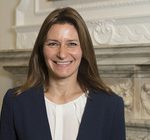
  • Lucy Frazer – 2023 Speech on Journalism Matters Week

    Lucy Frazer – 2023 Speech on Journalism Matters Week

    The speech made by Lucy Frazer, the Secretary of State for Culture, Media and Sport, in London on 30 October 2023.

    Journalism matters.

    That’s what this week in the year is about.

    But it isn’t something that we should just acknowledge this week.

    It is something we should acknowledge every month. Every week. Every day.

    Your work in holding people, organisations and countries to account.

    Your reporting without fear or favour.

    Calling out wrongful activity and evil.

    Combatting mis and disinformation.

    These are the signs of a true democracy.

    Freedom of the press is not actually about media freedom.

    It is about our freedom.

    Through your reporting you are protecting the freedom of others.

    And in a world of social media, mainstream media plays a critical role.

    Your fact checked, legal proofed, thorough work, allows truth to prevail in an increasingly uncertain world.

    And what you do takes courage.

    Immense courage.

    I know all of you in the room right now will be worried about your colleagues.

    Those working in war zones across the globe.

    Me too.

    Your journalists are putting their lives on the line for truth, freedom and democracy.

    The events in Israel and Gaza have recently made me think of other journalists.

    The American Journalist James Foley who was abducted in Syria and beheaded by ISIS.

    Evan Gershkovich the Wall Street Journalist detained in Russia.

    The 14 civilian journalists and media workers who have been killed in the line of duty since Russia invaded Ukraine .

    And of course, we are all thinking of the journalists covering the conflict in Israel and Gaza right now.

    Nine journalists have sadly already lost their lives.

    And my thoughts are with all of them and their families,

    And all of you, who no doubt keenly feel the loss of your friends.

    And it’s not just you and your colleagues’ courage in the face of war.

    But the courage in dealing with issues which evoke hate and abuse on social media.

    Or the full force of legal threats and pressure from the rich and powerful who try to keep their secrets secret.

    Courage to stand up to unscrupulous regimes and people in positions of power.

    I want you to know that we, in government, have your back.

    We understand what you are doing and why it is so important.

    It’s why we launched the National Action Plan for the Safety of Journalists.

    …Why we are legislating to make it harder for powerful people to stop the publication of investigative journalism through unscrupulous lawsuits.

    And why we expanded the National Committee for the Safety of Journalists to deal with these legal threats.

    It’s why we are supporting you through the Digital Markets Bill which should enable you to get fair terms and fair compensation when your work is hosted on digital platforms.

    And it is why we will remove a threat to freedom of the press by repealing S40 so costs are not a bar to investigative journalism.

    You do not need telling that your courage has shaped our history.

    Bringing down the Nixon administration in Watergate.

    Exposing Harvey Weinstein as a sexual predator beginning the Me Too movement.

    And from as early as the Crimean War sending your stories home, exposing the horrors of war and the bravery of soldiers. And contributing to the creation of the Victoria Cross.

    And right now, again, our media is shaping our future.

    I have watched and read those brave, passionate voices who are standing against Hamas and calling out antisemitism.

    Highlighting the 1,353% per cent rise in antisemitism in London alone.

    Spotlighting the 4 Jewish schools that shut.

    Decrying the fact that children going to Jewish schools have been advised not to wear their blazer to prevent them from becoming a terrorist target

    Pointing out the disturbing scenes at the airport in Dagestan.

    Those journalists.

    Calling out the denial by some, of the atrocities, carried out by a terrorist group.

    Calling out the tearing down of posters of abducted children.

    And your fact checked, legal proofed, thorough work…

    Your truth telling.

    Will make a difference to our future.

    We only have to look back less than 100 years.

    To what happened when conspiracy theories were rife, antisemitism the norm and no one in society called it out…

    Because of this failure of society as a whole the German people were ready to accept the ‘annihilation of the Jewish race in Europe’ as Hitler infamously put it.

    In 1941 Joseph Goebbels wrote that the fate the Jewish people were meeting was deserved and that no one should pity or regret it.

    And most people didn’t bat an eyelid.

    And your calling out matters not just to the Jews. But to all of us in this room. And beyond.

    Because it is well known that when there is prejudice against any minority it should be a concern for all minorities.

    Unfortunately the Jewish community knows what can come next.

    Hitler didn’t just aim to wipe out the Jews, he targeted anyone who was gay, black or a traveller.

    Your calling out matters because terrorist organisations like Hamas share the principles of terrorist organisations like al Qaeda and ISIS.

    And they are no friends of the west.

    Their hatred is not confined to Jews, or Israel. They hate all of us who share western values.

    And Hamas’ actions in no way support or help the plight of the Palestinian people.

    Who are also entitled to safety and to live in peace.

    We are also seeing a worrying rise in anti-Muslim hatred

    Terrorists use the media as a weapon of war.

    Truth must prevail.

    And for that, journalism matters.

    Not just this week.

    Today, Tomorrow. Next year. And every year after that.

    I want to end with a message someone in Israel sent me last Monday.

    It is a copy of a statement published by The Shin Bet, the Israeli Security Services and Israeli police summarising the result of the investigation into the massacre of over 1400 people on 7 October.

    And, I quote…

    The investigation revealed, following the interrogation of six terrorists who were captured that Hamas offered significant financial incentives to anyone who successfully kidnapped an Israeli with abductors promised $10000 and a free apartment.

    The detainees stated that the instructions were to kidnap elderly women and children.

    According to one detainee his commanders ordered the terrorists to behead Jews and rape women and girls.

    Courage. Freedom. Truth.

    Thank you for your role in our democracy.

  • PRESS RELEASE : Home Secretary’s speech on tackling AI-generated child sex abuse material [October 2023]

    PRESS RELEASE : Home Secretary’s speech on tackling AI-generated child sex abuse material [October 2023]

    The press release issued by the Home Office on 30 October 2023.

    The Home Secretary convened an event in partnership with the Internet Watch Foundation.

    Thank you very much to all of you for being here today.

    Nothing is more important than keeping children safe. Those who would hurt children are relentless in their efforts and never stop looking for new opportunities to satisfy their depraved perversions.

    So it’s vital that we stay ahead of them.

    Advancements in technology have led to major, even revolutionary benefits to society.

    In particular, Artificial Intelligence can be a powerful tool for good, with immense opportunity to grow the global economy, deliver better public services, and tackle some of the world’s biggest challenges.

    However, whilst such technologies have enabled us to enhance our livelihoods and our societies, they also pose significant risks with their misuse for criminal purposes – one of which is the sexual abuse of children.

    As Home Secretary, I continue to champion efforts across the UK and internationally to bear down on the threat posed to our children.

    AI presents a huge risk, but also an opportunity to tackle child sexual abuse.

    This month I visited the National Center for Missing and Exploited Children, with my counterpart at the Department for Homeland Security, Secretary Mayorkas, and saw first-hand the abhorrent material being generated right now.

    In the UK, the Internet Watch Foundation is a critical partner in our efforts to eradicate child sexual abuse online. They said recently that they have begun to see AI-generated child sexual abuse imagery.

    I am very grateful to the Internet Watch Foundation for your tireless efforts to ensure that the images and videos of children being abused are removed from the internet.

    I’m very pleased that you have joined me as partners on this important event today.

    Generative AI poses a particular risk, because it provides child sexual abusers with the capability to produce unprecedented quantities of life-like child sexual abuse imagery.

    We will hear shortly in more detail about the impact that this will have on our collective ability to respond to online abuse. It will only make the internet a more dangerous place.

    Now is our opportunity – which we simply must seize – to ensure that these risks do not materialise.

    Only through collective joint action that harnesses our combined expertise, resources, and knowledge can we ensure that appropriate safety measures are put in place.

    Later in this session, the Policing Minister will lead a discussion with leading experts and voices from across the tech industry, safety tech sector, and law enforcement.

    This will explore the innovation required to ensure appropriate safety measures are in place, and how AI can also be utilised as a force for good, including in tackling child sexual abuse and exploitation.

    Inevitably, AI does not respect borders. That’s why international action and cooperation is so vital.

    As a global leader in tackling child sexual abuse, the UK is uniquely placed to bring the world together to ensure that AI is built safely and securely so the huge benefits can be enjoyed by all.

    With countries coming from different starting points and with different perspectives, we have to find a way to come to a shared understanding of the risks posed by AI, and the need to test and monitor them.

    We also need to collaborate on safety research and highlight the shared best practice for AI developers internationally.

    So I’m delighted to see so many different organisations represented here today.

    This is just the start of the conversation, and the UK Government wants to continue working collaboratively with you over the next few weeks and months on these issues.

    And I hope that we can speak as one voice with the joint statement we have prepared – which will send an unequivocal message that AI must be a force for good, and not a threat to children.

    Thank you.

  • PRESS RELEASE : Home Secretary joins forces with big tech to fight AI child sex abuse images [October 2023]

    PRESS RELEASE : Home Secretary joins forces with big tech to fight AI child sex abuse images [October 2023]

    The press release issued by the Home Office on 30 October 2023.

    The Home Secretary hosted an event with the Internet Watch Foundation, and committed to clamp down on the spread of AI-generated child sex abuse material.

    Tech giants including Tiktok, Snapchat and Stability AI have all signed a pledge vowing to tackle the despicable rise of AI-generated child sexual abuse images at an event hosted by the Home Secretary Suella Braverman today (30 October).

    Charities, tech firms, academics and international government representatives all gathered to focus on how to tackle the threat of child sexual abuse material generated by Artificial Intelligence (AI) after data from the Internet Watch Foundation (IWF) showed that thousands of images depicting the worst kind of abuse could be found on the dark web and is realistic enough to be treated as real imagery under UK law.

    At the event, hosted in partnership with the IWF and taking place in the lead up to the government’s AI Safety Summit, the Home Secretary addressed attendees, many of which have come together to sign a statement pledging to cooperate to mitigate the spread of AI-generated images depicting children being abused.

    The government is also exploring further investment into the use of AI to combat child sexual abuse, and will continue to examine potential options for innovation to tackle the threat from AI generated child sexual abuse material.

    Home Secretary Suella Braverman said:

    “Child sexual abuse images generated by AI are an online scourge. This is why tech giants must work alongside law enforcement to clamp down on their spread. The pictures are computer-generated but they often show real people – it’s depraved and damages lives.

    “The pace at which these images have spread online is shocking and that’s why we have convened such a wide group of organisations to tackle this issue head-on. We cannot let this go on unchecked.”

    The IWF has warned that the increased availability of this imagery not only poses a real risk to the public by normalising sexual violence against children, but some of the imagery is also based on children who have appeared in ‘real’ child sexual abuse material in the past. This means innocent survivors of traumatic abuse are being revictimized.

    The surge in AI-generated images could also slow law enforcement agencies from tracking down and identifying victims of child sexual abuse, and detecting offenders and bringing them to justice.

    Signatories to the joint statement, including tech giants like TikTok, Snapchat and Stability AI, have pledged to sustain “technical innovation around tackling child sexual abuse in the age of AI”. The statement affirms that AI must be developed in “a way that is for the common good of protecting children from sexual abuse across all nations”.

    Statistics released by the IWF last week showed that in a single month, they investigated more than 11,000 AI images which had been shared on a dark web child abuse forum. Almost 3,000 of these images were confirmed to breach UK law – meaning they depicted child sexual abuse.

    Some of the images are based on celebrities, whom AI has ‘de-aged’ and are then depicted being abused. There are even images which are based on entirely innocuous images of children posted online, which AI has been able to ‘nudify’.

    Susie Hargreaves OBE, Chief Executive of the IWF, said:

    “We first raised the alarm about this in July. In a few short months, we have seen all our worst fears about AI realised.

    “The realism of these images is astounding, and improving all the time. The majority of what we’re seeing is now so real, and so serious, it would need to be treated exactly as though it were real imagery under UK law.

    “It is essential, now, we set an example and stamp out the abuse of this emerging technology before it has a chance to fully take root. It is already posing significant challenges. It is great to see the Prime Minister acknowledge the threat posed by the creation of child sexual abuse images in his speech last week following the publication of our report.

    “We are delighted the government has listened to our calls to make this a top international priority ahead of the AI summit, and are grateful to the Home Secretary for convening such a powerful discussion.”

    Chris Farrimond, Director of Threat Leadership at the National Crime Agency (NCA), said:

    “We are starting to see realistic images and videos of child sexual abuse created using Artificial Intelligence, and an exponential growth in offenders discussing how to use it to generate images of real children.

    “We know that as AI technologies mature and become more widely applied, they will create opportunities for offenders. But there will also be new opportunities for law enforcement and technology platforms to take action that protects children and aids identification of their abusers.

    “That is why the NCA is bringing together international law enforcement and industry partners at the Virtual Global TaskForce in Washington next month. It is vital that all of our combined creativity, skills and resources are being utilised to protect our most vulnerable.

    “We estimate that there are 680,000 to 830,000 adults in the UK (1.3% to 1.6% of the adult population) that pose some degree of sexual risk to children, which is why tackling child sexual abuse is a priority for the NCA and our policing partners. We will investigate and prosecute individuals who create, share, possess, access or view AI generated child sexual abuse material in the same way as if the image is of a real child.”

    Sir Peter Wanless, NSPCC Chief Executive, said:

    “AI is being developed at such speed that it’s vital the safety of children is considered explicitly and not as an afterthought in the wake of avoidable tragedy.

    “Already we are seeing AI child abuse imagery having a horrific impact on children, traumatising and retraumatising victims who see images of their likeness being created and shared. This technology is giving offenders new ways to organise and risks enhancing their ability to groom large numbers of victims with ease.

    “It was important to see child safety on the agenda today. Further international and cross-sector collaboration will be crucial to achieve safety by design.”

    The government also recognises that AI can be a powerful tool for good and the Home Secretary emphasised at the event that AI also poses opportunities to improve the way we tackle child sexual abuse. Together with the police and other partners, the Home Office has developed the world-leading Child Abuse Image Database (CAID), which is already using AI to grade the severity of child sexual abuse material.

    The AI tool helps police officers sort through large volumes of data at a faster pace, bringing certain images to the surface for the officer to focus on to aid investigations. This enables officers to more rapidly identify and safeguard children, as well as identify offenders. These tools also support the welfare of officers, as they reduce prolonged exposure to these images. Other tools are also in development which will use AI to safeguard children and identify perpetrators more quickly.

    While the opportunities posed in this space are promising, AI is advancing much quicker than anyone could have realised.

    Without appropriate safety measures that keep pace with its development, this technology still poses significant risks, and that is why the Home Secretary is placing an emphasis on working constructively with a wide range of partners to mitigate these risks and ultimately, protect the public.

    This week, the UK is hosting the first ever major global AI Safety Summit at the start of November at Bletchley Park.

    The summit will turbocharge global action on the safe and responsible development of frontier AI around the world – bringing together key nations, technology companies, researchers, and civil society groups.

  • PRESS RELEASE : Government pledge to help reduce leaseholder insurance premiums [October 2023]

    PRESS RELEASE : Government pledge to help reduce leaseholder insurance premiums [October 2023]

    The press release issued by the Department for Levelling Up, Housing and Communities on 30 October 2023.

    Government pledge promises to stop a practice that is driving up buildings insurance premiums for leaseholders in buildings with identified fire safety issues.

    The government has agreed a pledge with five sector-leading insurance brokers, which could mean thousands of leaseholders in buildings with identified fire safety issues see a significant reduction in their insurance premiums.

    Each broker is committing to stop the practice of sharing commissions with those parties who place or arrange buildings insurance, such as property managing agents, landlords, and freeholders.

    They are also promising to have a cap of 15% on the proportion of the premium that brokers take to compensate for their work in arranging the insurance. The Financial Conduct Authority (FCA) report on broker remuneration found that this amount can be as high as 60% of the cost of the premium paid by leaseholders.

    The FCA’s findings have strengthened the Government’s resolve to see a ban on the practice of sharing commissions, as announced by the Secretary of State for Levelling Up, Housing and Communities, Michael Gove, in January 2023. This pledge is an important step towards implementing that policy.

    Minister for Building Safety, Lee Rowley, said:

    “I strongly welcome the decision of these brokers to step up and demonstrate their willingness to do more on bringing premiums down.

    “These brokers are to be congratulated on their decision; we now need to see further action from others in the broader insurance and broker industry to accompany it.”

    The brokers that have individually taken the voluntary decision to sign up to the pledge are: Lockton LLP, Bridge Insurance Brokers , Brown & Brown Insurance Brokers (UK) Limited, PIB Group Insurance Brokers/ St Giles, and Willis Limited (WTW).

    The pledge will benefit leaseholders who are living in buildings over four storeys or 11m in height with identified fire safety defects, which have been made known their insurance brokers.

    The brokers who have signed up to the pledge have also confirmed their commitment under new FCA rules, from 31 December 2023, to share information about the buildings insurance policy with leaseholders if requested.

    These companies will act with immediate effect for new policies and the Government will monitor the adherence to and impact of the pledge.

    Department officials stand ready to discuss the pledge with any relevant broker and expect to see the numbers of responsible brokers increase over coming weeks.

  • PRESS RELEASE : UK Minister visits Chile to strengthen collaboration and celebrate 200 years of bilateral relations [October 2023]

    PRESS RELEASE : UK Minister visits Chile to strengthen collaboration and celebrate 200 years of bilateral relations [October 2023]

    The press release issued by the Foreign Office on 30 October 2023.

    Minister Rutley and Chile’s Under-Secretary for Foreign Affairs will sign a joint commitment to work together to enhance the protections for the Antarctic.

    The Foreign, Commonwealth and Development Office’s Minister for the Americas and the Caribbean, David Rutley MP, arrives today in Chile to strengthen collaboration between the UK and Chile, as both nations celebrate 200 years of bilateral relations.

    While in the country, Minister Rutley, together with Chile’s Under Secretary for Foreign Affairs, Gloria de la Fuente, will sign a joint commitment to work together to enhance the protections for the Antarctic.

    The Letter of Intent on Antarctic Co-operation reaffirms both countries commitment to enhancing environmental protection for the Antarctic and to ensuring that it remains a region that is dedicated to peace and scientific research.

    During his visit minister Rutley will also meet young climate leaders who have been selected by Chile to attend COP28 later this year. He will hear about their work with the British Embassy Chile and discuss the efforts of both countries to mitigate the impacts of climate change and achieve the roadmap to net zero.

    The Minister will then go on to Villa Grimaldi, a former detention centre during Chile’s dictatorship to demonstrate the UK’s strong commitment to democracy and human rights, and to mark the 50th anniversary of the military coup in Chile and reflect on the suffering it caused.

    His visit to the country also includes a trip to the Araucanía Region to meet and engage with members of the indigenous community, as well as regional authorities and local organisations that promote women’s entrepreneurship.

    FCDO Americas Minister David Rutley MP said:

    It is an honour to be able to visit Chile as we celebrate 200 years of bilateral relations.

    Ours is a friendship underpinned by longstanding historical links, shared values and commitment to democracy, and we’re putting that into action this week with a clear commitment to extend our landmark co-operation agreement on the Antarctic.