Tag: 2023

  • PRESS RELEASE : Government slashes up to £1bn a year of business burdens [November 2023]

    PRESS RELEASE : Government slashes up to £1bn a year of business burdens [November 2023]

    The press release issued by the Department for Business and Trade on 7 November 2023.

    • Reforms allow businesses additional freedoms while retaining the UK’s world leading workers’ rights
    • Proposals include reducing record keeping requirements around Working Time Regulations and simplifying the calculation of holiday pay and entitlement

    British businesses could save up to £1 billion a year as the Government confirms plans to remove unnecessary and outdated bureaucracy following our exit from the EU.

    The Government has today [Wednesday 8 November] announced amendments to several retained EU laws to ensure UK regulations are brought up to date and tailored to the needs of businesses, freeing up firms to refocus their time and money elsewhere to help create jobs.

    The reforms will see the reduction of time-consuming reporting requirements and the simplifying of annual leave and holiday pay calculations under the Working Time Regulations as well as the streamlining of regulations that apply when a business transfers to a new owner.

    These proposals don’t change existing workers’ rights in the UK, which remain some of the best in the world, and instead remove unnecessary bureaucracy in the way those rights operate, allowing business to benefit from the additional freedoms we have through Brexit.

    Business Minister, Kevin Hollinrake said:

    These reforms ensure our employment regulations are fit for purpose while maintaining our strong record on workers’ rights, which are some of the highest in the world.

    Seizing these benefits of Brexit, including a saving of £1 billion for businesses, will support the private sector and workers alike and are vital to stimulating economic growth, innovation and job creation.

    Earlier this year, the Government launched a consultation on three areas for reform with the removal of unnecessary bureaucracy including:

    • Record keeping requirements under the Working Time Regulations
    • Simplifying annual leave and holiday pay calculations in the Working Time Regulations
    • Consultation requirements under the Transfer of Undertakings (Protection of Employment), or ‘TUPE’, Regulations

    The Government also launched a consultation in January 2023 on calculating annual leave entitlement for part-year and irregular hours workers.

    The reforms confirmed today follow both consultations and will address concerns from businesses by helping to simplify the calculation of holiday entitlement for employers and make entitlement clearer for all irregular hours and part-year workers.

    FSB National Chair Martin McTague said:

    We welcome these sensible changes, striking a balance for workers while offering clarity for employers. It’s good to see the Government cutting through excessive burdens without losing the benefits of regulations.

    We’re eager to see a system that’s clear-cut, cost-effective and easy for small businesses to roll out, so these announcements are a crucial step forward.

  • Stephen Flynn – 2023 Speech on the Loyal Address

    Stephen Flynn – 2023 Speech on the Loyal Address

    The speech made by Stephen Flynn, the Leader of the SNP, in the House of Commons on 7 November 2023.

    Thank you, Mr Speaker; was it something I said? Like snaw aff a dyke.

    I wish to begin, as is customary, by passing on my thanks to King Charles and the Queen for their most Gracious Speech today. I am sure it was a momentous occasion for them both. I have been goaded a wee bit about my flower, but notwithstanding that, I intend to start by offering some consensus across the Chamber, because I believe that is incredibly important in these times. First, in relation to Ukraine, it is fast approaching the two-year anniversary of Vladimir Putin’s decision to enter Ukraine in an extremely forceful manner—to start a war, to kill civilians and to attack Ukraine’s democracy, building upon the steps that he had taken in 2014 by invading and annexing Crimea. It has been said in the public domain that the resolve of the west is perhaps shaking in the face of the fact that the conflict continues; but I think we are all united across this Chamber, right across parties, in our steadfast commitment to the Ukrainian people in their fight to protect their democracy against that most abhorrent of tyrants.

    We say that because these are our values. It is what we believe in. We believe in peace, we believe in protecting civilians and we believe in democracy. Of course, that view extends beyond just Ukraine; it extends to the situation in Israel and Gaza, too. I know I am at risk of repeating myself here—as indeed many of us do in this Chamber from time to time—but it is important to reiterate that all of us in this Chamber are united in our unequivocal condemnation of what Hamas did exactly a month ago. There can never be a justification for the senseless killing of men, women and children in the way that that terrorist organisation did. What we have seen off the back of that on our streets is equally—not perhaps equally—concerning. We all have grave concerns about the rise of antisemitism and the fear so many people have walking the streets of these isles. I want to send my heartfelt support to all those in the Jewish community and to make it very clear—if, indeed, it ever needed to be clear—that we all oppose antisemitism, no ifs and no buts.

    Finally on that point, I think what we all so urgently want to see is diplomacy in action to release the hostages who are still under Hamas’s control. There can be, as I said in relation to other matters, no justification for that and we all want to see those people returned to their families as quickly as possible. As I have said previously, I wish the Prime Minister well in that diplomatic pursuit.

    The conflict in Israel and Gaza cannot be forgotten without mentioning what we are seeing in Gaza itself. Thousands upon thousands of people have been killed. People do not have access to food. They do not have access to clean water. They do not have access to fuel. They cannot turn on the lights. They do not have access to medicine. In many instances, the hospitals they go to no longer exist, the schools they once went to no longer exist, the universities they once went to no longer exist. What we are seeing—this is perhaps where the agreement across the Floor goes away—is collective punishment. What we so badly need to see is a humanitarian ceasefire. No, not a humanitarian pause, which fills people’s bellies, only for them to be blown up in the days to follow. What we believe in unequivocally is a humanitarian ceasefire. I sincerely hope that Members across the Chamber will join us in coming to that position in the not too distant future, because those are our values. We believe in peace and we believe in the protection of civilians.

    To the King’s Speech itself, I was listening very closely, like others were, and I heard the term “economic growth”. That intrigued me, because we all know that Britain is broke and Brexit broke it, and we so obviously need economic growth. For those of us on the SNP Benches there is an obvious solution on that front. There are perhaps three or four things that we could and should do. They may not be popular with Members—certainly not with those on the Government Benches, or indeed with some in the Official Opposition—but they are necessary. All of us, I think, would agree that to have economic growth we need the tax base to expand. The easiest way to do that is to actually increase working age migration to these isles.

    Beyond migration, the easiest way is to ensure that the businesses we all want to thrive are able to export directly to the biggest markets possible. In our case, there is one sitting just across the channel: the EU single market. We should be more robust and confident about saying that we need not only more migration to these isles but access to the EU single market. The argument the Prime Minister puts forward is that the trade deal reached with our friends in Asia is the start of something better. Well, I had a wee look, and that trade deal is worth 0.08% of GDP. The Government would need 50—50—of those trade deals just to match the 4% hit caused by leaving the European Union.

    Beyond migration and access to the single market, another way to guarantee economic growth is to enshrine the rights of workers into law through the likes of an employment Bill. It is a damned disgrace that since 2017 this Government have been promising an employment Bill and have still not delivered.

    Another strand to achieve economic growth, if colleagues were so willing, would be to double down on investment in net zero—to do as the Americans are doing, and to follow the lead of Joe Biden with the Inflation Reduction Act. It makes sense. It makes sense to invest in the technologies of tomorrow, so that we are not left behind and can compete for the decades to come. Net zero is not a hindrance; it is a growth opportunity.

    I am pleased that in the speech we heard today we were given an indication that the grid was to be upgraded—that is to be welcomed, long overdue as it is—but what we do not have is any insight into to whether there will be a financial mechanism to deliver pumped storage hydropower in Scotland, in Cruachan or Coire Glas. There was no indication that there would be further or new financial mechanisms to support tidal power in Scotland, which is world-leading. There was no indication that there would be financial mechanisms to deliver green hydrogen at scale, not just for people in these isles but throughout the European continent. There was no indication whatsoever that this Government were going to fix the failure of the offshore wind auction round, which delivered not a single bid this year: a shameful indictment, and damaging, oh so damaging, to Scotland’s burgeoning renewables sector.

    For folk sitting at home, none of this is tangible, none of it is real, because people living in Scotland, an energy-rich nation, are nevertheless living in fuel poverty. We already produce six times more gas than we consume, yet people cannot afford to turn on their heating. In 2022 we produced enough energy, enough electricity, to power all the homes in Scotland for three and a half years, yet people cannot afford to keep the lights on. There are two things that the Government could have done to support those people. First, they could have finally separated the cost of gas from the cost of electricity to protect consumers immediately. Secondly, they could and should have reinstated the £400 energy bill rebate, because we know that people are going to be worse off this year than last. Those are the facts. They may not be popular in this place, but we will continue to champion them, because they are our values.

    The challenges that people face, however, extend beyond just their energy bills; they involve their mortgage bills as well. Why is there no action in relation to mortgage relief? Why is there no action in relation to a price cap on some staple foods in the supermarkets? It was suggested by a member of the Government that that would be communism. Someone should have told Emmanuel Macron, because the French have done it: they have managed to protect their citizens. Why is it good enough for them, but not good enough for us?

    When we look at the cost of living crisis in its entirety, we see that ultimately it exists because of decisions made in this place. People cannot afford to pay their energy bills because of decades of incompetence on energy policy in this place. People cannot afford to pay their mortgage bills because the Tories crashed the economy. People cannot afford to pay their food bills because Brexit pushed up the prices—and that was delivered by politicians in this place. We have had enough of it.

    Douglas Ross (Moray) (Con)

    The hon. Gentleman spoke at length about energy, and never once mentioned oil. He represents Aberdeen North. I wonder whether, when the Government’s Bill on oil and gas licences comes to this Chamber, he will stand up for his constituents and vote with the Government, or support the position of the Scottish National party, which is to turn its back on oil and gas workers.

    Stephen Flynn

    The hon. Member for Moray is always one for detail, but I represent Aberdeen South, not Aberdeen North.

    It is just seven days since the Government announced 27 licences for offshore oil and gas, and now they have come forward with a proposal to do so on an annual basis. [Interruption.] I hear the hon. Gentleman chuntering from a sedentary position like a wee dafty. If he chooses to listen, I will get to my point. What he knows I believe is that there must be an evidence-based approach to oil and gas extraction—an evidence-based approach which is anathema to this Government. We need to be considering our energy security and our commitment to net zero, to jobs and opportunities and, of course, to our investment in renewables. What I would like to see the Government do—I am sure that the hon. Gentleman would agree with me in this regard—is to ensure that in regard to the pre-existing licences for the likes of offshore wind, where the Government have failed, we see improvements to ensure that this actually happens.

    When the people of Scotland see the cost of living challenges, they know that they emanate from the decisions taken in this place and their minds are very much refocused on the fact that where power is devolved, power is retained. What we so badly need to see is the powers over our economy, energy policy and employment law transferred from this place to Holyrood, and here is why. When we look at the record of Holyrood in comparison to this place, the difference could not be more stark. If you are a young person in Scotland, you will be born into a baby box; if you go to nursery, you will receive 1,140 hours of care; if you go to primary school, you will get free school meals; if you go to secondary school and want to go into higher education, that will be paid for you; and if you enter the workplace in Scotland and become a nurse, you will be paid more than you would be paid here.

    The majority of Scots pay less tax than those in England. They pay less council tax than those living in England, and they will be able to get crisp, clean water included as part of that bill. Of course, if you want to be—[Interruption.] The hon. Member for Moray is very keen. Would he like to rise to his feet?

    Douglas Ross

    I am grateful to the hon. Gentleman for giving way again. He has spoken a lot about economic growth. Does he agree with several SNP Back Benchers that there should be no place in the SNP Scottish Government for the Greens because they are anti-economic growth?

    Stephen Flynn

    I believe that I was talking about nationalised water in Scotland, and it is not just water that is nationalised in Scotland; our railways are nationalised as well. If you want to open a business in Scotland, you will have access to the small business bonus, and as you get older you will be able to live in comfort, knowing that you will have access to free personal care.

    All those things came about because those are our values. They are tangible and real, and what the Scottish Parliament has done is deliver them. What it is going to deliver next is the council tax freeze—a council tax freeze that comes in the face of some Labour councillors in Scotland advocating for a 32% rise in council tax. Only the SNP, using the powers that we have, is protecting the Scottish people during the cost of living crisis, in stark contrast to the failing establishment in front of us here. But of course, it is not all bad news. We do have one glimmer of hope: the fact that this is not just the Prime Minister’s first King’s Speech; it is the Prime Minister’s last King’s Speech.

  • Rishi Sunak – 2023 Speech on the Loyal Address

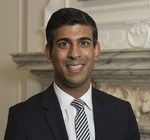
    Rishi Sunak – 2023 Speech on the Loyal Address

    The speech made by Rishi Sunak, the Prime Minister, in the House of Commons on 7 November 2023.

    This is the first King’s Speech in 70 years, and the first of His Majesty’s reign, which is already defined by the same wisdom, grace and compassion that marked a long record of service. May I take this opportunity on behalf of the whole House to express our admiration and gratitude to His Majesty the King?

    Before we get into the traditional debate, let me first address the situation in Israel and Gaza. All of us in the House care deeply about the suffering of innocent people and the scenes we have witnessed. We abhor the way in which Hamas have used innocent Palestinians as human shields. It is right that the United Kingdom is doubling our aid funding for Palestinian civilians. We have been consistent throughout in our calls for a humanitarian pause as soon as possible to get aid in and hostages and foreign nationals out, but a unilateral and unconditional ceasefire would simply allow Hamas to entrench their position and continue their attacks against Israel. Only last week, Hamas reiterated their intentions, stating clearly:

    “We will repeat the October 7 attack time and again until Israel is annihilated.”

    Faced with such a threat, no country could reasonably be expected not to act.

    Last week, I spoke with Prime Minister Netanyahu to reiterate the United Kingdom’s backing for Israel’s right to defend itself; it is the first duty of any Government. I also stressed the need to allow more aid into Gaza, to take all possible measures to minimise civilian casualties, and to avoid inflaming tensions in the west bank, where settler violence must stop. I can update the House that now well over 100 British nationals have been able to leave Gaza, thanks to our diplomatic efforts to reopen the Rafah crossing. The Development Minister will make a full statement to the House tomorrow.

    Let me also reiterate this: we will not stand for the hatred and antisemitism we have seen on our streets. It sickens me to think that British Jews are looking over their shoulder in this country, and that children are going to school covering up their school badges for fear of attack. This Government will do whatever it takes to keep the Jewish community safe, just as we will do whatever it takes to keep every community safe. We will fight hatred and extremism in all its forms, wherever it is found, today, tomorrow and always. We are the world’s most successful multi-ethnic, multi-faith democracy, and we will protect our democracy from all threats to it.

    This King’s Speech is about what this Government are about—taking long-term decisions to build a brighter future for our country. It builds on foundations that were far stronger than they were just a year ago: inflation falling and on track to be halved; an economy now growing faster than France and Germany; national debt on track to fall; more support for the NHS this winter; and we are stopping the boats, with crossings this year down by over a fifth, as we ensure that it is this Government, not criminal gangs, who decide who comes to our country.

    Now that we have strengthened the foundations, this King’s Speech turns to the future, taking long-term decisions with a single objective—to change our country for the better: change in our economy with new legislation to improve our energy security, join a huge trade pact with the fastest-growing region in the world and prepare to seize the opportunities of a new technological age; change in our society with new protections for leaseholders and renters, a Bill to safeguard the future of football clubs and fans, and the historic legislation that will finally create the first smoke-free generation; and change to keep our nation secure and our communities safe with tougher sentences for criminals, more powers for the police and security services, and tough new action to clamp down on antisocial behaviour.

    What will all this mean for the British people? More jobs, more investment and higher growth; more police on the streets with stronger powers to keep us safe; places people are proud to call home; and a country strong at home, confident abroad and with a better future ahead for all our people. That is the change that this King’s Speech and this Government will deliver.

    The Loyal Address was brilliantly proposed by my right hon. Friend the Member for Scarborough and Whitby (Sir Robert Goodwill). I will always be grateful to him, because when I was first selected as the Conservative candidate for Richmond (Yorks), my right hon. Friend took a call from a prominent farmer in my local community who had expressed some consternation about the revelation that I did not eat beef. Quick as a flash, my right hon. Friend replied, “Don’t worry, he’s the perfect candidate—there’ll be more for me and thee!”

    As a proud Yorkshireman, my right hon. Friend has a reputation for being very careful with money. Just the other day, he went shopping for a new pair of shoes, and when the shop assistant tried to throw away the old pair, he said, “Hang on a second, I want to keep those laces—there’s still life in them yet!” I have often regarded myself as a trainee Yorkshireman, and it turned that out that, with him, I was also a trainee fiscal Conservative. That is why I asked my right hon. Friend to apply his same zeal for savings to efficiencies that we could make across Whitehall. He came back with a great list: Yorkshire teabags are perfectly fine for another three or four goes, the DEFRA thermostat was set far too high at 17° and seven bins are simply far too many.

    My right hon. Friend is probably the only Member of this House who is the proud owner of his own graveyard. Apparently, he even does some of the digging himself. No wonder he is such a staunch supporter of the Government’s plan to protect renters: he fully supports the right of his tenants to be left undisturbed over the very long long-term. In his maiden speech, my right hon. Friend proudly boasted that Whitby in his constituency was

    “voted No. 1 weekend holiday destination by the readers of Saga Magazine”.—[Official Report, 6 June 2005; Vol. 434, c. 1052.]

    I am delighted, as my right hon. Friend retires and lifts his gaze from his own copy of Saga, that he already finds himself in the home of blue skies, blue waters and blue rinses. Whitby is, as he reminded us, where Dracula made landfall—that shadowy, pale, haunting figure aged beyond his years. And that is what two decades in this House can do for you!

    As a Government Whip, a Minister in four Departments, and a dedicated constituency MP, my right hon. Friend has had an extraordinary career. Among his many achievements, I would particularly highlight his introduction of the first ever roadside drug tests. Before that we had no way of clamping down on dangerous drug driving, and that landmark policy has saved untold numbers of lives. It is a legacy he should be proud of, and a reminder of the good that politics can do. My right hon. Friend is a great parliamentarian, and I am proud to call him a friend. His speech was in the finest traditions of this House, and his wit, integrity and sound good sense will be much missed on all sides.

    Continuing the North Yorkshire theme, the Loyal Address was brilliantly seconded by someone who was also born and bred in God’s own county, my hon. Friend the Member for Stroud (Siobhan Baillie). I am sure the whole House will join me in paying tribute to our fantastic NHS, and send our very best wishes to her daughter Tilly. Some may think of my hon. Friend as a shy, retiring and studious type. After all, as she said today, she often prefers to be in the Library. But we are discovering another side to my hon. Friend; we have heard about her time in the naughty corner, and about the Spice Girl platforms. I can also reveal today that back in the 1990s she won the prestigious, fiercely contested crown of “Yorkshire rock ’n roll dancing queen”.

    In a rich and varied career, my hon. Friend was also a highly regarded yoga teacher. So when she read in The Times that the shadow Cabinet were being encouraged to take up yoga in the office, she was waiting for the phone call. It turns out that no Conservative, not even one as supremely talented as my hon. Friend, can teach the Labour party anything when it comes to constantly changing from one contorted position to another.

    My hon. Friend also mentioned taking advice and inspiration from a certain parliamentary sketch writer. If she is hoping that one day he might make her the target of his acerbic wit, I would just say this: be careful what you wish for. I have been called many things in my time, but I am not sure that I will ever forget being branded

    “the titch in vacuum-packed underpants”.

    On a serious note, my hon. Friend has already made a huge impact in her short time in this place, and nowhere more than in her fantastic campaign to improve childcare provision, inspiring my right hon. Friend the Chancellor to announce 30 hours of free childcare a week for under-fours in England in the March Budget. That landmark policy will make an enormous difference to millions of families up and down the country, and my hon. Friend should be incredibly proud of her part in making that happen.

    My hon. Friend overcame great odds to reach her place today. Growing up on free school meals, she left home as a teenager and worked her way up as a family lawyer, without attending university, before becoming the first female MP of Stroud in 2019. Sometimes people ask me what being a Conservative is all about, and I can think of no greater example than that. My hon. Friend is a remarkable person, a dedicated MP, and someone with a huge future ahead. Her speech was in the finest traditions of this House.

    Let me also thank the Leader of the Opposition for his contribution to this debate, and indeed his first U-turn of it. As a former republican, he used to think that this country should not even have a King’s Speech, but at least that is one U-turn the whole country will welcome. The right hon. and learned Gentleman is prone to changing his position, but in fairness his speech did strike a few consistent notes: higher inflation, more strikes, more immigration and higher borrowing. The Labour party’s plan to unnecessarily borrow £28 billion more every year and give in to inflation-busting pay demands from its union paymasters is dangerous, inflationary, and the British people would pay the price in higher interest rates and higher taxes. In truth, Labour will borrow anything—people’s money or people’s ideas—and it now turns out that his copy-and-paste shadow Chancellor is happy to borrow other people’s work, too, but she is not the only Member on the Opposition Benches to get unstuck by a book. Earlier this year, the Leader of the Opposition had to abandon writing his own book and return the deposit. It was supposed to be his vision for Britain, but his publishers discovered what the British people already know: he simply does not have one. While he stands for the same old ideas, we are focused on the long-term decisions that will provide a better and brighter future for everyone. That is what this King’s Speech will deliver.

    That change starts with changing our economy. We have already delivered the largest fall in inflation since the 1980s, a faster recovery from the pandemic than Germany, France and Japan, and tens of billions of pounds of new investment from around the world. We believe that the role of Government is to create the conditions for the private sector to thrive. That is where new growth and new jobs come from. It is why we have given business a £27 billion tax cut on investment, launched 12 freeports around the UK to create jobs and investment, and introduced legislation in this King’s Speech so that we can confirm our membership of the comprehensive and progressive agreement for trans-Pacific partnership, a huge trading pact with the fastest growing region in the world. [Interruption.] I hear from those on the Opposition Benches that it will make no difference. We can only do that because of our new freedoms outside the European Union—freedoms that the Leader of the Opposition wants to abandon, instead locking the United Kingdom into a new European deal that would tie us into EU rules and regulations that we would have no say over and opening our borders to 100,000 additional EU migrants every single year.

    As well as failing to secure our borders, the Opposition would also fail to secure our energy supplies. We know that economic growth requires energy security. We have already invested record amounts in renewables such as offshore wind. We backed Sizewell C, the first new nuclear in decades. The King’s Speech introduces new legislation for North sea oil and gas, supporting hundreds of thousands of British jobs. We can compare and contrast that with the Opposition’s energy policy—

    Sir Chris Bryant (Rhondda) (Lab)

    Will the Prime Minister give way? [Interruption.]

    Mr Speaker

    Order. Members have the right to intervene. If the Prime Minister wishes to give way, that is up to the Prime Minister. If he wishes not to do so, that is also fine.

    The Prime Minister

    We can compare and contrast—

    Sir Chris Bryant

    Will the Prime Minister give way? [Interruption.]

    Mr Speaker

    Order. The Prime Minister is not giving way.

    The Prime Minister

    We can compare and contrast the proposed new legislation with the Opposition’s energy policy, and there is one word for it: naive. That is not my word, but that of their own union paymasters. I will happily give way.

    Sir Chris Bryant

    I am very grateful to the Prime Minister. Bearing in mind that a significant proportion of people who sleep rough are Army veterans and people with acquired brain injuries, does the Prime Minister agree with the Home Secretary when she says that homelessness—sleeping rough—is “a lifestyle choice”? If he does not, will he sack her?

    The Prime Minister

    I am not sure about the link between that and energy security, but I can tell the hon. Gentleman that thanks to the efforts of my right hon. Friend the Member for Plymouth, Moor View (Johnny Mercer), veterans’ homelessness is at record low levels in this country. Rough sleeping overall is down by around a third since the peak, thanks to the actions of this Government and in particular the landmark Homelessness Reduction Act 2017—passed by this Government—which has helped relieve or prevent more than 640,000 people from becoming homelessness.

    Returning to energy security, the Opposition want to ban all new oil and gas licences, risking our becoming even more dependent on Putin’s Russia for our crucial supplies of energy. What is even more absurd about their policy is this: the Leader of the Opposition is not against all oil and gas; he is just against British oil and gas. Unlike the Opposition, who want to pursue net zero with an ideological zeal—going even faster and further no matter what the cost or the disruption—we on the Conservative Benches are cutting the cost of net zero for working people, saving British families £5,000, £10,000 or £15,000, and that is the choice.

    Caroline Lucas (Brighton, Pavilion) (Green)

    I am grateful to the Prime Minister for giving way. I want to ask him when he will start being straight with the British public. He pretends that new oil and gas licences will somehow guarantee our energy security, when he knows that that oil and gas is sold on international markets to the highest bidder. He pretends that it will get people’s bills down, yet his own Secretary of State for Energy has said that it will not. When will he stop governing by gimmick, and when will he start actually rolling out the home insulation programme that will get people’s bills down?

    The Prime Minister

    The hon. Lady talks about being straight. It is the Conservative party and me who were straight with the British people about the cost of getting to net zero—something that she and the Labour party would do well to follow. Because we have been honest and transparent and have cut those costs, we will save British families £5,000, £10,000 or £15,000—

    Caroline Lucas indicated dissent.

    Mr Speaker

    Order. The Prime Minister gave way to the hon. Lady. She should at least do him the courtesy of hearing the answer.

    The Prime Minister

    That is the simple choice: a Government on the side of hard-working people or an Opposition and the hon. Lady on the side of the eco-zealots.

    If we want truly to change our country, we need a stronger society. That is why this King’s Speech introduces a landmark Bill to create the first smoke-free generation. It will prevent deaths, improve people’s lives and free the NHS to support others. It is the most significant public health intervention by any Government for generations—historic change from a historic King’s Speech.

    But that is not all that the Government are doing for the NHS. We have invested record sums, created 50 million more primary private care appointments and brought more beds and more ambulances. Through the NHS’s first ever long-term workforce plan, we will recruit more doctors, nurses and dentists than ever before. That is what the NHS needs, not the damaging strike action that Labour refuses to condemn, even though it is adding tens of thousands of people to waiting lists every single day. The Opposition also opposed our plans to provide a minimum safety level during the strikes. Do they and the Leader of the Opposition think that vulnerable patients do not deserve life-saving healthcare, or are they just too weak to stand up to the unions? Either way, the conclusion is clear: you simply cannot trust Labour with the NHS.

    Let me turn to the most important part of a stronger society: education. Of all that we have achieved since 2010, this is what I am most proud of. Under the Labour party, only two thirds of schools were rated “good” or “outstanding”; now it is about 90%. They took us down the international league tables; we are now soaring up them. They devalued apprenticeships; we are investing in them. They backed rip-off degrees, and we are ending them. We are also introducing the new advanced British standard, so that everyone will study maths and English to 18, learn a broader range of subjects, with more hours in the classroom, and we will finally break down the barriers between academic and technical education. More teachers, higher standards and more apprenticeships: on the Government side of the House, a stronger society is an opportunity society, and this Conservative Government are delivering.

    We can only build that stronger society with stronger communities, and that is what this King’s Speech does. We are reforming the housing market to empower leaseholders and to give renters more security; establishing a new independent football regulator to give fans a greater voice in their clubs; and delivering our promise to level up with record investment in local areas. We are building a million more homes, all the while protecting the green belt—unlike the charter for sprawl that we see from the Labour party.

    That brings me to transport. Every single penny that would have been spent on High Speed 2—a repeatedly delayed, expensive project that failed to meet people’s real needs—is now being invested in the north, in the midlands and right across the country, with £36 billion of investment in projects that people really need and actually want. Network North is without question the most ambitious scheme for northern transport that any Government have developed, ever. Yet first the Leader of the Opposition was against it, then he was for it, and now he is not really sure. One thing is for sure: you simply cannot trust a word he says.

    None of those important changes will mean anything if people do not feel safe in their communities. The facts are clear: it is this Government that is on the side of law and order. This King’s Speech introduces legislation to better support victims, as well as new measures to combat the scourge of antisocial behaviour, all building on a proud record of tackling crime—20,000 more police officers on the streets, more police on the streets than ever before. [Interruption.] We have heard a lot about 13 years, but since 2010: crime halved; violent crime halved; burglary also halved; antisocial behaviour down by 70%; tougher sentences for rapists and sex offenders, which is something the Labour party voted against; and, for the worst offenders, life finally means life—all while the Leader of the Opposition and those on the Opposition Front Bench campaigned to stop the deportation of dangerous foreign criminals.

    We are just days away from Remembrance Sunday, so let me close by paying tribute to our armed forces. At this moment, over 7,000 servicemen and women are deployed overseas. From the frozen waste of the High North to the streets of Kosovo, they are the best of us. We owe to all our veterans a lifelong debt of gratitude. I am proud of our work, led in Cabinet by my right hon. Friend the Member for Plymouth, Moor View, to make this the best country in the world to be a veteran. That is what you get with this Government. We are on the side of Britain’s armed forces. We are investing record amounts in defence, we are an unwavering ally to the Ukrainian people and we are proud to be one of the largest contributors to NATO. But in contrast, Mr Speaker, what do you get with the Opposition? They tried to install—[Interruption.] They never like being reminded about it, but Labour Members tried to install as Prime Minister a man who wanted to abolish the armed forces, withdraw from NATO and back the UK’s enemies over its allies. Labour cannot be trusted with our nation’s security.

    This King’s Speech builds on the strong foundation of an economy well on its way to recovery. It rejects big Government and instead backs people and businesses to thrive. It strengthens society, with historic measures to support the nation’s health and education. It secures our streets and borders, with tougher sentences for criminals and powers for police. Above all, this King’s Speech delivers change—change in our economy, change in our society, change in our communities. It takes long-term decisions for a brighter future, and I commend it to the House.

  • Keir Starmer – 2023 Speech on the Loyal Address

    Keir Starmer – 2023 Speech on the Loyal Address

    The speech made by Keir Starmer, the Leader of the Opposition, in the House of Commons on 7 November 2023.

    Before I turn to the Humble Address, I am sure the whole House will join me in paying tribute to His Majesty the King on the occasion of his first Gracious Speech as our sovereign. Of course, he gave the speech last year, and has for some time enjoyed the best view in the House on how it should be done. None the less, this is a new chapter for him and our country, so we pay tribute to him.

    I also congratulate both the mover and seconder of the Humble Address for their fantastic speeches. The right hon. Member for Scarborough and Whitby (Sir Robert Goodwill) once again showed us his deep love for his constituency and delivered a truly great speech. He has been a good servant and is well respected across the House, but he is now wanted again on his farm. I can inform the House that he is also one of this country’s leading steam engine enthusiasts and the proud owner of a Fowler K5 ploughing engine, which is not a tractor, but is none the less a beautiful machine that on a good day, when he really steps on it, can still give the TransPennine Express a run for its money. However, I warn him to be careful: there are some weird and wonderful details in all those Network North announcements, and the Prime Minister might commandeer his Fowler—for illustrative purposes only, of course.

    It was great to hear the hon. Member for Stroud (Siobhan Baillie) make a powerful speech to this House. It is only right that the Prime Minister selected someone with good sense to second the Humble Address, and so of course he had to turn to a working-class lawyer with a connection to Camden. I can say from personal knowledge, and from many people in Camden, that as a Camden councillor she was respected across parties, as she is here. A year ago, she rightly pointed out that

    “there are many ways to boost domestic energy security using nuclear, solar, marine energy…and onshore wind”—

    an argument that shows exactly why she has a bright future within her party. It is a shame that, instead of choosing her to second the Humble Address, the Prime Minister did not ask her to write the energy section of the King’s Speech.

    We are lucky enough not to have lost any Members of this House since the last Address, but, as we approach the end of this cycle, it is only right that we once again remember those whom we all still miss so much, who left us earlier in this Parliament. On the Opposition Benches we lost our beloved friend Jack Dromey, a champion of working people for the ages. On the Government Benches we lost Dame Cheryl Gillan, James Brokenshire and of course Sir David Amess, who was taken from us in the vilest and cruellest of circumstances. We on the Opposition Benches still mourn the loss of Jo Cox, one of our brightest lights, seven years ago now in similar fashion, so we reach out across the aisle and say of Sir David, as does the plaque put up in the Chamber in recent weeks, “His light remains.”

    Mr Speaker, it is also customary to welcome new Members to the House—although, given that you are a stickler for parliamentary time limits, that could be difficult. I welcome all 11 new Members to the first of these debates: one for the Conservative party, two for the Liberal Democrats and eight for Labour. Those are victories that show, without question, that Britain is ready for change; victories that have reduced the Conservative party—now nearly 14 years in power—to the desperate spectacle of claiming that it offers change away from itself.

    Today’s speech shows just how ridiculous that posturing is, because what we have before us is a plan for more of the same: more sticking plasters; more division; more party first, country second gimmicks; and no repudiation of the utterly discredited idea that economic growth is something that the few hand down to the many. In fact, today we reached something of a new low, because the Conservatives are not even pretending to govern any more. They have given up on any sense of service. They see our country’s problems as something to be exploited, not solved. In doing that, they underestimate the British people, because what Britain wants is for them to stop messing around and get on with the job. People want action, not inaction; solutions to real problems, not the imaginary ones that haunt the Conservative party’s imagination; a Government who are committed to the national interest, not desperately trying to save their own skin.

    Our schools are crumbling, waiting lists are rising, rivers and streams are dying, infrastructure is being cancelled, violent criminals are being released early, the Conservatives’ mortgage bombshell is blowing up the finances of millions, growth is set to be the lowest in the G7 next year, and taxes are higher than at any time since the war—the Prime Minister raised them himself 25 times. The Tory recipe for British decline: low growth, high tax, crumbling public services, with the Prime Minister serving up more of the same.

    Of course, there are steps we can welcome: Jade’s law, Martyn’s law and an independent regulator in football. We have said that on smoking and public health, the Prime Minister can count on our votes. We will always serve the national interest. That is why this House has stood united in our support for Ukraine since the start of Putin’s aggression, and we must never lose our resolve or focus.

    The speech mentions the terrible events in Israel and Palestine. It is now one month exactly since the senseless murder of Jews by the terrorists of Hamas and the taking of hostages on 7 October. Every new day in Gaza brings with it more pain, more suffering, more agony. Hostages are still held; thousands of civilians are dead, including so many innocent women and children; millions are struggling for the basics of life—food, water, sanitation, medicines and fuel. We cannot and we will not close our eyes to their suffering. We need a humanitarian pause now and for the hostages to be released now. Israel has the right and duty to defend herself, but that is not a blank cheque; it must comply with international law. This House must commit to doing whatever it can to keep alive the light of peace, so we welcome the clear commitment in the speech to supporting the two-state solution.

    To return once more to the Conservatives’ plan for Britain, the biggest question is how they think that this is anywhere near good enough. After all the chaos they have unleashed—after levelling up, “No rules were broken,” “We’re all in it together,” and all the other broken promises of the last 13 years—this is the plan that they put to the working people of this country and say, “Trust us, we’ve changed.” It’s laughable. They cannot see Britain: that is the only possible conclusion. The walls of this place are too high. But let me assure the House that Britain sees them, and Britain sees today that they offer no change on public services, no change on the cost of living crisis, and no change to the economic model that has failed to give working people the security and opportunity that they deserve. That is the change that Britain needs, and today was a missed opportunity.

    We needed a King’s Speech that would draw a line under 13 years of Tory decline—a King’s Speech for national renewal and a serious plan for growth. But instead, we have a party so devoid of leadership that it is happy to follow a Home Secretary who describes homelessness as a “lifestyle choice” and believes that the job of protecting us all from extremists—the most basic job of government—is legitimate terrain for her divisive brand of politics. As Director of Public Prosecutions, I worked closely with the police and counter-terrorism forces. Their job is hard enough already without the Home Secretary using it as a platform for her own ambitions. I say to the Prime Minister: think very carefully about what she is committing your Government to do, and think very carefully about the consequences of putting greater demands on public servants at the coalface of keeping us safe—because without a serious Home Secretary, there can be no serious Government, and he cannot be a serious Prime Minister.

    Homelessness is a choice—it is a political choice. Constant U-turns on no-fault evictions are political choices. Not facing up to the blockers of aspiration on the Government Benches is a political choice. And it is not that there aren’t better choices. On the Opposition Benches, we have a plan to build 1.5 million homes across the country, with a reformed planning regime that will unlock our potential, because you can’t fix homelessness without increasing the supply of housing, you can’t boost growth unless workers have the homes they need, and you can’t escape the cost of living crisis unless there is more affordable housing.

    We all know why the Prime Minister finds himself in this position, but if he is prepared to stand up to the blockers, and if he shows he can radically improve the supply of housing by bringing back national housing targets, then yes, he can count on Labour votes, because that is what this country needs most: a credible plan for growth; a Britain where growth comes from the grassroots and growth serves the grassroots, with higher living standards in every community—an ambition that can only be delivered if we roll up our sleeves and get building. At the moment, just to get a tunnel built in this country can require a planning application 30 times longer than the complete works of Shakespeare. That is why today we needed a planning Bill to strip out the red tape and get Britain building.

    We also needed a bold commitment to train the next generation, with new technical colleges, apprenticeship levy reform and expert teachers in every classroom, giving British businesses the skills they need. We needed a modern industrial strategy on a statutory footing, with a Bill to match—a signal of intent to the world that we are serious about fighting for the jobs of the future. We needed an employment Bill. Time and again, this Bill has been promised; time and again, it fails to materialise, when we could be scrapping fire and rehire, ending zero-hours contracts, making work pay with a real living wage and saying unambiguously that strong workers’ rights are good for growth. What we got instead is an exercise in economic miserabilism: an admission that his Government have no faith in Britain’s ability to avert decline.

    Take the oil and gas Bill announced today—a Bill that everyone in the energy sector knows is a political gimmick and even the Energy Secretary admits will not take a single penny off anyone’s bills. I do not know which of his seven bins the Prime Minister chucked her meat tax in, but this one will follow soon. None the less, it is a gimmick that tells a story: a King’s Speech with no concern for the national interest, wallowing in a pessimism that says the hard road to a better future isn’t for Britain.

    It has been this way for 13 years now: a failure to seize the opportunities, perhaps even to see the opportunities; working people hit because the Conservatives did not build the gas storage, they did not invest in clean British energy, and they scrapped home insulation. And they are doing it all again: moving the targets back, and passing it on to the next generation, even as costs rise and rise. This is sticking-plaster politics—an approach as riven through the foundations of our security as the crumbling concrete in our schools. The never-ending cycle of Tory Britain: party first, country second; drift, stagnate, decline.

    We have to turn the page. The Government are wrong about clean energy—it is cheaper, it is British and it can give us real security against tyrants like Putin. More importantly, they are wrong about Britain. We can win the race for jobs of tomorrow; we can work hand in glove with the private sector and invest in critical infrastructure—the gigafactories, the new ports and the clean British steel that can once again light the fire of renewal in British industrial communities.

    Today was the day we could have struck the match for that light, embraced a new sense of mission and tackled the cost of living crisis with a new plan for growth. There was a chance to get Britain building again—take back our streets, get the NHS back on its feet, deliver cheaper bills with real energy security, and tear down the barriers to opportunity—but for the 14th year in a row, the Government passed it up, severed their relationship with Britain’s future and gave up on the national interest.

    The speech shows with ever greater clarity that the only fight left in the Government is the fight for their own skin—a Government who have given up, dragging Britain down with them, ever more steadily towards decline; a day on which it became crystal clear that the change Britain needs is from Tory decline to Labour renewal.

  • Siobhan Baillie – 2023 Speech on the Loyal Address

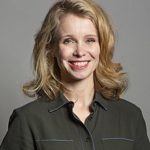
    Siobhan Baillie – 2023 Speech on the Loyal Address

    The speech made by Siobhan Baillie, the Conservative MP for Stroud, in the House of Commons on 7 November 2023.

    It is an honour to second the Loyal Address and I am proud that the Stroud constituency is playing its part in history, given that this is the first state opening by His Majesty the King. The late Queen was an inspiration for everyone across this great nation. For Members of this House, she reminded us that, despite the melodrama of politics, we are all here to serve the public. The King is already following in his mother’s footsteps and making us all proud, although when I told my non-political family that I was going to be talking about the King’s Speech, the response I got was, “Oh, great, that’s a really good film.” [Laughter.]

    Talking about hard acts to follow, my right hon. Friend the Member for Scarborough and Whitby (Sir Robert Goodwill) had me doing a fair few “lols”; I know exactly the areas he is talking about. He has definitely landed that promotion with that speech, in his final furlong. We have many connections, which I will touch on today, but Scarborough Athletic FC will play Stroud’s Forest Green Rovers in the FA cup next week, so we have another rumble to come. I know my right hon. Friend will be missed when he gets his pipe and slippers out to retire next year, but his lovely new grandchildren will keep him very busy.

    I went to school in my right hon. Friend’s constituency. If I could tell the younger me in Scarborough, a young fashionista wearing Spice Girl platforms, Adidas trackie bottoms and a second-hand Umbro jumper—it was a very strong look, although I am grateful that there were no camera phones then—that I would have the privilege of representing the beautiful constituency of Stroud, speaking ahead of the Prime Minister, after being in the same room as the King and the Queen, I think young me would have thought I had lost the plot. What did the Conservative party do for a free school meal kid, who left home at 15 and did not go to university? It gave her a seat at the most famous palace in the world, led by the son of a pharmacist, who is also leading the most diverse Cabinet we have ever known.

    The public service bit of this job motivates me, but that is not what hits the headlines. I am often asked, “How do you survive with everybody backstabbing, doing their own thing and out to get each other?” I just smile and say, “I don’t hang around with the Labour party.” [Interruption.] I love you all really. To be honest, the parliamentary Labour party has absolutely nothing on the Stroud Labour party, whose members have all resigned or fallen out with each other. What I actually say is that to survive in this place you have to find some friends, and then fully expect them to push you into the Thames in the run-up to a reshuffle.

    We also get new friends for very short periods of time, come Select Committee elections. I sort of miss the daily messages from the right hon. Member for Birmingham, Hodge Hill (Liam Byrne). His text messages are less famous than his scary handwritten notes about the economy, but they are still persistent.

    Back to navigating a workplace that is mad as a box of frogs. Early on, I came up with “Operation Green Benches”, whereby I shunned history books and Hansard and researched parliamentary sketches instead, because I love them. Quentin Letts once wrote that the area of the Government Benches where I am now sitting is the “naughty corner”, so that sorted out where I would sit. It sounded fun and he was right.

    I then realised that identifying the loudest colleagues to sit with, and effectively hide behind, could be crucial to avoid the wrath of the Speaker. My right hon. Friend the Member for Elmet and Rothwell (Alec Shelbrooke) seemed to fit that bill. He was described as being “expansively waistcoated” and having “lungs like bagpipes” —perfect. He is not in his place. He is watching at home on the tellybox, but no doubt he is wearing a waistcoat.

    My hon. Friend the Member for North Dorset (Simon Hoare) and my right hon. and learned Friend the Member for South Swindon (Sir Robert Buckland) are often depicted as noisy and boisterous. Those two appeared to come free with “bagpipe lungs”, in a creative BOGOF-style deal that probably should be banned, but this strategy has served me well and given me a slightly dysfunctional, but always hilarious and caring Chamber family whom I love dearly. The other five Gloucestershire MPs are also guiding lights, not least my right hon. Friend the Member for Forest of Dean (Mr Harper), who taught me that consistent rebelling does not hinder one’s career. It’s okay, Chief Whip, I’m not going to follow that lead.

    My kids come to work with me, so they support me in their own chaotic way. Gigi, aged 3, dressed as a witch on Hallowe’en. She merrily skipped up the steps of one house, turned to me and said loudly, “Mummy, this is just like canvassing.” Then the door opened and she went, “Trick or treat!” and I said, “I blame those CCHQ canvassing scripts”—an absolute disaster.

    A myriad of female colleagues naturally support each other, on both sides of the House. I especially congratulate my hon. Friend the Member for Brecon and Radnorshire (Fay Jones) on her wedding at the weekend. She looked absolutely radiant and I wish her and her husband a long, happy life together.

    I am chuffed to be the first MP from Stroud to be asked to second the Loyal Address. Stroud, with its valleys and vale, is gorgeous, so please visit. We have the quirky bit of the Cotswolds with a creative, innovative and industrial spirit throughout. People rightly expect a lot of their public servants in our neck of the woods, so I mainly sit in the House of Commons Library, as others know, dealing with endless amounts of casework and correspondence. I am having some successes: I am steadily chipping away at 20-year-old problems such as Tricorn House and accessibility at Stroud station and at newer challenges, including Rush skatepark and Stroud Maternity’s postnatal beds.

    People take the mick out of me sitting in the Library, but I really like it. It is never dull. My hon. Friend the Member for Totnes (Anthony Mangnall), another denizen of the Library, excitedly texted me one day, saying, “Come see my tortoise.” I have heard about these public schoolboys and how they like to give nicknames to things, so it was not without fear and trepidation that I came into his bit of the Library to see his tortoise. Happily, Mr Speaker, it was actually your tortoise that I got to see; he was eating merrily on the Terrace. May I also say that your decision to add giant cats and other creatures to this already odd place is very welcome?

    I listened carefully to what His Majesty the King had to say earlier. It is customary to be jolly in seconding a speech, but we all know that these are difficult times. To hear that the Government’s focus is on security challenges, both domestic and international, was extremely important. Thereafter, I can get behind all actions to increase economic growth and help our constituents with day-to-day pressures or injustices. By way of an example, Stroud constituents should not be ripped off by rogue property management companies. I commend the campaigning work of local people and my hon. Friends the Members for North East Bedfordshire (Richard Fuller) and for Cities of London and Westminster (Nickie Aiken) to get leasehold reform and protections for homeowners on the agenda.

    The King’s comments about putting people in control of their futures and the focus on town regeneration give me hope for high streets, businesses and fantastic areas such as Berkeley and Stroud towns. With the Prime Minister gripping artificial intelligence and new technology, we are poised and ready to fly with innovation in renewables, hydrogen internal combustion engines, nuclear and many other science, technology, engineering and maths fields.

    The Government’s NHS long-term workforce plan must get lift-off if we are to help Stroud Maternity midwives. I have long campaigned for more apprentices as well, so let us get rid of all barriers in further education. My excellent friend and constituency neighbour, my right hon. and learned Friend the Member for Cheltenham (Alex Chalk), will clearly have a lot to do as Secretary of State for Justice, but I still hope that he will look closely at family law reform to keep cases involving children out of the courts system. Although I was not expecting new childcare announcements, I urge the whole Government to get behind the Chancellor’s investment in families by urgently boosting the early years workforce.

    His Majesty the King said that the Government will lead on action to tackle biodiversity loss. With COP28 approaching, the Prime Minister should get familiar with WWT Slimbridge’s flamingos on our patch. I will take all the help that I can get to have a dedicated domestic wetlands team and strategy in the Department for Environment, Food and Rural Affairs. If he is not persuaded, flamingos are absolutely marvellous for that wonderful Instagram account of his. The King is the WWT president, and wetlands can genuinely help us to reach our net zero targets.

    I said earlier that public service was a privilege and I genuinely meant it. It gives us the chance to change things for everyday families and champion those who deserve and need our support. It also allows the hardest working Prime Minister that I have known—and I have known quite a few recently; even my baby had met three Prime Ministers by the time she was three months old—to show the country, week in, week out, how we can bring long-term change against global headwinds, and I second this Loyal Address.

  • Robert Goodwill – 2023 Speech on the Loyal Address

    Robert Goodwill – 2023 Speech on the Loyal Address

    The speech made by Sir Robert Goodwill, the Conservative MP for Scarborough and Whitby, in the House of Commons on 7 November 2023.

    I beg to move,

    That an humble Address be presented to His Majesty, as follows:

    Most Gracious Sovereign,

    We, Your Majesty’s most dutiful and loyal subjects, the Commons of the United Kingdom of Great Britain and Northern Ireland, in Parliament assembled, beg leave to offer our humble thanks to Your Majesty for the Gracious Speech which Your Majesty has addressed to both Houses of Parliament.

    It is a great honour to move the Humble Address. This is the first time that King Charles has opened a Session as monarch, and today’s pomp and ceremony are tinged with sadness as we remember the late Queen with affection and with gratitude for 70 years of service to our kingdom and Commonwealth. We look forward to another significant reign as the baton is passed to the next generation.

    So, Mr Speaker, it has finally come to this. It is official: I was the future once. The seconder of the Humble Address, my hon. Friend the Member for Stroud (Siobhan Baillie), for whom I am the warm-up act today, is always described as up and coming. I am not really sure what that makes me. I recall the last occasion, when my right hon. Friend the Member for Beverley and Holderness (Graham Stuart) was proposing the Humble Address and we all thought he was on the scrapheap, but less than two months later he was back on the Front Bench attending Cabinet, so you never know—although, the Chief Whip has assured me that there is no danger of that happening to me.

    Scarborough and Whitby has to be the best constituency in the country. Of course, Mr Speaker, it has a head start by being in Yorkshire. They say you should never ask someone if they are from Yorkshire, because if they are, they are bound to mention it in the first five minutes; and if they are not, why humiliate them unnecessarily? I am pleased to see our colleagues in the Scottish National party sporting the white rose of Yorkshire today, although I must point out that Yorkshire Day is 1 August, so not for the first time they have got things wrong.

    The arrival of the railways created Scarborough as our first seaside destination, and we are still Britain’s premier coastal resort and second only to London for the number of visitors. In fact, there could be more if some of the £36 billion recouped from HS2 could be redeployed on dualling the A64. Culturally, we are the home of Sir Alan Ayckbourn and also the birthplace of the McCain oven chip, as well as Plaxton’s coaches and the electric buses that we are increasingly seeing on the streets in places such as Blackpool—that is, if the Labour council there does not order Chinese ones. Whitby is famous for Bram Stoker’s “Dracula”, the Goth weekend and, of course, fish and chips from the famous Magpie restaurant—although I hasten to add that that is not the only place you can get good fish and chips in Whitby.

    Before mass tourism, the area was dotted with ironstone, alum and jet mines. Fast-forward a century or two and we are the biggest mining area in the country, with Anglo American investing £1 million every single day and employing around 1,000 people developing the new polyhalite mine just outside Whitby, with its 23-mile connecting tunnel to Teesside, where Mayor Ben Houchen is delivering so much economic development. The North Yorkshire Moors national park was made famous as the location of Aidensfield in ITV’s “Heartbeat” police drama, and it is home to many important ground-nesting birds on the heather moorland, sustained and managed in traditional ways by generations of farmers and keepers.

    I do not know if you have noticed, Mr Speaker, but we seem to be having a lot of by-elections at the moment—[Hon. Members: “More!”] Not so fast. It was a by-election in Ryedale in 1986 that whetted my appetite for frontline politics. The seat was held with a thumping 16,000 Conservative majority, but it fell to the Liberals with a 19% swing, giving Elizabeth Shields a 5,000-vote margin. While the rest of the Liberal party were going back to their constituencies to prepare for government, I was not going to put up with the situation, so rather naively I put my name forward—along with 200 others—to be the candidate at the subsequent general election.

    I was not selected, but did come second to John Greenway, who, for Members who do not remember or who were not even born—I am looking at the hon. Member for Selby and Ainsty (Keir Mather)—won the seat back only 13 months later with a 10,000 majority. The moral is: don’t count your chickens on the basis of by-election results.

    Not put off, my next move was to try to find a safe Labour seat to fly the flag for Margaret Thatcher. Living in the north-east, there was no shortage of rock-solid Labour citadels—places like Sedgefield, Hartlepool, Bishop Auckland, North West Durham and Redcar—and it was in Redcar that I was selected to challenge the wonderful Mo Mowlam. By then, John Major had taken over from Mrs Thatcher. When that happened, I remember my children asking me, “Daddy, is it really possible that a man can be Prime Minister?” We have now had three women Conservative premiers, assuming the most recent one counts, of course, and we now have the first Prime Minister who represents a Yorkshire seat. Is that a big deal? It certainly is. I must say that my right hon. Friend the Member for Richmond (Yorks) (Rishi Sunak) could not be a better neighbour or better friend to me.

    Labour was well ahead in the polls in the run-up to the 1992 election, and Mo had a car at the count, with the engine running, ready to take her down to sit in Neil Kinnock’s Cabinet as Northern Ireland Secretary, but once again the polls were wrong.

    I stood in North West Leicestershire in the 1997 Blair landslide election, which I will quickly pass over. Suffice it to say that both seats in which I stood, Redcar and North West Leicestershire, eventually returned Conservative Members. I like to think that the Goodwill effect was a slow burn.

    After what I will call a five-year sabbatical in the European Parliament, I was selected to stand for Scarborough and Whitby, a seat that had been consistently blue since 1918 but had been red in both 1997 and 2001. Even though the exit poll said I would lose, we managed to prevail on 5 May 2005 and I entered the House at last. I put our victory down to one deciding factor. On the eve of poll, of all the places that Tony Blair could have chosen for his big election rally, he chose Scarborough. Maybe the Leader of the Opposition could indulge me next time round and come to Scarborough on the eve of the poll to see if he can replicate the Blair effect—or better still, he could have a rally in Sheffield and go the full Kinnock.

    At the following election, I was the victim of a fly-poster campaign. All over town, there were A4 photocopies asking, “What is the difference between Robert Goodwill and a supermarket trolley?” The local newspaper picked up on this and concluded that a supermarket trolley has a mind of its own. I must admit that I have never voted against the Tory Whip, so that might explain it. However, having been here a while, I can now reveal the real answer to the question. The difference between an MP and a supermarket trolley is that there is a physical limit to the amount of food and drink that you can get into a supermarket trolley.

    I certainly welcome the Bills that have been announced. In particular, I would like to see convicted criminals attend their sentencing. Life for some of the most severe crimes must mean life. Fairness is part of what it means to be British, and we must ensure that the dynamic between freeholders and leaseholders is intrinsically fair, in the same way as we should show equal respect for landlords and tenants when they are doing the right thing. I was pleased to see that the ban on live animal exports for slaughter will happen, now we are outside the European Union and have the freedom to do that. Those who are successful in the ballot for private Members’ Bills will not be short of other suggestions, both from the Department for Environment, Food and Rural Affairs and from animal welfare organisations, to carry forward some important measures in that area, which I know is important to the Government. The Bill to tackle unlicensed and uninsured pedicabs, which can rip off unsuspecting tourists, is not before time.

    Today’s focus is on the legislative agenda, but we cannot ignore what is going on outside our borders. The butchery we saw from Hamas on 7 October was evil beyond anything most of us could even imagine—and, yes, BBC, these thugs are terrorists. If those atrocities had been on our soil and against our people, we would have been expected to launch a robust response—Israel has that right, too. Indeed, what else did Hamas expect would happen? The conflict in Ukraine may be off the front pages, but we must not waver in our support for the courageous Ukrainian people.

    Good government is not so much about how many laws we have and how many new laws we announce, but about how we respond to changing and unexpected events such as the pandemic. Hindsight is a wonderful thing, but the Prime Minister’s furlough scheme and help for businesses were the right thing to do. The universal credit system was also robust in the face of unprecedented demand.

    With small boat crossings of the channel down by more than a fifth year on year, we are making progress in curbing the organised criminal gangs engaged in this dangerous, exploitative trade. Furthermore, if we can stand up the Rwanda scheme, it will be a game changer. Our help should be for those most in need, not those most able to pay.

    Finally, I come to a true story from the 2019 winter general election; I heard your strictures about being truthful to the House, Mr Speaker, and this absolutely happened. One of the strongest Labour areas in my patch is a former council estate called Eastfield—we usually go there early in the campaign to get it out of the way—but this time it was different: people were crossing the street to shake my hand. They had voted for Brexit and wanted to get it done, and they were sick of being ignored. When my wife, Maureen, knocked on one door, the lady who answered was effusive in her admiration for Prime Minister Johnson. When I arrived, I asked her why she was so enthusiastic. She said, “Boris is one of us.” When I politely pointed out that he had been to Eton and Oxford, she replied, “You don’t understand. He had a row with his wife and the police came round. That’s what happens on this street all the time.” [Laughter.]

    I commend the Gracious Speech to the House.

  • Lindsay Hoyle – 2023 Statement to MPs at Start of Paliamentary Session

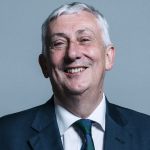
    Lindsay Hoyle – 2023 Statement to MPs at Start of Paliamentary Session

    The statement made by Lindsay Hoyle, the Speaker of the House of Commons, in the House on 7 November 2023.

    The House has directed the Speaker to make a statement at the beginning of each Session about the duties and responsibilities of hon. Members. I begin by reminding hon. Members of their duty to observe the code of conduct agreed by the House and to behave with civility and fairness in all their dealings. The behaviour code applies to Members as it applies to others who visit or work within Parliament, and it provides very clear guidance. Unacceptable behaviour will be dealt with seriously, independently and with effective sanctions.

    The House asserts its privilege of freedom of speech. That privilege is enjoyed by Members of Parliament only in their work in this House; as private individuals, we are equal under the law with those whom we represent. It is there to ensure that our constituents can be represented by us without fear or favour. It is an obligation upon us all to exercise that privilege with responsibility.

    I now come to the accuracy of Members’ contributions, which is more tricky. The Speaker does not have the power to police the accuracy of Members—[Hon. Members: “Shame.”] It may be a shame, but these are the facts. The Speaker does not have the power to police the accuracy of Members’ contributions, including those of Ministers. It is therefore incumbent on Members to be accurate in what they say in this House, but if a Member is inaccurate by mistake, they should correct that mistake as soon as possible.

    Let us now turn to courtesy and temperate language. Members must also be mindful of the impact of what we say, not only on other Members but on those who follow our proceedings, and Members should be heard courteously whatever their views. I draw the House’s attention to the guidance on rules of behaviour and courtesies in the House of Commons. A new version for this Session is now available, clarifying those areas.

    Turning to criticism of Members, in this place we are honourable Members, and the language we use about each other should reflect that. If a Member falls short of the standards expected of us all, there are ways of dealing with that, but not by accusations made as sideswipes during questions or debates. If we fail to treat each other with respect in debate, that diminishes our work, but it also risks raising the temperature of discussions outside this place, particularly on social media, which already too often descend into online abuse against hon. Members.

    It is so important that hon. Members are able to raise matters with me freely. For that reason, I keep such correspondence confidential, including applications for urgent questions. I remind Members that it is equally important that my responses, particularly on matters of privilege, are treated with the same respect. I hope that certain Members are listening.

    I also wish to give some advice about seeking to speak within the Chamber. The Deputy Speakers and I take into account a number of factors when determining whom we call during business that is not balloted, and one factor we consider carefully is how often a Member speaks. In other words, if you have spoken much more than a colleague then, other things being equal, that colleague is more likely to be called—or certainly more likely to be called earlier—especially in the next debate for which you both apply. [Hon. Members: “Poor Jim!”] Don’t worry; I am coming to him. [Laughter.]

    I know that it can be frustrating not to be called in a debate, or to be called very late. That frustration may continue, but putting it on Twitter is not a good way of trying to be called earlier. My response will be that I cannot call you earlier because you have already told the world, so think carefully before using Twitter to try to intimidate the Speaker. Prioritising debates, question times, urgent questions and statements in which you seek to participate is one way of trying to avoid that happening.

    Now that we have started a new Session, the reset button starts everybody’s scores at zero. That even includes Jim Shannon—[Laughter.] I should make it clear that when counting scores, different principles apply to Front Benchers from the three largest parties who are nominated to speak on behalf of their parties. Staff in my office are happy to offer further advice and help.

    Let us come to something very important: security and safety. I want all Members and everyone in the parliamentary community to be able to go about their work safely, both online and here in Westminster. The security of this building and those who work here depends on us all. We have a duty to be vigilant and to assist those whose job it is to maintain this place as a safe place of work. Yes, we are Members of Parliament and we were elected to be here, but remember that those who carry out security duties here are doing so to ensure that we are all safe. Please, try not to abuse them—you should not abuse them—and do not take advantage of your position.

    Before moving to the first business of the new Session, I would like to express my very best wishes to all hon. Members and all those who work in this House. I thank the staff of the House, whether they work in security or elsewhere. They are looking after us, so please realise that they have a job to do. I thank all the catering staff, because without them we could not function properly.

  • PRESS RELEASE : £4 billion UK-Poland air defence deal strengthens European security [November 2023]

    PRESS RELEASE : £4 billion UK-Poland air defence deal strengthens European security [November 2023]

    The press release issued by the Ministry of Defence on 7 November 2023.

    The UK and Poland defence industries have signed a deal worth over £4 billion to continue the next phase of Poland’s future air defence programme, Narew.

    • Industry deal worth over £4bn to deliver next generation air defence system to Poland.
    • Partnership to bolster European security in the wake of Russia’s invasion of Ukraine.
    • Work will enable critical skills and jobs in both countries.

    The UK and Poland defence industries have today signed a milestone deal, worth over £4 billion, to continue the next phase of Poland’s future air defence programme, Narew.

    UK firm MBDA has signed the sub-contract with Polish defence company PGZ, in a programme that will provide Polish forces with an enhanced ground-based air defence system capable of launching missiles to engage air threats, such as cruise missiles and fighter jets, at ranges of more than 40 kilometres. It will create more than 1,000 Common Anti-Air Modular Missiles – Extended Range (CAMM-ER) and over 100 iLaunchers.

    Bolstering security and defence development for both NATO countries, the deal is the largest commercial agreement ever secured between the UK and Poland.

    It is the culmination of years of close collaboration and will strengthen Poland’s military capabilities, while delivering on the UK Prime Minister’s priority to grow the economy and continuing to showcase British industry as a leading global defence partner.

    Bringing significant benefit to both nations’ defence industries, the partnership will see British engineers from Bolton, Bristol and Stevenage working with their Polish counterparts, sharing key technologies and supporting jobs and critical skills in both countries for more than 15 years.

    Defence Secretary, Grant Shapps, said:

    This is another crucial step forward for our historic defence ties with Poland, supplying next generation air defence capabilities to act as a clear deterrent to our adversaries.

    We continue to fully back our thriving UK defence industry, and this landmark export deal is yet another example of the huge potential our collective defence sectors boast.

    In addition to the air defence launchers and missiles, the partnership will see the UK support Poland to be able to manufacture complex missiles on Polish soil in years to come, further increasing regional security through greater supply chain flexibility.

    This contract is a huge step forward in UK-Polish defence relations, building on the UK-Polish Defence Treaty and the UK–Poland 2030 strategic partnership, which will be of long-term benefit to the defence, jobs and skills of both nations.

    Managing Director of MBDA UK, Chris Allam said:

    The scale and ambition of NAREW is truly impressive – building a Polish air defence shield using our CAMM family missiles and iLaunchers that will protect the entirety of Poland’s skies.

    The transfer of technology in NAREW will be transformative for Poland’s sovereign complex weapons capabilities, and we are deeply proud of the trust placed in us by Poland and excited for the future of our partnership with PGZ.

    Following a contract awarded by the Polish government to PGZ in September this year, the Narew system will utilise MBDA’s CAMM-ER missile, developed jointly by the UK and Italy, in addition to Polish radars, vehicles and other equipment together with the United States’ Integrated Battle Command System (IBCS).

    Earlier this year, the UK and Poland announced the first stage of a programme to deliver the CAMM to Poland in a £1.9 billion contract. Flying at supersonic speeds, CAMM missiles can destroy modern air threats including stealth aircraft and high-speed missiles.

    As historic defence partners and NATO Allies, the UK stands with Poland to defend NATO’s Eastern Flank and support Ukraine against Russian aggression.

    The UK and Poland are close Allies, with hundreds of British troops deployed to the country at any one time. That includes the recent deployments of Challenger 2 tanks and Sky Sabre air defence systems to Poland.

  • King Charles III – 2023 King’s Speech to Parliament

    King Charles III – 2023 King’s Speech to Parliament

    The speech made by King Charles III in the House of Lords on 7 November 2023.

    My Lords and members of the House of Commons

    It is mindful of the legacy of service and devotion to this country set by My beloved Mother, The late Queen, that I deliver this, the first King’s Speech in over 70 years.

    The impact of Covid and the war in Ukraine have created significant long-term challenges for the United Kingdom. That is why my Government’s priority is to make the difficult but necessary long-term decisions to change this country for the better.

    My Ministers’ focus is on increasing economic growth and safeguarding the health and security of the British people for generations to come.

    My Government will continue to take action to bring down inflation, to ease the cost of living for families and help businesses fund new jobs and investment.

    My Ministers will support the Bank of England to return inflation to target by taking responsible decisions on spending and borrowing. These decisions will help household finances, reduce public sector debt, and safeguard the financial security of the country.

    Legislation will be introduced to strengthen the United Kingdom’s energy security and reduce reliance on volatile international energy markets and hostile foreign regimes. This Bill will support the future licensing of new oil and gas fields, helping the country to transition to net zero by 2050 without adding undue burdens on households.

    Alongside this, my Ministers will seek to attract record levels of investment in renewable energy sources and reform grid connections, building on the United Kingdom’s track-record of decarbonising faster than other G7 economies.

    My Government will invest in Network North to deliver faster and more reliable journeys between, and within, the cities and towns of the North and Midlands, prioritising improving the journeys that people make most often.

    My Ministers will strengthen education for the long term. Steps will be taken to ensure young people have the knowledge and skills to succeed, through the introduction of the Advanced British Standard that will bring technical and academic routes into a single qualification. Proposals will be implemented to reduce the number of young people studying poor quality university degrees and increase the number undertaking high quality apprenticeships.

    My Ministers will take steps to make the economy more competitive, taking advantage of freedoms afforded by the United Kingdom’s departure from the European Union. A bill will be brought forward to promote trade and investment with economies in the fastest growing region in the world. My Ministers will continue to negotiate trade agreements with dynamic economies, delivering jobs and growth in the United Kingdom.

    My Ministers will introduce new legal frameworks to support the safe commercial development of emerging industries, such as self-driving vehicles, introduce new competition rules for digital markets, and encourage innovation in technologies such as machine learning. Legislation will be brought forward to support the creative industries and protect public interest journalism. Proposals will be published to reform welfare and support more people into work.

    My Government will promote the integrity of the Union and strengthen the social fabric of the United Kingdom.

    Working with NHS England, my Government will deliver its plans to cut waiting lists and transform the long-term workforce of the National Health Service. This will include delivering on the NHS workforce plan, the first long-term plan to train the doctors and nurses the country needs, and minimum service levels to prevent strikes from undermining patient safety.  Record levels of investment are expanding and transforming mental health services to ensure more people can access the support they need.  My Government will introduce legislation to create a smokefree generation by restricting the sale of tobacco so that children currently aged fourteen or younger can never be sold cigarettes, and restricting the sale and marketing of e-cigarettes to children.

    My Ministers will bring forward a bill to reform the housing market by making it cheaper and easier for leaseholders to purchase their freehold and tackling the exploitation of millions of homeowners through punitive service charges. Renters will benefit from stronger security of tenure and better value, while landlords will benefit from reforms to provide certainty that they can regain their properties when needed.

    My Government will deliver a long-term plan to regenerate towns and put local people in control of their future. Legislation will be brought forward to safeguard the future of football clubs for the benefit of communities and fans. A bill will be introduced to deal with the scourge of unlicensed pedicabs in London.

    My Government is committed to tackling antisemitism and ensuring that the Holocaust is never forgotten. A bill will progress the construction of a national Holocaust Memorial and Learning Centre in Victoria Tower Gardens.

    My Government will act to keep communities safe from crime, anti-social behaviour, terrorism and illegal migration.

    A bill will be brought forward to ensure tougher sentences for the most serious offenders and increase the confidence of victims. My Ministers will introduce legislation to empower police forces and the criminal justice system to prevent new or complex crimes, such as digital-enabled crime and child sexual abuse, including grooming.

    At a time when threats to national security are changing rapidly due to new technology, my Ministers will give the security and intelligence services the powers they need and will strengthen independent judicial oversight. Legislation will be introduced to protect public premises from terrorism in light of the Manchester Arena attack.

    My Government will deliver on the Illegal Migration Act passed earlier this year and on international agreements, to stop dangerous and illegal Channel crossings and ensure it is the government, not criminal gangs, who decides who comes to this country.

    My Government will continue to champion security around the world, to invest in our gallant Armed Forces and to support veterans to whom so much is owed. My Ministers will work closely with international partners to support Ukraine, strengthen NATO and address the most pressing security challenges. This includes the consequences of the barbaric acts of terrorism against the people of Israel, facilitating humanitarian support into Gaza and supporting the cause of peace and stability in the Middle East.

    My Government will continue to lead action on tackling climate change and biodiversity loss, support developing countries with their energy transition, and hold other countries to their environmental commitments.

    The United Kingdom will continue to lead international discussions to ensure that Artificial Intelligence is developed safely.

    My Government will host the Global Investment Summit, the European Political Community, and the Energy Conference, leading global conversations on the United Kingdom’s most pressing challenges.

    I look forward to welcoming His Excellency the President of the Republic of Korea and Mrs. Kim Keon Hee for a State Visit later this month.

    My Government will, in all respects, seek to make long-term decisions in the interests of future generations. My Ministers will address inflation and the drivers of low growth over demands for greater spending or borrowing. My Ministers will put the security of communities and the nation ahead of the rights of those who endanger it. By taking these long-term decisions, my Government will change this country and build a better future.

    Members of the House of Commons.

    Estimates for the public services will be laid before you.

    My Lords and Member of the House of Commons.

    Other measures will be laid before you.

    I pray that the blessing of Almighty God may rest upon your counsels.

  • PRESS RELEASE : Minister for Europe demonstrates UK commitment to Baltic security [November 2023]

    PRESS RELEASE : Minister for Europe demonstrates UK commitment to Baltic security [November 2023]

    The press release issued by the Foreign Office on 7 November 2023.

    Minister for Europe, Leo Docherty visits Lithuania and Latvia to reinforce UK cooperation on regional security and support for Ukraine.

    • Following the success of the NATO Summit in Vilnius in July, Minister Leo Docherty will visit the two Baltic nations to show the UK’s leadership in tackling threats to European security.
    • He will discuss plans to bolster NATO’s Eastern Flank before attending a NATO Cyber Conference in Berlin.
    • Visit will also reiterate collective support for Ukraine in the face of Russian aggression and enable discussions on the situation in the Middle East and preventing regional escalation.

    Minister for Europe, Leo Docherty, will visit Lithuania and Latvia to underline the UK’s continued commitment to the Baltic States’ security and discuss the strengthening of support to Ukraine.

    During meetings in Vilnius with Lithuanian Deputy Foreign Minister, Jonas Survila, and the Presidential National Security Advisor, Kęstutis Budrys, the Minister will discuss growing cooperation, from the training of Ukrainian forces to closer collaboration on regional security and tackling illegal migration. He will also highlight the need for a collective effort to prevent the tragic situation in the Middle East from escalating more widely and support humanitarian aid entering Gaza.

    The visit follows the NATO Summit which Vilnius hosted in July, where the Prime Minister outlined the UK’s leading role in protecting regional security in the face of increased threats across Europe.

    In Riga, Minister Docherty will meet Latvian Parliamentary Secretary, Reinis Brusbārdis, and the Minister of Energy, Kaspars Melnis, to discuss the importance of energy security, and how the two countries can work together to address Russian malign influence.

    Minister for Europe, Leo Docherty said:

    The Baltic States are on the frontline of Russia’s malign activity, and the UK is steadfast in our commitment to supporting them defend their freedom and security.

    Through NATO and the Joint Expeditionary Force, we are working with Latvia and Lithuania to keep the region and our allies safe, including through a united effort to prevent further conflict and terrorism in the Middle East.

    More than 20,000 British troops will be deployed to the region next year, where they will take part in large-scale, multi-country exercises, as well as carrying out air policing and cold weather training.

    The UK has a long-standing relationship with both Latvia and Lithuania across all arms of the military, including cooperation in NATO and the Joint Expeditionary Force (JEF).

    The Minister is also expected to visit the Hill of Crosses, an important cultural site symbolic of Lithuanian identity and peaceful resistance. In Latvia, he will lay a wreath at both the Commonwealth War Grave in Jelgava and at Riga’s Freedom Monument, which commemorates those who fought for Latvia’s independence over 100 years ago.

    Later in the week, the Minister will go on to represent the UK at the first NATO Cyber Defence Conference taking place in Berlin. The gathering will discuss the Alliance’s ability to adapt to evolving cyber threats and the strengthening of its ability to detect, prevent and respond to malicious cyber activities.