Tag: 2023

  • PRESS RELEASE : UK hosts talks with Taiwan to boost trade ties [November 2023]

    PRESS RELEASE : UK hosts talks with Taiwan to boost trade ties [November 2023]

    The press release issued by the Department for Business and Trade on 8 November 2023.

    26th annual trade talks with Taiwan take place in London.

    • Trade Minister Nigel Huddleston co-hosts 26th annual trade talks with Taiwan in London
    • Talks take place as UK and Taiwan celebrate 30th anniversary of the British Office in Taipei
    • UK and Taiwan formalise Enhanced Trade Partnership, announced in July, to boost economic links

    Trade Minister Nigel Huddleston co-chaired the 26th annual UK-Taiwan trade talks in London alongside Taiwanese Deputy Minister Chern-Chyi Chen of the Ministry of Economic Affairs to boost trade and investment ties with Taiwan.

    Talks focused on collaboration in critical sectors such as renewable energy and semiconductors, as well as removing barriers to trade to unlock more opportunities for UK firms to export to and invest in Taiwan.

    The UK and Taiwan have a long-standing trade relationship with annual trade talks held since 1991. This year also marks an important milestone as both partners celebrate more than 30 years of establishment of the British Office in Taipei. This office is tasked with enhancing the strong, unofficial relationship between the UK and Taiwan, which is based on dynamic commercial, educational and cultural ties.

    International Trade Minister Nigel Huddleston said: 

    It was a pleasure to welcome Deputy Minister Chen to the UK for our annual Trade Talks to secure our supply chains in critical sectors and strengthen our investment partnership.

    Boosting trade with this vibrant and dynamic economy is critical to our Indo-Pacific tilt and plays to Britain’s strengths as we look to realise our goal to become a global science and technology superpower by 2030.”

    With an advanced high-tech industry, a key role in global supply chains and a GDP of over $760 billion, Taiwan is already the UK’s 5th largest trading partner in Asia-Pacific, with total trade at £8.6 billion.

    Today (8 November) British Representative John Dennis and Taipei Representative Kelly Hsieh also signed an Enhanced Trade Partnership (ETP) Arrangement which sets out the UK and Taiwan’s priorities for future ETP discussions under three key areas: two-way investment, digital trade, and energy and net-zero.

    The ETP, previously announced in July, will build on the annual Trade Talks to tackle barriers to trade and promote UK expertise, deepening our relationship to take advantage of increasing commercial opportunities. Both sides will begin engaging businesses on the ETP in due course.

  • PRESS RELEASE : Science and Technology in the King’s Speech 2023 [November 2023]

    PRESS RELEASE : Science and Technology in the King’s Speech 2023 [November 2023]

    The press release issued by the Department for Science, Innovation and Technology on 8 November 2023.

    Parliamentary carry-over of the Digital Markets, Competition and Consumers Bill and the Data Protection and Digital Information Bill confirmed in yearly speech.

    A wealth of new laws that will unleash competition in digital markets, prevent spam calls and foster innovation in emerging technologies like machine learning have been announced as part of the government’s legislative agenda in the King’s Speech.

    As part of the yearly speech to the House of Lords, which sets out the government’s legislative agenda for this parliamentary session, King Charles III set out the carry-over of the Digital Markets, Competition and Consumers Bill and the Data Protection and Digital Information Bill to continue their progress into the next parliamentary term, which the Department for Science, Innovation and Technology is delivering.

    Science, Innovation and Technology Secretary Michelle Donelan said:

    Today’s King’s Speech is a win for businesses and consumers, with our vital legislation set to unlock billions of pounds of benefits to business and tackle issues like nuisance calls that have plagued the public for too long.

    It is an overwhelming show of support for driving innovation and growth across the country too. Our digital markets law will make sure every tech start-up has the opportunity to succeed, fuelling the engines of economic growth by opening doors for British firms to unleash innovation across the globe.

    Digital Markets, Competition and Consumers Bill

    The Digital Markets, Competition and Consumers Bill will secure better outcomes for consumers and businesses by driving innovation and addressing the root causes of competition issues in digital markets, seeking to better level the playing field across the technology sector.

    As part of the Bill, a Digital Markets Unit (DMU) within the Competition and Markets Authority will be given new powers to address the far-reaching power of a small number of tech companies. This market dominance has stifled innovation and growth across the economy, holding back start-ups and smaller firms from accessing markets and consumers.

    Data Protection and Digital Information Bill

    The King’s Speech also made reference to the Data Protection and Digital Information Bill, which will see tougher punishments for those who pester people with unwanted calls and messages. In 2022, there were around 59,800 reports of nuisance communications made to the Information Commissioner, but these new measures are expected to slash the number of calls being made.

    The Bill sets out common-sense data laws that will give organisations greater flexibility to protect personal data, while maintaining high data protection standards. The legal changes will improve the UK’s ability to strike international data deals and make these partnerships more secure, allowing British businesses to seize billions of pounds of data trade as a reward of Brexit.

    The reforms to UK data laws also aim to reduce the number of consent pop-ups people see online, which repeatedly ask users to give permission for websites to collect data about their visits.

    The Bill will also make it easier and quicker for people to verify their identity digitally, if they want to – reducing the need to carry around ID such as passports and drivers’ licences by establishing a framework for the use of trusted and secure digital verification services.

    Other announcements

    Plans to introduce a new legal framework to encourage innovation in new technologies such as machine learning was also announced, helping to drive new and emerging technologies which will boost jobs and grow the economy.

    Plans to introduce a new legal framework to encourage innovation in new technologies such as machine learning was also announced, helping to drive new and emerging technologies which will boost jobs and grow the economy.

    A new Criminal Justice Bill led by the Home Office was also announced that will ensure people who take intimate images of others.

    This will build on the Online Safety Act, which last month received Royal Assent and made it easier to convict someone who shares intimate images without consent and new laws will further criminalise the non-consensual sharing of intimate deepfakes. The change in laws also now make it easier to charge abusers who share intimate images and put more offenders behind bars. Criminals found guilty of this base offence will face up to 6 months in prison, but those who threaten to share such images, or shares them with the intent to cause distress, alarm or humiliation, or to obtain sexual gratification, could face up to two years behind bars.

  • PRESS RELEASE : Support for TV production firms to accompany Channel 4 reforms [November 2023]

    PRESS RELEASE : Support for TV production firms to accompany Channel 4 reforms [November 2023]

    The press release issued by the Department for Culture, Media and Sport on 8 November 2023.

    The UK TV production industry will benefit from new safeguards as the government proceeds with reforms to support Channel 4’s long-term sustainability.

    • New freedoms for Channel 4 to make and own content included in the Media Bill, introduced today
    • New safeguards for UK’s world-leading TV programme makers, including requirement on Channel 4 to commission more shows from independent producers
    • Part of government plans to grow the creative industries by £50bn and expand Britain’s pipeline of TV talent

    The UK’s world-renowned TV production industry will benefit from a package of new safeguards as the government proceeds with reforms – including via the Media Bill introduced in Parliament today – to support Channel 4’s long-term sustainability.

    Earlier this year the government committed to giving Channel 4 the ability via the Media Bill to make and own some of its content. In the event Channel 4 takes advantage of these new freedoms, new safeguards for production companies set out today would protect millions of pounds of investment in programmes made by independent TV producers across the UK, as the proportion of programmes the broadcaster is required to commission from these companies will increase from 25 per cent to 35 per cent.

    Ofcom will also be given new duties to review how Channel 4 uses new freedoms to make and own its content, should it choose to do so, as part of plans to ensure the wider sector is not unduly impacted.

    Independent production companies are a key part of our thriving creative industries and the government are keen to maximise their potential through these changes. The government’s Creative Industries Sector Vision details our plan to grow the creative industries by £50 billion and create one million extra jobs by 2030, whilst supporting a talent pipeline that will continue to support one of the best TV industries in the world.

    Minister for Media, Tourism and Creative Industries Sir John Whittingdale said:

    Channel 4 has earned a reputation for distinctive TV which reflects and shapes our culture. As viewing habits continue to shift dramatically, we want the corporation not only to survive these changes but to thrive long into the future.

    The corporation’s duty to support independent producers has helped build one of the most successful TV industries in the world. That’s why it’s so important that any reforms work for the wider industry, and minimise any market shocks.

    This package, the product of months of close collaboration with the sector, strikes a fair balance between empowering Channel 4 for a more sustainable future while preserving the fantastic work of TV companies all over the UK.

    Alex Mahon, Chief Executive of Channel 4, said:

    We have been working with the Department for Culture, Media and Sport to ensure any in-house production at Channel 4 would harness the benefits of Channel 4’s vital public-service role and mitigate the risks to the UK’s world-beating independent film and TV production sector.

    In the complex and highly competitive future we foresee, in-house production may well offer good long-term support for Channel 4’s financial sustainability, but it would never alter Channel 4’s fundamental belief in the importance of independent producers in the UK. Throughout our history, they have had the opportunity to build their companies by launching shows with us and owning their own IP. That partnership has been, and I am sure will remain, the lifeblood of our creative sector. Indeed, in a world where fewer rights are owned by indies, it must remain so.

    That is why we are exploring this right offered by the government, but we will also raise our formal qualifying indie commitment to the sector by 40% should we take up this opportunity – the largest commitment of any UK broadcaster. So, if we do choose to build an in-house production unit, it will be only after careful consideration of the effects of our approach. Most of all, we are only too aware how hard times are across the sector with the impact of the advertising downturn and will always have that at the forefront of our minds in our commissioning strategy.

    In addition, Channel 4 remains entirely committed to representing the whole of UK and to growing our impact across the country, including reaching our commissioning and spending targets in the Nations and Regions, achieving 600 roles outside of London by the end of 2025 and doubling our 4Skills budget to £10 million in 2025.

    Sir Ian Cheshire, Chair of Channel 4 said:

    The Channel 4 Board welcomes the Minister of State’s remarks outlining the ability for Channel 4 to produce and own the IP of some of its content, following engagement with TV producers of all sizes from across the UK.

    Channel 4 has been working with the Department for Culture, Media and Sport to ensure that any form of in-house production would enhance the value of its public-service role and mitigate negative impacts on the independent production sector.

    I especially wish to stress any move Channel 4 may make into in-house TV production will be gradual, build on the existing diversity in the market and with the intention to avoid any market shock. By way of illustration, we would expect five years after launch, the total of external commissions will still substantially exceed in-house production spending.

    This would be further strengthened by an increase of Channel 4’s existing qualifying independent production quota from 25% to 35%, to bolster its enduring commitment to the sector, particularly with small- and medium-sized independent producers.

    Channel 4 remains entirely committed to its presence, programme-making and impact across the Nations and Regions. This includes its commitment to regional producers, voluntary investing 50% of its commissioning budget outside of London and growing its 4Skills training which promotes social mobility and economic growth across the UK.

    Our Board of Directors will supervise all these developments as part of their new duty to ensure the corporation’s financial sustainability.

    The introduction and passage of the Media Bill remains a priority for all Public Service Media organisations. We will wait to see how those elements that affect Channel 4 and the independent production sector are expressed in law before we can be certain of the best way of proceeding on in-house production. In the meantime, we will continue to prepare for the exciting future ahead.”

    Under current legislation Channel 4 – a publicly-owned, commercially funded public service broadcaster (PSB) – is more limited than other PSBs in its ability to make and own its own content. It currently operates as a ‘publisher-broadcaster’, meaning all its shows are commissioned or acquired from third parties – such as independent producers or other broadcasters – who typically retain the rights to those programmes. This has been central to Channel 4’s role over the last 40 years in developing the UK’s independent production sector, which is now worth nearly £4 billion.

    Like all UK broadcasters, Channel 4 is currently facing unprecedented competition for viewers, programmes and talent in an era of global streaming platforms. Following the decision made in January 2023 not to pursue a sale of Channel 4, the government confirmed an ambitious package of measures to drive growth at the broadcaster and support its long-term sustainability.

    This includes reforms via the Media Bill – which had its first reading in the Commons today – which will allow Channel 4 to make and own some of its content should it choose to do so, expanding opportunities for it to generate revenue to reinvest in programmes and talent.

    Following engagement with TV producers of all sizes from across the country, today the government has announced new measures to safeguard Channel 4’s important role driving investment into the TV production sector should they choose to start a production business.

    The measures include:

    • increasing Channel 4’s independent production quota from 25 per cent of qualifying programmes to 35 per cent;
    • providing a new statutory role for Ofcom to oversee the measures Channel 4 puts in place to ensure open and fair access to its commissions;
    • requiring Ofcom to review the impact of Channel 4 developing its own production capability, should they choose to do so, as part of one of their upcoming public service broadcasting reviews.

    In addition, Channel 4 has committed to set up any new in-house studio as a separate company – with its own Board and financial reporting – as part of plans to ensure it cannot favour commissions from its own studio over external production companies.

    The corporation will report regularly on how it is ensuring fair and open access to commissions in its annual report, set up a new complaints process to settle disputes between producers and Channel 4, and minimise the risk of market shocks by taking a gradual approach to setting up any new production company.

    The broadcaster has also said it will maintain its existing commitment to spend 50 per cent of its budget for main channel commissions on programmes made outside of London. Ofcom will consider whether any changes to Channel 4’s regional programme making quotas are required as part of its upcoming consultation on the terms of the next Channel 4 licence.

    Other elements of the sustainability package include a new, statutory duty on the Channel 4 Board to consider the corporation’s long-term sustainability alongside fulfilment of the Channel 4 remit, and a revised Memorandum of Understanding (MoU) with updated financial reporting information and processes to allow Channel 4 to access debt finance within their statutory borrowing limit. The revised MoU has also been published today.

  • Julie Elliott – 2023 Speech on the Loyal Address

    Julie Elliott – 2023 Speech on the Loyal Address

    The speech made by Julie Elliott, the Labour MP for Sunderland Central, in the House of Commons on 7 November 2023.

    I would like to send my good wishes to the King on the first occasion of his Gracious Speech. It cannot have been an easy thing to do. We have to remember that it follows the long reign of his mother, Queen Elizabeth II. There will have been mixed emotions today, and it is important to recognise that; it is not just a job.

    It has been interesting listening to the speeches today. I have found myself agreeing with Members I do not always agree with. The right hon. Member for Maidenhead (Mrs May) made some important points on net zero, and I agree entirely with the right hon. Member for Epsom and Ewell (Chris Grayling) on the secondary legislation around deforestation. But the debate on the Humble Address has already signalled the difference between the two sides of this House. On our side, we have a Labour party that is a Government in waiting, with plans to cut the cost of living, improve education once and for all, and get Britain building again. On the other side, we have a Government who have simply run out of ideas. They have nothing new to offer to the people of Sunderland or to the country. My constituents expected the Government to finally understand the damage they have caused up and down the country—the damage they have done to our communities because of a lack of investment, to education through lack of care, and to household budgets as the country still reels from the disastrous mini-Budget of the previous Prime Minister.

    It is clear that the Government do not understand that. This was an opportunity for them to admit that they had got it wrong and let the country down, but they did not. There was a total absence of a plan in the King’s Speech. There was an absence of ideas and an absence of care—for the electorate, for the economy, and for the people of Sunderland. The city I represent is a thriving place, thanks to the work of local people and the city council. It has incredible new investment plans to regenerate the city, and it is full of people who work hard to provide for their families. But if we look at the situation that Sunderland is in thanks to this Government, we see that the total school block allocation since 2015 and funding for the local council since 2010 are down, and child poverty and central Government taxes are up. What do people get in return for the highest tax burden in 70 years? They get crumbling schools, rampant inflation and a Prime Minister who prefers to take a helicopter around the country to travelling on public transport.

    I agree with the Prime Minister that the public transport system is woeful and creaking at the seams, but it is his party and his Government who broke it. While the King’s Speech rekindles the idea of Network North, I am not sure how far north that goes, and whether it extends to Sunderland, which I represent. We know that the Government do not care about northern transport. They decided to cancel HS2 and then announce plans that included projects that had been completed, mainly in the south, with a flip-flop on the Leamside line—it was in, then two hours later it was out—although that project would have made a real economic difference to the north-east region. There was a total misunderstanding of the transport system, and we saw the Government’s real agenda.

    Today, we have seen the introduction of long-trailed legislation such as the Media Bill. I engaged in pre-legislative scrutiny of the draft Media Bill as a member of the Culture, Media and Sport Committee. Reform of the media landscape in this country is long overdue. The importance and prominence of public service broadcasters like the BBC, ITV and Channel 4—institutions that produce great British content and vital skills training for our next generation—must be protected, and I am glad that legislation has been introduced that brings us closer to where we need to be.

    Finally, I welcome the announcement of a football regulator, which is a matter of concern to people in Sunderland and around the country. Sunderland is a great footballing city that has produced inspirational stars such as Jill Scott and great programmes such as “Sunderland ’Til I Die”, which is based on our love of football and produced by the incredible Fulwell 73. The fanbase and the city care about sustaining the game for future generations and ensuring that the financial playing field is legitimate and fair. The Government have had ample time to formulate a new system since the publication of the very, very good Crouch review, and I am worried that there have been many delays. I am glad that the proposals have been introduced, and I can assure football fans that if there are any more delays and the Government fail to bring in a football regulator, a future Labour Government will act and introduce one.

    I also welcome leasehold reform. It is quite clear that the Government’s plans do not go far enough to fully protect homeowners, but I am pleased that they have taken action. After the Conservative mortgage rate hike and a total failure to build new homes, the Government are no longer on the side of homeowners, but the Labour party is.

    Although I welcome some measures in the King’s Speech, I am extremely concerned about the fact that the Government have brought back the Economic Activities of Public Bodies (Overseas Matters) Bill, which is designed to put undue controls on public bodies and limit their ability to express their beliefs. This is a time when language and actions matter—we have heard a lot about the horror that is unfolding in the middle east; about the horror inflicted on Israeli citizens by Hamas; and about the tens of thousands of innocent Palestinians who have died in the horror unfolding in Gaza—and there has never been a more sensitive time in the middle east, so to introduce the Bill at this moment shows a lack of sensitivity by the Government. It is adding fuel to the fire, and it is not sensible to introduce it at this time.

    The absence of measures to ban conversion therapy is extremely alarming, and is a sign of the Prime Minister’s inability to stand up to his Back Benchers—a weak Prime Minister at a time when we need the very opposite. What is clear today, and what has become increasingly clear over the past few years, is that the Conservative party is out of ideas. They do not know how to solve the problems that they have caused, and they are making the public pay for their mistakes. The King’s Speech was an opportunity to introduce legislation to improve the lives of ordinary people, to do something to bring down the cost of living, and finally to act to increase the hope, aspiration and life chances of our young people. Yet again, the Government have failed to do so.

    Today’s speech by His Majesty has raised many questions about the Government’s priorities, but it has answered three questions definitively. Can people really say they are better off after 13 years of Conservative Government than they were in 2010? No. Does the King’s Speech give them any hope whatsoever that the Government know what they are doing to the lives of working people up and down this country? No. Does this country need a general election to kick out the Conservatives? An emphatic yes. Labour has a plan to fix the economy; the Conservatives are happy to let the economy flounder. The people of my constituency of Sunderland Central and the people of this country deserve so much more.

  • Chris Grayling – 2023 Speech on the Loyal Address

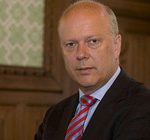
    Chris Grayling – 2023 Speech on the Loyal Address

    The speech made by Chris Grayling, the Conservative MP for Epsom and Ewell, in the House of Commons on 7 November 2023.

    I rise for the first and last time to speak in a King’s Speech debate in this House. It is a moment of big change for us all. The fact that it is all too tempting to start talking about the Queen’s Speech is just a sign of how used we were to having the late Queen after her 70 years of incredible service to this country. It is a big year for her son in taking over as King, and in delivering his first King’s Speech. Although he has an incredibly hard act to follow, I pay tribute to him for the way in which he has taken up his responsibilities, for his first year in his position, and for what he has done today in starting the new parliamentary Session. He has clearly already shown himself to be a monarch we can be proud of.

    There are a number of points in the King’s Speech that I will pick up on. First, I echo the comments of my right hon. Friend the Member for North East Somerset (Sir Jacob Rees-Mogg) about the importance of signing up to the CPTPP and the provisions in the King’s Speech for doing that. He is absolutely right to highlight the benefits of free trade for people around the world. It is a matter of deep distress to those of us who believe in free trade that so many countries seem to be taking a step away from it. In the end, that will not lead to a more prosperous world; it will not lead to fewer people being in poverty. If we revert to a world of tariffs, protectionism and subsidies, we will end up in a position where the world is a poorer place, not a richer place. I see our joining the CPTPP as a step in this country’s commitment towards the free trade environment that is needed around the world. It is, as my right hon. Friend says, a crucial part of the world for future economic growth. We are right to seek partnerships there, to do business there and to work closely with countries that are, after all, our friends.

    On energy, my right hon. Friend the Member for North East Somerset mentioned the Drax power station and, in doing so, drew attention to a really important issue for this country. The Government are absolutely right to seek to continue to exploit oil and gas from the North sea. The Climate Change Committee itself expects us to still need significant amounts by 2050, so why on earth is it better for this country to ship oil and gas from the middle east in large tankers with higher emissions than simply producing it off the coast of Scotland, creating and protecting jobs in Scotland? It baffles me as to why the SNP seems keen to destroy jobs in Scotland, but it is.

    At the same time, we see the continued shipping and burning of vast amounts of timber from North America as being somehow a renewable source of energy. In some respects, biomaterials can be and are a renewal source of energy, but I have increasing misgivings about the sheer volume of deforestation in the forests of the northern part of the world to generate the amount of energy that comes from the Drax power station. Over the next two or three years, as we move to the point where its contract for difference is to be reviewed, we have to ask, is this really the right thing to do? Are we absolutely certain that it is coming from sustainable sources and that the forests being cut down are being replanted and harvested properly? I have my questions. Before we continue to develop biomass in this country, we have to ask some hard questions about whether it is the right thing to do.

    I welcome the provision on leasehold and freehold in the King’s Speech. I have seen examples in my constituency of development companies and construction companies behaving in ways that are, frankly, among the worst practices in capitalism, exploiting those who have saved to buy their own homes and have ended up just about able to afford them. These people take pride in what they have, and then a few months or years later, the developer looks to put up the cost of not having the freehold—they put up the cost of the leasehold. My view is straightforward: if someone buys a house, it should be freehold. The application of leasehold tenure to what would in the past have been freehold homes is an unacceptable practice. It should stop, and I am very pleased that it is going to stop as a result of this King’s Speech and the legislation that lies ahead, which I hope will have support on both sides of the House.

    I would like to talk about a couple of things on which I want to see action in the Session ahead through secondary legislation and changes to the Government’s approach. The first is in relation to the measures that were put in place in the Environment Act 2021, 18 months ago, dealing with the issue of deforestation around the world. I chair the all-party parliamentary group on global deforestation. Deforestation is one of the great environmental challenges for our planet. We are losing forest at a rate of knots. It has a huge impact on biodiversity and on carbon emissions. It has to stop and to be reversed.

    We were pioneers, through the Environment Act, in saying that we will take practical action to require companies that deal in forest risk products to do proper due diligence, to ensure that those products are not coming from areas that have been illegally deforested. That was the right thing to do. It was a pathfinding piece of legislation and a sign of this Government’s commitment on the issue of biodiversity and the environment. However, the secondary legislation that underpins the Environment Act has yet to materialise. It is complicated to do, and I know that officials are working hard to identify the right way to do it, but this has to happen before the general election. We need to have adequate measures in place on products such as palm oil and soy to ensure that we are not importing those products from areas of illegal deforestation. I ask those on the Front Bench to use all their efforts to ensure that that secondary legislation comes forward soon.

    There is a flipside to the issue, which is what we do about financial services and institutions that invest in companies that are involved in illegal deforestation. We had some good debates last summer, when considering the Financial Services and Markets Bill, about the need to extend the due diligence provisions to the financial services sector. The Government made some positive noises and agreed to start a consultation process to look at how that could be done. I hope we will see tangible progress during this Session, and potentially even legislation coming forward when there is a Finance Bill off the back of the autumn statement.

    These changes are needed, because the issue of illegal deforestation is not simply about the products themselves; it is about the finance that supports the companies that exploit those parts of the world. I want to see proper measures in place. The financial services sector already does due diligence on the investments it makes and the loans it provides, but I want to see it inserting into that due diligence process the knowledge that the companies it is lending to are not simply using that money to support the cutting down of rainforests.

    Anna McMorrin (Cardiff North) (Lab)

    I thank my right hon. Friend—or, rather, the right hon. Member—for giving way. He is making some very important points on due diligence and the need to ensure that consumers and companies know where they are investing and the impact of that on people who live in illegally deforested areas. Does he agree that City investors and companies are crying out for this secondary legislation to be in place as well?

    Chris Grayling

    Absolutely, and I hope the hon. Member does see me as her friend, because she and I co-chaired the APPG on global deforestation until she, sadly, had to give up the role; I congratulate her on her recent elevation on the Opposition Front Bench. I agree with her: there is demand from investors around the world and from consumers.

    This is the right thing to do. I speak as a Conservative who believes passionately in free trade and free markets, but we are also conservative with a small c, and we have always been conservatives who believe in looking after the natural environment and ensuring that we have the right balance and do not destroy the natural world. It is really important that we have in place the checks and balances to ensure that the rogue operations that sadly exist around the world cannot simply tap into financial sources that enable them to do their business.

    There is one other change that I want to see happen, or at least see significant progress on, during this Session, and that is around sustainable aviation fuel. We are going to see the aviation industry change to move towards a lower-emission environment. We are already seeing it, in fact, with the arrival of new engine technology that reduces fuel use and so forth. The development of aviation fuel is crucial if we are to see the step change that the Government in this country and Governments around the world are asking for from the aviation sector. Sustainable aviation fuel is now required by law in this country to play an increasing part in the future of our aviation sector. I very much believe—and I have listened to comments made on both sides of the House—that we need to produce sustainable aviation fuel in the United Kingdom, and we need to create a regulatory environment which enables that to happen.

    We had some good discussions in the latter stages of the last Session. The Government have started a process that I hope will lead to the incentives, support and structures that those emerging markets in sustainable aviation fuel will need, but we need to see further progress in this Session, so that by the time of the election we have a clear path forward to deliver in this country a product that will be essential to what is still one of our biggest and most important business sectors.

    There is a lot to do. We have a year until an election, and I listened to what the Prime Minister said about what we can achieve in a year—assuming it is a year. I heard a lot in the King’s Speech that will make a difference to this country, but there is a lot that we need to change and a lot we need to get on with, and the work starts now.

  • Alex Cunningham – 2023 Speech on the Loyal Address

    Alex Cunningham – 2023 Speech on the Loyal Address

    The speech made by Alex Cunningham, the Labour MP for Stockton North, in the House of Commons on 7 November 2023.

    Here we are in the 14th year of consecutive Tory-led Governments that have failed on everything from the economy to immigration. The number of children living in poverty has soared, the gap between the richest and poorest has continued to widen, the number of people homeless has increased and social housing construction has all but collapsed. Families, businesses and industry alike have been crippled by the huge hike in energy prices and some of the highest interest rates in the western world. Our NHS has been devastated through political mismanagement. Waiting lists are lengthening and people are struggling to get a GP appointment or to see a dentist. Health inequalities remain a blight on our communities, and many are desperate to access mental health services but cannot.

    Our asylum system is broken, with a never-ending backlog of claims still to be heard. Class sizes in schools have increased as teachers leave the profession. Serious crime and antisocial behaviour blight our communities as police numbers remain well below the levels of 10 years ago. The majority of people in our country know that life for them has got worse, not better, since 2010. Add to that the disgusting rhetoric from Ministers and others on immigration, protest, homelessness, benefits and unemployment, and we know our country is in a bad place.

    In my speech, I plan to concentrate on poverty, health and inequalities, crime and policing, and industry and growth, but first I must get the compliment out of the way. I am delighted at the decision to increase annually the age at which people can buy cigarettes, which cost our NHS billions. As vice chair of the APPG on smoking and health, I appeal to the Government to back up that policy with the resources needed to tackle the illegal trade and, more importantly, to invest in public health measures to help people quit and to stop young people starting. It need not cost them a penny—they can make the polluter pay by placing a levy on the tobacco companies, who know they can afford it. I welcome, too, the reference to the sale and management of vapes. Anything that can stop children taking up that habit has got to be good.

    The north-east has had the steepest regional rise in child poverty in the UK. In Stockton North, almost 7,000 are living below the poverty line. The Joseph Rowntree Foundation says that 1.8 million households—that is 3.8 million people—have experienced destitution in 2022. A million of those people are children; some are homeless. We need to do so much more on poverty and homelessness. The covid pandemic showed us that we do not have to have rough sleepers, but the Government lack the ambition to sort that out now. Instead, we have a Home Secretary who characterises homelessness as a “lifestyle choice”. The homelessness charity Crisis says that it is caused by a lack of affordable housing, poverty and unemployment; people leaving prison, care or the forces with no home to go to; or women escaping violent or abusive relationships. As the coldest winter nights approach and a growing number of people struggle to afford the most basic physical needs to stay warm, dry, clean and fed, I am appalled that the Government have not taken the opportunity to tackle that crisis.

    Nor is there anything in the Government’s programme to tackle the crisis in our NHS, with the most basic care simply not available and many waiting lists getting longer. That means that people are suffering, many with excruciating pain. People are anxious about when they will get their operation. Family members are beside themselves knowing that their loved ones may not get the treatment they need before it is too late. I know that the Government will troop out the usual excuses—the pandemic, and doctors and nurses striking—but they do not stack up. The covid inquiry has demonstrated not only a lack of preparation and incompetence by Ministers, but a “couldn’t care less” attitude from the Prime Minister of the day, and a Health Secretary who thought that he should have the right to say who lived or died. That failure continues today, nowhere more so than in Stockton. We are getting a diagnostic centre, which I welcome, but we actually need a 21st-century hospital.

    Let me address primary care. My constituent tells me that, despite being told of the importance of seeing a dentist after suffering multiple miscarriages, she has been struggling to see a dentist for over three years. She has searched within a 50-mile radius to no avail. She is at a loss as to how she is supposed to get any help when private practice is on the rise and NHS providers are facing recruitment problems. What is my constituent to do? The North East and North Cumbria integrated care board said she should continue contacting her local practice to ask to be put on the waiting list—that is not good enough. Last year, 1,095 people were forced to attend A&E at both North Tees and Hartlepool NHS Foundation Trust and South Tees Hospitals NHS Foundation Trust because of dental decay—885 were unable to get an NHS dental appointment for dental abscesses caused by tooth decay, and 210 for dental cavities.

    The inadequate system for getting a GP appointment is also a cause for despair. One constituent tells me of her struggle to get either a face-to-face or phone appointment for the past two weeks—neither is available. She is in need of a prescribed medicine. She has tried to use eConsult, but the system is only available after 1 pm. She logged on at exactly 1 pm several times, only to receive a message advising of no availability and saying to try again tomorrow. Another constituent had tonsillitis a few weeks ago and found it impossible to get an appointment. She said the practice procedure is to phone up at 8.30 am to make an appointment. She tried, but at 8.35 am she was told that all appointments were gone, and that she would need to phone 111 or go to urgent care.

    Many of my constituents are concerned about mental health services and support for people with dementia. They asked me to raise the concerns raised by the Alzheimer’s Society and to press the Government for change. Sadly, no change was indicated today.

    I will never forget the sight of two thugs attacking the home of a rival—actually, it was the home of the rival’s ex-girlfriend—near Stockton town centre. While one smashed in the windows, the other deployed a chainsaw to cut his way through the door. Who knows the fear that that woman felt? Sadly, serious crime of that nature is quite commonplace. The police do their best, but they are fewer in number and have increased responsibilities.

    Crime is on the rise: the number of police-recorded crimes in Cleveland in the year 2022-23 was 83,890—a 9% increase on the previous year, when the number of crimes recorded nationally went up by only 2%. The substantial rise is in violent crime, which also rose by 9% in Cleveland to 31,497. Cleveland recorded 25% more residential burglaries than in the previous year, and it has been reported that the number of home burglaries in Stockton has shot up by 42%. Based on the crime survey, the Office for National Statistics estimates that, in Cleveland, almost 45% of people over 16 have experienced or witnessed antisocial behaviour in the last year, compared with 34% nationally. For sexual offence cases being heard at Teesside Crown court, the average time from receipt to completion is 93 weeks, compared with a 59-week national average. That is not justice.

    Against that backdrop, we are seeing a failure by the Cleveland police and crime commissioner to recruit more police. The number of male officers has decreased since 2010 across the board. The number of constables is down by 242, sergeants by 68 and special constables by 99. There has, however, been a growth in the number of women police officers.

    Finally, on industry and growth, I welcome this week’s announcement by British Steel of its plan to invest in Teesside, which has both an amazing industrial heritage—iron ore from the Cleveland hills led to the foundation of our once extensive steelmaking industry—and a local workforce that is equipped with the skills and expertise needed to grow our local steelmaking base once more. Establishing an electric arc furnace in Teesside is a good step forward, but we need much more if we are to reverse the industrial sabotage of the Conservatives, who abandoned steelmaking in Teesside in 2015, and if we are to create more than a fraction of the jobs that were lost as a result of their disastrous decision making—more than 3,000 jobs were lost at that time. We need to be more ambitious, and the investment needs to be part of a sustainable industrial strategy that puts clean, green steelmaking at its heart.

    Several years ago, we were promised tens of thousands of jobs at the Teesworks site. Few have so far materialised and, because of secrecy and Tory politicians and others hiding behind company law, we cannot find out what is guaranteed to happen and what is a stream of hopeful promises. That is why I would like the Government to come up with a plan to extend the provisions of the Freedom of Information Act 2000 to all boards, companies and organisations that spend public money. Maybe that would help us to find out how the bulk of the major assets at the Teesworks site and Teesside airport ended up in the hands of two private companies, and where the tens of millions spent subsidising the airport actually went.

    We could have the bright future that the Government talk about, we could see our health service restored to health, we could see transparency in the way Government agencies and companies do business, we could see a growing economy, we could see people getting a GP or dental appointment, and we could see millions of people lifted out of poverty, but not with this lot. It is time for a general election.

  • Jacob Rees-Mogg – 2023 Speech on the Loyal Address

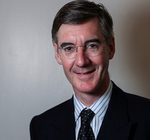
    Jacob Rees-Mogg – 2023 Speech on the Loyal Address

    The speech made by Jacob Rees-Mogg, the Conservative MP for North East Somerset, in the House of Commons on 7 November 2023.

    I certainly welcome this King’s Speech, particularly because at the end of the King’s Speech we saw—I see a former Lord Chancellor, my right hon. Friend the Member for Epsom and Ewell (Chris Grayling), looking at me with a beady eye—the reintroduction of an important tradition: the Lord Chancellor went backwards down the stairs, rather than the modern innovation that we have been infected with in recent years of the Lord Chancellor turning his back on his sovereign. So we have one occasion when the Tories, after 13 years of Government, have at last turned the clock back. Evelyn Waugh complained that in all his life the Tories had never turned the clock back, but we now have one good example.

    In the King’s Speech, we also have an opportunity for growth. I endorse every word said by my right hon. Friend the Member for Wokingham (John Redwood) on growth, the need for growth and the need for us not to treat the withdrawal from quantitative easing in the way the Bank of England is doing it, which is insanity. The men in white coats, who were once called upon by John Major, could be sent in a different direction on this issue.

    Two key parts of growth are set out in His Majesty’s Gracious Speech. The first is in the comprehensive and progressive agreement for trans-Pacific partnership and in having legislation for that. Free trade is the real opportunity to make this country and the world richer. My right hon. Friend the Member for Haltemprice and Howden (Mr Davis) pointed out that, since 1990, the growth in free trade has had a phenomenal effect in reducing absolute poverty from 36% of the globe’s population to 9.2%—from about 1.9 billion people to seven hundred and something million people. That phenomenal success in prosperity comes from free trade. With the CPTPP, we have the opportunity to push that further, but we should go further still.

    We should get rid of tariffs and barriers to trade unilaterally, because opening up our market is beneficial for our consumers. Protectionism is always the provider of the port for vested interests, but free trade is to the advantage of consumers and individuals. So yes, the Government are going in the right direction and the King’s Speech is going in the right direction, but I would encourage His Majesty’s Government to go further, as I would on the issue of using the Brexit opportunities.

    We have a chance to become a light-touch regulated economy that can be efficient and competitive. Again, we should be challenging vested interests. Many Members will remember that, when the REACH regulations came in, the chemical industry was up in arms, saying “These are terrible, awful European innovations. We don’t want them, they are costly, they are ghastly.” Then industry said, “Oh, these regulations are marvellous because they keep out any competitors.” We want to change things like the REACH regulations, so that we recognise regulators around the world that provide a similar level of safety, rather than allowing regulations to be used as a means of covert protectionism. That is the challenge for this Government.

    Using these advantages is mentioned in the King’s Speech; we need to use them aggressively. I have an interest in financial services, declared in the Register of Members’ Financial Interests, but these advantages should be used particularly in financial services, where we should restore our position as one of the most competitive areas in the world. We should be using them in agriculture to take the burden off the backs of our farmers because, when I advocate free trade, it is only fair that the quid pro quo is that we allow those who produce to do so in an easier way—in a way that takes burdens off their backs.

    Talking of taking burdens off backs, there is a part of the King’s Speech that is essential, but does not go far enough. A few weeks ago, my right hon. Friend the Prime Minister made an excellent speech about lifting some of the net zero burdens and some of that will be coming forward to this House in the coming months, but it is nothing like enough. On the motor cars issue, most of the regulations, as I think my right hon. Friend the Member for East Antrim (Sammy Wilson) pointed out, will remain and will still make it harder for people to buy cars; they will make it more expensive. That is a burden on British people. We want to be getting rid of things such as that. We do not want to force people to do things; we want the technology to be there first so that they want to do it. No one had to regulate to make people give up the horse and carriage and move to the motor car—the horseless carriage, as I used to call it—even though His Majesty came to Parliament in a horse and carriage. They did so not because of a regulation or a penalty, but because market forces meant that we favoured the motor car. If an electric motor car is so good, people will buy it; if it is not so good, they will stick to petrol—I am certainly going to stick to petrol for the time being.

    John Redwood

    Does my right hon. Friend agree that it does not work in its own terms? If somebody gets an electric vehicle today and goes home and plugs it in, they will have to burn more gas in a gas power station, because there will not suddenly be more renewable power to recharge that car.

    Sir Jacob Rees-Mogg

    My right hon. Friend is absolutely right but at least, thanks to this King’s Speech, it may be a little bit more British gas that we will be getting out, and that of course should be pushed further. There has been some talk that the proposals have been watered down. Well, they should be watered back up again, so that we get as much out of the North sea as we possibly can. It is in our economic interests and our environmental interests because the emissions are lower when we use domestically produced resources. But, as I say, we have to go further.

    We have heard the news about our steel industry. The reason our steel industry is being changed, so that we will have no pure steel manufacturing, is because of Government policy. It is because of the emissions trading scheme. It is because of having the third most expensive electricity costs in the world. It is about putting burdens on industry that make it impossible for it to operate and this utterly bogus view that, if something is made in China, the emissions are Chinese and, if it is made in the UK, they are British emissions, even if the steel is used for exactly the same purpose. This is the ridiculous thing about Drax. The chips put into the Drax machine count as Canadian emissions even though they are burnt in the UK. This is barmy in wonderland stuff. We need to be putting British industry first, and not using silly statistics—legerdemain of carbon emissions—to try to pretend that we are doing something that we are not.

    This ties in with the growth agenda. Let us look at what we have already achieved. Since 1990, the UK has reduced emissions by 44.1%, the United States has reduced emissions by 2.6 %, and the People’s Republic of China, our red friends, has increased emissions by 426.5%. We have done our bit. Our economic growth has been lower in that period than it otherwise would have been because we have forced upon ourselves the high cost of energy, which the Americans and the Chinese have not done.

    Therefore, we need a growth strategy with cheap energy, but there are problems that we have to deal with. There is a bit about enforcing the rules against the small boats, but we have to go further than that. We are not building enough houses, as the Leader of the Opposition pointed out. We are not building the infrastructure for 606,000 net migrants to come to this country a year, and we are finding, as we see there is trouble on our streets, possibly even on Armistice Day and Remembrance Sunday, that the integration that we hoped we had in this country is not as deep as we thought it was. That is something that should concern us. I thought that we could be very proud of the integration that we have in this country and the good relations, and we want to keep those, and the way to keep them is to control migration and to have it at levels that allow for integration to take place.

    Therefore, I am disappointed that we are still focusing on illegal flows. I am afraid we are caught up in the HMT-OBR understanding of migration that is wrong because it focuses on total GDP, rather than GDP per capita. We are actually making ourselves poorer as a nation by the excess of migration that we are having, and we are risking what I might call the comfort of the nation—the ease with which we all live together—by allowing the arguments of countries away from the United Kingdom to be heard on the streets of the United Kingdom, which is unwelcome. We want a growth strategy, we want cheap energy, we want to control migration, but we do not want to abandon our ancient liberties.

    I was not planning to mention this, but I was inspired by my right hon. Friend the Member for Haltemprice and Howden, who is standing at the Bar of the House, when he talked about warrantless entry. If the police always got things right, we might think that was a good idea, but over the last few years we have had any number of problems of police behaviour and police leadership.

    I say that cautiously, and I concentrate on leadership because when we go around this Palace, we speak to as fine a body of men and women as we could hope to meet, who keep us safe every day, and whenever I meet constables in North East Somerset, I find exactly the same—fine, brave people who look after us. But their leadership, we must acknowledge, has been pretty poor, and this seems to me not the time to give them a power that goes against one of our most ancient constitutional safeguards.

    I know that there is a rule in this House that discourages tedious repetition, Madam Deputy Speaker, so I hope I can assume that the House was not paying sufficient attention in March 1763 to a comment made by our old friend Pitt the Elder, because he said:

    “The poorest man may in his cottage bid defiance to all the forces of the Crown. It may be frail—its roof may shake—the wind may blow through it—the storm may enter—the rain may enter—but the King of England cannot enter!—all his force dares not cross the threshold of the ruined tenement!”

    That is such an important liberty. It does not mean that the police cannot run in after someone if they are caught in the act, but it means that if they are to come through someone’s door, they need evidence and a warrant. It is a foundation of our liberties, and I do not think a King’s Speech, as a prelude to a manifesto, is a place in which to water down our ancient liberties.

  • Nia Griffith – 2023 Speech on the Loyal Address

    Nia Griffith – 2023 Speech on the Loyal Address

    The speech made by Nia Griffith, the Labour MP for Llanelli, in the House of Commons on 7 November 2023.

    Even if we were not expecting a great deal, the King’s Speech is even more disappointing than we could have imagined. It is weak, empty and full of platitudes. To make matters worse, it builds on a very poor track record.

    The Government say that they want to create growth in the economy, but there is nothing in the King’s Speech to explain how. Their track record is abysmal. They have completely failed over 13 years to get any proper growth in the economy. Wages have stagnated while inflation has skyrocketed, leaving people struggling in a massive cost of living crisis.

    Creating growth in the economy really matters. It is about people having good jobs and wages that keep pace with inflation, and it is about our having the money to invest in improving our sorely overstretched public services. Labour would prioritise growth and invest in the green jobs of the future. That is why we need a change of Government, a Labour Government, and we need that change urgently.

    We saw just last week how big international companies are now making their investment decisions for the future. Although other countries are wooing companies for their investment in the green jobs of the future, this Conservative Government are letting down workers who worked hard, often in difficult circumstances, during covid and adapted rapidly to change.

    Take steel, which is a vital foundation industry. For years, this Conservative Government have been half-hearted in their support for the steel industry. They have failed to tackle the high energy prices that make our steel uncompetitive, and they have failed to invest in the future. Worse, there are 20-plus projects across Europe looking at how to decarbonise the blast furnace process, but there is not one project in the UK.

    The Conservative Government, in their so-called big announcement back in September, promised only £0.5 billion to invest in an electric arc furnace in Port Talbot, whereas Labour has recognised and committed £3 billion to decarbonise the steel industry. That is the sort of investment needed to get the necessary technologies to green the blast furnace process. Yes, we need electric arc furnaces to recycle more of the 800 million tonnes of steel that are currently exported for recycling, but we also need to develop the necessary technology to transform the blast furnace process for extracting iron from iron ore.

    Just yesterday, we heard the dreadful news that the Chinese-owned British Steel is closing down blast furnace steel production in Scunthorpe, replacing it with two electric arc furnaces. This comes hot on the heels of the devastating news in south-west Wales this past week that Tata Steel is planning to close down the blast furnaces at Port Talbot by the spring of next year, long before the electric arc furnace will be operational. This means a massive loss of income for thousands of workers and their families, and for the associated contractors, transport companies and businesses in the community. This affects not just Port Talbot but the whole of south-west Wales.

    Workers are fearful for the future of the Trostre tinplate works in my constituency. Trostre needs steel of a quality that can currently be produced only by the blast furnace process. We have assurances that, when the blast furnaces in Port Talbot close, Tata will import steel from abroad to feed Trostre. But it makes no sense to lose all those jobs here in the UK and then to import steel made in blast furnaces abroad, quite likely with much lower environmental standards than our own. That does nothing to cut emissions.

    Furthermore, if we lose the means to produce virgin steel in this country, we will be at the mercy of other countries for the price we have to pay. If there is a world shortage, we may even not be able to get the steel we need for our vital industries. The fear at Trostre is about the medium and long-term future. If we no longer have steel produced just down the railway track in Port Talbot, and if we have to import it from abroad, how economically viable will we be in comparison with competitor factories in the same company elsewhere?

    Tata’s timescale to close down the blast furnaces in Port Talbot by March next year has come as a massive shock for Port Talbot and for us in Trostre. The prospect of Port Talbot colleagues losing jobs and Trostre becoming dependent on imported steel is very worrying. We now need proper consultation between Tata and the unions, but I also urge the Government to do everything possible to ensure that we keep steel production in this country.

    We are at a turning point in our industrial history but, with this Government, we are in very real danger of being left behind. It is as if they are turning back to the horse and cart when everybody else is moving on to the steam train. I am sure many Members will remember the 2012 Olympic opening ceremony in which, alongside the celebration of our NHS, we saw a portrayal of the industrial revolution, for which the UK is globally renowned. Just as we took the lead on that industrial revolution, we should be leading the way now on the green industrial revolution. But with this Government we are not—we are being left behind.

    I have met representatives of international companies that have factories in the Llanelli constituency, and they are desperate to see cheaper energy and a proper industrial strategy from this Government. Car manufacturers and others are making crucial decisions about where to invest in new production lines and to build new factories. They recognise the loyalty of the workforce in Llanelli and other parts of the UK, who have adapted to many changes over the years, and they would be keen to invest. However, when companies have factories spread across the globe, and they see the USA offering incentives through its Inflation Reduction Act and the EU with similar programmes, and they compare the cheaper energy prices in competitor countries and the proper industrial strategies in other countries, but see nothing coming from the UK Government, will it be any surprise if they choose to invest elsewhere? We will be left just with the current production lines limping along until their products are no longer required, while the shiny new factories will go elsewhere.

    There is no time to waste. The rest of the world is forging ahead with the green industrial revolution and they are not going to wait for the UK Government when other countries are providing real incentives, as well as cheaper energy. It is all very well mentioning growth in the King’s Speech, but we absolutely need to see some flesh on the bones.

    This Conservative Government’s reference to energy in the King’s Speech beggars belief. While the rest of the world is going forward, making huge investment in green energies and technologies, we see the UK Government going backwards, promoting the issuing of more oil and gas licences, which, by the Government’s own admission, will not bring down energy bills for consumers. We have huge potential in the UK to produce cheap energy through renewables, slashing prices for households, businesses and industry, while also cutting our emissions to zero—this is a win-win situation. We have huge potential for wind energy, both onshore and offshore, and some of the highest tidal ranges in the world, with capacity around the UK to produce electricity 24/7, not to mention the potential for wave technologies, hydro and solar. By fast-tracking the development of renewables, we can both slash domestic energy bills and fuel a new green industrial revolution, with a massive roll-out of energy.

    That is precisely what we in the Labour party intend to do. We have a plan to supercharge investment in renewables, including with the creation of GB Energy. However, we are seeing an abject failure by this Conservative Government to develop renewables. What do we see on renewable energy in the King’s Speech? The Government are going to “seek to attract” investment in renewables. That went well in the Celtic sea offshore energy auction, didn’t it? Not a single bid was made because the Government failed to respond to the companies’ pointing out that inflation was driving up costs. The Republic of Ireland recognised the problem and got a successful auction; we got not one single bid, but it got a successful auction. The Government have to do better than just trying to attract investment.

    Of course, that comes on top of years of banning the development of onshore wind in England and a failure to lift that ban properly; stalling on solar; shilly-shallying and then cancelling the electrification of the south Wales mainline to Swansea; and long waits for connections to the grid. In contrast, Labour has a plan to supercharge investment in renewables. Time is of the essence, and I urge the Government to do much more to develop renewables, to develop an industrial strategy and to invest. That would give companies real incentives and the certainty that they need to invest in green jobs in the UK. Sadly, this Government’s record is abysmal, which is why we desperately need a change and the hope that a Labour Government could bring by investing in the jobs of the future, fast-tracking the development of renewables, improving our NHS, increasing opportunities for our young people and making our streets safer. That is why I urge the Prime Minister to think again about his King’s Speech and to put more in it to provide the investment that we need. If he cannot do that, we need change and we need an election as soon as possible.

  • John Redwood – 2023 Speech on the Loyal Address

    John Redwood – 2023 Speech on the Loyal Address

    The speech made by John Redwood, the Conservative MP for Wokingham, in the House of Commons on 7 November 2023.

    I have declared my business interests in the Register of Members’ Financial Interests.

    I hope the Government are listening to the right hon. Member for East Antrim (Sammy Wilson) on those important matters for Northern Ireland. It is vital that there are changes to the Windsor framework, so that Northern Ireland is properly a part of our United Kingdom and can accept our commonly agreed laws on everything from taxation through to the arrangements over products and trading.

    I welcome very much the emphasis in the King’s Speech on the United Kingdom’s producing more of our own oil and gas in substitution for that which we are currently importing. The logic of substitution is most obvious in the case of gas. We have gas pipelines already installed to bring gas from the fields to the mainland, with capacity in them because gas output has been declining; and, of course, if we deliver it directly through gas pipelines we have none of the extra cost and trouble of transit involved in importing liquefied natural gas, usually from the United States or Qatar. Those who are keenest on the road to net zero should recognise that having our own gas down a pipe greatly reduces the amount of world carbon dioxide because so much more carbon dioxide is generated if it is necessary to liquefy the gas, to transport it for long distances, and then to recreate it as gas when it arrives. All those are very energy-intensive processes which we do not need if we generate more of our own gas from the North sea.

    I have good news for Ministers. Let me remind them that although they say they think we need a bit of additional legislation for future licensing rounds, what we really need to do is concentrate on developing the existing fields and the new discoveries that have been well known about, in many cases, for a great many years, and maximising the output of what we already have so that the gas and the oil come more quickly and at lower cost, because we need it now. Most of our constituents still need gas for their domestic heating and will need it for the foreseeable future, most of our industrial plants run on gas as their main source of energy, and most of us have petrol or diesel cars, so we still need the fractions of oil to run our transport. It is important for us to get on with that—and, as the right hon. Member for East Antrim has said, another great bonus for all of us, including the Treasury, is that the sooner we get that oil and gas landed, the sooner we will secure a big increase in tax revenues from which we could benefit, enabling us to get the deficit down and support the public services that we wish to see.

    I am very pleased that the King’s Speech began with the mighty topic of the economy. I am sure that the Government and the Prime Minister would agree that what we do over the next year to get inflation down more quickly, to bring about faster growth to create more and better-paid jobs, and to secure the extra investment that we want to see is absolutely vital. Again, I have good news for the Government. I think there are measures that they can take in a future Finance Bill—which, I am sure, will constitute part of our proceedings over the next year—that would help to achieve all those aims. They are not incompatible, and we do not have to wait. Some people seem to think it is necessary to sequence it and to spend a year of misery—with a massive credit squeeze and an austerity Budget—to get inflation down before we can think about doing the other things, but if we cut the right taxes, we can bring forward the reduction in inflation, and that, of course, has a direct knock-on effect on the cost of running public services. One of the reasons we have seen such a big increase in public spending in the last year or so is the massive rise in inflation, because so many things are directly geared to the inflation rate.

    So, Government, let us have a year of temporary tax cuts on energy, because British energy is far too expensive. It makes us much less competitive, and it is a burden on household budgets. I would pay for that— because I do not want to increase the overall deficit—by selling all those NatWest shares that we still have. Interest rates have gone up a lot, and banks should be making a lot more money. Let us just sell all the shares and use that for a one-year advantage while the oil and gas prices are still very elevated, and to ease the transition from slow growth to higher growth and to a faster reduction in inflation, which will then help reduce the deficits.

    We also need measures to help small business and the self- employed. It is of great concern to me, as it should be to many other Members, that we have 800,000 fewer self-employed people today than were known about, at least, in February 2020. Some of that is due to covid and lockdowns or to natural retirements, but some of it is due to the sharp change in the tax system called IR35, which took place in two tranches, one at the end of the last decade and one at the beginning of this one. It is now very difficult for people to grow businesses, particularly if they want contracts from other businesses. This has put many people off, and we are not seeing the new generation of self-employed people coming through that we have seen in previous generations—and that is mightily important, because they provide much of the flexibility in our economy, and can also provide extra capacity. Such measures would also help to provide worthwhile things for people to do, because some will be currently without a job and will be on benefits generally. So, Government, change the tax system back to the pre-2017 one which allowed a phenomenal growth in the number of self-employed people, and helped the workings of not only products and services markets but the job market itself.

    We all have many small businesses in our constituencies and we know how important they are to the services and output of our local community. We know how flexible they are, how hard so many of them work and how prepared they are to go the last mile to win clients and to look after clients and customers. They need a tax break, and the first thing we should do—now that we no longer have to accept the EU rules on VAT registration —is to have a big increase in the threshold level at which businesses register for VAT, because this is now a major constraint. I am sure we all know small businesses that turn down work or close down for a month extra during the year because they do not want to go over the £85,000 turnover, with all the burdens of the compliance, regulation and paperwork that that would cause, as well as having to put 20% on prices and so forth.

    Let us allow small businesses to enjoy their flexibility for longer and to get to a bit bigger size—let them have one or two employees—before they have to go through all the hassle of registration and the legal pressures that that generates. I think that would generate more revenue from other types of taxes, and even on the strange Treasury arithmetic it would be quite a cheap item. For example, we could easily pay for it out of modest improvements in productivity, which we will need to ensure if we are to deal with the collapse in public sector productivity identified by my right hon. Friend the Member for Haltemprice and Howden (Mr Davis). There must be ways to do something about that, and I believe that the Chief Secretary to the Treasury is working on them.

    My final point relates to the Bank of England. The Bank is independent in the setting of the base rate and the work of the Monetary Policy Committee, but it is not independent in managing the mighty portfolio of bonds that it currently owns on behalf of the institution and wider taxpayers. The proof of that is the fact that successive Chancellors from Alistair Darling onwards signed a concordat with the Bank of England giving it permission to buy bonds and agreeing to pay any losses, should losses be made, when it came to sell them or when they matured. The Bank of England now wishes to sell £100 billion-worth of bonds over the next few months, now that they have crashed on the markets because of the Bank of England’s changes in interest rate policy and bond policy, meaning that huge bills are being sent to the Treasury. I believe that the bill was £24 billion of losses in the first four months of the current fiscal year, and the theoretical liability is over £170 billion of losses of that kind and of the kind of running losses due to the way in which the Bank holds bonds at the moment.

    I would like to advise the Chancellor and the Governor of the Bank of England to look at what the European Central Bank is doing. It too made the colossal mistake of overinflating, over-creating money and buying too many bonds at very expensive prices, just as the Bank of England did, and it too ended up with the predictable excess inflation that we have seen. But the ECB is not panicking out of those bonds; it is holding them until they repay, which will result in fewer losses for it. There will still be losses, because it often paid more for the bonds than their actual repayment value, but it is not incurring big losses by selling them at very depressed prices on the market, now that the central banks have decided to smash the asset values of the bonds that they spent quite a lot of time acquiring just two or three years ago in many cases.

    We need to do this because the Treasury should not have to make those huge losses and because money has now lurched from being crazily too expansive and likely to generate inflation to being far too tight and likely to overshoot in slowing the economy too much. So please, Government—listen, watch and on this occasion I say learn from the European Central Bank, which seems to be getting this just a bit more right than we are. Then we might start to make progress in bringing together the perfectly compatible aims of getting some growth, which we will not get if we have too severe a credit squeeze, and getting inflation down, which could be speeded up with the right type of tax cuts.

  • Sammy Wilson – 2023 Speech on the Loyal Address

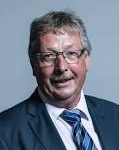
    Sammy Wilson – 2023 Speech on the Loyal Address

    The speech made by Sammy Wilson, the DUP MP for East Antrim, in the House of Commons on 7 November 2023.

    I appreciate the fact that you have called me so early in the debate, Madam Deputy Speaker. Despite the fact that Mr Speaker has reset the clock so that it appears that my hon. Friend the Member for Strangford (Jim Shannon) has never spoken in the House—[Laughter.] I have been called before him, so thank you very much for that.

    May I first, on behalf of the Democratic Unionist party, congratulate the King on his first King’s Speech and the way in which he delivered it? Our gratitude also goes to his mother, who for so long served our nation. I also congratulate the proposer and seconder of the Loyal Address. However, when the right hon. Member for Scarborough and Whitby (Sir Robert Goodwill) was being praised by some Members on the Opposition Front Bench, I must say that I wondered how they married up their commitment to net zero with the right hon. Gentleman’s pride in having three coal-guzzling steam engines and what that does to the carbon footprint in Yorkshire. Nevertheless, I am glad that some of the mad ideas—that we should change our lifestyles because of the threat from carbon dioxide being put into the atmosphere—have not put him off.

    I want to note three things about the Gracious Speech. First, there are the things that I am glad about. I am glad that the Government have once again restated their commitment to stand by those who are under attack from tyrants and from terrorism, with their commitment to Ukraine and their commitment to Israel, both of which are under huge pressure at present. Indeed, across the world there appears to have been a tiring in support for the war in Ukraine and for the Ukrainian Government as well as, almost immediately, condemnation of the nation of Israel for standing up and doing its duty by its citizens who were brutally murdered by terrorists. Many people—some of them may be well-meaning, and some may be simply reacting to the cruelty of war—are calling for an immediate ceasefire. While the Government of Israel have their citizens held captive and while Israel’s very existence is under threat because of a huge terrorist army on its doorstep, regardless of how strong the siren calls are from the UN, nations across the world and all the non-governmental organisations, it would be foolish to go for a ceasefire.

    It is a typical terrorist tactic: when terrorists are under pressure or the state comes after them, they call for a ceasefire. What for—because they want to stop the violence? No. It is because they want to regroup. We have seen it in Northern Ireland. When the terrorists in Northern Ireland were under pressure, they declared ceasefires. It gave them time to regroup, and I do not think the situation in the middle east is any different. There will be difficult days ahead—I am sure there will be pictures on our TV screens that will make us all sorrowful—but I hope our Government stand by the resolution in the King’s Speech and stand by the state of Israel in defence of its citizens.

    The second thing that I am glad about is the Government’s willingness to grant licences to exploit the resources that we have in the earth and in the sea around our country. Whether we like it or not, we are going to use oil and gas for many decades in the future, so I cannot for the life of me understand why such a policy is even controversial. What is controversial about replacing imports with our own oil production? What is controversial about defending 200,000 jobs in that industry? What is controversial about ensuring energy security? We have already heard speeches today about the difficulties in financing our public services. What is controversial about promoting an industry that will pay billions in taxation, which can then be used to finance Government services?

    I am pleased that the Government have made a commitment to grant licences; the only thing I will say, given that the right hon. Member for Maidenhead (Mrs May) is in her place, is this. The one threat that I see to the ability to deliver on that pledge is that those who oppose it have been handed a sledgehammer, which they will be able to use in judicial reviews and court cases, and so on, because we still have a commitment in legislation to reach net zero by 2050. We have seen it already. Every time an infrastructure project is proposed that requires the use of oil and gas, it is challenged in the courts on the basis that to allow it will detract from the ability to meet our target of net zero by 2050.

    The Government can issue licences and invite applications for licences, but I have absolutely no doubt that every one of them will be challenged in court on the basis that we still have legally binding targets for 2050, and I suspect that it will be the same for some of the other measures that the Government have introduced. In fact, although there was a song and dance about how the Government were no longer banning the sale of diesel and petrol cars by 2030, I note that legislation has been announced—I suspect this is to create a defence in court—to ensure that, whether or not there is a ban on buying cars, there will be a ban on making them. The manufacturers will be obliged to increase the percentage of electric vehicles they sell every year, despite the fact that the demand side of the market will not be controlled in that way—unless, of course, we find that quotas have to be set for sales, as well as for manufacturing.

    The third thing that I am glad about is that the Government will introduce a trade and investment Bill that will enable us to benefit from leaving the EU. I know that there are those who will tell us that leaving the EU is the most disastrous decision we ever made—we get it every week in this House. The truth of the matter is that all the doomster forecasters have been wrong. I can remember debates in this place when we were told that people would be queuing up in the supermarkets, unable to get food. The Office for Budget Responsibility told us that our GDP would fall by 4% because our trade would fall, yet statistics this week show not only that our trade with the EU has increased by 13%, but that our trade with the rest of the world has increased by 14%. One reason is that we no longer have to rely on trade deals that require 27 countries to agree policy and arrangements, and we can do what is best for Britain.

    I am glad the Government intend to build on that. People think that we do not make anything any longer as a result of Brexit, but only this week we find that we are the seventh biggest manufacturing nation in the world, having overtaken France, so there are good things. I am glad the Government intend to build on that and I hope they do so. When I see how they back off when there is a little opposition to moving away from EU law, I sometimes wonder whether we are prepared to use the best of our freedoms.

    I am sad about one thing: the fact that in the King’s Speech the Government had to make a promise to promote the integrity of the Union and strengthen the social fabric of the United Kingdom. I am sad that such a promise even had to be made. It is only necessary because successive Prime Ministers have played fast and loose with the Union in negotiations with the European Union. Relations with the European Union were regarded as more important than relations within the United Kingdom. We even had Ministers defending their decision about the withdrawal Bill in court, admitting that when the Bill went through this House we impliedly removed article 6 of the Act of Union, the very economic basis of the Union that there should be freedom of trade and freedom of movement.

    During recess, the Government introduced yet another statutory instrument, on plant health regulations. As a result of the negotiations with the EU, Northern Ireland is now regarded by the EU as a third country in relation to the rest of the United Kingdom. In the plant health regulations introduced during recess, the Government of our own country are now, for the very first time, regarding Northern Ireland as a third country. So, there is much that needs to be done to promote the Union. The hon. Member for Stroud (Siobhan Baillie) is a yoga specialist. I hope we will not see the same kind of yoga contortions from the Government when it comes to their position on the Union and Northern Ireland’s position within it.

    My last point is about one of those things that I think is mad, but others have praised: introducing legislation—albeit well meaning and everything else—to ban smoking. In 20 years’ time, some poor shopkeeper is going to have to decide, “Is that person who came in here asking for 20 fags 48 or 47? Is he going to have to send his 48-year-old mate in to buy the cigarettes for him?” Introducing legislation of that nature is just mad.

    I hope we will see delivery on some of the good things. I hope we will see the Government deliver on strengthening the Union, undoing the damage of the Windsor framework and the protocol, and restoring Northern Ireland’s position within the Union.