Tag: 2023

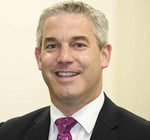
  • Steve Barclay – 2023 Statement on NHS Winter Pressures

    Steve Barclay – 2023 Statement on NHS Winter Pressures

    The statement made by Steve Barclay, the Secretary of State for Health and Social Care, on 9 January 2023.

    Mr Speaker, I wish to take this first opportunity to update the House on the severe pressures faced by the NHS since the House last met. I and the Government regret that the experience for some patients and staff in emergency care has not been acceptable in recent weeks. I am sure that the whole House will join me in thanking staff in the NHS and social care who have worked tirelessly throughout this intense period, including clinicians in this House who have worked on wards over Christmas. They include my hon. Friend the Member for Lewes (Maria Caulfield), the Minister for mental health, and the hon. Member for Tooting (Dr Allin-Khan), the shadow Minister for mental health.

    There is no question but that it has been an extraordinarily difficult time for everyone in health and care. Flu has made this winter particularly tough: first, because we are facing the worst flu season for 10 years—the number of people in hospital with flu this time last year was 50; this year, it is over 5,100. Secondly, it came early and quickly, increasing sevenfold between November and December. It also came when GPs and primary and community care were at their most constrained. When flu affects the population, it affects the workforce too, leading to staff sickness absence that constrains supply just as it also increases demand.

    These flu pressures came on top of covid. Over 9,000 people are in hospitals with covid, while exceptional levels of scarlet fever activity and an increase in strep A have created further pressure on A&E. All that comes on top of a historically high starting point. We did not have a quiet summer, with significant levels of covid, and delayed discharges were more than double what they were during the pandemic. I put that in context for the House: in June 2020, there were just 6,000 cases per day of delayed discharge—patients medically fit and ready to leave hospital—whereas throughout last year the figure was between 12,000 and 13,000 per day. The scale, speed and timing of our flu season have combined with ongoing high levels of covid admissions in hospital and the pandemic legacy of high delayed discharge to put real strain on frontline services.

    Since the NHS began preparing for this winter, there was a recognition that this year had the potential to be the hardest ever. That is why there was a specific focus on vaccination. There were 9 million flu shots and 17 million autumn covid boosters. We extended eligibility more widely than in the past, to cover the over-50s, and became the first place in the world to have the bivalent covid vaccine, which tackles both the omicron and the original covid strain.

    NHS England also put in place plans for the equivalent of 7,000 additional beds, including the introduction of virtual wards of a sort that one can see at Watford General Hospital. That innovation is still at an early stage of development, but has the potential to be significant in reducing pressure on bed occupancy in hospitals; in Watford alone, it has saved the equivalent of an extra hospital ward of patients. In addition, our plan for patients put £500 million specifically into delayed discharge, with a further £600 million next year and £1 billion the year after. Although the funds are already starting to make a difference, efforts have taken time to ramp up operationally with local authorities and the local NHS.

    In addition, our 42 integrated care boards, recognising how bed occupancy in hospitals and social care are connected, will fully integrate health and care in the years to come. But likewise, they are at an early stage of maturity, with ICBs having become fully operationalised only in July 2022, less than six months ago.

    Our plans involving the integration of hospital care and social care, additional funding for discharge, increased step-down capacity, the equivalent of 7,000 additional hospital beds and a vaccination programme at scale have provided the groundwork for the Government response, but it is clear we need to do more right now in light of the level of flu and covid rates and given that hospital occupancy remains far too high and emergency departments are too congested. Recognising that, we launched the elective recovery taskforce on 7 December, and in the coming weeks, we will publish our urgent and emergency care recovery plans. NHS England and the Department of Health and Social Care have been working intensively over Christmas on these plans, which were reviewed with health and care leaders at an NHS recovery forum in Downing Street on Saturday.

    The recovery falls into three main areas of work: first, steps to support the system now, given the immediate pressures we face this winter; secondly, steps to support a whole-of-system response this year to give better resilience during the summer and autumn—as we have seen with the heatwave this summer and with the levels of covid, pressure is now sustained throughout the year, not just, as in the past, during autumn and winter; and, thirdly, our work alongside those two areas on prevention, on maximising the step change potential of proven technologies, such as virtual wards, and on the wider adoption of innovations such as operational control centres and machine reading software to treat more conditions in the community, away from someone reaching an emergency department in the first place.

    Let me first set out the measures I can announce today to provide support to the NHS and local authorities now. First, we will block-book beds in residential homes to enable some 2,500 people to be released from hospitals when they are medically fit to be discharged. When that is combined with the ramping up of the £500 million discharge funding, which will unblock an estimated 1,000 to 2,000 delayed discharge cases, capacity on wards will be freed up, which will in turn enable patients admitted by emergency departments to move to wards, which in turn unblocks ambulance delays. It is important, however, that we learn from the deployment of a similar approach during the pandemic by ensuring that the right wraparound care is provided for patients released to residential care. I have asked NHS England to particularly focus on that, so that it is the shortest possible stay on patients’ journey home and into domiciliary care, and indeed it is in the NHS’s own interests for those stays to be as short as possible. Taken together, this is a £200 million investment over the next three months.

    Next, our A&Es are also under particular strain. From my visits across the country I have seen and heard how they often need more space to enable same-day emergency care and short stays post emergency care. Our second investment is in more physical capacity in and around emergency departments. By using modular units, this capacity will be available in weeks, not months, and our £50 million investment will focus on modular support this year. We will apply funding from next year’s allocation to significantly expand the programme ahead of the summer. We are giving trusts discretion on how best to use these units to decompress their emergency departments. It might be for spaces for short stays post A&E care, where there is no need for a patient to go to a ward for further observation, or for discharge lounges that previously have not been able to take a patients in a bed—many of those are often simply chairs—or for additional capacity alongside the emergency department at the front end of the hospital.

    The third action we are taking to support the system right now is to free up frontline staff from being diverted by Care Quality Commission inspections over the coming weeks, and the CQC has agreed to reduce inspections and to focus on high-risk providers in other settings, such as mental health. Those are the actions we are taking that will have an immediate effect.

    I turn to the measures we are taking now that will give greater resilience into the summer and next winter. We now have 42 NHS system control centres in operation across England, staffed 24 hours a day, seven days a week, tracking patients on their journey through hospitals, helping us to identify blockages earlier and getting flow through the system. Where we have implemented these systems, such as the one I saw in operation in Maidstone, they have had a clear impact. We will therefore allocate funding in next year’s settlement to apply these systems more widely.

    Similarly, we have also seen how the use of artificial intelligence and data can demonstrably reduce demand and release patients sooner. NHS England has been tasked with clarifying and simplifying the procurement landscape, taking on board best international practice, so that a small number of scalable interventions are taken forward where international experience shows they can deliver meaningful benefits to patients.

    Next, we will capitalise on the incredible potential of virtual wards. Last week at Watford General Hospital, I saw how patients who would have been in hospital beds were treated at home through a combination of technology and wraparound care. Patients released sooner are often much happier, knowing that they are receiving clinical supervision and always have the safety net of being able to quickly return to hospital should their condition deteriorate. There is scope to expand these measures to many more conditions and many more hospitals in the months ahead.

    We are also opening up more routes for NHS patients to get free treatment in the independent sector and offering even greater patient choice. The elective recovery taskforce is helping us to find spare operating theatres, hospital beds and out-patient capacity.

    We must also take steps in primary care. We are clear that our community pharmacists can support many more things to ease pressure on general practice. From the end of March, community pharmacists will take referrals from urgent and emergency care settings; later this year, they will also start offering oral contraception services. But I want to do even more, as they do in Scotland, and work with community pharmacists to tackle barriers to offering more services, including how to better use digital services. The primary care recovery plan will set out a range of additional services that pharmacists can deliver.

    Finally, notwithstanding very severe pressures, we know that to break the cycle of the NHS repeatedly coming under severe pressure, the best way to reduce the numbers coming through our front doors is to address problems away from the emergency department. On Friday, we signed a memorandum of understanding with BioNTech —a global leader in mRNA technology—to bring vaccine research to this country, which will give as many as 10,000 UK patients early access to trials for personalised cancer therapies by 2030. This builds on the 10-year partnership we struck with Moderna in December to also invest in mRNA research and development in the UK and build state-of-the-art vaccine manufacturing here.

    We are also reviewing our wider care for frail, elderly patients in care homes long before they ever get to A&E or our hospitals. Take the brilliant work being done in Tees valley, where community teams are being used to help with falls to prevent unnecessary ambulance trips to hospitals. We have looked at what more support we can offer elderly patients further upstream. With an ageing population, and many more people with more than one condition, it is clear that we have to treat patients earlier in the community and go beyond individual specialties to better reflect patients with multiple conditions to give the right support to people where they are, which is often at home or in residential homes.

    Today’s announcement provides a further £250 million of funding, which recognises the spike in flu on top of covid admissions and high delayed discharge numbers from the pandemic. The funding will provide immediate support to reduce hospital bed occupancy and decompress A&E pressures, and, in turn, unlock much-needed ambulance handovers. This funding builds on the £500 million announced in the autumn statement specifically for discharge, which is ramping up, and the additional funding for next year.

    All this work ultimately builds on the much-needed greater integration of health and social care through the 42 integrated care boards, which we will strengthen through the Hewitt review, and through a step change in capability, including operational control centres.

    This immediate and near-term action sits in parallel with our wider life science investment, such as the deals with BioNTech and Moderna, and underscores our commitment to recognising the immediate pressures on the NHS and investing in the science that will shift the dial on earlier, upstream treatment at scale, particularly for the frail elderly, long before a patient reaches an emergency department. This is a comprehensive package of measures, and I commend this statement to the House.

  • PRESS RELEASE : Leading the world in lighting efficiency lightens the load on energy bills [January 2023]

    PRESS RELEASE : Leading the world in lighting efficiency lightens the load on energy bills [January 2023]

    The press release issued by the Department for Business, Energy and Industrial Strategy on 10 January 2023.

    Increasing minimum efficiency standards for lighting could cut energy use and save money for households and businesses across Great Britain. New proposals would introduce performance standards that are higher than regulations currently in place in either the US or EU switching to more efficient lighting can save a household around £2,000 to £3,000 over the lifetime of the bulbs, depending on the size of the home

    Households and businesses across Great Britain could cut their energy use and save money on bills by having some of the most efficient lighting in the world under new government proposals being announced today (Tuesday 10 January).

    The new proposals will ensure that lighting in domestic and non-domestic buildings in England, Scotland and Wales meets minimum energy performance standards that are higher than regulations currently in place in either the US or the EU.

    Introducing higher standards for lighting products will see only the most energy efficient light bulbs, such as ones powered by low energy-use LEDs, available in shops, making it easier for consumers to replace old bulbs with ones that use less energy while still providing the same levels of lighting performance.

    With new bulbs being cheaper to run, replacing a household’s halogen bulbs with LEDs consumers can expect savings of around £2,000 to £3,000 over the lifetime of the bulbs, depending on the size of the home.

    Business and Energy Minister Lord Callanan said:

    “Putin’s warmongering in Ukraine means everyone is feeling the effect of higher energy bills this winter, but these new standards can help lighten the load by ensuring British homes and businesses are lit as efficiently as possible.

    As we’ve shown in the government’s energy saving campaign, small changes, like switching to more efficient light bulbs, can add up to big savings.

    By going further with these regulations than either the US or EU, British homes, factories and offices will have some of the cheapest and greenest lighting in the world, helping keep down bills and reducing energy usage.”

    Global innovation in lighting technology in recent years has made it possible to achieve greater energy savings and the proposed new minimum energy performance standard reflect what is already technologically and reasonably achievable for lighting products.

    As of March 2022, half of product models on the GB market already met this standard, but with lighting accounting for a significant portion of electricity use in buildings, the proposed regulations could result in 1.7 million tonnes of carbon savings by 2050, the equivalent of a year’s worth of carbon emissions from 2.5 million UK households.

    If adopted, the proposals in the government consultation being launched today would come into force in late 2023, with further increased minimum standards introduced from September 2027.

    Stew Horne, head of policy at Energy Saving Trust said:

    “Energy Saving Trust welcomes the government’s proposals to improve lighting performance standards, which would directly benefit households and businesses by saving energy and reducing bills. We look forward to helping shape these standards as part of the transition to decarbonisation.”

    Making homes and businesses more energy efficient and so bringing down fuel bills is part of the government’s wider long-term commitment, announced as part of the Autumn Statement, to reduce the UK’s final energy consumption from buildings and industry by 15% by 2030 against 2021 levels.

    Improving the energy efficiency of homes is the best long-term method of cutting household energy use and bringing down bills. That is why the government is accelerating the pace of upgrading the energy efficiency of housing with £6 billion of funding committed to 2028 in addition to £6.6 billion in this parliament.

    A further £4 billion has been committed through ECO4 scheme, which is delivering home insulation measures to low income and more vulnerable households, and the £1 billion ECO+ scheme, which will install measures in households who have previously not been able to access support through the Energy Company Obligation scheme.

    The government has also launched the £18 million ‘It All Adds Up’ energy saving campaign to raise public awareness of straightforward actions that people can take to cut their bills by bringing down the amount of energy needed to keep their homes warm and stay safe this winter.

    This comes in addition to an unprecedented package of government support that is helping households meet their energy costs this winter, including the Energy Price Guarantee, saving a typical household over £900, the Energy Bills Support Scheme providing a £400 discount to millions and the most vulnerable receiving £1,200 each this year.

  • John Nicolson – 2023 Speech on Channel 4

    John Nicolson – 2023 Speech on Channel 4

    The speech made by John Nicolson, the SNP MP for Ochil and South Perthshire and the party’s spokesperson on culture, in the House of Commons on 9 January 2023.

    John Nicolson (Ochil and South Perthshire) (SNP)

    Happy new year, Mr Speaker.

    I congratulate the Secretary of State, but I heard her refer to a previous Administration. There is no new Administration, just the same old Tory Administration. This is the second time I have sat on these Benches to listen to a Conservative Secretary of State reverse their predecessor’s damaging proposal to privatise Channel 4.

    Channel 4 is a flourishing, much-loved public institution that is making record profits and offers fearless journalism. The Secretary of State says her decision is based on evidence, which is a good call, but evidence, rather than any personal agenda, should surely have been the guiding principle from the get-go. For those who are not aware, Channel 4 receives no public funds. Can I try again: how much public money went into this Government’s aborted attempt at privatisation?

    Michelle Donelan

    We have already put that amount on the public record. As the hon. Member for Manchester Central (Lucy Powell) said, the amount is just shy of £2 million, but that also covers the general sustainability work that led to the package we announced today.

  • Peter Bottomley – 2023 Speech on Channel 4

    Peter Bottomley – 2023 Speech on Channel 4

    The speech made by Peter Bottomley, the Conservative MP for Worthing West and the Father of the House, in the House of Commons on 9 January 2023.

    Sir Peter Bottomley (Worthing West) (Con)

    I follow the hon. Member for Manchester Central (Lucy Powell) in saying that, over the last 13 years, Channel 4 has done better than ever before. If we want to congratulate Channel 4, we should also congratulate the Government on making that possible by not disturbing its arrangements.

    The Secretary of State is right to examine the proposals put forward a year or so ago. I would not have frozen the BBC licence fee, I would not have proposed the privatisation of Channel 4 and I would not have put pressure on Arts Council England to strangle the English National Opera, but there is more to be done to put them on the right path.

    Alex Mahon, the chief executive of Channel 4, spoke for me when she talked about Channel 4’s innovativeness in reaching audiences that others do not serve so well, and I think the publisher-producer split is worth preserving. I hope Channel 4 will not be forced to make too many programmes in-house, as it is vital that we keep the independent producers going. I hope we are back here in 10 years’ time with no more proposals to change the ownership of Channel 4, which is a good public broadcaster that successfully operates commercially.

    Michelle Donelan

    I absolutely agree with my hon. Friend that it is essential Channel 4 remains an incubator of the independent sector, which is why one measure we will be taking forward is increasing, from 25%, the proportion of content it has to take from the independent sector. Let us not forget that the package of measures announced today is about giving Channel 4 the tools to be viable in the long term. Of course, it is up to Channel 4 what it does with those tools. Nobody is forcing it to do anything.

  • Lucy Powell – 2023 Speech on Channel 4

    Lucy Powell – 2023 Speech on Channel 4

    The speech made by Lucy Powell, the Shadow Secretary of State for Digital, Culture, Media and Sport, in the House of Commons on 9 January 2023.

    First, I want to congratulate the Secretary of State on her happy news and to thank you, Mr Speaker, for granting this urgent question. It is extraordinary that this matter of huge interest to Members across the House was leaked to the media during the recess with no attempt to make an oral statement. Of course I welcome this decision, having campaigned against this terrible Tory plan since it was announced. The Secretary of State has at least reached the conclusion that was staring her in the face: that the plans for the sell-off were bad for Britain, bad for our creative industries and bad for British broadcasters and advertisers. The plans would have likely seen this treasured institution, which has been responsible for some of Britain’s best-loved films and exports, sold to a US media giant.

    What a total waste of time and money this has been. At least £2 million has been spent, and there has been a huge opportunity cost not just for Channel 4, but across the creative industries, with the plans sucking the life out of all the important work that Ministers should have been getting on with. MPs on both sides of the House knew that the privatisation of Channel 4 was an act of cultural vandalism from a Government who simply did not like its news coverage. Can the Secretary of State give us her estimate of how much pursuing this flawed policy has cost the taxpayer, Channel 4 and our public sector broadcasters in lost opportunity?

    This is the second time in six years that the Government have proposed this privatisation. What guarantees can the Secretary of State give that privatisation is off the agenda for good? How is she going to ensure future financial sustainability without damaging our vibrant independent sector? Prominence reform is key to that, so when will she bring forward the long overdue media Bill? Does she agree that these plans have been a massive distraction and have already led to British broadcasters losing out to the global streaming giants?

    Finally, is it not the truth that after 13 years, this tired Government have run out of road and run out of ideas? They have no plan for growth to support our world-renowned creative economy; just infighting, time-wasting and petty vendettas.

    Michelle Donelan

    As the hon. Lady will know, we have outlined, including in today’s written ministerial statement, an ambitious plan to secure and safeguard the sustainability of Channel 4 so that it can thrive and survive. It is completely wrong to suggest that we are not doing anything, or that the money we have invested in looking at this proposal has been wasted.

    In fact, as I have already stated, Channel 4 has now committed to doubling its investment in skills across the country to £10 million. This is a new package, and the money we have invested in considering Channel 4’s sustainability is very clear and on the public record. It is important that we now work together to secure the future of Channel 4 and of our independent sector. As I outlined in my opening remarks, we will particularly safeguard small, innovative independents.

  • Michelle Donelan – 2023 Statement on Channel 4

    Michelle Donelan – 2023 Statement on Channel 4

    The statement made by Michelle Donelan, the Secretary of State for Digital, Culture, Media and Sport on 9 January 2023.

    Happy new year, Mr Speaker.

    Channel 4 is a great British success story. It was set up by Margaret Thatcher and it has done exactly what she wanted it to do: positively disrupting British broadcasting and driving an expansion in the UK’s independent production sector, which is now surging at £3 billion. However, in the last decade, the media landscape has been transformed by technology and the entry of new, rapidly growing streaming platforms. Channel 4, along with all public sector broadcasters, faces unprecedented competition for viewers in terms of both programming and talent.

    Channel 4 is uniquely constrained in its ability to respond to those challenges. There are limits on the broadcaster’s ability to raise capital and make its own content. Under current legislation, Channel 4 operates as a publisher-broadcaster, meaning that all its shows are commissioned or acquired from third parties, such as independent producers or other broadcasters, who typically retain the rights relating to those programmes.

    The challenges faced by Channel 4 are very real. That is why the previous Administration decided to proceed with the sale in order to free the broadcaster from the constraints that were holding it back under public ownership. Over the last few months, I have carried out my own examination of the business case for the sale of Channel 4. I have listened to stakeholders and taken a close look at the broadcaster’s long-term sustainability and the wider economic outlook, and I have decided that pursuing a sale is not the best option to ease the challenges facing Channel 4. However, doing nothing also carries a risk. Change is necessary if we want to ensure that the corporation can continue to grow, compete and keep supporting our thriving creative industries. Anyone who says otherwise is burying their head in the sand.

    After discussions with Channel 4, I am therefore announcing an ambitious package of interventions to boost the broadcaster’s sustainability. Under this agreement, Channel 4 will continue to play its own part in supporting the UK’s creative economy, doubling both the number of jobs outside London and its annual investment in the 4Skills training programme for young people. Meanwhile, we will introduce a statutory duty on Channel 4 to consider its sustainability as part of its decision making. We are working with Channel 4 to agree updated governance structures to support that long-term sustainability.

    We will provide Channel 4 with new commercial flexibilities, including by looking to relax the publisher-broadcaster restriction to enable it to make some of its own content. In doing so, we will work closely with the independent production sector to consider what steps are necessary to ensure that Channel 4 continues to drive investment in indies, particularly the newest, smallest and most innovative producers. That includes increasing the level of Channel 4’s independent production quota, which is currently set at 25% of programmes, and potentially introducing specific protections for smaller independent producers. Any changes will be introduced gradually and following consultation with the sector. Finally, we will make it easier and simpler for Channel 4 to draw down on its private £75 million credit facility.

    Alongside the changes to Channel 4, the media Bill will introduce a wide range of measures to modernise decades-old broadcasting regulations, including prominence reforms. Further details will be announced in due course.

  • Ellie Reeves – 2023 Parliamentary Question on Homes for Ukraine Scheme for Those at End of Placement

    Ellie Reeves – 2023 Parliamentary Question on Homes for Ukraine Scheme for Those at End of Placement

    The parliamentary question asked by Ellie Reeves, the Labour MP for Lewisham West and Penge, in the House of Commons on 9 January 2023.

    Ellie Reeves (Lewisham West and Penge) (Lab)

    Last month, 51,000 people came to the end of their placement under the Homes for Ukraine scheme, leaving them desperately needing somewhere to live. However, with the private rented sector unaffordable and council waiting lists already overwhelmed, families are having to choose between returning to a war zone and being homeless. What will the Government do about it?

    Felicity Buchan

    We are delighted to have welcomed more than 150,000 Ukrainians into this country. We thank all the sponsors. On homelessness, 1,720 homelessness duties were owed to households who arrived under the Homes for Ukraine scheme. That is a small fraction.

  • PRESS RELEASE : Jobs and investment boost for Liverpool and East Anglia as Freeports given green light [January 2023]

    PRESS RELEASE : Jobs and investment boost for Liverpool and East Anglia as Freeports given green light [January 2023]

    The press release issued by the Department for Levelling Up, Housing and Communities on 10 January 2023.

    Freeports in Liverpool and East Anglia have received final government approval meaning the majority of English Freeports are now fully up and running.

    • Majority of English Freeports now fully up and running as Freeport East and Liverpool City Region get final government sign off
    • Up to £25million in seed funding from government will be released to boost  development in each Freeport
    • Freeports will play key role in creating tens of thousands of jobs and driving economic growth with billions of pounds of investment

    Freeports in Liverpool and East Anglia have received final government approval today (Tuesday 10th January) meaning the majority of English Freeports are now fully up and running.

    Freeport East and Liverpool City Region will join Freeports that are already delivering jobs and investment across areas including Plymouth, Solent, and Teesside, as part of the government’s mission to level up, spread opportunity and drive economic growth. This is in addition to £52 million invested to bring two Green Freeports to Scotland, as well as at least one Freeport in Wales. The locations of these will be announced in due course, and discussions are ongoing to extend the Freeport programme to Northern Ireland.

    Taking full advantage of the freedoms of leaving the EU, businesses in Freeports will be offered generous tax incentives and a simplified customs procedure, unlocking much-needed investment and high-quality jobs. The two Freeports will now receive up to £25 million seed funding each from the government over the next few years, on top of potentially hundreds of millions of pounds in locally retained business rates to upgrade infrastructure and stimulate regeneration in their local areas.

    Combined, the six fully operational Freeports are expected to generate millions of pounds in investment and thousands of highly skilled jobs, boosting local economies and benefitting the whole of the UK.

    Levelling Up Minister Dehenna Davison said:

    Freeports are magnets for investments, putting places like the Wirral and Harwich on the global stage and the frontier of innovation.

    With £25 million of seed funding, these Freeports will unlock local expertise and skills to boost key local industries, create jobs and grow our national economy.

    We are maximising the opportunities of leaving the European Union to drive growth, boost innovation and encourage investment in the UK.

    Freeport East which is on the world’s major trade routes connecting the UK directly with markets around the world will become a world-leading centre for clean energy production, offering a unique set of opportunities and support for investors, traders, manufacturers and suppliers. The Freeport estimates that it will deliver thousands of new jobs and generate £5.5 billion over 10 years, for the local economy.

    Located at the UK’s biggest western facing port, Liverpool City Region will drive growth in the UK’s advanced manufacturing, biomanufacturing, logistics, and low carbon industries. It estimates that it will deliver thousands of new jobs and £850 million for local economies.

    Richard Ballantyne OBE, Chief Executive, British Ports Association, said:

    We are pleased to see two more freeports moving forward and this is an exciting time for the sector. These announcements will bring new investment and new jobs to Felixstowe, Harwich and Merseyside. The establishment of freeports in these areas builds on strong maritime foundations and we welcome the continued confidence Government has in ports to drive sustainable growth.

    Ben Murray, Maritime UK Chief Executive, said:

    We’re delighted to see both Liverpool City Region and Freeport East officially launched with bold programmes to develop their local proposition for inward investment, innovation, and exports.

    With Freeport East and Liverpool focused on clean energy, advanced manufacturing, biomanufacturing, and logistics, they will help strengthen our maritime clusters and grow our maritime sector, complimenting the freeports launched at the end of last year.

    The freeport programme is catalysing economic growth and job creation in coastal towns and cities around the UK. As we start the year, we look forward to growing the role of maritime in the levelling-up mission.

    Freeports benefit from a package of measures, comprising tax reliefs, customs advantages, business rates retention, planning, regeneration, innovation and trade and investment support.

    Liverpool City Region Freeport and Freeport East join three newly operational Freeports announced at the end of last year, including Teesside Freeport which will drive investment and industrial growth in renewables; Plymouth and South Devon Freeport which will harness the region’s marine and defence expertise to deliver thousands of skilled jobs into the region; and Solent Freeport which will grow its ambitious maritime economy, making the Solent a thriving hub for the world’s marine and maritime sector.

  • PRESS RELEASE : New cutting edge bag scanners to halt illegal items at prison gates [January 2023]

    PRESS RELEASE : New cutting edge bag scanners to halt illegal items at prison gates [January 2023]

    The press release issued by the Ministry of Justice on 10 January 2023.

    • 83 scanners installed at prison gates to thwart smuggling by visitors
    • sharp image quality to detect drugs and phones that lead to violence behind bars
    • builds on raft of prison security measures introduced by this government to cut crime and keep public safe

    Over 80 high-tech X-ray machines will be installed by the end of March – building on the body scanners, drug-trace machines, metal detection archways and more that have stopped tens of thousands of items from wreaking havoc inside prisons.

    For the first time, prisons beyond the high security estate will use the new, improved machines to check baggage brought in by the thousands of staff and visitors who enter and exit prisons every day.

    To date, these machines have stopped huge hauls of illegal contraband from getting into prisons with recent finds including:

    • 99 sheets of ‘spice’ paper, worth almost £60,000 inside prisons, in a cardboard box with a false bottom
    • nearly £40,000 worth of cannabis and tobacco concealed in curry and beef stew tins, and
    • a bottle of washing-up liquid that tested positive for heroin

    The most challenging 44 prisons will be the first to benefit from the machines – developed by VMI Security – which offer high-quality, sharp images to detect drugs, phones and high-density materials.

    Deputy Prime Minister and Justice Secretary, Dominic Raab, said:

    These X-ray bag scanners are a powerful addition to the body scanners, drug-trace machines, metal detection archways and extra drug dogs we have added in recent years to keep drugs, mobile phones and other contraband out of our prisons.

    This is getting more prisoners off drugs, and helping to keep our streets safer.

    The latest development follows the success of our 75 X-ray body scanners, across 74 male prisons, which have disrupted around 20,000 attempts to smuggle harmful items into prisons in 2 years.

    Last year, dozens of prisons were also kitted out with new drug-trace machines that can detect microscopic smears of new psychoactive substances such as ‘spice’ on mail and items of clothing – stopping dangerous drugs from getting onto wings.

    The £100 million investment into cutting-edge security across the prison estate forms part of the ambitious Prisons Strategy White Paper, published just over a year ago.

    The comprehensive plan committed to making prisons safer, modern and more innovative for the thousands of people who work and are held in them – including a zero-tolerance approach to the smuggling of dangerous contraband which can thwart prisoners in their efforts to rehabilitate.

  • PRESS RELEASE : New approach to sustainable drainage set to reduce flood risk and clean up rivers  [January 2023]

    PRESS RELEASE : New approach to sustainable drainage set to reduce flood risk and clean up rivers  [January 2023]

    The press release issued by the Department for Environment, Food and Rural Affairs on 10 January 2023.

    New developments and the environment will benefit from a reduced risk of flooding and pollution thanks to a new approach to drainage.

    The recommendation to make sustainable drainage systems mandatory to new developments in England is the result of the Government’s review – published today (10 January). This will reduce the risk of surface water flooding, pollution and help alleviate the pressures on our traditional drainage and sewerage systems.

    New developments can inadvertently add to surface and sewer flood risk by covering permeable surfaces like grassland and soil that would otherwise assist in dealing with heavy rainfall.

    The new approach to drainage will ensure sustainable drainage systems are designed to reduce the impact of rainfall on new developments by using features such as soakaways, grassed areas, permeable surfaces and wetlands. This reduces the overall amount of water that ends up in the sewers and storm overflow discharges. Certain features such as tanks and water butts also allow for water reuse and reduce pressures on water resources.

    Following today’s publication of the review, regulations and processes for the creation of sustainable drainage systems at new developments will now be devised, through the implementation of Schedule 3 to the Flood and Water Management Act 2010. Implementation of the new approach is expected during 2024.

    Environment Minister Rebecca Pow said:

    Our traditional drainage systems are under increasing pressure from the effects of climate change, urbanisation and a growing population.

    The benefits of sustainable drainage systems are many – from mitigating flood risk by catching and storing surplus water and reducing storm overflow discharges, to enhancing local nature in the heart of our developments and helping with harvesting valuable rain water.

    Taking a more consistent and effective approach to sustainable drainage systems will improve the resilience of our drainage and sewer infrastructure, while reaping these broader benefits.

    Schedule 3 provides a framework for the approval and adoption of drainage systems, a sustainable drainage system approving body within unitary and county councils, and national standards on the design, construction, operation, and maintenance of sustainable drainage systems for the lifetime of the development. It also makes the right to connect surface water runoff to public sewers conditional upon the drainage system being approved before any construction work can start.

    Government will now give consideration to how Schedule 3 will be implemented, subject to final decisions on scope, threshold and process, while also being mindful of the cumulative impact of new regulatory burdens on the development sector.

    This will include a public consultation later this year, which will collect views on the impact assessment, national standards and statutory instruments.