
Tag: 2023

  • Sarah Olney – 2023 Speech on the Procurement Bill

    Sarah Olney – 2023 Speech on the Procurement Bill

    The speech made by Sarah Olney, the Liberal Democrat MP for Richmond Park, in the House of Commons on 9 January 2023.

    The Liberal Democrats support the Government’s stated ambition in the Bill of speeding up and simplifying the procurement process and creating greater opportunities for small business to access public contracts. However, the Bill could be improved on a number of points. It is important that we get this right, especially at a time of straitened public spending and a cost of living crisis. It is fundamental that Government and Parliament are seen to be taking every care possible with taxpayers’ pounds. We have seen the recent shambolic procurement of PPE and the resulting scandals. I do not think the public currently have confidence in the Government’s ability not to waste money or to create value for local communities. As it stands, the Bill does not align procurement to our environmental and climate goals.

    The Bill as originally drafted by the Government included a huge carve-out for the NHS. It was originally proposed that instead of following the procurement regime provided for in the Bill, the Secretary of State for Health would be able to make up their own rules for huge swathes of NHS procurement by secondary legislation. I am pleased that Liberal Democrats in the Lords amended the Bill to ensure that the NHS would be brought into scope. It is important that we maintain that amendment because NHS spending accounts for such a large amount of public procurement. It would be absurd for it to be excluded. I would like the Minister’s assurance that they will maintain that Liberal Democrat amendment in the Bill.

    NHS procurement is the most recent example of the most egregious failures of public procurement. The bypassing of the usual procurement rules via VIP lanes saw £3.8 billion of taxpayers’ money handed over to 51 suppliers of PPE, many of whom were closely tied to Conservative Ministers and their friends. We have had months of allegations about PPE Medpro, and today we have heard that SG Recruitment was handed a £50 million contract after being referred by a former Conservative party chair.

    The Government will be resistant to some of the rhetoric around VIP lanes, but I urge them to look at the work of the Public Accounts Committee, of which I am a member. We have done extensive inquiries into PPE procurement over the last few years and have found a number of failings that cannot be excused by the urgency that we all accept was a key factor of that procurement. The Public Accounts Committee found that at no stage was any consideration given to

    “potential conflicts between individuals making referrals through the VIP lane and the companies they were referring.”

    It was therefore not surprising to see reports emerge of excessive profits from PPE contracts and confirmation of such conflicts of interest. The Government really must address that; the public will expect it if the Government are to live up to their stated ideals of transparency. The Prime Minister was apparently “absolutely shocked” to read of the allegations against Baroness Mone. We should attempt to save him from future such alarm. The Liberal Democrats tabled an amendment in the Lords to ban VIP lanes, which was voted down by the Conservatives, but I urge the Minister to reconsider.

    I want to talk a little about social value, which gives me an opportunity to welcome the hon. Member for City of Chester (Samantha Dixon) to her place and to congratulate her on an excellent maiden speech. She summed up what social value is, in an excellent description of what it means in the city of Chester. I very much disagree with what the right hon. Member for North East Somerset (Mr Rees-Mogg) said about social value being in the eye of the beholder. I do not think that is true.

    The hon. Member for City of Chester described extremely well what can be done when public procurement is used to attain a number of different social outcomes. The danger of not providing specific examples or definitions of social value in the Bill is that procurers will default to a definition of purely financial value. That would be a huge mistake and lead to a huge number of missed opportunities. I urge the Government to look again at the drafting of the Bill to enable it to unleash opportunities for charities and social enterprises to innovate in public service delivery, and to ensure that local communities are the key beneficiaries of an improved procurement regime.

    The National Audit Office and the Environmental Audit Committee have found that departmental public procurement lacks consideration of net zero and environmental goals. We need a procurement system that encourages businesses to move their supply chains to a more sustainable model, but the Bill is just another piece of legislation introduced by the Conservative Government that fails to show the ambition that is needed. It is essential to have objectives that commit the Government to sustainable procurement as part of the net zero goal, and those should be included in the Bill. I hope the Government will look again at that.

    The Liberal Democrats support efforts to reform to our procurement regime. We want to increase transparency and create opportunities for small businesses, but as it is currently written, the Bill will not achieve that. It fails to put an end to VIP lanes, it fails to grasp the opportunities for a system to create social value and it fails to support the Government’s own stated net zero goals. However, I am glad that the Government seem already to have acknowledged that there is much room for improvement in the Bill. They tabled almost 350 amendments to their own legislation during its passage through the Lords, and I will be interested to see how it proceeds through the Commons. I hope the Government will continue to engage constructively and look to address some of the concerns that have been outlined today.

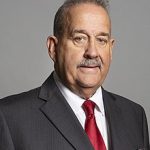
  • Anthony Mangnall – 2023 Speech on the Procurement Bill

    Anthony Mangnall – 2023 Speech on the Procurement Bill

    The speech made by Anthony Mangnall, the Conservative MP for Totnes, in the House of Commons on 9 January 2023.

    I congratulate the hon. Member for City of Chester (Samantha Dixon) on her fantastic maiden speech. I wish I could have delivered mine with the same level of confidence. She gave us a rapid tour through the history of her city and expressed her desire for it to be a hotspot for tourists from across the country; she will certainly find many colleagues across the House to support her in that endeavour. I wish her luck in this place.

    It is an absolute pleasure to follow my friend the hon. Member for Birkenhead (Mick Whitley), a fellow member of the International Trade Committee. I would like to make a few remarks about trade and ask for some clarity. I agree with him about the necessity of harnessing the power of public procurement and using it to the advantage of businesses of all sizes across the country. I might also point out that it has huge value in the free trade agreements that this country is signing. Global Britain is about signing new trade agreements. The Trade (Australia and New Zealand) Bill, which is working its way through the other place, deals with the very issue of procurement. It offers new opportunities not only for other countries to bid into our system, where we wish them to do so, but for our own businesses, large and small, to bid into procurement programmes around the world. Importantly, the more practised they are with our systems, the more accustomed they will be to foreign programmes and procurement processes.

    A lot of Opposition Members have made comments about national security and asked why bigger companies are not doing more in the UK to build our defence systems. Helpfully, I hope, I might just point out that if we include SMEs—there is a very large contingent of small and medium-sized enterprises in the defence sector, and the Bill is about helping SMEs—we are thereby helping small businesses in the defence sector to build the systems that we need in this country to keep us safe and protected.

    It is essential to be aware that the Bill, in its entirety, also creates a platform to exclude businesses that have previously performed badly. It gives authorities the opportunity, when looking at future contracts, to say, “These businesses have not performed—we are therefore able to exclude them.”

    Much has been made of the social value point, and I think we have to be careful in this regard. If we are too precise, we will block out businesses; we will encourage bigger businesses that can throw more money at the issue, and exclude the very small businesses that we want to be able to help through the Bill.

    I welcome the Bill because it is trying to achieve something that needs to be achieved: reducing bureaucracy. It seeks to repeal the Utilities Contracts Regulations 2016, the Public Contracts Regulations 2015, the Concession Contracts Regulations 2016, and the Defence and Security Public Contracts Regulations 2011. It is truly a wonderful day when we see a Government actually taking away pieces of legislation and trying to introduce new, streamlined laws that will help small businesses. Indeed, the Government are going even further: 350 individual regulations from EU directives are to be repealed. The Bill will make it simpler and easier for businesses of all sizes throughout the United Kingdom to bid in through a single, uniform framework for public procurement. That is its core and essence.

    However, I have a few questions for the Minister. Are we making the public bidding process understandable to small and medium-sized businesses while also protecting the taxpayer, and will we be providing the national and local services that will ensure that procurement projects and processes are delivered? With that in mind, may I ask—in the context of clause 27 and the other clauses relating to exclusions, including clause 29, which concerns national security—what impact the Modern Slavery Act 2015 would have on the Bill, in respect of clause 65? Would Huawei, which has already been mentioned, be placed immediately on the debarment list? My hon. Friend the Member for Rutland and Melton (Alicia Kearns) referred to Hikvision. Would it be on the list as well, given the evidence that has been presented across the western world about its engagement in relation to the Uyghurs? What is the timeline for the exclusion of businesses that are put on the debarment list?

    I would also like some clarification on clause 63. We talk about the speed of appeal and how we might put a business on the debarment list, but what happens if there is an ongoing investigation of a business while a local authority tender is out there, and the local authority decides to choose a business that is under investigation by the Government, by a Minister or by an authority, and has yet to preside over that issue? Would the local authority be made aware of the ongoing investigation, and would there be an impact on the tendering process if the business could not be given access to what was going on?

    I think that clarification of those issues would provide a small amount of extra reassurance. Introducing a centralised system of information about businesses that have performed well, making local and other authorities aware that businesses have been debarred, is clearly sensible, but what provisions are there to prevent companies from renaming themselves and coming back for a second bite at the cherry, perhaps with a different local authority or a different individual at the head of the company? That is another small point that I think requires clarification.

    I have already mentioned our signing of the landmark Australia and New Zealand trade deals, which open new markets for businesses around the world. Following the point made by my hon. Friend the Member for Isle of Wight (Bob Seely) about China, may I ask whether any consideration has been given to excluding non-signatories to the World Trade Organisation’s agreement on Government procurement? Given that that may shake the Government a little and cause them a bit of fear because it may exclude some more friendly countries—other than China—perhaps we should consider excluding countries that have not signed the agreement, perhaps those with whom we have not signed free trade agreements. That would allow us a way through without our offending any countries with which we have signed, or wish to sign, free trade agreements.

    The Bill presents us with a huge opportunity to sign new trade deals and use them to advance British businesses at home and abroad, but also to consider how we can get locally produced food into our schools and hospitals, and how we can provide smaller, tailored contracts to help people boost their businesses and ensure that there is value for money. I welcome the centralisation, I welcome the structure, I welcome the repeals, I welcome the opportunity for SMEs, and I welcome the transparency that the Bill provides. If we can get this right, we can cut the Gordian knot that has been procurement in this country and, once and for all, create a streamlined system that will deliver value for money and opportunity for businesses of all sizes.

  • Mick Whitley – 2023 Speech on the Procurement Bill

    Mick Whitley – 2023 Speech on the Procurement Bill

    The speech made by Mick Whitley, the Labour MP for Birkenhead, in the House of Commons on 9 January 2023.

    I commend my hon. Friend the Member for City of Chester (Samantha Dixon). I hope her nerves have settled after an excellent speech. I thank all my hon. Friends for their eloquent contributions to today’s debate. I hope the Minister recognises there is a real appetite on the Labour Benches to work constructively with the Government on this issue.

    Colleagues have rightly drawn attention to the ways in which the Bill risks enshrining in law the kind of cronyism we saw run wild during the pandemic. In the short time available to me, however, I want to speak specifically to the issue of social value and how recent developments in my constituency illustrate the urgent need for reform of our broken procurement regime.

    When metro Mayor Steve Rotheram announced that the Liverpool city region combined authority would be commissioning the first new Mersey ferry in over 60 years, there was a widespread belief that it could only be built at Cammell Laird shipyards in my constituency of Birkenhead. What could be more fitting than for such an iconic Merseyside institution to be built on the banks of the Mersey itself? And what a difference the multimillion-pound contract would have made to the lives of my constituents, securing high-skilled work for years to come and guaranteeing additional investment in skills and training.

    But soon enough those hopes were sunk by the cold reality of today’s procurement landscape. Cammell Laird could not compete on price against the likes of multinational giants like Damen. No matter how much the metro Mayor might have wanted to see the Ferry built in its entirety on Merseyside, he found his hands tied by onerous procurement rules enforced by central Government. As a result, the construction of the ferry is now set to be split between Cammell Laird and a Damen shipyard in the Balkans, with much of the most high-value labour likely to be offshored abroad.

    My constituents were badly let down by a failed procurement regime that failed to take wider social, economic and environmental considerations properly into account. The news, only a week later, that the Ministry of Defence had awarded the contract for the new fleet solid support ships to a Spanish-led consortium made the blow even harder to bear.

    Ministers have stated time and again that they intend to reaffirm value for money as the foundational principle of their procurement strategy. No one in this House is arguing for anything other than delivering the highest value for taxpayers, but that must also mean recognising the extraordinary potential for public procurement—which accounts for £1 in every £3 that the Government spend—to promote British businesses, boost job creation and drive investment in communities such as Birkenhead. For too long, communities across the country have missed out on the benefits of billions of pounds of public spending: one in six procurement contracts are now awarded to companies with links to tax havens, while the number of SMEs winning Government contracts is falling year on year.

    This Bill was an opportunity to put right the mistakes of the past. Ministers had the chance to strengthen the Public Services (Social Value) Act 2012, give contracting authorities the flexibility they need to do their best by the communities they serve, and enshrine social value at the very heart of a new, progressive procurement regime. But there is not a single mention of social value in the Bill. Instead, Ministers are promising to expand on their plans to maximise social value in a national procurement policy statement with no statutory footing. If the Government are as committed as they claim to be to supporting critical industries such as shipbuilding, why does the Bill not contain a social value strategy?

    The simple truth is that when it comes to supporting British businesses, the Bill is desperately lacking in ambition. For all the talk from Government Members about seizing post-Brexit opportunities, all the Bill really has to offer is more of the same—more of the giant multinationals treating this country as a cash cow while forcing home-grown British businesses out of the competition, and more public money piling up in tax havens while domestic industry struggles to survive one of the bleakest economic outlooks in recent history.

    I recognise the need for a major overhaul of our national procurement regime. In the hope of achieving meaningful improvements to the Bill, I will not vote against it this evening, but if the version that returns on Third Reading does as little for the communities and businesses that I represent, I will be forced to think again.

  • Harriett Baldwin – 2023 Speech on the Procurement Bill

    Harriett Baldwin – 2023 Speech on the Procurement Bill

    The speech made by Harriett Baldwin, the Conservative MP for West Worcestershire, in the House of Commons on 9 January 2023.

    It is an absolute honour to follow such an assured maiden speech from the hon. Member for City of Chester (Samantha Dixon). She spoke with great confidence and great experience of the subject at hand. She painted a beautiful picture of her city, and I am sure that that was the first of many excellent contributions that she will make to our debates.

    I put my name down to speak in the debate because it struck me that procurement is so tied to what is our biggest economic problem: the cost of living and the rate of inflation. The questions that I want the Minister to respond to in his closing remarks are about that rate of inflation and how the transparency and openness of the new procurement system can help by bringing down the price that the Government pay at all levels for the contracts they award.

    I draw the Minister’s attention to the situation in Ukraine—no, not the one that occupies the headlines, but a little-noticed development in 2016 that was very much supported at the time by the UK, along with Transparency International: the development of its procurement system, known as ProZorro. It is quite a remarkable platform. It is open source and shows every opportunity that exists in Ukraine to bid on contracts. It is completely open to citizens and civil society to look at all of the data on what is being tendered for and at what price companies are successful in bidding for those contracts. It is an extraordinary example of how public procurement can be transformed by openness and technology. If he has not done so already, I urge him to ask his officials if they could give him the opportunity to look through the ProZorro system used in Ukraine. It has done an enormous amount to reduce the cost of procurement over the years and to increase transparency for citizens.

    The second public economic priority that the Bill helps to support so much is innovation. The openness and transparency of the procurement system will give small businesses—this has been mentioned a few times in today’s debate—much more of an opportunity to see what there is in the pipeline of public procurement. Again, I wonder whether I can ask the Minister to reply on this point in his closing remarks. In terms of innovation, one of the factors that small businesses often cite to me—and to other colleagues, I am sure—is that when they put their tender in for a public procurement, very often they are required to provide at least three full years of financial records. That can act as a very insidious way of reducing the ability of newer businesses and more innovative businesses, and perhaps nimbler and less expensive businesses, to participate in public procurement. I urge him to think about how the qualification process might enable some of the start-ups we really want to succeed to get into the pipeline of public procurement as easily as possible.

    My finally question echoes some of the excellent points made by my right hon. Friend the Member for Rayleigh and Wickford (Mr Francois) on the importance of defence. I want to ask about the single-source procurement regulations, with which I know the Minister will be intimately familiar, and recognise the fact that in those procurements the Government are, obviously, dealing with one supplier. What thought has he given to then requiring the single-source supplier to procure more in a more innovative way from down the supply chain, and in a way that would not compromise national security, which of course has to be paramount?

    With those short remarks, may I say once again what an honour it has been to be in the Chamber for the maiden speech of the hon. Member for City of Chester?

  • Samantha Dixon – 2023 Maiden Speech in the House of Commons

    Samantha Dixon – 2023 Maiden Speech in the House of Commons

    The maiden speech made by Samantha Dixon, the Labour MP for the City of Chester, in the House of Commons on 9 January 2023.

    Thank you, Mr Speaker. I am genuinely delighted to be speaking in this important debate.

    As a former leader of Cheshire West and Chester Council, I am proud to have a strong record of putting the principles of social value at the heart of public spending. These values look for benefits to society, the economy and the environment. When they are aligned with good fiscal management, local people get more for their money.

    The Northgate development in Chester is a central regeneration project in the heart of Chester city centre. The council on which I have served since 2011 was the main driver for this exciting project. Indeed, I was proud to see the new public market open in November, with nearly half a million customers already through the door. In delivering this project, we have squeezed every last penny of value from every pound spent not just to deliver the project itself, but to deliver 435 weeks of apprenticeship opportunities, 13 education events, 12 work placements, 43 training weeks, 64 employment activities and more than £22 million-worth of expenditure in the local economy.

    On top of that, construction workers raised money for local homelessness charities; there were donations to the local food banks; Chester football club—a fan-owned, community club—had its car park upgraded; and many students from local schools and colleges gained valuable industry insight from being involved in a live and local construction project. Even the sandstone excavated from the drainage tunnel ended up being recycled in the rhinoceros enclosure at Chester zoo. This is how we do business in Chester. Social value is highly important and an opportunity to make, buy and sell more in Britain. Chester has shown that that makes a difference to local communities and can be done in the right way. These communities are at the heart of Chester’s identity and I am now honoured to represent them as their Member of Parliament.

    Chester has a long and complex history that attracts visitors and businesses to the city and makes it a fascinating and beautiful place to live. Chester was founded by the Romans in AD79, due to its strategic advantage given our geographic location on the border with Wales and on the banks of the River Dee. An integral historical feature which Cestrians use to this day is the city’s walls. Many places in Britain are walled but only Chester has a complete circuit. They are about 2 miles long and have over millennia been constantly altered, repaired and sometimes attacked. Indeed, as my hon. Friend the Member for Weaver Vale (Mike Amesbury) mentioned recently, “The only red wall in Chester is the Roman wall.”

    As an aside, a breach of the walls by parliamentarians during the siege of Chester in 1645 has been commemorated in Lego by our local blogger and champion of all things Cestrian, Tony Chester. His magnificent Lego display of Chester through the ages will soon be a key feature in the previously mentioned newly opened market.

    These days, our city is a thriving and vibrant place characterised by excellent hard-working retailers, traders, restaurateurs, publicans, and visitor attractions such as Chester zoo and the Deva Roman Experience, who are all committed to the future of our city. I am determined to help Chester to weather the current economic storm and make our city a top retail and tourism destination. This commitment is one of five I have made to the people of Chester that I intend to keep now I am here as their elected representative.

    I want to restore frequent, reliable buses and trains to keep our city connected to the wider country, and I want to return to neighbourhood policing with more officers on the beat in our communities. Most of all, I want to stand up for our city and end the cost living crisis which is badly hitting many people living in Chester.

    The River Dee, the reason why our city is where it is, has been well used over centuries, whether for industry, recreation or sport. Indeed, the river hosts the oldest rowing regatta in the world, celebrating its 290th anniversary this year. It is a busy and important part of our city and the reason I will be working so hard to end the practice of dumping raw sewage into it, as is currently permitted.

    In other sporting news, Chester has had a football club since 1885. Currently playing in the national league north, the club has always fulfilled an important role in our community. Since 2010, the club has been a supporter-owned co-operative with elected directors, hundreds of volunteers and thousands of members. Chester FC is currently enjoying some success under a talented young manager, Calum McIntyre. The club motto is “Our city. Our community. Our club”, and that is being realised through a set of principles and values based on a mission to create a successful team and bring wellbeing and cohesion to our city, and to do it without ever going into debt. The club reflects and is a prime example of the importance of social value; I wish the club continued success.

    I first visited the Houses of Parliament when I was a sixth-former at Christleton High School. The visit was hosted by Peter Morrison, the first member of Parliament for the City of Chester I can remember. His successor was Gyles Brandreth, whose candidacy, I recall, was announced on red nose day prior to the 1992 general election. His spell as the city’s MP was characterised by his good humour, something which continues today as he serves as chancellor of the University of Chester.

    In 1997, the people of Chester elected the city’s first ever woman Member of Parliament, Christine Russell. She served our city well for 13 years and continues to do so in many roles across the constituency. She remains a good friend and mentor to me. Her successor, Stephen Mosley, served the city for five years and contributed much to parliamentary life through his role on the Science and Technology Committee. My predecessor, Christian Matheson, was also widely acknowledged throughout the constituency for his hard work on behalf of many residents and stakeholders. I am honoured to follow in all of their footsteps.

    Chester, as beautiful, unique and historic as it is, has always masked significant levels of inequality. A commitment to improve the lives of others has been a thread throughout the years and the work of my predecessors.

    Our city has a popular and thriving university that sees students from across the globe choosing to come to study in Chester. Our university trains many of the nurses, midwives and healthcare professionals who serve our community so well in association with our local health trusts. Along with our excellent schools and their hard-working teachers, and our superb police officers and firefighters, as well as the first-rate officers of the council, Chester is served by many fine public servants.

    As we reach the tail end of winter, the struggles that our communities are facing are not easing. The current economic climate makes it more important than ever to create a transparent procurement system; one with social value and public interest at its heart and which will support suppliers who act ethically and create high-quality jobs.

    Chester was a pioneer for social value in that, 21 years ago, our city became the very first Fairtrade city in the country. I am proud that in our city we live and breathe the principles of social value. Most importantly, I am honoured to have been elected to serve the people of Chester, and I will work hard for them every day. I have lived in Chester for nearly all of my life. It is where my home is and where my heart is. I want the very best for my city, and I promise that this Chester woman will be a determined and dedicated public servant for those who voted for me and for those who did not. I will be an MP for all the people of Chester. I look forward to serving them here in this place.

  • Mark Francois – 2023 Speech on the Procurement Bill

    Mark Francois – 2023 Speech on the Procurement Bill

    The speech made by Mark Francois, the Conservative MP for Rayleigh and Wickford, in the House of Commons on 9 January 2023.

    As a former Defence Minister, I will confine my remarks to the Defence-related aspects of procurement, which feature multiple times in the Bill, particularly in parts 1, 2 and 4. The United Kingdom’s system of Defence procurement is broken. That is the considered opinion of the all-party Public Accounts Committee, on which I now serve, which concluded in its 2021 report, “Improving the performance of major defence equipment contracts”, that,

    “The Department’s system for delivering major equipment capabilities is broken and is repeatedly wasting taxpayers’ money.”

    The Government’s auditor, the Infrastructure and Projects Authority, audits all major infrastructure programmes from HS2 downwards. It produces its findings each summer, in which it grades each project on a traffic light or dashboard system. The definition of a red project is that,

    “Successful delivery of the project appears to be unachievable.”

    Amber projects are those where,

    “Successful delivery appears feasible but significant issues already exist”.

    In its latest report of July 2022, the IPA audited 52 of the largest MOD procurement programmes from Dreadnought downwards, which total more than £80 billion of British taxpayers’ money. Of those, nine projects were rated red or unachievable, 33 were amber where significant issues already exist, seven were classified on national security grounds, and only three were rated green, whereby,

    “Successful delivery of the project on time, budget and quality appears highly likely”.

    I submit to the House that a system where barely 6% of our new major Defence programmes are judged to be confidently on track is indeed a truly abysmal record and fully in keeping with the PAC’s verdict of a “broken” system.

    In a similar vein, in March 2021, the Defence Committee published a hard-hitting report, “Obsolescent and outgunned”, which highlighted that in two decades, the British Army has not successfully introduced a single new major armoured fighting vehicle into service. As it powerfully concluded:

    “This report reveals a woeful story of bureaucratic procrastination, military indecision, financial mismanagement and general ineptitude, which have continually bedevilled attempts to properly re-equip the British Army over the last two decades.”

    The biggest scandal in this sorry tale is that of the General Dynamics Ajax armoured reconnaissance vehicle which, after 10 years and the expenditure of over £4 billion of UK taxpayers’ money, has still not resulted in a single new vehicle entering frontline service, for which the MOD is even now unable to provide a definitive date. Even if it could, the future communication system on which the highly digitised Ajax would rely, called Morpheus, is still many more years from entering service. The lead contractor on the Morpheus evolve to open project is General Dynamics, the same prime contractor as for Ajax. Last year, the Defence Secretary commissioned Clive Sheldon KC to conduct an independent inquiry into the flow of information surrounding Ajax, including to Ministers, which is due to report very shortly. I suspect it may well prove uncomfortable reading for some of those who were working on the Ajax programme.

    To take another example of a red programme, it has taken nearly seven years to integrate an airborne early warning radar into a Merlin helicopter to provide air defence coverage for our aircraft carriers—a project called Crowsnest. In stark contrast, during the 1982 Falklands war, we integrated an earlier version of the same radar into a Sea King helicopter in just over three months. This is just one more example of how ponderous, bureaucratic and inefficient our procurement system has now become.

    One associated area that is also desperately in need of reform is the procurement of the maintenance of accommodation for service personnel and their families. The future defence infrastructure services—FDIS—contract, which went live earlier this year, is an utter shambles. Complaints about mould, lack of heating and multiple contractor visits, which still failed to carry out basic repairs, such as fixing broken boilers, have appeared in numerous media outlets in recent months. We cannot carry on like this. Our service personnel and their families deserve better. I understand that Defence Ministers may now genuinely be considering terminating the FDIS contract and seeking alternative arrangements. I co-authored a report for a previous Prime Minister on military retention—entitled “Stick or Twist?”—three years ago, in which we suggested establishing a bespoke housing association instead. Whatever solution Ministers now finally adopt, I earnestly hope they will stop reinforcing failure via FDIS and opt for something successful instead.

    In summary, the Public Accounts Committee was right: our system of defence procurement is broken, and it is going to take much more than this Bill to fix it. With a war under way in Ukraine and the Government’s integrated review being updated as a result, there is now an opportunity to put right these weaknesses in our defence procurement process, which are deep-seated and have taken place, it must be said, under Governments of both colours for many years. We certainly need to increase our defence spending, but we also need to spend what we allocate for defence much more efficiently as well. This system is crying out for an extremely thorough analysis to be subsequently followed by dynamic reform. We cannot let this go on much longer. Our national security depends on it, and if hon. Members do not believe me, then perhaps ask a Ukrainian instead.

  • Nick Smith – 2023 Speech on the Procurement Bill

    Nick Smith – 2023 Speech on the Procurement Bill

    The speech made by Nick Smith, the Labour MP for Blaenau Gwent, in the House of Commons on 9 January 2023.

    I welcome this Bill’s aims of openness, effectiveness and transparency. A third of public expenditure—£300 billion—goes on public procurement, so we must get this right. Unfortunately, though, the Government’s record here has been undermined by the PPE scandal. I do understand that exposure to fraud was a risk during the panic of the pandemic and that the global PPE market was highly competitive. However, big mistakes were made, and billions have been wasted.

    The National Audit Office has done brilliant work on tracking the Government’s covid spending. Its investigation into the management of covid contracts in March 2022 found that 46 of the 115 contracts awarded to the Government’s VIP lane did not go through the Government’s due diligence process. That meant that the Department for Health and Social Care could not fully understand the contract management risks it was exposing itself to. Therefore, the sheer scale of Government waste is not just explained by global markets pressures; the UK Government’s failures must also be acknowledged. After all, the PPE scandal has seen £4 billion of taxpayers’ money wasted on unusable equipment and now £2.6 billion-worth of disputed contracts.

    I am specifically concerned about contracts awarded to Unispace Global Ltd, which won more than £600 million of PPE contracts during the pandemic. It is extremely difficult to follow the financial paper trail: a look at its manoeuvres, and the chopping and changing of its directors, raises big questions. For example, payments from the Department of Health and Social Care were made to Unispace Global Ltd, but in 2021, it transferred its contracts to a new company, Unispace Health Products LLP, which now trades as Sante Global LLP. Private Eye says, however, that the companies’ accounts do not feature anywhere near the £600 million paid to them, which begs the question: why this chicanery? Will the Bill deal with such shenanigans?

    I welcome the introduction of a single central Cabinet Office online platform—that is quite a mouthful—but it should go further and include a publicly accessible dashboard for Government contracts. In that way, we can track delivery and performance, make contractors truly accountable to the people, and close the loopholes that profiteers enjoyed. The British people also deserve to know the profits, commissions, dividends and big bosses’ bonuses being made on the back of public money.

    We need measures that financially penalise those who benefited from the public contractors’ PPE super-profits, but when a company changes its identity multiple times, that is made much harder, and the other route—recovering money through the courts—is very expensive and hugely time consuming. What measures will the Government bring forward to deal with those PPE profiteers and their like? We need a Bill that mandates open accounting of public contracts and shines a light on the vultures that prey on the public purse. We need a Bill that allows us to properly follow the money.

  • Alicia Kearns – 2023 Speech on the Procurement Bill

    Alicia Kearns – 2023 Speech on the Procurement Bill

    The speech made by Alicia Kearns, the Conservative MP for Rutland and Melton, in the House of Commons on 9 January 2023.

    I welcome much of this Bill, in particular its support for small and medium-sized enterprises, but I wish to focus my comments on national security concerns. Geopolitical and geo-economic competition has upended our traditional supply chains, while the actions of hostile states who are industrialising path dependency require us to think more strategically about public procurement. Equipment used by our police forces, hospitals, Departments and local councils are providing hostile states with a back door into our security and forcing dependency on these malign actors and the states who produce them.

    As the Minister rightly pointed out from the Dispatch Box, this Bill gives us the opportunity to meaningfully put resilience at the heart of this Government’s effort. We cannot risk insufficient action now because it will hurt us in the long term, as exfiltration is far more costly and complicated than putting in place the right measures now.

    For too long, we have allowed the public sector to outsource basic components that make up our everyday security to companies and countries with malign intent. All of us will recall the debates about stripping Huawei from our 5G telecoms network, which took too long but was the right thing to do. The problem is, we face Huawei-level decisions on a range of security measures and it relies on MPs becoming aware of these companies and this risk for there to be a meaningful debate about it, which cannot be the right way to deal with it.

    There are tens of examples that could be raised, whether it is DJI drones, which are used by our police forces across Britain, or Hytera body cameras, which film what police officers can see. The likelihood is that what is seen by every police officer entering the home of a constituent in Rutland and Melton could be sent back to China. The risk is so strong that Motorola has created technology to intercept that technology and prevent the data from being sent back. My priority is protecting the data of British nationals—our faces, our gaits, our walks, how we use our mouths and how we communicate—because China wants this data. That is why it is buying up gay dating apps and why it owns TikTok. It is our data that will allow it to have supremacy over us as we go forward and make us vulnerable. The Chinese Communist party is seeking to build a tech totalitarian state, and that requires the data of those around the world. At the moment, British taxpayers’ data and money is enabling that.

    We have to update the rules. Over the weekend, there was a story about tracking devices found hidden within Government cars. Our data is important because it reveals not just the locations we go to in our cars, but our friends and networks, our vulnerabilities, habits and activities, which allows us to be threatened, blackmailed, undermined or tracked. If these cellular IoT nodes—called SIM cards in the media—were duplicitously installed, then that is CCP espionage. It is more likely that these are standard technologies that are installed in all cars. That shows why this Bill is so important, and why we need national security considerations. At the moment, we all have constituents driving around with these cellular IoT modules in their cars; any of those individuals could be pinpointed if they drove near a secure site and were then tracked by the Chinese Government. The Chinese Communist party would then know where they live, how they live their lives and what they do, and they would become vulnerable.

    The Chinese Government could quite easily work out who the Prime Minister’s security team is by looking at the cars that travel out of No. 10 and then go back to the Prime Minister’s house all the time. They could then track those security officers to where they are doing recces for future visits, and then they will know where our Prime Minister is travelling to. They could do that to any of us if they wanted to make us vulnerable.

    The problem is that 50% of all cellular IoT modules are made by three companies: Quectel, Fibocom and China Mobile. These are three Chinese companies that cannot be trusted. There are alternatives, but businesses are choosing to save pennies on the pound in order to protect their businesses rather than do what is right, which is making sure that small tools such as these modules are removed, thereby protecting the data of British nationals.

    There is, without question, a balance to be struck within British procurement. We have to get value for money for taxpayers. However, the purchasing of cheaper equipment—quite often state-subsidised by hostile powers—is a dangerous false economy because it produces that path dependency that I have set out.

    When the Cabinet Office last year rightly advised public bodies to sever contracts with Russian and Belarusian suppliers, the lack of legal provisions to do so meant that any meaningful attempt would actually result in a serious breach of UK law. I ask Ministers to rectify that when they look at the Bill.

    The flaws in our procurement system severely undermine not only our security at home, but our ability to stand up for human rights around the globe. The Foreign Affairs Committee has found that the same Hikvision cameras that guard our council buildings monitor and enable Uyghur internment camps where we know that genocide is being industrialised. It is morally unacceptable that we choose to use a surveillance system that actively racially profiles Uyghurs within our own systems. It is tantamount to facilitating genocide, because we are funding the Chinese Government and enabling them to continue to do what they do. We know that they are guilty, yet we are saying that we will remove those cameras only from sensitive sites. It should be from all sites, particularly when there are alternatives.

    My asks of the Government are as follows. I met with Cabinet Office officials last year, and again this morning with the Parliamentary Secretary, Cabinet Office, my hon. Friend the Member for Brentwood and Ongar (Alex Burghart)—I am grateful for his time—and we need clarification. First, on the debarment list that is created to exclude suppliers from procurement contracts, with a procurement review unit to lead investigations, who will have ministerial discretion over who appears on the list? Will we have proactive powers to hunt down these companies to ensure they are on the list, or are we going to wait for MPs to have the information handed to them so that they can stand up and raise it?

    Secondly, we must ensure we do not end up in a relentless whack-a-mole trying to hunt down the companies responsible for such things. We need to focus on the components within sensitive industries or sensitive items, and to ensure that any public body procuring such components or companies within relevant industries must come to someone for a second review. That means we are not attacking a specific country and saying China’s products are bad or saying that certain companies are awful; we are doing due diligence in sensitive areas. That is why we need a SAGE-style committee on public procurement specifically looking at national security.

    Thirdly, has the Secretary of State drawn up a list of priority sectors that we can deal with when the Bill passes into law? Finally, what assurances can the Secretary of State provide for how local authorities will be able to check with the Government whether a provider is on the debarment list? At the moment I have local authorities from around the countries writing to me saying, “Alicia Kearns, can you please give me advice on whether or not we as the local council should procure from this company?” That cannot be the way we do this. We must ensure local government is not the entry point for hostile states.

    Finally, on supply chains, public authorities need to be able to investigate, and we must ensure that this goes high enough up the chain. Canadian Solar is looking to build a solar plant in my constituency. It sounds lovely—“Canadian Solar? What a great company”—but when we actually look into it, it is GCL-Poly, a Chinese-owned, Chinese-run company that is complicit in Uyghur genocide. We must ensure that the burden to investigate is properly addressed.

    On that point about human rights and genocide, I recommend to the Minister that we look at the International Criminal Court’s Rome statute so that, again, we have explicit, grounded-in-law ways in which to determine whether certain countries should not be allowed to provide things to us, so that we are not looking to make complicated determinations of genocide. Again, that is where a SAGE-style committee could come in use.

    All in all, I urge the Government to seize the initiative. There is so much we could do on national security that I cannot fit into seven minutes, but my door is open for further discussions. I hope that my speech sets out in brief just some of the asks. This Bill could be transformational for protecting our people and their data in the long term and for protecting our children’s futures.

  • Kirsty Blackman – 2023 Speech on the Procurement Bill

    Kirsty Blackman – 2023 Speech on the Procurement Bill

    The speech made by Kirsty Blackman, the SNP MP for Aberdeen North, in the House of Commons on 9 January 2023.

    Happy new year to you, Madam Deputy Speaker, and to everyone in the Chamber. Thank you for calling me to speak on Second Reading of the Procurement Bill.

    I will take the tiniest bit of leeway at the beginning of my speech to thank my predecessor as the SNP Cabinet Office spokesperson, my hon. Friend the Member for Argyll and Bute (Brendan O’Hara), for his hard work in this role. He does not leave an easy gap to fill as he moves on to lead for us on international development, but I will do my best to learn as quickly as possible, and what better way than with the Second Reading of the Procurement Bill and the subsequent Bill Committee. That is not a joke—the Minister will be totally fed up with me by the time the Bill Committee has ended.

    Both the SNP Westminster group and the Scottish Government have significant concerns about the content of the Bill as currently written. I am disappointed by how the Paymaster General put forward his views on the Scottish Government’s action, given that constructive discussion is going on about how best to amend the Bill. I hope he is going into those discussions in a more constructive manner than it sounded like from his tone at the Dispatch Box when he spoke about the views of the Scottish Government. Corrections need to be made before the legislation can be considered acceptable, because the Bill undermines the devolution settlement.

    We have not tabled a reasoned amendment to the Bill on the basis that the Scottish Government hope they can resolve the issues with the UK Government. However, should the UK Government fail to fix the Bill, we absolutely will oppose the legislation at future stages. The Bill seeks to confer a power exercisable concurrently by UK and Scottish Ministers to implement the Government procurement chapters of the agreements with Australia and New Zealand by secondary legislation. Although the negotiation of international agreements might be a reserved matter, their implementation in devolved areas, such as Government procurement, is a devolved matter.

    The correct constitutional solution would be to amend the Bill to grant the implementation powers solely to Scottish Ministers in Scotland—obviously not in the rest of the UK. If the UK Government refuse to make that concession, at the very least the Bill must be amended to require the consent of Scottish Ministers when UK Ministers act in devolved areas to implement international agreements. It is a vital issue of principle. Devolution must not be undermined every time a sitting Westminster Government fancy doing so.

    The Scottish Government are working to resolve these issues with the UK Government, and that is why we have not tabled a reasoned amendment to reject the Bill, but I and my colleagues urge the UK Government to continue that work. They often claim that they want to work with the Scottish Government, and we want to ensure that this Bill is not added to the litany of devolution-undermining legislation that has been put through since Brexit.

    We have further concerns about the Bill, and I hope the Minister will accept them in the constructive spirit in which they are meant. We believe that the UK Government must ensure that supporting environmental objectives is clearly and explicitly included in the Bill’s objectives. Those objectives should be compatible with the Scottish Government’s more ambitious climate change reduction targets. If the UK Government are to act in such a way on reserved matters, they need to take account of the fact that the devolved legislatures have different and more ambitious climate change targets.

    Robin Millar (Aberconwy) (Con)

    The hon. Lady referenced the devolution agreement, and she has just mentioned reserved matters. Can she clarify whether she is referring to the Scotland Act 1998 and devolution as set out within its terms?

    Kirsty Blackman

    Yes, I am referring to the devolution settlement and how devolution works. Within the Scotland Act, there are matters that are the competence of the Scottish Government and ones that are the competence of the UK Government. In that regard, the implementation of international agreements in relation to how public procurement works is a matter for the devolved legislature, and we would prefer that the UK Government recognised that, rather than giving a power in this Bill that could overrule that.

    The Bill includes a discretionary exclusion group for environmental misconduct, but I am not clear why that exclusion should be discretionary. The UK Government are failing time after time to embed environmental objectives in legislation. They refused to do so with the Subsidy Control Act 2022 or with the creation of the Advanced Research and Invention Agency, despite the Opposition pushing them to include it. It is as if they are keen to have big headlines on climate change targets, but not actually to embed them and do the actual work, and not to put those targets where it matters, which is explicitly in legislation that this place is putting forward, without exclusions and without discretionary rules. It should be embedded in every single thing we are doing, because it is the most important issue for this generation and for future generations. The Bill must explicitly commit to taking environmental considerations into account when awarding contracts, and that should be a core consideration, not a pointless box-ticking exercise.

    We welcome the retention in the Bill of the principles that underpin EU procurement rules: transparency, equal treatment, non-discrimination and proportionality. However, having the principles included in the Bill is utterly meaningless if they are not upheld. It is vital that the principles are practised. As was mentioned by the right hon. Member for Ashton-under-Lyne (Angela Rayner), the UK Government’s shambolic handling of the covid contracts is a stark reminder of the danger of not upholding these principles. Transparency International’s report on the public contracts awarded during the pandemic noted that critical safeguards to prevent corruption were suspended “without adequate justification” during the pandemic procurement processes. It also found “systemic bias” towards those with connections to the UK Government. The rush to try to get more PPE has already been mentioned. It was vital that PPE was procured; the issue is how that was done, which explicitly favoured those who had close links to the UK Government. That is not how it should have been taken forward.

    We need measures in the Bill to ensure that the UK Government cannot unilaterally decide to suspend the safeguards and principles that are in place. The horrendous nepotistic waste of taxpayers’ money should not have happened once, and we absolutely cannot allow it to happen again. The opportunity should have been taken to include the measures put forward by my hon. Friend the Member for Midlothian (Owen Thompson) in his Ministerial Interests (Emergency Powers) Bill.

    Lastly, but no less importantly, the UK Government should take this opportunity to ban malicious actors and organisations involved in human rights abuses from the supply chain. During the Bill’s passage in the other place, several peers tabled amendments that sought to cut companies responsible for or complicit in slavery, genocide and crimes against humanity out of the supply chain. That is a noble principle and it should be adopted regardless of circumstances. It is unfortunately necessary that this needs to be explicitly included, as products from companies with horrific records are widespread through UK procurement chains.

    The UK Government have shown that they can, after delaying, dithering and being publicly shamed, remove Huawei from the UK’s telecommunications infrastructure, and there is no reason why they cannot do the same with other companies, such as Hikvision, which is directly involved in the Chinese Government’s detention of Uyghur Muslims. More than a million cameras from Hikvision are present in the UK and they are used by as many as 61% of public bodies. The US Government blacklisted it in 2019; the UK Government have not yet taken comprehensive action against this company, despite making clear that they are aware of the issue. The SNP would like to commit to working with others across the House who seek to protect the supply chain from harmful actors and ensure that public procurement does not work to enrich those who profit from crimes against humanity.

    I look forward to the Public Bill Committee—I really do—and I hope we can hear evidence from those who are expert in public procurement. I have no doubt that we will table amendments to ensure that the Bill respects devolution, that human rights are protected and that environmental priorities are actually prioritised.

  • PRESS RELEASE : Foreign Secretary in Belfast as progress is made on NI Protocol [January 2023]

    PRESS RELEASE : Foreign Secretary in Belfast as progress is made on NI Protocol [January 2023]

    The press release issued by the Foreign Office on 11 January 2023.

    • Foreign Secretary James Cleverly is in Belfast to meet political and business leaders, to discuss the issues created by the Northern Ireland Protocol
    • Northern Ireland Secretary Chris Heaton-Harris will also accompany the Foreign Secretary, as they listen to concerns of those effected most by the Northern Ireland Protocol
    • Visit follows an agreement with the EU on customs data-sharing

    Today (Wednesday 11 January) the Foreign Secretary, James Cleverly, and Northern Ireland Secretary, Chris Heaton-Harris, will meet Northern Ireland’s party leaders in Belfast. They will discuss the impact of the Northern Ireland Protocol on the ground, as well as the Government’s desire to see an end to the political stalemate in Stormont.

    The Ministers will also meet business groups to understand the real-world impact the Protocol is having on businesses and the public around trade disruption. These discussions will help inform ongoing talks between the UK government and the EU.

    This visit will include a tour of Saintfield Garden Centre and Nursery, to hear about the specific difficulties caused by the Protocol, such as restrictions on the movement of plants and seeds. This includes how goods that have been relied on for generations in Northern Ireland, like seed potatoes and other native British plants and trees, are currently unable to enter Northern Ireland from Great Britain.

    Speaking at Erskine House James Cleverly, the Foreign Secretary, said:

    My preference is for a negotiated solution, but the UK’s priority is protecting the Belfast (Good Friday) Agreement and preserving political stability in Northern Ireland.

    I am listening to the concerns of people and businesses in Northern Ireland and am keenly aware that the current situation isn’t working. We need to address those issues with the Protocol that risk and undermine the place of NI in the UK

    Chris Heaton-Harris, Secretary of State for Northern Ireland, commented:

    A solution to the problems created by the Northern Ireland Protocol is clearly desired by all across business and in government. As the Foreign Secretary has said, the government is committed to resolving these problems as soon as possible.

    I am firmly of the belief too that what people in Northern Ireland want most is to see their elected politicians back at work. Accountable political leadership is fundamental to secure a sustainable future for all in NI.

    The Foreign Secretary is leading discussions between the UK and EU to resolve the issues caused by the Protocol and agree a negotiated solution.

    This visit follows his meeting with Vice President of the European Commission, Maroš Šefčovič, on Monday 9 January, where they reached an agreement on the way forward regarding the EU’s access to UK IT systems that provide live information about what goods are moving across from Great Britain to Northern Ireland.

    The agreement is an important prerequisite for building trust and provides a basis for further discussions with the EU on the Northern Ireland Protocol.

    The UK is committed to finding a solution to the Protocol that protects the Belfast (Good Friday) Agreement and supports political stability in Northern Ireland.