Tag: 2023

  • Anthony Mangnall – 2023 Speech on Lifeboat Services – Search and Rescue

    Anthony Mangnall – 2023 Speech on Lifeboat Services – Search and Rescue

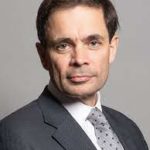
    The speech made by Anthony Mangnall, the Conservative MP for Totnes, in Westminster Hall, House of Commons on 10 January 2023.

    It is a pleasure to serve under your chairmanship, Mr Davies. I am delighted to take part in this debate for the second year in a row. I start by congratulating my hon. Friend and neighbour, the hon. Member for Torbay (Kevin Foster), for securing this debate. We are of one heart and one mind when it comes to our coastline and making sure that we protect all those who are on the coastline or at sea, as well as supporting and promoting the important work that our UK search and rescue organisations do across the country.

    I am always surprised that we call this a debate, because it is not really a debate. It is a moment for us to congratulate, recognise and thank those who put themselves in harm’s way to save others, to look after them and to promote the important work that, across the country, is often overlooked. I declare my interest, as I am the founder of the National Independent Lifeboat Association, which many Members have kindly mentioned.

    Jonathan Edwards (Carmarthen East and Dinefwr) (Ind)

    I thank the hon. Gentleman for his work in setting up the charity. I wish to inform him that my own independent lifeboat association in Ferryside will be joining the organisation soon. I also take the opportunity to thank it for all the work they undertake in the Carmarthen bay area.

    Anthony Mangnall

    I thank the hon. Gentleman for that intervention. It is particularly welcome news that his independent lifeboat is joining the organisation. As has been said, there are more than 50 independent lifeboat stations and 30 have joined the association. We would like it to be a full complement, so that every independent lifeboat station across the country has the recognition that it needs. Hon. Members across the Chamber have made a point about the important work of the RNLI. It is essential that we recognise the important apolitical nature of the RNLI and the fact that it does not ask for Government funding. The hundreds of RNLI lifeboat stations do fantastic work by raising their own money and through bequests, as well as by working with volunteers, who do an extraordinary job. The tales of their heroism are what make many of our coastal communities aware of the work of those lifeboat stations, which are part of the fabric of our community.

    We are aware of the scale of UK search and rescue, which covers 2 million square miles of air, land and sea of and brings together multiple Government Departments. It brings together air ambulances, the National Coastwatch Institution, the RNLI and NILA. In my constituency, I am fortunate to have Torbay RNLI station, which is based in Brixham, Dart RNLI, which is in Dartmouth, and Salcombe RNLI which, unsurprisingly, is in Salcombe. The three stations cover more than 80 miles of coastline and have saved countless lives over the years.

    The RNLI’s fantastic model has worked since 1824, saving an estimated 143,000 lives. Its work is unbelievably essential and, as the hon. Member for Caithness, Sutherland and Easter Ross (Jamie Stone) said, it will only increase over the coming years. We need to ensure that that model is recognised, supported and promoted wherever we go. We also have to be extremely clear that volunteers often work day jobs as well and that their employers need to be thanked for allowing them to take on the work.

    I came to the position of founder of NILA because I have an independent lifeboat station in my constituency, in Hope Cove. Far from trying to compete with the RNLI, it works in co-operation with it; they work together to help people in danger at sea. It became clear to me that many of the independent lifeboat stations were not getting the attention or awareness that other UK search and rescue organisations to which people were donating were attracting, and that we should try and do something to promote them.

    The result was that we formed NILA by contacting the 50 independent lifeboat stations and having a conversation about how we could secure greater recognition for their work and ensure that we were not taking away any funding abilities from them. Each independent lifeboat station is still self-funded, but we are able to ensure that they have access to the rescue boat code, the Department for Transport, the Home Office if necessary, best practices, and training procedures; they can also buy equipment collectively if necessary.

    The whole purpose was not to hurt or harm those services, but to make their operations easier. I am really pleased to say that, since we had the idea, we have managed to create it. We have had the association registered with the Charity Commission. It has been in regular conversations with the Department for Transport, which has given it recognition. It has a chairman, Neil Dalton, and a vice chairman, Sean McCarry. The secretary is Wayne Monks and the treasurer is David Harvey. Together, they are creating the management structure that is going to be able to deliver for the independent lifeboat stations, not just now, but in future years, and to protect those independent lifeboat stations that do such fantastic work.

    I will explain what we are asking for and what we would like to hear from the Minister. The first thing we ask for, as has been mentioned, is recognition through the rescue boat code. We understand that the Maritime and Coastguard Agency is going through the process of reviewing the rescue boat code, so we would like to ask whether it can engage with independent lifeboats to ensure that, when the rescue boat code is revamped and rewritten, that is done so in conjunction with independent lifeboats and that they are using it to make sure it is most effective.

    Secondly, we would like some clarification over VAT relief and fuel duty. I know that there is guidance out there. It is not simple; it needs to be simplified for the RNLI and independent lifeboats. The third thing is official recognition for NILA. We are waiting—the application has gone in through UK search and rescue. I would be grateful for an update on how quickly that will happen. The fourth point—I have got two more points and then I will sit down—is about support for the campaign to promote independent lifeboats and raise public awareness. There is continued support from MCA for NILA to join UKSAR’s operators group. Lastly, I call for the reintroduction of the rescue boat grant fund, which is specifically for the independents. A £5 million fund was launched. It finished in 2020. That fund was essential in helping those independent lifeboats. It was not a huge amount of money, but it made all the difference to those independent lifeboat stations.

    I will end with this. We are very lucky across our coastal communities and in our inshore areas. We owe those people a debt of gratitude and of thanks. I hope we can hold an annual event in Parliament to promote the work of the RNLI and NILA.

  • PRESS RELEASE : British Royal Navy ship HMS TAMAR visits Bangladesh [January 2023]

    PRESS RELEASE : British Royal Navy ship HMS TAMAR visits Bangladesh [January 2023]

    The press release issued by the Ministry of Defence on 16 January 2023.

    The deployment of HMS TAMAR emphasises the UK’s commitment to defence cooperation with Bangladesh, and to an open and resilient international order for open societies and economies to flourish.

    On 15 January 2023, the Royal Navy’s Offshore Patrol Vessel HMS TAMAR has arrived at the naval base in Chattogram, Bangladesh. The vessel was received by Chief Staff Officer to Commander Chattogram Naval Area, Capt M Faizul Hoque, (C), psc, BN. The deployment of HMS TAMAR emphasises the UK’s commitment to defence cooperation with Bangladesh, and to an open and resilient international order for open societies and economies to flourish.

    During the visit, HMS TAMAR and her crew will engage in a series of events with the Bangladesh Navy and the local administration in Chattogram to maximise bilateral relations benefitting both countries’ military, trade, development and political alliances.

    Commanding Officer of HMS TAMAR Commander Teilo Elliot-Smith, Royal Navy said: “It is a complete honour to bring HMS TAMAR to Bangladesh. Apart from the cultural wonder of Chittagong I’m excited to better understand maritime security priorities in the Bay of Bengal. Our welcome was spectacular and it’s clear we have much in common.”

    British High Commissioner to Bangladesh Robert Chatterton Dickson said: “I am delighted that HMS TAMAR is visiting Bangladesh, the second Royal Navy ship to come to Chattogram in eighteen months, and I am very grateful to the Bangladesh Navy for their warm welcome. This visit is another example of the UK’s long history of defence cooperation with Bangladesh, especially in the maritime domain. As part of the Indo Pacific focus to our foreign policy we are committed to further deepening defence and naval cooperation with Bangladesh.”

    It is worth mentioning that a significant number of Bangladesh Navy personnel have trained alongside the Royal Navy in the UK, including at the Royal College of Defence Studies; on International Principal Warfare Courses, Royal Navy Young Officer Courses, Advance Marine Engineering Courses, Marine Engineering Application and Management Courses, International Midshipman Courses, and Underwater Medicine Courses; and through the UK government’s prestigious Chevening Scholarship.

  • James Bevan – 2023 Speech on Tackling Climate Change

    James Bevan – 2023 Speech on Tackling Climate Change

    The speech made by Sir James Bevan, the Chief Executive of the Environment Agency, at the UEA in Norwich on 16 January 2023.

    The Fear

    “First of all, let me assert my firm belief that the only thing we have to fear is fear itself—nameless, unreasoning, unjustified terror which paralyzes needed efforts to convert retreat into advance.”

    Unfortunately, that’s not one of my quotes, because it’s a very good one. As most of you probably know, it’s from the American President Franklin D. Roosevelt, in his inaugural address in 1933, at the very height of the Great Depression – when millions were forced into deprivation and were fearful of what the future would hold.

    I quote FDR because his point is just as relevant today, when we confront what for many is the scariest challenge we could imagine: the climate emergency. According to numerous studies, a sizeable majority of young people now struggle with ‘eco-anxiety’ and are fearful about the future due to the climate emergency.

    What I’m not here to do today is to tell you that everything is fine, because it isn’t. But what I do want to argue is that fear is not the most useful emotion when it comes to the climate crisis because it can paralyse us into inaction; and that there is an evidence-based case for climate optimism if we do the right things.

    The Fear = doomism

    But first let’s acknowledge that the Fear exists for good reason. We are already seeing the consequences of climate change: more extreme weather, rising sea levels, higher rainfall, bigger floods, extreme droughts, massive wildfires, ecological harm wiping out species, and rising impacts on the economy, the way we live, and the health and wellbeing of every human on this planet. This affects us all directly and indirectly. The impact is particularly hard on people in the countries of the Global South who are the least responsible for the emissions that are causing these effects but are hardest hit by them – which is why the fight against climate change is also a fight for social justice.

    So if you’re worried about climate change, that’s OK – you are right to be so. And if you are angry about those who are primarily responsible for causing it or those who are denying it (often the same people), that’s fine too: as John Lydon, singer of the punk band the Sex Pistols, used to say: anger is an energy.

    But fear tends to exhaust us rather than energise. And what we sometimes hear from sections of the media, influencers, some well-intentioned campaigners and politicians is all focussed on The Fear. The Fear that we’re running out of time. The Fear that what we’re doing is never going to be enough. The ultimate Fear, that humanity is doomed.

    In my view this climate doomism is almost as dangerous as climate denial. Indeed doomism might even be the new denial. And it’s equally misplaced. It’s not justified by the facts. And it risks leading to the wrong outcome: inaction.

    The evidence: the case for confidence

    So let me give you some evidence to combat this doomism: the case for confidence.

    My case for climate optimism is simple: we know what the problem is; we know what we have to do to solve it; we have started to do it; and if we keep on doing it we will succeed – not just in ending the climate emergency but in building a better world too.

    We know what the problem is: the massive increase in greenhouse gas emissions since the start of the industrial revolution is doing exactly what the science predicts – warming the planet and making our climate more extreme.

    We know what we have to do to solve this problem. The solutions are technically quite simple. First, we need to reduce and as far as possible stop entirely the emissions of carbon dioxide and the other greenhouse gases that are causing the climate to change: what the experts call mitigation. And second, we need to adapt our infrastructure, our economies and our lifestyles so we can live safely, sustainably and well in a climate-changed world. Because even if all greenhouse gas emissions magically stopped at midnight tonight, some climate change has already happened and will go on happening as a result of all the carbon already released into the atmosphere over the last decades.

    And we are starting to do these things.

    Mitigation

    Let me start with mitigation. Governments around the world are taking action to reduce their national emissions, including here, where successive UK governments have shown strong leadership. The 2008 Climate Change Act was the first time a major economy set legal limits to reduce its own emissions. In 2019 the UK became the first major economy to pass laws to end its contribution to global warming by getting to Net Zero by 2050.

    Just passing laws of course doesn’t make it so. But we are starting to do the things we need to do to get there. Take energy generation, which has historically been one of the biggest drivers of greenhouse gas emissions. In 1991 only 2% of the UK’s electricity came from renewable sources: wind, solar, hydro and bioenergy. By last year (2022), nearly half (43%) of our electricity came from those sources. And if you include nuclear energy, which accounts for a further 16% of our electricity, the majority of our power is now coming from low or no carbon sources. Which is why the National Grid say that the UK is well on its way to creating an electricity system that’s wholly based on renewable and carbon-free sources by the 2050 target.

    Putin’s war in Ukraine has inadvertently given this move to sustainable domestically-generated energy a massive push, because no-one in Europe now wants to be dependent on Russian gas.

    Science and innovation are helping us too. Last month US scientists announced a breakthrough in the race to create nuclear fusion, which is a potential source of near-limitless clean energy. For the first time in an experiment they produced more energy from a fusion reaction than they put in to generate it.

    Now if this is to power our world in future, it will need massive scaling up: the experiment in question lasted nanoseconds and produced just about enough energy to boil seven kettles. Building a fusion machine that can produce industrial quantities of power and run constantly is a massive technical challenge. But because it can be done, and because it will be so beneficial if it is, it almost certainly now will be done. And the UK will have a part in that: the UK government has announced that the West Burton power station site in Nottinghamshire will be the home of the UK’s first prototype fusion energy plant.

    Adaptation

    Everyone talks about net zero, and I just have. That’s important: the lower our carbon and other emissions, the lower the extent and rate of climate change. But the other side of the climate coin – adaptation to make us more resilient in a climate changed world – is just as important.

    And until recently adaptation has tended to be the Cinderella of climate – getting less attention than mitigation. The good news is that is now starting to change.

    Here in the UK more and more infrastructure providers and utilities – Network Rail, National Highways, the energy providers and the water companies for example – all now have programmes to adapt their own networks and operating arrangements to make them more resilient to the impacts of the changing climate.

    Meanwhile internationally we saw a major step forward on adaptation at COP27, the UN climate change summit in Egypt last month. This was the agreement on a new Loss and Damage Fund that will help nations most impacted by climate change cope with the damage that has happened already and adapt to be more resilient in future.

    This won’t fix any of those problems immediately. It will only mean anything if it’s actually delivered, and you can argue about how much money is needed to get the job done. But the agreement matters in itself, because it signals that the rich nations recognise that they have a particular responsibility to the rest of the world and that they need to show solidarity with the developing nations and back their rhetoric with resources. And that matters because the rebuilding of trust between rich and poor countries that this agreement can help achieve will make it much more likely that we sustain the collective international commitment we need to tackle the climate emergency successfully.

    The Environment Agency is a major player on climate

    The Environment Agency which I lead is playing a central part in tackling the climate emergency. We have put it at the heart of everything we do.

    Our strategy, EA 2025, which drives all our work, has three goals: a nation resilient to climate change; healthy air, land and water; and green growth and a sustainable future. The common theme that runs through them all is the climate emergency. Tackle it successfully, and we will achieve all those goals. Fail and we will fail on all.

    The EA plays a major role in mitigation. We regulate most of the greenhouse gas emitters in this country, and have cut emissions from the sites we regulate by 50% since 2010. We run the UK Emissions Trading Scheme, which limits and will progressively reduce the emissions that airlines, steel works and other major sources of carbon are allowed to make.

    We are trying to walk the walk ourselves with our commitment to make the Environment Agency and the whole of our supply chain Net Zero by 2030. That has meant we are rethinking much of what we do – for example using hydrogen vehicles to move around, low carbon concrete or better still natural flood management (tree planting etc) for flood defences. We are even using our own pension fund to influence investors to put their money into sustainable businesses and move it out of carbon.

    The EA also plays a major role in adaptation. We build and maintain most of the country’s flood defences: that is helping ensure that communities are protected in the face of the higher tides and more violent rainfall that climate change is generating. And those defences are working, because even as we’ve seen record-breaking rainfall and river heights over the last few years, we’ve seen fewer and fewer homes and businesses suffering the trauma of flooding.

    We work with the water companies and other water users to reduce the risk of another impact of the changing climate – severe drought – by finding ways in which they can take less water from the environment and use it more efficiently.

    And in our role as a statutory consultee on all major planning decisions, we are helping design places for people to live and work which are not just more resilient to the effects of climate change (example: if you have to build homes in a flood plain, put the garage on the ground floor but the people on the first floor) but are also better places to live, both for the people and the wildlife, because we try to design in as much blue and green infrastructure – rivers, lakes, trees and grass to you and me – as we can.

    There’s an important point there that I alluded to earlier: which is that if we tackle the climate emergency right, and treat it not just as an existential risk but as a massive opportunity, we can actually build a better world: one in which we make cities which don’t just generate less carbon or which are just more resilient to the changed climate but are also better places to live; in which we invent new technologies that don’t just help mitigate and adapt but also help nature recover from the battering we’ve given it over the last few decades and thrive; in which we find new ways to run successful economies so there is sustainable, inclusive growth for everyone; and in which by ending the impacts of climate change on the weakest and helping them recover from things which they did not cause, we help deliver justice for all.

    UEA is a player too

    You here in the University of East Anglia are also a major player on all those things because of your own outstanding work on climate, and I want to recognise that and thank you for it.

    I know that UEA was one of the early pioneers of climate research and that you’ve been producing world class analysis for nearly 50 years now. I know that the Climatic Research Unit and the Tyndall Centre here have both broken new ground in understanding what is actually happening to our climate, what that means for society, and how best to address those consequences. All that is giving us News We Can Use – the best of all academic research.

    I also know – and here I feel particular solidarity with you – that that endeavour hasn’t been consequence-free, and that you have been the subject of aggressive targeting by climate deniers and others who don’t like the clarity or the consequence of your messaging. To which I can only say: let’s stick together, keep going, follow the evidence and have the courage of our convictions.

    The ingredients for success: none of us is as good as all of us

    But it’s not enough of course for UEA, the Environment Agency or the UK government to be taking action on climate on our own. The climate emergency is a textbook example of a problem that can only be successfully dealt with if everyone takes action, not just in this country but around the world.

    And here too I see cause for optimism, because that is pretty much what is now happening. Think about the things which have to be true in order to tackle the climate emergency successfully.

    There needs to be international consensus on the need for action and on what action should be taken, and a mechanism to make sure it actually happens. There is: the United Nations COP process. Is it perfect? No. Is it moving as far and as fast as we’d all like? No. But is it a necessary condition of success, and is it making progress in the right direction? Yes and yes.

    There needs to be national action by individual governments all around the world. And increasingly there is – not least because ordinary people, in the developing world even more than in the rich west, are feeling the impacts of climate change on their own lives and livelihoods and demanding that their governments take that action. I’ve spent over forty years working with politicians around the world, and one thing that is true in all countries – democratic or not – is that politicians pay attention to what the public want, because giving it to them is ultimately the best way of staying in office.

    There needs to be action by business, both because businesses are a large source of the problem and because they are a key ingredient of the solution: most of the money in the world, as well as a lot of the innovation, both of which are critical for success – is found in the private sector. And over the last few years we’ve seen more and more businesses adapt what they do and how they do it in ways which are helping tackle the climate emergency. In some cases that’s happening because it’s the right thing to do, in others because it’s the smart thing to do: businesses which innovate, get out of carbon and don’t trash the planet will ultimately have stronger futures and better profits than those that don’t.

    And critically there needs to be action by each of us as individuals, because in what we do in our daily lives we are all part of the problem and so all part of the solution. And here too in the last few years we are seeing people all over the world, not just the young or privileged western elites, take action to change how they live and the impact they have on the planet – whether by using low emission vehicles or public transport, insulating their homes, sharing or freecycling possessions, or lobbying their own governments to take action.

    The spearhead of this movement is the new generation of adults who are now in their twenties or thirties. And these are the people – and I may be looking at some of them right now – who over the next two critical decades will be running the country, leading major organisations, or shaping public opinion. That too gives me confidence that the right decisions will get made and that we will indeed tackle the climate emergency and come out on the other side with a better world.

    The EA: environment plus agency

    There is no free lunch, so let me conclude with a brief commercial for the Environment Agency. Our job is to create a better place. We are always looking for talented people who have a passionate commitment to that goal. There is a lot of that talent and commitment in this room, and in UEA more widely.

    So if you are interested in building a better world, think about joining us. If you are interested in the environment, the clue is in the first word of our name. The other clue is the second word – agency. If you actually want some, and you want to make a real difference to the real world, please also think about joining us. Because ultimately the best cure for fear is agency – taking back control, to coin a phrase.

    I can do no better than end with a quotation from Mae Jemison, who was the first African American woman to travel into space, which she did as a mission specialist on the US Space Shuttle Endeavour:

    “Don’t let anyone rob you of your imagination, your creativity, or your curiosity. It’s your place in the world; it’s your life. Go on and do all you can with it, and make it the life you want to live.”

  • PRESS RELEASE : UK Government reaffirms commitment to protect energy users in the North of Scotland [January 2023]

    PRESS RELEASE : UK Government reaffirms commitment to protect energy users in the North of Scotland [January 2023]

    The press release issued by the Department for Business, Energy and Industrial Strategy on 16 January 2023.

    Households and businesses in the North of Scotland will continue to benefit from energy bill savings through the Hydro Benefit Replacement Scheme.

    • All households and businesses in the North of Scotland will continue to be protected from the higher costs of distributing electricity to the area.
    • £94.97 million will be provided through the Hydro Benefit Replacement Scheme to subsidise those facing higher energy bills because of these additional costs, with savings of £60 per household. This comes on top of UK government energy support in place for this winter.
    • the UK government is introducing legislation to make several technical improvements to the scheme to boost its efficiency.

    The UK government is today announcing that all households and businesses in the North of Scotland will continue to receive protection from higher energy bills, with average savings of £60 to offset the higher costs of electricity distribution in the region. This is in addition to savings offered through other UK government schemes including the Energy Price Guarantee and Energy Bill Support Scheme.

    £94.9 million of support will be provided through the continued Hydro Benefit Replacement Scheme (HBRS) and Common Tariff Obligation (CTO), which is automatically taken off bills.

    The government introduced the HBRS in April 2005 to provide a cross subsidy to reduce distribution charges in the North of Scotland. Electricity distribution in the region is more costly than elsewhere because of its unique geography, which presents challenges to electricity networks. The scheme is funded by charges on all licensed electricity suppliers across Great Britain, costing £1 per household.

    Following the illegal invasion of Ukraine, the UK Government stepped in to provide Scottish households with support to help meet rising energy costs. This includes the Energy Price Guarantee, saving the typical household in Great Britain around £900, payments of £400 towards bills through the Energy Bill Support Scheme, as well as £1,200 being provided to the most vulnerable households.

    UK government Minister for Energy and Climate Graham Stuart said:

    The UK Government is determined to protect energy users wherever we can and to ensure fairness when it comes to energy prices across the Union.

    Therefore we are reaffirming our commitment to the Hydro Benefit Replacement Scheme and Common Tariff Obligation, which are vital tools for easing energy costs for those living in rural areas of the North of Scotland.

    Technical improvements are being brought forward. This will mean that funding charges are minimised without reducing assistance being offered.

    UK government Minister for Scotland John Lamont said:

    At a time when the cost of energy bills is on everyone’s minds, the UK Government wants to see equality for users, whether you live in Sutherland or Sunderland.

    The continuation of this payment is good news for people in rural parts of Northern Scotland, protecting households from the higher electricity distribution costs in certain areas.

    Legislation to be introduced in Parliament will make technical improvements to the HBRS and follows support of £92.7 million provided through these schemes in 2021/22.

    The Common Tariff Obligation (CTO) performs a similar function to the HBRS within the North of Scotland by preventing electricity suppliers from charging comparable domestic consumers different prices solely on the basis of their location within the region.

    David Hilferty, Social Justice spokesperson for Citizens Advice Scotland, said:

    We know consumers and business in the North of Scotland continue to face higher costs when it comes to energy and extending this scheme and the associated protections is a welcome move. If anyone is worried about energy bills or costs generally they can seek free, impartial and confidential advice from the Citizens Advice network.

    There is a requirement for the UK government to review the HBRS and CTO every three years. The latest review included a public consultation, where most respondents supported the UK Government’s proposal to retain the schemes in their current form with some technical improvements to the funding arrangements of the HBRS.

    These technical improvements included:

    • Removing a distortion which allowed some suppliers to avoid charges at the expense of others.
    • Adjusting support for inflation using the Consumer Prices Index including owner occupiers’ housing costs instead of the Retail Price Index, as the former is now considered a better measure.
    • Addressing an ambiguity that could be interpreted as requiring funding to be recovered twice-over from electricity suppliers.
  • Douglas Ross – 2023 Speech on Lifeboat Services – Search and Rescue

    Douglas Ross – 2023 Speech on Lifeboat Services – Search and Rescue

    The speech made by Douglas Ross, the Conservative MP for Moray, in Westminster Hall, the House of Commons, on 10 January 2023.

    It is a pleasure to serve under your chairmanship, Mr Davies. I congratulate my hon. Friend the Member for Torbay (Kevin Foster) on securing today’s important debate. The constituency that I represent, Moray, is proud and privileged to have both an RNLI facility at Buckie and an independent lifeboat support, the Moray Inshore Rescue Organisation, at Findhorn. I shall touch on both in today’s debate.

    Let me begin, as others have, by paying tribute to the remarkable work of our search and rescue services in Scotland. As others have said, across our British coastline, the RNLI and its army of volunteers have served our great nation since 1824. It is a charity that is close to my heart and the hearts of many of my constituents in Moray. Being mainly staffed by volunteers, the RNLI relies heavily on the good will of British people to fund its rescue services. Thanks to the efforts and generosity of people across the country, there are over 230 operational lifeboat stations, which respond on average to 24 call-outs every day. As the hon. Member for Strangford (Jim Shannon) said, that support has saved over 143,000 lives since the RNLI’s inception.

    Mr Gregory Campbell

    Does the hon. Member agree that one of the best ways we can demonstrate our support is, as he is doing, to maximise and highlight the issue, including in the local media, and to supply all independent and RNLI lifeboats with the best possible equipment for saving lives?

    Douglas Ross

    I absolutely agree with the hon. Gentleman’s comments. There is a very good publicity system around the RNLI in Buckie. In fact, the sub-editor of the local paper is a member of the RNLI at Buckie, which always gets good front-page coverage in the Banffshire Advertiser and other papers. The point on equipment is well made, and the Minister will have heard it.

    The coastal communities that I represent across Moray simply could not imagine not having the support of the brave men and women who dedicate their lives to rescuing those in peril at sea. The RNLI and our independent lifeboats across Scotland and the rest of the United Kingdom deserve our full support, and it is vital and fitting that we have a platform in Parliament today to give them that recognition.

    Jamie Stone

    The hon. Member’s constituency faces mine across the Moray firth, which is named after his constituency, but it really should be named after mine—but that is not the point. In an emergency, it is a fact that the lifeboats in the hon. Member’s constituency can, if necessary, go out in the Moray firth and help out the communities in my constituency. I highlight the inter-connected nature of the service all over Scotland and the United Kingdom.

    Douglas Ross

    I agree with almost everything the hon. Gentleman said, but calling it the Caithness, Sutherland and Easter Ross firth, rather than the Moray firth, might be a bit long-winded for some—but his points are absolutely right.

    Let me focus on Moray and Buckie. Lifeboats have been launching into the waters of the Moray firth from Buckie for over 145 years, and crews and volunteers there have rightly been honoured with numerous awards. I have mentioned the late, great Adam Robertson in this Chamber in the past. He was a Moray Council employee with whom I worked closely in my time as a Moray councillor, but he dedicated his voluntary work throughout his life to RNLI Buckie, and his family has continued that trend since his sad death. Most recently, Anne Scott, RNLI Buckie’s lifeboat operations manager, received a special award that recognised her 20 years of professional service. Anne retired from the RNLI in 2021, and immediately after retirement became a volunteer. That shows the dedication of those who support our lifeboat services. It is absolutely right that Anne was given that award. When Anne received the award, RNLI Buckie’s Davie Grant said:

    “We call Anne the lady who launches”

    because she “hits the big button” as the lifeboats speed out to save people. Pillars such as Anne and Adam demonstrate not only the timeless contribution of the RNLI to rescue services and the support given by those volunteers, but the overwhelming contribution of lifeboat services to our local coastal communities.

    Let me quickly move on to independent lifeboat services. Last year, I was honoured and delighted to support my hon. Friend the Member for Totnes (Anthony Mangnall) in his launch of the National Independent Lifeboat Association, which is a new charity that will assist the UK’s independent lifeboats in ensuring the preservation of life on the water. I am proud that one of its founding members is the Moray Inshore Rescue Organisation, which is in my constituency. Based at Findhorn, it is, as the hon. Member for Strangford said, one of 46 established independent lifeboat services manned by unpaid volunteers, and does not receive any funding from the RNLI. First formed in July 2005, it is a proud recipient of the Queen’s award for voluntary service and does outstanding work from its base at Findhorn.

    At the launch, MIRO’s chairman, John Low, said:

    “We are a small organisation working locally with larger organisations, such as UK Coastguard, RNLI, police and fire services, to provide vital lifesaving services. It makes sense to join the new National Independent Lifeboat Association to collaborate and share practice with colleagues in similar small organisations around the country. We also hope that in the future there will be financial benefits such as accessing funding and services such as insurance and training.”

    Those are important, which is why MIRO and others have joined the collaborative approach suggested by my hon. Friend the Member for Totnes. It is right that we have the opportunity in Parliament today to highlight that and, as others have done, to thank both those in the RNLI and our independent lifeboat services for the amazing work they do, day in, day out.

  • Jim Shannon – 2023 Speech on Lifeboat Services – Search and Rescue

    Jim Shannon – 2023 Speech on Lifeboat Services – Search and Rescue

    The speech made by Jim Shannon, the DUP MP for Strangford, in Westminster Hall, the House of Commons, on 10 January 2023.

    Thank you, Mr Davies, for chairing the debate and for giving me a chance to participate. I thank the hon. Member for Torbay (Kevin Foster) for setting the scene so well, and hon. Members for contributing to the debate.

    Lifeboats and their services are imperative for safety in coastal communities, which is the key issue for me. The hon. Member for Torbay represents a coastal area that is similar to my constituency of Strangford, and we follow each other in debates more often than not—either him before me or me before him. The neighbouring constituency of North Down also has coastal areas with lifeboats, and people rely on the local stations.

    It is great to be here to give them the praise they truly deserve and to thank them for their work and efforts.

    Thousands of people along the coastline of Northern Ireland depend on the services of the RNLI for their protection and safety. During the summer, thousands of families and young people partake in coastal sports such as sailing, surfing and pier jumping. I used to do that myself off Ballywalter harbour, although that is not a very wise thing to do—always ensure the tide is in or there is big trouble. In addition, people go out in canoes and boats to fish, including from the fishing village of Portavogie. There are caravan parks at Millisle and my home village of Ballywalter, where I was brought up. They lie very close to where I live on the edge of Strangford lough. I am aware of the sheer number of water sports undertaken in this area.

    The RNLI charity provides a 24-hour search and rescue service around the United Kingdom and Republic of Ireland. Across the entire UK, there are 238 lifeboat stations, 46 of them in Northern Ireland. There are also 240 lifeguard units on beaches, which gives an idea of the magnitude of the issue. I found this figure incredible: since the RNLI was founded in 1824, its lifeboat crews have saved more than 142,700 lives. That is an enormous figure.

    We are fortunate to have a lifeboat station in Portaferry in my constituency, and I visited the station just before the summer. Portaferry is one of seven RNLI lifeboat stations operating a lifeboat funded by viewers of the BBC TV programme “Blue Peter”. Some of us can cast our minds back to that, although others cannot go back that far. The station was established due to increased pleasure boating in Strangford lough, after Cloughey lifeboat station closed. Most recently, in November, the Portaferry lifeboat station came to the aid of two kayakers who got into difficulty near St Patrick’s rock in Strangford lough, and who faced weather conditions of wind force 8 to 10. Since the station opened in 1980, there have been 850 launches, rescuing 600 people and saving the lives of 100 people. That is just my lifeboat station in Portaferry. Thank you to all lifeboat crews, past and present, for their commitment.

    Last year, I attended the parliamentary launch of the National Independent Lifeboat Association. I think the hon. Member for Torbay sponsored that event. It is important to pay thanks to those independent lifeguards and life-saving organisations who risk their lives in dangerous seas to help save others.

    Margaret Ferrier (Rutherglen and Hamilton West) (Ind)

    Does the hon. Gentleman, like me, welcome the representation provided by the National Independent Lifeboat Association for smaller lifeboat operators, which might otherwise be overlooked?

    Jim Shannon

    I certainly do. We have all said how much we appreciate that. The hon. Member for Torbay said that in his introduction. My hon. Friend the Member for East Londonderry (Mr Campbell) will recognise the independent ones in his contribution. I am thinking of the Foyle rescue team, about which we have spoken. We understand the commitment that those volunteers give. When I visited Portaferry before the summer, I was greatly impressed by their commitment and by the fact that they were there every time they were needed.

    There are 46 independent lifeboat organisations that operate along the coastline and on inland waterways across England, Wales, Scotland and Northern Ireland. Those independent lifeboats are run primarily, if not entirely, by volunteers, and funded by local donations. The invaluable service they provide has saved the lives of so many and, in conjunction with the RNLI, they continue with those dedicated efforts day in and day out to save people. They are an asset to our communities. We would be completely lost without them, and many lives would sadly be lost as well. I am not the only who was moved by adverts on TV for RNLI showing a lady leave her house over Christmas to go and save people. We see how important these crews are when we recognise what they do.

    To conclude, there are many ways in which we can support institutions such as the RNLI. It is possible to become a volunteer or a member, and even train to become assistance personnel. There are many things that people can do, including fundraising and donating money to ensure the RNLI staff have the best equipment available to fulfil their duties and be able to perform with the correct number of staff.

    I sincerely thank the RNLI Portaferry team for all their dedication and work in my constituency. I also thank the lifeboat teams across Northern Ireland and the whole of the UK for the work they do, as our coastal communities would literally be lost without them. I live in a coastal community and understand what it means to have the RNLI, and I thank them very much.

  • Robin Millar – 2023 Speech on Lifeboat Services – Search and Rescue

    Robin Millar – 2023 Speech on Lifeboat Services – Search and Rescue

    The speech made by Robin Millar, the Conservative MP for Aberconwy, in Westminster Hall, the House of Commons, on 10 January 2023.

    It is a pleasure to serve under your chairmanship, Mr Davies. I congratulate the hon. Member for Torbay (Kevin Foster) on securing this important debate, and I thank him for the opportunity to highlight the invaluable contribution of the volunteer crews of Conwy and Llandudno RNLI lifeboat stations in my constituency of Aberconwy.

    We have become accustomed to seeing on the news images of lifeboat crews along the channel coast bringing asylum seekers and refugees safely ashore. Given that they volunteer their time to fulfil the RNLI’s mission of saving lives at sea, it is right that these crews are commended for their service and courage. However, as a supporter of the RNLI, I share the concern of the crew I have spoken to that the constant images from the channel overshadow the huge range of search and rescue call-outs or “shouts”, as they are known to the crews, with which lifeboat volunteers are tasked. These include rescuing paddleboarders and swimmers in distress, searching for divers, assisting broken-down vessels and undertaking lengthy searches, sometimes lasting days, for missing boats. Maintaining the operational capability to safely conduct the myriad requirements involves lengthy and intensive training, not just for the crews at sea but for the shore crews, whose service is indispensable to lifeboat operations.

    The professionalism and commitment of our lifeboat crews was exemplified in January 2021, when the crews from Conwy and Llandudno joined the search for the Nicola Faith, a fishing vessel that was lost with all hands, and which had set sail from Conwy. For over 48 hours, the crew of Llandudno’s all-weather Shannon-class lifeboat, the Williams F Yates, searched hundreds of square miles, often in freezing conditions. The entire station was mobilised in support of the search, with boat crews swapping once the inevitable fatigue set in and the lifeboat needed to be refuelled ashore. The crewmen and women were nearly all volunteers, with many of them forgoing paid work. The whole community rallied in support, with members of the public bringing cakes and other refreshments to the station to keep up morale.

    Tragically, the Nicola Faith could not be located, but the search for its crew demonstrated another key point: lifeboat stations are the focus of a team effort that involves communities, fundraising committees, shore crew, the boat crew and their families. The work of the shore crews, and the intense training they undertake, is often overlooked but it is indispensable to lifeboat operations. No lifeboat launch, whether of a D-class inshore lifeboat or an all-weather lifeboat, would be possible without a highly trained shore crew, often working in adverse conditions. When Shannon lifeboats are launched from a launch-and-recovery system, a team of between eight and 12 people is required to launch and recover the boat safely.

    I want to recognise the enormous sense of pride that volunteers have in their commitment to saving lives at sea. In fact, just before Christmas, Conwy lifeboat station’s volunteer crew member Paddy Byrnes was recognised for 30 years of service. There are also four men—Keith Charlton, Nigel Forest, Robin Holden and David Roberts—who recently reached an impressive 40 years of service at Llandudno station, and four more are approaching this milestone. I would like to congratulate those crewmen and thank them for their decades of invaluable and selfless service—a tremendous achievement that should not go unnoticed.

    Mr Gregory Campbell (East Londonderry) (DUP)

    As the hon. Member is congratulating his own local personnel, will he join me in congratulating the management team, the fundraisers and all those associated with the Portrush lifeboat station, which celebrates 100 years next year? In the same year, the RNLI will celebrate 200 years. This is an excellent achievement by many lifeboat associations across the whole of the United Kingdom.

    Robin Millar

    I thank the hon. Member for his intervention, and I completely endorse what he says. In fact, I would like to recognise the work of the fundraising committee chairman in my own constituency, who has persevered in the work, despite facing personal challenges.

    Finally, it is vital that we extend our appreciation to the families of lifeboat crews. As mentioned, crew members can spend significant time away from their families when training and attending “shouts”. When their pagers sound on stormy nights—in the winter, in the dark—it is difficult to appreciate the apprehension felt by loved ones who remain ashore about the safety of the crew members at sea. Without the support of families and loved ones, lifeboat stations simply could not operate. To the families of the crews of Llandudno and Conwy lifeboat stations, thank you.

  • PRESS RELEASE : Easier for Sky customers to get cheaper internet thanks to DWP scheme [January 2023]

    PRESS RELEASE : Easier for Sky customers to get cheaper internet thanks to DWP scheme [January 2023]

    The press release issued by the Department for Work and Pensions on 16 January 2023.

    • Sky is the first major connectivity provider to join DWP initiative making it easier for benefits claimants to get discounted broadband and mobile tariffs
    • Automatic verification means claimants do not have to repeatedly prove their benefit claim status to access discounted social tariffs
    • Switching to a social tariff could save claimants up to £180 a year

    This system makes it easier than ever for low-income families to sign up to discounted broadband which could save households as much as £180 a year compared to industry average tariffs.

    Introduced last summer, the government scheme lets internet service providers – with claimants’ permission – ask the DWP to automatically verify their customers’ benefit entitlement.

    This means people do not need to actively prove they claim benefits whilst on a tariff designed for those on low incomes, as they did previously, often as frequently as every month.

    Minister for Social Mobility, Youth and Progression Mims Davies said:

    It’s positive to see a major provider, such as Sky, sign up to our scheme, making it easier for families to access cheaper broadband and mobile tariffs in difficult times, and I call on other providers to follow suit in offering this type of tariff for those in need.

    Claimants who think they might be eligible for one of these tariffs, should contact their provider.

    This is just one of the ways we are working to help households during these tough times as part of the government’s £37 billion support package for those most in need. Do use the DWP benefits calculator, which is a helpful tool for those looking to see if they could access wider support.

    Stephen van Rooyen, Executive Vice President & Chief Executive Officer, Sky, UK & Europe, said:

    We know how important connectivity is to our customers, which is why we are focussed on ways we can support them to say online. As well as support with bills, we also provide existing, eligible customers with a broadband and mobile social tariff, helping them stay connected for a significantly reduced cost. The Department for Work and Pensions eligibility tool is a useful step forward, enabling us to more easily confirm eligibility.

    Sky and its subsidiary brand NOW join a growing list of providers signing up to the government initiative to help millions access cut price broadband, with WightFibre already signed up to the scheme.

    Before the new system was introduced, people were regularly required to verify their entitlement to providers with Jobcentre letters or screenshots of their Universal Credit account.

    The availability of social tariffs has been strengthened recently thanks to a drive by the Department for Digital, Culture, Media and Sport to encourage telecommunicators to expand their range of cheaper deals.

    Broadband social tariff take-up more than doubled in 2022 to 136,000 households and the cross-government Help for Households programme, which aims to help people with the increased cost of living, recently launched a UK-wide public awareness campaign to drive awareness and uptake further.

    Those in receipt of benefits interested in exploring broadband tariff options should visit Ofcom’s website to view the full list of options on offer from providers.

  • Jamie Stone – 2023 Speech on Lifeboat Services – Search and Rescue

    Jamie Stone – 2023 Speech on Lifeboat Services – Search and Rescue

    The speech made by Jamie Stone, the Liberal Democrat MP for Caithness, Sutherland and Easter Ross, in Westminster Hall, the House of Commons, on 10 January 2023.

    It is a great pleasure to serve under your chairmanship, Mr Davies. I congratulate the hon. Member for Torbay (Kevin Foster) on a characteristically erudite and well-informed speech. I first want to mention the RNLI in my constituency. I have sailed out on the Thurso lifeboat—and did not sink it. The waters in the north of Scotland are treacherous, and subject to very strong tides, changeable winds and fog. My grandfather, alas, put his warship HMS Goldfinch on the rocks in 1915 in a very thick fog, and was not given command of a destroyer again. That proves how treacherous the waters are.

    The work that the lifeboat crews undertake is varied. The hon. Member for Torbay touched on some of the big, dramatic stuff, but we have little stuff as well. For instance, in August the Wick lifeboat—the Wick station was put there in 1848—was called out to rescue a lady on a paddleboard. She had sailed out from the beach at Reiss, north of Wick, and, thank goodness, was rescued. It was a small rescue, but so important to the family, and to the people of Caithness.

    More locally, we have the East Sutherland Rescue Association, which I have often spoken about to the hon. Member for Totnes (Anthony Mangnall). It is crewed by volunteers and is based at Dornoch in the Dornoch firth. It was founded in 1981 to cover a lack of facilities to rescue people, and it uses Dornoch or Embo beaches. It was called out not long ago to rescue some sheep off the village of Nigg, which got stranded as the tide rose. That might seem semi-laughable, but would a crofter or a farmer want to see their animals slowly drown? No, I do not think so. That shows how much the crews do for the local area.

    I want to praise Lord Cadogan, who has given substantial amounts of money to the East Sutherland Rescue Association. He owns land in Sutherland and, out of the goodness of his heart, has seen to it that it is adequately financed and was able to build a new facility, so that it could maintain and launch its boats. I want to put that on the record in Hansard, because I am grateful to him, as is the whole community. I have touched on the treacherous waters of the north of Scotland, and the splendid work done by the RNLI and its volunteers, and how close it is to all our hearts. The hon. Member for Torbay thanked them, and I thank them, too. They do fantastic work.

    Thinking ahead, as global warming carries on, and as the ice pack in the Arctic gets thinner and retreats, the north-east route from Europe, round the top of Norway and along the north coast of Russia, to markets in the far east, which we can use in the summer months, becomes more and more important. Scapa Flow is in the constituency of my neighbour, my right hon. Friend the Member for Orkney and Shetland (Mr Carmichael). Before the first world war, Scapa Flow was set up as a natural anchorage for the grand fleet, so that it could defend the United Kingdom. I believe that there is scope for Scapa Flow to once again feature as a shelter anchorage for vessels about to undertake the long journey over the north of the continents of Europe and Asia.

    My point is this: in future we will need lifeboat services just as much as we need them today. They are here for a very long time to come—here for keeps. Man can do many things, but man cannot alter the weather and or change dangerous circumstances, so this is a blatant plug. Lifeboat services have long done a great job. They are doing a great job now, and there is a great future for them. We must support them and back them to the hilt.

  • PRESS RELEASE : First orbital satellite launch from UK [January 2023]

    PRESS RELEASE : First orbital satellite launch from UK [January 2023]

    The press release issued by the UK Space Agency on 16 January 2023.

    On 9 January 2023, the first ever orbital launch attempt from UK soil took place by Virgin Orbit from Spaceport Cornwall. Although the rocket reached space, it did not reach the orbit required to enable it to successfully deliver its payloads.

    It did, however, demonstrate the UK’s growing satellite launch capability.

    What happened during the first launch?

    The first launch was attempted from Spaceport Cornwall in the south-west of England on the evening of 9 January 2023. It was what is known as a ‘horizontal launch’.

    A specially modified Boeing 747 from Virgin Orbit called Cosmic Girl, with a rocket attached under its wing, took off from Spaceport Cornwall.

    In flight, the LauncherOne rocket deployed from the wing as planned and began its journey to space.

    Unfortunately the rocket was not successful in reaching the required orbit. The plane returned safely to the Spaceport.

    The project succeeded in creating a horizontal launch capability at Spaceport Cornwall.

    Spaceport Cornwall is situated at Newquay Airport, near the coast of Cornwall. The 747 flew out over the sea and launched its rocket far away from populated areas.

    Why launch from the UK?

    The UK has a growing space sector, which employs 47,000 people. UK space companies have a strong track record in satellite manufacturing, spacecraft design and data applications. In fact, Glasgow builds more satellites than anywhere outside the United States. Soon we’ll be able to launch them from the UK too.

    The UK is also located relatively far north, which means it’s perfect for launching satellites into polar and Sun-synchronous orbits, which go over the north and south poles. These orbits are ideal for satellites that monitor the Earth and provide telecommunications.

    With a long coastline and many islands, the UK offers a range of suitable locations for launching rockets safely out over the sea – away from settlements and people.

    What benefits will it bring?

    Launch services are worth a potential £3.8 billion to the UK economy over the next decade.

    UK spaceports will need new skills, supply chains and supporting services, creating high-skilled jobs and opportunities across the country. For example, Spaceport Cornwall and the Centre for Space Technologies expect to create 150 jobs.

    Through initiatives such as our LogoLiftOff! and Nanosat Design competitions, the UK Space Agency is also harnessing launch as a platform to encourage young people to pursue STEM subjects in order to help grow the UK’s future space talent pipeline.

    Safety and the environment

    Safety, security and protection of the environment are top priorities for the UK government.

    We have progressive regulations for launch which make it safe for the public and protect the environment, while allowing new technologies to be used as they are developed.

    The government is very careful about the impact launches have on the environment and won’t allow launches to happen before a detailed assessment of their environmental effects has been done.

    Rocket launches do release some CO2 and other by-products, but they take place infrequently and the satellites being launched bring significant benefits.

    Half of the data we need to monitor climate change can only come from satellites – so it’s vital to get them into space.

    UK rocket manufacturers are also working to make rocket launches better for the environment, including turning unrecyclable plastic waste and even beeswax into rocket fuel.

    Future launches

    The UK has made significant steps forward towards achieving our launch ambitions and further our position as Europe’s most attractive destination for commercial launch activities.

    Through the 2021 Space Industry Regulations, our outcome-focused regulatory framework is the most modern space legislation in the world, with a focus on safety and the flexibility to support the pace of innovation.

    We have used our strong global partnerships to work with international partners to secure the agreements we need to enable UK launch including with Ireland, Iceland, Portugal, the Faroe Islands and Norway to secure their support for UK launch activities.

    The UK remains committed to becoming the leading provider of commercial small satellite launch in Europe by 2030.

    There are several other spaceports currently planned or under construction in the UK. These are in England, Scotland and Wales.