Tag: 2023

  • Rachel Hopkins – 2023 Speech on Arts Council Funding for England

    Rachel Hopkins – 2023 Speech on Arts Council Funding for England

    The speech made by Rachel Hopkins, the Labour MP for Luton South, in Westminster Hall, the House of Commons on 18 January 2023.

    It is a pleasure to speak under your chairship, Mr Bone. I congratulate the hon. Member for Bromley and Chislehurst (Sir Robert Neill) on securing this important debate. I absolutely echo his comments about access for all to the best of the arts. I am a passionate champion of arts in Luton and across the country. Participation in cultural activity develops social capital, and enables local people to lead happy, healthy and prosperous lives.

    Financial security has rarely been more important for our arts and cultural organisations, having weathered the challenges of the covid pandemic and a decade of funding cuts to the arts. Cultural industries in the UK are a success story: in 2021, the gross value added by the creative industries was £104 billion.

    The role of the Arts Council is very important and its funding decisions are critical to encouraging creativity across the country and in all our communities. In Luton, we have a rich and thriving arts and culture sector. It enriches our town’s cultural diversity, encourages investment and supports social mobility and inclusion. Arts culture and creativity are central to the Luton 2020-2040 vision for a place where everyone can thrive across all our communities, and the Arts Council plays a critical role in that.

    Last year, brilliant Luton organisations, Wardown House Museum and Gallery, Luton Carnival Arts Development Trust, Tangled Feet theatre and Music24 community music group, each received funding as national portfolio organisations. Revoluton Arts is an excellent example of the impact of the Arts Council creative people and places funding in Luton. It is a people-powered project that cultivates grassroots creativity in Luton and puts on high-quality creative events, particularly focused on increasing the participation of diverse communities.

    We do not have a large professional theatre or venue in Luton to attract symphony orchestras, large scale theatrical work or indeed opera, but we have an excellent music service team and a music hub, and brilliant schools that want their children to experience the best cultural, artistic and musical activities available. That is the reason I was disturbed by the original Arts Council decision.

    Arts Council funding of English National Opera helped to bring opportunities to our young people and led to a strong partnership between ENO and Luton music hub. The partnership created excellent opportunities for Luton’s young people. English National Opera brought its opera squad to Lea Manor High School, albeit in in Luton North, and there have been trips from Luton to the London Coliseum, both back-stage and to the opera. The partnership had expanded post-pandemic with the Finish This… programme in which more than 500 Luton children from key stage 2 became English National Opera composers for a term, and created their own musical colour worlds in response to ENO’s specially commissioned piece, “Blue, Red, Yellow…”, by Omar Shahryar.

    The list of excellent work goes on and on, but the fact is that the music hub’s partnership with English National Opera brought opportunities to young people in Luton that simply would not have been achieved otherwise. It is proof that the impact of English National Opera is beyond the borders of London. It is showing diverse, working class, young people in Luton that opera singers look like them and the sky is the limit on their aspiration, but the Arts Council’s decision cuts off that aspiration.

    I welcome the announcement yesterday that Arts Council England agreed that it will invest £11 million in ENO in 2023-24, but because opera plans significantly further ahead, a 12-month commitment is very short term. Last November, the Arts Council said it would ringfence £17 million for three years of transitional funding. If we take the funding for year one, can we assume that leaves about £2.7 million a year for the following two years, compared to the Arts Council’s previous annual funding of £12.8 million?

    A funding cut of that size is shocking because English National Opera has exceeded many of the success criteria set by the Arts Council in terms of young audience growth, increased diversity and representation, the ability to reshape opera and maintenance of financial stability. The cut is accompanied by the recommendation that the organisation relocates from London to Manchester by 2026. I agree with others that does not make strategic sense, given that Opera North already has a presence in Manchester. The Arts Council needs to provide an opera strategy so we can see its intent. Further discussions with the Arts Council and English National Opera must lead to a fair funding settlement and ensure that ENO can continue to deliver the very best that it has to offer.

  • Caroline Dinenage – 2023 Speech on Arts Council Funding for England

    Caroline Dinenage – 2023 Speech on Arts Council Funding for England

    The speech made by Caroline Dinenage, the Conservative MP for Gosport, in Westminster Hall, the House of Commons, on 18 January 2023.

    It is a great pleasure to serve under your stewardship, Mr Bone, and I congratulate my hon. Friend the Member for Bromley and Chislehurst (Sir Robert Neill) on securing this important debate. I will start by talking about the very difficult period during which I was culture Minister in the Department for Digital, Culture, Media and Sport. It was throughout the whole covid period, and I did not get out much; I did not get to go to many operas, ballets or performances, but I did get to work very closely with the Arts Council.

    I have to start by paying tribute to the Arts Council and to the leadership of Darren Henley and Nick Serota, who worked incredibly hard with the brilliant team at WHDCMS, led by Emma Squire, throughout the covid period. They were responsible for allocating a significant share of the £2 billion culture recovery fund. The recovery fund board was appointed swiftly, and ensured that vast sums of money were allocated very fairly and effectively at enormous pace and scale, which meant the difference between survival and closure for some of our most vital cultural institutions. Thanks to their remarkable diligence and deep understanding of the arts and culture ecosystem across the country, we avoided many of the issues that some other parts of Government faced when they were trying to dish out vast sums of cash.

    As the responsible Minister, I can tell Members that once the money starts rolling out, we really do gird our loins about the potential negative media stories that might come down the track, but they did not come. There were some great attempts from some quarters of the media to excite people about some of our funding decisions—the wonderful drag queen Le Gateau Chocolat was exceptionally grateful for her slice of the cake—but on the whole, there was very little error in a massive piece of work that was done at pace and scale. The work of the Arts Council was a bright light during an otherwise very dark period, and I have lost count of the number of institutions up and down the country that have told me they felt they were saved by the culture recovery fund.

    I do not envy the Arts Council its job. Trying to allocate limited funds is always a challenge, now more than ever, in desperate economic times and against the backdrop of a Government who are passionate about the potential of arts and culture to drive economic prosperity and levelling up to all corners of the country. Over the next few years, Arts Council England will invest £446 million per year in 990 organisations—the largest national portfolio ever, reaching more organisations than ever before. It was the most over-subscribed round ever, with 1,723 applications; if all of those applications had been successful, the investment would have been over £2 billion.

    Among the 990 successful applications were 276 new organisations. One of those is the Hampshire Cultural Trust, which will now receive £500,000 a year. It is the first time that it has been a national portfolio organisation, and I see what a tangible impact it has on my Gosport constituency, which is an area with deep pockets of deprivation and has been long underfunded by successive Governments.

    Our heritage is one of our secret weapons, but, up until now, we have not been able to harness its potential to drive investment, build communities, create opportunities and promote excellence. The newly reopened museum and gallery has been reimagined as a cultural hub, breathing new life into our high streets. The money will allow them to animate already outstanding heritage spaces and organise community-based festivals and events. It is making a difference on the ground and it will continue to do so.

    The UK’s cultural sector is among the best in the world: I would say that it is the best. It represents 12% of our service exports, and its potential for our soft power is so often undervalued and underestimated. We have a huge responsibility. The Arts Council has a huge responsibility to ensure that we continue to nurture and grow it.

    Culture has the power to drive forward regional economies, build communities and improve health and wellbeing. Arts Council funding has historically been focused on London and we need to ensure that culture is thriving in every pocket of England, but we will not level up the rest of the country by levelling down London. We need to harness the potential of the great cultural powerhouses of London. We must spread their tentacles and sprinkle a bit of their magic across the country in the same way as some of our museums and galleries have driven footfall.

    Recently, Dippy the dinosaur went on a tour. It went to the Tank Museum in Bovington. It popped up in the nave of Norwich Cathedral, reaching a whole new audience and inspiring a new generation. The ENO has done exactly the same thing with ENO Breathe, which is its wonderful, game-changing response to covid. It is operating in 85 trusts across the country, including my own. There were some bizarre and ill-judged decisions in this funding round and I think we can all agree that the decision to both relocate the ENO and cut its funding was an ill-judged one. I am pleased that there has now been some movement on that, but there is more to do to secure its future.

    Andy Slaughter

    I entirely agree with what the hon. Lady has said about the ENO, but it is a one-year reprieve. After that, what it pointedly said is that it wants to

    “continue to make incredible opera available for everyone, in English, with hugely subsidised tickets, completely free for Under 21s and with 10% of all seats available for £10”.

    It is working in schools and hospitals as well. That will be gone in a year’s time and, over the next three years, it will lose over 400,000 people seeing opera in that way. Surely that cannot be right.

    Dame Caroline Dinenage

    That is absolutely the point. The ENO not only plays a huge role in the cultural status of London around the world, but the work that it has done to attract a whole new audience and to make opera accessible to all is nothing short of remarkable. I was lucky enough to attend what they call a “relaxed performance” of “It’s a Wonderful Life” just before Christmas. The place was packed with children, people with disabilities and neurodiverse people. It was just incredible to see opera being accessible to so many and building the audiences of the future.

    I agree with the idea of devolving money outside of the capital, but we cannot do it by destroying some of the great cultural institutions that do so much and put us on the map. We must avoid these token gestures. We must also be aware of the regional ecosystems that are already well developed outside London before we start transplanting existing organisations out of London.

    The Arts Council was born out of world war two. Here we are again, with the global aftermath of covid and a war, once again, on the edge of Europe. The Arts Council has, once again, a unique opportunity to support the innovation, creativity and resilience that make our cultural industries our British superpower. I hope that we can all work together with them to enable them to harness that opportunity.

  • Harriet Harman – 2023 Speech on Arts Council Funding for England

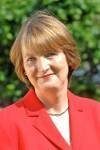
    Harriet Harman – 2023 Speech on Arts Council Funding for England

    The speech made by Harriet Harman, the Labour MP for Camberwell and Peckham, in Westminster Hall, the House of Commons on 18 January 2023.

    I congratulate the hon. Member for Bromley and Chislehurst (Sir Robert Neill) on securing this debate. I back absolutely every word he said, and I join him in urging Arts Council England to rethink this funding round, which has no strategy, has had no consultation, is thoroughly destructive, and importantly makes the crucial art form of opera more elitist, rather than less.

    As a result of losing a third of its funding, Welsh National Opera has cancelled its 2023 tour to Liverpool. That is more elitist, not less. ENO’s core mission is to make opera accessible, bringing the art form to younger and more diverse audiences. The threat to ENO makes it harder to do that work. Because the Britten Sinfonia has lost its annual grant of £500,000, it will not be able to do its education and outreach work in the east of England. Because Glyndebourne has had its grant cut by 50%, it has announced that it will not be able to tour in 2023. When funding is reduced for opera, it is made more exclusive, not less. Public funding is the key way to open up opera to all. The funding cuts make opera more for the elites, not less.

    One further consequence of Arts Council England’s decision, which I am sure is unintentional, is the effect on regional theatres, which I know my hon. Friends will mention. Peter Wilson, who ran the Norwich Theatre Royal, wrote a letter to Nicholas Serota and Darren Henley at Arts Council England, which said that there are

    “people who stay loyal to their local theatres, providing the bedrock of serious support because of the regular appearance of challenging first class productions provided by Glyndebourne and WNO…Without them, NTR could not have flourished…And without their support theatres’ Friends lists, their ability to raise refurbishment and restoration funds, and their reputations will diminish. Theatres need high quality mixed programming; first class opera is a crucial part of the mix…Once started, a downward spiral in audiences is inevitable. You cannot possibly want that.”

    What he is saying is that the decisions about these opera companies will make unviable and change vital regional theatres.

    Peter Wilson continues:

    “Glyndebourne, WNO and ENO have high cultural ambitions that deserve to be shared as widely as possible. To emasculate them—to destroy existing ‘skills, knowledge and networks’ so wantonly…will not just make those ambitions unavailable in the near future; it will probably ensure that they will never again be part of the national cultural fabric of which I have been so proud for 50 years.”

    Does the Minister know whether Arts Council England considered the effect on regional theatres of what they are doing to these opera companies? Did it even consult regional theatres, which are dealing with the consequences of all this?

    This is a very well attended debate, with people from different regions and parties. None of us is whipped to be here. None of us has not got other things to do. All the Members sitting here are those who are committed to the arts. If I was Arts Council England looking at this, I would recognise that I had gone seriously wrong. If the Members who are the backbone of championing public policy on the arts are in Westminster Hall complaining about the Arts Council, it should recognise that it has got things wrong and think again. To say from behind its hands, “Well, we’ve been told by wicked Secretaries of State and DCMS that we have to do this”, is something that I do not accept for one moment. The Arts Council is an independent body, for goodness’ sake—the key is in the name, “independent”—and if people take on responsibility for an independent body, they have a duty to that body to act independently. If they are told what to do by somebody whose business it is not, they should tell them to shove off, or threaten to resign. That is the way it is supposed to be.

    The Arts Council has to recognise the scale of the problem. However, we are a forgiving group of people, because we love the arts, and therefore if the Arts Council sees sense, we will not complain about it; we will congratulate it. Really, it should read the writing on the wall. As Peter Wilson writes to Nick Serota and Darren Henley,

    “I’ve bumped into you both over 25 years…It’s plain that your lives and careers have been dedicated to making the best art available as widely as possible throughout the UK.”

    I say to both of them, “Keep faith with that. Change your mind. We all believe in redemption; it is not too late.”

  • PRESS RELEASE : UK imposes further coordinated sanctions on Iranian regime officials [January 2023]

    PRESS RELEASE : UK imposes further coordinated sanctions on Iranian regime officials [January 2023]

    The press release issued by the Foreign Office on 23 January 2023.

    The Foreign Secretary has announced further sanctions on Iranian regime officials, including on Deputy Prosecutor General Ahmad Fazelian.

    The UK is placing further sanctions on regime officials in Iran today, including on Deputy Prosecutor General Ahmad Fazelian.

    These sanctions, alongside designations by the European Union and the United States, demonstrate the international community’s unified condemnation of the horrific violence the Iranian regime is inflicting on its own people, including the execution of dual British-Iranian national Alireza Akbari.

    Alongside the Prosecutor General in Iran, whom the UK sanctioned last week, Fazelian is responsible for a judicial system characterised by unfair trials and egregious punishments, including use of the death penalty for political purposes. Last week Alireza Akbari tragically became a victim of this brutal system.

    The list of sanctions imposed today also includes:

    • Kiyumars Heidari, Commander in Chief of the Islamic Republic of Iran’s Ground Forces – Heidari has publicly admitted to his and his force’s involvement in the violent response to the November 2019 protests that led to the death of at least hundreds of protesters, and he continues to order the repression of protests today.
    • Hossein Nejat, Deputy Commander of the Islamic Revolutionary Guard Corps (IRGC) of Sarallah HQ – Sarallah is the division of the IRGC responsible for the security of Tehran, where we have seen some of the most brutal violence against the Iranian people.
    • The Basij Resistance Force – The Basij force within the IRGC are mobilized by the regime leadership to enforce the brutal repression on the streets of Iran.
    • Salar Abnoush, Deputy Commander of the Basij –  Abnoush has publicly described his command-and-control role over Basij forces and continues to lead their repressive tactics today.

    Foreign Secretary James Cleverly said:

    Those sanctioned today, from the judicial figures using the death penalty for political ends to the thugs beating protestors on the streets, are at the heart of the regime’s brutal repression of the Iranian people.

    The UK and our partners have sent a clear message through these sanctions that there will be no hiding place for those guilty of the worst human rights violations.

    The UK has now imposed 50 new sanctions in response to human rights violations by the Iranian regime since Mahsa Amini’s death and will continue to take a wide range of actions to hold the regime to account.

    These sanctions impose an asset freeze and UK travel ban on the individuals sanctioned and send a wider signal on the UK’s commitment to backing condemnation with action.

    Further information

    The full list of those sanctioned today is:

    Entities:

    • Basij Resistance Force
    • The Basij Co-operative Foundation

    Individuals:

    • Ahmad Fazelian, Deputy Prosecutor General
    • Kiyumars Heidari, Commander in Chief of the Islamic Republic of Iran’s Ground Forces
    • Salar Abnoush, Deputy Commander of the Basij
    • Qasem Rezaei, Deputy Commander of the Law Enforcement Force (LEF)
    • Hossein Nejat, Deputy Commander of the Islamic Revolutionary Guard Corps (IRGC) of Sarallah HQ
  • PRESS RELEASE : Concern over drop in HPV vaccine coverage among secondary school pupils [January 2023]

    PRESS RELEASE : Concern over drop in HPV vaccine coverage among secondary school pupils [January 2023]

    The press release issued by the UK Health Security Agency in 23 January 2023.

    With Cervical Cancer Prevention Week starting today, UKHSA urges young people to catch up on any missed HPV vaccinations.

    The latest UK Health Security Agency (UKHSA) report on the routine adolescent human papillomavirus (HPV) immunisation programme for 2021 to 2022, which is primarily delivered in schools, shows that coverage in year 8 and year 9 pupils is yet to return to pre-pandemic levels.

    The HPV vaccine is offered to all 12 to 13 year olds in school years 8 and 9 and follows a 2-dose schedule.

    HPV vaccine coverage decreased by 7% in year 8 girls and 8.7% in year 8 boys in 2021 to 2022 when compared to the previous academic year. The data suggests that the NHS has already caught up many children who missed out on their HPV vaccine since the start of the coronavirus (COVID-19) pandemic, with dose 1 uptake improving for children in year 9 and year 10, but coverage remains below pre-pandemic levels.

    The UK HPV vaccination programme is one of the most successful in the world, with high uptake and millions of doses given since its launch in 2008.

    The programme in England has been shown to have dramatically lowered rates of harmful infections and cervical cancer in vaccinated women, with the strongest effects seen in those vaccinated at younger ages, and is saving lives. HPV vaccination also protects against genital warts and other cancers of the genital areas and anus, as well as some cancers of the head and neck.

    A study published in The Lancet in 2021 found that cervical cancer rates were 87% lower in young women who had been eligible for HPV vaccination when they were aged 12 to 13 years, compared to similar young women born a few years earlier who had not been offered vaccination, clearly showing the programme is preventing cervical cancers. Overall, the study estimated that the HPV programme had prevented about 450 cancers and 17,200 pre-cancers up to mid-2019.

    All the routine adolescent immunisation programmes have been impacted by the COVID-19 pandemic and coverage is not back up to pre-pandemic levels.

    UKHSA is urging parents and guardians to ensure eligible young people are caught up with their HPV vaccine before they leave school.

    Dr Vanessa Saliba, Consultant Epidemiologist at UKHSA, said:

    The HPV vaccine is available for girls and boys in year 8 and we encourage everyone eligible to take up this potentially life-saving vaccine when offered. In recent years we have seen vaccine coverage fall due to the challenges posed by the COVID-19 pandemic. Many young people who missed out on their vaccinations have already been caught up, but more needs to be done to ensure all those eligible are vaccinated.

    Children and young people who have missed out on their HPV vaccinations should contact their school nurse, school immunisation team or GP surgery to arrange a catch-up – they remain eligible until their 25th birthday.

    In addition to HPV vaccination of young people, all women aged 25 and over in England are offered cervical screening which can detect early signs of disease and so also prevents cancers and deaths.

    The HPV vaccine will prevent most cervical cancer cases, but not all, and so even vaccinated women should still attend for cervical screening when invited to do so. If you’ve missed your appointment it’s important you arrange another screening as soon as possible.

    Minister for Women’s Health Maria Caulfield said:

    As a nurse who has worked on cancer units, I have seen first-hand the importance of HPV vaccination in saving countless lives by preventing cervical cancer.

    We’re improving the cervical cancer screening process, including opening up 24/7 laboratory screening and expanding the location options available – so people can get their tests easier and results faster.

    I encourage all 12 and 13 year olds who are offered this vaccine to take it – it could save your life.

    Samantha Dixon, Chief Executive, Jo’s Cervical Cancer Trust:

    We have the evidence that shows the HPV vaccine is stopping young women from developing cervical cancer, and that’s an incredible thing. Around 9 women are diagnosed with cervical cancer every day in the UK and the vaccine is helping to change that. I’d urge anyone who is eligible to take up the offer. Whether you have been vaccinated or not, going for cervical screening remains important to help further reduce your risk of cervical cancer.

  • PRESS RELEASE : Government targets bomb making materials and poisons in new crackdown [January 2023]

    PRESS RELEASE : Government targets bomb making materials and poisons in new crackdown [January 2023]

    The press release issued by the Home Office on 23 January 2023.

    Today (23 January 2023) the government has laid secondary legislation to further tighten controls for poisons and chemicals which can be used to make explosives, also known as ‘explosives precursors’, by updating the Poisons Act 1972.

    Following the Manchester Arena attack in 2017, the government committed to enhancing its capabilities to detect terrorist activity including that which involves the use of bomb making materials.

    New measures will come into force on 1 October 2023 and include improving requirements for reporting of suspicious activity, adding new substances, providing additional obligations on online marketplaces, and requiring that certain information is recorded when selling regulated explosives precursors to business users.

    Security Minister Tom Tugendhat said:

    Around the UK, businesses and individuals use various chemicals for a wide range of legitimate uses. However, we must also minimise the risk posed by the illicit use of bomb making materials and poisons.

    It is our responsibility to ensure our robust controls of these substances are updated and controls in place against those who wish to abuse them. These steps will do just that.

    New chemicals will be added to the lists of reportable and regulated substances. This will prevent access to materials of the highest concern for illicit purposes, while maintaining access for legitimate purposes. Shops and businesses will continue to be required to report any suspicious transactions and to report any significant losses or thefts. A public consultation ran from December 2021 to March 2022.

    British Retail Consortium (BRC) Retail Products Advisor Adrian Simpson said:

    Retailers play an important part in reporting any suspicious activity from customers when buying particular chemical products and we welcome these important legislative changes which will better protect the public.

    Retailers will ensure they clearly communicate all changes to their customers and will provide additional information online to explain the risks associated with certain products.

    Head of Counter-Terrorism Policing Matt Jukes said:

    Every year, reports from the public, including industry and businesses, play a vital role in how we tackle the terrorist threat in the UK.

    These new measures will serve to enhance how we received information and intelligence from our communities and also enable us to take targeted and robust enforcement action to keep people safe.

    The Poisons Act 1972 already sets out controls of chemicals which can be used to make explosives and poisons, restricting the general public’s access to the most dangerous materials. It permits a licensing regime for the purchase and use of regulated substances where there is a legitimate need and no safer alternative.

  • Robert Neill – 2023 Speech on Arts Council Funding for England

    Robert Neill – 2023 Speech on Arts Council Funding for England

    The speech made by Sir Robert Neill, the Conservative MP for Bromley and Chislehurst, in Westminster Hall, the House of Commons on 18 January 2023.

    I beg to move,

    That this House has considered the funding decisions of Arts Council England.

    It is a pleasure to serve under your chairmanship, Mr Bone, and I am very grateful for the opportunity to return to this topic. It is also good to see the Minister in his place in Westminster Hall. As he will know, this topic has been ventilated before, but I think this debate broadens the issues.

    As time has gone on, those of us who follow this issue have had more and more grounds for concern, not just about individual funding decisions by the Arts Council but about the process by which it makes them. That process lacks transparency and, I believe, accountability, and there is a lack of engagement with the sector at a time when funding reductions are being made. Those may be necessary in the overall economic climate, but they have been made in a distributional way that has taken no account of economic, social or other impacts—or, above all, of the overall responsibility of the Arts Council.

    When the Arts Council was formed, it was set up

    “to give more people opportunities to enjoy and benefit from great art and culture”—

    I think it still has that phrase on the banner on its social media. It did not regard itself as an organisation about changing the nature of art or culture; it was about making excellence available to the greatest number of people. That was the vision of Keynes when he set it up and of people such as Jennie Lee when she was Arts Minister. In fact, I think Jennie Lee rightly said that it was important that everyone, wherever they were and whatever their circumstances, should have the opportunity of accessing the best in the arts rather than something cut-price or dumbed down. I rather fear that of late the Arts Council has lost its way in relation to that mission. Some of the specific funding decisions in the latest round highlight how it has gone wrong.

    The Minister and others will know that I have raised in particular the issue of the removal of English National Opera from the national portfolio. That would have had the effect of creating 600 redundancies, and—for all the mealy words used by the Arts Council to begin with—it would have effectively meant the closure of the company. The idea that it would have been possible to relocate a 100-year-old company to a base in Manchester—more on that in a moment—at about 12 months’ notice was so risible that one wonders what experience and real understanding of the sector the bureaucrats in the Arts Council who drew up that decision ever had.

    I am glad to say that discussions, hard work by English National Opera’s team and engagement with the Arts Council has led to some movement. I welcome the fact that there has been a willingness to listen and that funding has been secured, albeit with a reduction—a reduction perhaps on much the same level as those for other arts institutions. That will enable the 2023-24 season to continue next year. I hope that there will be better transition funding for the future. However, that is as yet uncertain. We have had a step forward, but at the moment English National Opera—a major international company that does co-productions with the Metropolitan Opera in New York and is a major draw for audiences—has had only a reprieve, rather than being saved in a form that is recognisably that of a high-class, top-rate opera company. That is not good enough.

    Ms Karen Buck (Westminster North) (Lab)

    I am grateful to the hon. Member for giving way, and I congratulate him both on securing this debate and on his speech. I also welcome the concession made in respect of English National Opera. However, does he agree that the latest Arts Council declaration still leaves more than £50 million worth of cuts to London’s arts budget over three years? That not only has a devastating cultural impact but, as he suggests, an economic impact; I am thinking of employment and the vital revenue that pours into London from tourists and others who seek to attend these marvellous cultural institutions.

    Sir Robert Neill

    That is certainly true; as a London MP, I am conscious of it too. Of course there is more than one issue at play. One is the distribution—where the money goes. Secondly, there is the question of which institutions and sectors are worst affected by what happens. It does seem that the performing arts have been particularly hard hit. When I look at the trustees of the Arts Council, there seems to be a lack of experience in the performing arts as opposed to the visual arts. We should perhaps return to the composition of the board and management and whether relevant experience of those sectors is there.

    Sir Peter Bottomley (Worthing West) (Con) rose—

    Sir Robert Neill

    I give way to the Father of the House.

    Sir Peter Bottomley

    I am grateful to my hon. Friend. Whether one’s experience is in the performing arts or the visual arts, everybody knows that it takes three to four years to put on a good opera of international standard or to put on an exhibition of paintings of international standard, with the co-operation of everybody involved. It seems peculiar that Ministers did not say to Arts Council England, “We understand that and, if you need to make changes, you need to make them over a six-year period, not a six-month period.”

    Sir Robert Neill

    My right hon. Friend makes a fair and valid point. When this matter has been debated in the past, Ministers have argued that this is an arm’s length body over which they have little control. With respect to the Minister, I am not sure that that entirely holds water. The Arts Council has said that a former Secretary of State, in its phrase, “instructed” it in relation to the distribution of some of the moneys.

    That is a legitimate policy decision and stance for any Secretary of State to take, but it proves there is a power to instruct and intervene. That should not apply to the day-to-day running of an arm’s length body, but Ministers have an ability and right to set strategic direction and to ensure that there is proper governance and oversight and, at the end of the day, basic equity in how its operations and funding decisions, involving large sums of public money, are taken.

    Rehman Chishti (Gillingham and Rainham) (Con)

    I pay tribute to my hon. Friend for securing this debate. On the proper functioning of the Arts Council, there is a specific consultation at the moment on music provision across the country. A concern is that the timeline of the consultation was announced in December 2022, and the first real engagement with stakeholders begins and concludes in January 2023. Ministers and the Government have a duty to ensure that the consultation is proper and thorough. Centres such as mine, Dynamics CIC in Medway, that offer outstanding music provision will be severely affected if it is not done properly and thoroughly, in a way that respects outstanding provision, rather than pulling things together geographically for financial reasons.

    Sir Robert Neill

    I am grateful to my hon. Friend for making that point. It highlights the interesting fact that this is not just a London issue. There are institutions outside London that have lost funding for no apparent reason. That is the difficulty: the lack of any apparent evidence base or transparent and proper process for these decisions. There is a lack of any proper consultation or impact assessment.

    I have seen freedom of information responses rather perfunctorily provided to individuals by the Arts Council, in a process that appears to be like drawing teeth. Mr Bone, you and I have had experience of such things from public bodies in the past. It appears that no full impact assessments were made on individual changes, even though some of them will close institutions. Equalities impact assessments were made, but not the full impact assessment expected when dealing with many millions of pounds of public money, and the possibility of an institution ceasing to operate, with redundancies caused thereafter.

    Andy Slaughter (Hammersmith) (Lab)

    The hon. Gentleman is absolutely right, and I congratulate him on this debate. This is at best half thought-out, and at worst an act of Luddism. I suspect that what we have seen with the revised proposals for the ENO, which do not save it in the long term, is just an admission that the Arts Council has got this wrong. Let me give him this quote:

    “Sacrificing this particular golden goose for a bit of glib London-bashing will do little to improve cultural provision in the regions and would be an act of sabotage for one of our country’s greatest assets.”

    That was the right hon. Member for Uxbridge and South Ruislip (Boris Johnson) almost 10 years ago, the last time this was done, and it has not changed.

    Sir Robert Neill

    I am sorry to say that is true. I do not object, in truth, to the idea that we should spend more arts funding across the rest of the country. I am not an opponent of levelling up as such, but I have always taken the view that that should not be at the expense of London. Decimating London is counter-productive, because much of the talent that performs in the rest of the country is London-based and London-trained, because that is where the critical mass of the arts world is. It is where the conservatoires and colleges are.

    James Morris (Halesowen and Rowley Regis) (Con)

    One of the critical issues is defining what we mean by “levelling up the arts”. In relation to opera, this is not just about physical location. As a west midlands MP, I want more of my constituents to enjoy opera, but does that not mean that we need to define more clearly what levelling up opera might mean? That is what we lack in relation to the funding decisions: there is no overarching strategic view.

    Sir Robert Neill

    That neatly brings me to the next point, which is perhaps the most important. We have mentioned that the funding cut to the ENO would have been a woeful and destructive action. It still might happen: had Dr Harry Brünjes and Stuart Murphy, the chair and chief executive, all their team at the ENO and all the great artists—people such as Bryn Terfel and others, who started the petitions—rolled over to Arts Council England’s decisions, there would be redundancy notices at the London Coliseum this week, and 600 professional people would have been out of a job thanks to Arts Council England’s incompetence. That is no way to run an organisation, and Arts Council England should be ashamed of the way it went about it all.

    It is significant that the former Secretary of State, my right hon. Friend the Member for Mid Bedfordshire (Ms Dorries), went public on social media, saying that the way Arts Council England has carried out her intended policy of levelling up arts funding was not as she intended, and has the effect of undermining it. That is the view of the former Secretary of State, who ought to know because it was her policy. The ineptitude of Arts Council England has undermined and discredited the Government’s policy intention, which the Minister and I could probably quite happily sign up to in principle. That is another reason why the Minister ought not to simply say, “I can stand back from this,” because the Government’s own policy is being failed by an arm’s length body. That is really important, which is why we need a proper strategy.

    We need a proper strategy for opera. Opera is a major part of the British music scene. Some people think it is a bit of a foreign thing, rather like John Gay’s “The Beggar’s Opera” in the 18th century and Handel. It is not. It is fundamental.

    Kevin Brennan (Cardiff West) (Lab)

    On the point about having a strategy and some sort of strategic thinking, one of Arts Council England’s decisions was to cut funding to the touring side of the Welsh National Opera, which tours extensively in England, including to places such as Liverpool, Birmingham, Southampton, Oxford and so on. On the Digital, Culture, Media and Sport Committee, we found out that Arts Council England had not even talked to the Arts Council of Wales about that decision before making the cut, which obviously puts that opera company under threat. The net result, along with the Glyndebourne cut, is that there is no opera in Liverpool at all. What has that got to do with levelling up?

    Sir Robert Neill

    The hon. Gentleman’s point encapsulates why I think the former Secretary of State was right to say what she said: the decision absolutely negates the Government’s own policy. As the hon. Gentleman said, the result of the way Arts Council England has handled this issue is that there is now no opera in Liverpool, because the WNO cancelled its tour. Glyndebourne has cancelled its touring as well—that was touring in the regions of the UK. The WNO toured across the north-west, parts of the west of England, Bristol, Southampton and so on. All those places will now have no opera—not thanks to the policy decisions, but thanks to the way they have been handled and implemented by Arts Council England.

    Ministers should not allow the situation to stand, and the same applies to other elements of the arts sector. There is no strategy that informs the approach to prose theatre, to concerts or to museums and galleries. Nowhere is there a fully-fledged strategy, and we certainly ought to have one for opera. In that case, we are talking about £50 million of public money simply going to the opera companies. Think how much more is going to other sectors as well—but no strategy!

    When one tries to find the audit trail for this decision, the board minutes that are published are perfunctory in the extreme. None of the board papers is published, and there are considerable redactions to what is published. That is not a level of accountability or transparency that would be accepted in any local authority in this country, and it should not be accepted in a public body such as Arts Council England. It is letting the public down, and it is letting the Government, as the overseeing body, down as well. That is why there is another cause for intervention.

    Finally, because I know others want to speak, we need to look at the lack of an economic analysis.

    Florence Eshalomi (Vauxhall) (Lab/Co-op)

    The hon. Member is making a vital point about the economic impact. These cuts will impact organisations not in receipt of Arts Council funding that rely on smaller grants. However, organisations that have now come out of the NPO portfolio will also be drawing on that funding, such as the Omnibus theatre in my constituency and the White Deer theatre in Kennington. Should the Government not recognise the importance that these smaller independent organisations, working with the big national organisations, bring to our local economies in terms of jobs, employment, training and getting our young people involved in the arts sector?

    Sir Robert Neill

    It is certainly right that the arts offer real economic opportunity for many young people, and some of those smaller organisations are the breeding ground from which people come. That is true of ENO itself. Many international stars started at the English National Opera, and that is also true of smaller organisations. That reinforces the point I was making: there is not a strategy for any of that. The Arts Council does not appear to have a strategy for anything.

    It seems that the funding decisions in this round were to meet a financial envelope. Fine—let us have a proper discussion then with the Department about how we produce a strategy to meet that financial envelope. But none of that was done. That is why we need a much more strategic approach; this is a serious matter.

    Looking at the overall potential economic risk, the 2020 report from the Centre for Economics and Business Research found that in a single year—2018; that is the latest we have—the arts and culture industry directly generated £28.3 billion in turnover, £13.5 billion in gross value added, 190,000 full-time equivalent jobs and £7.3 billion in employee compensation in wages and fees: in other words, into the economy. This is big business; for the UK, this is big business that we excel in and which drags in people to visit us. Also, it enables people throughout the UK to have their lives enriched.

    What I do not want to see as part of a levelling-up strategy is a cut-down English National Opera or equivalent doing a reduced orchestration, reduced cast and no-proper-chorus version of one of the great operas, be it “Carmen”, “La Traviata” or “Tosca”, in a shed somewhere outside one of our major cities. That is short-changing the people in regional England. They are entitled to see a proper performance like those we get from WNO and the Glyndebourne tour and which ENO would happily do.

    ENO has always made it clear that it is more than willing to do more work outside London. Funnily enough, it was planning to do a performance in Liverpool, of all places, before the covid panic, and none of that seems to have been taken into account by Arts Council England. It is short-changing people in the regional parts of England to suggest that they should get a second-rate version of that which is available in London. No wonder the former Secretary of State, my right hon. Friend the Member for Mid Bedfordshire, was so angry at the way her policy had been misinterpreted—all the more reason for Ministers to intervene.

    Let us look at ENO as an example of the economic benefit that one company can bring. It produces £1.75 for every £1 of spend—it actually brings money into the economy with all the knock-on expenditure that comes from people going to the theatre, and that is true across most of the theatrical world. To put all that at risk without a proper strategic basis seems ridiculous. The loss of touring by Glyndebourne and WNO means that some 23,000 fewer people will have the chance to see high-quality opera in this country than before. That is a funny type of levelling up.

    Sir Peter Bottomley

    In addition to the performances, does my hon. Friend agree that it is a betrayal of all those who helped Vernon and Hazel Ellis restore the Coliseum from 2000 to 2004, having bought the freehold and made it into the largest and best theatre in London again? What did Arts Council England think would happen to that building, which has been funded by the National Lottery Heritage Fund, the National Lottery, English Heritage and the like?

    Sir Robert Neill

    It may demonstrate the lack of thought in the Arts Council England process. It apparently wanted English National Opera, although no longer based in London, to still run the Coliseum as a commercial venue—a taxpayer subsidised version competing against west end theatre. That does not seem either competent or terribly Conservative, for that matter; it certainly is not a good use of public money.

    At the same time, Arts Council England wanted English National Opera to relocate to The Factory in Manchester, a venue that was not built to take unamplified singing—no one had bothered to check. Singing there has to be on a mike. Basic due diligence might have found that one out. The Factory, which, I am told, has been a pet project of some of the senior management of Arts Council England in the past, is a venue that does not have a set of users. It is £100 million over budget. I do not think that forcing a company that has been well established for 100 years or so in London to fill what has become an Arts Council England white elephant was necessarily a very good idea—particularly because Opera North, which performs in Manchester, was not even told. If it had been, it could have said what the audience figures were and probably told Arts Council England that opera cannot be done in The Factory anyway. It is the lack of basic competence, strategic thought and good management that is terrifying in all this. That is why there is a compelling ground for intervention.

    Rehman Chishti rose—

    Sir Robert Neill

    I will take one more intervention and then let others speak.

    Rehman Chishti

    My hon. Friend mentions the forced collaboration between one organisation and another. That is a quick fix. He talks about opera, but before we get to staging opera we need to ensure that our young people have the right music skills. The Arts Council at the moment is carrying out a consultation on the national plan for music education. It has said that all hubs will cover multiple local authority areas. It has subsequently said that this will be achieved

    “via prescribing geographic delivery areas for Music Hubs”.

    In Medway we have outstanding music provision in schools. Our neighbours in Kent do not have quite the same standards, but under those proposals one area will be forced in with the other. Surely forcing a merger of an outstanding provision area with another cannot be the right way forward—it will weaken the provision in small organisations such as those in Medway.

    Sir Robert Neill

    It sounds as if Arts Council England has fallen into bureaucratic speak. What would that mean to any normal person or sensible institution? It defeats me. There is a complete lack of understanding of what happens on the ground, and a complete lack of engagement with the institutions and their audiences—that is the great error in all this.

    I do not have time to quote it all, but the playwright Dennis Kelly wrote a very powerful letter to me; it can be googled and found on social media. It was about the impacts on prose theatre—in particular, the Hampstead Theatre and others. There is a lack of appreciation of the impacts on audiences, and an unwillingness to engage with them. The fact is that people travel to many of those London venues from all around the home counties; it is not purely a London thing in any event.

    Lest I be tempted to go on indefinitely, I should say that I have set out the case as to why the whole approach to this funding round has been seriously flawed. Egregious individual decisions have been made. Some of those have been rowed back on to some extent, and I welcome that—I am always happy if Arts Council England or others are prepared to listen and to look at evidence. But it needs to be much more comprehensive and to do it in a much more transparent and strategic fashion.

    I will quote the former Secretary of State again. She said that when she arrived at DCMS, she was not a great fan of opera—I had a conversation with her about that —but she went. I urge all Ministers who come into the Department to go to opera, ballet, theatre, concerts and to look at some of the galleries and museums that they are responsible for. They should see that as an experience in itself. My right hon. Friend became a total convert; she said, in relation to ENO and the Royal Opera House:

    “They have been the front runners in levelling up for a very long time. They leave many in other sectors of the performing arts in the shade in terms of how much they give back and how they try desperately via a number of measures to make opera accessible to all.”

    That is exactly what ENO has been doing.

    Then there are the insulting comments of the director of music at Arts Council England, who said, “We don’t believe there is any growing audience for grand opera”—a rather bizarre term to use. Anyone who knows anything about opera will know that is a five-act French production by Meyerbeer from about 1860; we do not talk in terms of grand opera any more. I think what she meant was full-scale opera, with a proper orchestra and chorus. How anyone can say that when theatres have been locked down because of covid for many years defeats me. Freedom of information requests have not evidenced any robust statistical basis for that assumption, which is another reason to go back and have a proper strategy.

    I hope all that tells the Minister that something has gone badly wrong in this funding round. We cannot just say that Arts Council England is an arm’s length body; we need to do something before serious and lasting harm is done to critical parts of our cultural and artistic heritage.


  • Mark Spencer – 2023 Speech on Total Allowable Catches and Fisheries Negotiations

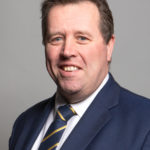
    Mark Spencer – 2023 Speech on Total Allowable Catches and Fisheries Negotiations

    The speech made by Mark Spencer, the Minister for Food, Farming and Fisheries, in Westminster Hall, the House of Commons on 18 January 2023.

    It is a pleasure to serve under your chairmanship, Mrs Murray. I am glad to see you in the Chair, rather than in the Chamber intervening and asking me awkward questions.

    I pay tribute to my right hon. Friend the Member for Camborne and Redruth (George Eustice) for securing the debate. I recognise his huge contribution to the future of fisheries from his work at DEFRA with fisheries; I hope that future is rosy and bright. It is worth putting on record the efforts he went to and the improvements he made to that industry, which I know is grateful for all his past work.

    I recognise that there is a huge amount of experience and knowledge within the Chamber, but there will be people at home who do not have the same depth of knowledge. I hope those present will forgive me if they recognise and understand some of the things I say, but it is important to set out where DEFRA is coming from and what we are trying to achieve.

    It is tempting to simply say yes to my right hon. Friend the Member for Camborne and Redruth, as many of the things he said are accurate, but I can assure him that we are not slipping back into those old ways, which he may be nervous about. It is just a coincidence that the 20% figure, particularly on pollock, has been arrived at, but I will get to that later in the debate.

    We recognise that the fishing sector is under huge pressure. It faces challenges over increased fuel prices and getting access to labour. We recognise the hard work that the fishing sector is putting in and we look forward to working with the sector to try to assist it on its journey.

    I am pleased to have this opportunity to provide some further explanation on one important element of how we arrive at TACs—the total allowable catch. The definition of a data-limited stock comes from the International Council for the Exploration of the Seas, as my right hon. Friend the Member for Camborne and Redruth said. ICES undertake the stock assessments that the UK and its neighbouring states rely on to set TACs for the shared stocks. ICES categorises its advice on a scale of 1 to 6, based on the available data and type of assessment used to generate the advice. For stocks where there is insufficient data, it can use analytic stock assessments. Data-rich stocks are categorised as ICES category 1 and 2. Stocks where the available data and assessment techniques fall short of these standards are classified by ICES as categories 3 to 6 and are truly data-limited stocks.

    How does ICES provide advice on data-limited stocks? Historically, ICES has provided advice on data-limited stocks by adopting a precautionary approach. That was implemented by applying a 20% decrease, as my right hon. Friend said, in advised catches where stocks are considered either at risk or their status is unknown. ICES continues to improve its advice on data-limited stocks, and those efforts have increased since 2011, when ICES recognised the need to standardise and refine the data-limited methods.

    That means that the precautionary 20% buffer is still used by ICES but only in increasingly rare situations, as new approaches to stock assessments and advice have been developed. ICES also continues to consider if it can justify moving stock assessments out of the data-limited category. As data and methods are slowly improving, this has resulted in a steady increase in the number classified as categories 1 and 2.

    Mr Alistair Carmichael (Orkney and Shetland) (LD)

    Does the Minister share my frustration that after so many years monkfish is still regarded as a data-deficient species, given its very high value to the Scottish fleet?

    Mark Spencer

    It is easy to be critical of the data and science that are available to us. The right hon. Gentleman will know that fish move in the sea. It is not like counting sheep in a field; it is much more complicated than that. As my right hon. Friend the Member for Camborne and Redruth identifies, fish predate each other, and a boom in one species can result in a diminishing number of another. We are trying to measure and get data on a constantly moving feast.

    How do we approach data-limited stocks in international negotiations? From a fisheries management perspective, data-limited stocks can present challenges when it comes to deciding how to use the scientific advice produced by ICES in setting TACs. Since becoming an independent coastal state, the UK’s approach to developing TAC positions has evolved. We do not use any of the EU’s historical approaches, such as “use it or lose it”, as my right hon. Friend identified. Our approach is led entirely by our domestic policy framework, and the Fisheries Act 2020 objectives are our guiding light.

    In the case of data-limited stocks, there are two Fisheries Act objectives that are particularly important: the scientific evidence objective and the precautionary objective. The combined objectives lead us to the position that our starting point for every stock is the ICES scientific advice, even when the data is limited. However, we of course consider each stock on a case-by-case basis, taking into account wider socioeconomic factors and the potential impact on the fishing industry of the decisions. That means that, for most data-limited stocks, we will advocate the application of the ICES-advised tonnage, but in particular cases we may depart from ICES advice because of those wider considerations.

    One data-limited stock in particular—namely western pollack—has raised some questions, as my right hon. Friend identified, so I want to provide further information on that important stock. ICES produces a stock assessment for western pollack, but it is classified as category 4, and therefore the advice uses the ICES precautionary advice framework. The advised catch for 2023 was 3,360 tonnes, and that figure has been the same since 2019. Over that period, the total allowable catch has consistently been set much higher than that. However, a long-term downward trend in landings, which more than halved from 2016 to 2021, is a cause for concern about the state of the stock; it suggests the need for a lower TAC to prevent the stock from becoming over-exploited. The UK’s aim is therefore to bring the total allowable catch more in line with ICES’s advice. This year, a 20% cut was agreed with the EU for 2023, which follows on from the 15% cut negotiated with the EU last year. The size of the cut is a product of the negotiation process, but is not based on any particular rule or approach.

    We have acted in several ways to support the improvement of the data on fish stocks. Through the fisheries industry science partnerships scheme, DEFRA has been directly encouraging applicants to tender for data collection activities. That has proved very successful: there are 12 large projects directly investigating and collecting data on data-limited stocks. That will mean that over 70% of FISP funding, which equates to over £5 million, will have been awarded to projects of that type. They include a 24-month project on data collection and research on pollack in the south-west. We are also working with the EU, through our Specialised Committee on Fisheries, to improve the management and support of the recovery of certain data-limited deep-sea stocks, namely roundnose grenadier and western red seabream.

    Let me reflect on the UK’s overarching approach in setting advice in line with scientific advice, and conclude with some reflections on our broader progress in using science to set total allowable catches. As I explained earlier, our starting position in setting a TAC is that the best available scientific advice should be followed. That helps to ensure that key fish stocks are protected and supports the long-term viability of the UK fishing industry. We strongly champion that approach in our international negotiations, and this year we have made significant progress on the UK-EU bilateral negotiations. Overall in the UK-EU bilateral, we have achieved an estimated 13% increase in catch levels aligning with ICES advice, compared with last year. That is a huge improvement in the sustainability of what we fish. I am pleased to report that positive progress, but I recognise that further improvements are needed. We will therefore continue to work proactively with our industry, our scientific colleagues in CEFAS and ICES, and colleagues in the devolved Administrations, the EU, Norway and coastal states, to ensure that positive momentum is continued.

    Luke Pollard (Plymouth, Sutton and Devonport) (Lab/Co-op)

    Will the Minister explain why EU fishers can catch spurdog and UK fishers still cannot? Why is there a delay in the UK allowing UK fishers to do so? How is it that we are now slower in allowing our fishers to catch that stock than we were when we were in the EU?

    Mark Spencer

    In the UK, we have a respectful democratic process by which we have to bring forward a statutory instrument. That statutory instrument is drafted and we are ready to roll with it, but we are waiting for business managers to find us a slot. We want to do that as quickly as possible to allow people to get out there and start catching spurdog. We have a great democratic process in the United Kingdom that holds people to account and allows people to object if they have a different view.

    Peter Aldous

    Can I come back on spurdog? I am most grateful to the hon. Member for Plymouth, Sutton and Devonport (Luke Pollard) for raising the matter. Off the East Anglian coast, the inshore fishermen who fish sustainably with long lines and nets cannot catch spurdog at the moment, but EU trawlers can. Does the Minister share my vision that we should have a fisheries management plan that embraces the ICES recommendation on limited-catch fishery for spurdog and enables local East Anglian fishermen, fishing responsibly, to catch it?

    Mark Spencer

    Our motivation is very much to allow this total allowable catch to be used, and we want to get on with that as quickly as possible. It is a new stock with a new quota. We want it to be done sustainably, and we want to get on with it. We will hurry up the democratic process to ensure that people who want to catch that species are allowed to do so.

    Luke Pollard

    There is a concern among fishers that this is the Government’s new modus operandi, and that UK fish policy will continue to be set a pace behind EU fish policy. Will the Minister set out an ambition to ensure that this Brexit delay in allocating spurdog catch will apply only to this species, and only this once? From now on, will Ministers ensure that any change in quota is pegged as much as possible to changes in EU quota so that our fishers do not suffer a disadvantage due to our new status as an independent coastal state?

    Mark Spencer

    I am conscious that this is turning into a spurdog debate, rather than the original debate. It would be worth somebody applying for a debate of that nature. Let me be absolutely clear: we have not been able to catch that species in the past. It is a new species and it requires a democratic motion to be passed through the House of Commons, and as soon as we have done that, we can get on with it. That is the right approach. We want to make sure we fish sustainably, and that requires that democracy takes its course so that people can scrutinise our decisions. I am very much aware of the desire to get on with this and allow our fishing industry to get on and catch this species. We will expedite that process as soon as possible. I will conclude there, and I thank colleagues for their contributions.

  • George Eustice – 2023 Speech on Total Allowable Catches and Fisheries Negotiations

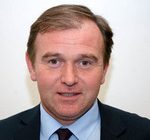
    George Eustice – 2023 Speech on Total Allowable Catches and Fisheries Negotiations

    The speech made by George Eustice, the Conservative MP for Camborne and Redruth, in Westminster Hall, the House of Commons on 18 January 2023.

    I beg to move,

    That this House has considered the methodologies for setting total allowable catches for data-limited stocks in fisheries negotiations.

    It is a real pleasure to serve under your chairmanship, Mrs Murray. It is very appropriate for you to chair this event since, as every Member present knows, your knowledge and experience of the fishing industry is unrivalled in this House. I am sure that, were you not being impartial in chairing the debate, you would have plenty to say on the matter.

    In my time as a Department for Environment, Food and Rural Affairs Minister, I had two key observations. First, every Minister comes in with plans for the environment, and one of the first things they need to learn is that the environment has plans for them, too, and they are not always very pleasant.

    The second truth is that every Minister coming into DEFRA says that they will have an evidence-based approach and will follow the science. But when they ask the scientists what should be done, they find that the scientists are not quite sure. They talk about evidence gaps and things that they do not understand, and are reluctant to come up with a clear policy proposal. That means Fisheries Ministers in particular are inevitably left with the thankless task of trying to make policy decisions with imperfect evidence, but making the best use of the evidence that they have. Nowhere is that conundrum more complex than in fisheries.

    I recall a fishing representative giving evidence to a Select Committee. As he put it, fisheries is not rocket science; it is way more complicated than that. There are uncertainties in the science and in the way we calculate maximum sustainable yield. There are difficulties, for instance, around assessing the age of a fish. The basic approach to maximum sustainable yield is to allow fish to reproduce for at least one generation, and that stock should be sustainable. Typically, scientists measure the average length of fish when they are landed to try to assess the age of the stock and its reproductive capacity. That is the essence of the calculations that take place.

    But there are difficulties all round. First, fish of different ages tend to inhabit different parts of the ocean, and trying to make sense of that can be difficult. It can be a hit and miss science to understand exactly what the average length of a fish is, given that they are very mobile and move around.

    Jim Shannon (Strangford) (DUP)

    I thank the right hon. Gentleman for securing this debate. I am extremely interested in what he has to say, and I spoke to him beforehand. I have one example of the importance of data. We have witnessed a remarkable turnaround with spurdog. In a most important fishery, limited data led to a ban on landing the species. However, the situation has changed dramatically, based on the data for 2023, with a total allowable catch agreed with the European Union for the year ahead based on up-to-date scientific advice. A statutory instrument is to follow, as the Minister knows. That is because of the data-limited status and the evidence that has made the change.

    Mrs Sheryll Murray (in the Chair)

    Order. This is a 30-minute debate. If interventions are to be made, can we make them short and snappy, please?

    George Eustice

    I think I get the hon. Gentleman’s point and the Minister might want to address it, but my understanding is that there is now data on spurdog and a total allowable catch has been allocated. One consequence of leaving the European Union is that we have accountable processes in this House for introducing regulatory changes, and I believe a statutory instrument is needed, which takes time to introduce. In the EU, because there is no such accountability, the Commission can literally just issue delegated Acts and implementing Acts sometimes on a whim without any real process behind that.

    To continue my point, the length of the fish is not always a good sign of its reproductive capacity, so there are complexities with some species—haddock, in particular—for reasons that we still do not really understand. Roughly every seven years we get a big recruitment year, and it is hard to predict when that will happen. It is difficult to differentiate between different species of the same genera, so we have, for instance, composite TACs for species such as skate and ray whereby there are some 24 different species in a single TAC. To try to make sense of that, we introduced prohibitions on landing some subspecies within the TAC, but sometimes it is hard—for fishermen and for scientists—to distinguish between species visually, even though we know they are biologically different.

    For some species, age cannot be determined by the length of the fish. I remember being briefed that scientists had to go to other measurements, such as the size of a fish’s eardrums, to try to make an assessment because the fish’s length was not a reliable indicator of age, and it threw the calculation out.

    There is also the problem of uncertainty around fishing mortality. In particular, we do not have accurate data on recreational angling. Recreational anglers and commercial fishermen have hours of fun blaming one another for the state of particular fish stocks, but exactly what is fishing mortality is a difficult conundrum. That is especially the case with species such as pollack and bass. There is a further complication, which is that fish eat one another. The marine environment is dynamic, and a healthy recovery of one species might put pressure on another, which is preyed on.

    As if all that were not complicated enough, there is a political context in which Fisheries Ministers have to operate. The Fisheries Minister has to arbitrate between competing interests among different UK Administrations, and indeed competing interests among different sectors, such as the pelagic and white fish sectors, the inshore fleet and so on. To reach a compromise with other countries to get a multilateral agreement on how to approach fisheries, we will, at times, have to accept others’ interpretation of the science, which might not be entirely in line with our own. If we do not get a compromise and do not get an agreement, and people unilaterally set quotas, that is the worst of all worlds.

    Finally, there is a tendency, once policy in fisheries is set, for it to be set in stone. It is easy to follow the path of least resistance, and to do this year what we did last year, putting off changing things to a future year, only to find in a decade or 15 years that it is too difficult to change everything because the concrete has set. That was the case, for instance, in the EU era when we had relative stability, although the landing shares of different countries were hugely outdated. However, under qualified majority voting it was impossible for the UK ever to argue for change because the only countries that would have supported us in arguing that also wanted our fish in return for their support.

    My right hon. Friend the Minister joins a small club of Fisheries Ministers and former Fisheries Ministers who have had to wrestle with those dilemmas, and he has to make the best judgment he can using the evidence available to him, but he does have one thing in his favour, as we all do, which is the support of the Centre for Environment, Fisheries and Aquaculture Science.

    Without question, CEFAS is the world’s leading fisheries science organisation, and its head office and main research facilities are in Lowestoft. If Members visit Weymouth, they will find a global centre of excellence on fish health, and in the reception at Weymouth are probably the best-cared-for carp in the world. CEFAS is very influential on the deliberations and methodologies applied by the International Council for the Exploration of the Sea. Indeed, our current chief fisheries scientist, Carl O’Brien, is also vice-president of ICES and a leading authority in this area.

    I remember going every year during the EU era to the December European Council, and CEFAS would often detect and have to correct errors made by the Commission services. DG MARE—the Directorate-General for Maritime Affairs and Fisheries—did not particularly welcome the fact that an agency from a nation state was correcting its errors, but it nevertheless accepted when it was wrong. Of course, CEFAS always offered advice in an understated, very British way, which made it as easy as possible for the Commission to deal with those errors.

    My purpose in calling the debate is to encourage the Minister not to allow the concrete to set on the way we interpret the science, and to ensure in all the bilateral fisheries negotiations we have that CEFAS’s pre-eminent scientific knowledge is projected forwards and shapes not just the approach for negotiations with Norway or the European Union, but the methodologies taken by organisations likes ICES. The particular prompt for the debate was the Cornish Fish Producers’ Organisation highlighting to me a particular case of pollack in the Celtic sea.

    In the EU era, there were three principal ways of assessing data-limited stocks. The first was taking a precautionary approach, which simply meant an arbitrary 20% cut on species where we had limited data—that is, not a full dataset to enable a maximum sustainable yield assessment. The second was a “use it or lose it” approach. Empirical evidence from the previous year’s catch would be used to say, “Well, if they haven’t caught it, it is probably not there.” The third was saying there should be a roll-over approach. In essence, that was an assessment that the stocks are probably in a good shape, so we should just leave it where it is and roll it over year to year until the evidence suggests otherwise.

    Even when we were in the European Union, we ferociously resisted these arbitrary, unscientific approaches. To be fair to the European Union, it was not just something that it had made up; its approach often reflected ICES advice in some of these areas. For over a decade now, ICES has recognised that those arbitrary approaches are not fit for purpose. In fact, probably as long ago as five years ago, CEFAS identified and developed a superior methodology based on making the best judgment we could with the evidence we had. We termed it as using biomass trends to assess what the TAC should be with these stocks. It effectively meant having a moving average assessment of the stock and aggregating data across several different years to avoid sharp changes in the TAC in one direction each year, and each year the aggregate data would get more reliable. For a while, even in the EU, we actually got them to accept that this was a better way to approach things, and that is what we used to seek and usually secured at December Councils.

    The thing that caught my eye in the press release from the CFPO was that it alleged that the Celtic sea pollack stock had been set under the old-fashioned “use it or lose it” methodology. There are lots of reasons why fishermen may not have caught fish—it could be that the market conditions were not right or that there was bad weather at the end of the year. That is why it is a wholly inappropriate basis on which to assess the health of a stock. My question for the Minister is, whatever happened to the work that CEFAS did on data-limited stocks and that biomass trend approach? Will he seek to reinvigorate that work or update Members here on what CEFAS is doing in this area? Most importantly, will he ensure that we use the soft power we have through pre-eminent scientific knowledge in fisheries to shape how not just the EU and Norway, but ICES approaches these difficult issues?

    Peter Aldous (Waveney) (Con)

    My right hon. Friend has taken the case study of Celtic sea pollack. Would he consider how his approach might also help solve the dilemma with southern North sea spurdog? I was on CEFAS Endeavour on Monday morning and saw its excellent work, so could he quickly help us out of our dilemma on spurdog?

    George Eustice

    I will be quick because I explained this earlier. My understanding—as a former Fisheries Minister, one’s knowledge decays over time and the existing Minister will have far more knowledge than me—is that there is at least some evidence now to make an assessment on spurdog. I do not know whether it is a full dataset to provide a MSY assessment. Nevertheless, a TAC has been set on that basis and I believe it is simply a parliamentary procedure to get a regulation in place to enable that TAC to take effect, but I am sure the Minister will have heard my hon. Friend’s question.

  • Damian Hinds – 2023 Speech on the Future of the Parole Board

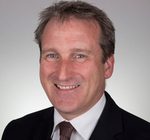
    Damian Hinds – 2023 Speech on the Future of the Parole Board

    The speech made by Damian Hinds, the Minister of State at the Ministry of Justice, in Westminster Hall, the House of Commons on 18 January 2023.

    It is a great pleasure to see you in the Chair and serve under your chairmanship, Mrs Murray. I congratulate the hon. Member for Blackley and Broughton (Graham Stringer) on securing this important debate. His speech was thoughtful, deliberative and balanced. He spoke in the light of some of the most appalling and horrific crimes, murders and rapes that we have known in our lifetimes. The thoughts of all of us in this House are with the victims of those terrible crimes and their families. Their loss—their tragedy—does not dim with time. As the hon. Member for Strangford (Jim Shannon) said, victims must always be paramount in the system. The system must work for them and must be seen to do so.

    I am pleased to have the opportunity to speak about the vital and difficult role that the Parole Board plays, as the hon. Member for Blackley and Broughton said, in protecting the public by making decisions about the release of some of the most serious offenders in our system. It is critical that the parole system works as effectively as possible to keep the public safe. That is, and must be, the top priority. The hon. Gentleman mentioned the September hearing of the Science and Technology Committee, of which he is a member. I have read the transcript of that hearing and agree that it was important and useful. He rightly said that statistics are important, as is understanding the statistics. He also said, and he was right, that statistics can only ever take us so far, because a serious reoffence is the most complete catastrophe—I think those were the words he used—for an individual and their family.

    He made a specific point about reoffending statistics. I want to clarify that under the probation serious further offence procedures, His Majesty’s Prison and Probation Service captures data on every serious further offence that is committed by an offender who has been released by the Parole Board, regardless of how long afterwards that serious further offence was committed. I will write to him with the data behind that.

    As has been mentioned by Members, including the Opposition spokesperson, the hon. Member for Stockton North (Alex Cunningham), the Government conducted a root-and-branch review of the parole system, which was published last year. It set out our proposals for making further improvements. I will say a little about the measures that we are taking, as well as seeking to address some of the points that colleagues have made.

    We have heard about the impact on victims when offenders are considered for release by the Parole Board. I pay tribute to the hon. Member for Blackley and Broughton for his unfailing support for constituents who have been so dreadfully affected by serious offending. These are difficult and deeply distressing times for them, and I want to apologise to any who have not received the service that they should have. Their experiences demonstrate why it is so important to ensure that they, and the victims of other terrible crimes, are properly supported.

    To that end, I will explain the measures that we are taking to improve the way the victim contact scheme operates, particularly when it comes to tracing and working with victims of offences that were committed before the scheme was established. I hope my comments about the action that we are taking will reassure colleagues about how seriously we take these matters and that, despite the problems that sometimes regrettably occur, we do have an effective system for keeping victims informed about the parole process.

    One of the Government’s priorities, as set out in the root-and-branch review, is to improve openness and transparency. We want to enhance public understanding and bolster confidence. It is clear that in all cases, victims need to be kept updated on what is going on in their case, and we are looking at ways to improve that.

    Before I say more about our plans to reform the system, it might be helpful if I first briefly go through the legislative framework within which the Parole Board operates. The Parole Board’s purpose is to decide whether prisoners convicted of serious, violent or sexual offences, who are serving certain types of sentences, can be safely released into the community on licence. The sentences dealt with by the Parole Board include life sentences, indeterminate sentences for public protection, extended determinate sentences and the sentences of those who are recalled to prison for breaching the terms of their licence. When passing sentence, the trial judge will set a minimum custodial period, which the offender must serve in prison for the purposes of punishment and deterrence. Once the minimum period has been served, the Secretary of State is required to refer these cases to the Parole Board so that the prisoner’s suitability for release on licence can be considered.

    That decision is about the offender’s current risk, having completed the part of the sentence that the judge has said must be spent in prison for the offences committed. The wording of the statutory test for release is clear. The Parole Board must not give a direction for a prisoner’s release unless the board is satisfied that it is no longer necessary for the protection of the public that the prisoner be confined in prison. When applying the public protection test, the Parole Board needs to consider whether there is a risk of serious harm. If release is directed, the Secretary of State must comply with that direction unless it appears legally flawed, in which case the Secretary of State has the power to ask for the decision to be reconsidered.

    The Parole Board is an independent body with expertise in risk assessment. It takes robust and fully-evidenced decisions. The board takes public protection very seriously. In around three out of four of the cases that are referred to the board, it decides to keep the offender in prison for the protection of the public. Where the board does direct release, less than 0.5% of the people in those cases go on to commit a serious further offence within three years. Any serious further offence is, of course, a tragedy and is fully investigated. The vast majority of offenders released by the board do not go on to cause serious further harm.

    The hon. Member for Blackley and Broughton raised the Worboys case. That awful case highlighted the need for improved transparency, especially for victims, about the reasons for a Parole Board release decision. As the hon. Gentleman will know, in 2018 we introduced decision summaries, which are now routinely provided to victims and others to explain why the board has directed a prisoner’s release. The case also highlighted the need for a better and easier way to challenge parole decisions if they can be shown to be flawed. That led to the introduction in 2019 of the reconsideration mechanism, which the Secretary of State uses in cases in which he considers that a release decision should be looked at again.

    We intend to go further to ensure that the system is as robust as possible. The root-and-branch review set out key proposed reforms that aim to ensure that public protection is the overriding consideration for release decisions and to introduce additional safeguards into the system.

    Graham Stringer

    I thank the Minister for his kind remarks. Will he respond to the two points that I made in the area that he is considering at the moment? One was that there seems to be an unexplained and dramatic increase in the 25% of prisoners who, as he just mentioned, are being released. The other was that category A, B and C prisoners are also being recommended for parole, which was not previously the case.

    Damian Hinds

    I will respond to the hon. Gentleman on the precise numbers in correspondence, if I may. The important point is that every case is considered individually on its merits; that has to be at the heart of how the Parole Board goes about its business.

    We will make the release test more prescriptive, so it is absolutely clear that prisoners should continue to be detained unless it can be demonstrated that they no longer present a risk of further serious offending. Secondly, for a top tier of the most serious offenders—I think that the hon. Member for Stockton North asked for clarification on what the tier consists of; it is those sentenced for murder, rape, causing or allowing the death of a child, and terrorist offences—we will legislate to give Ministers the power to refuse a release decision made by the Parole Board if they disagree with the board’s view that the release test has been met. That will provide an additional safeguard and, I hope, further reassurance to victims that for the most serious offenders, including murderers and rapists, there will be oversight by Ministers, who will be able to prevent release if that is considered necessary to keep the public safe.

    Thirdly, we will legislate to ensure that the Parole Board’s membership includes more people with law enforcement backgrounds, who will sit on panels dealing with the most serious cases. Having more members who are, for instance, ex-police officers with first-hand experience of tackling crime in our communities and dealing with serious offenders will further enhance the Parole Board’s expertise in assessing the risk such offenders present. The measures that I have described will require primary legislation, which, to respond to the hon. Member for Blackley and Broughton, we will introduce at the earliest opportunity.

    We have already taken other steps within the system to enhance public protection and increase confidence. For example, we have reformed the way indeterminate sentence prisoners are moved to open prison conditions, and Ministers can block such moves if they do not meet new, tougher criteria. Also, we have introduced a new system whereby Ministers can submit an overarching view to the Parole Board about release in some of the most serious and troubling cases before any decisions are taken. That ensures that it is made very clear to the board at the outset if there is a case where Ministers would be opposed to the prisoner’s release.

    I return to the important issue of victims’ experience of the parole system, which is at the heart of the case that the hon. Member for Blackley and Broughton made, and the measures that we are taking on it. When offenders are being assessed for release by the Parole Board, it can be a very difficult and distressing time for victims. We want to improve the way victims are engaged in that process, give them additional opportunities to hear about what is going on, and make them feel and know that they have more of a voice.

    The mechanism by which victims are kept informed about parole is the victim contact scheme, which is operated by the probation service. It was first established in 2001 and applies to victims of sexual and violent offending where the offender is sentenced to imprisonment of 12 months or more. Victims who have signed up to the contact scheme should always be notified when a prisoner is coming up for potential release.

    Victims have a choice about joining the victim contact scheme. If they choose to join, they will be kept up to date with key developments, including prisoners’ parole reviews, parole decisions and release decisions, by a dedicated victim liaison officer. During parole cases, victims can make a victim personal statement to the board, setting out the impact of the offence against them, and they may read it aloud to the Parole Board panel if an oral hearing is convened.

    Victims also have the legal right to make requests about licence conditions, including a no-contact condition and an exclusion zone that prohibits the offender from entering areas where the victim lives, works or travels to frequently. Victims can also request a summary of the Parole Board decision and, where the Parole Board has directed release, they can ask the Secretary of State to consider applying to the Parole Board for the decision to be reconsidered.

    It should be noted that some victims choose not to sign up to the victim contact scheme. Understandably, they may seek to do what they can to put the events of the case behind them. If there is no response to a second and third invitation to join the scheme, the probation service will properly respect their wishes and not keep contacting them. Victims can, however, join the scheme at any time, even if they have previously said no. A system in which all victims are notified about parole releases would not be practical for a number of reasons. For example, as I have said, not all victims will want to receive information, and unwanted contact from the service could retraumatise them.

    The scheme was set up in 2001. For cases in the system before then, in relation to the victims of offences committed many years ago, it does not operate retrospectively. However, in the most serious and notorious of cases, such as some of those that have been referred to in this debate, the probation service should ask the police, through multi-agency public protection arrangements —known as MAPPAs—for support with tracing victims. In the Andrew Barlow case, which the hon. Member for Blackley and Broughton talked about, the Greater Manchester probation region is working with Greater Manchester Police to trace victims of the offences that Mr Barlow committed in the 1980s and 1990s and invite them to join the victim contact scheme. I should also confirm that, as has been said, my right hon. Friend the Deputy Prime Minister and Secretary of State is applying to the Parole Board to reconsider its decision to direct Mr Barlow’s release on life licence. Probation victim liaison officers will keep victims in the scheme informed of progress with the application for reconsideration.

    As for the measures we are taking to make further improvements, particularly to increase transparency and the information available to victims and others, we committed in the root-and-branch review to allowing victims to observe parole hearings for the first time. We also confirmed that we would change the rules to allow for public hearings in some cases. I know that that has come up this morning, and I will say a little bit about the progress that has been made on both those commitments.

    Since October last, victims have been able to observe Parole Board hearings as part of a testing phase that is running in the south-west probation region. During the hearings, victims are supported by probation staff, who discuss the parole process with them and ensure that they are directed to relevant support. We are working closely with the Association of Police and Crime Commissioners to ensure that tailored local support services are readily available, should victims require. We recognise that it could be retraumatising for a victim to hear the evidence that is explored during a parole hearing, so we are initially conducting a relatively small-scale testing phase to ensure we get the processes and support arrangements right. My paramount concern is to ensure that victims can observe the hearing in a way that is safe for them while not compromising the Parole Board’s ability to conduct a fair and rigorous assessment of risk.

    The hon. Member for Stockton North asked for an update on progress. During the testing phase so far, victims have welcomed the opportunity to observe hearings. Following their feedback, we are working to improve the process to prepare for its expansion across England and Wales.

    Last year, having made changes to the Parole Board rules, we also saw the first public Parole Board hearing, which was in the case of Russell Causley in December. A second public hearing has been agreed by the board and will take place this year in the case of Charles Salvador, formerly known as Charles Bronson. These changes will help to improve public understanding and awareness of the parole process.

    In the root-and-branch review, we also committed to reviewing the current guidance and requirements for providing victims with information about the parole process. Our review will identify areas for improving the information that victims currently receive through the victim contact scheme. We will ensure that, where victims have requested it, they receive effective, clear and timely communication about the parole process so that they are sufficiently informed as their case is progressed.

    As part of the primary legislative reforms that I referred to earlier, we intend to require the Parole Board to consider written submissions from victims about the release of the prisoner. That will be in addition to the victim personal statement that victims are already permitted to make to the board. Again, that is about doing more to give victims a voice and an opportunity to put their concerns and views to the Parole Board.

    I want briefly to cover a few other points that came up during the debate. The hon. Member for Blackley and Broughton raised the sex offender treatment programme. The SOTP was discontinued in the light of research evidence, and a new treatment programme has been introduced, which relies less on group work.

    The right hon. Member for Dwyfor Meirionnydd (Liz Saville Roberts), who is no longer in her place, indirectly raised a couple of points—one of which was also raised by the hon. Member for Stockton North—about the important issue of what is in the dossiers that are brought to the Parole Board and the content that comes from different perspectives and analyses. They both asked about not having individual staff recommendations. Reports will continue to provide all the same information, evidence and assessments about the prisoner as they currently do, with the exception of a recommendation or review from the report writer. The reason for that is that it is the Parole Board’s responsibility to decide whether the prisoner is safe to be released or should stay in prison for the protection of the public, based on the entirety of the evidence received. The written reports, including those from prison, probation and psychology staff, and the questioning of witnesses at oral hearings, will continue to provide all the evidence the board needs to enable it to reach fully informed decisions.

    Alex Cunningham

    The point about the information staff provide and how confident they are that it is being shared is important. I mentioned that staff appear to be concerned that we are releasing prisoners they would never have recommended be released. What does the Minister have to say to them about the credibility of information that is before the Parole Board, and the confidence in the decision?

    Damian Hinds

    As I am sure the hon. Gentleman recognises, the situation he describes could have happened anyway. I reassure him and other colleagues that this is not a diminution of the information that goes into the risk assessment. All of that information is still there, and that totality of information will be considered in the round.

    The right hon. Member for Dwyfor Meirionnydd and the hon. Member for Stockton North asked about the impact assessment on changes to the recommendation system. The right hon. Lady specifically asked about impact on minority ethnic offenders. I want to reassure them that that impact is being monitored, though it is too early to assess on a segmented basis. It is important that we keep such matters under review.

    I hope I have been able to provide some reassurance that, through the actions the Government are taking, victims’ concerns and the protection of the public are at the heart of our vision for the future of the parole system. I am grateful for the opportunity to respond to this important, thoughtful and measured debate, and thank everybody who has taken part—in particular the hon. Member for Blackley and Broughton, who secured it.

    Graham Stringer

    I thank the Secretary of State for applying for reconsideration, and I thank the Minister and right hon. and hon. Members who have participated in the debate, which I agree has been thoughtful. I hope it has brought to light some of the procedural failings of the past that need to be put right, and that there are worrying gaps in the information available, the statistics and the trend in those statistics, particularly the increase in the number of prisoners getting parole. There appears to be no obvious reason for that, and we need to understand it. Thank you for chairing the debate, Mrs Murray.