Tag: 2023

  • Jack Lopresti – 2023 Parliamentary Question on Ambulance Cover on Strike Days

    Jack Lopresti – 2023 Parliamentary Question on Ambulance Cover on Strike Days

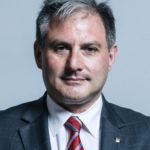
    The parliamentary question asked by Jack Lopresti, the Conservative MP for Filton and Bradley Stoke, in the House of Commons on 24 January 2023.

    Jack Lopresti (Filton and Bradley Stoke) (Con)

    What steps he is taking to ensure that ambulance services continue to operate during strikes.

    The Secretary of State for Health and Social Care (Steve Barclay)

    We have introduced a range of contingency measures, such as the provision of military personnel, who are available to assist with the driving of ambulances, and community first responders, who can help before ambulances arrive on the scene.

    Jack Lopresti

    Will my right hon. Friend join me in thanking call handlers at the South Western Ambulance Service NHS Foundation Trust—and the public—for halving the number of 999 calls to the trust over the last month, and reducing average call answering times by 95%, to just three seconds? Will he also join me in expressing dismay at the approach taken by the Leader of the Opposition during the most recent session of Prime Minister’s Question Time in seeking to sow fear in the hearts of my constituents and others for his own narrow political gain?

    Steve Barclay

    I am happy to join my hon. Friend in paying tribute to the work of call handlers at the South Western Ambulance Service, and to the staff there as a whole. He is right to draw attention to the improved performance that we have seen in recent weeks, and also right to point out that all parts of the United Kingdom have faced considerable challenges, particularly over the Christmas period when we saw a significant spike in flu levels.

    Rachael Maskell (York Central) (Lab/Co-op)

    We have just heard in the Health and Social Care Committee that on strike days there was a drop in service demand, but also value added by the increased clinical support, resulting in better and more cost-effective decisions. Why does that happen on strike days rather than on every single day of the year?

    Steve Barclay

    We are taking a number of steps to improve performance, and not just on strike days—but I thought the hon. Lady was going to refer to the comment that she made about those on her own Front Bench, when she said:

    “I think what our health team need to do is really spend more time in that environment with clinicians to really understand what drives them.”

    We on this side of the House are spending a significant amount of time with clinicians, and it is important that those on the hon. Lady’s Front Bench do so as well.

  • Barbara Keeley – 2023 Speech on Arts Council Funding for England

    Barbara Keeley – 2023 Speech on Arts Council Funding for England

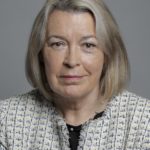
    The speech made by Barbara Keeley, the Labour MP for Worsley and Eccles South, in Westminster Hall, the House of Commons on 18 January 2023.

    I declare that I am chair of the all-party parliamentary group on classical music. It is a pleasure to speak with you in the Chair, Mr Bone. I thank the hon. Member for Bromley and Chislehurst (Sir Robert Neill) for securing the debate and for the way he opened it, and all right hon. and hon. Members who have contributed to it.

    I start by congratulating colleagues across both Houses and the wider arts sector on achieving the apparent 12-month reprieve announced yesterday for the funding of the English National Opera. It does not settle all the questions raised about the damage done by the decision, but I am pleased that there can at least be a longer-term conversation about the ENO’s future, which is right. The ENO has worked hard to increase access to opera, bringing it to younger and more diverse audiences. It has delivered innovative education and health projects throughout the country, and it is right that this is finally being recognised. However, the back and forth of the decision has caused acute anxiety among the ENO’s 300 full-time employees and the 600 freelancers whose job security was put at risk. The screeching U-turn is further indication of the total lack of strategic planning involved in the national portfolio organisation funding decisions that we have been debating.

    First, I want to reflect on the arm’s length principle of arts funding, which we have heard about in the debate. At the core of the recent dispute about arts funding is the issue of who makes decisions about arts funding and what the criteria for those decisions are. When the answers to those questions are unclear, there will always be discontent and frustration about how the investment of taxpayers’ money is being made.

    Andy Slaughter

    My hon. Friend makes a very good point: there is a lack of transparency. I am very lucky that the two main theatres in my constituency, the Bush and the Lyric, have maintained their grants—in one case, it has slightly increased—but every organisation was on tenterhooks waiting for the announcements, and they will be next time as well, because they have no idea on what basis Arts Council England makes a decision. Other theatres in London, such as the Donmar Warehouse, have lost 100% of their funding. What is the rationale behind this?

    Barbara Keeley

    Indeed. It is important to focus on that principle. The arm’s length principle has been in operation since public subsidy for the arts began in the aftermath of the second world war. At the inception of the original Arts Council, Keynes wrote that:

    “It should be a permanent body, independent in constitution…but financed by the Treasury”.

    However, as we have heard, the former Culture Secretary, the right hon. Member for Mid Bedfordshire (Ms Dorries), issued a clear instruction to Arts Council England last year and ordered it to move money outside the capital through a reduction in the London budget. Even the places at which the additional investment would be targeted were decided with input from DCMS, with removals and changes to the “Let’s Create” priority places, which had been originally identified in Arts Council England’s 2020 strategy.

    As we heard earlier, the former Culture Secretary has now criticised the decisions made by Arts Council England for their “undue political bias”, and accused the leadership of pulling a “stunt” to try to reverse levelling up. We have heard a variety of ways of describing the very strange decision making, but we have to see that it was this directive that led Arts Council England to the decision to make cuts to the English National Opera, the Welsh National Opera, Glyndebourne’s touring and other organisations, such as the Britten Sinfonia, the Oldham Coliseum and the Donmar Warehouse. The comments made show that Ministers and Arts Council England had not thought through the implications of the directive, both on art forms such as opera and on the other arts organisations I mentioned.

    Sir Oliver Heald (North East Hertfordshire) (Con)

    Will the hon. Lady give way, just for one second, so that I can put on the record my views about the English National Opera?

    Barbara Keeley

    No; I will run out of time.

    Through the directive, Ministers and Arts Council England reallocated a shrinking budget for London. I recommend to the Minister an excellent blog post from Border Crossings that can be found on Twitter and makes the point that we cannot level up at the same time as cutting. That is the problem: the aims have become confused. It is this inconsistency and short-sightedness that is so frustrating for so many arts organisations.

    The second major issue with the NPO decisions—we have heard much about this in the debate—is the glaring lack of any art form-specific strategy, planning or consultation. Opera is the major victim of this approach. Before the reprieve—the reversal of the ENO decision—overall funding for the sector was down by 11 %. It is reckless and irresponsible to remove £19 million of funding with no strategy in place. The decisions should be based on evidence and audience data, not on a whim.

    Under such acute constraints, it is the expense of touring that is often the first activity to be sacrificed, as we are seeing already. As we have heard, Glyndebourne has had the subsidy for its touring budget halved, so has been forced to scrap its entire autumn tour, which would have held performances in Liverpool, Canterbury, Norwich and Milton Keynes. As my hon. Friend the Member for Cardiff West (Kevin Brennan) rightly said, Welsh National Opera has responded to a 35% cut by removing Liverpool from its touring plans. As we have heard, it is estimated that the cuts to those two companies alone will deprive 23,000 people from access to opera throughout the country. In addition to that gap, the consequences for the arts ecosystem will be severe, given that there are already pressures on the workforce and on skills retention.

    Jennifer Johnston is a mezzo-soprano who was born in Liverpool. She told me about the impact that the Arts Council funding allocations will have on young students at the Liverpool Philharmonic Youth Choir. These young people in Liverpool come from backgrounds where there is no money for singing lessons, with their fees for the choir paid by bursaries. She said:

    “Now that live staged opera isn’t going to come to the city, these young singers won’t have a chance to see any at all. They don’t have funds to travel, and the educational workshops carried out by both Welsh National Opera and Glyndebourne now won’t happen.

    It’s a simple equation—inspire a young person by showing them excellence in an artform and demonstrate what they could achieve if given the chance, defeating assumptions of elitism and thoughts of ‘Opera’s for posh people, not for me’.

    These young people now won’t have the chance to be exposed to, and be inspired by, live staged opera, and are unlikely to want to train as an opera singer in the future. Arts Council England funding cuts will therefore affect life choices, making a nonsense of the idea of ‘levelling up’.”

    I am interested to hear the Minister’s response to those comments. How does his Department intend to ensure that there is support for the next generation of England’s opera singers when there is no coherence to the decisions being made about the sector?

    There are other arts organisations that have had their income slashed in this funding round, with little apparent sense in the decisions. We have heard that Britten Sinfonia was entirely cut from the NPO programme, despite being the only orchestra based in the east of England. Many other regional orchestras were funded only at standstill. Meanwhile, the funding settlement for producing theatres is short-sighted and risks having a negative impact on the programming of regional theatres—as we have heard in the debate—as well as compromising the UK’s cultural reputation in the longer term. Sam Mendes, the former chief executive of the Donmar Warehouse, has been predicted that it will “wreak long-lasting havoc” on the industry.

    Speaking of the Donmar Warehouse, it received a 100% cut in its Arts Council funding. Its representatives told me that the hit to their budget means they will no longer be able to create work outside London and will have to reduce or cease altogether their excellent CATALYST programme, which supports 13 people a year with paid training to develop the next generation of writers, artists and administrators. Given the flexibility in exit funding that has suddenly been found by Arts Council England for ENO, will the Minister say whether Minister similar flexibility can be found for the Donmar Warehouse? It is really important that Arts Council England is transparent and equitable in its funding processes, as the hon. Member for Bromley and Chislehurst said earlier.

    The combination of a top-down approach from DCMS and poor planning have given the impression that the Government’s goal is more about political gimmickry around levelling up than a true rebalancing of power to the regions. It is a fact that 70% of the organisations that are being entirely cut from the programme are based outside London, including the Oldham Coliseum, the Britten Sinfonia and, as highlighted so effectively by the hon. Member for Newbury (Laura Farris), the Watermill Theatre. In addition, the lack of consultation, which has been most clearly evidenced by all the reaction to the decision about ENO, speaks of insincerity in making the changes. That risks the very existence of our essential cultural organisations and makes it more difficult to achieve regional parity in arts provision.

    Before I move on, I want to make the point that it has rarely been more important to get these decisions right, because having weathered the challenges of the covid pandemic—the Father of the House said that situation was well handled by Arts Council England—and a decade of funding cuts to the arts, organisations now face a perfect storm of other challenges, including increased energy and operating costs and a cost of living squeeze on their audiences.

    The U-turn on ENO is an admission that the choices announced in November were not well considered. This situation could have been avoided if there had been proper consultation with the sector, as many contributors to this debate have said. I hope that DCMS will now undertake an internal assessment of the process behind the NPO funding round for 2023 to 2026, so that this chaotic approach is never repeated. It is vital that we now have a transparent and equitable process.

    There are still some important decisions to be made to ensure that ENO can continue and so that future decisions are made based on strategy and in consultation with the sector, with a particular focus on supporting the organisations that we have heard about today, such as the Donmar Warehouse, Welsh National Opera, the Glyndebourne tour and the Watermill Theatre. They need to continue their vital work outside London and I hope to hear more from the Minister about what can be done to ensure that.
  • PRESS RELEASE : New Defence Export Advocate appointed to drive UK defence exports [January 2023]

    PRESS RELEASE : New Defence Export Advocate appointed to drive UK defence exports [January 2023]

    The press release issued by the Department for International Trade on 25 January 2023.

    Lord Lancaster appointed as the Government’s new Defence Export Advocate by the Trade Secretary, to drive the UK’s defence exports in a brand-new role.

    • Trade Secretary Kemi Badenoch appoints Army Reservist and former Defence Minister Mark Lancaster into brand-new role
    • Lord Lancaster will engage with industry leaders, ministers and other key players both in the UK and overseas to drive UK defence exports
    • UK is the world’s second-largest defence exporter, and its defence sector contributed £10.6 billion to the economy in 2020 – supporting 92,000 jobs

    Trade Secretary Kemi Badenoch has appointed Lord Mark Lancaster as the Government’s new Defence Export Advocate, to drive the UK’s export success across its world-class defence sector in a brand-new role.

    Lord Lancaster – who will report directly to the Trade Secretary – will take on a programme of visits both overseas and at home to promote UK defence exports, developing relationships with industry leaders, foreign government ministers and other key industry players to create new export opportunities for UK firms.

    He will also help drive defence export success in the UK, visiting key defence shows like Defence Security Equipment International (DSEI), Farnborough International Airshow and others, using his influence and experience to engage with key contacts such as defence company CEOs.

    The UK’s defence sector is hugely important to the economy. In 2020, it supported over 92,000 full-time jobs across the country – including over 20,000 each in South West and North West England – areas where the sector makes a significant contribution to local economies, such as Gloucestershire and Cumbria.

    In 2020 the sector also had a turnover of £25.3 billion, while the wider aerospace, defence and security sectors supported 415,000 direct jobs in 2022.

    Lord Lancaster brings a wealth of specialist defence experience to the role – as an active Brigadier in the Army Reserves, and having served as a Defence Minister between 2015-2019. He was also previously a Major in the Territorial Army, having served as part of NATO peacekeeping forces in Kosovo and Bosnia.

    Trade Secretary Kemi Badenoch said:

    The UK’s defence sector is worth billions in exports and drives growth, investment and jobs in every corner of the country, helping to grow our economy and moving us forward in the Race to a Trillion exports.

    Mark knows that more exports and investment are just what this industry needs to boost jobs and help us stay ahead of the competition, and I’m delighted to have him on board to spearhead our efforts.

    Defence Export Advocate Lord Lancaster said:

    Our defence export sector makes a crucial contribution to the country, bringing advanced jobs, cutting-edge defence capabilities and investment to the UK.

    I’m delighted to be taking on this role to boost our exports further, and help to cement the UK’s standing as a global leader in the defence sector.

    Defence Secretary Ben Wallace said:

    Our thriving defence industry is a national asset, worth billions of pounds, supporting our Armed Forces and driving growth, innovation and significant investment across the UK.

    It’s right that we prioritise supporting British industry with a dedicated champion for UK defence exports, and Mark is the right man for the job.

    Lord Lancaster will initially focus on defence export opportunities in Brazil, Turkey, Indonesia and Qatar, as well as countries in NATO’s Eastern Flank – markets which DIT’s Defence and Security Exports Directorate, UK DSE, has identified as where Lord Lancaster will be able to make the biggest impact in his role.

    The role of Defence Export Advocate is unpaid and similar to that of a Trade Envoy – but with a global remit, rather than focusing on any one geographic region.

  • PRESS RELEASE : £30 million government funding for innovative projects to decarbonise UK highways [January 2023]

    PRESS RELEASE : £30 million government funding for innovative projects to decarbonise UK highways [January 2023]

    The press release issued by the Department for Transport on 25 January 2023.

    Funding for 7 local highways authorities to develop and use new technologies to reduce emissions, improve regional connectivity and move to net-zero local roads.

    • £30 million going to 7 new regional projects across the UK to boost innovation in decarbonising roads
    • winning projects include ‘carbon capturing’ cement and green waste being used to make asphalt
    • projects aim to ensure the latest tech and innovations can reduce emissions, improve regional connectivity and accelerate the journey to net-zero local roads

    Future roads could be built using asphalt made from grass cuttings and ‘carbon capturing’ cement, supported by £30 million government funding awarded to 7 innovative, net zero projects.

    Seven projects spread across the UK, from Lanarkshire to Devon, have been awarded funding today through the Live Labs 2: Decarbonising Local Roads competition. The programme supports projects led by local highways authorities focused on tackling the long-term decarbonisation of highways infrastructure, such as streetlights, and transforming local authorities’ approach to decarbonising roads.

    The winning projects include cutting carbon emissions from our streetlights to producing asphalt made from green waste like grass cuttings. Other projects plan to drive changes to the design, construction and maintenance of typical UK highway construction, as well as plans to develop a first-of-its-kind system approach to creating a net carbon negative model for green infrastructure delivery.

    Roads Minister Richard Holden said:

    The UK is a world leader in technology and innovation and we must use that strength to drive decarbonisation and the next generation of high tech jobs that go alongside it.

    We are supporting this vital agenda to help level-up through £30 million funding for ground-breaking projects and boosting regional connections to support growth.

    The government is determined to create good, well paid jobs – via innovation and investment across the UK – as we accelerate the road to net zero.

    The 7 successful local highways authorities and their partners will be provided funding, subject to due diligence, to develop, test, pilot and roll out new technologies to facilitate decarbonisation, including in supply chain emissions. The 7 successful bids are:

    • Highways CO2llaboration Centre for materials decarbonisation, Transport for West Midlands: supporting upskilling and developing a team in the West Midlands to decarbonise highways via 2 initiatives, including a ‘Highways CO2llaboration Centre’, and demonstrator sites showcasing and monitoring innovative decarbonised highway materials
    • UK Centre of Excellence for Material Decarbonisation in Local Roads, North Lanarkshire Council: creating a centre that will develop a materials testing programme identifying and deploying the latest tech for road construction, in addition to testing and deploying recycled materials from other industries to build roads
    • a net carbon-negative model for green infrastructure management, South Gloucestershire Council and West Sussex County Council: aims to develop a first-of-its-kind approach to creating a net carbon negative model for building and delivering green infrastructure, for example recycling biomass from green waste
    • A382 Carbon Negative Project, Devon County Council: aims to drive changes to the design, construction and maintenance in typical aspects of highway construction to reduce carbon emissions, and to build a new link road including walking and cycling options
    • Ecosystem of Things, Liverpool City Council: aims to introduce an ‘Ecosystem of Things’, exploring a scalable and transferrable approach to understanding various systems (including design, public spaces, materials/process technology, recycling infrastructure and the legal, contractual and procurement processes) at city level to embed and adopt decarbonisation initiatives
    • decarbonising street lighting, East Riding of Yorkshire Council: plans to work on increasing efficiency for low carbon lighting to make sure they can still be clearly seen by drivers and to create a framework for an alternative manual for highway lighting, signing and road marking
    • Net Zero Corridors, Wessex Partnership: will pioneer net zero roads that are built without creating more carbon emissions overall in Somerset, Cornwall, and Hampshire in 9 ‘net zero corridors’ linking rural and urban areas

    Live Labs 2 is designed to ensure innovations are shared across the whole of the UK and bidders were encouraged to create partnerships across the public and private sector, and academia. As such, the winning projects will be working together across 4 interconnected themes, including:

    • a green carbon laboratory: examining the role that non-operational highways ‘green’ assets can play in providing a source of materials and fuels to decarbonise highway operations, for example, using biomass from green waste to create alternative fuels and asphalt additives
    • a future lighting testbed: researching the future of lighting for local roads to determine what is needed in the future and how they can be further decarbonised
    • UK centre of excellence for materials: providing a centralised hub for research and innovation that would help test construction materials and their use
    • corridor and place-based decarbonisation: working to create decarbonisation across specific, wider regions and corridors covering both urban and rural areas

    Live Labs 2 is funded by the Department of Transport (DfT) and organised by The Association of Directors of Environment, Economy, Planning & Transport (ADEPT), which represents ‘directors of place’ who are responsible for providing day-to-day services, such as local highways, as well as strategic long-term delivery.

    Mark Kemp, President of ADEPT, said:

    Tackling the carbon impact of our highways’ infrastructure is critical to our path to net zero but hard to address, so I am pleased that bidding was so competitive. Live Labs 2 has a huge ambition – to fundamentally change how we embed decarbonisation into our decision-making and to share our learning with the wider sector to enable behaviour change. Each project will bring local authority led innovation and a collaborative approach to create a long-lasting transformation of business as usual.  I am looking forward to the opportunity to learn from our successful bidders and taking that into my own organisation.

    This programme follows the previous and successful Live Labs 1, a £22.9 million innovation programme that focused on adoption of digital technology across the local roads sector in England.

  • PRESS RELEASE : We must work together if we want to get girls’ education back on track – Prime Minister’s Special Envoy for Girls’ Education [January 2023]

    PRESS RELEASE : We must work together if we want to get girls’ education back on track – Prime Minister’s Special Envoy for Girls’ Education [January 2023]

    The press release issued by the Foreign Office on 24 January 2023.

    Prime Minister’s Special Envoy for Girls’ Education Helen Grant delivered at statement at the UN on International Day of Education.

    I am delighted to be here with you all on this fifth International Day of Education. I am extremely honoured to be the UK Prime Minister’s Special Envoy for Girls’ Education. I must also agree with you, I am absolutely humbled to hear the testimony of those Afghan women. Brave, brave, women. I shall be taking their messages home with me, back to the UK.

    My role as the UK Prime Minister’s Special Envoy for Girls’ Global Education is to globally champion his message that providing every girl on the planet with 12 years of quality education is one of the best ways of tackling many of the problems facing the world today, such as poverty, climate change and inequality.

    Investing in girls’ education is a game changer. If we want to change the world for the better, girls’ education is a great, great place to start. The child of a mother who can read is 50% more likely to live beyond the age of five years, twice as likely to attend school themselves, and 50% more likely to be immunised.

    We know too, girls who are educated are more able to choose if, when, and how many children they have. Girls’ education is therefore vital to women and girls, but also in levelling-up society, boosting incomes and developing economies and nations.

    Refocusing international education finance to countries where the disparities are largest is more important than ever before. This is because the pandemic has become one of the biggest educational disruptors in our history, affecting 1.6 billion learners at the peak of the pandemic in 2020. It has also created a global education funding gap of $200 billion dollars each year. In poorer countries now over 70% of children can’t read a simple text by the age of ten.

    So we must work hard, together, better and differently, if we want to get girls’ global education back on track. I think a large part of the answer with financing is to continue with the work that we started in 2021.

    At the G7 summit that we hosted in Cornwall, our then Prime Minister Boris Johnson put girls’ education at the very heart of the summit. This ensured that education received the priority and profile it needs and deserves as well as the financial and political commitments.

    At the Global Education Summit in London just a few months later in 2021 we raised, with our international partners, $4 billion dollars for global education. This will help another 175 million more children to learn. And of course, further momentum was created by the excellent Transforming Education Summit that took place here, in America, in September last year. Bit I think we also need to be more innovative in terms of finance.

    This is why the UK is supporting the International Finance Facility for Education – and this is an amazing facility for leveraging additional funding for children in Lower Middle-Income

    Countries – up to seven times what can be derived from a simple donor grant. We also support the Education Outcomes Fund – which emphasises payment by results and we are pioneering this approach in Sierra Leone and Ghana.

    Regarding adjusting our programs to reach the most marginalised girls, this is absolutely critical and there are many examples I can give but in the interest of time I would say that a good example of our work is what we’re doing around climate change.

    There are 200 million of the most marginalised women and girls living on the front line of climate change and we are never going to tackle SDG4 unless we tackle climate change.

    At COP26 in Glasgow, we made the important connection between girls’ education and climate change. Showing how girls’ education can be very much a part of the solution.

    Because girls who are educated are more able to participate in decisions, actions and leadership, on climate resilience, adaptation and mitigation. Our work in this area has led to the recently published climate paper that was launched by Minister Andrew Mitchell. And of course now we are full steam ahead with our preparations for COP28.

    Again, in the interest of time I am going to close their but just to say I know the weight of the challenge of girls’ education is considerable. It is significant. But our ability to make change in the world world, if we work together, should never ever be underestimated.

    Thank you.

  • PRESS RELEASE : Northern Ireland Secretary meets US Special Envoy to Northern Ireland for Economic Affairs [January 2023]

    PRESS RELEASE : Northern Ireland Secretary meets US Special Envoy to Northern Ireland for Economic Affairs [January 2023]

    The press release issued by the Northern Ireland Office on 24 January 2023.

    Secretary of State for Northern Ireland Rt Hon Chris Heaton-Harris MP met US Special Envoy to Northern Ireland for Economic Affairs, Joe Kennedy III today in Washington DC.

    This was their first in person meeting during Heaton-Harris’s first US visit as Secretary of State for Northern Ireland. In the 25th year of the Belfast (Good Friday) Agreement they discussed plans to mark the anniversary in the UK and the US. They also spoke about ways of increasing trade and investment opportunities to continue building on the successful partnership.

    Commenting after the meeting, Heaton-Harris said:

    It was brilliant to meet Joe Kennedy III for the first time in person and hear about his plans for the Special Envoy role and his vision for Northern Ireland. Joe has been vocal in his commitment to the prosperity of Northern Ireland and I expressed the value of his support and partnership as we work together to continue to strengthen the NI economy.

    We shared views on how we can best showcase Northern Ireland as a great place to live, work, do business and how to continue attracting US investment.

    We also discussed US engagement to mark the upcoming 25th anniversary of the Belfast (Good Friday) Agreement, an incredible achievement for Northern Ireland of which US support was instrumental.


  • PRESS RELEASE : UK and North Carolina State hold inaugural Working Group meeting [January 2023]

    PRESS RELEASE : UK and North Carolina State hold inaugural Working Group meeting [January 2023]

    The press release issued by the Department for International Trade on 24 January 2023.

    First North Carolina Working Group meeting under the UK-North Carolina trade MoU takes place in Raleigh.

    On Tuesday, January 24, 2023, the UK and State of North Carolina held the first government-to-government working group meeting under the UK-North Carolina Memorandum of Understanding (MoU) on economic cooperation and trade relations, in Raleigh.

    Colin Gray, Deputy Consul General for the United Kingdom in Atlanta, and Machelle Baker Sanders, Secretary of Commerce for the State of North Carolina, co-chaired the meeting, attended by officials from the respective governments.

    The group acknowledged the early progress made across a range of economic and cultural areas since the MoU’s signature in July 2022. Activity to date has included:

    Cooperation in sectors related to green trade, a key theme of the MOU, such as sharing expertise and methods for the development of offshore wind infrastructure;
    The promotion of trade and investment opportunities to SMEs between North Carolina and the UK; and
    The advancement of opportunities for women through new commercial partnerships, including within the sports economy.
    The working group discussed and identified further opportunities to advance cooperation in the coming months. Key areas of joint working will include:

    Continuing the emphasis on offshore wind through a focus on supply chain development;

    Exchanging information on procurement processes, including opportunities related to electric vehicles charging, and associated infrastructure;

    Exploring how innovation in motorsports can lead to developments in energy efficiency, and examining how these developments can apply to the wider automotive sector;

    Exploring how UK companies can best support North Carolina’s EV ambitions of being at the front of the global market transition to zero-emission vans, buses and trucks; and

    Furthering the collaboration between world leading academic institutions in the UK and North Carolina.

    Both sides agreed to expand the next working group session to involve representatives from industry and academia to be held later this year in the UK.

  • PRESS RELEASE : Change of His Majesty’s Ambassador to Djibouti – Vinay Talwar [January 2023]

    PRESS RELEASE : Change of His Majesty’s Ambassador to Djibouti – Vinay Talwar [January 2023]

    The press release issued by the Foreign Office on 24 January 2023.

    Mr Vinay Talwar has been appointed His Majesty’s Ambassador to the Republic of Djibouti.

    Mr Vinay Talwar has been appointed His Majesty’s Ambassador to the Republic of Djibouti in succession to Ms Jo McPhail who will be transferring to another Diplomatic Service appointment. Mr Talwar will take up his appointment during April 2023.

    Curriculum vitae

    Full name: Vinay Talwar

    Year Role
    2022 to 2023 Dublin, Head of Economic Team
    2021 to 2022 Strasbourg, École Nationale d’Administration, FCDO and French Government Scholarship: MA in International Relations & Public Administration
    2020 to 2021 Paris, Head of Communications
    2020 Lima, Crisis Manager and Acting Deputy Head of Mission
    2019 to 2020 Khartoum, Political Counsellor
    2018 to 2019 Auckland, South Pacific Islands Project Lead
    2018 UK Mission to the WTO, UN and Other International Organisations (UKMIS Geneva), First Secretary, Migration
    2015 to 2018 Nouakchott, Head, UK Embassy Office
    2013 to 2015 House of Commons, Second Clerk, Select Committee for Energy and Climate Change
    2013 Yangon, Acting Head, Political Team
    2011 to 2013 FCO, Head, NSC Emerging Powers Team, Policy Unit
    2010 to 2011 Delhi, Political Officer, Climate Change and Energy Unit
    2009 to 2010 Juba, Head of British Embassy Office
    2009 Brussels, United Kingdom Permanent Representation to the European Union, Press Officer
    2008 UK Permanent Representation to the United Nations New York, UNGA Team Leader, Second Secretary 5th Committee
    2006 to 2008 Guatemala City, Second Secretary Political (covering Guatemala, Honduras and El Salvador)
    2006 Full Time Language Training (Spanish)
    2005 to 2006 UK Trade and Industry, Attaché, Overseas Attachment Scheme (OATS), New York
    2004 to 2005 FCO, Head, Forced Marriage Unit, Consular Directorate
    2003 to 2004 Joined FCO, Desk Officer, Sierra Leone, Senegal, Côte d’Ivoire, Mali, Guinea-Bissau and The Gambia


  • PRESS RELEASE : G7++ energy coordination meeting – Lord Ahmad’s intervention [January 2023]

    PRESS RELEASE : G7++ energy coordination meeting – Lord Ahmad’s intervention [January 2023]

    The press release issued by the Foreign Office on 24 January 2023.

    Minister of State Lord (Tariq) Ahmad of Wimbledon set out the UK’s offer of help ahead of the June 2023 Ukraine Recovery Conference.

    Let me begin by offering my condolences to Ukraine for the tragic helicopter crash last week. I would also like to thank Secretary Blinken and Foreign Minister Hayashi for bringing us together today.

    The UK condemns Putin’s continued attacks targeting Ukraine’s energy infrastructure.

    The Ukrainian people have demonstrated great bravery and resilience, working tirelessly for months to meet this immense challenge.

    Meanwhile, the efforts by this group to support Ukraine since October, under the United States leadership, are commendable.

    Now, we must maintain this focus and support.

    The UK has stood behind Ukraine as it fights for its freedom, providing more than £4 billion in military, humanitarian, and economic support.

    On defence – Ukraine has increasingly shown its ability to shoot down Russian missiles. Therefore, this group must keep our focus on strengthening Ukraine’s ability to defend itself, maintaining a pipeline of supplies to strengthen its air defence.

    This year, the UK will provide £2.3 billion in military support.

    On energy – we have already provided close to £80 million in energy support and £220 million in humanitarian aid. We were early supporters of the Energy Community’s Ukraine Support Fund and expect to release our second tranche of funding, £5 million, later this month.

    We welcome the significant contributions from other partners to the Fund.

    Our work continues with the UK energy sector, including the National Grid and private businesses, to see what further support can be made available.

    We are also committed to supporting Ukraine’s longer-term recovery and its ambition to rebuild a more modern, efficient, and greener energy system.

    Now the donor coordination platform for Ukraine has been established, it is important that this group aligns its work with the platform. In this way, our work to restore Ukraine’s energy infrastructure will integrate with wider reconstruction efforts.

    We look forward to working on this with our international partners in the run-up to the Ukraine Recovery Conference in London in June.

    Let me end by saying that the UK is unflinching in our determination to help Ukraine repel Putin’s illegal invasion, and lay the foundations for a stronger, more prosperous Ukraine.

    We will continue to work with this group to those ends, for as long as it takes.

  • PRESS RELEASE : Criminal gang activity and human rights violations continue to threaten the peace and stability of Haiti – UK statement at UN Security Council [January 2023]

    PRESS RELEASE : Criminal gang activity and human rights violations continue to threaten the peace and stability of Haiti – UK statement at UN Security Council [January 2023]

    The press release issued by the Foreign Office on 24 January 2023.

    Statement by Alice Jacobs, UK Deputy Political Coordinator at the UN, at the Security Council briefing on Haiti.

    The United Kingdom would like to join others today in extending our sincere condolences to the people of Gabon for the passing of Foreign Minister Moussa Adamo.

    I’d like to thank SRSG La Lime for her briefing today and the continued work of BINUH in Haiti.

    And we welcome the participation of the Foreign Minister of the Dominican Republic and the Permanent Representatives of Haiti and Canada.

    President, the UK remains deeply concerned by the dire humanitarian and security situation in Haiti. The figures speak for themselves: 58% of the population under the poverty line; 4.7 million acutely food insecure and an increase of kidnappings in 2022 of over 100% compared to the previous year. We’ve also heard chilling accounts of the widespread use of sexual violence by armed gangs as a weapon to instil fear into communities.

    It is in this context that we recognise the need for an urgent response to Haiti’s request for international assistance and we look forward to further Council discussion on the authorisation of an international security assistance mission, as proposed by the Secretary General. Such a mission would have to be led by Haitian needs and should aim to contribute towards the restoration of effective governance through combatting endemic gang violence.

    We also recognise the role of targetted sanctions in this regard. Following the establishment of the Sanctions Committee, we stand ready to consider further designations against those involved in criminal gang activity and the human rights violations that continue to threaten the peace, stability and security of Haiti.

    However, sanctions alone do not offer a solution. Now is the time for Haitians to come together to find a solution to the political impasse: one that tackles the deep rooted economic, humanitarian and security challenges blighting the daily lives of the Haitian people. The UK welcomes recent moves towards a broader dialogue and efforts to reach a consensus. We renew our call for all actors to partake in political dialogue and to work together to identify and implement a consensus route towards democratic elections.

    Thank you.