Tag: 2023

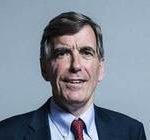
  • PRESS RELEASE : Chris Skidmore MP to support Patrick Vallance’s emerging tech review [January 2023]

    PRESS RELEASE : Chris Skidmore MP to support Patrick Vallance’s emerging tech review [January 2023]

    The press release issued by HM Treasury on 27 January 2023.

    Chris Skidmore has been appointed to help accelerate the development and deployment of emerging technologies in key UK growth sectors.

    • Rt Hon Chris Skidmore MP has been appointed by the Chancellor to support Sir Patrick Vallance’s work to accelerate the development of emerging tech
    • a former Minister for Energy and Clean Growth, Chris Skidmore will advise on new regulations to promote innovation
    • Chris Skidmore’s appointment comes shortly after he published Mission Zero, the independent review of net zero

    Five leading experts have already been appointed to support Sir Patrick Vallance, working with industry to identify any barriers to innovation and getting emerging technologies to market.

    Chris Skidmore will support Jane Toogood on green industries, such as Zero Emissions Vehicles and energy infrastructure.

    Chris Skidmore is Chair of the government’s independent Net Zero Review and the Conservative MP for Kingswood. He has previously held positions as Minister of State at the Department for Business, Energy and Industrial Strategy, at the Department for Education, and at the Department of Health and Social Care.

    His Mission Zero review identified the critical role that technologies such as hydrogen, fusion, and carbon capture and storage will have in achieving net zero, and these all will require agile regulatory approaches so that they can be deployed rapidly and safely in the UK. Chris Skidmore will bring insights from his review to Sir Patrick Vallance’s work.

    As set out at the Autumn Statement, the Government Chief Scientific Adviser and National Technology Adviser, Sir Patrick Vallance, is reviewing existing rules to develop a pro-innovation regulatory approach that allows the UK to fulfil its ambition to become a science superpower and world leader in key growth sectors, including green industries.

  • PRESS RELEASE : Levelling Up Secretary in North East England to sign historic £1.4 billion devolution deal [January 2023]

    PRESS RELEASE : Levelling Up Secretary in North East England to sign historic £1.4 billion devolution deal [January 2023]

    The press release issued by the Department for Levelling Up, Housing and Communities on 27 January 2023.

    A landmark devolution deal has been signed in North East England today by Levelling Up Secretary Michael Gove and eight local leaders in the region.

    The devolution deal will transfer new powers to local leaders in the North East to deliver skills, transport and housing, supported by £1.4 billion of funding. The Levelling Up Secretary, the Mayor of North Tyne and representatives from all seven local authorities covering the region signed the deal in an historic ceremony at the Baltic Centre for Contemporary Art in Gateshead.

    In the deal, the government guarantees the new North East Mayoral Combined Authority (MCA) more than £1.4 billion over the next 30 years which will enable the new Mayor and the councils to plan for the long term, with certainty, and unlock the benefits of devolution for 2 million people living in the area. This will support the leadership of the Mayor of Tees Valley, which has already revived Teesside International Airport, created a new freeport and established a free school with leading educationalists.

    The signing continues the government’s devolution revolution with England moving closer to being 50% covered by bespoke regional devolution deals. What’s more, the new agreement reaffirms the government’s commitment in the Levelling Up white paper to offer a devolution deal to any area that wants one by 2030.

    A local consultation on the deal is now open and if approved, people across Northumberland, Newcastle, North Tyneside, Gateshead, South Tyneside, Sunderland, and County Durham will be given the power to elect directly a Mayor of the North East. This person can act as a local champion who can help attract investment to the area and act as a powerful local voice in discussions with central government and other bodies.

    The historic deal will also give the Mayoral Combined Authority control over the multi-million pound Adult Education budget, so local leaders, colleges and training providers can work together to arm local people with the skills needed to drive local growth. It will also give control to the region of over half a billion pounds to upgrade public transport through a new City Region Sustainable Transport Settlement and provide immediate support to build new affordable homes on brownfield sites.

    Levelling Up Secretary Michael Gove said:

    I am proud to sign this historic devolution deal for the North East today, which will give local leaders the flexibility and freedom they need to tackle the most pressing issues affecting the day-to-day lives of people in the area.

    Levelling up the North East remains an absolute priority for the government, and I look forward to working closely with local leaders to unlock fresh opportunities that create tangible benefits for people right across the region.

    The proposed deal sets out the government’s plans to devolve more power to the North East through:

    • Education and skills: The deal provides the region with powers to better improve local skills through full devolution of the Adult Education budget and a greater say over the Local Skills Improvement Plan, which brings together local businesses, colleges, and training providers to identify the skills needed to support local growth.
    • Housing and regeneration: The North East will receive £17.4 million to support and accelerate the building of new homes on brownfield land, as well as £20 million to level up and kick start regeneration, delivering new affordable homes and green economic growth across the region.
    • Transport: A new City Region Sustainable Transport Settlement with government will give the North East control of up to £563 million to help shape and improve local rail services across the region, as well as the ability to introduce bus franchising.
    • Local leadership: From 2024, the North East will have a directly elected mayor who can champion the area, help drive investment to the region, and can represent local people in conversations with national government.

    Building on existing collaboration across the region and with central government, the new North East Mayoral Combined Authority will replace the existing North of Tyne MCA and Mayor, as well as the non-mayoral North East Combined Authority. This will bring the region together and provide a more strategic economic geography, which encompasses the whole Tyne and Wear region, as well as Northumberland and Durham. These changes are subject to the statutory processes, including local consultation and Parliamentary approval. The deal is being published today to allow necessary governance steps to proceed and will be signed in in the early new year.

    The North East deal means that government has now made devolution agreements with areas representing over 7 million people since the Levelling Up White Paper was published in February and agreed devolution deals with 8 of the 11 areas that were prioritised for devolution.

  • David Rutley – 2023 Speech at the Latin American Security Conference

    David Rutley – 2023 Speech at the Latin American Security Conference

    The speech made by David Rutley, the Minister for Latin America and the Caribbean, on 27 January 2023.

    Introduction

    Good morning, buenos dias, bom dia. Indeed, a very early good morning if you are dialling in from Latin America.

    Thank you to RUSI for inviting me to speak today. I’m joining you from my constituency of Macclesfield, where I’ll be spending the day speaking to constituents – as I do most Fridays.

    Since I became Minister for Latin America and the Caribbean three months ago, I’ve spent a lot of time far from Macclesfield.

    Last week I was in Bolivia and Ecuador.

    The week before that, I was at the United Nations in New York, discussing Haiti, Colombia, Venezuela and many issues important to the region.

    And before Christmas I was in the Dominican Republic, Panama and Colombia. And I will be on the road again in a few weeks.

    There is no substitute for meeting my counterparts, talking to a wide range of people, and seeing the difference our overseas missions make – for the UK and for our partners.

    The beauty and vitality of each of the countries I’ve visited has been plain to see. So too is their potential and promise.

    Latin America is home to more than 660 million people, that’s nearly a tenth of the world’s population. And has a combined GDP of almost six trillion dollars.

    It has a quarter of the world’s forests, a quarter of the world’s cultivable land, almost two-thirds of the world’s lithium reserves… and the list goes on.

    In short, Latin America is big and it matters. It has immense resources and potential. And of course, it also has its challenges.

    Some are the same global problems we all face as we recover from COVID, grapple with inflation flowing from Putin’s invasion of Ukraine, and fight climate change.

    But the region also has the greatest disparities globally between the rich and the poor. And democratic institutions have come under strain in a number of places.

    In his speech in December, the Foreign Secretary set out how over coming decades “an ever greater share of the world economy – and therefore the world’s power – will be in the hands of countries in Asia, Africa and Latin America”.

    He committed to “make a long term and sustained effort to revive old friendships and build new ones, reaching far beyond our long-established alliances.”

    In doing so, we build on the work of our predecessors.

    Two centuries ago, we sent our first consuls to many newly independent countries in the region – a set of anniversaries that we plan to mark this year, in a series of events around Latin America.

    Since 2010 we have expanded our diplomatic network – reopening Embassies in Paraguay and El Salvador, and establishing new consulates in Recife and Belo Horizonte.

    Together with countries in the region, we face a rapidly growing set of global challenges and opportunities, from climate to commerce, security to science.

    And our shared values and interests mean that we have many natural partners in the region.

    Including on many aspects of security you will be discussing today.

    Geo-politics

    Turning firstly to geo-politics.

    Earlier this month I spoke at the United Nations Security Council meeting on the rule of law.

    I underlined the importance of the international community coming together to uphold the UN Charter in the face of Russia’s invasion of Ukraine.

    It was heartening to hear Ecuador, who joined the Security Council this month, condemning Russia.

    In General Assembly votes last year, 85% of countries in the Americas voted to condemn Vladimir Putin’s actions; second only to Europe in the unanimity of condemnation.

    It has been encouraging to see the region’s multilateral bodies taking similar action, with the Organisation of American States and the Inter-American Development Bank both taking significant steps to exclude Russia.

    Although Ukraine is many thousands of kilometres away, Latin America is suffering from the fallout from Putin’s war in terms of higher energy, food and fertiliser prices, which as we all know feed into higher prices across the board.

    And this despite Latin America’s potential to be a part of the solution to food and energy insecurity, with its vast natural resources.

    As I travel, I hear deep concern about rocketing prices, but no lessening of the determination to condemn Russian aggression, and the challenge it presents to all of our security, and to the international order on which we all rely.

    That is why, as the Prime Minister and Foreign Secretary have said, we are accelerating our support to the Ukrainian Government to ensure they prevail.

    It is incumbent on all free countries to stand for freedom, democracy and the sovereignty of nations around the world.

    We know – in our increasingly multipolar world – that pressure is applied on countries on a variety of issues.

    China, for example, is conspicuously competing for global influence in the region, using a variety of levers of state power.

    China’s system and approach – their view of democratic norms, human rights and national security for example – brings risks alongside the economic opportunities for the region.

    But we know that Latin America is aware of the risks associated with accepting large-scale investments from wealthy third countries, and we understand why tough decisions are needed.

    Which is why the UK is working to support the infrastructure development that the region needs with UK expertise and finance, including investments from the private sectors.

    There is also competition for values.

    In the last few years we have seen a coordinated attempt by some states across the globe to roll back women’s and LGBT rights.

    I applaud Latin American countries for taking a progressive stand internationally and domestically.

    Cuba’s September legalisation of same-sex marriage and adoption being a good example.

    Such progress has often had to overcome disinformation from third parties – just as Latin America has been a key target for Russian disinformation in relation to Ukraine.

    Despite lots of good practice and progress in many countries, concerns for Human Rights and gender equality remain.

    In a region where ‘disappearances’ remain worryingly high, most obviously in Mexico, more must be done to support vulnerable groups, and those who seek to shed light on their plight.

    Economic Security

    Global events last year served to remind us all how strongly economic security and national security are linked.

    Which is why the UK Government works to expand free and fair trade, and build links between UK and foreign businesses, innovators and scientists.

    The UK is negotiating to join the Trans-Pacific free trade agreement as soon as possible – which will further benefit our trade with Chile, Mexico and Peru.

    We are negotiating a new trade agreement with Mexico.

    And we signed a Double Taxation Agreement with Brazil late last year – which will help companies in both countries.

    I want to see trade with the UK growing right across the Americas.

    Climate change is the ultimate threat to global security and prosperity, and Latin America has a key role to play is limiting it, including the global transition to clean energy.

    Two thirds of known global lithium reserves are in Latin America.

    Chile and Peru have 40% of the world’s copper reserves – a key component of wind turbines.

    And Brazil is home to the majority of the world’s niobium resources.

    So I’m pleased that Anglo-American have invested five and a half billion dollars in the Peruvian Quellaveco mine.

    This will increase copper production and add one percent to Peru’s GDP, while also pushing better environmental, social and governance standards.

    The UK Government is supporting and pursuing an increasing number of exciting joint projects with partners in the region.

    Including work with the Chilean government and regulators to help shape global standards for the production and supply of green hydrogen.

    And the agreement signed last week with the University of Warwick, that will provide scholarships, training and joint research on battery production to the Bolivian Government.

    Climate Security

    Beyond the clean energy transition, broader cooperation on climate change is central to our partnerships in the region.

    Since 2011, Colombia has been one of the largest recipients of UK International Climate Finance, which has helped protect one of the world’s most biodiverse countries, tackle environmental crime and associated violence, as well as develop sustainable and inclusive economies in conflict-affected areas.

    Many Latin American countries were joint architects of the COP 26 Glasgow Leaders’ Declaration on Forests and Land Use – an agreement that promotes biodiversity and sustainable land use where it is most needed.

    Ensuring that forests, and the indigenous peoples and local communities who live there are protected, is a huge challenge. And hugely important.

    The UK Government continues to deliver on our pledge to spend up to £300m tackling deforestation in the Amazon region.

    We are contributing £100 million to the Biodiverse Landscapes Fund in Honduras, Guatemala and other countries.

    And we help fund CMAR – the Eastern Tropical Pacific Marine Corridor – with Blue Planet Funds.

    President Lula’s return offers an opportunity to deepen our relationship with Brazil on climate change, as well as on trade, development, security and other shared priorities.

    In 2023, Brazil has a seat on the UN Security Council, and will assume the G20 Presidency next year. It has also launched a bid to host COP30 in the Amazon in 2025.

    Lula has an ambitious programme to deliver a green and inclusive economic transition for Brazil, which would have clear benefits for the UK and the world.

    As a leader in green finance we are working to mobilise private investment, and align our existing ODA funding on climate and nature, with Lula’s green and inclusive economic transition agenda – which has ‘keeping forests standing’ at its heart.

    Peace and Democracy

    Healthy democracy – with institutions that are responsive to people’s needs – is another important insurance policy against insecurity.

    There has been well-publicised constitutional unrest in Peru and Brazil – and we have been vocal in our support for democratic principles and the constitutional order.

    We are also steadfast supporters of those who bravely defend democratic principles in Cuba, Venezuela and Nicaragua.

    Talking of democracy, it would be remiss of me not to mention the Falklands.

    The Falkland Islanders, like everyone else, deserve the freedom to decide their own future, in political, cultural, economic and development terms.

    The people of the Falkland Islands have made very clear – most comprehensively in the 2013 referendum – that they wish to maintain their current relationship with the UK, as is their absolute right.

    The UK will continue to support the islanders’ right of self-determination as firmly as we have done to date. The principle is one that deserves wide international support.

    Where democratic institutions fail, it is often voices of freedom and the most vulnerable who suffer the consequences most acutely.

    In Nicaragua, repression is increasing.

    In energy-rich Venezuela, the World Food programme estimates that there are currently 5.8 million people in need of humanitarian assistance.

    Millions have been forced to flee the country as refugees, putting a huge strain on generous neighbours

    We continue to encourage all parties to do everything necessary to return democracy to Venezuela, and to hold free, fair presidential elections in 2024, in accordance with international democratic standards.

    Organised crime, fuelled in large part by the production and trafficking of illegal drugs, continues to curse the region, feeding corruption, corroding institutions, and damaging the environment through deforestation and illegal mining.

    Last week I saw how equipment donated by the UK helps protect Ecuador’s Special Mobile Antinarcotics Unit. An investment that helps limit the drugs heading for our shores.

    And in the UN earlier this month, we won support for the latest UK-led Security Council resolution backing the Colombian Peace Process.

    There is a long way still to go to end the violence and criminality that has plagued Colombia for so long.

    But the 2016 peace agreement between the government and the FARC shows what can be achieved with determination and leadership on all sides.

    We have supported that process with almost 70 million pounds from the UK’s Conflict, Stability and Security Fund. And we will continue to ensure the Security Council offers the support and guidance needed.

    We are also working with partners in the region to make cyberspace an open and secure engine of knowledge and growth – shaping the international governance of cyberspace in accordance with our shared values.

    In the last three years alone, the UK has funded cyber capacity-building for over a dozen countries in Latin America and the Caribbean.

    From promoting initiatives around women in cyber in Argentina. Helping Uruguay carry out a National Cyber Risk Assessment. To signing a cyber Memorandum of Understanding with Brazil.

    Closing Remarks

    To conclude.

    Security is multi-faceted.

    And the threats to it are constantly evolving.

    This government has committed to intensify our work with partners in Latin America…

    to strengthen international peace and security…

    to bolster economic and climate security…

    and to support the democratic institutions that underpin national security.

    I look forward to discussing that work with you.

  • PRESS RELEASE : Sexual offender’s, Jamie Moreno, sentence increased to 5 years’ imprisonment [January 2023]

    PRESS RELEASE : Sexual offender’s, Jamie Moreno, sentence increased to 5 years’ imprisonment [January 2023]

    The press release issued by the Attorney General’s Office on 27 January 2023.

    Jamie Moreno was previously sentenced to 3 years and 2 months’ imprisonment for sexual assault.

    A man who sexually assaulted a woman returning home after a night out has received an increased prison sentence after his case was referred under the unduly lenient sentence scheme.

    Jamie Moreno’s victim woke to find him sexually abusing her in the back of his car when trying to return home after a night out.

    Moreno, who was 55 at the time of the assault, pleaded guilty to two counts of assault by penetration.

    On 30 June 2022 at Wood Green Crown Court, Moreno, aged 58, was sentenced to 38 months’ imprisonment.

    The court ordered this was to run consecutive to a separate sentence of 24 months’ imprisonment passed down by the Crown Court at Inner London on 8 April 2022 for attempted assault by penetration and two counts of sexual assault.

    Following the sentencing, the case was referred to the Court of Appeal under the Unduly Lenient Sentence scheme.

    On 27 January 2023, the Court of Appeal found Moreno’s original sentence to be unduly lenient and increased it to 5 years’ imprisonment.

    Speaking after the hearing, the Solicitor General Michael Tomlinson KC MP said:

    Moreno took advantage of the victim’s vulnerable state and subjected her to a sickening sexual assault.

    This increased sentence sends a clear message that sexual assault is never acceptable and will be met with robust punishment.

  • PRESS RELEASE : Fishing fund gears up to help industry go green

    PRESS RELEASE : Fishing fund gears up to help industry go green

    The press release issued by the Department for Environment, Food and Rural Affairs on 27 January 2023.

    Grants of up to £40,000 on offer through £100m UK Seafood Fund to trial greener engine technology, helping to create a safe and sustainable fishing sector whilst tackling rising fuel costs.

    The UK fishing industry is to benefit from an initial £2 million investment to trial new, greener engines and help create a safer, more sustainable fishing fleet as the latest round of the £100m UK Seafood Fund opens today (27 January 2022).

    OIder vessel engines are some of the industry’s biggest polluters and, according to a report by MARFISH, over half of the boats across the UK fishing fleet are now more than 30 years old, meaning that the annual energy use of the fleet is equivalent to that of 110,000 homes.

    From today, vessels in the small-scale coastal fleet can bid for up to £40,000 to trial hybrid and electric engines, and up to £20,000 to fund replacement petrol and diesel engines that are more environmentally friendly.

    As well as supporting the fishing industry to deal with rising fuel costs, the trial aims to gather new data and evidence to help reduce greenhouse gas emissions, improve efficiency and reliability, and help the fishing industry to reach net zero.

    Fisheries Minister Mark Spencer said:

    Our small-scale fishing fleet is vital for food security, the economy, and the livelihoods of coastal communities.

    This trial could help make vessels safer, more reliable, and more cost efficient as well as helping the fishing sector make the transition to net zero.

    I encourage all those eligible to apply so we can gather the data we need to move towards a greener fleet that will benefit the fishing industry and our environment.

    Katy Ware, Director of UK Maritime Services said:

    We fully support this scheme to trial new, greener engines in the fishing industry and will assist owners participating in the scheme to ensure that the engines are safely installed.

    Everyone taking part will be making a significant contribution towards achieving net zero in the fishing industry.

    This round will be administered by the Marine Management Organisation (MMO), more details on how to apply can be found on gov.uk.

    This latest round of applications to modernise and improve the small-scale fishing fleet is part of the £100m UK Seafood Fund, a landmark government investment supporting the long-term future and sustainability of the UK fishing and seafood industry.

    Overall, at least £65 million in grant funding is available through the infrastructure scheme to fund projects that improve the UK seafood sector supply chain. This includes investment in fleet modernisation and improved capability at ports, harbours, processing and aquaculture facilities.

    £20 million has already been awarded in Round 1 of the scheme for projects including the expansion of processing facilities for popular British fish like Scottish salmon and Cornish sardines, alongside money to bring an ageing dry dock back to life. In December last year, the Government confirmed a further £30 million will be made available for infrastructure projects as the latest round of funding opened for bidding.

    There is also up to £10 million in funding available through the Skills and Training scheme, the second round of which will be open to applicants shortly. The scheme will fund training projects and facilities for workers in the seafood and aquaculture industry, and recreational angling sector.

  • PRESS RELEASE : Holocaust Remembrance Day 2023 – UK statement to the OSCE [January 2023]

    PRESS RELEASE : Holocaust Remembrance Day 2023 – UK statement to the OSCE [January 2023]

    The press release issued by the Foreign Office on 27 January 2023.

    Ambassador Neil Bush marks International Holocaust Remembrance Day, and stresses the need to stand against antisemitism in all its forms.

    Thank you Mr Chair, thank you Ambassador Ann Bernes, for your introductory comments, and your work as President of International Holocaust Remembrance Alliance (IHRA).

    Tomorrow we will mark International Holocaust Remembrance Day, to remember and honour the lives of the six million Jewish men, women and children as well as, Roma, Sinti and others who lost their lives at the hands of the Nazi regime during World War II.  This was one of the darkest moments in human history.

    The UK’s theme for this year highlights the role of “ordinary people” – as perpetrators, victims, and rescuers. These people actively had choices to make – whether or not to perpetrate genocide; whether or not to stand by and actively ignore what was going on around them. There were those who took a stand against hatred, by coming forward to help those in need – whether by hiding people, providing food, or helping people to escape.  They were ordinary people too… doing extraordinary things. It remains an extraordinary and uplifting fact that ordinary people in Denmark managed to save almost all of their countries Jewish populations. They were hidden in churches, hospitals and family homes, and spirited to coastal towns, from where they were taken to safety in Sweden. Sadly, there were also many who stood by silently and did nothing.

    We will soon reach a point when the march of time means that the Holocaust will no longer be part of our living history.  With that comes a growing concern about the rise of Holocaust denial and distortion – recasting history to erase the devastating horrors faced by the Jewish people.  We have a duty to remember them and keep their testimony alive for future generations.

    Holocaust distortion feeds the despicable scourge of antisemitism, which has no place in any society.  We must continue to stand against it in all its forms, and to reject any attempts to deny the facts of the Holocaust.  History is too important to be politicised.

    We will continue to drive international efforts to promote Holocaust education, and counter Holocaust denial and distortion when the UK takes the Chairpersonship of IHRA in March 2024. To ensure we never forget the horrors, or forget the hard lessons we learnt – the UK has committed to building a new national Holocaust Memorial and Learning Centre in London, expected to open in 2027.

    As we mark this poignant day, Mr Chair and the six million people who were not saved during World War II – let us reflect. Let us remember. And let us never forget.

    Thank you.

  • PRESS RELEASE : Chancellor sets out long-term vision to grow the economy [January 2023]

    PRESS RELEASE : Chancellor sets out long-term vision to grow the economy [January 2023]

    The press release issued by HM Treasury on 27 January 2023.

    Chancellor Jeremy Hunt today set out his vision for long-term prosperity in the UK, calling on businesses in key growth areas to invest in the UK and expressing his desire to make the UK an attractive site for innovators and entrepreneurs.

    Chancellor Jeremy Hunt called on businesses to invest in the UK and promised long-term thinking to make the UK the next Silicon Valley

    – he outlined a vision to drive for growth as one of the government’s five priorities – doing so by encouraging enterprise, tackling poor productivity, and getting more people into better paid jobs right across the country

    – digital technology, green industries and life sciences among those identified as growth sectors that can help realise a more innovative economy

    Speaking at Bloomberg’s European headquarters in London, the Chancellor opened his speech on the economy by highlighting one of the UK’s major growth sectors – technology – before revealing that the opening section of his speech had been written by ChatGPT, the AI software that was released late last year.

    Getting the economy growing faster is one of the government’s five priorities, as set out in Prime Minister Rishi Sunak’s New Year address. Mr Hunt outlined how he intends to deliver upon that over the coming years, ahead of the Spring Budget due on 15th March.

    The Chancellor Jeremy Hunt said:

    “Our plan for this year remains to halve inflation, grow the economy and get debt falling.

    “But all three are essential building blocks for much bigger ambitions for the years beyond.

    “World-beating enterprises to make Britain the world’s next Silicon Valley.

    “An education system where world-class skills sit alongside world-class degrees.

    “Employment opportunities that tap into the potential of every single person so businesses can build the motivated teams they need.

    “And opportunities spread everywhere just as our talent is spread everywhere.”

    The Chancellor went on to call on businesses in the key growth sectors of Digital Technology, Green Industries, Life Sciences, Advanced Manufacturing and Creative Industries to increase their investment in the UK, with the Chief Scientific Adviser Sir Patrick Vallance already leading work on how we should change regulation to better support safe and fast introduction of new emerging technologies.

    The Chancellor added:

    “If anyone is thinking of starting or investing in an innovation or technology-centred business, I want them to do it in the UK. I want the world’s tech entrepreneurs, life science innovators, and clean energy companies to come to the UK because it offers the best possible place to make their vision happen.

    “And if you do, we will put at your service not just British ingenuity – but British universities to fuel your innovation, Britain’s financial sector to fund it and a British government that will back you to the hilt.”

    Digital Secretary Michelle Donelan said:

    “I believe that Britain is uniquely placed in the world to become the number one home for tech – one where entrepreneurs have both the stability, but also the freedom, to invest and innovate.

    “We have a clear vision for where this country is going, and a government that is prepared to match that ambition with action. That’s why this year we’re bringing forward new laws to transform digital markets, free up businesses to innovate with data, and set out our strategy for globally important semiconductors.”

    Business Secretary Grant Shapps said:

    “We stand at the cusp of a new age, facing a technological revolution that will transform the world as deeply as the industrial revolution did in the nineteenth century.

    “The UK has an opportunity to be at the forefront of this revolution, building upon our world-class research infrastructure and open markets to scale up the business titans of the future here in Britain, in everything from AI to quantum, from robotics to biotechnology.”

    The Chancellor set out his aim to increase enterprise, supporting businesses by using our new-found Brexit freedoms to review regulations in key growth sectors to make it easier for companies to innovate, alongside the importance of competitive business taxation.

    He reiterated the importance of employment and tackling economic inactivity, helping more people into work and filling the vacancies in the jobs market. He also outlined ambitions to help more disabled people and those with mental illnesses into work, and a pensions system that encourages continued workforce participation. The Work and Pensions Secretary is thoroughly reviewing issues holding back workforce participation, with a report due to conclude shortly.

    The Prime Minister and the Chancellor have both placed enormous importance on education, with £2.3 billion of additional funding for 23-24 and 24-25 announced at the Autumn Statement and continued implementation of the government’s skills reforms. The government has already made progress with T-levels, boot camps and apprenticeships.

    And finally the aim of levelling up everywhere across the UK, ensuring that all areas feel the benefits of economic growth with empowered local areas and reducing the time it takes to build new infrastructure. Already the Levelling Up Fund has awarded £3.8 billion to projects across the UK and the UK Government is working to launch Freeports in every country in Britain, with several already operating in England and the locations of two having recently been announced in Scotland.

    The Secretary of State for BEIS Grant Shapps and Secretary of State for Culture Media and Sport also delivered keynote speeches at the event.

  • PRESS RELEASE : Political prisoners in Belarus – UK statement to the OSCE [January 2023]

    PRESS RELEASE : Political prisoners in Belarus – UK statement to the OSCE [January 2023]

    The press release issued by the Foreign Office on 27 January 2023.

    Deputy Ambassador Deirdre Brown joins others at the OSCE in calling for the immediate and unconditional release of all political prisoners in Belarus.

    Mr Chair, the Lukashenko regime continues to enact harsh repression against its own people. In Belarus, individuals exercising their human rights are systematically detained, abused, and subjected to intimidation and harassment. Civil society organisations face an unprecedented struggle for survival and at the last count there are as of today, 1,444 political prisoners in Belarus and 2,350 people have been declared “extremist”. Last year Lukashenko’s regime made at least 1,200 political convictions on criminal charges. 215 printed media outlets were shut, and since 2020 more than 1,000 NGOs have been liquidated.

    2023 has already seen this continue. Even as this session takes place, numerous high-profile politically motivated trials are happening in Belarus. Nobel Peace Laureate Ales Bialiatski and two other members of human rights NGO Viasna are being prosecuted on trumped-up charges of smuggling and “financing group actions that violate public order.” On the first day of this trial the defendants were handcuffed and locked in a cage.

    The trial of Svetlana Tikhanovksaya and other well-known opposition figures for treason began in absentia last week, with an empty cage representing her and fellow defendants. Svetlana was forced to flee the country in 2020, has stated that “in Belarus there are no honest trials.”

    Independent journalists also cannot escape the long arm of the Lukashenko regime. Read by more than 60% of the population in 2019, Tut.by was the largest independent media group in Belarus. Former chief editor, Maryna Zolatava, and director-general, Lyudmila Chekina, are currently facing trial on trumped-up charges, including threatening the national security of Belarus. But, independent journalism is not a crime.

    These are the names we know well, but many of the more than 1,400 currently in detention are ordinary Belarusians who are being brutally punished for protesting the fraudulent 2020 Presidential elections. Journalists, media actors, opposition figures, and human rights defenders sentenced for peacefully exercising their human rights and fundamental freedoms, those same rights underscored by our collective commitments – on freedom of expression and the freedom of peaceful assembly and association.

    We once again call for the immediate and unconditional release of all political prisoners in Belarus. Since the new year, the Belarusian authorities have already turned their attention to expanding their toolbox of repression. Lukashenko has signed new laws, allowing the regime to confiscate property of individuals or organisations who engage in “unfriendly activities” towards Belarus.

    The OSCE has been active in condemning the human rights situation in Belarus. In 2020, 17 States triggered the Moscow Mechanism, the report concluded that “massive and systematic” violations of human rights and fundamental freedoms had been committed by the Belarusian security forces.

    Mr Chair, have the Belarusian authorities, who have been given ample opportunities, responded to the recommendations in the report? No. The human rights situation in Belarus has only deteriorated. In November 2021, we then invoked the Vienna Mechanism, yet again there was no substantive response.

    We urge the Belarusian authorities to fully implement their international obligations and OSCE commitments, and to make use of the OSCE’s tools and mechanisms to help resolve the continuing human rights crisis in Belarus.

    Finally, we commend the tireless work of civil society organisations and human rights defenders in Belarus, despite the very real dangers they face in conducting their vital work.

    Thank you Mr Chair.

  • PRESS RELEASE : Teesside country park project to bring boost for wildlife [January 2023]

    PRESS RELEASE : Teesside country park project to bring boost for wildlife [January 2023]

    The press release issued by Environment Agency on 27 January 2023.

    Plans for a £1million project to restore wetland habitat, open up the river for fish and improve access at a Teesside country park will be on display next week.

    Residents are invited to find out more about the Billingham Beck Valley Country Park habitat restoration project, which will boost wildlife and biodiversity and support water quality improvements at Billingham Beck and Thorpe Beck.

    The £1million project, led by the Environment Agency in partnership with Stockton-on-Tees Borough Council and National Highways, will start later this year.

    It includes:

    • Partly removing an historic weir to open up 55km of river for migrating fish from the River Tees.
    • Woody debris dams and new shallow ditches to reconnect Billingham Beck to floodplains, restoring areas of wetland.
    • An upgraded network of footpaths and improved landscaping to enhance access and public enjoyments of the site and boost visitor numbers.
    • Improved vehicle access for easier maintenance of the new wetlands.

    Public events to find out more about the project will take place on:

    • Monday 30 January in Billingham Library from 3-6.30pm
    • Friday 3 February in Norton Library from 3-6.30pm

    The watercourses in this area have been historically modified with channels straightened and deepened and the introduction of culverts and a weir, with the loss of wetland habitat having an adverse effect on the ecology and restricting fish movement.

    Much-needed boost to biodiversity

    Joe Reed, Project Manager for the Environment Agency, said:

    This exciting project will bring a much-needed boost to biodiversity after decades of modification saw precious habitat lost.

    Working with our partners, we’re creating new wetlands, supporting fish migration and making it more accessible for the community and we’d encourage people to come along to the events to find out more.

    Councillor Mike Smith, Stockton-on-Tees Borough Council’s Cabinet Member for Environment and Transport, added:

    Last year we announced a ten-year Environmental Sustainability and Carbon Reduction Strategy – and it’s great to be working on this project alongside partners who share the same ambition to protect and enhance the environment, which is one of the key aims of the strategy.

    It’s very exciting to be involved in restoring the wetland at Billingham Beck Valley Country Park and I would certainly encourage anyone who wants to know more to come along to one of the upcoming drop-in engagement sessions.

    Most of the funding for the project has come from National Highways, which has approved £906,000 for feasibility, detailed design and implementation. The project has been aligned with its scheme to improve the A19 between Norton and Wynyard to create a better journey for drivers, ensuring it also provides benefits for the environment.

    National Highways Senior Project Manager Keith Bradley said:

    Our aim is that through our activities, there should be no loss of biodiversity. By working closely with the Environment Agency we have aimed to protect the landscape surrounding our roads, as well as wildlife and water quality.

    By funding the improvement of public access to this area we have also worked to develop a fantastic community green space as well as a tranquil rest area for users of the A19. We’re delighted that the community now has the chance to see these plans for themselves.

    The funding has been provided through National Highways’ Designated Funding programme. National Highways manages four designated funds, allocated by the Government, to deliver benefits above and beyond building, maintaining and operating England’s strategic roads.

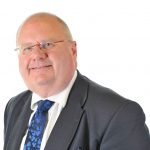
  • Eric Pickles – 2023 Speech at Holocaust Memorial Day

    Eric Pickles – 2023 Speech at Holocaust Memorial Day

    The speech made by Eric Pickles on 27 January 2023.

    A chilling fact about the Holocaust is that it could never have taken place without the willing participation of many millions of ‘ordinary people’.

    In Germany, many individuals who were not ardent Nazis nonetheless participated in varying degrees in the persecution and murder of Jews, the Roma, the disabled, homosexuals and political prisoners.

    There is no better example than the ordinary men of the Reserve Police Battalion 101. Five hundred policemen, most from Hamburg, most in their 30s and 40s – too old for conscription into the army.

    Men who, before the war, had been professional policemen, as well as businessmen, dockworkers, truck drivers, construction workers, machine operators, waiters, pharmacists, and teachers. Only a minority were members of the Nazi Party and only a few belonged to the SS.

    During their stay in Poland, these ordinary men participated in the shootings, or the transport to the Treblinka gas chambers, of at least 83,000 Jews.

    Ordinary people were witnesses; many cheered on the active participants in persecution and violence.

    Sadly, most, ordinary people remained silent.

    Responsibility for the Holocaust does not rest with the Nazi leadership alone.

    Responsibility for later genocides in Cambodia, Rwanda, Srebrenica, and Darfur does not rest solely on the leaders who incited hatred and violence.

    Ordinary people bear responsibility too. For some, that has meant responsibility for the most appalling crimes. For others, the responsibility of failing to act.

    Thankfully, there have also been ordinary men and women willing to stand against hatred.

    Ordinary men and women who often showed extraordinary bravery to save Jews.

    Their selfless acts demonstrate the best of us.

    The Holocaust and subsequent genocides show that ordinary people have choices. It is up to all of us to ensure that the choices we make today and tomorrow ensure a world without genocide.