Tag: 2023

  • PRESS RELEASE : UK sanctions Myanmar aviation fuel businesses marking 2 years since coup [January 2023]

    PRESS RELEASE : UK sanctions Myanmar aviation fuel businesses marking 2 years since coup [January 2023]

    The press release issued by the Foreign Office on 31 January 2023.

    The UK announced sanctions to increase pressure on the Myanmar military junta, coinciding with the 2-year anniversary of the coup that ousted an elected government.

    • UK announces further round of sanctions to ratchet up pressure on Myanmar military junta
    • announced ahead of 2-year anniversary of 1 February coup
    • sanctions target enablers of air force bombing campaign and repression of the civilian population

    Companies supplying the Myanmar Air Force with the aviation fuel to carry out its relentless bombing campaign against innocent people have been targeted by the UK in the latest round of sanctions, announced to coincide with the second anniversary of the brutal coup that ousted Myanmar’s elected government.

    Two companies and 2 individuals, all associated with what is known as the Asia Sun group, and integral to the aviation fuel industry in Myanmar, have been sanctioned. The group supplies fuel to the Myanmar Air Force enabling its barbaric air raiding campaign in an attempt to maintain power, killing thousands and displacing hundreds of thousands of Myanmar’s people in the process.

    The first of February 2023 marks 2 years since the Myanmar military overthrew the democratically-elected government, led by Aung San Suu Kyi, and installed a military regime. Since then, they have used violence and atrocities to maintain power and supress any opposition voices.

    Foreign Secretary James Cleverly said:

    Our sanctions are meticulously targeted to deliver maximum impact, reducing the military’s access to finance, fuel, arms and equipment.

    The junta must be held to account for their brutal crackdown on opposition voices, terrorising air raids and brazen human rights violations.

    The UK has led a strong, coordinated international response to support the people of Myanmar, their democratic demands and right to fundamental freedoms.

    The UK has worked with partners including Canada, the United States and the European Union since the coup to impose coordinated and targeted sanctions against the military regime, its business interests and those who facilitate and profit from its brutal campaign.

    Since the coup, the UK has now sanctioned 18 individuals and 30 entities, targeting those responsible for the coup, the subsequent violence, and those facilitating it. These sanctions raise the cost for those aligned with and supporting the regime’s campaign of terror. The UK will continue to use economic statecraft to restrict the military’s access to finance and arms and increase the pressure on them to engage with calls for a return to democracy.

    As part of its commitment to a free and open Indo Pacific, the UK has led the international community’s work to support a peaceful resolution in Myanmar and a return to democracy; and pushing for progress towards accountability and justice. It has also played a key role in calling on countries around the world to end the sale and transfer of arms and equipment which facilitate the military’s atrocities.

    At the United Nations, the UK successfully passed a Security Council Resolution on the crisis, the first of its kind, to apply further pressure on the military junta to end its violence. It also strongly supports ASEAN’s Five Point Consensus, which demands the military immediately ceases its violence and engages in constructive dialogue with all parties.

    Background

    Those sanctioned today are:

    • Asia Sun Trading Company Limited and Cargo Link Company Limited, both part of what is known as the Asia Sun group which dominates the aviation fuel sector in Myanmar and are involved in the transfer of aviation fuel to the Myanmar Air Force
    • Zaw Min Tun: Director and sole shareholder of Asia Sun Trading
    • Win Kyaw Kyaw Aung: former Director and shareholder of Asia Sun Trading

    Myanmar is the region’s most desperate humanitarian crisis. Following the coup, over 17.6 million people are in need of humanitarian assistance, including over 1.5 million displaced, of which more than half a million are children.

    Humanitarian access is extremely challenging. The UK has led international efforts to channel resources to non-governmental organisations based in Myanmar which are on the frontline, especially in hard-to-reach areas.

    Asset freeze

    An asset freeze prevents any UK citizen, or any business in the UK, from dealing with any funds or economic resources which are owned, held or controlled by the designated person. UK financial sanctions apply to all persons within the territory and territorial sea of the UK and to all UK persons, wherever they are in the world. It also prevents funds or economic resources being provided to or for the benefit of the designated person.

    Travel ban

    A travel ban means that the designated person must be refused leave to enter or to remain in the United Kingdom, providing the individual is an excluded person under section 8B of the Immigration Act 1971.

  • Therese Coffey – 2023 Speech on the Environment Improvement Plan

    Therese Coffey – 2023 Speech on the Environment Improvement Plan

    The speech made by Therese Coffey, the Secretary of State for Environment, Food and Rural Affairs, at Camley Street Natural Park on 31 January 2023.

    Welcome everyone to Camley Street Natural Park for the launch of our Environment Improvement Plan.

    And thank you to the London Wildlife Trust for hosting us.

    I was at another of your sites yesterday – Woodberry Wetlands – and I also recently visited Suffolk Wildlife Trust’s Hazlewood Marshes which after a breach of its walls by the tidal surge a decade ago is a great example of mitigation and adaptation actually leading to a rejuvenated nature reserve.

    I am delighted to support the important work that you do in every part of the country, both conserving nature and connecting nature to people – in the heart of the city or the countryside.

    As MP for Suffolk Coastal, I am really blessed to represent a very special part of our country with many precious habitats and protected sites, on land and offshore.

    I always said it felt like I had six years of a perfect apprenticeship before I became the Environment Minister in 2016.

    During that three years I was in office then I am proud of much of what we achieved or got going: the Clean Air Strategy, the Resources and Waste Strategy, progress on flood defences, tackling illegal wildlife trade, and much much more.

    The standout legacy from that time was our 25 Year Environment Plan, which set out our vision and the ten complementary goals designed to leave the environment in a better state than we inherited.

    I am delighted to be back now as Secretary of State, supported by a great team of ministers and civil servants here today, to present our Environmental Improvement Plan the delivery plan to achieve our ambitious, stretching environmental targets the most critical of which is to halt the decline of nature by the end of this decade.

    We can and must achieve this – both here in the UK and globally, and we have a heck of a lot to do to make that happen.

    Back then, we had anticipated that 2020 would be the magical year for bringing together the golden triangle, the triumvirate of climate change, nature and the ocean – with COP26, CBD15 and the UN Ocean Conference – especially at the time with the UK trying to secure the presidency for Climate COP26 and our intention to integrate nature.

    2020 would have started the roaring twenties – the decade for delivery for the planet. Then Covid hit.

    We saw first-hand the risk of zoonoses and pandemics. And WHAT an impact it had.

    Speaking selfishly for the environment, it was a real body blow as all the progress that had been made into turning our vibrant economy into a circular economy was somewhat derailed, understandably, in the quest to tackle the greatest public health crisis that I will ever witness.

    The silver lining, if any can be had, was the power of science and collaboration around the world to create the vaccine in record time while for the environment, it was an opportunity for us to reconnect with nature providing that break from the lockdown hell that we endured.

    Even then, initially, it was a tale of two cities – as families with no garden were shut out of their local park. That is why I am particularly pleased by our pledge in this plan to bring access to a green or blue space within 15 minutes’ walk of everyone’s homes – whether that be through parks, canals, rivers, countryside or coast.

    But nature cannot wait any longer.

    The IPBES report from 2019 set that out clearly. So, we will need to catch up at pace.

    We started in late 2021 by putting nature at the heart of (the UN Climate Summit) COP26 in Glasgow, and that has continued in Egypt and is now embedded in future climate COPs.

    The multiple pledges, coalitions for ambitions and the commitment of finance all were critical to unlocking transition to a greener future, including nature-based solutions, and keeping 1.5 alive.

    As the Prime Minister said at COP27, ‘there is no solution to climate change without protecting and restoring nature’.

    And indeed, one look at the marvellous mangroves – it wouldn’t be a speech of mine if I didn’t mention mangroves, those brilliant blue forests that capture carbon, protect coastlines and communities from storm surges, and provide vital nurseries for fish, including critical commercial stocks.

    That shows us that investing in nature is an essential, effective, cost-effective way to take on a multitude of challenges, including the causes and impacts of climate change.

    In 2022, the UN Ocean conference produced a call for action but undoubtedly, the key achievement of 2022 was the agreement of the Global Biodiversity framework at the UN’s Nature Summit – the CBD COP15 held in Montreal, to halt the decline of nature by 2030, protect 30% of the world’s land and ocean by 2030, unlock the benefits of DSI – digital sequencing information re on genetic resources, and much, much more – including a financing package to make this the decade of global action to put nature on a road to recovery.

    Our expert negotiators, including our ministers, empowered by our world-renowned scientists and UK jewels like Kew Gardens and the Natural History Museum were all critical in delivering this global agreement and we will keep up the pace.

    But why does any of this matter?

    It still remains a challenge to explain why a particular bug or beetle matters in the global web of life, or why people are so passionate about reintroducing the beaver which has been out of our domestic environment for hundreds of years.

    Nature is a crucial part of our islands’ story and our shared future. We know what is special with our rare habitats, our iconic species, and we also know the pressures it is under.

    We rely on our natural capital for a secure supply of food, for clean air, and for clean water, as well as for leisure and genuine joy.

    However, nature has been taken for granted for too long, used freely as a resource with little thought for the consequences.

    We have to reverse that and respect nature. And while the full force of nature can bring us challenges and I am mindful of 70 years ago today of the Great Flood of 1953 in which over 300 people died in our country nature can help us tackle some of our great challenges, and so we need to help protect nature too.

    I know there is much more to do to restore the natural world and to level with you, some of these challenges are not always so easy to fix as we might all hope.

    Yet, I can assure you though that with our new legal duty to consider biodiversity, guided by our Environmental Principles Policy, we are embedding nature in the heart of every decision that government will take – for the long haul.

    This is a plan for the whole of government and this is a national endeavour. And we have already started the journey, and we have seen improvements.

    Our transformation on support for farmers and landowners to prioritise improving the environment, reducing carbon emissions and enabling sustainable food production is absolutely symbiotic and truly world-leading.

    We have cleaner air. I want it to be even cleaner. Now, I would have loved to have made our target to achieve 10 micrograms by 2030, not 2040.

    Many parts of the country already enjoy this but the evidence shows us that with the best will in the world, we cannot achieve that everywhere by the end of the decade – particularly in London.

    Councils ask for a lot of powers.

    I need them to use the powers they already have, including on tackling litter and fly-tipping, rather than just asking for more.

    I will be publishing what they are doing and seeking to share best practice across the country.

    On trees, we have to accelerate our planting rate.

    The Forestry Commission will start growing their estate and increase planting fulfilling their original statutory obligation, to help rejuvenate the forestry and timber industry.

    We have strengthened the financial support through ELMS and we will continue to promote urban tree planting so children everywhere can enjoy their local woods.

    On our water bodies, without the specific uPBT chemical issue, nearly all of them are in good condition. those persistent chemicals, none currently reach the new standards – which is also the case in Germany.

    The science and modelling is clear that it will take decades for those to recover and heal. There is little if anything we can do about that specific issue but we will continue to put the spotlight on water quality and get industry to clean up its act.

    We have already seen a huge improvement in our bathing waters.

    Last year nearly 3 in 4 beaches were deemed excellent and fewer than 3% deemed poor, when it was only about half excellent back in 2009 and over 10% were poor.

    And I can tell people that I do care about the sewage in our waters. That is why we – a Conservative government – have turned on the monitoring and is why we are holding industry to account on fixing this.

    Indeed, when it comes to tackling storm overflows, we have set clear expectations on improvements that we will track against performance

    The next formal review will be in 2027 so if we can go further, faster, then that’s exactly what we will do.

    Today, the new environmental targets come into law as they were agreed by Parliament, though bizarrely the Opposition tried to vote them down.

    I am also aware of the concerns people have about EU retained law. I spent a lot of time post-Brexit putting all that into domestic law and after nearly 50 years in the EU, it is no surprise that there is a lot of legislation on our statute books.

    Nor should it be a surprise though that a lot of that legislation is actually superfluous to our needs, as rather a lot of it has nothing to do with the UK at all or no longer does in terms of we do not need to report to various agencies.

    A lot of the legislation is absolutely key to what we do which is why we will be keeping it. To avoid any doubt, I have already set out our approach to Parliament.

    We will remove legislation superfluous to the UK, review the effectiveness of EU regulation in achieving environmental outcomes and we will retain, by default, environmental legislation for the UK to achieve existing environmental outcomes.

    But this is also an international endeavour.

    We have a globally recognised track record of action helping communities protect and restore their national treasures, reinforced by our science expertise and financial support, we already help the nature around the world.

    And we will continue to do so as the impacts elsewhere can and do have consequences here in the UK.

    Having committed to doubling UK international climate finance to 11.6 billion pounds, and to spending at least 3 billion on nature, we are building on decades of action, backing efforts to take on the whole host of threats that now face the world’s flora and fauna – well beyond climate change alone.

    We do that through the Blue Belt programme, protecting an area of ocean larger than India around our biodiverse Overseas Territories, our world-renowned 39 million pound Darwin Initiative, and the Illegal Wildlife Trade Challenge Fund.

    Now, we are ploughing all that expertise and experience into our newly established 500 million pound Blue Planet Fund, and our 100 million pound Biodiverse Landscapes Fund to help some of the world’s poorest and most vulnerable communities restore, protect, and connect globally important but fragile habitats.

    And I am so proud that we are UK is leading, co-leading, and actively supporting the global coalitions that are committed to securing the maximum possible ambition, and achieving the greatest possible impact, on everything from taking on the scourge of illegal, unregulated, and unreported fishing, to persuading countries to agree a new, legally-binding global treaty to end plastic pollution, by 2040, or supporting efforts to establish a global gold standard for taking nature into account across our economies.

    As you can probably tell, I could spend hours talking about nature, about our mission, about what we have already achieved.

    And indeed here are many more parts to our plan – on sustainable use of resources, on biosecurity, on resources, on sustainability, on adaptation, on access to nature, on green finance, and so on.

    But we have work to do.

    I am determined to make this a decade of delivery for Defra, for the whole government and most importantly, for the environment.

    Driven by data and dashboards, I expect the whole Defra family to be working together – our agencies, delivery partners and regulators.

    And in all this, our aim is to catalyse action across government, across the economy, and across the country.

    And together, we can achieve this. And whether you live in a city or town, in the countryside or on the coast, I invite you to join us, because we all have a part to play, in this truly national endeavour.

    Nature needs us to accelerate and scale up our help if we want to enjoy nature and have its help for generations to come and that is exactly what we are going to do.

  • PRESS RELEASE : Violent offences reduced in areas with multi-agency partnerships [January 2023]

    PRESS RELEASE : Violent offences reduced in areas with multi-agency partnerships [January 2023]

    The press release issued by the Home Office on 31 January 2023.

    An estimated 136,000 violent offences have been prevented in areas of England and Wales delivering government-funded programmes to reduce serious violence.

    Eighteen areas of England and Wales most blighted by violent crime have been receiving targeted funding for the past three years, to increase police patrols in crime hotspots and provide more support to at-risk young people.

    An independent evaluation published today of the government’s ‘hotspot’ policing programme and network of Violence Reduction Units (VRUs) has revealed promising signs the approach is working, with 136,000 violence without injury offences estimated to have been prevented in areas with the programmes.

    There are also positive indications that homicides and hospital admissions for violent injuries are reducing in these locations as a result of this funding.

    The results come as the new Serious Violence Duty comes into force today, which was brought in by the Police, Crime, Sentencing and Courts Act 2022 and places a legal duty on public bodies to work together to drive down serious violence.

    Policing Minister Chris Philp said:

    These are outstanding results. Early interventions, which support at-risk kids to make the right choices in life, are helping to keep our communities and streets safer.

    Serious violence is a complex issue, which is why we are putting multi-agency working at the centre of our approach.

    Violence Reduction Units, hotspot patrols and the recruitment of 20,000 additional police officers will see every community become a safe and prosperous place to live.

    Set up in 2019, VRUs are a pioneering multi-agency initiative that brings together local partners in policing, education, health, and local government, to identify vulnerable children and adults and steer them away from a life of crime and violence.

    With prevention better than cure, VRUs and GRIP patrols not only reduce violent incidents but see wider benefits. In their third year of operation, for every £1 invested by the Home Office in this serious violence prevention work, there was a return of £4.10 in savings to society.

    The Violence Intervention Project (VIP) navigator scheme by the Leicester, Leicestershire and Rutland Violence Reduction Unit engages with young people in custody suites, at a time they are most likely to accept help. Support workers create a ‘teachable moment’ to offer support and access to services to steer them back on track.

    One eighteen-year old, James (name has been changed), was helped by the VIP team after being caught in possession of a knife and drugs. Weekly mentoring, engagement with a substance misuse worker, and enrolment on a construction course and a gym has helped him stick to his bail conditions. He has not reoffended, has been more open about his mental health and now understands how decisions at this stage of his life can impact his future.

    Grace Strong, Director of the Leicestershire Violence Reduction Network said:

    The VIP team are seeing hundreds of young people a year and offering them tailored support to make positive changes in their life and reducing their risk of being involved in further serious violence.

    These vulnerable young people are becoming supported and empowered, and it is extremely positive for everyone to see them achieve goals that they never thought to be possible.

    West Yorkshire VRU runs a similar scheme, in conjunction with the local hospital, to reach those presenting in A&E due to a violent incident.

    Dr Alice Downs, Paediatric Emergency Consultant & Department Safeguarding Lead for Leeds Teaching Hospitals NHS Trust, said:

    When young people come into our hospitals as a result of violent crime we have a small window of opportunity to offer brief intervention using youth workers to empower the young person to make better life choices.

    Working with the Violence Reduction Unit has enabled us to establish a team of Navigators who can explore the circumstances that have led to the young person’s hospital attendance, and address these to try and prevent similar incidents occurring.

    Their attendance in our Emergency Department provides a valuable opportunity to intervene, improve lives, reduce morbidity and death from violent crime. This in turn should reduce the substantial impact on families and the cost to the NHS.

    Building on the successes of VRUs, from today, multi-agency working is a legal obligation for public bodies across England and Wales, through the Serious Violence Duty. Police, health, fire and rescue services, local government and criminal justice partners will now be required to collaborate to find and address the causes of serious violence in their local area.

    The duty will aim to continue driving down serious youth violence (as measured by under 25 hospital admissions for assault by a sharp object) across England and Wales, which has already fallen by 20% across England and Wales since March 2020.

  • PRESS RELEASE : Vision for nature recovery launched [January 2023]

    PRESS RELEASE : Vision for nature recovery launched [January 2023]

    The press release issued by the Department for Environment, Food and Rural Affairs on 31 January 2023.

    Tony Juniper marks the launch of the Environment Improvement Plan.

    Thank you SoS for inviting me to speak at what is a defining moment for Nature recovery in this country. As your speech emphasised so clearly, Nature is not a nice to have but vital for our survival, and which is why this Environmental Improvement Plan published today is so important, and so welcome.

    We now all know that we are facing into a series of environmental challenges that are very serious, pressing and which are connected to one another. At the global level the heating of our planet and the depletion of Nature are twin evils which drive each other on and place our economies and societies in peril. Their effects are very much felt in England where, in Nature terms, we’ve become one of the poorest countries on Earth.

    Countries are beginning to recognise that if we are to secure our future we need to tackle these huge challenges, and do it in an integrated and joined up manner. After the UK government helped to forge global common cause at COP 15, the new Environmental Improvement Plan is a very visible demonstration of this country’s commitment to taking the urgent practical steps needed to reach the targets agreed in Montreal, and indeed those set out domestically while that summit was in progress and as required by the 2021 Environment Act.

    The result we have before us today is an ambitious and integrated plan, setting out a package that is broad and geared towards hitting targets. What is required now is a concerted effort across government and society to translate its intent into action.

    This can be done, so long as priority is attached to it and we remain focussed on joined-up delivery based on partnerships. Success will not only bring benefits for our depleted natural environment, but also for jobs, food and water security, public health and investment.

    The economic benefits arising from Nature recovery are increasingly well understood. Pollination by bees and other insects are worth annually nearly £700 million, sustaining a farming industry worth over £120 billion. In England’s peatlands some 580 million tonnes of carbon are locked away in the ground and out of the atmosphere, at the same time filtering high-quality water into rivers that is worth up to £888 million annually.

    A high-quality natural environment attracts visitors and business opportunities. The Jurassic Coast World Heritage Site has brought millions of pounds into the local economy and supports up to 2000 jobs, while the England Coast Path generates spending of more than £18 per person per day and health savings of £62 per trip.

    Nature recovery thus makes sense at many levels and must begin with halting its long-term decline by 2030. This will not be simple and will take significant new partnerships and integration of effort across the “Four Fs” of farming, forestry, flooding and freshwater.

    Each of these elements has its own distinct pressures and goals, but with a holistic approach they can create a real momentum towards meeting the environmental targets and the basis for doing that is in the plan being launched today.

    Action to deliver this five-year plan is already well under way and Natural England is proud to be at the forefront of that. In recent years we have been repurposed and revitalised and we are making great strides in working with a wide range of partners to bring Nature recovery to life.

    One example is the way we’ve sought to expand the role of National Nature Reserves, designating new sites and joining up neighbouring ones to enable Nature restoration at significant scale.

    Over the last three years we have increased the total area of NNRs by 13,000 hectares – equivalent to almost 15% of the total area declared in the previous 67 years since their inception in 1952. We will continue with this programme of expanding NNR coverage through five new significant designations per year during the course of the EIP.

    NNRs are among the battery packs of core protected areas that will power the Nature Recovery Network that we and our partners are creating across the country. Containing the finest examples of wildlife, habitat and geology they will also help to power wider Nature Recovery Projects that are now springing into life.

    A great example of this is the Somerset Wetlands, where we declared a super NNR last year, which incorporated six existing NNRs within new lands where Nature recovery can take place and which is also at the heart of a new Nature Recovery Project that is ten times the size and which was announced a week later.

    We already have six of these large scale Nature Recovery Projects in place and a further 19 are in the pipeline, many of them, like Purple Horizons in the West Midlands, taking Nature recovery into the heart of towns and cities, where many people lack the health and wellbeing benefits that come with connection to the natural world. This and other projects like it will help give effect to the EIP goal of ensuring that every person is no more than 15 mins walk from green space.

    On this theme, today also sees Natural England launch a new Green Infrastructure Framework that gives local authority planners and developers the tools and advice they need to ensure that thriving Nature is firmly embedded in their plans for their communities, giving people more opportunity to enjoy the wonders of the natural world.

    Today marks a significant new opportunity to change Nature’s fortunes for the better in this country. The EIP charts an ambitious path, and if we can build the partnerships needed to succeed we could during the years ahead begin to see the transformation that we know we must make, marking the moment when we turn from charting Nature’s decline and instead chart its recovery.

  • PRESS RELEASE : Dame Jane Francis appointed Royal Society Trustee of the Natural History Museum [January 2023]

    PRESS RELEASE : Dame Jane Francis appointed Royal Society Trustee of the Natural History Museum [January 2023]

    The press release issued by the Department for Digital, Culture, Media and Sport on 31 January 2023.

    The Secretary of State has appointed Dame Jane Francis to the Board of the Natural History Museum for 4 years.

    Dame Jane Francis

    Appointed for a four year term commencing 1st February 2023.

    Jane Francis is Director of the British Antarctic Survey, a research centre of the UK Natural Environment Research Council. She is involved with international polar organisations, such as the Antarctic Treaty and European Polar Board, and on several advisory boards of national polar programmes.

    Jane Francis is a geologist by training, with research interests in past climate change. She has undertaken research projects at the universities of Southampton, London, Leeds and Adelaide, using fossils to determine the change from greenhouse to icehouse climates in the polar regions over the past 100 million years. She has undertaken over 15 scientific expeditions to the Arctic and Antarctica in search of fossil forests and climates of the past.

    Jane was appointed Dame Commander of the Order of St Michael and St George (DCMG) in recognition of services to UK polar science and diplomacy. She was also awarded the UK Polar Medal by H.M The Queen, the Royal Geographical Society’s Patron’s Medal and the 2022 Prince Albert II of Monaco Foundation Award for Planetary Health. Jane is Chancellor of the University of Leeds and a Fellow of the Royal Society.

    Remuneration and Governance Code

    Trustees receive no remuneration, except for expenses reasonably incurred in performance of their duties. This appointment has been made in accordance with the Cabinet Office’s Governance Code on Public Appointments. The appointments process is regulated by the Commissioner for Public Appointments. Under the Code, any significant political activity undertaken by an appointee in the last five years must be declared. This is defined as including holding office, public speaking, making a recordable donation, or candidature for election. Dame Jane Francis has not declared any significant political activity.

  • PRESS RELEASE : Gail Boyle reappointed to the Treasure Valuation Committee [January 2023]

    PRESS RELEASE : Gail Boyle reappointed to the Treasure Valuation Committee [January 2023]

    The press release issued by the Department for Digital, Culture, Media and Sport on 31 January 2023.

    The Secretary of State has reappointed Gail Boyle as a Member of the Treasure Valuation Committee from 30 March 2023 until 29 March 2026.

    Gail Boyle

    Gail Boyle is Senior Curator (Archaeology & World Cultures) for Bristol Culture. She has been a successful museum archaeologist for over 35 years and played leading roles in a wide variety of innovative, complex and collaborative exhibition, engagement and research projects. As well as being a Fellow of the Society of Antiquaries, Gail was awarded the Fellowship of the Museums Association (2018) in recognition of the significant contribution she has made to the museum sector. Gail also sits on several UK heritage and museum related bodies, including Historic England’s Future Archaeological Archives Programme and the Portable Antiquities Scheme Advisory Group.

    As former Chair of the Society for Museum Archaeology (2012–2018) Gail instigated and co-authored 3 national surveys of ‘Museums Collecting Archaeology’ (2016-2018), and produced national guidance on the rationalisation of archaeological collections. She was also the chief architect of the Society for Museum Archaeology’s Archaeological Resources and Training project and was both a contributor to, and editor of, new Standards and Guidance in the Care of Archaeological Collections 2020.

    Remuneration and Governance Code

    Members of the Treasure Valuation Committee are not remunerated. This reappointment has been made in accordance with the Cabinet Office’s Governance Code on Public Appointments. The appointments process is regulated by the Commissioner for Public Appointments. Under the Code, any significant political activity undertaken by an appointee in the last five years must be declared. This is defined as including holding office, public speaking, making a recordable donation, or candidature for election. Gail Boyle has not declared any significant political activity. She is an elected member and Chair of Pucklechurch Parish Council. She was last elected in May 2019 and has no political affiliation.

  • PRESS RELEASE : National police response to the Hillsborough Families Report [January 2023]

    PRESS RELEASE : National police response to the Hillsborough Families Report [January 2023]

    The press release issued by the National Police Chiefs’ Council on 31 January 2023.

    Widespread changes to policing were made public today as national police leaders release their response to the Hillsborough Families Report.

    Leaders from the College of Policing and the National Police Chiefs’ Council have apologised to the Hillsborough Families as part of the national police response to a report by the Rt Revd James Jones KBE on the lessons from the Hillsborough stadium disaster.

    The report recommended action from public bodies and government to ensure the pain and suffering of the Hillsborough families could not be repeated. Following its publication in November 2017, the national police response can now be made public after the culmination of legal proceedings and other matters.

    Today’s national policing response is a commitment to avoid the failures made during and after the Hillsborough Disaster; embed strong ethical values in the service; and ensure there is humanity and humility in the police response to public tragedy.

    Reforms in response to the report include:

    1. All police forces in England and Wales have signed up to a Charter for Families Bereaved Through Public Tragedy which sets out that police organisations must acknowledge when mistakes have been made and must not seek to defend the indefensible.
    2. The College of Policing and NPCC have agreed the content of a new Code of Practice on police information and records management to prevent the problems faced after the Hillsborough disaster when records were lost or destroyed. This Code has been submitted to the Home Office for ministerial approval, following which it can be laid before Parliament in accordance with the Police Act 1996.
    3. The College of Policing’s Code of Ethics – applicable to everyone working in policing – will be revised this year and candour will be a key theme.
      There will be a supporting Code of Practice, which chief officers must have regard to, which will state that ‘Chief officers have a responsibility to ensure openness and candour within their force’.
    4. New national guidance for Family Liaison Officers has been issued, incorporating learning from the Hillsborough Families Report, the Grenfell Tower tragedy and the 2017 terrorist attacks.
    5. The College of Policing released updated disaster victim identification Authorised Professional Practice in August 2018 in direct response to the report, including an explicit statement that the terms ‘belonging to’ or ‘property of the coroner’ should not be used in future disasters.

    National Police Chiefs’ Council Chair, Martin Hewitt, said:

    “As police officers, we come to work to keep the public safe and as a service, we failed to do this at Hillsborough.  I am deeply sorry for the tragic loss of life, and for the pain and suffering that the families of the 97 victims experienced on that day and in the many years that have followed.

    “Collectively, the changes made since the Hillsborough disaster and in response to Rt Reverend James Jones’s report aim to ensure the terrible police failures made on the day and in the aftermath can never happen again.

    “Police chiefs today are committed to responding to major incidents with openness and with compassion for the families involved. All police forces in England and Wales are signed up to the Charter for Families Bereaved through Public Tragedy.  In signing this, they committed to putting the interests of victims and families above any other interest and acting with candour at every turn.”

    Chief Constable Andy Marsh, College of Policing CEO, said:

    “Policing has profoundly failed those bereaved by the Hillsborough disaster over many years and we are sorry that the service got it so wrong. Police failures were the main cause of the tragedy and have continued to blight the lives of family members ever since.

    “When leadership was most needed, the bereaved were often treated insensitively and the response lacked coordination and oversight.

    “Today’s report explains long-term, and more recent, developments in how the police responds to mass fatality incidents. Hillsborough is a touchstone for long-lasting change in policing and there is a commitment from the leadership in policing to create a modern, dynamic police service which acts without fear or favour, and with integrity and empathy.

    “The changes include all police forces in England and Wales signing up to a charter agreeing to acknowledge when mistakes have been made and not seek to defend the indefensible; a strengthened ethical policy which makes candour a key theme; and new guidance for specialist officers supporting families during a tragedy which learnt lessons from the Hillsborough Families Report, the Grenfell Tower tragedy and the 2017 terrorist attacks.

    “I would like to sincerely thank the former Bishop of Liverpool, the Rt Revd James Jones, for his dedication and insight which continues to support the police service in undergoing essential reform.”

    Mr Marsh added the Hillsborough Families Report is now included in training for new recruits entering policing through the College of Policing’s updated routes, as well as the importance of transparency and being candid when things go wrong.

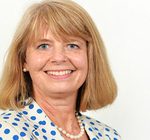
  • Harriett Baldwin – 2023 Speech on the International Day of Education

    Harriett Baldwin – 2023 Speech on the International Day of Education

    The speech made by Harriett Baldwin, the Conservative MP for West Worcestershire, in Westminster Hall, the House of Commons, on 26 January 2023.

    It is a pleasure to serve under your chairmanship, Mr Sharma. I congratulate my right hon. Friend the Member for Chelmsford (Vicky Ford) on securing the debate. I thank her for making it possible for hon. Members who are passionate about this issue to make the case for every child in the world to have 12 years of quality education. Nothing could be more important, and nothing is less politically controversial, but because we all agree how important it is, it does not get enough debate in this place. That is why I am so sincere in my congratulations to my right hon. Friend.

    Over the last few years, I have had the privilege of chairing the all-party parliamentary group on global education—more recently, I have been co-chairing it— and I was also a co-founding chair of the International Parliamentary Network for Education. Regrettably, I had to hand on those responsibilities when I was given the honour of chairing the Treasury Committee. I am delighted that my right hon. Friend has embraced the opportunity that those marvellous groups offer to champion this important cause.

    In my right hon. Friend’s powerful opening speech, we heard about the important ways in which enabling every child in the world to get a quality education could make our future so much brighter. Growing the world’s economies, making sure we are all healthier, and helping to tackle climate change are all powerful and provable implications of ensuring that every child gets a good education.

    I will focus on those—particularly refugee children—whose education suffers because they have to flee conflict. I thank all the families in Worcestershire who have been so good about welcoming refugees from Ukraine into their homes. We are proud to have welcomed 1,000 Ukrainians into Worcestershire, and half of them are children who are being educated in our local schools. I thank the families, but I also thank the schools and teachers for welcoming those children into our educational settings.

    I have a point for the Minister to take back to her colleagues at the Department for Levelling Up, Housing and Communities. There is rightly a payment to the school when it takes in a Ukrainian refugee child. If the child moves to another school after a short period of weeks, that payment does not follow them, and that has led to a few problems. The up-front lump sum gets paid to the school that receives the child, but if they are there for only a little while, the money does not go any further. The Minister will probably not be able to respond today, but will she commit to write to me about how that could be better tackled in the system?

    I endorse the points that were made about those poor girls in Afghanistan. There is not a day when I do not think about how terribly they are suffering from not being allowed to go to school. The medieval cruelty of the Taliban regime in preventing their daughters from being educated is appalling. We must speak out about it whenever we can, because it is only by keeping that focus that we can ever hope for the situation to change.

    It is not just girls in Afghanistan, but millions of children in countries all around the world—including our own—who are missing out on education. It is particularly difficult to educate children in refugee settings, which is why I commend the work I saw at first hand when I was the Minister responsible for that budget in the international sphere.

    The work done to help children get an education is often delivered very rapidly by Education Cannot Wait, and I want to highlight the opportunity for the UK to continue to show its global leadership in this area with the upcoming replenishment of the Education Cannot Wait budget. I am sure the Minister and her officials will be carefully studying the results that Education Cannot Wait has delivered in settings around the world. I hope that the data still show the good impact and powerful value for money that that funding produces, and that the UK can therefore lead on that important work and crowd in other countries to contribute to it.

    To conclude my brief remarks on this incredibly important subject, I again thank my right hon. Friend for securing the debate. On behalf of my constituents, I also thank the Minister for the work the UK does to make the world a safer, healthier and more prosperous place by investing in education—not just in this country, but in countries that cannot afford to educate all their children. I urge the Minister to look particularly favourably on the work that is done for children in refugee situations by Education Cannot Wait.

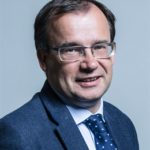
  • Gareth Thomas – 2023 Speech on the International Day of Education

    Gareth Thomas – 2023 Speech on the International Day of Education

    The speech made by Gareth Thomas, the Labour MP for Harrow West, in Westminster Hall, the House of Commons on 26 January 2023.

    It is a real pleasure to follow the right hon. Member for Chelmsford (Vicky Ford). Much to my surprise, I found nothing in her speech to disagree with, but I promise not to make that a habit—just to reassure her and my hon. Friends. Two of the most significant points of substance that she raised were the importance of girls’ education, and investment in that, and continuing to build a global alliance for more investment in girls’ education.

    I remember that in my time as a Minister in the Department for International Development, we began the process of putting substantial investment into girls’ education. I remember how proud I was—as I am sure other Members were at the time—that Britain was willing to show global leadership on that issue. I pay tribute to Gordon Brown who, since stepping down as Prime Minister and being appointed as the UN special envoy for global education, has continued to do everything he can to build support for that.

    The right hon. Member for Chelmsford also made an important point about Afghanistan and the international community’s continuing outrage about the way in which women and, in particular, young girls are being treated there. She spoke of the need for her colleagues in the Foreign Office, if at all possible, to maintain funding for girls’ education, however difficult that is going forward.

    There is one thing that the right hon. Member for Chelmsford did not mention—I think I understand why, but she will understand why I raise it. I think it would be an even better statement on education to have a separate, dedicated Department for International Development, able to champion the case for investment in education globally, free of some of the constraints that the FCDO is under.

    I hope that the House will forgive me if I make some parochial points now about the importance of more education investment in Harrow, where we are blessed with remarkable headteachers and teachers, as well as impressive students. One of the great privileges for me as the Member for Harrow West is to have the opportunity to go into schools and see that the future of the community in which I have lived all my life and that I love very much is in the safe hands of such impressive young people.

    Nevertheless, it is clear that many of the schools still face real financial difficulties and that the governing bodies face challenges in recruiting headteachers and teachers, not least in maths and science, and also, increasingly, in other subjects, including humanities and English. I am struck by the comments of the executive heads of some of the academies that operate in Harrow about how difficult it has been on occasion to get a field of sufficiently talented applicants for the position of headteacher. As I say, they do a remarkable job none the less, but it would be good to hear from the Minister—if not today, perhaps in a letter—the Government’s plan to address the recruitment crisis in education.

    Local authorities also need more funding for special needs education, and that is certainly the case in Harrow. Mr Sharma, you may recognise that there is a continuing difficulty with the fact that teachers who are appointed to jobs in inner London get a significant pay increase compared with teachers working in outer London schools. There is little difference in the cost of living in inner London as opposed to in outer London. It seems to me that the discrepancy in pay between teachers in outer London and their compatriots in inner London, which has been around for a long time, needs addressing urgently.

    My last substantive point is that I want to encourage the Government to take a fresh look at investment in supplementary schools. We are lucky to have the Foreign Office Minister present, because she knows a lot about the Asia-Pacific tilt to which the Government are committed. I am struck by the need for us to invest in teaching the languages of Asia and the Pacific. Given the global significance of the Indian economy in years to come, it seems even sadder that we are seeing a decline in the teaching of the languages of modern India, including Gujarati, Bengali, Persian, Punjabi and Urdu. Among GCSE students in this country between 2015 and 2021, we saw a very steep decline: there was a 77% drop in the number studying GCSE Gujarati, a 66% drop in the number studying GCSE Bengali, and a 37% drop in the number studying GCSE Urdu. If we as a country want the full benefit of the trade deal that we hope to sign with India, having people who can speak the languages of that great country is essential. Too much of the teaching of those languages is left to very dedicated people in temples, mosques and Saturday schools across local communities.

    To be fair, the Government have invested in teaching modern languages. They have recently invested some £14 million in teaching Mandarin and some £5 million in teaching Latin. Why not have a similar amount of investment in teaching the languages of modern Asia? We need dedicated funding, and we need specialist training available for teachers in those subjects. Why not have a flagship school programme to back teaching in that area? Why not offer a bit of funding to support the Saturday schools that do so much to keep up the level of GCSE studies? Where is the academic research programme to support such a programme of investment in these vital community languages?

    With that, I apologise to the Front Benchers and to other Members of the House: due to childcare reasons, I cannot stay for the full debate, but I will certainly read the contributions of my hon. Friend the Member for Enfield, Southgate (Bambos Charalambous), the Minister and others.

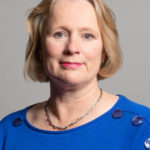
  • Vicky Ford – 2023 Speech on the International Day of Education

    Vicky Ford – 2023 Speech on the International Day of Education

    The speech made by Vicky Ford, the Conservative MP for Chelmsford, in Westminster Hall, the House of Commons, on 26 January 2023.

    I beg to move,

    That this House has considered the International Day of Education.

    It is a pleasure to serve under your chairmanship, Mr Sharma. It is a huge honour to open this debate to recognise the importance of the International Day of Education, a day that is dedicated to raising the importance of education for all. As the UN Secretary-General said this week,

    “education is a fundamental human right and the bedrock of societies”.

    In my Chelmsford constituency, the vast majority of children and young people can access excellent education. In fact, in the Chelmsford district, 94% of our schools are graded good or outstanding by Ofsted. That is well above the England average, which is also high at 89%. Essex children outperform the national average in key areas such as early reading. Enriching out-of-school activities can also enhance educational attainment. During the school holidays, I am delighted that Chelmsford children from more disadvantaged backgrounds can also access enriching activities through the holiday activities and food programme, which I am deeply proud to have set up during my time as Children’s Minister.

    However, during the pandemic, we saw so starkly in our country that when children cannot access school, their education suffers, as does their mental wellbeing. It is therefore good news that, on the whole, education for the children of Chelmsford and elsewhere across the country has now returned to what we consider normal, but that is not the case for so many children in other parts of the world. Currently, an estimated 222 million children are in need of urgent educational support across regions affected by emergencies and protracted crises. Some 78 million children are not in school or receiving any form of education. That figure of 222 million is an increase from 75 million in 2016.

    The educational gulf is greatest in the world’s poorest countries. World Bank research from back in 2019 showed that pre-pandemic, 90% of children in low-income countries could not read proficiently. Education Cannot Wait’s report from last June reminds us that pre-covid, only 9% of crisis-affected early grade children achieved minimum proficiency in maths, and only 15% in reading, yet maths and reading are the vital building blocks on which all education is founded.

    The covid pandemic further widened educational disparities, and girls are disproportionately affected. Nearly two thirds of the figure for global illiteracy is made up of women. The Malala Fund estimates that 130 million girls are out of school today. However, when girls are educated, it strengthens economies and creates jobs. World Bank research shows that, on average, women with secondary school education earn almost twice as much as those with no education at all.

    Educated girls tend to be healthier citizens who raise healthier families. A girl who has been educated is much more likely to ensure that her children are vaccinated, she is less likely to marry young or contract HIV, and she is more likely to have healthy, educated children. Each additional year of school that a girl completes cuts infant mortality and child marriage rates. Furthermore, when girls are educated, communities are more stable and can recover faster from conflict.

    Investing in girls’ education is good for our planet. The Brookings Institution calls secondary schooling for girls the most cost-effective and best investment against climate change. Research also suggests that girls’ education reduces a country’s vulnerability to natural disasters. Save the Children estimates that universal secondary education for girls could avert 50 million child marriages by 2030.

    This year, on the International Day of Education, we have been thinking particularly of the 3 million girls in Afghanistan who were previously in education but are now out of school, because the Taliban will not allow girls to attend secondary school or university. The recent ban on female aid workers will mean that even more Afghan girls are denied their right to education, as the Taliban insist that girls can be taught only by female teachers. That will mean that yet more Afghan girls face forced marriages and poverty. I am therefore concerned to hear from Save the Children that the Foreign, Commonwealth and Development Office is considering ending its “Supporting Afghanistan’s Basic Services” programme, which provides health, education, WASH—water, sanitation and hygiene—and nutrition to around 300,000 people. We must not pull the rug out from under the women and girls of Afghanistan.

    We know that in many developing countries, girls face extra barriers in accessing education. During my year as an FCDO Minister, I travelled to 15 African countries. So many girls told me at first hand about the challenges that they face: the fear of violence, including sexual violence, on long walks to school; the lack of water and sanitation, which can make it impossible for girls to attend school when they have their period; and the constraints on family finances, which so often mean that any money that can be scraped together for school fees is reserved for sons.

    However, I also heard from these girls their determination to learn. I met girls who dreamt of becoming doctors, teachers and even pilots. I also saw the many projects that the UK has invested in to help girls to overcome these barriers. Girls told me about the mentoring project in Malawi, where young women who have completed their secondary education give advice to other girls and help them through their own school experience. I saw the joy on girls’ faces when I opened a clean water well and lavatories in Lesotho. I remember the seriousness of the young woman in Sierra Leone who explained how our project to reduce violence had completely changed the culture of her school, ensuring that girls could learn without fear. And the whole community—thousands of people—came together to celebrate the launch of the Shule Bora programme in Tanzania. That programme has a special emphasis on girls, children living with disabilities and those living in the most deprived areas. They came to celebrate because they knew what we know: when one focuses on helping the most marginalised girl to access education, every child is helped.

    We should all be very proud of the UK’s track record in supporting education in developing countries, and especially, in supporting girls’ education. We have championed the campaign for 12 years of education for every girl. Each year, we host the Education World Forum, with delegates coming to London from across the world to discuss how to learn from one another and how to improve education standards in their countries.

    During the pandemic, the UK co-hosted the Global Partnership for Education summit, raising $4 billion for education in some of the world’s poorest countries; our pledge was £430 million. During our leadership of the G7, the world’s richest countries committed to getting 40 million more girls into school and 20 million more girls reading by the age of 10, with all that to be done by 2026.

    Girls who are not in school do not have a voice of their own, so it is vital that the UK continues to lead from the front on girls’ education and to use our voice for them. I urge the Minister to make sure that all FCDO Ministers—including the Minister with responsibility for development, my right hon. Friend the Member for Sutton Coldfield (Mr Mitchell)—continue to champion that cause. We need to champion it at the World Bank development meetings this spring, at the meetings of the UN’s Commission on the Status of Women in New York in March and at other international fora. I also urge the Minister to work with other FCDO Ministers to publish, with urgency, the long-awaited FCDO women and girls strategy.

    The UK is also a co-founding member of Education Cannot Wait. Its recent analysis indicates that 84% of out-of-school crisis-impacted children live in areas with protracted crises. The vast majority of those are in countries specifically targeted through ECW’s investments, including Afghanistan, the Democratic Republic of the Congo, Ethiopia, Mali, Nigeria, Pakistan, Somalia, South Sudan, Sudan and Yemen. The war in Ukraine is pushing even more children out of school, with recent estimates—according to UNICEF’s report of 17 January—indicating that the conflict has impacted more than 5 million school-age children.

    The FCDO tells me that ECW is already delivering quality education to over 7 million children across more than 30 crisis-affected countries. We will not reach the target that we have committed to of getting 40 million more girls into school without the work of ECW. All across the world, funding needs are growing due to conflict, climate change and the pandemic. Across UN-led humanitarian appeals, the education sector was funded at just 22% of what it needed in 2021—that is half what was achieved in 2018.

    Next month, ECW will hold its high-level financing conference. If we are to help the 222 million children and young people to receive the education that they deserve—to unlock the potential of the world’s children —we must unlock the financial resources to make it happen. Governments, the private sector, philanthropic foundations and individual donors need to work together to find the resources. I know that our official development assistance budgets are tight—very tight—but UK leadership is key. If we step away from the promises that we have made to the children of the world, to the girls of the world, other donors may also step back and reduce or delay their investments.

    Children across the world get just one chance at their education; they cannot wait. I therefore urge the Minister and the FCDO to dig deep into our pockets at the pledging conference next month and to make sure that Education Cannot Wait has the resources that it needs to deliver for our children.