Tag: 2023

  • PRESS RELEASE : Veterans charity born out of DIY SOS going “from strength to strength” [February 2023]

    PRESS RELEASE : Veterans charity born out of DIY SOS going “from strength to strength” [February 2023]

    The press release issued by the Cabinet Office on 2 February 2023.

    Veterans Minister Johnny Mercer and DIY SOS presenter Nick Knowles visited Hull 4 Heroes today to meet charity staff and volunteers supporting veterans

    Charity supports veterans across the City of Hull, North Riding and North Lincolnshire

    A charity born out of inspiration from a veterans project on DIY SOS has been praised for helping ex-service personnel in north-east England.

    Today, Minister for Veterans’ Affairs Johnny Mercer and DIY SOS Presenter Nick Knowles visited Hull 4 Heroes.

    The charity, which has previously benefited from funding via the Armed Forces Covenant Fund Trust, was founded in 2016 and provides crucial support services to veterans in Hull, North Riding and North Lincolnshire. Services provided by the charity include employment support, training, woodwork, cookery and mental health.

    On the visit Mr Mercer met with veterans to learn more about how the charity helps people in the area, including through making large and small scale renovations to existing properties which veterans live in.

    The Minister was given a tour of the warehouse facilities the charity runs, which stores personal possessions of ex-service personnel while they are moving or finding a new house. The charity also provided a Virtual Reality tour of their flagship project – a brand new housing development called the Veterans Village.

    The Veterans Village will see the construction of a housing and rehabilitation site for veterans as they transition into civilian life. The 22 acre site will contain a residential area, training and support facility and a visitor centre.

    Minister for Veterans’ Affairs Johnny Mercer said:

    It was a pleasure to visit the Hull 4 Heroes team with Nick Knowles today to learn more about the work they are doing to help ensure our veterans enjoy a smooth and successful transition to civilian life.

    The valuable skills they are teaching offer a stable platform for those looking to get back into work, enabling employers across the UK to fully appreciate just how valuable our veterans can be.

    Hull 4 Heroes was founded by Paul Matson, a veteran himself, who built a successful business following a difficult period after leaving the armed forces. His charity was created on the back of getting involved with the show DIY SOS Big Build on a veterans project in Manchester, called Veterans Street. As a consequence of seeing the success of this project, he decided to establish his own veterans support hub in Hull with the help of other members of the local armed forces community.

    The Office for Veterans’ Affairs recently announced Op Fortitude, a single referral scheme for homeless veterans to access supported housing and wrap-around specialist care. Along with more than £8.5 million in funding for charity support services in veterans housing units, the scheme will ensure veterans homelessness is ended in 2023.

    Following the success of a temporary pathway set up for the Christmas period last year, the referral scheme is being designed, taking forward lessons learned, and will launch in Spring this year.

  • PRESS RELEASE : The UK commends the work of UN Mission in Iraq and welcomes the progress of the newly formed Government – UK Statement at the Security Council [February 2023]

    PRESS RELEASE : The UK commends the work of UN Mission in Iraq and welcomes the progress of the newly formed Government – UK Statement at the Security Council [February 2023]

    The press release issued by the Foreign Office on 2 February 2023.

    Statement delivered by Political Coordinator Fergus Eckersley at the UN Security Council briefing on Iraq.

    Thank you, Madam President. Let me start by thanking Japan for a highly professional and effective presidency in the month of January, and let me assure you and your team of our full support for your presidency this month. Thank you to the Special Representative for her briefing and to Dr Ahmad for the messages he brought forward today.

    The UK commends the vital work of the UN Assistance Mission in Iraq. As the Special Representative said, we also commend the longstanding commitment of successive Iraqi governments to working closely with the UN Mission.

    We welcome the formation of the new Government of Iraq and Prime Minister Sudani’s focus on the delivery of services that the people of Iraq need. The UK will continue to support the Iraqi government on the range of challenges it faces. Key amongst these challenges are securing the country’s economic stability and the need for climate action, including energy transition and green economic reform. We hope to see the Government propose and pass a sustainable budget which stimulates investment in Iraq’s future. We encourage the government’s continued focus on tackling corruption, as the Special Representative said, and we echo the Special Representative and others on the importance of human rights and accountability.

    Another central challenge is Iraq’s security. We remain committed to supporting the Government of Iraq and the Kurdistan Regional Government in their efforts to ensure the safety of Iraqi civilians, not least in the ongoing fight against the scourge of Daesh, and to safeguard the security and sovereignty of Iraq.

    We welcome Prime Minister Sudani’s work to reinforce the security of Iraq’s borders. We commend Prime Minister Sudani’s engagements throughout the region and his government’s efforts to encourage regional stability through broader bilateral relations. We encourage further regional dialogue, including on crucial transnational issues such as water security and the adverse impacts of climate change. And we welcome UNAMI’s important role in support of these efforts. Continued close cooperation between the government of Iraq and regional partners is important to reinforce both Iraqi and regional security and stability.

    We welcome ongoing contact between Baghdad and Erbil to settle outstanding issues of concern. We encourage all sides to engage in dialogue to resolve differences where they exist, including on the hydrocarbon law and the budget. We also welcome and encourage dialogue between the Kurdish political parties, and we will continue to emphasise the urgent importance of passing a law facilitating elections in the Kurdistan region this year.

    Finally, we would also like to thank the Special Representative for her update on missing Kuwaiti and third country nationals, and missing Kuwaiti property. We welcome and encourage the commitment of all parties to making further progress on this important issue.

    Thank you.

  • PRESS RELEASE : Dangerous thief, Jordan Peacock, given extended spell in prison [February 2023]

    PRESS RELEASE : Dangerous thief, Jordan Peacock, given extended spell in prison [February 2023]

    The press release issued by the Attorney General’s Office on 2 February 2023.

    Thief who ran over his victim as he tried to flee with stolen goods will spend longer in prison.

    A thief who ran over his victim as he tried to flee with stolen goods will spend longer in prison after his case was referred under the Unduly Lenient Sentence scheme.

    Jordan Peacock, 26, from Worksop, Nottinghamshire, was one of three men who stole toolboxes from an electrician working in Whitwell. When the electrician realised, he attempted to close the gates to prevent the getaway car leaving the premises.

    Peacock drove the vehicle directly at the victim, running him down and destroying the gates, before attempting to drive away while the victim was still under the vehicle.

    The electrician suffered grave injuries including fractured hip, collarbone, ribs and shoulder blade.

    The other men fled the scene on foot as the iron gates had become stuck in the wheels of Peacock’s car.

    Peacock pleaded guilty to causing grievous bodily harm with intent and two counts of theft and was sentenced at Derby Crown Court to 4 years and 3 months’ imprisonment.

    Following the sentencing on 7 November 2022, the case was referred to the Court of Appeal under the Unduly Lenient Sentence scheme.

    Peacock’s original sentence was found to be unduly lenient by the Court on 2 February 2023 and was increased to 6 years and 3 months.

    Speaking after the hearing, the Solicitor General Michael Tomlinson KC MP said:

    This is a shocking and brazen case. Jordan Peacock’s behaviour cannot be tolerated in our society, and this increased sentence better reflects this dreadful crime which has left a lasting impact on his victim.

  • PRESS RELEASE : Leaders meet to strengthen UK resilience [February 2023]

    PRESS RELEASE : Leaders meet to strengthen UK resilience [February 2023]

    The press release issued by the Cabinet Office on 2 February 2023.

    Leaders from across the public, private and voluntary sectors, including the emergency services, have met today to continue to strengthen the UK’s resilience.

    • First UK Resilience Forum since publication of government’s strategy on resilience
    • Leaders from National Police Chiefs Council and National Fire Chiefs Council, as well as leaders in energy, transport and business, at the meeting

    Leaders from across the public, private and voluntary sectors, including the emergency services, have met today to continue to strengthen the UK’s resilience; scanning future threats and discussing the work underway as part of the government’s new Resilience Framework.

    Chaired for the first time by the Chancellor of the Duchy of Lancaster, and Lead Minister for Resilience, the Rt Hon. Oliver Dowden MP, it is the first meeting of the UK Resilience Forum since the publication of the government’s new strategy on resilience which officially makes resilience a national endeavour.

    Speaking at the meeting, the Minister said:

    I am delighted to Chair today’s Resilience Forum, bringing together leaders from across the public, private and voluntary sectors, including our dedicated emergency services, to strengthen our national resilience; scanning future threats and discussing the important work that’s already underway as part of our ambitious Resilience Framework.

    Attendees included the Chair of the National Fire Chiefs Council, Civil Contingencies lead at the National Police Chiefs Council, leaders across  the energy, transport, water and telecom sectors, and representatives from business and the voluntary and community sector.

    The Forum highlighted the importance of taking a ‘whole of society’ approach to resilience as outlined in the Framework – empowering individuals, businesses and other organisations to play their part in building resilience across the UK. They also welcomed the work underway to achieve the commitments set out in the Framework which include:

    • Delivering a new UK Resilience Academy, making world class professional training available to all that need it
    • Appointing a new Head of Resilience, to guide best practice and encourage adherence to standards; making the government more transparent and accountable
    • Clarifying roles and responsibilities in the UK government for each National Security Risk Assessment risk, to drive activity across the risk lifecycle
    • Significantly strengthening Local Resilience Forums in England
    • Developing a Measure for Social Vulnerability as an indicator of socio-economic resilience and how risks impact across communities and vulnerable groups

    Civil Contingencies lead from the National Police Chiefs Council, Assistant Chief Constable, Owen Weatherill, said:

    We support the government’s ambition to build greater resilience through a national approach, and we recognise the benefits of having resilient communities able to support themselves as much as possible during a crisis – this enables emergency services to focus their response on the most vulnerable people in society.

    Policing has a key role to play in resilience planning, both at local and national level and we will work closely with Resilience Forums to ensure the new Framework is successful and helps those most in need.

    CEO of the National Emergencies Trust, Mhairi Sharp, said:

    The UK Resilience Forum is bringing together the public, private and third sectors to compare perspectives and shape plans in the round to strengthen the UK’s resilience. For the National Emergencies Trust it’s a valuable opportunity to share lived experience and learnings from UK emergency survivors.

    Executive Director at the Environment Agency, Caroline Douglass, commented:

    I’m pleased to represent the Environment Agency at the UK Resilience Framework – it is vital we work alongside partners to strengthen our resilience to risks, including extreme weather caused by a changing climate. With at least one in six people in England at risk from flooding from rivers and the sea, it’s crucial that we create climate-resilient communities.

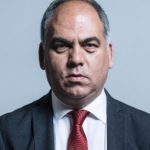
  • Bambos Charalambous – 2023 Speech on the International Day of Education

    Bambos Charalambous – 2023 Speech on the International Day of Education

    The speech made by Bambos Charalambous, the Labour MP for Enfield Southgate, in Westminster Hall, the House of Commons on 26 January 2023.

    It is a pleasure to serve under your chairmanship, Mr Sharma. I refer the House to my entry on the Register of Members’ Financial Interests—I am the co-chair of the APPG on global education. I thank my friend, the right hon. Member for Chelmsford (Vicky Ford), for securing this timely and important debate to mark the International Day of Education and for her excellent speech. As co-chairs of the APPG, we both care deeply about this topic and are working closely together to shine a light on the importance of inclusive and quality education for all.

    As we mark the International Day of Education this week, it is staggering to note that 222 million children around the world are affected by emergency and protracted crises and in need of urgent educational support. This has grown from an estimated 75 million in 2016, as more children around the world are missing out on essential education time. We find these children facing some of the world’s foremost challenges, from the war in Ukraine and the repression of women and girls in Afghanistan to the impact of food insecurity in the horn of Africa and climate-related disaster in the Sahel.

    Education is every child’s right. It is fundamental to creating a peaceful and prosperous world. My hon. Friend the Member for Harrow West (Gareth Thomas) emphasised the value of education for all. Labour recognises the importance of quality, safe, inclusive and free public education as the cornerstone of the UN sustainable development goals. Education saves lives; improves nutrition and health; reduces child, early and forced marriage; and leads to more equal, respectful and open societies.

    On visits abroad, I have seen the scale of the challenges we face in global education, in particular for women and girls. As the hon. Member for Maidstone and The Weald (Mrs Grant) succinctly put it, girls’ education is an absolute game-changer. She is absolutely right to make that point. Every day, girls face barriers to education caused by poverty, child marriage and gender-based violence, poor infrastructure, cultural norms and practices and fragility. Around the world, 129 million girls are out of school, including 32 million of primary school age, 30 million of lower secondary school age and 67 million of upper secondary school age. As eloquently pointed out by the hon. Member for West Worcestershire (Harriett Baldwin), in countries affected by conflict, girls are more than twice as likely to be out of school than girls living in non-affected areas.

    This year, UNESCO has dedicated the International Day of Education to the women and girls of Afghanistan. What is happening there is an absolute tragedy: the Taliban’s barbaric ban on the participation of women in public life means schools and universities have been closed to Afghan women and girls, in violation of their fundamental rights and freedoms. Since the fall of Kabul, the Taliban has stopped 850,000 secondary age girls from attending school; as we have heard throughout today’s excellent debate, the impact of that ban is devastating. At the same time, the world has watched in awe as brave girls and women in Afghanistan have protested and demanded the right to go to school in the face of repression by the Taliban. Afghanistan can never flourish while half its population is relegated from public life.

    We must pay tribute to all those fighting for their right to education, but they need more than warm words and solidarity. The UK must act by working internationally to hold the Taliban to account for its escalating crackdown on women’s rights and doing everything possible to support education for all in Afghanistan, including through the Global Partnership for Education, which is making up to $300 million available in support of education for Afghan women and girls. Can the Minister say what steps the UK Government are taking with the international community to support women and girls’ education in Afghanistan? More specifically, will she rule out reductions in UK funding to Afghanistan while negotiations between the de facto authorities and the diplomatic and humanitarian communities are ongoing?

    The UK is, and continues to be, a vocal supporter of girls’ education. But it is fair to say that the Government need to translate that rhetoric into results. According to analysis by the ONE Campaign, an estimated 7.1 million children, including 3.7 million girls, lost their education due to recent cuts to the UK’s aid budget. Alongside cuts, we also have delays—most recently to the international women and girls strategy, which the Government confirmed last week has been delayed once again. We cannot allow ourselves to fail a generation of young people, and that is why Labour urges the Government to announce a strong and early pledge for the Geneva Education Cannot Wait conference next month.

    Since its establishment in 2016, Education Cannot Wait has reached 7 million children and adolescents with quality education in some of the toughest crisis zones globally. UK funding has supported an estimated 1.5 million of those children, but the challenge has grown since then. Civil society, members of the public and many parliamentarians have called for the UK to pledge £170 million over the 2023-26 period: a 13% share of Education Cannot Wait’s fundraising target. That would directly provide 2.6 million children in an emergency or protracted crisis with quality education, 60% of whom would be girls. Can the Minister confirm whether the UK Government will commit to make such a pledge ahead of next month’s conference? If so, when can we expect the announcement?

    It is imperative that the Government meet their own targets on providing quality foundational learning to the most marginalised, including girls and children with disabilities. Girls and boys in conflict zones, climate shocks and natural disasters, and refugee settlements deserve to learn to read and write, do maths and prosper as much as any other child, yet just one in 10 of the 222 million children affected by crises are meeting required minimum levels for literacy and numeracy. Such extreme levels of illiteracy and innumeracy are an early warning sign that global educational goals, and related sustainable development goals, are in jeopardy. At the current rate of progress, it will take at least 40 years to achieve the sustainable development goal 4 target on learning.

    In 2019, over half of children in low and middle-income countries were living in learning poverty, meaning that they were unable to read and understand a simple text by age 10. In sub-Saharan Africa, that figure is closer to 90%. Behind those numbers, millions of vulnerable girls and boys around the world await our collective action. From inside makeshift refugee settlements, the damaged walls of classrooms, and communities torn apart by war and disaster, those children are holding on to the hope that education will allow them to realise their dreams of becoming doctors, engineers, scientists, teachers or whatever other profession they seek to achieve.

    As we mark International Day Of Education, I want to end by sharing the thoughts of young people campaigning for their generation’s future. This week, I had the pleasure of meeting with the Global Partnership for Education youth leaders in Parliament as part of their youth action tour. The youth leaders are young people with lived experience from partner countries, and it was incredibly moving to hear directly from them about why we need to protect and increase education funding worldwide.

    Another group of young people that I would like to highlight are Send My Friend to School youth campaigners. Each year, around 250,000 young people from across the UK take part in the campaign, meeting dozens of MPs. I have met their excellent campaign champions on a number of occasions. I am always inspired by the passion and commitment that they have for other children around the world, who are not fortunate enough to receive the kind of education that we do here in the UK.

    I end with the following words from Jenson, aged 10, speaking on behalf of his classmates at Colne Engaine Primary School in Braintree:

    “We think every child has the right to have an education. Reasons that stop children from going to school like natural disasters and disease, war and famine are not chosen by the children.”

    Let that ring true in all our ears and urge us to act now as we celebrate International Day of Education.

  • Patricia Gibson – 2023 Speech on the International Day of Education

    Patricia Gibson – 2023 Speech on the International Day of Education

    The speech made by Patricia Gibson, the SNP MP for North Ayrshire and Arran, in Westminster Hall, the House of Commons on 26 January 2023.

    I am very happy to participate in this debate, as an English teacher of 23 years before I was elected to this House. The International Day of Education is an important date in our calendar, and the theme this year is:

    “To invest in people, prioritise education”.

    I pay tribute to the hard work of the teachers in my constituency. I am currently undertaking my annual visit to my local schools, and I am always impressed by our young people’s political engagement, which is both impressive and refreshing. I pay tribute to them and the staff, who work hard to deliver education in my constituency.

    The United Nations General Assembly proclaimed 24 January as the International Day of Education in celebration of the role of education in peace and development. I thank the right hon. Member for Chelmsford (Vicky Ford) for securing the debate. Education is a human right, a public good and a public responsibility. The right hon. Lady reminded us that illiteracy across the globe disproportionately affects women and girls, and that educating women and girls provides huge and lasting benefits to their communities and children, and helps to avert child marriage, which is important for the future and prosperity of developing countries.

    I agree with the point the hon. Member for Harrow West (Gareth Thomas) made about the FCDO doing international development work of such importance in this and many other fields. We really should be looking to restore the Department for International Development; everybody in this Chamber agrees that the FCDO does important international development work, but that merits a Department for itself.

    The hon. Member for Maidstone and The Weald (Mrs Grant) reminded us of the huge benefits of educating women and girls and of the vast scale—some might say the daunting scale—of the challenge. It is important that the international community works together to address it, if for no other reason—although there are many reasons—than the risk of violence to women and girls, which goes alongside being deprived of and facing barriers to education.

    It is indisputable that inclusive and equitable quality education and lifelong opportunities for all are inextricably linked to a country’s success in achieving gender equality and breaking the cycle of poverty that leaves millions of children, youth and adults behind. Today, 244 million children and youth are out of school, and 771 million adults are illiterate. Their rights to education and so much more are being violated. That is unacceptable.

    UNESCO is dedicating this year’s International Day of Education to girls and women in Afghanistan who have been deprived of their right to education, and is calling for the immediate lifting of the ban restricting access to education. The hon. Member for West Worcestershire (Harriett Baldwin) said that global education commands agreement and support across the House—it is one of the rare occasions when we see that happening. I note her comments that children are being deprived of their education in far too many circumstances, both refugees and in a more general, global sense. The international community must continue to work to change that.

    I want to focus on the situation in Afghanistan, which is alarming and bewildering to many of us looking on in the west. The Taliban regime is denying its daughters, wives and sisters access to any form of schooling whatever. Today marks 493 days since the Taliban banned teenage girls from school, and 32 days since it banned women from going to university and working in national and international non-governmental organisations.

    Currently, there are 2.5 million Afghan girls and young women out of school, 1.2 million of whom were denied access to secondary schools and university places following the regime’s diktat about women in education. Despite international condemnation, the Taliban regime justified that step on the basis that some women had not adhered to its interpretation of Islamic dress code, and that conservative traditions must be protected. It is an interesting conundrum that repressing, diminishing and controlling women in that way is such a priority for the Taliban regime, despite the fact that 28 million Afghans require aid, with some 6 million on the brink of famine—some 93% of Afghans do not have enough food, according to the UN. Winter temperatures are plunging as low as -17°C, and even lower in mountainous areas, so making it a priority to deprive women of their education seems bizarre to anybody looking on.

    Amid all that, Save the Children had no choice but to pause its aid efforts in areas where it could not operate without its female staff, because women are essential to the safe and effective delivery of its services. Can it really be true—I cannot believe that I am asking this question—that the Taliban would rather its people died of starvation than women be seen to undertake useful work to assist Afghan civilians?

    Being a girl or woman in Afghanistan under the Taliban must surely be a frightening, marginalising and desperate experience. In essence, Afghan women are back to being invisible in public life, imprisoned in their home and, where applicable, ordered to cover their ground and first-floor windows so that women inside cannot be seen from the street. Women can have the end of their thumbs cut off for wearing nail varnish. In such a regime, where women are viewed as chattels and the possession of male relatives, of no value as human beings, robbed of their dignity and their identity reduced to the clothes that they must wear, how can we be surprised that such a regime explicitly forbids the education of its women?

    It is heartbreaking to consider that in the 20th century, until the conflicts of the 1970s, Afghanistan was seen as a progressive country. Afghan women were first eligible for the right to vote in 1919, only a year after women in the UK enjoyed that right and a year before women in the US were allowed to vote. As part of that, how women’s rights to education in Afghanistan have been rolled back is remarkable and frightening.

    No society can truly prosper socially, economically or culturally unless there is access to education for all on an equal basis. Until the Taliban in Afghanistan understands that, the international community must continue to stress it and to engage on the issue when possible. I hope that the UK Government will play a leading global role in that international effort. Access to education is such a basic universal human right that denying it to women in Afghanistan or anywhere based on gender is incompatible with all that is right and decent.

    As we commemorate the International Day of Education, it is right and fitting that we dedicate this day in 2023 to girls and women in Afghanistan who have been deprived of their right to education. Only a regime that seeks to control and tyrannise would fail to recognise that access to education for all its people has no downside for that society. We see that depriving Afghan women and girls of education goes hand in hand with the loss of so many other rights.

    I know that all right hon. and hon. Members will seek to show solidarity with Afghan women and seek to restore their access to education. That should be a fundamental red line in all international engagement with the Taliban regime. Without access to education, the lives of Afghan women will be poorer, their children will be poorer, their communities will be poorer, the once great country of Afghanistan will be poorer, the climate will be poorer and the world will be poorer—poorer in ways that are beyond measure. We must stand up for Afghan women and girls and for the access to education that they need and deserve, with all the opportunities and fulfilment that go alongside securing that education. That applies to women and girls not just in Afghanistan, but across the world.

  • Helen Grant – 2023 Speech on the International Day of Education

    Helen Grant – 2023 Speech on the International Day of Education

    The speech made by Helen Grant, the Conservative MP for Maidstone and the Weald, in Westminster Hall, the House of Commons on 26 January 2023.

    I, too, congratulate my right hon. Friend the Member for Chelmsford (Vicky Ford) on securing this important debate in recognition of the International Day of Education.

    I am hugely honoured to be the Prime Minister’s special envoy for girls’ education. My role is to globally champion his message that providing 12 years of quality education for every single girl on the planet is one of the best ways of tackling many of the major issues facing the world today, such as poverty, climate change and inequality. Investing in girls’ education is an absolute game changer: if we want to change the world for the better, girls’ education is a great place to start. The child of a mother who can read is 50% more likely to live beyond the age of five, twice as likely to attend school themselves, and 50% more likely to be immunised. Girls who are educated are more able to choose if and when to have children, and how many children they have.

    Girls’ education is, of course, vital for women and girls, but it is also extremely important in levelling up society, boosting incomes and developing economies and nations. Tragically, the pandemic has been one of the biggest educational disruptors in our history, affecting 1.6 billion learners at its peak in 2020. It also created a global education funding gap of $200 billion per annum. In poorer countries now, over 70% of children cannot read a simple text by the age of 10.

    Many of those children are girls, many of whom will never return to school, or even start school, lowering their chances of future employment and decent livelihoods. Out of school, girls are at greater risk of violence, sexual violence, forced marriage, early marriage, female genital mutilation and human trafficking. All those factors are creating the very real risk of a lost generation of girls, and we must work hard and together to stop that happening.

    We also need to work better and differently. The UK has played a leading role in education policy and financing: we put girls’ education at the very heart of the 2021 G7 summit in Cornwall, giving it the priority and profile—as well as the financial and political commitments—that it needs and deserves. We also agreed two new, ambitious global targets: getting 20 million more girls reading by the age of 10, and getting 40 million more girls in primary and secondary school in low and low-to-middle income countries by 2026.

    At the global education summit in London, also in 2021, we raised a landmark $4 billion for global education with our international partners, which will help another 175 million children to learn. At COP26 in Glasgow that year, we made the important connection between girls’ education and climate change, showing how girls’ education can be very much part of the solution. That is because girls who are educated are much more able to participate in decisions, actions and leadership in relation to climate resilience, adaptation and mitigation.

    We know that education interventions must provide more than just learning, and the UK will continue to be a gender equality leader, tackling the issues that prevent girls from getting to school and staying in school. No girl should have her hopes and dreams dashed because she has had to marry too early or become a mother due to a lack of family planning advice.

    In my role as the Prime Minister’s special envoy, I have been able to travel extensively to see for myself some of our education programmes and how they are changing lives for the better. In Ghana, in the hills of Aburi, I sat in on non-formal community classes where young mothers brought their babies to school. In Sierra Leone, I saw programmes that focused on improved learning, but also on special measures to address violence in and out of school and other safeguarding issues. In Nigeria, I saw how our teams on the ground have adapted programmes to respond to covid school closures. They achieved that through community-based learning programmes, the recording of radio and TV lessons, and accelerated learning programmes to help children catch up. I had the opportunity to meet virtually with schoolgirls and teachers affected by the conflict in Syria. I heard how education was providing a real lifeline and a space for children to see their friends, rebuild their self-confidence and self-esteem and develop the skills they need to break the cycle of poverty, while also providing them with a sense of hope and optimism for the future. I was inspired by the dreams of one young girl who hoped to become an architect to rebuild Syria for the future, and another who wanted to be a social worker to protect children from violence. These girls are our future, and ensuring their right to safe, quality education is essential.

    The weight of the challenge on girls’ education is significant, but our ability to make a change in the world —if we work together—should never be underestimated. We all must raise our game and rally the world behind the global targets that have been set and agreed. Achieving global targets requires a global response. Governments must prioritise education reforms, listen to civil society and not be afraid to partner with technical experts so that they can design their reforms around real evidence of what actually works. We need to urgently recover those learning losses caused by covid by focusing on foundational learning skills. Basic numeracy and literacy are essential for children to be able to stay in school and progress to higher levels.

    We must listen carefully to our girls and hear what they say they want and need from their leaders—be it safer roads for walking to school, free sanitary products to help with confidence and school attendance, or separate toilets for privacy. Last but certainly not least, our global leaders need to speak out much more about the importance of educating our girls and to explain all the advantages for girls and women and for their children, their families, their communities and, of course, their nations.

  • PRESS RELEASE : Omagh investigation announcement welcomed [February 2023]

    PRESS RELEASE : Omagh investigation announcement welcomed [February 2023]

    The press release issued by the DUP on 2 February 2023.

    DUP Legacy Spokesperson Emma Little Pengelly has welcomed the Secretary of State’s announcement of an independent statutory into the Omagh bombing.

    She said, “Sir Jeffrey Donaldson has previously met with the families of those murdered in the Omagh bomb to support their call and the recommendation of the courts that there should be an Article 2 compliant investigation.

    The terrorists who left the bomb, did so on a street full of shoppers on a Saturday afternoon. This was an attack that whilst perpetrated within Northern Ireland, was planned, prepared and transported across the border from within the Republic. This was recognised by Mr Justice Horner’s conclusion in the application for a judicial review.

    He outlined the “real advantage” of a simultaneous Article 2 compliant investigation proceeding in the Republic of Ireland. The terrorist activity crossed the border and any investigation requires action on both sides of that border to be fully effective. This is something that has always been recognised by the families.

    The opportunity for both truth and justice is something that should never be denied to anyone who has suffered at the hands of terrorists. The United Kingdom Government has taken this step today. The Irish Government should now make clear whether they will fulfil the wish of the families and advance the opportunity for truth and justice by announcing a simultaneous equivalent investigation.”

    West Tyrone MLA Tom Buchanan said, “This is a welcome announcement by the Secretary of State today. It represents a step forward for the Omagh families who are to be commended for their determination and courage. However, they have always been clear in their vision that this cross-border attack required investigations to take place on both sides of the border. The UK Government has announced that an Article 2 compliant investigation will now take place and the onus is on the Irish Government to provide a simultaneous investigation.

    The need to listen to the voices of victims, engage with them and not run away from their responsibility to help uncover the truth.”

  • PRESS RELEASE : Secretary of State announces independent statutory inquiry into Omagh bomb [February 2023]

    PRESS RELEASE : Secretary of State announces independent statutory inquiry into Omagh bomb [February 2023]

    The press release issued by the Northern Ireland Office on 2 February 2023.

    The Secretary of State for Northern Ireland the Rt Hon Chris Heaton-Harris MP has today announced that an independent statutory inquiry will be established into the preventability of the Omagh bombing in August 1998.

    • Independent statutory inquiry to be be established into the preventability of the Omagh bombing
    • The Real IRA claimed responsibility for the Omagh Bombing in 1998
    • Inquiry will be held in response to a recent High Court judgment

    The Secretary of State for Northern Ireland the Rt Hon Chris Heaton-Harris MP has today announced that an independent statutory inquiry will be established into the preventability of the Omagh bombing in August 1998.

    This is in response to a High Court judgment that found there were specific issues that gave rise to plausible arguments that the bombing by the Real IRA could have been prevented.

    The Real IRA claimed responsibility for the Omagh Bombing in 1998, and four members of the Real IRA were subsequently found liable for the bombing in civil proceedings held in Northern Ireland. This inquiry does nothing to counter these findings, which are clear in who was responsible for this awful atrocity.

    The independent statutory inquiry will examine the four issues identified by the High Court; the handling and sharing of intelligence, the use of cell phone analysis, whether there was advance knowledge or reasonable means of knowledge of the bomb, and whether disruption operations could or should have been mounted, which may have helped prevent the Real IRA’s attack.

    It will have the full powers provided by the Inquiries Act 2005, including the ability to compel the production of all relevant materials and witnesses and take evidence under oath.

    Limiting the inquiry to the specific findings of the High Court will ensure that the Government can comply with its international obligations under the European Convention on Human Rights. A final report will be published that will respond to each of the issues identified by the Court.

    Work has begun to establish the independent statutory inquiry as soon as possible. The appointment of an inquiry Chairperson will be announced and the inquiry’s terms of reference will also be published in due course.

    Secretary of State for Northern Ireland, Rt Hon Chris Heaton-Harris MP said:

    “The Omagh bomb was a horrific terrorist atrocity committed by the Real IRA, which caused untold damage to the families of those who were tragically killed and injured. Its impact was felt not just in Northern Ireland, but across the world.

    “Having carefully considered the judgment of the High Court, I believe that an independent statutory inquiry is the most appropriate form of further investigation to address the grounds identified by the Court.

    “I would like to thank the victims and survivors and all those affected by the Omagh bomb for their patience whilst I have reflected on the judgment and taken into account a range of sensitive, complex and technical factors.”

  • PRESS RELEASE : FBU hails “historic moment” for trade union movement as coordinated day of action takes place [February 2023]

    PRESS RELEASE : FBU hails “historic moment” for trade union movement as coordinated day of action takes place [February 2023]

    The press release issued by the Fire Brigades Union on 1 February 2023.

    Around half a million workers have today taken strike action for decent pay across rail, schools, central government and higher education.

    It was also a day of action organised by the Trades Union Congress (TUC) to defend the right to strike, following the passage of the Strikes (Minimum Service Levels) Bill on Monday at Third Reading.

    The Fire Brigades Union has this week achieved a decisive mandate for strike action on pay, with 88% of members voting Yes on a 73% turnout. In Northern Ireland, the result was even stronger, with 94% of members voting Yes.

    Responding to the day’s events, Fire Brigades Union General Secretary Matt Wrack said:

    “This is a historic moment for the labour movement. Trade unions are fighting not to disrupt public services, but to save them.

    “In the fire service, pay has fallen by at least 12% in real terms since 2010, and it’s a similar story elsewhere. Striking workers have the support of the public because it is only by standing together that we can win decent pay for everyone.

    “The new anti-union legislation is an attempt shut down the debate about pay and living standards. It’s an attack on our right to organise and on our democracy as a country. It’s an attempt to stop workers from standing up for themselves.

    “I’m proud that the FBU is supporting today’s day of action. We still hope to resolve our dispute without a strike, but if that’s not possible, we will call action ourselves. We will stand shoulder to shoulder with other unions in the struggle ahead.”