Tag: 2023

  • PRESS RELEASE : Thousands of families to benefit from local support in rollout of Family Hubs [February 2023]

    PRESS RELEASE : Thousands of families to benefit from local support in rollout of Family Hubs [February 2023]

    The press release issued by the Department for Education on 9 February 2023.

    Family Hubs offer early support to families and young children to help them overcome difficulties and build strong relationships.

    • Services include help with infant feeding and perinatal mental health support as well as make it easier to access wider services such as smoking cessation and job advice
    • This announcement builds on Prime Minister’s ambition to put strong families at the heart of communities, in recognition of how important they are for people’s life chances

    Thousands of families across England will be offered help and support with issues such as infant feeding, mental health and relationship building thanks to Family Hubs being rolled out in local communities.

    75 areas will benefit from the £300 million investment up to 2025, with the new hubs offering support from conception through to age 19, or up to 25 for children with special education needs and disabilities.

    Strong, supportive families make for more stable communities and happier individuals. Investing in families and making sure they get the support they need from birth through to adulthood helps with children’s educational attainment, wellbeing and life chances, while also improving wider outcomes such as poor mental health and unemployment.

    Previously these services could be disjointed and hard to navigate but family hubs will act as a ‘one stop shop’ to offer guidance and advice on a range of circumstances including, infant feeding, mental health support, health visits and parenting classes.

    Hubs will also bring together wider wraparound services that can make a huge difference to people who need extra support – such as advice on getting into work, relationship building and stop smoking services.

    To fast-track delivery of these services, 14 local authority areas will become trailblazers and receive extra funding. These trailblazers will lead the way and support other local authorities to improve services that are offered to families, so that these can be rolled out more widely across the country.

    Today’s announcement builds on the Prime Minister’s ambition to put families at the centre of communities and delivers on the 2019 manifesto commitment to champion Family Hubs.

    Children, Families and Wellbeing Minister, Claire Coutinho said:

    Having children can be really tough as well as bringing so much joy. All families, from time to time, will need a helping hand.

    Family hubs bring services together helping parents, carers, children and young people to access the support they need more easily.

    Parenting advice ranges from support with breast feeding and mental health to guidance on how to give children a head start on their learning.

    Separately, Government is also confirming the final five areas to receive investment from the Family Hubs Transformation Fund, which will transition services which used to operate under the Sure Start banner over to the Family Hub model. This will enable a further 12 local authorities across England to open family hubs by March 2024.*

    This funding will provide thousands of families with access to support when they need it, including helping to give babies the best start in life, as set out in ‘Best Start for Life: a vision for the critical 1,001 days’ led by Dame Andrea Leadsom, which sets out six action areas to improve support for families between pregnancy and age two. And, as part of her success as the government’s Early Years Healthy Development Adviser, Dame Leadsom’s role will be extended until the end of parliament.

    Dame Andrea Leadsom said:

    Support for the earliest years is being transformed our ‘Start for Life’ offer will point families-to-be in the direction of their Family Hub, and the help they can get there will include a warm welcome, parenting advice, antenatal help, health visiting, mental health and infant feeding support and even advice on relationship building or how to get into work. There will be a strong focus on dads and co-parents who have for far too long been left out.

    We all agree that universal education and universal healthcare are the right of every citizen. Surely, however, the best start for life is the most fundamental right of all. It is in the period from conception to the age of two that the building blocks for good lifelong physical and emotional health are laid down. There is quite literally no better place to invest, either for human happiness or value for taxpayers’ money!

    A progress report will be published today outlining the progress the government has made against these commitments to date. It also sets out the government’s priorities for further work.

    Parents will also be able to access a range of support through the hubs from midwifery to mental health support, health visiting to infant feeding advice. Hubs will also provide early language and communication development for young children to set the foundations for lifelong learning and prepare them for school at age five.

    Minister Neil O’Brien said:

    Every child should have the support to be able to reach their full potential.

    There is robust evidence that the 1,001 critical days from pregnancy to the age of two are vital for development and impact a child’s physical and emotional health for the rest of their life.

    Better access to family hubs and additional funding for critical Start for Life services will provide more families with the right support for their baby to get the best start in life – including support for mental health, building strong and healthy relationships and infant feeding.

    Peter Fonagy, Chief Executive of the Anna Freud Centre, said:

    Family Hubs make a positive difference to parents, carers and children by providing a single access point to services that can help them during challenging periods. We know how important early intervention is in improving physical, mental and emotional health outcomes for young people, and in helping to build a strong foundation for them to prosper in later life.

    We are proud to lead the National Centre for Family Hubs, which provides a national platform for the implementation of family hubs in local areas, and to be able to extend support to more areas across the country.

    Our work champions, develops and disseminates evidence and best practice across communities to help local authorities to build family hubs that are accessible and inclusive to all, particularly those families who are living in poverty, experiencing discrimination and exclusion, and those who have children with special educational needs or disabilities.

    The early years are vital for children’s development and early language and communication skills. Start for Life services will help parents to form those secure lifelong bonds with their babies and children; and family hubs will provide advice and support to parents to encourage them to chat, play and read with their children to support  early development.

    Notes to Editors

    To view the 75 local authorities to receive a share of the funding from the Family Hubs and Start for Life programme, click here.

    The 14 trailblazer areas include:

    • Torbay
    • Sheffield
    • County Durham
    • Cornwall
    • Salford
    • Kent
    • Sunderland
    • Manchester
    • Northumberland
    • Hull
    • Coventry
    • Blackpool
    • East Sussex
    • Isle of Wight

    *The 12 local authorities to receive a share of the Family Hubs Transformation Fund are:

    • Bournemouth, Christchurch and Poole
    • Brighton and Hove
    • Cheshire East
    • Cumbria
    • Dorset
    • Hammersmith and Fulham
    • Leicestershire
    • Merton
    • Solihull
    • Stockport
    • Wirral
    • York
  • PRESS RELEASE : £10.7 million in funding for local authorities to improve air quality [February 2023]

    PRESS RELEASE : £10.7 million in funding for local authorities to improve air quality [February 2023]

    The press release issued by the Department for Environment, Food and Rural Affairs on 9 February 2023.

    Councils across England have been awarded a share of £10.7 million to clean up air in local communities.

    Local authorities across England have been granted almost £11 million in the latest round of funding for projects that will improve air quality.

    The money, from the Government’s annual Air Quality Grant, helps councils develop and implement measures to benefit schools, businesses and communities and reduce the impact of air pollution on people’s health.

    This year’s grants total £10.7 million, with funding supporting programmes that will educate doctors, nurses and social care workers about air quality; electrify a diesel refuse collection vehicle and procure an electric road sweeper in Blaby, Leicestershire; and roll out monitoring sensors to make real-time air quality information available to the public in Lewisham, south London.

    On Tyneside, a long-term campaign aimed at schools and pollution hotspots in residential areas will educate people of all ages about the dangers of air pollution, whilst an Air Quality Officer will be employed in Cornwall to visit schools.

    Funding will also support an e-cargo bike library, helping local businesses in Norfolk to cut operating costs while lowering their emissions; and the implementation of a river freight scheme in Westminster which will serve as a greener alternative to the use of more polluting vehicles in the city.

    Environment Minister Rebecca Pow said:

    We have made great strides in tackling air pollution at a national level since 2010, but we must do more to improve air quality and protect public health.

    From Tyneside to Cornwall, this funding will support a range of inspiring and innovative projects across the country – stepping up our monitoring of harmful pollutants, educating the public and boosting the use of green transport.

    This builds on our world-leading Environment Act commitments that will enhance our natural environment and safeguard public health for future generations.

    The government is taking decisive action to cut air pollution. Through the Environment Act, the government has set two legally-binding targets to reduce the level of fine particulate matter (PM2.5) – the most harmful pollutant to human health – in our air by 2040.

    The Environmental Improvement Plan – published last week to build on the vision set out in the government’s 25 Year Environment Plan – set out interim targets to reduce concentrations of, and reduce public exposure to, PM2.5 by the end of January 2028, alongside a range of policies to work towards these targets.

    The Plan also committed to challenging councils to improve air quality more quickly by assessing their performance and use of existing powers, while supporting them with clear guidance, funding and tools. Moreover, it pledged to improve the way air quality information is communicated with the public. Today’s announcement demonstrates key steps forward in the delivery of these commitments.

    This latest grant funding means that around £53 million has been awarded across almost 500 projects through the Air Quality Grant scheme since 2010.

    £883 million has been made available as part of the government’s NO2 Plan to support local authorities in cleaning up transport and cutting levels of nitrogen dioxide down to legal levels in the shortest possible time. More widely, the government has already spent over £2 billion to support the move to zero emission vehicles, helping drive forward the decarbonisation of the UK’s entire transport system. Funding is available from the Department for Transport for local authorities, as well as businesses, charities, private rental accommodation, flats and social housing with off-street parking spaces, to install electric vehicle charge-points and infrastructure. These actions will deliver better air quality for all.

    Together, these projects have contributed to the significant improvement in air quality seen in the UK in recent decades. Since 2010, emissions of fine particulate matter have fallen by 18%, while emissions of nitrogen oxides have fallen by 44% and sulphur dioxide by 70%.

    Local authority Project Amount
    Bedford Borough Council Review of local smoke control areas and solid fuel regulations to determine improvements, and public engagement to raise awareness about particulate matter. £36,332
    Bedford Borough Council Engagement with local schools, community and faith groups, and strengthen links with Primary Care Networks to encourage reduced vehicle use through active and sustainable travel. £113,071
    Blaby District Council Conversion of diesel refuse collection vehicle to electric and purchase of electric road sweeper to reduce emissions from refuse collection. £573,701
    Bournemouth, Christchurch, and Poole Council Engagement with schools to encourage active and sustainable travel. Purchase of e-cargo bikes to replace diesel powered delivery freight on the sea front. £120,309
    Buckinghamshire Council Driver improvement training to reduce emissions and travel planning scheme for local small to medium size businesses to develop sustainable travel to work plans for employees. £120,000
    City of York Awareness raising campaign for domestic burning to increase public knowledge about air quality and development of a public air pollution forecasting alert system. £101,375
    Colchester Borough Council Promotion of sustainable freight such as e-cargo bikes to local businesses. Air quality awareness, active and sustainable travel, and anti-idling campaign in schools. Community cycle scheme. £310,770
    Cornwall Council Employment of a school air quality officer to provide an air quality awareness programme to over 3000 students. £62,160
    Derbyshire County Council Data collection to develop and deliver a traffic management plan that will reduce congestion and improve traffic flow across Derbyshire. £278,347
    East Herts Council Purchase of air quality monitors to improve data for pollution in Air Quality Management Areas. Development of a social media campaign for these areas to improve knowledge about air quality and encourage reduced car use through car sharing and active travel. Engagement and awareness raising in local schools to reduce idling and encourage active travel. Creation of travel plans for local businesses. £126,408
    Exeter City Council Development of a public facing air quality map for NO2 and particulate matter that will highlight health implications of air quality, ways to limit exposure, and ways to decrease individual’s air pollution footprint. £367,428
    Lancaster City Council Air Quality Encourage take up of electric taxis through behaviour and awareness campaign and a discounted leasing scheme. Development of local taxi policy which will support the uptake of electric vehicles 4£54,576
    Lincolnshire County Council (In partnership with councils for City of Lincoln, South Kesteven District, North Kesteven District, Boston Borough, East Lindsey District, West Lindsey District, and South Holland District). School education and awareness programme. Community engagement campaign and development of a dedicated Lincolnshire Clean Air Project website to raise public awareness of air quality and steps they can take to reduce pollution. £58,180
    London Borough of Brent Creation of low pollution walking maps for all schools in the borough. Education and awareness campaign in schools to raise awareness about air quality and encourage walking and active travel. £470,546
    London Borough of Camden School engagement and awareness programme to reduce transport emissions and children’s exposure to pollution. Creation of an Air Quality Health toolkit, and awareness raising campaign in the borough. £170,645
    London Borough of Enfield Air quality monitoring at participating local schools to develop knowledge and awareness, improve safety outside schools, reduce idling, and encourage sustainable and active travel. Increased school cycle storage. Engagement with the local community to raise awareness about the school project. £223,500
    London Borough of Havering School workshop and theatre engagement programme to improve knowledge and awareness about air quality, develop clean air route maps, and reduce emissions particularly from idling. Training of teachers to deliver cycling lessons to pupils. Engagement with local businesses to analyse and improve commuter behaviour and develop information that could inform future interventions to improve air quality. £65,127
    London Borough of Havering Guided cycle and walking routes for schools to encourage active travel and reduce children’s exposure to pollution when travelling to and from school. Development of a travel plan for the local hospital to reduce NO2 emissions from staff and patient travel. £35,139
    London Borough of Islington Engagement and awareness campaign to improve knowledge of NO2 and particulate matter pollution supported by air quality data gathered by school pupils, community groups and residents. Development of council website to collate live and historic air quality and transport data accessible to the public. £282,680
    London Borough of Lewisham Improvement of air quality sensor network to improve data and understanding about NO2 and particulate matter to develop targeted interventions to reduce pollution. £248,021
    London Borough of Redbridge Community engagement and outreach plan to improve knowledge and information about air quality with a focus on children and vulnerable groups. Development of an interactive air quality map using data gathered by the community. Cycle training for pupils and parents, plus extra school cycle storage. £323,774
    London Borough of Hammersmith & Fulham Promotion of cargo bikes to businesses to encourage shared use cargo bikes and funding to support purchase of their own bike. £277,950
    Maldon District Council Development of plans to re-route Heavy Goods Vehicles to improve air quality in a pollution hotspot. Development of a voluntary low emissions zone in Maldon town centre. Introduction of air quality forecasting and text alert service to improve public knowledge and access to air quality information. £129,000
    Medway Council- Environmental Protection Team Real time traffic monitoring and data modelling to develop traffic management interventions that will reduce air pollution. £279,533
    Norfolk County Council E-cargo bike library for local businesses to promote and facilitate alternatives to private vehicle use. £171,545
    Oxford City Council Installation of electric charging infrastructure for live-aboard boaters, with the aim to reduce particulate matter and smoke pollution along Oxford’s waterways. £192,993
    Reading Borough Council Interactive education programme in primary and secondary schools to raise awareness about air quality and encourage behaviour change to reduce NO2 and particulate matter pollution supported by air quality data gathered by pupils. This material will be developed for a wider community engagement campaign focusing on children and vulnerable groups. £327,000
    South Ribble Borough Council Access for additional schools to the established ‘Clean Air Crew’ website and online learning resources to support air quality education in schools. £53,244
    South Tyneside Council Purchase of sensors for long term monitoring of NO2, PM10, and PM2.5. Real time data will be collated and published on a public website and supported by a media campaign to raise public awareness and knowledge about air quality and encourage action to prevent pollution and improve air quality. £201,005
    Southampton City Council Training of healthcare professionals so they can advise vulnerable patients about air quality and action they can take to reduce pollution and their exposure to it. Development of community air quality engagement programme to consolidate existing projects for woodburning, schools and healthcare into a single co-ordinated programme to deliver unified air quality information and messaging. £248,198
    Southend-on-Sea Borough Council Air quality audit and sensor monitoring in 10 local schools to develop knowledge about local pollution to improve knowledge and develop interventions that will improve air quality and reduce pupil exposure to pollution. £256,285
    St Helens Borough Council Improve air quality for residents with asthma through monitoring indoor air quality, raising awareness about the impact of air quality on health, and advising on interventions to reduce pollution and exposure levels. £405,227
    Surrey Heath Borough Council Purchase of portable device to monitor PM2.5 and development content for an air quality website to share data to raise awareness and advise on interventions to reduce pollution and exposure levels. £12,280
    Swindon Borough Council Road traffic management signage to influence driver behaviour to reduce NO2 pollution. Engagement and awareness campaign with schools and community groups to encourage active travel. Collaboration with Public and Environmental Health to encourage improved domestic burning behaviour. £148,902
    Telford and Wrekin Council Monitoring, and engagement and awareness raising in local schools to reduce idling, encourage sustainable and active travel for pupils and their families. Replace Environmental Health Team diesel vehicle with electric vehicle for conducting air quality monitoring surveys, school visits and promotional activities. £147,615
    Tunbridge Wells Council Develop a digital training resource for Health Care Practitioners across Kent and Medway to enable practitioners to advise patients with cardio-vascular disease or respiratory disease on how to reduce their exposure to air pollution. £175,675
    West Midlands Combined Authority Particulate Matter monitoring and engagement programme to increase awareness and encourage behaviour change towards domestic burning across the region. £918,531
    West Northamptonshire Council Particulate Matter monitoring programme to improve data on background particulate matter across the county, gather data on the prevalence of solid fuel combustion in domestic properties to develop interventions to improve domestic burning behaviour. Review of Smoke Control Areas for the recently formed unitary council. £292,378
    West Yorkshire Combined Authority Particulate matter monitoring and engagement programme to increase awareness and encourage behaviour change around domestic burning across the region. £220,457
    Westminster City Council Development of a Clean Air Walking route tool to support users in reducing their exposure to air pollution in central London. £72,521
    Westminster City Council Reduce NO2 by supporting a network of Mini-Freight Hubs in central London that are serviced by river freight and Zero Emission Last Mile Deliveries. £1,000,000
    Wirral Borough Council Particulate matter monitoring and engagement programme to increase awareness, encourage behaviour change around domestic burning, advise residents how they can reduce their exposure, and review local enforcement of legislation. £171,200
    Wokingham Borough Council Engagement and awareness campaign with 6 schools to reduce pollution by reducing reliance on cars and encouraging active and sustainable travel. £213,332
    Worcestershire Regulatory Services Enhancement of air quality monitoring across Worcester to provide real time data that can be used to drive local air quality policy, disseminate public health information and alerts about poor air quality episodes, and advise the public on interventions to reduce pollution and exposure levels. £248,400
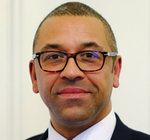
  • James Cleverly – 2023 Keynote Speech at the UK-Italy Pontignano Forum

    James Cleverly – 2023 Keynote Speech at the UK-Italy Pontignano Forum

    The speech made by James Cleverly, the Foreign Secretary, in Rome, Italy on 8 February 2023.

    Buonasera a tutti.

    We meet sadly at the time when Turkey and north Syria are responding to a series of huge earthquakes that have so far claimed over ten thousand lives and left many thousand homeless.

    I know Italy and the United Kingdom have expert teams on the ground, demonstrating our work together to respond with help and common humanity to this appalling situation.

    But as the ambassador just said, three members of the British cabinet are in Rome today.

    And we are here with one overarching purpose: to demonstrate Britain’s commitment to Italy and to take our bilateral relationship to a new, higher level.

    Because, as my colleague, Foreign Minister Antonio Tajani puts it, we are at a turning point in our relationship.

    And this is a world that we must face together.

    Because galvanised by the war in Ukraine, we have, I am pleased to say, already started to do just that.

    But we can invest even further in our relationship. And I will say more about that in a moment.

    I want to begin, however, with a thank you.

    A thank you to the Pontignano conference and to our chair today, Lord Willetts, for advocating the strongest possible relationship between our two countries.

    And I hope that we can use this special 30th anniversary to launch a new era in British-Italian cooperation.

    Now, the ties between Britain and Italy go back a very long way.

    Just a few metres from here in the garden of this residence runs a Roman aqueduct.

    The construction was begun early in the reign of Emperor Claudius, who in his spare time, when not building major Roman infrastructure, was invading Britain.

    And it was nearing completion in AD61 under the then-Emperor Nero.

    Just as a particular feisty young woman from my part of Britain, from East Anglia, was launching a rebellion and Queen Boudica was attacking the Roman garrisons in East Anglia in and around Essex, including, of course, Colchester.

    And after her defeat, it was decided to build a fortified settlement.

    And after a number of name changes, that settlement is now Braintree, the main town in my constituency.

    So I am very glad to be here, although I suspect Boudica might have been less enthusiastic taking part in this bilateral conference.

    But much more recently, British forces played a central role in the liberation of this country.

    And as we approach the 80th anniversary of the landings in Sicily this summer and at Anzio or the Battle of Monte Cassino next year, I want to tell you how touched I am by the regard paid by Italians to commemorating our fallen across the length and breadth of this country.

    Today our ties are modern.

    They are strong and they are vibrant. Weaving a rich tapestry between our countries and our people.

    Born of one simple fact: we Brits and Italians rather like each other.

    And wherever you look, you can see evidence of that.

    And you can see those ties in the here and now, whether it be through fashion, or culture, or cooking or sport.

    Indeed, legend has it that football was imported to Italy by a British expat living in Genoa.

    Cricket, however, has still yet to make the international transfer. I’d rather like to keep it that way, so at least there’s one sport where we have a fighting chance of beating Italy at.

    But I think that it is family ties and the ties of deep friendship between our peoples that count the most.

    And we are very proud that the UK is home to around 600,000 Italians and the contribution that they make every day to British life and to British economy is something that we should celebrate.

    Now, over 30,000 Brits call Italy their home and we are very grateful for the warm welcome that you give to them.

    And nowhere was our mutual affection summed up better than in Italy’s reaction to the death of our late Queen in September of last year.

    We will never forget how the President came straight from the airport, from a foreign visit to sign the condolence book here in the residence, or how many Italians queued to sign the condolence book at our embassy.

    And we thank you deeply for that.

    Now, rooted in those strong foundations, we must look to the future.

    And as we do so, we must equip ourselves to deal with the world as it is, not as we would wish it to be.

    Because as we sit here tonight, in the warmth and in the light, tens, perhaps hundreds of thousands of Ukrainians are sheltering in cellars in the cold, in the dark, wondering what horrors the night or the morning may bring.

    In a little over two weeks, we will mark with our Ukrainian friends the solemn anniversary of Russia’s invasion of Ukraine on the 24th of February, a date which, to echo President Roosevelt, will live on in infamy.

    On that date, everything changed.

    Our security as freedom-loving European nations changed because we recognised we had an aggressor in our midst.

    The security of our energy supplies changed.

    The security of our economies changed.

    The security of global food supplies, particularly those to poorer countries, changed.

    But some things did not change at all.

    The need for allies and democracies to protect each other, the need for strong defence to deter war, the need for common sense to diversify our supply chains and to protect those supply chains.

    The need for unity. For friends to come together. And to stick together as allies in times of danger.

    And above all, the need to stand up for what we believe in.

    To stand up for democracy, for justice, for liberty, for freedom, for the rule of law, and for the international order.

    Because I know that these are Italian values and these are British values.

    These are our values, and they deserve to be protected.

    Looking ahead, I see five areas where the UK and Italy need to work far more closely together.

    The first, of course, is on Ukraine and the consequences of Russia’s invasion.

    We need to do everything in our power to make sure that Ukraine prevails in this struggle between might and right.

    A message heard loud and clear in Westminster today when we heard from President Zelensky in a personal, powerful speech to parliamentarians in Westminster Hall on his visit to Britain today.

    From day one, Italy’s response to that invasion has been robust on sanctions, on seizing assets, on delivering humanitarian aid, on supplying weapons, on welcoming refugees or making plans to support Ukraine’s rebuilding. Italy has at every stage done the right thing.

    And let me pay tribute to Prime Minister Maloney and to PM Draghi before her.

    Mr Tajani said to me in our first phone call, and he was right.

    He said, you can count on Italy.

    And I’ve seen that repeatedly, and I can assure you, so have our mutual friends in Ukraine.

    And to anybody who harboured doubts about the United Kingdom’s ironclad commitment to European security after our exit from the European Union, every day since Russia invaded, Ukraine has given you your answer.

    I am proud that our total military assistance last year to Ukraine was second only to the United States of America.

    And I am glad he is in the audience here this evening because I would also like to pay tribute to my friend and colleague Ben Wallace, the Defence Secretary, for having the foresight and confidence to help equip and train the Ukrainians before the most recent invasion in February.

    And in doing so, perhaps help them defend their capital city in that initial wave of the conflict.

    But we must keep up the pressure. Indeed, we must do more, we must do it better and we must do it faster.

    The second area where we need to work even more closely is on defence and foreign policy.

    Now we are already doing a lot together.

    Typhoon aircraft of the Royal Air Force and the Italian Air Force built in the UK and in Italy with Germany and Spain are patrolling the skies on NATO’s northern and eastern flanks.

    Italy is commanding NATO’s mission in Kosovo and its mission in Iraq and the EU missions in Somalia and maritime missions in the Mediterranean and the Straits of Hormuz, where nearly 11,000 personnel are deployed in 37 international missions in 25 countries.

    Italy is very much doing its bit.

    You play a vital role in hosting key NATO bases, including the Joint Force Command in Naples, where many British personnel are stationed.

    The UK leads NATO’s enhanced forward presence in Estonia while Italian soldiers are guarding NATO’s southeastern flank in Bulgaria.

    Just a few weeks ago, our two prime ministers and the Prime Minister of Japan announced the launch of our new global combat air programme.

    This multi-billion pound programme will be at the heart of our cooperation for many, many years to come.

    It is the most powerful example of the growing partnership between Britain and Italy.

    It underscores our determination to work together to keep our nations and our allies safe.

    Not just here in Europe, but also on the other side of the world.

    And that growing partnership must extend to foreign policy, too.

    As likeminded countries with many similar interests but different regions of geographical expertise, we have much to learn from each other.

    We have mutually reinforcing strengths in the Western Balkans, across the Mediterranean to the south and to the east and in Africa as we work to stop the hunger that Putin’s aggression against Ukraine has unleashed.

    And further afield, as strategic partners, we must address together the dangers posed by Iran and the challenges that go hand-in-hand with the rise of China.

    The third area where we must work together is energy security.

    Russia’s invasion of Ukraine may have exposed our vulnerabilities, but it has also galvanised a joint determination to address them.

    The speed with which Italy has moved to do so, including with Prime Minister Maloney’s recent visit to Algeria, has impressed us all.

    As has Pierre Maloney’s ambition to turn southern Italy into a regional energy hub.

    An island surrounded by windy seas and a sun drenched peninsula have obvious advantages when it comes to renewable energy.

    If you are unsure which is which, the cold, windy weathers blow on our coasts rather than yours. If at any point you want to swap, talk to me afterwards.

    But both our countries will suffer from the effects of climate change.

    But here again, our engineering and financial knowhow are mutually reinforcing.

    So when we work together, we are more than the sum of our parts.

    Our experience at COP26 and our presidency of COP26 demonstrated that.

    Now, the fourth area is in trade and commerce, the lifeblood of our economies.

    We are both trading nations and we have traded together for centuries.

    However, as the CEO forum highlighted, we want and need to deepen our business and commercial contacts.

    And I’m delighted that an Exports and Investment agreement, which my Cabinet colleague Kemi Badenoch signed with Minister Tajani this morning, will help us achieve just that.

    But once again, good though that is, we must do more.

    And lastly, of course, we need to work more closely together to tackle illegal migration, especially by sea.

    Both our countries have received huge numbers of illegal arrivals by sea: over 105,000 in Italy last year and over 45,000 in the UK.

    It is an enormous challenge: humanitarian, social, criminal, political.

    And our voters rightly demand that we get on top of it.

    And indeed we must. Italy’s government, more than any other, I think, shares our sense of urgency on the need to address illegal migration.

    You have years of experience dealing with these issues across the Mediterranean and before that across the Adriatic Sea as well.

    One of the main departure countries, Libya, is a country that you know well.

    So let us work more closely together and learn from each other on this and on things more broadly.

    We are, of course, starting that work with Home Office officials meeting their Italian colleagues in London today.

    So on Ukraine, defence, foreign policy, on trade, on dealing with illegal migrations, there is a lot of work to do and it is a big agenda.

    This is indeed, as Minister Tajani says, a turning point in our relations.

    A time for ambition.

    A time for opportunity.

    And we should seize that opportunity.

    We both have new young prime ministers, fresh young leaders with energy and dynamism and enthusiasm.

    Leaders who believe in the nation state, who are committed to working with allies and partners, leaders who believe in freedom and a need to defend it.

    Leaders inspired by the example of Margaret Thatcher and the ideas of Robert Scruton.

    We look forward very much to welcoming Prime Minister Meloni to London and also to Italy’s presidency of the G7 next year, when you can expect to see even more of us visiting your great country with even greater frequency.

    So it is time to put this burgeoning relationship between the UK and Italy onto a new, strong footing to cement this renewed alliance between London and Rome.

    And I hope that we can swiftly conclude the work on our Bilateral Cooperation Agreement to provide an enduring framework for our cooperation in years to come.

    It’s time to make a leap, as Minister Tajani put it, to this conference organised by the Italian Embassy for the British media in Venice ten days ago, in the quality of our relationship.

    That is what I want.

    That is what the UK wants.

    That is what our Italian friends want.

    My Italian, is poor and limited, but my message is heartfelt.

    Andiamo avanti.

    Insieme.

    Grazie.

  • PRESS RELEASE : Secretary of State legislates to extend Northern Ireland Executive formation period [February 2023]

    PRESS RELEASE : Secretary of State legislates to extend Northern Ireland Executive formation period [February 2023]

    The press release issued by the Department for Northern Ireland on 9 February 2023.

    The UK Government will today (Thursday 9 February) introduce legislation to extend the period for Executive formation.

    • Extension will allow time and space for NI Parties to work together to return to government.
    • New Bill will extend the period for Executive formation by a year to 18 January 2024.
    • Election may be called at any time during the period, if deemed necessary or required.
    • Secretary of State hosts roundtable for NI party leaders and urges restoration of Stormont to deliver for the people of Northern Ireland.

    The UK Government will today (Thursday 9 February) introduce legislation to extend the period for Executive formation, to allow time and space for the NI Parties to work together to return to government.

    The Secretary of State for Northern Ireland has concluded that another election at this time is not the best course of action to facilitate the restoration of the Executive having spoken to political representatives, businesses and communities in Northern Ireland.

    The Northern Ireland (Executive Formation) Bill, to be introduced to Parliament today, will therefore extend the period by a year to 18 January 2024, while retaining the power to name an election date any time during the period, if necessary.

    At midnight on 19 January 2023, the period for Executive formation under the terms of the Northern Ireland (Executive Formation Act) 2022 came to an end.

    This placed the Secretary of State for Northern Ireland the Rt Hon Chris Heaton-Harris under a legal duty to hold an Assembly election within 12 weeks.

    The Secretary of State will host NI party leaders at a roundtable in Belfast today to urge them to restore the Executive as soon as possible and note that an election may be called at any point during the extension period.

    Following his meeting with Vice-President of the European Commission Maros Sefcovic in Brussels yesterday, he will reiterate that the UK Government is working hard to resolve the problems caused by the Protocol, and the desire to see an agreed solution with the EU. He will be clear that the extension does not influence Protocol discussions and that the UK Government wants to see a deal between the UK and EU as soon as possible.

    Speaking ahead of the Bill introduction, Mr Heaton-Harris commented:

    “Over a year has passed since the then-First Minister of Northern Ireland resigned. Twelve months and one Assembly election later, it is disappointing that people in Northern Ireland still do not have the strong devolved government that they deserve.

    “After considering my options, and engaging widely in Northern Ireland, I know that  an election in the coming weeks will not be helpful or welcome. So, I am introducing a Bill to create more time for the Parties to work together and return to government, as Protocol discussions continue between the UK and EU.

    “The restoration of the Executive, in line with the Belfast (Good Friday) Agreement, remains my top priority. I will continue to do everything I can to help the Parties work together to make that happen.”

  • PRESS RELEASE : Greens say new department must genuinely focus on Net Zero [February 2023]

    PRESS RELEASE : Greens say new department must genuinely focus on Net Zero [February 2023]

    The press release issued by the Green Party on 7 February 2023.

    *Demand to end all fossil fuel subsidies and windfall tax loopholes

    *Call for carbon tax to fund renewable energy and home insulation

    With the new Department for Energy Security and Net Zero launched [1] on the day BP has announced record profits [2] and greenhouse gas emissions are confirmed to have increased by 5% between 2020 and 2021 [3], the Green Party has called for the new department to “genuinely focus all its energy on achieving Net Zero”.

    The Party’s co-leader, Adrian Ramsay, has called for a carbon tax in order to move the ‘grotesque profits’ of fossil fuel companies into funding a huge push towards renewable energy and a mass home insulation programme.

    Ramsay said:

    “Having dumped the Department of Energy and Climate Change some seven years ago, the Tories have decided to resurrect it in a new guise: the Department of Energy Security and Net Zero. This department must genuinely focus all its energy on achieving Net Zero. It must stop all fossil fuel subsidies and end the perverseness of allowing energy companies to avoid windfall taxes on their grotesque profits by investing in further exploitation of oil and gas reserves.

    “A carbon tax is one of the greatest levers we can apply to help shift us towards the clean green economy we need in order to cut climate wrecking emissions and create a fairer healthier society [4]. Companies like BP, Shell and other big polluters have been responsible for three quarters of the world’s greenhouse gas emissions since 1988 [5]. A carbon tax would target these big polluters and provide the funding to move us towards a renewable energy economy and a mass home insulation programme. This would cut domestic energy bills and keep people warm.”

    Notes

    [1] Sunak reshuffle: Shapps named energy secretary in department shake-up – BBC News

    [2] BP scales back climate targets as profits hit record – BBC News

    [3] UK Greenhouse Gas Emissions 2021: summary (publishing.service.gov.uk)

    [4] Greens call on government to bring in carbon tax at COP26 | The Green Party

    [5] Just 100 companies responsible for 71% of global emissions, study says | Guardian sustainable business | The Guardian

  • PRESS RELEASE : Greens chances of next MP increase in Bristol after historic by-election result [February 2023]

    PRESS RELEASE : Greens chances of next MP increase in Bristol after historic by-election result [February 2023]

    The press release issued by the Green Party on 3 February 2023.

    • Patrick McAllister defeats former government minister in crucial Hotwells & Harbourside council by-election
    • Key electoral test passed on mission to elect Carla Denyer as Bristol’s first Green MP
    • Carla Denyer: “The direction of travel is clear – Bristol is turning Green.”
    • Win means 17 of 20 councillors in Bristol West represent the Green Party
    • McAllister: “I’m humbled to be elected to represent our community at such a vital time”

    The Green Party’s chance of electing their next MP has increased after they became the outright largest group on Bristol City Council by winning the Hotwells & Harbourside by-election.

    Winning Hotwells & Harbourside now means 17 of the 20 councillors in the Bristol West Constituency are Green. There’s growing evidence that their candidate, national party leader Carla Denyer, can become Bristol’s first Green MP at the next General Election.

    Denyer said:

    “Patrick’s outstanding win is a very significant milestone for our movement. Our country desperately needs more Green MPs to tackle the climate emergency, the cost of living crisis and save our NHS. This vital local win paves the way for a national victory in the wider constituency at the next General Election.

    “Bristol is a unique city that I’m proud to call my home. At a time when Labour are polling high nationally, Bristol once again has bucked the trend. Hotwells & Harbourside residents have chosen a brilliant Young Green over a former government minister, showing there is a real changing of the guard happening here.”

    “Patrick and I will work tirelessly with our fellow councillors for the good of this city. The direction of travel is clear – Bristol is turning Green.”

    Following a closely-fought campaign, McAllister becomes the Green Party’s 25th councillor, making them the new largest group in Bristol’s City Hall for the first time ever.

    McAllister, a climate science graduate who works in legal services, said:

    “I’m humbled to be elected to represent our community at such a vital time, and want to thank the residents of Spike Island, Hotwells, Brandon Hill and the Harbourside for putting their trust in me.

    “Successive Conservative-led governments and our Labour-run council have left residents feeling frustrated, whether it’s through botched consultations on new developments, repair works dragging on for years, the cladding crisis or even by threatening to take our library away. There’s never been a more vital time to speak up for our communities and that’s what I’m going to do my best to do.

    “I’d like to thank former councillor Alex Hartley for his service to the community, and all of the other candidates – it’s been quite an experience!”

    Cllr Heather Mack, leader of the Green Party group on Bristol City Council, added:

    “I’m so proud Patrick is joining 24 experienced and dedicated councillors in the Green group. I’ve known him for years as a dedicated campaigner. Throughout this campaign he’s proven to be the hardest worker in the harbour, and I know that hard work will continue.

    “Residents in neighbouring wards all have Green councillors too and like what they see. People don’t live their lives in narrow ward boundaries – that’s why we will always work together as a team and put residents first. I can’t wait for Patrick to get to work.”

    Full results of the Hotwells & Harbourside by-election are available on the Bristol City Council website.

  • PRESS RELEASE : Record Shell results make the case for a carbon tax [February 2023]

    PRESS RELEASE : Record Shell results make the case for a carbon tax [February 2023]

    The press release issued by the Green Party on 2 February 2023.

    Record results for oil giant Shell show there are “still massive profits to be made from letting the climate burn,” warns Green Party Co-leader Carla Denyer.

    Shell’s annual profits more than doubled to a record of nearly $40bn (£32.3bn) [1] as consumers struggle to pay huge energy bills after a surge in wholesale gas prices.

    Denyer said:

    “These record profits make the undeniable case for a carbon tax to be imposed on the fossil fuel industry before the planet is incinerated. These profits give the lie to any claim that fossil fuel giants will act responsibly when there is still money to be made from destroying our planet.

    “The government’s windfall tax is useless – it has a massive loophole where companies can dodge the tax if they invest in new fossil fuel extraction. It fails to make the oil giants act responsibly toward people or the planet, or raise the money needed to invest in renewables.

    “For the last year, we at the Green Party have been calling for a ‘Dirty Profits Tax’, without the Tory loopholes. This would have raised billions over the last year, and served as the first step towards a proper carbon tax.

    “Our carbon tax is one of the most powerful levers we can apply alongside to move us towards a clean green economy and fairer society. [2]

    “Fossil fuel companies drive the world’s greenhouse gas emissions, but are still allowed to profit from their damaging activities. A carbon tax would target these big polluters and render coal, oil and gas financially unviable as cheaper renewable energies rise up to take their place.

    “But as well as tackling the climate crisis, a carbon tax will offer a social dividend which will help people to get through this cost of living crisis and make the UK a more equal society. This is because yields from a carbon tax would provide the money to invest in free home insulation, properly-funded public services and a universal basic income.”

    Notes

    1 – https://www.bbc.co.uk/news/uk-64489147

    2 – https://www.greenparty.org.uk/assets/files/Communications/10_Point_Climate_Plan.pdf

  • PRESS RELEASE : Green Party say UK needs to be ‘rejoin ready’ as country marks three years since leaving EU [January 2023]

    PRESS RELEASE : Green Party say UK needs to be ‘rejoin ready’ as country marks three years since leaving EU [January 2023]

    The press release issued by the Green Party on 31 January 2023.

    As the UK marks three years since leaving the EU and the IMF confirms that the UK economy will shrink and perform worse than any other advanced economy in the year ahead [1], the Green Party has called for the country to become ‘rejoin ready’ so the UK can rejoin the EU when the political conditions are right.

    Green Party co-leader Carla Denyer, said:

    “With the IMF pointing to the UK as the only major economy facing a decline, it is clear that Brexit has been all pain and no gain. From labour market shortages to less resilience in the face of economic shocks; from a collapse in foreign investment to sharply reduced trade, all the economic indicators show that Brexit has failed.

    “Only the Green Party has the courage to consider reversing this huge political mistake and question whether it would be better if the UK were to return to the EU.

    “As Greens we believe that the UK should rejoin the EU as soon as the political conditions are right. We need to get the country ‘rejoin ready.’ The EU will need to see us as a reliable partner before they are willing to open negotiations, while our eventual decision would clearly need to depend on the conditions we were able to negotiate.

    “In the immediate term we must now renegotiate to restore freedom of movement to address labour market shortages, rejoin the customs union to ease the situation with goods crossing our borders, and end plans to shred thousands of pieces of EU legislation that help protect workers’ rights and the environment [2].

    “A majority of the public are now with us on rejoining the EU. Three years on, it’s time to admit our mistake and end the economic, social and environmental damage caused by trashing our relationship with our nearest neighbours.”

    Notes

    [1] https://www.bbc.co.uk/news/business-64452995

    [2] https://www.theneweuropean.co.uk/bonfire-of-insanity-the-unwelcome-return-of-the-retained-eu-law-bill/

  • PRESS RELEASE : Response from the Green Party to rejection of Bristol airport expansion challenge [January 2023]

    PRESS RELEASE : Response from the Green Party to rejection of Bristol airport expansion challenge [January 2023]

    The press release issued by the Green Party on 31 January 2023.

    The latest challenge from environmental campaigners to Bristol Airport expansion has been rejected at Bristol Civil Court [1]. Responding to the news, Green Party co-leader and Councillor for Clifton Down in Bristol, Carla Denyer, said:

    “This is a devastating outcome. Bristol airport’s unnecessary expansion would mean thousands of extra flights producing one million tonnes of CO2 equivalents every year. This when the science tells us clearly that we must be drastically reducing our emissions. Not to mention more traffic, noise and air pollution for local people, as well as the risks expansion will cause to endangered local species. All this in face of clear local opposition.

    “To make matters worse, we know that up to 20 other regional airports have their own plans to expand and will have been watching this case very closely to see if the government will enforce its own climate policy. As the government’s own committee on climate change has pointed out, airport expansion is completely incompatible with our commitments on climate change.

    “Unfortunately, both the Conservatives and Labour want to have their cake and eat it when it comes to climate change, claiming to support climate action but unwilling to accept any change from business as usual. In the real world there is no such thing as green aviation or carbon neutral jet fuel. We must listen to the scientists, not the airports or aviation industry.”

    Notes

    [1] Bristol Airport: Judge rejects challenge against expansion plans – Bristol Live (bristolpost.co.uk)

  • PRESS RELEASE : Greens call for Rishi Sunak to publish tax returns in first 100 days in office [January 2023]

    PRESS RELEASE : Greens call for Rishi Sunak to publish tax returns in first 100 days in office [January 2023]

    The press release issued by the Green Party on 30 January 2023.

    The Green Party has called on Rishi Sunak to publish his tax returns before he marks his first 100 days in office on Thursday [February 2] to increase transparency in a government that is losing the confidence of the public on a daily basis.

    Following the sacking of Nadhim Zahawi as Conservative Party chairman for breaches of the ministerial code over his tax affairs, Green Party deputy leader Zack Polanski has urged the Prime Minister to publish his own tax returns, and to insist all government ministers do the same, in a bid to increase trust in politics.

    Mr Sunak has previously promised he will publish them at some point, and had suggested he would do it before Christmas, but there is still no sign of them despite the fact he will reach his first 100 days milestone this week.

    Green Party deputy leader Zack Polanski said:

    “Rishi Sunak has spent nearly 100 days as Prime Minister yet despite his claim to clean up the image of the Conservative Party we continue to see a government lurching from crisis to crisis.

    “This latest controversy with his former party chairman is another step towards the complete erosion of trust the public has in politics.

    “Meanwhile, dealing with one crisis of their own making after another has left this government with little time to focus on what they should be doing – helping people through the cost of living crisis and reversing years of damage to our environment and public services.

    “It is vital this government begins to rebuild the trust of the public and gets on with the important work it is currently neglecting. A small, but important, first step would be for Rishi Sunak, and all of his Cabinet, to publish their tax returns, in the interests of transparency and to be full and frank with the people they are supposed to be serving.”

    Notes

    1 https://www.theguardian.com/politics/2022/nov/16/rishi-sunak-says-he-hopes-to-publish-tax-return-by-christmas