Tag: 2023

  • PRESS RELEASE : £421 million to boost drug and alcohol treatment across England [February 2023]

    PRESS RELEASE : £421 million to boost drug and alcohol treatment across England [February 2023]

    The press release issued by the Department of Health and Social Care on 16 February 2023.

    Local authorities across England to receive funding to combat drug and alcohol misuse, with areas of highest need prioritised.

    Local authorities across England will benefit from an extra £421 million government funding through to 2025 to improve drug and alcohol addiction treatment and recovery, the government announced today (16 February 2023).

    The extra funding means that total local authority funding for treatment will have increased 40% between 2020 to 2021 and 2024 to 2025. It will enable the creation of over 50,000 high-quality places in drug and alcohol treatment.

    The funding will enable local authorities to:

    • recruit more staff to work with people with drug and alcohol problems
    • support more prison leavers into treatment and recovery services
    • invest in enhancing the quality of treatment they provide – in turn helping make streets safer by getting people out of the addictions which are known to drive offending

    More people will benefit from residential rehabilitation or inpatient detoxification, while improvements to the recovery services will sustain them outside of treatment – helping to reduce relapse rates.

    One hundred and fifty-one local authorities across England are being allocated funding to increase the quality and capacity of drug and alcohol treatment and recovery services. The funding includes £154.3 million for 2023 to 2024, and indicative funding of £266.7 million for 2024 to 2025.

    The government’s drug strategy, published in December 2021, set out our ambition to significantly increase the capacity of treatment and recovery services as part of the whole-system approach to tackling supply and demand. It is estimated that, over the first 3 years of the strategy, the additional investment in treatment and recovery will prevent nearly 1,000 drug-related deaths – reversing the upward trend in drug deaths for the first time in a decade.

    The strategy also set out that illegal drugs drive half of all homicides, and nearly half of all burglaries, robberies and other acquisitive crimes are linked to heroin and crack addiction. Dame Carol Black’s independent review of drugs found the best way to tackle this issue is by boosting the capacity of the treatment and recovery system.

    This comes alongside the government’s work to clamp down on the criminal gangs profiting from the trade in illegal drugs, backed by £300 million investment to dismantle over 2,000 county lines, make thousands more arrests and protect those being exploited.

    Health and Social Care Secretary Steve Barclay said:

    Drug misuse has a massive cost to society – more than 3,000 people died as a result of drug misuse in 2021.

    This investment in treatment and recovery services is crucial to provide people with high-quality support, with services such as expanding access to life-saving overdose medicines and outreach to young people at risk of drug misuse already helping to reduce harm and improve recovery.

    This funding will help us build a much improved treatment and recovery service, which will continue to save lives, improve the health and wellbeing of people across the country, and reduce pressure on the NHS by diverting people from addiction into recovery.

    Health Minister Neil O’Brien said:

    Addictions drive about half of all theft, burglary and robbery, so boosting treatment for addicts will help cut crime.

    This funding will help improve the quality and capacity of drug and alcohol recovery services right across the country, helping more people access the support they need, saving lives and benefiting communities.

    Examples of the work supported in 2022 to 2023 include:

    • Leeds plans to target unmet need from groups with greatest social and economic deprivation with the poorest health outcomes, expand treatment options, and grow their workforce by 85 full-time posts this year
    • Lambeth plans to recruit additional nurses to ease frontline pressures on the substance misuse service, develop a nurse-led outreach prescribing service for residents in the Vulnerable Adults Pathway, and offer one-to-one support for offenders referred via the local HM Prison and Probation Service Chemsex and Crime Lead this year
    • Portsmouth plans to develop the peer-led outreach service, which engages with hard-to-reach drug users and enhances the criminal justice team so that they can offer a 7-day-a-week service in Portsmouth custody suite, as well as providing residential rehabilitation placements for people in the criminal justice system, including those leaving prison
    • Nottinghamshire identified over 170 young adults (aged 18 to 24 years old) living in hostel and move-on accommodation who are not accessing structured drug and alcohol treatment, and have recruited an outreach post to support them into accessing treatment and recovery. They have also continued to invest in a long-acting medicine that treats opiate addiction (Buvidal) with the intention of increasing uptake from 9 people to 40 this year

    This funding is prioritised for areas with the highest need, based on the rate of drug deaths, deprivation, opiate and crack cocaine prevalence and crime, taking into account of the size of the treatment population.

    Treatment will be available for a wide range of substances, including powder cocaine, ecstasy, prescription drugs and cannabis – the latter remaining the most common substance (87%) for which young people receive treatment.

    Today’s funding announcement builds on the additional £95.4 million made available from 2022 to 2023, and a recent announcement of £53 million to improve housing support for drug and alcohol recovery. Through this investment, the government is delivering on its commitments in the 10-year drug strategy to break the cycle of addiction and reduce overall drug use to a historic 30-year low.

    The allocations will support the work of local authorities and their partners to improve their services in line with the ambitions set out in the strategy. Local authorities can invest the funding in activity that will increase the capacity and quality of their treatment and recovery system, based on the recommendations made by Dame Carol Black’s independent review of drugs.

    Professor Dame Carol Black, independent adviser to the government on combating drug misuse, said:

    This continued investment is very welcome, and will be crucial in supporting local authorities and their partners to increase the capacity and quality of their services for people with drug and alcohol dependence, in line with the key recommendations of my independent review of drugs.

    This will help realise the ambitions of the government’s 10-year drug strategy to deliver a world-class treatment and recovery system, reduce drug use and drug-related crime, and save lives.

    Danny Hames and Kate Hall, chair and vice-chair of the NHS Addictions Provider Alliance (APA), said:

    The NHS APA welcomes this further commitment to investment in England’s drug treatment system as part of the 10-year drug strategy.

    We hope that the additional £421 million funding allocated to local authorities across England will be utilised to shape a joined-up system that ensures everyone in need has equal access to high-quality care.

    This cannot be achieved without partnership work across the sector, something that we are committed to doing as an alliance of NHS trusts, in a continued effort to reduce the rising number of drug-related deaths seen annually and positively change the lives of thousands of people.

    Clare Taylor, Chief Operating Officer at Turning Point, a social enterprise, said:

    We welcome the funding announced today. The investment into drug and alcohol treatment services on the back of the government’s 10-year drug strategy will enable local services to reach more people, improve outcomes for individuals and reduce the harm caused by drugs.

    Today we have certainty over the funding situation for the next 2 years, which means that, as a sector, we can plan for the future and focus on ensuring that services are accessible to anyone who needs support, building on the progress already made in joint working across mental health, criminal justice and treatment agencies, and creating safer communities for us all.

    Tim Young, Chief Executive of The Alcohol and Drug Service (ADS), said:

    We welcome today’s announcement as, without funding, the ambitions set out in the national drug strategy would remain just words on a page. So, while there are no quick or easy fixes for systemic problems such as substance misuse, this presents an opportunity to turn those ambitions into reality, and provide hope for individuals, families and communities.

    Lea Milligan, Chair of Collective Voice, said:

    In 2021, the 10-year drug strategy ‘From harm to hope’ heralded a significant step change for the treatment and recovery system. We are now over a year on and, despite the challenges of the last 12 months, the strategy is beginning to make a difference.

    We welcome the government today continuing to unlock new investment to support people facing substance misuse, who are among our communities’ most vulnerable and stigmatised members. Now is the time to press on with the transformational, whole-system approach advocated by Dame Carol Black and set in motion by the drug strategy.

    Paul Townsley, Chief Executive Officer of Human Kind Charity, said:

    We welcome the confirmation of local authority funding for vital, evidence-based drug and alcohol treatment and recovery services.

    Dame Carol Black laid out an ambitious vision of how, as a society, we can rebuild our treatment and recovery services to help those most in need.

    Funding from the 10-year drug strategy that brought Dame Carol Black’s vision to life has already supported us to develop our services in areas with the greatest need.

    It has also aided the development of our multifaceted approach to supporting people with multiple disadvantage. This is evidenced by the expansion of our Individual Placement and Support offer, an employment support scheme that is integrated into treatment and recovery services.

    We look forward to working in partnership with the government, local authorities, and in Combating Drugs Partnerships to progress Dame Carol Black’s vision through the 10-year drug strategy.

  • PRESS RELEASE : The UK will support a better future for Ukraine – UK statement to the OSCE [February 2023]

    PRESS RELEASE : The UK will support a better future for Ukraine – UK statement to the OSCE [February 2023]

    The press release issued by the Foreign Office on 16 February 2023.

    Deputy Ambassador Brown says that the UK, together with partners, will accelerate efforts to ensure Ukraine wins the war and secures a just and lasting peace.

    Thank you, Mr. Chair,

    This time last year, Russia had assembled a military force of over 130,000 troops and a massive accumulation of weaponry and equipment along Ukraine’s borders and in illegally annexed Crimea, preparing to invade its sovereign neighbour. Since then, Russia has committed atrocity upon atrocity: indiscriminate strikes on civilian areas and critical infrastructure; human rights abuses, childhoods stolen; sexual violence and abuse; “filtration centres”; attempted illegal annexations. Most recently this morning we woke up to reports of missile strikes in central, Western and northern Ukraine. Throughout, the United Kingdom has stood firmly with the Ukrainian people as they resist this brutal and unprovoked invasion. Our enduring commitment to Ukraine was exemplified during President Zelenskyy’s visit to the UK last week. My statement today will focus on this support to Ukraine.

    As Ukrainians enter their second year living under relentless and full-scale bombardment, the UK, together with partners, will accelerate our efforts to ensure Ukraine wins the war and secures a just and lasting peace.

    Firstly, on the battlefield, the UK is proud to be the largest European supplier of military aid to Ukraine, with support of £2.3 billion in 2022. As announced last week, the UK will be expanding our training for Ukraine’s Armed Forces to include fighter jet pilots and marines.

    Secondly, we will support a better future for Ukraine. In the short-term, the UK has pledged £1.5 billion in economic and humanitarian support, which has funded the delivery of more than 11 million medical items. In June, we will co-host with Ukraine the Ukraine Recovery Conference in London. And we will continue to pursue justice and accountability initiatives to ensure those responsible are held to account.

    Thirdly, we will continue to defend the values of the international system that Russia is shattering with no remorse, including the Helsinki Final Act principles which are the cornerstone of this organisation.

    Mr Chair, next week we will mark one year since the start of this unnecessary and horrific war. A day we hoped would never come. President Putin himself did not calculate the war would last this long. He believed his forces would be welcomed with open arms, that Ukrainians would not fight, and that the West would get tired, bored, and fragmented. He has been proved wrong on all counts. Putin has backed himself into a corner with strategic error after strategic error. The path to peace is clear: Putin must unconditionally withdraw all Russian troops from the entire territory of Ukraine. Russia must pay for the damage it has inflicted. And those individuals responsible must be held to account. Russia will not succeed. The international community is united, and the United Kingdom will not tire. Ukraine will prevail and see a brighter future.

  • PRESS RELEASE : Political prisoners in Belarus – UK statement to the OSCE [February 2023]

    PRESS RELEASE : Political prisoners in Belarus – UK statement to the OSCE [February 2023]

    The press release issued by the Foreign Office on 16 February 2023.

    Deputy Ambassador Brown again calls on the Belarusian regime to immediately and unconditionally release all political prisoners and to respect OSCE commitments.

    Thank you Mr Chair.

    On 8 February, a Belarusian court handed down an eight-year jail sentence to Andrzej Poczobut. Poczobut is a Polish-Belarusian journalist who lives in Belarus and has been imprisoned several times for his work since 2011. The sentencing comes almost two years after he was rearrested and detained on 25 March 2021, his home searched and IT equipment confiscated.

    Poczobut is known for his reporting on the anti-Polish nature of Lukashenka’s policies and the treatment of the Polish minority by the Belarusian regime. The approximately 300,000 Poles in Belarus have seen the regime abolish their Polish-language schools, and destroy their cemeteries and memorial sites. Poczobut also reported on the many other human rights violations in Belarus, which those present will sadly be familiar with. In 2021, while he was imprisoned in Belarus, he won Poland’s most prestigious journalism award – Grand Press Journalist of the Year.

    And what is Poczobut’s crime according to Belarus? The Belarusian authorities have charged him with “calling for actions that threaten the national security of Belarus” and “incitement to hatred” and placed him on a list of “terrorists”. The UK stands with Poland and others in condemning the sentencing of Andrzej Poczobut. We commend his commitment to the people of Belarus and especially the Polish minority, through his work as a journalist and activist for a marginalised community.

    Let me be clear, independent journalism is not a crime. The actions of Belarusian government are at odds with their obligations under international law and their OSCE commitments. OSCE participating States agreed in Budapest in 1994 that “freedom of expression is a fundamental human right and a basic component of a democratic society”. We believe that people must be able to discuss and debate issues freely and challenge their governments. Access to information provided by a strong, robust and independent media allows people to do this. Belarus has once again shown its disregard for these freedoms.

    33 media representatives are currently imprisoned in Belarus. The safety of journalists is the key to media freedom. We need to hold to account those who threaten and harm journalists around the world. This is why the work of the OSCE’s Representative on Freedom of the Media is vital – to promote and protect the fundamental freedoms we all committed to as OSCE participating States.

    As we raised in the Permanent Council only a few weeks ago, there are over 1,400 political prisoners in Belarus. Hundreds of ordinary people are being brutally punished for protesting the fraudulent 2020 Presidential elections, and many others for speaking out against the war in Ukraine. Journalists, media actors, opposition figures, and human rights defenders sentenced for peacefully exercising their human rights and fundamental freedoms, including freedom of expression and the freedom of peaceful assembly and association. We once again call on the Belarusian regime for their immediate and unconditional release.

    Thank you Mr Chair.

  • PRESS RELEASE : Recruitment drive to toughen parole scrutiny with more ex-police officers and detectives [February 2023]

    PRESS RELEASE : Recruitment drive to toughen parole scrutiny with more ex-police officers and detectives [February 2023]

    The press release issued by the Ministry of Justice on 16 February 2023.

    Dozens more former police officers and detectives with experience of managing dangerous offenders will be recruited as part of plans to toughen up the parole system.

    • campaign to at least double Parole Board members with policing experience
    • panellists will bring first-hand experience of risk of dangerous offenders
    • new laws will mean former police officers must sit on ‘top tier’ cases

    A national recruitment campaign launched on Wednesday (15 February 2023) will see the number of Parole Board panellists from policing backgrounds almost double, from 26 to 51.

    Panellists are responsible for making finely balanced risk assessments when deciding whether to release prisoners on life and other indeterminate sentences once they’ve served their minimum term.

    Recruiting 25 more Parole Board panellists will double the number who have first-hand policing experience of managing serious offenders and the risk they pose – placing a greater focus on public protection in parole hearings.

    The government will also legislate to make sure parole reviews of ‘top-tier’ cases will involve members with policing backgrounds. This category includes the most dangerous offenders convicted of murder, rape, causing or allowing the death of a child and terrorist offences.

    Deputy Prime Minister, Justice Secretary and Lord Chancellor, Dominic Raab, said:

    The public want to know that parole decisions are being made by those with good insight into offenders’ behaviour like police officers and detectives.

    Their first-hand experience and understanding of risk will give parole boards an even greater focus on public protection and make our streets safer.

    Since the root and branch reforms of the parole process were announced last year, the government has already introduced a raft of changes to toughen up the parole system and restore public confidence.

    This includes tightening up the rules around open prison moves so all indeterminate sentence offenders – those who have committed the most serious crimes, including murder and rape – face much stricter criteria to move from closed to open prison.

    Further reforms, including a tougher release test for parole prisoners and new powers for the Justice Secretary to block the release of dangerous offenders, are also set to be introduced as soon as parliamentary time allows.

    New panellists are expected to be in place before the end of the year and will at least double the proportion of Parole Board members from policing backgrounds from 8% to 16%.

    Currently, parole hearings are conducted by a panel of one to three members who come from a variety of backgrounds, including judges and psychiatrists. The panel considers a wide range of evidence and hears from the professionals working with a prisoner, such as probation officers or prison psychologists, and listens to victims about the impact the crime had on their lives.

    In order to direct release, the panel must be satisfied that it is no longer necessary for an offender to be in prison in the interest of public protection. In practice this means ensuring that any risk presented by a prisoner can be safely managed in the community.

  • PRESS RELEASE : UK launches new Sahel Humanitarian Fund [February 2023]

    PRESS RELEASE : UK launches new Sahel Humanitarian Fund [February 2023]

    The press release issued by the Foreign Office on 16 February 2023.

    UK Minister for Development visits Niger and announces support for vulnerable communities in the Sahel.

    • new UK funding will support vulnerable communities in the Sahel who are suffering from rising violence, displacement and food insecurity
    • the commitment was made by the UK Minister for Development and Africa, Andrew Mitchell, during a 3-day visit to Niger – his first visit to the Sahel region since his appointment
    • the FCDO is launching the Sahel Regional Fund, alongside leading NGOs this month to deliver effective, evidence-led assistance to the region

    The UK is teaming up with leading local and international NGOs to deliver protection, family planning and vital humanitarian assistance to vulnerable communities across the Sahel.

    This new fund, the Sahel Regional Fund (SRF), will provide urgent life-saving aid and lasting, dignified solutions to people displaced by conflict and violence in hotspots of humanitarian need in the Sahel region, which covers countries from Chad to Mauritania.

    UK Minister for Development and Africa Andrew Mitchell kicked off the fund during a visit to Niger this week with an opening £33 million commitment from the UK up to 2026.

    The Sahel is facing growing instability and humanitarian need from conflict, climate change, extremism and high food prices – exacerbated by Russia’s ongoing war in Ukraine – and Niger is a country on the frontline of this regional challenge.

    The Sahel Regional Fund will help to meet this challenge, enabling national and international NGOs to provide humanitarian assistance to the most vulnerable in humanitarian hotspots of the region. In Niger, this includes parts of Tillaberi, Dosso, Tahoua, Maradi and Diffa.

    It will build the capacity of local NGOs who are directly engaging with the people most affected, understanding the realities on the ground and adapting approaches to suit their long-term needs and improve their future prospects. By funding projects over multiple years, partners are able to build relationships and improve direct communications over the long-term with these local populations.

    Following his visit, UK Minister for Development and Africa Andrew Mitchell said:

    The introduction of our Sahel Regional Fund aims to transform how we deliver aid across a troubled region, informed by the reality on the ground. It empowers local organisations and targets the most vulnerable in a way that listens to them and delivers lasting impact, and we hope others with follow us in this.

    By addressing the root causes of this growing regional instability, we can look to harness the true potential of our positive relationship with Niger as a vital regional partner.

    That includes continuing to increase access to education, improving lives, and preparing communities to mitigate against future impacts of climate change. The aid we provide today, helps ensure these communities can prosper and thrive tomorrow.

    The International Development Minister’s 3-day visit to Niger highlighted the breadth of the UK offer across the country, providing long-term support to Nigeriens.

    He saw how alongside humanitarian interventions, the partnership is increasing access to education, improving lives and prospects for Nigeriens, and preparing communities to mitigate the long-term impacts of climate change.

    During the visit, Andrew Mitchell met with his Nigerien government counterparts including President Bazoum to discuss Nigerien leadership on climate, security, and crucially education ahead of Thursday’s (16 February) Education Cannot Wait Summit in Geneva.

    Ahead of this, the Minister visited an Education Cannot Wait-funded school in Ouallam, Niger, which is supporting children to receive education despite ongoing regional conflict which continues to devastate livelihoods and communities.

    Andrew Mitchell was also able to see first-hand our work with partners, including a Marie Stopes International (MSI) family planning community site, seeing how the UK is supporting family planning services through the Marie Stopes Ladies scheme.

    He also highlighted to his Nigerien counterparts the UK’s work with the Nigerien security forces to keep people safe, through training, including on countering the threat from improvised explosive devices and responding to conflict related sexual violence.

    UK support to Niger has focused on ensuring our interventions can go further, improving planning for and anticipation of recurrent shocks and targeted community interventions, meaning greater long-term impact.

    UK Aid to Niger totalled £80 million last financial year.

  • PRESS RELEASE : New UK support will help provide emergency education to 20 million children in crisis [February 2023]

    PRESS RELEASE : New UK support will help provide emergency education to 20 million children in crisis [February 2023]

    The press release issued by the Foreign Office on 16 February 2023.

    New UK funding for Education Cannot Wait (ECW) will provide safe learning spaces, teaching materials and support for world’s most vulnerable children.

    • funding for Education Cannot Wait (ECW) will provide safe learning spaces, teaching materials and psychological and social support to the world’s most vulnerable children
    • around the world, 222 million children and adolescents affected by war, disaster and displacement need education support
    • since 2017, ECW has supported over 30 crisis-affected countries and reached 7 million children – most recently announcing $7 million in response to the deadly earthquake in Turkey and Syria
    • we refuse to give up on the 222 million children and adolescents affected by the horrors of war, disaster and displacement

    Minister for Development Andrew Mitchell will today (Thursday 16 February) announce UK funding to help provide education for 20 million children living in humanitarian crises around the world, from Ukraine to Syria.

    The £80 million contribution to the work of Education Cannot Wait (ECW) over the next 4 years will help to keep children safe and offer them education during extreme weather events, conflicts and pandemics. ECW is the UN global fund for education in emergencies and protracted crises.

    Since its inception in 2017, the fund has given multi-year support to over 30 crisis-affected countries, trained 87,000 teachers and reached 7 million children and adolescents, of whom 48% were girls. In response to the deadly earthquake in Turkey and Syria, ECW has recently announced $7 million in funding to provide vital support for vulnerable children and young people to keep them safe and learning.

    The UK is proud to be a co-founding member of ECW and remains a leading donor. These contributions reflect the UK’s commitment to prioritising education in emergencies, including for girls and the most vulnerable.

    Andrew Mitchell will make the announcement at a financing conference for ECW in Geneva.

    Andrew Mitchell said:

    I’ve just returned from Niger where I saw how education is transforming the lives of young people who have been displaced by conflict and food shortages.

    Educating children and young people affected by crises is one of the biggest challenges we face – from Russia’s illegal invasion of Ukraine, to the recent devastating earthquake in Turkey and Syria and not forgetting a generation of girls being cruelly banned from attending school in Afghanistan.

    We are renewing our commitment to education in emergencies because we refuse to give up on the 222 million children and adolescents affected by the horrors of war, disaster and displacement. Education can provide a lifeline through to a better future.

    Today the UK is pledging £80 million over the 4-year period 2023 to 2026 to ECW, as part of a £90 million package to provide support for education in crises. ECW aims to support 20 million children in crisis affected countries during this period.

    As well as supporting ECW the UK is investing in other partners to ensure expert education support can be quickly mobilised in the event of a crisis – such as responding to the devastating earthquakes in Turkey and Syria.

    Yasmine Sherif, Executive Director of Education Cannot Wait, says:

    This ground-breaking pledge from the United Kingdom is a crucial step towards making good on our global promise to deliver on the Sustainable Development Goals in armed conflicts, climate disasters and forced displacement: for the 222 million crisis-affected children and adolescents who urgently need quality education. This is our investment today to empower them and build a better world for generations to come.

    Children in fragile and conflict-affected countries are more than twice as likely to be out of school than those in countries not affected by conflict. A recent study by ECW estimates that 222 million children affected by crises need educational support.

    Girls are particularly affected and are at higher risk of sexual violence and trafficking. In crisis-affected countries, only 27% of refugee girls are enrolled in secondary school.

    The UK has a longstanding commitment to support global education needs, spanning early years, primary and secondary education, to higher education and skills.

    Today’s pledge will  make an important contribution to the G7 global objective to get 40 million more girls in school by 2026 and 20 million girls reading by the age of 10 or the end of primary school. The UK secured agreement to these key global targets during its Presidency of the G7 in 2021.

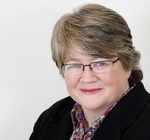
  • Therese Coffey – 2023 Speech to the NASDA Conference in Virginia

    Therese Coffey – 2023 Speech to the NASDA Conference in Virginia

    The speech made by Therese Coffey, the Secretary of State for Environment, Food and Rural Affairs in Virginia, the United States on 15 February 2023.

    Thank you, Ted, and thank you to NASDA for inviting me today.

    It is a particular privilege as I understand that this is the first time a foreign Secretary of State for Agriculture has been invited to address NASDA, and it comes at a particularly interesting time as we are still suffering the economic aftershock of Covid, global supply chains are still recovering, the illegal invasion of Ukraine by Russia has really impacted one of the most important agricultural countries in the world.

    I am very proud that our two countries continue to stand shoulder to shoulder with Ukraine though this terrible ordeal, from supporting heroic efforts to get the harvest in amid the turmoil of war and share it with some of the world’s poorest and most vulnerable people, to working together through the G7 to identify stolen grain and frustrate Russia’s efforts to profit from theft.

    But all this to me reinforces the need to champion free trade. And I’ve spent the last few days in the great state of North Carolina. The UK is their biggest market for sweet potatoes – but it doesn’t stop there. They told me they wanted to get on with a free trade agreement and I hope we can resume our talks soon.

    I am no stranger to the USA and the food industry, as I used to work for Mars Incorporated – who produce human food and pet food (not in the same factory you will be pleased to know) – my understanding of the global food supply chain was certainly enhanced by working there.

    Even in a country as blessed and resourceful as the USA on food production, trade is essential. That cup of Joe in the morning or the candy bar pick-me-up cannot exist without the imports of the key ingredients.

    In the UK, we only have domestic self-sufficiency of about 60% and we want to maintain that at least, if not consider higher. We do know that we can see the pressures of the environment and changes in the seasons. We see that for ourselves alongside the global demand for products and the supply chain for such ingredients and farming techniques have to be ever more sustainable and agile to deal with the challenges ahead. We also have to see that alongside other pressures – particularly the food inflation which is really challenging families with the cost of living.

    We have also been on a journey since we left the European Union. We have undertaken two significant pieces of legislation for farming. In 2020 we passed our Agriculture Act which gave us freedoms on how to support our farming industry and reduce red tape. And most recently the Gene Editing, the Precision Breeding Bill – which should be in law very soon – will allow the latest technology to help food become more resilient, whether that be a new wheat crop resistant to climate change, or that can design out weaknesses to pests and ultimately reduce our need for quite so many pesticides, particularly those harmful to pollinators.

    Now we have some prominent research institutes in the UK that I fully expect to start to take advantage of these new freedoms because it is through science, innovation and technology that our farming industry will continue to be sustainable. It is so important in the UK that our Prime Minister has just created a brand new government department to give that leadership and focus to science innovation and technology.

    And that is why I started my trip to the USA by visiting agritech businesses in North Carolina. I particularly enjoyed the trip to the new world-class Plant Science Initiative facility at North Carolina State, ably led by Adrian Percy who was once a British academic. Of course I enjoyed some classic North Carolina hospitality, especially the grits, and I was pleased to promote some new entrants into the market, starting with some Brit expats blending the best of British and American at the Fortnight Brewery in Cary.

    Now while we missed seeing Commissioner Troxler in his home state – Sir, it was a pleasure to meet you last night and you have a very fine state and certainly the UK has embraced your sweet potatoes. I’m conscious that just by singling out North Carolina I may have alienated the 49 other states, but I know that you have fantastic produce as well.

    I want to recognise and commend the USA’s leadership – including NASDA’s leadership on trade, sustainability, and innovation. And I think that the US and the UK are in a perfect position to develop our partnership on this even further in the months and years ahead. We can and we will build on good foundations as we already see some pioneering technology at work.

    That could be the UK-based company developing drone software that is now being used by farmers in New York and Michigan States, promoting sustainable approaches to managing pests in their apple orchards, maximising their harvest, saving them time and money, improving the natural environment, and boosting their profitability as well. Frankly – what’s not to like?

    I know some of your colleagues from NASDA saw that technology working wonders on a field in Kent in the UK during your visit last fall and I hope that many more American and British businesses will be able to benefit from this sort of collaboration.

    Now our trade relationship is worth more than two hundred and fifty billion dollars overall. The US is already our largest single trading partner and our top investor – creating twenty-seven thousand UK jobs last financial year alone, with one and a half million people getting up and going to work for American companies in the UK, alongside the more than a million people who do similarly for British companies in the USA as well.

    So, let’s build on that together.

    My portfolio as Secretary of State is rare if not unique in the world’s largest economies as it covers both the environment and agriculture. Now at times there can be seen to be conflict between the two, but far from being mutually exclusive, I actually see that they can be symbiotic.

    I expect that you as agricultural commissioners and directors and secretaries would likely agree with me that our farmers are the original friends of the earth. Their custodianship, their stewardship, is absolutely vital to the wellbeing of our planet as is their regard for animal welfare, which I know you know is something UK consumers care about, as do your consumers too.

    While I represent a rural constituency known for its pigs, potatoes and parsnips, I am well supported by my farming minister Mark Spencer, who is still a practising farmer and whose family have worked the land for four generations. So coming from that background, in addition to the global pressures that are currently affecting prices, energy, and supply chains, I’m very aware that farm businesses are now facing a range of challenges from historic flooding and drought in a changing climate, to outbreaks of pests and diseases.

    So it is crucial we support our growers and their businesses to become more resilient to these impacts.

    And the UK – having left the European Union – we have seized the opportunity to shape our own agricultural policy for the first time in half a century. So I’d like to share our approach, for food for thought.

    Recognising farming is the backbone of our second largest manufacturing sector, the food processing sector, it brings jobs to every county and plays a vital role in rural communities.

    In England, 70% of the country is farmland. So farmers hold the key to making the most of our land for all the things we want to achieve, including not just food security, but also our plan to improve the state of nature.

    And our view is that making space for nature can and must go alongside sustainable food production – indeed, working with nature, not against it. And while rightly there is an ongoing role for pesticides, we think we should not be using them quite so liberally, especially when they impact on other pollinators.

    But that is why we are designing, developing, and deploying new and improved funding programmes with our farmers, not imposing on them. Because we want to make it as easy and attractive as possible for businesses of every shape and size to apply and get involved on the way forward.

    Our aim is to provide a menu of different actions that farmers can be paid to do, and for each business to choose what works best for them as part of their plan to improve the productivity, profitability, sustainability, and resilience of their business for the future.

    In practice a lot of this is not new. It is rediscovering the agricultural techniques of our forefathers and marrying them with the latest scientific innovation. For example, we all know that good soil and a steady supply of clean water are absolutely crucial for a healthy crop, as well as forming the building blocks of a resilient ecosystem. A healthy environment is inherently linked to food security.

    Indeed in nurturing and utilising more of our natural capital, for example through good soil husbandry, we can reduce input costs from increasingly costly chemical fertilisers, and boost the long-term resilience of our food system. What that means is that we’re using taxpayers’ hard earned money to reward our farmers for the work that they do that is not yet fully rewarded by the market.

    But that benefits us all, including taking on the global challenges of antimicrobial resistance and zoonotic diseases. Embedding the nature-based solutions like trees that provide effective, cost-effective solutions to so many challenges including absorbing carbon, and protecting homes, businesses, and indeed entire communities from the impacts of droughts and flooding.

    Working with all our farmers and growers to produce world class food while protecting the land they rely on. That is the outcome that we want to see.

    Ultimately we know that as we lose the abundance, diversity, and connectivity of flora and fauna, we risk overturning the delicate global web of life that underpins our food security. And we have made a commitment – in law – to report to our parliament on the state of our nation’s food security at least once every three years. So that we keep a close eye on the evolving picture as our climate and indeed global geopolitics continues to shift.

    Now I know that you are in the thick of Farm Bill preparation here in the US, encompassing jobs as well as innovation, infrastructure, research, trade, and conservation. So, I look forward to hearing more about that here at NASDA. I think that we agree, that where decades, even generations of hard-won experience have given us a strong sense of what already works, we need to recognise the importance of the solutions that farmers bring to the table, and not forever reinvent the wheel.

    In everything we do, we need to reflect the immense contribution farming makes to our communities, our respect for cherished ways of life – particularly rural life – and the sheer grit, ingenuity, and determination it takes to keep us fed, whether that be to get up at the crack of dawn every morning to milk the cows, or the day-in-day-out nurturing of crops.

    Technology has helped us with some of that of course. But the cows are never going to milk themselves. But we also know that farmers have always been a part of good animal welfare – and that they can and must be a part of improving that in the future as well.

    Don’t worry, I’m not going all vegan or vegetarian on you. Meat is certainly still very much on my dietary plate. Caring for animals with good levels of husbandry is the right thing to do – and the smart thing to do as well if we want to improve biosecurity, prevent diseases and stop them from spreading like wildfire, as we know they can. That has an impact not just in one state or one country, but indeed on trade exports around the world.

    We have experienced that in the UK, and it is why we’re just recovering in some areas like lamb. And we need to make sure we continue to have that biosecurity ever present.

    I think it is important to say that together, we are stronger, we are more resilient and that collaboration, those high standards that we share, build our trust in each other which, of course, helps us trade with each other.

    And while there may always be an element of risk with food security in this changing, evermore interconnected world, when unexpected challenges and shocks raise their head, we have always been there to help each other out – as the UK did last year, when a domestic producer was hit by a bacteria outbreak, a UK-based company was proud to step into the breach to make sure American families had access to vital baby formula, and it was the first foreign company to do so under an expedited process thanks to that trust in each other.

    So friends, I want to thank you again, for the honour of speaking today, for inviting me to see some of the pioneering work underway, by redoubling the deep and enduring bond between the British and American people that makes our relationship so special.

    Ted, I think you said earlier that NASDA wants to be the best partner in your relationships. Well I can tell you that the reception you put on for Valentine’s night, that speed dating, I can assure you, you have a willing future partner in me and certainly in the UK.

    By learning from each other and working together, we will have done right by each other, and critically we will have done right by every generation yet to come. Thank you ladies and gentlemen and God Bless America.

  • PRESS RELEASE : UK commits major new aid package to Turkey-Syria earthquake response [February 2023]

    PRESS RELEASE : UK commits major new aid package to Turkey-Syria earthquake response [February 2023]

    The press release issued by the Foreign Office on 15 February 2023.

    The UK is committing a further package of support to address urgent humanitarian needs in Turkey and Syria.

    • new UK aid funding announced today to support the earthquake recovery effort
    • the UK is building on support in response to needs on the ground and requests from the Turkish authorities, the UN and aid agencies in Turkey and Syria
    • support to Turkey and Syria includes deliveries of family tents and blankets, and ongoing deployment of world class UK medical and technical expertise

    As the situation on the ground moves into in a new phase, from rescue to recovery, the UK is committing a further package of support to address urgent humanitarian needs in Turkey and Syria.

    The £25 million in new overseas aid will fund additional emergency relief, such as tents and blankets for families made homeless in freezing conditions, and the ongoing deployment of world-class UK medical expertise through the joint MoDFCDO Field Hospital established in Turkoglu.

    It will support the work of the UN and aid agencies on the ground in Syria, helping communities ravaged by war and this national disaster, as well as the recovery effort in Turkey led by the government. There will be a particular focus on protecting women and girls, including by helping with childbirth and midwifery and reducing the risk of gender-based violence for communities who have been displaced.

    This builds on the UK’s early response to the earthquake when we deployed a UK International Search and Rescue Team in Turkey, increased support to the White Helmets in north west Syria and rapidly delivered shipments of life-saving items such as emergency shelter, medical equipment and blankets.

    The joint MoDFCDO Field Hospital, which includes an emergency department, 24/7 operating theatre and accompanying medical staff, is providing lifesaving medical care working side-by-side with Turkish medics.

    UK funding is helping the UN, International and NGO partners to ensure that aid reaches the millions in need, including 4.9 million who need cross-border aid in north west Syria following the devastating earthquakes.

    UK Minister for Development Andrew Mitchell said:

    As this evolving situation transitions from rescue to recovery, we are seeing thousands of families left homeless by the earthquake, packed into crowded tents or lined up in the streets queuing for hot meals.

    The UK’s priority is to ensure that humanitarian assistance reaches people who need it most and that is why I am pleased to announce this additional funding today, which will be so vital in ensuring those affected can begin to rebuild their lives.

  • PRESS RELEASE : Rishi Sunak meeting with Bill Gates [February 2023]

    PRESS RELEASE : Rishi Sunak meeting with Bill Gates [February 2023]

    The press release issued by 10 Downing Street on 15 February 2023.

    Prime Minister Rishi Sunak and Bill Gates met this afternoon at Imperial College London to discuss the United Kingdom’s innovation leadership in low-carbon technology and life sciences, and to attend the launch of Cleantech for UK, a coalition of leading cleantech entrepreneurs and investors committed to working together to supercharge the UK’s green economy.

    During their bilateral meeting, the Prime Minister and Mr Gates discussed strategic challenges facing citizens in the United Kingdom and the rest of the world, as well as the opportunity for the UK to lead a global push for innovative solutions across energy security, food supply, and global public health.

    Following their bilateral meeting, the Prime Minister and Mr Gates spoke with three promising UK cleantech startup companies at the forefront of unlocking zero-carbon innovations in energy and agriculture, showcasing the UK’s capacity to lead the world in building a cleaner, more secure future.

  • PRESS RELEASE : UK takes steps to further facilitate aid flow into Syria [February 2023]

    PRESS RELEASE : UK takes steps to further facilitate aid flow into Syria [February 2023]

    The press release issued by the Foreign Office on 15 February 2023.

    This will make it easier for aid agencies to operate and facilitate earthquake relief efforts in Syria, without breaching sanctions that target Assad’s regime.

    • The UK has issued two General Licences, building on existing humanitarian provisions, to further facilitate humanitarian relief efforts in Syria following last week’s earthquakes.
    • These Licences will strengthen the timely and effective delivery of relief efforts by removing the need for individual licence applications.
    • The UK remains committed to holding the Assad regime accountable, including through comprehensive sanctions regulations, for its heinous crimes against the Syrian people.

    The UK is taking steps to make it easier for aid agencies to operate in Syria without breaching the sanctions that target Assad’s regime. These Sanctions General Licences will further facilitate earthquake relief efforts in Syria.

    The UK’s sanctions regulations already contain robust provisions for humanitarian efforts. The Office of Financial Sanctions Implementation (OFSI) is acting to further facilitate relief efforts in Syria by issuing a General Licence. The General License will authorise activities which would otherwise have been prohibited by the asset freeze for specified groups or organisations, and their service providers.

    The Export Control Joint Unit’s (ECJU) General Licence will extend the protection offered by the current humanitarian exception to petroleum prohibitions for UK-funded persons to all those conducting earthquake relief efforts in Syria and Turkey. This covers persons delivering the specified activities and their service providers.

    Minister of State for International Development, Andrew Mitchell commented:

    UK sanctions do not target humanitarian aid, food, or medical supplies, but we recognise that the current requirements for individual licencing are not always practical during a crisis response.

    After significant engagement with partners and NGOs, these General Licences build on existing humanitarian provisions, and should provide extra clarity to actors on the ground responding to this devastating earthquake.

    UK sanctions will continue to target the Assad regime and its backers, maintaining pressure in order to encourage an end to the violent repression of civilians in Syria. They are targeted against entities responsible for some of the worst crimes, including murder, chemical weapons use, and the systematic torture of civilians.

    There are notification and record keeping requirements attached to the General Licence issued by ECJU. Both licences are valid for 6 months from the date of issue. Further detail on General Trade Licences is on gov.uk. Further detail on the General Licence regarding the asset freeze is on gov.uk.