Tag: 2023

  • PRESS RELEASE : Strike action to affect travellers and goods entering the UK on 15 March [March 2023]

    PRESS RELEASE : Strike action to affect travellers and goods entering the UK on 15 March [March 2023]

    The press release issued by the Home Office on 7 March 2023.

    The Public and Commercial Services (PCS) union has announced Civil Service industrial action that will impact Border Force operations.

    Travellers who are planning to enter the UK on Wednesday 15 March 2023 may face longer wait times at border control.

    Check the latest travel advice with operators before you travel.

    Be patient and respect officers who are working to keep the UK border safe and secure for all travellers during strike action.

    We encourage eligible passengers to use eGates.

    Border Force strike proposed date and locations

    Dates:

    • 15 March
    • 16 March (until around 7am)

    Locations:

    The proposed strike action will impact international arrivals at all UK air and maritime ports, as well as those travelling to the UK from UK border controls in Calais, Dunkirk and Coquelles in Northern France.

    If you are travelling into the UK, be prepared for disruption and check before you travel.

    Our first priority is to keep our borders safe and secure. We will never compromise on this.

    Advice for people entering the UK

    If you are travelling into the UK during the proposed industrial action, be prepared for longer wait times at UK border control.

    All passengers should check the latest advice from their operators before travelling.

    Please be patient and respect officers who are working to keep our citizens safe and border secure, and supporting travellers during the strike action.

    We encourage passengers who are eligible to use eGates to do so if these are available.

    Please respect staff as we try and get you through the border as quickly and safely as possible. All forms of abuse and any inappropriate behaviour will be reported to the police.

    Hauliers: impact of strike action

    If you are moving goods during the proposed strike action, be prepared for potential disruption and longer queues at ports and inland border facilities.

    Please check with your operator before travelling, be prepared for delays and carefully plan your movements if they coincide with days of strike action.

    Border wait times

    Accurate queue time data can take some time to gather and check. If you are travelling during the proposed strike dates, be prepared for longer wait times.

    Several factors can influence wait times, including high passenger numbers, flight delays and flight bunching. Weather delays and other incidents can also impact border control queues.

    We advise travellers to check with travel agents, tour operators, and airlines or carriers before travelling, to check if the proposed strike action will affect your journey.

    Passengers can also check airport websites before travelling to stay up to date with the latest information related to travel or possible delays caused by strike action.

    What we are doing to avoid disruption and queues at the border during the strike action

    We continue to work closely with industry to minimise disruption and delays at the border during any industrial action.

    Border Force and industry work together very closely at a local and national level to agree plans for pressures while keeping the public safe and ensuring critical goods such as medicines and food can continue to flow across the border.

    Military personnel, civil servants and volunteers from across government are being trained to support Border Force at airports and ports across the UK in the event of potential strike action. Border Force are ready to deploy resource to meet critical demand and support the flow of travellers and goods through the border. However, people entering the UK should be prepared for potential disruption.

  • PRESS RELEASE : Prime Minister awards MND campaigner Rob Burrow the UK’s 2,000th Points of Light [March 2023]

    PRESS RELEASE : Prime Minister awards MND campaigner Rob Burrow the UK’s 2,000th Points of Light [March 2023]

    The press release issued by 10 Downing Street on 7 March 2023.

    Rob Burrow MBE, the former Leeds Rhino and England Rugby League player who has passionately campaigned for people with Motor Neurone Disease, was yesterday named by Prime Minister Rishi Sunak as the 2,000th recipient of the daily Points of Light award.

    Rob made nearly 500 appearances for the Leeds Rhinos between 2001 and 2017, winning eight Super League championships.

    Just two years after his retirement, he revealed a devastating diagnosis of MND in December 2019, but despite his physical decline Rob has raised awareness, including through a documentary with the BBC showing the impact of the disease on himself and his family.

    He has also inspired the creation of a Rob Burrow Day (7 July) led by Leeds Rhinos, and has been at the forefront of the design of a new £5m cutting-edge MND centre in Leeds, which will be the first of its kind in the UK to be based around the holistic needs of MND patients and their families.

    Rob’s awareness-raising has been matched by a fundraising drive from his old Rhinos team Kevin Sinfield OBE, who has completed multiple marathon challenges in Rob’s name to raise over £7m for MND charities.

    The inaugural Rob Burrow Leeds Marathon is due to take place in May this year, with over 10,000 people signed up to take part and raise further funds for his Leeds Hospitals Charity Appeal.

    The Prime Minister’s Points of Light award was first launched in April 2014, having been developed in partnership with the hugely successful Points of Light programme in the USA.

    Since then, outstanding individuals from across the country who are making a positive change within their community and inspiring others have been recognised by the Prime Minister through the award.

    In a personal letter to Rob, Prime Minister Rishi Sunak said:

    For almost a decade, Prime Ministers have been naming a daily Point of Light to recognise extraordinary people in our country whose service to others is an inspiration to us all.

    Today, I have the honour of naming you as the UK’s 2,000th Point of Light.

    You have inspired millions around the world with your strength, courage and positivity. Through your intimate documentary and all your work to raise awareness of MND, you have used your profile as one of the greatest ever rugby players to shine a light on a disease that was once rarely spoken about and little understood.

    You have inspired a phenomenal fundraising campaign that is supporting vital new research and improving the care for others – not least through the creation of The Rob Burrow Centre for Motor Neurone Disease in your proud home city of Leeds.

    The legacy of everything you are doing for the fight against this disease will change what it means to be diagnosed with MND.

    As you have said: “in a world full of adversity we must dare to dream.” Inspired by you, many will dare to dream and fulfil those dreams, in spite of whatever adversity they may face.

    You are a true Point of Light. On behalf of the whole country, thank you.

  • PRESS RELEASE : Change of British High Commissioner to Nigeria [March 2023]

    PRESS RELEASE : Change of British High Commissioner to Nigeria [March 2023]

    The press release issued by the Foreign Office on 7 March 2023.

    Dr Richard Montgomery CMG has been appointed British High Commissioner to the Federal Republic of Nigeria in succession to Ms Catriona Laing CB who will be transferring to another Diplomatic Service appointment. Mr Montgomery will take up his appointment during April 2023.

    Curriculum Vitae

    Full name: Richard Hugh Montgomery

    Married to: Naheed Bilgrami

    Children: Two

    Date Role
    2018 to 2022 The World Bank Group, UK Executive Director, Washington
    2015 to 2018 Department for International Development (DFID), Director, Asia, Caribbean & Overseas Territories (AsCOT) Division
    2013 to 2015 Islamabad, Counsellor (Development) and Head of Office, DFID Pakistan
    2009 to 2013 Abuja, Counsellor (Development) and Head of Office, DFID Nigeria
    2006 to 2009 DFID, Deputy Director and Head of Corporate Human Resources, and Head of Security, East Kilbride
    2005 to 2006 DFID, Deputy Team Leader, Top Management Group
    2002 to 2005 Lusaka, Deputy Head, DFID Zambia
    1999 to 2002 Dhaka, Senior Social Development Adviser, DFID Bangladesh
    1996 to 1999 New Delhi, Social Development Adviser, DFID India
    1993 to 1996 Swansea University, Lecturer in International Development, Centre for Development Studies
    1992 to 1993 Manchester University, Research, Institute for Development Policy & Management
    1992 GKW Consult Mannheim, Sociologist
    1988 to 1991 University of Cambridge, Doctorate (Ph.D) in Social Anthropology
  • PRESS RELEASE : UN HRC52 – UK statement on behalf of the Sri Lanka Core Group [March 2023]

    PRESS RELEASE : UN HRC52 – UK statement on behalf of the Sri Lanka Core Group [March 2023]

    The press release issued by the Foreign Office on 7 March 2023.

    Statement delivered by the UK’s Ambassador to the WTO and UN in Geneva, Simon Manley, on behalf of the Sri Lanka Core Group.

    Thank you Mr Vice-President

    This statement is by the Sri Lanka Core Group comprising Canada, Malawi, Montenegro, North Macedonia, the UK and the United States.

    We welcome recent commitments with respect to the protection of human rights in Sri Lanka, including those of persons from all religious and ethnic groups. Together with recent efforts at constitutional reform, and initiatives aimed at fostering political inclusion, these provide a basis upon which to build.

    We also welcome Sri Lanka’s positive engagement in the Universal Periodic Review process in January. We are keen to assist Sri Lanka in implementing its UPR recommendations.

    However, our concerns over heavy-handed responses to peaceful protests remain. Sri Lanka must safeguard the rights to freedom of peaceful assembly and association, and freedom of expression. We call for accountability for any protest-related violence. Civil society has an important part to play in encouraging the protection of human rights and we underline the importance of protecting space for civil society’s important work, including through any future legislation.

    We stress the crucial importance of upholding the rule of law and safeguarding representative democracy, including by ensuring the independence of institutions and governance systems. This includes the electoral system, in which maintaining the confidence of Sri Lankans is crucial.

    We urge the Sri Lankan authorities to address long-standing impunity and corruption. We also underline the need for good governance, which together with sound economic policies, should better support the prosperity of all Sri Lankans.

    Noting commitments made to the Council in September by the Government of Sri Lanka, we emphasise the importance of transitional justice, including promotion of truth and accountability, with the goal of reconciliation and accountability for all communities. We also emphasise the importance of replacing the Prevention of Terrorism Act with legislation that aligns with Sri Lanka’s international obligations.

    The Core Group calls on Sri Lanka to work with the High Commissioner and his Office. We remain ready to support Sri Lanka in addressing HRC resolution 51/1.

    Thank you.

  • PRESS RELEASE : Statement on report of Commission on Human Rights in South Sudan [March 2023]

    PRESS RELEASE : Statement on report of Commission on Human Rights in South Sudan [March 2023]

    The press release issued by the Foreign Office on 7 March 2023.

    Rita French, the UK’s Human Rights Ambassador, delivers a statement on the report of the Commission on Human Rights in South Sudan.

    Thank you, Mr President.

    We welcome the report of the Commission on Human Rights in South Sudan whilst deeply regretting its conclusion that the human rights, humanitarian and security situation in South Sudan remains dire and of urgent concern.

    We are particularly concerned by instances of sub-national violence across South Sudan as well as reports of government intimidation, harassment, illegal arrest and arbitrary detention of civil society actors and media workers.

    Mr President,

    While we recognise some positive progress made by the Government of South Sudan and the National Legislative Assembly, it is clear that the end goal of a just and lasting peace in South Sudan – based on the full respect for human rights, full implementation of the Revitalized Agreement, and full operationalization of the Chapter V transitional justice institutions – is still very far away.

    Bearing all this in mind, and while South Sudan’s own capacity to provide tangible human rights scrutiny is yet to be realised, we believe that the only credible response by this Council can be to extend the Commission’s mandate for a further year.

    Commissioners,

    We welcome your convening of a multi-stakeholder conference on transitional justice in South Sudan in late February. What conclusions did you draw from this?

    Thank you.

  • PRESS RELEASE : Increased prison sentence for Lee Wilson [March 2023]

    PRESS RELEASE : Increased prison sentence for Lee Wilson [March 2023]

    The press release issued by the Attorney General’s Office on 7 March 2023.

    A paedophile who sexually assaulted 2 children under the age of 13 will spend an additional 4 years in prison following a challenge to his original sentence under the Unduly Lenient Sentence scheme, meaning he will now serve 15 years’ imprisonment plus 12 months’ extended licence.

    Lee Wilson, 40, from South Shields, Tyne and Wear, was sentenced on 18 November 2022 for a total of seven counts of sexual offences against children. These included 3 counts of assault of a child under 13 by penetration, sexual assault of a child under 13 and making indecent photographs of a child.

    At the original sentencing at Newcastle Crown Court, Wilson was ordered to serve 11 years’ imprisonment plus 12 months’ extended licence.

    His sentence was then referred to the Court of Appeal by the Solicitor General, Michael Tomlinson KC MP, who felt that the sentence handed down to Wilson was unduly lenient.

    Following today’s hearing at the Court of Appeal, the Solicitor General said:

    The increased sentence handed down to Lee Wilson today shows that sexual crimes against children will always be met with the strongest possible punishment under the law. These were abhorrent crimes, and I welcome the decision of the Court to order Wilson to serve a sentence which better reflects his offending.

  • PRESS RELEASE : Statement on report by Group of Human Rights Experts on Nicaragua [March 2023]

    PRESS RELEASE : Statement on report by Group of Human Rights Experts on Nicaragua [March 2023]

    The press release issued by the Foreign Office on 7 March 2023.

    Rita French, the UK’s Human Rights Ambassador, delivers a statement on behalf of the UK on the report from the Group of Human Rights Experts on Nicaragua.

    Thank you, Mr President.

    We thank the Group of Human Rights Experts on Nicaragua for the presentation of their report.

    The reports of grave and systematic human rights violations, in particular the use of sexual and gender-based violence are deeply disturbing. The UK supports the recommendations of the report and continues to call on the Nicaraguan government to cooperate fully with the Group.

    The report raises concerns about the participation of the President, Vice President and officials, as well as non-State actors, in exceptionally serious and systematic human rights violations and abuses, including extrajudicial executions, torture, arbitrary deprivation of nationality, as well as violations of numerous fundamental freedoms.

    While we welcome the recent release of political prisoners from Nicaraguan jails, the decision by the authorities to expel them from Nicaragua and to strip them of their nationality and their assets is a wholly unacceptable penalisation of exercising their rights.

    We would welcome the views of the experts on the effect of actions taken to date by the international community in particular to discourage the Nicaraguan Government from committing further violations, abuses, and crimes, and crucially to hold those responsible to account.

    Thank you.

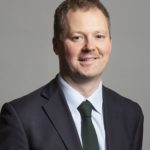
  • Neil O’Brien – 2023 Speech on Prescription Charges for People Aged 60 or Over

    Neil O’Brien – 2023 Speech on Prescription Charges for People Aged 60 or Over

    The speech made by Neil O’Brien, the Parliamentary Under-Secretary of State for Health and Social Care, in Westminster Hall, the House of Commons on 6 March 2023.

    I am grateful to the hon. Member for Gower (Tonia Antoniazzi) for opening the debate so effectively on behalf of the Petitions Committee, and I thank all Members for their constructive contributions. I also thank the 46,000 members of the public who signed the petition.

    The Government provided their initial response to the petition in January 2022, and I am pleased to be able to respond again today, having listened to hon. Members’ important and interesting contributions. The context, of course, is the Russian invasion of Ukraine and the high energy prices, inflation and cost of living pressures that it has unleashed. It is worth situating the debate in the context of some of the things we are doing to take action on that, some of which hon. Members have already referred to.

    This winter, we are spending a total of £55 billion to help households and businesses with their energy bills—one of the largest support packages in Europe. A typical household will save about £900 this winter through the energy price guarantee, in addition to £400 through the energy bills support scheme. We are also spending £9.3 billion over the next five years on energy efficiency and clean heat, making homes cheaper to heat. Some of that is being paid for by the windfall tax; at 75%, it is one of the highest in any of the countries around the North sea, and it is enabling us to do more on the cost of living, such as the £900 cost of living payment for 8 million poorer households, and the largest ever increase to the national living wage, which will help 2 million workers. In total, we are spending £26 billion on cost of living support next year.

    Turning specifically to prescription exemptions, I should start by trying to manage expectations about what I can say today, for reasons on which I will elaborate. It is clear that the outcome of the consultation on aligning the upper age exemption for prescription charges with the state pension age is very important to many Members’ constituents. However, I can only say at this point that no decision has been made yet to bring proposals forward.

    We received over 170,000 responses to the consultation —a testament to the strength of feeling on the issue. We want to ensure that everyone across the country, especially those affected by the cost of living pressures caused by the Russian invasion, can afford their prescriptions. That is why we have thought long and hard about how best to balance the needs of those in the affected age group, many of whom will find that they have additional health needs compared with when they were younger, with the pressures facing the public finances. I can, however, assure Members that we will respond to the consultation in due course.

    Hon. Members will be aware that the petition calls on the Government to protect free NHS prescriptions for all over-60s. We value our older members of society, and we recognise their social care and health needs. On the one hand, we recognise that families up and down the country are facing unprecedented pressures with the cost of living; on the other, we have to recognise that in the light of the covid pandemic, which has tested the NHS like never before, and the challenging economic landscape, we must ensure that public sector spending represents the best value for money for the taxpayer. As we look to the future in a post-pandemic world, there is no shortage of challenges ahead of us: an ageing population, an increasing number of people with multiple health conditions, and deep-rooted inequalities in health outcomes, which we are tackling. That is all in addition to the challenges of the pandemic and the elective backlog.

    Charges have been around in the NHS for over 70 years, and prescription charges provide a valuable source of income for the NHS, contributing £652 million in 2021-22. That significant funding helps to maintain vital services for patients, and it is particularly important given the increasing demands on the NHS.

    It is for those reasons that we consulted on aligning the upper age exemption for prescription charges with the state pension age. Historically, the initial exemption for prescriptions was for people aged 65 and over. The exemption was then extended to women aged 60 and over in 1974, and to men aged 60 or over in 1995, based on the state pension age for women at that time. The state pension age has subsequently increased to 66 for both men and women, with legislation already in place to increase it to 67, and then 68, in future years.

    The Government have abolished the default retirement age, meaning that most people can continue to work for as long as they want and are able to. That means that many people in the 60 to 65 age range can remain in employment and be economically active, and therefore more able to meet the cost of their prescriptions. Indeed, more than half of people aged between 60 and 65 are economically active, with a further 20% receiving a private pension or some other income.

    As increasing numbers of people live longer, work longer and so on, there are more people claiming free prescriptions on the basis of their age. It is projected that by 2066 there will be a further 8.6 million UK residents aged 65 and over, and that they will make up about a quarter of the total population.

    It is important to know that over 1.1 billion prescription items are dispensed in the community each year, with nine out of 10 currently dispensed free of charge. The exemptions that allow that may be based on the patient’s age, certain medical conditions, or income. We estimate that if we were to make the proposed change, around 85% of 60 to 65-year-olds would be minimally affected by it. As I have just noted, more than half of them are in employment, with about another 20% retired with a private pension, so they have a higher income, while others would continue to qualify for free prescriptions on the basis of their particular conditions.

    It is also worth noting that there are extensive arrangements in place to help those who are most in need of support with prescription charges. People who are on a low income but do not qualify on the basis of an automatic exemption, such as being on universal credit, can get help through the NHS low income scheme, which provides either full or partial help with health costs on an income-related basis. Anyone can apply for the scheme if they or their partner, or they jointly as a couple, do not have savings, investments or property totalling more than £16,000, not including the place where they live. A person will qualify for full help with their health costs, including free NHS prescriptions, if their income is less than or equal to their requirements.

    To support those who do not qualify for an exemption due to one of the many other reasons, such as their age or their condition, or for the NHS low income scheme, prepayment prescription certificates, which were mentioned earlier in the debate, are available to help those who need frequent prescriptions to reduce the cost. The prescription charge is currently £9.35; a three-month PPC is £30.25; and a 12-month certificate is £180.10, which amounts to just over £2 a week. PPCs can offer significant savings, and an annual PPC can be paid for in 10 direct debit payments, to allow people to spread the cost over the year.

    Andrew Gwynne

    I am a little concerned about the tone of what the Minister is communicating. He seems to be accepting that there will be a change on prescriptions for pensioners, but does he acknowledge the challenge with pension credit, whereby a large number of pensioners who are eligible for it do not apply for it, because they are fearful of the means test? What will he do to ensure that that does not happen when it comes to prescriptions?

    Neil O’Brien

    Perhaps I can set the hon. Member’s mind at ease. I said earlier that no decision had been made, and I reiterate that now. I have talked about the different measures that cause people either to be exempt from charges or to have the cost of their prescriptions cut, and I talked about PPCs as a final step, which can reduce the cost of prescriptions for those who do pay them.

    It has been mentioned several times that prescription charges have been abolished entirely in the devolved Administrations. Health is of course a devolved matter, but it is worth noting that spending is £1.25 in Scotland and £1.20 in Wales for every £1 in England, so there is that additional budget. Those devolved Administrations, with the record increases in their spending settlements, have full discretion about how they choose to spend those budgets.

    Several hon. Members asked me quite specific questions about the outcome of the consultation. I can only reiterate that we continue to consider, long and hard, the many responses that we received, trying to balance the cost of living pressures with the need for increasing funding for the NHS, and we will respond to the petition in due course. I thank hon. Members for their contributions today.

    Tonia Antoniazzi

    I thank Members for participating in the debate and the Minister for his response. I am sure that the people I have met will not be reassured by that response, but it is difficult, with no decision having been made about the reduction in prescription charges. That needs to be done, and the Minister needs to confirm it.

    I feel for the many unpaid carers—mostly women—who look after children or partners, given of the impact of this situation on them. People see that as unfair, and the system is not perfect, so we hope that change will come.

  • Andrew Gwynne – 2023 Speech on Prescription Charges for People Aged 60 or Over

    Andrew Gwynne – 2023 Speech on Prescription Charges for People Aged 60 or Over

    The speech made by Andrew Gwynne, the Labour MP for Denton and Reddish, in Westminster Hall, the House of Commons on 6 March 2023.

    It is a pleasure to serve under your chairmanship, Sir Edward. I want to start by thanking the Petitions Committee for facilitating this debate, and my hon. Friend the Member for Gower (Tonia Antoniazzi) for the passionate way in which she put forward the arguments of Peter, Denise and many others who find themselves in the predicament of having to pay for prescriptions or who worry that they might have to pay for them as pensioners.

    It is a pleasure to respond to the debate on behalf of the shadow Health and Social Care team, but also as the Member of Parliament for Denton and Reddish, and I know that many of my constituents are concerned about this potential policy change. As we have heard, we are in the middle of a cost of living crisis, when many people face unsustainable rises in their energy and household bills. It is little surprise that the Government’s decision to consult on scrapping free NHS prescriptions for the over-60s will be of profound concern to many people already struggling to make ends meet. That anxiety has been compounded by characteristic delay from the Department of Health and Social Care.

    The Government first announced the consultation to scrap free NHS prescriptions for the over-60s in July 2021, meaning that there was little or no time for Members of this House to sufficiently scrutinise the proposals before that year’s summer recess. The consultation closed in September 2021 and, two and a half years on, we are still none the wiser about where the Government are on the issue.

    A quick glance at written parliamentary questions shows that many Members from across the House have asked the Government for clarity, only to receive a boilerplate response that an announcement would be made “in due course”. In his response, will the Minister set out precisely when that announcement will be made and why there has been such a delay in the Government addressing their own consultation?

    That is important, because the Government’s own impact assessment raises several potential problems with the proposals. Notably,

    “some people towards the lower end of the income distribution may struggle to afford all their prescriptions”,

    which can result in

    “future health problems for the individual and a subsequent cost to the NHS.”

    That is precisely the point made in their interventions by my hon. Friends the Members for Gower and for Coventry North West (Taiwo Owatemi) and, indeed, the hon. Member for Rutherglen and Hamilton West (Margaret Ferrier), who is not in her place. Therefore, if the Government do decide to opt for this policy, we need to know what steps they will take to support people—especially those over 60 and with long-term conditions—with their prescription fees.

    Prescription charges have already increased by 30% since 2010 and, given the financial context we are in, there are really valid concerns about people being priced out of accessing vital medicines. The Royal Pharmaceutical Society recently conducted a survey of 269 pharmacies, with half of respondents saying that patients were asking them which medicines they could do without. Half of pharmacies surveyed also said that they have seen a rise in people not collecting their prescriptions at all. That is incredibly concerning.

    Last year, Asthma & Lung UK found that 15% of surveyed people with respiratory conditions were rationing the use of their inhalers to make them last longer. Some 5% of people said they were being forced to borrow medicine from others, which really frightens me, because someone’s prescription is pertinent to them and them alone. I had hoped that we had moved away from a world where we lend medicines to others. Frankly, these statistics should be ringing alarm bells in the Department of Health and Social Care and, for that matter, in the Department for Work and Pensions, but unfortunately we have had radio silence.

    I would like to impress on the Minister the simple fact that if people are not taking vital medication, they could be living in extreme pain, and in some cases they will be at risk of serious medical complications as well. Have the Minister and his officials made any assessment of the number of people in England who are currently unable to afford medicine, and of the knock-on impact on NHS services, which are already at breaking point thanks to this Government’s mismanagement of the NHS?

    Last year, the Government froze prescription charges in a move that was welcome to many in England. The next review is due to take effect in April, and I am sure I do not need to remind the Minister that that will come at the same time as the implementation of Ofgem’s new energy price cap. Will the Minister provide an update on that review? Does he anticipate another rise in the cost of prescription charges, or will the Government do the right thing and freeze them again, for another year?

    While he is at it, perhaps the Minister will also nudge his colleagues in the Treasury to do the decent thing and implement a proper windfall tax on energy and gas giants to extend energy support, so that those on the lowest incomes are protected against astronomical price rises. In the 21st century, here in the United Kingdom, no one should be forced to choose between accessing vital medication, heating their home or feeding their family.

    The final point I wish to make is connected to this issue. The Government seem to have no vision or appetite to prioritise preventive public health. In the context of an ageing population, it is important that we build healthier communities. That is important not only morally, but practically, especially if we want to reduce reliance on prescriptions and primary care. What steps is the Minister taking to prioritise preventive health? On that note, will he set out why the public health grant allocation has still not been announced for local authorities in England? Many local authorities that have already set their budgets still do not know what their public health grant allocations will be in three and a half weeks’ time.

    The next Labour Government will give the NHS the tools, staff and technology it needs to treat patients on time and to put prevention right at the heart of everything it does. Coming back to the issue before the Chamber, I really hope that the Government understand the concern, worry and anxiety of those over 60 in England, who are concerned that their free prescriptions may come to an end.

    I want to mention my right hon. Friend the Member for Wentworth and Dearne (John Healey), who was here at the start of proceedings. As a member of the shadow Cabinet, he cannot take part in these deliberations, but he wanted me to highlight some of the work he has done in his constituency. He and his local team collected signatures against the proposed scrapping of free prescriptions for the over-60s. His story can be told 650 times over to the Minister, because there are elderly people across England who are concerned about this issue and who want answers from Ministers. They want their concerns to be heeded, they want assurances that the Government get the reason why prescriptions are free for the over-60s and they want the Government to understand why it is important that that remains the case. They also want to know that the Government are on their side on this issue, that their free prescriptions are not at risk and that we will not face people who cannot afford their medication with the dilemma of whether to heat their homes, feed their families or get the medication they so desperately need. Britain is better than that, and I hope the Minister has some positive news for us.

  • Marion Fellows – 2023 Speech on Prescription Charges for People Aged 60 or Over

    Marion Fellows – 2023 Speech on Prescription Charges for People Aged 60 or Over

    The speech made by Marion Fellows, the SNP MP for Motherwell and Wishaw, in Westminster Hall, the House of Commons on 6 March 2023.

    It is a pleasure to serve under your chairmanship, Sir Edward. I thank all the previous speakers; some of what I say will be a repetition, but in this case I do not think repetition is unwelcome.

    Under the SNP Scottish Government, prescription charges were abolished in Scotland in 2011. Scotland gets free prescriptions because the Scottish Government believe that mitigating the costs of illness is in the best interests of the population of Scotland. The SNP has led the way in delivering progressive and forward-thinking public health measures, which people across Scotland continue to benefit from. I speak from experience, as I was honoured to be part of the call for the new generation of cystic fibrosis medications to be released in Scotland, which was first place to get them. I declare an interest, because my granddaughter Saoirse will continue to benefit from those new drugs for the rest of her life, and they will extend her life expectancy quite considerably.

    All credit to the Scottish Government: inhalers, antibiotics, life-saving medicines such as insulin for diabetes and many other treatments are provided at no cost at all to the patient at any stage. Scotland receives no extra funding for this decision and does not take money from other areas of the United Kingdom to pay for it. England is out of step with the rest of the UK. For more than a decade, NHS prescriptions have been free in Scotland, Wales and Northern Ireland. Yet the Tories, who have been in power in England for 13 years, have not replicated this approach, instead penalising those wishing to collect medicines; and, as we have already heard, the cost of living crisis has increased the non-collection of prescriptions.

    When the NHS was founded in 1948, there were no prescription charges, but fees were introduced in the early ’50s to help with funding. Labour’s position in 2019 was to roll back charges for England—that appears to have been dropped under the present leadership. Unequivocally, the SNP has used the powers we have to ensure that people in Scotland benefit from the most generous social contract in the UK. The cost of NHS prescriptions can be mitigated in England if people use a prescription season ticket—a prepayment card. However, many people in England are still unaware of the system. Is the Minister prepared to advertise it more than is currently the case?

    I used the example of cystic fibrosis medication, but the hon. Member for Gower has done really good work in the area of hormone replacement therapy over the years. After the arguments she has forcefully put in this place, it is incredible that women going through the menopause still have to pay for their HRT. The most recent announcement committed the Government to reduce the cost from April this year so that women can receive a year’s supply of HRT for the cost of two single NHS prescriptions in England, but in the rest of the UK they get it free. Although cost reductions are welcome, charging menopausal women less seems inadequate—they should get it free because the amount of work they can then do will increase, and that is a benefit to the whole economy.

    People who have asthma are sometimes afraid to collect their prescriptions, as we heard from the hon. Member for Gower (Tonia Antoniazzi). A small survey of pharmacists published by the Royal Pharmaceutical Society last month found that a rising number of patients in England are failing to collect their medicines, because they cannot afford them. Some 51% of the pharmacists surveyed reported an increase in patients not collecting their medication, and 67% saw a rise in patients asking whether there was a cheaper over-the-counter substitute for the medicine they had been prescribed. That is appalling in this day and age, and it leads to more hospital admissions and more expensive care being required in the longer term. It defies common sense to allow that to continue.

    The three devolved Governments have taken a preventive approach to mitigate poorer health outcomes by providing free access to medicines for those who need them. In England, the tax on sickness reduces access to medicines and leads to poorer health, time off work and potential hospital admissions, offsetting any costs gained from prescription charges. The UK Government should scrap prescription charges. To introduce them for people who are working until 67 is absurd. As the hon. Member for Rutherglen and Hamilton West (Margaret Ferrier) said, we are more likely to need medication as we get older.

    The Government’s public consultation document ominously states:

    “Anyone aged 60 and older can get free prescriptions for medicine. We are thinking about changing this.”

    The change would mean that prescriptions would be free only when people get to pension age. Today’s pensioners have no need to worry, but they will worry—people worry even more during a cost of living crisis.

    Is the Minister prepared to heed what is happening in the devolved nations and to equalise access to medicine across the United Kingdom?