Tag: 2023

  • PRESS RELEASE : Prime Minister agrees unprecedented measures to tackle illegal migration alongside France [March 2023]

    PRESS RELEASE : Prime Minister agrees unprecedented measures to tackle illegal migration alongside France [March 2023]

    The press release issued by 10 Downing Street on 10 March 2023.

    Package will see a new detention centre established in France as well as the deployment of more French personnel and enhanced technology to patrol beaches in a shared effort to drive down illegal migration.

    • Package will see a new detention centre established in France as well as the deployment of more French personnel and enhanced technology to patrol beaches in a shared effort to drive down illegal migration.
    • The unparalleled multi-year agreement delivers on the PM’s priority to stop small boats and builds on joint measures taken with France in 2022 which increased patrols by 40%.
    • Enhanced cooperation aims to increase the interception rate for attempted crossings and drastically reduce the number of crossings each year.

    Hundreds of extra French law enforcement officers will use enhanced technology and intelligence insight to prevent illegal Channel crossings under a new agreement struck by the Prime Minister and President Macron in Paris today.

    For the first time, the UK will help fund a detention centre in France to enhance the country’s ability to cope with the level of people being trafficked across the Channel. This new centre will support French efforts to increase detention capacity, allowing more migrants who might otherwise travel by dangerous and illegal routes to the UK to be removed from the French coast.

    Building on our existing partnership, which saw twice as many illegal crossings stopped in 2022 than 2021, today’s agreement will also more than double the number of personnel deployed in northern France to tackle small boats, with over half of these in place by the end of the year. The UK will contribute funding towards this.

    Efforts will be bolstered by a new, highly trained, permanent French mobile policing unit dedicated to tackling small boats. Additional drones, aircraft and other technologies like surveillance will also be deployed, as the UK and France step up intelligence sharing to clamp down on people trafficking routes.

    These French efforts will be overseen by a new 24/7 zonal coordination centre, with permanent UK liaison officers. The coordination centre will bring all relevant French law enforcement partners together for the first time to coordinate the response to an alarming trend which has seen a 50% rise in illegal migration across Europe in the last year. The UK has our own Small Boats Operations Command which has ensured that 99% of those who enter British waters are intercepted.

    This enhanced cooperation aims to increase the increase the interception rate for attempted crossings and drastically reduce the number of crossings each year, supporting our long-term, shared goal of completely stopping this illegal migration route.

    The Prime Minister said:

    I have made it one of my five priorities to stop the boats. We are delivering on that priority to stop people coming to the UK illegally.

    Last year I agreed the largest ever small boats deal with France to increase UK-funded patrols by 40 per cent. This week I announced measures to ensure nobody who enters the UK illegally can remain here.

    We don’t need to manage this problem, we need to break it. And today, we have gone further than ever before to put an end to this disgusting trade in human life. Working together, the UK and France will ensure that nobody can exploit our systems with impunity.

    In addition to the extra steps taken to patrol the beaches in the north of France, today’s agreement will also see further UK and French cooperation upstream to stop illegal migration at source. This includes further coordination between the National Crime Agency and its French counterpart via officers based in countries along the routes favoured by people traffickers.

    Alongside last year’s deal with France, the Prime Minister has taken a number of steps to curb illegal migration since taking office. This includes re-establishing the Calais Group of Northern European nations to disrupt traffickers and setting a long-term ambition for a UK-EU wide agreement on returns – an ambition France has confirmed today that they share.

    This week the UK Government has announced a Bill to end illegal entry as a route to asylum in the UK.

    These measures will remove the incentive for people to risk their lives through dangerous and unnecessary journeys and pull the rug from under the criminal gangs profiting from this misery once and for all.

    Illegal migrants will be detained and swiftly removed to their home country if safe, or another safe third country, such as Rwanda, where they will be supported to rebuild their lives.

    Anyone illegally entering the UK will be prevented from accessing the UK’s world-leading modern slavery support or abusing these laws to block their removal.

    The only challenges that will suspend removal will be where someone claims that their removal to a safe third country would lead to a real risk of serious and irreversible harm, or on the basis that they do not fall within the cohort of persons liable to removal under the Bill. Any other challenges or human rights claims can also only be heard after removal, remotely.

    By ending illegal immigration as a route to asylum, stopping the boats and taking back control of our borders the Bill will ensure the UK can better support people coming through fair, safe and legal routes.

  • PRESS RELEASE : UK provides new life-saving support for Rohingya people [March 2023]

    PRESS RELEASE : UK provides new life-saving support for Rohingya people [March 2023]

    The press release issued by the Foreign Office on 10 March 2023.

    Minister for the Indo-Pacific Anne-Marie Trevelyan announced new UK funding to support Rohingya people living in camps in Bangladesh.

    • Minister for the Indo-Pacific, Anne-Marie Trevelyan, announces new UK funding through the World Food Programme to help 449,000 people
    • she is visiting Bangladesh for the first time in her role to strengthen historic UK-Bangladesh ties
    • she will meet Prime Minister Sheikh Hasina and Foreign Minister Dr A K Abdul Momen, and strengthen UK-Bangladesh partnership on climate action

    Minister for the Indo-Pacific Anne-Marie Trevelyan will visit Cox’s Bazar this week to see first-hand how UK support is providing a lifeline to Rohingya people in the camps.

    During her first visit to Bangladesh in the role, she will also set out how the UK is providing new humanitarian support through the [orld Food Programme to supply food for 449,000 people living in the camps this month.

    UK support will also go to the [nited Nations High Commissioner for Refugees (UNHCR) for pressure cookers that can help to reduce the consumption of cooking gas.

    Minister for the Indo-Pacific Anne-Marie Trevelyan said:

    The UK is committed to supporting Rohingya people who continue to live in Cox’s Bazar. We are helping the World Food Programme feed 449,000 people, as well as providing pressure cookers that can help to reduce the consumption of cooking gas.

    The UK continues to push for a long-term solution that will enable the Rohingya to return to Myanmar on a safe, voluntary and dignified basis.

    During her visit, Minister Trevelyan will meet Bangladesh’s Prime Minister Sheikh Hasina and Foreign Minister Dr A K Abdul Momen as well as hold talks with civil society organisations.

    British High Commissioner to Bangladesh Robert Chatterton Dickson said:

    I’m pleased to welcome the Minister for the Indo-Pacific to Bangladesh. The UK’s partnership with Bangladesh is a unique and valued relationship which contributes much to the prosperity and security of both our countries.

    This visit reaffirms the UK’s firm commitment to Bangladesh as a fast growing Indo-Pacific partner with strong people-to-people connections and our ambition to work even more closely together in the future.

  • PRESS RELEASE : World Trade Organization General Council – UK Statements [March 2023]

    PRESS RELEASE : World Trade Organization General Council – UK Statements [March 2023]

    The press release issued by the Foreign Office on 10 March 2023.

    The UK spoke on a variety of agenda items at the WTO General Council on 6 – 7 March 2023.

    Let me start by echoing many others who are paying tribute to those arriving and departing, particularly to Ambassador Spencer who is leaving us with typical eloquence. Kingston’s gain is very much Geneva’s loss. I think she has always kept her eyes on the prize and certainly has been moulding consensus in this organisation for her time here and she will be much missed.

    Looking to our agenda, it’s absolutely right that, as we did at TNC [Trade Negotiations Committee] we look ahead to where we want to be in a year’s time, amidst the glories of the UAE, trying to have a successful MC13 and in doing so, have a sense of what we want to achieve at MC13 and the agenda which we wish to set. And we very much support the DG in looking to an agenda that is green, that’s digital, that services, and is inclusive. As our Chinese colleague reminded us earlier, in doing so, I think we have to be alive to what is happening outside of this organisation as well. And in that respect, let me welcome the Global Oceans Treaty agreed yesterday, which of course builds on what we achieved in this organisation just last June in the able hands of the gentleman up on the stage today [Santiago Wills, former Chair of the Fisheries negotiations, now Director TNC Division, WTO].

    As we look ahead, we obviously have to build on those very successful retreats we’ve had including the development retreat. And as my good friend George [Amb. Australia] (who is about to follow me and probably take any of the good lines I would otherwise have used) said just last week, we have done a lot of retreating and now the time is for a little bit of advancing and to build on those discussions. So let me thank those who have put forward practical proposals, whether they be India or the LDCs or the Latin Americans, in terms of how we can actually reform by doing in this organisation; how we can improve the quality of our work, right across the piece.

    Just on the Indian proposals I think we, like others, recognise the importance of them. We need to think about how we use the CTD [Committee on Trade for Development] that doesn’t duplicate or undermine other bodies in this organisation; and how we ensure that in the work of all the Committees of this organisation, we advance with a view to the development perspectives which we have in each and every body of this organisation.

    Let me also pay tribute to our EU partners and friends for the proposals they have brought forward today. I think it’s a really important idea; there are a lot of really important themes we need to consider in this organisation. It is right that we need to think about the diverse and complex forms of state intervention that we now experience in the global economy and how we consider those within this organisation and with others. And there is some great work in the secretariat with the World Bank, the IMF and the OECD in this regard and, having consulted very carefully with the CTE [Committee for Trade and Environment] Chair, I think it is really noteworthy that we’ve got some very practical ideas here for taking forward the work of that organisation. Again, going back to where I started with the Global Ocean Treaty, there is really important work that is being done outside this organisation: this latest Treaty but also COP15 in Montreal in December, work which identifies things that we need to be taking forward in trade policy and trying to bring that back here into this House and work out how we can contribute to sustainable development. I think it’s a real key task for this organisation as we prepare for MC13.

    Ecommerce

    “I would like to thank the facilitator for her work and the update just now. We welcome very much discussions under the Work Programme so far which are delivering on the mandate from MC12. We are pleased to see a high level of engagement from all Members, especially developing countries and LDCs. The UK has been pleased to share its experience on consumer protection and telecommunication policy issues in recent meetings. We think that the Work Programme is a valuable forum for exchanging information, experience and best practice on key Ecommerce policy issues. We should explore ways in which we could deepen discussions moving forward, and we very much support the facilitator in involving, as has been suggested, other international organisations and businesses into Work Programme discussions. We look forward, also, to discussions on the customs duty moratorium in April at the meeting of the Work Programme. And it’s well-known: the discussion must be focused on the need to move forwards and not backward at MC13.

    MC12 TRIPS

    The UK has indicated flexibility on the deadline for concluding negotiations on Paragraph 8 of the MC12 TRIPS decision and places high importance on the inclusive processes to resolve procedural ambiguity in Therapeutics and Diagnostics discussions. The UK supports robust, evidence-based policy making in TRIPS Council and encourages members to remain cognisant of the precedent which actions set now and for future negotiations, and the bearing outcomes will have on business confidence in the international system to innovate, invest and collaborate.

    Small and Vulnerable Economies (SVEs)

    Just to briefly say we really welcome Mauritius and Guatemala bringing this issue to our attention, and thanks to the many colleagues who have highlighted the particular issues that SVEs face. We are very keen on engaging on this issue and we recognise the particular trade challenges that SVEs, including SIDs, face and we need to take forward that work in the dedicated session later this month. I would just say, for those of you that have not spotted already, that in our own International Development Strategy we have set out an ambition, an ambition that by 2030 those Small Island Developing States, the SIDs, would have the economic and climate resilience not only to graduate from ODA with sustainable economies but also to withstand economic and climate shocks. And I think trade policy, including the work we do in this organisation, has a really crucial role to play in this respect.

    Accessions

    Thank you very much for the report and for all the work that lies behind the efforts to bring Comoros and Timor Leste to accession. I think we should take some pride in the fact that quite so many countries wish to join this organisation. Which, I think, I hope, reflects the fact that by joining this organisation their trade will increase, their prosperity will increase. That is a good thing, and we occasionally tie ourselves up in knots about it but it’s a positive thing and let me just say, we are trying to help this process. We are providing technical assistance targeted at Uzbekistan’s accessions process and we are actively engaged with Tashkent on that. And we also held a really positive joint round table in Addis Ababa with the Economic Commission for Africa on Ethiopia’s accession, and I think out of that came a really strong commitment from everybody to restart that accession process and work to support Ethiopia’s accession. I think that is very positive, not only in of itself, but also as part of the broader peace effort in Ethiopia so thank you very much and I think this is a good news story.

    LDC Graduation

    I would like to start by thanking the Ambassador of Djibouti for the proposal and the Ambassador of Togo for presenting, and thank Bangladesh for their tireless work and flexibility to try and achieve an outcome on this proposal. As George reminded us, graduating out of LDC status is a success; it shows that your participation in this organisation is working and helping you develop as a country, but it is right, as we have been trying to work out how to do, that we ensure that that graduation process works properly for the countries concerned. I hesitate to use the words ‘quick wins’ in this organisation, but this does appear to be one of those things which should be a ‘quick win’. We just haven’t won it quickly enough. But it is certainly something that we should be trying to deliver before or at MC13, a low-hanging fruit which should be part of that harvest, that we hope to reap in Abu Dhabi. Obviously, as others have said, the primary issue here is where we discuss this. To be honest, for us, we don’t really mind, but we are very happy to support the LDC request to move this proposal to the LDC sub-committee and we very much hope that by doing so we will be able to come to a swift conclusion on this important issue.

    Subsidies

    We thank Cameroon for introducing the paper, and officials in capital are reading it with interest and an open mind, as many others are. We agree with many points in the paper, particularly around the importance of multilateralism and that the WTO as a multilateral institution has to be relevant and responsive to the problems faced by all Members, and we recognise that many of the areas raised in the paper are of high interest to Members in this room. We also recognise that this is one of a number of contributions that we are having in this debate, and we note, as others have, the parallels with the EU paper which we saw under Item 2. And in particular we saw the importance of making the WTO fit for purpose, avoiding unilateralism and subsidy races. So we look forward on engaging on this going forward. Thank you.

  • PRESS RELEASE : Plans unveiled for new sites to become bathing waters [March 2023]

    PRESS RELEASE : Plans unveiled for new sites to become bathing waters [March 2023]

    The press release issued by the Department for Environment, Food and Rural Affairs on 10 March 2023.

    Four swimming spots in England are being considered to become designated bathing water sites and benefit from regular water quality monitoring from this spring, the Water Minister has today (10 March) announced.

    Sykes Lane Bathing Beach and Whitwell Creek at Rutland Water, Firestone Bay in Plymouth, and a section of the River Deben at Waldringfield, Suffolk, have all progressed to a public consultation. If designated, it will take the total number of sites to 424, the highest number ever.

    Once designated, the Environment Agency regularly monitors water quality at bathing waters and assesses whether action is needed to cut pollution levels, working with local communities, farmers and water companies to improve water quality at these locations.

    Over the past decade, we have made good progress in improving bathing water quality at existing sites, thanks to robust regulation and strong investment. Since 2010, the proportion of bathing waters assessed as ‘good’ or ‘excellent’ has increased from 76% to 93%. Meanwhile, 72% are considered ‘excellent’ – up from just 51% in 2010. This is the highest level ever, despite the classification standards for bathing waters having been made more stringent in 2015.

    The government’s Environmental Improvement Plan, published earlier this year, includes a target for everyone to live within a 15 minute walk of a green or blue space, such as bathing sites. As of 2022, there are 421 designated bathing waters in England (407 coastal, 12 lakes, 2 rivers).

    Water Minister Rebecca Pow said:

    England’s bathing water sites are an important part of how we safeguard our precious coastal waters, rivers and lakes, as well as protecting the health of bathers.

    The actions we have taken mean that people across the country will be able to swim at more sites and in better quality water, but we know there is more to do.

    “I would strongly encourage all residents and bathers to take part in these consultations to help make sure we continue to have cleaner and healthier waters both now and for future generations.”

    If the sites are designated, the Environment Agency will regularly take samples during the bathing season – which runs between 15 May and 30 September. Local residents, businesses, farmers and other members of the public are invited to have their say before the consultation closes on 24 March.

    When selecting new sites, Defra considers how many people bathe there, if the site has suitable infrastructure and facilities, such as toilets, and where investment in water quality improvements following designation would have the most impact.

    All applications are assessed against these factors and only those that meet these factors are taken forward to public consultation.

    This government has taken significant action in recent years to protect and improve our rivers, lakes and coastal waters. This includes:

    • Setting strict new targets on water companies – designed to frontload action in important areas such as bathing waters – as part of our Storm Overflows Discharge Reduction Plan. This requires water companies to deliver the largest infrastructure programme in water company history – £56 billion capital investment over 25 years.
    • Increasing monitoring of discharges from approximately 5% in 2016 to nearly 90% in 2021. This will reach 100% cover by the end of this year. Through the Environment Act, water companies are being required to make near real-time data on storm overflow discharges publicly available.
    • Working with the farming community and regulators to reduce nutrient pollution from agriculture through our future farming reforms. The government has also increased the Environment Agency’s capacity to conduct farm inspections, with the target of conducting 4,000 a year, and doubled the funding for our Catchment Sensitive Farming programme.
    • Seeing record levels of fines for water companies who break the law. Since 2015, the Environment Agency has secured fines of over £144m. Government is making it easier for regulators to enforce fines and hold water companies to account – with a consultation to launch this spring.
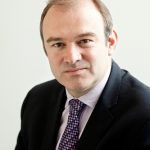
  • Ed Davey – 2023 Comments Calling for Resignation of BBC Chair Richard Sharp

    Ed Davey – 2023 Comments Calling for Resignation of BBC Chair Richard Sharp

    The comments made by Ed Davey, the Leader of the Liberal Democrats, on Twitter on 11 March 2023.

    The MOTD saga has shown failure at the top of the BBC and the need to urgently protect its independence.

    We need leadership that can uphold British values and withstand Conservative attacks.

    Under Richard Sharp’s leadership this hasn’t been the case. He must resign.

  • PRESS RELEASE : Paedophile, Alan Nicholson, stung by undercover police has sentenced increased [March 2023]

    PRESS RELEASE : Paedophile, Alan Nicholson, stung by undercover police has sentenced increased [March 2023]

    The press release issued by the Attorney General on 10 March 2023.

    A predator who told a woman he met online to sexually assault two young children has his sentence increased by more than two years.

    Alan Nicholson, from High Harrington, Cumbria, had his case referred to the Court of Appeal under the Unduly Lenient Sentence scheme.

    In September 2021, Alan Nicholson (53) spoke to a woman online, called Louise, who he believed had two daughters, aged five years-old and a baby of four-months.

    Their conversations revolved around serious acts of sexual abuse that Nicholson intended to carry out on Louise’s children.

    However, Louise was an undercover police officer supporting Cumbria Constabulary’s Cyber and Digital Crime Unit.

    Nicholson was found guilty on two counts of attempting to arrange/facilitate the commission of a child sex offence and received a three-year prison sentence.

    He was also placed on the Sex Offender’s Register and given a Sexual Harm Prevention Order for 10 years.

    Following the sentencing at the Crown Court at Carlisle on 16 December 2022, the case was referred to the Court of Appeal under the Unduly Lenient Sentence scheme.

    Nicholson’s original sentence was found to be unduly lenient by the Court of Appeal on 9 March 2023 and was increased to 5 years 9 months.

    Speaking after the hearing, the Solicitor General Michael Tomlinson KC MP, said:

    Alan Nicholson believed he was successfully arranging to carry out vile acts on very young children. Thankfully the person he was talking to was an undercover police officer, whose diligent and commendable work led to his imprisonment.

    I would like to praise all of those involved for catching Alan Nicholson and helping prevent anyone else come to harm. A longer prison sentence for this despicable crime shows such behaviour cannot and will not be tolerated.

    Detective Sergeant James Bailey of Cumbria Constabulary’s Cyber and Digital Crime Unit said:

    We welcome the increased sentence given out to Nicholson.

    Our specialist officers work hard behind-the-scenes all-year-round to deter offending, catch criminals and safeguard victims.

    We will not tolerate those carrying out such crimes and will continue to do what we can to target those offending in this way and bring them to justice.

  • PRESS RELEASE : New ultrasound technology aims to improve breast cancer diagnosis [March 2023]

    PRESS RELEASE : New ultrasound technology aims to improve breast cancer diagnosis [March 2023]

    The press release issued by the Department for Science, Innovation and Technology on 10 March 2023.

    The Government Office for Technology Transfer (GOTT) has funded the National Physical Laboratory’s development of new ultrasound technology in breast cancer diagnosis.

    Background

    Women with ‘significantly denser’ breast tissue are around 6 times more likely to develop breast cancer than those with ‘low breast density’. Breast density is currently estimated from mammogram and MRI scans, which leaves detection open to clinical judgement and therefore potential room for error.

    The knowledge asset solution

    The National Physical Laboratory (NPL) is developing innovative new ultrasound technology which provides quantitative measurements of breast tissue composition and has the potential to make a significant impact in breast density assessment. The technology can also help with breast cancer diagnosis and monitoring the response to treatment.

    Who will this help?

    • Patients: Over 700,000 women in the UK are living with undetected high breast density
    • Clinicians: Supporting doctors to identify women with high breast density with safe, consistent and reliable technology available outside of a hospital setting
    • NHS: Earlier detection of breast cancer can reduce the cost of treatment and save lives

    Funding awards

    NPL were awarded £93,954 in the ‘Expand’ phase of the Knowledge Asset Grant Fund (KAGF) in November 2021 and were awarded an additional £199,312 in September 2022 in the ‘Extend’ phase to further develop this technology.

    GOTT’s role

    GOTT immediately saw the potential for the further development of this public sector owned knowledge asset, and its potential benefits to patients and the healthcare sector. The evidence presented by NPL was strong and an excellent example of how the KAGF can be used to support government bodies to exploit and leverage their knowledge assets and, in this case, improve the diagnosis of cancer.

    Quote from NPL

    Daniel Sarno, a research scientist at the National Physical Laboratory and a member of the NHS Clinical Entrepreneur Programme, said:

    While the technology is currently in the research phase, we are encouraged by our in-person results and excited for the technology journey from bench top to bedside. The Knowledge Assets Grant Fund has enabled us to continue to pursue our vision for getting this technology into the market and used by those who can benefit from it.

  • Alastair Campbell – 2023 Article in Support of Gary Lineker

    Alastair Campbell – 2023 Article in Support of Gary Lineker

    An excerpt from the article written by Alastair Campbell in the New European on 8 March 2023.

    “Language not dissimilar to Germany in the 1930s,” says Lineker. Too bloody right. Swarms. Invasions. Left wing lawyers. The liberal elite. They all starred in the story of the rise of fascism. Judges as “Enemies of the People?” Remember that one, which not a single member of this government condemned? Exactly what the pro-Hitler press called judges in the 30s.

    Indeed, if I were doing a media studies PhD right now I would be tempted to analyse the similarities between Der Stürmer and the Völkischer Beobachter in ‘30s Germany and the Mail, Express and Co of recent decades here, in terms of headlines, story selection, consistency of populist messaging, denial of critical voices.

    Polarisation. Populism. Post-truth. The 3Ps of modern autocracy. I honestly thought Sunak might be different. He is certainly not as incontinently dishonest as Johnson, or as utterly useless as Liz Truss. But that is such a low bar it is hardly worth making the comparison. On the 3Ps, at his “stop the boats” press conference and in his exchanges with Keir Starmer in the Commons, he showed himself to be just as bad as his predecessors.

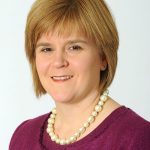
  • Nicola Sturgeon – 2023 Comments on the Suspension of Gary Lineker

    Nicola Sturgeon – 2023 Comments on the Suspension of Gary Lineker

    The comments made by Nicola Sturgeon, the Scottish First Minister, on Twitter on 10 March 2023.

    As a strong supporter of public service broadcasting, I want to be able to defend the BBC. But the decision to take @GaryLineker off air is indefensible. It is undermining free speech in the face of political pressure – & it does always seem to be rightwing pressure it caves to.

  • Dawn Butler – 2023 Speech on International Women’s Day

    Dawn Butler – 2023 Speech on International Women’s Day

    The speech made by Dawn Butler, the Labour MP for Brent Central, in the House of Commons on 9 March 2023.

    When I was a teenager, I used to question why there are so many ways to tell the relationship status of a woman—Mrs, Miss, Ms—but there is just a Mr. I am still wondering that as a grown woman. Articles always include the age of the woman after her name, but only sometimes the age of the man. Why is that? Our laws and language are designed to keep women vulnerable and exposed in a particular way.

    Wera Hobhouse

    I was a secondary school teacher and, although a married woman, with four children, in my middle age, I was always “Miss”, whereas a man was always “Sir”. Is that not bizarre?

    Dawn Butler

    It completely is. Again, it is about language, and what it is designed for and to do.

    Dame Maria Miller

    The hon. Lady brings up the interesting issue of inequality in titles. I was very fortunate to be able to receive a damehood recently and I am greatly honoured to have it. But I note with interest that the spouses of those of my colleagues who have been knighted have a different title entitlement from that of my husband. Does the hon. Lady agree that her point about titles needs to be looked at on both sides of the coin—for men and for women?

    Dawn Butler

    Absolutely. We talk about equality and equity not only in actions, but in language. It all needs to be looked at, because certain systems and structures are designed in a certain way. As I said, it is to keep women exposed and vulnerable. For example, for sex workers, working alone is okay, but working in pairs is illegal. How on earth does that keep women safe? Just this week, during the debate on buffer zones around abortion clinics, many men were telling women how they should think, what they should do and who they should listen to about their bodies. Our structures are riddled with misogyny, racism and so much else, and it is time that we change how women are written about.

    I have campaigned for many things in this House. I have campaigned on domestic abuse policy, and trying to allow 10 days’ paid leave for people, particularly women, when they leave abusive relationships. In those 10 days, it could save a life because that is when they are most vulnerable. You are not safe when you leave an abusive relationship; you become more vulnerable.

    I have campaigned for changes in the use of language by the Met police, for instance, when they deliver briefings and press releases about missing and murdered women. I have also campaigned for changes in the judiciary, which is filled with many—please do not take offence at this, Mr Deputy Speaker—old white men with outdated views. I need to recognise the work of Judge Anuja Dhir KC, the first person of colour to become an Old Bailey judge. She is doing her very best to change how the judicial system works, but she is just one woman, powerful as she is. Today, I am campaigning for and championing the work of Level Up, and calling for a clause in the Independent Press Standards Organisation editors’ code on reporting fatal domestic abuse. The code needs to be one that journalists are legally bound to, not a voluntary code, and I will tell the House why.

    The way in which the press report domestic abuse is often inaccurate and undignified, and prioritises sensationalist headlines over responsible reporting. There is often negative framing of victims, and when this goes viral it is amplified over and over again. That is extremely damaging because it reinforces negative framing around the victims, and what is seen as acceptable or “deserving” behaviour of the woman—as it often is—who is killed. Thus, “sexism”, “misogyny”, “extremism” or “terrorism” are never words used when describing violent men. Why not? We have an epidemic in our country of domestic violence, domestic abuse and violence against women and girls. Level Up introduced the UK’s first guidelines on this and the BBC, The Mirror, The Guardian and the Metro have all taken that on board, but more needs to be done.

    The recent coverage of Nicola Bulley, Emma Pattison and Brianna Ghey shows us that the media reporting of women who are violently abused or killed is out of control. Emma Pattison was killed, along with her young daughter, by her violent husband and this was reported with the headline, “Did living in the shadow of his high achieving wife lead to unthinkable tragedy?” Another headline read, “Husband of Epsom College head who ‘killed her and their daughter before turning his gun on himself’ said he was ‘desperate to do more with his days’ after his business failed”. Why on earth would we accept our media reporting the murder of a woman and a young child in that way in our country? It is unacceptable and in this House we should be able to legislate against that, which is why we need a new, enforceable editors code.

    It is not an isolated incident when a woman is killed every three days by a man. My hon. Friend the Member for Birmingham, Yardley (Jess Phillips) read out those names today and that list never gets shorter. This is an epidemic.

    Vicky Ford

    I agree that this must not become an epidemic, so I would like to draw the hon. Lady’s attention to some of the work that has been done in this area in Essex, under our police, fire and crime commissioner and chief of police, particularly to intervene with perpetrators. The change hub works with them and it has resulted in a 95% reduction in violent incidents caused by those perpetrators. A campaign that encouraged people to self-refer led to more than 115 people referring themselves as perpetrators and they were then worked with. May I encourage her to look at the work in Essex to see whether she could get it into her own police area, as this work with perpetrators seems to be helping to reduce domestic violence?

    Dawn Butler

    First, let me correct the hon. Lady: this is not becoming an epidemic; it is an epidemic. It is an epidemic when a woman is killed every three days by a man, and we need to start—

    Vicky Ford rose—

    Dawn Butler

    I need to finish my point. We need to start referring to it as such. Yes, some good work is being done and there is good practice, such as some police forces having independent domestic violence advisers, but it is still not working because a woman is still killed every three days. So yes, we can acknowledge the good work, but I am not here today to do that; I am here today to push for changes in legislation so that we can save lives.

    Women and girls who are victims of abuse are never responsible for the abuse, and we need to start at that point. It is the perpetrator who is responsible, and media reporting must reflect that. Let me read out a few more headlines: “Husband jailed after he snapped and smothered nagging wife to death”, “Henpecked husband killed wife”, “Wife jibes about penis size drove hubby to murder”. These headlines are shocking. There will be people listening to this debate who will say, “Well, Dawn can’t be telling the truth; she must be lying.” I am not lying. Those are actual headlines.

    The hon. Member for Thurrock (Jackie Doyle-Price) talked about culture and language, and I must say that this fake culture war going on at the moment is extremely damaging to women and to other minoritised groups in our society. People say, “Why can’t I say what I want to say? Why can’t I do what I want to do?” This sort of language is having a damaging effect, and it is why we will not make progress.

    Kirsten Oswald (East Renfrewshire) (SNP)

    The hon. Lady is making some really important points about how language in the public discourse and in the media is often dehumanising, as we heard in the headlines she just read out. Those women were described in the most ridiculous fashion, considering the context. More broadly, the language of the media is also often very objectifying of women. On all of these fronts, it would be really helpful if one of the takeaways from today was that some of the people who are listening to this debate might think about that and perhaps change some of the ways they describe women.

    Dawn Butler

    I agree with my honourable friend. When a woman has been killed or murdered, the media will try to find a picture of her in a nightclub, or holding a drink, or with her hair down, or wearing a short skirt or dress, as if that was the reason she was killed or murdered. The misogyny that exists in our structures must be rooted out.

    I do not just talk about these things. I have worked hard on the House of Commons complaints procedure to change how this place works and operates. I am also working with the police. Wayne Couzens and the messages from the WhatsApp group prove exactly what black people have been saying for a really long time: structures built for the promotion of a certain type of white man are riddled with racism, misogyny, homophobia and everything else that tries to belittle others. It is an uncomfortable truth, but it is a truth that must be aired.

    When our police forces, jurors and judges are drawn from a society that allows outdated and damaging portrayals of domestic violence, the damage is clear: there is still one woman killed every three days by a man. It is time for us to make this long-overdue change if we are to reduce the number of women killed every year. I recognise that some work has been done, and that some work is being done with the Met police, but it is not enough.

    I wondered whether I should read out these WhatsApp messages to the House, and I have decided that I am going to read out a couple. This is a police discussion on domestic violence. The police said that the women who suffer from domestic violence have one thing in common: they are women who do not listen. Wayne Couzens and another police officer had a joke when they saw a young drunk woman on the train. The officer was asked:

    “Did you finger her to see if she was ok?”

    The officer responded:

    “I considered it. But she was a right old lump. So I just raped a bystander instead.”

    There is more of that on the police WhatsApp groups. It is absolutely appalling and disgusting. It is time for us to legislate, and to recognise that words have consequences. Domestic terrorist groups in our country are on the rise. We have seen the growth of incels. We have nearly 3,000 incels in our country and they are very much underground, which is concerning. Teachers have been asked in the classroom, “Miss, have you ever been raped?” That is the kind of language that I have been talking about. The incels talk about how they can watch women being murdered. This is really damaging.

    I want to end with two well-known sayings:

    “A world that does not love, respect and protect its Women is doomed to perish! Because Women are Mother Earth!”

    G.D Anderson said:

    “Feminism isn’t about making women stronger. Women are already strong, it’s about changing the way the world perceives that strength”.