Tag: 2023

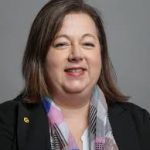
  • Kirsten Oswald – 2023 Speech on International Women’s Day

    Kirsten Oswald – 2023 Speech on International Women’s Day

    The speech made by Kirsten Oswald, the SNP MP for East Renfrewshire, in the House of Commons on 9 March 2023.

    I am very grateful to follow the hon. Member for Erith and Thamesmead (Abena Oppong-Asare), with whom I always enjoy working. She is always worth listening to.

    I also want to reflect on the speech made by the right hon. Member for Basingstoke (Dame Maria Miller) at the beginning of the debate. I was not sure how I was going to begin my contribution because, to be honest, I am a bit scunnered—probably more than a bit—but she set a positive example so, before I get on to my scunner, I will follow on from what she said and reflect on the fact that women across the House can and do work together positively. Although I have significant political differences with her, with women on the Labour Benches and with others, I am really grateful for the focus that all these strong, powerful women have on issues to do with women. I put on the record my great appreciation for colleagues cross party and for the work they do.

    I note the exceptional speech given by my hon. Friend the Member for Livingston (Hannah Bardell). It was a powerful contribution. She talked about her constituent and her lovely mum. It has been nice to hear the reflections of others about their mums, too. Again, that is something we can all agree on.

    I think we all want to be very clear in our appreciation for what the hon. Member for Birmingham, Yardley (Jess Phillips) does. It really matters. I am sure it is very difficult, but these women matter and the difficulty their families are facing should never happen. It should never be experienced by any family. We need to reflect on that and on the headlines, as others have commented, that follow these tragic incidents about “family men” and so on. The hon. Member for Brent Central (Dawn Butler) made some very powerful comments in that regard.

    Hannah Bardell

    My hon. Friend speaks of the families of the women whose names the hon. Member for Birmingham, Yardley (Jess Phillips) read out. I have just had the pleasure of spending some time with them, and what was palpable was not just the tragedy they have experienced, but their resilience. Does she share my view that they should never have had to face this and, as we have heard across the House today, we need to do so much more to ensure there are no lists of dead women to read out?

    Kirsten Oswald

    I am very grateful to my hon. Friend for what she says. I cannot add to that. What she describes is a reality and we have a responsibility to ensure that we do everything we can. The reality is not great. Too many families know all too well the gaping holes that are left because of male violence against women, so we will keep talking. We have a responsibility to do that. As the hon. Member for Vauxhall (Florence Eshalomi) said, we need to use our privileged platform here as parliamentarians to raise this issue time and again.

    The right hon. Member for Basingstoke spoke powerfully about the value and importance of women in public life, and the consequent improvements they bring. An increase in the number of women in public life ties together to bring women’s situations more broadly into a better place. She is 100% correct in what she says. We have many more women in public life now and I very much welcome that, but I also reflect that, certainly in the time since I was first elected in 2015, public life has become increasingly polarised. There are challenges over and above those that we would have identified in 2015.

    The hon. Member for Erith and Thamesmead (Abena Oppong-Asare) was correct to be concerned about the damage that influencers such as Andrew Tate inflict on wider society. Obviously, that has a profound effect on women. We also heard that culture wars, which we hear too much about, are not without an impact on women—that is absolutely right. All those who engage in that kind of behaviour should be ashamed of themselves, because they do down and cause detriment not only to women but to everyone in our society.

    Last year I was struck by hearing Members express those kinds of concerns—they were fed up and worn down by the toxic climate that they were working in. The hon. Member for Bath (Wera Hobhouse) reflected that it is increasing. Can we, in good conscience, not point that out? I do not think so. We should call it out for what it is: damaging our democracy and women. Can we, in good conscience, ask young women to come forward into what is often a toxic soup of threats, abuse and misinformation? I ask myself that. However, perhaps there is a bit more of the glass half full about me after all. I think that we can and we do ask young women to do that—I think of the strong and powerful young women I know, who will always stand up for women’s rights and equality.

    My reflection on equality is that if someone is coming after my rights as a woman, it is clear that the rights of every other group will be next on the agenda. I am aware that I perhaps sound a bit crabbit, as I would be described at home. Perhaps I am an increasingly crabbit middle-aged feminist, but I am happy to point out that my rights as a woman and my feminism are not at all imperilled—in fact, they are more than likely strengthened —by my making sure that I stand up for the rights of other groups.

    I am grateful that hon. Members have reflected on the situation of women across the world whose rights are imperilled. We need to be clear that rights are not carved in stone forever, as we have seen tellingly in the US. We have seen grave and terrible situations for women in Afghanistan and Iran, and they need not only our solidarity but our practical support and assistance. That is our job. We need to take practical steps and stand with them. Uyghur Muslim women are forced into sterilisations and labour camps. Women across the world are in difficult situations, and I include women in small boats.

    Closer to home, there are policies that cause detriment to women. I was pleased to hear the right hon. Member for Norwich North (Chloe Smith) and the hon. Member for Meon Valley (Mrs Drummond) speak about the future of work and supporting women in work. We need to do that, but the reality is that there is a 15% pay gap, and warm words will not deal with that. It will take concerted action, and the strong WASPI women who I spoke to yesterday know that there is a problem. The situation is not fair for them as older women, and nor will it be for younger women. It will take decades for that issue to correct itself, if it ever does. We need to accept that reality.

    I am always happy to talk at length about the positive policy in Scotland, as hon. Members will be aware. It is important that much of that policy focuses on gender and women. I would like to focus on one particular woman, as she stands down as the first female First Minister of Scotland and the first woman to lead the Scottish National party. I pay tribute to Nicola Sturgeon, a politician who has inspired me greatly and influenced many others. Many women and girls will be interested and engaged in politics and public life because of her consistent and solid support for women’s rights and making lives better.

    I will close by mentioning some other women who inspire me, because we need to finish on a positive note. East Renfrewshire councillors Caroline Bamforth, Angela Convery and Annette Ireland day and daily work hard to make lives better for women. They champion women and girls in all they do, and I am very proud to have them as my colleagues.

    Laura Young is a young influencer who is campaigning hard on environmental issues, including to get rid of disposable vapes, which cause problems for both the environment and young people. For her pains, she too is involved in the horrible, toxic morass of online abuse. Shame on all the people who deal with her like that. She is a young woman making a difference to the world, and she does not have to do that. Women such as her will continue to make a difference. None of the online abuse will make a difference—she is going nowhere.

    Rahima Mahmut is a Uyghur human rights activist who, despite the challenges she faces, stands up day and daily for the rights of Uyghur women. Hon. Members will not have heard of Rena McGuire, but they will all be the better for knowing her. Rena is a woman from Barrhead whose community activism spans decades. She has made every effort at every point to make life better for women in her community. Although we have many challenges and we should not minimise them, there is a space for us to appreciate the sterling and tireless work of women such as Rena, who make all our lives better.
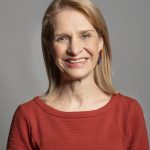
  • Wera Hobhouse – 2023 Speech on International Women’s Day

    Wera Hobhouse – 2023 Speech on International Women’s Day

    The speech made by Wera Hobhouse, the Liberal Democrat MP for Bath, in the House of Commons on 9 March 2023.

    It is an honour to speak in this debate that has ranged widely from local to national to global women’s issues. We have heard some powerful speeches and contributions. International Women’s Day is a time to celebrate the progress that we women have made, while recognising how far away we are from true equality and true recognition of women in law.

    The most powerful speech every year is the one from the hon. Member for Birmingham, Yardley (Jess Phillips). She makes us all sit here for many minutes in silence to reflect on the terrible stories that we hear each year of women who suffer domestic abuse and violence. I agree that we are still very far from making real progress. I thank the right hon. Member for Basingstoke (Dame Maria Miller), who always ensures that we have these discussions every year on International Women’s Day. It is important that we continue to have that debate in the House.

    Disrespect for women remains endemic across society. Half of British women have been sexually harassed at work or their place of study. Women are 27 times more likely to face online abuse than men. Nearly a quarter of women have experienced sexual assault or attempted sexual assault since they were 16, and one in 14 women have experienced rape or attempted rape. These are more than just statistics—these are women, these are lives and every story is a story of trauma and hurt. We all need to recognise that for what it is. They are not statistics, they are lives, and that reflects everyday reality for women and girls across the UK.

    My Worker Protection (Amendment of Equality Act 2010) Bill aims to protect women from sexual harassment in the workplace. Too many people are suffering silently because they feel unable to report that, or because their concerns are not taken seriously—we have heard many examples of that today. My Bill strengthens protections for those women by imposing a new duty on employers to prevent their employees from experiencing workplace sexual harassment. The Bill would also make employers liable for the harassment of their staff by third parties, where they have failed to take all reasonable steps to prevent such harassment from happening. I have been pleased to see such cross-party support for my Bill, but legislation is only part of the solution. To fight misogyny, a root and branch culture change is needed.

    Last Friday marked two years since the brutal murder of Sarah Everard by a serving Met police officer. Wayne Couzens exposed himself to women just four days before her murder. His victims have argued that, if their reports had been taken seriously by the police, Sarah might still be alive. The terrible story of Sarah’s murder, and the police failings that have been identified subsequently, are still difficult to come to terms with. The first report of Operation Soteria Bluestone found that some serving officers do not think that sexual offences should be a priority for policing. It quoted one officer who believed that cases of rape and sexual offences were “pink and fluffy”. That officer openly admitted to avoiding such cases in favour of burglary and robbery. The new Metropolitan Police Commissioner has said that they are investigating 1,000 sexual and domestic abuse claims involving 100 of its officers. Those are more than just bad apples; they are part of the rotten culture of misogyny.

    Police in England and Wales are recording record numbers of rape offences, but rape prosecutions are down by 70% over the past four years. Last year, charges were brought in only 4% of recorded rape cases. This is a national scandal. We say these things again and again, every year on International Women’s Day we point out that we need to make progress, and we do not make progress. The Government need to listen up, because only with a momentous culture shift can we begin to address the concerns and fears that so many women have about engaging with policing and the justice system.

    In my constituency, Avon and Somerset police—I want to give them credit—have shown what can be done with a dedicated, well-resourced team and the right leadership. I hope they will lead by example and take other police forces along. Their team have tripled charge rates and brought more cases to the Crown Prosecution Service. However, much more needs to be done across the country. Nearly half of women have said that their trust in the police has declined following Sarah Everard’s murder, and the Government must focus on rebuilding that trust. Liberal Democrats are calling for immediate action to ensure that police vetting procedures are fit for purpose to start rebuilding that trust.

    Violence against women and girls is a global threat. During war and natural disasters, women face unique dangers. In Turkey and Syria, humanitarian groups have warned that women are finding it harder to access aid, and are at severe risk of exploitation. Conflict-related sexual violence is one of the oldest weapons known to people— I give credit to the hon. Member for Totnes (Anthony Mangnall), who has raised this issue in Parliament many times and is working hard on it. He has my full support. Such violence destroys bodies and communities, and its impact is felt long after the fighting has finished. The Ukrainian Prosecutor General’s office has identified 171 victims of sexual violence by Russian troops, 119 of whom are women. I am sure that many colleagues across the House share my admiration for the bravery of the women of Ukraine—indeed, they have already been mentioned today. We should not underestimate the substantial trauma that women and children are suffering, especially if they have experienced sexual violence.

    I also want to remember the women of Afghanistan. In January, Mursal Nabizada, a female MP who remained in Kabul, was killed. Just four of the 1,500 Afghan citizens who were eligible for the UK resettlement scheme because they were at high risk after the Taliban takeover have now arrived in the UK. Women and girls were meant to be a priority, but they have been left without a specific route to apply for safety. That is a shameful Government record and nobody can walk away from that. Women all over the world are leading movements against authoritarianism.

    Many constituents have contacted me to express their solidarity with the women of Iran. I echo that and pay tribute to their courage in the face of atrocious human rights abuses. Many have reported sexual assault. Let us not forget those women, because it is very hard to take on those regimes, which are all led by men. Women’s voices have been ignored for centuries, and in many parts of the world they still are; 2023 must be the year that Governments around the world listen up and hear us.

  • PRESS RELEASE : New fund announced to support UK’s national security priorities [March 2023]

    PRESS RELEASE : New fund announced to support UK’s national security priorities [March 2023]

    The press release issued by 10 Downing Street on 13 March 2023.

    The new UKISF will help keep the UK safe and address global sources of volatility and insecurity.

    The Prime Minister, Rishi Sunak, has announced today (Monday 13 March) the launch of a new fund to help keep the UK safe and address global sources of volatility and insecurity.

    The UK Integrated Security Fund (UKISF) will replace the existing Conflict, Stability and Security Fund (CSSF), and will have a wider remit, funding projects both at home and overseas to tackle some of the most complex national security challenges facing the UK and its partners. Combining several smaller funds across government, the UKISF will have a budget of almost £1 billion.

    The UKISF will also support the work of the new Economic Deterrence Initiative (EDI), which will tackle sanctions evasion across the UK’s trade, transport and financial sanctions. An additional £50m in funding has been provided to improve enforcement of the UK’s sanctions regime and prepare the Government for responding to potential future hostile acts. The government will also work with the private sector to maximise the reach of sanctions against those who pose a threat to the UK.

    The current CSSF was launched in 2015 and operates in over 80 countries and territories, delivering more than 90 programmes and combines Official Development Assistance (ODA) and other, non-ODA funding sources.

    Current programmes include assistance to Ukraine following the illegal invasion by Russia and countering Russian disinformation on the invasion, as well as developing a number of regional cyber strategies which help the UK’s allies deter cyber-attacks on their national infrastructure.

    Foreign Secretary, James Cleverly, said:

    “The new Integrated Security Fund will allow the UK to deliver on the core priorities of the Integrated Review, from fostering security in fragile states to deterring cyber threats and holding human rights abusers to account.

    “As part of this, the Economic Deterrence Initiative will ensure there is nowhere to hide from our sanctions regime. Since Russia began its full-scale invasion of Ukraine, the UK and our international partners have imposed an unprecedented package of sanctions in order to damage Putin’s capacity to fund his illegal war, undermine his military machine, and target those who prop up the regime.”

    The UK can impose a range of sanctions against individuals or organisations that pose a threat to the UK or its interests. These include asset freezes, travel bans, trade sanctions and transport sanctions.

  • PRESS RELEASE : UK announces increased funding for China Capabilities Programme [March 2023]

    PRESS RELEASE : UK announces increased funding for China Capabilities Programme [March 2023]

    The press release issued by 10 Downing Street on 13 March 2023.

    The Prime Minister is increasing funding to further boost skills and knowledge for government staff on China.

    • The Prime Minister announces doubling UK funding for 2024/25 to build expertise on China.
    • Will boost Mandarin language skills and UK’s ability to engage with and understand China, while protecting national security.

    The Prime Minister, Rishi Sunak, is increasing funding to further boost skills and knowledge for government staff on China, including on economic and military policy as well as Mandarin language skills.

    Extra financial support will be provided for the cross-department ‘China Capabilities Programme’ which operates to increase Chinese expertise across the UK government.

    Since the last Integrated Review in 2021, the government has taken a number of steps to increase knowledge of and expertise on China, including provision for the training of more than 170 civil servants in Mandarin.

    The Foreign Secretary, James Cleverly, said:

    It’s vital that our diplomats and civil servants have the understanding and expertise to engage and adapt to the increasing challenge posed by China, and China’s growing role in world affairs.

    This extra resource will help boost knowledge and language skills across government, in the face of the systemic challenge that China poses to the UK’s security, prosperity, and values.

    The Integrated Review Refresh launched today (Monday 13 March) sets out how – in the last two years – the UK has become increasingly concerned about the military, diplomatic and economic activity of the Chinese Communist Party.

    This includes military activity over Taiwan, attempts at coercion, and the sanctioning of British MPs. China is becoming more authoritarian at home and more assertive overseas.

    This increase in funding is another example of the action the UK is taking to ensure effective engagement with China, while protecting national security.

    Notes to editors:

    A smaller pilot programme was launched last year, which delivered:

    • The training of 170 civil servants in Mandarin, with 20 going through a language immersion programme in Taiwan.
    • Training to hundreds of HMG staff, increased China expertise in the tech and military sectors. Courses also delivered on culture, government structures and policymaking.
    • Establishment of the China experts’ advisory group to test and inform Government policymaking, with a broad range of external specialists.
  • PRESS RELEASE : GMC promises to tackle decision-making bias [February 2023]

    PRESS RELEASE : GMC promises to tackle decision-making bias [February 2023]

    The press release issued by the BMA on 15 February 2023.

    Internal review triggered after medical watchdog found to have racially discriminated against a doctor in an FTP investigation.

    The GMC has pledged to reform its working practices with a view to tackling bias in its decision making, in a move welcomed by the BMA.

    The medical watchdog has committed to implementing changes designed to improve fairness and transparency in processes such as FTP (fitness-to-practise) proceedings, following the publication of an internal review.

    The review, which includes a total of 23 recommendations concerning equality and diversity and mitigating bias, was initiated after an employment tribunal ruled in June 2021 the regulator had racially discriminated against consultant urological surgeon Omer Karim during an FTP investigation.

    Dr Karim successfully took action against the GMC after he was subjected to almost four years of investigation and an FTP tribunal that concluded he had done nothing wrong.

    He has since been supported by the BMA following the GMC’s appeal of that decision.

    BMA welcome

    Publishing the report of its review today the GMC has said it has already undertaken many of the changes set out and will continue to implement those remaining during the course of this year.

    BMA equality lead Latifa Patel welcomed the recommendations set out by the review, the GMC’s acknowledgement of bias and its commitment to change.

    She said: ‘This review acknowledges that bias in the GMC exists and needs to be systematically challenged, rather than simply looking for reassurance that it doesn’t. This change in approach is to be welcomed.

    ‘We have been campaigning for reform of the GMC for years so it is good to see it moving away from repeatedly comforting itself that there is no evidence of bias in its decision making processes. The landmark case of Dr Karim, who the GMC was found to have racially discriminated against in an FTP case, had shown this was far from true.’

    She added: ‘Only time will tell if the actions set out today to mitigate against bias and provide greater transparency and reassurance will be effective and improve doctors’ confidence in their regulator.

    ‘While this review’s findings and actions are a step in the right direction, the recent case of Dr Arora (where there were multiple missed opportunities for GMC staff to raise concerns) shows there is still a long way to go to address the flaws in the GMC’s FTP processes. We will continue to monitor the GMC’s progress and press for improvements until we have a regulator worthy of the full confidence of UK doctors.’

    External scrutiny

    Describing its recommendations as a ‘step change in the way the GMC monitors, assesses and assures fairness in its decisions’, the review calls for a number of important culture changes in how decision-makers at the GMC consider referrals.

    These include a recommendation that external organisations such as the BMA be involved in future audits, and that anti-bias competency be included in staff professional-development plans.

    Commenting on the review’s findings, GMC chief executive Charlie Massey said: ‘This was a comprehensive review of processes and decision-making across the GMC. We are already implementing many of its recommendations, and work on others will follow as part of our ongoing commitment to equality, diversity and inclusion, and to learning from recent cases.

    ‘A degree of bias is inherent in human nature, and so a fundamental principle of our approach is to look for the risk of bias and to assess the controls we have in place to manage it. The recommendations in this report are key to that.’

  • PRESS RELEASE : New funding agreed to keep BBC World Service on air [March 2023]

    PRESS RELEASE : New funding agreed to keep BBC World Service on air [March 2023]

    The press release issued by the Foreign Office on 13 March 2023.

    The Government has awarded a one-off payment of £20 million to the BBC World Service as part of the refresh of the Integrated Review.

    The money is being provided to protect all 42 World Service language services over the next two years, support English language broadcasting, and counter disinformation.

    The refreshed Integrated Review concludes that democracies like the UK must go further to out-cooperate and out-compete states that are driving instability. Developments over the past year, particularly the conflict in Ukraine, have shown the importance of being able to counter the hostile use of disinformation and to tackle the spread of harmful state narratives.

    Foreign Secretary, James Cleverly, said:

    The BBC World Service is vital in the fight against the spread of disinformation around the world. This funding will ensure people across the globe continue to have access to accurate, high quality journalism.

    As the world’s most trusted international broadcaster, the BBC World Service is a vital tool in providing accurate and impartial news, analysis and discussion in 42 languages to 365 million people around the world each week. This one-off funding will allow the BBC World Service to maintain its unrivalled status as the world’s largest international broadcaster, and to continue playing its crucial role in tackling harmful disinformation through providing trusted, impartial news and analysis globally.

  • PRESS RELEASE : Treasured pets now safer as microchipping for cats becomes compulsory [March 2023]

    PRESS RELEASE : Treasured pets now safer as microchipping for cats becomes compulsory [March 2023]

    The press release issued by the Department for Environment, Food and Rural Affairs on 13 March 2023.

    New legislation laid in Parliament today introducing mandatory cat microchipping.

    • Government delivers on key manifesto pledge to introduce compulsory microchipping for all owned cats
    • Owners will have until 10 June 2024 to microchip their cat
    • Microchipping cats will help reunite thousands of lost or stray pets every year

    New legislation to introduce compulsory cat microchipping is being laid in Parliament today (13 March), making it easier for lost or stray pet cats to be reunited with their owners and returned home safely.

    There are over 9 million pet cats in England, with as many as 2.3 million unchipped, meaning that it would be very difficult to reunite them with their owner if they get lost or stolen.

    The new microchipping rules follow a Government call for evidence and consultation on the issue in which 99% of respondents expressed support for the measure. The introduction of compulsory cat microchipping was a manifesto commitment and an Action Plan for Animal Welfare pledge.

    The new rules mean cats must be implanted with a microchip before they reach the age of 20 weeks and their contact details stored and kept up to date in a pet microchipping database. All owners must have their cat microchipped by 10 June 2024 and owners found not to have microchipped their cat will have 21 days to have one implanted, or may face a fine of up to £500.

    Environment Secretary Thérèse Coffey said:

    “Cats and kittens are treasured members of the family, and it can be devasting for owners when they are lost or stolen.

    “Legislating for compulsory microchipping of cats will give comfort to families by increasing the likelihood that lost or stray pets can be reunited with their owners.”

    Chief Veterinary Officer Christine Middlemiss said:

    “I am pleased that we are progressing with our requirement for all cats to be microchipped.

    “Microchipping is by far the most effective and quickest way of identifying lost pets. As we’ve seen with dog microchipping, those who are microchipped are more than twice as likely to be reunited with their owner.

    “By getting their cat microchipped, owners can increase the likelihood that they will be reunited with their beloved pet in the event of it going missing.”

    Cats Protection’s Head of Advocacy, Campaigns & Government Relations, Madison Rogers, said:

    “Cats Protection is delighted that pet cats in England will be given the same protection as dogs when it comes to microchipping. The charity regularly reunites owners with their much-loved cats, and in most cases this is only possible thanks to microchips. No matter how far from home they are found, or how long they have been missing, if a cat has a microchip there is a good chance that a lost cat will be swiftly returned home.”

    The process of microchipping involves the insertion of a chip, generally around the size of a grain of rice, under the skin of a pet. The microchip has a unique serial number that the keeper needs to register on a database. When an animal is found, the microchip can be read with a scanner and the registered keeper identified on a database so the pet can quickly be reunited with them.

    It will not be compulsory for free living cats that live with little or no human interaction or dependency, such as farm, feral or community cats.

    Owners with cats that are already microchipped should ensure their details are up to date.

    The commitment to microchipping is part of a wider Government effort to build on our existing world-leading standards. Since publishing the Action Plan for Animal Welfare in 2021: we have brought in new laws to recognise animals sentience, introduced tougher penalties for animal cruelty offences and brought forward a ban on glue traps.

  • PRESS RELEASE : Appointment to the Independent Advisory Panel on Deaths in Custody [March 2023]

    PRESS RELEASE : Appointment to the Independent Advisory Panel on Deaths in Custody [March 2023]

    The press release issued by the Ministry of Justice on 13 March 2023.

    The Deputy Prime Minister, Lord Chancellor and Secretary of State for Justice, Rt Hon. Dominic Raab MP, has announced the appointment of Raj Desai as a Member of the Independent Advisory Panel on Deaths in Custody for a tenure of 3 years. His appointment will commence on 13 March 2023 and will run until 12 March 2026.

    The Independent Advisory Panel on Deaths in Custody (IAPDC) is part of the Ministerial Council on Deaths in Custody in England and Wales. The IAPDC is a source of expert advice to Ministers and departments/agencies with the central aim of preventing deaths in custodial settings. The IAPDC is co-sponsored and funded by the MoJ, Department of Health and Social Care, and the Home Office.

    The Secretary of State for Justice appoints IAPDC members in consultation with co-sponsoring ministers. The roles are regulated by the Commissioner for Public Appointments and recruitment processes comply with the Governance Code on Public Appointments.

    Biography

    Mr Desai is a barrister at Matrix Chambers specialising in human rights and public law. He has significant experience representing bereaved family members following deaths in custody, including in prison, police detention and mental health settings. He has conducted research in his fields of specialism, is a co-author of textbooks on human rights law, public law and prison law, and has taught as a college lecturer at the University of Oxford.

    Mr Desai advises the Equality and Human Rights Commission (EHRC) and other public bodies, and is on both the EHRC Panel of Preferred Counsel and the Attorney General’s Panel of Counsel.

  • PRESS RELEASE : UK members of international criminal gang sentenced to jail for involvement in the illegal sale and supply of prescription medicines valued at £3.7m [March 2023]

    PRESS RELEASE : UK members of international criminal gang sentenced to jail for involvement in the illegal sale and supply of prescription medicines valued at £3.7m [March 2023]

    The press release issued by the Home Office on 13 March 2023.

    Three members of an organised criminal gang were sentenced today (13 March 2023) at Stoke Crown Court to jail after pleading guilty to offences relating to the illegal sale of more than three million doses of prescription-only and unlicensed medicines, including controlled drugs, valued at £3.7m.

    This followed a three-year investigation by the Criminal Enforcement Unit of the Medicines and Healthcare products Regulatory Agency (MHRA).

    Between August 2013 and December 2015, Grant Newton (49), Darrell Baggley (56) and Callum Baggley (27) sold several million pounds worth of medicines such as codeine, Tramadol, Diazepam, Zolpidem and various erectile dysfunction drugs on three different websites.

    During 2015, the Criminal Enforcement Unit at the MHRA received reports from members of the public that had not received their order and others expressing concerns about relatives buying products from these websites.

    The MHRA investigated the websites and, supported by the police, carried out an arrest and search operation in 2016, seizing various digital devices and storage items. Subsequent analysis evidenced that the defendants had illegally supplied more than 3.2 million doses of medicines.

    Grant Newton was described in court as leading the UK arm of the global gang, while Darrell Baggley managed the warehouse and distribution, and his son, Callum, managed the bank accounts as the director of the company at the forefront of the trade.

    The defendants now face custodial sentences totaling 68 months.

    • Grant Newton and Darren Baggley both received 28 months in custody for one count of supplying Class B drugs, one count of supplying Class C drugs, one count of selling prescription-only medicines, one count of selling unauthorised medicinal products, and one count of being concerned in an arrangement which facilitated the acquisition, retention, use or control of criminal property.
    • Callum Baggley received 12 months in custody, suspended for 18 months and 200 hours unpaid work for one count of being concerned in an arrangement which facilitated the acquisition, retention, use or control of criminal property.

    Andy Morling, MHRA Deputy Director of Criminal Enforcement, said:

    “Criminals trading in medicines illegally are not only breaking the law, but they also have no regard for your safety. Taking powerful medicines such as these can lead to serious adverse health consequences. You should only take prescription-only medicines with appropriate medical supervision.

    “This case involved a major criminal enterprise with truly global reach. Our investigation and this prosecution effectively shut down the UK operation and dealt a significant blow to an international criminal network.

    “We work to detect and investigate suspected illegal activity involving medicines and medical devices so that patients can be confident the medication they need is acceptably safe.”

    “We will continue to work tirelessly to protect your health by preventing illegal trading in medicines wherever we can, disrupting offending and bringing dangerous criminals to justice.”

    Ben Reid, Specialist Prosecutor for the Crown Prosecution Service (CPS), said:

    “This gang created a significant risk to the public’s health by illegally selling controlled drugs and prescription medicines which can cause serious side effects. There is a reason drugs and medicines are strictly regulated and prescription drugs should only be taken under medical supervision.

    “The CPS is working closely with the MHRA to bring offenders like these, who profit from the illegal sale of drugs and put vulnerable people at risk, to justice.”

  • PRESS RELEASE : Rishi Sunak meeting with Australian Prime Minister Anthony Albanese [March 2023]

    PRESS RELEASE : Rishi Sunak meeting with Australian Prime Minister Anthony Albanese [March 2023]

    The press release issued by 10 Downing Street on 13 March 2023.

    The Prime Minister met Australian Prime Minister Anthony Albanese in San Diego today (12 March 2023), ahead of their trilateral meeting with President Biden to discuss the next phase of the AUKUS nuclear submarine partnership.

    The Prime Minister and Prime Minister Albanese agreed on the great significance of the AUKUS partnership – an unprecedented endeavour which will protect our people and support our defence industrial bases for generations to come. They agreed that with this partnership they are investing in not just our capabilities but our most important relationships.

    The leaders welcomed the flourishing bilateral partnership between the UK and Australia which was going from strength to strength. They discussed further cooperation in defence and issues of shared concern, including Russia’s invasion of Ukraine and security in the Indo-Pacific region. The Prime Minister outlined the conclusions of the UK’s updated national security and foreign policy strategy, which will be published on Monday.

    The Prime Minister updated on his recent meetings with President Zelenskyy in Kyiv and London and the leaders agreed on the importance of keeping up the staunch and unified international support for Ukraine. They agreed on the importance of the Ukraine training mission which UK and Australian troops were delivering with other partners in the UK. Separately, both leaders also agreed on the importance of both Sweden’s and Finland’s accession to NATO.

    The leaders noted exciting opportunities to grow trade, investment and cultural links between the UK and Australia even further this year, as the UK ratifies the UK-Australia trade deal and continues to pursue accession to the CPTPP.

    They also welcomed the friendly sporting rivalry between our two nations, and the Prime Minister said he looked forward to hopefully seeing England’s Lionesses lifting the football world cup, being hosted by Australia and New Zealand later this year.