Tag: 2023

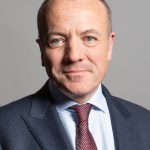
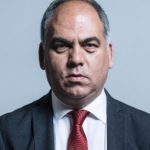
  • Bambos Charalambous – 2023 Speech on the Budget

    Bambos Charalambous – 2023 Speech on the Budget

    The speech made by Bambos Charalambous, the Labour MP for Enfield Southgate, in the House of Commons on 20 March 2023.

    It is a pleasure to see you back in the Chair, Madam Deputy Speaker.

    Politics is about priorities. At a time when people in my constituency are struggling with the cost of living, this Budget was an opportunity for the Government to put working people first and to get us on the pathway to growth, making everyone—not just the wealthy—better off. From speaking to my constituents, it is clear that the cost of living should be the priority right now. One constituent wrote to me recently:

    “I have had enough of constantly struggling every day, day after day for months and years.”

    My constituent is not alone. Recent polling from 38 Degrees found that in Enfield Southgate, 40% of people have not been able to afford to turn the heating on when cold in the past month.

    As people are forced to choose between heating and eating, I am pleased that the Government have followed Labour’s calls to freeze energy bills for another three months, and for prepayment meter charges to be brought in line with direct debit payments. However, the cost of living crisis is not over, and inequality is growing. For people struggling with sky-high bills, rents and mortgages, I fear that the help included in this Budget will not really touch the sides. Some 31% of my constituents are worried about having to use a food bank in the next year. Charities, food banks and community organisations such as the great Cooking Champions in Enfield, which provides groceries and cooked meals for those in need, face all-time-high demand, and 26% of people in Enfield Southgate have missed rent payments in the last six months as housing insecurity compounds cost of living pressures.

    The Chancellor stood at the Dispatch Box last week and talked about the difficult decisions that the Government took in the autumn to deliver stability. While he and the Conservatives may dance around the issue, people in Enfield Southgate will not forget why those difficult decisions were needed, as the fallout from the Government’s disastrous mini-Budget, fuelled by an ideological fixation on failed trickle-down economics, drags on to this day. In my constituency, families face mortgage hikes of more than £6,000. That is the devastating, real-life impact of the Conservatives’ economic mismanagement—a Tory mortgage penalty in the middle of a cost of living crisis.

    In that context, I return to priorities. This Budget was an opportunity to tackle the long-term challenges that we face with the cost of living, and to begin the clean-up after 13 years of Conservative failure on the economy. Instead, while family incomes and living standards fall to record lows and working people face the highest tax burden in 70 years, the Chancellor made it his priority to spend £1 billion on an untargeted tax cut for the richest 1% and their pension pots, in the midst of a cost of living crisis. That shows what side the Tories are on.

    There are three issues that I would like to raise that were not covered in this Budget fully. First, the windfall tax was not mentioned last week, despite oil and gas giants continuing to rake in record profits at our expense. Last year, Shell reported the highest profits in its 115-year history and one of the largest profits in UK corporate history, while BP made profits of £23 billion in the same year, up from £10.6 billion. It is outrageous that the people of Enfield Southgate are struggling to pay their energy bills as oil and gas giants line their pockets. All the while, the Government sit idly by, leaving £10.4 billion on the table through holes in their half-baked energy profits levy. We needed a proper windfall tax on the oil and gas giants’ unearned profits of war—billions of pounds that could help families and businesses across the UK through the cost of living crisis.

    For renters, there was nothing from the Chancellor, despite rents in London increasing 17.8% on average last year. Every week, more constituents come to me with housing issues, from families facing eviction to people struggling to meet unaffordable rent rises. It is an incredibly worrying time for many, and this Budget did nothing to help them or to solve the housing crisis that has engulfed our country since the Conservatives took office. In Enfield, under this Government’s watch, funding for the council has been cut by 60%. Quite simply, how can councils tackle fundamental issues such as housing insecurity and shortages if the Tory Government in Westminster refuse to properly fund local government?

    Finally, I would like to mention hospices because, although there is brief respite from the energy price guarantee freeze, long-term problems remain for hospices up and down the country. I welcome the announcement of more money for charities and hospices such as North London Hospice in Enfield, but the Treasury must release the money quickly to enable hospices to meet their energy bill demands as they struggle to maintain essential clinical services for some of the most vulnerable people in our community, in the face of unprecedented price rises and funding challenges.

    Last week, the Chancellor said that “the plan is working”. If the plan is papering over the cracks of 13 years of decline, I might agree, but this Budget should have been a game changer. The people of Enfield Southgate deserve better than a tired Tory Government with the wrong priorities and nobody left to blame. It is time that they stepped aside and let a Labour Government take over and deal with the real priorities that matter to the people.
  • Edward Leigh – 2023 Speech on the Budget

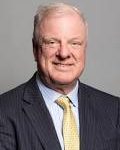
    Edward Leigh – 2023 Speech on the Budget

    The speech made by Sir Edward Leigh, the Conservative MP for Gainsborough, in the House of Commons on 20 March 2023.

    I am delighted to follow my hon. Friend the Member for Bassetlaw (Brendan Clarke-Smith) in praising the Government for bringing a nuclear fusion site to West Burton. As I have already said, it is not 5 miles from Gainsborough—indeed, Gainsborough is the closest town. I very much hope that the Minister will support my campaign to rename the site the “Gainsborough West Burton” site.

    Gainsborough was at the heart of the industrial revolution in the 19th century, bringing in new products. This site is a chance for us to go with the flow through a brand new technology. We want to create apprenticeships and to involve the whole region. I really want to make that clear. Gainsborough is an industrial town with traditionally high levels of employment. I am delighted that the Government have given us £10 million in levelling-up funds. We are grateful to the Secretary of State for Levelling Up, Housing and Communities for giving that to Gainsborough South West ward—the 27th most deprived ward in the entire country.

    However, there is no point one hand of the Government giving us £10 million in levelling up if the other hand is potentially taking £300 million of investment away from my constituency. As I mentioned in Home Office questions today, we have developed a wonderful deal for RAF Scampton—home of the Dambusters and the Red Arrows—creating heritage, a spaceport, a hotel and industry. The whole thing is at risk because the Home Office is now marching in and threatening to put 1,500 migrants there. This has nothing to do with the fact that they are migrants or not migrants; it is about the fact that we cannot develop the site, which is relatively developed now, if it is held by the Home Office for two years. Levelling up is at the heart of this Budget. We must have co-ordinated government—co-ordination between the Home Office, the Ministry of Defence and the Department for Levelling Up, Housing and Communities.

    I want to make a more general point. Thatcherites such as myself are always banging on about the need for tax cuts. There is no point in our doing that if we are not controlling public spending. Of course I regret that corporation tax is going up, but I recognise that the public finances are in a state of crisis. I really encourage Ministers on the Front Bench to redouble their efforts to ensure that there is efficiency and economy in our public services; I speak as a former Chairman of the Public Accounts Committee.

    There is still grotesque waste throughout the public sector. I am now on the sponsor board of the restoration and renewal programme: hundreds of millions of pounds have been wasted on doing nothing to renovate the building where we are now—years wasted! It is a small point, but I read in the newspapers that we are already spending about £100 million on the covid inquiry, hiring hundreds of lawyers. Right through the public sector, we rely on the Chief Secretary of the Treasury to ensure that we get good value for money.

    One of the ways in which we will eventually make the public sector work better is through more of a sense of self-reliance. I do not want to make further points about the triple lock, because I will get into trouble if I criticise it in any shape or form—it is very politically difficult—but the Government must have a strategy to deal with it. The ideas developed by Peter Lilley when he was Secretary of State are exciting and interesting.

    We cannot just go on having a national health service that consumes an ever larger proportion of national income but is riddled with waste and incompetence and delivers worse and worse outcomes. We have to be prepared and have the political courage to learn from countries such as Australia, France and New Zealand, which have a mix of public and private provision that ensures that they have what are frankly much better health services because they are unleashing people’s enthusiasm to invest in their health. The previous Conservative Government gave tax relief for private health insurance, and we should not dismiss that.

    I want to make one more point. Of course we all welcome the extra provision for childcare, but it is a massive extension of the state. It is desirable in itself—I am entirely in favour of mothers who want to work being allowed and encouraged to do so even when their babies are as young as nine months—but we must also support mothers who want to stay at home. The marriage tax allowance was introduced by Nigel Lawson. It was allowed to wither on the vine, and was then reintroduced by George Osborne in 2015, but it is not well-advertised or taken up. It is fairly derisory, and amounts to only about £1,700. If a couple earns £70,000, they are £7,000 worse off as far as the taxman is concerned if the mother stays at home looking after a child and the husband goes to work.

    The marriage tax allowance is not just for married couples but for couples in a civil partnership. The Government should be neutral about the fact that, often, it is in the interests of the child and the mother, where the mother wants to do so, for her to be allowed by the tax regime to stay at home and not to be forced by the tax regime or by her personal circumstances to go out and work. A Conservative Government believe in choice, and that is what I want to impress on the Government.

  • Dan Carden – 2023 Speech on the Budget

    Dan Carden – 2023 Speech on the Budget

    The speech made by Dan Carden, the Labour MP for Liverpool Walton, in the House of Commons on 20 March 2023.

    May I, too, welcome you back to the Chair, Madam Deputy Speaker? It is good to see you there.

    I want to use the couple of minutes I have to pass comment on this year’s spring Budget to try to convey some of the reality that my constituents are living through and how these economic measures affect their lives. That is important, because it is the 13th spring Budget delivered by a Conservative Chancellor. The test is simple: how are the people I represent doing after 13 consecutive Budgets from a Conservative Government? Are the communities that I represent thriving? Is life a little easier? Are they earning more and maybe working a little less? Real wages across every region of the UK are lower now than when the Conservatives came to power in 2010. Are schools being properly resourced to help give children the best start in life? Are hospitals functioning and well staffed? Are the buses and trains affordable and running on time? Obviously, my constituents would answer a resounding no.

    What about the question of whether society is more equal than when the Conservatives came to power? Today, half of all UK wealth is held by the top 10% and the lion’s share of it by the top 1%. Think of the circumstances in which this Prime Minister and Chancellor came to their positions: their predecessors lasted 49 and 38 days respectively, and the fallout from their disastrous mini-budget cost the country £30 billion. Necessarily, by simple contrast, that makes the current incumbents look uber-competent. That, with a couple of major macroeconomic developments such as the halving of gas prices over the last six months, makes the economic forecasts slightly less catastrophic than might have been case just last year. All that can be spun to tell quite a good story and there are certainly press barons willing to print that up.

    If the Prime Minister promises to cut inflation by half and declining energy costs make that a reality—it was quite a safe bet when the promise was made—should my constituents really be grateful? They are still worse off, although by a little less than they once thought they might be. I ask Government Front Benchers: is that the scale of expectation that the public should now have? Is it the best that the Conservative party can offer to the country?

    This Budget is one of continuing, long-term managed decline: of people’s wages; of the public services that people rely on; of social security; of security at work, where low-paid, insecure contracts are now the norm; of local authority budgets—another £50 million has been cut from Liverpool this year; of investment, with the UK having the lowest business investment in the G7; and of disposable income, with people working simply to pay the bills. Most tragically of all, there is the managed decline of people’s living standards: the longest fall in living standards on record. It is the managed decline of people’s hopes, dreams and ambitions, and our collective capacity to realise them. As Martin Wolf of the Financial Times has said, we are heading into

    “a lost decade…coming on top of a very poor previous decade”.

    My time as an MP has been characterised by a constant struggle to prevent the worst from happening to my constituents—whether that is fighting to save local fire stations or care homes from closure, trying to stop vulnerable people from having their support taken away, or giving solidarity to workers whose jobs, pay and conditions are under threat. We are sick of just trying to prevent the worst. We are sick of managed decline. We want to unlock the potential of our people and give communities the power and the resources to focus on what they can achieve.

    The latest Prime Minister and Chancellor could have taken the opportunity to change approach. Instead, we have a business-as-usual Budget from a Conservative Government out of ideas and out of time. We need nothing less than national renewal—a new deal for working people; a bold, clean energy transition; an investment-led economy, based on making, not taking; and wealth, power and opportunity spread to every region and every community. Only then can we reclaim the future and look forward, once again, to a brighter tomorrow.

  • Maggie Throup – 2023 Speech on the Budget

    Maggie Throup – 2023 Speech on the Budget

    The speech made by Maggie Throup, the Conservative MP for Erewash, in the House of Commons on 20 March 2023.

    I would like to add my name to the growing list of Members with a science degree. My hon. Friend the Member for Hazel Grove (Mr Wragg) will be pleased to hear that it is from the University of Manchester.

    Since I was last able to make a contribution to a Budget debate from the Back Benches, the economic outlook, both at home and abroad, has shifted dramatically. The aftermath of the pandemic, compounded by the effects of the war in Ukraine, has left many of the world’s leading economies battling a combination of high inflation and mounting debt.

    My right hon. Friend the Chancellor is to be commended for the measures he has brought forward to meet the target of halving inflation by the end of the year, to continue to support people with record high energy bills and, crucially, to avoid a recession. That is not just my assessment, but one reflected in the feedback I received on the doorsteps from my constituents across Erewash this weekend as we were out canvassing. They described the Chancellor’s statement as measured, confident and logical.

    I want to focus on tech, and specifically the support for the Medicines and Healthcare Products Regulatory Agency. Everyone will remember the important role the MHRA played during the pandemic. It was the first medicines regulator to authorise a vaccine against covid-19. Its worldwide reputation is second to none. Many other regulators quickly followed in its footsteps in authorising vaccines, as they trusted its decisions. It was not just the fact that it was first on so many occasions in approving new vaccines—including the bivalent vaccine, effective against the original Wuhan strain and omicron—but the way it did it.

    Traditionally, the different stages of clinical trials are carried out sequentially, but whether it was a vaccine or a therapeutic, the acceptance that regulation could be made on data generated by stages of clinical trials carried out in parallel was a real and significant breakthrough. Yes, on most occasions the MHRA was first to authorise a vaccine from the variety of suppliers available, but on some occasions it was able to base its approval on Food and Drug Administration or European Medicines Agency approval.

    That type of linked-up working for a wider range of medicines is now being facilitated by the allocation of funding in the Budget. As has been acknowledged by Dr June Raine, the MHRA’s chief executive, the £10 million funding will be used to fund its ongoing innovation work and accelerate the development of groundbreaking global recognition routes. That will undoubtedly give UK patients faster access to the most cutting-edge medical products in the world.

    A few weeks ago, I was invited by the former chief executive of the British Bankers Association and one of my predecessors as the Member of Parliament for Erewash, Angela Knight, to speak to a delegation of senior business leaders, during which we discussed the importance of public health and the value of health tech to the economy. It is estimated that the private sector alone loses over 100 million workdays each year to sickness absences, greatly impacting on productivity and hindering wealth creation.

    To fully capitalise on the creation of new investment zones, as well as the expansion of UK civil nuclear, led by Derby-based Rolls-Royce, we must ask ourselves: how do we keep the UK workforce healthier for longer? The answer is through a combination of targeted public health measures aimed at prevention, such as tackling obesity and reducing levels of smoking, together with innovative health tech partnerships, such as the one signed by the Government and Moderna to invest in mRNA research and development and build a state-of-the-art vaccine manufacturing centre here in Britain.

    Returning to the targeted public health measures announced in the Budget, I especially welcome the £60 million for public swimming pools. I trust it will be distributed fairly to ensure that swimming pools such as those at West Park leisure centre in Long Eaton and Victoria leisure centre in Ilkeston can continue to be used by my constituents to support both their physical and mental health.

    This Budget is designed to inspire confidence in the British economy and will continue to provide the stability that has so often been the watchword of the Conservative Government led by my right hon. Friend the Prime Minister. My constituents stand to benefit greatly from the measures introduced to curb inflation, help with the cost of living—we heard about many aspects of that, including the change to prepayment meters and protecting energy payments—and safeguard vital public services. I am sure that many of my constituents will raise a glass or two to the Chancellor for again backing the British pub. I therefore look forward to backing the Budget in the Lobby tomorrow evening.

  • PRESS RELEASE : New traffic commissioner appointed for the West Midlands Traffic Area [March 2023]

    PRESS RELEASE : New traffic commissioner appointed for the West Midlands Traffic Area [March 2023]

    The press release issued by the Department for Transport on 22 March 2023.

    Secretary of State for Transport Mark Harper has appointed a new Traffic Commissioner and two new Deputy Traffic Commissioners.

    Miles Dorrington has been acting Traffic Commissioner in the West Midlands Traffic Area, since the retirement of his predecessor, Nick Denton, in June 2022. He will now be deployed as the permanent Traffic Commissioner.

    The Senior Traffic Commissioner, Richard Turfitt, said of his appointment “I am delighted that Miles has been appointed as a permanent member to the traffic commissioner team. He brings with him significant experience of this jurisdiction from many years as a Deputy Traffic Commissioner, and as a tribunal judge in other jurisdictions.”

    In addition, the Secretary of State has appointed two new Deputy Traffic Commissioners to support the Traffic Commissioners. Catherine Moxon and Dr Paul Stookes come into the role with valuable legal experience.

    Catherine is a barrister with experience in both criminal and civil practice. She now specialises in regulatory law. She sits in the Medical Practitioners Tribunal Service and chairs the School Admission and School Exclusion Panels.

    Paul is a solicitor-advocate with over 25 years’ experience in public, civil and criminal law. Paul works as a law and policy advisor to the UK Environmental Law Association, and is a lead assessor for the Institute of Environmental Management and Assessment full membership programme.

    Catherine will be deployed in the north of England and Paul in the Southeast of England.

    Richard Turfitt said of the appointments “Catherine and Paul will strengthen the team of full time and part time commissioners, providing invaluable support and experience. I genuinely look forward to working with them.”

    The role of the traffic commissioners

    Traffic commissioners are responsible for the licensing and regulation of bus, coach and goods vehicle operators, and registration of local bus services. Where appropriate, they can call operators to a public inquiry to examine concerns about vehicle and driver safety.

    They also deal with professional drivers at conduct hearings.

  • Mike Kane – 2023 Speech on the Budget

    Mike Kane – 2023 Speech on the Budget

    The speech made by Mike Kane, the Labour MP for Wythenshawe and Sale East, in the House of Commons on 20 March 2023.

    It is a pleasure to follow the hon. Member for Hazel Grove (Mr Wragg). I look forward to catching up once again at our annual meet-up at the carnival in July, and I wish him all the best with his therapy.

    The Secretary of State mentioned the great British invention of tarmac. John Loudon McAdam was a Scottish engineer in the 17th and 18th centuries who added coal tar to stone surfaces. That became tarmac, or “tarmacadam”—that is where the name comes from. I thought it was an odd reference for the Secretary of State to make, though, as we cannot get enough money for our crumbling roads and the potholes that we all face.

    Every day, I hear residents and businesses in Wythenshawe and Sale East talk about the harsh realities of the cost of living at the moment: old-age pensioners are afraid to put on their heating; more and more working families are using food banks; nurses, teachers and firefighters are struggling with household bills as costs go up and their pay stays the same; people are unable to meet private rents or manage rising mortgage rates; and local businesses are closing down because of overheads.

    Last Wednesday, the Chancellor had a chance to show that he is on the side of Britain’s people and businesses with a Budget that offered real support and serious solutions, but that is not the Budget we got. Instead, what the Chancellor offered was a Budget that did worse than deny people’s realities: it insulted them, with a £1 billion pension cut for the richest 1%; a stealth tax freezing income tax levels, meaning workers will see their pay squeezed further; and an overarching message that the Government’s plan was working and the economy was not that bad, at the same time as the OECD announced that the UK will be the only—the only—G7 economy to shrink this year.

    Where the Chancellor came closest to offering real support, he did so by stealing ideas from others, yet bungled the detail. The hon. Member for Bassetlaw (Brendan Clarke-Smith) mentioned the expansion of free childcare. Sadly, we will not see that crucial support to help parents get back into work introduced in full until September 2025. As it stands, the subsidy from childcare providers is so high that it threatens to put them out of business.

    I welcome the extension of the help with energy bills. The Government again capitulated to what Labour and campaign groups have been calling for, for months. But with an extension of just three months and more limited support, what we are seeing is more sticking-plaster politics. Where is the investment in green energy, which is the only way we will achieve true energy security? Then there was more of the same, with recycled ideas and empty promises from the many Tory Chancellors and Prime Ministers of the past. To level up, the Chancellor announced plans for the Truss-Kwarteng “investment zones”. Forget HS2, Northern Powerhouse Rail or solid regeneration projects for Wythenshawe town centre and Sale town centre, all of which have been delayed or denied by the Government. Instead, they think these low-tax, reduced regulation, potential Canary Wharfs will generate jobs and skills in left-behind communities. These are far from the serious solutions that Britain needs. What the Chancellor put forward is a Budget that denies reality, delivers little and borrows heavily; a Budget from a Government who are out of touch, out of ideas and quickly running out of time.

    Under this Government, people are getting poorer. People are being supported into work, but getting paid less and taxed more, while public services struggle to cope—all the hallmarks of an economy in managed decline. Our people and businesses deserve more. We need a Budget that delivers for people, communities and businesses like those in Wythenshawe and Sale East: 1,600 homes for Wythenshawe town centre, if we had got our levelling up bid; 250 homes for Sale town centre; investment to regenerate Wythenshawe hospital, but with the hospital building programme stuck in the muck we could build 1,000 homes on that site with the right release of investment; an HS2 station near my constituency and an extended Metrolink loop line; a station on the mid-Cheshire line; scrapping business rates; and a proper plan to address skills gaps that are holding back our small and large businesses.

    What we need is a Budget that acknowledges reality and the scale of the challenge head-on, but meets them with the hope, ambition and determination needed to get Britain back on the path to growth. But for that style of Budget, it seems we will have to wait longer still.

  • PRESS RELEASE : UK net zero start-ups keen to tap into Malaysia’s tech ecosystem [March 2023]

    PRESS RELEASE : UK net zero start-ups keen to tap into Malaysia’s tech ecosystem [March 2023]

    The press release issued by the Foreign Office on 22 March 2023.

    10 UK net zero start-ups pitched their technologies for up to $1 million investment and entry into an accelerator programme for green start-ups.

    The UK-Malaysia Digital Innovation Programme Demo Day kicked off in Sunway City, Kuala Lumpur today where 10 UK net zero start-ups pitched their technologies in-person for up to US$1 million investment and entry into the Sunway iLabs’ Net Zero Lab, an accelerator programme for green start-ups. The initiative also saw UK tech companies connecting and exploring opportunities with the wider tech ecosystem including Malaysia government bodies and venture capital funds.

    The event was attended by Minister of Economy YB Rafizi Ramli, His Majesty’s Trade Commissioner for Asia Pacific Natalie Black, Deputy British High Commissioner David Wallace as well as Sunway Group’s Group Chief Executive Officer of Digital and Strategic Investments Evan Cheah.

    The programme is held in partnership with Sunway Innovation Labs (Sunway iLabs), the innovation arm of Sunway Group, MyDigital Corporation and the Malaysia Digital Economy Corporation, and delivered by IoT Tribe. Through the programme, UK start-ups will be able to pilot and scale their innovative solutions alongside Malaysian corporates to digitalise analogue systems, optimise energy use through AI and improve food security. The initiative will also help realise Malaysia’s digital ambitions towards a fully digitalised economy as outlined in the MyDigital Blueprint and the 4IR policy.

    YB Rafizi Ramli, Minister of Economy said:

    The first step to instilling a culture of innovation is understanding that innovation is simply looking at a day-to-day problem, and asking, ‘How can I make this better?’

    All the best creations in the world start from that simple question. And programmes like the UK-Malaysia Digital Innovation Programme could help shape a society where its people are comfortable with asking that question, and seeing themselves as creators rather than just passive consumers. This is one step forward in mainstreaming the culture of innovation.

    David Wallace, Deputy British High Commissioner to Malaysia said:

    The UK’s bilateral trade with Malaysia totals £5.9 billion with digital, technology and cyber being the fastest growth sector. By connecting UK digital tech businesses with leading Malaysian corporates, and aggregating complementary strengths and resources, the Programme is a catalyst for commercial partnerships and investments.

    Natalie Black, His Majesty’s Trade Commissioner for Asia Pacific, said:

    With its fast-growing technology sector and strategic location in ASEAN’s booming digital economy, Malaysia is a top destination for cutting-edge tech companies looking to expand and diversify their reach within the region.

    That’s why we’ve brought 10 UK Net Zero tech businesses here for the UK-Malaysia Digital Innovation Programme Demo Day, bringing to fruition the innovative partnership we started with Sunway during last year’s London Tech Week.

    Today’s event marks the final stretch of our inaugural UK-Southeast Asia Tech Week and an exciting new chapter for collaboration between our two tech ecosystems.

    Matt van Leeuwen, Chief Innovation Officer of Sunway Group and Director of Sunway iLabs, said:

    Sunway is committed to achieving net zero carbon emissions in line with the Malaysian government’s commitment of being carbon-neutral by 2050. This is a really ambitious target, which means we have to think and act differently in order to achieve this. In addition to our internal initiatives, Sunway is looking to partner with global startups to co-create solutions that can be tested and validated in our extensive ecosystem, with the ultimate objective to scale these in the Malaysian and wider Southeast Asian market. We launched the Sunway iLabs’ Net Zero Lab, a cross-border investment programme, to source and accelerate climate tech innovations that have a positive and sustainable impact on our communities and the planet.

    Sunway iLabs is committed to supporting Malaysia’s green transition. It recently launched the Net Zero Labs and is increasing investments in climate tech solutions, such as carbon storage and utilisation, and large-scale implementation of renewable energy. This programme is supported by Khazanah, Japanese External Trade Organization Kuala Lumpur (JETRO KL), Deep Tech Labs and the Department for Business and Trade.

    Through the UK-Malaysia Digital Innovation Programme, Sunway hopes to instigate some of that so they can start investing in some of the solutions they see coming out of the UK, to help them achieve their goals by 2050.

    The UK-Malaysia Digital Innovation Programme is part of the wider UK-Southeast Asia Tech Week held across Jakarta, Bangkok and Kuala Lumpur. The week’s activities brought together cutting-edge UK tech companies and business and government representatives from across the region.

    The leading UK start-ups shortlisted to showcase their disruptive technologies in Malaysia include Agave Networks, Filia, Inferrix, Informed Solutions, Permia Sensing, ProtectBox, Singular Intelligence, Voltvision, Voyage Control, Wootzano.

    The event was well attended by over 100 stakeholders from across the Malaysian tech ecosystem. Besides senior representatives from Sunway Group, the event attracted other Malaysian corporates, investors and Malaysian government agencies such as MyDigital Corporation and MDEC. The event provided a valuable opportunity for exchange between UK and Malaysia as both countries move forward together towards a net zero future.

  • PRESS RELEASE : UK-Kuwait inaugural Strategic Dialogue 2023: joint communiqué [March 2023]

    PRESS RELEASE : UK-Kuwait inaugural Strategic Dialogue 2023: joint communiqué [March 2023]

    The press release issued by the Foreign Office on 22 March 2023.

    The UK Foreign Secretary and the Foreign Minister of the State of Kuwait held the inaugural UK-Kuwait Strategic Dialogue in London on 20 March 2023.

    The Secretary of State for Foreign, Commonwealth and Development Affairs of the United Kingdom and Northern Ireland, the Rt Hon James Cleverly MP, and the Foreign Minister of the State of Kuwait His Excellency Sheikh Salem Abdullah Al-Jaber Al-Sabah, held the inaugural UK-Kuwait Strategic Dialogue in London on 20 March 2023.

    The two Ministers reviewed key areas of collaboration between the United Kingdom and the State of Kuwait, noting the breadth and depth of the bilateral relationship as well as the shared history and the strong people-to-people links that underpin this.

    The UK and Kuwait reaffirmed the importance of the bilateral defence and security partnership. They welcomed the longstanding bilateral cooperation to bolster cyber defences against the growing threat posed by state and non-state actors. The Foreign Secretary reiterated the UK’s commitment to Kuwait’s security and territorial integrity, as well as to peace and stability around the world, and commended the positive role that Kuwait plays in regional security and beyond.

    UK and Kuwait share a strong trade and investment relationship. The total volume of trade almost doubled last year, while the London based Kuwait Investment Office, a stalwart of the City’s financial sector, marks its 70th anniversary this year. Ministers explored priorities for future areas of investment. The recent announcement that Kuwaiti nationals may travel visa-free using the UK’s Electronic Travel Authorisation (ETA) scheme from February 2024 will further strengthen business, tourism and people-to-people links.

    The two Ministers exchanged views and explored opportunities on a number of key foreign policy priorities, including Yemen, the Occupied Palestinian Territories (OPTs), and Ukraine.

    They discussed ongoing peace talks that seek to end the conflict that has ravaged Yemen for over eight years. Discussing the OPTs, both Ministers expressed grave concerns at the rising level of violence and instability and stressed the need to resolve this longstanding conflict on the basis of the two-state solution.

    On Ukraine, the two Ministers welcomed the overwhelming international support for last month’s UNGA Resolution calling for Russia to end hostilities and withdraw from Ukraine, and humanitarian assistance, including supporting reconstruction efforts.

    The Strategic Dialogue complimented and built on the work of the longstanding UK-Kuwait Joint Steering Group, the 19th session of which was co-chaired on 14 February 2023 by Lord (Tariq) Ahmad of Wimbledon, Minister of State for the Middle East and North South Asia, the UN and the Prime Minister’s Special Representative on Preventing Sexual Violence in Conflict, and His Excellency Mansour Al-Otaibi, Deputy Foreign Minister of the State of Kuwait.

  • Alan Lovell – 2023 Speech at the Worshipful Company of Water Conservators

    Alan Lovell – 2023 Speech at the Worshipful Company of Water Conservators

    The speech made by Alan Lovell, the Chair of the Environment Agency, at the Worshipful Company of Water Conservators on 22 March 2023.

    The biggest challenge of our era is climate change. How people experience the physical impacts largely depends on how well we manage we manage water. That means:

    • In flood – when there is too much water
    • In drought – when there is not enough
    • And when water is polluted.

    Of these three, I am most concerned about water resources. But to grip the existential risk of supply and demand we will need to ask the public to do two things:

    • Save water, and
    • Pay more for it.

    Getting people to make these changes means we must also discuss water quality – because we cannot ask for public cooperation unless the water sector can prove it is cleaning up its act.

    The Environment Agency’s National Framework for Water Resources showed that by 2050: the amount of water available in England could be reduced by 10 to 15 percent, and some rivers could have between 50 and 80 percent less water during the summer.

    Climate change and population growth mean the need for significant action grows every year. This risk is more acute in some areas than others: the South-East is already the driest part of the country. As more people choose to move there, we face difficult questions about the distribution of national resources.

    2022 was the warmest year on record. During the 40-degree heatwave, demand for water increased by up to 50 percent and this led to short-term supply issues. If significant action is not prioritised, by 2050 around 4,000 million extra litres of water will be needed every day.

    There are reasons to be optimistic. Since the early 2000s, Statutory Water Resources Management plans have helped us save over 300 million litres a day, despite seeing population rise by over 6.5 million during that time.

    Also, water companies’ Water Resources Management Plans show ambitions to maintain supplies in extreme 1 in 500-year drought events by 2040. This is before the need for emergency measures such as rota cuts or standpipes.

    I am also grateful for the water companies’ collaboration with the Environment Agency as part of the National Drought Group. But the pace of change now requires much more significant long-term investment to increase supply and reduce demand.

    Everyone has a role: water companies, government, farmers, regulators, and the public. All must work together.

    Water companies must:

    1. Invest in capacity

    The last reservoir opened in England, Carsington in Derbyshire, was in 1991 and the next one, Havant Thicket, isn’t planned to open until 2029. I grant that some others have been expanded in the meanwhile, but nevertheless this 38-year gap has left us more exposed to heatwaves and population growth. We also need to invest in transfers of water between regions of the country.

    I’m glad that the Environment Agency is part of the Regulators’ Alliance for Progressing Infrastructure Development, set up in 2019, to improve regulation and help the sector respond to long term water resources challenges.

    I am delighted that the draft plans for expenditure in AMP8 are significantly more ambitious in terms of the action and ambition required. I am aware that there are challenges around supply chains. We will work together with government and the sector to find solutions, but I am clear that the need for significantly more investment is pressing and absolutely necessary.

    1. Accelerate action to reduce leakage

    Water companies in England lost an average of 2,923.8 million litres of water a day in 2021-22, over a trillion litres over the year. Sorting this involves better management, preventative engineering, and the increased use of technology to spot leaks faster.

    1. Regain the public’s trust.

    We need people to change their habits. This is notoriously difficult.

    The government is clear that if we want to ask the public to act, water companies must first get a grip on leakage. But, to meet future resource pressures, people need to reduce their water use by 33 litres a day – from 143 litres per day to 110.

    England’s population is forecast to be around 67 million by 2050. 67 million people reducing average water usage down to 110 litres per person per day would save approximately 2,211 million litres of water per day. Roughly half of the 4,000 mega litres needed by 2050.

    Water companies can help by imposing hosepipe bans earlier in hot, dry years. It’s essential that people reduce their water use and make water efficient decisions. Hosepipe bans make savings and also alert more people to the fact that water is a limited and precious commodity.

    Water companies can also make metering, preferably smart-metering, compulsory where possible. Metering is proven to make people pay more attention to the amount of water they use. In the Environmental Improvement Plan the government has committed to increased smart metering for households and businesses through accelerated investment between 2020 and 2030. At the same time, families must be protected from unexpectedly large increases in bills.

    The government also has a key role to play and has committed that it will promote using water wisely with mandatory water efficiency labelling of products like dishwashers and showers.

    People could be encouraged to harvest rainfall. For individuals this could mean having a water butt in the garden or improving drainage. Last summer supplies of water butts in Cornwall ran out in days after South West Water made the excellent move of offering free water butts.

    For farmers, it means improving farming practices, including irrigation and, where appropriate, building more on-site reservoirs. As we look to increase resilience, nature-based solutions can help deliver wider benefits across catchments. Farmers have a big role in delivering this. The wider agri-food industry should do more to help farmers with on-site expenditure for the types of behaviours their customers would like to see.

    Regulators must also improve.

    Ofwat can allow bill increases, while ensuring the economically vulnerable are shielded from the cost-of-living crisis with strong social tariff protection. But bill increases are necessary for the infrastructure we need.

    Yesterday’s announcement that Ofwat will now require companies to take account of environmental performance when deciding whether to pay dividends is also a good step.

    The Environment Agency should be much clearer about how we are managing abstraction to balance multiple, current needs with the protection of nature. We also need to modernise regulation and, where appropriate, carry a big stick.

    We will continue to pursue large criminal fines in the courts. We are also very encouraged by possible changes affecting our ability to levy penalties, as opposed to fines set by the courts. This would bring us more in line with the penalties which Ofwat can impose and include a massive increase from the current level of £250,000 as well as hypothecating the proceeds – as indicated by the Chancellor.

    Our largest ever criminal regulatory investigation is currently underway. We are seeking to determine the extent of any non-compliance of environmental permit conditions. All wastewater treatment works are in scope and more than 2,200 sites are being scrutinised. But water companies don’t need to wait for us to conclude this investigation. They need to sort this now.

    The biggest challenge facing the water environment today is supply and demand, but without public action to save water and pay more for it, we are all lost at sea. Restoring trust is vital. Water companies can rebuild trust. To do so they must:

    1. Stop defending the indefensible
    2. Start fixing the problems (for one: resolve leakage)
    3. Be transparent
    4. Be much more careful with executive salaries and bonusses
    5. Improve compliance.

    For the Environment Agency’s part, as a regulator we will be fair and recognise good performance. I commit to personally celebrating good work when I see it, including in the next Environmental Performance Assessment.

    Today, the political will exists to implement change. We must capitalise on this moment to drive action that will better protect England’s water resources. The water sector must prove to the public that it is up to the considerable challenges ahead.

  • PRESS RELEASE : UN HRC52 – Statement on situation of human rights in Belarus [March 2023]

    PRESS RELEASE : UN HRC52 – Statement on situation of human rights in Belarus [March 2023]

    The press release issued by the Foreign Office on 22 March 2023.

    UK Statement for the Interactive Dialogue on the situation of human rights in Belarus, delivered by UK Human Rights Ambassador Rita French.

    Thank you, Mr President.

    Thank you, Deputy High Commissioner, for your report reminding us once again how Lukashenko’s brutal and systematic campaign of repression continued unabated throughout 2021 and 2022.

    Individuals exercising their human rights are systematically detained, intimidated and harassed by the Lukashenko regime. The number of political prisoners now surpasses 1400.

    Civil society and independent media continue to be targeted, with lengthy sentences delivered after closed trials or trials in absentia. The UK strongly condemns the recent sentences handed down to Nobel Peace Prize Laureate Ales Bialiatski and the leader of the Belarusian democratic opposition, Sviatlana Tsikhanouskaya. Both of whom I have had the privilege to meet in person.

    This repression continues and increases in 2023. Lukashenko has signed new laws, allowing the regime to confiscate property of those who engage in “unfriendly activities” and expanded the scope of the death penalty to include crimes of high treason by state or military officials.

    The UK also urges the Belarusian authorities to end their support for Russia’s illegal war.

    Deputy High Commissioner,

    How can the international community support those championing human rights in Belarus in the midst of continued, severe repression?

    Thank you.