Tag: 2023

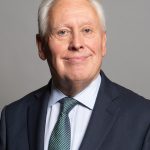
  • Jonathan Lord – 2023 Speech on Funding and Support for Classical Music

    Jonathan Lord – 2023 Speech on Funding and Support for Classical Music

    The speech made by Jonathan Lord, the Conservative MP for Woking, in the House of Commons on 29 March 2023.

    I am grateful, Madam Deputy Speaker. I rise to say two things. First, the funding cuts and the change of direction, particularly for the English National Opera, really affect some of our constituents, including musicians and singers in my constituency. Out of a clear blue sky, an organisation that is not just nationally famous but world famous and that undertakes all the tours that could be reasonably expected on the budget that it has, as well as performing happily at its home in London where it has made its name, has been subject to an Arts Council change that chucks everything up in the air. That is not acceptable, and I am pleased that there will be a review.

    Secondly, I congratulate both the hon. Member for Enfield, Southgate (Bambos Charalambous) on securing the debate and my hon. Friend the Member for Bromley and Chislehurst (Sir Robert Neill) on his work and campaigning. My hon. Friend spoke eloquently about the ENO; I agree with what he said, with the key questions he posed to the Minister and with the remedies he set out. We are still looking for a reasonable and satisfactory outcome for this world-famous opera company, and we look to the Minister for answers to those questions.

    We hope the Government will make the right recommendations and ultimately guide the House, but let us not take time over that. The problem is that now everything is up in the air and people are being made redundant. We need some certainty for the future, so let us have a review, but in the meantime let us ensure the support needed is there. I look to the Minister for replies that will help my constituents and, more importantly, help the opera-loving public and that wonderful opera company.

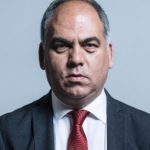
  • Valerie Vaz – 2023 Speech on Funding and Support for Classical Music

    Valerie Vaz – 2023 Speech on Funding and Support for Classical Music

    The speech made by Valerie Vaz, the Labour MP for Walsall South, in the House of Commons on 29 March 2023.

    I thank my hon. Friend the Member for Enfield, Southgate (Bambos Charalambous) for securing this debate and for allowing me to speak. I knew that the hon. Member for Strangford (Jim Shannon) would be here, and I wish him a belated happy birthday for last Saturday. I, too, want to acknowledge the role that my hon. Friend the Member for Worsley and Eccles South (Barbara Keeley) has played in securing widespread support for the BBC Singers. The fight is not over; she will continue, and we will support her.

    I add my voice to everything that my hon. Friend the Member for Enfield, Southgate, has said, although, hon. Members will be pleased to hear, not in song—I will stick to words. This is an extremely important topic. I start with classical music’s large body of work. I was taught the piano by my mother Merlyn when I was quite young. My first piece was Bach’s “Well-Tempered Clavier”, prelude No. 1. I still empty the room when I practise it. My daughter Liberty plays the violin and piano. She did an extended project for her A-level, entitled “Does exposure to music make you more intelligent?” She came down saying yes, it does, but if we have active participation.

    I appreciate that the Minister is going to give birth fairly soon. She does not need to buy “Baby Mozart”, but I encourage her to listen to relax. It is important for children to hear music in the womb it, and later on. The brain waves change when people listen to music. The same can be said of classical Indian music—Ravi Shankar with the sitar, which takes years to learn how to play, has exactly the same effect.

    We know how important music is for children. When I first came here in 2010, I asked the then Education Secretary to make sure that there is a piano in every school, because I grew up surrounded by music. José Abreu suggested that children can benefit from it and formed El Sistema, which has transformed children’s lives in Venezuela. It has now been rolled out throughout the world.

    We are lucky to have very good radio here. Classic FM is a must to listen to, and public broadcasting is important, as my hon. Friend the Member for Enfield, Southgate, mentioned, as did the hon. Member for Woking (Mr Lord) in his intervention. We have BBC Radio 3—I do not know whether other hon. Members listen to “Building a Library”, but it is a fantastic programme. The Proms is the biggest music festival in the world—way before Glastonbury. It is so important that international artists come here from around the world. What our public broadcasters do is so important.

    I stumbled upon a documentary about the amazing genius that is Daniel Barenboim on BBC Four last week. The BBC had captured him at 25, conducting a masterclass. It was amazing. Even if someone did not know anything about music, they could see how he explained to the two pianists how they could change and make their music sound better. Added to that, he formed the West-Eastern Divan Orchestra with Edward Said. That is how amazing he is. They brought together young people from Israel, Palestine, Egypt and all across the middle east to play together. Daniel Barenboim said that when they play music, they are all equal—they are just playing Beethoven. It is so important that that continues. I missed the Prom where Martha Argerich and Daniel Barenboim played the piano together, but it was captured at the end of the documentary. I suggest that everyone tries to listen to it.

    Music is inspirational. We can see our achievement as human beings, because a few notes can show what creative people we are. It can start with classical music and move to other forms of music such as jazz and modern music. It forms the basis of every aspect of our life. We need to protect that, because music moves us—it moves our emotions and it speaks to our soul. I hope that the Minister will protect it.

  • PRESS RELEASE : Defence Minister Baroness Goldie reaffirms UK commitment to Malaysia [March 2023]

    PRESS RELEASE : Defence Minister Baroness Goldie reaffirms UK commitment to Malaysia [March 2023]

    The press release issued by the Foreign Office on 30 March 2023.

    UK Defence Minister Baroness Goldie has celebrated the UK and Malaysia’s historical defence relationship and close ties during visit to Kuala Lumpur and Penang.

    Baroness Goldie met with Malaysian Defence Minister Dato’ Seri Utama Haji Mohamad bin Haji Hasan on 28 March in Kuala Lumpur. Congratulating the minister on his appointment in December, they discussed the deepening of bilateral cooperation and Defence ties through Five Power Defence Arrangements.

    Reinforcing the UK’s commitment to the region, the ministers also discussed the UK’s recent Integrated Review Refresh and how the AUKUS agreement will support regional stability.

    Malaysia and the UK are both members of the Five Powers Defence Arrangements (FPDA), now in its 52nd year. Founded in 1971, the FPDA is a series of agreements between Australia, Malaysia, New Zealand, Singapore and the UK, with the group seeking to strengthen defence and security in the Indo-Pacific and work together to promote stability in the region.

    Baroness Goldie also visited the FPDA’s military headquarters at RMAF Butterworth in Penang – the Headquarters Integrated Area Defence System (HQIADS). During her visit she met with UK personnel deployed there, discussing the FPDA and our common ambitions.

    Following her visit to HQIADS, the Minister paid her respects to all those fallen, laying a wreath at the Commonwealth War Grave Commission (CWGC) Cemetery in Taiping. The CWGC work tirelessly to maintain cemeteries around the world to ensure that the fallen will always be appropriately remembered.

    Baroness Goldie also visited Sapura Group, in support of their UK partner TriCIS, where a wide range of issues were addressed. This afforded a stimulating, insightful and very enjoyable exchange of views on cyber communications and security.

    UK Defence Minister, Baroness Goldie, said:

    I am delighted to have visited Malaysia and have the great privilege to meet Malaysia Defence Minister Dato’ Seri Utama Haji Moohamad bin Haji Hasan. During my visit we discussed our strong defence partnership and the ambition for the UK and Malaysia to collaborate further in support of regional peace and security.

    Baroness Goldie discussed the UK’s enduring commitment to the Indo-Pacific and regional peace and security during her visit. The UK government looks forward to further strengthening ties with Malaysia.

  • Robert Neill – 2023 Speech on Funding and Support for Classical Music

    Robert Neill – 2023 Speech on Funding and Support for Classical Music

    The speech made by Sir Robert Neill, the Conservative MP for Bromley and Chislehurst, in the House of Commons on 29 March 2023.

    I only intervene briefly in this debate to repeat my congratulations to the hon. Member for Enfield, Southgate (Bambos Charalambous) on securing it, and to make a few quick points to the Minister to supplement those that he has already made.

    I declare my interest as chair of the all-party parliamentary group on opera, and I have performers in my family as well. It is precisely because of that connection that I have seen at first hand the effect that the cuts imposed by Arts Council England have had on people who are dedicated professionals and who contribute to the economy of this country in a significant manner. We should not forget the value of classical music to the arts offer of this country, but it also makes a massive change in enriching lives—be it teachers in schools enriching the lives of children—and in enriching communities through community choirs and concerts such as the Bromley festival of speech and music, of which I have the honour to be joint president with my wife, bringing folk together and using music to pull them together.

    However, all that needs an infrastructure and an ecosystem to support it, and some of that requires public support. By the nature of the profession, it cannot entirely operate from the ticket office. That is why the damage done by Arts Council England’s behaviour is so extreme and egregious. To cut the very companies that have done more to promote access to the arts is perverse in the extreme.

    English National Opera in particular performs in English—it is the only company that does—and it is more than willing to tour outside London, if given the chance, but it has not been. It has a more diverse audience and a more diverse workforce than any other company. It is much more user-friendly, if I can put it that way, to those who have not had an experience in classical music and the arts to get into. I have been to recent productions at the ENO. It has a much younger, more diverse and enthusiastic audience than might be seen in many other houses. Every one of its performances is selling at about 95% box office capacity.

    We have the perverse situation of the director of music, heaven forbid, for Arts Council England claiming that she did not believe there is any longer an audience for “grand opera”, whatever she meant by that. I always rather thought grand opera was in five acts by Giacomo Meyerbeer in Paris in the 1850s. It is not putting on La Bohème, Carmen or Akhnaten, a modern opera by Philip Glass that is sold out at the ENO. If the people who are supposed to be running the arts do not understand the art form themselves, where on earth are we going to get to?

    The behaviour of Arts Council England has left Ministers exposed to criticism, because although it is an arms-length body, ultimately the blame will fall on Government. It also demonstrates that there are serious questions about its current viability as the guardians of arts in England. Its mission statement, when it was created, was to spread excellence in the arts throughout the country and to make excellence more accessible. As I pointed out earlier, and as the hon. Member for Enfield, Southgate rightly said, its decisions have actually been the reverse. The former Secretary of State, my right hon. Friend the Member for Mid Bedfordshire (Ms Dorries), condemned the way Arts Council England carried out her ministerial instruction. Ministers can give strategic instruction to Arts Council England, although, of course, they do not get involved in individual funding decisions. I say to my hon. Friend the Minister: that which is instructed can also be uninstructed. There is no doubt that Ministers can set the tone in the way in which Arts Council England supports things.

    There is a way forward to save the ENO, with sensible compromise and a very modest injection of funds in the overall scheme of things, which will keep the company in being and enable it to continue to do good work. I hope the same will be done with such things as the Glyndebourne tour. It is bizarre that some of my friends in the corporate world—my corporate lawyer friends, dare I say it?—will be able to pay the prices to go to the Glyndebourne festival, where there is no cost to the public purse, but the public funding that enabled Glyndebourne to go out to non-traditional audiences in places such as the Marlowe Theatre in Canterbury, or to Northampton or to Norwich, is the very thing that has been cut. It is exactly the reverse of what was intended. An organisation that does that has to answer serious questions about both its competence and its processes.

    I hope the Minister will reflect on three points. First, Arts Council England announced it will have an independent review of its approach to opera and classical music. I think the Minister is entitled to say to it, as a matter of strategic importance, that that must be genuinely independent. At the moment, there is a real suggestion and concern that Arts Council England—its members have about 162 notes in their register of interests within the same sector—will be marking its own homework. There has to be a properly independent and rigorous review with the involvement of people—there are many of them in the UK—who are active professionals.

    Secondly, Arts Council England itself needs a review. It is due for a departmental review before too long anyway, as it is some time since its last one. It ought to look at its transparency and decision-making processes. The board papers are never published. The information available would never pass muster in a local authority or health service trust, for example. That must change and the review should look at that, as it should at the composition of the board and the recruitment of its executive team.

    Thirdly, if I might return to a separate matter, touring visas have been a real problem for many people. Now that we are in a much better position with the Windsor agreement and a better relationship with the European Union, there is the suggestion, which has been signed off as being entirely consistent with the trade and co-operation agreement by Sarah Lee KC, that we could have a bespoke visa-waiver agreement with the EU for touring artists for up to 90 days in a period of 180 days. That would be doable and we would not have to reopen the TCA. With the better atmosphere that the Prime Minister has now created, that would be a practical way forward.

    Those are sensible points that I hope the Minister will say she will take away and act on.

  • Bambos Charalambous – 2023 Speech on Funding and Support for Classical Music

    Bambos Charalambous – 2023 Speech on Funding and Support for Classical Music

    The speech made by Bambos Charalambous, the Labour MP for Enfield Southgate, in the House of Commons on 29 March 2023.

    I thank the many constituents who contacted me to ask for this debate. I also thank my hon. Friend the Member for Worsley and Eccles South (Barbara Keeley), who cannot speak in this debate owing to her Front-Bench role. I know that she, along with my hon. Friend the Member for Cardiff South and Penarth (Stephen Doughty), has been campaigning on behalf of the BBC orchestras and the BBC Singers.

    The subject of classical music is close to my heart, with a number of musicians living in my Enfield Southgate constituency. Classical music is a crucial part of the cultural infrastructure of London and the UK. Our orchestras are world renowned, as are our opera companies, chamber music groups and highly skilled freelance classical musicians. It is no coincidence that a large number of Hollywood and UK producers choose to have film and TV soundtracks recorded at Abbey Road Studios or AIR Studios in London. Producers choose to have recordings made in London because of the renowned ability of the UK’s classical musicians to sight-read brilliantly and accurately. Classically trained musicians are therefore at the forefront of one of the sectors that is currently driving economic growth in the UK, despite the low overall growth of the economy.

    The music sector adds significantly to the economy—£4 billion in 2021—and is part of our cultural backbone and national identity. Our classical music scene is rightly a source of pride here at home and a source of admiration abroad. Yet despite the UK’s international reputation in the field, we have recently seen several devastating funding decisions for the whole of the UK classical music ecosystem. It is important to stress that the classical music industry is indeed an ecosystem.

    In the UK, our highly trained classical musicians tend to move between freelance and employed roles in both commercial and less commercial employment. For instance, many forge their careers in orchestral positions before going freelance in the recording session world, or vice versa. Damage to one part of that infrastructure therefore damages all of it.

    Jim Shannon (Strangford) (DUP)

    I thank the hon. Gentleman for securing a debate on this massive issue. He is right about the creation of jobs in classical music. I make this point for those who are at a very early stage —those who are school-age and in education. Some people back home in my constituency of Strangford forged their opportunity through education. They had the chance to play classical instruments in their formative years, and tuition and instruments were available as well. Does the hon. Gentleman agree that we should think about those who, had they not had that opportunity at school and in education, would never have reached the pinnacle of achievement they have reached? We look to the Minister and the Department to ensure that young people have that opportunity and can thereby forge that classical route for the rest of their life and give enjoyment to everyone else.

    Bambos Charalambous

    The hon. Gentleman makes an excellent point. Music education should also be part of this conversation. It may be outside the scope of the Department for Culture, Media and Sport, but we need to make sure that young people have that musical education and also careers to go into. If we cut the orchestras, we cut the opportunities for people who pick up a musical instrument in school and want to progress in the field of music.

    The recent devastating decisions to which I just referred are, of course, those taken by bodies such as Arts Council England and the BBC. They are going to negatively affect the funding of the English National Opera, the Britten Sinfonia, the Welsh National Opera, Glyndebourne’s touring opera and, of course, all the BBC orchestras in England. In addition, decisions have been taken to reduce funding to established orchestras such as the London Symphony, the London Philharmonic and the Philharmonia.

    Thankfully, we heard last week that the BBC Singers have been given a temporary stay of execution, but this reversal came only after a huge public outcry, and the reversal itself calls into question how such decisions have been taken. More than 150,000 people have signed a petition condemning the cuts, and there have been open letters from appalled global leaders in classical music, including more than 800 composers and many choral groups.

    Sir Robert Neill (Bromley and Chislehurst) (Con)

    I warmly congratulate the hon. Gentleman on securing this debate. He and I were at a meeting yesterday with members of the company of the English National Opera. They are in the most precarious situation, because they simply do not know whether they will have sufficient work to keep their families in necessities after the end of this season. Does the hon. Gentleman agree that the behaviour of the Arts Council—the supposed promoter of excellence in the arts in England—has actually been the reverse of what is supposed to happen? By hitting companies such as the English National Opera, the most accessible of our opera companies, and touring companies such as Glyndebourne and the English tours of the Welsh National Opera, the Arts Council is reducing the spread of excellence in art to people outside London, rather than spreading it out. That is the exact reverse of what the previous Secretary of State, my right hon. Friend the Member for Mid Bedfordshire (Ms Dorries), told it to do. It makes no sense at all, does it?

    Bambos Charalambous

    The hon. Gentleman makes an excellent point. I will address that issue later, but it is true that the companies that have been cut do a lot of touring work and provide access to parts of the UK that would not necessarily be able to access orchestras or opera.

    It is important to note that the BBC Singers’ future still remains highly uncertain, with no plan outlined for their future security. Meanwhile, the BBC is still planning to cut the budgets of its concert, philharmonic and symphony orchestras by 20%. I know that the Minister will argue that the Government do not have direct responsibility for the cuts I am referring to, made as they are by both the BBC and Arts Council England, but let us be clear: the relationships that the Government have with those bodies have a profound influence on the decisions that are taken. It is the Government who set the political environment and the cultural zeitgeist in which decisions are taken. While it is right that the arm’s length bodies are operationally independent, it is also right that major decisions that impact on our cultural and artistic ecosystem can be challenged and questioned.

    In the case of the Arts Council England funding announcement for 2023 to 2026, the then Secretary of State, the right hon. Member for Mid Bedfordshire (Ms Dorries), set a directive that told the body where its funding should go. That brings into question the arm’s length principle on which Arts Council England was founded. There is a lack of transparency in how recent decisions at the BBC and the Arts Council have been reached. The Government can, if they choose, create an environment in which classical music is nurtured by the arm’s length bodies taking decisions on the ground, but sadly, what we see at the moment is the opposite. Therefore, I would be very interested to hear from the Minister how the Government plan to support our classical music infrastructure against the recent onslaught of damaging decisions.

    First, I want to speak in more detail about a couple of those decisions. Let us look at Arts Council England’s decision to cut the English National Opera’s annual grant of £12.6 million and replace it with £17 million over three years, with a stipulation that the ENO must move out of London. That decision was announced in November 2022, but in January of this year, Arts Council England announced a review of opera and musical theatre. That review is called “Let’s Create”, but some may think it would be better named “Let’s Destroy” following Arts Council England’s cuts to the ENO and other national portfolio organisations. What sort of chaotic organisation makes the decision to cut first and carry out a review later?

    Following a large public outcry and campaigns by the Musicians’ Union and Equity, it was announced in January that the national lottery would make an additional grant to the ENO of £11.46 million. That still represents a cut of 9%, and the uncertainty about the ENO’s future and its need to relocate has meant that productions for this year have been cancelled. Redundancies have also been made in the ENO Chorus, which is one of the most diverse choruses in Europe.

    Those decisions by Arts Council England appear to have been informed by the levelling-up agenda, plus the direct instruction of the then Secretary of State to move money away from London. However, the ENO has long been at the forefront of offering a commendable outreach programme to local communities and has a strong record of supplying free tickets to the young, as well as relaxed performances for those with sensory needs. Forcing the move of the ENO with the likely loss of its existing orchestra and technicians will not lead to levelling up, but to levelling down overall. The Government really need to step in to ensure that the cultural infrastructure of London is not damaged irrevocably by decisions such as this and the others I mentioned earlier. One area’s cultural offer should not be damaged in the name of another’s.

    That brings me to another set of worrying decisions: those taken at the BBC. Again, these have taken place within the cultural climate and overall policy agenda set by the Government. As I stated before, the BBC’s decision to take the axe to the BBC Singers appears to have been reversed for now, but how appalling it is to even contemplate dismantling one of the world’s most renowned ensembles in what will be its centenary year.

    Mr Jonathan Lord (Woking) (Con)

    Does the hon. Gentleman agree that the BBC needs to be very careful about the licence fee? My understanding is that we pay the licence fee so that the BBC can have top-notch news coverage and to support all of our most important cultural attributes as a nation, including classical music and opera. Is the BBC not treading on thin ice by taking these sorts of decisions? It is the breadth and depth of its cultural and news offering that makes the BBC what it is.

    Bambos Charalambous

    The hon. Gentleman is absolutely right: the BBC is a public broadcaster, and it therefore has a public duty to do things that are not available elsewhere. However, we have to look at that in the context of what the BBC has been forced to do. It, too, has had to make cuts because the licence fee has been frozen—something that I will come to later on in my speech. The hon. Gentleman is right, though, about the duty of the BBC to provide things that are not provided elsewhere, which I will also come to in a second.

    The most serious threat to the BBC orchestras remains, which is the proposed cut to 20% of orchestral jobs across the BBC’s English orchestras. It is important to note that these cuts come after more than a decade of successive Conservative Governments hammering the BBC’s funding. Ever since 2010, the BBC has faced repeated and deep real-terms spending cuts, and in 2022 the licence fee was frozen for two years. The BBC has said that that is expected to create a funding gap of about £400 million by 2027. That is the important context in which the BBC has taken these decisions. While it is right that the BBC is operationally independent, it is also right that major decisions that impact on our cultural and artistic ecosystem can be challenged and questioned. As a public service broadcaster, the BBC has a public duty of care to its orchestras and ensembles, and it also has a duty to provide excellent, accessible and inspiring content to the public.

    Make no mistake: the proposed 20% loss of jobs across the BBC’s English orchestras is devastating to our classical music infrastructure. The cuts are of course damaging to the highly skilled musicians who face losing their jobs, but they also have serious implications for the wider classical music industry. The BBC has often nurtured new orchestral talent with the career pathway it provides for orchestral players. The BBC is also the largest employer of musicians in the classical music workforce, which is generally insecure and freelance.

    Let us be clear about what these orchestras represent: the BBC Symphony Orchestra, BBC Concert Orchestra and BBC Philharmonic Orchestra are internationally renowned and made up of some of the world’s finest musicians. They are loved across the country for their touring role and for performing at the BBC Proms, including opening and closing the festival. My hon. Friend the Member for Worsley and Eccles South has rightly praised the importance of the BBC orchestras to the quality of the UK’s classical music output and the musicians’ ability to adapt rapidly to new commissions and audiences.

    The BBC also appears to be sending mixed messages; it says it is increasing investment in musical education, but it is cutting the jobs to which music students aspire. That makes no sense at all. Even the BBC’s own classical music review has said that the BBC performing groups play a vital role in the pipeline of new talent. These cuts therefore have huge negative implications for future generations of musicians and our wider musical infrastructure.

    The cuts also have negative implications for the cultural life of the regions. The BBC’s classical music review has found that the BBC orchestras perform in parts of the UK that would otherwise not be covered by major orchestras. The loss of a fifth of orchestral jobs in the BBC orchestras can therefore have only a negative impact on the cultural experiences of people living outside London or other main urban areas. Again, as with the cuts to the ENO and all the other institutions I named at the beginning, the BBC orchestral cuts threaten a levelling-down effect and a serious downgrading of the cultural life of the UK.

    Let us put all this into a wider financial context. As Charlotte Higgins of The Guardian pointed out last week, the BBC orchestras are being cut and the BBC Singers’ future made uncertain for the want of a reported £5 million saving to the BBC. Meanwhile, the Government are trying to claw back £122 million from PPE Medpro, the company recommended by Baroness Mone as a supplier of personal protective equipment to the NHS during the pandemic. The sums of investment needed to secure key parts of our classical music industry are therefore small when compared with the vast amounts wasted by this Government. It makes absolutely no economic or cultural sense to allow the devastation of our classical music industry when it can be supported for a fraction of what the Government have wasted on PPE contracts. We need to remember, as I stated earlier, that the music sector adds significantly to our economy; it was £4 billion in 2021.

    There are some other practical things that the Government could do right now to redress some of the damage done to the classical music industry. The following are just some suggestions, any of which would be a small step towards supporting our classical music infrastructure. For instance, VAT on live events, such as music and theatre events, could be reduced to bring the UK more in line with EU nations and to help to stimulate live music. The Government could look at measures such as reducing business rates on live music venues and studios. The classical music industry could be given help through extra support to venues, studios and music spaces hit by soaring energy bills. If they wanted to, the Government could create a new tax relief for the music industry, like those enjoyed by film and TV, to boost music production.

    Jamie Stone (Caithness, Sutherland and Easter Ross) (LD)

    The hon. Member is making a thoughtful speech, to say the least. There is an international dimension to this, taking forward his point. Last year, two Ukrainian players, Oleksii and Igor, came to perform in St Finbarr’s church in Dornoch in my constituency. That was an expression of determination that Ukraine would not be crushed and an opportunity for us to say, “We are with you, Ukraine.” The Government could look at that—perhaps they do already—and say, “Let us have more Ukrainian players. Let us use this as our soft power.” Music speaks to everyone. It is an international language, so there is a great opportunity here for us to do more and to stand with brave Ukraine.

    Bambos Charalambous

    The hon. Gentleman is absolutely right. Music is international and musicians perform internationally. The reputation that some of the orchestras and ensembles in the UK have is worldwide and they would of course show solidarity with the Ukrainians. We certainly welcome them here to hear them play and other orchestras playing abroad. That is one of the soft power things we can do. The reputation of the classical music world is first class across the world.

    Many classical musicians have felt a negative impact from Brexit, with touring opportunities lessened. The Government could set up a new music export office to drive British music exports and help future talents to grow their international audiences. Classical musicians have been hit by a squeeze on salaries, as well as the cost of living crisis and the terrible impact of covid. On top of this, classical musicians are unfairly deprived of income from streaming platforms. As my hon. Friend the Member for Cardiff West (Kevin Brennan) has argued, there is a dire need for equitable remuneration for musicians. At the moment, classical orchestral musicians see all the profits from their work on streaming platforms hoovered up by big corporate record companies and the platforms themselves. The Government could change the law in this regard so that classical musicians get a fair share of the proceeds from their work.

    There is therefore much the Government could do. The Government must support the call on the BBC to set the BBC Singers on a long-term footing as soon as possible and remove the threat to jobs in the BBC Philharmonic, Concert and Symphony orchestras. The Government should also closely examine the decisions by Arts Council England, and ensure the protection of the many fine classical music institutions that now face deep uncertainty. Future decisions must involve improved consultation with the musicians involved, and decisions should be more informed by classical music experts, musicians and our musical infrastructure. We know that investment made in the classical music industry will be repaid many times over by the economic and cultural contribution it makes. It is simply a false economy to stand back and allow the devastation of a classical music scene that contributes so much.

    It is time for the Government to step up to the challenge of protecting and promoting classical music in the UK. It is time for the Government to pick up the baton and change the tempo for the final movement of this discordant cacophony, and to stop the irreparable damage being done to some of the finest orchestras and ensembles. I look forward to the Minister’s response on all these matters.
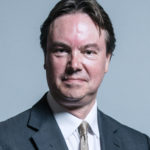

  • Edward Leigh – 2023 Comments on RAF Scampton

    Edward Leigh – 2023 Comments on RAF Scampton

    The comments made by Sir Edward Leigh, the Conservative MP for Gainsborough, in the House of Commons on 29 March 2023.

    Although the Minister did not mention RAF Scampton by name, we assume that that is the base in Lincolnshire to which he is referring. I can inform him that the moment that this is confirmed, the local authority of West Lindsey will issue an immediate judicial review and injunction against this thoroughly bad decision, which is based not on good governance, but on the politics of trying to do something. How can he guarantee that we will not lose £300 million-worth of regeneration, already agreed and signed, between West Lindsey and Scampton Holdings? How will he preserve the listed buildings and the heritage centre? How will he preserve the heritage of the Dambusters and of the Red Arrows? How can he guarantee that there is no contamination from the fuel bay of the Red Arrows? How will he protect the safety of 1,000 people living right next door to 1,500 migrants and a primary school? He cannot guarantee anything. Will he work with West Lindsey and Lincolnshire now to try to find an alternative site? We are prepared to do it, but we do not want to lose £300 million of regeneration. Lincolnshire will fight and Lincolnshire will be proved right.

    Robert Jenrick

    I can only pay tribute to my right hon. Friend—my friend and constituency neighbour. He is representing his constituents forcefully, in the way that he has always done in this place, and he is absolutely right to do so. I can say to him that, while this policy is, without question, in the national interest, we understand the impact and concern that there will be within local communities. All parts of Government want to work closely with him and his local authorities to mitigate the issues that will arise as a result of this site. There will be a significant package of support for his constituents. There will be specific protections for the unique heritage on the site. We do not intend to make any use of the historic buildings. In our temporary use of the site, we intend to ensure that those heritage assets are enhanced and preserved. We see this as a short-term arrangement. We would like to enter into an agreement, as he knows, with West Lindsey District Council, so that it can take possession of the site at a later date, and its regeneration plans, which are extremely important for Lincolnshire and the east midlands more generally, can be realised in due course.

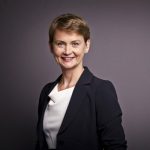
  • Yvette Cooper – 2023 Speech on Illegal Immigration

    Yvette Cooper – 2023 Speech on Illegal Immigration

    The speech made by Yvette Cooper, the Shadow Home Secretary, in the House of Commons on 29 March 2023.

    Today’s statement is an admission of failure—perhaps that is why the Home Secretary has asked the Immigration Minister to make it instead. Four years ago, the Cabinet said that they would halve channel crossings; they have gone up twentyfold since then. A year ago, they said they would end hotel use; they have opened more than ever. They keep making new announcements, but it just keeps getting worse. People want to see strong border security, and properly managed asylum and refugee systems, so that the UK does its bit to help those fleeing persecution and conflict, alongside other countries, but we have got neither of those at the moment.

    There is no point in the Government blaming everyone else, because they are in charge. The asylum system is broken because they broke it; they have let criminal gangs rip along the channel; people smuggler convictions have halved in the past four years, even though more boats and more gangs have been crossing—and yet Tory MPs yesterday voted against Labour’s plan for cross-border police units to go after the gangs; and they have let asylum decision making collapse—we have had a big increase in staff, but 40% fewer cases being decided. So they have failed to take basic decisions and they are still not doing Labour’s plan to fast-track last year’s arrivals from Albania and other safe countries.

    As for today’s announcements, we need to end costly and inappropriate hotel use, but these plans do not do that. The Minister has had to admit that, contrary to all the briefing in the papers this morning, they will not end hotel use—instead, these sites are additional. Ministers should have been finding cheaper sites and properly managing costs years ago.

    Today’s damning report from the Government’s own independent watchdog, which strangely the Minister did not mention today, says that there has been no cost control; that the Home Office contracts are highly inefficient; that there is no cross-Government transparency and oversight; and that officials did not have financial information on the contracts they were signing and did not compare costs. Most ludicrously of all, it says that

    “different parts of the Home Office operating different schemes…at times, found themselves competing for the same hotel contracts, driving prices up.”

    This is totally chaotic.

    Basically, the Government have written a whole load of cheques in a panic. If they had put that money into clearing the backlog instead, we would not be in this mess now. They should have been working with councils to do that, but they did not. Yesterday, Tory MPs again voted against Labour’s plans for a legal requirement for councils to be consulted. Instead, the Minister has Conservative councils, backed by Conservative MPs, taking action against him. So can he confirm that the Foreign Secretary is backing legal action against the Home Secretary? Frankly, that is a first, even for this chaotic Government.

    The Bill makes things worse. There are no returns agreements with France or Europe. The Prime Minister has just said that the Home Secretary was wrong: the Rwanda flights will not start this summer. The Government have nowhere to send people to and, instead of speeding up asylum decisions, they are just going to cancel them, which means more people in asylum accommodation and hotels and more flimflam headlines that just do not stack up. Today, it was barges and it turns out that there are not any. Desperate to distract everyone from the damage that they might want to do to the Dambusters heritage, they instead start talking about ferries and barges. Three years ago, they said the same thing. Last summer, the Prime Minister said that it would be cruise liners. The Home Office civil servant said that ferries would end up costing more than the hotels on which they are already spending so much money. So, instead, the Immigration Minister has been sent around the country with a copy of “Waterways Weekly”, trying to find barges, and he still has not found any.

    Can the Minister tell us: are these sites going to be additional and not instead of hotel use? Will he still be using more hotels, or fewer for asylum seekers in six months’ time? On the 45,000 boat arrivals last year, can he confirm that more than 90% of decisions have not been taken because the backlog is still the Government’s failure?

    Will the Minister apologise for the Government’s failure on cost control? They failed to support Labour’s plan to go after the gangs, to get a new agreement with France and to fast-track decisions and returns. They are flailing around in a panic, chasing headlines—barges, oil rigs, Rwanda flights, even wave machines—instead of doing the hard graft. They have lost control of our border security, lost control of the asylum system, lost control of their budget and lost control of themselves. Will he answer my questions and will he get a grip?

    Robert Jenrick

    Is it not abundantly clear that Labour does not have the faintest clue how to tackle this issue? It has absolutely no plan. What we have laid out today is three months of intense work, which is seeing the backlog coming down; productivity rising; more sustainable forms of accommodation; a harder approach to make it difficult to live and work in the UK illegally; illegal working raids and visits rising by 50%; and greater control over the channel—all improvements as a result of the 10-point plan that the Prime Minister and the Home Secretary set out.

    The right hon. Lady looks back to a mythical time when Labour was last in office— when the Home Office, according to their own Home Secretary, was deemed to be not fit for purpose. Labour calls for more safe and legal routes, even though we are second only to Sweden in Europe for resettlement schemes. It calls for more money for law enforcement, even though we have doubled the funding of the National Crime Agency, and our people are out there upstream tackling organised immigration criminals every day of the week.

    Is it not extraordinary that the Home Secretary—[Interruption]—the shadow Home Secretary cannot bring herself to condemn those illegal immigrants who are breaking into our country in flagrant breach of our laws? That is weak. The truth is that the Labour party is too weak to take the kind of tough decisions that we are taking today. In its weakness, it would make the United Kingdom a magnet: there would be open doors, an open cheque book and open season for abuse. The British public know that the Conservative party understands their legitimate concerns. We do not sneer at people for wanting basic border controls. We are taking the tough decisions. We will stop the boats. We will secure the borders.

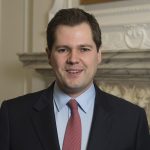
  • Robert Jenrick – 2023 Speech on Illegal Immigration

    Robert Jenrick – 2023 Speech on Illegal Immigration

    The speech made by Robert Jenrick, the Minister for Immigration, in the House of Commons on 29 March 2023.

    With permission, Madam Deputy Speaker, I would like to make a statement on illegal migration.

    Three months ago, my right hon. Friend the Prime Minister set out a comprehensive plan to tackle illegal migration. We said we would act, and we have. We have increased immigration enforcement visits to their highest levels in recent years: since December, more than 3,500 enforcement visits have been carried out and more than 4,000 people with no right to be here have been removed. Anglo-French co-operation is now closer than ever before and will be deepened because of the deal struck by the Prime Minister earlier this month. We have expanded our partnership with Rwanda to include the relocation of all those who pass through safe countries to make illegal and dangerous journeys to the United Kingdom. Our modern slavery reforms, introduced in the Nationality and Borders Act 2022 to prevent those who seek to abuse our generosity from doing so, are bearing fruit. We are tackling the backlog in our asylum system by cutting unnecessary paperwork and simplifying country guidance. As a result, productivity has increased and we are on track to process the backlog of initial asylum decisions by the end of this year.

    We must ensure that our laws enable us to deal with the global migration crisis, which is why we have brought forward the Illegal Migration Bill. The Bill goes further than any previous immigration legislation to fix the problem of small boats, while remaining within the boundaries of our treaty obligations. Of course, as we reform the asylum system, we will continue to honour our country-specific and global safe and legal commitments.

    But we cannot and will not stop here, because illegal migration continues to impact the British public in their day-to-day lives. The sheer number of small boat arrivals has overwhelmed our asylum system and forced the Government to place asylum seekers in hotels. These hotels take valuable assets away from communities and place pressures on local public services. Seaside towns have lost tourist trade, weddings have been cancelled and local councils have had their resources diverted to manage them. The hard-working British taxpayer has been left to foot the eye-watering £2.3 billion a year bill. We must not elevate the wellbeing of illegal migrants above that of the British people; it is in their interests that we are sent here.

    The enduring solution to stop the boats is to take the actions outlined in our Bill, but in the meantime it is right that we act to correct the injustice of the current situation. I have heard time and again of councils up and down the country struggling to accommodate arrivals. This is no easy task; the Government recognise that placing asylum seekers into local areas comes at a cost, and so central Government will provide further financial support. Today, we are announcing a new funding package, which includes generous additional per-bed payments and continuation of the funding for every new dispersal bed available. We will also pilot an additional incentive payment where properties are made available faster.

    However, faced with the scale of the challenge, we must fundamentally alter our posture towards those who enter our country illegally. This Government remain committed to meeting our legal obligations to those who would otherwise be destitute, but we are not prepared to go further. Accommodation for migrants should meet their essential living needs and nothing more, because we cannot risk becoming a magnet for the millions of people who are displaced and seeking better economic prospects. Many of our European partners are struggling with the same issue: Belgium, Ireland, Germany and France are having to take similar steps, and the UK must adapt to this changing context.

    I have said before that we have to suffuse our entire system with deterrence, and this must include how we house illegal migrants. So today the Government are announcing the first tranche of sites we will set up to provide basic accommodation at scale. The Government will use military sites being disposed of in Essex and Lincolnshire and a separate site in East Sussex. These will be scaled up over the coming months and will collectively provide accommodation to several thousand asylum seekers through repurposed barrack blocks and portakabins. In addition, my right hon. Friend the Prime Minister is showing leadership on this issue by bringing forward proposals to provide accommodation at the Catterick garrison barracks in his constituency. We also continue to explore the possibility of accommodating migrants in vessels, as they are in Scotland and in the Netherlands.

    I want to be clear: these sites on their own will not end the use of hotels overnight. But alongside local dispersal and other forms of accommodation, which we will bring forward in due course, they will relieve pressure on our communities, and manage asylum seekers in a more appropriate and cost-effective way. Of course, we recognise the concerns of local residents and we are acutely aware of the need to minimise the impact of these sites on communities. Basic healthcare will be available, around-the-clock security will be provided on site and our providers will work closely with local police and other partners. Funding will be provided to local authorities in which these sites are located.

    These sites are undoubtedly in the national interest. We have to deliver them if we are to stop the use of hotels. We have to deliver them to save the British public from spending eye-watering amounts on accommodating illegal migrants. And we have to deliver them to prevent a pull factor for economic migrants on the continent from taking hold. Inaction is not an option. The British people rightly want us to tackle illegal migration. As I have set out today, we are doing exactly that and I commend this statement to the House.

  • PRESS RELEASE : UK continues its Parliamentary partnership with Solomon Islands [March 2023]

    PRESS RELEASE : UK continues its Parliamentary partnership with Solomon Islands [March 2023]

    The press release issued by the Foreign Office on 30 March 2023.

    This partnership between the UK and Solomon Islands Parliaments will strengthen the financial work of Parliamentary standing committees.

    Led by Lord Bruce UK Parliament and Francisca Gale, clerk to the Tynwald, a delegation from the Westminster Foundation for Democracy visited Honiara to continue work with the National Parliament of Solomon Islands on Parliamentary oversight of the budget.

    This partnership between the UK and Solomon Islands Parliaments will strengthen the financial work of Parliamentary standing committees. The visiting delegation held sessions on financial management with members of the Public Accounts Committee, the Public Expenditure Committee and staff of the National Parliament.

    Speaking at the launch event at Heritage Park Hotel, British High Commissioner to Solomon Islands and Nauru, His Excellency Thomas Coward said:

    I am proud of this partnership between the Parliaments of Solomon Islands and the UK. Democracy needs continual improvement and renewal to thrive. Through this partnership we can work together on this, whilst strengthening the deep historic links and personal friendships between our two countries.

    The partnership also marks the Westminster Foundation for Democracy’s first engagement in Solomon Islands and in the Pacific region. WFD is the UK public body dedicated to strengthening democracy around the world.

    WFD Programme Manager in-country, Brian Titus Leafasia said:

    The workshops held by WDF were part of the Solomon Islands National Parliament and UK Parliament partnership around public finance management, mainly on enhancing and strengthening transparency and accountability through partnerships. The Public Accounts Committee and Public Expenditure Committee and the Parliament staff play a major role in this partnership programme.

    Team leader of the visiting team to Honiara, Rt. Hon. Lord Bruce said:

    What we love doing really is sharing experiences including our mistakes as well as our successes with other people in the hope that can all improve the quality of our democracy and the relationship between the people, the parliament and the government and that means the role of financial accountability, the functioning of committees that sort of thing.

    The WDF team left Honiara on Sunday 26 March 2023.

  • PRESS RELEASE : UK Minister for Indo-Pacific Visits the Philippines [March 2023]

    PRESS RELEASE : UK Minister for Indo-Pacific Visits the Philippines [March 2023]

    The press release issued by the Foreign Office on 30 March 2023.

    UK Minister for Indo-Pacific visits Philippines to launch development partnership, strengthen maritime engagement.

    • Minister for the Indo-Pacific to  launch British Investment Partnerships in the Philippines, boosting UK-backed investment in green energy and infrastructure
    • Minister to hold talks covering UK-Philippines cooperation on maritime security, trade and investment, and climate and environment.
    • Minister to attend event promoting women’s rights, and highlighting the launch of the UK’s first Women and Girls Strategy this month
    • Visit comes after the publication of the Integrated Review Refresh, which reaffirmed the UK’s commitment to its partnerships in the Indo-Pacific.

    UK Minister for Indo-Pacific, Minister Anne-Marie Trevelyan, will this week visit Manila (30-31 March). Minister Trevelyan will meet with President Marcos and Secretary of Foreign Affairs Manalo, as well as defence, finance and environment ministers. Talks are expected to focus on defence, trade and climate links and the shared ambition to upgrade the UK-Philippines Enhanced Partnership. The Minister will also meet members of the House of Representatives to establish a UK-Philippines Inter-Parliamentary Dialogue.

    While in Manila, the Minister will formally launch British Investment Partnerships (BIP) in the Philippines. Working with the Philippine government and private sector partners, BIP will mobilise high-quality, reliable investment and technical expertise to support sustainable infrastructure development and the transition to clean energy in the Philippines.

    BIP builds on the ongoing work of UK development finance institutions, which provide funding and expertise to support resilient growth in the Philippines. This includes the UK’s Mobilist programme, which is investing in green energy and other projects, including $25m in financing for the Philippines’ first solar plants on Negros Island. British International Investment (BII), the UK’s longstanding development finance programme, will also expand investment in green infrastructure projects in the Philippines.

    The FCDO is also finalising a partnership agreement with the Philippine Stock Exchange for the MOBILIST programme, to open up another capital source in support of the Philippines’ climate transition.

    Minister for Indo-Pacific Anne-Marie Trevelyan said:

    The Philippines is an economic and environmental powerhouse, which stands on the frontline of climate change and other global challenges.

    Through British Investment Partnerships, we will support the development of high-quality, sustainable infrastructure to accelerate the transition to clean energy and secure a prosperous and resilient future for the Philippines.

    The Minister will also visit the headquarters of the Philippine Coast Guard, where she willl join a tour of a Coast Guard vessel and Manila Bay, and discuss enhanced UK-Philippines cooperation on issues of maritime security and marine conservation.

    Finally, the Minister will attend an event hosted by the British Embassy Manila to mark International Women’s Month, where she will outline the UK’s commitment to place the rights of women and girls at the heart of its foreign policy. She will meet women leaders from government, business and civil society who pioneer change in their sectors.