
Tag: 2023

  • Holly Lynch – 2023 Speech on Human Trafficking and Modern Slavery

    Holly Lynch – 2023 Speech on Human Trafficking and Modern Slavery

    The speech made by Holly Lynch, the Labour MP for Halifax, in the House of Commons on 29 March 2023.

    It is always a pleasure to follow the hon. Member for Cumbernauld, Kilsyth and Kirkintilloch East (Stuart C. McDonald). I will start, as others have, by paying tribute to and thanking the hon. Member for Wellingborough (Mr Bone) for securing the debate. In addition, I thank him for all the campaigning work that he has done in this policy area. He shared powerful examples of where the failures in the system have further compounded the risk, particularly for children, of being re-trafficked. I also join him from the outset in paying tribute to the incredible work of Justice and Care, which has had a transformative effect. I have had the opportunity to see their victim navigators in West Yorkshire and the tremendous impact that they have had in supporting victims and securing prosecutions.

    We know that the number of victims of these heinous crimes is increasing. My hon. Friend the Member for Rotherham (Sarah Champion), like almost every Member who has contributed to the debate, made the point that we were once so proud of our modern slavery laws, but, as we have just heard, we seem to be taking backward steps in identifying victims and supporting them through to the prosecution of their abusers. Nearly 17,000 potential victims were referred to the NRM in 2022—a 33% increase on the previous year—but charities have predicted, using police data, that there could be at least 100,000 victims in the UK.

    I want to share the story of Sanu, who was tricked into living and working in slave-like conditions in the UK. For seven years, he was beaten, threatened and given no wages for the constant work he did in his trafficker’s shop. He had had to beg for money and food. Now he is living in a Salvation Army safe house where the support he is receiving is helping him to overcome his ordeal.

    Sanu told the Salvation Army:

    “I came to the UK to study. That was my goal…I worked at least 50 to 60 hours a week and sometimes 90 to 100. I would start at 8 o’clock and have to carry on until he said I could leave. I wasn’t allowed to go anywhere; no mobile phone. I couldn’t go to the GP. He said if you talk to anyone then the police will come and get you…My trafficker knew I had nowhere to stay and no other friends. He knew how to control me. He controlled me like in a video game with a remote controller…Every minute every second he took from me. Even now I can still be scared. What happened to me is all wrong. I still have trauma and nightmares…I try to sleep but I still see his face, it is like he’s still chasing me.”

    I do not need to tell the Members who are here in Westminster Hall that when we talk about victims, we are not solely talking about foreign nationals. The reporting of British victims to the NRM is rising, and 2022 saw the highest number of British possible victims identified since the NRM began. Most of those, as we have heard, were children. In 2022, one NRM referral in five was for a British child, and many more British children are thought to be vulnerable. Research suggests that there is a failure to refer many British victims to the NRM because they are not identified as victims of modern slavery or because of missed opportunities to safeguard them.

    In the face of such a crisis, we need a system that finds victims, protects them, supports them and helps them to rebuild their lives, but as things stand that is not happening. Many victims never access the NRM support system, and if they do, there are huge delays in decision making. That means that many are stuck in the system, receiving wildly varying quality of care and unable to move through. Once people are confirmed as victims, there are few meaningful support mechanisms to help them rebuild their lives, and the impact of that on their mental health must not be understated.

    How do we ensure that those vulnerable victims are reached and receive help once they have been identified? We desperately need to improve the first responder role. Effective, informed training and safeguarding procedures are needed to ensure that victims do not slip through the net. Training and policies need to include increasing understanding of the specific needs, circumstances and entitlements of British national victims, improving the transition from child to adult services, and the development of professional modern slavery risk assessment tools for British nationals.

    Let me look at how we can improve the decision-making process. Decision makers must have modern slavery understanding, expertise and experience. Evidence from pilot schemes that have devolved the decision making away from the Home Office shows that the pilots look to have generated impressive results. The processing is speeded up, and any conflict of interest for the Home Office is removed. A multi-agency approach, and the broad knowledge and wisdom that come with it, could improve decision making for victims—certainly those with complex needs.

    The key to truly ending these terrible crimes is to lock up the traffickers—a point about which the former Home Secretary, the right hon. Member for Witham (Priti Patel), spoke powerfully. We know that the number of victims is increasing, but prosecution rates are shamefully low. Ministry of Justice statistics show that in 2021 there were only 93 prosecutions and 33 convictions in cases in which modern slavery was the principal offence.

    Proper support enables modern slavery victims to engage in securing the prosecution of traffickers. Support for victims, including victim navigators, whose incredible work I have had the opportunity to see, is central to successful convictions.

    I want to talk about a case study that was shared in The Guardian this week by investigative reporter Annie Kelly. Julia is a Ukrainian survivor of human trafficking and sexual exploitation. She was tricked into coming to the UK under the false promise of legitimate hotel work. For five years, she was controlled by criminal gangs who had seized her passport and forced her to engage in prostitution. She had no control over who she saw or what she was expected to do. Desperate to support her child back in Ukraine and unable to speak English, Julia says she felt trapped by her immigration status and her debt. When she was rescued by the police, she began to build a relationship with a victim navigator, who supported her. Julia, with the victim navigator’s support, worked with the police, and her bravery has resulted in the establishment of an international taskforce, the identification of 120 other female victims and the conviction of five exploiters. Julia is now recovering and rebuilding her life.

    Julia’s story and research from charities on the frontline make it clear that consistent support means that victims engage with police investigations. That support needs to come first, to create stability and confidence, and the evidence backs this up. The final evaluation of Justice and Care’s victim navigator pilot scheme found that between September 2018 and June 2022, 92% of survivors who were supported engaged with police, compared with just 44% of survivors without a victim navigator. Twenty exploiters were convicted, 38 prosecutions of accused exploiters were supported and the total sentences for convicted offenders amounted to 178 years and eight months. Between 2018 and 2020, all 62 adult survivors receiving long-term support through one of the Home Office local authority pathways pilot schemes supported a police investigation.

    The public are very much ahead of the Government on this; they recognise the connection between supporting victims and bringing offenders to justice. Recent polling for the CSJ and Justice and Care revealed that 82% of the people asked agreed that more Government support for victims of modern slavery is needed to bring more criminal gangs to justice. All of this goes to show that if Government were serious about convicting traffickers, they would be serious about support for victims, but as others have said over the past two days, the Government’s legislation will make it much worse.

    The Illegal Migration Bill will have a devastating impact on victims of modern slavery. This is a quote from a letter by the CEOs of organisations that support people through the modern slavery victim care contract:

    “Were this bill to come into effect, we fear that many of these survivors would be denied the opportunities to rebuild their lives and reclaim their autonomy.

    This bill will do nothing to break cycles of exploitation or help people break free of modern slavery. Instead, it will feed the criminal networks who profit from the lives of vulnerable people. It is essential that genuine victims of modern slavery are afforded the right to seek support.

    Furthermore, by closing the route to safety and support, the Illegal Migration Bill risks strengthening the hands of trafficking networks. Traffickers keep people under their control with threats that they will not receive help if they reach out to the authorities. This bill will substantiate this claim and further dissuade survivors from coming forward…Failure to support survivors will result in an undermining of criminal investigations and prosecutions.”

    Modern slavery referrals are only a small proportion of overall illegal migration and asylum claims. As the Centre for Social Justice states, only 7% of small boat arrivals since 2018 have been referred to the modern slavery national referral mechanism.

    I join the hon. Member for Wellingborough in stressing how disappointed we are that Dame Sara Thornton, who was incredibly effective as the Independent Anti-Slavery Commissioner, left the post in April last year and it has been vacant for nearly a year. That is unacceptable, and I urge the Minister to update the House on why it has not been a priority for this Government and how they intend to correct that.

    We agree with the hon. Member for Thurrock (Jackie Doyle-Price) that cuckooing is an abhorrent crime. We welcome the Government’s commitment this week to engage with stakeholders on a new offence, but I urge them to move forward as a matter of urgency to protect people who might be subject to such a degree of abuse.

    It is right that we try to stop the dangerous crossings—the human cost is so great—but brutal and cruel targeting of vulnerable victims is not the right path, and I hope the Minister has understood that.
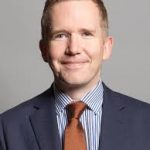

  • Stuart McDonald – 2023 Speech on Human Trafficking and Modern Slavery

    Stuart McDonald – 2023 Speech on Human Trafficking and Modern Slavery

    The speech made by Stuart McDonald, the SNP MP for Cumbernauld, Kilsyth and Kirkintilloch East, in the House of Commons on 29 March 2023.

    I, too, start by congratulating the hon. Member for Wellingborough (Mr Bone) on securing what he quite rightly described as a very timely debate. I hope that he is restored to full health very soon. I also very genuinely thank him for all his work over many years, which I think is recognised across the House; he has been a real champion for victims of trafficking.

    The starting point for this debate—unusually, I agree with the right hon. Member for Witham (Priti Patel)—should be recognition that we have in place across the United Kingdom some genuinely world-leading pieces of legislation that are designed to tackle trafficking and slavery. The problem, as a couple of hon. Members have already said, is that the message coming from those who work with trafficking victims is that we are in danger of going backwards and that these are truly worrying times for people caught up in those appalling crimes.

    That is because—again, as has already been alluded to in this debate—the Government are increasingly conflating trafficking and immigration. That is despite the fact that, as other hon. Members have also already said, since 2018 over 16,000 British nationals have been referred to the national referral mechanism. That is a clear reminder that modern slavery is a crime of exploitation and not immigration. Despite that, however, the Government now seem to be consciously stripping away rights and protections from trafficking victims as a tool of immigration policy. So, the first and most important call that I make today is that we need the Government to recommit to eradicating modern-day slavery, because at the moment the Government’s commitment is increasingly being seen as playing second fiddle to immigration policy. Indeed, I almost think that we are at a point where we have to ask whether we should have trafficking policy being decided by the same Department that is in charge of immigration policy, because I think that one is dominating the other and that is not good for victims.

    I will address three issues today. First, I will briefly consider the impact of the Illegal Migration Bill; secondly, I will take a quick look at some of the so-called “evidence” being used to justify that Bill, which the hon. Member for Rotherham (Sarah Champion) has already spoken about a little; and, thirdly, one issue that has not been touched on already is some of the updates to the modern slavery statutory guidance, which was implemented on 30 January 2023.

    First of all, in relation to the Illegal Migration Bill, it is fair to say and Members will be aware that there were widespread and deep-seated concerns raised right across the House yesterday about the impact of that Bill on victims of trafficking. Members will be aware that I absolutely reject the logic of deterrence. However, even if someone accepts that premise, the logic of deterrence that permeates the Bill just does not apply when it comes to trafficking, because the simple point is that we cannot deter a trafficking victim from coming here; it is not a free choice, as the hon. Member for Wellingborough pointed out. So it makes no sense for the Government to massively undermine the various UK modern slavery laws through the Bill in the way that they propose to do.

    The carveout in the Bill for situations where there is assistance with an investigation is worthless. That is because the result of the Bill will be that trafficking victims simply will not come forward to seek help at all, particularly if they are simply going to be discarded as soon as they have served any useful purpose in the criminal justice system. Consequently, I suspect that the Bill may well deliver a reduction in the number of possible trafficking victims being referred into the NRM, but that will simply be because fewer victims are coming forward and not because there are fewer victims.

    Indeed, the Anti-Trafficking Monitoring Group is clear that the Bill will increase the number of victims and reduce the number of prosecutions against traffickers, driving the modern slavery system underground, meaning that survivors will no longer be able to report trafficking and access the assistance that they genuinely require.

    Secondly, like the hon. Member for Rotherham, I will speak about all these allegations that people are “gaming the system”, to quote the current Home Secretary. I think that that narrative is quite simply not backed up by evidence, so the Home Office and the Home Secretary herself should provide the evidence to back up those claims, if there is any. The Home Office has already been reprimanded by the Office for Statistics Regulation and in December 2022 three UN special rapporteurs also expressed alarm at the UK Government’s increasing use of unsubstantiated and unevidenced claims.

    The simple point made by those working in the field is that abuse of the modern slavery system is barely possible, and that point was made several times yesterday as well in the debate in the main Chamber, because someone cannot just claim to be a modern slave and enter the NRM in that way; someone has to be referred by an approved first responder. The Home Office must trust its own system, which prevents people with fraudulent claims of modern slavery from accessing support. The reasonable grounds decision within the NRM is designed exactly for that purpose.

    So what are the actual statistics that are available to us? Based on Home Office figures, of the 83,000 people who arrived in the UK on small boats between 1 January 2018 and 31 December 2022, only 7% were referred as potential victims of modern slavery. In the calendar year 2022, it was only 6% and the percentage subsequently recognised as victims of modern slavery or trafficking was 85%. There is also no evidence of an uptick in those being referred into the NRM and receiving a negative decision. The calendar year 2022 is absolutely consistent with earlier years in showing that 90% or more of those being referred into the NRM received conclusive grounds decisions that are positive.

    This is the issue for the Minister: if the Home Office is going to persist in arguing that the modern slavery system is being abused, it must produce evidence. It would be useful to know what evidence and data the Government have.

    I agree with the hon. Members speaking yesterday that the Illegal Migration Bill, which is now before Parliament, risks pushing victims away from seeking support and back into the arms of traffickers. We should improve the NRM and trafficking assessments. We should improve access to support and not drive people away from it.

    The modern slavery statutory guidance, which was operationalised on 30 January 2023, was designed to remove what the Prime Minister referred to as the “gold plating” in our modern slavery system. Those updates include changes to the decision-making thresholds, which require survivors to provide unreasonably high levels of evidence in unrealistically short timeframes. New exclusions for bad-faith claims have been applied, but without sufficient safeguards built in. Victims and first responders will not be able to gather the necessary evidence in the five-day timeframe, meaning that genuine trafficking victims will be prevented from entering the NRM. There is no data yet available to determine the impact that the new guidance has had, so it would be useful to hear from the Minister what early analysis the Department has done about the impact of the new guidelines.

    In implementing these guidelines, it seems to have been forgotten that the whole premise of the NRM and the two-tier decision-making process is to allow people to get a reasonable grounds decision fairly easily in order to access a recovery and reflection period. At that stage, evidence can be gathered in order to receive a conclusive grounds decision, if that can be reached.

    Upping the reasonable grounds threshold will directly affect first responder organisations. They will have to provide a higher level of and more complex evidence, meaning that the amount of evidence and casework required to get a positive reasonable grounds decision, when compared with the situation previously, will put further extensive pressure on organisations that are already at breaking point. One designated first responder organisation has commented:

    “The update puts additional burden on an already collapsing First Responder system, with capacity for referrals dangerously low.”

    Concerns have been raised by modern slavery and trafficking organisations that the changes are building on previous regressive changes, including when the recovery period was reduced from 45 days to 30 and the multi-agency assurance panel process was removed. There are significant concerns that, together, those changes will make it harder for survivors to be identified and to access support, and that this represents a regression in efforts to increase identification and trauma-informed support for modern slavery victims.

    We could have said a lot in this debate about where we should go with our modern slavery policy. There are calls for more evidence-led policies; for collaborative approaches; for investment to fix the NRM and the huge backlog there; to improve training for first responder organisations; and to recognise more first responder organisations. There are calls for better and longer support for survivors that is tailored to their individual needs. That helps them and it helps us to prosecute criminals. We must improve prosecution rates and, as many hon. Members have said, we must have an independent anti-slavery commissioner in place.

    The problem is, however, that before we can move forward, we must stop moving backwards. Sadly, things appear to be getting worse, rather than better. At the very least, we must take out the modern slavery provisions in the Illegal Migration Bill. We must also reconsider some of the recent changes to modern slavery guidance. We have to consider whether we can continue to have one Department responsible both for looking after trafficking victims and for immigration policy, because it seems to be delivering absolutely the wrong results.

  • Giles Watling – 2023 Speech on Human Trafficking and Modern Slavery

    Giles Watling – 2023 Speech on Human Trafficking and Modern Slavery

    The speech made by Giles Watling, the Conservative MP for Clacton, in the House of Commons on 29 March 2023.

    It is an honour to serve under your chairmanship, Mr Betts. I congratulate my hon. Friend the Member for Wellingborough (Mr Bone) on bringing forward this important debate and speaking so powerfully. Since Kindertransport and before, right through to those coming from Afghanistan and Ukraine today, we are proud in this country to give people safe haven, and we must continue to do so.

    I will focus on the boats. As a yachtsman, I am well aware of the dangers of crossing open waters. On 23 September last year, I was crossing the channel—quite legally—and I saw the French warship Athos behaving in the most extraordinary fashion. I looked on the navigation device and saw that it was circling, and it kept circling as it left the French coast towards the UK coast. It was circling around a very small boat crowded with people. When we got closer, we could see those people; they were in a desperate condition. What horrified me about that particular incident was that the French warship was just circling them. I am a yachtsman; I am a seaman. That is what I do. What we do is take desperate people off those boats and make sure they are safe. I have the evidence on my phone right here.

    We must stop that sort of thing happening. Stopping illegal boats is a matter of common humanity. As my right hon. Friend the Member for Witham (Priti Patel) said, 39 people lost their lives in the back of a trailer, so it is not just the boats in south Essex. That is because of our weak borders. The cost to the taxpayer is enormous because of this Home Office malfunction, as I see it. It is not acceptable. I believe something like £7 million per day is spent on hotel fees, which is outrageous, but we are looking to address this. We have to show humanity about it.

    Locally, at a party conference last year I was contacted by the chief executive of my local council. He told me that he had been given 24 hours’ notice, at a weekend, that we were going to have a migrant hotel suddenly opened upon us. The council did not have time to get services in line. Those people would need help. It was a question of putting desperate people in a deprived place. This was not nimbyism; the local council had identified other, more suitable sites, but the company that the Home Office had employed had decided to open that site within 24 hours.

    Fortunately, by working with officials and asking an urgent question in the Chamber, I was able to get that particular incident stopped. We are dealing with this with a scattergun approach. We are being reactive as the incidents happen. We cannot go on like this. We cannot keep fighting a rearguard action. For the sake of humanity, and for the sake of the taxpayers of Clacton and elsewhere, we must stop the boats. That means backing the new Government measures, which have been laid out here today, and making the Home Office more logistically competent. In my view, and I have said this several times before, that means liaising with our French counterparts and getting British boots on the ground in France. We can do this. I am sure our French counterparts would like to see it. That would stop the boats leaving those beaches, and prevent the horror that so many people go through. We saw a child on a beach in Kent, and we never want to see that again.

  • Jim Shannon – 2023 Speech on Human Trafficking and Modern Slavery

    Jim Shannon – 2023 Speech on Human Trafficking and Modern Slavery

    The speech made by Jim Shannon, the DUP MP for Strangford, in the House of Commons on 29 March 2023.

    It is a pleasure to follow the right hon. Member for Witham (Priti Patel) and I thank her for her contribution. I especially thank the hon. Member for Wellingborough (Mr Bone) for securing this important debate and powerfully setting the scene. It is a grave injustice that abuses such as human trafficking and slavery persist in the modern world, being used as weapons against already marginalised and vulnerable communities. I will focus on human trafficking and its relevance to freedom of religion or belief—two distinct but overlapping areas of human rights where much more work could be done by our Government. I declare an interest as chair of the all-party parliamentary groups for international freedom of religion or belief and for religious minorities of Pakistan.

    It is a grave injustice, heaped upon other injustices, that where girls and women are persecuted for their faith, they are also at risk of human trafficking. Such targeting threatens to dismantle entire communities, as women are no longer present to pass their faith on to their children. Should women escape their captors, as others have referred to, they face stigma and ostracism from their community.

    Reports by Open Doors on gender and freedom of religion and belief find that in many countries where Christians are the most persecuted, marriage documentation is often used to cover up human trafficking. It is estimated that in the 50 countries with the highest level of Christian persecution, forced marriages of women have increased by 16%. It is a real issue, and, through the APPG, we know of many cases and incidents. Those women are at a heightened risk of human trafficking and sex trafficking as a result. Open Doors’ research notes that traffickers often attempt to cloak the associated sexual violence behind a claim that the girl is now married, when clearly the girl has had no choice. In reality, it is often a forced marriage or one resulting from targeted seduction. We should be under no illusion what this means; evil people—evil men—target ladies for that purpose.

    Where religion forms a dimension of human trafficking and modern slavery, the motivating factor of profit no longer applies to those who exploit other humans. Material gain may come from the trafficking of those who belong to a different religious group, but the driving motivators are religious factors and the eradication of a religious group different from one’s own. That is a clear issue that we have identified. Sex trafficking serves as a primary tool for the persecution of religious groups, be that Boko Haram targeting Christians—as happens regularly —or Daesh targeting the Yazidis. Those are just two examples; there are many more across the middle east and the world.

    Freedom of religion or belief is a cornerstone human right, one that I adhere to and often speak about in this place, as do others. That cornerstone right also lays the foundation for other human rights; we cannot divorce the two—the two are married. Human rights and religious persecution go hand in hand. The prevalence of human trafficking in countries where freedom of religion or belief is not realised bears witness to that, as Open Doors, Christian Solidarity Worldwide and others have indicated. Similarly, modern day slavery correlates with places where freedom of religion or belief is not realised. In Pakistan, religious minorities are ghettoised into squalid conditions, and forced to do jobs under the most disgraceful conditions just because they do not belong to the Sunni branch of Islam.

    I was very privileged to be in Pakistan in February as part of the delegation on behalf of the APPG for international freedom of religion or belief. We were able to witness first hand some of the ghettos that Christian groups and other small ethnic minorities live in. A garage or shed has better conditions than the places where they were living. They are pushed into small portions of land with squalid conditions and little or no opportunity for education and healthcare. They are a caste group, and it concerns me. The APPG will be doing a report on the visit, and hopefully we can make recommendations, highlight the negatives and positives and then look at the solutions. As always, I am solution based. Solutions are how we make things better.

    To conclude, I ask what the Government and the Minister are doing to mainstream freedom of religion or belief in their international development and aid policy? I am a great believer that if we are going to give aid we should tie it in with human rights, ensuring the opportunity for people to practice their religion, whatever that may be. That opportunity should be there, and when it comes to giving aid to Pakistan or any other country across the world, we should ensure that.

    Against a worldwide background of worsening religious-based persecution, how can the Government be sure that their programmes are successful when they operate religion-blind? I seek some assurance from the Minister; I hope she can give it to me. If not, I will be happy for her to follow through with a letter. I feel that sometimes the grasp of the civil servants and the Foreign Office officials may not be as real as we would like it to be. We seek some assurance on that. The most vulnerable and persecuted groups are often defined by their religious beliefs. We cannot divorce the two. They are very clear in my mind, and the evidential base would prove that. How are the Government—my Government—responding sensitively and effectively to this?

  • Priti Patel – 2023 Speech on Human Trafficking and Modern Slavery

    Priti Patel – 2023 Speech on Human Trafficking and Modern Slavery

    The speech made by Priti Patel, the Conservative MP for Witham, in the House of Commons on 29 March 2023.

    It is a pleasure to serve under your chairmanship, Mr Betts. I thank all Members here today, and particularly my hon. Friend the Member for Wellingborough (Mr Bone), who is such a stalwart campaigner and a champion of everything to do with tackling human trafficking. I remember the day he was elected as chair of the APPG, and his reaction, and the comments he has made today about someone with right-wing political views working with others, show that there really is no political divide on this issue. We are here to build bridges, and there is so much collective experience in this room in terms of people who have fought for the victims.

    The debate is timely. We have heard reference to the Illegal Migration Bill, and today we will also see the introduction of the Victims and Prisoners Bill in Parliament. I have been campaigning for a victims Bill for many years, and I stand alongside those who have stood up, compassionately, for decades, for victims of the most appalling and abhorrent crimes. My hon. Friend made an outstanding speech and unpacked many of the complex issues associated with human trafficking, some of which are often conflated.

    Our priority must always be the victims. My remarks will focus on dismantling human trafficking criminal networks, tackling modern-day slavery and supporting victims. Some of these matters touch on my time in Government, most recently in the Home Office, but also in International Development. Many colleagues will know some of the work we have collectively done and what we have achieved in the past.

    Taking action on human trafficking and modern-day slavery requires continued focus, both at home, which is incredibly important, and abroad. As has been noted in the debate, there is ongoing legislation in this House, and future legislation coming. This is both a domestic and an international issue.

    Jackie Doyle-Price (Thurrock) (Con)

    Does my right hon. Friend share my concern that the fact that modern slavery has become part of the debate on the Illegal Migration Bill, which is before the House, means that we are forgetting some of the most vulnerable victims in our society right now? I particularly highlight the cuckooing of people with learning disabilities, who are perhaps the most discriminated community in our society. If we let the debate continue to be seen through the prism of migration, we will be letting down the most vulnerable.

    Priti Patel

    My hon. Friend is absolutely right. If I may, Mr Betts, I would reflect on the fact that, when I was Home Secretary, we saw the most appalling act of people trafficking, in a lorry in my hon. Friend’s constituency; that was the Purfleet incident, and 39 individuals—victims—passed away. It was one of the most horrific incidents, but we have had strong criminal prosecutions, and other work has taken place. I will come to that in a minute.

    On my hon. Friend’s point, cuckooing, children being exploited through drug gangs, and other vulnerable people have dominated much of my work over three and a half years. There is a fundamental link here: criminal gangs showing contempt and disregard for human life and dignity. This is a big tragedy, which we are all here discussing today.

    The latest figures from the ILO estimate that in 2021, 28 million people worldwide were forced into labour and 22 million were forced into marriages. These issues are more prevalent than ever today, despite the fact that we think the world and society have moved on and there is greater awareness. That 50 million is more than the population of Spain, so we should just think about the scale of the challenge we face. The ILO also estimated that that number had increased by 10 million between 2016 and 2021. That demonstrates the nature of the criminality, which my hon. Friend touched on, and that is why we have to be relentless.

    I recognise the Home Office footprint in this as well. We do need an anti-slavery commissioner; there are reasons why that was delayed last year, which are mainly down to the changes in Government that took place more than once. In reality, however, this should be a whole-of-Government effort. That is why my right hon. Friend the Member for Maidenhead (Mrs May), who deserves every credit and tribute for the work she led on securing the Modern Slavery Act 2015, was fundamental in this area because she recognised that. During my time in the Department for International Development, we worked internationally on this matter, and I had the privilege of working with my right hon. Friend when she was Prime Minister to develop that call to action to end forced labour, modern slavery and human trafficking. Under her leadership, that went straight to the United Nations General Assembly in 2017, and its impact was significant. It was a major moment for the United Kingdom and one we should be proud of. It brought together 37 countries to introduce commitments to strengthen law enforcement activity, galvanise international co-operation and support victims. We rightly funded that and put aid into that. That investment helped tackle modern-day slavery upstream in transit countries, tackling trafficking at the source. It absolutely shows how development assistance safeguards people and safeguards people’s lives. Over recent years, because this is no longer integrated in the way it once was, we have gone backwards and, with that, our international standing on this issue has also regressed. Sadly, I do think this is right.

    There are many issues around illegal migration that rightly need to be tackled, and the Government have to find all the right ways to do that. That is why, through the Nationality and Borders Act last year, we brought in temporary protection measures because it is right that we give the care and support to genuine victims. This was down to hon. Friends who spent time with me as Home Secretary, including my right hon. Friend the Member for Chingford and Woodford Green (Sir Iain Duncan Smith), my hon. Friend the Member for Wellingborough and others, who made this case. I worked with the Centre for Social Justice on this matter, and the various commissioners obviously made this point clearly.

    In the interests of time, I want to make two quick points. We must work comprehensively and thoroughly to bring offenders to justice, and our laws are too weak on this—they really are. On the level of prosecutions, there was a targeted measure in the Nationality and Borders Act last year to ensure that small boat pilots would be focused on for prosecution, obviously through the right way. Our National Crime Agency, which my hon. Friend mentioned, deserves great credit. Much of the work it does is based on securing intelligence information that can be disclosed only in court for prosecution purposes. The agency’s work in this country must be reinforced and bolstered at every single level.

    My last point is about supporting the victims. They are victims of horrendous and heinous crimes. I am delighted that the Victims and Prisoners Bill will come forward today—I have been going on about it for over a decade. This is where we must work together to ensure that the victims of human trafficking and modern-day slavery are given support in the criminal justice system, and that the laws are strengthened to ensure the prosecutions take place. My hon. Friend highlighted the frankly derisory figures on sentences and prosecutions. We must change that, and this House can do that.

    The other area to touch on for victims is statutory services. The care for adults is good, but we have institutional state failure on the approach for children where local authorities are allowing children to abscond. It then becomes a policing issue, and it should not just be about the police. Our statutory services must step up. Mental health services, housing services and trauma-informed approaches must be embedded.

    I know the Minister has been working assiduously on this issue, but we must start to hear further details on what work is taking place across Government to ensure that victims are given support and to bring forward the reforms required to give them justice.

  • Sarah Champion – 2023 Speech on Human Trafficking and Modern Slavery

    Sarah Champion – 2023 Speech on Human Trafficking and Modern Slavery

    The speech made by Sarah Champion, the Labour MP for Rotherham, in the House of Commons on 29 March 2023.

    May I put on record my deep thanks to the hon. Member for Wellingborough (Mr Bone)? He has championed this cause for years, when many others really did not want to. We are talking about a dirty and disgusting business—and it is a business. I am grateful for all that he has done and continues to do to put the profile of this awful crime exactly where it needs to be.

    I rise to raise my concerns about the Government’s current approach to tackling modern slavery and human trafficking, particularly through the so-called Illegal Migration Bill; regrettably, it completed its Committee stage yesterday, which makes today’s debate timely. I could have chosen so many topics. The hon. Member spoke about prostituted women; I completely agree that we have to stop the pull factor, which is the fact that it is still legal to buy sex in this country. I could have spoken about child sexual exploitation, which unfortunately I know far too much about, or child criminal exploitation. The hon. Member for South West Bedfordshire (Andrew Selous) spoke a little about child labour in the supply chain, and children working at brick kilns. I was in Nepal with the International Development Committee a couple of weeks ago, and we met those very children. I am really proud that some of our foreign aid goes on supporting those children and letting them know their rights, and, most importantly, on working with the employers, because it tends to be small businesses that still use children in modern slavery. Our aid goes on educating employers and encouraging them to change their practices.

    However, let me focus on the UK. Many professionals are troubled by the Government’s rhetoric, as well as the Illegal Migration Bill, which conflates modern slavery with migration, asylum and smuggling. The International Justice Mission states that conflating those issues risks hindering efforts to assist survivors and ensure traffickers are held to account. It only makes this problem worse.

    I was very proud in 2015, when the UK was genuinely a world leader in tackling modern slavery, with the unprecedented Modern Slavery Act. I was on the Bill Committee, and it was genuinely world-changing. People came from all over the world to see what we were doing, although the hon. Member for Wellingborough is right that children were always an omission and not supported properly.

    That pride feels light years away from where we are today. The measures in the Illegal Migration Bill, particularly in relation to modern slavery survivors, are deeply disturbing, cruel and lacking in compassion and common sense. I cannot imagine how terrifying it must be to be trafficked to this county against one’s will, as well as, in many cases, being a victim of sexual exploitation or modern slavery.

    We must remember that modern slavery and trafficking also happen in the UK. I referred to child exploitation: in Rotherham, the police innovatively used trafficking legislation, because it says that moving a person from one side of the street to the other is trafficking. We have strong legislation in place for that; it is just not being enforced as often as it should be, and nor is the national referral mechanism. I was disappointed in the early days of that scheme that many local authorities were not referring local people into that support network.

    The Government now want to refuse vulnerable people vital protections that we put into law less than eight years ago. The Illegal Migration Bill would disqualify victims of trafficking and modern slavery from protections under the national referral mechanism and deny crucial support to those who arrived in the UK through irregular means, allowing them to be removed entirely from this country. That includes child victims of trafficking whose family members meet those conditions.

    Almost 90% of modern slavery claims are found to be valid, meaning that these new provisions will remove support from genuine victims who need our help. The reality is that this will not prevent traffickers, and it certainly will not help victims of modern slavery. I am especially worried about the impact that this will have on victims and survivors of sexual and gender-based violence. Researchers at the University of Birmingham found that survivors are unlikely to report crimes of sexual and gender-based violence or trafficking, without legal protections or safe reporting mechanisms that protect them from immigration exposure.

    If the Government really want to stop the boats, they must first protect victims and survivors of trafficking, slavery and sexual exploitation, to end the traffickers’ business model. Instead, this Bill will punish only the victims. Case studies from the University of Birmingham’s SEREDA project demonstrate why survivors of sexual violence, in particular, must be exempt from removal to other so-called safe countries.

    Samiah fled Algeria after being raped by an influential man in the Algerian army and, facing pressure from her family, married her rapist. Her sister sold her jewellery to pay for Samiah’s passage to safety. Samiah passed through France on the way to the UK but, given the large Algerian population there, and the threat from both her family and the man who attacked her, she did not feel France was safe enough to offer her protection.

    When she arrived in the UK, she had no idea of her rights, and slept rough in Victoria station. She was befriended by a man who gave her alcohol for the first time in her life, and she was raped again, becoming pregnant. She was taken in by a stranger, who helped her find a lawyer, and told she should put in a claim for asylum. Samiah’s case illustrates why it is vital that victims of sexual and gender-based violence must have access to support, no matter how they arrive here. Not all forced migrants feel safe in the first safe country they pass through. The vulnerability of survivors of sexual and gender-based violence will be preyed on even more without the relative protections of the asylum and national referral mechanisms.

    The previous Independent Anti-Slavery Commissioner warned repeatedly that denying trafficking victims support makes it harder, not easier, to catch criminal traffickers. Why will the Minister not listen to experts, and protect the victims, rather than the traffickers? Such vast changes to our modern slavery policy should not take place at a time when the UK’s new anti-slavery commissioner has not been appointed. With the role remaining vacant for almost a year, it is deeply concerning that we have lost an independent voice, expert insight and essential scrutiny of the UK’s approach to tackling modern slavery and human trafficking.

    Will the Minister confirm in her response when the new Independent Anti-Slavery Commissioner will be appointed? Will the Home Office commit to consult the new commissioner before pushing ahead with these new measures? I am proud that Labour voted against some of the measures in the Bill, because we are on the side of the victims. I am one of those people from the left who want to support victims, but I am also one of those people from the left who want to stop the business model of these traffickers and modern slavery owners. We have to do all we can, in a united way, to make that happen.

  • PRESS RELEASE : Government extends mortgage support for benefit claimants [March 2023]

    PRESS RELEASE : Government extends mortgage support for benefit claimants [March 2023]

    The press release issued by the Department for Work and Pensions on 3 April 2023.

    An additional 200,000 Universal Credit claimants will be able to access quicker support with their mortgage from today.

    • Support for Mortgage Interest loan scheme extended to 200,000 additional Universal Credit claimants in efforts to support more households with the cost of living
    • They will be able to access help towards mortgage interest on their home or certain home improvements worth up to £200,000 after three months on Universal Credit
    • Support will be automatically offered to qualifying claimants after three months on Universal Credit

    Previously, claimants would need to have been unemployed for nine months before they could access a Support for Mortgage Interest loan, which helps them cover interest payments for a mortgage, or a home repairs and improvements loan, whilst they seek work.

    Today’s reforms, which were announced in the Chancellor’s Autumn Statement, mean claimants will be able to receive the support after just three months of being on Universal Credit, and in another change they now do not have to be unemployed to do so. They will also be able to re-claim the support if they leave Universal Credit but return within six months.

    Mims Davies, Minister for Social Mobility, Youth and Progression, said:

    The fear of losing your home when you have fallen on difficult times is incredibly stressful and makes getting back on your feet all the more difficult.

    This increased support is an important lifeline to help provide stability for those who are seeking to find work and move back towards long-term prosperity.

    Support for Mortgage Interest loans will now be automatically offered to claimants by the Department for Work and Pensions (DWP) if they qualify after three months on Universal Credit – they do not need to do anything to receive this offer.

    The loans are designed to help claimants with the interest on mortgages or loans for certain home improvements, such as repairs or improvements to keep their home habitable or to adapt them for people with disabilities, whilst they are on Universal Credit. Even if claimants reject the offer of a loan initially, as long as they are still eligible, they can start claiming it at any point.

    The loan needs to be repaid when claimants sell their home, though no one will be asked to sell their home in order to repay it. If needed, claimants can contact the DWP about transferring the loan to a new home.

    More widely, the Government is projected to have spent £28.5 billion supporting renters in 2022/23, whilst the Affordable Homes Programme, worth £11.5 billion, will deliver more affordable homes across the country, including tens of thousands for social rent.

    The Government has also provided over £1.5 billion for Discretionary Housing Payments since 2012, whilst Local Housing Allowance rates were increased above inflation during the pandemic and have been maintained since to provide housing support to Universal Credit claimants.

    Additional Information

    • Support for Mortgage Interest loans are available for people on the following qualifying benefits:
    • Universal Credit
    • Income Support
    • Income-based Jobseeker’s Allowance
    • Income-related Employment and Support Allowance
    • Pension Credit
    • For more information on Support for Mortgage Interest, please visit www.gov.uk/support-for-mortgage-interest or speak to your work coach.
    • Support for Mortgage Interest payments are made directly to the lender every month.
    • Today’s changes come in addition to extensive support with the Cost of Living, including a year-long extension to the Household Support Fund. Worth over £2 billion in its lifetime, the fund is designed to help the most vulnerable with the cost of food and energy essentials.
    • And the Government is directly paying £301 to over 8 million people on means-tested benefits from 25 April to help with the cost of living. Further payments worth £300 and £299 will be made later in the financial year, whilst additional payments of £300 for pensioners and £150 for disabled people will also be made in 2023, meaning some people will receive up to £1,350 in direct Government support.
  • PRESS RELEASE : Prime Minister to clamp down on Grooming Gangs [April 2023]

    PRESS RELEASE : Prime Minister to clamp down on Grooming Gangs [April 2023]

    The press release issued by 10 Downing Street on 3 April 2023.

    Evil grooming gangs who target children and young women will be stamped out under new plans unveiled by Prime Minister Rishi Sunak today (Monday 3 April).

    Evil grooming gangs who target children and young women will be stamped out under new plans unveiled by Prime Minister Rishi Sunak today (Monday 3 April).

    A new Grooming Gangs Taskforce will see specialist officers parachuted in to assist police forces with live child sexual exploitation and grooming investigations to bring more of these despicable criminals to justice.

    Led by the police and supported by the National Crime Agency, the taskforce will be made up of officers with extensive experience of undertaking grooming gang investigations. They will provide crucial support to forces across the country to root out grooming gangs and put more perpetrators behind bars.

    Data analysts will work alongside the taskforce using cutting edge data and intelligence to identify the types of criminals who carry out these offences, helping police forces across the country catch offenders who might otherwise be missed. This will also include police recorded ethnicity data to make sure suspects cannot evade justice because of cultural sensitivities.

    This will include better data on the make-up of grooming gangs, including ethnicity, to make sure suspects cannot hide behind cultural sensitivities as a way to evade justice.

    The Prime Minister will launch the taskforce later today. To mark this, he will be in Leeds and Greater Manchester to meet survivors, local police partners and members of the new taskforce.

    Speaking ahead of this, Prime Minister Rishi Sunak said:

    “The safety of women and girls is paramount. For too long, political correctness has stopped us from weeding out vile criminals who prey on children and young women. We will stop at nothing to stamp out these dangerous gangs.”

    Alongside the new taskforce, the Prime Minister has pledged to make sure grooming gang members and their ring leaders receive the toughest possible sentences.

    Legislation will be introduced to make being the leader of or involved in a grooming gang a statutory aggravating factor during sentencing. This reflects the Government’s unwavering commitment to make sure these offenders face the toughest sentences for their crimes and the longest time behind bars.

    Deputy Prime Minister and Justice Secretary, Dominic Raab, said:

    “Grooming gangs are a scourge on our society and I want to send a clear message to anyone who exploits vulnerable children that they will face the full weight of the law.

    “This builds on the extensive action this Government has already taken to introduce tougher sentencing, and the reforms introduced last week in the Victims and Prisoners Bill to keep the most dangerous offenders behind bars, while making sure victims get the support they need at all times.”

    Today’s announcement follows on from the Home Secretary’s commitment to bring in mandatory reporting for adults working with children if they suspect or identify that child is being abused. By ensuring people speak out if they have concerns, authorities can stop the abuse, put perpetrators behind bars and get victims the support they need much sooner.

    Mandatory Reporting was one the key recommendations in the important Independent Inquiry into Child Sexual Abuse, which gave a voice to thousands of courageous survivors. Today’s announcement shows how seriously the Government is taking the Inquiry’s recommendations.

    Speaking in response to the Government’s announcement on mandatory reporting, Professor Alexis Jay OBE, Chair of the Independent Inquiry into Child Sexual Abuse, and Author, Independent Inquiry into Child Sexual Exploitation in Rotherham, said:

    “The Prime Minister’s statement today places a renewed focus on tackling the sexual abuse and exploitation of children by organised networks. I welcome these announcements, some of which reflect the recommendations of the Inquiry’s own report on child sexual exploitation in 2022. The commitment to Mandatory Reporting is very encouraging, and I look forward to working with the Government to ensure that the full package of the Inquiry’s recommendations in its Final Report is taken forward to better protect children from sexual abuse in the future.”

    Home Secretary Suella Braverman said:

    “Child sexual abuse is one of the most horrific crimes facing our society, it devastates victims, families and whole communities.

    “The protection of children is a collective effort. Every adult must be supported to call out child sexual abuse without fear.

    “And the despicable abusers must be brought to justice. They should not be able to hide. And they must face the full force of the law for their crimes.

    “That’s why I’m introducing a mandatory reporting duty and launching a call for evidence. We must address the failures identified by the Inquiry and take on board the views of the thousands of victims and survivors who contributed to its findings.

    “I would encourage everyone to engage with the process once it starts – it is important to have a national conversation about this to shine a light on this terrible – but too often hidden – crime.”

    Alongside the mandatory reporting duty, we are bolstering support for the NSPCC’s whistleblowing helpline, as well as their public helpline, giving professionals and members of the public a voice to raise concerns about children, or about child grooming in their community.

  • PRESS RELEASE : UK’s next generation of medical researchers given funding boost [April 2023]

    PRESS RELEASE : UK’s next generation of medical researchers given funding boost [April 2023]

    The press release issued by the Department for Science, Innovation and Technology on 2 April 2023.

    Investment is aimed at sparking a new wave of revolutionary medical research across the industry.

    • £50 million given to 90 charities to fund revolutionary new medical research into diseases such as cancer, dementia and motor neurone disease.
    • Over 1,200 early career researchers set to benefit from the funding, sustaining the future of the medical research industry.
    • Funding backs PM’s priorities to support the NHS, provide improved treatments and cut waiting lists.

    Over 1,200 researchers in medical research charities will receive over £50 million in funding to help solve some of the biggest global health challenges and secure the future of the UK’s world-class life sciences sector.

    Announced by Science Minister George Freeman today (Sunday 2 April), the funding will support researchers across 90 charities early on in their careers at a time when the UK is committing record amounts to R&D, reaching £20 billion a year by 2024/25. The £50 million investment is aimed at sparking a new wave of revolutionary medical research across the industry, including in dementia, motor neurone disease and brain tumour research.

    Science, Innovation and Technology Secretary Michelle Donelan said:

    The next generation of researchers are the key to solving the greatest medical challenges of our times, tackling hundreds of different diseases and conditions, preventing illnesses and developing lifechanging therapies.

    By investing in those very people that make up our world-class medical research community, we hope to inspire a new wave of budding researchers that can continue to improve the lives of those affected by these diseases across the UK.

    Ninety charities across the UK have received the funding, ranging from larger household names to smaller charities working on rarer diseases such as cystic fibrosis or conditions such as epilepsy. Regional charities operating across the UK such as the Yorkshire Cancer Research and Wessex Medical Trust are included, alongside charities in Scotland, Wales and Northern Ireland.

    Over £2.8 million will be delivered to dementia charities, such as the Alzheimer’s Society, supporting early career researchers to defeat dementia by researching the causes, cure, care, and prevention of the disease.

    Over £1.3 million will also be delivered to brain tumour charities and over £1.7 million to motor neurone disease charities, two causes that are close to the hearts of many affected by it through their own experiences or that of friends and family across the UK.

    Other examples of charities receiving funding include:

    • Epilepsy Research UK
    • North West Cancer Research
    • Medical Research Scotland
    • Wellbeing of Women
    • Leukaemia & Lymphoma NI

    Minister of State for Science, Research & Innovation George Freeman said:

    Medical research charities from Cancer Research UK to the thousands of smaller specialist charities like Cure Leukamia , the Cystic Fibrosis Trust and the MND Association are the jewels in the crown of UK Medical Research and patient access to medical breakthroughs.

    Medical charity fundraising collapsed in the pandemic. That’s why we’re extending our pandemic relief with this £50m Government funding to help 90 medical research charities support over 1,000 early career researchers.

    Minister of State for Health Will Quince said:

    We’re cementing our position as a global leader in life sciences by investing in the next generation of medical researchers to cultivate and harness the innovation of young, pioneering minds and secure the future of our healthcare.

    This is yet another example of how we’re leading the way to support research into conditions like dementia and helping accelerate the delivery of cutting-edge medical advancements and bolstering patient care through faster and more accurate diagnoses.

    First introduced in 2021 to provide economic security to medical research charities in the wake of the COVID pandemic, the Medical Research Charities Early Career Researchers Support Fund is helping to attract, retain, and develop the most talented and diverse researchers into these roles so that the budding world-class researchers of tomorrow are persuaded to work, remain, and develop within the UK, underpinning the Government’s plans to make the UK into a science and technology superpower.

    Early career researchers are the lifeblood of the UK’s medical research community, serving as the future of life sciences research which aims to tackle hundreds of different diseases and conditions, seeking to prevent illness, develop therapies and generally improve public health.

    In the Science and Technology Framework published in March, the newly formed Department for Science, Innovation and Technology identified boosting public investment into research and development as a key target for government, seeking to foster new economic growth and better productivity across the industry.

    The Medical Research Charities Early Career Researchers Support Fund (2022-23) is administered by the Medical Research Council (MRC) and UK Research and Innovation (UKRI) with the help of the Association of Medical Research Charities and is made up of £45m funding from Department for Science, Innovation and Technology alongside £5m from the Department for Health and Social Care.

  • PRESS RELEASE : New review to boost employment prospects of autistic people [March 2023]

    PRESS RELEASE : New review to boost employment prospects of autistic people [March 2023]

    The press release issued by the Department for Work and Pensions on 2 April 2023.

    A new review designed to boost the employment prospects of autistic people has today been launched by the Government.

    • Sir Robert Buckland KC MP to lead new Autism Employment Review
    • Focus on supporting employers to recruit and retain autistic people and reap benefits of a neurodiverse workforce
    • Recommendations for change to be brought to Government later this year

    A new review designed to boost the employment prospects of autistic people has been launched by the Government to spread opportunity, close the employment gap and grow the economy.

    The Secretary of State for Work and Pensions, Mel Stride MP, has appointed Sir Robert Buckland KC MP to lead the review, which will consider how the Government can work with employers to help more autistic people realise their potential and get into work.

    People with autism have particularly low employment rates – with fewer than three in 10 in work – but the Buckland Review of Autism Employment, supported by charity Autistica and the Department for Work and Pensions (DWP), is aiming to change that.

    The Review will ask businesses, employment organisations, specialist support groups and autistic people to help identify the barriers to securing and retaining work and progressing with their careers.

    The Minister for Disabled People, Health and Work, Tom Pursglove MP said:

    We know autistic people can face barriers moving into employment and staying there. This is often down to the employers themselves not having the tools to support autistic people, or truly understanding the value of a neurodiverse workforce.

    This important review will provide us with vital information to remove these barriers and help more autistic people start, stay and succeed in work by ensuring more employers provide truly inclusive places to work. I look forward to seeing the recommendations from the review.

    Rt Hon Sir Robert Buckland KC MP said:

    I am delighted to have been asked to lead this important Review. Our workplaces and businesses would benefit so much from the huge potential that autistic people represent.

    If we close the employment gap for autistic people, it will not just mean individual fulfilment but a significant boost to employment and productivity for our country.

    The Buckland Review of Autism Employment will consider issues including:

    • how employers identify and better support autistic staff already in their workforce;
    • what more could be done to prepare autistic people effectively for beginning or returning to a career;
    • and working practices or initiatives to reduce stigma and improve the productivity of autistic employees.

    It will focus specifically on autistic people, and aim to develop solutions that:

    • will be acceptable to autistic people.
    • will be effective at improving autistic people’s outcomes.
    • will be feasible for employers or public services to deliver.

    The Review will also look at employers who are benefitting from a neurodiverse workforce, like London manufacturer KwickScreen. The innovative company provides transparent screens to every UK hospital and played a pivotal role in the NHS’s response to the Covid pandemic.

    On a recent visit to their Lewisham base, the Minister and Sir Robert discovered many of the breakthrough initiatives in the company came from the neurodiverse members of the team.

    Dr James Cusack, Chief Executive of the UK autism research and campaigning charity, Autistica said:

    The benefits for autistic people and society will be huge if we can give autistic people the opportunity to work and thrive in employment. That’s why as a charity we want to see a doubling of the employment rate for autistic people by 2030.

    We are delighted to support the government on this vital review which will enable us to move from awareness to evidence-based action. This will help us to rethink how we approach autistic people’s access to work and perhaps drive a wider rethink around how we accommodate everyone in work, as we all think differently with unique strengths, challenges and needs.

    As part of the review, many of the adjustments and initiatives that would benefit autistic people could also benefit a wider group of people who think differently, including those with other neurodevelopmental conditions such as ADHD, dyslexia and dyspraxia.