Tag: 2023

  • PRESS RELEASE : Rishi Sunak marks the 25th anniversary of the signing of the Belfast (Good Friday) Agreement [April 2023]

    PRESS RELEASE : Rishi Sunak marks the 25th anniversary of the signing of the Belfast (Good Friday) Agreement [April 2023]

    The press release issued by 10 Downing Street on 11 April 2023.

    The Prime Minister Rishi Sunak marks the 25-year anniversary of the signing of the Belfast (Good Friday) Agreement.

    Today we reflect on the beginning of a new chapter in the people of Northern Ireland’s history, with the commemoration of the signing of the Belfast (Good Friday) Agreement 25 years ago.

    This is an Agreement born of partnership between the British and Irish Governments and, as we will see from President Biden’s visit this week, it continues to enjoy huge international support from our closest allies. But most importantly, it is based on compromise in Northern Ireland itself.

    As we look forward, we will celebrate those who took difficult decisions, accepted compromise, and showed leadership – showing bravery, perseverance, and political imagination.

    We commemorate those who are no longer with us and the many who lost their lives by trying to prevent violence and protect the innocent. And we give thanks to them as we reflect on the new generations that have grown up and continue to grow in a world in which peace and prosperity has prevailed.

    While it is time to reflect on the solid progress we have made together, we must also recommit to redoubling our efforts on the promise made in 1998 and the agreements that followed.

    One of economic opportunity, prosperity, and stability – it is a promise we must continue to fulfil. So must get on with the business of governance.

    My mission, duty and responsibility as Prime Minister of the United Kingdom is to deliver for people in Northern Ireland.

    We stand ready to work with our partners in the Irish Government and the local parties to ensure that the institutions are up and running again as soon as possible.

    There is work to be done.

  • PRESS RELEASE : Disabled children to benefit from funding for short breaks [April 2023]

    PRESS RELEASE : Disabled children to benefit from funding for short breaks [April 2023]

    The press release issued by the Department for Education on 11 April 2023.

    Thousands of families with children with special educational needs supported with short breaks from theatre trips to outdoor activities helping to build vital skills.

    Thousands more families with children with special educational needs will receive support with short breaks, including theatre trips, hiking or craft workshops, as the scheme is expanded to 10 new areas of the country.

    The short breaks scheme gives disabled children a chance to take part in unforgettable activities and develop vitals skills, while giving their families a break from their caring responsibilities.

    The government funded programme provides councils with up to £1 million each for a year to work with families to develop innovative experiences that would otherwise be inaccessible to children because of their disability, as well as covering the costs of providing the activities.

    Minister for Children, Families and Wellbeing, Claire Coutinho said:

    Short breaks provide much-needed support to disabled children and their families. They give children opportunities to make friends, learn something new and work towards greater independence, while allowing parents the all-important time they need to recharge.

    We’ve already seen the transformative impact these new approaches to short breaks are having on children and their families, and I am looking forward to continuing this work, extending it to more parts of the country so even more children can benefit.

    The plans come following the recent publication of the Special Educational Needs and Disabilities and Alternative Provision Improvement Plan, which outlines the government’s plan to transform the experiences and outcomes of children with special needs and disabilities, ensuring every child, no matter where they live, has access to a high-quality, fulfilling education.

    The Short Breaks Innovation Fund is delivering a total of £30 million over three years to local authorities to deliver the short breaks and test new approaches to providing essential support for parents of children with disabilities.

    Methods already being piloted include creating a transition group for children with SEND to develop independent living skills through group activities, which also create friendship circles that carry through into adult life. Other activities being piloted include sleep-over clubs and film-making workshops to build teamworking skills.

    The LAs who will receive new funding this year as part of the second year of the programme are:

    Bristol City Council
    Cambridgeshire County Council
    Camden Council
    Derby City Council
    Norfolk County Council
    Nottingham City
    Plymouth City Council
    Rotherham Metropolitan Borough Council
    Southwark Council
    Suffolk County Council
    Sunderland City Council
    Surrey County Council
    Wakefield Council
    Dame Christine Lenehan, Director of Council for Disabled Children said:

    I am delighted with the Government’s recognition of the value of short breaks to both disabled children and their families. We have seen some really exciting developments in Year 1 of the programme and look forward to seeing what these 10 authorities can deliver. We are keen that the transferrable learning from these innovative projects is shared as widely as possible to ensure children and young people across the country can benefit.

    The first year of funding, which was provided to seven local authorities, showed positive results for children and their families, and this work to pilot new approaches will help inform a national policy for short breaks to be rolled out more widely.

    Sunderland Council received funding last year to provide support to children aged 10-16 with Social, Emotional or Mental Health needs (SEMH) or autism.

    Teams across early help, alternative provision and disability services deliver whole family sessions, including a parental wellbeing course and sensory arts and craft sessions for non-verbal children with autism.

    Sunderland Council’s evaluation shows these interventions have had a significant positive impact on the children involved, including improved attendance and behaviour in schools, and a reduction in suspensions.

  • PRESS RELEASE : Bird keepers must maintain scrupulous biosecurity standards as housing measures set to be lifted [April 2023]

    PRESS RELEASE : Bird keepers must maintain scrupulous biosecurity standards as housing measures set to be lifted [April 2023]

    The press release issued by the Department for Environment, Food and Rural Affairs on 11 April 2023.

    Mandatory housing measures will be lifted from 00:01 on Tuesday 18th April but scrupulous standards of biosecurity remain essential.

    Mandatory housing measures for poultry and captive birds, which were introduced across England and Wales to help stop the spread of bird flu, will be lifted from 00:01 on Tuesday 18 April 2023, the Chief Veterinary Officer has confirmed today following a latest assessment of the risk level.

    Following ongoing monitoring using the latest scientific evidence and a robust risk assessment, bird flu risk levels have been reduced meaning poultry and other captive birds will no longer need to be housed and can be kept outside, unless they are in a Protection Zone. The decision means that from 18 April, eggs laid by hens with access to outside range areas can return to being marketed as ‘Free-Range’ eggs.

    The scale of avian influenza outbreaks across the UK and Europe have been unprecedented with over 330 cases confirmed across the country since late October 2021. While the risk of bird flu has been reduced to ‘medium’ for premises with poor biosecurity, the enhanced biosecurity requirements that were brought in as part of the Avian Influenza Prevention Zone (AIPZ) will remain in force as infection may still be circulating in the environment for several more weeks. The risk of bird flu remains assessed as low where good biosecurity is applied.

    Those who intend to allow their birds outside are advised to use the upcoming days to prepare their outside areas for the release of their birds. This will include cleansing and disinfection of hard surfaces, fencing off ponds or standing water and reintroduction of wild bird deterrents.

    Dr Christine Middlemiss, the UK’s Chief Veterinary Officer, said:

    “Whilst the lifting of the mandatory housing measures will be welcome news to bird keepers, scrupulous biosecurity remains the most critical form of defence to help keep your birds safe.

    “It is thanks to the hard work of all bird keepers and vets who have played their part in keeping flocks safe this winter that we are in a position to take this action. However, the unprecedented nature of this outbreak has proven it’s more important than ever for bird keepers to remain vigilant for signs of disease and maintain stringent standards of biosecurity.”

    Scrupulous biosecurity is the most effective method of disease control available and all bird keepers should apply enhanced measures at all times to prevent the risk of future outbreaks.

    Poultry and captive bird keepers must:

    • cleanse and disinfect clothing, footwear, equipment and vehicles before and after contact with poultry and captive birds – if practical, use disposable protective clothing
    • reduce the movement of people, vehicles or equipment to and from areas where poultry and captive birds are kept, to minimise contamination from manure, slurry and other products, and use effective vermin control
    • thoroughly cleanse and disinfect housing on a continuous basis
    • keep fresh disinfectant at the right concentration at all farm and bird housing entry and exit points
    • minimise direct and indirect contact between poultry and captive birds and wild birds, including making sure all feed and water is not accessible to wild birds
    • be vigilant for any signs of disease in their birds and any wild birds, and seek prompt advice from their vet if they have any concerns.

    We would encourage all keepers to register their flocks with us. For poultry this is a legal requirement if you have 50 birds or more (poultry includes chickens, ducks, turkeys, geese, pigeon (bred for meat), partridge, quail, guinea fowl and pheasants). Registering with us means that we will be able to contact you with information or action required should an outbreak happen near you. We recently announced a consultation on proposals to require all poultry keepers to officially register their birds (consultation closes at 23:45 on 31 May 2023).

    The UKHSA advise that the available evidence suggests viruses currently circulating in birds in the UK do not spread easily to people and food standards bodies advise that avian influenzas pose a very low food safety risk for UK consumers. There is no impact on the consumption of properly cooked poultry products, including eggs.

    Bird keepers should report suspicion of disease in England to the Defra Rural Services Helpline on 03000 200 301, in Wales contact 0300 303 8268. In Scotland, contact your local Field Services Office. In Northern Ireland contact DAERA on 0300 200 7840 or your local DAERA Direct Regional Office. Keepers should familiarise themselves with our avian flu advice.

    Members of the public are reminded not to touch dead wild birds and are encouraged to report findings of dead wild birds using the new online reporting system or by calling the Defra helpline (03459 33 55 77).

  • PRESS RELEASE : Chancellor appoints Megan Greene to the Monetary Policy Committee of the Bank of England [April 2023]

    PRESS RELEASE : Chancellor appoints Megan Greene to the Monetary Policy Committee of the Bank of England [April 2023]

    The press release issued by HM Treasury on 11 April 2023.

    The Chancellor has today announced that he has appointed Megan Greene as an external member of the MPC of the Bank of England.

    • Megan Greene has been appointed as an external member of the Monetary Policy Committee (MPC)
    • Megan Greene is currently Global Chief Economist at Kroll and will succeed Silvana Tenreyro
    • Megan’s three-year term will start on 5 July 2023

    Megan Greene will join the Monetary Policy Committee (MPC) on 5 July for a 3-year term, replacing current external member Professor Silvana Tenreyro who has been on the MPC since July 2017.

    Megan Greene is currently Global Chief Economist at Kroll, has a broad understanding of financial markets internationally and significant experience of advising leaders on the potential impacts of global macroeconomic developments.

    The Chancellor of the Exchequer, Jeremy Hunt said:

    Megan Greene’s wide experience across financial markets and the real economy will bring valuable new expertise to the MPC. I am delighted to appoint her to this role and look forward to seeing her contribution to policymaking in the coming years.

    I would also like to thank Professor Silvana Tenreyro for all her work since she joined the Bank of England, and wish her the best in the next stage of her career.

    Andrew Bailey, Governor of the Bank of England, said:

    I am very pleased to be welcoming Megan Greene to the MPC this summer. She brings significant experience from her work across financial services and academia and we will benefit greatly from her contributions to our policy discussions.

    Silvana Tenreyro has made a tremendous contribution to the work of the MPC over the past six years. I would like to extend my thanks and wish her all the best for the future.

    Megan Greene said:

    I’m honoured and thrilled to have the opportunity to contribute to the policy debate at the Bank of England as an external member of the MPC. It will be a privilege and a challenge to help address some of the key monetary policy challenges of our time.

    About Megan Greene

    Megan Greene is a Senior Fellow at the Watson Institute for International and Public Affairs at Brown University, teaching on the new drivers of global inequality, sovereign debt crises and monetary policy tools. She is the Global Chief Economist at Kroll and a board member of the Academic Advisory Committee at the San Francisco Fed.

    Megan received her undergraduate degree from Princeton University and her postgraduate degree from Oxford University.

    About the MPC

    The independent Monetary Policy Committee makes decisions about the operation of monetary policy. It comprises of the Governor of the Bank of England, the three Deputy Governors, one member of the Bank with responsibility for monetary policy and four external members who are appointed by the Chancellor.

    External members may serve up to two three-year terms on the MPC.

    The appointment of external members to the MPC is designed to ensure that the Committee benefits from thinking and expertise in addition to that gained inside the Bank. Each member of the MPC has expertise in the field of economics and monetary policy. They are independent and do not represent particular groups or areas.

    About the appointment process

    Megan Greene has been appointed following an open recruitment process run by HM Treasury. A panel comprising of Clare Lombardelli (Director General and Chief Economic Advisor, HM Treasury until March 2023), James Benford (Director of Economics, HM Treasury until February 2023) and Dame Kate Barker (external member of the MPC from 2001 to 2010) interviewed several candidates and made recommendations to the Chancellor, which informed his decision.

    The Treasury is committed to appointing a diverse range of people to public appointments, including at the Bank of England. The Treasury continues to take active steps to attract the broadest range of suitable applicants for posts.

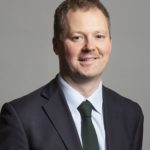
  • Neil O’Brien – 2023 Speech at Policy Exchange on Smokefree 2030

    Neil O’Brien – 2023 Speech at Policy Exchange on Smokefree 2030

    The speech made by Neil O’Brien, the Minister for Primary Care and Public Health, at Policy Exchange in London on 11 April 2023.

    It’s an enormous pleasure to be here today at Policy Exchange to set out the government’s next steps on vaping and smoking.

    Everybody agrees that we must do more to prevent ill health in the first place – not just treat it afterwards.

    Cutting smoking is one of the most evidence-based and effective interventions that we can make.

    That’s why in 2019, this government set the bold ambition for England to be Smokefree by 2030 – reducing smoking rates to 5% or less.

    Everyone knows about the health impact of smoking.

    It’s still the sadly the single biggest cause of preventable illness and death in England.

    Up to two out of three lifelong smokers will die from smoking.

    Cigarettes are the only product which will kill you if used correctly.

    The positive impact of stopping smoking is immediate. For those who quit, after just a few weeks lung function increases by up to 10% and circulation improves, and the risk of heart attack is half that of a smoker after one year of quitting.

    The person who quits today is the person who isn’t in a hospital bed next year. So, cutting smoking will help us hit the fourth of the PM’s five priorities – to cut waiting lists.


    But as well as the health impact, the economic impact of smoking is also huge.

    The excellent 2010 Policy Exchange paper ‘Cough Up’ noted that – “it is a popular myth that smoking is a net contributor to the economy”

    In fact new analysis from ASH on the costs of smoking in the UK in 2022 found that smoking has a £21 billion total cost to the public purse.

    To talk you through that – people used to argue that although there was a cost to the NHS from smoking, the taxes paid offset this.

    But this ignores the fact that smokers are more likely than non-smokers to become sick and be out of work, and more likely to stay unwell for longer. Smokers are absent for an average of 2.7 more days per year than non-smokers.

    Reducing smoking rates not only improves health outcomes and reduces the burden on the NHS, it also boosts productivity and economic growth too.

    Current smokers are 7.5% less likely to be employed compared to never smokers and ex-smokers are 5% more likely to be employed than current smokers.

    In places like Birmingham, an additional 6,000 people are out of work because of smoking. Quitting could help to put that right.

    As well as the productivity impact, quitting smoking would save the average person around £2,000 a year.

    In poorer parts of the country going smokefree could mean far more money circulating in the local economy. There is a positive productivity benefit but also helps to level up across the nation.


    Today, as well as tackling smoking, I also want to start to address a new threat… the growth of vaping among children.

    There has been a very sharp increase in children vaping – particularly disposable vapes. NHS figures for 2021 showed that 9% of 11- to 15-year-old children used e-cigarettes, up from 6% in 2018. That’s a rapidly rising trend we need to stop.

    Whether it’s disposable vapes marketed to kids with bright colours, or low prices, or cartoon characters or child-friendly flavours…

    …Or indeed products being sold that don’t meet our rules on content.

    Today we step up our efforts to stop kids getting hooked on vaping. My message is this: if your business plan relies on getting kids hooked on nicotine, we are coming for you.


    So today I will set out

    • What we will do to stop children and non-smokers from starting vaping…
    • How we will exploit the potential of vaping as a powerful tool to stop smoking.
    • … And how we will help more people quit smoking, particularly where rates are highest.

    I’d like to thank Javed Khan for his independent review which has helped inform many of our next steps.

    And I’d also like to thank Bob Blackman in his role as the Chair of the All-Party Parliamentary Group (APPG) on Smoking and Health, who has been a hugely positive advocate for keeping smoking on the public health agenda.


    Let me start with vaping.

    We need to do two things:

    On the one hand, stop children taking up vaping.

    On the other, exploit the huge potential of vaping to help adult smokers to quit…

    NHS figures for 2021 as I mentioned showed that 9% of 11- to 15-year-old children used e-cigarettes in 2021 – that’s a rising trend.

    Dr Mike McKean, vice-president of policy for the Royal College of Paediatricians and Child Health, has estimated that prevalence may well be even higher now.

    I think many of us as parents worry about our kids’ health, about them getting addicted to nicotine. The Chief Medical Officer who is here today has also raised concerns about children vaping. I also pay tribute to my colleague Caroline Johnson who highlighted this issue.

    That’s why today, as part of work on stopping people starting smoking and vaping, we are opening a specific call for evidence on youth vaping to identify opportunities to reduce the number of children accessing and using vape products – and explore where the government can go further. We will look at where we can go beyond what the EU’s Tobacco Products Directive allowed us to.

    This will explore a range of issues including how we ensure regulatory compliance, look at the appearance and characteristics of vapes, about their marketing and promotion of vapes, and the role of social media which is crucial. It will also seek to better understand the vape market, looking at issues such as the price of low cost products and disposables.

    We are also working closely with colleagues at the Department for Environment, Food and Rural Affairs (Defra) to consider the environmental impact of vapes – particularly disposable vapes which have become so appealing to young people. In 2022, 52% of young people who vaped were using disposable products, compared to just 8% in 2021.

    Over 1.3 million disposable vapes are thrown away each week. This accumulates to 10 tonnes of lithium a year, equivalent to the lithium batteries of a staggering 1,200 electric vehicles.

    The call for evidence will be open for the next 8 weeks.

    We hope that everyone concerned will take this opportunity to share their views to help shape our future approach particularly for our young people.

    We are already taking action to enforce the current rules.

    I was extremely concerned to hear of certain disposable vaping products that don’t adhere to our regulatory standards. There has been a particular issue about the Chinese-made “Elf Bar”.

    Working closely with the MHRA and Trading Standards we have agreed a voluntary withdrawal of some of these products from the UK market. Some large supermarkets like Tesco are setting a good example by working across their distribution network and ensuring all their products meet the requirements.

    I urge the rest of the retail sector and vape manufacturers to follow suit and to  our vaping product rules. If they do not do this, it could result in an unlimited fine. Companies failing to comply with the law will be held accountable.

    To that end today I can announce that we will go further to enforce the rules.

    Working hand in glove with our enforcement agencies and learning from our work with Trading Standards on illicit tobacco, we will provide £3m of new funding to create a specialised “flying squad” to enforce the rules on vaping and tackle illicit vapes and underage sales.

    This national programme will help share knowledge and intelligence across regional networks – including on organised crime gangs.

    It will bolster training and enforcement capacity in Trading Standards and undertake specific projects such as test purchasing in convenience stores and vape shops. We will produce guidance to help build regulatory compliance. We will remove illegal products from shelves and at our borders, and we will undertake more testing to ensure compliance with our rules.

    But while we want to make sure children don’t take up vaping, vaping can play an important role in helping the government achieve its Smokefree 2030 ambition.

    Vaping is effectively a double edged sword. On the one hand, we do not want children to develop an addiction to any substance at a young age.

    But on the other hand for adults, vaping is substantially less harmful than smoking and we now have high quality evidence from Oxford University that compared to nicotine gum or patches vapes are significantly more effective as a quit tool, but not more hazardous.

    This is particularly true when they are combined with additional behavioural support from local stop smoking services.

    Vaping is already estimated to contribute to about 50 – 70k additional smoking quits per year in England.

    However, vapes are not yet being used widely enough to reach their full potential as smoking quit aids, showing the potential power of it as a tool.

    A “swap to stop” partnership is a scheme where smokers are provided with a vape starter kit alongside behavioural support to help them completely stop smoking.

    There have already been successful local pilots of ‘swap to stop’ schemes in many areas, such as in Bath, Southampton, Sheffield, and Plymouth…

    Learning from these proven effective pilots, today, I am delighted to announce that we will be funding a new national ‘swap to stop’ scheme – the first of its kind in the world.

    We will work with councils and others to offer a million smokers across England a free vaping starter kit. Smokers who join this scheme which will run initially over the next two years must join on one condition – they commit to quit smoking with support. For our part we will make it as easy as possible, referring people to stop smoking services and developing a digital approach to help people quit smoking. Once that is done, we will offer support to those who want to go on to quit vaping too.

    We will target the most at-risk communities first  – focusing on settings such as job centres, homeless centres, and social housing providers. And we want to work with retailers on this journey too.

    Among the first of these exciting projects will be in the North East. I have already been working with local councils in Northumberland, Gateshead, South Tyneside and Hartlepool to start a joined-up delivery of a ‘swap to stop’ scheme in their most deprived neighbourhoods.

    This scheme represents an exciting opportunity to capitalise on the potential of vaping as a tool to help smokers quit.

    The latest international research shows that smokers who use a vape every day are three times more likely to quit smoking, interestingly, even if they didn’t actually intend to quit smoking.


    So we will offer a million smokers new help to quit.

    Let me now turn to other steps we will take to stop smoking and start quitting.

    And let me start with our next steps to tackle illicit and underage sales.

    Taking action against those who break the rules firstly protects legitimate shops from being undercut.

    But we also know that this is very important to stop underage people starting smoking, because illicit tobacco and underage sales are strongly linked.

    We’ve already implemented a successful new UK-wide system of track and trace for cigarettes and hand rolling tobacco to deter illicit sales.

    This system requires all cigarettes and hand rolling tobacco to be tracked right from the manufacturer to the first retailer using unique ID codes applied to the products.

    Track and Trace will be extended to all tobacco products in May 2024. This means not only will we track cigarettes and hand rolling tobacco but also cigars, cigarillos, shisha and other tobacco.

    ‘Operation CeCe’, a UK-wide intelligence hub between HMRC and National Trading Standards, has also bolstered our efforts against illicit tobacco, and we have given it long term funding.

    Operation CeCe resulted in more than £7 million worth of illegal tobacco products being removed from sale in its first year, and prevented far more illegal activity.

    HMRC are also introducing tougher additional sanctions to track and trace to deter repeat offending, including a new civil penalty of up to £10,000 for more serious offences.

    I can also announce that this year, HMRC and Border Force will be publishing an updated strategy to tackle illicit tobacco.

    It will lay out strategically how we continue to target, catch and punish those involved in the illicit tobacco market.

    If you supply tobacco for sale in the UK you must be registered for Tobacco Track and Trace and also obtain an Economic Operator ID.

    We want to start using this existing system in a new way – to help strengthen enforcement and target the illicit market.

    From now on where people are found selling illicit tobacco, we will seize their products, we will remove their Economic Operator ID and they will no longer be able to buy or sell tobacco.

    We are also exploring how to share information with local partners about who is registered on the Track and Trace system, so they know who is and who isn’t legally entitled to sell tobacco in their local areas, helping to drive enforcement.


    Now of course some would go further to stop people to start smoking in the first place. The Khan Review last year advocated the New Zealand approach – a full phase out of smoking, with the age of sale increasing over time to cover all adults.

    This would be a major departure from the policy pursued over recent decades which has emphasised personal responsibility and help for people to quit. And it is the help for current smokers to quit that we want to focus on.


    And, there is much more we can do to help people quit smoking.

    Over half of all smokers – that’s 3 million people – want to quit smoking. One million of these people want to quit in the next three months.

    But nicotine is highly addictive. We know that 95% of unsupported quit attempts relapse within a year.

    So we will do more to help people quit.

    First, we will use the latest treatments – proven to give smokers a much greater chance of quitting.

    Some of the most cost-effective treatments that we have are not currently available in England. We are working closely with suppliers to give access to prescribers, to put licensed medications in the hands of those who would benefit the most from them. For example, ensuring the availability of proven smoking cessation medicines such as Varenicline and Cytisine. We have been working urgently with business to unblock supply chain problems to support more people who want to quit.

    Second, we’ll join up services through the new Integrated Care Systems, to make the NHS more like a national prevention service.

    The pioneering work being done by the Humber and North Yorkshire Integrated Care Board – is leading the way in devoting local health service resources, organising the local system to have a local voice in driving down smoking rates in their most deprived communities.  In April – this month – they will ‘go live’ with their comprehensive tobacco control program. They will go first in implementing many of our national plans, including the provision of incentives for pregnant women to stop smoking, providing vapes as a first line quit aid in local stop smoking services, lung health screening and joining up local services to tackle illicit tobacco.

    I encourage all other ICBs to follow their example and develop similar partnerships with local authorities to create effective tobacco control programs. This is a really good example of integrated care systems working together to drive prevention.

    Third, we’ll help pregnant women quit. Nationally 9% women still smoke in pregnancy – but it affects as many as nearly one in four births in some areas. Of course smoking in pregnancy increases the risk of stillbirth, miscarriage, and sudden infant death.

    All maternity services in England are establishing pathways to ensure rapid access to stop smoking support for all pregnant women. We’ve already rolled out carbon monoxide testing widely to mothers.

    Recently financial incentive schemes have been proven effective to increase the number of pregnant women successfully quitting. In trials women receiving financial incentives are more than twice as likely to quit. The return on investment for these schemes is £4 for every £1 invested.

    These schemes have been effective in a number of local areas, including Greater Manchester, which has seen the biggest drop-in maternal smoking rates over the last two years.

    So today we build on that local evidence and I’m announcing that we will offer a financial incentive scheme to all pregnant women who smoke by the end of next year.

    This will unlock a lifetime of benefits for the child and the mother.

    Fourth, we will provide further help for people with mental health conditions to quit.

    Smoking is more than twice as high in people living with mental health issues. They will die 10 to 20 years earlier, and the biggest factor in this is smoking.

    It is a common misconception that smoking helps anxiety. Actually smoking exacerbates anxiety and depression. Quitting smoking has been proven to be as effective as taking anti-depressants.

    So we will work with mental health services to improve the signposting to evidence based support for smokers. At a minimum, all mental health practitioners will be able to provide signposting to specially developed, evidence based, digital quit resources.

    Fifth, to help people quit, we will use a new approach to health warnings.

    The front of cigarette packs has contained ‘smoking kills’ warnings since 1991. We will continue this, but we also want to give people hope and connect them in a hassle-free way to the best offer of support.

    We will consult this year on introducing mandatory cigarette pack inserts with positive messages and information to help people quit.  In Canada, health promoting inserts are required by law and have been in place since 2000. Evidence from the experience in Canada shows pack inserts are an effective measure to increase the number of people attempting to quit smoking.

    We have commissioned the University of Stirling to undertake testing with UK adult smokers and young people to help get this right.

    We are exploring how best we can use innovative approaches within this, such as the use of QR codes to make it as easy as possible for people to get help to quit.  You could take a pic with your phone and be taken straight to stop smoking support, the kind I’ve been talking about in this speech.


    In conclusion, the evidence is overwhelming that stopping smoking not only has major health and economic benefits.

    It is crucial to extending healthy life expectancy, particularly levelling up the places it is lowest.

    That’s why today we’re:

    • Stopping the growth of vaping among children
    • Introducing new help for a million smokers to quit.
    • Increasing enforcement of illicit sales
    • Expanding access to new treatments.
    • Backing joined-up, integrated approaches
    • Rolling out a national incentive scheme to help pregnant women quit,
    • Consulting on new pack inserts using modern technology

    All these are ways we will help people quit.

    These proposals to reach our goal of a Smokefree 2030 are some of the most innovative in the world.

    They will give more people the help that they need to quit smoking for good.

    So thank you to all of the experts in the room today that have fed in ideas to inform the speech today – and I look forward to your questions.

  • PRESS RELEASE : HM The King honours Mr Kuwahara for his services to the UK nuclear industry in Japan [April 2023]

    PRESS RELEASE : HM The King honours Mr Kuwahara for his services to the UK nuclear industry in Japan [April 2023]

    The press release issued by the Foreign Office on 11 April 2023.

    His Majesty King Charles III has awarded the Honorary Member of the Most Excellent Order of the British Empire (MBE) to Mr Kuwahara in recognition of his exceptional contribution to furthering UK-Japan cooperation in civil nuclear.

    Every year, the King awards honorary decorations to people who are neither British nor Commonwealth nationals but who have made a significant contribution to relations between the UK and their own country. The Order of the British Empire was established by King George V in 1817 to honour those who had served in a non-combative role and expanded the Order to reward contributions to the Arts, Sciences, Charitable work and Public Service.

    Kazumasa Kuwahara MBE

    Kazumasa Kuwahara has had a long and distinguished career dedicated to furthering the close collaboration between the UK and Japan in the civil nuclear industry. In his time with Marubeni Utility Services, he played a leading role in supporting British Nuclear Fuels Limited and Japanese Utility companies in the UK’s reprocessing of Japanese spent fuel. Since the nuclear accident at Fukushima Daiichi, he has worked for the Japanese subsidiary of the UK Nuclear Decommissioning Authority, facilitating UK nuclear industry support to bring the best of British capability to Fukushima to help Japan in the clean-up effort. The UK-Japan relationship in civil nuclear continues to deepen and grow to our mutual benefit, and Mr. Kuwahara’s long service to the UK has played a significant part in making this possible.

  • PRESS RELEASE : Appointment of Lord-Lieutenant of Cumbria [April 2023]

    PRESS RELEASE : Appointment of Lord-Lieutenant of Cumbria [April 2023]

    The press release issued by 10 Downing Street on 11 April 2023.

    The King has been pleased to appoint Mr Alexander Scott, DL, as His Majesty’s Lord-Lieutenant of the County of Cumbria.

    The King has been pleased to appoint Mr Alexander Scott, DL, as His Majesty’s Lord-Lieutenant of the County of Cumbria on the retirement of Mrs Claire Hensman, CVO, on 5th July 2023.

    Background

    (Francis) Alexander Scott, DL, has had a successful entrepreneurial career in the financial services sector while remaining deeply loyal to his home county. In particular, he is a trustee of a grant-giving body established by his father, the Francis C Scott Charitable Trust, which targets youth disadvantage in Cumbria and North Lancashire. He is also a trustee of the Cumbria Community Foundation. Outside the county, he co-founded the Institute for Family Business, is an employee of Schroders, a trustee of the Grosvenor Estate and a trustee or director of several other charities and enterprises.

    Mr Scott lives near Windermere with his wife, Sam. They have three adult children.

  • PRESS RELEASE : Major broadband upgrade for New Forest to benefit thousands of rural properties [April 2023]

    PRESS RELEASE : Major broadband upgrade for New Forest to benefit thousands of rural properties [April 2023]

    The press release issued by the Department for Science, Innovation and Technology on 11 April 2023.

    Wessex Internet wins government-funded Project Gigabit contract to roll out lightning-fast connectivity to around 10,500 homes and businesses in the New Forest.

    Thousands of homes and businesses across the New Forest and surrounding areas will benefit from high-speed full-fibre broadband after a government contract worth nearly £14 million was awarded to Wessex Internet.

    This new three-year contract is part of the UK government’s £5 billion Project Gigabit, which aims to provide lightning-fast gigabit-capable broadband to hard-to-reach communities across the UK.

    Wessex Internet’s fibre optic network will be rolled out to communities around the New Forest including Brockenhurst, Burley, Beaulieu, Godshill, Hordle and Sway, transforming broadband speeds and reliability for local residents and businesses.

    Wessex Internet will work closely with Forestry England and the Verderers of the New Forest throughout this three-year programme of work and expects to start network construction in the first communities by the end of this year.

    The first properties could be connected to lightning-fast broadband as early as February 2024.

    Digital Infrastructure Minister Julia Lopez said:

    Thanks to this latest multi-million pound contract for the New Forest, thousands of hard-to-reach homes and businesses in this stunning area will benefit from a state-of-the-art network ready to provide the speed and reliability we will all need in the decades ahead.

    The Prime Minister has put growing the economy as one of his five top priorities, and this investment will go far in delivering on that mission here in the New Forest by equipping rural areas with the infrastructure they need for the digital age.

    Hector Gibson Fleming, CEO at Wessex Internet, said:

    This is great news for homes and businesses in the New Forest who will be able to access world-class connectivity and the many economic and social benefits it provides. We will now work closely with the residents and communities across this beautiful national park to deliver this exciting programme.

    We’re delighted to be awarded our second contract under Project Gigabit. It is testament to the hard work and dedication of our team, and their strong track record of rolling out gigabit-capable connectivity to even the hardest to reach countryside communities.

    Project Gigabit is the UK government’s flagship £5 billion programme to enable hard-to-reach communities to access lightning-fast gigabit-capable broadband. The fast, reliable connections delivered by Project Gigabit will level-up mostly rural and remote communities across the UK, such as the New Forest.

    With gigabit-capable broadband, households will no longer have to struggle with limited bandwidth, while businesses will be able to improve their productivity, and public services will become more accessible to people in remote areas.

    This is the second Project Gigabit contract awarded to Wessex Internet, following the award of Project Gigabit North Dorset to connect more than 7,000 properties in August 2022.

    Based in Dorset, Wessex Internet, is an award-winning local and independent broadband provider that is passionate about connecting the countryside. It is building a gigabit-capable network that connects and serves even the most remote communities in Dorset, Hampshire, Wiltshire and South Somerset.

    Forestry England’s local spokesperson said:

    We very much look forward to supporting Wessex Internet’s delivery of ultrafast full fibre broadband on sensitive land managed by Forestry England over the next few years and hope this will have a positive impact on many residents across the New Forest.

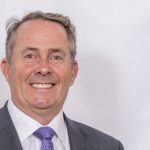
  • Liam Fox – 2023 Speech on World Down Syndrome Day

    Liam Fox – 2023 Speech on World Down Syndrome Day

    The speech made by Liam Fox, the Conservative MP for North Somerset, in the House of Commons on 23 March 2023.

    I beg to move,

    That this House has considered World Down Syndrome Day.

    I am grateful to have secured this debate, and I thank colleagues from all parties for their support in being able to do so. Two days ago I was honoured and privileged to be able to speak on behalf of the United Kingdom at the United Nations in New York on the 12th World Down Syndrome Day. It was an acknowledgement of the United Kingdom’s role as the country that has been the first to legislate in this area, of which we should be extremely proud. It was important that we took that opportunity to make the case.

    When we passed the Down Syndrome Act 2022, it was a recognition of the strength of our electoral system. With the first-past-the-post system, whatever its handicaps, we are real constituency MPs with real constituents, and the fact that we are exposed to the complex problems they have enables us to be responsive to their needs and them to know who to go to when they need help with the problems they face. I also think that passing this legislation was a recognition of something we do not always do as politicians. One of the intrinsic problems in a democratic system is that we tend to get more credit for dealing with a crisis than preventing one. One of the key elements of this legislation is that it shows that Parliament can anticipate problems before they become a serious crisis-ridden issue. I will come back to that, if I may.

    I thank all the charities associated with Down syndrome for the work they have done since the passage of the legislation, and I thank all those voluntary groups who helped with the consultation. I particularly thank the National Down Syndrome Policy Group, not least for its support for our function in Parliament, which I was unable to attend due to being in New York. I thank my hon. Friend the Member for Meon Valley (Mrs Drummond) who stood in so expertly to chair such a successful event.

    The theme for World Down Syndrome Day this year was “With Us Not For Us”, and thinking about legal capacity and supported decision making is incredibly important.

    We all expect and take for granted that we can make decisions about our lives—from where we live and whom we live with to what we study and where we work—and because we take these choices for granted, we must not forget that other people do not necessarily have the ability to do so. It is therefore absolutely right that people with Down syndrome are involved in all the decisions that affect their lives.

    As I said when I was in New York, when a child is born with an extra copy of their 21st chromosome, they enter a different path in life from the rest of the population and so, inevitably, do their families, who will face different challenges. Those challenges come, as we all know, in the form of medical problems, educational needs and long-term care challenges. The consequential change in life expectancy was one of the main reasons that we passed the legislation in the first place. I believe that every individual with Down syndrome has the same right to life, quality of life, dignity and independence that the rest of the population take for granted.

    Margaret Ferrier (Rutherglen and Hamilton West) (Ind)

    I congratulate the right hon. Member on today’s Backbench Business debate and the Act that he got through Parliament. Whether a child attends a special educational needs and disabilities-specific school or a mainstream school with SEND support is not dependent on any particular condition or diagnosis, but dependent on where the child’s needs can be best met. Children with Down syndrome can thrive in mainstream education, so does the right hon. Member agree that increasing awareness of the condition among education professionals, parents and all children is important in ensuring that children with Down syndrome have access to the right learning environment for them?

    Dr Fox

    I am grateful to the hon. Lady for making that point, because we can pass as much legislation as we like, but if the professionals at the sharp end, who are required to implement any changes or guidance, do not have sufficient understanding of the problem they are facing, we are all at a deficit in our response. I think the issue of professional education is so important not just for teachers, for whom it obviously is important, but for the medical profession, the social work profession and those involved in local government, who will deal with some of those issues relating to care, particularly long-term care. I think it is an extremely important issue.

    I was able in the UN debate to show how the United Kingdom has a very proud record in legislation in this general area. The UK has a long-standing tradition of ensuring that the rights and liberties of disabled people are protected. We ratified the UN convention on the rights of persons with disabilities in 2019. Internationally, our disability inclusion and rights strategy sets out the ambition to embed disability inclusion across all our diplomacy, policy and programmes. The Equality Act 2010 legally protects people in England, Wales and Scotland from discrimination in the workplace and in wider society. We also have the Mental Capacity Act 2005, covering England and Wales, to ensure that every attempt is made to support someone to make decisions about their own lives, and that of course includes people with Down syndrome.

    I would like, if I may, to say a word about the Down Syndrome Act and remind us why we passed this legislation. Primarily, it was about empowerment. The Act legislates not for Down syndrome, but for people with Down syndrome. It requires the Government in England to produce Down syndrome-specific guidance relating to health, social care, education and housing services. I hope that Members from Scottish and Welsh constituencies may be able to update the House on how this legislation is being adapted and implemented there. I will come back, if I may, to the point about its being Down syndrome- specific, because I have some concerns that that may be being lost in some parts of the consultation process.

    It is important to remind ourselves about the legislation. Under the Act, public authorities such as hospitals, schools or social care providers cannot ignore the guidance when commissioning and delivering services. The guidance must set out what the unique needs of people with Down syndrome are, and what public authorities should be doing to ensure that the support needs of people with Down syndrome are met to enable them to live fulfilling lives. I will come back to this element of the guidance, because one of the issues we discussed in Committee—this has been a controversial issue in this House in relation to other legislation—is when does the guidance become instruction. If Ministers are issuing guidance that is in effect instruction, surely that should be laid before the House of Commons so that we can recognise the importance of that and scrutinise how ministerial authority is being used.

    I think that for too long there have been too few levers available for individuals, families and their advocates, including us as Members of Parliament when it comes to getting fair treatment for our constituents with Down syndrome. After all, what is the point of rights in legislation if we cannot enforce them and if there is no mechanism to do so? That was one of the key elements we discussed during the passage of the legislation, and it led to two very important and, I think, innovative changes: the first is on parliamentary scrutiny, and the second is on individual empowerment.

    One of the problems we have faced before is that, when Ministers issue guidance, there is very little ability for parliamentary Select Committees to take direct oversight of it. One of the principles we established—and I am very grateful to my right hon. Friend the Member for Chichester (Gillian Keegan), who is now the Secretary of State for Education, for her support in establishing this principle—is that if the guidance is in fact instruction, the guidance would be laid before Parliament, which of course means that the Education Committee, the Health and Social Care Committee and local government can all look at it in real time.

    One of the things we considered was whether we would have to put a sunset clause on this legislation to enable Parliament to look at it again. The mechanism that we decided on—I think rightly—in this House and in the other place was that, in publishing the guidance, we would have real-time oversight, because when our constituents bring problems to us, we are all able to write to the Chair of whatever Committee it is and ask them to look into that particular aspect of how the Down Syndrome Act is functioning. That gives us, as Members of Parliament, a lever that we did not have before when we simply wrote a letter to a Minister and hoped for the best, which is not sufficient to implement the rights of our constituents in the way that I think we envisaged during the passage of the Act.

    Chris Stephens (Glasgow South West) (SNP)

    This will be very important for people in the Down syndrome community who believe they are being diagnostically overshadowed and that things are being missed. Does the right hon. Gentleman agree with me that that is particularly important when enforcing someone’s rights in relation to healthcare?

    Dr Fox

    It is. Diagnostic overshadowing is very important, in that we should not miss things in people with Down syndrome because we are looking the other way, or we are distracted by the diagnosis and not looking sufficiently at the person. Greater professional education—and this goes back to the point made by the hon. Member for Rutherglen and Hamilton West (Margaret Ferrier)—is a key part of the empowerment of the individuals for whom this legislation was produced. I know from my own medical education that there was not a great deal of it that involved us learning about specific needs. For the medical profession, the sort of overlooking that the hon. Gentleman describes is a real risk if the thought is not there that someone may see a different position from the one they should because of the very overshadowing that he describes. I imagine he may enlighten us further on that particular issue, and I hope he will because it is a real issue that needs to be examined fully.

    The second important change in our legislation was that we included in it the need for a named individual on the new integrated care boards to be responsible for the implementation of the Down Syndrome Act. A very senior Member of this House said to me during the passage of the Bill in Committee, “Do the Government realise the floodgates that they may be opening in agreeing to this?” I said that I was not sure, but that it really was not my problem. I think this is a tremendous innovation, because all too often we have an anonymised bureaucracy when it comes to the delivery of the things that Parliament intends. We can vote for things in this House and, with taxpayers’ money, we can fund them, but if we do not know who is responsible for the delivery in our own locality, it becomes difficult for us as Members of Parliament to know who to get in touch with.

    The de-anonymisation of the civil service, which is something I have long and profoundly believed in doing, received its first outing in that Act. It may be a by-product —in my mind it was not that; it was an essential principle —but none the less it is extremely important. With this new system, for the first time, individuals, families and advocates for people with Down syndrome will know who is responsible. For once, there will be a named person in our system who people can turn to for either assistance or redress, depending on the nature of the problem. I hope we will extend that principle further in the provision of public services. For too long in this country, taxpayers have provided the funding, but they do not have accountability in the delivery mechanisms of those public services. It is, in many ways, a quiet revolution that I hope this Act will usher in. It is a principle and a precedent that has been much understated in the interpretation of what Parliament has done.

    The guidance itself has been subject to long and detailed consultation, and I look forward to the draft publication in the summer. The Government face a number of challenges with this, which are worthy of debate. One question that was frequently raised in both Committee and the House was, “What about those with problems similar to those with Down syndrome; are we effectively creating a ladder of preferment in the provisions of public services?” Quite wisely, the Minister at the time said that it would be reasonable to consider those with overlapping problems at the same time as we were looking at the implementation of the Act. I say gently, however, that while that is absolutely right, we must also remember that the Act is specific to Down syndrome. When it comes to Down syndrome there is no doubt about the diagnosis, and unlike many other conditions where there are overlapping symptoms and signs to consider, there is no doubt about it. Down syndrome is not a subset of other conditions or of learning disabilities, although on a Venn diagram there will be a huge overlap; it is a specific condition and we must regard it as such.

    I would like the Government to consider some specific areas, one of which relates to education rather than health. This is a formal request to Ministers to add Down syndrome as a separate category to the annual school census. Why? Because there is currently no Down syndrome-specific school data available, including numbers, location, or educational settings, because individuals with Down syndrome are included only in the general special educational needs and disability school numbers. If we are to have specific legislation, it makes sense to have specific data with which to interpret the success of its implementation. Children with Down syndrome in the education system will have specific speech and language issues, significant fine and gross motor delay, cognitive delay, hearing loss, visual issues—we detailed that on Second Reading—social and emotional needs, and specific and unique learning profiles associated with Down syndrome. Some of those conditions will be shared with other syndromes and medical conditions, but many will be specific to Down syndrome. If we are not to get the overshadowing problem, we must be clear about what we need to know about this.

    In New York I was able to set out the sort of cases and advances that we have made in this country by being able to utilise a range of tools that enable people with Down syndrome to make more decisions for themselves. As we have a better understanding, for example among social workers and community medical staff, we are increasingly able to deploy those tools to ensure that those who have a voice—a voice that would not necessarily traditionally be recognised in our system—are able to make more decisions for themselves. That was at the heart of what the UN 12th World Down Syndrome Day meant.

    I do not wish to speak any longer than necessary and take up colleagues’ valuable time, so I will end with this quote from Heidi Carter, who I have come to know increasingly well. She is a valiant campaigner for Down syndrome rights, and she states:

    “I have shown everyone that Down syndrome is not something to be scared of and that people with Down syndrome live happy, amazing, fulfilled and independent lives!”

    Congratulations to her and her husband on their marriage. I wish them well. She said:

    “We are not going to give up. I think that all human life is valuable and should be treated with respect however many chromosomes we have!”

    I do not believe there is a single one of us in this House who would not agree with that sentiment.

  • Marion Fellows – 2023 Speech on Post Office Horizon Compensation

    Marion Fellows – 2023 Speech on Post Office Horizon Compensation

    The speech made by Marion Fellows, the SNP MP for Motherwell and Wishaw, in the House of Commons on 23 March 2023.

    I thank the Minister for his statement. Of course, I welcome what he outlined, and, as chair of the all-party parliamentary group on post offices, I am very grateful to him for keeping me updated.

    We now have three streams for former postmasters and sub-postmasters who were affected by Horizon to claim compensation—that is really important. The Minister has talked about achieving parity, and I think he will agree that that must be done. I would be keen to for him come back to the House to tell us that it is happening and that the latest compensation scheme will not run out of time.

    I think it worth mentioning again the hard work done by the JFSA, by journalists such as Nick Wallis, by Members of this House and by former Members who are now in the other place. They have all been of great help to the APPG. I came into the House not knowing anything about Horizon—I wish I did not know what I know now. I congratulate the Minister and his predecessor, the hon. Member for Sutton and Cheam (Paul Scully), on grabbing hold of this matter and making things happen. So many people will be grateful.

    Kevin Hollinrake

    I thank the hon. Lady for her kind words and for all the work she does as chair of the all-party parliamentary group on post offices. She is right to say that there are three separate schemes, and there was probably a good reason for that at the time. It is not ideal to have three schemes, and Sir Wyn Williams referred to that in his comments, but we are all keen to see consistency across the three schemes. That is why I welcome the work of the advisory board, which will cover all three schemes to make sure there is consistency across them. I am determined to make sure that happens, and I will keep her fully informed on progress.