Tag: 2023

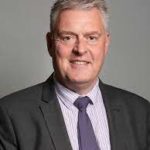
  • Lee Anderson – 2023 Speech on World Down Syndrome Day

    Lee Anderson – 2023 Speech on World Down Syndrome Day

    The speech made by Lee Anderson, the Conservative MP for Ashfield, in the House of Commons on 23 March 2023.

    I thank my right hon. Friend the Member for North Somerset (Dr Fox) for securing this important debate on a subject close to my heart. It is important in such debates to talk about real people. There is a real person in Ashfield called Jossie May. She is seven years old and has Down syndrome. Jossie’s family want the world to see the real Jossie. Is Jossie different? Yes, she is. She is beautiful, funny, clever, friendly, happy, and all the things that I want to be but unfortunately am not. She is a role model to us all, so I guess she is different. Jossie’s family know that she will face certain barriers when she gets older, but with the right support in place, Jossie can achieve many great things and make a fantastic contribution to our society. Why should she not be allowed to do that? She should be.

    Gone are the days when we would hide away children with Down syndrome, and thank goodness for that. Why should we hide them away? They have as much right to enjoy life as we do, but it is up to us as a civilised society to ensure that we remove as many obstacles as we can. With the right education and support, young Jossie could go on to lead a happy, contented and independent life where she can work and look after herself. Is that not what we all want?

    Jossie’s family are aware that we have made great strides in education over the past 30 years, but we still have a long way to go with Down syndrome. In the right settings and with the right support, whether in mainstream or special schools, surely we can do a little more to help members of our Down syndrome community. We want a world where we do not have to fight so hard for people such as Jossie. There also needs to be acknowledgement that, like any other human being, those with Down syndrome have different levels of ability. We are all different, and have different abilities. Some will be capable of living independently with some support; some will never be able to do that. We need to look at each person as an individual and ensure that they are supported by the correct decision making.

    Great improvements have been made in access to education, but when a person with Down syndrome leaves full-time education, their employment opportunities are few and far between. We have a great project in Ashfield called the Rumbles cafe, where young people with learning disabilities are trained to work in a café. It is a life-changing experience for many young people, and provides a valuable service to our community, but the café faces an uncertain future, as the local council is bickering over the terms of the lease. It is truly a shocking situation.

    Attitudes need to change. It should be not all about money but about outcomes. There also needs to be much more support post education. So many parents end up with a young adult who has little opportunity to integrate with their local community on a day-to-day basis. It is truly shocking. Every person deserves to be immersed in a community where they can get involved.

    We need more research into health issues. There is a huge pocket of science within the Down syndrome community, such as on childhood leukaemia and Alzheimer’s, to name just two issues. Imagine what answers could be sitting there undiscovered in the Down syndrome community. It is an interesting fact that the cure rate for acute myeloid leukaemia in children with Down syndrome is higher than that of the general population. We should be looking into that more.

    Lastly—this should be the simplest of all—I would like better signposting in maternity care. The Positive About Down Syndrome support service has made great strides to improve that, but there is still more to be done. I know Jossie. According to her family, she is every kind of wonderful and deserves a wealth of opportunities. Let us make a world where that can happen.

    I was at the event in this place just a few days ago. I saw room full of wonderful young people, full of talent and ambition, with loving and caring families. If we cannot make the world better for those young people, we should not be here in this place. I am confident that the Minister will make sure that we do that.

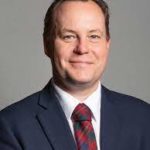
  • Jo Gideon – 2023 Speech on World Down Syndrome Day

    Jo Gideon – 2023 Speech on World Down Syndrome Day

    The speech made by Jo Gideon, the Conservative MP for Stoke-on-Trent Central, in the House of Commons on 23 March 2023.

    First, I thank my right hon. Friend the Member for North Somerset (Dr Fox) for securing the debate and for all the work he did to ensure the Down Syndrome Act 2022 became law.

    During our lifetime, there has been a significant change in attitude towards Down syndrome. Undoubtedly, there is still more that can be done to improve the quality of life and opportunities of people with Down syndrome, but as we mark the 18th anniversary of the first World Down Syndrome Day, we should not forget the progress that has been made in understanding the condition and supporting those with Down syndrome to be treated fairly so they are able to live full and productive lives.

    I speak with personal experience. My father had an elder brother, Donald, who had Down syndrome. I was only told of his existence when I was 27 years old and pregnant with my second child. Donald died in 1946, aged about 25. He spent all his life in an institution, which was standard practice at the time. My father did not talk about his brother. He found it too painful. My mother explained to me that when my father was a small child, my grandmother had taken him with her every month to visit his brother in the institution and the experience had traumatised him.

    When I spoke during the Down Syndrome Bill debate last year, I referenced the BBC series “Call the Midwife”, which documented attitudes towards Down syndrome and how they started changing in the 1950s and 1960s as people with Down syndrome were able to take an active part in their communities. Not only have attitudes changed, but life expectancy has increased dramatically in recent decades from 25 years in the 1900s to 60 years today. Medical science has advanced and people can live extremely healthy and long lives, and make a great contribution to our society.

    I am incredibly grateful for this opportunity to celebrate the achievements and contributions of people with Down syndrome to their local communities and to our society as a whole.

    Jim Shannon (Strangford) (DUP)

    I congratulate the right hon. Member for North Somerset (Dr Fox) on securing the debate. We are all encouraged by the situation. What comes to my mind is a young gentleman called James Martin, the 31-year-old who starred in the roaring success, “An Irish Goodbye”. He has gone from working in Starbucks to living his dream by winning a globally recognised award. Most importantly, he has never let his disability get in the way of goals and achievement. Does the hon. Lady agree that James is a true role model to all individuals out there who feel that society restrains them due to their disability, and reminds them that the world is their oyster—or in this case, their Oscar?

    Jo Gideon

    I thank the hon. Gentleman for his intervention. He is absolutely correct.

    In Stoke, the Stoke and Staffordshire Downs Syndrome Social Group was set up in 2016 by a family in my constituency after their son was born with Down syndrome and the couple walked away from hospital with just a factsheet about the disorder. Today, the group meets regularly in Birches Head and is making a difference to the lives of more than 50 families by organising regular trips and activities, as well as supporting families emotionally and connecting them with wider support groups.

    I would also like to highlight the great WorkFit programme for its role in making workplaces more inclusive. WorkFit is an employment programme that matches places and supports individuals with Down syndrome into work, with more than 1,000 individuals successfully accessing the service to date. In my constituency of Stoke-on-Trent Central, I was delighted to hear that the programme supported Grace into her role at Dunelm distribution centre, where she works dealing with returns from customers. She works two days a week and really enjoys being part of a great team who are very supportive. She uses her computer skills to process returns from customers and is very proud of her job.

    Last week’s Budget outlined ways in which we would like to see a greater proportion of working-age people in employment, with a specific emphasis on supporting disabled people into work. One thing I would like to see is an improvement in ensuring that public transport services are available for travelling to and from work, so that a lack of access is not a barrier to that aim. Indeed, while it is wonderful to hear stories like Grace’s, according to the Down’s Syndrome Association, people with Down syndrome often face barriers and prejudice, lack of opportunities, low expectations, stereotyping and other negative attitudes. A study by Mencap found that 62% of adults with learning disabilities in the UK want to work, but only 6% have a paid job.

    Everyone should have the right to work. People who have Down syndrome want to work for the same reasons as everyone else: to earn their own money, learn new skills, meet new people, feel valued, contribute to society, and have the chance to be more independent. Work is important for so many reasons and is a key part of our personal ambitions. For employers and their workforce, being equipped with the knowledge and understanding of how to better support a colleague with the condition is at the heart of the matter. In fact, it is key to achieving an inclusive work environment.

    The same goes for education. The majority of children with disabilities in developing countries are currently out of school, while many of those enrolled are not in learning. To ensure that all children have access to quality education, education policies and practices must be inclusive of all learners, encourage the full participation of all, and promote diversity as a resource rather than as an obstacle. I was listening to an interview with a teacher recently, who said that she had seen such a difference in her class after moving from retrospectively altering her lesson plans for children in the class with Down syndrome, to thinking about how she can make a plan that includes the needs of all her pupils from the beginning. When we think about successful inclusion, it is about how are we supporting teachers to include and value everyone from the start, as opposed to adapting and modifying in retrospect.

    The theme of this year’s World Down Syndrome Day is “With Us Not For Us”. I think that reflects my point well: a move from the outdated charity model of disability to working with others to treat them fairly so that they have the same opportunities as everyone else.

    Karen Bradley (Staffordshire Moorlands) (Con)

    Mr Deputy Speaker, I hope you will forgive me, but my constituent Ed Daly is in the Public Gallery with his mum, Jane. They spoke at the event on Tuesday in Parliament and they are fantastic advocates for this cause. Everything my hon. Friend says absolutely sums up what they have been saying to me. Will she, as I do, pay tribute to them?

    Jo Gideon

    I absolutely do pay tribute to them. I cannot see them in the Public Gallery, but it is wonderful that they are here to listen to the debate and to hear all the support there is for them in the House.

    Support in decision making is really good. We all need help from people who know us and want the best for us. But people should have the right to make the final decision, the right to dignity and individuality, and the right to be in control of their lives.

  • Chris Stephens – 2023 Speech on World Down Syndrome Day

    Chris Stephens – 2023 Speech on World Down Syndrome Day

    The speech made by Chris Stephens, the SNP MP for Glasgow South West, in the House of Commons on 23 March 2023.

    I congratulate the right hon. Member for North Somerset (Dr Fox) on securing this debate, and on the passage of his Act. I enjoyed his contribution this afternoon, advocating for individuals in the Down syndrome community. I assure him that I was at the parliamentary event on Wednesday, and there were people from Scotland down in the Lobby discussing some of those issues. It was a privilege to be there. It is also a privilege to be an elected representative, and one of the privileges that come with that is that we meet those we represent who speak truth to power. On Saturday, my constituent, Danielle Urie, came to see me at my Ibrox surgery. She asked me to participate in this debate, which is why I am here this afternoon. I asked Danielle to write to me about some of the things she wanted to say, and after the exchange I had with the right hon. Gentleman about diagnostic overshadowing, I am afraid that, sadly, there is an example of that coming up.

    Danielle is currently going through the complaints procedure with the health service in Scotland to discuss some of this. I asked her, and her son Steven, to go through their experiences, and I will read what Danielle sent to me last night:

    “My name is Danielle Urie. If my son Steven could speak, I’m sure this is what he would say. ‘My name is Steven I am 11 years old. From 2019 to 2021 I was diagnostically overshadowed by doctors which resulted to damage in my body that can never be reversed, while sitting in chronic pain and bleeding for two years. I am now left with a permanent stoma and my large bowel being completely removed. During this time I had been treated with no respect, and left with no dignity.’ If Steven was a typical child who could voice for himself I don’t think any of this would have happened. I want you to all know the catastrophic consequences that can happen with diagnostic overshadowing, because it’s real and it happens more than you all think. To have no control on what happens with your child’s healthcare is terrifying . I don’t want my child or any child in fact to be added to the statistics of people with Down’s syndrome dying as a result of being diagnostically overshadowed.”

    I want to thank Danielle for having the bravery to write to a Member of Parliament to share that particular experience.

    The right hon. Gentleman invited us to talk about what is happening in other devolved nations, and I have some constructive criticisms about what is happening in Scotland. I do not think that everything is wrong with what the Scottish Government are doing, but I have some comments to make. The Scottish Government’s position is that they take a wider view and are committed to introducing the learning disability, autism and neurodiversity Bill as part of their programme for government. There are opportunities there. In delivering the Bill, the Scottish Government want to improve opportunities, outcomes and support for people with Down’s syndrome.

    There will be a consultation on the Bill later this year. I will certainly be assisting Danielle, and any others, as a part of that. It will provide an opportunity for people to view the policy options that could be included in the draft Bill, including whether it should establish a commissioner. As part of their scoping work, the Scottish Government ran events with a wide range of Scotland’s disabled people-led organisations and national charities. The Scottish Government are working towards a human rights-based approach to ensure the Bill is fully co-designed with people who have lived experiences. It is very important, when shaping legislation, that people with those lived experiences are involved from the outset.

    I would like to see the words “Down’s syndrome” included in the title of the Bill. I think that would be welcomed by those who came down from Scotland to the event in Parliament on Tuesday. Why do I think that is important? People with Down’s syndrome are more likely to be born with a heart condition and more likely to get leukaemia. People in the Down’s syndrome community are more prone to infections and thyroid problems, and more susceptible to eye and hearing problems. We want to ensure that those with Down’s syndrome get extra health checks, for example, and have access to speech therapy. It is very important that people with Down’s syndrome have those opportunities. Those are some of the reasons why I want the Down’s syndrome community in Scotland have the words “Down’s syndrome” in the title of the Bill. I will be working with Danielle and others to ensure that that is the case.

  • PRESS RELEASE : Rishi Sunak to recognise six-year old Dáithí Mac Gabhann for outstanding contribution award [April 2023]

    PRESS RELEASE : Rishi Sunak to recognise six-year old Dáithí Mac Gabhann for outstanding contribution award [April 2023]

    The press release issued by 10 Downing Street on 12 April 2023.

    The Prime Minister Rishi Sunak is expected to personally present six-year old Dáithí Mac Gabhann with his daily Points of Light award this morning.

    As part of the Prime Minister’s visit to Northern Ireland to mark the 25th anniversary of the Belfast Good Friday Agreement this week, he is expected to personally present six-year old Dáithí Mac Gabhann with his daily Points of Light award this morning.

    The Points of Light awards recognise outstanding volunteers and people who are contributing to their community.

    Today, the Prime Minister will meet with Dáithí and his family to thank them for their tireless campaigning for ‘Dáithí’s Law’, which implemented an ‘opt-out’ organ donation system, bringing Northern Ireland in line with the rest of the UK.

    Their efforts prompted the Secretary of State for Northern Ireland’s decision to bring forward amendments to the Executive Formation Bill earlier this year, which allowed Dáithí’s Law to become a reality and save lives across Northern Ireland.

    In a letter to Dáithí, Prime Minister Rishi Sunak said:

    “Every day I write a letter to thank someone for doing something remarkable for others. Today is very special, because I get to thank you.

    “The bravery and determination you have shown in campaigning to change the law on organ donation in Northern Ireland is truly inspiring.

    “With Dáithí’s Law you are helping others in your situation to get the life-changing help they need. It is a huge achievement.

    “In your father’s words: “exceptional things happen for exceptional people.” I agree with him that you are truly exceptional and so I am delighted to recognise your courage by naming you as the UK’s 2029th Point of Light.

    “The whole country is with you as you continue your treatment.”

  • PRESS RELEASE : Media Freedom Coalition Executive Group Statement – Detention of Wall Street Journal reporter Evan Gershkovich [April 2023]

    PRESS RELEASE : Media Freedom Coalition Executive Group Statement – Detention of Wall Street Journal reporter Evan Gershkovich [April 2023]

    The press release issued by the Foreign Office on 11 April 2023.

    The Media Freedom Coalition Executive Group has released a statement on the detention of Wall Street Journal reporter Evan Gershkovich.

    The Executive Group of the Media Freedom Coalition strongly condemns the Russian Federation for the detention of Wall Street Journal reporter Evan Gershkovich. The detention of journalists under the guise of espionage charges is very concerning and undermines the basic principles of democracy and rule of law.

    Freedom of expression is a fundamental human right that is protected by international law; it includes the right to seek, receive, and impart information and ideas of all kinds, irrespective of borders. Journalists play a crucial role in holding governments and powerful people and institutions to account, while informing the public about matters of public interest. It is imperative that they are able to work independently and without fear of being labeled as spies.

    We condemn the Russian Federation’s move to silence journalists and use its authority to intimidate or harass them. Russia must comply with its international human rights commitments and not abuse its power to suppress critical reporting.

    We call on the Russian Federation to release immediately Evan Gershkovich, along with all others it has unjustly detained.

  • PRESS RELEASE : Change of British High Commissioner to Samoa [April 2023]

    PRESS RELEASE : Change of British High Commissioner to Samoa [April 2023]

    The press release issued by the Foreign Office on 11 April 2023.

    Mr Gareth Keith Hoar has been appointed British High Commissioner to the Independent State of Samoa in succession to Mr David Ward who will be transferring to another Diplomatic Service appointment. Mr Hoar will take up his appointment during June 2023.

    CURRICULUM VITAE

    Full name: Gareth Keith Hoar

    Married to: Rebecca Haixiang Hoar

    Date Role
    2018 to 2022 Wuhan, HM Consul General
    2017 to 2018 Full Time Language Training (Mandarin)
    2016 to 2017 Beijing, Director DIT China (temporary duty)
    2012 to 2016 Melbourne, HM Consul General
    2008 to 2012 Beijing, Deputy Director, UKTI China
    2007 to 2008 City of London (on secondment), Head of International Affairs
    2005 to 2007 FCO, China Team Leader, Far Eastern Group
    2002 to 2005 Beijing, First Secretary, Trade and Investment
    2000 to 2001 Guangzhou, HM Consul General
    1997 to 1999 Guangzhou, Vice-Consul
    1994 to 1997 FCO, Human Resources Officer (Graduate, Chartered Institute of Personnel & Development 1996)
    1991 to 1994 Washington, Third Secretary, Press and Public Affairs
    1989 to 1991 Santiago, Administration Officer
    1986 to 1988 Beijing, Commercial Attaché
    1984 to 1986 FCO, Personnel Operations Department
  • PRESS RELEASE : Plans unveiled to improve local authority action on air quality [April 2023]

    PRESS RELEASE : Plans unveiled to improve local authority action on air quality [April 2023]

    The press release issued by the Department for Environment, Food and Rural Affairs on 11 April 2023.

    A new Air Quality Strategy will provide a framework to support local action to improve air quality.

    A consultation on delivering cleaner air in towns, cities and rural areas across England has been launched today (11 April).

    The Government is seeking views on a revised Air Quality Strategy which outlines how councils in England should use their existing powers and responsibilities more effectively to deliver improvements to air quality.

    The draft strategy includes:

    • Outlining the actions councils can undertake to improve air quality
    • Setting out actions for councils to reduce emissions of fine particulate matter, the pollutant most damaging to health
    • Providing a framework to enable local authorities to make the best use of their powers and deliver for their communities

    Following consultation, a final strategy will be published, providing a framework to support local action to improve air quality, in consultation with local communities. This will drive forward progress towards achieving the government’s legally-binding targets for all key air pollutants, including those recently set under the Environment Act for fine particulate matter (PM2.5).

    The final strategy will complement the range of support government makes available to local authorities, including £883 million allocated under the Nitrogen Dioxide Programme, and funding awarded annually under Defra’s local Air Quality Grant scheme to develop and implement measures that benefit schools, businesses and communities, and reduce the impact of polluted air on people’s health.

    Environment Minister Rebecca Pow said:

    By taking action in communities across the country, local authorities have a pivotal role to play in improving air quality, and they should listen to local residents and local businesses to find solutions that work best for their local area.

    Building on the great strides made in tackling air pollution at a national level since 2010, this strategy will help councils to go further and faster to improve air quality for the benefit of their residents.

    I encourage all local authorities to respond so together, we can deliver cleaner air – now and for the future.

    The government is taking decisive action to improve air quality. Our five year strategy to protect and restore the environment, which we published in January, sets out interim targets to reduce concentrations of, and public exposure to, PM2.5 by the end of January 2028, alongside a range of policies to work towards these targets. This builds on the progress made since 2010, where emissions of fine particulate matter [PM2.5] have fallen by 18%, and emissions of nitrogen oxides are at their lowest level since records began.

    The Plan also committed to helping councils to improve air quality more quickly by assessing their performance and use of existing powers, while supporting them with clear guidance, funding and tools. The consultation launched today (link) represents a significant step forward in the delivery of these commitments.

    The strategy builds on existing net zero programmes implemented by the government, including our National Air Pollution Control Programme (NAPCP), which sets out how the UK can meet the legally binding 2020 and 2030 emission reduction commitments, and the 2019 Clean Air Strategy, which sets out the comprehensive actions required across all parts of government and society to improve air quality.

    You can respond to the consultation by clicking here.

  • PRESS RELEASE : Grant to boost domestic tree production re-opens [April 2023]

    PRESS RELEASE : Grant to boost domestic tree production re-opens [April 2023]

    The press release issued by the Department for Environment, Food and Rural Affairs on 11 April 2023.

    £5 million available for tree and seed suppliers of all sizes and from any sector to expand and modernise.

    Investment in domestic tree production in England will be accelerated today (11 April) with applications re-opening for the Forestry Commission’s Tree Production Capital Grant. The funding will drive the production of tree seed and saplings through developments in machinery, automation and the expansion of facilities.

    In line with the aims of the England Trees Action Plan and Government ambitions to treble tree planting rates by the end of this Parliament, the Tree Production Capital Grant will support efforts to build nursery capacity and grow long-term tree seed and sapling supply.

    The grant will enable suppliers to boost production rates at pace and has been designed to complement the Tree Production Innovation Fund, which provides support for research projects that enhance UK tree production methods.

    Previous funding rounds have provided machinery for projects such as the Emmaus Community Tree Nursery in Cornwall to help it meet the need for locally grown trees and provide employment opportunities for homeless people. Funding has also supporting Warwickshire County Council expand and improve their tree nursey expansion and improvement so they can diversify the species they grow and adapt to future climate conditions.

    Successful projects will be awarded up to £175,000 in grant funding to cover up to 50% of costs, with money coming from the Tree Production Capital Grant as part of the Government’s £750 million Nature for Climate Fund. In comparison to the 2022 application process, the minimum grant value which can be applied for has reduced from £10,000 to £5,000 enhancing accessibility for smaller projects.

    Examples of eligible projects include investments in seed trays, developments in machinery such as transplanting systems and grading machines, improved polytunnel infrastructure and irrigation systems, or in biosecurity through improved water treatment and refrigeration equipment. Applications are encouraged from tree seed and sapling suppliers of all sizes and sectors, as well as new entrants looking to diversify into the area.

    Forestry Minister Trudy Harrison said:

    This Government is committed to bolstering domestic tree production and fostering a robust forestry industry – actions that are necessary to realise our long-term tree- planting goals.

    Not only does the Tree Production Capital Grant allow us to modernise and enhance the sector, but it also helps to create new green jobs and to tackle climate change, amongst myriad other benefits.

    Forestry Commission Chief Executive Richard Stanford said:

    Funding projects that enhance our woodlands and treescapes is fundamental to achieving Government’s tree planting ambitions and building an innovative and robust forestry sector.

    Through the Tree Production Capital Grant we have been able to support existing tree and seed suppliers of all sizes, and also provide funding to those wishing to make a start in the sector. With the application window now open, I encourage those with relevant projects to apply.”

    The second round of the Tree Production Capital Grant is now open until 31st May 2023. and will provide up to £1.76 million of funding during 2023/24 and £3.43 million during 2024/25, subject to successful bids. Applicants can apply for projects up to two years long, ending in March 2025.

    The Forestry Commission will be hosting a webinar on the grant application process on Friday 28 April.

    For more information and to apply, go to: https://www.gov.uk/guidance/tree-production-capital-grant

  • PRESS RELEASE : New crackdown on fraud introduced by Home Office [April 2023]

    PRESS RELEASE : New crackdown on fraud introduced by Home Office [April 2023]

    The press release issued by the Home Office on 11 April 2023.

    New offence will make it easier to prosecute a large organisation if an employee commits fraud for the organisation’s benefit.

    The new failure to prevent fraud offence will make it easier to prosecute a large organisation if an employee commits fraud for the organisation’s benefit.

    If fraud is committed by an employee of an organisation, the organisation must be able to demonstrate it had reasonable measures in place to deter the offending or risk receiving an unlimited fine.

    The proposed legislation encourages businesses to do more to deter offending which will help cut crime and protect consumers, investors, other businesses and the taxpayer from fraudulent practices.

    Businesses which fail to deter fraud will face enforcement action under new Home Office plans.

    The tighter legislation, to be introduced through the Economic Crime and Corporate Transparency Bill, will allow prosecutors to hold big companies to account if an employee commits fraud for the organisation’s benefit, and they did not have reasonable prevention procedures in place.

    The Home Office tabled an amendment to introduce the failure to prevent fraud offence earlier today, and it is supported by the Serious Fraud Office and the Crown Prosecution Service.

    Security Minister Tom Tugendhat said:

    We are determined to crack down on unscrupulous companies that seek to defraud their customers.

    Our new failure to prevent fraud offence will protect consumers from dishonest and misleading sales practices, and level the playing field for the majority of businesses that behave responsibly.

    This government is committed to fighting economic crime, as demonstrated by our recently launched Economic Crime Plan 2 which set out how we will give law enforcement more state of the art resources to tackle high level offending.

    The new legislation will protect the public from a wide range of harms including dishonest sales practices, false accounting and hiding important information from consumers or investors.

    It could also hold companies to account for dishonest practices in financial markets.

    The new powers follow on from recommendations made by the Law Commission’s 2022 review of corporate criminal liability.

    Lisa Osofsky, Director of the Serious Fraud Office, said:

    This new offence would be a game-changer for law enforcement – bringing the law on fraud in line with bribery.

    As the UK’s top economic crime prosecutors, this would help us crack down on fraudulent enterprises, compensate their victims and ultimately protect the integrity of our economy.

    Prosecutors will independently consider whether a prosecution is in the public interest before any charges are brought.

    A business could face legal action if, for example, employees were selling products to a customer under false pretences.

    It could also be held accountable if employees falsified accounts to mislead investors.

    Under both examples, a business could receive an unlimited fine if it is found to not have reasonable fraud prevention procedures in place. This enforcement not only ensures justice is secured for victims, it also encourages companies to create an environment where it is difficult for fraudulent tactics to thrive.

    There will be no requirement to prove that company bosses ordered or knew about a fraud committed by an employee.

    A business will not be liable if it can prove reasonable measures were in place to deter the offence. The government will publish guidance on reasonable prevention measures in due course. The offence will not be enforced until the guidance is published.

    Andrew Penhale, Chief Crown Prosecutor for the CPS, said:

    The scale of fraud in the UK – now comprising 41% of all criminal activity – is so significant that extra measures to help prevent it and protect people from falling victim to this crime is welcome.

    The new corporate offence of failing to prevent fraud is another important measure to drive better corporate behaviours and will complement existing measures for prosecutors.

    Larger corporate enterprises, which fail to put in place reasonable measures to prevent fraud being committed by their employees, may be held criminally liable for that failure.

    A primary benefit of the new legislation will be a drive towards better corporate behaviours which seek to prevent fraud. A similar outcome has been observed under the existing failure to prevent bribery and failure to prevent facilitation of tax evasion offences.

    Small and medium sized enterprises will be exempt from the new offence but remain accountable under the existing legal framework.

    The new legislation will apply across the United Kingdom.

  • Rishi Sunak – 2023 Comments on 25th Anniversary of the Belfast (Good Friday) Agreement

    Rishi Sunak – 2023 Comments on 25th Anniversary of the Belfast (Good Friday) Agreement

    The comments made by Rishi Sunak, the Prime Minister, on 11 April 2023.

    Today we reflect on the beginning of a new chapter in the people of Northern Ireland’s history, with the commemoration of the signing of the Belfast (Good Friday) Agreement 25 years ago.

    This is an Agreement born of partnership between the British and Irish Governments and, as we will see from President Biden’s visit this week, it continues to enjoy huge international support from our closest allies. But most importantly, it is based on compromise in Northern Ireland itself.

    As we look forward, we will celebrate those who took difficult decisions, accepted compromise, and showed leadership – showing bravery, perseverance, and political imagination.

    We commemorate those who are no longer with us and the many who lost their lives by trying to prevent violence and protect the innocent. And we give thanks to them as we reflect on the new generations that have grown up and continue to grow in a world in which peace and prosperity has prevailed.

    While it is time to reflect on the solid progress we have made together, we must also recommit to redoubling our efforts on the promise made in 1998 and the agreements that followed.

    One of economic opportunity, prosperity, and stability – it is a promise we must continue to fulfil. So must get on with the business of governance.

    My mission, duty and responsibility as Prime Minister of the United Kingdom is to deliver for people in Northern Ireland.

    We stand ready to work with our partners in the Irish Government and the local parties to ensure that the institutions are up and running again as soon as possible.

    There is work to be done.