Tag: 2023

  • PRESS RELEASE : Government to strengthen learnings after domestic homicide [June 2023]

    PRESS RELEASE : Government to strengthen learnings after domestic homicide [June 2023]

    The press release issued by the Home Office on 16 June 2023.

    The government has launched a consultation to ensure domestic homicide reviews reflect the full range of domestic-abuse related deaths, including suicide.

    We are considering changes to ensure domestic homicide review (DHR) legislation reflects the legal definition of domestic abuse, and amend the name to better reflect the range of deaths which fall in their scope, the Minister for Safeguarding announced today.

    A domestic homicide review is a multi-agency review which seeks to identify and implement lessons learned from deaths which have, or appear to have, resulted from violence, abuse or neglect. Their aim is to better protect victims in future and prevent further tragedies.

    We have launched an 8-week public consultation to consider changes to domestic homicide reviews, bringing them in line with the statutory definition of domestic abuse enacted in the Domestic Abuse Act 2021.

    This would mean that a DHR can be commissioned whenever there is a death that has, or appears to have, resulted from domestic abuse.  This includes controlling or coercive behaviour, emotional and economic abuse, in addition to physical abuse, and will help to ensure that lessons are learned from fatal domestic abuse cases.

    The consultation will also consider renaming DHRs as ‘domestic abuse fatality reviews’ to reflect cases where the death was not a result of homicide, such as in the case of suicide.

    Safeguarding Minister, Sarah Dines said:

    Domestic abuse is a devastating crime which can have tragic outcomes, including murder and suicide.

    The government is committed to protecting people from this horrific abuse in all its forms and we are striving to make changes that will bring justice to victims and some comfort to their loved ones.

    Through the consultation, the public, key stakeholders, researchers, and bereaved families will share their views.

    The changes are being considered in response to concerns from charities and bereaved families that the current system does not reflect the full range of domestic abuse related deaths.

    CEO of Advocacy After Fatal Domestic Abuse, Frank Mullane MBE said:

    Renaming these reviews and incorporating the statutory definition of domestic abuse, reflects the findings of the extensive forensic work achieved over 12 years.

    We do not know how many deaths are fully, or in part attributable to domestic abuse, but these reviews have revealed many of them, for example some suicides and deaths from neglect.

    Commissioning these reviews sends the signal that the state takes very seriously any deaths caused by domestic abuse.

    The Home Office is taking action across the board to protect vulnerable people. Last month we allocated up to £39 million to 50 projects across England and Wales supporting initiatives to weed out domestic abuse and stalking.

    We are also implementing tougher measures on the most dangerous domestic abuse offenders, including ensuring that offenders convicted of controlling or coercive behaviour and sentenced to 12 months or more will be managed in the same way as the most dangerous physically violent offenders, and recorded on the Violent and Sex Offender Register.

  • PRESS RELEASE : Appointment of Dean of Durham [June 2023]

    PRESS RELEASE : Appointment of Dean of Durham [June 2023]

    The press release issued by 10 Downing Street on 16 June 2023.

    The King has approved the nomination of The Reverend Canon Dr Philip Plyming, Warden of Cranmer Hall, St John’s College, Durham, to be appointed as Dean of Durham, in succession to The Very Reverend Andrew Tremlett following his appointment as Dean of St Paul’s Cathedral.

    Background

    Philip studied German and Russian at Cambridge University followed by Theology at Durham University while training for ministry at Cranmer Hall. His PhD was awarded by Edinburgh University for research into Paul’s hardship narratives in 1 and 2 Corinthians. He served his title at Christ Church, Chineham, in the Diocese of Winchester, and was ordained priest in 2002.

    In 2006 Philip was appointed Vicar of Claygate, in the Diocese of Guildford, and from 2012 he additionally served as Area Dean of Emly.

    Philip was appointed to his current role as Warden of Cranmer Hall, St John’s College, Durham, in 2017. He was made an Honorary Canon of Durham Cathedral in 2022.

    Philip is married to Annabelle, who works as a palliative care consultant for a local NHS Trust, and they have two teenage sons.

  • PRESS RELEASE : UK statement on latest developments in the north of Kosovo [June 2023]

    PRESS RELEASE : UK statement on latest developments in the north of Kosovo [June 2023]

    The press release issued by the Foreign Office on 16 June 2023.

    We call for the immediate release of the three Kosovo policemen detained on 14 June.

    We urge Kosovo and Serbia to exercise maximum restraint, avoid unilateral measures and take immediate action to reduce tensions.

    We reiterate our calls for Prime Minister Kurti and his government to ensure that elected mayors carry out their transitional duties from alternate locations outside municipal buildings and that special police units are withdrawn from municipal buildings.

    New, inclusive elections should be announced as soon as possible. We expect and encourage Kosovo Serbs to participate in these elections.

    We expect Kosovo and Serbia to engage immediately in the EU-facilitated Dialogue and in particular to start work without further delay to establish an Association of Serb Majority Municipalities.

  • PRESS RELEASE : North Korea ballistic missile launches – FCDO statement [June 2023]

    PRESS RELEASE : North Korea ballistic missile launches – FCDO statement [June 2023]

    The press release issued by the Foreign Office on 15 June 2023.

    A Foreign, Commonwealth & Development Office spokesperson statement on North Korea’s ballistic missile launches on 15 June.

    A Foreign, Commonwealth & Development Office spokesperson said:

    North Korea’s ballistic missile launches on 15 June are a breach of multiple UN Security Council resolutions. Illegal ballistic missile launches continue to destabilise the peace and security of the Korean Peninsula.

    The UK will always call out these violations of UNSCRs. We strongly urge North Korea to return to dialogue and take credible steps towards denuclearisation.

  • PRESS RELEASE : Appointment of Lord Chief Justice Dame Sue Carr [June 2023]

    PRESS RELEASE : Appointment of Lord Chief Justice Dame Sue Carr [June 2023]

    The press release issued by 10 Downing Street on 15 June 2023.

    Dame Sue Carr has been appointed the Lord Chief Justice of England and Wales from 1 October 2023.

    His Majesty The King has been pleased to approve the appointment of Dame Sue Carr as the Lord Chief Justice of England and Wales from 1 October 2023. This appointment follows the retirement of The Rt Hon. the Lord Burnett of Maldon on 30 September 2023.

    Dame Sue Carr was called to the Bar in 1987. As a barrister she specialised in general commercial law and took silk in 2003. She became Chair of the Professional Negligence Bar Association in 2007, Chair of the Bar Standards Board Conduct Committee in 2008, and was appointed as the Complaints Commissioner to the International Criminal Court in the Hague in 2011.

    Her judicial career began in 2009 in crime, when she became a Recorder. She was appointed to the High Court, Queen’s Bench Division in 2013, and became a nominated Judge of the Commercial Court and the Technology and Construction Court in 2014. In the same year she became a member of the Investigatory Powers Tribunal until 2016. She became a Presider of the Midland Circuit in 2016 until 2020, when she was appointed as a Lady Justice of Appeal. In the same year she was also appointed as the senior Judicial Commissioner and Vice Chair of the Judicial Appointments Commission, a position she held until January 2023.

    Dame Sue Carr was educated at Wycombe Abbey School and read law at Trinity College Cambridge.

    Background

    The appointment of the Lord Chief Justice is made by His Majesty The King on the advice of the Prime Minister and the Lord Chancellor following the recommendation of an independent selection panel chaired by Helen Pitcher OBE, Chair of the Judicial Appointments Commission . The other members were Lord Lloyd-Jones of the Supreme Court,  Sue Hoyle OBE and Sarah Lee (lay and professional members of the Judicial Appointments Commission), and Lord Justice Edis (Senior Presiding Judge).

    This selection exercise was run under the relevant sections of the Constitutional Reform Act 2005 as amended by the Crime and Courts Act 2013. In accordance with section 70 of the Constitutional Reform Act 2005, as amended by the Crime and Courts Act 2013, the panel determined the selection process to be followed and consulted the Lord Chancellor and the First Minister of Wales on the process followed.

    In accordance with s.10(3) of the Senior Courts Act 1981 c.54, the selection exercise was open to all applicants who satisfied the judicial-appointment eligibility condition on a 7-year basis, or were judges of the Supreme Court, Court of Appeal, or High Court.

    Given the challenges of reducing the outstanding caseloads across jurisdictions and the drive for modernisation across the Courts and Tribunals, candidates were expected to be able to serve for at least 4 years.

  • PRESS RELEASE : More action to fight fraud, bribery and other economic crime [June 2023]

    PRESS RELEASE : More action to fight fraud, bribery and other economic crime [June 2023]

    The press release issued by the Home Office on 15 June 2023.

    Plans have been submitted to modernise the identification doctrine, a legal principle which can hold corporations criminally liable for an offence.

    Businesses who commit fraud, money laundering and bribery will be subject to stricter scrutiny under new Home Office plans.

    The government has collaborated with prosecutors, the Law Commission, and the private sector to introduce the biggest reform of the identification doctrine – legislation used to hold companies criminally liable for offences – in more than 50 years.

    Under the proposal, added to the Economic Crime and Corporate Transparency Bill today, senior managers will be brought within scope of who can be considered the ‘directing mind and will’ of a business. It means if they commit an economic crime, the company can also be held criminally liable and fined for the offence.

    Security Minister Tom Tugendhat said:

    Alongside our new Failure to Prevent Fraud Offence, these measures demonstrate our commitment to improved transparency.

    We will ensure that those responsible for economic crime, whether individuals or companies, can be brought to justice.

    The identification doctrine is a principle used to hold companies criminally accountable for the actions of its ‘directing mind and will’.

    This has generally been interpreted to be a member of the board, such as chief executives, but complex management structures can conceal who key decision makers are.

    For example, a recent multi-billion-pound fraud trial determined a banking group’s chief executive and chief financial officer could not be viewed as the company’s ‘directing mind’. This has left prosecutors with a very high bar to prove who fits the criteria.

    Senior executives often possess a huge amount of influence and autonomy but cannot currently be considered a part of the ‘directing mind’.

    Minister for Enterprise, Markets and Small Business Kevin Hollinrake said:

    This reform will help small business owners play on a level playing field with corporate giants, whilst holding larger companies to account for committing economic crimes.

    We stand firm in striking the right balance between the need to tackle economic crime whilst keeping burdens for the law-abiding majority low.

    The move is another tool that can be used in the government’s robust plan to fight fraud. This includes the recent publication of the Fraud Strategy, which sets out how the government will work with law enforcement, and the private sector, to block scams at source, bring offenders to justice, shut down fraudulent infrastructure and ensure the public have the support they need.

    It also builds on recommendations made by the Law Commission and feedback received from prosecutors and business groups. The consensus from these engagements was the current regime does not effectively cover the way modern businesses are structured.

    In practice, a test will be applied to consider the decision-making power of the senior manager who has committed an economic crime, rather than just their job title. The corporation may then be liable in its own right.

    This will reduce the ability for corporations to use complex management structures to conceal who decision makers are and therefore level the playing field for businesses of all sizes.

    Andrew Penhale, Chief Crown Prosecutor for the CPS, said:

    The scale of fraud in the UK – which now comprises over 40% of all criminal activity – is so widespread that extra measures to help prevent it and protect people and organisations from falling victim to this crime is a welcome step in tackling this type of offending.

    The reform of the identification doctrine for economic crime is another important measure to drive better corporate behaviours and will further enhance the tools available to prosecutors.

    We recognise and support the government’s commitment to legislate for identification doctrine reform across all crime types in the future.

    Lisa Osofsky, Director of the Serious Fraud Office, said:

    We have a mission to investigate and prosecute those responsible for fraud, bribery and corruption, but currently face a perverse situation where some companies have no liability for misconduct and no incentive to prevent it.

    We welcome the range of measures introduced by this bill – including the expansion of our pre-investigation powers and the ‘failure to prevent fraud’ offence – which, together with a review of the disclosure regime, would strengthen our ability to hold corporate criminals to account.

    An influential piece of legislation currently used to determine a ‘directing mind’ comes from a House of Lords ruling in 1971.

    That case concluded a supermarket group was not liable for the actions of an individual store manager, who was selling washing powder for one shilling more than the advertised price. The store manager was not a part of the corporation’s ‘directing mind’ and the corporation was therefore not guilty.

    Senior executives are, consequently, generally viewed within the same light as the store manager.

    The government’s reform will reset the balance and ensure greater accountability.

    The identification doctrine reform, which applies to economic crime only, is another major development in the government’s drive to reform corporate criminal liability. Another reform – the creation of the Failure to Prevent Fraud offence – was tabled in April.

    The Failure to Prevent Fraud offence states that a large business must have measures in place to prevent fraud. If an employee commits fraud for the company’s benefit, the organisation could receive an unlimited fine unless it is able to prove it had adopted reasonable safeguards.

    A list of these measures will be published by the government in due course.

  • Vladimir Putin – 2023 Comments on the Death of Silvio Berlusconi

    Vladimir Putin – 2023 Comments on the Death of Silvio Berlusconi

    IMPORTANT NOTE. The text of these comments from the Russian President are for informational purposes. Under Putin’s leadership, the country of Russia has started a war on the country of Ukraine and he is currently being investigated for war crimes.

    The comments made by Vladimir Putin, the President of Russia, on 12 June 2023.

    Pavel Zarubin: Mr President, hello.

    Excuse me, can I have just a minute of your time, please? Right before the ceremony [for presenting the Hero of Labour medals and the Russian Federation National Awards], tragic news arrived on the passing of Silvio Berlusconi. You had special friendly ties with him. Can I ask you for a few words about his role in Russian-Italian relations and in global politics?

    President of Russia Vladimir Putin: Yes. He was indeed a politician of European, and it can be said, of global scale. There are few people like him in the international arena nowadays. He was a good friend of our people and did a lot to develop business-like and friendly relations between Russia and the European countries.

    He initiated relations between Russia and the North Atlantic Alliance. It was with his assistance and on his initiative that respective interaction mechanisms were created.

    But he was primarily Italy’s politician, of course. He was an unusual person for a politician because he was very sincere and open-hearted. He also had a privilege that politicians of this scale lack – the privilege of saying what he meant.

    I am very sorry. I want to express heartfelt sorrow and condolences to Italian people and all of Mr Berlusconi’s family and friends. It is a great loss not only for Italy but also for global politics.

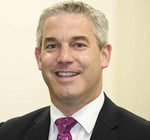
  • Steve Barclay – 2023 Speech at the NHS Confed Expo

    Steve Barclay – 2023 Speech at the NHS Confed Expo

    The speech made by Steve Barclay, the Secretary of State for Health and Social Care, on 15 June 2023.

    Thank you, Matthew [Taylor] – it’s great to be with you today.

    Tuesday’s incident in Nottingham has shocked us all.

    I am sure everyone’s thoughts have been with the families of those who have lost their lives so tragically and all who have been affected.

    And I wanted to take this opportunity to thank in particular everyone in the NHS who responded from the ambulance crews and paramedics – to the staff at the Queen’s Medical Centre.

    I also recognise that this week brings additional challenges to many in the room due to the industrial action and I acknowledge that this creates additional pressures for you and your teams.

    Many people will be working particularly hard to ensure the impact on patients is mitigated as far as possible.

    And I know this work comes after an incredibly challenging period.

    While the World Health Organisation has announced that the Covid-19 pandemic is officially over, its after effects are still very much being felt – including the scale of delays it has caused for patients waiting for treatment and the pressures on staff.

    Thank you to everyone – across the whole health and care system – for the way you’re rising to meet these challenges.

    My motivation as Secretary of State is clear: to enable people to access the right care faster.

    Because when for example I think of cancer treatment, I am thinking of the constituent in her 20s with a young daughter who was told not to worry about her symptoms, only to later find that the cancer had spread.

    I challenge myself as to what more I can do in this job to get the right treatment to people like her as fast as possible.

    That challenge sits at the heart of our three recovery plans.

    And whether it’s electives, UEC or primary care, patients are – rightly – demanding improvements.

    They also want to see care that is better joined up.

    And with our Integrated Care Systems now taking proper statutory form, we are moving in the right direction.

    Last August, I visited the Jean Bishop Integrated Care Centre in Hull which is one of a number of fantastic examples of how health and social care can come together under one roof.

    NHS staff, care workers and volunteers are working to care for local people, including keeping thousands of frail and elderly patients out of hospital and helping them live at home with the independence and dignity they deserve.

    And with ICSs now fully operational, we can make this type of approach more commonplace across the country.

    Despite the difficulties we face, there are signs of progress.

    On electives we’ve virtually eliminated waits of over 2 years, and we’ve reduced 18 month waits by over 90%,

    But we know the overall number remains high.

    This has a material impact, like, for example, for the self-employed worker who is waiting for their operation before they return to work.

    This is why we are taking further action to expand patient choice and making information on patient choice much more transparent.

    On urgent and emergency care, ambulance handover delays have improved.

    But again we know it has been particularly difficult in the past few days.

    In primary care, more appointments are being delivered by GPs and the wider clinical team, with on average an extra 20 per practice per day.

    But demand remains high.

    I recognise many in this room will have played a direct part in bringing these additional services to patients.

    Alongside these plans, I know other important work continues apace.

    You will have heard yesterday from Amanda about the improvements in cancer, including the doubling of cancer checks.

    In the 21st century, with the technology at our disposal, we can go further.

    Thanks to your hard work, we’re already moving in the right direction.

    Take lung cancer as one example.

    Through our screening programme, we are now seeing more diagnoses at stage one and stage two in the most deprived communities.

    This is a positive step and a practical example of how we are addressing health inequalities.

    We’ve also made particular progress in areas like breast cancer and research this week shows that most women diagnosed in England will beat the disease.

    Now we must build on this, by getting people potentially life-saving tests, checks, and scans more quickly and bringing those checks closer to people.

    Community Diagnostics Centres are an example of this.

    There are now 108 in operation, and they’ve delivered more than 4 million tests, checks and scans and they will help us build on these hard-won gains in the years to come.

    Now, I don’t think there’s anything original about a Secretary of State being fixated on tech.

    But for me, this isn’t tech for tech’s sake.

    It is the way to get care to people quicker – and do so at scale.

    Take for example, the way we’re expanding the NHS App. Contrary to what you may have heard from one speaker yesterday, over 2.4 million repeat prescriptions were ordered in April alone.

    Alongside a quarter of a million primary care appointments that were booked on the app, with numbers increasing rapidly.

    Tech is also the way we can tackle the many frustrations that I hear from staff – and that I’m sure many of you in the room hear too.

    The reason I care about tech is simple: it improves outcomes and helps you do your jobs.

    And let me say this: when budgets are tight, tech is often the first thing to go.

    That is not my approach.

    I am protecting the tech budget – and those key investments that will help us in the long term.

    From ensuring every NHS Trust uses electronic patient records and investing more in bed management systems.

    To the significant investment we’re making in our new data platform.

    And digitising the front line – from speeding up staff logins to staff passporting.

    Because I am acutely aware that when it comes to tech it is often how we make the job of local teams easier that that really matters.

    Despite what you may have read, I believe strongly in devolving decision-making.

    Equally, I think this should sit alongside greater transparency.

    We need more devolved decision making to enable a place based approach with decisions taken closer to patient need.

    Equally there are areas of great innovation but we have a challenge in scaling that so it is widely adopted. And this challenge is reflected in too wide a variation in performance between similar areas.

    For me the opportunity is to devolve much more and to trust local decision makers. In return to expect more meaningful transparency.

    Let me give you a practical example of where I have applied this, even where it could be uncomfortable.

    I listened to those suggesting we publish the number of patients waiting for 12 hours or more from arrival in Emergency Departments.

    Together with NHS England colleagues, we acted on that and from April we started publishing that information.

    This is particularly relevant in the context of mental health patients, who we know are at greater risk of longer waits in A&E, and we’re taking targeted action to reduce that risk to reduce that risk to reduce that risk to reduce that risk.

    Including the roll out of mental health ambulances, mental health cafes and mental health crisis hubs.

    NHS leaders have been clear with me about what they want to see from government.

    Fewer targets and more trust in the system.

    As Matthew referenced, we published a new NHS mandate this morning which reflects this.

    For over a decade, governments have used the mandate to make asks of the system.

    Sometimes these asks have been excessive, with long documents with many pages full of tests and targets.

    I’m sure you won’t be alone if you’re sat there thinking: it doesn’t matter I don’t read it anyway.

    But what we’ve done this year is make it short and clear, setting out our priorities:

    Cutting waiting lists; the three recovery plans; tech; and workforce.

    It gives a clear direction and backs it up with the freedom and flexibility to deliver it.

    We know that change happens when people are trusted, have a common purpose and are free to innovate.

    It was something that Matthew highlighted yesterday as a lesson coming out of Covid. And it is something I very much agree with.

    Trusting ICSs with greater freedom from devolved decision-making alongside greater transparency was one of the reasons we commissioned the Hewitt Review. Thank you to all those who contributed to it.

    Before I wrap up, I just want to reflect that – as we sprint to address the present it would be easy to lose sight of foundations we can lay now to build hope for the future.

    Some – such as the Long-Term Workforce Plan – have been well debated by colleagues in this room.

    It offers significant opportunities not just to boost overall numbers, but to better use the full skills mix and deliver training and career progression in completely different ways.

    And there are other opportunities – such as the rapid developments in AI – that are exciting and fast-moving and generating much interest.

    One example of the work we’re doing with AI in the department is how we can use AI to improve patient safety in maternity services.

    And we’re also working closely with the life science industry to enable both population-level treatments and more bespoke and targeted medicine.

    And this is reflected in our recent deals agreed with Moderna and BioNTech, Lord O’Shaughnessy’s review to speed up and expand the adoption of clinical research trials we launched last month.

    And indeed the Chancellor’s citing of Life Sciences as one of his key growth sectors.

    The NHS has changed massively over the last 75 years, all while remaining true to its founding principles.

    Covid showed that we can deliver change very rapidly when it matters and that trust in local systems to make decisions allows them the freedom to better adopt innovation.

    It is the culture of innovation which gives us a strong foundation for the next 75 years.

    In closing, I want to reinforce my message today on the importance of trusting integrated care systems more.

    What that means for you is:

    • Greater freedom
    • Fewer targets from the centre
    • More meaningful transparency on performance

    That is the approach I am taking as we work with you on our shared challenge of making it easier for patients to access the care they need.

    Thank you.

  • PRESS RELEASE : UK funding for Syrians reaches almost £200 million this year [June 2023]

    PRESS RELEASE : UK funding for Syrians reaches almost £200 million this year [June 2023]

    The press release issued by the Foreign Office on 15 June 2023.

    UK funding for vulnerable Syrians and the region reaches almost £200 million this year.

    • The UK pledges up to £150 million at a pledging conference in Brussels
    • Earlier this year, the UK also committed up to £43 million to support the response to the earthquakes in Syria and Türkiye.
    • Funds pledged today will support food production, protect women and girls from violence, provide lifesaving assistance, and ensure access and improved humanitarian service provision.

    At the ‘Supporting the Future of Syria and the Region’ pledging conference in Brussels today (Thursday 15 June) the UK has pledged up to £150 million to support millions of vulnerable Syrians and help mitigate the destabilising impact of the conflict in refugee-hosting nations.

    This year’s pledge is in addition to the £43m committed earlier this year in response to the earthquakes in Syria and Türkiye, bringing the UK’s contribution to Syria and the region to £193m in 2023.

    Lord (Tariq) Ahmad of Wimbledon, Minister of State for the Middle East, said:

    The UK’s commitment to supporting the Syrian people is unwavering.

    On top of 12 years of harrowing conflict, Syrians have faced further tragedy this year in the form of February’s earthquakes.

    The international community must ensure the Syrian people are not forgotten. The UK will continue to play a leadership role in supporting Syrians to rebuild their lives and promote a long-term political settlement for lasting and sustainable peace.

    The funding announced today will support the humanitarian response both within Syria and across the region. It will enable around 65,000 Syrians in need per year to be less dependent on emergency aid, provide access to high-quality primary education in Northwest Syria and deliver specialised sexual and reproductive health services and gender-based violence services to help survivors recover.

    UK funding earlier in the year for earthquake relief in Syria included immediate support to the White Helmets for search and rescue operations, the delivery of urgent relief items – such as family tents, blankets, water purification kits – as well as a bolstered package of support to aid agencies to help those most in need. Last year, UK funding for the humanitarian needs of Syrians also provided thousands of people with drinking water and access to formal education, as well as delivering immunisation campaigns, medical consultations and sexual, gender-based violence and reproductive services.

    The UK is one of the largest bilateral donors to the Syria Crisis, having spent over £3.8 billion to date. It is the UK’s largest-ever response to a single humanitarian crisis.

  • PRESS RELEASE : UK joins international partners in delivering air defence equipment to Ukraine [June 2023]

    PRESS RELEASE : UK joins international partners in delivering air defence equipment to Ukraine [June 2023]

    The press release issued by the Ministry of Defence on 15 June 2023.

    A major new fund will deliver hundreds of vital air defence missiles, the result of a partnership between Denmark, the Netherlands, the UK and the USA.

    • A major new fund announced today will deliver hundreds of vital air defence missiles.
    • Result of a partnership between Denmark, the Netherlands, the UK and the USA.
    • Announcement comes on the eve of the Defence Secretary discussing the future of NATO at a meeting of Alliance defence ministers in Brussels.

    The UK will contribute to the rapid delivery of a significant package of vital air defence equipment for Ukraine, working alongside international partners, the Defence Secretary has announced today.

    The announcement was made today by the defence ministries of Denmark, the Netherlands, the UK and the USA, during a meeting of the Ukraine Defence Contact Group (UDCG). The UDCG brings together some 50 nations providing a variety of military support to Ukraine.

    Defence Secretary Ben Wallace said:

    Working with our international partners we are able to provide vital air defence equipment, which will help Ukraine support offensive operations and protect critical national infrastructure.

    Hundreds of short and medium range air defence systems will be procured via the fund. Delivery of the equipment has already begun and is expected to be completed within weeks. The package consists largely of Soviet-era missiles, supporting the Armed Forces of Ukraine’s most pressing needs for systems to support offensive operations and protect critical national infrastructure.

    As well as attending the UDCG, the Defence Secretary will also be attending a meeting of NATO defence ministers at NATO HQ, Brussels, ahead of next month’s summit of the Alliance’s leaders in Vilnius. The Defence Secretary will reiterate the UK’s ambition for Sweden’s accession to the Alliance to be ratified ahead of the NATO Leaders’ Vilnius summit.

    Ministers will also discuss changes to NATO’s military structures, strengthening ties with defence industry, and making sure the Alliance has the resources it needs to tackle threats across all domains – laying the groundwork for the biggest transformation of NATO for decades.

    Funding for air defences is the latest UK support for Ukraine to be announced, following the recent delivery of long-range Storm Shadow missiles, and the announcement from the Prime Minister last week that the UK is donating other air defence systems and long range attack drones.

    Earlier this week, the Defence Secretary met his Joint Expeditionary Force counterparts in Amsterdam, and announced that the UK will commit a further £250 million to the International Fund for Ukraine (IFU), as well as a new package of vital air defence capabilities worth £92 million. The equipment will be procured in the coming months through the IFU to bolster Ukraine’s ability to protect its critical national infrastructure, civilian population, and front-line personnel. The package will provide radars to help protect from indiscriminate Russian strikes as well as guns and a significant amount of ammunition. Norway, the Netherlands, Denmark, Sweden, Iceland and Lithuania have all contributed to the fund.

    Other recent support for Ukraine has included the granting of Challenger 2 main battle tanks, armoured vehicles, and self-propelled guns, as well as running training programmes for Ukrainian infantry, marines, and pilots.