Tag: 2023

  • Harriet Harman – 2023 Speech on the Privileges Committee Special Report

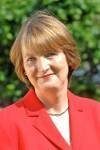
    Harriet Harman – 2023 Speech on the Privileges Committee Special Report

    The speech made by Harriet Harman, the Labour MP for Camberwell and Peckham, in the House of Commons on 10 July 2023.

    I thank the Leader of the House for tabling the motion, which arises out of the special report of the Privileges Committee.

    When it approved with an emphatic majority the report of our inquiry into Boris Johnson, the House made it clear beyond doubt that honesty in our Parliament matters, that Ministers are required to be truthful and that there will be consequences for any Minister who is not. The House was endorsing the outcome of the Committee that it had mandated to undertake that inquiry.

    The present motion asks the House to give its approval to our special report, because we want to make sure, if the House ever again mandates the Privileges Committee to undertake an inquiry into a Member, that there will be Members who are willing to serve on the Committee, and that the Committee and its processes are protected while an inquiry is under way so that the Committee is able to undertake its work in the way that the House wants. The motion makes it clear that when a Privileges Committee inquiry is ongoing, Members should not lobby, intimidate or attack the integrity of the Committee. They should not try to influence the outcome of the inquiry or undermine the standing of the Committee, because that undermines the proceedings of the House.

    No Member needs to feel disempowered by this. On the contrary, Members own the entire process. Any Member can object to a Member being appointed to the Privileges Committee. Any Member can speak and vote against any reference to the Privileges Committee or the terms of any reference. Any Member can give evidence to the Committee. Any Member can debate and vote on the report of any inquiry.

    This is not a process imposed on the House by the Privileges Committee. The opposite is the case: it is the House that imposes this responsibility on the Privileges Committee. It is the House that chooses the members of the Committee; it is the House that decides on an inquiry and its terms of reference; and it is the House, by its Standing Orders and precedents, that lays down the processes that will apply.

    Our special report makes it clear that it is not acceptable for Members, fearing an outcome that they do not want, to level criticisms at the Committee so that in the event that the conclusion is the one that they do not want, they will have undermined the inquiry’s outcome by undermining confidence in the Committee.

    Mark Jenkinson (Workington) (Con)

    As the right hon. and learned Lady knows from our exchange of letters in recent days, I was named in the annex to the report for a tweet that did not refer to the Committee. The context of the Twitter thread is clear. She talks about hon. Members being able to give evidence to the Committee, but we had no prior notification that we might be named. I was alerted to my presence in the report by the press. I just wonder how she considers that Members like me might be able to seek redress in such circumstances.

    Ms Harman

    The hon. Gentleman named himself on Twitter by calling the Committee a “witch hunt”, and that was in the public domain. The thread ahead of his tweet was quite clear, so we simply put it in our report. We took what was in the public domain and put it in our report.

    Our special report makes it clear that it is not acceptable for a Member of this House who does not want a particular outcome to seek, by pressure or lobbying, to influence the Committee’s decision.

    Mark Jenkinson

    On a point of order, Madam Deputy Speaker. I fear that the right hon. and learned Lady may have just inadvertently misled the House by suggesting that I called the Committee a “witch hunt”. There was no reference to the Committee, and the four-part Twitter thread is quite clear that it was not in relation to the Committee or its investigations. I wonder how I might seek redress on this matter.

    Madam Deputy Speaker (Dame Rosie Winterton)

    I thank the hon. Gentleman for that point of order. I do not know whether he was here at the beginning but, if he was and if he wishes to speak later, he can catch my eye. He has already made his point, and I think the right hon. and learned Member is addressing that point.

    Ms Harman

    Thank you, Madam Deputy Speaker. If the hon. Member for Workington (Mark Jenkinson) is saying that he does not believe the Privileges Committee’s inquiry into Boris Johnson was a witch hunt, I warmly welcome the fact that he has said so. I thank him for putting it on the record that he does not believe our inquiry was a witch hunt.

    Michael Fabricant

    Does the right hon. and learned Lady not think it would have been courteous of the Committee to warn those listed in the annex that they were going to be listed? If a mistake had been made, it would have given those people an opportunity to make their point before the Committee’s report was published. Would that not have been fairer?

    Ms Harman

    The points and issues that we included in the annex to our report were put in the public domain on Twitter. Indeed, the hon. Gentleman himself put into the public domain that, in relation to the Committee, there was a question of “malice and prejudice”. He felt it was important to put that on to the public record.

    Michael Fabricant

    Will the right hon. and learned Lady give way?

    Ms Harman

    I think the hon. Gentleman will be making a speech.

    Michael Fabricant

    On a point of order, Madam Deputy Speaker. It is totally—

    Madam Deputy Speaker (Dame Rosie Winterton)

    Order. I have not called the hon. Gentleman to make a point of order. If the right hon. and learned Member does not want to give way, which is her right, it is detrimental to the debate if Members who cannot get their own way then make a point of order.

    Michael Fabricant

    But I am making a point of order.

    Madam Deputy Speaker

    Make your point of order.

    Michael Fabricant

    My point of order is that it is also discourteous to partly quote something, actually. And what it clearly—

    Madam Deputy Speaker

    Order. The hon. Gentleman must resume his seat. That is not a point of order. He is addressing it directly to the right hon. and learned Lady, not to me. No more of that, thank you.

    Ms Harman

    Thank you, Madam Deputy Speaker. If the hon. Member for Lichfield (Michael Fabricant) wants to say that he does not believe the Committee was motivated by malice and prejudice, we would warmly welcome that correction.

    Our special report makes it clear that it is not acceptable for a Member of this House who does not want a particular outcome to seek, by pressure or lobbying, to influence the Committee’s decision. The House, by supporting this motion tonight, will be making it clear that, in such an inquiry, the Committee’s responsibility is to gather the evidence, and that it is the evidence that must prevail. That is the only basis on which a decision should be made. Members must not try to wreck the process by pressing Committee members to resign.

    If members of the Committee are not prepared to undertake such inquiries, the House would have no protection from those who mislead it. I have nothing but admiration for my colleagues on the Privileges Committee, particularly the Conservative Members. Despite the pressure they were subjected to, they were unflinching. They came to each of our more than 30 meetings and persisted to the conclusion of the inquiry with a complete and total focus, which was a credit to the House. They gathered the evidence, analysed it and based their decision on it, exactly in the way that the House requires them to. That was then put to the House.

    By supporting this motion tonight, the House will be making it clear that when it appoints members to the Committee, those members will have the support of the House to carry out their work. They are doing a worthy thing by serving on the Privileges Committee.

    Brendan Clarke-Smith (Bassetlaw) (Con)

    I appreciate what a difficult job the Committee has—I fully respect that—and, of course, the original Chair did recuse himself from the inquiry. When the original report was put before the House, the right hon. and learned Lady stated that she had received assurances from the Government that she would remain in that position, but she did not elaborate on that at the time. Will she therefore use today as an opportunity to inform the House as to what assurances she had been given and by whom?

    Ms Harman

    Is the hon. Gentleman, in what he has said, withdrawing what he said on Twitter, which was that the Committee was a

    “witch-hunt which would put a banana republic to shame”?

    That is what he actually said.

    Committee members are entitled to the support of the House, because it is the House that has asked them to undertake this work.

    Dame Andrea Leadsom (South Northamptonshire) (Con)

    As a former Leader of the House, and having both spoken for and voted for the report by the Privileges Committee, which the House did commission, I am afraid that I do not accept the premise that the right hon. and learned Lady, for whom I have a great deal of time and respect, is putting forward today, which is that the Committee, as a result of being asked by the House to look into the behaviour by one of its Members, should therefore be absolutely immune from any form of free speech whatsoever. I cannot agree with her on that basis and will not be supporting the Committee’s report today.

    Ms Harman

    Perhaps I may reiterate that we are not saying that the Committee is immune. We are saying that it is evident that any Member of the House can challenge the appointment to the Committee of any member of the Committee, which frequently happens; that any Member of the House can challenge a reference to the Privileges Committee, and that, too, does happen; and that Members can challenge the terms of reference to the Committee and raise concerns about the procedure. But what Members cannot do is say that something is a witch hunt and a kangaroo court, and that there is collusion; impugn the integrity of the individual members of the Committee; and also undermine the standing of the Committee, because that is undermining the proceedings of the House. If hon. Members are not sure what “impugn” means, they can look at “Erskine May”, which goes into it in great detail—

    Sir Jeremy Wright (Kenilworth and Southam) (Con)

    I am sorry that the right hon. and learned Lady is being continually interrupted, but may I ask her for some clarity on the point she is making? She has mentioned impugning the integrity of members of the Committee in part of the motion, with which I have considerable sympathy. I just want to understand this point. I do not suggest that this has happened here or at any time in the past, but she will recognise that it is conceivable that it would be right to impugn the integrity of a member of the Committee, or of more than one of its members, if there were evidence to do so. May I just be clear that what this motion should be taken to mean is that someone should not impugn the integrity of members of the Committee while an inquiry is ongoing? If there is evidence to do so later, there are mechanisms by which we can do so. We should be clear, should we not, that what this motion means is that while an inquiry is ongoing, it is wrong to impugn the integrity of any member of the Committee?

    Ms Harman

    That is absolutely right, and that is so that the Committee can do its business properly, as mandated by the House, as is the case with the Standards Committee. We cannot have a situation where Members are reluctant to serve on the Committee because, as soon as they undertake an inquiry, it is open season on them. We cannot have a situation where the outcome is based on pressure and lobbying, rather than the gathering and consideration of the evidence.

    The motion does not create any new categories of contempt, nor does it extend what can be regarded as contempt. It simply makes it explicit that the focused, time-limited protection that the House has already made explicit for standards cases is the same for privilege cases.

    Dame Angela Eagle

    Does my right hon. and learned Friend agree that if the motion were not to go through, and it was to be open season on all future members of the Privileges Committee during inquiries, the only recourse for this House to ensure that it was not lied to in future would be to have an outside system to assess that, which would be constitutionally novel and—I think—highly dangerous?

    Ms Harman

    My hon. Friend makes an extremely important point. If this work of the Privileges Committee is to be done in-house by Members of this House, this House must support them in that work. If the House is not prepared to do that, and it is open season on Members who are put forward for the Committee, we would very quickly find ourselves with an independent, outside process. Most Members of the House want us to keep the process in-house, but to do that we must all respect it.

    Lia Nici

    The right hon. and learned Lady talks about collusion and lobbying. Can she explain how it was that Guardian reporters were briefed before Privileges Committee reports were published for us in this place, and, if she knows who had sight of those reports, who was doing the collusion with those journalists?

    Ms Harman

    Again, this is very unfortunate. I say to the hon. Lady that hon. Members are given a task to do on behalf of the House. They do it to the best of their ability, with integrity, and they should be supported in doing that. Although the hon. Lady was very much against the outcome, which came about on the basis of the evidence, it is not acceptable then to criticise the process, except through the channels and in the ways that I have set out.

    Our special report draws upon “Erskine May”. I invite hon. and right hon. Members to read paragraphs 15.14 and 15.16 of “Erskine May”, which make it crystal clear that it is not acceptable for a Member of this House to seek, by lobbying or arousing public hostility, to influence the decision of members of the Committee, or to undermine the Committee’s credibility and authority. All this is about protecting the House from being misled, by ensuring that there is a strong and fair Committee that will, on behalf of the House, undertake an inquiry, and that there are Members prepared to serve on the Committee and able to do that work without interference.

    Mr Rob Roberts (Delyn) (Ind)

    We heard his name mentioned earlier, in respect of the previous report, but will the right hon. and learned Lady confirm that Sir Ernest Ryder was still in place for the preparation of this special report, that he agreed with the findings of the Committee, and that he found that there was nothing improper about the work of the Committee in this report?

    Ms Harman

    Yes, Sir Ernest Ryder, who provided us with advice for the fifth report, which was the substantive report into Boris Johnson, also provided us with advice for this special report, for which we are grateful. We also had expert advice from the Clerks, including at the most senior level, so that we could be absolutely certain that we were complying with all the rules and processes laid down by the House.

    The objective here is not to protect members of the Privileges Committee. It is even more important and fundamental than that. The objective is to protect this House and thereby to protect our democracy, so I commend this motion to the House.

    Sir Charles Walker (Broxbourne) (Con)

    The motion before the House is proportionate: it seeks only to provide the Privileges Committee, once it is established and sitting, with the same protections enjoyed by the Standards Committee. That is all it does. All colleagues respect the Standards Committee when it is sitting. I hope that we can extend that respect to the Privileges Committee and that the motion is carried.

    I was struck by what the Leader of the House said in her speech. I wrote three or four speeches for this afternoon’s debate—some reflective, some angry and some defensive—but I have put them all aside.

    You will know, Madam Deputy Speaker, that my right hon. Friend the Member for Maidenhead (Mrs May), the former Prime Minister, was a great friend of mine—one of my greatest friends in politics. I fought tooth and nail, with every fibre in my body, to keep her in No. 10. I turned up whenever I was needed, to do whatever needed to be done, but we lost—that battle was lost.

    I see my hon. Friend the Member for Altrincham and Sale West (Sir Graham Brady), the chair of the 1922 committee, in the Chamber. Very quickly, the late Dame Cheryl Gillan and I were thrust into being acting chairs of the 1922 committee, and we oversaw the contest for the new leader of the party. The former Member for Uxbridge and South Ruislip (Boris Johnson) was successful; I was one of five people, including my hon. Friend the Member for Altrincham and Sale West, present when, de facto, he became leader of our party and, de facto, the following day, Prime Minister. That was 24 July 2019.

    That day, or shortly afterwards, I was in the Tea Room having supper with my right hon. Friend the Member for Maidenhead, the former Prime Minister, when in bounced the then Secretary of State for Transport, my constituency neighbour, my right hon. Friend the Member for Welwyn Hatfield (Grant Shapps). He has been my political neighbour for 18 and a half years. Sometimes we are the best of friends; sometimes we are the best of enemies. When we fall out, we normally find an accommodation that allows us to become friends again.

    You may recall, Madam Deputy Speaker, that in 2018, my right hon. Friend the Member for Welwyn Hatfield was the first to call for the then Prime Minister, my right hon. Friend the Member for Maidenhead, to stand down. So when he bounced into the Tea Room, the day she ceased to be Prime Minister, or a few days later, and sat down with his supper, I thought, “Oh my word. This is going to be pretty tasty”—not the supper, the conversation. I thought there would be fireworks, because my right hon. Friend the Member for Maidenhead, unencumbered by the office of Prime Minister, could really have a go at my right hon. Friend the Member for Welwyn Hatfield, my next door neighbour in Hertfordshire. The former Prime Minister fixed him with a steely eye and said, “Now, Mr Shapps, I have a small station in my constituency that needs some investment. What are you going to do for me?”

    In this place, we are judged not by how we handle our successes, but by how we cope with our disappointments. In that Tea Room exchange, I learned so much about character, courage, humility and dignity. To return to the motion, I hope that it is passed tonight. There is a lot of upset and grievance on the Government side of the House, but eventually we have to cast that to one side and move forward.


  • Chris Philp – 2023 Speech on Police Stations

    Chris Philp – 2023 Speech on Police Stations

    The speech made by Chris Philp, the Minister for Crime, Policing and Fire, in the House of Commons on 10 July 2023.

    Let me start by congratulating my right hon. Friend the Member for Chipping Barnet (Theresa Villiers) on securing this important debate and for speaking with such passion and eloquence on this topic. I agree with her sentiments about how important police stations are for our constituencies and our local communities. I say that having visited Chorley police station just a few days ago, Mr Speaker.

    As my right hon. Friend said, police stations in our local communities are close to the people they serve. They help officers stay in touch with the local community and connected to it. Their ears and eyes are on the ground picking up information, and they can serve local residents. They are also visible and reassure the public that the police are close to where crimes may be committed. It shows that police are available and accessible, and they can often respond to crimes a lot more quickly if they are deploying from a police station close to the local community, rather than one miles and miles away. My right hon. Friend set out a whole number of reasons why police stations as a physical location are so important.

    In relation to police stations in London, I completely agree with my right hon. Friend that Mayor Sadiq Khan should look again at the closure plan he set out in 2017—I think it was for a total of 37 police stations—and reverse it. Some of those closures have happened already; others have not. He demonstrated with his rather opportunistic and cynical U-turn on Uxbridge just a few days ago that he could look at this issue again, and he should. We should keep in mind that decisions on opening and closing police stations are for police and crime commissioners—in London, that is Sadiq Khan—not for the Government. I join my right hon. Friend in calling on the Mayor to reconsider and reverse the swingeing cuts that he announced back in 2017.

    It is worth reminding ourselves as we make that call that plenty of resources are available. The Metropolitan police have the highest funding per capita of any police force in the country by some margin, and that is excluding the national and international capital city grant and the counter-terrorism money they receive. On a straightforward territorial policing basis, the Met gets more per capita than any other police force. It receives some £3.3 billion a year. That figure went up by £102 million this compared to last year.

    It is also worth reminding ourselves that the whole policing system across the country gets £17.2 billion a year, and the part of that spent by police and crime commissioners on local policing—the vast majority of it—went up by £550 million this year compared to last year. So the resources are there, and we expect police and crime commissioners to use them wisely—unlike Mayor Sadiq Khan, who is not doing so.

    This might be a good moment to congratulate my hon. Friend the Member for West Bromwich West (Shaun Bailey), who is in the Chamber this evening. His tireless campaign has saved his local police station in Tipton from the planned cuts. I am sure the whole House will want to congratulate him on his successful campaign to overturn a decision originally announced by the police and crime commissioner in the west midlands.

    My right hon. Friend the Member for Chipping Barnet made excellent points about why police stations are so important and why the Met’s decision should be reversed, one of which was about the extra police officers that we have recruited across England and Wales. Across the jurisdiction as a whole, we now have record police numbers—149,572 to be precise, which is 3,500 more than at any other time in the history of policing. The Metropolitan police also have record numbers—about 35,000 more than ever before—and, as she said, they need to be accommodated somewhere.

    It is worth mentioning that the Metropolitan police could have had even more officers—an extra 1,000 officers —if Mayor Sadiq Khan had used all the money that was available. It is a great shame and a great disappointment to me as a London MP, as I am sure it is to colleagues, that he failed to do so. I therefore completely endorse the points my right hon. Friend made about police stations in our community.

    There are some things that can be done to try to mitigate Sadiq Khan’s terrible police station closure plans. In my constituency of Croydon South, we have a fire station in Purley—there is no police station in my constituency—and following some work between the local police and the London Fire Brigade, we have managed to move local patrolling neighbourhood officers into the fire station. They now patrol from the fire station around the neighbouring area, which helps a little towards faster response times. It is also more convenient for officers, and they can share information with the firefighters based there. That is helpful, but it is not as good as having a police station.

    Given the lateness of the hour, I will conclude. I thank my right hon. Friend again for her tireless campaign to save Barnet police station. The Mayor of London has record levels of funding; I only wish that he would use that funding a little more wisely and reverse his shocking closure plans.

  • Theresa Villiers – 2023 Speech on Police Stations

    Theresa Villiers – 2023 Speech on Police Stations

    The speech made by Theresa Villiers, the Conservative MP for Chipping Barnet, in the House of Commons on 10 July 2023.

    The hour is late, but we still have an important issue to discuss this evening: police stations. In November 2017, the Mayor of London announced the closure of a substantial list of police stations around the capital, including Barnet police station. Ever since, I have been campaigning to save it. A key justification given for the Mayor’s decision was that the number of crimes reported at police station front counters has fallen. It is true that the way people report crimes has changed in recent years—it can, of course, now be done by phone or online—but being able to attend a police station front counter and talk to someone face to face is still an option valued by many, especially the elderly or those who may not be comfortable in the digital environment.

    Moreover, police stations perform other vital functions in addition to front counter services. Crucially, they are a place to locate officers, but they also provide facilities such as evidence and equipment storage, police vehicle parking, and custody suites and cells. As such, what is even more worrying than the loss of a front counter is the loss of the physical presence of the police in a particular locality. In the six years since Mayor Khan announced the closure of Barnet police station’s front counter, that police station building has thankfully remained in use by officers, both neighbourhood police and other teams.

    Jim Shannon (Strangford) (DUP)

    Will the right hon. Lady give way?

    Theresa Villiers

    I will.

    Mr Speaker

    I thought you would at least allow the right hon. Member to get under way. I call Jim Shannon.

    Jim Shannon

    Thank you very much, Mr Speaker. The right hon. Lady is right to mention community policing—it is about not just the buildings, but the community officers and the contact with their local communities. She made a very helpful intervention in the debate on the Northern Ireland budget that referred to that issue. I echo her request to ensure that not only the buildings, but the community policing is there, because it is the eyes and ears of the community. It is about making policing better.

    Mr Speaker

    I am sure that the right hon. Member, if given time, would have got to that.

    Theresa Villiers

    I absolutely agree that community policing is vital. As I will explore in my speech, the presence of police stations is an important part of keeping policing close to communities. If we shut them down or retreat into a handful of buildings around the capital, we make it more difficult to deliver genuine community policing. Closing Barnet police station altogether and selling it off for redevelopment would leave officers with nowhere at all in my constituency from which to operate. That would be disastrous, not least because it could mean ward officers having to undertake long and complex journeys to and from the only remaining police station in the borough, which is in Colindale.

    At engagement meetings linked with the 2017 closure announcements, I remember City Hall representatives indicating that one of the reasons police stations were now less important was that officers would be given iPads for processing paperwork, which they could use anywhere. Frankly, it is wholly unrealistic to expect a police officer sitting in Starbucks with an iPad to be an adequate substitute for a functioning police station. Apart from the noted reliability problems with many such devices issued by the Metropolitan police, that approach would violate confidentiality and data protection obligations. There is also the concern that a number of the Met’s IT upgrade programmes have yet to be fully delivered, as highlighted in the Casey report. Moreover, officers would undoubtedly be approached by members of the public, making it harder for them to focus on the work they need to do. Their office time would inevitably become advice surgery time.

    In February last year, I secured a promise from Sophie Linden, the deputy mayor for policing, that Barnet police station’s building would not be disposed of until a base was found for ward police teams that enabled them to reach their areas in 20 minutes by walking or cycling. That was of course welcome, and it amounted to a partial reprieve for the station, but it is not an adequate substitute for a properly functioning police station.

    Mr Louie French (Old Bexley and Sidcup) (Con)

    On this point about the connection with communities, particularly in Greater London, does my right hon. Friend agree that the basic command unit model that the Mayor has adopted since 2018 is having a negative impact on the ability of police to connect with communities, but also to respond to crimes in a timely manner?

    Theresa Villiers

    I am very much aware of the concern felt in many parts of London about the tri-borough policing model, and I think it is important to review it.

    I turn back to the idea that new bases for police officers could be found. There is still real uncertainty about where these would be and what they would involve. The suggestion remains that a new base for police officers could be in a corner of a library or the backroom in a high street shop, but providing a base for police officers is not a straightforward matter. Officers have access to highly sensitive personal data, and they hold evidence from cases for which it is vital that they keep rigorous and reliable records of custody. Moreover, some police equipment is potentially harmful, such as tasers, and it would be dangerous if this kind of kit fell into the wrong hands. Special storage facilities would need to be built in new alternative accommodation. They could not just set up a few lockers in a local library. Flogging off existing police stations could end up being a false economy if multiple new premises for ward teams in different areas need to be bought and fitted up to replace them.

    I also want to highlight the sense of confidence that the presence of a police station gives people—a sense that would be entirely lost in the areas where police stations are currently under threat. For example, the East London Advertiser reported that people felt that police station closures in Tower Hamlets meant that the area felt less safe. Complete loss of the remaining police presence in Chipping Barnet town centre would inevitably leave my constituents feeling more insecure. Serious concerns have been reported to me about crime, thefts and antisocial behaviour in Barnet High Street, including what appears to have been a serious assault that took place recently outside McDonald’s. The sale of the police station and its complete closure would make it harder to grapple with the existing crime issues in the local area.

    These worrying local crime problems were discussed recently at a meeting I attended of the High Barnet police community action panel, under the chairmanship of my constituent Mahender Khari. I take this opportunity to pay tribute to him, and to everyone who chairs or takes part in police action panels in my constituency. They do a vital job. That includes Councillor Jennifer Grocock, who has done excellent and innovative work on making neighbourhood police teams more visible by involving them in Barnet Council’s community safety hubs, which were pioneered by the previous Conservative administration in Barnet.

    I am also worried about the impact of police station closures on the viability of our high streets. We all know that town centres have suffered in recent years for a range of reasons, particularly the big shift to online retail. It has become harder and harder to get footfall to high streets, and I fear that losing police stations could lead to a further hollowing out of our struggling town centres, adding to the list of vacant buildings.

    Richard Foord (Tiverton and Honiton) (LD)

    I thank the right hon. Member for her speech and for giving way. Last November, Devon and Cornwall police launched an online poll using SurveyMonkey, and invited the public in Devon and Cornwall to vote to reopen three front desks out of a list of 44. I was pleased to help promote that poll and to attend the reopening of Tiverton police station—and I hope to attend that of Honiton later this year—but does she think that we should not have to fill in SurveyMonkey polls to get to speak to a human being?

    Theresa Villiers

    The hon. Member makes the important point that much of what we are talking about is the ability of the police to maintain appropriate contacts with members of the public. That distance from members of the public is one of the problems that the Met is grappling with, and I think it is useful to hear his point of view about police stations and police services elsewhere in the country.

    During this difficult era for high streets, we should try to enhance the visible presence of public services, not scale it back. That is another good reason to maintain the police station estate, both in Barnet and in other towns and cities. In her report on the Met, Baroness Casey highlighted that station closures are likely to have affected efficiency, with police spending more time travelling, and longer police response times. Recent research by Elisa Facchetti, published by the Centre for Economic Policy Research, pointed to a correlation between reduction in police stations and poorer crime clear-up rates. That suggests that the capacity to collect the evidence needed to solve crimes might be impeded by police having to travel increased distances, although I acknowledge that many other variables could be relevant, and it is difficult to establish a clear causative link.

    Four important recent developments make this debate very timely, and mean that the Mayor of London should reverse his closure programme. First, the Government have delivered on the Conservative manifesto pledge to recruit 20,000 additional police officers. That means that the Met now has more uniformed officers than at any time in its history—and we need somewhere to put them. That radically changes the situation we faced in 2017, when the Mayor wielded the axe against Barnet police station and others.

    Secondly, Baroness Casey’s damning report on the Met cited the closure of 124 police stations as one of the reasons behind what she describes as “eroded frontline policing”. She concluded that the combined impact of various efficiency measures, including police station closures, had led to

    “a more dispersed and hands-off training experience for new recruits and existing personnel, which gives them less sense of belonging to the Met…greater distances for Response officers and Neighbourhood Policing teams to travel”,

    and

    “fewer points of accessible contact for the public”.

    At a time when culture and conduct at the Met have come under huge scrutiny, we should not persist in making disposals from the police station estate—disposals that are calculated to make officers less connected to one another, more isolated and more distant from the communities they serve.

    David Simmonds (Ruislip, Northwood and Pinner) (Con)

    My right hon. Friend is making a speech that will entirely resonate with my constituents. Does she agree that the Mayor’s U-turn on the closure of the Uxbridge police station, which serves my constituents, as well as those in Uxbridge and South Ruislip, demonstrates that the argument that there was simply no alternative but to press ahead with the closures no longer holds water? Does it give her a stirring of hope and optimism that other police stations, such as that in Northwood, already closed and disposed of by the Mayor, will be replaced with operational police stations, or that other stations closed by the Mayor will be reopened forthwith?

    Theresa Villiers

    I agree entirely. The Mayor’s U-turn on Uxbridge should be a lifeline for police stations across the capital. That is one of the reasons why I am delighted to have the opportunity to make this speech.

    I come to the third reason why the Mayor should change his approach. As part of the big changes that he is taking forward, the Commissioner of the Metropolitan Police, Sir Mark Rowley, has asked his team to carry out a review of the list of police stations earmarked for closure and sell-off. I have made the case strongly for saving Barnet police station in a number of meetings with senior police officers, including Sir Mark. That includes at a meeting in May, at which Sir Mark acknowledged how important it is for the police to be close to the communities they serve. He also accepted that whether physical premises are retained or closed inevitably has an impact on whether officers can genuinely be close to the community.

    I understand that that is one of the reasons why the review, expected to report at the end of the summer, was set up. I sincerely hope that it provides a lifeline for Barnet police station and other communities experiencing the same closure threat. That includes Sidcup, Notting Hill and Wimbledon. My hon. Friends the Members for Old Bexley and Sidcup (Mr French), for Kensington (Felicity Buchan) and for Wimbledon (Stephen Hammond) have all fought hard for their local police station, as has my hon. Friend the Member for Ruislip, Northwood and Pinner (David Simmonds).

    Until a few days ago, the places where police stations were in jeopardy and teetering on the brink of sale and redevelopment included Uxbridge. That brings me to my fourth and final point. Uxbridge was on the same closure list as Barnet in 2017. When the Mayor announced its shut-down, Conservative Hillingdon Council offered to buy the site at the market rate, and to provide a £500,000 revenue contribution and a leaseback arrangement, so that the community could keep its police station and the services it provides. At the time, the Mayor rejected this plan out of hand. Undeterred, Hillingdon Conservatives campaigned energetically to save their police station, led by Councillor Steve Tuckwell, the excellent Conservative candidate in the by-election.

    For years, those efforts fell on deaf ears at City Hall, and then there seemed to be a Damascene conversion. Suddenly, out of the blue, the Mayor announced that he had

    “written to the Met Commissioner saying that the case for now retaining more police station sites across the capital is strong”.

    He is yet to specify exactly which police stations may escape the axe he threatened them with six years ago, but this looks suspiciously like a by-election stunt to take credit for a plan to safeguard the police station put together by Hillingdon Council and Steve Tuckwell. It would be massively cynical if the Mayor’s U-turn were confined just to Uxbridge. I therefore take this opportunity once again to call on Mayor Khan to remove the threat to Barnet police station and confirm that its future is secure, along with other stations under threat around the capital.

    In conclusion, when the plan to close Barnet police station was first floated in 2013, I fought successfully to stop it. I saved our police station back then, and I am doing all I can to save it again. I have raised this issue in Parliament many times, including twice at Prime Minister’s questions. The online version of the petition for this issue, which I presented to Parliament last year, now has more than 1,600 signatures. I assure the House and my constituents in Chipping Barnet that I will continue to do all I can to resist the Mayor’s threat to our local police station so that my constituents are safer and more secure and can have the visible police presence in their local town centre that they rightly believe is so important.

  • Alex Chalk – 2023 Statement on Rape Review Action Plan and Operation Soteria

    Alex Chalk – 2023 Statement on Rape Review Action Plan and Operation Soteria

    The statement made by Alex Chalk, the Lord Chancellor and the Secretary of State for Justice, in the House of Commons on 10 July 2023.

    My right hon. and learned Friend the Secretary of State for the Home Department (Suella Braverman) and I are pleased to announce that the Government are today publishing a progress report two years on from the publication of the end-to-end rape review action plan. This is the fourth six-monthly progress report on implementation, and demonstrates the Government’s ongoing commitment to be transparent and accountable to the public on our progress in delivering the ambitions of the Rape Review.

    The data in the report provides clear evidence of progress to drive up police referrals, charge rates, and Crown court receipts. We are making sustained progress towards the rape review’s ambition to return volumes of cases being referred to the police, charged by the Crown Prosecution Service, and going to court, to at least 2016 levels. It is well documented that the charge rate and volume of convictions for adult rape dropped drastically after 2016 due to a range of factors, not least a lack of join-up across the system, and the criminal justice system overcorrecting following a small number of high-profile disclosure failures. A return to 2016 levels is ambitious, marking a year where adult rape convictions were 30% higher than in 2010. The latest data shows that we have hit two of our ambitions already, and remain on track to hit the other:

    Adult rape cases referred by the police to the CPS—for either early advice or a charging decision—continue to increase, with 1,079 total police referrals in the fourth quarter of 2022, exceeding our ambition of 766 and up by 134% from the quarterly average in 2019, when the Rape Review was commissioned.

    Adult rape cases charged by the CPS have been increasing, with 472 suspects charged between October and December 2022, close to our ambition of 538 and up by 93% from the quarterly average in 2019.

    The number of adult rape Crown Court receipts continued to increase in the first quarter of 2023 with 605 Crown Court receipts, exceeding our ambition of 553. It is also up by 162% from the quarterly average in 2019.

    And despite the barristers’ strike impacting court action in 2022, adult rape prosecutions continue to rise, up 44% in the last calendar year, almost double what was achieved during 2019, and higher than the volume achieved in 2010.

    Key achievements over the last six months include:

    Introducing the landmark Victims and Prisoners Bill to Parliament in March, bringing forward measures to better serve victims and the public.

    Legislating through the Victims and Prisoners Bill to ensure requests for third party material, such as therapy notes, or medical, educational and social service records are necessary and proportionate.

    Recruiting 20,000 additional police officers, having brought in a net increase of 20,951 officers across England and Wales since the launch of the recruitment campaign in 2019, ensuring the police have the resources available to dedicate capacity to priority issues such as rape.

    A second round of Government funded procurement—with a value of £4.2 million—of technical capability to retrieve digital evidence—when it is the least intrusive means to do so—from mobile phones at a time and place convenient to the victim has been completed and is being deployed to forces.

    The Law Commission publishing its consultation into the use of evidence in trials involving sexual offences.

    Today we are also announcing that through the specialist sexual violence support project, we will ensure that any adult rape victim at Newcastle, Leeds or Snaresbrook Crown court who needs it has the option to remotely observe the sentencing hearing for their case, through video link, subject to judicial agreement. This will give victims the opportunity to see justice done without the distressing experience of attending court alongside the defendant’s family or supporters. This builds on other work to improve the victim experience at court, including legislation to permit the remote observation of sentencing hearings and allowing victims to pre-record their evidence and spare them the trauma of attending court in person.

    Operation Soteria is an ambitious joint Home Office and CPS programme to transform the way that rape investigations and prosecutions are handled and progressed, with a focus on investigating the suspect rather than the victim. Through close collaboration between frontline policing, prosecutors and academics, the programme has developed new national operating models for the investigation and prosecution of rape and serious sexual offences. All police forces in England and Wales have committed to implement this new approach and will be supported to do so by the Home Office, the College of Policing and the National Police Chiefs’ Council, who are establishing a joint unit to oversee implementation and monitor progress. In addition, His Majesty’s Inspectorate of Constabulary and Fire and Rescue has been commissioned to conduct a thematic inspection on forces’ implementation of the model.

    While strong progress has been made, we made clear in our last progress report that the rape review action plan is a start and must remain dynamic and continue responding to the challenges that victims face. We recognise there is still more to do, which is why we are setting out our action plan until December 2024, ensuring we continue to deliver improvements to the criminal justice system’s response to rape.

    These publications form part of the Government’s ambition to ensure access to justice, improve the experience of victims and make our society safer for everyone.

  • Therese Coffey – 2023 Statement on Canal & River Trust – Future Funding

    Therese Coffey – 2023 Statement on Canal & River Trust – Future Funding

    The statement made by Therese Coffey, the Secretary of State for Environment, Food and Rural Affairs on 10 July 2023.

    Today, I am notifying Parliament of our intention to provide additional grant funding from 2027 to the Canal & River Trust. The trust is a charity responsible for 2,000 miles of waterways and associated historic industrial infrastructure in England and Wales. The trust is responsible for maintaining navigability and safety of its waterways including reservoirs, embankments and other infrastructure.

    An open and well-maintained Canal & River Trust inland waterways network delivers broad benefits aligned to our nation’s priorities. In January 2023 the Government published our ambitious environmental improvement plan (EIP). The Government recognise that the Canal & River Trust has an important role to play in contributing to the EIP, alongside other Government priorities.

    Since it was first created in 2012, as a private charity independent of Government, we have been very clear that the trust would have to increasingly move towards alternative sources of funding. We have been discussing this with the charity for some time and have been offering support on how it can increase income from other sources, alongside continued Government funding, which countless charities across the country do very effectively.

    While there is no obligation for Government to fund the Canal & River Trust beyond 2027 I can confirm that, subject to certain conditions being met, Government will offer a new long-term funding package of over £400 million to the trust. To date we have awarded it £550 million funding and, with this further commitment, are now supporting the trust with a further total £590 million between now and 2037—a significant sum of money and a sign of the importance that we place on our inland waterways.

    I look forward to continued enjoyment of our local waterways.

  • Claire Coutinho – 2023 Statement on Early Years Funding

    Claire Coutinho – 2023 Statement on Early Years Funding

    The statement made by Claire Coutinho, the Parliamentary Under-Secretary of State for Education, in the House of Commons on 10 July 2023.

    My noble Friend the Parliamentary Under-Secretary of State for Education, Baroness Barran, has made the following statement.

    Today I am confirming the distribution of £204 million of additional funding for the early years entitlements in 2023-24 via a new Early Years Supplementary Grant (EYSG); and the hourly funding rates that each local authority will therefore receive from September 2023.

    At the 2023 spring Budget the Chancellor announced an increase to the funding for the existing early years entitlements for two, three and four year-olds of £204 million from this September, and £288 million in 2024-25. This is for local authorities to increase the rates paid to childcare providers.

    For 2023-24, the additional £204 million will be distributed to local authorities through a new standalone top-up grant called the Early Years Supplementary Grant (EYSG). Given that the funding increase is coming in mid-way through the financial year, providing this funding through a stand-alone grant will help reduce complexity and support local authorities to pass the additional funding on to providers from September in a timely manner.

    This additional funding through the EYSG, coming on top of local authorities’ existing allocations, will effectively increase average funding rates by 32% for the current two-year-old entitlement, and 6.3% for the three and four-year-old entitlements, from September.

    The EYSG rate for two-year-olds is, on average, £1.95 per hour—this means that the national average two-year-old funding that local authorities will receive will increase from the current £6 per hour to £7.95.

    The EYSG rate for three and four-year-olds is, on average, 33p per hour—similarly, the national average three and four-year-old hourly rate received by local authorities will increase from £5.29 to £5.62. The minimum funding floor for the three and four-year-old funding hourly rate will increase from £4.87 to £5.20. All local authorities will see at least a 1% increase, and up to a maximum of 10%.

    We will also shortly be launching a consultation on our proposed approach to distributing the funding for the new entitlements for working parents of children aged nine months to two years, to local authorities in 2024-25, along with the accompanying local rules for local authorities to follow when passing on this funding to providers. I will update the House accordingly.

    Alongside this additional funding, I am also announcing that £12 million of funding will be made available to local authorities this financial year, to support them prepare to roll out the new early years entitlements. We will announce further information, including the allocations methodology being used, in the autumn.

    Separately, the Government have today set plans in motion to deliver their ambition for all parents of primary school aged children to access childcare in their local area between 8 am and 6 pm. The 16 local authorities, from Barnsley to Wiltshire, have been selected to work alongside the Government to develop plans for this universal provision, with some of these areas expected to be amongst the first to start delivery, as soon as summer 2024.

    Further details and guidance on the Early Years Supplementary Grant and funding rates will be published on www.gov.uk.

  • Jess Phillips – 2023 Speech on Rape and Sexual Violence – Criminal Justice Response

    Jess Phillips – 2023 Speech on Rape and Sexual Violence – Criminal Justice Response

    The speech made by Jess Phillips, the Labour MP for Birmingham Yardley, in the House of Commons on 10 July 2023.

    I of course welcome today’s statement—any progress on this issue is to be welcomed—but I would outline that the rape review was commissioned in 2019. It then took two years to publish, and we rightly got an apology from the Government for the catastrophic decline in prosecutions. However, the report contained only piecemeal changes, which is why, another two years on, we are here today discussing progress, yes, but marginal progress.

    In the data outlined by the Minister on the number of cases now being charged, she did not make it clear that hundreds of cases were still not charged in each police force area she spoke of. The Government seek to get back to 2016 standards, without recognising that it was on their watch that the system crashed. Charges and prosecutions dropped to their lowest levels on record, just at the time when rape offences recorded by the police skyrocketed to record levels. What the Government are celebrating today is simply the beginning of a reversal of their failure of survivors—like smashing a vase and celebrating when it is half stuck back together with sellotape. In this time, countless rape victims have been left unsupported, or have dropped their cases or never even come forward. This morning, I received a text message from a rape victim I have been supporting, who waited over five years for her case to be heard. She said:

    “Is there anyway I can see you this week? I really need to speak to someone before all this gets any worse, I just cannot deal with my own head right now.”

    She, like thousands of others, has been let down by the system, and the public have been left at risk, with attackers still walking free.

    The numbers that the Government have not mentioned today are those for outstanding rape cases, which show a record high of 2,040, up from 1,379 a year previously. More rape victims are waiting longer than ever before. The Government’s own scorecard for 2022 has the attrition figure at a staggering 62%. Survivors are still being left unsupported and are dropping their cases. Will the Minister say whether the Government will back Labour’s proposal for all rape victims to have legal advocates, when my hon. Friend the Member for Lewisham West and Penge (Ellie Reeves) pushes that amendment tomorrow in the Victims and Prisoners Public Bill Committee? Rape Crisis has called for it, the Labour party would do it, and the victims need it. Will the Government vote against support for rape victims tomorrow?

    The green shoots of police improvements from Operation Soteria are welcome, as is its roll-out as a national operating standard. However, to be successful, it must maintain that academic rigour and independent input throughout the national implementation. It cannot just be a good pilot that is spread out to police forces as a checkbox. Will the Minister confirm that the academic rigour that the scheme started with will continue in every one of the 43 forces, as it is rolled out? The total number of charges for adult rape in quarter 1 of 2016 was 2,270. In quarter 4 of 2022, it was 1,748, a 23% drop.

    Labour announced over two years ago that we would implement specialist rape courts, listing rape cases as a priority and fast-tracking them. The Labour party has called again and again for specialist rape and sexual offence units in every police force, something that still does not exist. The Government say today that they are having a think about them. I ask that they think a little faster. If they had listened, they could have all been rolled out and could be supporting survivors now. Labour would also increase the number of prosecutors, to put rapists behind bars and reduce the record backlog across the courts. We welcome progress, but the Government could and should be doing much more.

    Miss Dines

    I thank the hon. Lady for those comments. I am afraid that I do not accept that the work has been piecemeal. This is a sea change in how the model is being operated. I have done some research, my civil servants have done some research, and I have spoken to the academics and the people who meet victims all the time. There is no other country in the world, that I can find, that has a similar operating model. Over 50 academics have worked tirelessly with some excellent officers. This is not piecemeal; this is a sea change, but there is a lot more to do.

    I do not accept that the change is marginal. It is fundamental. This is a different way of looking at victims and the suspect. It must not be forgotten that all crime, not just particular, different sorts of crimes, needs to be hammered down and stopped by the Government. That is what we expect from the judiciary, the police and the Crown Prosecution Service.

    Yes, rape cases are of course far too high; they are coming down, and more must be done. I, too, am concerned about attrition. We must change that, so that we can support our women, and boys and men at times, who have been raped. There is academic rigour, and it will be rolled out. There will be proper monitoring, and there is a proper unit to make sure that the operating model is rolled out properly.

    The question of specialist rape courts is brought up often by the hon. Lady. Of course, it is a very complex matter. With respect, all victims of crime deserve decent, proper courts. We should not be singling out one offence over another, because all these crimes are heinous and they all deserve a resolution to the complex situation.

    We have already completed a national roll-out of pre-recorded evidence, which is one of the main things victims ask about when they want special rape trials. Through that roll-out of pre-recorded evidence, we are sparing victims the ordeal of appearing before a live courtroom, which helps them to give their best evidence. We are talking today about evidence.

    To ease the court process further, we are updating the victims code, so that members of the Crown Prosecution Service team must meet rape victims ahead of their court cases to answer their questions and allay any fears they have. In the next phase of our specialist sexual violence support project, we will ensure that at participating Crown courts, including Snaresbrook, where I commonly worked, Leeds and Newcastle, the option to remotely observe a sentencing hearing by video link is available to any adult rape victim who needs it, subject to the judge’s agreement.

    These are complex issues. The work is on evidence, not rhetoric. We are getting there, but there is a lot more to do.

  • Sarah Dines – 2023 Statement on Rape and Sexual Violence – Criminal Justice Response

    Sarah Dines – 2023 Statement on Rape and Sexual Violence – Criminal Justice Response

    The statement made by Sarah Dines, the Parliamentary Under-Secretary of State for the Home Department, on 10 July 2023.

    With permission, Mr Speaker, I would like to make a statement on measures to improve the criminal justice response to rape and sexual violence.

    This Government are unswervingly committed to protecting the public and fighting crime. As I am sure Members across the House will agree, few parts of that mission are as important as the ongoing effort to tackle rape and sexual violence. As I heard on my recent visit to Greater Manchester police, these are sickening, destructive crimes that can only have a significant impact on human dignity. They are a betrayal of everything we stand for as a law-abiding society, and they can have profound and lifelong consequences. My thoughts and prayers are with every single victim.

    Although we are united in our outrage at these horrific acts, sadly we cannot turn back the clock. What we can do, and what this Government are determined to do, is ensure that the criminal justice system does not add to the suffering and trauma experienced by victims and survivors. On that note, I will update the House on the work being done to drive improvements in the criminal justice response to rape and sexual violence.

    Two years ago, in the rape review, the Government set out steps to transform support for victims and to ensure cases are fully investigated and rigorously pursued through the courts. Crucially, we heard that many victims who have reported to the police feel that they are the ones under investigation and do not feel believed. For example, we know that victims have faced digital strip searches, with intrusive requests for access to their mobile phones. Last year, we changed the law to end such distressing and intrusive practices, and to protect victims’ right to privacy where it is necessary. We are introducing new legislation through the Victims and Prisoners Bill so that therapy notes and other personal records are accessed only when necessary and proportionate to an investigation. But we must go further. The investigation of rape must be no different from the investigation of any other crime, with the focus firmly on the suspect.

    To support policing to transform its response to rape, the Home Office has already provided over £6 million to Operation Soteria, bringing together more than 50 world-leading academics from across the country, led by Professor Betsy Stanko and Professor Katrin HoL, and frontline officers from 19 police forces, to develop the new national operating model for rape and serious sexual offence investigations. This model, launched today, means that all police forces in England and Wales will now have the tools they can apply to conduct suspect-focused investigations which ensure victims’ needs and rights are central; through the College of Policing, they can access learning to develop their skills and build a comprehensive understanding of the psychology of sexual offending.

    Nineteen police forces have participated in the programme, and we have already seen signs of change. All pathfinder forces have seen an increase in the number of cases being referred to the Crown Prosecution Service and a reduction in the average number of days taken for a charge outcome to be assigned. Charge volumes in Avon and Somerset have more than tripled, rising from seven charges to 22 charges in October to December 2022. The Met has seen an 18% reduction in victims withdrawing, with this falling from 743 cases before Soteria to 611 cases in October to December 2022. The charge rate in Durham has increased, rising from 2.6% to 12.6% since that force’s involvement in Operation Soteria. The number of cases being referred to the CPS by West Midlands police has doubled, with it rising 108%, from 26 to 54 cases; and charge volumes in South Wales have increased by 110%, rising from 10 cases before Operation Soteria to 21 cases in October to December 2022.

    My right hon. and learned Friend the Home Secretary and I are encouraged that all police forces in England and Wales have committed to implementing this new approach. We have already met, or are on track to meet, the ambitious targets set out in the review ahead of schedule: to more than double the number of adult rape cases reaching court by the end of this Parliament; and to return the volumes of cases being referred to the police, charged by the CPS and going to court to at least 2016 levels.

    We want to go further and faster, and we are doing exactly that by providing a further £8.5 million to continue to support the police to improve their response to rape. That will be used to establish a new joint unit with the National Police Chiefs’ Council and the College of Policing to oversee and support forces as they implement the model, continuing to draw on academic expertise and oversight. We will continue to roll out a Government-funded uplift in technical capacity and capability to ensure that no adult victim of rape is without a phone for more than 24 hours.

    The NPCC and College of Policing have also made significant commitments: 2,000 police investigators will complete specialist training on the investigation of rape and sexual offences by April next year. A new first responder course will be compulsory for all new police recruits from April next year, to ensure that victims of rape get the right support and treatment they need at the time of reporting. We will also consult policing partners on the most effective way those officers can be used, including the effectiveness of dedicated rape and sexual assault investigatory units.

    Operation Soteria has shown the importance of scrutiny to drive progress, which is why the Home Secretary has also commissioned His Majesty’s inspectorate of constabulary and fire and rescue services to carry out a thematic inspection on forces’ implementation of the Soteria model. I want to be clear: there is further to go and there is no room for complacency. We want victims to have the confidence to report these crimes, knowing they will get the support they need, and that everything possible can and will be done to bring offenders to justice. This Government will work with policing to do everything in our power to ensure that happens, and I commend this statement to the House.

  • PRESS RELEASE : All secondary school pupils eligible for free flu vaccine [July 2023]

    PRESS RELEASE : All secondary school pupils eligible for free flu vaccine [July 2023]

    The press release issued by the Department of Health and Social Care on 4 July 2023.

    All secondary school pupils eligible for free flu vaccine as government expands vaccination programme.

    • Over 3 million secondary school pupils to be offered nasal spray vaccine from 1 September
    • Expansion provides direct protection to pupils and indirect protection to wider community
    • Getting flu vaccine helps protect you and your loved ones, while reducing pressure on the NHS

    All secondary school pupils in England will be offered a free flu vaccine from September for the 2023 to 2024 season, the government has confirmed.

    An initial list of groups eligible for this year’s vaccine was first announced in May, with a note that a decision on secondary school pupils would follow at a later date.

    Now, the government has confirmed it is expanding the programme to over 3 million pupils in secondary school years 7 to 11, who will be offered the vaccine as a nasal spray through their school’s vaccination programme from 1 September.

    The expansion gives direct protection to pupils receiving the vaccine and provides indirect protection to more vulnerable groups by reducing the spread of the virus.

    Health Minister, Maria Caulfield, said:

    Expanding the offer of flu vaccination to all secondary school pupils this winter will provide millions of young people with extra protection.

    Importantly, this will also reduce the risk of transmission to more vulnerable groups, including the elderly, reducing hospitalisations and freeing up bed capacity across the NHS.

    Last winter we saw the devastating impact this illness can have, so it is important all pupils take up the offer of the flu vaccine to protect themselves and their loved ones from falling unwell.

    The decision to expand the programme is in line with a long-standing recommendation from the Joint Committee on Vaccination and Immunisation (JCVI), which highlights the benefits of directly protecting school aged children from flu, and the indirect benefits to the wider population.

    NHS school age immunisation services (SAIS) will be undertaking the vaccinations from September during the autumn term.

    All primary school children and infants aged 2 and 3 will also be offered the flu vaccine, as previously announced in May.

    Eligible groups are urged to take up the offer from September before the flu season begins, to give themselves the best possible protection in winter.

    NHS Director of Vaccinations and Screening, Steve Russell, said:

    Last winter we saw how quickly flu can spread within communities, so I’m pleased to see the flu vaccination offer being extended to secondary school children in the autumn term.

    The vaccine offers vital protection against flu which can cause nasty symptoms, and I would urge all young people and parents to make sure they join millions of others who get vaccinated each year to take up the offer when they can – it’s quick, easy and offered in schools, so there’s really no reason to delay when you receive the offer.

    Dr Mary Ramsay, Head of Immunisation, UK Health Security Agency (UKHSA), said:

    Getting the flu vaccine offers the best protection against the virus. It is important everyone eligible takes up the offer, including secondary school pupils as they can fall very sick. Last year we saw some teenagers hospitalised with flu.

    Expanding the vaccination to secondary school pupils will help to reduce flu from being spread, protecting their friends and family and easing the burden on the NHS.

    Schools Minister, Nick Gibb, said:

    Following the disruption caused by the pandemic, it’s important that children are able to attend school as much as possible.

    We know that school attendance levels drop over the winter months due to illness, which is why today’s announcement will not only protect children’s health but also their education.

  • PRESS RELEASE : UN HRC53 – The role of media in the right to freedom of opinion [July 2023]

    PRESS RELEASE : UN HRC53 – The role of media in the right to freedom of opinion [July 2023]

    The press release issued by the Foreign Office on 4 July 2023.

    UK Statement on role of digital & media in promotion & enjoyment of right to freedom of opinion & expression. Due to time constraints, this was not delivered.

    Thank you, Mr President,

    Digital, media and information literacies are critical tools for empowering users to make the most of what the internet has to offer, including by enabling them to exercise their right to the freedom of expression.

    In July 2021, the UK government published its Online Media Literacy Strategy, which seeks to support organisations to undertake media literacy activity in more coordinated, wide-reaching, and high-quality ways. The Strategy identifies six challenges to improving the national media landscape, including: a lack of robust evaluation, engaging hard-to-reach audiences, supporting vulnerable users, and building audiences’ resilience to misinformation and disinformation.

    The Strategy sets out a framework of five key principles that should inform the content and delivery of media literacy initiatives in the UK and indicates the outcomes organisations should expect to see through their media literacy activities. This includes ensuring users have the skills to participate positively in online conversations, and that they understand the benefits and risks of interacting with others online.

    We have committed to publishing annual Action Plans every year, setting out how we shall meet the Strategy’s ambition. We are also providing almost £2.5million in grant funding, over the previous and current financial years, to 17 projects tackling other challenges set out in the Strategy.

    Are the panel aware of any programmes established for the purpose of evaluating the impact of media literacy initiatives, and how these contribute to freedom of expression online?