Tag: 2023

  • Oliver Dowden – 2023 Speech on the Strength of UK-Italy Relations

    Oliver Dowden – 2023 Speech on the Strength of UK-Italy Relations

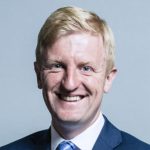
    The speech made by Oliver Dowden, the Deputy Prime Minister, in Italy on 14 September 2023.

    Ladies and gentlemen, at the risk of derailing what The Economist has rightly called the ‘blossoming’ relationship between the United Kingdom and Italy, perhaps you’ll permit me to say:

    Vorrei ringraziare tutti voi di essere qui stasera, in questa bellissima citta, in questa antica e famosa universita.

    Grazie di cuore.

    Thank you to the Rector, for welcoming us to this fine seat of learning.

    Thank you Mayor, for your very warm welcome to your wonderful city, which is so beloved of my fellow Brits.

    Thank you to Lord Willetts and Carlo Calenda, for your leadership of Pontignano… and for all you do to nurture the close friendship between our nations.

    And thank you – above all – to all of you for being here.

    You all believe in the importance of this relationship between the United Kingdom and Italy.

    Important, not just because of our friendship, culture and our long shared history.

    But because you are strong believers in how much more we can achieve together as modern European nations facing the same challenges:

    from supporting Ukraine in its fight for freedom

    to confronting economic and energy security challenges

    to tackling illegal migration.

    And you know that to succeed, we must address them together.

    The number of my colleagues attending this conference demonstrates that this is certainly the view of the British Government.

    (Although it would perhaps be an exaggeration to say that they took a lot of persuading to come to Siena!).

    Their presence is a testament to the United Kingdom’s determination to drive forward a new strategic partnership between London and Rome.

    Now our topic for this year’s Pontignano is ‘Adapting to technological change’.

    But before I say a few words on that, let me take a step back and look at our relationship with Italy – to take stock, as diplomats like to say.

    A turning point.

    My counterpart, Antonio Tajani, said at the start of the year that relations between the UK and Italy were ‘at a turning point.’

    And he was right.

    Look at the situation that confronts us:

    war in Europe

    threats to our energy and our food supplies

    climate change

    irregular migration, across the Mediterranean and the Channel.

    And all of it underpinned by the onward march of technology.

    Set against that backdrop, it is surely no wonder that our two countries – sharing so many interests whose strengths complement each other in so many ways – should seize this moment to work more closely together.

    And that is exactly what we are doing.

    A longstanding friendship.

    We are, of course, building on a very strong foundation.

    The ties between our peoples go back centuries – indeed all the way back to ancient Rome and through the Renaissance.

    More recently – 80 years ago, British Forces landed at Salerno, as part of their central role in the liberation of this country.

    And next year we will mark the 80th anniversary of Anzio and Monte Cassino.

    Today, the bonds between us are thriving and vibrant.

    And there is also a mutual respect and affection between our peoples – epitomised in Italians’ moving reaction to the death of our late Queen a year ago.

    And your enthusiasm at the Coronation of King Charles III earlier this year.

    Indeed our new Monarch loves Italy, as he himself told an Italian television crew in the Mall the night before he was crowned.

    So there is a rich tapestry of ties between us. And that vibrant partnership is an invaluable source of strength, as we face together the most challenging set of circumstances in many decades.

    Until recently, perhaps the defining political moment of my generation was the 9th November 1989 – the date that the Berlin Wall came down and liberty rolled across our continent.

    Now a new date is inscribed in our memories.

    The 24th February 2022 – the date Russian tanks rolled into Ukraine and its missiles rained down on Ukrainian cities.

    The events of that day, and every day since, have reminded us of some old truths.

    The need for strong defence to deter war.

    The need to stand up to aggression today, or risk greater aggression tomorrow.

    The need for friends and allies to stick together and stand up for what we believe in.

    Every day since the invasion, that is exactly what the United Kingdom and Italy have done – as G7 partners and leading members of NATO.

    Let me pay tribute to Italy’s response.

    You have been at Kyiv’s side every step of the way.

    And I am proud of the role that Britain has played and will continue to play, for as long as it takes.

    If anyone doubted Britain’s enduring commitment to European security, you have your answer, not just in our words, but in our actions.

    And as we sit here tonight, in this cradle of European civilisation, let us spare a thought for the people of Ukraine, a fellow European country, who face another night in bomb shelters or on the front line.

    Forging a new relationship between the UK and Italy – real momentum…

    It is not just on Ukraine, however, that cooperation has been galvanised between our two countries.

    There is a real determination to make this relationship between Britain and Italy count for more, to be more than the sum of its parts.

    Take a look at the last nine months:

    In December our Prime Ministers signed – with their Japanese counterpart – the Global Combat Air Programme to build a new generation of combat aircraft together.

    In February, our Defence and Trade Secretaries signed agreements forging ever closer relations.

    And then in April, our Prime Minister was delighted to welcome PM Meloni to Downing Street where they signed an ambitious Memorandum of Understanding – covering issues from national security to cultural ties.

    The agreement also covered another subject on which our countries share the same challenge: illegal migration.

    This is a challenge that is political, societal, criminal.

    Our electorates demand that we deal with it, and we must.

    We both share the same sense of urgency – and albeit at different ends of Europe, we are facing the same phenomenon:

    Large numbers of arrivals by sea.

    Unscrupulous traffickers in human lives.

    The death traps into which they place innocent  women and children.

    The tragedies in the dark waters off the Channel,  off Lampedusa or the Calabrian coast.

    So we are significantly expanding our cooperation together.

    Working together in bodies such as the G7 and the Council of Europe.

    Adapting to technological change.

    In so doing, we will, of course, be taking advantage at every opportunity of new technologies – the theme of this Pontignano.

    I am delighted that British scientists will once again be able to collaborate with those in Italy and across Europe as part of the Horizon programme.

    And, as a Minister from the country that invented the steam engine, speaking in the land of Marconi, I know how well both our countries know the revolutionary power of technology.

    And the list of technologies that have fundamentally altered the course of human history is relatively short: fire, metals, the printing press, the combustion engine, electricity, fission, the internet.

    All of these tools have been bent to achieve a step-change in the pace of human progress.

    And now I believe that we are on the cusp of another such inflection point, one that has the potential to make the pace of progress supersonic:

    Artificial Intelligence, or more specifically, the advent of artificial general intelligence, represents, at once the most exciting and the most daunting challenge of our age.

    Exciting, because there is an opportunity, as our PM has put it, for human progress that could surpass the industrial revolution in both speed and depth.

    For game-changing innovations in all aspects of our lives:

    unthinkable advances in medicine

    cures for cancer and dementia

    growing crops to feed the world…

    or solving climate change.

    But also daunting.

    Not only will AI expedite and intensify the existing threat landscape,

    in Artificial General Intelligence, humans face the potential of a technology that surpasses both the capability of our collective endeavour, and the limits of our understanding.

    We have to accept that the answer to many of our questions about the AI frontier will be ‘we don’t yet know’.

    We do not yet know what these machines might be capable of.

    What we do know is that, to date, the limits of human progress have been capped by the sum of our collective intelligence.

    By adding to that sum with AI – at potentially dizzying scales – we will redraw the bounds of what we previously thought possible.

    But, as scary – and exciting – as that is,

    it should not be a barrier to our exploration.

    But it does mean that we need a new approach to regulation.

    One that iterates to build faith in the systems that will come to underpin so many aspects of our lives.

    This approach will involve active and ongoing collaboration between Governments, Al labs and academics, amongst others.

    Many organisations outside of national Governments, in particular private companies – including those in Italy – have been pivotal to the most recent advances in AI.

    I know that many such companies are taking part in Pontignano this year.

    And these collaborations will be crucial to ensure the safe and reliable development and deployment of frontier AI throughout the world.

    The United Kingdom is acutely aware of the importance of this moment – and of the need to act swiftly and with resolve.

    Domestically, the Prime Minister has asked me to chair a Resilience sub-committee of the National Security Council, which will be taking a methodical approach to assessing the risks of AI.

    And internationally, our forthcoming AI Summit at Bletchley Park in November will aim to agree how we can collaborate on frontier AI safety:

    to agree a shared assessment of the frontier risks

    as well as share some of the best examples from around the world of how AI is being used to improve lives.

    Already, the UK has been working with industry leaders such as Google DeepMind, OpenAI and Anthropic, who will give us unprecedented access to their products and models.

    So that we can mitigate against the risks, and take advantage of the opportunities.

    The importance of their cooperation cannot be overstated.

    We need them to ensure that our frontier systems are aligned with human objectives.

    And we need them to ensure that they are deployed safely,

    Because – ultimately – we need end users to have confidence in these transformative tools.

    The Summit is an important forum to begin to address these questions.

    But it is only one of the first steps in a very long journey.

    We look forward to working with our colleagues in the Italian Government and across the world.

    Together we have a huge stake – for our countries, as for the sake of humanity.

    So my message is a simple one: it is vital that we work together to make AI safe.

    I look forward to discussing this collaboration with you at this conference.

    And to our colleagues in the Italian Government.

    Let me say that the United Kingdom sees Italy as a crucial partner in helping us to achieve this goal.

    We look forward to working very closely with you on this, and on other shared priorities, from migration to economic security to climate, as you assume the Presidency of the G7 next year.

    So, there is plenty here for this year’s Pontignano to discuss.

    This medieval city is famed – not just for its beauty – but for its enduring identity, its spirit and its character through the centuries.

    Famous too for Lorenzetti’s 14th century frescos at the Palazzo Publicco – not far from here – depicting the tenets of good government, and the consequences of bad government.

    So this is an ideal and inspiring place for such discussions – a city which has long stood for humanity’s ability to solve apparently intractable problems.

    A city which centuries ago understood the importance of developing a legal and political framework by which society can be governed in the best interests of the wider community.

    I like to think that if Ambrogio Lorenzetti were here today, he might recognise some of the dilemmas modern democracies are wrestling with as we seek the right way forward.

    A few hundred metres from here, there is the famous pavement in the Duomo – the intricate work of artisans here in Siena many centuries ago.

    At the other end of Europe, in London, there is another pavement – the famous Cosmati pavement, laid by British and Italian craftsmen in Westminster Abbey in 1268.

    One of the earliest examples of what Britons and Italians can achieve together when they put their minds to it.

    It was on precisely that pavement, watched by the entire world, that our new Sovereign was crowned in May.

    Let that be the spirit in which we embark on this Pontignano, and usher in a new chapter of British-Italian endeavour for the good of both our nations, of Europe and for the good of the world.

  • PRESS RELEASE : Lincoln Crown Court celebrates 200 years of serving justice [September 2023]

    PRESS RELEASE : Lincoln Crown Court celebrates 200 years of serving justice [September 2023]

    The press release issued by the Ministry of Justice on 15 September 2023.

    Lincoln Crown Court opens its doors to celebrate 200 years of serving the community and delivering justice.

    • families invited behind the scenes of historic Crown Court
    • open day to give rare and unique insight into how justice is done
    • public able to visit court cells and jury rooms and watch a mock trial

    Families will get a once-in-a-life-time opportunity to try on wigs and gowns, hear how judges prepare for cases, and even make the walk from the dock to the cells at Lincoln Crown Court as the historic site opens its doors to celebrate 200 years of serving the community and delivering justice.

    Residents will be invited into the historic court building on Saturday (16 September 2023) to explore its rich history, relive criminal trials over the past 2 centuries, and take a behind-the-scenes look at how justice is done.

    Court hearings have taken place on the same site in the grounds of Lincoln Castle as far back as the 11th century. Building on the current Crown Court building began in 1823, designed by Sir Robert Smirke, with a grand jury room and 2 courtrooms to hear criminal and civil cases.

    In March 1872, the court held the trial of William Frederick Horry who was convicted of murdering his wife and became the first person in the UK to be executed by the long drop method of hanging.

    The building still hears criminal cases from across Lincolnshire today and the open day will offer a unique hands-on opportunity to take in its courtrooms, defendant dock, cells, and jury rooms. Visitors can also watch a mock trial and sentencing to understand how the court continues to deliver justice.

    Judges, magistrates and court staff will be on hand to answer questions, and families can speak to Probation Service and Crown Prosecution Service teams about how they each play a vital role right across the modern-day justice system.

    Justice Minister Mike Freer, said:

    As well as a world-leading justice system, we have a truly historic courts estate with fascinating histories and stories to tell.

    We are investing millions of pounds every year to ensure our court buildings are fit for the future and reflect our high standards, while also preserving their unique and incredibly important history.

    Nick Goodwin, CEO of HM Courts and Tribunals Service, said:

    We are delighted to be opening our doors to the public to talk about the rich history of Lincoln Crown Court, show off this impressive building and the brilliant people who work there, and share all we do here at HMCTS to make sure justice is delivered.

    Lincoln Crown Court will be open to visitors from 10am on Saturday 16 September.

    The open day follows an announcement from the government that court buildings across the country will benefit from £220 million for essential modernisation and repair work across the next 2 years to minimise disruptions caused by old buildings.

    Improvements will maintain the heritage of the courts and tribunals estate, while ensuring it is equipped with the latest technology to deliver modern justice as well as improving accessibility for all users.

  • Rishi Sunak – 2023 Message for Rosh Hashanah

    Rishi Sunak – 2023 Message for Rosh Hashanah

    The message issued by Rishi Sunak, the Prime Minister, on 15 September 2023.

    To Jewish families in the UK and around the world, I want to wish you a very Happy New Year.

    British Jews play an integral part in the success of this nation, and I am delighted the vibrant and diverse Jewish faith continues to thrive across the country.

    I have personally seen how Jewish organisations operate to the highest standards in caring for those who may be vulnerable and in need. Over the coming year, I will continue to support you in this valuable work.

    I will always stand with you. You can count on me to keep you safe, to champion the ban on boycotts, divestments and sanctions, and fight antisemitism in any form.

    So as you come together to celebrate Rosh Hashanah, may this coming year be filled with peace and prosperity. L’Shanah Tovah U’Metuka.

  • PRESS RELEASE : UK to bring UN sanctions on Iran into UK law [September 2023]

    PRESS RELEASE : UK to bring UN sanctions on Iran into UK law [September 2023]

    The press release issued by the Foreign Office on 14 September 2023.

    The UK, France and Germany (E3) announce they will transfer UN sanctions on Iran into domestic regimes and maintain EU/UK sanctions beyond October deadline.

    • UK, France and Germany (E3) to transfer UN sanctions on Iran into domestic regimes and maintain existing EU/UK sanctions beyond October deadline included in nuclear deal.
    • E3 taking ‘legitimate and proportionate’ action in response to Iranian regime breaching commitments under the nuclear deal and advancing its nuclear programme beyond all credible civilian justification.
    • UK and partners remain committed to preventing Iran from developing nuclear weapons.

    The UK has today committed to bringing UN sanctions on Iran due to lift in October into UK law.

    Under the Joint Comprehensive Plan of Action (JCPoA), a range of UN, EU and UK sanctions were due to be lifted on October 18th. These include sanctions on individuals and entities involved in Iran’s missile, nuclear, and other weapons programs.

    In response to continued Iranian non-compliance with their JCPoA commitments and ongoing nuclear escalation, the E3 have confirmed today that the UN sanctions will be transferred into domestic sanctions regimes and the EU and UK sanctions will be maintained.

    FCDO spokesperson said:

    Iran continues to breach its commitments under the JCPoA and advance its nuclear programme beyond all credible civilian justification.

    Alongside our French and German partners, we have taken a legitimate and proportionate step in response to Iran’s actions.

    The UK and our partners remain committed to a diplomatic solution but Iran must now take clear steps towards de-escalation. We are committed to preventing Iran from developing nuclear weapons.

    Today’s actions do not violate the JCPoA and are fully consistent with the procedures defined within it. Iran has consistently breached its obligations under the JCPoA. The regime’s enriched uranium stockpiles are more than 18 times the JCPoA limit and it has built and deployed thousands of advanced centrifuges.

    In March last year and again in August, the UK and our partners offered Iran viable deals that would have defused the nuclear issue. On both occasions Iran declined.

    The UK and our partners remain committed to preventing Iran from developing nuclear weapons, including through the snapback process if necessary.

    Further information

    • The E3 triggered the JCPoA’s Dispute Resolution Mechanism (DRM) in January 2020 in response to Iranian non-compliance to try to find a solution. The DRM process is supposed to allow 30 days to resolve outstanding issues; it has been over three and a half years and Iran remains out of compliance.
    • According to Paragraph 36 of the JCPoA, these unresolved issues are grounds to cease performing part of our commitments.
  • PRESS RELEASE : E3 statement on the JCPoA [September 2023]

    PRESS RELEASE : E3 statement on the JCPoA [September 2023]

    The press release issued by the Foreign Office on 14 September 2023.

    The UK, France and Germany have issued a joint statement ahead of JCPoA Transition Day on 18 October 2023.

    A spokesperson for the E3 said:

    In direct response to Iran’s consistent and severe non-compliance with its JCPoA commitments since 2019, the governments of France, Germany, and the United Kingdom intend to maintain nuclear proliferation-related measures on Iran, as well as arms and missile embargoes, after JCPoA Transition Day on 18 October 2023. We have jointly notified the JCPoA Coordinator in that regard.

    This decision is fully compliant with the JCPoA. It follows our attempts to resolve Iran’s non-compliance through the JCPoA’s Dispute Resolution Mechanism which we triggered in January 2020. Iran has refused opportunities to return to the JCPoA twice and has continued to expand its programme beyond JCPoA limitations and without any credible civilian justification. Its enriched uranium stockpile stands at more than 18 times the amount permitted under the JCPoA.

    Our commitment to finding a diplomatic solution remains. This decision does not amount to imposing additional sanctions nor to triggering the snapback mechanism. We stand ready to reverse our decision, should Iran fully implement its JCPoA commitments.

  • Kemi Badenoch – 2023 Speech to the Northern Ireland Investment Summit

    Kemi Badenoch – 2023 Speech to the Northern Ireland Investment Summit

    The speech made by Kemi Badenoch, the Secretary of State for Business and Trade, in Belfast on 13 September 2023.

    Good afternoon everyone, your Royal Highness, my Lords, Ladies and Gentlemen.

    I know you’ve already been welcomed several times over the last two days, but I would like to thank you specially this afternoon for being in Belfast for the Department of Business and Trade’s first ever investment Summit, and I believe the first Investment Summit ever of its kind in Northern Ireland.

    This Summit is absolutely swarming with ministers desperate to talk to business and the investment community. So, I’d like to take this opportunity to thank my fellow ministers, the Secretary of State for Northern Ireland Chris Heaton-Harris, the Minister of State Steve Baker, Secretary of State for Levelling Up Michael Gove and of course business and trade ministers, Lord Johnson, and Lord offered for all their support on business engagement.

    I’d also like to thank the Prime Minister’s trade envoy to the US Sir Conor Burns for being an excellent sherpa over the last couple of days.

    So at this summit, we’re going to be telling a story of Northern Ireland that’s different from the ones you typically hear. A story of energy, creativity, and innovation.

    But first, for me, a story about growth and how the UK Government and my department will help achieve that.

    When I first became Business and Trade Secretary, I decided our mission was to ensure that our department became the government’s engine for economic growth.

    It was my focus when I was a Treasury minister, and even more so now in a world that is becoming increasingly competitive and increasingly complex.

    So how does government deliver growth?

    The truth is, it doesn’t, business does.

    Our job is to get out of the way and make life easier for all of you to grow. So we’ve been doing this by focusing on five priorities.

    The first is removing the barriers to business and trade, not just in our country, but around the world, cutting through red tape and tailoring regulation to better suit the needs of a dynamic UK.

    The second is maintaining our status as Europe’s top investment destination.

    For three years running, the UK has topped the tables for new foreign direct investment projects in Europe. And since I took up the role, the UK has risen to third in the world for inward investment only behind the US and China, and business investment is up nearly 7% year-on-year.

    And I was particularly delighted just this week that we have overtaken France and are now the eighth largest manufacturing economy in the world.

    We need to attract the capital that transforms homegrown enterprises into global ones. And building on this progress is why we’re here today to help deliver our other priority of growing exports.

    We don’t just want to sell in the UK or even in the EU, but all over the world. Building on this progress is why we’re all here today.

    Another priority is signing high quality trade deals. Earlier this year, we signed our accession to CPTPP – the Comprehensive Progressive Trans Pacific Partnership for those of you who don’t know – that is a deal that is going to give our businesses including here in Northern Ireland greater access to markets that are home to half a billion people.

    That’s where the 21st century’s middle class will be coming from. They’ve got money in their pockets and surging demand for your goods and services.

    The final one, and the one closest to my heart, is defending free and fair trade. Many people hear this and they think it means giving money to developing countries.

    But actually, it is about providing economic security, and defending the rules-based trading system that underpins a lot of the security and safety of how we do business in our country.

    Many people think that the way to do this is to become more protectionist. And I can understand that. There are a lot of countries who are feeling the pain from a whole list of issues.

    The supply chain fallout post-pandemic, Russia’s war in Ukraine, a more assertive China, and when the world feels so unsure, the natural reaction is to want to retreat from it. But slamming down the shutters and putting up a ‘closed’ sign isn’t the solution.

    I grew up in a country that was actually very protectionist, and it can be quite awful. And people continue to bring more policies that make life worse for people that make them poorer, while championing a nationalism that actually doesn’t do anything for anyone.

    What we need is an open economy. And in a ever more connected world, we cannot be economically isolationist.

    But we also can’t be knowingly naive. We need to be smart. We need to be clever, but we also need to be open.

    You can’t put a border on ideas, but you can put a border on opportunity if you have the wrong policies.

    And that brings me back to the story which we want to tell about Northern Ireland at this summit.

    It is about opportunity, and how the UK Government is working to create it here.

    Today, there are more people employed in manufacturing in Northern Ireland than either the Republic or the UK average.

    And we know that long term prosperity requires peace, and the political progress of the last few decades has nurtured business confidence.

    It’s led to billions in inward investment and it’s driven economic growth.

    There have undeniably been some recent challenges. But this government has restored the smooth flow of trade from Great Britain to Northern Ireland and protected Northern Ireland’s place in our Union.

    This certainty and stability makes Northern Ireland an even more attractive investment prospect, given its unique trading position with a seamless land border with the single market and within an internal UK market that is striking trade deals across the world and scrapping hundreds of trade barriers.

    When you back Northern Ireland, you back this country, you are joining a growing list of businesses and investors who also recognise these opportunities.

    From the creators of Game of Thrones – my favourite TV show – who filmed one of the world’s most successful fantasy dramas not far from here, making an enormous contribution to Northern Ireland’s incredible creative industry, to the businesses that are committing £20 billion of investment a year, creating thousands of new jobs in the last few years alone.

    Just today, for example, you would have heard EY announcing 1,000 new jobs in a new hub here.

    Northern Ireland is well positioned to take advantage of the government’s broader work to drive innovation across the UK.

    On new Smarter Regulation Framework also commits to regulation only as a last resort so that we don’t stifle innovation.

    And of course, every nation needs a bedrock of talent and skills to succeed.

    Health and life sciences is just one of the many areas where Northern Ireland is in a prime position, thanks to a combination of expertise, world class research, strong links between industry, clinicians and academia – in Queen’s University and also the University of Ulster.

    But what’s been interesting is listening to all of you over my meetings this morning and at the reception yesterday, telling me about what your personal experiences have been, how you see business and education being a lot better integrated here than in other parts of the UK, for example, and an increasing numbers of businesses are using this skills base as a springboard to diversify into the low carbon and renewable energy sector.

    Local businesses are building expertise in producing green hydrogen, manufacturing hydrogen buses, and developing intelligent systems for carbon capture and storage.

    But I won’t go on because this summit is not about me. It is about you, and I’d like to finish on one final note.

    It is our responsibility to promote all parts of Northern Ireland, especially the Northwest, not just this great city of Belfast where we meet today. And that is something that the government is trying to ensure that we are levelling up across the UK but also across Northern Ireland too.

    I’m convinced that Northern Ireland has an incredible future and over the summit we’ll get a glimpse of all that lies ahead. Please consider becoming more of a part it.

    Thank you so much, and now I’m honoured to welcome our special guest, Her Royal Highness The Princess Royal, to the stage.

  • PRESS RELEASE : Public-private partnerships have the potential to transform humanitarian action – UK Statement at the UN Security Council [September 2023]

    PRESS RELEASE : Public-private partnerships have the potential to transform humanitarian action – UK Statement at the UN Security Council [September 2023]

    The press release issued by the Foreign Office on 14 September 2023.

    Statement by Ambassador Barbara Woodward at the Security Council meeting on advancing public-private partnerships.

    Thank you President for convening this important and useful debate.

    And let me start by thanking Executive Director McCain, Mr Cohen and Mr Miebach for their informative briefings.

    Colleagues, on Tuesday we rose to offer our condolences to the people of Libya and Morocco following their losses. I do that again today but this is also a tragic reminder of the need for us to explore every avenue to maximise our humanitarian response to the many challenges the world faces today against a backdrop of soaring humanitarian need. And in this the role of the private sector is becoming increasingly important. As we’ve heard, private actors can provide knowledge, expertise, and investment to tackle humanitarian need, reduce threats, and build resilience.

    The case of SAFER oil tanker in Yemen is a good example of private-public partnership that had real impact on an item on this Council’s agenda. By working together, public and private actors removed over one million barrels of oil from the decaying SAFER oil tanker and in doing so, they averted a major environmental, humanitarian and economic catastrophe.

    President, I want to highlight three further ideas of where public and private actors can work together in this spirit.

    First, bringing together all efforts to sustain peace. As this Council has heard many times, conflict is the main driver of humanitarian need. The private sector can play a role in peacebuilding and in preventing conflict. For example, the UK has supported the development of ‘peace bonds’, a new investment category to develop finance for peace. We should continue to champion public-private collaboration in support of international peace and security.

    Second, using all the tools at our disposal to get ahead of crises before they hit. And in this context the UK has collaborated with humanitarian and private actors on Disaster Risk Financing. We have supported the IFRC’s risk transfer mechanism, which has the potential to unlock $22 million of private funding in humanitarian crises. This could enable the IFRC to reach an additional 6 million vulnerable people.

    Third and finally, the private sector can support better humanitarian responses through new technology. For example, the UK has invested in mobile innovation funds, which have supported rapid detection and treatment of Cholera. This includes a tool to reduce the Cholera detection time from 3 days to just 30 minutes. This innovation is vital for a disease which has been particularly devastating in Syria, in DRC and in Myanmar this year.

    President, it is clear that public-private partnerships have the potential to transform humanitarian action and we look forward to continuing to work together to tap into this potential. Thank you.

  • PRESS RELEASE : More pupils of all ages to study languages [September 2023]

    PRESS RELEASE : More pupils of all ages to study languages [September 2023]

    The press release issued by the Department for Education on 14 September 2023.

    15 hubs selected as part of new programme to boost languages in schools across the country.

    Thousands more pupils are set to benefit from learning languages such as German, French and Spanish, as 19 schools have been selected to lead on boosting how these subjects are taught across the country.

    This is the next step in the rollout of the government’s flagship language hubs programme, which will raise national interest in studying languages and drive more pupils to study them throughout their education from primary schools onwards.

    Data from this year’s GCSE entries showed that modern foreign languages have become increasingly popular as a subject, with a 5.1% increase in GCSE entries in 2023 compared to last year and a 9.2% increase compared to 2019.

    Schools Minister Nick Gibb said:

    Young people who are confident in a second language are at a huge advantage in life. On top of the social and cultural advantages it provides, there are many economic benefits of learning another language.

    That is why I have long called for more pupils to consider studying languages such as German at GCSE and this programme will crucially equip teachers with the necessary training and knowledge to support pupils looking to do so.

    The language hubs programme, which will start from this month, aims to encourage more pupils to study a language at GCSE as the evidence shows that pupils who do so are more likely to study that language at A Level and have a lifelong interest in languages.

    In an increasingly interconnected world, language skills are essential to business success in the global marketplace. According to a 2022 report by RAND Corporation, a 10% increase in UK pupils learning Spanish or French at key stage 3 and key stage 4 could increase UK gross domestic product over 30 years from £9.1 billion to £9.7 billion or £9.5 billion respectively.

    Speaking an additional language can also increase lifetime earnings by 2% and demand for language skills has increased due to globalisation. For example, a recent survey of British businesses highlighted German as the most widely useful language within their organisations.

    As well as being beneficial in business, the need for linguists is becoming more pronounced in careers like diplomacy, defence and security where languages help ensure effective communication between different peoples and cultures.

    Research shows that students who study a second language perform better across a range of academic subjects than students who don’t study a second language. The brain’s plasticity is heightened when learning a language, leading to increased cognitive flexibility and adaptability.

    The programme – which is backed by £14.9 million over the next 3 years and builds on the previous modern foreign language hub pilot, which ran from 2018 to March this year – will be managed by the National Consortium for Languages Education (NCLE).

    The NCLE comprises of University College London, the British Council and the Goethe-Institut. An initial 15 schools from regions across the country have been selected as lead language hubs to join the NCLE’s centre for excellence. The hubs will begin their support to schools from this September. A further 10 schools are also set to be selected in a second recruitment round in January.

    Lead hubs will engage with schools to improve the languages offer and ensure more effective transition from key stage 2 to key stage 3, whilst making sure that pupils aged 14 to 18 from all backgrounds have the opportunity to study languages through to key stage 5.

    As well as increasing opportunities among disadvantaged pupils to study languages, the programme will also increase access to home, heritage and community languages for pupils.

    The programme will include a distinct German promotion project to raise the profile of learning German in schools, including increasing awareness of the benefits of studying it. The German promotion project will be led by the Goethe-Institut. Included within the language hubs investment, this project is worth £400,000 and will involve increasing the number of schools that offer German, as well as championing learning the subject.

  • PRESS RELEASE : UK reiterates support for integrity of Bosnian state during meeting of defence ministers [September 2023]

    PRESS RELEASE : UK reiterates support for integrity of Bosnian state during meeting of defence ministers [September 2023]

    The press release issued by the Ministry of Defence on 14 September 2023.

    The UK has underlined its support for the integrity of the Bosnian state during a meeting today between defence ministers from both countries.

    The UK has underlined its support for the integrity of the Bosnian state during a meeting today between defence ministers from both countries.

    UK Minister for the Armed Forces, James Heappey, hosted the Minister of Defence for Bosnia and Herzegovina (BiH), Zukan Helez and Deputy Minister Slaven Galić in London to discuss bilateral defence relations and the current security situation in country.

    Minister Heappey made clear the UK is committed to supporting the defence reforms and the continued development of the Armed Forces of Bosnia and Herzegovina, as well as backing BiH’s ambition for Euro-Atlantic accession.

    Minister for the Armed Forces James Heappey said:

    It was a pleasure to welcome Minister Helez to London today following our meeting in Sarajevo in May, building on our combined work to strengthen our bilateral defence relations.

    I shared my concerns regarding the developing situation in Bosnia, making clear the UK fully supports the unity and integrity of the Bosnia and Herzegovina state

    The ministers discussed a range of issues including the UK and BiH’s bilateral defence relationship, with both ministers expressing an interest to further deepen defence engagement.

    During his visit to the UK, Minister Helez attended the Defence and Security Equipment International (DSEI) exhibition and was also hosted by Lord Peach, the Prime Minister’s Special Envoy to the Western Balkans, in Parliament’s House of Lords.

    The UK will continue to work closely with international partners to secure the European Union Force’s (EUFOR) mandate renewal in the UN and our Special Envoy to the Western Balkans, Lord Peach, recently issued a statement confirming the UK’s support for the High Representative. That came after the Prime Minister hosted BiH Presidency member, Dr Denis Bećirović, in July to underline the UK’s support.

    The UK also supports Armed Forces of Bosnia and Herzegovina (AFBiH), including through joint training, and the provision of military equipment including live fire targets, urban training facilities, search and rescue gear; as well as the exchange of expertise.

    Personnel from 1 Princess of Wales’s Royal Regiment of the British Army will also be deploying to BiH in October to train alongside AFBiH personnel .

    This will help to build the overall capability of the AFBiH and their ability to operate alongside other international forces. More than ever in the wake of Russia’s illegal invasion of Ukraine, these kinds of defence and security partnerships help to underpin the stability and security of a sovereign Bosnia and Herzegovina.

  • PRESS RELEASE : 13 September ballistic missile launches by North Korea [September 2023]

    PRESS RELEASE : 13 September ballistic missile launches by North Korea [September 2023]

    The press release issued by the Foreign Office on 14 September 2023.

    Following North Korea’s ballistic missile launches on 13 September 2023, an FCDO spokesperson made the following statement.

    An FCDO spokesperson said:

    North Korea’s ballistic missile launches on 13 September are yet another breach of multiple UN Security Council resolutions (UNSCRs).

    Illegal ballistic missile launches continue to destabilise the peace and security of the Korean Peninsula.

    The UK will continue to call out violations of UNSCRs. We strongly urge North Korea to return to dialogue and take credible steps towards denuclearisation.

    The launches come alongside reports that DPRK and Russia are negotiating a possible arms deal.

    We urge the DPRK to cease its arms negotiations with Russia and abide by the public commitments Pyongyang has made not to sell arms to Russia. We also call on Russia to uphold UN Security Council resolutions.