Tag: 2023

  • PRESS RELEASE : Defence Secretary deploys UK forces to Kosovo for NATO peacekeeping mission [October 2023]

    PRESS RELEASE : Defence Secretary deploys UK forces to Kosovo for NATO peacekeeping mission [October 2023]

    The press release issued by the Ministry of Defence on 1 October 2023.

    UK forces will deploy to Kosovo following increasing tensions in the northern part of the country.

    UK forces will deploy to NATO’s peacekeeping mission in Kosovo following a request from NATO. This follows on from the violent attack on Kosovo Police in northern Kosovo on 24th September and increasing tensions in the region.

    Following a request from Supreme Allied Commander Europe (SACEUR) and approval by the North Atlantic Council, the UK will deploy around 200 soldiers from 1st Battalion of the Princess of Wales’s Royal Regiment in the coming days to join the 400-strong British contingent already in country as part of an annual exercise. The British Army unit has been assigned to the NATO Commander of the Kosovo Force following a specific request from the Supreme Allied Commander Europe, “SACEUR”, US General Chris Cavoli. This deployment is testament to the leadership and agility of UK defence, this deployment will provide strength and expertise to NATO, as part of our pivotal and unwavering commitment to the alliance.

    Admiral Sir Tony Radakin, Chief of the Defence Staff, said:

    The deployment of the 1st Battalion of the Princess of Wales’s Royal Regiment demonstrates the responsiveness of the UK’s Armed Forces. We continue to be a fundamental part of the NATO alliance, sharing our military expertise and strength.

    The extension of our support to the Kosovo Force (KFOR) underlines our unwavering commitment to NATO and the security of the Western Balkans region.

    Under NATO command, and working alongside other Allied nation forces, the UK forces will be available to conduct operations in accordance with KFOR’s mandate to maintain a safe and secure environment and freedom of movement for all people of Kosovo .

    NATO has been leading a peace-support operation in Kosovo – the Kosovo Force (KFOR) – since June 1999. Troops from the NATO-led Kosovo Force (KFOR) are provided by 28 countries. The UK contributes two intelligence surveillance and reconnaissance (ISR) units, staff officers to the mission Headquarters alongside the SRF commitment, held at 14 days’ readiness. The UK commitment to KFOR was extended in May 2023 when the Minister for Armed Forces James Heappey announced the UK would continue to contribute to the NATO mission until at least 2026.

    UK forces have been undertaking a key role in peacekeeping and bolstering security in the region for more than two decades, and alongside its Allies continue to show collective strength in dealing with the complex issues the world faces today.

    Background:

    • NATO has been leading a peacekeeping mission in Kosovo – the Kosovo Force (KFOR) – since June 1999. KFOR was established when NATO’s 78-day air campaign against Milosevic’s regime, aimed at putting an end to violence in Kosovo, was over.
    • KFOR’s original objectives were to deter renewed hostilities, establish a secure environment and ensure public safety and order, demilitarize the Kosovo Liberation Army, support the international humanitarian effort and coordinate with the international civil presence.
    • Today, KFOR continues to contribute towards maintaining a safe and secure environment in Kosovo and freedom of movement for all
  • PRESS RELEASE : Defence Secretary visits Armed Forces in first month in post [September 2023]

    PRESS RELEASE : Defence Secretary visits Armed Forces in first month in post [September 2023]

    The press release issued by the Ministry of Defence on 1 October 2023.

    Defence Secretary Grant Shapps visited multiple military locations, vowing for personnel to remain at the heart of our Armed Forces.

    People will remain at the heart of our Armed Forces, the Defence Secretary has said, as he made his first visits as Defence Secretary to the Royal Navy, British Army and Royal Air Force.

    The Defence Secretary prioritised meeting Armed Forces personnel to understand their experiences and give his steadfast commitment to supporting serving personnel and their families.

    Defence Secretary Grant Shapps said:

    The work of each and every one of our Armed Forces personnel is critical to our nation’s security, and I am grateful for their tireless dedication and expertise, and proud to be leading such a brilliant organisation.

    I am committed to protecting the security and prosperity of our nation while ensuring that all personnel and their families have the best possible experience, from childcare and accommodation, to pay and equipment.

    On his visit to the Navy in Portsmouth, the Defence Secretary met with serving Navy personnel to understand their experiences and opportunities they have had in the forces.

    He toured Type 45 HMS Defender which has recently been at the heart of joint operations with the UK’s allies, having completed four operations and four exercises in the year prior to her refit – including Exercise Formidable Shield. The Defence Secretary received briefs on Navy priorities and met with representatives from BAE Systems – a key defence partner – which is supporting thousands of jobs and livelihoods across the UK.

    On Salisbury Plain in Wiltshire, visiting the Army, the Defence Secretary and Chief of the General Staff, General Sir Patrick Sanders, met the British soldiers at the centre of the UK-led training programme which has trained more than 26,500 Ukrainian recruits to date. He heard their inspiring stories and observed the world-leading training, before receiving briefings on the Army’s priorities, including modernisation.

    At RAF Waddington, accompanied by Chief of the Air Staff, Air Chief Marshal Sir Rich Knighton, the Defence Secretary met the personnel serving at the station – including 51 and XIII Squadrons, who operate Rivet Joint and Reaper Aircraft respectively. The Defence Secretary heard about their experiences in the Armed Forces and the work they have recently done. Grant Shapps was briefed on the intelligence gathering roles the RAF provides for defence.

    Providing the often-unseen elements of Defence is Strategic Command, based at Northwood, London and led by its Commander, General Sir Jim Hockenhull. During a meeting with General Jim, the Defence Secretary was briefed on the work of the specialists in the organisation such as cyber operators, intelligence analysts, medics, and logisticians.

    By integrating capabilities across Defence, Strategic Command ensures our Armed Forces are ready to respond anytime and anywhere. People are the key to making this work, and the Defence Secretary discussed the broad range of initiatives ongoing in Strategic Command to attract, upskill, and retain people, particularly those with science, digital and technical skills.

    This week, the Defence Secretary also visited Kyiv with Chief of the Defence Staff Admiral Sir Tony Radakin to discuss the UK’s steadfast support to Ukraine.

    Chief of the Defence Staff, Admiral Sir Tony Radakin said:

    I am pleased the Secretary of State has had an opportunity to see how the Armed Forces are adapting to the lessons from the war in Ukraine, and to a world of state-on-state competition.

    An Army that is benefitting from a £40 billion investment programme to become even more lethal and even stronger within NATO. A Royal Air Force which is transitioning from fourth-generation aircraft to fifth-generation aircraft, more capacity to transport people and cargoes, and is improving our ability to both use and defend in space. A Royal Navy that is a carrier force once again with an enhanced global presence and an ongoing renewal of our nuclear deterrent.  And all our Services striving to make more use of technology and data both to provide the winning edge and look after our people better.

    Most of all I am pleased the Secretary of State is able to meet even more of our people. It is their commitment and skill, and the partnerships they forge internationally and with industry, that keep our nation safe.

  • PRESS RELEASE : Prime Minister puts local people in control of more than £1 billion with long-term plan for left-behind towns [September 2023]

    PRESS RELEASE : Prime Minister puts local people in control of more than £1 billion with long-term plan for left-behind towns [September 2023]

    The press release issued by the Department for Levelling Up, Housing and Communities on 30 September 2023.

    Fifty five towns given £20 million endowment-style funds each over 10 years to invest in local people’s priorities.

    • 55 towns given £20 million endowment-style funds each over 10 years to invest in local people’s priorities
    • Long-term Plan for Towns will empower communities across the UK to take back control of their future – taking long term decisions in the interests of local people
    • Funding to be spent on local priorities; reviving high streets, tackling ASB, improving transport and growing the local economy

    The government has unveiled 55 towns that will benefit from a £1.1 billion levelling up investment, as part of a long-term plan for towns that provide long-term investment in towns that have been overlooked and taken for granted.

    Towns that will be given the opportunity to develop a long-term plan supported by a Towns Board include 6 in the North East, 10 in the North West, and 4 in the West Midlands. In total, 55 towns will benefit from the UK-wide approach, including 7 towns in Scotland and 4 in Wales.

    The government will work with local councils and the devolved administrations to determine how towns in Scotland and Wales will benefit from funding and powers under the long-term plans. In Northern Ireland, we look forward to working with a restored Executive to determine the approach to providing support there.

    Under the new approach, local people, not Whitehall-based politicians, will be put in charge, and given the tools to change their town’s long-term future. They will:

    • Receive a ten-year £20 million endowment-style fund to be spent on local people’s priorities, like regenerating local high streets and town centres or securing public safety.
    • Set up a Town Board to bring together community leaders, employers, local authorities, and the local MP, to deliver the Long-Term Plan for their town and put it to local people for consultation.
    • Use a suite of regeneration powers to unlock more private sector investment by auctioning empty high street shops, reforming licensing rules on shops and restaurants, and supporting more housing in town centres.

    More than half the population live in towns, but half-empty high streets, run-down town centres and anti-social behaviour undermine towns in every part of the UK. Today’s announcement marks a change in approach that will put an end to people feeling like their town is ignored by Westminster and empower communities to take back control of their future, taking long term decisions in the interests of local people.

    This plan builds on the government’s central mission to level up the UK by putting more power and money in the hands of people who know their areas best to build a brighter future for their community, creating bespoke initiatives that will spark the regeneration needed.

    Prime Minister, Rishi Sunak, said:

    Towns are the place most of us call home and where most of us go to work. But politicians have always taken towns for granted and focused on cities.

    The result is the half-empty high streets, run-down shopping centres and anti-social behaviour that undermine many towns’ prosperity and hold back people’s opportunity – and without a new approach, these problems will only get worse.

    That changes today. Our Long-Term Plan for Towns puts funding in the hands of local people themselves to invest in line with their priorities, over the long-term. That is how we level up.

    Levelling Up Secretary, Michael Gove said:

    We know that in our towns the values of hard work and solidarity, common sense and common purpose, endeavour and quiet patriotism have endured across generations. But for too long, too many of our great British towns have been overlooked and undervalued.

    We are putting this right through our Long-Term Plan for Towns backed by over £1 billion of levelling up funding.

    This will empower communities in every part of the UK to take back control of their future, taking long term decisions in the interests of local people. It will mean more jobs, more opportunities and a brighter future for our towns and the people who live and work in them.

    Our ‘Long-Term Plan for Towns’, published today (1 October 2023), is carefully designed to complement the wider levelling up programme, working alongside funding for specific projects across the UK, our targeted support to the places most in need through Levelling Up Partnerships, and initiatives supporting economic growth in wider city regions like investment zones.

    The Long-Term Plan for Towns will require town boards to develop their own long-term plan for their town, with funding over 10 years and aligned to the issues that research shows people want the most, including:

    • Improving transport and connections to make travel easier for residents and increase visitor numbers in centres to boost opportunities for small businesses and create jobs
    • Tackling crime and anti social behaviour to keep residents safe and encourage visitors through better security measures and hotspot policing
    • Enhancing town centres to make high streets more attractive and accessible, including repurposing empty shops for new housing, creating more green spaces, cleaning up streets or running market days

    Local people will be at the heart of decisions, through direct membership of a new Towns Board, which will include community groups, MPs, businesses, cultural and sports organisations, public sector agencies and local authorities for each town and through a requirement to engage local people on the long-term plan for each town.

    These Town Boards will have direct government support in addition to the funding and powers they receive through Long-Term Plan for Towns, and will be required to engage local people on their long-term plan.

    The government has also announced a new ‘Towns Taskforce, sitting in the Department for Levelling Up and reporting directly to the Prime Minister and Levelling Up Secretary. This will help town boards to develop their plans, and advise them on how best to take advantage of government policies, unlock private and philanthropic investment and work with communities.

    A new ‘High Streets and Towns Task Force’ will also be established, building on the success of the existing version, providing each selected town with bespoke, hands-on support.

    Further information

    • Towns have been allocated funding according to the Levelling Up Needs Index which takes into account metrics covering skills, pay, productivity and health, as well as the Index of Multiple Deprivation to ensure funding goes directly to the towns which will benefit most, without new competitions or unnecessary hurdles. A full methodology note has been published.
    • This commitment to towns follows other initiatives designed to support towns, including driving economic growth in 101 areas through the Towns Fund, and the £1 billion Future High Streets Fund, which is creating thriving high streets.
    • Local authorities will be the lead delivery partner for plans.  This programme has been developed following our work with local authorities, with funding designed to be spent flexibly over a number of years based on local and evolving needs, and distributed through an allocative rather than competitive process.

    Towns receiving funding

    • Mansfield
    • Boston
    • Worksop
    • Skegness
    • Newark-on-Trent
    • Chesterfield
    • Clifton (Nottingham)
    • Spalding
    • Kirkby-in-Ashfield
    • Clacton-on-Sea
    • Great Yarmouth
    • Eston
    • Jarrow
    • Washington
    • Blyth (Northumberland)
    • Hartlepool
    • Spennymoor
    • Darwen
    • Chadderton
    • Heywood
    • Ashton-under-Lyne
    • Accrington
    • Leigh (Wigan)
    • Farnworth
    • Nelson (Pendle)
    • Kirkby
    • Burnley
    • Hastings
    • Bexhill-on-Sea
    • Ryde
    • Torquay
    • Smethwick
    • Darlaston
    • Bilston (Wolverhampton)
    • Dudley (Dudley)
    • Grimsby
    • Castleford
    • Doncaster
    • Rotherham
    • Barnsley
    • Scunthorpe
    • Keighley
    • Dewsbury
    • Scarborough
    • Merthyr Tydfil
    • Cwmbrân
    • Wrexham
    • Barry (Vale of Glamorgan)
    • Greenock
    • Irvine
    • Kilmarnock
    • Coatbridge
    • Clydebank
    • Dumfries
    • Elgin
  • PRESS RELEASE : The UK remains committed to the universal vision for economic, environmental, and social development of Agenda 2030 – UK statement at the UN General Assembly [September 2023]

    PRESS RELEASE : The UK remains committed to the universal vision for economic, environmental, and social development of Agenda 2030 – UK statement at the UN General Assembly [September 2023]

    The press release issued by the Foreign Office on 29 September 2023.

    Explanation of Vote by Tom Woodroffe, UK Ambassador to the ECOSOC, at the UN General Assembly meeting on SDG Summit Political Declaration.

    Presidents and esteemed colleagues, I would like to begin by expressing our gratitude to you and the Co-facilitators, Their Excellencies, the Permanent Representatives of Qatar and Ireland, and indeed their full teams, for their hard work, which has enabled the adoption of the declaration today. We are pleased that, after months of negotiations, we have been able to join consensus here in the GA following endorsement of the declaration at the highest levels during the SDG summit last week.

    Now, as our Deputy Prime Minister set out at that summit, the UK remains fully committed to delivering the universal vision for economic, environmental, and social development set out in Agenda 2030 and the SDGs. With seven years to go, our collective promises are in jeopardy. We need robust political will and commitment to greater action to get them back on track.

    Indeed and in fact, as His Excellency, the Permanent Representative of Pakistan, set out earlier, the declaration includes a number of ambitious and welcome commitments which should provide the impetus to do so.

    The UK recognises how important finance is to achieving the 2030 agenda. That is why we are pushing for a bigger, better, fairer international financial system which increases the voice and representation of the poorest and most vulnerable. We are driving reforms of the Multilateral Development Banks, including stretching their balance sheets to release over $200 billion of additional finance over the next 10 years, scaling MDB lending to unlock $1 billion in education financing and $1.8 billion of climate finance for countries in Africa and the Asia Pacific, and making the MDBs more agile, shock-responsive, and better able to mobilise private investment.

    We are also encouraging the MDBs, NDBs, and all other creditors to offer climate-resilient debt clauses to pause debt payments when disaster strikes. And that is also why, at the G20, our Prime Minister announced a further $2 billion for the Green Climate Fund.

    But, of course, finance is only one part of the equation. We must also ensure that this is invested in areas which will accelerate progress across all the goals, such as gender equality, science and data, education, health, food security, and renewable energy. We must rapidly cut emissions, decarbonise, and transition to renewable energy to keep 1.5 degrees in reach.

    The UK remains committed to our 2013 nationally determined contribution, reaching net-zero by 2050 and supporting developing countries to achieve their climate and biodiversity ambitions. We would have liked to see the declaration reflect the need for continued high policy ambition to tackle climate change and limit global temperature risk as we look towards a critical COP 28.

    Given the importance of gender equality to accelerating progress across the goals and to their delivery, we are also disappointed that the declaration does not represent the full range of gender commitments we collectively made in Agenda 2030.

    It will be critical for us to build on our 2050 agreements as we go into the second committee this year, CSW and ICPD30 next year, the proposed social summit, and indeed the Summit of the Future, in order to be sure we really do leave no one behind.

    Thank you.

  • PRESS RELEASE : Global Conference for the International Day for Universal Access to Information (IDUAI) 2023 [September 2023]

    PRESS RELEASE : Global Conference for the International Day for Universal Access to Information (IDUAI) 2023 [September 2023]

    The press release issued by the Foreign Office on 29 September 2023.

    This page provides statements following the IDUAI global conference at the Bonavero Institute of Human Rights, University of Oxford.

    Oxford statement on importance of access to information and digital connectivity

    The Global Conference to celebrate the International Day for Universal Access to Information was organised by UNESCO and the Foreign, Commonwealth & Development Office. It took place at the Bonavero Institute of Human Rights, University of Oxford, United Kingdom, on 28 September 2023. The conference participants recognised the importance of the online space for access to information, and agreed the following:

    • we reaffirmed the importance of digital connectivity and the free flow of, and access to, information as a vital means to support an open international community that upholds stability, security, rule of law, prosperity, and promotes sustainable development
    • we reaffirmed that human rights, as protected by the international human rights framework, are applicable online just as they are offline. Access to information, including through the Internet, is widely recognised as an enabler of a broad range of human rights, and that access to information includes accessibility for persons with disabilities
    • we reaffirmed the importance of an open, free, global, interoperable, reliable, safe, secure and sustainable Internet. We recognised the vital role of a multi-stakeholder approach to counter the growing, global challenge of Internet shutdowns and restrictions
    • we reaffirmed the importance of free and fair elections to the integrity of a democracy. The free flow of information through the Internet is a crucial means to enable full and inclusive participation in elections. We welcomed the potential of technology, including a responsible use of Artificial Intelligence, to empower engagement in the electoral process
    • we recognised the vital importance of access to information in supporting the democratic process, including enabling institutions to discharge their commitments to individuals and communities, which can deepen inclusion and strengthen accountability
    • we affirmed the vital role the online space offers everyone, irrespective of gender, to exercise their right to participate fully and effectively in public life – economically, socially, and politically. We rejected the increased use of divisive narratives and gendered disinformation to undermine women’s political participation, polarise and weaken democratic institutions
    • we recognised the vital role the independent media plays in facilitating access to information, often through the Internet. Too often shutdowns go hand in hand with attempts to restrict press freedom, silence debate and spread mis and disinformation.  We welcome UNESCO’s efforts to support the capacity building of judges, prosecutors and other judicial operators aiming to guarantee that their decisions, including regarding internet freedom and access to information, are aligned with International Human Rights Law
    • lastly, we welcomed efforts by the international community, including UNESCO; the Freedom Online Coalition; the Taskforce on Preventing Internet Shutdowns; the Media Freedom Coalition; the Open Government Partnership and the International Conference of Information Commissioners. These partners and others, play an important role in supporting free-flowing information and digital connectivity, including by preventing internet shutdowns, defending a free and independent media, tackling disinformation, and supporting access to information

    Lord (Tariq) Ahmad of Wimbledon said:

    We want all citizens to exercise their rights armed with transparent and trustworthy information.  The internet and independent media have a powerful role in supporting democracy to thrive. This is why the UK is at the forefront of efforts to support media freedom, counter politically motivated internet shutdowns and tackle disinformation – all of which are serious threats to democracy.

    UNESCO Assistant Director-General for Communication and Information Jelassi said:

    Internet accessibility is crucial for bridging the digital divide, ensuring equal opportunities for all individuals, regardless of their location or socioeconomic status. Limited internet accessibility, such as slow or unreliable internet connections, can create inequities, particularly for marginalized communities or remote areas with limited internet infrastructure.

  • PRESS RELEASE : Support service for Northern Ireland traders extended [September 2023]

    PRESS RELEASE : Support service for Northern Ireland traders extended [September 2023]

    The press release issued by HM Treasury on 29 September 2023.

    The Trader Support Service has been extended until December 2024.

    Support for businesses moving goods between Great Britain and Northern Ireland will remain in place as further trade improvements under the Windsor Framework are introduced.

    The Trader Support Service, which helps businesses of all sizes successfully navigate changes to the way goods move under the Windsor Framework, has been extended until December 2024. The government remains committed to long-term support for traders moving goods within the UK between Great Britain and Northern Ireland. This follows the agreement reached earlier this year by the UK and EU to introduce the Windsor Framework.

    Thousands of businesses have now registered with the free-to-use platform since its launch in 2020, providing end-to-end support for traders moving goods between Great Britain and Northern Ireland.

    The Trader Support Service also provides guidance and training to help businesses understand what the Windsor Framework means for them, and avoids traders having to use specialist software, saving time and money.

    Businesses moving goods between Great Britain and Northern Ireland can sign up to the Trader Support Service and access free online courses and training materials.

  • PRESS RELEASE : UK to launch new health programme to combat child malnutrition in Timor-Leste [September 2023]

    PRESS RELEASE : UK to launch new health programme to combat child malnutrition in Timor-Leste [September 2023]

    The press release issued by the Foreign Office on 29 September 2023.

    Minister for the Indo-Pacific, Anne-Marie Trevelyan, will visit Timor-Leste 29 Sept-2 Oct to launch a UK-UNICEF programme combating child malnutrition.

    • UK to boost health collaboration with Timor-Leste with launch of new UK-UNICEF Health Programme
    • Minister for the Indo-Pacific Anne-Marie Trevelyan to reiterate UK support for Timor-Leste’s upcoming accession to The Association of Southeast Asian Nations (ASEAN)
    • she will also attend a UN Women event, enabled by ASEAN-wide UK funding, to promote women’s participation in security, conflict resolution and development policy

    To enhance UK-Timor-Leste collaboration on health and development, UK Minister for the Indo-Pacific Anne-Marie Trevelyan will arrive in Timor-Leste today (Friday 29 September) for a 3-day visit. The visit will be the first by a UK minister since Timor-Leste gained independence in 2002.

    Minister Trevelyan will hold high-level talks with Timorese counterparts including President Ramos-Horta, Prime Minister Xanana Gusmao, and Foreign Minister Bendito dos Santos Freitas. Discussions will focus on opportunities to deepen cooperation between the 2 countries on health and development, including through a UK-UNICEF Health Programme to help combat child malnutrition which the Minister will launch during her visit.

    Supported by £1 million of UK government funding, the programme will train community volunteers and establish support groups to encourage and advise parents on healthy food practices.

    Minister Trevelyan will also attend a Women in Leadership event co-organised by the Government of Timor-Leste and UN Women. This event is supported by UK funding to UN Women, part of a wider £3.2 million UK-ASEAN programme announced earlier this year. The programme will promote women’s roles in peace and security initiatives throughout Southeast Asia.

    The visit comes in an important year for Timor-Leste, as it accedes to the Association of South East Asian Nations (ASEAN), the foremost political and economic bloc in the region. Minister Trevelyan will reiterate the UK’s sustained support for Timor-Leste’s accession, with the UK having become an ASEAN Dialogue Partner in 2021. Southeast Asia is a global centre of economic growth and prosperity, and the UK’s engagement as an ASEAN Dialogue Partner supports the Prime Minister’s priority to grow the economy.

    Ahead of the visit, Anne-Marie Trevelyan said:

    As an ASEAN Dialogue Partner, the UK continues to work closely with partners across Southeast Asia and the Indo-Pacific to secure sustainable peace and prosperity in the region and address the challenges of the future

    On my first visit to Timor-Leste, I look forward to discussing opportunities to enhance our bilateral relationship and collaboration on shared health and development priorities.

    We remain steadfast in our support of Timor-Leste’s accession to ASEAN as a key partner on the global stage.

    The UK’s increased engagement with Timor-Leste demonstrates its long-term commitment to the Indo-Pacific region, in line with the Integrated Review Refresh published in March 2023.

    In addition to development cooperation, the UK is supporting Timor-Leste to maintain regional stability, with Royal Navy vessel HMS Spey visiting Dili in August 2023.

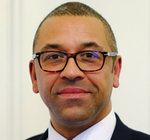
  • James Cleverly – 2023 Speech at Conservative Party Conference

    James Cleverly – 2023 Speech at Conservative Party Conference

    The speech made by James Cleverly, the Foreign Secretary, in Manchester on 1 October 2023.

    It’s been a year since I’ve been appointed.

    And in that time, I have been on over sixty international visits,

    Have hosted over one hundred inward events,

    I have had over seven hundred meetings or calls with foreign representatives,

    I’ve also had the honour of accompanying His Majesty The King on two state visits.

    And my ministerial team has worked just as hard.

    And so, if you’re wondering where they are at the moment during this speech – they’re out in the wider world, promoting Britain on the world stage.

    And all those meetings, all those visits, all those calls, has allowed me to hear first-hand what the world thinks of us. As a result, my view of Britain’s standing in the world has never been clearer.

    People want to see us.

    People care about what we say.

    People admire what we stand for.

    But perhaps most importantly, people respect what we do.

    Far from being left on the sidelines, we remain right at the heart of things.

    And we should all be immensely proud of our country’s standing on the world stage.

    And let me explain why.

    And let me explain to the people who think Brexit has hindered us.

    Let me spell it out to the people who think our best years are behind us.

    Let me make it clear to those on the Labour benches who want to play politics and put our country down.

    This government, with Rishi Sunak at the helm, takes decisive measures and is prepared to take the tough, long-term decisions for the benefit of our country.

    And so, of course we send emergency rescue teams to Morocco, and to Turkey and Syria in response to those terrible earthquakes.

    And of course, we evacuate Brits caught up in the Sudan conflict.

    But we also sign Free Trade Agreements with countries around the globe,

    And we lead by example in our unrelenting support for Ukraine and call out Russia for its heinous crimes.

    And we sanction the brutal Iranian judges who target brave women campaigning for nothing more than their freedoms.

    We have consistently helped the worst-off in the world lift themselves out of poverty,

    We have consistently fought injustice wherever we see it,

    And we have consistently led the way in times of international crisis.

    Some people ask me when they talk to me, they say ‘James, that’s all well and good, but why does foreign affairs matter to the British people?

    How does it help the people of Braintree or Belfast, or Banchory or Bridgend?’.

    It helps because when we engage with our allies, old or new, we are safer, and we become more prosperous.

    The PM gets it. Our party gets it. You get it.

    Keir Starmer and his crowd don’t get it.

    And over the last few years, of course we have seen incredibly tough global circumstances.

    A global pandemic, and as my friend Grant just said, a brutal war on our own continent.

    But because this Prime Minister was prepared to take the tough long-term decisions that we needed.

    And we have thrived despite incredibly strong economic headwinds, powered by the pandemic and intensified by the war in Ukraine.

    And because of his long-term decisions our economy is back to pre-pandemic levels and Britain has recovered quicker form that pandemic than Europe’s biggest economies.

    Under this Prime Minister, we have made immense progress in very little time.

    Under Starmer, Labour are all talk,

    Under Sunak, we are about action.

    As I say, in the relatively time Rishi has been Prime Minister, let us look at what we have achieved.

    We agreed the Windsor Framework in February,

    We agreed the AUKUS deal in March,

    The Hiroshima Accord in May,

    The Atlantic Declaration in June,

    We’ve come to agreements with Europe that will grow our economy, stop the boats, and make us safer.

    Conference, we should all be proud of our country and incredibly proud of we achieved in this short period of time .

    And the Prime Minister’s leadership has allowed us to take full advantage of the bold decision we made in 2016.

    Let me give you a few facts and figures just to prove the point.

    Last year, service exports reached a record high.

    Exports of goods and services grew by over 20% in current prices and are likely to increase again this year.

    And we remain the second largest services exporter in the world – behind only the United States of America which, I may remind you, has five times as many people as us.

    And today, nearly 60% of UK exports go to non-EU countries – and that is up from 52% in 2010. And the long-term economic trend is clear.

    And it’s one we expect not just to continue but to intensify.

    And that’s why – because we are looking at the future, because we are facing forward – we recently concluded negotiations to join the Comprehensive and Progressive Agreement for Trans-Pacific Partnership – easier to say than you might believe.

    And, actually, it took me longer to say it than it did for us to join it.

    That’s because we are focused on building our friendships, our forces, and our relationships with the Indo-Pacific region.

    It’s why we are pushing to conclude a trade deal with India,

    an economy forecast to double in size by 2030, overtaking Japan and Germany as the world’s third largest economy.

    And it’s markets like these that are the future, and we recognise their value to us will grow enormously.

    And while we have a global outlook, Labour can hardly imagine a world beyond Brussels.

    The world has gotten used to engaging with a new, independent Britain –

    To engaging with a Britain that is free to forge its own destiny,

    Free to ratify its own law,

    And free to negotiate its own trade deals.

    And our newfound independence has enabled us to repeatedly get ahead of events.

    Whether that’s with the manufacturing of lifesaving vaccines, which then gave us the ability to lift out of lockdowns,

    Or whether it’s the sanctioning Russians involved in the illegal, brutal and disgusting conduct both domestically and abroad.

    And yes – I am especially proud of our record when it comes to the support of the people of Ukraine.

    We foresaw the extent and intensity of the price of the fight President Zelensky and his brave people faced in February 2022.

    And I consider it a personal privilege to have done what I can to maximise support for that courageous country.

    But never let anyone forget that for almost a decade now, every Conservative Prime Minister has backed Ukraine.

    From training Ukrainian troops after the initial invasion of Crimea in 2014, to standing up to Putin over the poisonings in Salisbury.

    From arming Ukrainians with the MLRS when Russia first initiated their full-scale invasion, to sanctioning Putin and his cronies who brutalise the Ukrainian people.

    And Prime Minister Rishi Sunak has continued this unwavering support.

    He was the first world leader to supply Ukraine with NATO tanks.

    The first leader to train fast jet fighter pilots.

    The first leader to supply long range missiles to support those fighting on the frontlines.

    And earlier this year, Rishi Sunak hosted the landmark Ukrainian Recovery Conference in London, where we secured billions in international funding so that Ukraine will be able to rebuild once they win this war.

    Whilst I occupy this great office, I have considered the many challenges we face as a nation and have contemplated the ways of making my department more effective at tackling those obstacles.

    For example, when it comes to stopping the boats, we have and will continue to coordinate and cooperate not just within government, but with our allies as well.

    We have collaborated with the governments of countries where these inhumane people-smuggling gangs are based.

    But I recognise that we need to keep going.

    Today, I have written to all of our ambassadors and high commissioners.

    I have instructed every ambassador, to do even more to work with the countries in which they represent the UK to help stop the abhorrent trafficking of human lives across the English Channel.

    Be in no doubt, our diplomats will redouble their efforts to bring about an end to this terrible, terrible injustice.

    Now, I’m incredibly proud of the diplomats I work alongside – I have no doubt that they are the best in the world.

    But I want to ensure that our diplomatic service is truly representative of the UK.

    And unsurprisingly, I believe that those who have served our nation on the battlefield can continue to contribute beyond their tours of duty.

    Which is why I have tasked my officials to carve out a space in our diplomatic service for veterans.

    And I look forward to working with Johnny Mercer, our Veterans Minister, to ensure that the men and women from our armed forces – who we know are among the best of us – to give them the opportunity to be the best of us representing the UK.

    And you’ll forgive me, but it does make me immensely proud to offer those who served our country with unparalleled distinction:

    The opportunity to serve once again.

    Speaking of service and pride, you will know that I served as the Chairman of this great party during the 2019 election.

    I remember the doomsters and gloomsters predicting another hung parliament, they predicted an outright Conservative loss or a modest Conservative gain.

    And those were the people whose amazing predictions predated the most significant electoral victory of recent times, and an 80-seat Conservative majority.

    And today, I see the same old politicians making the same old tired predictions.

    And when I look across the floor of the House of Commons, I see a group of spineless ditherers.

    Devoid of answers to any of the challenges the world faces or that our country faces.

    And yet, they are there – baying with disapproval at the tough but necessary decisions that governments have to make.

    And where, I ask myself, is leadership from their leader?

    Sir Keir can’t make up his mind on whether he supports leaving the EU or whether he supports remaining in the EU or rejoining the EU.

    He pledged to cut tuition fees to get elected as Labour leader, and then went back on his promise as soon as he became Labour leader.

    He resigned from Corbyn’s cabinet, then he rejoined Corbyn’s cabinet and campaigned to make Jeremy Corbyn Prime Minister.

    What we see is no clarity, no consistency, no policies, no plan – only the same old, tired, opportunistic politics.

    Keir Starmer’s Labour Party doesn’t stand for anything.

    And whilst Sir Keir and his comrades represent the tired politics of the past, the Prime Minister is prepared to do things differently.

    And why?

    Because the Conservative Party believes in Britain’s epic potential and the Labour Party is unwilling to take the tough decisions that will ensure the prosperity and the safety of this country for generations to come.

    Conference, I can think of nothing more counterproductive than handing over the keys of government to a group of political chancers and visionless ideologues.

    It is a scenario I refuse to entertain.

    Because a party that does not believe in Britain cannot be trusted to lead it.

    Only the Conservatives have a plan for the future.

    Only Conservatives will take the tough decisions that will keep us safe and keep us prosperous.

    Only the Conservatives will stand with pride on the world stage.

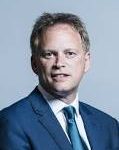
  • Grant Shapps – 2023 Speech at Conservative Party Conference

    Grant Shapps – 2023 Speech at Conservative Party Conference

    The speech made by Grant Shapps, the Secretary of State for Defence, in Manchester on 1 October 2023.

    When people think of the Blitz they tend to think of London – the burning Docklands and St Paul’s shrouded in smoke.

    But Manchester endured its own Blitz early on, in 1940, where some 680 people were killed.

    Fortunately for our country, that kind of systematic destruction on this scale is a thing of memory.

    But imagine if a trip to the market or restaurant could be your last; that you or those that you love might fall victim to a sudden attack by a cruise missile or suicide drone plunging from the sky.

    This is daily life in Ukraine; on freedom’s front line.

    Even as the fighting falls deep into its second year, it’s still hard to believe that a full-scale war is raging here, in Europe.

    And Ukraine is not some long away distant country of which we know nothing.

    It is part of the family of European democratic nations, and they are fighting for their very survival.

    Fighting for freedom against an invader as ruthless as any in modern times.

    A tyrant who sees civilians as collateral damage in a failed war of conquest he cannot win, but he also cannot find a way to exit either.

    Putin hoped to take Ukraine by bluff.

    A swift armoured invasion designed to seize Kyiv and install a puppet government.

    Ukraine would be quickly, it would be overwhelmed, it would be reduced to a vassal state, its identity and freedom crushed.

    But the Ukrainian people were not going to let that happen. And neither were we.

    The United Kingdom stepped up.

    We have provided billions in military aid – second only to the contribution of the United States.

    We have consistently been first in responding to Ukraine’s needs.

    The N-LAW anti-tank missiles wisely sent in advance by Britain – thank you to Ben Wallace – were crucial in those first early weeks when the fate of Ukraine hung in the balance.

    And as N-LAWs struck fear into the hearts of invading Russian tank crews at the beginning, so our long-range cruise missiles do the same for Russian commanders today.

    With weapons like Storm Shadow, everywhere in Russian-occupied Ukraine, is on the front line.

    But we cannot – we must not – let up now.

    The war is consuming weapons, ammunition and, yes, people at an appalling rate.

    If Ukrainians are to prevail against the evil assault on their homeland, we must remain steadfast.

    That’s why we’re helping to train their F16 pilots.

    It’s why by the end of this year we’ll have trained more than 50,000 Ukrainian recruits, starting well in advance of the war.

    And of course, it’s why Ukrainians have been welcomed by so many British families under the Homes for Ukraine scheme.

    Including – for a year – in my own home.

    Now, my wife and I were partly moved to act because our own ancestors fled to this country to escape the pogroms of Eastern Europe in an earlier age.

    But what really moved us most, was the palpable sense of generosity from the British public for our new arrivals to Britain.

    Complete strangers came forward with clothes, with schoolbooks for six-year-old Nikita, and most precious of all, their time to help ensure the three-generation Ukrainian family that came to live with us felt truly at home in the United Kingdom.

    You know, we should never be complacent about this country, whatever our grumbles. This is a precious and incredibly generous land.

    On my first visit to Ukraine this summer, I visited Nikita’s nursery in Kyiv.

    I saw the apartment block across the road from his Kindergarten that had been destroyed by one of Putin’s rockets at the start of the war.

    This was the attack that made Nikita, his mother, his grandmother, together with their dog – Max – flee from Ukraine.

    Only, as I glanced across the street from his nursery this summer, there was no bombed out shell to view. The apartment block has already been completely rebuilt. Re-inhabited.

    What I was witnessing was the iron resolve of the Ukrainian people. Ordinary people, maintaining a semblance of life even amongst air raids sirens.

    Rebuilding their homes, the moment they get the chance.

    And last week, as Defence Secretary, I visited Kyiv again.

    And this time, I met with the steely resolve of President Zelenskyy himself.

    At a time when he could have left the capital. At a time when he could have become a leader in exile. He did not, he stayed put. Providing inspiration for his people and he showed remarkable bravery.

    Ukraine has taught us a lesson.

    The war reminds us of the unprovoked aggression by one nation against another is still a reality in global affairs.

    Left unchecked – we are all in danger.

    And this is why we must invest in our defence.

    That’s why, under the Conservative government, defence spending has exceeded £50 billion a year for the first time ever.

    And conference, it is why we will maintain our leading position in NATO by increasing the defence budget to 2.5 per cent of GDP when conditions allow.

    Because we know the world is changing. So as a result, we’re working ever closer with our allies.

    Developing the latest naval technology to protect our Commonwealth kith and kin in the Pacific as they face up the challenge of the rapidly expanding Chinese navy.

    Deploying two of the world’s largest and most advanced carriers in history the Royal Navy has ever seen, in the Queen Elizabeth, HMS, and HMS Prince of Wales.

    We are ploughing billions into our own naval shipbuilding program, as well as civilian construction to create jobs and grow our economy.

    And Britain is one of the few nations capable of operating in every ocean of the world, simultaneously.

    Our ultimate national insurance policy is, of course, our at sea nuclear deterrent.

    So, we’re building the new Dreadnought-class submarines that will carry Britain’s nuclear deterrent into the middle of the century.

    And today I can announce that we have signed contracts worth £4 billion with leading British businesses to drive forward the development of the most powerful attack submarines ever operated by the Royal Navy.

    These hunter-killer AUKUS submarines will empower the Royal Navy to maintain our strategic advantage under the sea – enabling us to compete with emerging navies anywhere in the world as our world becomes more unpredictable and dangerous.

    Today’s announcement will support thousands of jobs, from Barrow-In-Furness where these submarines will be built, to Derby where our reactor-build facilities will be expanded.

    And by backing British businesses to develop them, we are taking the long-term decisions we need to boost our defence industry and to grow our economy.

    Under our Prime Minister’s leadership, the Conservatives are putting the UK at the heart of NATO.

    Vladimir Putin shattered peace across Europe, but in doing so he made our collective will and our resolve more important than ever.

    And in response, the UK is taking a leading role in ensuring NATO remains the bedrock of our security for us and our allies.

    We are one of NATO’s very few members exceeding the critical 2% of GDP target for the amount of money which is spent on our defence. And, of course, we are the largest defence spender in Europe and we are delivering the capabilities our alliance needs.

    Today, I can announce that the UK has stepped up again, with two new deployments.

    First, in response to a request from our Polish friends, RAF Typhoons are landing in Poland as I speak, to support our NATO ally with the growing threat of Russian interference.

    Deploying ahead of Poland’s elections, they will be a powerful way of undeniably showing Putin that this Conservative government will protect democracy and freedom from any despotic tyrant that threatens our allies.

    Second, at the end of what I think has been a concerning week, there’s been a request from NATO’s Supreme Allied Commander Europe, and so I have authorised the full deployment of a battalion-sized UK Strategic Reserve Force to NATO’s Kosovo peacekeeping mission.

    In the days ahead, hundreds of soldiers from the 1st Battalion, Princess of Wales’s Royal Regiment will join the 400 British service men and women already in Kosovo.

    And, as the best of the best, I know our soldiers will do the United Kingdom proud.

    We have been unwavering in our support for NATO – contributing to every allied mission that they have and supporting them this weekend, so that when NATO contact us, they knew the answer from the United Kingdom would be yes.

    As Conservatives, we put our nation’s security first.

    Which is more than can be said for Labour.

    So, what is Keir Starmer’s approach to our fundamental security?

    Simple. He personally campaigned to make one Jeremy Corbyn, Prime Minister. The man who called for NATO to be disbanded.

    Starmer actually backed plans for Britain to adopt a ‘non-nuclear, non-aligned defence policy’.

    In plain English, that meant scrapping Trident, abandoning NATO and leaving us naked in the face of nuclear threats from the Kremlin.

    And that isn’t just the Starmer of the past.

    Since then, he has gone further – appointing a Shadow Foreign Secretary who has repeatedly voted against renewing our nuclear deterrent.

    You know, in the military sphere, it’s sometimes good to keep your enemy guessing.

    The problem with Kier Starmer is that on policy, he keeps everyone guessing.

    Including himself.

    What would Britain’s armed forces look like after five years of Labour?

    Who knows?

    The man will say anything – anything – to get himself elected.

    But one thing we do know is that you just cannot trust Labour on Defence.

    And if – perish the thought – Labour get back into power, the old habits will resurface. Defence – always dismissed and disparaged by the Left – will be the first casualty.

    Our service people and defence industries, and our veterans all deserve much better.

    Conference, we must not let that happen.

    But there is one area in which we absolutely must do better.

    Service life is tough enough on families – service men and women – without having to put up with sub-standard accommodation.

    There are too many old and creaking buildings in our estate, and that lowers morale.

    Our accommodation estate is in fact very large. Indeed, if the Ministry of Defence was a Housing Association, it would rank amongst the biggest in the land.

    So, I am making it a personal priority to improve its quality.

    Which is why we’re injecting £400 million to ensure that we provide the modern accommodation that our service families deserve.

    And while resolving this problem will not be instantaneous, I am determined that we fix it in order to support our brave men and women at home, as well as on the front line.

    And while we’re on the subject of morale, I want to end by saying something about our Party.

    One of the things I most admire about the military is that they don’t gloss over the harsh realities.

    Now, times are tough. We are behind in the polls. The pundits tell us that Labour is a shoo-in. And we wouldn’t be human if we didn’t sometimes feel the pressure.

    But for those who think that this conference is going to be nothing more than inward looking or downcast, I say this: This country faces an important choice; Rishi Sunak, who will make the hard but necessary long-term decisions to get the country on the right path for the future…

    … or Sir Keir Starmer – a man focused on the short-term and lacking the backbone to make the big changes that Britain needs.

    In Rishi Sunak, we have a leader who has weathered a brutal baptism of fire and is coming through. His mettle has been tested and not found wanting.

    He has stuck to his course, trusting in what he believes to be right for the country. It doesn’t always make him popular in the short term – but that is the price of doing the right thing.

    We need leadership that puts the national interest over self-interest, and does what is right, not what is easy.

    Now, I trust the British people, their good sense. They can spot a serious man to take the tough decisions.

    And they can spot an opposition leader who has made an art out of political opportunism.

    So, let’s take the fight to Say-Anything-Starmer.

    He’s measuring the curtains. He thinks he’s home and dry. He thinks that he can take Downing Street by bluff.

    But as the steely Sir Claude Auchinleck said before the first battle of El Alamein – when the British had their backs to the wall and Rommel seemed to be triumphant:

    ‟Let’s show him where he gets off.”

    Thank you.

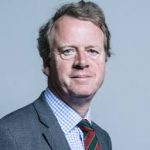
  • Alister Jack – 2023 Speech at Conservative Party Conference

    Alister Jack – 2023 Speech at Conservative Party Conference

    The speech made by Alister Jack, the Secretary of State for Scotland, in Manchester on 1 October 2023.

    Good afternoon, ladies and gentlemen.

    I’d like to thank a few people.

    Firstly, obviously, Douglas who gave a very kind introduction, for his support at Westminster and most important of all for his strong leadership of the Scottish Conservatives in Holyrood.

    Secondly, I’d like to thank my Scotland Office Ministers, Malcolm Offord and John Lamont, my ministerial team, they’re sitting here at the front of the auditorium, and they do excellent work for Scotland. I want to thank them for everything they do, thank you gentlemen.

    Conference, I am here with a very clear message today.

    The United Kingdom has never been stronger.

    And that is not by accident.

    Yes, it’s true the Nationalists are doing everything they can to strengthen the Union for us.

    They have shredded whatever credibility they once had.

    But I’m not going to comment on a live police investigation, however, I think we can all agree that the people of Scotland have been shocked by the investigation into the SNP’s finances; The arrests of leading SNP figures. The searches. The blue and white evidence tent in the garden. The campervan.

    So, it is no surprise that people in Scotland have quite rightly become very angry at the abject failure of the Scottish Government to deliver on the things that matter most to them.

    They are sick and tired of record NHS waiting times.

    Of poor standards in our schools.

    And then, of course, there’s the ferries, or lack of them.

    The SNP and their Green coalition masters, are dragging Scotland down more and more every day and people have come to the obvious conclusion: if the Nationalists can’t even organise a Bottle Deposit Return Scheme properly, all their talk of removing Scotland from the United Kingdom is pure fantasy.

    Ladies and gentlemen, the SNP are increasingly looking like a busted flush.

    But that’s not the only reason why the United Kingdom is stronger than ever.

    The Union is stronger than ever thanks to this Government – the most active and effective UK Government in Scotland in the devolution era.

    And I am very proud of that.

    And I’m very proud of that because we have a great story to tell.

    We have delivered record funding for the Scottish Government, so they really have no excuses for their poor performance in areas such as health and education.

    We have supported families across Scotland facing cost of living pressures.

    We have pledged to halve inflation, to get the economy growing – creating better jobs – and to bring down the national debt.

    We are reaching out across the world to maximise the benefits of Brexit, striking trade deals worth billions of pounds to our distillers, our salmon producers, and our defence industry.

    And we’re not just seeing the benefits of Brexit for the UK with trade deals, either.

    The Chancellor has introduced new financial services regulations.

    We’re backing our fishing industry now it is out of the hated Common Fisheries Policy; and we’ve passed legislation allowing farmers to use cutting edge gene editing technology.

    Cutting edge technology that has been pioneered in Scotland, but which is sadly banned in Scotland by the SNP-Green government of Holyrood, despite the wishes of our farmers and the NFU Scotland.

    As Secretary of State, I’ve also been clear that we will use our post-Brexit internal market legislation to protect Scotland’s free flowing trade across the whole of the United Kingdom.

    Because sixty per cent of our trade is with the rest of the UK and I will not allow the Nationalists to create unnecessary obstacles.

    Ladies and Gentlemen, I am pleased to say we are also supporting our globally successful oil and gas industry.

    This government is clear: we should continue to use our own North Sea resources as we move to Net Zero, our own resources as we bring down prices and improve our energy security.

    Both Labour and the SNP are threatening to shut down our oil and gas industry prematurely and I believe that is sheer madness. It cannot be in Scotland or the United Kingdom’s best interests.

    We must support oil and gas industry, just as we support renewables, as we transition to a much better future.

    At a time of war in Europe and wider global uncertainty we’ve also backed our amazing Armed Forces to the hilt – so much of which is based in Scotland.

    So perhaps now is a very good moment to pay tribute to my friend and fellow Scot, Ben Wallace, an outstanding Defence Secretary who has served this Party, this Government, and our country with the greatest distinction.

    Ladies and gentlemen, there is more.

    This Government is going further than any previous Government of the devolution era in delivering for Scotland.

    As Secretary of State for Scotland it has been my privilege and passion to drive forward direct UK Government investment in Scotland.

    It is now worth £2.5 billion, and that is over and above the Scottish Government’s record funding settlement.

    I was absolutely delighted with the announcement today that seven towns in Scotland will receive around £20 million each as part of our Long-Term Plan for Towns.

    It is the latest in a long line of Levelling Up initiatives reaching every corner of the country.

    It is creating jobs, transforming communities, and delivering high profile projects that people really care about.

    We are backing small-scale, grassroots initiatives; high profile arts projects; cutting edge research in our universities; and more.

    We’ve also led the way creating Freeports based around the Firth of Forth and the Cromarty Firth.

    The Prime Minister and I visited the Cromarty Firth when the news was announced and I know that he, as a long-time champion of Freeports, is as excited as I am about the impact this will have on the Highland economy.

    We’re following up that by creating Investment Zones in Aberdeen and Glasgow.

    Ladies and Gentlemen, we recognised some time ago we had to change the damaging old philosophy of ‘devolve and forget’ – leaving too much in the hands of the devolved administration in Holyrood and allowing the role of the UK Government to fade into the background.

    Well, today, I can announce the era of ‘devolve and forget’ is well and truly over.

    It is dead. It is Finished. And I promise you, it is not coming back under my watch.

    On scores of projects, we are now working directly with local councils and other responsible delivery partners, and I call that real devolution.

    No longer can the failing SNP-Green administration hoard decision-making powers and resources in Holyrood, using it for their own political purposes, rather than the priorities of most people in Scotland.

    My view of devolution is straightforward.

    It is about Scotland’s two governments at Westminster and Holyrood respecting each other’s roles and working together where we can.

    We know that is how devolution works best and we know it is what the vast majority of Scots want and what they expect.

    But unfortunately, my view is not shared by the Nationalists.

    Time and time again they have sought to undermine the devolution settlement in order to provoke unnecessary disagreement between the two governments.

    When they took Nicola Sturgeon’s Referendum Bill to the Supreme Court, they wasted taxpayers’ money confirming what everyone already knew:
    the constitution and the Union are matters reserved to Westminster.

    When they tried to introduce a new system of self-ID for trans people – their Gender Recognition Reform Bill – they ignored the harmful impact on safeguards for women and girls in existing reserved legislation.

    And when they tried to bring a Bottle Deposit Return Scheme, they failed to consider the impact of cross-border trade.

    In each case, I felt it was my duty as Secretary of State for Scotland, to step in.

    I will not stand by, and I will not allow Nationalist ministers to undermine, or abuse, the devolution settlement for their own political purposes.

    Not now, not ever.

    Sadly, I am not surprised by the Nationalists’ approach.

    They do not support devolution so why would they respect it?

    But what concerns me are the consequences.

    The waste of time, money and resources that should be focused on people’s real priorities in Scotland.

    Struggling businesses left out of pocket by the collapse of that shambolic Bottle Deposit Return Scheme.

    The anxiety felt by so many women at the potential erosion of safeguards afforded by the Equality Act.

    The Scottish Government need to understand their political game-playing causes real damage and as Douglas Ross said so forcefully earlier this afternoon, they need to drop their narrow obsession with breaking up Britain and do the job they were elected to do.

    They need to respect devolution; they need to take that record budget they receive from the Treasury, and they must use it to deliver public services that Scots can rely on.

    So, ladies and gentlemen, in conclusion:

    We know this Union – this great, enduring partnership between Scotland, England, Wales, and Northern Ireland – creates opportunity and drives success for us all.

    Quite simply, we achieve more together.

    And that is why I’m so proud to play my part in a UK Government that has done more than any other to strengthen the United Kingdom.

    And we are doing it daily, right across Scotland, investing directly in projects that create jobs and level up communities.

    We are doing it by supporting our key industries, by protecting cross-Border trade and boosting the economy.

    And we are doing it by defending devolution robustly against the Nationalists’ attempts to bend and twist it for their own, narrow political purposes.

    There could not be a clearer contrast between a Nationalist, SNP Scottish Government that is in chaos, that is failing, and that is letting people down by putting their obsession with leaving the UK above everything it does. And this United Kingdom Government, under the outstanding leadership of Rishi Sunak, that is 100 per cent focused on the issues that really matter most to the people in Scotland and across the whole of the United Kingdom.

    More and more, people in Scotland are seeing the benefits of having a United Kingdom that is energetically and visibly on their side because that is what people want.

    It is what’s best for Scotland.

    And it is what we will continue to deliver.

    Thank you very much.