Tag: 2022

  • Iain Duncan Smith – 2001 Speech to the CBI

    Iain Duncan Smith – 2001 Speech to the CBI

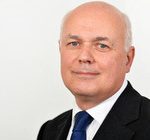
    The speech made by Iain Duncan Smith, the then Leader of the Opposition, to the CBI on 6 November 2001.

    It is a great pleasure for me to be with you this morning at the 25th CBI National Conference, and I am grateful for you kind words of introduction.

    I am particularly pleased, at the beginning of my new role, as the leader of my party, to have this opportunity to speak to you. I hope that today is the beginning of a new dialogue between the Conservative Party and British business.

    Your Conference this year takes place against an increasingly difficult background for British business and the United Kingdom economy as a whole. The feeling of unease and uncertainty has, of course, been exacerbated by the events of 11 September.

    The Conservative Party is fully behind the Government in its total backing for the United States in the war against terrorism. It is their war and it is our war. We must see it through to the end.

    All of us has a role to play. Politicians in presenting a united front. And you, in business, by not allowing the terrorists to succeed in deflecting you from your normal, daily activities.

    Yet it is clear, as most commentators agree, that the global economy was weakening from well before the terrible atrocities committed on that day.

    As the most recent Economic Review by Deloitte and Touche states: ‘there is no doubt that a severe slowdown is in train’.

    As the report makes clear, to blame this on 11 September would be, in their words, ‘mistaken’.

    Without in any way being alarmist about our prospects this picture gives us all concern. It means that for many businesses there are going to be immense challenges ahead.

    In this context of growing economic difficulty, it is more important than ever that the Government’s policies support business and foster competitiveness.

    Throughout its first term, the current Government inherited an economy in which the fundamentals were strong. There was a favourable global economic environment. The world economy generally performed well.

    As a result the Government was able to increase taxes while their immediate effect for many people was blunted by rising incomes.

    The task of any responsible Government, however, is not to pursue an economic policy just for the times when things are going well and then assume that those circumstances will last forever. They need to ensure that the economy is also in a position to withstand unexpected shocks. Instead, Ministers seem to have believed their own rhetoric about boom and bust being abolished forever.

    At a time when many of our competitors have been cutting taxes, Gordon Brown has spent the last four years raising them. The tax burden has increased by a massive £28 billion, or 10p on the basic rate of income tax. The CBI itself puts the increased burden of business taxes at £5 billion a year.

    It is little surprise, therefore, that a recent Pricewaterhousecoopers study showed that Britain has now lost two-thirds of the tax advantages we enjoyed against our European neighbours in the mid 1990s.

    To make matters worse, instead of easing the burden of regulations on British business, the Government has spent the past four years increasing them. The Institute of Directors has put the added cost to business of regulations at a further £5 billion. According to research carried out by the independent House of Commons Library in the year 2000 alone, 3,864 new regulations were introduced– the highest figure on record.

    And in place of a truly responsible and prudent approach to spending, we have seen spending allowed to run ahead of growth. If that continues it can only mean one thing.

    As the IFS said in March: ‘If spending is to grow by more than GDP growth beyond 2003-4 then further increases in tax will be required’.

    Or as a senior Downing Street policy adviser was quoted as saying yesterday: “We have to get over, and the public have to understand, that all these changes that are being talked about come at a price. The only way that they can be paid for is tax increases”.

    All of this has contributed to a worrying picture for our competitiveness.

    Now there is the risk of adding further uncertainty to the economy. The Government have set a course to join the euro that would lock us forever into a one size fits all interest rate irrespective of whether it suited our economic circumstances of not.

    Of course on Sunday, the Chancellor sought to sound a more cautious note than the Prime Minister in Brighton last month. Yet this is just another episode in Labour’s now all too familiar good cop, bad cop routine whose purpose is to make a decision to bounce Britain into the euro look objective.

    It is all part of a game. Whenever they want to appear warm about the euro, we see the Prime Minister, or Peter Mandelson or Peter Hain. When they want to appear sceptical we see Gordon Brown or Jack Straw. They urge those of you who are pro-euro to run ahead of them in advocating membership. At the same time they try to assure those of you who are against, that membership is a far off prospect when the truth is that they are committed to join.

    The result of this game is to produce the worst of all worlds. It is destabilising to industry that wants to plan ahead with a degree of certainty. And it clearly exposes the so-called five economic tests as totally bogus. We all know that they have nothing to do with economics and everything to do with politics.

    A strong, dynamic economy relies on fundamental economic stability and the flexibility to respond to different circumstances. That is why in the referendum Conservatives will campaign to keep the pound.

    I know that some of you will agree with this, while others won’t. Yet our position has the virtue of being offering stability – you at least have a clear sense of where you are with the Conservatives. And it is sustainable because, as the fourth largest economy in the world we can make a success of our own currency, if that is what we choose.

    It stands in stark contrast to the now you see it, now you don’t peekaboo politics being played by the Government on the euro.

    Building a strong, dynamic and competitive economy is vital. It underpins so many of our aspirations. Without it, the improvements that all of us seek in our public services simply are not deliverable. And building world-class public services has to be our overriding priority as a nation.

    Britain is the fourth largest economy in the world. Yet ask anyone who uses the public services, and they will tell you that in so many areas they would disgrace the third world.

    Of course I don’t pretend that the problems with our public services began 1 May 1997. Yet it is undoubtedly the case that since then things either haven’t improved, or they have simply got worse.

    Our hospitals have been operating throughout the summer at winter levels of crisis so that a Health Minister is now forced to admit the winter crisis now lasts for the whole year. Our schools are such that up to forty per cent of all teachers with three years experience are leaving the profession. Our police are so demoralised that, according to the Chairman of the Police Federation, morale is at an all time low with resignations having increased by over 80 per cent in the past four years.

    We live in the age of the communications revolution, where vast amounts of information are transmitted across the globe every second. Yet we have patients lying on trolleys in crowded hospital wards for hours before they are seen by a consultant.

    We live in the age of the global economy where more money is traded in the City of London’s foreign exchange markets in two hours than the British Government spends in a year. Yet too many of our children leave school ill-equipped to take advantage of the opportunities that are on offer.

    And we live in an age of where we can buy goods and services through the internet in minutes. Yet the state of our transport system means that travelling a few miles can take hours.

    What angers people more, is that this comes at a time when we are constantly told that record amounts of investment are going into these services. We are urged to be patient. All that is needed is time. The Government’s view seems to be that all it will take is one more heave.

    Yet we have had four and a half years already. For all the boasts of new investment, of record amounts of money and new initiatives, things the experience of real people is that things are not just failing to get any better, they are going from bad to worse.

    Take the Health Service. Only yesterday figures showed that despite an extra £8.4 billion in the past two years alone, there has been almost no rise in the numbers of patients treated. At the present rate there is no way that Labour will meet their Election pledge to cut the maximum waiting time for in patients to six months by 2005. No wonder Ministers are reportedly concerned that the cash “has disappeared into a black hole”.

    All of this is of enormous importance to all of you in business. Put simply, failing and unreformed public services cost you money. They cost you money in the extra taxes the Government imposes on you to pay for them. And they add to your costs when you have to pick up the bills for their failure. It is happening now.

    Your own annual absence survey for 2001 states that 192,000,000 working days were lost due to sickness. It estimates that this costs British business £10.7 billion a year. Coronary heart disease in men accounts for the loss of 47,000 working years every year. In France and Germany waiting times are virtually negligible. Here, it can take a year for a heart by-pass. A constituent of mine waiting for a by-pass started by working five days a week, gradually it went down until after a year he was working a half day, one day a week. Yet as he put it to me: “my employers still have to bear the cost of not having me around”.

    According to one survey transport problems are costing British business at least £5 billion a year in lost working time. Include productivity losses, the cost soars to £10 billion a year. As one who has used the Tube endlessly to get to work, my abiding memory of last summer is not just the endless delays that make people late, but the cramped and sweaty carriages that mean when you eventually arrive, it takes half an hour before you are in a fit state to think of work.

    Last year Tesco was so alarmed by poor literacy and numeracy standards that it was forced to spend £1 million to send hundreds of recruits on courses to bring them up to scratch on the 3Rs. As one Tesco manager said: ‘The people we are employing are not thick or stupid. They have just not been given the right education in the first place’.

    The conclusion is clear. Failing public services don’t just create human tragedies; they result in business tragedies too.

    For too long in this country we have been locked into a sterile debate. We have been told that there were only two choices. Either we have higher taxes and better public services, or we have lower taxes and worse public services. Yet what we have had for the past four years is higher taxes and worse services.

    It is a false choice, based on an argument that simply wouldn’t run anywhere else in those European countries that tax no more heavily than we do, yet spend more on their public services.

    The real choice before us is not, as the Prime Minister tells us, between short term tax cuts or increased investment. We can continue down the same road of taxing ever more heavily in order to plough ever more money to pay for unreformed services. Or we can combine a low tax, wealth-creating economy with genuine public service reform.

    The other danger with the current course is that not only will it not work, it will ultimately be self-defeating. As taxes continue to rise we will risk undoing those things on which business success – and the money to pay for public services – actually depends. We will never pay for public services pursuing a policy that taxes and regulates businesses out of existence.

    We will have a situation in which sclerosis in the unreformed public services will ultimately lead to sclerosis in the economy as a whole.

    Nor will the Government’s approach to public/private partnerships solve their tax and spend dilemma. Conservatives strongly believe in bringing the private sector in to help provide public services. But Labour’s approach won’t work because it is a one-sided partnership.

    Four things are needed when private capital is brought into public projects: clear information, on which customers and suppliers can make a choice; freedom for customers to choose; freedom for providers to manage their businesses; and sanctity of contracts.

    Labour is providing none of these. In the health service, for example, the information about cost and performance is not available. Customers are not free to choose their health provider. Private providers are not free to manage their businesses, but have to abide by NHS practices. The Government is insisting on total control.

    What they are offering is not a public private partnership, but off-balance sheet finance. It is public services on the never-never.

    What they fail to understand is the trade-off between risk and reward that the private sector makes. If private capital providers can’t rely on the Government to keep to the terms of the deal, if the Government don’t hold to the sanctity of contracts, then there will be a huge risk premium on providing capital for public projects. And who is going to trust the Government to keep to the deal after they have ripped off 250,000 shareholders of Railtrack? What is the risk premium on dealing with the Government now?

    After the Railtrack debacle how many of you would want to deal with a Government that expects you to take all the risks, but is prepared to dump on you the minute anything goes wrong? So I make no apology for saying that we need a fundamental re-assessment of our approach. Not just to the financing of our key services, but also to the way in which those services are run. Because, the truth is that however much money we pour into the system, so long as the system remains the same things will not change. And Britain will be condemned to public services that shame our country.

    Just as the incoming Conservative Government in 1979 came to power with a radical reform agenda to transform an ailing economy, Britain now needs a Government with the an equally radical reform agenda to transform the public services.

    We need to reject the dogma that insists on services always being delivered by a monopoly state provider. We need to run our services in the interests of those who use them instead of providing favours for the vested interests that pay the political bills. And we need, where appropriate, to include the best of British enterprise and innovation that is found in the private and voluntary sectors.

    That is what other countries do. Only an ideological attachment to existing structures prevents Britain from doing the same. Yet that is what we get with Labour. They are ideologically wedded to the system, which is why, whatever the rhetoric, they simply cannot deliver.

    So we will be listening to the people who work in our public services as well as those who use them. We will be working with the charities, the churches, the public and the private sector to help us shape the policies that will deliver the results that people demand. And we will be seeing what can be learned from other countries too. That is why I have asked members of my Shadow Cabinet to travel to other European countries and beyond to see why their public services are so much better than ours.

    There are those who say that we can only have European levels of healthcare, education standards or transport if we have European levels of tax. They are missing the point. It is European countries such as France and Germany that are reducing taxes, while Britain has been putting them up.

    Our European neighbours have been prepared to learn from Britain about the need for low taxes, flexible markets and privatisation. It is time, when it comes to running public services, Britain has the self-confidence to learn from Europe.

    So the choice for Britain over the coming years is a clear one. It is to continue taxing and regulating ourselves into yesterday, while at the same time presiding over the steady and certain decay of our essential public services. Or we can choose a different way – one that sets business free, that promotes enterprise and on the public services whose only dogma is delivery.

    It is the latter course that, under my leadership, Conservatives will be following over the next four years.

    I know from working in industry that the most important resource a business has is its people. Yet the failing public services has become a hidden tax on that resource.

    People are devalued, while business is left to pick up the cost.

    Instead of investing in people we spend more and more money investing in failure.

    And the failure to reform our public services is a failure to invest in people.

  • PRESS RELEASE : Secretary of State fanning flames of devolution crisis with abortion decision [December 2022]

    PRESS RELEASE : Secretary of State fanning flames of devolution crisis with abortion decision [December 2022]

    The press release issued by the DUP on 2 December 2022.

    Upper Bann MP Carla Lockhart has said the Secretary of State’s decision to press ahead with the commissioning of abortion services is fanning the flames of the crisis facing devolution in Northern Ireland.

    Her comments come following a letter sent by the Secretary of State to DUP Leader Sir Jeffrey Donaldson, confirming the move.

    Carla Lockhart said,

    ‘‘Amid the rising cost of living and the Government’s failure to deliver energy support payments to households in Northern Ireland, it is a matter of deep regret that the Secretary of State can find the money to promote the taking of life.

    Pressing ahead with this divisive policy is a further attack on the principles of devolution. Abortion is a devolved matter and future decisions should be taken by local ministers.

    The former Secretary of State failed to respect these principles when an Executive was sitting so it perhaps not surprising that his successor has chosen to pursue this agenda when the institutions are paralysed because of the Protocol.

    There are many financial pressures facing public services in Northern Ireland, including our NHS. It is notable that amongst all those competing issues the government is providing financial certainty for the provision of abortion when it is absent for so many other issues.

    The point has been made forcibly and repeatedly to the Secretary of State and his predecessor that action in this area undermines the devolution settlement. That is only underscored further by the Government’s deliberate inaction across many other areas.”

  • PRESS RELEASE : Diane Forsythe – NI childcare costs on a par with central London [December 2022]

    PRESS RELEASE : Diane Forsythe – NI childcare costs on a par with central London [December 2022]

    The press release issued by the DUP on 2 December 2022.

    DUP South Down MLA Diane Forsythe & Sammy Wilson MP have written to the Chancellor and outlined the need for Treasury to adjust the allowance for Tax Free Childcare across the UK after a report finds that childcare costs in Northern Ireland are on a par with London and are holding back working families.

    Commenting on the issue Ms Forsythe said,

    “This report looks at options for childcare in England but one of the most significant points from their survey is that childcare costs in central London are £36 per day. (graphic below) In Northern Ireland our childcare costs are significantly above the UK average and on a par with central London and in many cases higher as identified in a recent Employers for Childcare report.

    Whilst this report finds in England mortgage, household energy and household food costs are higher than childcare, that is not the situation in Northern Ireland. Families here regularly report that childcare is their biggest monthly cost and significantly more than their mortgage payment.

    Our Treasury spokesman in Westminster Sammy Wilson and I have written jointly to the Chancellor and urged him to look at increasing the Tax Free Childcare allowance for working families. This would help get more people into the workforce and particularly in our public services such as schools and hospitals where it is simply not affordable for a parent to work.

    The DUP Education Minister before leaving office had set the wheels in motion to ensure all children aged 3-4 have access to a minimum of 22.5 hours of funded pre-school education per week and that is a work in progress. One of the best ways however, to make returning to work affording in those years after maternity leave would be for the Tax Free Childcare allowance to increase beyond the 20% contribution. Treasury has previously told us that this scheme consistently underspends, therefore there is headroom for expansion.”


  • PRESS RELEASE : Government priorities don’t include more than £10m of Sinn Fein allowances – Gregory Campbell [December 2022]

    PRESS RELEASE : Government priorities don’t include more than £10m of Sinn Fein allowances – Gregory Campbell [December 2022]

    The press release issued by the DUP on 2 December 2022.

    East Londonderry MP Gregory Campbell has said that swift action on MLA pay is correct but stands in stark contrast to inaction on more than £10million of other allowances claimed by Sinn Fein MPs in the last 10 years alone. He said the figures demonstrate the government’s priorities.

    The DUP MP said, “The Government have taken action in relation to MLA pay, citing the fact that currently they are not carrying out their full duties. Whilst the Assembly is not sitting due to the Protocol introduced by this same government, it is evidence of their ability to act when they want to.

    This swift action stands in contrast to other areas, including allowances paid to Sinn Fein MPs. Mary Lou McDonald has proclaimed that Sinn Fein has “no business” in Westminster, but with more than £10million accrued in ten years, Sinn Fein MPs certainly aren’t operating a charitable enterprise.

    When I raised this £10million figure with the Northern Ireland Office Minister during the week he claimed that he didn’t “recognise” this figure. Perhaps that was because figures provided to be by the House of Commons Library show the total is actually greater than the £10million I cited. The representation allowance Sinn Fein receive was not only specially designed for the party but comes with less transparency and accountability than allowances paid to any other MP or Party.

    Whilst energy support payments are being withheld by Ministers in London, there is no such holdback on Sinn Fein allowances. The determination shown on MLA pay isn’t replicated by any such desire to place a real focus on abstentionist MPs who don’t turn up for work, and show no desire ever to do so but are content to sown plenty of taxpayers money in doing so.

    Many people will see it as a demonstration of this Government’s priorities thus far”

  • PRESS RELEASE : London’s last minute change is delaying energy payments [December 2022]

    PRESS RELEASE : London’s last minute change is delaying energy payments [December 2022]

    The press release issued by the DUP on 2 December 2022.

    Writing in today’s Belfast Telegraph, East Antrim MLA Gordon Lyons has set out the last minute change introduced by Ministers in London which means energy payments to households in Northern Ireland are being withheld.

    Much has been made about references that the £400 (now increased to £600) energy support payment would be paid in November or at least before Christmas. These were not dates of our invention, but the words of the then Chancellor and Prime Minister. They also were not some whispered promise to the DUP out of the public gaze. They were comments made in public by the Chancellor in August and reported in this very newspaper.

    On 10th August 2022 the Belfast Telegraph reported an interview by the Chancellor on BBC Northern Ireland’s Good Morning Ulster programme. A quotation by Mr Zahawi was included where he said:“The £400 will begin to drop, in the autumn”.

    There may be some debate about exactly what might constitute ‘autumn’, but most people would accept that autumn falls before Christmas in the calendar year.

    It wasn’t just DUP representatives who referenced payments in this timescale. On 26th August the Belfast Telegraph reported comments where the Utility Regulator said they had hopes people here would see the £400 payment “this side of Christmas”.

    Energy support payments could and should have been delivered to households here before the end of November. There was nothing preventing that from happening save for a lack of political will in London. The funding is in place, the systems are in place and the energy companies are ready to process the payment as outlined by the then Chancellor in August.

    Instead however, Ministers in London decided within the last few weeks to insert the so-called “cash out” option whereby customers could withdraw some or all of the payment from their electricity provider if their account is in credit. That is an entirely legitimate and useful mechanism, particularly in Northern Ireland where we have a high dependency on oil and other fuel sources. It was also an entirely legitimate and useful mechanism during the summer when it was ruled out as an option by the UK Government.

    Little wonder that energy companies are not in a position today to deliver a scheme that includes this cash out option when they were told many months ago to prepare for a scheme where it was specifically ruled out.

    For Ministers to re-introduce something like this at the last minute looks to most people like nothing more than a delaying tactic. It is most disgraceful because it is dressed up in some cloak of kindness. It is entirely cynical to introduce measures at this late stage to actively delay the scheme.

    It’s not “empty promises” from the Tories in August that should be of most concern, it’s the callous actions in October and November which will likely mean that some people in Northern Ireland suffer a cold Christmas, because Ministers in London decided to withhold payments from people who need that money transferred immediately.

    If this is a further act to punish the DUP for demanding the Government and Brussels replace the NI Protocol with arrangements acceptable to unionists, then it is an outrageous abuse of power and hurts the most vulnerable.

  • PRESS RELEASE : First public parole hearing following government reforms [December 2022]

    PRESS RELEASE : First public parole hearing following government reforms [December 2022]

    The press release issued by the Ministry of Justice on 12 December 2022.

    The first public parole hearing in UK history is set to go ahead today (12 December 2022) following reforms to increase transparency and improve victims’ experience of the parole system.

    • new rules allow victims, journalists and public to witness parole hearings for the first time
    • delivers on manifesto pledge to make system more transparent
    • reforms to put victims at the centre of our justice system, and improve confidence in the parole process

    Convicted murderer Russell Causley, who killed his wife Carole Packman in 1985, will become the first prisoner to have a public parole hearing after the government lifted the ban on public hearings in July this year.

    Causley was released from prison by the Parole Board in 2020 after serving 23 years for the murder but was brought back to jail by the Probation Service in November 2021 for breaching his licence conditions.

    For the first time, victims, the public and media will get to attend a hearing and better understand how decisions over whether to release prisoners are made.

    The change marks a major step in opening up the parole process, following calls for greater transparency after the subsequently reversed decision to release black cab rapist John Worboys in 2018.

    Deputy Prime Minister, Lord Chancellor and Secretary of State for Justice, Dominic Raab MP, said:

    Pulling back the curtain on the parole process by allowing hearings to be heard in public is a major step forward for victims who want to see justice being done first-hand.

    It marks the first step in our reforms to overhaul the system – putting victims and public protection front and centre of the process.

    Public parole hearings form part of the government’s root and branch reforms to restore public confidence in the parole system and put victims at the heart of the process. Under previous rules, victims could ask for a personal statement to be read out on their behalf but were not allowed to witness parts of the hearing.

    The government has already introduced a raft of changes since the reforms were announced in March this year. This includes tightening up the rules around open prison moves so all indeterminate sentence offenders – those who have committed the most serious crimes, including murder and rape – face much stricter criteria to move from closed to open prison.

    Further reforms, including a tougher release test for parole prisoners and new powers for the Justice Secretary to block the release of dangerous offenders, are also set to be introduced.

    Other measures include increasing the number of Parole Board members with law enforcement backgrounds who can bring their experience of keeping the public safe to parole decision making.

  • PRESS RELEASE : Nearly £2 million for tech start-ups to drive growth and innovation building on use of AI rescue drones and magnetic train tech [December 2022]

    PRESS RELEASE : Nearly £2 million for tech start-ups to drive growth and innovation building on use of AI rescue drones and magnetic train tech [December 2022]

    The press release issued by the Department for Transport on 12 December 2022.

    • innovative start-ups to be given a share of £1.85 million to help bring their ideas to life, revolutionising transporting and supporting growth across the UK
    • past winners include using technology to guide visually impaired people through transport, innovations making EV charging easier and trialling drones to improve mobile signal for rescue missions
    • government-backed projects aimed to help create a greener transport future, drive growth and create jobs

    Transport technologies of the future, like rescue mission drones and sensors to help visually impaired people use transport, could be brought to life through a new round of government funding, launched today (12 December 2022).

    As many as 60 projects could be awarded a share of the £1.85 million fund to develop early stage research projects designed to support innovative ideas to create a better transport system. The programme aims not only to foster innovation to improve transport in the UK, but also to generate growth in the sector.

    Previous winners include:

    • a trial using a drone in remote areas to help emergency services find missing people
    • a project exploring 3D technology to help visually impaired people use public transport
    • the development of magnetic technology to improve reliability of rail services in rain and snow

    Transport and Decarbonisation Minister Jesse Norman said:

    AI rescue drones, magnetic train tech, and sensors to help visually impaired people are just some of the cutting-edge transport projects this programme has already funded.

    We’re determined to support path-breaking R&D across the UK. This new round of funding is designed to find the next top tech projects that will improve transport for millions across the UK.

    By aiming at emerging start-ups and small businesses we can ensure we build a tech base for the future.

    The TRIG 2022 programme will have five targeted funding calls, alongside an ‘open-call’, considering any transport related idea. Specific areas of focus include:

    • maritime decarbonisation
    • future of freight
    • local transport decarbonisation
    • transport resilience to severe weather and flooding
    • improving the rail passenger experience

    Under the Transport Research and Innovation Grant programme, past winners also include:

    Vivacity obtained a grant for their award-winning artificial intelligence camera technology that gathered real-time transport usage data and has now been implemented by Local Authorities including Milton Keynes, Salford and Oxford and was used during the pandemic to monitor social distancing on local transport.

    Makesense Technology researching the feasibility of using shape-changing haptic technology, which uses vibrations to give feedback from a device, to guide visually impaired people through transport networks, such as train stations and airports, better enabling independent travel for them.

    Lenz Ltd who proved the concept of a novel magnetic rail traction technology, which can improve reliability and safety of rail services under adverse conditions. Their technology improves the connection between the wheels and the rails by using magnetism, which is not impacted by items on the line like ice or leaves.

    University of Surrey developing a system that uses artificial Intelligence (AI) to monitor the condition of bridges by listening to how they vibrate. Without needing an inspection team to travel to the site, maintenance can be predictive, more efficient and minimise any potential network downtime.

    Unitrove producing a proof-of-concept system for managing hydrogen storage and distribution at ports to help the maritime sector decarbonise shipping.

    Snowdonia Aerospace received funding to trial a drone that would circle in the sky to create a 4G/5G network in the sky by grabbing the signal of any network to provide service in areas of poor mobile signal connectivity, which could be used by emergency services to locate missing persons and coordinate with ground personnel.

    Since TRIG was launched in 2014, over £10 million in grants have supported almost 300 projects, with the three hundredth set to be awarded in this latest funding round.

    Along with industry applicants, TRIG is also open to academic applicants and helps university researchers translate blue-skies research into the real world and create new solutions. This can be a useful way to taking their first steps toward creating a new company and helping the sector grow and create jobs across the UK.

    Now in its 16th round of funding, the TRIG programme, delivered in partnership with Connected Places Catapult, brings together talented innovators – mainly start-ups and universities – and policymakers at the earliest stage of innovation to help enhance the UK’s transport system.

    Nicola Yates OBE, Connected Places Catapult, Chief Executive Officer said:

    The UK’s innovation ecosystem is adept at developing solutions to complex problems. Government-backed projects like TRIG feed the early stages of the UK transport innovation pipeline and help us identify and nurture viable solutions to some of our biggest challenges.

    The TRIG 2022 call is focused on finding the next wave of state-of-the-art transport solutions, enabling the creative innovators to propel us along the road to a greener future whilst driving growth.

  • PRESS RELEASE : EU should focus on solutions rather than sanctions – Diane Dodds [December 2022]

    PRESS RELEASE : EU should focus on solutions rather than sanctions – Diane Dodds [December 2022]

    The press release issued by the DUP on 1 December 2022.

    DUP Upper Bann MLA Diane Dodds has said the European Union should focus on replacing the Northern Ireland Protocol with arrangements that unionists and nationalists can support rather than brandishing threats of sanction.

    On Wednesday the European Council and Parliament agreed plans to restrict trade with the UK for a failure to comply with the Protocol and earlier today European Commission President Ursula von der Leyen was speaking in Dublin.

    Mrs Dodds said:

    “The EU is failing to recognise the concerns of Unionists. Despite the Protocol driving up the cost of doing business, hindering the supply of medicines and preventing the devolved institutions from functioning, Brussels refuses to face the reality that the very arrangements it insisted upon are undermining political and economic stability in Northern Ireland.

    For weeks we have been told the mood music is good and that talks have been constructive. Yet the EU seems to be focused on punishing the UK for having the audacity to protect the integrity of its internal market. The hypocrisy is staggering. Let’s not forget that it was the EU that moved to trigger Article 16 to stop the supply of vaccines during the pandemic.

    Rather than using the threat of sanctions as a stick to beat the Government, the EU need to get on with agreeing alternative arrangements that can command the support of both unionists and nationalists in Northern Ireland. Any solution must restore the consent principle at the heart of the Belfast and St Andrew’s Agreements. Not a single Unionist MP or MLA supports the Protocol. Without a return to consensus politics the future of devolution will remain on life-support.

    It is crucial that the Government hold their nerve in the face of this aggression but most of all there is a need for decisive action. An antidote for the poison the Protocol has injected into our politics is found in the Protocol Bill. Ministers must not shy away from taking the necessary steps to bring matters to a head and finally restore Northern Ireland’s place in the United Kingdom.’’

  • PRESS RELEASE : Gavin Robinson welcomes Covenant Duty advice to education sector [December 2022]

    PRESS RELEASE : Gavin Robinson welcomes Covenant Duty advice to education sector [December 2022]

    The press release issued by the DUP on 1 December 2022.

    East Belfast MP Gavin Robinson has welcomed guidance sent to stakeholders in the Education sector alerting them to the passage of the Armed Forces Covenant Act.

    The Act introduces the Armed Forces Covenant Duty on public bodies to have due regard for the principles of the Armed Forces Covenant when exercising specific functions, including within education.

    The DUP MP said, “The Act fulfils a commitment that we secured in the New Decade New Approach agreement that there should be statutory underpinning of the Armed Forces Covenant on a UK-wide basis. Its inclusion within NDNA followed a Private Members Bill which I brought before Parliament back in February 2019.

    Sadly, there had been attempts to block the implementation of the covenant, with some even trying to deny that it applied here. It was these actions which motivated my initial attempt to see the Covenant enshrined in law. The passage of the Act leaves no doubt now that Northern Ireland is fully included within the Covenant.

    The Covenant doesn’t provide any unfair advantage to veterans, it merely ensures those who serve in the Armed Forces, both regular and Reserve, veterans and their families should face no disadvantage compared to other citizens.

    Whilst the legislation currently covers areas of health, education and housing, there is scope for further areas to be added, and I would hope that it can be extended in the future to areas including employment, pensions, criminal justice and social care.

    The guidance sent by the Department of Education is a useful reminder to all areas of that sector following the Covenant Duty coming into force on 22nd of November. I would hope that other Departments impacted by it in Northern Ireland will take similar action.”

  • PRESS RELEASE : Ruling on ‘collusive behaviour’ in Northern Ireland claims a positive first step [November 2022]

    PRESS RELEASE : Ruling on ‘collusive behaviour’ in Northern Ireland claims a positive first step [November 2022]

    The press release issued by the DUP on 30 November 2022.

    The DUP’s Lead Policing Board representative Trevor Clarke MLA has welcomed the decision by the High Court to grant permission to former police officers to challenge the Police Ombudsman’s recent findings of ‘collusive behaviour’ against the RUC.

    Responding to the ruling – which was secured by the Northern Ireland Retired Police Officers Association – Trevor Clarke said:

    ‘‘The standing of the RUC has been unfairly tarnished by a recent list of reports by the Police Ombudsman’s Office which allege ‘collusive behaviour’ without bringing forward a shred of evidence capable of instigating criminal proceedings. This ruling is a positive first step toward challenging the legal basis for such assertions and thus defending the reputation of the vast majority of officers served with distinction during our darkest days.

    Today’s ruling is not the first time a Court has indicated the Police Ombudsman may have ‘overstepped the mark’ in making findings of this nature. It is a matter of deep regret that the Office has not seemingly learned from past mistakes. Instead it seems likely that it will become engaged in another protracted legal battle that could have been avoided. This does precious little to restore waning confidence in our police complaints system, which has been beset by delay.

    I want to commend the Association for their perseverance in securing this judgement and assure them of our continued support moving forward.’’

    DUP East Londonderry MP Gregory Campbell has previously highlighted the Police Ombudsman’s continued failure to take proper account of the context of Troubles-era policing in investigation reports.

    He added:

    ‘‘The Police Ombudsman it appears has sadly fallen into the trap of investigating allegations of collusion without recourse to any statutory definition in law. To make matters worse, the reports published by her office in recent times largely fail to present an understanding of the policing context of the period – a period in which police officers and our society as whole were subject to an unprecedented terrorist campaign.

    Such an approach inevitably means the actions of the RUC are being unfairly judged against the expectations of modern day policing. This leaves the door open for revisionism.

    The reality is that police officers during the Troubles did not have infinite time or resources. The RUC had to prioritise decisions and operations on the basis of an assessment of risk in order to preserve life. In this challenging environment, mistakes were regrettably inevitable, however not on a scale, or with an intent, comparable to colluding with terrorists.

    The DUP will continue to press for these facts to be reflected by the Police Ombudsman’s Office going forward.’’