Tag: 2022

  • PRESS RELEASE : Change of His Majesty’s Ambassador to Ethiopia – Darren Welch [December 2022]

    PRESS RELEASE : Change of His Majesty’s Ambassador to Ethiopia – Darren Welch [December 2022]

    The press release issued by the Foreign Office on 12 December 2022.

    Mr Darren Welch has been appointed His Majesty’s Ambassador to the Federal Democratic Republic of Ethiopia and Permanent Representative to the African Union in succession to Dr Alastair McPhail CMG OBE who will be transferring to another Diplomatic Service appointment. Mr Welch will take up his appointment during January 2023.

    Curriculum vitae

    Full name: Darren John Welch

    Married to: Lucille Welch

    Children: 2

    Year Role
    2021 to present FCDO, Director of Global Health
    2018 to 2020 Department for International Development (DFID), Director of Policy
    2017 to 2018 DFID, Director of Strategy
    2016 to 2017 DFID, Head, Migration and Modern Slavery Department
    2015 to 2016 Home Office, International Team Leader, Syrian Vulnerable Persons Resettlement Scheme
    2011 to 2015 Brussels, United Kingdom Permanent Representation to the European Union, Counsellor for Development, Trade, Africa, Asia and The Americas
    2008 to 2011 DFID Tanzania, Head of Office
    2007 to 2008 DFID, Head, Information and Community Partnerships Department
    2003 to 2007 DAI Consulting, Deputy Director for Governance Reform
    2000 to 2002 Government of Bermuda, Senior Consultant
    1998 to 2000 Cabinet Office, Performance and Innovation Unit (later the Prime Minister’s Strategy Unit)
  • PRESS RELEASE : Civil Service Fast Streamers prepare for industrial action [December 2022]

    PRESS RELEASE : Civil Service Fast Streamers prepare for industrial action [December 2022]

    The press release issued by the FDA union on 12 December 2022.

    The FDA’s Fast Stream section is preparing to launch a statutory postal ballot on strike action after an indicative vote showed strong support for action over pay.
    The vote, which took place in November, showed 81% support for industrial action on a turnout of 67%. This came after FDA members in the Fast Stream overwhelmingly rejected a pay uplift of 3% over the summer.
    FDA National Officer for the Fast Stream, Lauren Crowley, explained that the FDA has been pressing for “the Fast Stream’s long-term structural pay issues to be addressed through a pay business case submitted this year, but the employer has refused to consider this”. She also pointed to the fact that the employer had indicated it was planning to submit a business case but subsequently u-turned on that decision:
    “Instead, with inflation running in double figures and a cost-of-living crisis compounding the existing poor deal for Fast Streamers, our members were offered a pay uplift which leaves many of our members struggling to make ends meet.”
    Although further talks were held with the employer and the Cabinet Office, including FDA General Secretary Dave Penman meeting with Civil Service Chief Operating Officer Alex Chisholm, the employer refused to amend the pay offer. As a result, Crowley said: “We have now reached the conclusion that we have exhausted opportunities to resolve this through negotiation”.
    She acknowledged that any decision to strike “will be a hugely difficult one for our members”, but added that the current situation is “completely unacceptable and unsustainable”.
    “Fast Streamers carry out vital roles in ensuring the smooth functioning of government and delivery of public services, yet are so poorly paid they are skipping meals and relying on family just to get by. This cannot go on.”
    A survey carried out by the FDA earlier this year of Fast Streamers – both FDA members and others – showed that one in nine had a second job, over a third still had to live with family, and half of them relied on financial support from their family just to get by. The survey, which half of all those on the Fast Stream responded to, highlighted that four in every five reported pay as having a negative impact on their wellbeing, and a huge seven in eight had considered leaving the scheme as a result.
    The FDA continues to campaign for the necessary structural changes to the broken pay system, and has been fighting for a deal that would see Fast Stream pay aligned with the pay band minimum of Cabinet Office HEOs by 2024. Crowley explains that “the Year 1 Fast Stream salary has not changed in five years. Since 2010, the Fast Stream starting salary has gone from £27,000 to £28,000 – a rise of only 3.7% in 12 years. By contrast, in the same period the minimum pay for Cabinet Office HEOs has gone up by 15.6% nationally and 15.9% in London.”
    Following the escalation of the dispute, the employer has now made a firm commitment to submit a pay flexibility case for implementation in 2023-24, which would represent a first step in addressing structural pay issues. However, Crowley concluded that, while this did represent some progress, “it does not go far enough to address the substantial increases in cost of living that our members are struggling to cope with”.
    Ballot papers are likely to reach members around mid-December, and the ballot will close on 16 January.
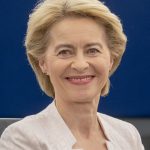
  • Ursula von der Leyen – 2022 Speech at REPowerEU: Outlook on EU Gas Supply in 2023

    Ursula von der Leyen – 2022 Speech at REPowerEU: Outlook on EU Gas Supply in 2023

    The speech made by Ursula von der Leyen, the President of the European Commission, on 12 December 2022.

    Good afternoon,

    I am very happy to welcome here Fatih Birol. We had a very good discussion on an energy outlook for Europe and how to deal with the unprecedented disruptions that have been caused by Russia’s atrocious war. Russia has indeed cut its pipeline supplies by 80% – if you compare September of this year to September of last year. We all know that these pipeline gas cuts have added unprecedented pressure on the global energy markets, with severe knock-on effects on Europe’s energy system. But I want to emphasise that despite these enormous cuts, we have been able to manage, we have been able to withstand the blackmail. We have acted, and we have acted successfully. Seven months ago, in May, we have presented our response to this Russian blackmail by putting on the table REPowerEU, our plan to reduce the demand for Russian gas by two-thirds before the end of this year. And we have underpinned this proposal with an investment plan of up to EUR 300 billion. In just a few months, we have turned the REPowerEU plan into many different legislative proposals and actions on the ground. And I think it is worth looking at that. Basically, we have taken ten different actions in the last ten months.

    The first one is: we have enormously diversified away from Russian fossil fuels, away from Russian gas supplies towards other reliable, trustworthy suppliers. Second, we are saving energy. We have introduced, as you all know, the target to reduce gas demand by 15%. If we look at the data from early autumn, we are very well on track. It is good that we are saving energy and we have to keep on saving energy. The third point is: we are boosting the roll-out of renewables. If you look at the year 2022, we will have added almost 50 gigawatts of new capacity that is almost doubling the additional capacity of renewable energy, mostly from wind and solar. For us, this is very important because this is not only good for the planet, but we know that renewables are home-grown, they create good jobs here and they create independence and security of supply.

    The fourth point is that, in this context of renewables, we have proposed to speed up drastically the permitting process for renewables. We know that many projects are basically ready to go if the permitting was there, so this has to be faster. Therefore, we have put a proposal on speeding up the permitting process on the table. The fifth point is that we have put in place a minimum gas storage obligation. Our storages are now filled by more than 90%, so we have overshot the target, that is very good, and we are well above the previous five-year average.

    The sixth point is on solidarity. We have proposed default arrangements for the supply of gas between Member States where solidarity agreements are not yet in place to make sure that in an energy emergency, we can ensure that the gas is going and flowing where it is most needed. The seventh point is: we have set up a platform for the joint purchasing of gas, to increase our negotiation leverage and get better prices. I think it is unacceptable that different Member States are outbidding each other on the global market and thus driving up the prices. Therefore, it is important that we join forces for the negotiation on a global level.

    The eighth point is: we have improved our infrastructure. We have four new interconnectors that became operational this year. It is the Baltic Pipe, it is the interconnector Poland-Lithuania, the interconnector between Bulgaria and Greece, and the gas interconnector between Poland and Slovakia. The ninth point I want to highlight is the fact that we have put out a legal framework that enables Member States to skim off the windfall profits, the super profits of energy-producing companies, to take this money and to support by that the vulnerable households and the vulnerable businesses in a targeted manner. And finally, the tenth point is: we proposed a market correction mechanism, also known as the price cap, to limit spikes in gas prices at TTF level.

    Many of these measures have been adopted, some at record speed. And there are many examples that show that change is beginning – for example the massive and rapid uptake of heat pumps in Poland. The result of all these actions is that we are safe for this winter. Russia’s blackmail has failed. However, some of our proposals are still under discussion and they are essential for our energy preparedness. Therefore, I call on the Council to adopt them swiftly, because preparing for the next winter of 2023-2024, starts now. Now that we are turning our focus to the winter 2023-2024, I am very pleased, dear Fatih Birol, that we have worked on that so intensively together. One month ago, your message was very clear and you underpinned your message with figures. You said very clearly the coming winter will be even more challenging. And Europe needs to step up its efforts in several fields. You outlined the risks: It might be possible that Russia cuts the rest of the pipeline gas supply; China could lift the COVID-19 restrictions and thus go back to energy demand on the global market on pre-COVID-19 level; and of course, this year we benefitted from an extraordinary warm winter – this could also be different next year.

    I know from your data that despite the actions that we have taken, we might still face a gap of up to 30 billion cubic metres of gas next year. The actions that we have set in motion will help cover part of this, but more is needed. Here, I want to look at a few priorities we need to focus on. The first one is of course the LNG supply. I am confident that we will secure similar volumes of LNG next year as we had this year. This year, we had up to 130 billion cubic metres of LNG. For this, we of course have to further intensify our outreach to our international partners.

    My second point is: It is now time that we make joint purchasing a reality. We have the Energy Platform in place, now we have to operationalise the joint purchasing mechanism. Every day of delay comes with a price tag. We have discussions with Member States, partner countries and their companies that are ongoing. This evening, I will discuss this with the Norwegian Prime Minister, for example. We can launch the first tender for demand aggregation by the end of March. But for that, we need to have an agreement on the Emergency Regulation we proposed on 18 October, and we need it now.

    And my final point is that the greatest potential for energy in the European Union is in our own hands. We must scale up and accelerate the deployment of renewables. We must go big and we must be fast. With the right policies in place, we can even double the capacity of renewable energy that we will add to the market next year. And the case has never been stronger. In 2022, we had record additions of wind and solar capacity in the European Union. And we expect renewable capacity to rise even further in the coming year, replacing around 12 billion cubic metres of gas. And you are showing us with your additional measures that we can add an additional 7.5 billion cubic metres. So, if you look at the overall scope: efficiency, savings, joint purchasing, renewables – this might be the mixture we need to make up for the missing gas next year. We have taken the action that is necessary. Our proposals are now on the table.

    My last comment is on the bigger picture. Because if we look at the bigger picture, we also see that we need an increase in public investments in the energy transition. Mostly to ensure the competitiveness of our European industry in the energy transition, we need additional public investments at national level and at European level. You know that in the short term, we will propose to boost REPowerEU. REPowerEU is our vehicle, the framework for investment in clean tech. And this is one part of our response to the US Inflation Reduction Act. But we also know that in the mid-term, we have to step up. There, we will work on setting up a sovereignty fund to make sure that Europe continues to be the global leader in clean tech. Where we have to help our industry is now, in this high energy price environment, to bridge the transition to green, clean energy that is affordable and secure. Therefore, this funding is necessary.

    Our work has been good this year, we see the progress, we have come quite a long way. But we know that we are not done with our work until families and businesses in the European Union have access to energy that is affordable, that is secure and that is clean.

    Thank you so much.

  • PRESS RELEASE : £257 million fund to help over 70,000 victims of domestic abuse [December 2022]

    PRESS RELEASE : £257 million fund to help over 70,000 victims of domestic abuse [December 2022]

    The press release issued by the Department for Levelling Up, Housing and Communities on 12 December 2022.

    • Councils to be handed £257 million to provide support for victims of domestic abuse and their children who are staying in safe accommodation
    • Funding to go towards vital services such as counselling, financial advice, help rehousing and therapy for children
    • Expected to support over 70,000 victims of domestic abuse in England

    An estimated 70,000 victims of domestic abuse will benefit from specialist support services to help them rebuild their lives in a safe environment.

    £257 million will be handed to councils across England to make sure safe accommodation spaces such as refuges and shelters can provide vital support. The support will include counselling, assistance with rehousing, financial advice and play therapy for traumatised children.

    The funding, allocated over two years and issued as a flexible grant, will be used by local authorities to plan support services and work closely with local charities and other service providers to best meet the needs of victims who have had to flee their homes.

    Housing and Homelessness Minister Felicity Buchan said:

    Domestic abuse is a devastating crime, and this funding will help victims and their children across the country who need to escape from danger to recover and rebuild their lives in safe housing.

    Whether it’s counselling, advice on how to handle finances or help finding a new home –  councils can use this money to make a real difference on the ground, giving victims the help and support they need.

    Domestic abuse is the most prevalent form of violence against women and girls. The 2019-20 crime survey estimated 2.3 million people experienced in the previous year experienced domestic abuse, with women more likely to be impacted.

    This funding follows the government’s landmark Domestic Abuse Act 2021, which places a legal duty on councils to fund support in safe accommodation for all victims and their families. The money will help pay for these vital services.

    More than £330 million has already been invested since 2014 to provide support for domestic abuse victims in safe accommodation, with refuge bed spaces increasing by more than 20% in the past 12 years. On top of this, £5.7 million is being invested in the Respite Rooms programme which supports vulnerable rough sleepers impacted by domestic abuse.

    This is in addition to the £2 million we provided to increase the capacity of domestic abuse helplines and online services during the pandemic.

  • PRESS RELEASE : Strike action to affect travellers entering the UK [December 2022]

    PRESS RELEASE : Strike action to affect travellers entering the UK [December 2022]

    The press release issued by the Home Office on 12 December 2022.

    The Public and Commercial Service (PCS) union has announced Civil Service industrial action that will impact Border Force services.

    Travellers who are planning to enter the UK during the proposed strike period may face longer wait times at border control.

    Travellers should check the latest travel advice with operators before travelling.

    Please be patient and respect officers who are working to keep the UK border safe and secure for all travellers during strike action.

    We encourage all passengers eligible to use eGates to do so.

    The Public and Commercial Service (PCS) union has announced Civil Service industrial action that will impact Border Force services.

    Border Force strike proposed dates and locations

    Dates:

    • 23 December
    • 24 December
    • 25 December
    • 26 December (until about 7am)
    • 28 December
    • 29 December
    • 30 December
    • 31 December (until about 7am)

    Locations:

    • Birmingham Airport
    • Cardiff Airport
    • Gatwick Airport
    • Glasgow Airport
    • Heathrow Airport – Terminals 2,3,4 and 5
    • Manchester Airport
    • Port of Newhaven

    Our number one priority is to keep our borders safe and secure for all travellers, and we will never compromise on this.

    Military personnel, civil servants and volunteers from across government are being trained to support Border Force at airports and ports across the UK in the event of potential strike action. Border Force are ready to deploy resource to meet critical demand and support flow travellers through the border, however those entering the UK should be prepared for potential disruption.

    Border Force and the travel industry work together very closely at a local and national level to agree plans for pressures while keeping the public safe.

    Advice for passengers

    Those who are due to travel into the UK during the proposed industrial action should be prepared to face longer wait times at UK border control.

    All passengers should check the latest advice from their operators before travelling.

    Please be patient and respect officers who are working to keep our citizens safe and border secure, and supporting travellers during the strike action.

    We encourage all passengers eligible to use eGates to do so.

    Please respect staff as we try and get you through the border as quickly and safely as possible. All forms of abuse and any inappropriate behaviour will be reported to the UK police.

    Flights – impact of industrial action

    We will work with operators and ports to understand the impact of industrial action on inbound flights.

    Passengers travelling into the UK during strikes should check with their airlines for the latest travel information and advice.

    Border wait times

    As you’d expect, accurate queue time data can take some time to gather and check, however if you are travelling during the proposed strike dates be prepared for longer wait times.

    There are multiple factors that might influence wait times including an increase in passenger numbers, flight delays and flight bunching. Weather delays, and other ad hoc incidents, can also impact border control queues.

    We advise travellers to check with travel agents, tour operators, and airlines/carriers before travelling, to check if the proposed strike action will affect your journey.

    Passengers can also check airport websites before travelling to stay up to date with the latest information related to travel or possible delays caused by strike action.

    What we are doing to avoid disruption and queues at the border during the strike action

    We continue to work closely with port operators and airlines to minimise disruption and delays at the border during any industrial action.

    Border Force and the travel industry work together very closely at a local and national level and have regular meetings to agree plans for pressures while keeping the public safe.

    Remember:

    • there are often a few things that might influence wait times including an increase in passenger numbers, flights delays and flight bunching
    • you should check the latest advice from your operators before travelling
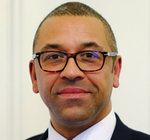
  • James Cleverly – 2022 Keynote Speech on Foreign Policy

    James Cleverly – 2022 Keynote Speech on Foreign Policy

    The speech made by James Cleverly, the Foreign Secretary, at the Foreign Office in London on 12 December 2022.

    Good morning,

    We are at peace, we are prosperous and we live on an island– so why do we bother doing foreign policy at all?

    Why did I visit Kenya and Ethiopia last week and Poland and Romania the week before that? Why do the ministers of this department travel around the world, why do we have officials across the globe?

    Well let’s go back to first principles and remind ourselves what we are collectively trying to achieve.

    For most of our history, the world has been dominated by the brutal maxim that the “strong do what they can and the weak suffer what they must”.

    Might was always right, and power was all that counted and nations down the centuries seemed grimly compelled to vindicate Shakespeare’s warning:

    Power into will, will into appetite; and appetite, a universal wolf, so doubly seconded with will and power, must make perforce a universal prey and last eat up himself.

    As Foreign Secretary of a former imperial power, I know that in the past we succumbed to the temptation of will and appetite.

    And none of us can forget how, in the 20th century, aggressive tyrants made the globe their prey, starting two world wars and leaving over 100 million people dead.

    And afterwards our predecessors realised that humanity would not survive another catastrophe of that scale.

    So a generation of far-sighted leaders built an assembly of international rules and institutions designed to make law – not power alone – the arbiter of relations between states.

    Britain joined hands with the United States of America, with France and nearly 50 other nations to create the United Nations.

    And the UN General Assembly adopted a Universal Declaration of Human Rights without a single dissenting vote, proclaiming – and I quote – the “inalienable right of all members of the human family”.

    In the same era, 23 nations founded what would become the World Trade Organisation and the World Bank began to fund reconstruction and recovery across the globe.

    For all the tragedies and bloodshed of the last eight decades, the remarkable truth is that by historical standards, that system has worked.

    Between 1946 and 2020, the number of deaths in state conflicts as a share of global population fell by 95 percent.

    And only once since the foundation of the UN has a member country been wiped off the map, with its entire national territory annexed by another.

    That act of aggression, by Iraq against Kuwait in 1990, was swiftly reversed.

    The volume of world trade has multiplied 40 times since 1950, generating countless jobs and livelihoods in every corner of the earth.

    And in recent decades, the fastest economic growth has been concentrated in the developing world.

    When I was born in 1969, around half of all humanity lived in absolute poverty.

    Today that figure is below 10 percent, which is all the more astonishing when you consider that the world’s population has doubled in that same time.

    And ponder the enormity of the simple fact that global infant mortality has been cut in half over the last three decades.

    That’s another way of saying that millions of children have been spared what would otherwise be agonising deaths.

    Now, none of this would have been possible without the institutions of the post-war world, protecting billions with global vaccination campaigns, investing in development and infrastructure, upholding freedom of the seas and maintaining open shipping lanes.

    The international order has allowed more of our fellow human beings to live in peace and prosperity than ever before.

    And that is the single most important reason why British foreign policy strives to renew its founding principles and its institutions.

    We should remember that we’re not propping up a system that only benefits us,

    or keeps others down.

    On the contrary, just as we have prospered, so other countries have thrived alongside us – often faster than us.

    Now we don’t believe everything is perfect; and we’re not standing in the way of reform.

    In fact, the UK wants to welcome Brazil, India, Japan and Germany as permanent members of the UN Security Council, alongside permanent African representation.

    Our aim is to uphold a historic shared achievement that benefits everyone.

    And I honestly shudder to think what might follow if through neglect, or complacency or timidity, we turned away and allowed what we have worked for to be torn down.

    Consider for a moment the alternative world that Vladimir Putin yearns for.

    The reason why his onslaught against Ukraine offends every fibre of my being is not simply that it’s morally abhorrent, although of course it is.

    And it has nothing to do with the accident of geography that Putin is waging war in Europe.

    No, what really chills the blood is that he is prepared to destroy the laws that protect every nation and, by extension, every person across the globe.

    Putin’s goal is to turn back the clock to the era when might was right and big countries could treat their neighbours as prey.

    He is waging a 19th century war of imperial conquest, deliberately debasing international conduct, utterly contemptuous of today’s values.

    And by attacking one of the world’s biggest producers of food and fertiliser, he is driving up global prices and inflicting still greater hardship on some of the poorest people around the world.

    Hence it was Prime Minister Modi who told Putin to his face, and I quote: “I know that today’s era is not the era of war.”

    The only route to peace in Europe is for Putin to end his war and withdraw his troops.

    As we stand against the Russian invasion, the United Kingdom benefits beyond measure from our rock solid friendships with the United States of America, with France, with Germany, with Canada, Australia and many others.

    Last Friday, we announced how we will develop the next generation of combat aircraft hand-in-glove with Italy and Japan.

    These vital relationships, constructed over generations, embedded in institutions like NATO and the G7, amount to our greatest source of strength and the foundation stone of British democracy and diplomacy.

    Today we have no higher priority than to support our Ukrainian friends until they prevail, as they inevitably will.

    But that will not be enough to sustain the international order unless its principles and institutions command the support of the world beyond Europe and North America.

    We are living in a momentous period of history when the pace of change is accelerating at hurricane force.

    As recently as 2001, 80 percent of countries conducted more trade with the US than with China.

    Yet by 2018 there had been an almost complete reversal: nearly 70 percent of nations trade more now with China than the US.

    And in the coming decades, an ever greater share of the world economy – and therefore the world’s power – will be in the hands of countries in Asia, Africa and Latin America.

    Together they will decide whether the international order will endure. That reality has been evident for some time, but I am not convinced that British diplomacy has fully caught up.

    My goal is to build on the work of my predecessors and ensure that we do catch up – and under me that task has begun.

    Our diplomats are not pundits in the commentary box, offering their thoughts and analysis: they are players on the field.

    The goal of foreign policy is not to comment but to make a difference. Britain has agency Britain has influence, Britain has leverage and it is my job to use it.

    So I will make a long term and sustained effort to revive old friendships and build new ones, reaching far beyond our long-established alliances.

    My starting point is that we don’t view the changing balance of power with any sense of loss or regret.

    The reason why the world’s geopolitical centre of gravity is moving south and east is precisely because hundreds of millions of people have escaped poverty.

    And that, that is the single most wondrous development of my lifetime.

    And it’s a vindication of the world order, s vindication of free trade, of international development, of innovation and scientific advance, in fact everything that Britain has spent generations working for.

    Now, we have to recognise that the UK’s future influence will depend on persuading and winning over a far broader array of countries,

    countries in the Commonwealth, in the African Union, in ASEAN and elsewhere.

    Many are old friends; others we know less well. They often describe themselves as “non-aligned” and they are wary of committing themselves in any direction just because other countries want them to, and that is exactly as it should be.

    Our job is to make our case and earn their support, investing in relationships based on patient diplomacy, on respect, on solidarity, and a willingness to listen.

    Because this isn’t about dictating or telling others what they should do: we want a balanced and mutually beneficial relationship, based on shared interests and common principles.

    And that means learning from our competitors and always thinking 10, 15, 20 or more years ahead.

    Because in the past I think perhaps we have been too transactional and too impatient.

    Now we must have strategic endurance, a willingness to commit to relationships for decades to come.

    Now, confession time. Despite my best efforts, I’m willing to concede that I am unlikely to be Foreign Secretary in 25 years’ time, which is a shame because it is a job that I love.

    But I want to make sure that our diplomacy is focused on that time horizon. Because the interests that we are protecting and the values that we are promoting will outlive any and all political cycles here in the UK.

    And we need to recognise that at first, this work will feel like water on stone:

    no swift dividends, no windfall gains, perhaps even no visible impressions at all for a short while, and there will be plenty of temptation to question that effort.

    But we would curse our complacency if we did not try, because these relationships will be essential to our shared successful futures.

    And the reality is if we are not good friends, you can bet that others will try to fill that void and seize any opportunity that we might be mistaken enough to give them.

    Now every country is different and every generalisation invites an abundance of counter-examples, but there are some common threads.

    The main focus of the future powers that I’m discussing is on securing their own economic development and their own resilience against threats, including from climate change, from disease and from terrorism.

    Many of these countries have enjoyed rapid success and, above all, they want that success to continue.

    Their populations are typically much younger than ours: the median age here in the UK is over 40, while in Brazil it’s 33, in Indonesia it’s 30, and in India it’s only 28.

    More than anything else they need to generate growth, create jobs and satisfy the aspirations of their youth.

    And that means attracting investment, it means seizing the full benefit of their own natural resources, and it means harnessing the power of new technology.

    It means decarbonising their economies in a way that spreads the gains and minimises the losses, thereby achieving a “Just Energy Transition”.

    In all of these fields and many others, our opportunity is to show that the UK can be and will be a reliable, trustworthy and long term partner.

    And I am determined that we will make investments of faith in the countries that will shape the world’s future.

    So we will press on with developing clear, compelling and consistent UK offers,

    tailored to their needs and our strengths, spanning trade, development, defence, cyber security, technology, climate change and environmental protection.

    Because we know that in the coming decades there will be economic shocks, and climate change will have its baleful effects, and countries will want technology, finance and access to markets to support their development.

    That’s why, in the last year, the UK has offered guarantees to allow almost £5 billion of extra multilateral finance for the developing world, and we support the ambitions of the Bridgetown Agenda to reform the financial system and unlock more resources.

    And we will offer a reliable source of infrastructure investment through the British Investment Partnerships, through UK Export Finance, and through the G7 Partnership for Global Infrastructure.

    We’ve got the message and we know that resources need to flow more quickly from these initiatives into real projects on the ground.

    And we will make full use of the powers we have regained by leaving the EU, including the ability to sign free trade deals, and Mutual Recognition Agreements, designed to encourage innovation and reduce trading costs.

    The UK has a range of capabilities to support emerging economies with young populations to achieve their goals.

    And whatever our differences, there are core principles behind which I believe every nation can unite.

    We all say in the UN Charter that we believe in sovereignty and territorial integrity, which means the right of all countries to decide their own future and set their own path, without being invaded or dismembered.

    That’s why 143 nations – three quarters of the entire membership of the UN – voted in the General Assembly to condemn Putin’s annexation of Ukrainian territory.

    And that’s why defensive alliances like NATO are so important – because they help countries to protect themselves from aggressors.

    When powerful states like China reject defensive alliances as “bloc politics”, they either misunderstand the desire of every nation to live in peace, without fear of aggression; or they perhaps provide a signal of intent, especially chilling from a country militarising at a pace that the world has rarely seen before.

    For our part, Britain will demonstrate our long-term commitment to the Indo Pacific, including by joining the Trans-Pacific free trade agreement as soon as possible.

    We will deepen our cooperation with India, the new president of the G20, and finalise our trade agreement with them.

    We will support Indonesia and South Africa with their plans for Just Energy Transition, showing how the necessary investments can be mobilised at scale,

    and last week the EU and the UK reached an ambitious agreement to do the same with Vietnam.

    But in the end, all our fortunes will depend on a stable and peaceful international order.

    My generation was born long after the Second World War and we reached adulthood just as the Cold War was coming to an end.

    We stand on the shoulders of wise and compassionate leaders who created the laws and institutions that prevented a universal relapse into the old order, where the strong prey upon the weak.

    Now the UK must work with our international allies and new partners to sustain the best of this achievement, which seeks to protect every country and create the setting for everyone to prosper.

    That’s why our diplomats and our development experts make the effort; that’s why I fly somewhere almost every week, that’s the ministers in this department do likewise, that’s why I’m striving to build the partnerships of the future, so our country can flourish, alongside our friends, both old and new.

    Thank you.

  • Jeremy Hunt – 2022 Comments on ONS Growth Figures

    Jeremy Hunt – 2022 Comments on ONS Growth Figures

    The comments made by Jeremy Hunt, the Chancellor of the Exchequer, on 12 December 2022.

    It’s a very challenging international picture. About a third of the world’s economies are predicted to be in recession either this year or next. We’re no different in this country.

  • Rachel Reeves – 2022 Comments on ONS Growth Figures

    Rachel Reeves – 2022 Comments on ONS Growth Figures

    The comments made by Rachel Reeves, the Shadow Chancellor of the Exchequer, on Twitter on 12 December 2022.

    GDP figures show UK economy shrank by 0.3% in the three months to October – underlining Tory failure to grow our economy.

    We do not have to continue on this path.

    Labour will get our economy growing, with our Green Prosperity Plan and an active partnership with business.

  • PRESS RELEASE : October 2022 GDP Figures Released by ONS – Growth of 0.5% [December 2022]

    PRESS RELEASE : October 2022 GDP Figures Released by ONS – Growth of 0.5% [December 2022]

    The press release issued by the ONS on 12 December 2022.

    1.Main points

    • Monthly real gross domestic product (GDP) is estimated to have grown by 0.5% in October 2022, following a fall of 0.6% in September 2022, which was affected by the additional bank holiday for the State Funeral of HM Queen Elizabeth II.
    • Looking at the broader picture, GDP fell by 0.3% in the three months to October 2022 compared with the three months to July 2022.
    • The services sector grew by 0.6% in October 2022, after falling by 0.8% in September 2022; the largest contribution to the growth came from wholesale and retail trade; repair of motor vehicles and motorcycles, which rose by 1.9% in the month.
    • Output in consumer-facing services grew by 1.2% in October 2022, after falls of 1.7% in September 2022 and 1.6% in August 2022.
    • Production remained broadly flat in October 2022, after growth of 0.2% in September 2022; manufacturing was the only sub-sector to contribute positively to production in October 2022, offset by negative contributions from electricity, gas, steam and air conditioning supply, and water supply, sewerage, waste management and remediation activities.
    • The construction sector grew by 0.8% in October 2022; this is its fourth consecutive increase after growths of 0.4% in September 2022, 0.6% in August 2022 and 0.2% in July 2022.
  • PRESS RELEASE : Over £3.5m awarded to sustainable fishing projects as new funding round opens [December 2022]

    PRESS RELEASE : Over £3.5m awarded to sustainable fishing projects as new funding round opens [December 2022]

    The press release issued by the Department for Environment, Food and Rural Affairs on 12 December 2022.

    Projects awarded funding in the latest round of the Fisheries Industry Science Partnership (FISP) scheme.

    Five pioneering research projects have been awarded over £3.5 million to gather vital evidence to inform how we manage our fisheries and protect marine habitats across the UK.

    Successful projects include the University of Plymouth Enterprise Ltd who will collaborate with organisations including the Angling Trust and Professional Boatman’s Association to collect crucial data to help protect species vulnerable to overfishing such as sharks, skates, rays and black bream. Participating boats will tag and track 200 black bream and 100 rays and sharks to shed light on their complex life histories and help ensure the sustainability and survival of these important species.

    Meanwhile Bangor University, in partnership with the British Geological Survey, Orkney Fisheries Association and Welsh Fisherman’s Association, have been granted nearly £400,000 to investigate the impacts of climate change on the common whelk. The research will look at how temperature changes and location can impact on the growth, distribution and survivability of this commercially valuable species.

    All the projects are from the third round of the Fisheries Industry Science Partnership (FISP) scheme, part of the government’s landmark £100m UK Seafood Fund investment, which brings together the seafood industry with research organisations to improve knowledge and data and help manage and protect often rare and valuable species.

    Fisheries Minister Mark Spencer said:

    A proper understanding of important marine species is vital if we are to manage our fisheries sustainably and safeguard the fishing and seafood sector for future generations.

    By drawing on the expertise of the fishing community and combining this with our world class researchers, we can discover new ways to manage our stocks and protect vulnerable fisheries.

    Dr Emma Sheehan, Associate Professor of Marine Ecology at the University of Plymouth, said:

    The UK’s coastal waters are rich and diverse environments home to a huge range of important species. However, many of them are vulnerable to overfishing and exploitation which poses real challenges from both a conservation and an economic perspective. These projects will build on our previous work alongside fishing communities and authorities, and gather much needed data about critically important species such as pollack, black bream, sharks, skates and rays. By studying where they live, and why, we can develop more effective ways of managing their habitats sustainably now and in the future.

    In addition, the fourth and final round of the FISP scheme opened last week to eligible applicants and runs until midday on 19 January 2022. Projects which involve a partnership between research organisations and a member of the UK seafood industry are encouraged to bid for funding by visiting GOV UK.

    The £100m UK Seafood Fund was set up to support the long term future and sustainability of the UK fisheries and seafood sector and provides funding under four pillars: science and innovation, infrastructure, skills and training, and export support.

    Last month also saw the second round of the UK Seafood Fund Infrastructure scheme open to applicants. With £30 million of funding now available to help pay for upgrades to ports, processing and aquaculture facilities, these schemes are ensuring the sector is equipped to meet future demand. A further round of the infrastructure scheme is set to open in 2023 to support fleet modernisation in the wild catching sector, with another future round focusing on the recreational fishing sector.