Tag: 2022

  • George Galloway – 2022 Comments on the Personal Conduct of Michelle Mone

    George Galloway – 2022 Comments on the Personal Conduct of Michelle Mone

    The comments made by George Galloway, the former Respect and Labour MP, on Twitter on 6 January 2022.

    If true, there must be a prison sentence at the end of this:

    [Tory peer Michelle Mone secretly involved in PPE firm she referred to government | Coronavirus | The Guardian]


  • Metropolitan Police – 2022 Statement on the Personal Conduct of Michelle Mone

    Metropolitan Police – 2022 Statement on the Personal Conduct of Michelle Mone

    The statement made by the Metropolitan Police on 6 January 2022.

    In June 2021 police received an allegation of a racially aggravated malicious communication in relation to information posted on a messaging app.

    Police spoke to the complainant and advised that for the investigation to progress a statement would need to be taken; for this to be admissible in any future court proceedings, this would need to be done in person.

    In October, the complainant gave a statement to police and the investigation continues. A 50-year-old woman has been invited to attend for an interview under caution at a future date.

  • Michelle Mone – 2022 Comments Made by Mone’s Solicitors to the Guardian

    Michelle Mone – 2022 Comments Made by Mone’s Solicitors to the Guardian

    The comments alleged to have been made to the Guardian by Michelle Mone’s solicitors.

    “Contacted about the Guardian’s new findings, Mone’s lawyers said its reporting was “grounded entirely on supposition and speculation and not based on accuracy” and declined to provide direct responses to a series of detailed questions. “You also appear to misunderstand our client’s responsibilities to you,” they said. “She is under no obligation to say anything to you.””

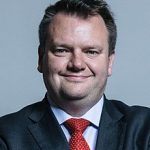
  • Nick Thomas-Symonds – 2022 Speech on UK-Australia Free Trade Agreement

    Nick Thomas-Symonds – 2022 Speech on UK-Australia Free Trade Agreement

    The speech made by Nick Thomas-Symonds, the Shadow Secretary of State for International Trade, in the House of Commons on 5 January 2022.

    I am grateful to the Secretary of State for her statement and for advance sight of it.

    I would say at the outset that we on the Labour Benches are in favour of negotiating trade deals that benefit UK workers and businesses and promote our values around the world, and we will not hold the Government to impossible standards, but we will hold Ministers to what they have promised people they will deliver from the negotiations. Those promises make it even more important that Ministers show strength at the negotiating table and defend UK interests to the utmost. Other countries, in future negotiations, will look at what was conceded to the Australian negotiators and take it as a starting point.

    We already have a UK-Japan trade deal that benefits Japanese exporters five times as much as it does UK exporters. A worrying pattern is emerging of not standing up for UK interests. It is what makes the Government’s failure in so many aspects of this deal so costly for the United Kingdom. The Government’s own impact assessment shows a £94 million hit to our farming, forestry and fishing sectors and a £225 million hit to our semi-processed food industry.

    The Government claim that they are trying to mitigate that with tariff-free access being phased in over several years, but what is being done is totally inadequate. On beef and sheepmeat, the phasing-in period is 15 years, but the quotas being set by the Government for imports from Australia are far higher than the current level of imports. On beef imports, for example, when Japan negotiated a deal with Australia it limited the tariff-free increase in the first year to 10% on the previous year. South Korea achieved something similar and limited the increase to 7%. But this Government have negotiated a first-year tariff-free allowance of a 6,000% increase on the amount of beef the UK currently imports from Australia. On sheepmeat, in the first year of the deal, the Government have conceded a 67% increase in the tariff-free quota. Why did Ministers not achieve the same as Japan and South Korea?

    Why have Ministers failed to ensure that Australian agricultural corporations are not held to the same high standards as our farmers? The Secretary of State mentioned animal welfare standards in her statement, but what the Government have agreed is a non-regression clause. To be clear, that does not mean that the standards will be the same in both countries. That is not fair competition. What will actually happen is that meat produced to far lower animal welfare standards will get tariff-free access to the UK market. So much for the promise of the Secretary of State’s predecessor that the Government had no intention of striking a deal that did not benefit our farmers. Is it any wonder that Australia’s former negotiator at the WTO said:

    “I don’t think we have ever done as well as this”?

    On climate change, which the Secretary of State mentioned, the COP26 president said, on 1 December, that the deal would reaffirm

    “both parties’ commitments to upholding our obligations under the Paris agreement, including limiting global warming to 1.5°.”—[Official Report, 1 December 2021; Vol. 704, c. 903.]

    But an explicit commitment to limiting global warming to 1.5° is not in the deal. Perhaps the Secretary of State can tell us what went wrong in those final days. Does the Secretary of State also accept that the failure to include that explicitly in this important deal damages the UK’s ability to lead on climate change on the world stage—[Interruption.] Ministers shout at me, but they told the House on 1 December that it would be included. What went wrong?

    The Secretary of State has confirmed that she has asked the Trade and Agriculture Commission, as she is required to do, for advice on the impact of the deal on statutory protections for agriculture. Will she confirm when the Government’s own report will be available?

    On scrutiny, why are the Government promising a monitoring report approximately two years after the agreement comes into effect, and every two years thereafter? Why not every year? In addition, the Secretary of State spoke about the impact of trade deals on the whole of the United Kingdom. Can she confirm what steps she will take to address any concerns raised by the devolved Administrations, and how she will formally involve them in the ratification process?

    Tariff-free access to our UK market is a prize Ministers should not give away easily. However, looking at the concessions made by this Government, are people not right to worry that the Government are more interested in a quick press release announcing a completed deal than they are in standing up for UK jobs and livelihoods?

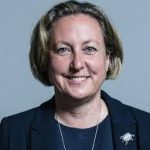
  • Anne-Marie Trevelyan – 2022 Statement on UK-Australia Free Trade Agreement

    Anne-Marie Trevelyan – 2022 Statement on UK-Australia Free Trade Agreement

    The statement made by Anne-Marie Trevelyan, the Secretary of State for International Trade, in the House of Commons on 5 January 2022.

    Thank you, Madam Deputy Speaker. In a former incarnation, I was indeed in that other role.

    I am really delighted to be able to report to the House that, just before Christmas, the Australian Trade Minister, Dan Tehan, and I signed a comprehensive free trade agreement between the United Kingdom and Australia. This agreement deepens our bond of common values and a shared belief in the combined power of democracy, free trade and high standards. This is the first new trade deal the UK has negotiated from scratch since leaving the European Union. It is truly a world-class partnership, allowing our businesses to trade and invest more freely.

    The deal will uphold high standards and foster collaboration on challenges such as tackling climate change, unfair trading practices and growing the low-carbon economy, going further than ever before in many important areas and showing what we can do as an independent trading nation. It eliminates tariffs on 100% of UK exports, and includes flexible rules of origin, meaning that UK businesses can use some imported parts and ingredients, and still qualify for the new 0% tariffs when exporting to Australia. It gives UK firms new legally guaranteed access to bids for over £10 billion of Australian Government contracts on an equal footing with Australian firms. It provides unprecedented new opportunities for young Britons to live and work in Australia, and it paves the way for the UK to join the comprehensive and progressive agreement for trans-Pacific partnership, or CPTPP, which would further open 11 markets worth £8.4 trillion in GDP for British exporters and investors. Accession to the CPTPP could see 99.9% of UK exports being eligible for tariff-free trade with some of the biggest economies of the present and future, from Japan to Mexico, and from Canada to Indonesia, Malaysia and Singapore. Unlike EU membership, it would achieve that while allowing us to continue to keep control over our laws, our borders and our money.

    This deal is expected to increase trade with Australia by more than 50%. It is expected to add £900 million to household wages, and to deliver a boost for the economy of over £2 billion by 2035—compared with what we would see if we did not have a deal—benefiting communities and helping to level up every region and nation of our United Kingdom.

    The agreement that I have signed delivers for the whole of the Union. The economies of Wales, Scotland and Northern Ireland are estimated to benefit from a combined boost of £200 million, and the economic impact assessment that we have published shows that the west midlands, the north-east, the north-west, the south-east, the south-west and Wales are set to see the biggest proportional gains. The deal will benefit Scotland’s financial services industry, boost innovative aerospace design and manufacture in the west midlands, provide new opportunities for Welsh fintech companies, allow Northern Ireland’s manufacturers to export more competitively, and help car makers to support thousands of jobs in the north-east.

    The agreement means that Australia will remove tariffs from all its UK imports, making it more competitive for the 15,300 UK businesses who currently export iconic products such as Jaguar and Aston Martin cars, Scotch whisky, London gin and UK fashion to Australia. It will encourage new companies to enter the market, including small businesses and family-run firms which will find it easier, cheaper and faster to sell their fantastic goods and services to Australia for the first time. It also delivers for consumers. The removal of UK tariffs on Australian favourites such as Jacob’s Creek and Hardys wines will help to keep prices down. UK manufacturers will benefit from cheaper access to important Australian machinery parts, allowing them to be more competitive and to grow.

    The agreement means that investing in Australia will be easier than ever before. It more than quadruples the threshold that UK investments need to meet before being subject to review by Australia’s Foreign Investment Review Board, which will help to save time, save money and cut red tape. The UK’s world-class services industry will now have unprecedented and legally guaranteed access to the Australian market, allowing UK legal and engineering firms to compete on an equal footing with domestic firms in Australia.

    Ambitious tech start-ups, financial services firms and the creative sectors will benefit from new opportunities to trade digitally. The agreement secures the free flow of data while locking in a legal requirement for personal data protection in both countries, guarantees fair access to Australia for telecoms companies, and forges greater co-operation on 5G and cyber-security. It includes the world’s first dedicated innovation chapter in a free trade agreement, establishing a strategic innovation dialogue to ensure that the deal keeps up with technological developments and drives the commercialisation of new technologies.

    Our British businesses will also benefit from unrivalled new access to business visas, allowing staff to relocate more easily and travel more freely to work in Australia. It will enable Britons aged 18 to 35 to travel and work in Australia for up to three years, and they will no longer have to work on a farm to obtain a working holiday maker visa. Australian firms will no longer have to prioritise hiring Australian nationals over a British national. Additionally, executives and managers who are transferred to their company locations in Australia will have the right to stay for four years instead of two. They can also bring their spouses and dependent children, who will have the same four-year right to work.

    The agreement has been crafted through consultation with UK businesses and interested parties at all stages of the negotiations. It offers a suite of arrangements going further than Australia has ever gone with any other country in a free trade agreement, which is a testament to the strength of our relationship and the hard work of my brilliant officials at the Department for International Trade and their Australian counterparts. It includes ambitious commitments to work together in addressing the shared challenges of environmental conservation, women’s economic empowerment and poverty reduction. It includes a commitment to maintain high animal welfare standards.

    We have also secured protections relevant to the NHS and Australia’s health system in the agreement, which keep the NHS out of scope of the agreement. The NHS is not, and never will be, for sale to the private sector.

    British food and drink is world-renowned for its quality, and this trade deal will deliver benefits to the industry—from tariff-free access to the Australian market to faster customs arrangements. The deal could see a wide range of iconic UK products, including Scotch whisky, Irish cream and Welsh cider, given protected geographical indication status in Australia. By creating new opportunities, this deal will help continue a trend of booming UK food and drink exports to Australia, which have more than doubled in the last decade. So we should be unafraid of fair competition and positive about the export opportunities that exist.

    Let me also take the opportunity to alleviate the concerns of some colleagues regarding meat imports from Australia. The reality is that beef imports from Australia account for only a small fraction of our overall beef imports. Just 0.1% of all Australian beef exports went to the UK last year. Also, it is relatively unlikely that large volumes of beef and sheep will be diverted to the UK from lucrative markets in Asia, which are much closer to Australia. More than 75% of Australian beef and 70% of Australian sheepmeat exports last year went to markets in Asia and the Pacific—markets that we are also keen to grow in through our membership of the CPTPP.

    With regard to animal welfare and food standards, we have been clear throughout this process that we will not compromise on our high standards, and we have delivered on that. All imports into the UK will have to comply with our existing food standards requirements—including the ban on hormone-treated beef. The deal also includes a dedicated chapter and non-regression clause on animal welfare. This will help to ensure that neither country lowers their animal welfare standards in a manner that impacts trade.

    This agreement also supports the UK’s climate change commitments, reaffirming both parties’ commitments to all of the Paris agreement objectives—the first time that Australia has included a substantive climate change article in any trade deal. It also sets out areas for future co-operation on emissions reduction, zero emissions technology, energy efficiency and sustainable transport. So UK businesses will benefit from zero tariffs on all low-carbon exports to Australia, including of wind turbine parts and electric vehicles, creating more opportunities to grow the low-carbon economy.

    The Government are committed to transparency and inclusiveness in all our future trading arrangements, and the House will now have substantial opportunity to scrutinise this deal in detail. We have already presented the full treaty text, a draft explanatory memorandum and the independently scrutinised impact assessment to Parliament, and we anticipate that there will now be a period of several months before the agreement is formally laid before Parliament for the 21 sitting days of formal scrutiny under the Constitutional Reform and Governance Act 2010, otherwise known as CRaG. That will allow ample time for the Trade and Agriculture Commission to prepare its advice, as well as for the International Trade Committee and International Agreements Committee to produce a report on the agreement, should they so wish. I have already written to the new Trade and Agriculture Commission to seek its advice on the deal with respect to our domestic statutory protections for agriculture. That will help me to inform the Government’s own report on this issue, as required under section 42 of the Agriculture Act 2020. I also wish to highlight that any legislative changes required to give effect to the deal will be scrutinised by Parliament in the usual way ahead of ratification.

    So this is a landmark agreement and will be a feature of the relationship between our two great countries for many years to come. As a newly independent trading nation, the UK is reaching out to seize the opportunities of the future—opportunities that we are uniquely well placed to take. The deal I have signed with Australia, one of our closest and most important allies, is just the latest chapter in our progress towards that brighter future, forging an open, enterprising economy, enabling us to build back better from the pandemic, and levelling up every region and nation of our United Kingdom.

    I commend this statement to the House.

  • Angela Rayner – 2022 Speech on Covid-19

    Angela Rayner – 2022 Speech on Covid-19

    The speech made by Angela Rayner, the Deputy Leader of the Labour Party, in the House of Commons on 5 January 2022.

    I thank the Prime Minister for advance sight of his statement. I wholeheartedly back him in asking people to come forward to get their jabs and booster jabs. It is of course right that plan B measures must stay in place during this wave of the pandemic. It was the Labour party that made sure that the Government had the votes to pass those measures in the House. If not for Labour’s actions, the NHS would be facing even greater pressure, and the likelihood is that we would have needed much harsher restrictions. My message to the Prime Minister is that, despite the people sitting behind him, and those eyeing up his job alongside him, Labour will always act in the national interest and put public health before party politics.

    The Prime Minister said that we have to ride out the omicron wave, but the NHS is not surfing; it is struggling to stay afloat. We have seen several hospital trusts declare critical incidents, which means that they cannot provide services for cancer and heart disease patients. In my home of Greater Manchester, non-urgent surgery is being halted. I thank those trusts that have come forward and been up front about the reality that they are facing, and I thank our NHS staff who are going above and beyond, once again, to get us through this period.

    Is it not time for the Prime Minister to be straight with people and give a frank assessment of the state of our NHS? He mentioned the use of the Army, but how many trusts have declared a critical incident and what does he plan to do about that? People in the north-east are being told to call a cab or phone a friend if they are suffering a suspected heart attack or stroke. That is shocking.

    Even before omicron hit, however, thousands of suspected heart attack or stroke victims in England were forced to wait more than an hour and 40 minutes for their ambulance. Is it not true that our health service went into this wave of infections with the largest waiting lists on record, the longest waiting times on record and major staff shortages? After a decade of Tory mismanagement, the NHS was not prepared for covid and did not have the spare capacity to cope with omicron. It is not just that the Conservatives did not fix the roof when the sun was shining; they dismantled the roof and removed the floorboards.

    Getting testing right remains the best way to avoid further restrictions. It is welcome that the Government are requiring daily testing to protect critical national infrastructure, but that will not begin until next week. Our essential services are buckling under the pressure now. Doctors, nurses, carers, teachers and pupils cannot get the tests they need now to do two tests a week. Emergency workers are reportedly stuck in isolation because they cannot get their hands on a test. So why did the Health Secretary claim on 13 December that there is “no shortage” of actual tests? Why was the Government’s delivery service allowed to go on holiday over Christmas with no contingency plan in place? The Government have been asleep at the wheel, and the result is total shambles. I am sure the Prime Minister will join me in thanking the Welsh Labour Government for sharing 4 million tests with England. Thank goodness that they had the foresight to plan ahead and secure enough tests for this period.

    In April 2020, the Government published a strategy to scale up the covid-19 testing programme. They promised to work with the UK’s world-leading diagnostics companies to build a British diagnostics industry at scale, yet two years on, this has never materialised. How much taxpayers’ money was spent on this programme and why, Prime Minister, two years into the pandemic, are we still reliant on tests from China, instead of building the capacity to make the tests here in Britain?

    The Prime Minister

    That is rubbish.

    Angela Rayner

    The Prime Minister can chunter away, but he will have his opportunity in a minute.

    People will be returning to work this week, but the Government are refusing to guarantee all workers sufficient sick pay, leaving working people with the choice of going to work to feed their families or staying at home to protect public health. Will the Prime Minister finally raise sick pay so that people are no longer faced with an impossible choice of doing the right thing or feeding their family?

    In some of the poorest countries in the world, less than 10% of the population is vaccinated. This is shameful. We know we can do more to assist the international vaccine effort, and what are the Government doing about that? If we are going to break this endless cycle of new variants, we have to vaccinate the world. This is not just a question of doing the right thing for others; it is in our national interest, too.

    Finally, there are Conservative Members sitting behind the Prime Minister who have spent recent weeks attacking hard-working public servants. Is it not time that the Prime Minister stood by our experts, professionals and officials, who are doing all they can to protect public health? If he was happy to defend Dominic Cummings, the former Health Secretary and Owen Paterson, why will he not defend those public servants who are actually doing the right thing?

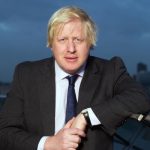
  • Boris Johnson – 2022 Statement on Covid-19

    Boris Johnson – 2022 Statement on Covid-19

    The statement made by Boris Johnson, the Prime Minister, in the House of Commons on 5 January 2022.

    With permission, Mr Speaker, I will make a statement on the omicron variant and our measures to contain this virus, fortify our NHS and keep our country open.

    First, I am sure that the whole House will join me in paying tribute to everyone working in our NHS and social care for their extraordinary efforts in the teeth of yet another wave of this pandemic, and for all that they have done, together with thousands of volunteers, to get Britain boosted. Since we began the Get Boosted Now campaign just over three weeks ago, we have delivered 10 million extra boosters across the UK; we have doubled the rate of vaccination from 450,000 doses a day to a peak of more than 900,000; we have matched the NHS’s previous record day, then beaten it again and again; and we have met our target of offering a booster to every eligible adult in England a whole month early.

    As a result, we have a higher level of booster protection than all our European neighbours, with more than 34 million boosters having been administered across the UK, reaching in England more than 90% of the over-70s and 86% of the over-50s. Together with the evidence that omicron causes less severe disease than previous variants, and the way in which the public have conscientiously changed their behaviour in response to plan B, that level of protection means that we are in a very different position than we were during previous waves.

    I know that some hon. Members may therefore ask whether that means we can now do away with measures altogether, but I am sorry to report that hospital admissions are rising rapidly—doubling around every nine days—and there are more than 15,000 covid patients in hospital in England alone. We are experiencing the fastest growth in covid cases that we have ever known; over 218,000 cases were reported yesterday, although that included some delayed reporting. Potentially of greatest concern, case rates are now rapidly rising among the older and more vulnerable—doubling every week among those over 60, with the obvious risk that that will continue to increase the pressures on our NHS.

    In response to the latest data, the Cabinet agreed this morning that we should stick with plan B for another three weeks, with a further review before the regulations expire on 26 January. People in England should carry on working from home whenever they can, wear face coverings on public transport and in most indoor public places, and take a test before going to high-risk venues or meeting the elderly or vulnerable. All of these measures are helping to take the edge off the omicron wave, to slow the spread of infection, to manage the immediate pressures on our NHS and to buy time for the boosters to take effect. Those in Scotland, Wales and Northern Ireland should, of course, continue to follow the rules where they live.

    Faced with those pressures on our NHS, I know that some Members may ask the opposite question: whether we should go even further and move towards a full lockdown. But lockdowns are not cost-free; they impose a devastating toll on our physical and mental wellbeing, on our businesses, jobs and livelihoods and, worst of all, on the life chances of our children, so the Government do not believe that we need to shut down our country again.

    Instead, we are taking a balanced approach, using the protection of the boosters and the plan B measures to reduce the spread of the virus, while acting to strengthen our NHS, protect critical national services and keep our supply chains open. We are building on-site Nightingale hospitals and creating 2,500 virtual beds to increase NHS capacity. We have bought more antivirals per person than anywhere else in Europe, and we are working to identify those trusts that are most likely to need military support, so that that can be prepared now.

    From 10 January, we will provide 100,000 critical workers in England with free lateral flow tests for every working day to help to keep essential services running. That includes those who work on critical national infrastructure, national security, transport, and food distribution and processing. Those tests are separate—and in addition—from those already allocated to our public services, such as in education, where we have delivered 31 million testing kits to schools and colleges for the start of the new term.

    We have the biggest testing programme in Europe, registering almost twice as many tests as France, and four times as many as Germany. Last month alone, we distributed 300 million lateral flow devices, enabling millions of people to get tested and keep their loved ones, friends and colleagues safe in the run-up to Christmas. Thanks to the sheer size of the omicron wave, we still need to take steps to ensure that our testing capacity reaches those who need it most, so we will be suspending the need to do a PCR test to confirm the result of a positive lateral flow test. From next Tuesday in England, if someone tests positive on a lateral flow device, they should just record that result on gov.uk and begin self-isolating.

    Our balanced approach also means that where specific measures are no longer serving their purpose, they will be dropped. When the omicron variant was first identified, we rightly introduced travel restrictions to slow its arrival in our country, but now omicron is so prevalent, these measures are having a limited impact on the growth in cases while continuing to pose significant costs for our travel industry. I can announce that in England, from 4 am on Friday, we will be scrapping the pre-departure test, which discourages many from travelling for fear of being trapped overseas and incurring significant extra expense. We will also be lifting the requirement to self-isolate on arrival until receipt of a negative PCR, returning instead to the system we had in October last year, where those arriving in England will need to take a lateral flow test no later than the end of day 2 and, if positive, a further PCR test to help us to identify any new variants at the border.

    All these measures are balanced and proportionate ways of ensuring we can live with covid without letting our guard down, and we can only do this thanks to the biggest and fastest booster campaign in Europe. Yet there are still almost 9 million people eligible who have not had their booster. As many as 90% of those in intensive care with covid have not had their booster and over 60% of those in intensive care with covid have not had any vaccination at all.

    There are 2 million slots available in the next week alone, so I urge hon. Members on both sides of the House to do everything possible to encourage their constituents to get boosted now. This is the very best way to save lives, reduce pressure on our NHS and keep our country open. I commend this statement to the House.
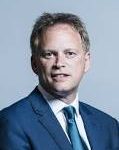
  • Grant Shapps – 2022 Comments on Relaxing Testing Rules for Travellers

    Grant Shapps – 2022 Comments on Relaxing Testing Rules for Travellers

    The comments made by Grant Shapps, the Secretary of State for Transport, on 5 January 2022.

    I’ve always said that we won’t keep international travel restrictions in place any longer than they are necessary to protect public health.

    That’s why we’re removing the temporary, extra testing measures we introduced for Omicron in November, making travel easier and cheaper for fully vaccinated passengers and providing a big boost for the travel industry as we enter the peak new year booking period.

    We want to provide more certainty to passengers and businesses, and will do a full review of our international travel measures for 2022 by the end of the month.

  • George Eustice – 2022 Comments on Restoring Habitats

    George Eustice – 2022 Comments on Restoring Habitats

    The comments made by George Eustice, the Environment Secretary, on 6 January 2022.

    We want to see profitable farming businesses producing nutritious food, underpinning a growing rural economy, where nature is recovering and people have better access to it.

    Through our new schemes, we are going to work with farmers and land managers to halt the decline in species, reduce our greenhouse gas emissions, increase woodland, improve water and air quality and create more space for nature.

    We are building these schemes together, and we are already working with over 3,000 farmers across the sector to test and trial our future approach. Farmers will be able to choose which scheme or combination of schemes works best for their business, and we will support them to do so.

  • John Healey – 2022 Comments on Wasted Military Spending

    John Healey – 2022 Comments on Wasted Military Spending

    The comments made by John Healey, the Shadow Secretary of State for Defence, on 5 January 2022.

    The Ministry of Defence has blown billions of pounds at the same time as cutting back our Armed Forces.

    The MoD is a uniquely failing department, yet Ministers have taken no serious steps to secure value for taxpayers’ money.

    This scale of waste is totally unacceptable. Ministers are failing British troops and British taxpayers.

    A Labour Government would get to grips with these deep-seated problems from day one. We would commission the NAO to conduct an across-the-board audit of MoD waste and make the MoD the first department subject to our new Office for Value for Money’s new tough spending regime.