Tag: 2022

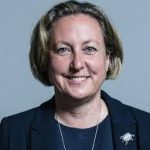
  • Anne-Marie Trevelyan – 2022 Statement on the UK-Greenland Free Trade Agreement Negotiations

    Anne-Marie Trevelyan – 2022 Statement on the UK-Greenland Free Trade Agreement Negotiations

    The statement made by Anne-Marie Trevelyan, the Secretary of State for International Trade, in the House of Commons on 27 January 2022.

    The United Kingdom has today launched negotiations with the Government of Greenland on a continuity free trade agreement to reduce the costs of trading and to identify areas of strategic interest for future co-operation. While we introduced temporary measures to secure some continuity of trade with Greenland at the beginning of 2021, we never closed the door to securing a more permanent arrangement at an appropriate time.

    These negotiations will seek to ensure that British firms can once again import popular products from Greenland tariff free. This will also support processing industries in Scotland, the north-east and north-west of England. As Greenland is the largest supplier of cold-water prawns in the world, as well as being a leading source of fish, these negotiations will help ensure the stability and resilience of British supply chains for consumers and the hospitality sector. The negotiations will also lay the groundwork for potentially tackling market access barriers for British businesses in Greenland in the longer term, including by liberalising professional business services trade, facilitating inward investment, and agreeing mutual recognition and double taxation arrangements. These discussions will therefore pave the way to potentially unlocking significant new opportunities for British exporters and investors looking to extend their presence across the Arctic.

    Additionally, Greenland is an important partner in the Arctic—an increasingly important geopolitical area. These negotiations provide an opportunity to establish a dialogue through which to broaden our co-operation with Greenland on our priorities, such as climate change, science and research, and potentially the supply of critical minerals.

    As the Arctic continues to grow in strategic importance, Greenland will be a key partner in ensuring a secure, stable, and sustainable future for the region.

    In parallel, we expect the Department for Environment, Food and Rural Affairs to enter into negotiations with Greenland on our access to Greenlandic fishing waters.

    This agreement will constitute Greenland’s first bilateral agreement with a third partner country, and we look forward to using this opportunity to solidify and strengthen our trading relationship in the future.

    We will ensure Parliament is regularly updated on the progress of these negotiations.

  • Sajid Javid – 2022 Statement on Covid-19 and Adult Social Care

    Sajid Javid – 2022 Statement on Covid-19 and Adult Social Care

    The statement made by Sajid Javid, the Secretary of State for Health and Social Care, in the House of Commons on 27 January 2022.

    Thanks to the success of the vaccination booster roll out, and the reducing level of both infection and hospitalisations across the country, the Government have been able to announce the end of plan B. This means we are now able to take steps towards getting care homes back to normal, easing some of the difficult restrictions that both staff and residents have had in place, which I know have been incredibly challenging for all, while still protecting residents from the continued risk of covid-19.

    From 31 January, there will no longer be nationally set direct restrictions on visiting in care homes and there will be no limit on the number of visitors a resident can receive. Residents should be supported to undertake visits out of the care home without the need to isolate on their return, but should continue to take reasonable precautions and undertake testing arrangements for high-risk visits.

    As well as removing those additional precautions we put in place in response to the omicron variant, we are now able to reduce isolation periods for residents in care homes so that they are the same as for the general public in most cases.

    Residents who need to isolate will now only need to do so for a maximum of 10 days. The 10-day maximum period will apply to those residents who test positive, are identified as a close contact or have had an unplanned stay in hospital. For some residents, the isolation period could be as short as five days subject to the testing regime that will be outlined in guidance.

    Today I am also announcing changes to regular testing for staff. For all adult social care staff, we are moving to lateral flow testing every day before work and removing weekly PCR testing. Recent clinical advice is that following the pre-shift testing regime provides better protection than the current regular testing regime of weekly PCR with three lateral flow tests a week in high-risk settings.

    As restrictions are relaxed for care home residents and for the general population, testing continues to be essential for providing the protections needed to support this relaxation of restrictions. The introduction of pre-shift rapid lateral flow tests should help identify and isolate positive cases quicker rather than waiting for PCR results to return from the lab.

    This change applies only to regular asymptomatic testing for staff meaning PCR tests will remain available for symptomatic staff and residents. Outbreak testing and monthly resident testing will also remain unchanged.

    By maintaining a robust regime of testing in adult social care, continuing to press ahead with our vaccination programme and maintaining high standards of infection prevention and control, we are able to support residents of care homes and recipients of care to gradually return to enjoying life as it was before the pandemic.

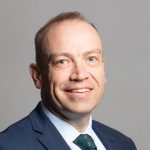
  • Chris Heaton-Harris – 2022 Statement on Organisation for Security and Co-operation in Europe Meeting

    Chris Heaton-Harris – 2022 Statement on Organisation for Security and Co-operation in Europe Meeting

    The statement made by Chris Heaton-Harris, the Minister for Europe, in the House of Commons on 27 January 2022.

    My noble Friend the Minister for South and Central Asia, United Nations and the Commonwealth (Lord Ahmad of Wimbledon) has made the following written ministerial statement:

    The Organisation for Security and Co-operation in Europe (OSCE) faced a challenging year in 2021, with geopolitical tensions leading to a failure to reach consensus on a range of important issues. Sweden, as 2021 chair-in-office, steered the organisation through this period with a focus on addressing protracted conflicts, strengthening democracy and enhancing gender equality. The UK worked closely with Sweden, including as chair of the OSCE’s Security Committee, which we have now concluded after two successful years.

    On 2 and 3 December, Swedish Foreign Minister Ann Linde hosted the 28th Ministerial Council meeting of the OSCE in Stockholm. The Secretary of State for Foreign, Commonwealth and Development Affairs, the right hon. Member for South West Norfolk (Elizabeth Truss), represented the United Kingdom. The Ministerial Council is the key decision-making body of the OSCE and was attended by Ministers and senior officials from across its 57 participating states, including US Secretary of State Anthony Blinken and Russian Foreign Minister Sergei Lavrov.

    The Council agreed a decision on increasing co-operation to address the challenges of climate change. Due to the positions of certain participating states, there was difficulty in reaching agreement on a number of other valuable decisions, reflecting wider difficulties in reaching consensus. In 2021, the OSCE’s Human Dimension Implementation Meeting, Europe’s largest annual human rights and democracy conference, did not take place because we were unable to reach agreement on the agenda.

    The Foreign Secretary’s intervention at the Ministerial Council underlined the need for all participating states to respect OSCE commitments. The Foreign Secretary raised concern over the impact of ongoing conflicts on regional stability and the threats facing freedom and democracy across the region, placing a particular emphasis on the importance of the OSCE’s work in election observation.

    The Foreign Secretary’s statement also emphasised our support for Ukraine’s sovereignty and territorial integrity, calling on Russia to use OSCE tools to build trust and live up to their commitments on military transparency. The UK and allies made clear to Russia that its military build-up on the border of Ukraine and in illegally annexed Crimea is unacceptable. We reiterated these points in our closing statement and also regretted Russia’s decision not to renew the mandate of the Border Observation Mission along the Ukraine-Russia state border.

    During the ministerial working dinner, the Foreign Secretary led a discussion on conflict resolution focusing on the importance of finding the political will to implement existing tools. She also co-hosted a side event on the human rights situation in Belarus, alongside Denmark and Germany, with 36 co-sponsors. Her Majesty’s ambassador to the OSCE, Neil Bush, represented the UK in a discussion focused on the potential OSCE role in Afghanistan particularly in supporting regional stability.

    Poland have taken on the OSCE Chair for 2022 and will face another challenging year, at a particularly tense moment for the region. They plan to prioritise conflict prevention and resolution, with a focus on protection of civilians, and will champion building back better through effective multilateralism.

    At the first OSCE Permanent Council in 2022, the UK offered Polish Foreign Minister Rau our full support. Our statement underlined our support for Ukraine’s sovereignty and territorial integrity in the face of Russia’s aggressive acts and urged participating states to robustly defend the principles and commitments we signed up to. We also emphasised the importance of the cross-dimensional approach to security, which includes support for democracy and human rights, and called for adequate financing of the OSCE’s autonomous institutions and field missions in the unified budget. As a consensus-based organisation, where all countries in the Euro-Atlantic area are represented and have an equal voice, the OSCE has a unique and valuable role in resolving tensions and avoiding escalation.

    In 2022, the UK remains committed to supporting the work of the OSCE. We will focus on conflict prevention and resolution, ensuring in particular that we use the OSCE platform to hold Russia to account for its ongoing aggression in Ukraine. We will continue to work closely with the OSCE chair-in-office, Secretary General Helga Schmid, and other participating states to build an effective organisation which maintains comprehensive security in the Euro-Atlantic and Eurasian area.

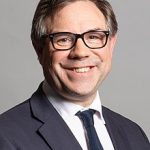
  • Jeremy Quin – 2022 Statement on Annington Property Ltd

    Jeremy Quin – 2022 Statement on Annington Property Ltd

    The statement made by Jeremy Quin, the Minister for Defence Procurement, in the House of Commons on 27 January 2022.

    The Ministry of Defence—MOD—continues to review its estate to ensure value for money.

    In 1996, the Ministry of Defence, in what was effectively a sale and leaseback agreement, granted a 999-year lease of over 55,000 service family accommodation homes to Annington Property Ltd and immediately leased the homes back on 200-year underleases. In 2018, the National Audit Office concluded in its review of the arrangements that taxpayers are between £2.2 billion and £4.2 billion worse off as a result of the sale and leaseback arrangements.

    Given our obligations to secure value for money, we have reviewed the MOD’S current arrangements with Annington and now set out the steps that the MOD is taking to deliver greater value for money for the taxpayer in relation to service family accommodation.

    First, the MOD engaged highly experienced advisers and counsel to deliver a settlement with Annington in the site rent review process. This settlement achieves value for money, and removes ongoing uncertainty for the Department; we believe it to be a good outcome and a fair settlement. The settlement resulted in a change in the overall adjustment to open market rents from 58% to 49.6%.

    Secondly, the MOD continues to reduce the number of untenanted properties which it holds since these otherwise represent a liability for the taxpayer, by returning these to Annington under the terms of the lease.

    Thirdly, the MOD can confirm that the Department will explore the exercise of its statutory leasehold enfranchisement rights to buy out Annington’s interest in the homes and gain full ownership rights. Initially, the MOD has made a single claim for one house, with the intention to submit a further claim in respect of another house in the near future. It is hoped that this test case will establish certain key principles. The cost of enfranchising these houses will be in accordance with the statutory enfranchisement formula, fixed at the date of the notice of claim, and the price will be agreed between the parties or determined by an independent tribunal. If the cost of recovering full ownership of the units from Annington is less than the present value of the MOD’s ongoing liabilities, such a transaction is likely to represent good value for money. The MOD would then benefit from any future appreciation in value of the units. Accordingly, the MOD has served notice on Annington under section 5 of the Leasehold Reform Act 1967 of its desire to enfranchise a house currently leased from Annington. Annington, through its lawyers, has notified the MOD that it is considering the impact of the claim and has put the MOD on notice of a potential dispute.

    A successful enfranchisement programme would also provide the MOD with more flexibility in the management of its estate to the benefit of defence, tenants, and potentially wider Government objectives.

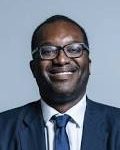
  • Kwasi Kwarteng – 2022 Statement on Sizewell C

    Kwasi Kwarteng – 2022 Statement on Sizewell C

    The statement made by Kwasi Kwarteng, the Secretary of State for Business, Energy and Industrial Strategy, in the House of Commons on 27 January 2022.

    The UK was the first major economy to legislate for a target of net zero greenhouse gas emissions by 2050. As set out in the net zero strategy and the Prime Minister’s 10-point plan for a green industrial revolution, nuclear will continue to be an important and reliable source of clean electricity as we strive to decarbonise the UK economy. By 2050, we expect that the electricity system will be built on a foundation of renewables such as wind and solar, but these will need to be bolstered by reliable low-carbon power. The UK Government recognise that large-scale nuclear is the only proven technology available to provide continuous, low-carbon electricity at scale. Ministers are therefore firmly committed to deploying new nuclear in order to strengthen Britain’s energy security and reduce our exposure to volatile global gas prices, provided there is clear value for money for consumers and taxpayers.

    In 2016 we took the decision to enter into a contract for difference over Hinkley Point C in Somerset, which is currently under construction and expected to begin generating power by 2026, when it will start providing 3.2 GW of electricity. However, with five of the UK’s six nuclear stations scheduled to close by 2028, the Government have made a commitment to bring a further large-scale nuclear project to a final investment decision during this Parliament, subject to value for money and all relevant approvals. To facilitate this, we have introduced legislation for a new financing mechanism, the regulated asset base (RAB) model, through the Nuclear Energy (Financing) Bill. It is estimated that RAB could lower the cost of each new large-scale nuclear power project by more than £30 billion, compared to the existing contracts for difference model. The RAB model is also expected to reduce Britain’s reliance on overseas developers for finance by substantially widening the pool of private investors to include British pension funds, insurers and other institutional investors from like-minded countries.

    After Hinkley Point C, the Sizewell C project in Suffolk is the most advanced nuclear project in the UK. As a replica of Hinkley Point, Sizewell offers a high level of design maturity and an identified supply chain. The company developing the project has applied for both a development consent order and nuclear site licence and believes it can begin construction during this Parliament. If built, the new plant could deliver around 7% of the UK’s current electricity needs (enough to power the equivalent of around 6 million homes) and create tens of thousands of jobs across the country. New nuclear is not only at the heart of our plans to ensure greater energy independence, but to drive economic growth.

    The Government entered into Sizewell C project discussions in January 2021. Following significant investment from EDF, the project requires additional financial support to further mature it to a point where other private investors (and, subject to value for money considerations and relevant approvals, the Government) could consider a direct investment in the project development company. Sufficient early development funding prior to the construction of major projects is a key determinant of subsequent project performance, and to this end the Prime Minister’s 10-point plan committed in 2020 to provide nuclear development funding for this purpose.

    I am pleased to announce that I will today enter into an option agreement with EDF Energy Holdings Ltd, which provides Government with an option over the land at Sizewell C and conditionally over the shares in the development company in exchange for an option fee of £100 million. EDF Energy Holdings Ltd will invest that £100 million in further developing the Sizewell C electricity infrastructure project. Should the project reach a successful final investment decision, subject to value for money and all relevant approvals, the Government would recover this funding together with a financing return, either through an equity stake in the project, or in cash.

    This agreement represents an important milestone for both the Government’s nuclear strategy and the project, which has the potential to significantly contribute to the UK’s decarbonisation and security of supply objectives. However, I am clear that this agreement does not represent a Government decision that the Sizewell C project will progress. Neither is it an indication that similar commercial arrangements would necessarily be desirable for other prospective nuclear projects. Decisions on the Sizewell C Project will be dependent on decisions in respect of planning and designation under the Nuclear Energy (Financing) Bill if passed into law.

    Noting that the future of the Sizewell C project is not confirmed, the agreement the Government have reached with EDF provides the taxpayer with downside protection should the project not proceed. In return for the £100 million, the Government will be granted an option on the Sizewell site and conditionally over the shares in certain circumstances of the development company. In the event the negotiations with EDF do not successfully result in a positive investment decision satisfactory to all parties, then subject to certain conditions, taxpayers would be entitled to seek acquisition of either EDF’s shares in the Sizewell C development company or the site itself, or if neither can be delivered by EDF, the taxpayer would be entitled to a reimbursement of the £100 million with a financing return. This in turn would provide Government with the possibility of proceeding with alternative nuclear or low-carbon infrastructure, and therefore support the realisation of our net zero objectives.

    Today’s announcement further demonstrates our commitment to energy security, investing in our thriving nuclear sector and creating thousands of jobs.

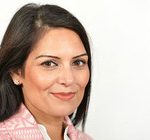
  • Priti Patel – 2022 Comments on Windrush Compensation

    Priti Patel – 2022 Comments on Windrush Compensation

    The comments made by Priti Patel, the Home Secretary, on 27 January 2022.

    Since I overhauled the Windrush Compensation Scheme, the Home Office has been able to secure compensation for more people more quickly. £41 million has now been offered to Windrush victims, with more claims being finalised as quickly as possible.

  • Chloe Smith – 2022 Comments on the British Sign Language Bill

    Chloe Smith – 2022 Comments on the British Sign Language Bill

    The comments made by Chloe Smith, the Minister for Disabled People, Health and Work, on 28 January 2022.

    Effective communication is vital to creating a more inclusive and accessible society, and legally recognising British Sign Language in Great Britain is a significant step towards ensuring that deaf people are not excluded from reaching their potential.

    Passing the Bill will see government commit to improving the lives of deaf people, and will encourage organisations across the nation to take up the BSL mantle, benefitting both themselves and the deaf community.

  • Alex Sobel – 2022 Speech on Holocaust Memorial Day

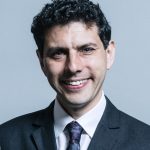
    Alex Sobel – 2022 Speech on Holocaust Memorial Day

    The speech made by Alex Sobel, the Labour MP for Leeds North West, in the House of Commons on 26 January 2022.

    First, I wish to thank my right hon. Friend the Member for Barking (Dame Margaret Hodge), the right hon. Member for Newark (Robert Jenrick), and my hon. Friend the Member for Warrington North (Charlotte Nichols) for having secured this debate. It is a privilege to follow the right hon. and gallant Member for Beckenham (Bob Stewart), whose speech, giving first-hand witness testimony to genocide, is so important in this place. It is always a privilege and an honour to listen to him speak on Holocaust Memorial Day and on other occasions when he recounts his service, not just to our country but to the Bosnian Muslim community. This debate is always a difficult debate for me personally, as a descendant of victims of the holocaust, so I apologise if at any point, I get a little emotional and have to pause for a second or two. I am sure that everybody in the Chamber understands.

    As others have done, I thank the Holocaust Educational Trust, the Holocaust Memorial Day Trust, Yad Vashem, the POLIN Museum—which is actually in the Warsaw ghetto—the Holocaust Exhibition and Learning Centre near me in Huddersfield, and those organisations that fight antisemitism today such as the Antisemitism Policy Trust, HOPE not hate, the Community Security Trust, and others. There are many organisations that both keep the holocaust alive today and fight antisemitism, and we should be grateful to them all.

    This year’s theme, as we know, is “One Day”, and for me, that means that we have hope that there may be one day in the future with no genocide. It is also about one day in the lives of victims of genocide, when they themselves are facing that genocide every day, and know that that day might be the last day they live. They wake with that thought beguiling their senses, and if they are fortunate enough to survive that trauma, the trauma lives with them and becomes intergenerational trauma. I am not sure how many generations that trauma persists for, as two generations separated, I still feel that trauma, especially on days like this. I hope my children do not feel it, and are not driven by some of the same fears that generations of Jewish and other people have felt.

    One of my drivers here in Parliament is that genocide must end and that we must strive for human rights for all, so I speak out for the Rohingya and the Uyghurs, and act as the chair of International Parliamentarians for West Papua. A genocide against one people is a genocide against all people, and we must stand together against genocide wherever and whenever it occurs, without any thought of our own interests. Benny Wenda, from the Free West Papua Campaign, gave me this message for Holocaust Memorial Day. He is exactly the same age as me, so in context, this is 30-odd years ago that he is talking about:

    “When I was a child, my village was bombed by the military and many of my family members were killed. I have witnessed my own aunties being raped and dying of their injuries and my mother being brutally beaten in front of my eyes.

    Although we carry this burden, we also carry great hope. Our hope is for the next generation to be free from persecution, free from violence, and free from oppression. One day. We carry the hope of peace, and we look to the lessons of our shared history to guide the way.”

    I hope that more Members present might join the all-party parliamentary group on West Papua, and find out more about the genocide that is carrying on there to this day.

    I want to finish by telling the story of one part of my own family. My paternal great-grandfather was David Laks. He was murdered by the Nazis in the Belzec death camp in 1942. Teresa, my maternal great-grandmother, died of natural causes in 1938 before the start of the war. David and Teresa had five children. Salka and Fanka were the eldest daughters. They lived in central Poland and were murdered, along with their families, in unknown circumstances—I really did not think I would get this emotional; I am sorry—by the Nazis.

    Jim Shannon (Strangford) (DUP)

    We all greatly appreciate the good work that the hon. Gentleman does in this House, but we are also very aware of the good work that he does in Papua New Guinea; I think he has been an inspiration to us all. I hope that that gives him the chance that he needs to continue.

    Alex Sobel

    I am grateful to the hon. Member for giving me that chance to pause and collect myself. It is very useful in debates such as this to have colleagues who will do that.

    The middle child was called Zygmunt; I will come back to him later. The fourth child was my grandmother Regina, who survived the war and lived into old age. The youngest sibling was my great-aunt Marisia, whom I have spoken about in a previous Holocaust Memorial Day debate.

    I am going to describe one day in the life of Zygmunt Laks and his family—his wife Guta and their son Karol, who was born in 1939. Zygmunt Laks lived in the Łódź ghetto and worked in a garage after the Nazis took away the family restaurant. The situation in the ghetto worsened; Zygmunt stopped work and just sat in the ghetto apartment with a large axe, waiting for the Nazis to come and take them away. There was an easing in the situation in the ghetto, so he decided to go back to work, but the next day he returned from work and his wife and son were gone. On that day, an SS officer shot Karol, who was just two years old, in the head in front of his mother.

    Karol was my uncle—a child who never got to see adulthood, an uncle I never met. I often think about how small my family is: I am an only child of only children, with very few relatives. A lot of our family are just ghosts—just ghosts of the past who were taken away from us by the holocaust.

    Guta was never seen or heard of again, but it is assumed that she, too, was taken to Belzec death camp and never returned. Belzec is one of the lesser-known death camps, but it is estimated that as many as 800,000 may have perished there in the very short period—just two years—in which it was in operation. Zygmunt eventually escaped the ghetto to Ukraine, but was killed by a bomb as the war was ending and never returned home.

    That this part of my family history survives is due to my aunt, Aviva Hay, who compiled her father’s memoir into a book, “We Are What We Remember”, a holocaust memoir of our family. My father, who I know is watching at home, contributed to this account and very much keeps alive the deep and scarring memories of our family’s experience in the Shoah.

    The most tragic thing for me is that the fate of the Laks family is not unique or rare; it is the common story of European Jewry. Today is so important, because we have one day each year that we can share and remember—one day to say that we will not forget—but we have every other day to do all we can to strive for a better world and no more genocide.

  • Bob Stewart – 2022 Speech on Holocaust Memorial Day

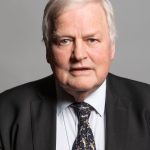
    Bob Stewart – 2022 Speech on Holocaust Memorial Day

    The speech made by Bob Stewart, the Conservative MP for Beckenham, in the House of Commons on 26 January 2022.

    Instances of genocide continue, and, very sadly, I have been witness to them—in particular, in Bosnia during 1992-93, when I commanded the battle group of the 1st Battalion, The Cheshire Regiment. Let me give the House an example.

    On 22 April 1993, I learnt that women and children had been massacred in a village in the Lašva valley. I did not believe it, so I went there, taking about 30 men and about six vehicles. As I approached the village of Ahmići from the south, I was struck by what a beautiful place it was, or had been. The first building I saw was the mosque, which was new, but wrecked. The minaret had been broken by explosions, and it was pointing at the sky like a pencil. Most of the other buildings in the village—it was a linear village, about a mile in length—had been destroyed by fire. Some had not been destroyed; we later discovered that they belonged to Bosnian Croats, not Bosnian Muslims.

    Each building had been destroyed by fire, explosions or shooting. The windows had black marks around them, and the roofs had collapsed. Only later, because we did not see it immediately, we discovered that bodies were underneath the roofs. Outside the houses, the gardens looked kind of normal, except for the detritus of war: downed cables, bricks, burnt-out cars, and dead pets. Everywhere was the disgusting smell which comes from the chemical reactions that accompany death. It was cloying and it was foul.

    I went all the way to the far end of the village, the north end. I deployed my men, and we started looking. We did not see bodies initially—until we came to house number seven. The murderers had failed to disguise what had happened there. At an entrance to the house, there was a man and a boy. They were dead. They looked like they had been burnt. They did not seem to have clothing on them. The little boy, or the teenage boy, had his arm upwards in front of his face, and his fist was balled, and the bones had been burnt through.

    My soldiers said, “Look behind the house, Sir.” I went into a cellar. The cellar had agricultural tools and strings of onions or vegetables on the walls. In the middle, there was this mass—this greyish, blackish mass. I did not really understand what I was looking at—then I did! The first thing that hit me was the disgusting smell, and then I realised I was looking at bodies—at least two adults, several children. One of the women, and they were women, presumably being protected by the men who were killed at the door, had her back so arched back. Her back was bent—she was lying, and her head was back. God! She was burnt. Everything was burnt, except for her eyes. Her eyes were not burnt. I fell back in horror at what I had found. I rushed outside and was violently sick.

    Later, one of my soldiers, and he was a bandsman, because we used the band as stretcher bearers and I asked the band to help clean up, was shovelling the remains—shovelling the remains—of a human being into a bag on a stretcher, and he turned to me and said, “Sir, this is Europe in 1993, not Europe in 1943.” I did not know what to say.

    On the memorial in that village, which I am going to visit shortly—at Easter—there are 116 names of everyone killed, as far as can be ascertained. My men and I dug a mass grave and put, as far as we could tell, over 104 bodies into that mass grave. They were Bosnian Muslims; there was not a Bosnian Croat among them.

    We did not just discover them, but found families lined up—shot down. One little girl was holding a puppy. The puppy was dead, and so was she, killed presumably by the same bullet. We took that family to the local morgue. Next day, we went back and discovered that the bodies had been put back at the house because it was the wrong morgue. We had taken them to a Croat morgue, not a Muslim morgue.

    Within a month, I was in Srebrenica and watched more genocide occurring, this time with Bosnian Serb artillery firing at human beings. There were about 20 people killed around us as we went. Some of my soldiers were slightly wounded, no one killed.

    You see, I consider Holocaust Memorial Day to be so incredibly important not just because of the people who were killed in the second world war in the 1930s and the 1940s. It was not just the second world war: the Germans, or the Nazis—forgive me, I am not talking about the Germans; I am talking about the Nazis—managed to start doing it before the second world war. Then we have had instances since, with Darfur, Bosnia that I have witnessed, Rwanda and Cambodia.

    My mother visited Belsen in 1945. She was in the Special Operations Executive. I did not know that until a few years before she died. I did not know she was a spy. Women are always much better at keeping secrets than men. I said to her, “Why, mum, have you never told me that you went to Belsen in 1945 looking for SOE officers?” She said, “Robert, I was ashamed.” I said, “Why were you ashamed? You did things like learn to parachute when you were 22 and put yourself in danger. You did everything you could.” Colleagues, she said, “I was ashamed because it happened in my generation.”

    The purpose of Holocaust Memorial Day, and the memorial of all those people who died in the second world war and all those who have died in genocides since, is for us to feel collective responsibility for stopping it from happening again. That is why this day, and this memory of all those innocents who have died, is so incredibly important.

  • Diana Johnson – 2022 Speech on Holocaust Memorial Day

    Diana Johnson – 2022 Speech on Holocaust Memorial Day

    The speech made by Diana Johnson, the Labour MP for Kingston upon Hull North, in the House of Commons on 26 January 2022.

    I start by paying tribute to all those who have secured this debate and those who have already spoken so movingly, thoughtfully and powerfully. I say to the right hon. Member for Newark (Robert Jenrick), who opened the debate, how moved I was by what he disclosed about the comments made to him and his family. I agree with my hon. Friend the Member for West Ham (Ms Brown) that the solidarity of the House is with the right hon. Gentleman and his family. I also pay tribute to my right hon. Friend the Member for Barking (Dame Margaret Hodge) for all her work in this area, over so many years.

    Today marks the 77th anniversary of the liberation of Auschwitz-Birkenau. Today, we remember those 6 million Jewish men, women and children murdered during the holocaust, alongside millions of other people killed under Nazi persecution and in all subsequent genocides. This Holocaust Memorial Day is as important as ever in marking the memory of those terrible events.

    I was reflecting that I visited Auschwitz some years ago with the Holocaust Educational Trust. One of my most striking memories is of the huge piles of luggage, dolls and toys, shoes and other ordinary, mundane items, which were probably those that meant the most to the people who were murdered in that camp. I will always remember that about Auschwitz—the ordinary and mundane alongside the most evil.

    The holocaust is fading from lived memory, with the gradual passing of those who suffered and survived and of those in the greatest generation, who fought the Nazis and liberated the camps and Europe. It is up to all of us to ensure that this history and its lessons are never forgotten. I, like many others, pay tribute to the Holocaust Educational Trust for the brilliant work that it does, and to the Holocaust Memorial Day Trust, as well.

    After the events of recent years with covid, I look forward to once again meeting Hull’s remaining Jewish ex-servicemen and the community in Hull who gather every Remembrance Sunday to mark these events, and the immense contribution of the Jewish community to our country and to our very survival. As a member of the Commonwealth War Graves Commission, I am proud of the work that we do in maintaining the graves of so many Jewish ex-servicemen and women who fell while defending our country.

    As we know, we need to be vigilant as there are those who still seek to deny the facts about the holocaust, a form of fake news spread for decades by antisemites, challenging whether the holocaust actually happened or the magnitude of it, and more recently questioning the internationally agreed definition of antisemitism. Remembering what happened in the holocaust is even more important, as we have seen a rise in antisemitism abroad and here in the United Kingdom. The first half of 2021 saw the highest number of antisemitic incidents in a six-month period recorded by the Community Security Trust. It is important that we note the work that trust does, day in, day out, providing security and keeping the people of the Jewish faith safe.

    We must ask ourselves, why is that trust still required and why have we failed to combat the pernicious hatred of Jews that lingers, particularly online? Online disinformation often parrots long-standing antisemitic tropes that demonise Jewish people as happened in Germany in the 1930s; now they are spread by digital technology. The right hon. Member for Newark set out some shocking statistics about what can be found on social media platforms. This House must do something about that. Other hon. Members have talked about antisemitic messages around the covid anti-vaxxers, which are sadly too prevalent on social media.

    We must be aware of the different forms that antisemitism takes in the United Kingdom. It is no longer just the far right and skinheads trying to sell National Front publications in Brick Lane. Shamefully, in recent years my party allowed the stain of antisemitism to find a home in the party. Under the leadership of the current leader of the Labour party, we are working very hard indeed to combat that.

    The horror of the holocaust has reshaped our understanding of international law, human rights and collective security after 1945. We have a responsibility to people throughout the world to protect them from persecution, but I regret to say that we have too often failed. I chair the all-party parliamentary group on human rights, and we are only too well aware of the growing breaches of human rights around the world. We know that too many genocides have been carried out since the holocaust—in Cambodia, Rwanda, Bosnia and Darfur, to name but a few—and we should also be shamed by the current genocide being carried out against the Uyghurs in China, the plight of Christians in some countries, what happened to the Yazidi women, and what is happening now to the women in Afghanistan. Of course, there is also the stain of Islamophobia, which is still around in our communities and institutions and which needs far more attention. It is the “othering” of groups that we need to be vigilant about and take action to tackle, and we need to recognise where that “othering” can lead.

    The theme of this year’s Holocaust Memorial Day is “One Day”, but we must continue the work to eradicate antisemitism and hatred, in this country and throughout the world. Antisemites, of whatever variety, are invariably the enemies of peace, freedom, democracy and the rule of law. Only by defeating them, and all those who peddle hatred and prejudice, can we live in confidence that we will never see another holocaust.