Tag: 2022

  • Wera Hobhouse – 2022 Speech on Holocaust Memorial Day

    Wera Hobhouse – 2022 Speech on Holocaust Memorial Day

    The speech made by Wera Hobhouse, the Liberal Democrat MP for Bath, in the House of Commons on 27 January 2022.

    It is an honour and privilege to follow so many moving speeches. I have been to many holocaust memorials across Germany and eastern Europe throughout my life: Bergen-Belsen, close to my home town of Hanover; Dachau; Auschwitz-Birkenau; the row of two or three houses that is all that is left of the Warsaw ghetto; and, most hauntingly, the Ponary massacre memorial outside Vilnius.

    Whenever I am directly confronted with the stories of unspeakable atrocities committed by the German state during the 1930s and 1940s on the Jewish people, I feel a crushing sense of horror and shame. I was born in 1960; it was not my generation that was directly responsible for the terror. However, I feel acutely a collective responsibility for what happened in my country of origin, and that we should never forget and should work towards a world in which such awful suffering never happens again. If we want to be serious, we cannot just let the holocaust disappear into the history books—another time, another people, another place—but keep it alive and learn from it.

    My grandmother was half Jewish. Her first husband was Jewish. My uncle was in Dachau in 1936, but got out with the help of Scandinavian friends. All my mother’s half brothers and sisters had to leave Germany and, except one, never returned. My grandmother’s anguish about her children and their families hung over my mother, who was the youngest, every day of her childhood. While my mother, who was only a quarter Jewish, survived Nazi Germany, her life was marred daily by exclusion, discrimination and fear. I would not be here if the war had not ended the way it did, because my mother would never have been allowed to meet my father, who was not Jewish.

    My grandmother’s second husband, my grandfather, was not Jewish. He was a judge and was appointed to the Court of Appeal in Leipzig in 1927. In 1933, only months after he came to power, Hitler installed the Volksgericht, or people’s court, which was a political court to deal with anybody who was seen as an enemy of the state and which signalled the end of the rule of law. My grandfather resigned.

    My grandfather’s youngest brother was schizophrenic and was murdered by the Nazis through one of the programmes of euthanasia. Although that is not directly related to the holocaust, it is worth remembering that there were German victims too, like my great-uncle, for whom there is no grave either.

    My grandfather died before I was born, but I know through my mother that he never forgave himself for not becoming politically active to stop the rise of Hitler.

    There are volumes and volumes of history books analysing the rise of the Nazis, citing the political instability after the first world war, the loss of national pride in being a great nation, and the Russian revolution leading to the fear of communism which drove many Germans into the arms of the fascists. It was the extremes of left and right that destroyed the moderate political centre. With that came illiberal and intolerant attitudes towards anyone who could be painted as the enemy. From there it was only a small step towards viewing people from a different race or culture as not being worthy of our human compassion and protection. The Nazis deliberately stoked irrational fear to win elections. Once Germans had elected, in a democratic vote, a barbaric leader, they could not free themselves from the monster they had helped to create. Only a world war did that.

    “Wehret den Anfängen”—resist the beginnings—is what I learned from my German history lessons. The Holocaust Memorial Day Trust has published “The ten stages of genocide” so that people and communities can recognise the warning signs. Discrimination, dehumanisation and polarisation are among those warning signs, and sadly they are part of our political reality today, under our own eyes.

    The fight against intolerance, exclusion and inhumanity is ongoing. I owe it to the memory of the millions of Jews who perished in the holocaust at the hands of the country where I was born to convert the shame that I will always feel into political activism. I will stand up and speak out about the need for us to keep our eyes wide open to where barbarism begins.

  • Marie Rimmer – 2022 Speech on Holocaust Memorial Day

    Marie Rimmer – 2022 Speech on Holocaust Memorial Day

    The speech made by Marie Rimmer, the Labour MP for St. Helens South and Whiston, in the House of Commons on 27 January 2022.

    I am truly humbled to speak in this debate today. I wish to pay tribute to and thank all speakers who have shared their family experiences and, in the case of the right hon. Member for Beckenham (Bob Stewart), their own experiences.

    Bill, a constituent of mine and fellow parishioner who I went to church with, once asked to have a few words with me. He was one of those that walked into Belsen. He said, “There isn’t enough being said about it, Marie. I am worried that people will forget.” His wife was with him, with tears flowing down her cheeks. He said he could never, ever forget what they found when they walked into Belsen—the horrors and the inhumanity that the poor people there had been treated with. Bill never slept a single night without remembering horror stories and having nightmares. I said, “Let’s have a word with Father Martin”, the priest. He said, “Oh, I can’t do that.” I said, “Come on Bill—you owe it to those people that you found.” We had a word with Martin and said, “Can we have a mass and some talk about Belsen? It would perhaps help Bill if he shared some of his experiences.” We did that. Bill was so humbled but so thankful that he had done it. Bill is now at peace and resting. His wife said how he had never, ever slept one night in peace.

    The holocaust is the greatest evil that mankind has ever inflicted. It was a systematic butchery of Jews, Gypsies, Roma, homosexuals, people with disabilities, and whoever else the Nazis believed were undesirable. In the grand scheme of things, it was not that long ago that this evil occurred. Many people are still alive today who survived the barbaric concentration camps. As someone born just after the war, I am always struck by how recent the holocaust still feels. During my childhood, more and more of the harrowing details and images became public. I can still remember learning about it for the first time and wondering how such evil could ever have existed. That is why it is so important to always remember how recent it was. Today we sometimes question how such evil could have occurred in the past, yet after the war people wondered how this evil could have occurred then. The 1930s and ’40s had television, music on the radio, and free elections with women able to vote. We are not talking about a historical event that occurred in the dark ages; it happened in the modern era. That is why, when we say “Never again,” we must mean it, and we must act on it. We have to guard against antisemitism and all forms of hatred that can fester wherever they exist.

    I am grateful to the right hon. Member for Newark (Robert Jenrick), my hon. Friend the Member for Warrington North (Charlotte Nichols) and my right hon. Friend the Member for Barking (Dame Margaret Hodge)—one of the bravest women I know, and my very dear friend—for securing this debate. We must never forget the holocaust; it is the starkest, darkest and gravest reminder of what happens when evil, hate and prejudice are allowed to grow, and why we must stop it.

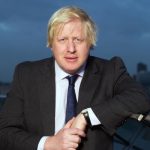
  • Boris Johnson – 2022 Comments on Vladimir Putin and Ukraine

    Boris Johnson – 2022 Comments on Vladimir Putin and Ukraine

    The comments made by Boris Johnson, the Prime Minister, on 30 January 2022.

    This package would send a clear message to the Kremlin – we will not tolerate their destabilising activity, and we will always stand with our NATO allies in the face Russian hostility.

    If President Putin chooses a path of bloodshed and destruction, it will be a tragedy for Europe. Ukraine must be free to choose its own future.

    I have ordered our Armed Forces to prepare to deploy across Europe next week, ensuring we are able to support our NATO allies on land, at sea and in the air.

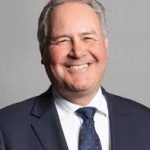
  • Bob Blackman – 2022 Speech on Holocaust Memorial Day

    Bob Blackman – 2022 Speech on Holocaust Memorial Day

    The speech made by Bob Blackman, the Conservative MP for Harrow East, in the House of Commons on 27 January 2022.

    It is a pleasure to follow the hon. Member for Enfield North (Feryal Clark), who remembered another genocide that took place in the world.

    It is fair to say that antisemitism is nothing new. We only have to look back to Shakespeare to see that antisemitism was rife during that period in our history. It has been prevalent in societies across the world for centuries and it is still prevalent today. I recalled earlier the attack on shopkeepers in Stamford Hill only yesterday. What makes the holocaust different is that it shows the ultimate destination of antisemitism: a systematic attempt to wipe out the Jewish race and anyone of Jewish religion—not just people who were openly Jewish, but anyone who had Judaism in their genealogy. I speak as someone in that position. I would not be here today if I had been alive in Germany in those times. That demonstrates the way in which people’s backgrounds were traced to see whether any relative or any person of Jewish blood was present. It was systematic, deliberate and intentional.

    I was at school with many Jewish children. No one spoke about the holocaust. Half of my class were Jewish, but no one ever spoke about the holocaust during those days. It was ignored, perhaps to be airbrushed from history forever, because it was such a tragedy. The relatives—fathers and mothers—of many of my friends had come from eastern Europe as refugees, but they never spoke about the holocaust either. When we were at school, we never got the opportunity to learn about its horrors and what people went through at that time.

    I remember my first visit to Yad Vashem. It was not the Yad Vashem we see today; it was a much smaller, more intimate formation in its early days, going back to 1992. It was a pivotal moment for me on my first visit to Israel, seeing Jerusalem, seeing Yad Vashem and seeing first-hand what had gone on during the holocaust. It had the first ever recordings of survivors—people who had sadly passed away, but who had recorded their testimony in advance—plus early photographs and other details of what had gone on in Germany and eastern Europe in particular during the holocaust.

    That made Yad Vashem more intimate, in many ways, than it is now. It is a much bigger operation now, with much more testimony and evidence of what happened, but when I heard the names of the children who had been murdered by the Nazis being recited, one name after another, it brought home to me how people could commit such systematic murder of children—wipe them off the face of the planet—and what a terrible experience it was.

    Andrew Gwynne (Denton and Reddish) (Lab)

    I have had the privilege of visiting Yad Vashem four or five times now, and I remember on one particular occasion going into the cave the hon. Gentleman describes, where the recordings of children’s names and ages just continue. By coincidence, there was a run of names, two boys and a girl, the same age that my two boys and my daughter were at that time. I broke down in tears, because that is where it really hits home: “This could be you. There but for the grace of God go we all. If politics turns nasty and turns against you, this is the end result.” That is why Yad Vashem and all holocaust memorials are so important.

    Bob Blackman

    I thank the hon. Gentleman. I freely admit—I am not ashamed to say it—that I cried. I cried for humanity, I cried for the people who had been lost and I cried for our whole being and how we could ever have allowed such a thing to happen.

    I declare my interest as co-chairman of the all-party parliamentary group on holocaust memorial. I look forward to the holocaust memorial and learning centre’s being built, so we can have our own facility where we can commemorate the lives of those who were lost, and commemorate those who survived. When I was first elected to the House in 2010, the first all-party group I joined was the APPG on combating antisemitism. It is right that, across the House and on both sides of the political divide, we stand against antisemitism.

    I have visited Auschwitz-Birkenau, and I believe I share the view of most students who have seen Auschwitz for only one day that it would be better if people could stay a little longer, just to appreciate even further the terrible crimes that were committed. The problem with that, of course, is funding, and the fact that lengthening the amount of time spent away might reduce the numbers who could go on such visits.

    The problem I see with the programme of Auschwitz-Birkenau visits is that students learn about what went on there and think that that was it. We must remember that it was not just Auschwitz-Birkenau: there was a network of death camps and forced labour camps right across eastern Europe and Germany, where Jews and others were forced into slave labour and then systematically exterminated.

    I have often wondered how a civilised nation such as Germany could get into a position to commit such inhumane acts. When we talk about 6 million Jews being killed, it is a number; it is hard to personalise that down to individual circumstances. It is hard to visualise the horror of the attempt to wipe out the Jewish race. We should remember that it did not take place over one or two years. It was a deliberate, long-term attempt by the Nazis to eliminate the Jewish race.

    We should also remember that the roots of the holocaust go back to the end of the great war. Germany was subjected to severe reparations. That led to incredible poverty in Germany, which then gave rise to the Nazis, who could say, “It’s the Jews’ fault you haven’t got any money. Let’s take it out on the Jews. If we take Jews out of their position, we can spread the wealth.” It was a deliberate policy of the Nazi party to spread this hatred and it should never, ever be allowed to be repeated. There needs to be a greater understanding and appreciation that, from the early 1930s onwards, this systematic approach led to the Shoah. We have to remember that.

    We must also remember that antisemitism was rife in this country at that time, and we should not think that it was not going on elsewhere either. That thought process and the demeaning of Jewish people was going on, and that is one reason why few people were allowed to escape from Germany and come here. Had they been allowed to do so, many people who lost their lives in the camps would have survived.

    I would like to take this opportunity to pay tribute once again to pay tribute to Karen Pollock and her brilliant team at the Holocaust Educational Trust, who do such wonderful work to educate people—young and old—about the horrors of the holocaust. Not everyone can go to Auschwitz-Birkenau and witness the crimes that took place. We talk, as other Members have, about the shoes, the spectacles and the clothing at Auschwitz-Birkenau, but the memory that I have above all else is walking across the park with the lakes. There is an eerie silence. There is no wildlife. No birds tweet, no animals cry and the reason why the wildlife know is that that is where the Nazis emptied the ashes from the crematorium. The wildlife know what happened there and so should we.

    One aspect of the Holocaust Educational Trust’s work that has become more important is the outreach programme. Last year, more than 600 schools partnered with the trust to enhance educational provision. That is important because it allows holocaust survivors to give their first-hand testimony, lead workshops and ensure that young people understand what happened and learn lessons.

    One of the most famous survivors was Gena Turgel, who lived in Stanmore in my constituency. In many ways, she was a pioneer of holocaust education, as she was going into schools and colleges way before any of the current structures were set up. She was born in Krakow and had eight brothers and sisters. She was only 16 when her home city was bombed on 1 September 1939.

    Here is the part of Gena Turgel’s story that I think is most pertinent. Her family had relatives in Chicago and they planned to leave for the United States, but they made their decision too late, as the Nazis had already invaded and closed all the entry and exit points, so her family had to move to just outside Krakow. In autumn 1941, she moved into the ghetto, and then moved after some of her family were shot by the SS in the ghetto. She was then forced into a labour camp, and in 1945 to Auschwitz-Birkenau, where she was sent with her mother on the death march from Auschwitz, leaving behind her sister, who they never saw again. They then arrived in a further labour camp, were forced on to trucks, and travelled under terrible conditions to Bergen-Belsen, where they arrived in February 1945. On 15 April 1945, the British Army liberated Bergen-Belsen and among the liberators was Norman Turgel, who became Gena’s husband. Gena passed away in 2018, but her record is in a book called, “I Light a Candle”, so her legacy lives on.

    Hermann Hirschberger was born in 1926 in Germany. He lived with his mother, father and older brother. He attended a local non-Jewish school, but when the Nazis said that Jewish children could not go to school any more, he was forced not to go. He was beaten up going from home to school and back again by people who were his friends when he was in school, because the Nazis had said that Jews were not allowed to exist. At 9 pm on 9 November 1938, the synagogues were burnt and businesses, homes and shops were smashed. Windows were smashed and homes and buildings were burnt to the ground. This is known as Kristallnacht, the night of broken glass.

    After that, Hermann’s parents realised that they had to escape, but they could not—they were not allowed to. However, Hermann was one of the first to come on the Kindertransport to this country, where he built his family. He never saw his parents again. Hermann and his brother had a long journey to get to the UK. They were taken to a hostel in Margate, where Hermann had his bar mitzvah, and remained there for about a year. They regularly wrote to their parents. Two days after war broke out, their parents wrote to say that they had received their permits—they would be allowed to leave. However, once war broke out, they were not allowed to leave. They were sent to a camp in the Pyrenees and eventually murdered in Auschwitz- Birkenau.

    In this country, Hermann and his brother were separated and then reunited. Hermann went on to marry and live in my constituency. He regularly spoke to schools about his life and what happened to Jewish people when they came to this country as refugees—by the way, it was not a happy experience for those people. We should own up to that and honour that memory.

    Of course, we honour Hermann’s memory, because sadly he died on 1 January 2020. I had the privilege of meeting him on many occasions and hearing about his experiences both in this country and before he arrived. The reality is that, as time goes on, survivors are, sadly, no longer with us, so it is important that we capture their testimony and every other aspect on video, in audio and in writing.

    I have had the unfortunate opportunity to witness at first hand the plight of the Rohingya and see what still happens in this world. We have a duty to ensure that people who have perpetrated murder are brought to justice and suffer for the war crimes that they have committed, and that we help and assist refugees.

    The theme this year is “One Day” when we put aside all our differences to remember what happened not only in the holocaust and in persecution by the Nazis but in the genocides that have followed. We hope that one day there will no longer be any genocide. Today, we learn about the past and empathise with others, but we must take action for a better future.

    I end with a quote by Iby Knill, a survivor of the holocaust, who said about the camps:

    “You didn’t think about yesterday, and tomorrow may not happen, it was only today that you had to cope with and you got through it as best you could.”

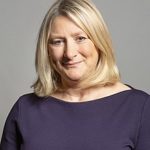
  • Suzanne Webb – 2022 Speech on Cultural Objects Protection from Seizure Bill

    Suzanne Webb – 2022 Speech on Cultural Objects Protection from Seizure Bill

    The speech made by Suzanne Webb, the Conservative MP for Stourbridge, in the House of Commons on 28 January 2022.

    I will try not to make this a political broadcast, Mr Speaker, but stick to the subject matter.

    I rise to support this Bill, which I know will be of great reassurance to museums and galleries in the Black Country and the wider west midlands, particularly because I spent much of my youth and adult life in museums and galleries. They are a joy. That is what I used to do: we did not have the internet or those exciting things that absorb us now, attached to a phone. We used to get out there and see incredible exhibitions. My hon. Friend the Member for Hertford and Stortford (Julie Marson) mentioned the blue badge, and I may look into that myself—it sounds very interesting.

    The coronavirus pandemic underscores why this legislation is needed. Back in March 2020, no one could have foreseen the disruption to international travel that would occur. With nearly all overseas flights suspended, objects on loan to British museums could not be returned to their country of origin. As a result, the artefacts were at risk of being left unprotected by the current 12-month period of protection from seizure. By changing existing legislation, this Bill will help to mitigate those unforeseen disruptions to the timely return of artefacts on loan from lenders abroad.

    However, the Bill is more than a contingency for unforeseen events: it strengthens the partnerships between our museums and international institutions by providing a greater degree of certainty and building trust. Many foreign lenders insist on immunity from seizure when lending artefacts, so the Bill is crucial to ensuring that international owners have the confidence to lend culturally significant objects to British institutions, in the knowledge that they will not be at risk of inadvertently being left unprotected.

    Museums and galleries across the country and in the west midlands stage incredible exhibitions, many of them only made possible by the borrowing of objects from international lenders. These international exhibitions are vital to both enhancing their existing collections, and attracting new audiences. Other hon. Members have stolen my thunder, because I was going to mention Tutankhamun myself. My hon. Friend the Member for East Surrey (Claire Coutinho) mentioned the 2019 exhibition, which I believe marked the 100-year anniversary and was the last visit. Some of us remember the 1972 exhibition, which I remember as a child of the time—my hon. Friend the Member for Hertford and Stortford (Julie Marson) mentioned that, and I think it quite unbelievable that she can remember it. It was absolutely thrilling, the excitement of it all, and there were record crowds of 1.7 million people. I remember the black and white pictures of the queues going round—I think we used the word Egytpomania at the time—and it was so exciting. It was an exhibition of the beautiful painted wood torso of the young king, exquisite domestic objects, and the glint of gold everywhere. I seem to remember that exhibition coming to Birmingham, which is where I was born and bred, but when I did a bit of research I could not find it. Nevertheless, I believe it moved around slightly. Imagine if that incredible exhibition had been blighted by a pandemic.

    The Bill provides a greater degree of certainty, and makes it easier for British museums and galleries to plan their exhibitions. It will help to ensure that the UK continues to be able stage international exhibitions, with the finest artefacts from around the globe. Many such exhibitions are made possible only through the borrowing of objects from international lenders.

    I now want to tell the tale of an artefact of great distinction and notoriety that resided in the midlands: an 8 foot tall, 890 kg fibreglass statue commissioned for display in Birmingham in 1972, as part of the sculpture for public places scheme in partnership with the Arts Council of Great Britain. It was commissioned to make something city-oriented, and the sculptor chose King Kong—I do not know whether my hon. Friend the Member for Dudley North (Marco Longhi) remembers the King Kong that resided in Birmingham. I do not want hon. Members to do a quick Google now, as I will be told off by Mr Speaker, but when they leave the Chamber, they can see the incredible artefact that was in Birmingham and supposed to represent it. It was down to the sculptor’s association with New York City, and he created it for their own petty reasons. It was displayed in the heart of the city for many years—imagine if it was actually seized! It was something of a notoriety, and I loved it as a child growing up. We used to drive round to look at it. Hon. Members will be pleased to hear that King Kong lives on, and is now retired in Penrith.

    I welcome the Bill for non-UK artefacts, because the ability for museums and galleries to stage international exhibitions is vital for the tourism sector in the UK. Tourism is a vital part of the local economy in Stourbridge, and in the wider Borough of Dudley. More than £534 million was spent by visitors to the area over 7 million trips, supporting more than 8,000 jobs. The west midlands is home to plenty of fantastic museums and galleries, such as the Glasshouse Heritage Centre in Stourbridge’s historic glass quarter. That heritage attraction is a real gem in my constituency. It is run by a dedicated team of staff and volunteers, and it hosts a wide array of artefacts that tell the incredible 400-year story of glassmaking in Stourbridge. I know that the Bill will be welcome by institutions such as the Glasshouse Heritage Centre, as the arts sector makes a strong recovery after the pandemic. The Bill will be of great reassurance to museums and galleries in my region, and the wider west midlands. I thank my right hon. Friend the Member for Central Devon (Mel Stride) for introducing the Bill, and long live King Kong.

  • Claire Coutinho – 2022 Speech on Cultural Objects Protection from Seizure Bill

    Claire Coutinho – 2022 Speech on Cultural Objects Protection from Seizure Bill

    The speech made by Claire Coutinho, the Conservative MP for East Surrey, in the House of Commons on 28 January 2022.

    I congratulate my right hon. Friend the Member for Central Devon (Mel Stride) on bringing forward this important Bill. My constituents care passionately about our arts sector, as do I, and I am enormously proud to represent Caterham, which is home to the world-famous East Surrey Museum.

    The pandemic has been extremely hard on our cultural sector, but it has made me and my constituents realise how lucky we are that this country is home to some of the finest museums, galleries and exhibitions in the world. Thanks to the Prime Minister’s world-leading booster programme, our country was spared another lockdown and our cultural organisations were spared having to close their doors once more.

    Some challenges remain, however, which is why I am delighted to support this iconic sector in any way I can, including through this Bill. Many objects have benefited from existing legislative protections, such as the baby mummified mammoth Lyuba, which was borrowed by the Natural History Museum from Russia in 2014; the terracotta warriors loaned from China to the National Museums Liverpool in 2018; and the Tutankhamen treasures loaned to the Saatchi Gallery in 2019.

    Without protection from seizure, the loan of such objects would never have been granted; world-famous exhibitions and galleries may never have come to fruition; and the opportunity of blockbuster success for our museums and cultural sector would have been squandered. Although the risk of seizure in Britain is, of course, very low, legislative protection none the less ensures that our museums and galleries can reassure their lenders and retain their status as some of the most enviable across the globe.

    We have heard about some of the exhibitions this year, such as at the Courtauld Institute of Art in London, which will host several self-portraits of Van Gogh, three of which will be loaned from the Detroit Institute of Arts, the Van Gogh Museum in Amsterdam and the Art Institute of Chicago; the Tate Modern, which will host pieces from Vancouver, Berlin and New York; and the Victoria and Albert Museum, which will host a piece from Princeton University library. That gives a sense of how difficult it can be to weave together the wonderful exhibitions that we can all enjoy so much.

    The prudent three-month extension that we are discussing will further boost Britain’s exhibition sector by increasing the confidence of international owners to lend to British institutions and will make the exhibition planning of our museums and galleries easier. Although the 12-month period of protection has generally provided a sufficient length of time for museum exhibitions to take place and for objects on loan to be returned in line with agreed schedules, on occasion, we can see how that would leave us vulnerable. We have heard a bit about international travel; we all remember the 2010 volcano eruption in Iceland; and we have debated in the House some of the real difficulties that we see in Tonga this year as well.

    Supporting our cultural sector is about not just the arts but our economic strength. Over the years, I have witnessed many attempts by other countries to lure our brightest and best—our top talent—to other areas. It is our rich cultural fabric that acts as a magnet to this country. The museum sector alone also generates £2.64 billion of income and £1.4 billion of economic output to the national economy, which inputs to our £75 billion tourist economy. We know that several countries would almost certainly be unlikely to loan us objects if the protection was not in place.

    As I have said, the risk of seizure in Britain is low, but I wholeheartedly support the Bill to ensure that all our opportunities in museums, galleries and exhibitions remain open. It will reassure those who lend to British institutions, secure our ability to host some of the finest cultural objects across the globe, and retain Britain’s status as a cultural superpower.

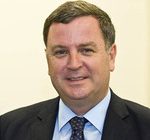
  • Mel Stride – 2022 Speech on Cultural Objects Protection from Seizure Bill

    Mel Stride – 2022 Speech on Cultural Objects Protection from Seizure Bill

    The speech made by Mel Stride, the Conservative MP for Central Devon, in the House of Commons on 28 January 2022.

    I beg to move, That the Bill be now read the Third time.

    This is a short, two-clause Bill that extends the period of protection against court-ordered seizure for cultural objects on loan from abroad. The Bill amends part 6 of the Tribunals, Courts and Enforcement Act 2007, which provides immunity from seizure for cultural objects on loan from abroad in temporary exhibitions in public museums and galleries in the United Kingdom. Under section 134 of the Act, cultural objects that are on loan from abroad to feature in exhibitions held in UK museums and galleries approved under the Act are protected from court-ordered seizure for a period of 12 months from the date when the object enters the United Kingdom.

    The legislation was prompted by events in 2005, when 54 paintings, including works by Picasso, Matisse and Cézanne, were seized by customs officers in Switzerland. The paintings, from the Pushkin State Museum of Fine Arts in Russia, were impounded after they had left the town of Martigny in Switzerland. The Swiss authorities acted on a court order obtained by a Swiss import-export firm, Noga SA, which claimed that the Russian Government owed it several million dollars in unpaid debts relating to an oil-for-food deal signed in the early 1990s and which sought to enforce a Stockholm arbitration award in its favour.

    The impounding of the paintings was just one of several attempts by Noga to recover its purported debt by seizing assets abroad. In 2000, Noga instituted proceedings to seize a Russian sailing ship that was due to take part in a regatta in France; it then sought to freeze the accounts of the Russian embassy in Paris. Both actions were dismissed by court rulings in favour of Russia. In 2001, it tried to appropriate two Russian military jets during the prestigious Le Bourget air show in France; that attempt also failed.

    But it was Noga’s seizure of the Pushkin paintings that sparked the most outrage of all. The director of the State Hermitage Museum in St Petersburg said that

    “works of art are now being used as hostages in trade disputes”.

    Although the seizure order was quickly cancelled by Switzerland’s Federal Council, the Hermitage warned that no Russian museum would be able to send objects on loan to any overseas venue unless it received concrete legal guarantees that its artworks would not be seized during the loan period.

    John Lamont (Berwickshire, Roxburgh and Selkirk) (Con)

    I congratulate my right hon. Friend on his Bill. Does he agree that the relatively minor change in it will give great reassurance to overseas lenders about their capacity and confidence to lend assets to the United Kingdom? In the Scottish Borders, across Scotland and across the UK, all our constituents will now benefit from being able to enjoy those assets, and the lenders will have the comfort of knowing that they are safe here.

    Mel Stride

    My hon. Friend precisely pinpoints the advantage of the Bill, which is very narrowly defined but will provide extra certainty to those who lend artworks to England and Scotland and the museums therein that those artworks will be returned in due course. That comfort will drive further loans in future, which will be to the benefit of the people in this country, our tourism industry and our cultural offering in general.

    The measures in the 2007 Act enable the UK Government, the Governments of Scotland and Wales and the Northern Ireland Executive to give guarantees for such loans in the United Kingdom. Since the Act’s introduction, the Secretary of State for Digital, Culture, Media and Sport has been responsible for approving institutions in England for immunity from seizure, and the devolved Administrations have similar powers for other parts of the United Kingdom. To gain approval under the Act, institutions must demonstrate that their procedures for establishing the provenance and ownership of objects are of a high standard.

    In 2007, it was considered that 12 months was an adequate period to allow objects to arrive in the UK and to be returned following their inclusion in a temporary exhibition. Section 134(4) of the Act therefore provides:

    “The protection continues…for not more than 12 months beginning with the day when the object enters the United Kingdom.”

    Sir Greg Knight (East Yorkshire) (Con)

    I congratulate my right hon. Friend on getting this far with his Bill. Has he received any letters of objection from anyone, anywhere, to what he proposes?

    Mel Stride

    The Bill has widely been received very positively. There have been very positive discussions with the devolved Governments, as I outlined in the debate on amendment 1 and my other amendments. There have been some changes in relation to Wales and Scotland, but the Bill has received support across the House; it went through Committee without Division, and my amendments on Report have been agreed to without Division. It is an important and widely supported set of measures.

    The only exception in which the 12-month period can be extended is where an object suffers damage and repair work is needed. The legislation has been effective over the years and has enabled many exhibitions to be enriched by loans that the public might not otherwise have been able to see. There are now 38 institutions across the United Kingdom that have been approved for immunity from seizure and where objects have benefited from protection. Those 38 institutions are in England and Scotland; there are currently no approved museums in Wales and Northern Ireland.

    Alex Sobel (Leeds North West) (Lab/Co-op)

    For many of our regional museums, galleries and historic houses, temporary exhibitions are made up with a relatively small number of items from abroad. Does the right hon. Gentleman think we will expand on that number of 38 institutions, to allow many more of our regional museums and galleries to have immunity from seizure?

    Mel Stride

    I thank the hon. Gentleman for his intervention. My understanding is that the application process to become an approved institution or museum is relatively straightforward. It is rigorous in the sense that, clearly, a number of important aspects have to be met. I would defer to the Minister, who might tell us a little more in his concluding remarks about the guidance that is appropriate and how it operates in those circumstances.

    As I was saying, my Bill was drafted to allow the period of protection to be extended beyond 12 months, at the discretion of the Secretary of State for Digital, Culture, Media and Sport for institutions in England or the relevant approving authority in the devolved nations. That was to ensure that the protection remains fit for purpose and can adequately respond to unforeseen circumstances, and to provide increased confidence in the UK system for those who generously share their cultural objects with UK audiences. The new power to extend would apply following an application from an approved museum or gallery, and extensions would be granted for a further three months initially, with a possibility of a further extension if that is considered necessary. The circumstances in which an extension may be considered will be set out in guidance.

    Anthony Browne (South Cambridgeshire) (Con)

    I commend my right hon. Friend for getting the Bill before the House. It is clearly an important measure and it is important to support the tourism industry, which generates so many jobs. In what sort of circumstances might an institution want to apply for the extension? Have those circumstances happened in the past or is this just a precaution to deal with situations that might arise in the future?

    Mel Stride

    I will come on to these points imminently, but let me immediately address the question my hon. Friend has posed. The circumstances have not arisen in the past in the UK, and the 12-month period has always been adequate. However, things such as the covid problems and the grounding of air flights—a volcanic eruption happened in Iceland some years ago and grounded flights—are causes for concern. The most important thing is that although we have not had a situation where we would have needed an extension in the past, there is no doubt that this comfort is required for those lenders who generously lend their cultural artefacts to our museums and galleries.

    The devolved Administrations have all shown strong support for the purpose of the Bill. However , the Department for Communities in Northern Ireland has decided at this time that it is unable to prioritise a legislative consent motion in the Northern Ireland Assembly and that Northern Ireland must, regrettably, be removed from the Bill. That is unfortunate, although in practical terms it has little impact at present, as there are currently no approved museums in Northern Ireland, as I have said. Furthermore, following discussions between the UK and Welsh Governments it has not been possible to reach agreement on how the concurrent power to extend the 12-month period of protection will apply across the two nations, the Welsh Government have declined to table a legislative consent motion for the Bill as it stands. Therefore, the Bill has been amended to remove its application in Wales. As with Northern Ireland, there are currently no Welsh institutions approved for immunity from seizure, so in practical terms that has no direct impact at the moment. I am informed that a legislative consent motion has been successfully lodged in the Scottish Parliament so that the measures in the Bill can and will have effect in Scotland. Given the decisions taken in relation to Wales and Northern Ireland, the Bill has been amended so that the power in proposed new subsection (4A) to extend the protection period for three months applies only in relation to objects that are either in the UK for the purpose of a temporary exhibition in England or Scotland, or in England or Scotland for one

    “of the purposes mentioned in subsection 7(b) to (e)”.

    I know all hon. Members will be very familiar with them. That will limit the effect of any extension of the maximum protection period to England and Scotland. I emphasise that the 12-month protection period under the 2007 Act will continue to apply across the United Kingdom as it currently does.

    Our museums have shown, particularly during the anxious times of the past two years, that they are incredibly good at managing unforeseen events. Where it has been possible, exhibitions have gone ahead and works returned to lenders on time. However, that has not always been the case and the restrictions and difficulties with international travel that we have all faced mean it has not always been possible to return loaned items as rapidly as desired once exhibitions have concluded.

    As restrictions in the UK continue to be eased, museums will be able to plan with greater confidence. A number of exciting exhibitions are already planned for this year, including the Raphael exhibition at the National Gallery, Van Gogh’s self-portraits at the Courtauld Gallery and “Surrealism Beyond Borders” at Tate Modern. We can expect all those exhibitions to be popular with the public.

    We may feel safer in going about our daily lives, but we should not forget mother nature’s ability to surprise us. On Second Reading, I raised the disruption to air travel caused by the Icelandic volcano that erupted in 2010; the eruption earlier this month of the Tongan volcano, which threw out a huge cloud of volcanic ash, is further evidence that we can be taken unawares and forced to change our plans, sometimes at very short notice.

    Anthony Browne

    I thank my right hon. Friend for his detailed exposition of the legislation, which I strongly support. He mentioned in his introduction the various circumstances in which it is deemed necessary for there to be protection against action taken overseas—in Switzerland, France and so on; is he aware of any UK cases of the court-ordered seizure of artworks that have come here for exhibitions? In what sort of circumstances might that happen in future? Would it be when law enforcement authorities are worried about, for example, the breaking of anti-money-laundering rules, which we have talked about? Or would it be families trying to get back goods that they think belong to them rather than to foreign galleries?

    Mel Stride

    My hon. Friend is, of course, very familiar with the issue of economic crime as he serves with me on the Treasury Committee and we are currently looking into these very matters in great detail. I believe there probably have been instances in which there has been a need within our country’s borders to seize objects and cultural artefacts. I cannot give my hon. Friend specific examples, but there will have been such seizures and the capacity for them will remain—for example, under proceeds of crime legislation if artefacts are used to conceal drugs or similar or for something associated with money laundering. Seizures could still occur under certain circumstances, but those circumstances are narrowly defined and will not be changed in any way by this legislation.

    I hope that right hon. and hon. Members will agree that the Bill is an important and worthy measure that will give our museums and galleries, and those who lend to them, greater comfort in knowing that the protection afforded under the 2007 Act can be extended if travel plans are disrupted and it is not possible to return loaned objects within the current 12-month period.

    Sir Greg Knight

    I thank my right hon. Friend for giving way again; he is being generous. I notice that the power to extend by three months can be repeated again and again—there is no limit on how many times the relevant authority can extend the period for three months. Why has my right hon. Friend phrased the legislation in that way? Would it not have been better to give the relevant authority the power to extend for a longer period?

    Mel Stride

    I believe the three-month period came out of the consultation process. The Department for Digital, Culture, Media and Sport has been conducting an informal consultation with museums and the rest of the sector and it was felt that, in the context of the existing 12-month protection, three months was a reasonable and proportionate further extension. It is relatively straightforward for the Secretary of State, or for Scottish Ministers when the question relates to Scotland, to bring forward further extensions—it is not a lengthy or onerous process—so three months seemed a reasonable period of time. We have to put forward some kind of period for extension because that has to be addressed.

    The Bill will ensure that our national museums and galleries can continue to host major exhibitions, which provide so much enjoyment for the many millions of people who visit them every year and which are vital as we continue to rebuild our economy. I commend the Bill to the House.


  • Rob Roberts – 2022 Speech on Greenfield Railway Station

    Rob Roberts – 2022 Speech on Greenfield Railway Station

    The speech made by Rob Roberts, the Independent MP for Delyn, in the House of Commons on 28 January 2022.

    It is my pleasure to be able to bring this week’s parliamentary business to a close with today’s Adjournment debate. I thought I would break with convention by leaving aside beer, cake and police reports, and focus on an issue that actually impacts my constituents day to day. Who knows, maybe it will catch on—fingers crossed; we live in hope. Rather than springing it on the Minister at the end, I give him advance warning that I shall ask for a constituency visit, as well as funding to move the project forward. That will give him something to think on while I dilate on the issue.

    Barely a day goes by when I do not hear the term “levelling up”, which has been the central plank of the Government’s communication efforts over the last couple of years, since the general election. Although “levelling up” is still something of a nebulous phrase that has not been particularly clearly defined, it seems relatively clear that it does represent a fundamental shift towards assisting regions and communities that have been left behind. There are, of course, many ways in which that can be achieved, but in the case of my Delyn constituency, I have long maintained that the thing we need most of all is excellent transport links.

    Delyn is one of those constituency names that has people scratching their heads, wondering “Where’s that?” Some residents do not even realise that their particular part of Flintshire in north-east Wales has that name. To our east, we have Deeside and the light industry of its industrial parks, as well as a major manufacturer in Airbus. Even further east is Chester, with connections to Liverpool and Manchester. Those areas offer significant job opportunities. To the west, we have the stunning north Wales coast, which brings not only a joyful experience, but a further opportunity for jobs in the thriving north Wales tourism sector, despite the Welsh Labour Government’s best efforts to cripple tourism and hospitality over the past 12 months.

    My constituency includes a 15-mile stretch of that coastline, from Oakenholt in the east to Gronant in the west, and along that coastal path we find some of the most deprived areas of Delyn. Broadly in the middle of that stretch we find the town of Holywell and its adjoining village of Greenfield. Much of Holywell and Greenfield is in the top 20% of the most deprived areas of Wales, with some parts in the top 10%. With those pockets of deprivation, comes the obvious difficulty of not being able to afford the rising cost of running a vehicle to get to work, even if suitable work can be found locally. Addressing the fundamental causes of that deprivation is key, the most pressing of which is clearly improving the transport network.

    As part of the 2019 general election campaign, the vast majority of the doors on which I knocked in Holywell and Greenfield were consistent and strident in their request that a new train station be established to serve their region. Earlier this week, I asked constituents for their feedback on social media and I have picked out a small selection, but in truth they are all extremely similar. Pam Lloyd said:

    “With the bus service from Greenfield to Chester or Rhyl taking forever to get there—one hour 20 minutes on a good day—a train to the same destinations would take less than 30 mins and be more reliable and comfortable.”

    Margie Roberts said:

    “The roads are so busy, it’s only common sense to have an alternative to using the car; and the bus service is far too slow.”

    Probably the most obvious call for help came from Natalie Edwards, who said:

    “As I only have access to a car at weekends, I am reliant on public transport if I need to go anywhere other than my home town during the week. The bus journeys – even a short hop to the coast – take far too long to make them comfortable for people like me with chronic illness and hidden disabilities. Subsequently, if I can’t walk to where I need to go, which isn’t far as I have arthritis in my spine, I am defeated before I even start. This limits job opportunities as I live in a small town.”

    There were so many more testimonies we would need a lot more than a half hour Adjournment debate to go through everyone’s stories and thoughts on the matter, but suffice to say I received dozens of comments over the past few days since I told people that this debate was happening. Every single one of them was positive and supportive of the project.

    There was a station on the North Wales coast line called Holywell Junction, but it was closed as part of the Beeching reforms in 1966. Re-establishing the station, along with improved bus services from Greenfield up into the main Holywell public transport hub, would be absolutely transformative for the town. It would enable people to get to an increased number of better paid job opportunities. Studies have shown that only 8% of available jobs in the region lie within half an hour’s public transport travel time of Holywell, but more than 160,000 vacancies come into view within a 90-minute journey. Sadly, a 90-minute journey from Holywell on the bus would take you only as far as Chester in one direction and Llandudno in the other. The equivalent journey on the train would take a quarter of the time. Anything that can be done to cut public transport journey times should make those jobs much more accessible in an affordable way and should be an absolute priority to help the residents of these deprived areas to get themselves on to a more solid footing in life.

    It would not just get people out to jobs, however. Holywell in and of itself has some fantastic reasons to visit: the town name—holy well—is something of a giveaway, as it is the location of St Winifride’s Well, which is the oldest continually visited pilgrimage site in Britain; and the beautiful Greenfield valley. Both are well worth the trip. A station would bring more tourism into the town, which would further improve the economic outlook. Indeed, the county council’s local development plan identified the area of Holywell as a tourist hub for the county. In addition to the well site and Greenfield valley, both of which see around 40,000 visitors per year, hundreds of thousands of people use the Flintshire section of the Wales coastal path, which runs adjacent to the tracks.

    For businesses, enabling fast connections to the Deeside industrial parks and beyond would mean companies currently based outside of the region would have the opportunity to expand into local industrial zones in Greenfield, Bagillt and Mostyn. The train station would work in conjunction with the upcoming levelling-up fund bid for the constituency, which is focused on job creation and regeneration of those zones and will in turn make the area much more attractive for new and existing companies to grow into.

    Another of the interesting demographic situations in my constituency is that we have a much higher than average over-65 population. The average UK constituency has 18.6% of residents over 65; Delyn has 23.5%. While five percentage points might not sound like a lot, when we are talking about 70,000 people, that is an extra 3,500 over-65s compared with the average constituency and, as we are all aware, that demographic is more likely to rely on public transport to get around.

    We have a large number of children at one end and a large number of people above retirement age at the other, but in the middle we have a drop in numbers and have a much lower percentage than the average constituency of people in what others have called the “economically active” years. Making it easier for people to stay in the area by ensuring that work opportunities are more accessible in the wider region would do a huge amount to stop the working-age exodus and ensure that those skilled workers that we have in abundance in Delyn are able to get to jobs further afield without having to move out of the area.

    Getting the bus from Holywell to Chester currently takes around 90 minutes—when they are on time, which is rare. Bearing in mind that the journey is just 17 miles, that is an average speed of 11 mph. Getting a train from Holywell to Chester would take around 20 minutes, a quarter of the time. Older constituents would be able to take advantage of massively reduced travel times in the other direction, up to the coast. A significant number of studies have shown how important outdoor coastal and countryside areas can be in maintaining our physical and mental wellbeing, particularly as we get older.

    Other developments in the region would be complemented by a new Greenfield station, making the entire network more viable and user-friendly. They include the upcoming and long-promised development of Chester station, changes on the Wrexham to Bidston line, and an integrated transport plan that will hopefully come to fruition in the north Wales metro scheme, although with the latter it appears that Welsh Government are focusing all their resources on the south Wales metro rather than developing the north. I am keen to work with the Welsh Government to develop that project, which could really benefit the people of Delyn, but sadly so far there has been no engagement and no significant funding allocated to it.

    In terms of the environmental issues, currently 80% of workers in Delyn use private cars to get to work, compared with just 63% nationally. Only 0.8% of Delyn’s workers use the train for commuting, compared with 5.2% nationally. Increasing the proportion of people using trains in that way, as well as for their leisure activities, would make a huge difference to the carbon footprint of Holywell and north Wales generally, particularly when combined with the recommendations in Sir Peter Hendy’s Union connectivity review to electrify the north Wales coast line. I hope the Government will move forward with that recommendation as soon as possible, as it will go some way towards helping to achieve the target of net zero by 2030.

    At this point I pay tribute to some of the members of Holywell Town Council, particularly Councillor Barry Scragg and Community Engagement Officer Martin Fearnley, who have been the main drivers of this project for the past five years or so. They have done some excellent work, including a local community questionnaire that elicited more than 700 responses from residents and businesses. The town council’s working group on the station project has produced an extremely comprehensive report, a copy of which I will happily provide to the Minister, which succinctly lays out the case for a new station. Its figures show that the catchment area for a station in Greenfield would be around 20,000 to 25,000 people, significantly more than existing stations along the line in Prestatyn, Flint, Penmaenmawr and Abergele, all of which are already shown to be sustainable.

    The town council report has since been backed up by a formal transport study from planning specialists Mott MacDonald, commissioned by Flintshire County Council. Its report clearly states:

    “Combined with incremental rail revenue, the total cost of the scheme is negative with revenue more than offsetting investment and operating costs”.

    That is without taking into account all of the wider socioeconomic benefits I have already mentioned. The study recommends moving to a strategic outline business case and the initial steps of the processes announced last year for Project Speed, as speed is certainly of the essence in providing vital transport links to this left-behind town.

    There is no reason for the work to take years. Much of the old station infrastructure is still there, and the access is good. Land for car parking is readily available and the tracks are obviously still in place—and in use. Although transport is in many ways a devolved competence for the Welsh Government to deal with, transport infrastructure, under which this type of project would come, is a reserved matter for the UK Government.

    I will close with a request to the Minister that is twofold and, hopefully, simple to deliver. First, will he find the time to join me on a visit to Holywell to look at the site and hear about the plans from town councillors and local residents? Secondly, will he commit to providing the funding necessary for the development of a strategic business case and the follow-on initial stages of that process to confirm what the feasibility study has already been very clear about? The need for a station to serve Holywell and Greenfield is vital, would be transformative for some of the most deprived parts of my constituency and would truly facilitate the levelling up of these communities. Importantly, it would also confirm to the people of Delyn that, despite the Welsh Government overseeing many aspects of it, the UK Government have not forgotten them or abandoned them and are committed to their success and prosperity as much as that of any other region of the United Kingdom.

  • Michelle Donelan – 2022 Statement on Student Loan Repayment Thresholds

    Michelle Donelan – 2022 Statement on Student Loan Repayment Thresholds

    The statement made by Michelle Donelan, the Minister for Higher and Further Education, in the House of Commons on 28 January 2022.

    I am announcing details of the repayment threshold and interest rate thresholds that will apply to post-2012 (plan 2) student loans, and the repayment threshold that will apply to postgraduate (plan 3) student loans, for financial year 2022-23.

    Plan 2 student loan repayment threshold

    I can confirm today that I intend to bring forward regulations that will keep the repayment threshold for plan 2 student loans—the income level above which post-2012 student loan borrowers are required to make repayments—at its current level for the financial year 2022-23. The threshold will be maintained at its financial year 2021-22 level of £27,295 per year, £2,274 a month, or £524 a week. The post-study interest rate thresholds that apply to plan 2 loans will also be kept at their current levels in accord. For financial year 2022-23, the lower interest rate threshold will remain at £27,295—to align with the repayment threshold—and the upper interest rate threshold will remain at £49,130.

    It is now more crucial than ever that higher education is underpinned by just and sustainable finance and funding arrangements, and that the system provides value for money for all of society at a time of rising costs. This Government have already confirmed that we will freeze maximum tuition fee caps again for the 2022-23 academic year, the fifth year in succession that we have held fee caps at current levels.

    The ongoing fee freeze is reducing the burden of debt on students and is helping to make higher education more affordable for them. However, the overall cost to taxpayers of the system is rising. Since 2018, the repayment threshold for plan 2 student loans has increased each April in line with changes in average earnings. If we do not keep the threshold at its current level, it would rise by a further 4.6% in April 2022.

    Maintaining the repayment threshold at its current level, alongside the ongoing freeze in fees, will help to ensure the sustainability of the student loan system, while keeping higher education open to everyone who has the ability and the ambition to benefit from it, including the most disadvantaged.

    We will also shortly set out further plans for addressing the student finance recommendations made by the independent panel that reported to the review of post-18 education and funding.

    Postgraduate (plan 3) student loan repayment threshold

    I can also confirm today that the repayment threshold for postgraduate student loans will remain at its current level of £21,000 per year, £1,750 a month or £404 a week for financial year 2022-23.

    Postgraduate loan outlay is forecast to increase in coming years, and 30% of borrowers holding a master’s loan (academic year 2020-21 entrants) are not expected to repay their loans in full. We must ensure that postgraduate loans remain sustainable and that is why we are also retaining the current repayment threshold for postgraduate loans.

  • Andrew Mitchell – 2022 Speech on Holocaust Memorial Day

    Andrew Mitchell – 2022 Speech on Holocaust Memorial Day

    The speech made by Andrew Mitchell, the Conservative MP for Sutton Coldfield, in the House of Commons on 27 January 2022.

    It is a great pleasure to follow the hon. Member for Leeds North West (Alex Sobel), who shared with the House such powerful and important emotional experiences. We respect him greatly for having had the courage to do that today.

    I draw the House’s attention to my interests, as set out in the register, and congratulate my right hon. Friend the Member for Newark (Robert Jenrick) on launching this important debate for the House of Commons and the country so eloquently today. I echo the comments he made about our very good friend, the right hon. Member for Barking (Dame Margaret Hodge), who sadly cannot be with us today but with whom I have worked extremely closely for many years on issues of economic crime and dirty money. Any cause that she supports and to which she brings her formidable powers is one worthy of the House’s greatest attention.

    Every year, we convene in this Chamber and in venues around the country to proclaim, “Never again”—never again will we stay silent in the face of hatred, never again will we stand by as people are murdered because of who they are, never again will a holocaust be allowed to happen. Yet, around the world, these things are happening again and again. My right hon. and gallant Friend the Member for Beckenham (Bob Stewart), with very direct experience, once again impressed the House hugely with his knowledge and understanding of these things, but the words of his mother—that we have a duty in our generation, a duty that cannot be shirked—were particularly powerful.

    We have shamefully borne witness to genocides in Bosnia. I have stood among the gravestones at Srebrenica, not many hundreds of miles from here, in Europe, marvelling at what took place there. I have stood in Darfur and heard testimony and witness, particularly from women, about the brutality of what George Bush, the President of the United States, described as a genocide. We have seen these things in Burma too, and in Rwanda, where in 1994 nearly 1 million people, predominantly Tutsis, were murdered by their Hutu neighbours over 90 days.

    I would like to focus my comments on Rwanda and the genocide there because the UK now has a connection to it, although it is not widely known. Once the killing stopped, those allegedly responsible for these appalling events fled far and wide, some to neighbouring countries, others to Europe, North America and Canada. I regret to say that, in the UK today, five people suspected of taking part in the genocide are living freely among us.

    Over the years, many countries, such as Sweden and Canada, which initially harboured the suspects, went on to extradite them to Rwanda to face trial in the gacaca courts. Other countries, notably Germany, prosecuted the suspects in their own domestic courts. Britain has done neither, even though, extraordinarily, the arrest warrants were issued as long ago as 2006. In 2015 and 2017, a British district judge and our own High Court ruled that, even though the evidence was compelling, none of the suspects could be sent back to Rwanda, because such action could breach their human rights. While I did not agree with that assessment, given that Rwanda had long abolished the death penalty and constructed a justice system that was considered progressive, I had faith that Britain would none the less deliver justice by placing the suspects on trial here. This country has comprehensive legislation that allows for the prosecution of suspects accused of war crimes, irrespective of their nationality or the countries in which the crimes took place. With no statute of limitations, there is no legitimate reason why justice should not be expedited. I was a Member of this House when that legislation was passed.

    Bob Stewart

    I thank my right hon. and very good Friend for making that point. I have given evidence in four war crimes trials in the International Criminal Tribunal for the Former Yugoslavia. I also formed an organisation in 2000 to chase war criminals—it did not last long, but we tried. May I entirely endorse the last comments my right hon. Friend made, about us in this country chasing war criminals until they die?

    Mr Mitchell

    I am very grateful to my right hon. Friend for what he has said.

    As to the circumstances I described, we are, alas, still waiting. Last March, a group of senior Members of Parliament and peers, including no fewer than three former distinguished Law Officers, decided it was time to act. Firm in the belief that the UK should be no safe haven for war criminals, we set up the all-party parliamentary group on war crimes, with the sole purpose of seeing what could be done to accelerate the investigations and legal proceedings. I have the honour of co-chairing this group with Lord Jon Mendelsohn, former secretary of the original war crimes group, which was instrumental in passing the legislation to which I referred. That legislation is available, and is relevant to the Rwanda case I mentioned. In the last 10 days, we have sent a letter to the Home Secretary, and copied it to the Director of Public Prosecutions, the Mayor of London, the Attorney General and the Lord Chancellor, because we want a specific, proper response, with dates and details of the legal process that must now take place in respect of the people concerned.

    The job of the new war crimes group is not to presuppose the guilt or innocence of the suspects. We simply want to ensure that due process is followed, and that justice, already excessively long delayed, is not denied. After all, it would be wrong to have these serious allegations hanging over the five suspects for 16 years if they turn out to be untrue. The apparent inertia—the lack of grip, concern or urgency—shames us all.

    I would like to say that the APPG has made progress in getting answers to the questions that we have posed to the investigating authorities, but alas, the answer is a flat no. One of the problems that we have identified is that the UK’s former dedicated war crimes unit, set up in the 1990s to investigate suspected Nazi criminals, no longer exists. In its absence, there is a sub-group operating under the auspices of SO15, the Met police’s counter-terrorism command. That group has neither the budget nor the manpower to bring the matter to a conclusion; and aside from that, terrorism and war crimes are two quite separate things, each requiring its own specialised skillset.

    Germany’s war crimes unit is able to draw on the full panoply of state support. Only a few weeks ago, we heard that a Syrian war criminal was tried and convicted in a German court under the principle of universal jurisdiction. That arrest took place only in 2019, yet Britain is struggling to complete a process that started 16 years ago. The main problem is that we simply do not have the resolve or the political will demonstrated by other countries to ensure the availability of necessary resources. Denmark does; the Netherlands do; and clearly Germany does. Why are we so far behind?

    Britain has the rule of law and accountability—values that we should cherish, uphold and promote at all times. The situation is inexcusable. We must demonstrate the same sense of resolve and urgency when it comes to Rwanda as we rightly did with regard to suspected Nazi war criminals. Failure to do so would send the very dangerous and damaging message that the UK could become a refuge for war criminals. We may not always have the power to prevent atrocities, but if we truly care about the victims of genocide, the least we can do is offer the survivors justice. The souls of those murdered in the Rwandan genocide cry out for justice, but from Britain they hear only a deafening silence.