Tag: 2022

  • Lindsay Hoyle – 2022 Statement on Comments Made by Suzanne Webb

    Lindsay Hoyle – 2022 Statement on Comments Made by Suzanne Webb

    The statement made by Lindsay Hoyle, the Speaker of the House of Commons, in the House on 31 January 2022 after Suzanne Webb suggested the Opposition were prolonging the debate.

    Just a moment. In fairness, the Prime Minister asked to make the statement. I am not going to attack the Prime Minister for making the statement, and I certainly would not expect it from his own side.

  • Caroline Lucas – 2022 Speech on the Sue Gray Report

    Caroline Lucas – 2022 Speech on the Sue Gray Report

    The speech made by Caroline Lucas, the Green Party MP for Brighton Pavilion, in the House of Commons on 31 January 2022.

    The shocking incompetence of the Met police has meant that we have a report that has been gutted, but frankly, we did not need Sue Gray to tell us about the level of dishonour and deception that has infected not only Downing Street but so many Tory Members. It has been excruciating to watch so many Tory MPs and Ministers willing to defend the indefensible and calculating what is in their own party political interests rather than what is right for our country, complicit in the same decaying system where the pursuit of power trumps integrity. The Prime Minister is certainly a bad apple, but the whole tree is rotten and the whole country wants reform. Could we not make a start with a major overhaul of the ministerial code, given that its founding assumption—that it could be policed by the Prime Minister of the day, because they would be a person of honesty and integrity—has been so widely, comprehensively and utterly discredited?

  • Keir Starmer – 2022 Speech on the Sue Gray Report

    Keir Starmer – 2022 Speech on the Sue Gray Report

    The speech made by Keir Starmer, the Leader of the Opposition, in the House of Commons on 31 January 2022.

    I would like to thank Sue Gray for the diligence and professionalism with which she has carried out her work. It is no fault of hers that she has only been able to produce an update today, not the full report.

    The Prime Minister repeatedly assured the House that the guidance was followed and the rules were followed. But we now know that 12 cases have reached the threshold of criminal investigation, which I remind the House means that there is evidence of serious and flagrant breaches of lockdown, including the party on 20 May 2020, which we know the Prime Minister attended, and the party on 13 November 2020 in the Prime Minister’s flat. There can be no doubt that the Prime Minister himself is now subject to criminal investigation.

    The Prime Minister must keep his promise to publish Sue Gray’s report in full when it is available. But it is already clear that the report discloses the most damning conclusion possible. Over the last two years, the British public have been asked to make the most heart-wrenching sacrifices—a collective trauma endured by all, enjoyed by none. Funerals have been missed, dying relatives have been unvisited. Every family has been marred by what we have been through. And revelations about the Prime Minister’s behaviour have forced us all to rethink and relive those darkest moments. Many have been overcome by rage, by grief and even by guilt. Guilt that because they stuck to the law, they did not see their parents one last time. Guilt that because they did not bend the rules, their children went months without seeing friends. Guilt that because they did as they were asked, they did not go and visit lonely relatives.

    But people should not feel guilty. They should feel pride in themselves and their country, because by abiding by those rules they have saved the lives of people they will probably never meet. They have shown the deep public spirit and the love and respect for others that has always characterised this nation at its best.

    Our national story about covid is one of a people who stood up when they were tested, but that will be forever tainted by the behaviour of this Conservative Prime Minister. By routinely breaking the rules he set, the Prime Minister took us all for fools. He held people’s sacrifice in contempt. He showed himself unfit for office.

    The Prime Minister’s desperate denials since he was exposed have only made matters worse. Rather than come clean, every step of the way, he has insulted the public’s intelligence. Now he has finally fallen back on his usual excuse: it is everybody’s fault but his. They go; he stays. Even now, he is hiding behind a police investigation into criminality in his home and his office.

    The Prime Minister gleefully treats what should be a mark of shame as a welcome shield, but the British public are not fools. They never believed a word of it. They think that the Prime Minister should do the decent thing and resign. Of course, he will not, because he is a man without shame. Just as he has done throughout the life, he has damaged everyone and everything around him along the way. His colleagues have spent weeks defending the indefensible, touring the TV studios, parroting his absurd denials, degrading themselves and their offices, fraying the bond of trust between the Government—[Interruption.]

    Mr Speaker

    Order. The hon. Member for South Ribble (Katherine Fletcher) is my neighbour. I expect better from my neighbours.

    Keir Starmer

    They have spent weeks fraying the bond of trust between the Government and the public, eroding our democracy and the rule of law.

    Margaret Thatcher once said:

    “The first duty of Government is to uphold the law. If it tries to bob and weave and duck around that duty when its inconvenient…then so will the governed”.

    To govern this country is an honour, not a birthright. It is an act of service to the British people, not the keys to a court to parade to friends. It requires honesty, integrity and moral authority. I cannot tell hon. Members how many times people have said to me that this Prime Minister’s lack of integrity is somehow “priced in”—that his behaviour and character do not matter. I have never accepted that and I never will.

    Whatever people’s politics, whatever party they vote for, honesty and decency matter. Our great democracy depends on them. Cherishing and nurturing British democracy is what it means to be patriotic. There are Conservative Members who know that, and they know that the Prime Minister is incapable of it. The question that they must now ask themselves is what they are going to do about it.

    Conservative Members can heap their reputation, the reputation of their party, and the reputation of this country on the bonfire that is the Prime Minister’s leadership, or they can spare the country a Prime Minister totally unworthy of his responsibilities. It is their duty to do so. They know better than anyone how unsuitable he is for high office. Many of them knew in their hearts that we would inevitably come to this one day and they know that, as night follows day, continuing his leadership will mean further misconduct, cover-up and deceit. Only they can end this farce. The eyes of the country are upon them. They will be judged by the decisions they take now.

  • Boris Johnson – 2022 Statement on the Sue Gray Report

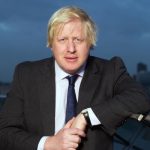
    Boris Johnson – 2022 Statement on the Sue Gray Report

    The statement made by Boris Johnson, the Prime Minister, in the House of Commons on 31 January 2022.

    With permission, Mr Speaker, I would like to make a statement. First, I express my deepest gratitude to Sue Gray and all the people who have contributed to this report, which I have placed in the Library of this House and which the Government have published in full today for everyone to read.

    I will address the report’s findings in this statement, but first I want to say sorry. I am sorry for the things we simply did not get right and sorry for the way this matter has been handled. It is no use saying that this or that was within the rules, and it is no use saying that people were working hard—this pandemic was hard for everyone. We asked people across this country to make the most extraordinary sacrifices—not to meet loved ones, not to visit relatives before they died—and I understand the anger that people feel.

    But it is not enough to say sorry. This is a moment when we must look at ourselves in the mirror, and we must learn. While the Metropolitan police must yet complete their investigation, and that means there are no details of specific events in Sue Gray’s report, I of course accept Sue Gray’s general findings in full, and above all her recommendation that we must learn from these events and act now.

    With respect to the events under police investigation, she says:

    “No conclusions should be drawn, or inferences made from this other than it is now for the police to consider the relevant material in relation to those incidents.”

    More broadly, she finds:

    “There is significant learning to be drawn from these events which must be addressed immediately across Government. This does not need to wait for the police investigations to be concluded.”

    That is why we are making changes now to the way Downing Street and the Cabinet Office run, so that we can get on with the job—the job that I was elected to do, and the job that this Government were elected to do.

    First, it is time to sort out what Sue Gray rightly calls the “fragmented and complicated” leadership structures of Downing Street, which she says

    “have not evolved sufficiently to meet the demands”

    of the expansion of No. 10. We will do that, including by creating an Office of the Prime Minister, with a permanent secretary to lead No. 10.

    Secondly, it is clear from Sue Gray’s report that it is time not just to review the civil service and special adviser codes of conduct, wherever necessary, to ensure that they take account of Sue Gray’s recommendations, but to make sure that those codes are properly enforced. Thirdly, I will be saying more in the coming days about the steps we will take to improve the No. 10 operation and the work of the Cabinet Office, to strengthen Cabinet Government, and to improve the vital connection between No. 10 and Parliament.

    Mr Speaker, I get it and I will fix it. I want to say to say to the people of this country: I know what the issue is. [Hon. Members: “No!”] Yes. [Hon. Members: “You!”] It is whether this Government can be trusted to deliver. And I say yes, we can be trusted—yes, we can be trusted to deliver. We said that we would get Brexit done, and we did. We are setting up freeports around the whole United Kingdom. I have been to one of them today that is creating tens of thousands of new jobs. We said we would get this country through covid, and we did. We delivered the fastest vaccine roll-out in Europe and the fastest booster programme of any major economy, so that we have been able to restore people’s freedoms faster than any comparable economy. At the same time, we have been cutting crime by 14%, building 40 new hospitals and rolling out gigabit broadband, and delivering all the promises of our 2019 agenda, so that we have the fastest economic growth of the G7. We have shown that we have done things that people thought were impossible, and that we can deliver for the British people. [Interruption.] I remind those on the Opposition Benches that the reason we are coming out of covid so fast is partly because we doubled the speed of the booster roll-out.

    I can tell the House and this country that we are going to bring the same energy and commitment to getting on with the job, to delivering for the British people, and to our mission to unite and level up across this country. I commend this statement to the House.

  • Liz Truss – 2022 Article about Threat from Russia

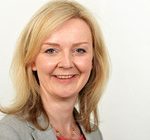
    Liz Truss – 2022 Article about Threat from Russia

    The article written by Liz Truss, the Foreign Secretary, on 29 January 2022 for the Daily Telegraph and republished by the Government.

    Moscow’s campaign against Ukraine and fellow democracies is undermining the very foundation of European security. And so, it is vital we face down the clear and present threat posed by Russia.

    The Prime Minister will spearhead diplomatic efforts by talking to President Putin and travelling to the region in the coming days. Tomorrow, the UK will join talks at the UN Security Council to apply pressure on Russia to pursue the path of diplomacy. I will be flying out to Moscow within the next fortnight.

    The stakes are high. Over 100,000 troops are now massed on Ukraine’s border. Russia has attacked Ukraine before, illegally annexing Crimea in 2014 and bringing war to the Donbas region, so the danger is real.

    This malign activity goes beyond the borders of Ukraine. Russia is using its influence to fan the flames of discord in the Western Balkans. Russian forces are continuing to arrive in Belarus for a so-called “joint exercise” close to NATO’s borders. In recent days, Russia has intensified its brinkmanship by planning naval exercises off the Irish coast and increasing its naval presence in the Baltic Sea, prompting Sweden to send troops to reinforce one of its islands.

    That is why we are reinforcing our diplomatic efforts with deterrence. We are offering NATO additional fast jets, warships and military specialists. We are doubling troop numbers to Estonia and have the HMS Prince of Wales on standby to move should tensions rise further. We are NATO’s biggest spender in Europe on defence and prepared to deploy our forces in line with that.

    The United Kingdom is proud to be stepping up to take the lead in defence of freedom and democracy through credible deterrence and diplomacy. Even at the height of the Cold War, we were able to agree on the principles of a more secure Europe. Over more than four decades, we made huge advances towards a freer and safer world through agreements ranging from the 1975 Helsinki Final Act to the 1995 Dayton Agreement and the 2014 Minsk Protocol.

    Yet Russia is jeopardising this hard-won progress with its reckless behaviour and unjustified aggression. It could not be more important for Russia to engage diplomatically rather than on the battlefield. That is why we have said many times, alongside our allies in NATO and through the G7 Presidency, that any further Russian invasion of Ukraine would be a massive strategic mistake with severe costs, including an unprecedented package of coordinated sanctions with our partners.

    Our quarrel is not with the Russian people, but the policies pursued by their leaders. They repress freedom and democracy, seeking to silence courageous organisations like Andrei Sakharov’s ‘Memorial’, which has fought for decades for human rights. And now they risk landing ordinary Russians in an intractable quagmire to rival the Soviet-Afghan war and Chechnya.

    There is a way out of this situation. It lies in respecting our past achievements and sticking to our longstanding commitments to respect each other’s borders. That can only start with Russia de-escalating, ending its aggressive campaign and engaging in meaningful talks. We are serious about improving security for all. In the last week, the US and NATO have presented substantive proposals on areas for discussion that would increase transparency and reduce risk. Together, we are urging Russia to sit down for proper negotiations, based on the key principles of freedom, democracy and the rule of law. The alternative can only end in tragedy: with an incursion leading inevitably to huge suffering and severe economic consequences through sanctions.

    The ball is in Russia’s court. I will continue to make the case with our allies and directly to Moscow for a diplomatic solution. But I am also ready to take the necessary steps to spell out the consequences of continued belligerence.

    Ukraine has the right to determine its own future. However, President Putin made clear in his manifesto last summer – “On the Historical Unity of Russians and Ukrainians” – that he believed “the true sovereignty of Ukraine is possible only in partnership with Russia”. We cannot turn a blind eye to any attempt to impose that partnership by force.

    What happens in Europe matters for the world. Over 30 years ago, we joined our partners in Moscow, where we agreed that fundamental freedoms like human rights are “matters of direct and legitimate concern to all”. That same principle drives us today to stand steadfast with Ukraine in support of its future as a free democracy.

    At this critical time, we are joining forces with our allies to show that there can never be rewards for aggression. By standing up for our ideas and ideals, we will together ensure the world is a freer, richer and safer place.


  • Grant Shapps – 2022 Comments on Slashing Compensation to Passengers for 3 Hour Domestic Flight Delays

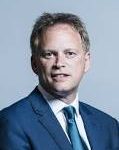
    Grant Shapps – 2022 Comments on Slashing Compensation to Passengers for 3 Hour Domestic Flight Delays

    The comments made by Grant Shapps, the Secretary of State for Transport, on 31 January 2022. The comments follow an announcement that the Government is looking to remove EU261 protection from UK domestic flights, cutting compensation for three hour delays and changing the system for shorter delays.

    People deserve a service that puts passengers first when things go wrong, so today I’ve launched proposals that aim to bolster airline consumer protections and rights.

    We’re making the most of our Brexit dividend with our new freedoms outside of the EU and this review will help build a trustworthy, reputable sector.

  • Kirsten Oswald – 2022 Speech on Holocaust Memorial Day

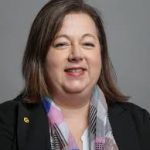
    Kirsten Oswald – 2022 Speech on Holocaust Memorial Day

    The speech made by Kirsten Oswald, the SNP MP for East Renfrewshire, in the House of Commons on 27 January 2022.

    It is a privilege to speak on behalf of the Scottish National party in this important debate which, for good reason, is one of the key dates in the parliamentary calendar. Some of the speeches we have heard have been utterly harrowing, but that is all the more reason for people to listen to them. Colleagues may have heard me mention, more than a few times, how fortunate I feel to represent East Renfrewshire, which is home to the majority of Scotland’s Jewish population. We are a diverse, vibrant community, and we are so very much the better for it.

    Last week I joined children from Calderwood Lodge Primary School for an excellent online lesson about the realities of the holocaust. We heard from Hedi Argent, whose very ordinary childhood in Vienna was turned upside down one day, just because she and her family were Jewish. She spoke so powerfully to the children about her own childhood, and about how as things changed, she was ostracised and bullied at school, by the teachers as well as the students, before her family had to flee. One thing she still remembered vividly was the personal impact on her of one friend—just one—who stood with her against the tide of hate, demonstrating, as Hedi says, that the right thing is not always the easiest.

    Last night I was fortunate to attend an excellent event organised by East Renfrewshire Council, where we heard from the family of the late Reverend and Eva Zoltan. It must have been very difficult for them but they told, very bravely, a chilling story of their parents’ experience during the holocaust, made all the more chilling because clearly life had moved quite quickly from just day to day, to terrible, unimaginable horror. We need to carry that thought with us, and increasingly so.

    Holocausts do not just happen overnight; they creep up on us gradually, with intolerance, hatred, and the othering of minority groups being allowed to happen, little by little, because nobody is brave enough to do what that wee girl Hedi’s friend did, and say “No, that’s not right. We don’t treat people badly just because of their identity or just because they are different to us.”

    I have spoken in this debate every year since I was elected, and it grieves me to say that I feel a bit less positive than I have done in previous debates. I am concerned about rising intolerance, hatred, and a populist divisiveness, which is fanned online but absolutely exists in real life too across the world, near and far. Nowhere is immune. We in this place need to be outspoken because, whether we look to the disgraceful treatment of the Uyghur Muslims in China, or much closer to home—I, too, saw that horrific video from Stamford Hill last night—we should be concerned. We need to be really aware that this is not some dim and distant historic issue. We have heard about genocides since, and now should concern us, too. We have to be willing to speak out positively and publicly about antisemitism, hatred and prejudice.

    I am fortunate because where I live that happens in the most powerful way. I have seen Henry Wuga and his late wife Ingrid speaking to young people about their experience so that generations of the future can learn from the past. Henry is an amazing man. This morning, he was on Radio Scotland encouraging young people to be aware of fake news and emphasising that we must always remember to learn—wise words, as ever. Just like Ingrid Wuga, Judith Rosenberg is very much missed in my community because of the enormous contribution that they both made to holocaust education and ensuring that the voices of survivors are heard and preserved. Such conversations, hearing directly from people who have experienced the holocaust or more recent genocides, are one of the most powerful ways of ensuring that the lessons that we must heed are heard. I am glad to join those who have already praised the excellent work of the Holocaust Memorial Day Trust and the Holocaust Educational Trust for all they do in that regard.

    The Holocaust Educational Trust supports initiatives such as the vision schools programme, where Mearns Castle and Barrhead high schools have achieved awards for their work in Holocaust education. That is important and very welcome. The importance of proactive work that supports communities to come together against antisemitism, Islamophobia, hatred and prejudice has never been more important, and communal organisations such as the Scottish Council of Jewish Communities and the Glasgow Jewish Representative Council are often at the forefront of making that happen.

    The Glasgow Jewish Representative Council recently hosted an excellent interfaith event where there was an unplanned but profoundly moving moment: the first ever Muslim student at Scotland’s only Jewish primary school was overjoyed to meet his Jewish headteacher again after many intervening years—they were both overjoyed, actually. That reinforced the importance of standing together to appreciate differences and calling out hate. That was one day, as today’s theme would have it, which will remain in my mind.

    Another one day that I will remember for the rest of my life was a very different kind of day: the day when I visited Yad Vashem and saw the reality of the holocaust writ large. I saw the magnitude of this stain on humanity, with the cold-blooded murder of men, women and children—so many of them—because they were Jewish, black gay, disabled, Roma or Sinti. Their photographs are there—so many photographs have been carefully collected in the time since—which is deeply upsetting to see. They bring home to you how, one day, everyday people living everyday lives—they were just people—were ripped away and killed in unimaginable horror and unimaginable numbers. Such photos are also posted on the Auschwitz Memorial Museum Twitter account, where, day and daily, we see photographs of men, women and children—often the kind of lovely photos people have on their mantlepiece of beautiful babies or chubby toddlers—who were all killed.

    It is really important to have that personal connection to the people who were murdered and look at their faces and into their eyes. Unfathomable numbers of people were murdered in the holocaust, but we must never forget that each one was an individual person—a loved and missed mum or dad, son or daughter—and not just a number to be tallied up. One of them is the only Scot named as righteous among the nations at Yad Vashem, Jane Haining. I have previously called for a more lasting memorial to her, and I applaud everyone involved in the current work on a heritage trail and a school essay competition in her name.

    Jane Haining grew up in Dunscore in the Scottish Borders and later travelled to Budapest to take up the post of matron in a Church of Scotland missionary school where many Jewish students were educated. She resisted calls from the Church to come home when it became clear that the situation was becoming very dangerous. Because she refused to leave her students alone to face their fate, she paid for her compassion and solidarity with her life. She was transported to Auschwitz along with them, and she died.

    Jane had said of her students:

    “If these children need me in days of sunshine, how much more do they need me in days of darkness?”

    That is the thing to take away from the debate. It is easy and unchallenging to speak out in the good times, but we really need to be committed to raising our voice and standing up when things are harder, and we all need to do that every day.

  • Catherine West – 2022 Speech on Holocaust Memorial Day

    Catherine West – 2022 Speech on Holocaust Memorial Day

    The speech made by Catherine West, the Labour MP for Hornsey and Wood Green, in the House of Commons on 27 January 2022.

    It is a pleasure to follow my hon. Friend the Member for Streatham (Bell Ribeiro-Addy), who has a long track record of standing up to racism and antisemitism. I add my thanks to my hon. Friends the Members for Leeds North West (Alex Sobel) and for Warrington North (Charlotte Nichols), who both spoke so powerfully about their own family situations.

    My constituent John Hajdu MBE brings a teddy bear into local London schools when he speaks as an ambassador for the Holocaust Educational Trust. He will be leading us this Sunday at the Tottenham Hotspur stadium. As an Arsenal supporter, I will have my fingers crossed behind my back when I enter the stadium, but I look forward to a day of contemplation with my right hon. Friend the Member for Tottenham (Mr Lammy) and others, led by our mayor, the young Councillor Jogee, and the veteran Jewish Councillor Sheila Peacock, who has worked tirelessly on standing up to antisemitism since she was a schoolteacher in the 1980s.

    Sheila has now reached her 90th birthday and is still leading the community in Haringey to talk about the issues raised at this time of the year. She has also commemorated the peace garden outside the Bruce Castle Museum, where local rabbis come to bless and conduct prayers. That is always a moving occasion in Haringey, which is home to a community of 180 languages and, in its diversity, probably represents all the different tragic genocidal incidents that Members have mentioned today.

    I also put on the record my heartfelt thanks to the right hon. Member for Beckenham (Bob Stewart), who described his own experience when in the armed forces of seeing people being murdered in a genocide. We are so lucky to have debates such as this—how serious they are and how the emotion gets to us. What a nice antidote to the week we have had. We play our roles in the Opposition and the Government, but it is so important that, as a Parliament, we have these moments that bring us together around the things that matter.

    I want to reach out to the right hon. Member for Newark (Robert Jenrick). If he needs any support, as somebody who has personally experienced antisemitism, those of us on the Labour Benches here today would want to offer that support, and to remember the Jewish communities still terrified as a result of the recent Beth Israel attack in Texas and the traumatising effect it had not only on Jewish people in the United States, but across my community. That attack happened in a synagogue and I will link that with what we are being encouraged to do tonight: to light a candle to represent hope.

    What do we do when we have these terrible situations, such as the one described by my hon. Friend the Member for Leeds North West, who explained why he now has such a small family—so many of them were killed ? What do we do when we hear about attacks on a faith community, such as the casual attack overnight on two of the Haredi community in Stamford Hill? We try to do as the hon. Member for Bath (Wera Hobhouse) said, not shying away from the pain but welcoming it, so that it makes us remember and do things differently.

    That reinforces our energy to take on, for example, what the right hon. Member for Sutton Coldfield (Mr Mitchell) talked about: perpetrators who are still living here in the UK and have not been brought to justice. Is there more we could do as a Parliament as a result of today’s debate, not to allow that just to drop in the air it was spoken into, but to pursue it, particularly given that we now see some dangerous trends in the Bosnia and Herzegovina situation, for example? I know my hon. Friend the Member for Putney (Fleur Anderson), who will speak next, has long experience of living in Banja Luka and understanding the community there, and has spoken of it in this House. What can we do as a result of today’s debate to prevent another possible genocide from happening in that region?

    The legacy we are talking about happens not only in this House, in our debates and our foreign policy, but in our communities. I know all hon. Members here will know people doing similar work. When we were talking with the Minister for Afghan Resettlement, the hon. Member for Louth and Horncastle (Victoria Atkins), who is leading the Afghanistan welcome programme, I was struck that my hon. Friend the Member for Leeds North West talked about visiting refugees in his locality within weeks of their arrival in the UK. That practical action plays an important role.

    A local rabbi in Muswell Hill, David Mason, has joined the Methodist Church, the Quakers and a number of other faith communities to provide a warm welcome for refugees, who are housed in very low-quality accommodation in quite an affluent part of London. We see that inequality, with people who have very little and others who have quite a lot; we walk the same streets, but we have different lives.

    Much that is happening at local level is because of the experience that survivors have put into practice. It is the women from the synagogue who prepare meals once a month on a Sunday, bring toys and games for children to play with, have helped children to register at school and assisted refugees to register with a GP, get into college or find a job as a bicycle mechanic—all those basics of the journey one makes in a new community.

    I was honoured to go to Auschwitz with a number of schoolchildren, some from Hornsey School for Girls, a number of years ago. I got to see first-hand the dreadful situation there—my hon. Friend the Member for Warrington North mentioned it in her speech, so I will not repeat it—but also the importance of experiencing how bleak that place is. At sundown, when the tour is over and we feel the freezing Polish weather and the grey sky, it makes one think of the suffering but also gives one that sense of, “What can we do differently? How do we light the candle? How do we give people hope?”

    Tulip Siddiq (Hampstead and Kilburn) (Lab)

    I thank my hon. Friend for giving way—I wanted to speak in the debate but I was in a Bill Committee, which is why I have come in late. I am a trustee of the Holocaust Memorial Day Trust, and I want to mention all the work it does in remembering people’s lives, including the visits to Auschwitz that she is talking about. It also works to make sure that these things never happen again and to raise awareness about subsequent genocides, including in Rwanda and Cambodia. Will she join me in paying tribute to the staff, to the trustees, to Laura and Olivia and to everyone else at the Holocaust Memorial Day Trust? They do such a fantastic job.

    Catherine West

    Indeed, I will. My hon. Friend has a long record of promoting the values of the Holocaust Educational Trust and the Holocaust Memorial Day Trust and has done an enormous amount to emphasise their work not just nationally but locally in the Hampstead area, where so many survivors made their home when they first came here following the second world war and where they have made a strong contribution. Indeed, many Jewish members of our communities are active in organisations such as CARIS—Christian Action and Response in Society—in Haringey, which provides food, clothing, education and legal advice to newly arrived communities. We also have the remarkable Haringey Welcome, which promotes dignity and respect for migrants and refugees in our borough.

    Madam Deputy Speaker, I know you agree with this being a day when we try to reflect on the words we use in Parliament. Some of my Jewish constituents have written to me when we have had debates about immigration in the House and asked that we always try to have those debates in a respectful way. They have asked that, when we talk about groups such as the Gypsy and Traveller community, we try to understand other perspectives and not just use language that may denigrate groups that are already experiencing a lot of discrimination.

    Wera Hobhouse

    We all need to recognise the feeling of marginalisation and exclusion: it is not one of extinction, but they are also destroying lives. Does the hon. Member agree that we need to recognise that?

    Catherine West

    Indeed. One of the other local groups in my constituency, the Sir Martin Gilbert Learning Centre, which brings history to life, is another way of not forgetting and of informing a future approach that holds the light—that light that we all want to put in our windows tonight so that we never forget, but also so that we can go forward in a positive way, always trying to prevent violence from happening again and to remember the lesson about how discrimination begins. That reflects the important point that the hon. Member for Bath made about rooting out the beginnings of discrimination and negativity and trying to address them.

    Thank you, Madam Deputy Speaker, for presiding over today’s excellent debate; it is one of the best I have been in since I was elected in 2015. I look forward very much to what the Minister and the shadow spokespersons have to say and also to lighting a candle this evening so that we may never forget.
  • Christian Wakeford – 2022 Speech on Holocaust Memorial Day

    Christian Wakeford – 2022 Speech on Holocaust Memorial Day

    The speech made by Christian Wakeford, the Labour MP for Bury South, in the House of Commons on 27 January 2022.

    I thank the right hon. Member for Newark (Robert Jenrick) and my right hon. Friend the Member for Barking (Dame Margaret Hodge) for securing this very important debate. I also pay tribute to my hon. Friends the Members for Warrington North (Charlotte Nichols) and for Leeds North West (Alex Sobel), and the right hon. and gallant Member for Beckenham (Bob Stewart), for their incredibly moving and powerful speeches.

    As has been said several times during the debate, when people think of the holocaust—the Shoah—we instantly go to Auschwitz-Birkenau. We instantly think of Bergen-Belsen . Earlier this week I was in Kyiv, in Ukraine, on a European Jewish Association delegation to Babi Yar, which was the location for the largest mass grave of 100,000 Jews who were killed one by one. There was no gas chamber; they were all shot. Their only crime was being Jewish.

    While I was at that delegation, I took part in a symposium to discuss holocaust education, and the rise of antisemitism in football and on our streets across Europe. This is something that we all need to take extremely seriously. We need only consider the instances of last year, when there were not only antisemitic tropes such as blood libel on the streets of London, but convoys being driven throughout the country. It was not right then, and it is not right now.

    I have spoken many times in the House about how proud I am to represent the constituency of Bury South, which is home to an extremely large and thriving Jewish community. Within that community there are a number of holocaust survivors, some of whom I have been privileged to speak with personally. I will never forget the way I was addressed by a Kindertransport survivor at a Jewish communal meeting before my election. In the United Kingdom, in 2019, he spoke about the fears for his family caused by the rise in antisemitic hate crime. To be approached in this manner and experience the dawning realisation that the lessons of the holocaust have not been learnt is something that should shock us all.

    As the number of holocaust survivors tragically continues to dwindle, I also pay tribute to the second and third generations who are the children and grandchildren of the survivors. They work so hard to preserve the memory of their loved ones and ensure that future generations are aware of the holocaust, the worst crime ever committed. Let me I specifically mention the work of Noemie Lopian. She has published the memoirs of her father, a holocaust survivor, Dr Israel Bornstein. Alongside the grandson of a high- ranking SS Officer, Derek Niemann, they tour the country speaking about their families’ stories and instilling the importance of tolerance and fighting prejudice.

    As has been mentioned throughout the debate, the theme of Holocaust Memorial Day this year is “One Day”. This is extremely powerful, and manages to encompass the whole lives of those poor victims and the survivors. It was inconceivable to someone having a happy childhood and growing up with a loving family that “One Day”, within a relatively short period, they would be facing the most unimaginable horrors. I read the words of a survivor, Iby Knill, who stated that from one day to the next, everything could change. She said that one day, she was greeted with an embrace; the very next day, people ran across the road to avoid being seen with her. I read the words of my constituent, Ike Alterman, someone who is rightly revered across the entire Jewish community and by royalty following his recent meetings with the Duke and Duchess of Cambridge. I will read the following section from his memoirs word for word:

    “One day in 1942, they said that all Jewish people must congregate in the town square. You could only bring with you what you could carry in your hands and everything else you had to leave…So we were all lined up in the square, standing there for hours and hours and nothing was happening…Each line was about five deep and they started counting the people. I was standing behind my father and he told me to stay on my tiptoes to make me look taller than I was. So there was my dad, my mother, my sister and my little brother. And they came and they counted and just between my father and my mother they stopped, their hand gesture divided us. So my father and I were saved and the rest were marched out through the square…My little brother with his hands above his head. Rifles on them. Never to be seen again.”

    For Ike and millions of others, the following years led them to suffer and witness abhorrent and unspeakable crimes. However, those incarcerated in the most appalling, brutal conditions dreamed that one day, they would be free. How the survivors managed this, I will never know, but they built new lives for themselves and thrived; they started businesses and had families, and now have countless numbers of grandchildren and great-grandchildren. It is therefore imperative to tell the whole story of a survivor’s life, and I therefore commend the My Voice project, which is co-ordinated by The Fed in my constituency. That project documents the life stories of holocaust survivors living in Greater Manchester, and is unique in being located in the main Jewish social care provider in Greater Manchester, which enables it to provide holistic wrap-around care to the survivors as their testimony is recounted. The concept was provided by Margit Cohen, who came to the UK on the Kindertransport in 1938. She stated,

    “I have to tell you my life story, my whole life story before I die.”

    My Voice captures survivors’ stories in their own voices by sound recording and transcribing the storyteller’s words into individual books. These are more than just artifacts of oral history: they are records of each person’s experience and heritage, encompassing their entire life before, during and after the war years. The project intends the completed books to be used as groundbreaking educational resources to further understanding of the persecution of Jews and other minorities by the Nazi regime; to counter prejudice and revisionism; and to give courage and hope to other survivors of tyranny and oppression. To date, 30 life story books have been produced, and a further 12 are in various stages of production. The project works closely with Yad Vashem in Jerusalem, which houses the books in its museum, and the team of volunteers who work on the project also received a Queen’s award for voluntary service. I conclude by thanking those brave survivors for telling their stories.