Tag: 2022

  • Guy Opperman – 2022 Tribute to Jack Dromey

    Guy Opperman – 2022 Tribute to Jack Dromey

    The tribute made by Guy Opperman, the Conservative MP for Hexham, in the House of Commons on 2 February 2022.

    Thank you for allowing me, exceptionally, to speak from the Front Bench on a very difficult occasion. What an honour, my dear Jack, and what a sadness it is to speak of the friend I got to know from the other side of the Aisle.

    For three years, Jack was the shadow Pensions Minister and we became close. We would meet, talk and plan, and sometimes agree to disagree, but always with equanimity. Politics is adversarial and heated. The media encourage us—in fact, demand of us—to be aggressive and mean-spirited. Jack did not play that game. Others have spoken of his decades of work for the union movement, of his being a loving father and a devoted husband, and even of his management of truculent children on a deserted Greek road. I want to talk about two things. First, he is the best example I know in 11 years in the House of Commons of cross-party working. Many used to joke about how often I would exchange texts with Jack. We worked together and we got results. I would give him briefings on all future legislation, ongoing inquiries and difficult issues. That requires a lot of trust, and such trust can go wrong, as we all know. But he never used confidences unfairly or for quick political gain. I believe that we and this House work better for such a thing. During the process of the Pension Schemes Bill, we spoke or sent texts to each other more than 110 times—I counted them up. Without his help, the Bill, in particular, the measures on collective defined contributions, and the work with the Transport and General Workers Union, would not have happened as they did.

    Secondly, I want to talk about Jack’s kindness and generosity of spirit. My children died in childbirth in June 2020 and I want to share with the House what he said when I tried to return to work, as we had two Bills to do that autumn. He saw that I was struggling at this Dispatch Box on 29 June. He sent a text to me afterwards and I wanted to share it with the House:

    “Guy, I know we both have a job to do, but I was not comfortable today. I feel for you, and your wife, my friend. We will build work around you. My thoughts are with you. Please take your time. Best wishes, Jack”.

    Jack Dromey was, in my opinion, a man made in the Teddy Roosevelt spirit: kind but combative; passionate but polite; and always in the arena, always striving for the benefit of others. There can be no finer compliment than saying that “The Man in the Arena” quote, which is my favourite, applies utterly and totally to Jack. Farewell my friend, it was an honour to know you.

  • Ian Blackford – 2022 Tribute to Jack Dromey

    Ian Blackford – 2022 Tribute to Jack Dromey

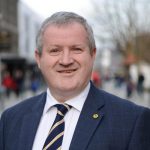
    The tribute made by Ian Blackford, the SNP MP for Ross, Skye and Lochaber, in the House of Commons on 2 February 2022.

    Over recent months, we have been forced to gather here far too often to remember colleagues who, very sadly and often suddenly, have been lost to this Parliament.

    Jack Dromey is another Member of this House who has gone well before his time. On behalf of myself and my colleagues in the Scottish National party, I want to extend our deepest sympathies to all who knew and loved Jack. My thoughts, of course, are most especially with the Mother of the House; she has lost a constant companion at her side. She and the family bear the biggest burden of the loss of someone who was at the very centre of all their lives.

    I would also like to extend sympathy to Jack’s beloved party, because we all know he was a Labour man through and through. I will also remember Jack as one of the feistiest campaigners in this place—a man rooted in trade union politics, rooted in the rights of workers, and a man who never lost an ounce of that spirit when he entered this Parliament. That fighting spirit extended to causes and campaigns far and wide, and I know that it extended to strikes and protests in Scotland, too. He was a true friend of Scottish workers and a champion of workers everywhere.

    Jack was true to the cause and that is probably why he was so good at working cross-party and winning support and friendship across this place. My friend, the former Member of this place, Neil Gray, worked very closely with him on the Pension Schemes Act 2021 and he still speaks so fondly about Jack’s determination and his passion to make sure that that Bill was amended. He would often bound up the stairs to my office to seek my and my party’s support for various campaigns not just for him, but more often, for Harriet.

    I will finish by sharing one story that I read about Jack, which I thought was both very telling and very touching. Apparently, a few years ago, a great admirer of the Mother of the House from the feminist movement approached Jack and said, “I always feel a bit nervous around Harriet—I am so in awe of her,” only for Jack to reply, “Me too. Even after all these years.” Today, we can assure Jack and his family that many of us were in awe of him, too. We deeply admired the way he conducted himself and the way he carried himself every day of his life. He left his gentle mark on so many and he will be greatly missed. May he now rest in peace. God bless you, Jack.

  • Peter Bottomley – 2022 Tribute to Jack Dromey

    Peter Bottomley – 2022 Tribute to Jack Dromey

    The tribute made by Peter Bottomley, the Father of the House of Commons, in the House on 2 February 2022.

    May I say through you, Mr Speaker, and through the right hon. and learned Member for Camberwell and Peckham (Ms Harman) the mother of Amy, Joe and Harry, that the personal was very well covered in St Margaret’s two days ago? The political has been covered by the press and by Gordon Brown when he spoke at the service. I would like to contribute a parliamentary word and a trade union one.

    The parliamentary one is that Jack showed what can be achieved if, by chance, you cannot have ministerial office during your time here. For those who come here thinking that being a Minister is the only thing that matters, they are wrong.

    Secondly, I believe that if we could have more people who have had serious, continued trade union experience coming into this House, the House of Commons would be better for it, and I hope that that will not just be on one side of the House.

  • Keir Starmer – 2022 Tribute to Jack Dromey

    Keir Starmer – 2022 Tribute to Jack Dromey

    The tribute made by Keir Starmer, the Leader of the Opposition, in the House of Commons on 2 February 2022.

    On a point or order, Mr Speaker. Since the sudden passing of our friend Jack, tributes from every walk of life have captured the essence of the man we knew and loved: larger than life, bursting with enthusiasm and ideas, and tireless in the pursuit of justice and fairness. Jack channelled all those attributes into representing the people of Erdington, into a lifetime of campaigning for working people, and into his greatest love, his family.

    The loss felt on the Labour Benches is great. The loss to public life is greater still. But the greatest loss is felt by another of our own, my right hon. and learned Friend the Member for Camberwell and Peckham (Ms Harman). She and Jack were married the best part of 40 years ago. The annual general meeting of the Fulham Legal Advice Centre may not sound like the place to find romance, but that is where Jack and Harriet met, with Jack addressing the meeting, and Harriet inspired to blaze a new trail—one that eventually led her to the place she holds today, as an icon of the Labour party and of this Parliament.

    When we hear Harriet talk about Jack, one word comes through time and again: “encouraged”. It was Jack who encouraged her to join Brent Law Centre. It was Jack who encouraged her to stand as an MP—the first pregnant by-election candidate. It was Jack who encouraged her to run to be the Labour party deputy leader. When Harriet became the first woman in 18 years to answer at Prime Minister’s questions, Jack sat in the visitors’ gallery with their children, beaming down with love and admiration. I am so glad to see Jack’s family here today, beaming down with the same love, affection and pride.

    The sense that Jack was always on your side is felt across this party and across the trade union movement. You can always get a measure of someone by how they treat their staff or those who rely on them. One of Jack’s former employees has said that whenever they met new people, he would always say that she was the real brains of the operation and he was merely the bag-carrier. His humility and sense of humour were legendary.

    Shortly after Harriet’s book came out, a staffer had a copy of it on their desk. Jack roared with laughter as he saw a photo of himself in his 20s, barely recognisable with the prodigious thick beard. “Good grief!” he exclaimed, “What was Harriet thinking?” “What? Putting the picture in the book?” replied the staffer. “No,” Jack said, “marrying me!”

    I was fortunate enough to work alongside Jack when I was a new MP in 2015. Our friendship endured, and as I gave a speech in Birmingham just a few weeks ago, it was Jack’s face that I saw in the audience, beaming up at me. He texted me the next day saying how much he had enjoyed it. That was two days before he died, which brings home the shock of his sudden, tragic passing.

    Jack cut his teeth as a campaigner who spoke truth to power. He picked battles on behalf of working people, then he won them. It would be impossible to list all those victories today. He led the first equal pay strike after the Equal Pay Act 1970 was brought into law; he supported Asian women to unionise against a hostile management at Grunwick; and, even this year, he campaigned for a public inquiry on behalf of covid bereaved families.

    Jack was a doughty campaigner, dubbed “Jack of all disputes”, who was feared by his opponents, but he was also deeply respected and liked across the political divide. Each and every one of us is richer for having known him. We will all miss him terribly.

    The funeral service on Monday was beautiful and moving. Today, our hearts go out to Harriet, Joe, Amy, Harry and Jack’s grandchildren. The loss and grief they will be feeling cannot be measured or properly described. It cannot be wished away or pushed down and ignored, because great grief is the price we pay for having had love. We all love Jack and, even though he may no longer be with us here, that love will always live on.

  • Boris Johnson – 2022 Tribute to Jack Dromey

    Boris Johnson – 2022 Tribute to Jack Dromey

    The tribute made by Boris Johnson, the Prime Minister, in the House of Commons on 2 February 2022.

    On a point of order, Mr Speaker. On 7 January, this House suffered the loss of the hon. Member for Birmingham, Erdington, Jack Dromey, and it is right that we should come together now in tribute to his memory. Let me offer my condolences, on behalf of the whole Government, to the Mother of the House, the right hon. and learned Member for Camberwell and Peckham (Ms Harman), and her family.

    Although Jack and I may have come from different political traditions, I knew him as a man of great warmth and energy and compassion. I can tell the House that one day—a very hot day—Jack was driving in Greece when he saw a family of British tourists, footsore, bedraggled and sunburned, with the children on the verge of mutiny against their father: an experience I understand. He stopped the car and invited them all in, even though there was barely any room. I will always be grateful for his kindness, because that father was me, and he drove us quite a long way.

    Jack had a profound commitment to helping all those around him, and those he served, and he commanded the utmost respect across the House. He will be remembered as one of the great trade unionists of our time—a veteran of the Grunwick picket lines, which he attended with his future wife, where they campaigned alongside the mainly Asian female workforce at the Grunwick film processing laboratory. Having married someone who would go on to become, in his words,

    “the outstanding parliamentary feminist of her generation”,

    Jack became, again in his words, Mr Harriet Harman née Dromey.

    Jack was rightly proud of the achievements of the right hon. and learned Member for Camberwell and Peckham, but we should remember today his own contribution to this House during his 11 years as the Member for Birmingham, Erdington. He was a fantastic local campaigner who always had the next cause, the next campaign, the next issue to solve. I was struck by the moving tribute from his son Joe, who described how Jack was always furiously scribbling his ideas and plans in big letters on lined paper, getting through so much that when Ocado totted up their sales of that particular paper one year, they ranked Jack as their No. 1 customer across the whole of the United Kingdom.

    Jack combined that irrepressible work ethic with a pragmatism and spirit of co-operation, which you have just described so well, Mr Speaker. He would work with anyone if it was in the interests of his constituents. As Andy Street, the Conservative Mayor of the West Midlands, remarked:

    “He was a great collaborator always able to put party differences aside for the greater good… Birmingham has lost a dedicated servant… And we have all lost a generous, inclusive friend who set a fine example.”

    While Jack once said that he was born on the left and would die on the left, I can say that he will be remembered with affection and admiration by people on the right and in the middle, as well as on the left. Our country is all the better for everything he gave in the service of others.

  • Lindsay Hoyle – 2022 Tribute to Jack Dromey

    Lindsay Hoyle – 2022 Tribute to Jack Dromey

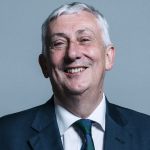
    The tribute made by Lindsay Hoyle, the Speaker of the House of Commons, in the House on 2 February 2022.

    We now come to tributes to Jack Dromey.

    Jack made his mark long before he came into this House, in particular as a fearless, energetic trade unionist. I remember campaigning him with him in the ’80s and ’90s to save the Royal Ordnance factory in Chorley. He was positive, down to earth, and determined to help working people—characteristics that remained with him throughout his career. I have to say, as somebody who knew Jack and worked with Jack: he was innovative; he was absolutely visionary. We sat down, upon a closure where thousands of jobs were going to go, and Jack said, “We’re in this together; we will stand shoulder to shoulder with the people whose jobs are at risk.” He said, “We’ve got to look beyond what kills people. We can do something different. Let us look for alternatives that save people’s lives.”

    The expertise that was in Royal Ordnance Chorley was second to none. Of course we had to fight for the jobs in the first place. It became a choice between Glascoed and Chorley, and Jack said, “With the land values we know where British Aerospace will be.” In the end we came up with real alternatives. We had seen Lockerbie. We had seen the destruction and the loss of life, and in Chorley they designed a cargo that stopped the plane coming down. That was the vision of Jack, who said, “If we can’t save the jobs in making bombs, let us save jobs by finding an alternative to save lives.” So that is my personal experience of Jack Dromey. I knew him on other occasions, but I have to say: he was inspirational to me and he has been inspirational to many others in this House.

    Since his election to this House in 2010, he proved to be an exemplary Member of Parliament. He was an assiduous and effective campaigner for his constituents. As a Front Bencher, he was trusted to lead for the party in particularly sensitive areas such as housing, policing, pensions, and, most recently, immigration. While he was a robust Front Bencher, he always demonstrated respect for his opponents and was well like and admired across the House. Nobody could fall out with Jack Dromey.

    While we mourn a colleague, it is Jack’s family who will of course feel the loss most deeply. I know the whole House will join me in expressing our condolences to the Mother of the House, the right hon. and learned Member for Camberwell and Peckham (Ms Harman). Harriet, I know that all Members of this House will join me in saying to you and your family that we are so sorry for your loss, and it is a sad loss for this House.

    I will now take brief points of order to allow for tributes to an esteemed colleague.

  • Michael Gove – 2022 Comments on the Islands Forum

    Michael Gove – 2022 Comments on the Islands Forum

    The comments made by Michael Gove, the Secretary of State for Levelling Up, on 3 February 2022.

    Talent is equally spread across the United Kingdom, but opportunity is not. Our island communities face shared challenges and I want us to work together to overcome them, as we work to unite and level up the whole UK.

    A number of island communities have already benefited from the Levelling Up Fund and Community Renewal Funds. Creating a new Islands Forum takes our commitment one step further and provides a new opportunity for island communities to work together to help their communities prosper.

  • Rishi Sunak – 2022 Statement on the Energy Price Cap

    Rishi Sunak – 2022 Statement on the Energy Price Cap

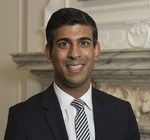
    The statement made by Rishi Sunak, the Chancellor of the Exchequer, in the House of Commons on 3 February 2022.

    Mr Speaker,

    The UK’s economic recovery has been quicker and stronger than forecast.

    In the depths of the pandemic, our economy was expected to return to its pre-crisis level at the end of 2022.

    Instead, it got there in November 2021 – a full year earlier.

    Unemployment was expected to peak at nearly 12%.

    Instead, it peaked at 5.2% and has now fallen to just over 4% – saving more than 2 million jobs.

    And with the fastest growing economy in the G7 this year…

    Over 400,000 more people on payrolls than before the pandemic…

    And business investment rising…it’s no wonder Mr Speaker, that borrowing is set to fall from £320bn last year…

    …the highest ever peacetime level…

    …to £46bn by the end of this Parliament.

    As we emerge from the depths of the worst recession in 300 years, we should be proud of our economic record.

    The economy is stronger because of the plan we put in place; because of the actions we took to protect families and businesses.

    And that plan is working.

    But for all the progress we are making – the job is not yet done.

    Right now, I know the number one issue on people’s minds is the rising cost of living.

    It is the independent Bank of England’s role to deliver low and stable inflation – and the Governor will set out their latest judgements at midday today.

    And just as the government stood behind the British people through the pandemic…

    …so we will help people deal with one of the biggest costs they now face – energy.

    The energy regulator, OFGEM, announced this morning that the energy price cap will rise in April to £1,971 – an increase of £693 for the average household.

    Without government action, this would be incredibly tough for millions of hardworking families.

    So the government is going to step in to directly help people manage those extra costs.

    Mr Speaker,

    Before I set out the steps we are taking, let me explain what’s happening to energy prices, and why.

    People’s energy bills are rising because it is more expensive for the companies who supply our energy to buy oil, coal, and gas.

    Of the £693 increase in the April price cap, around 80% comes from wholesale energy prices.

    Over the last year, the price of gas alone has quadrupled.

    And because over 85% of homes in Britain are heated with a gas boiler, and around 40% of our electricity comes from gas, this is hitting households hard.

    The reasons gas prices are soaring are global.

    Across Europe and Asia, a long, cold winter last year depleted gas stores.

    Disruption to other energy sources like nuclear and wind left us relying more than usual on gas during the summer months.

    Surging demand in the world’s manufacturing centres in Asia…

    …at the same time as countries like China are moving away from coal…

    …is further increasing demand for gas.

    And concerns about a possible Russian incursion into Ukraine are putting further pressure on wholesale gas markets.

    And so prices are rising.

    Mr Speaker,

    The price cap has meant that the impact of soaring gas prices has so far fallen mainly on energy companies.

    So much so, that some suppliers who couldn’t afford to meet those extra costs have gone out of business as a result.

    It is not sustainable to keep holding the price of energy artificially low.

    For me to stand here and pretend we don’t have to adjust to paying higher prices would be wrong and dishonest.

    But what we can do is take the sting out of a significant price shock for millions of families…

    …by making sure the increase in prices is smaller initially and spread over a longer period.

    Mr Speaker,

    Without government intervention, the increase in the price cap would leave the average household having to find an extra £693.

    The actions I’m announcing today will provide, to the vast majority of households, just over half that amount – £350.

    In total, the government is going to help around 28 million households this year.

    Taken together, this is a plan to help with the cost of living worth around £9bn.

    We’re delivering that support in three different ways.

    First, we will spread the worst of the extra costs of this year’s energy price shock over time.

    This year, all domestic electricity customers will receive an upfront discount on their bills worth £200.

    Energy suppliers will apply the discount on people’s bills from October.

    With the government meeting the cost in full.

    That discount will be automatically repaid from people’s bills in equal £40 instalments over the next five years.

    This is the right way to support people while staying on track with our plans to repair the public finances.

    And because we are taking a fiscally responsible approach, we can also provide more help, faster, to those who need it most – the second part of our plan.

    We’re going to give people a £150 Council Tax rebate to help with the cost of energy, in April – and this discount won’t need to be repaid.

    And I do want to be clear with the House that we are deliberately not just giving support to people on benefits.

    Lots of people on middle incomes are struggling right now, too – so I’ve decided to provide the council tax rebate to households in Bands A to D.

    This means around 80% of all homes in England will benefit.

    And the third part of our plan will provide local authorities with a discretionary fund of nearly £150m…

    …to help those lower income households who happen to live in higher Council Tax properties…

    …and households in bands A-D who are exempt from Council Tax.

    We’re also confirming today that we’ll go ahead with existing plans to expand eligibility for the Warm Home Discount by almost a third…

    …so that 3m vulnerable households will now benefit from that scheme.

    And that’s not all we’re doing to help vulnerable households.

    We’re providing £3bn over this Parliament to help more than half a million lower income homes become more energy efficient, saving them on average £290 per year.

    Increasing the National Living Wage to £9.50 an hour in April, a pay rise of over £1,000 for 2 million low paid workers.

    And providing an effective tax cut for those on Universal Credit, allowing almost 2 million households to keep an average of £1,000 per year.

    The payment through energy suppliers will apply across England, Wales and Scotland.

    Energy policy is devolved in Northern Ireland, with a different regulator, and the government does not have the legal powers to intervene.

    So we will make sure the Executive is funded to do something similar, with around £150m for Northern Ireland through the Barnett formula next year.

    And because the Council Tax system is England only, total Barnett consequentials of around £565m will be provided to the devolved administrations in the usual way.

    Mr Speaker,

    I know that some in this House have argued for a VAT cut on energy.

    However, that policy would disproportionately benefit wealthier households.

    There would also be no guarantee that suppliers would pass on the discounts to all customers.

    And we should be honest with ourselves: this would become a permanent Government subsidy on everyone’s bills.

    A permanent subsidy worth £2.5 billion every year – at a time when we are trying to rebuild the public finances.

    Instead, our plan allows us to provide more generous support, faster, to those who need it most, providing 28m households with at least £200, and the vast majority receiving £350.

    It is fair, it is targeted, it is proportionate – it is the right way to help people with the spike in energy costs.

    Mr Speaker,

    Today’s announcements are just one part of the government’s plan to tackle this country’s most pressing economic challenges.

    A plan for growth – with record investments in infrastructure, innovation and skills.

    A plan to restore the public finances – with debt falling by the end of this Parliament.

    A plan to cut waiting lists and back the NHS with £29bn over three years and a permanent new source of funding.

    And, with the measures I’ve announced today – a plan to help with the rising cost of energy with £350 more in the pockets of tens of millions of hard working families.

    That’s our plan to build a stronger economy – not just today but for the long term.

    And I commend it to this House.
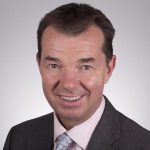
  • Ed Miliband – 2022 Statement on a Windfall Tax for Oil and Gas Producers

    Ed Miliband – 2022 Statement on a Windfall Tax for Oil and Gas Producers

    The statement made by Ed Miliband, the Labour MP for Doncaster North, in the House of Commons on 1 February 2022.

    I beg to move,

    That this House notes the cost-of-living crisis hitting families across the country and that the energy price cap is predicted to rise by 50 per cent from April; recognises that rocketing energy prices are hitting businesses as well as household budgets; calls on the Government to introduce a windfall tax on the profits of North Sea oil and gas producers; and further calls on the Government to use that windfall tax to help fund a package of support for families and businesses facing the energy price crisis.

    In the last few days, we have often heard the Government say that they are desperate to talk about the biggest issues facing the country. Conservative Member after Conservative Member has lined up to say that there is nothing they would rather do than end the distractions and talk about the burning issues facing people. I have to say, Madam Deputy Speaker, where are they all? Where are they? Today, we are giving them—[Interruption.] There are a few of them, but not very many. Today, we are giving them and the House the chance to talk about those issues, and there is no bigger issue facing families than the energy price crisis. For months, we have waited for the Government to tell us what it is that they are going to do and there has been silence. Today, we are making a generous offer to focus on what really matters and to give them the chance to support the principle of a windfall tax on the oil and gas companies to help to address the energy crisis.

    Let me set out the case. In just six days’ time, we will know the scale of the price cap increase to be announced by Ofgem. It is expected, on the latest gas prices, that there will be a £600 increase in the cap, on top of the £120 increase we have already seen. April’s increase alone is expected to drag 1.5 million more families into fuel poverty. Let us be absolutely clear what that means. Consider a recent Citizens Advice case of a man in his 60s from Devon who had given up his job as an engineer when he was diagnosed with spinal cancer. He had been claiming universal credit but cannot work and recently saw that drop by £20 a week. He told Citizens Advice:

    “I don’t buy the things I need to buy. I’m constantly looking at the bank account. I put things off as I can’t afford the petrol to drive. I feel isolated and stressed, but what can I do? I’m living in one room to keep the heat down as low as I possibly can, but everything is just mounting up. It’s direct debit after direct debit.”

    I have had similar cases in Doncaster. This is the reality facing millions in our country, and that is before the price cap has actually gone up. It is against the backdrop of inflation running at nearly 6% and the national insurance rise on top. So people are facing very difficult times. Businesses, too, are facing great difficulty as a result of what is happening.

    Dr Rupa Huq (Ealing Central and Acton) (Lab)

    Does not my right hon. Friend agree that the Government’s version of the energy price cap, along with “use it or lose it” penalties on developers, banning letting fees for tenants and gender pay gap reporting, have his fingerprints all over them from our 2015 Labour manifesto, but that, unfortunately, they have made the schoolboy error of copying homework incorrectly? That is why we now need a windfall tax to rectify those errors. In a parallel universe—the Miliverse—this was done right, but sadly it has been done all wrong by them!

    Edward Miliband

    I thank my hon. Friend for that intervention. I am old enough to remember when an energy price cap was living in a “Marxist universe” and now it is Government policy.

    The Federation for Small Businesses reports that 45% of members are seeing soaring costs from higher energy bills. Meanwhile, the Energy Intensive Users Group, representing vital industries such as steel and pharmaceuticals, has called repeatedly for “immediate action”.

    This is an economic crisis plain and simple. What is extraordinary is that the Government, months into the crisis, have not produced a single solution. Where is the solution? There can be no greater evidence of a Government paralysed by inaction. Millions of families who want reassurance are instead subject to the spectacle of a rule-breaking Prime Minister still too distracted by trying to save his own skin.

    Our case today is that millions of struggling families should not be left to face this situation alone and that we should do all we can to act. It is right to look to those benefiting from this crisis to make a contribution.

    John Redwood (Wokingham) (Con)

    I am glad the right hon. Gentleman is highlighting this issue. Does he agree that gas prices are a lot dearer in Europe and the UK than they are in America because we are short of gas here? Would it not therefore be a good idea for us to get more gas out of our North sea to ease the squeeze?

    Edward Miliband

    The right hon. Gentleman and I differ somewhat on this. The real problem is that we have not gone far enough or fast enough on the green transition. The more we are subject to the volatility of fossil fuels—the prices are set internationally—the more we are at risk of the kind of crisis we are seeing at the moment.

    If there is one principle that should get us through these tough times, it is that those with the broadest shoulders should bear the greatest burden. Britain’s families and businesses are facing the toughest times, but that is not true of everyone. For the oil and gas sector, the price spike has been a bonanza—a trebling of prices today compared with a year ago. Let us be clear about the effect that is having on oil and gas company profits.

    Listen to Bernard Looney, the chief executive of BP. He says this: the rise in prices is a “cash machine” for his company. Those were his words—a “cash machine”. Let those words ring in the ears of right hon. and hon. Members in this House. Let us be clear about who is on the other side of the cash machine: the British people. In other words, it is an ATM from which the oil and gas companies collect billions and into which the British people pay—people like the man in Devon who could only afford to heat one room. He is one of the millions paying into the cash machine for BP.

    Once the companies are withdrawing the cash from the cash machine, where is the unexpected windfall going? Let us not fall for the argument that may be made in this debate—that it is somehow going into investment or workers in the oil and gas sector. [Interruption.] The hon. Member for West Aberdeenshire and Kincardine (Andrew Bowie) says from a sedentary position that it is. Let me tell him that he is wrong. All the evidence is that the companies are so flush with cash that billions are being used to inflate the share price in buybacks from shareholders. BP did a share buyback of over £1 billion in August, but it was so overwhelmed with cash that it did another worth nearly £1 billion in November. Shell has done the same, with a £1.1 billion share buyback in December. But that is not enough: it says it will do another one, worth £4 billion, at pace, in 2022.

    This is simply a redistribution of wealth from the energy bills of the British people—those who can least afford it—to the shareholders of those companies. The question before us, then, is one that has confronted previous Governments: should we do something about the situation or say that it is wrong to take account of the windfall in the tax decisions that we make? I say that it is not wrong to take account of it—it is fair and it is right and it is principled.

    Tim Loughton (East Worthing and Shoreham) (Con)

    The right hon. Gentleman is setting out the problem, but the trouble is that his solutions do not add up. Does he acknowledge that last year Shell and BP, the two largest oil and gas producers, posted a £26.9 billion and £22.5 billion loss respectively? How much would his windfall tax get from those situations? Does he also acknowledge that the biggest investments in renewable energy—not least hydrogen, into which hundreds of billions are being invested—come from companies such as BP and Shell, which we need to continue investing in alternative non-fossil fuels?

    Edward Miliband

    I will answer all the hon. Gentleman’s points. We would raise £1.2 billion from the windfall tax. I will come to this later in my speech, but the tax position is incredibly generous for companies, including Shell and BP. He says that their money is going into renewables, but I am afraid that he is not correct. Shell’s near-term plans involve investment of just £2 billion to £3 billion in low carbon activities and £8 billion on upstream fossil fuel production. It is just greenwash to say that these companies have somehow moved out of fossil fuels and into renewables. The truth is that when profits have risen by billions and billions and when billions are being paid out in share buybacks, it is not credible that somehow a one-off tax rise, taking just a small proportion of the windfall profits that these companies did not expect, will somehow lead to a collapse in investment.

    There is a clear consensus that a windfall tax is the right thing to do. An overwhelming majority of people support it—including, I might point out to Government Members, three quarters of Conservative voters. I do not know what Conservative Members are waiting for: they should support a windfall tax because some of the people who vote for them—or used to vote for them, anyway—also support it. Leading charities have endorsed it and some Conservative Members, including the right hon. Member for Harlow (Robert Halfon) and the former business Minister the right hon. Member for Kingswood (Chris Skidmore), have supported it too.

    Of course the oil and gas companies do not want the windfall tax to happen. Let us take their arguments head on. As I have said, the argument that the tax will lead to a collapse in investment is not credible given what the companies are doing with this windfall, and it also misunderstands the long-term basis of these companies’ investment plans. I should also point out that the companies would keep a significant proportion of the windfall, even under our proposals. It is an unexpected, unearned windfall, half of which they would keep.

    Secondly, as I said to the hon. Member for East Worthing and Shoreham (Tim Loughton), the proposal comes against a backdrop of the incredibly generous tax position in the UK, which meant that BP and Shell actually paid no net tax at all between 2018 and 2020.

    Thirdly, there is a wider context. [Interruption.] The hon. Member for East Worthing and Shoreham is muttering, from a sedentary position, that those companies are not making profits. Actually, they are forecast to make near-record profits this year, as the hon. Gentleman will see if he looks at what outside analysts are saying.

    As I was saying, there is a wider context. The oil and gas sector provides important employment for our country and communities. We need a phased transition, but, as I said to the hon. Gentleman, the long-term answer to this crisis is not more reliance on fossil fuels. Indeed, the Business Secretary himself has said:

    “the UK is still too reliant on fossil fuels.”—[Official Report, 20 September 2021; Vol. 701, c. 95.]

    The answer must be instead to go further and faster on renewables, nuclear and other zero-carbon alternatives, but that is not what the fossil fuel companies are doing with their profits.

    Matt Western (Warwick and Leamington) (Lab)

    My right hon. Friend is making a powerful speech. He has identified the immediate issue of energy poverty and crisis that we have in this country. Those of us who are old enough to have lived through the 1970s and 1980s recall how the Norwegians used the wealth generated from the North sea to create sovereign wealth funds. Should we not be thinking about that? Could we perhaps not just use the windfall tax, but deploy such funds in the way that my hon. Friend is describing, to invest in renewables and invest in our country?

    Edward Miliband

    My hon. Friend has made a powerful point.

    Labour has come up with a clear and costed plan. We plan, by levying the windfall tax, to reduce VAT to zero, to increase the warm homes discount from £150 to £400, and to extend it from the 2.2 million families who currently receive it to 9 million. On top of that, we have set aside £600 million to help our businesses out. This is in stark contrast with what is being proposed by the Conservatives—the Government of the day, who, six days before the announcement of the rise in the price cap, seem to have nothing to say. What is their explanation for why they are not acting? It is very hard to find the explanation, although perhaps we will hear one today. The one person who has ventured to provide one is the Education Secretary, who has said:

    “A windfall tax on oil and gas companies that are already struggling in the North Sea is never going to cut it.”

    Even the oil and gas companies do not describe themselves as struggling. They say that this is a cash machine. I have to ask what planet the Government are living on. Does it not say everything about them that it is the struggles of companies making billions from an expected windfall that stir them, not the struggles of the British people? How dare they leave families in the lurch because of their refusal to stand up to vested interests in the oil and gas sector?

    Alan Brown (Kilmarnock and Loudoun) (SNP)

    In 1998, when Labour was in power, oil prices bottomed out at $12 a barrel. By 2008, the price had risen to nearly $100 a barrel. What did Labour do with that money? It is regrettable that it did not create an oil sovereign fund, as Norway did.

    Edward Miliband

    I am very proud of the investments that the last Labour Government made in our public services.

    Alexander Stafford (Rother Valley) (Con)

    Will the right hon. Gentleman give way?

    Edward Miliband

    No, I am going to make progress.

    The truth is—we cannot get away from it—that the Conservatives are a party bankrolled to the tune of nearly £5 million by oil and gas interests since 2016. Bankrolled by oil and gas executives, they cannot act on behalf of the British people.

    Let me end by saying this. The British people are fed up with what they have seen from the Government in recent months. They want a Government who are on their side. They want a Government who will act for them. That is why we need a windfall tax. It is a test of whose side they are on, and whose side we are all on in this House—on the side of gas and oil companies making billions of profits, or on the side of millions of struggling families. We know whose side we are on. If this Government were truly on the side of the British people, they would act, and that is why I urge Members on both sides of the House to vote for our motion tonight.

  • Kwasi Kwarteng – 2022 Statement on the Advanced Research and Invention Agency

    Kwasi Kwarteng – 2022 Statement on the Advanced Research and Invention Agency

    The statement made by Kwasi Kwarteng, the Secretary of State for Business, Energy  and Industrial Strategy, in the House of Commons on 1 February 2022.

    The leadership of the Advanced Research and Invention Agency (ARIA) has been the subject of much Parliamentary interest. Today, I am delighted to update the House that I have appointed Dr Peter Highnam as the agency’s first Chief Executive Officer and re-commenced the search for ARIA’s first Chair.

    ARIA, the Government’s new science funding body, will focus solely on finding and funding ground-breaking research projects with the potential to transform the lives of people in the UK, and around the world.

    This announcement comes at an opportune moment, as the legislation to create ARIA enters the final stages of its passage through Parliament, ahead of the agency becoming fully operational later this year.

    Dr Peter Highnam will play a pivotal role in ARIA’s formative years by defining the agency’s vision, recruiting its first programme managers, and establishing its organisational culture. He will take post on 3 May 2022 for a fixed term of five years.

    Dr Peter Highnam brings a wealth of experience to the role, as he has served as Deputy Director at the Defence Advanced Research Projects Agency (DARPA) since February 2018, and as acting director on two occasions. He has previously held positions as the Director of Research at the National Geospatial-Intelligence Agency, and as Director of the Intelligence Advanced Research Projects Activity. Born in the UK, Dr Peter Highnam holds a PhD in Computer Science from Carnegie Mellon University. He obtained his master’s degree at the University of Bristol, and his undergraduate degree at the University of Manchester.

    The appointment has been made in accordance with the Governance Code on Public Appointments, following a fair and open competition overseen by an Advisory Assessment Panel.

    To support Dr Peter Highnam, I am re-launching the campaign to find ARIA’s first Chair. Once appointed, ARIA’s Chair will have the unique opportunity to be a trusted counsel for Dr Peter Highnam as he leads the agency through its fledgling years.