Tag: 2022

  • Ursula von der Leyen – 2022 Speech on Ukraine and Threat from Russia

    Ursula von der Leyen – 2022 Speech on Ukraine and Threat from Russia

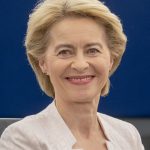
    The speech made by Ursula von der Leyen, the President of the European Commission, on 16 February 2022.

    Thank you Madam President,

    Honourable Members,

    The very reason why our Union was created is to put an end to all European wars. So it is particularly painful for me to address you today, as we face the largest build-up of troops on European soil since the darkest days of the Cold War. The people of Ukraine are bravely trying to get on with their lives. But many of them keep emergency bags by their front doors, with basic clothes and important documents, in case they have to rush away from home. Others have stockpiled food cans to prepare for the worst. Some have even set up shelters in their basements. These are not stories from the 1940s. This is Europe in 2022. And this is happening because of a deliberate policy of the Russian leadership. Ukraine is a sovereign country. It is making choices about its own future. But the Kremlin does not like this, and so it threatens war. This is the essence of the current escalation. And despite the signs of hope we saw yesterday, this it is something we simply cannot accept.

    In the last seven years, Ukraine has suffered from the Kremlin’s constant aggression. But despite that heavy burden, Ukraine has come such a long way. It has taken important steps to fight corruption, rebuilt its infrastructure, created new jobs for its talented youth. Our Union has accompanied them, putting together the largest support package in our history. Of course, the people of Ukraine know that their democracy still has some flaws and issues to deal with. But Ukraine today is a stronger, freer and more sovereign country than in 2014. And this is precisely why the Kremlin is threatening it again.

    We stand firm with Ukraine. The idea that the Kremlin should decide what Ukrainians can or cannot desire – we simply cannot accept. The idea of spheres of influence are ghosts of the last century. This crisis is about Ukraine – and more. It is about what it means to be a sovereign, independent and free country in the 21st century. It is about everyone’s right to live free from fear. It is about every country’s right to determine its own future. And this is the message that our Union is passing to the Kremlin.

    Like everyone in this room, I truly hope that the Kremlin will decide not to unleash further violence in Europe. Yesterday, Russia was certainly sending conflicting signals. On the one hand, authorities announce Russian troop pullbacks. On the other hand, the Duma votes for the formal recognition of Donetsk and Luhansk as independent republics. Diplomacy has not yet spoken its last words. It is good to hear yesterday’s commitment to the Minsk Agreement. President Macron and Chancellor Scholz have travelled to Kyiv and Moscow. Several others are also speaking to both sides. I am constantly exchanging with all of them, as well as with President Biden, Prime Minister Trudeau and Prime Minister Johnson. The Transatlantic Community has for a long time not been so united. Let me just mention one recent episode.

    Earlier this month, Russian Foreign Minister Lavrov wrote 36 letters to each and every Member State of the European Union and NATO Ally, with a series of demands. He received two letters in return: One from Josep Borrell on behalf of the European Union, and one from Jens Stoltenberg on behalf of NATO. Once again, the Russian government tried to divide us. But their attempt failed. The European Union and its transatlantic partners are united in this crisis. And our call on Russia is crystal clear: do not choose war. A path of cooperation between us and Russia is still possible. But let us stay vigilant. Despite yesterday’s news, NATO has not yet seen signs of any Russian troop reduction. And should the Kremlin choose violence against Ukraine, our response will be strong and united. The European Commission and the EEAS have been working closely with all Member States to prepare a robust and comprehensive package of potential sanctions. And we have worked in close coordination with our friends in the US, the UK and Canada. Let me say that in these weeks we have built a unity of purpose that is truly remarkable, both within the EU and with our partners. In case of a Russian aggression, Europe’s reaction will be swift and robust. We are not just talking about freezing assets and banning travel for Russian individuals. Russia’s strategic interest is to diversify its one-sided economy and to close its current gaps. But for this, they need technologies in which we have a global leadership. High-tech components for which Russia is almost entirely dependent on us. Our sanctions can bite very hard, and the Kremlin knows this well.

    We are also ready in case that the Russian leadership decides to weaponise the energy issue. At a time of high demand, Gazprom is restricting its gas supplies to Europe. A ten-year low in storage, no sales on the spot market. This behaviour has already damaged Russia’s credibility as a reliable energy supplier. We are currently in talks with a number of countries that are ready to step up their exports of liquefied natural gas to the EU. This resulted in January in record deliveries of LNG gas – more than 120 vessels and 10 bcm of LNG. On top, since the annexation of Crimea, we have increased the number of LNG terminals. We have reinforced our pan-European pipeline and electricity interconnector network. And the good part is that these investments in infrastructure will in future be the backbone of green hydrogen supply. During the last weeks, we have looked into all possible disruption scenarios in case Russia decides to partially or completely disrupt gas supplies to the EU. And I can say that our models show that we are now rather on the safe in this winter. On top of this, we have also developed with Member States a new set of emergency measures, which we could trigger in case of complete disruptions. But one of the lessons we can already draw from this crisis is that we must diversify our energy sources, to get rid of the dependency of Russian gas, and heavily invest in renewable energy sources. They are clean and good for the planet, and they are home-grown and good for our independence.

    Honourable Members,

    This is a crisis that has been created by Moscow. We have not chosen confrontation, but we are prepared for it. We now have two distinct futures ahead of us. In one, the Kremlin decides to wage war against Ukraine, with massive human costs – something we thought we had left behind after the tragedies of the twentieth century. Moscow’s relations with us would be severely damaged. Tough sanctions would kick in, with dire consequences on the Russian economy and its prospect of modernisation. But another future is possible. A future in which Russia and Europe cooperate on their shared interests. A future where free countries work together in peace. A future of prosperity, built on the respect of the fundamental principles enshrined in the UN Charter, and in the European security architecture since the Helsinki Final Act. This is my aspiration. And I am sure the Russian people share this aspiration, too. It is now up to the Kremlin to decide. Whatever path they decide to take, we will stand our ground. Europe will be united, on the side of Ukraine, on the side of peace, on the side of Europe’s people.

    Long live Europe.
  • Ursula von der Leyen – 2022 Speech on the Future of the European Union and Africa

    Ursula von der Leyen – 2022 Speech on the Future of the European Union and Africa

    The speech made by Ursula von der Leyen, the President of the European Commission, on 18 February 2022.

    We had a Summit, indeed, that was, I would say, packed and productive. It was a very good Summit. And we could see that, as Africa sets sail on the future, the European Union wants to be Africa’s partner of choice. This is basically the summary of this Summit. For this, indeed, we need a stronger partnership between us. What does it mean, concretely? It means remaining an economic partner you can trust. The European Union is the first trading partner and the first investor in Africa. And therefore, it is no coincidence that the first regional plan under our big investment strategy, Global Gateway, is the Africa-Europe plan, with more than EUR 150 billion of investment. And indeed, we have developed together very clear objectives we want to invest in. There is the big topic of the green transition, of course the renewables. I had several talks with partners, who immediately want to engage in the main topic of green hydrogen. There is transport networks, the connectivity within the continent is crucial for the Free Trade Area to function; digital connections, the satellite idea has been mentioned; but also sustainable agriculture; healthcare; and, most importantly, education. Now, what is important is: These priorities, we defined them together. And now, we want to work together on them, we want to deliver. And the first series of major projects have already been presented today.

    The second point that is important for me is to emphasise that a stronger partnership means stepping up our joint fight against climate change. We want to see green partnerships, like the ones we have with South Africa or Morocco, flourish across the continent. Because climate action is the challenge of our generation. It has been a big topic during this Summit. And yet, there lie also great opportunities for the next generation, if we act now. Africa is rich, rich in renewable power, if you look at hydropower, solar power, wind power. And Africa is rich in nature, with a quarter of the world’s biodiversity – one quarter! So to end climate change, the world needs Africa. Yet, the transition to clean energy will be a process for economies that rely heavily on coal, be it in Africa or be it in Europe. But we are both determined. And I am very much looking forward to Egypt hosting COP27 this year.

    And finally, from the health of our planet, to the health of our people. Europe is Africa’s number one partner in the fight against COVID-19. And we will do even more. We are on the right track to reach our goal to share at least 450 million vaccine doses by this summer. And indeed, together, we are building up mRNA manufacturing capacity across Africa. I will not go in detail because we have discussed that in the press conference this morning.

    But important is that we had a very good, intense, constructive discussion on the question of TRIPS waiver and compulsory licencing. We share the same goal. We have different ways to reach that goal. There must be a bridge between those two ways. And therefore, we have decided that the two Commissions – the African Union Commission and the European Union Commission – will work together. We will organise a College-to-College meeting here in Brussels, in spring. And at that time, at the latest, we have to deliver a solution. This will be accompanied by the WTO, Director-General Ngozi. And therefore, I always like it when a task is clear and defined. The task is set for the two Commissions. The frame is clear, the goal is clear, we have to deliver.

    So Europe wants to remain Africa’s first partner, a loyal partner. And we are moving – right now – from words to action.

    Thank you.

  • Sadiq Khan – 2022 Comments on the Clear Air Summit

    Sadiq Khan – 2022 Comments on the Clear Air Summit

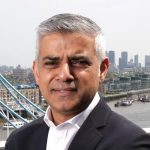
    The comments made by Sadiq Khan, the Mayor of London, on 17 February 2022.

    We are facing a pivotal moment in our efforts to tackle the triple dangers of toxic air pollution, climate change and congestion and make London a green, fairer and safer city. Tackling air pollution has been a priority for me since I was first elected in 2016 and I’m more determined than ever to do everything I can to consign toxic air to the history books.

    However, the inquest into Ella Adoo-Kissi-Debrah’s death has underlined the need for us all to do much more to warn Londoners about the effects of air pollution. I’m delighted to be convening national and regional leaders and medical professionals to agree how we can best do this and ensure further action is taken to make sure no other child dies from London’s toxic air.

    We simply don’t have time to waste – deadly air pollution is permanently damaging the lungs of young Londoners and affecting older people who are more vulnerable to the impacts of poor air quality. This is also about social justice – we know pollution hits the poorest Londoners, who are least likely to own a car, the hardest, which is why I’m doing everything I can to improve air quality and protect the health of all Londoners.

  • Sadiq Khan – 2022 Comments on Storm Eunice

    Sadiq Khan – 2022 Comments on Storm Eunice

    The comments made by Sadiq Khan, the Mayor of London, on 18 February 2022.

    This Red Warning indicates a risk to life as extremely strong winds are now expected in the capital, providing the potential for flying debris and damage to buildings.

    I urge all Londoners to stay at home, do not take risks and do not travel unless it is absolutely essential.

    City Hall is in close contact with key agencies across the capital and our city is as prepared as possible for any potential impacts of Storm Eunice.

    However, it is vital that Londoners listen to the official advice today and stay at home until the storm has passed.

  • Liz Truss – 2022 Comments on Russian Cyber Attack on Ukraine

    Liz Truss – 2022 Comments on Russian Cyber Attack on Ukraine

    The comments made by Liz Truss, the Foreign Secretary, on 18 February 2022.

    The UK Government judges that the Russian Main Intelligence Directorate (GRU) were involved in this week’s distributed denial of service attacks against the financial sector in Ukraine.

    The attack showed a continued disregard for Ukrainian sovereignty. This activity is yet another example of Russia’s aggressive acts against Ukraine.

    This disruptive behaviour is unacceptable – Russia must stop this activity and respect Ukrainian sovereignty. We are steadfast in our support for Ukraine in the face of Russian aggression.

  • Liz Truss – 2022 Comments on Second OSCE Meeting Missed by Russia

    Liz Truss – 2022 Comments on Second OSCE Meeting Missed by Russia

    The comments made by Liz Truss, the Foreign Secretary, on 18 February 2022.

    Despite Russia’s claims to seek dialogue, all the evidence shows the opposite. This is the second OSCE meeting that Russia has boycotted. If Russia was serious about de-escalation, it would withdraw its troops and show up to these meetings. Instead we see contempt for the OSCE commitments to which it freely signed up.

    Russia has the opportunity to de-escalate, withdraw its troops, and engage in meaningful dialogue. It must do so.

  • Rebecca Pow – 2022 Comments on Isle of Wight Coastal Defence Scheme

    Rebecca Pow – 2022 Comments on Isle of Wight Coastal Defence Scheme

    The comments made by Rebecca Pow, the Floods Minister, on 16 February 2022.

    This vital £7 million in funding will bring the Isle of Wight coastal defence scheme one step closer to beginning construction, and once completed will see more than 3,700 island homes and businesses better protected from flooding and coastal erosion.

    This funding is just one part of our record £5.2 billion investment to better protect hundreds of thousands of properties across England.

  • Sajid Javid – 2022 Comments on Visit to North East and Yorkshire

    Sajid Javid – 2022 Comments on Visit to North East and Yorkshire

    The comments made by Sajid Javid, the Secretary of State for Health and Social Care, on 15 February 2022.

    Visiting Teesside and Doncaster, I’ve seen and heard prime examples of what makes this country one of the best in the world at not only improving the lives of patients, but also developing my innovative medicines and treatments to protect us and our international partners.

    The expansion of the Fujifilm Diosynth Biotechnologies site will not only benefit the local economy through the creation of hundreds of jobs – the development of medicines and vaccines means we will be continue to be prepared for potential future health threats.

    Doncaster and Bassetlaw Teaching Hospitals are taking excellent strides to improve the lives of patients in the area – especially through expanding capacity for cancer diagnosis which is a vital part of our national war on cancer, that will be underpinned by a new 10-year-plan.

    Seeing the excellent innovations in the North East and Yorkshire, it is no wonder the UK is the envy of the world in treatments and health innovations.

  • Liz Truss – 2022 Statement on Russia Not Attending OSCE Meeting

    Liz Truss – 2022 Statement on Russia Not Attending OSCE Meeting

    The statement made by Liz Truss, the Foreign Secretary, on 16 February 2022.

    Russia is patently failing to live up to the international commitments it has made around transparency.

    If the Kremlin is serious about a diplomatic resolution, then it needs to show up to diplomatic meetings and commit to meaningful talks. Russia’s refusal to engage with the OSCE process demonstrates its contempt for the commitments it freely signed up to.

    It is Russia that is the aggressor here. The troops stationed on the border are clear threat to Ukraine. The UK and our allies urge the Kremlin to withdraw its troops and enter discussions based on the proposals put forward by NATO to improve transparency and reduce risk.

  • Michael Ellis – 2022 Comments on Future Biological Security

    Michael Ellis – 2022 Comments on Future Biological Security

    The comments made by Michael Ellis, the Minister for the Cabinet Office and Paymaster General, on 16 February 2022.

    Ensuring that we are responding to the changing global security landscape and taking reasonable steps to ensure public safety is of critical importance. COVID-19 shone a light on the significance of biological security and ensuring we have robust plans in place to protect the public from threats here in the UK and overseas.

    That’s why, following the Integrated Review, the Government will be looking into how we are protecting the country and its interests from significant biological risks. This will include considering the evolving priorities since the pandemic and rapid advances in science and technology across all aspects of biological security.

    Tackling future challenges effectively requires evidence-based policy and decision-making and a collaborative science base. I urge experts to inform our discussions and provide further insight and best practice to ensure the best minds and talent across the UK are feeding into our Strategy.