Tag: 2022

  • Keir Starmer – 2022 Speech on Ukraine

    Keir Starmer – 2022 Speech on Ukraine

    The speech made by Keir Starmer, the Leader of the Opposition, in the House of Commons on 22 February 2022.

    Yesterday was a dark day for Europe. The Russian President denied the right of a sovereign nation to exist, unilaterally recognising separatist movements that he sponsors and that seek to dismember Ukraine. Then, under the cover of darkness, he sent in troops to enforce his will. Putin appears determined to plunge Ukraine into a wider war. We must all stand firm in our support for Ukraine. We support the freedom of her people and their right to determine their own future without the gun of an imperialist held to their head.

    There can be no excuses for Russia’s actions. There is no justification for this aggression. A war in Ukraine will be bloody, it will cost lives, and history will rightly scorn Putin as the aggressor. Putin claims to fear NATO expansion, but Russia faces no conceivable threat from allied troops or from Ukraine. What he fears is openness and democracy. He knows that, given a choice, people will not choose to live under the rule of an erratic and violent authoritarian, so we must remain united and true to our values across this House and with our NATO allies. We must show Putin that we will not be divided.

    I welcome the sanctions introduced today and the international community’s efforts to unite with a collective response. However, we must be prepared to go further. I understand the tactic of holding back sanctions on Putin and his cronies to try to deter an invasion of the rest of Ukraine, but a threshold has already been breached. A sovereign nation has been invaded in a war of aggression based on lies and fabrication. If we do not respond with a full set of sanctions now, Putin will once again take away the message that the benefits of aggression outweigh the costs. We will work with the Prime Minister and our international allies to ensure that more sanctions are introduced.

    Russia should be excluded from financial mechanisms, such as SWIFT, and we should ban trading in Russian sovereign debt. Putin’s campaign of misinformation should be tackled. Russia Today should be prevented from broadcasting its propaganda around the world. We should work with our European allies to ensure that the Nord Stream 2 pipeline is cancelled. Whatever the sequencing of these sanctions, this will not be easy. Britain must work with our European allies to handle the disruption to the supply of energy and raw materials. We must defend ourselves and our allies against cyber-attacks. We must bring together the widest possible coalition of nations to condemn this action against a sovereign UN member state.

    Ukrainians are defending their own country and democracy in Europe. We must stand ready with more military support for Ukraine to defend itself, and we must stand ready to do more to reassure and reinforce NATO allies in eastern Europe, but we must also get our own house in order. The Prime Minister said that the lesson from Russia’s 2014 invasion of Donbas is that we cannot just let Vladimir Putin get away it, but until now we have. We have failed to stop the flow of illicit Russian finance into Britain. A cottage industry does the bidding of those linked to Putin, and Russian money has been allowed to influence our politics. We have to admit that mistakes have been made, and we have to rectify them.

    This must be a turning point. We need an end to oligarch impunity. We need to draw a line under Companies House providing easy cover for shell companies. We need to ensure that our anti-money-laundering laws are enforced. We need to crack down on spies, and we have to ensure that money is not pouring into UK politics from abroad.

    Russian aggression has now torn up the Minsk protocol and the Budapest memorandum, but even at this late hour we must pursue diplomatic routes to prevent further conflict, so can the Prime Minister tell us what international diplomatic efforts are going on and what role the UK will have in that process? We know Putin’s playbook. He seeks division; we must stay united. He believes the benefits of aggression outweigh the consequences, so we must take a stand, and he believes the west is too corrupted to do the right thing, so we must prove him wrong. I believe we can, and I offer the support of the Opposition in that vital endeavour.


  • Boris Johnson – 2022 Statement on Ukraine

    Boris Johnson – 2022 Statement on Ukraine

    The statement made by Boris Johnson, the Prime Minister, in the House of Commons on 22 February 2022.

    With permission, Mr Speaker, I will make a statement about the situation in Ukraine. Last night, President Putin flagrantly violated the Minsk peace agreements by recognising the supposed independence of the so-called people’s republics of Donetsk and Luhansk in eastern Ukraine. In a single inflammatory speech, he denied that Ukraine had any “tradition of genuine statehood”, claimed that it posed a

    “direct threat to the security of Russia”,

    and hurled numerous other false accusations and aspersions.

    Soon afterwards, the Kremlin announced that Russian troops would enter the breakaway regions under the guise of peacekeepers, and Russian tanks and armoured personnel carriers have since been spotted. The House should be in no doubt that the deployment of these forces in sovereign Ukrainian territory amounts to a renewed invasion of that country. By denying Ukraine’s legitimacy as a state and presenting its very existence as a mortal threat to Russia, Putin is establishing the pretext for a full-scale offensive.

    Hon. Members will struggle to contemplate how, in the year 2022, a national leader might calmly and deliberately plot the destruction of a peaceful neighbour, yet the evidence of his own words suggests that is exactly what President Putin is doing. I said on Saturday that his scheme to subvert and invade Ukraine was already in motion before our eyes. The events of the past 24 hours have, sadly, shown this to be true.

    We must now brace ourselves for the next possible stages of Putin’s plan: the violent subversion of areas of eastern Ukraine by Russian operatives and their hirelings, followed by a general offensive by the nearly 200,000 Russian troops gathered on the frontiers at peak readiness to attack. If the worst happens, a European nation of 44 million men, women and children would become the target of a full-scale war of aggression waged, without a shred of justification, for the absurd and even mystical reasons that Putin described last night. Unless the situation changes, the best efforts of the United States, Britain, France, Germany and other allies to avoid conflict through patient diplomacy may be in vain.

    From the beginning, we have tried our utmost—we have all tried—to find a peaceful way through this crisis. On 11 February, my right hon. Friend the Defence Secretary and the Chief of the Defence Staff, Admiral Radakin, paid the first joint visit to Moscow by the holders of their offices since Churchill, who was also Defence Minister at the time, travelled to Russia with General Alanbrooke in 1944. They held over three hours of frank discussions with the Russian Defence Minister, General Shoigu, and the chief of staff, General Gerasimov, demonstrating how seriously we take Russia’s security concerns, how much we respect her history and how hard we are prepared to work to ensure peaceful co-existence.

    My right hon. Friend the Foreign Secretary delivered the same messages when she met her Russian counterpart in Moscow on 10 February. I have spoken on a number of occasions to President Putin since this crisis began, as has President Biden, while President Macron and Chancellor Scholz have both visited Moscow. Together we have explored every avenue and given Putin every opportunity to pursue his aims by negotiation and diplomacy.

    I tell the House: we will not give up—we will continue to seek a diplomatic solution until the last possible moment—but we have to face the possibility that none of our messages has been heeded and that Putin is implacably determined to go further in subjugating and tormenting Ukraine. It is because we suspected as much that the UK and our allies repeatedly sounded the alarm about a possible new invasion, and we disclosed much of what we knew about Russia’s military build-up.

    Britain has done everything possible to help Ukraine to prepare for another onslaught: training 22,000 soldiers, supplying 2,000 anti-tank missiles, and providing £100 million for economic reform and energy independence. We will now guarantee up to $500 million of Development Bank financing. I travelled to Kyiv to meet President Zelensky on 1 February and I saw him again in Munich at the weekend. I spoke to him last night, soon after President Putin’s speech, and assured him—as I am sure the whole House would agree was the right thing to do—of Britain’s unwavering support for Ukraine’s sovereignty and territorial integrity.

    Now the UK and our allies will begin to impose the sanctions on Russia that we have already prepared, using the new and unprecedented powers granted by this House to sanction Russian individuals and entities of strategic importance to the Kremlin. Today the UK is sanctioning the following five Russian banks: Rossiya, IS Bank, Genbank, Promsvyazbank and the Black Sea bank. And we are sanctioning three very high net worth individuals: Gennady Timchenko, Boris Rotenberg and Igor Rotenberg. Any assets they hold in the UK will be frozen, the individuals concerned will be banned from travelling here, and we will prohibit all UK individuals and entities from having any dealings with them.

    This is the first tranche—the first barrage—of what we are prepared to do, and we hold further sanctions at readiness to be deployed alongside the United States and the European Union if the situation escalates still further. Last night, our diplomats joined an emergency meeting of the UN Security Council, and we will raise the situation in the Organisation for Security and Co-operation in Europe.

    Let me emphasise what I believe unites every member of this House with equal determination: the resolve of the United Kingdom to defend our NATO allies is absolute and immovable. We have already doubled the size of our deployment in Estonia, where the British Army leads NATO’s battlegroup, and when I met President Levits of Latvia and Prime Minister Kallas of Estonia in Munich on Saturday, I told them that we would be willing to send more British forces to help protect our allies if NATO makes such a request.

    We cannot tell what will happen in the days ahead, but we should steel ourselves for a protracted crisis. The United Kingdom will meet this challenge side by side with our allies, determined that we will not allow Putin to drag our continent back into a Hobbesian state of nature where aggression pays and might is right. It is precisely because the stakes are so high that Putin’s venture in Ukraine must ultimately fail—and must be seen to fail. That will require the perseverance, unity and resolve of the entire western alliance, and the UK will do everything possible to ensure that that unity is maintained.

    Now our thoughts should turn to our valiant Ukrainian friends, who threaten no one and who ask for nothing except to live in peace and freedom. We will keep faith with them in the critical days that lie ahead, and whatever happens, Britain will not waver in our resolve. I commend this statement to the House.

  • Liz Truss – 2022 Statement on the EU-UK Withdrawal Agreement Joint Committee

    Liz Truss – 2022 Statement on the EU-UK Withdrawal Agreement Joint Committee

    The statement made by Liz Truss, the Foreign Secretary, in the House of Commons on 22 February 2022.

    The Withdrawal Agreement Joint Committee met yesterday in Brussels. I co-chaired the meeting alongside European Commission Vice-President, Maroš Šefčovič. A joint statement was agreed and published on gov.uk.

    The Committee received an update on the work of the Withdrawal Agreement Specialised Committees since the last meeting on 9 June. They also discussed citizens’ rights and progress on negotiations to find practical solutions to the problems with the Northern Ireland protocol.

    On citizens’ rights, both parties noted the continued constructive collaboration to ensure that the rights of our respective nationals are protected. The UK urged the EU to ensure consistent support for all UK nationals living in the EU, with a focus on three areas of concern: first, UK nationals in member states having difficulties accessing their rights because of requests for permits which are not required; secondly, member states requesting information of UK nationals which is not required under the withdrawal agreement in order to secure their status; and thirdly, a lack of safeguards and clarity on appeals where residence is not granted. The EU raised its concerns with aspects of the UK’s EU settlement scheme, focused on the legal base for guarantee of rights and the need for those with pre-settled status to apply for settled status at the point of qualification. The UK made clear there is no legal uncertainty for EU citizens in the UK.

    In relation to the Northern Ireland protocol, both parties emphasised that they shared an overriding commitment to protect the Belfast/Good Friday agreement in all its dimensions. The UK outlined the problems the protocol posed for trade within the UK internal market and Northern Ireland’s integral place in the United Kingdom, which was putting at risk the delicate balance essential to that agreement and political stability in Northern Ireland. This underlined the increased urgency of finding solutions. Both sides reiterated the importance of further engagement, including with the Northern Ireland Assembly and Executive, and wider Northern Ireland civic society and business.

    The UK and EU also discussed activity in the Withdrawal Agreement Specialised Committees since the previous Withdrawal Agreement Joint Committee on 9 June 2021, and agreed to adopt two technical decisions:

    Decision No. [1]/2022 amending the agreement on the withdrawal of the United Kingdom of Great Britain and Northern Ireland from the European Union and the European Atomic Energy Community—principally covering data sharing linked to social security co-ordination.

    Decision No. [2]/2022 amending decision No. 7/2020 establishing a list of 25 persons who are willing and able to serve as members of an arbitration panel under the agreement—to reflect a change on the EU side.

  • Mims Davies – 2022 Statement on DWP Train and Progress

    Mims Davies – 2022 Statement on DWP Train and Progress

    The statement made by Mims Davies, the Parliamentary Under-Secretary of State for Work and Pensions, in the House of Commons on 21 February 2022.

    The Government will be expanding the additional training flexibility element of DWP Train and Progress until April 2023.

    DWP Train and Progress is a key policy initiative introduced in April 2021 that reinforces the importance of work coach engagement to identify and help address claimants’ skills needs. It is part of the overall support offered to assist in meeting their work and career goals.

    It mobilises our network of jobcentres to make best use of existing flexibilities within the universal credit system to deliver the skills interventions designed to help people move into work.

    A core element of DWP Train and Progress is to enable universal credit claimants to access and participate in full-time work-related training opportunities for up to 16 weeks such as Department for Education funded skills bootcamps and the equivalent delivered by both the Scottish and Welsh Governments.

    It is vital the Jobcentre Plus support offer includes the ability to enable claimants to enhance their existing skills or gain the new skills that local employers need. The recently announced Way to Work campaign will ensure eligible benefit claimants are rapidly supported to take on the many vacancies that remain unfilled in the wider labour market. The Government also recognise that for some claimants and some job roles additional upskilling will be necessary in order to enter and progress in sustained employment.

    Through the current flexibilities, UC claimants have been able to access wave 1 of the £540 million Department for Education skills bootcamps and claimants will be able to learn skills in sectors such as construction, engineering, and logistics as roll-out continues.

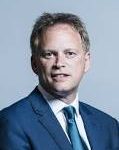
  • Grant Shapps – 2022 Statement on TFL Funding Extension

    Grant Shapps – 2022 Statement on TFL Funding Extension

    The statement made by Grant Shapps, the Secretary of State for Transport, in the House of Commons on 21 February 2022.

    I am updating the House on an interim extension of the current Transport for London funding settlement that was due to expire on 18 February 2022 by one week to 25 February 2022. This was requested by TfL and has been accepted by Government.

    Since the start of the pandemic, we have supported TfL with over £4.5 billion of funding through extraordinary funding settlements for Transport for London. We have recognised the reliance of London’s transport network on fare revenue. We have recognised that demand and therefore passenger revenue has been volatile and have responded accordingly, compensating TfL for that revenue loss to ensure services can be maintained.

    The Government are still committed to supporting London’s transport network as we have since the start of the pandemic and they had offered TfL and the Mayor of London a fourth extraordinary funding agreement. TfL has asked for an extension of one week to allow the Mayor of London to consider the terms of the settlement letter and agree it with Government.

    The Government are committed to supporting London and the transport network on which it depends, balancing that with supporting the national transport network. I will update the House on the details of the next financial settlement after the close of this extension period.

  • Priti Patel – 2022 Statement on Tier 1 Investor Route

    Priti Patel – 2022 Statement on Tier 1 Investor Route

    The statement made by Priti Patel, the Home Secretary, in the House of Commons on 21 February 2022.

    On Thursday 17 February 2022, I laid before the House a statement of changes in the Immigration Rules, which closed the Tier 1 (Investor) route to new applications with immediate effect.

    The Government have taken this step because it is no longer clear the Tier 1 (Investor) route offers the best means of encouraging investment-related migration to the United Kingdom, and it is considered that reforms to the existing innovator route offer a better means of making more targeted provision for investment-related migration and reducing the risk of exposure of the immigration system to illicit finance and hostile state actors.

    The closure of the Tier 1 (Investor) route had immediate effect for operational reasons and to preserve the integrity of the immigration system. It is our assessment that were the route not closed with immediate effect, closure of the route would prompt a large number of applications, with a risk that closure would particularly attract applications from those most motivated to exploit the current arrangements before they end, whether they are those who may not comply with the requirements of the immigration rules or those who may pose national security risks.

    The statement of changes does not affect the position of those who have already obtained a permission under the route, and who may wish to seek an extension of stay or apply for settlement under the current arrangements.

    The Tier 1 (Investor) route has provided a route of entry and stay for overseas nationals with access to a minimum level of funds and an intention to invest those funds in the United Kingdom, without testing the economic benefit to the United Kingdom of that investment or the track record of the individual as an investor. The overall conclusion of the Migration Advisory Committee’s assessment of the route was that it primarily benefits the investors rather than the UK.

    The operation of the route has facilitated the presence of persons relying on funds that have been obtained illicitly or who represent a wider security risk. In addition, the route has been compromised by organised abuse of its requirements through bogus investments schemes.

    These concerns have been highlighted, for example, in the findings of the Intelligence and Security Committee’s Russia report in relation to the scheme, as well as the recent Chatham House report on money laundering.

    In response to these concerns, the Government have previously committed to publishing a review of historical issuance of visas under this route. That review is being finalised and it is our aim to publish it in the near future.

    The Government have concluded that arrangements for attracting investment in the migration system warrant a substantively different approach to what has gone before. It is therefore our intention that new provision for investment-related migration should be delivered through reforms to the existing Innovator route, which we expect to deliver in the autumn of this year. This reformed offer will make provision for overseas nationals who can show they are skilled and experienced professional business angel investors, with a track record of founding and investing in innovative businesses overseas, along with access to a minimum level of funds and credible plans to engage in similar activity in the UK.

    The proposed future scheme will no longer focus exclusively on having cash in the bank and making passive investments. It will instead be focused on attracting the brightest and best through a rigorous assessment of an applicant’s business background, skills and investment plans. This will ensure those given a visa are appropriate individuals who will genuinely bring tangible benefits to the UK economy. Settlement will be conditional on applicants achieving genuine and tangible economic impacts, such as job creation, directly through their economic activity in the UK. They will ensure the British public can have confidence that those who obtain this significant privilege have genuinely earned it, rather than having bought it.

    It will be for the reformed Innovator route’s endorsing bodies to make an assessment of whether these criteria are met. The Government have already indicated that the selection of new endorsing bodies to support the operation of the Innovator route will be delivered through a commercial exercise. We are taking steps to inform the market that this expansion of the scope and purpose of the Innovator route will form part of the commercial requirement as we go to tender in the near future.

    To be clear, these future arrangements will remain subject to Home Office security checks, alongside requiring appropriate checks by both the financial institutions handling applicants’ funds and by the endorsing body, ensuring three levels of scrutiny of each application.

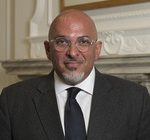
  • Nadhim Zahawi – 2022 Statement on Political Impartiality in Schools

    Nadhim Zahawi – 2022 Statement on Political Impartiality in Schools

    The statement made by Nadhim Zahawi, the Secretary of State for Education, in the House of Commons on 21 February 2022.

    Last week, the Department for Education published non-statutory guidance on schools’ legal duties on political impartiality, as set out in sections 406 and 407 of the Education Act 1996, part 2 of the schedule to the Education (Independent School Standards) Regulations 2014 and many academies’ funding agreements.

    These requirements have applied to schools for many years, and most schools are experienced in meeting them. However, the Government are aware that a number of recent issues have raised concerns and have made some teachers less confident to apply them in practice. Therefore, we have developed this guidance, working with the sector to ensure it is comprehensive and helpful.

    Teaching about complicated and sensitive political issues can be challenging, but it is important that teachers can cover the full range of political issues they need to with confidence. The guidance is clear that it is not seeking to limit the range of political issues and viewpoints schools can and do teach about.

    It is important that children are supported in their education to understand a range of perspectives and form their own views, without being unduly influenced by the personal views of those teaching.

    This is what helps children and young people go on to become active citizens who can engage in our democratic society and who have an understanding and respect for legitimate differences of opinion.

    This guidance will offer assurance to most schools that their legal duties in this area are being met without issue and help them continue their good work. For other schools the guidance should help them put in place the necessary processes to ensure adherence going forward.

    Importantly, this guidance should also help all parties—including parents, carers, and others—to understand how schools should go about meeting their legal duties, allowing issues around impartiality to be taken seriously and resolved calmly through dialogue.

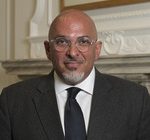
  • Nadhim Zahawi – 2022 Statement on Education and Living With Covid-19

    Nadhim Zahawi – 2022 Statement on Education and Living With Covid-19

    The statement made by Nadhim Zahawi, the Secretary of State for Education, in the House of Commons on 21 February 2022.

    Today, I would like to set out what the Government’s ‘Living with covid-19’ strategy means for education and childcare settings. As we move towards the endemic stage of covid-19, it is right that we empower people to make sensible decisions and trust in our fellow Britons to be sensible and look out for each other.

    As of 21 February, all staff, students and pupils of secondary age and above in mainstream education and childcare settings are no longer advised to continue regular twice-weekly testing. This change is in line with the very latest public health advice, and because we now know that the risk of severe illness from covid-19 for most children, young people and fully vaccinated adults is much reduced.

    Staff and students of secondary age and above in SEND settings, Alternative Provision settings, and SEND units within mainstream settings or equivalent in FE colleges are advised to continue twice-weekly testing. Staff in residential units in Children’s Social Care (Open and Secure Children’s Homes) and children of secondary age and above in Open Children’s Homes are also advised to continue twice-weekly testing. Children and young people arriving in Secure Children’s Homes should test on arrival.

    The education testing delivery channels will remain open so that staff and students of secondary age and above can access tests if needed to respond to local public health advice, in particular in relation to outbreaks. Staff and students are also able to access test kits from their local pharmacy or via www.gov.uk.

    Mainstream settings will be advised to use any remaining stock of test kits to ensure access for students and their workforce in response to an outbreak if advised to do so by their local health protection teams.

    From 24 February, the Government will remove the legal requirement to self-isolate following a positive test. Adults and children who test positive will continue to be advised to stay at home and avoid contact with other people for at least five full days, and then to continue to follow the guidance until they have received two negative test results on consecutive days. In addition, the Government will:

    No longer ask fully vaccinated close contacts and those aged under 18 to test daily for seven days, and remove the legal requirement for close contacts who are not fully vaccinated to self-isolate.

    End self-isolation support payments and national funding for practical support, and the medicine delivery service will no longer be available.

    End routine contact tracing. Contacts will no longer be required to self-isolate or advised to take daily tests. Staff, children and young people should attend their education settings as usual. This includes staff who have been in close contact within their household, unless they are able to work from home.

    End the legal obligation for individuals to tell their employers when they are required to self- isolate.

    As part of the Government’s decision in January 2022 to move back to Plan A, face coverings are no longer recommended in classrooms, teaching spaces and communal areas. Directors of Public Health may recommend temporarily re-introducing precautionary measures such as face coverings or testing in individual settings or across an area, informing my Department of their intention to do so to ensure any extra measures are proportionate.

    We have now exceeded our public commitment to deliver 300,000 CO2 monitors, with over 360,000 monitors delivered in the autumn term. We are also making up to 9,000 air cleaning devices available to all of those settings that need them. Over 6,000 have already been successfully delivered to eligible settings; the majority of the remaining deliveries will be completed by the end of February. And we continue to share advice and best practice on how settings can ensure that their occupied spaces are adequately ventilated, including a short video clip we recently filmed with Professor Cath Noakes, Professor of Environmental Engineering for Buildings.

    From my previous role as vaccines Minister, overseeing one of the fastest roll outs in Europe, I know the importance of the vaccination programme in the fight against covid-19. Vaccinations remain our very best line of defence and I continue to encourage all eligible staff and students aged 12 and over to take up the offer of a vaccine to protect themselves and those around them. The recent extension of the programme to all five to 11-year-olds will enable all school-aged children to be vaccinated. The NHS will prepare to extend this non-urgent offer to all children during April so parents can, if they want, take up the offer to increase protection against potential future waves of covid-19 as we learn to live with this virus. This group will be offered two 10 microgram doses of the Pfizer vaccine eight weeks apart—a third of the amount used for adult vaccinations. The Government have also announced today that we have accepted the advice from the independent Joint Committee on Vaccination and Immunisation to offer, from spring, an additional covid-19 booster jab to people aged 75 years and over, residents in care homes for older adults, and people aged 12 years and over who are immunosuppressed.

    Vaccines are critical as a first line of defence, and antivirals now form a vital part of our approach as we learn to live with covid-19 by preventing the most vulnerable from being hospitalised. The Government have therefore agreed deals to secure a total of 4.98 million patient courses of oral antiviral treatments in our efforts to reduce the impact of covid-19 and the Omicron variant across the UK.

    While we make this shift to living with covid-19, we know that education and childcare settings may continue to experience workforce pressures. To help with this, the covid-19 workforce fund has now been extended, providing financial support to eligible schools and colleges for costs incurred due to staff absences from Monday 22 November 2021 until Friday 8 April 2022. The fund is available to support schools and colleges facing significant staffing and funding pressures in continuing to deliver high-quality face-to-face education to all pupils.

    Updated guidance for all education and childcare settings will be published in line with the implementation of the ‘Living with covid-19’ plan.

    Finally, I want to acknowledge the incredible efforts of the education and childcare settings who have continued to provide provision and support to children and young people throughout the pandemic.

  • Jeremy Quin – 2022 Statement on the Defence Equipment Plan

    Jeremy Quin – 2022 Statement on the Defence Equipment Plan

    The statement made by Jeremy Quin, the Minister for Defence Procurement, in the House of Commons on 21 February 2022.

    I am pleased to place in the Library of the House a copy of the 2021 Defence Equipment Plan Report, which sets out our plans to deliver the equipment needed by our armed forces to defend the country and protect our national interest.

    This year’s equipment plan report is one of the most important in recent years as it implements the strategy and financial reset provided by the integrated review, the defence Command Paper and the spending review. The integrated review outlined the evolving nature of the threats we face. This equipment plan sets out how our military capability will evolve to meet these threats within an affordable financial envelope.

    This equipment plan sets out how we are funding the capabilities we need, including more ships for the Royal Navy, a new batch of F-35s, a new medium helicopter and a major upgrade to our land equipment. This represents a significant enhancement on last year’s capability plans while, through additional investment and tough prioritisation, we have reversed the £7.3 billion pressure on the plan outlined last year to a surplus.

    This year is the first since 2018 when we have entered a new financial year with a funded contingency for the equipment plan. We have funding set aside to deal with urgent operational requirements and funding set aside for future research and development and its exploitation. We have made good progress in the first year of delivery end for the first time in many years, we expect to live within budget without Ministers having to take decisions on savings measures in year or running central savings exercises.

    This has been possible by setting a clear vision for the armed forces through last year’s integrated review and defence Command Paper, which has allowed us to retire less relevant equipment and refocus our programme on the kit we need for the future. We are making progress on delivering this change, including cancelling the Warrior sustainment programme and setting out plans for a more high-tech and agile Army as set cut in our recent Future Soldier publication. This equipment plan relies on fewer low confidence efficiency measures than in previous years and our plans to reduce costs are supported by significant investments in acquisition, support and digital programmes to improve the way the Department operates.

    We have, alongside capability investments, reversed the decline in defence R and D spend with a £6.6 billion ringfenced commitment. This will help reduce the risks associated with identifying and bringing into development the game-changing future capabilities we will need to meet the future threat.

    However, delivering state of the art defence capabilities carries inherent risk. On a plan of this scale and over this timeline there will always be risks to affordability. We are clear-eyed on those risks and set them out in our report. As the National Audit Office have said, the MOD is responsible for some of the most technically complex, risky and costly procurement programmes in government. New, large and complex programmes like the Future Combat Air System, which will deliver the next generation of combat air capability, and the replacement warhead, which will allow us to renew the UK’s nuclear deterrent, are extraordinarily complex endeavours. We continue to carry out and publish our own independent challenge of costings to help us understand and mitigate financial risk. Excluding Dreadnought, which has its own contingency funding, the risk identified in programmes which were reviewed both last year and this reduced by £0.3 billion, showing an improvement in the Department’s costing and management of risk. However, additional risk inevitably arises from new programmes entering the plan, including the warhead programme.

    Planning over 10 years is inherently uncertain and we must be able to respond to changing threats and project-specific circumstances. As challenges emerge on programmes which delay expenditure, we will be flexible in accelerating other programmes to maintain momentum and where possible reduce cost. The HM Treasury £10 billion contingency for Dreadnought shields the rest of the equipment plan from changes in annual spend on our largest and most complex programme. We continue to reduce risk through the forward purchase of foreign currency.

    New funding has enabled key decisions to be taken and priorities set but this alone is not enough to deliver on time and to budget. Having the right skills, tools, data and processes are critical. The Department has made real progress, which we set out in our report, but we recognise there is more to do. To deliver value for money for the taxpayer we have invested in our acquisition reform programme which aims to improve the speed and agility of our procurement processes and we are working to improve the capability and availability of senior responsible owners for programmes.

    The nature of defence means that the plan is not without risks to which we will be agile in responding, however, new funding, a clear vision and a balanced plan mean that this is a very different programme to those of recent years.

  • John Glen – 2022 Statement on Collective Money Purchase Schemes

    John Glen – 2022 Statement on Collective Money Purchase Schemes

    The statement made by John Glen, the Economic Secretary to the Treasury, in the House of Commons on 21 February 2022.

    Collective money purchase pension schemes, which are also known as collective defined contribution pension schemes, are a new style of pension scheme. Contributions into the scheme are pooled and invested with a view to delivering an aspired level or benefit at a fixed cost, and without guarantees. The framework for these schemes was set out in the Pension Schemes Act 2021 and the tax regime was set out in the Finance Act 2021.

    The Government’s policy intention has always been that payments made from a collective money purchase pension scheme in wind-up should be treated as authorised payments. Following the publication of the draft Occupational Pension Schemes (Collective Money Purchase Schemes) Regulations 2022, the Government are aware of two instances where there is some uncertainty about how benefits from such a scheme would be treated in tax terms, should it ultimately become necessary to wind it up.

    The first is about whether a member of such a scheme which is winding up can designate their funds into drawdown before transferring to another scheme. The Government can confirm that the policy intent here remains that this would be an authorised payment.

    The second is whether such a scheme, in winding up, could pay a member a periodic income as an authorised payment. Here, too, the Government confirm that the policy intent continues to be that this would be available as an authorised payment.

    This statement reconfirms that the original policy has not changed following the publication of the regulations and sets out the Government’s commitment to ensuring that this policy intent is delivered, including by pursuing further legislative change where necessary. Tax guidance and any necessary draft clauses for tax legislation will be published in due course as part of the usual tax policy-making process.