Tag: 2022

  • Paul Scully – 2022 Statement on the Post Office Horizon IT System

    Paul Scully – 2022 Statement on the Post Office Horizon IT System

    The statement made by Paul Scully, the Parliamentary Under-Secretary of State for Business, Energy and Industrial Strategy, in the House of Commons on 24 February 2022.

    First, I apologise, Mr Speaker, for the misunderstanding. I was prepared to make a statement, but obviously the current situation and affairs have got in the way. I am happy to provide an update on Horizon matters since I last made a statement in December. I met the Business, Energy and Industrial Strategy Committee last month, and last week the Select Committee published its interim report on the Post Office and Horizon IT scandal. The Government will consider the Committee’s recommendations and respond in due course.

    People need to know about how this scandal came about and what protections are in place to avoid history repeating itself. That is why the Government established the Post Office Horizon IT inquiry to investigate exactly what went wrong. The evidence from postmasters who have participated since the inquiry hearings began last week has been harrowing to hear, and I thank those postmasters for their courage and their willingness to revisit the trauma they have experienced. Compensation cannot take away the suffering that affected postmasters have experienced, but we are determined that each eligible person gets what is due to them, and that that is paid as quickly as possible. Of the 72 postmasters whose convictions have been overturned, more than 95% have applied so far for an interim compensation payment of up to £100,000, of which 63 offers have been accepted and paid. The Government are pushing for final settlements for quashed convictions to follow as quickly as possible, and negotiations on the first two have begun. The Government are determined that all unjust convictions are quashed. The Post Office is reaching out to affected postmasters.

    The Post Office is also in discussion with other public prosecuting bodies responsible for the convictions of postmasters that may have relied on Horizon evidence to ensure that those postmasters are also contacted and enabled to appeal. Offers have been made to over 40% of applicants and compensation has been paid to 764 postmasters who have applied to the historical shortfall scheme. So far, 28 postmasters are proceeding through a dispute resolution process aimed at achieving acceptable settlements. At least 95% of those cases should have been dealt with by the end of the year.

    With compensation for overturned convictions and the historical shortfall scheme well under way, the postmasters on whom my attention is now focused are those who exposed the whole scandal by taking the Post Office to the High Court. I know that many hon. Members support the Select Committee’s view that it is unfair that they received less compensation than those who were not part of the case. I sympathise with that view too. I cannot yet report a resolution of that legally complex issue, but we are doing everything we can to address it.

    The compensation that postmasters are due will exceed what the Post Office can afford, so the Government are stepping in to meet a good deal of the cost of that compensation. I recognise that is an unwelcome burden on the taxpayer, but the House, and I am sure taxpayers themselves, will agree that the alternative is unacceptable.

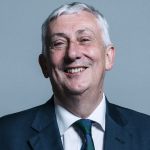
  • Lindsay Hoyle – 2022 Statement on the Behaviour of MPs in the Chamber

    Lindsay Hoyle – 2022 Statement on the Behaviour of MPs in the Chamber

    The statement made by Lindsay Hoyle, the Speaker of the House of Commons, in the House on 24 February 2022.

    Before we come to the business questions, I wish to say something about the conduct of Prime Minister’s questions. PMQs are an important opportunity for the House to hold the Prime Minister to account. It is important that they are conducted according to the rules of the House, that we have an opportunity for as many Members to question the Prime Minister as possible in the given time, and that the Prime Minister and those asking him questions can be heard. I want to address three issues that were raised yesterday and are relevant to that.

    First, the hon. Member for Bradford East (Imran Hussain) made criticisms of the conduct of the right hon. Member for Sherwood (Mark Spencer). Those types of criticisms may only be made if the House is considering a substantive motion that deals with them. They may not be made as sideswipes during questions or during debates on other matters. That is to avoid our question times and debates descending into partisan accusations and counter-accusations. I know that the hon. Member for Bradford East understands the issue and that he has apologised to the right hon. Member for Sherwood.

    Secondly, I want to address the issue of the length of questions and answers. I wish to call as many Members as possible. Sometimes we have over-long answers, and I often have to interrupt Ministers when that is the case, but sometimes the questions themselves are far too long. They are meant to be questions, not statements followed by a question, and I hope that Members will consider others rather than themselves. We saw a little bit of that yesterday from the hon. Member for Brighton, Pavilion (Caroline Lucas). Considering that a certain amount of time is made available to the Leader of the Opposition and the leader of the Scottish National party, the remaining time is limited and I have to make sure it is used as effectively and fairly as possible. If Members take too long with their questions, they take away the opportunity for other Members to ask questions. When a Member is asking an over-lengthy question, I try to give them an opportunity to come to an end before stopping them, as I did yesterday. There is nothing personal about that, and I routinely have to call Members on all sides to account for the length of questions. I plead with all Members to keep questions focused and brief.

    Finally, I want to deal with a related issue. It is not always easy to ask short, snappy questions when other Members are shouting and barracking. There was far too much of that yesterday, with a disproportionate amount of it coming from the Government Benches, and particularly from those at the side of the Chair, which made it very hard to hear what was being said. I hope that those on the Government Benches will take this on board, and in particular that the Chief Whip will deal with some of his crowd at the side of the Chair. If Members persist in making excessive noise and barracking colleagues, they will be asked to leave the Chamber.

    We want PMQs to be a showcase for this House and for our democracy, so I say to all hon. and right hon. Members: please respect the rules of the House about how we refer to each other; make questions and answers concise; and behave with dignity in a way that allows questions and answers to be heard.

  • Lindsay Hoyle – 2022 Statement on the Post Office Horizon IT System

    Lindsay Hoyle – 2022 Statement on the Post Office Horizon IT System

    The statement made by Lindsay Hoyle, the Speaker of the House of Commons, on 24 February 2022.

    Before the urgent question, I wish to make a short statement about the sub judice resolution. I have been advised that there are active legal proceedings in the Court of Appeal in respect of the quashing of convictions of postmasters and postmistresses which relied on evidence from the Post Office Horizon IT system. I am exercising the discretion given to the Chair in respect of the resolution on matters of sub judice to allow reference to those proceedings, as they concern issues of national importance. However, I urge Members to exercise caution in what they say and to avoid referring in detail to cases that remain before the Court of Appeal.

    May I also say that I am disappointed, as this urgent question could have been granted at other times over the past three days? I was promised there would be a statement. There has been a chance to convert it to a statement, but that has completely failed. Thank goodness that the hon. Member for North West Leicestershire (Andrew Bridgen) stuck with it by putting in for a UQ every day. If you are going to give me advice, I expect you to stick to it. I do not think it is a good reason.

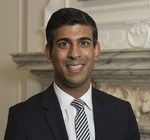
  • Rishi Sunak – 2022 Speech at Bayes Business School

    Rishi Sunak – 2022 Speech at Bayes Business School

    The speech made by Rishi Sunak, the Chancellor of the Exchequer, on 24 February 2022.

    Thank you for that warm welcome.

    Many of you will have woken up this morning to scenes of explosions in cities across Ukraine. The whole world is rightly appalled at Russia’s unprovoked aggression. The Prime Minister has called this an attack without provocation and without any credible excuse

    When the sovereign freedom of one democratic nation is threatened, wherever they may be in the world, democracy everywhere is challenged.

    As such, if our commitment to freedom is to mean anything, we must, acting in unison with our allies, apply severe economic cost to these actions.

    The Prime Minister will be making a statement in parliament later today, and you can expect significant further sanctions to be brought forward.

    I have spoken with the Governor of the Bank of England this morning, and we are closely coordinating across the financial authorities to monitor financial stability .

    And we are also keeping a careful watch on energy markets. As a result of Russia’s actions we are already seeing volatility in wholesale gas prices.

    We are with Ukraine and its people at this difficult time.

    And as I stand here in front of all of you, able to debate ideas, to disagree with one another, but in the knowledge that we will leave as friends and in safety…

    …I am reminded that such things are all too easily taken for granted.

    And it is all the more important that we never cease to extol the virtue of democracy and the freedom it brings here at home, as well as around the world.

    President, Dean, ladies and gentleman let me now turn to todays lecture

    As we come out of the Covid crisis, much like almost every other crisis in recent history where government has been forced to act in an extraordinary manner, people are asking whether this level of intervention is the new normal. Some actively argue for it, and claim it is the foundation of a new economic model, where government is a permanently bigger presence in the market and our lives.

    I want to use today’s Mais lecture to talk to you about a different vision for our economy, the future economy we must build. An economy where businesses are investing more; where people of all ages are supported to learn; and, most importantly, where ideas and innovation constantly transform our lives.

    In short, a future economy built on a new culture of enterprise.

    And whilst a culture is made up of many things… one way of understanding it is the collective mass of the millions of decisions made by people and businesses.

    I can’t make decisions for people, and nor should I. It is the job of government to create the conditions, not determine the outcome. But I am clear that we need to change.

    I am optimistic about the future of this country and people’s desire to do things differently; to be bold and focused.

    We must put all our energies into three priorities: Capital. People. Ideas. And if we can do that, then we can rejuvenate our national productivity, restore hope and opportunity as we level up, and have confidence in our future happiness, prosperity and security.

    Our new culture of enterprise will take as its starting point a strong belief in a simple, enduring proposition: that the best way to organise our economy is around free market principles.

    Adam Smith famously remarked in the Wealth of Nations that “It is not from the benevolence of the butcher, the brewer, or the baker, that we expect our dinner, but from their regard to their own interest. We address ourselves, not to their humanity but to their self-love”. Very few comments in economic history have been as wise, as influential, or as widely misinterpreted as this one.

    Wise – because at its heart economic life is about all of us – and should benefit all of us.

    The result of human action but not of human design; influential – because systems built around the ideas of an open market economy have proven themselves through the overwhelming might of historical evidence; and yet widely misrepresented – because Adam Smith did not think the underlying driver of the market is greed but the universal and laudable desire to better the condition of ourselves and those we love.

    Smiths account of the market economy, is not as some have suggested a values free construct which rationalised social choice. Markets do not operate independently of societies; rather they are reliant on law and norms, to generate the crucial currency of trust. But more than this Adam Smith told us that even in markets peoples choices are not solely born of economic , they are enthused with empathy and the moral imagination.

    As he says at the start of his first great work, The Theory of Moral Sentiments:

    However selfish soever man may be supposed…

    …there are evidently some principles in his nature, which interest him in the fortune of others…

    …and render their happiness necessary to him…

    …though he derives nothing from it except the pleasure of seeing it.

    In his Mais lecture, the late Jonathan Sacks took this idea further…

    …arguing not just that the market was a moral force for good…

    …but that morality was its very foundation.

    Through the freedom to exercise our own wants, desires, and actions.

    The dignity of being able to support ourselves through the product of our own labour.

    And the moral responsibility that can only come from being exposed to the consequences – whether good or bad – of our own actions.

    I believe that a system built around the free exchange of goods and services, the responsibility of the individual, the division of labour – is the morally right way to organise our economy.

    And it works.

    As a machine for innovation and growth the free market is positively correlated with almost everything we imagine is desirable for humanity: higher living standards, greater wellbeing, longer lives lived in greater leisure, freedom and peace. The arc of human history has taught us that more than any other economic system, the free market provides the best possible route to achieving the most happiness and security for the greatest number of people.

    For all that there is a moral and material case for the market, I recognise its limits.

    First, because change is inherent in a free market; the “perennial gales” of disruption and dislocation are the price we pay for the promise of a better standard of living. The moral case for the market rests not just on freedom.

    It is not enough to say to someone whose job has moved overseas, whose wages aren’t growing, or whose occupation is no longer deemed useful: be grateful for your freedom. Yes, you can have freedom without dignity, but I doubt many of us in this room would choose it or think it a particularly edifying existence.

    So it is incumbent on government to support people, especially those unable to support themselves, and through the welfare state, public services and education. Its why we raised the National Living Wage, cut the tax rate in Universal Credit, and are so focused on reducing regional inequality and levelling up.

    Second, the free market creates the wealth that allows us to support our families and our communities. But we need to guard against the market reaching too far into these realms, eroding the bonds between us, and turning a market economy into a market society.

    And third, the market has limits in dealing with externalities like climate change, and periods of profound disruption like wars, financial crises, or pandemics. Having been part of a government that had to actively shutdown the economy, and introduced interventions like the furlough, I know this as well as anyone.

    But the biggest challenge the free market faces today is where new growth will come from. And that’s why we need a new culture of enterprise.

    We are caught in what we might call a ‘great slowing down’ across the western world, that began even before the Covid pause. Productivity, living standards, and dynamism are not growing fast enough.

    And the impact of these trends on people is being exacerbated by high inflation. This is primarily a global problem, driven by higher energy and goods prices.

    The government is dealing with high inflation by helping people with those extra costs, and through the monetary policy framework.

    But over the longer-term, the most important thing we can do is rejuvenate our productivity.

    Because when the economy and our standard of living are not growing fast enough, consent for the system is undermined. If we cannot accelerate growth, people will begin to lose faith in the moral and material case for free markets.

    Alternative sources of economic and political security will become more appealing.

    I am confident and optimistic about the future of liberal democracies, but nothing has a right to exist. So it is precisely in order to preserve the freedoms that only come from market economies that political leaders must ensure that they are successful.

    So the question we face today is urgent and it is consequential: How do we accelerate growth, and, in doing so, restore people’s faith in the free market?

    Now my answer to that question is to foster a new culture of enterprise. But before I explain that, I want to take on two alternative but false ideas about where growth is going to come from.

    The first is that the answer to everything is more Government.

    The idea that we must spend ever more, regardless of the impact on borrowing and debt, on the assumption that all spending is good and will naturally transform productivity, if only there was more of it.

    And hand in hand with those calls for higher spending are calls for more government intervention. We have seen a steady drift away from some of the very principles that make the free market effective.

    We can see this in the assumption that government should decide which sectors will be important in the future; should take a view on more and more prices in the economy; and the growing tolerance for businesses to be reliant on taxpayers’ support and never allowed to fail. Corporate welfare and ill-thought through subsidies are unfair to taxpayers, who pick up the bill.

    And unfair to other firms – including those not yet created – who could do better.

    I have deliberately left party politics almost entirely absent from this speech save for one point I wish to make – and it is actually about Conservative voters.

    In my experience, and perhaps contrary to received wisdom, it doesn’t matter whether you’re from the North or the South, live in a village, town or a city, there is a common set of values. They’re as opposed to bigger government in the Tees Valley as they are in the Thames Valley.

    What people everywhere want is the opportunity to succeed for themselves.

    That is why the Prime Minister is completely right that levelling up cannot be delivered through the public sector alone. Instead, as he said last year: “levelling up can only be achieved with a strong and dynamic wealth-creating economy”.

    And that’s why we should always remember the principled truth at the heart of the free market: economic success comes from people and businesses – from individuals given the freedom to pursue their own ideas in their own interest in their own way.

    In Harold Wilson’s celebrated 1963 speech about the white heat of technology, he quoted Jonathan Swift: “Whoever could make two ears of corn, or two blades of grass, to grow upon a spot of ground where only one grew before, would deserve better of mankind, and do more essential service to his country, than the whole race of politicians put together”. We’re still learning this lesson 60 years later.

    If the first false idea about how to increase growth was that governments should spend more and do more, the second is that the answer is unfunded tax cuts.

    I firmly believe in lower taxes. The most powerful case for the dynamic market economy is that it brings economic freedom and prosperity. And the best expression of that freedom is for all of us to be able to make decisions about how to save, invest or use the money we earn. The marginal pound our country produces is far better spent by individuals and businesses than government.

    So I am disheartened when I hear the flippant claim that ‘tax cuts always pay for themselves’. They do not. Cutting tax sustainably requires hard work, prioritisation, and the willingness to make difficult and often unpopular arguments elsewhere. And it is hard to cut taxes at a time when demands on the state are growing.

    Our society is ageing. I believe that a wealthy and civilised country should offer older people dignity in retirement. But we need to acknowledge that this requires higher public spending on pensions, health, and social care, unless political leaders are prepared to have difficult conversations with the public. Health spending is already growing at three times the rate of education. And the legacy of covid is that annual vaccination programmes, antivirals, and testing, will add annual extra costs in the billions of pounds.

    As a Conservative Chancellor, I am often urged to follow Thatcher and Lawson’s legacy. They are sound lodestars to navigate by. But we sometimes only hear a partial account of their approach. Observers are quick to highlight the downward trajectory of the tax burden during the 1980s – which was, clearly, a historic and necessary achievement. But they are perhaps less quick to remember, that only once the deficit was under control, did they begin cutting taxes.

    “The notion that tax cuts, without any spending cuts or substitute source of revenue, will so stimulate the economy that the Budget balance will improve, enabling further tax cuts to be made…is a spurious kind of virtuous circle [and] emphatically not part of my thinking”. Not my words – those of Nigel Lawson.

    Thatcher herself recalled, in her memoirs, ahead of the 1981 Budget: “I was horrified at the thought of reversing even some of the progress we had made on bringing down Labour’s tax rates”, she said. “Yet I knew in my heart of hearts there was only one right decision, and that it now had to be made”. In that Budget they froze the income tax personal allowance – a decision I also had to take, with equal reluctance, forty years later.

    I am going to deliver a lower tax economy but I am going to do so in a responsible way, and in a way that tackles our long term challenges.

    The trap of both those ideas – that we can simply grow the economy with public spending, or supposedly self-funding tax cuts – is that they are both highly seductive, easy answers. Neither are serious or credible; neither on their own will transform growth; and because they ignore the trade-offs inherent in economic policy, both are irresponsible.

    So how do we accelerate growth and rejuvenate our national productivity? I believe the most important role for government is to create the conditions for the private sector to do things differently – a new culture of enterprise.

    In part, that means creating a stable foundation, by reinforcing some of those enduring principles of free market economics: sound money, respect for the rule of law, protections for private property rights, openness and free trade, a stable relationship with allies, regulation that encourages competition and innovation, and, especially at a time of high inflation, an independent central bank with a clear and unambiguous mandate for low and stable inflation.

    All of that provides the foundation for growth. But it will not accelerate growth in and of itself. So we will use the tax and regulatory levers at our disposal to foster the new culture of enterprise that will create our future economy.

    Everyone listening to this lecture will have their own view about how to do that. There are many good ideas that can make a difference – some incremental, some more significant. The only way we can make a difference to the most stubborn and difficult problems is to focus; to decide where our efforts can have the biggest impact and relentlessly pursue those few chosen goals with all the energy and resources at our disposal. By trying to deliver everything we achieve nothing.

    So in accelerating growth, I have three priorities. Priorities that I believe will foster a new culture of enterprise and deliver a higher growth rate. The first is to encourage greater levels of capital investment by our businesses. Second, we need to improve the technical skills of the tens of millions of people already in work. And third, we want to make this the most innovative economy in the world by driving up business investment in research and development.

    Capital. People. Ideas. Three priorities to deliver higher productivity, tied with one golden thread: that what government does is far less important than creating the conditions for private businesses and individuals to thrive. Let me take each priority in turn.

    During the 19th and 20th centuries, a flood of capital investment drove what Daniel Boorstin called: “countless, little noticed revolutions…that touched [our lives] everywhere and every day.” Capital paid for the railways that transported people and goods more quickly and cheaply. For the cables and pylons that carried electricity into factories and homes, replacing darkness with light. For the machines that freed people from backbreaking manual labour.

    In recent decades, here in the UK, that stream of new capital has slowed. Even in the decade before the global financial crisis, capital deepening grew UK productivity by just 0.4ppt per year, less than half the OECD average. And this is a longstanding cause of our productivity weakness internationally: Resolution Foundation and London School of Economics research has shown that lower capital per hour worked is perhaps the single biggest explanation for our productivity gap with France and Germany, accounting for around half.

    Why is investment so low? My analysis is clear: the problem is no longer the Government; businesses simply aren’t investing enough. Public sector net investment as a share of GDP is reaching its highest sustained level since the 1970s. Over this Parliament, Government fixed capital formation will increase from 2.75% of GDP to over 3% of GDP – closer to the OECD average and ahead of our peers like Germany. It will take time for that investment to make a difference – but the plans are set, the capital is there and it will happen.

    But government investment in capital is much less important than the significantly greater sums of capital invested by private businesses. However, capital investment by UK businesses averages just 10% of GDP, considerably lower than the current OECD average of 14%.

    The lower level of capital investment we see by UK businesses is not primarily driven by the sectoral composition of our economy, or by differences in firm size, and is observed across all regions. This is a pervasive economy wide issue, it has been persistent for decades, and we must fix it to improve productivity, growth, and living standards. Indeed, we need the private sector to invest to level up this country.

    None of this is to blame firms. I know there has been a cloud of uncertainty hanging over the British economy in recent years. But that cloud is lifting: the form of Brexit is clear, with a comprehensive free trade agreement; we are moving on to living with Covid more quickly than elsewhere; we’ve set out plans for our most capital-intensive ambitions, like Net Zero.

    However, in looking for a potential answer to this challenge, it is worth noting one area we do stand out as an outlier relative to our international peers. And that is in the generosity of our tax system towards capital investment.

    An analysis of the Net Present Values of different countries’ tax treatment of long-lived capital assets like plant and machinery shows that despite the UK’s highly competitive headline corporation tax rates, the overall tax treatment provided for capital investment is much less generous than the OECD average. It is unclear that cutting the headline corporation tax rate did lead to a step change in business investment; we need our future tax policy to be targeted and strategic.

    So as I develop a business tax strategy for the years ahead, it seems likely to me that a priority will be to cut taxes on business investment.
    My second priority is to increase the technical skill level of people who are already in work.

    Providing our people with a world class education is one of government’s greatest responsibilities. This is a moral imperative. Education is the most powerful weapon we have in our fight to level up. And as new technology expands the skills our workers will need, our training system needs to match it. We need to move decisively from a belief that ‘education’ is a moment that exists at the start of your life, to one where it is a central experience throughout your whole life.

    School and university performance has improved dramatically in recent years. Look at the PISA tables – we now perform well compared to other western democracies; the result of significant public service reform, not public spending. And our universities are already world class: the number of people here in Britain with tertiary level qualifications is now at internationally high levels.

    But when four in five of our 2030 workforce are already in work, the additional contribution education can make to productivity and growth is through adult skills.

    We lag behind international peers in adult technical skills: just 18% of 25-64 year olds hold vocational qualifications, a third lower than the OECD average.

    To resolve this, we need to engage and partner with private businesses. Not least because the people we want to support are already working in companies today, not sitting in classrooms. And above all, because the private sector is the best judge of where the jobs and skills of tomorrow lie.

    So it should concern us that UK employers spend just half the European average on training their employees. Many employers don’t offer training at all. And less than 10% of the spending on training by UK employers goes to high-quality formal training offered by external providers.

    Of course, I know and visit many employers who are shining examples doing a fantastic job in upskilling their workforces, but sadly they are the exception and not the rule.

    Clearly, the government has a role to play. Our introduction of the Lifelong Learning Entitlement, Skills Bootcamps, T Levels and improved funding for post 16 education and colleges will all help.

    But we need to do more to improve awareness and perception of the quality of our technical qualifications, and link them more closely to good employment outcomes.

    So We’ll reform the complexity and confusion in the current system; right now, people have to navigate a menu of around 4,000 qualifications at level 3 and over 3,000 at levels 4 and 5.

    And lastly, as I develop the tax strategy for the years ahead, we should examine whether the current system – including the operation of the Apprenticeship Levy – is doing enough to incentivise businesses to invest in the right kinds of training. For a long time, economists thought the dominant factors driving economic growth were capital and people. Economic research shows us, there’s now a third: innovation. For me, if we want to drive up future growth and productivity, then the highest of the three priorities should be to ensure the UK economy is the most innovative in the world.

    I studied and worked in California, surrounded by Silicon Valley start-ups, living and breathing that entrepreneurial culture. And one of my Professors at Stanford University was the brilliant and inspiring economist Paul Romer, who won the Nobel Prize for a new growth theory focused on innovation and ideas.

    His big insight is worth pausing on: Ideas are what he called non-rivalrous. I still remember him explaining this in a lecture by comparing ideas to recipes. A recipe allows anyone to make something wonderful from a set of ingredients. But critically my using the recipe does not stop you doing the same. And, even better, people can create new recipes, which are cheap and easy to replicate and share. The combination of these qualities means ideas have no diminishing returns – a powerful source of future growth.

    One of the biggest debates in economics right now is about whether innovation is still transformative – or whether it’s part of the great slowing down I talked about earlier. Two eminent economists have actually bet each other $400 on this very point.

    On one side is Professor Robert Gordon, who argues that innovation is no longer happening across the economy in the same way as it did in the 20th century – instead, its narrowed to the domains of information, communication, and entertainment.

    On the other side of the bet is Professor Erik Brynjolfsson, another Stanford economist, whose view hinges on the idea that artificial intelligence is a general-purpose technology, like steam power, electricity and information technologies. AI, in his view, is going to affect almost every industry, in areas as diverse as biotech and medicine, energy, retail, finance, manufacturing and even professional services.

    Now I suspect it would be a conflict of interest for the Chancellor to bet on the outcome of economic statistics…but I am an optimist, and I’m with Brynjolfsson. In 1987, another Nobel Prize winner, Professor Robert Solow, remarked that “You see the computer age everywhere but in the productivity statistics.” He was right in 1987 – and the productivity statistics improved almost as soon as he said it. I think that that we are in the same place now: the effect of AI will soon become apparent; it is plausible to believe we are passing the bottom of the productivity J curve.

    And this isn’t just about AI. The price of clean energy like offshore wind and solar has fallen dramatically. Electric vehicles are doubling up as batteries to store power for the grid. And Covid has accelerated innovation in many fields, like the adoption of digital technology by firms or mRNA vaccines.

    So how do we make sure the UK is well placed to benefit from this new wave of innovation? In order to accelerate growth, this must be our highest priority.

    Over the last fifty years, innovation broadly defined as multifactor productivity drove around half of the UK’s productivity growth. But the rate of increase has slowed considerably since the financial crisis, and more so than in other countries. This difference in multi factor productivity explains almost all our productivity gap with the United States.

    To address this, we in Government will play our part: Outside the EU, we now have greater freedoms and flexibility than we’ve had in forty years. And we’re going to use those freedoms to ensure our regulatory systems in technology, life sciences, financial services and beyond support innovation.

    We’re also improving access to finance through initiatives like British Patient Capital, the Future Fund, tax reliefs for investing in start-ups, reforming Solvency II and the charge cap to unlock pensions and insurance industry capital, and reforming our Listings Rules to make it easier for companies to raise public funding.

    Furthermore We recognise the research from the OECD, McKinsey and others that shows we are falling behind our peers when it comes to our small and medium sized businesses adopting digital technology and innovative management practices. So we created and funded our landmark Help to Grow programmes to support SMEs to adopt productivity enhancing software and to get mini-MBAs.

    And we recognise that nearly half of our STEM researchers in this country are immigrants and half of our most innovative companies have an immigrant founder. Part of the reason to end free movement of labour was to rebuild public consent in our immigration system. Precisely because we can now decide as a country who comes here, based not on their nationality but on their skill level, I believe we now have the public’s backing to create one of the world’s most attractive visa regimes for entrepreneurs and highly skilled people. We are delivering exactly that – and it will have a significant impact on our levels of innovation. Less “build it and they will come” and more “let them come and they will build it”.

    And, of course, we will deliver our pledge to increase public investment in R&D to £22bn a year. As it is, total UK fiscal support for R&D, at 0.9% of GDP, is already in line with the OECD average, but it will increase by 50%], and is forecast to move to the top quartile over this Parliament.

    But the target for government investment in R&D is only part of the story. In fact, our overriding challenge is increasing the amount of business investment in R&D. It is this investment that will ultimately drive the jobs, productivity, and growth of the future, and here we are significantly lagging. Self-financed business R&D as a % of GDP is less than half the OECD average. And as Cambridge economist Dr David Connell’s research shows, whilst other nations’ businesses have increased the share of GDP they devote to R&D investment by 50% in recent decades, UK business investment in R&D has stayed flat or even fallen.

    So what should we do to support greater private sector investment in R&D? One obvious answer is to look at our tax regime. On the face of it, we have one of the most generous tax regimes for R&D investment anywhere in the world, measured by how much we spend on it compared to other nations. But in spite of spending huge and rapidly growing sums, clearly it is not working as well as it should. In the UK, business spending on R&D amounts to just four times the value of R&D tax relief. The OECD average? 15 times.

    So as I deliver the tax strategy for the years ahead, it would be sensible to make sure our tax regime for innovation is globally competitive and so properly incentivises higher business investment in R&D.

    Capital. People. Ideas. Three priorities to foster a new culture of enterprise. That’s how we’ll rejuvenate our national productivity; that’s how we’ll build a future economy that restores hope and opportunity.

    But in closing, hope and opportunity should not be just the preserve of the citizens of the United Kingdom. As the situation develops in Ukraine, this moment reveals something about the UK’s global role.

    The basis of our influence in the world…

    …and ability to be a force for good…

    …is going to be in large part based on the strength of our economy.

    That economic strength gives us the resources to both invest more in defence and come to the aid of countries who need our assistance.

    It gives us the ability to increase the security of our energy supply.

    It gives us the diplomatic power to shape the rules of the international order and, when countries breach those rules, the weight to impose meaningful sanctions.

    No nation has a right to lead. To a seat at the top table. It must be earned.

    That’s why I’ve set out today a radically different vision of our future economy, built on a new culture of enterprise.

    Not only to deliver prosperity for all our citizens. But also to advance our values on the world stage.

    That’s the promise of the free market, and the greater goal of security and human happiness cannot be achieved without it.

    That is what I believe.
  • Keir Starmer – 2022 Statement on Russian Invasion of Ukraine

    Keir Starmer – 2022 Statement on Russian Invasion of Ukraine

    The statement made by Keir Starmer, the Leader of the Opposition, on 24 February 2022.

    Vladimir Putin’s attack on Ukraine is unprovoked and unjustifiable. His actions will have horrendous and tragic consequences that will echo throughout the world and throughout history.

    All those who believe in the triumph of democracy over dictatorship, good over evil, freedom over the jackboot of tyranny must now support the Ukrainian people. They have been cast onto the frontline of a war, simply for existing.

    There can be no space for equivocation when faced with the evil that Putin has unleashed. His actions pose a grave threat to the international order on which we all depend.

    There will be dark days ahead. But Putin will learn the same lesson as Europe’s tyrants of the last century: that the resolve of the world is harder than he imagines and the desire for liberty burns stronger than ever. The light will prevail.

    I know people in this country will be feeling worried and uncertain. And I know that Ukrainians and Russians here in the UK will be worrying for friends and family back home. Our hearts are with them today.

    We must now match our rhetoric with action. We must urgently reinforce our NATO allies. The hardest possible sanctions must be taken against all those linked to Putin. The influence of Russian money must be extricated from the UK. And those who have for too long turned a blind eye to Russia’s actions must reckon with their own consciences.

  • Eddie Hughes – 2022 Comments on Rough Sleeping

    Eddie Hughes – 2022 Comments on Rough Sleeping

    The comments made by Eddie Hughes, the Housing Minister, on 24 February 2022.

    The government remains focused on ending rough sleeping by the end of this parliament and we’re making excellent progress towards this.

    Today’s figures are testament to that, showing our investment is helping more people have a roof over their heads and the best possible chance of turning their lives around.

  • Kit Malthouse – 2022 Speech on the Murder of WPC Yvonne Fletcher

    Kit Malthouse – 2022 Speech on the Murder of WPC Yvonne Fletcher

    The speech made by Kit Malthouse, the Minister for Crime and Policing, in the House of Commons on 22 February 2022.

    I congratulate the hon. Member for Ayr, Carrick and Cumnock (Allan Dorans) on securing this debate and recognise his indefatigable efforts to secure justice for PC Fletcher and her colleagues, friends and family. I thank him for the advance indication of his questions, which I will come to in a moment, and join him in celebrating the dedication and perseverance of PC Fletcher’s friend and colleague, John Murray—most recently, for bringing the case to the civil court, as well as for his continuous efforts ever since PC Fletcher’s death. They are testament to the high regard in which PC Fletcher continues to be held to this day. I also pay tribute to the hard work and commitment that the Metropolitan police has shown over a prolonged period in its efforts to bring to justice those involved in the murder of PC Fletcher. Her death was an appalling tragedy and my thoughts remain with all who loved her.

    The murder of PC Fletcher was one of the most notorious crimes of the past 40 years, representing an act of state-sponsored terrorism that resulted in the fatal wounding of a serving police officer on the streets of London. The hon. Member shared in great detail the findings of the civil case of 16 November 2021, which found that Saleh Ibrahim Mabrouk was jointly liable for the killing of PC Yvonne Fletcher.

    Following the conclusion of that case, many, including the hon. Member, have been lobbying for a criminal case to be brought against Mabrouk. In 2017, the Crown Prosecution Service made the decision not to pursue a prosecution in this case, and I understand that that decision was disappointing and frustrating for PC Fletcher’s family, friends and colleagues. It remains, however, an operational matter for the Metropolitan police and the Crown Prosecution Service to consider any criminal prosecution.

    It is important to note the differences in making a finding on liability in a civil court as opposed to in a criminal court. A civil court is required to make its findings on the balance of probabilities. That means that a court is satisfied, on the evidence available, that the occurrence of the event was more likely than not. A higher threshold is imposed in criminal cases, which requires an allegation to be proven beyond reasonable doubt. That means that the jury must be sure that the person is guilty. It is therefore not by any means automatic that Mr Murray’s success in the High Court would or could translate into a successful criminal prosecution.

    Sir Mike Penning

    The Crown Prosecution Service and the Metropolitan police can make such a decision only if they have the evidence that the Government have, which they have not handed over to the CPS. Will the Minister answer the question about whether or not the information that the Government have will be passed over to the CPS so that it can make that decision?

    Kit Malthouse

    I will come to that point in a moment, if I may.

    Following the Prime Minister’s meeting with the hon. Member for Ayr, Carrick and Cumnock in September 2020, the Home Office contacted the CPS in December of that year to ask whether it had received any more information on the case; it had not. The position remains the same as in 2017, which is that the CPS is not currently considering charges in the case. As with any case referred to the CPS by the police, a decision to prosecute is made in accordance with the code for Crown prosecutors, and a case must meet the evidential and public interest stages of the code test. In accordance with the code, the CPS will consider any new information referred to it by the police in relation to the case.

    On the hon. Member’s question about evidence being withheld, it has been the long-standing policy of successive Governments not to comment on the existence or otherwise of intelligence material. I am therefore unable to confirm or deny the existence of any material that may or may not relate to the case.

    The hon. Member asked for confirmation of whether the Government issued a comfort letter to Saleh Mabrouk. We are not aware of any evidence to suggest that any such letter ever existed or was ever issued.

    In response to the hon. Member’s question regarding the extradition of Mr Mabrouk, the House should know that whether an extradition application is sought in any case is an operational decision for law enforcement and prosecution agencies. The UK Government, as a matter of long-standing policy and practice, will neither confirm nor deny that an extradition request has been made or received until such time as an arrest has been made in relation to the request.

    On the question of a public inquiry, I am aware of the strong feeling in this case and of the early-day motion that the hon. Member tabled calling for such an inquiry. While of course we recognise the strength of feeling that the case evokes, the Government are not currently considering an inquiry into the death of PC Fletcher.

    In closing, I would like to state once more that my thoughts are with PC Fletcher’s family, friends and colleagues. They continue to have my deepest sympathy. I, like many, have often stopped at the memorial stone in St James’s Square to consider a moment in our history that had a huge impact on many of us who were around at the time. I would also like to recognise and pay tribute again to the efforts of John Murray and the courage and resilience that he has shown in seeking justice for PC Fletcher. Finally, I thank the hon. Member for securing this debate. The murder of PC Fletcher was a heinous act that shocked our country to its core, and she will never be forgotten.

  • Allan Dorans – 2022 Speech on the Murder of WPC Yvonne Fletcher

    Allan Dorans – 2022 Speech on the Murder of WPC Yvonne Fletcher

    The speech made by Allan Dorans, the SNP MP for Ayr, Carrick and Cumnock, in the House of Commons on 22 February 2022.

    May I begin by paying tribute to and thanking all the police officers who at this very moment are policing our streets and putting themselves at risk and in danger to protect others and to keep us all safe?

    I declare an interest in this matter: in January 1972, I joined the Metropolitan police as a police cadet, on the same day as John Murray, who features prominently in this speech. We trained together for over a year and became friends. Mr Murray is present this evening in the Under Gallery. In addition, I was a serving detective sergeant in the Metropolitan police on duty and nearby on the day Yvonne was murdered.

    In 1984 Yvonne Fletcher was a 25-year-old police officer who had served in the Metropolitan police for seven years and had recently become engaged to be married. In the words of her late mother, Queenie,

    “Yvonne loved being a policewoman. It was her life.”

    On 17 April 1984, Yvonne and her policing partner and friend PC John Murray had paraded for duty at Bow Street police station expecting to undertake their normal duties as community police officers in the Covent Garden area. However, instead, they were requested by the duty inspector to assist in the policing of a political demonstration which was expected to take place outside the Libyan People’s Bureau in St James Square. The bureau, formerly known as the Libyan embassy, had been taken over and was under the control of a new revolutionary committee consisting of four individuals, including a senior official known as Saleh Ibrahim Mabrouk.

    Just after 10 am, about 70 anti-Gaddafi demonstrators congregated behind barriers on the pavement directly opposite the bureau. WPC Fletcher and PC Murray were positioned on the road in St James Square with their backs to the bureau and facing the demonstrators. At about 10.20 am, two windows on the first floor of the bureau opened, and Sterling sub-machine-guns were pointed out of those windows and opened fire towards the crowd of demonstrators and the police officers standing between the bureau and the demonstrators. Yvonne, who had her back to the bureau, was struck in the back by a bullet and fell to the ground. PC Murray, who was standing next to her, immediately went to her assistance and with colleagues moved her to the safety of a nearby street. An ambulance attended and PC Murray accompanied Yvonne in the ambulance, where it was clear that she had sustained injuries that were likely to prove fatal. At that time, PC Murray promised Yvonne that he would find whoever was responsible. That promise became the basis for the campaign for justice for Yvonne that Mr Murray has continued tirelessly and relentlessly for 37 years.

    Margaret Ferrier (Rutherglen and Hamilton West) (Ind)

    I congratulate my hon. Friend on securing this debate, which I know carries great personal meaning for him as a former officer with the Met. PC Fletcher unfortunately paid the ultimate price in the name of public service, and it is shameful that even now, more than three decades on, the onus remains on her former colleagues and not on the Government to continue to fight to hold those responsible to account. I am keen to know whether the Government intend to open an inquiry into the matter, which I am sure my hon. Friend will push for tonight.

    Allan Dorans

    I totally agree with my hon. Friend.

    Yvonne was conveyed to Westminster Hospital, but sadly she succumbed to her injuries on the operating table about an hour after arriving at the hospital.

    Bob Stewart (Beckenham) (Con)

    I have studied the matter at length and must say that the bravery of that lady after she was wounded was astonishing. I understand that all she was concerned about was the safety of other people. What service. How wonderful for the Metropolitan police.

    Allan Dorans

    I thank the right hon. Gentleman for his intervention and for holding a previous Adjournment debate on this matter.

    The fact that the shots that murdered WPC Fletcher and injured others were fired from the Libyan People’s Bureau is not disputed and is supported by overwhelming eyewitness accounts, videos and forensic evidence. Immediately following the events of 17 April, Saleh Ibrahim Mabrouk, along with other members of the bureau, was deported to Libya. Mr Mabrouk was subsequently allowed to return to this country by the British Government and in 2011 he settled permanently in Reading. As there was evidence that he was involved in a conspiracy, we must ask why he was ever allowed to return.

    Jim Shannon (Strangford) (DUP)

    In Northern Ireland, we have had more than our full share of murder and heartache. It must be remembered that our officers, past and present, offer to pay the ultimate sacrifice in their service. The fact that WPC Fletcher was willing to sacrifice her life will never make that sacrifice acceptable and negate the need for justice for her family. When the hon. Gentleman asks for a public inquiry, I want him to know that I fully support him.

    Allan Dorans

    I thank the hon. Gentleman for his intervention. I will address that matter later in my speech.

    Sir Mike Penning (Hemel Hempstead) (Con)

    As the hon. Member—my friend—knows, I have been involved in this issue for many years; before that, Sir Teddy Taylor was trying to get justice for the murder of Yvonne Fletcher. The question I have to ask—I asked it when I was the police Minister and I have asked it in parliamentary questions—is: why was that man allowed to come in and out of the country? He was not just a suspect in the Yvonne Fletcher murder but accused of other criminal activities, and yet he walked in and out of this country. That is why an inquiry is vital.

    Allan Dorans

    I thank the right hon. Gentleman for his intervention. I agree. Hopefully we will get answers to those questions.

    In 2015, Mr Mabrouk was arrested by the Metropolitan police following an investigation of money laundering and in connection with the murder of Yvonne. Following a two-year investigation, it was announced by the Crown Prosecution Service in 2017 that no prosecution was possible due to evidence withheld by the Government on the grounds of national security not being available to it. Mr Mabrouk was therefore released without charge.

    There is no suggestion that Saleh Mabrouk fired the weapons that killed Yvonne. He was in police custody—perhaps intentionally and conveniently—when the shots were fired. However, there is significant evidence that he, as a senior member of the revolutionary committee responsible for the control of the people’s bureau, was involved in the events that led to the shootings taking place. He is a clearly a major suspect in a criminal conspiracy that led to the death of Yvonne.

    Following the failure of the Government to support a criminal prosecution, the only avenue available to bring Mr Mabrouk to justice of any kind was for John Murray to initiate a civil court action against him. Accordingly, in November 2018, while Mabrouk was still resident in this country, John Murray lodged a civil court action against him in the High Court for the nominal sum of £1. The civil court action was brought primarily to bring the evidence of Mabrouk’s involvement in the death of Yvonne into the public domain and to prove that he was involved in, and liable for, Yvonne’s death. Very shortly after the case was filed on 9 January 2019, the Home Secretary wrote to Mr Mabrouk at his address in Libya informing him that he was excluded from the UK on the grounds that his presence here would not be conducive to good public order due to his suspected involvement in war crimes against humanity in Libya.

    On 1 July 2020, I asked a question at Prime Minister’s questions in relation to reopening the criminal investigation into the murder of Yvonne. The Prime Minister, in response, said:

    “The murder of WPC Yvonne Fletcher was sickening and cowardly.”

    He agreed to meet me to

    “see what we can do to take the matter forward.”—[Official Report, 1 July 2020; Vol. 678, c. 327.]

    We met in the Prime Minister’s office on 29 September 2020. My memory of that meeting is very clear. I asked the Prime Minister a series of questions, the most significant of which was: would he carry out a review of whether evidence, which had been withheld by the Government from the Crown Prosecution Service during the criminal investigation into Saleh Mabrouk on the grounds of national security in 2017, could now be released as Saleh Mabrouk had now left the country and had been excluded from returning by the Home Office. He replied that yes, he would do that and would reply to me.

    On 10 November 2021, the civil court case brought by Mr Murray against Saleh Mabrouk took place at the Royal Courts of Justice and was presided over by an experienced senior judge, the honourable Justice Martin Spencer. Despite being properly served with notice of the court proceedings, Saleh Mabrouk failed to respond. He was also given the opportunity to appear by video link, but again no response was received. The trial judge’s conclusion was that Mr Mabrouk had chosen to play no part in the trial, and that the trial could fairly proceed in his absence. Mr Justice Spencer delivered his judgment on 16 November 2021, which runs to 25 printed pages.

    These are just a few of the highlights from that judgment. Mr Justice Spencer said:

    “I am satisfied on the balance of probabilities that there existed a common design to respond to the planned anti-Gaddafi protest by using violence, and specifically by firing shots at or in the direction of the protestors. Witness statements and statements made by Mr Mabrouk demonstrate not only his knowledge of the common design, but also his views of the inevitability of that response.”

    He quoted Mr Mabrouk as saying: “We have guns here and there’s going to be fighting,” and said that:

    “This is a statement confirming a plan to shoot protestors.”

    The judge went on to say:

    “Coupled with his position as one of the few leaders of the Revolutionary Committee controlling the People’s Bureau, it amounts to confirmation of the common design to fire upon the demonstrators, in which he was an active participant. On that basis, I am satisfied that on the balance of probabilities the defendant”—

    Saleh Mabrouk—

    “is jointly liable for the shooting of WPC Yvonne Fletcher on the doctrine of common design.”

    That was a hugely significant judgment delivered by a senior High Court judge, having heard evidence from witnesses over three days. It was clear that Saleh Mabrouk was involved in, and jointly responsible, for the death of WPC Yvonne Fletcher. It is without doubt a landmark victory secured as a direct result of John Murray’s determination, courage and commitment to seek justice for his murdered friend and colleague.

    I ask the Minister to address the following questions. Given that the evidence presented and accepted at the High Court has been available for over 37 years, how can the Government justify that it was left to John Murray, himself a victim in this case, to bring Saleh Mabrouk to justice in a civil court, rather than see him prosecuted in a criminal court? Will the Government undertake to review whether the evidence withheld from the Crown Prosecution Service in 2017 can now be safely released, as requested by me and agreed by the Prime Minister at our meeting on 29 September 2020? Has Saleh Mabrouk ever been provided with a letter of comfort or letter of assurance by the British Government, which guarantees that he will never be prosecuted in a British criminal court?

    Will the Government acknowledge that the judgment delivered by Mr Justice Spencer confirms Mr Mabrouk’s culpability in the murder of Yvonne Fletcher, and in the light of that, what action are the Government and the Metropolitan police now taking to bring Saleh Mabrouk to justice by requesting his extradition from Libya to face a criminal prosecution for the murder of WPC Fletcher? Will the Government now reconsider the need for a public inquiry into the events surrounding the murder of WPC Yvonne Fletcher and subsequently?

    Before the Minister responds, I pay tribute to John Murray, who, for the past 37 years, has worked tirelessly and relentlessly to achieve justice for Yvonne and without whose efforts the callous murder of a young policewoman, for which no one has ever been charged, may have faded in people’s memories. I also thank the police officers who have served for their service—some of whom are present in the Public Gallery this evening—and those who have helped and supported John through these incredibly difficult years to keep the memory of Yvonne and the campaign for justice for Yvonne alive.

    Finally, in addition to seeking answers to those questions, my hope, in bringing this debate to the Chamber this evening, is that it will send a powerful message to the Government and to Saleh Ibrahim Mabrouk that the murder of Yvonne has not been, and will never be, forgotten. The campaign for justice for Yvonne continues. It will never give up; it is not going away; and it will continue the fight, by any legal means possible, to finally achieve justice for Yvonne.

  • Ed Davey – 2022 Speech on Ukraine

    Ed Davey – 2022 Speech on Ukraine

    The speech made by Ed Davey, the Liberal Democrat MP for Kingston and Surbiton, in the House of Commons on 22 February 2022.

    It is time to start treating Russia like the rogue state it is. I strongly welcome the Prime Minister’s statement in this darkest of moments and recognise the Leader of the Opposition for his strong cross-party support. In that cross-party spirit, I urge the Prime Minister to go further today and commit to the following. First, freeze and begin seizing the assets of every single one of Putin’s cronies in the UK and expel these oligarchs from our country as part of a much stronger sanctions regime. Secondly, recognise the existential threat posed by Putin to our NATO allies by immediately cancelling his misguided decision to cut our armed forces by 10,000 troops. Thirdly, no longer tolerate international sporting or cultural events hosted in Russia. Will he confirm what I think he implied in answer to a previous question, that he will push for this year’s champions league final to be moved from St Petersburg? President Putin has made a terrible decision. Will the Prime Minister ensure that he pays a terrible price?

  • Ian Blackford – 2022 Speech on Ukraine

    Ian Blackford – 2022 Speech on Ukraine

    The speech made by Ian Blackford, the SNP Leader at Westminster, in the House of Commons on 22 February 2022.

    I thank the Prime Minister for advance sight of his statement and thank the National Security Adviser, who has briefed Opposition leaders.

    This is a dark day for the people of Ukraine and for people right across our European continent. Europe stands on the brink of war as a consequence of Russian aggression. It is a day that communities across Scotland, right across these islands and indeed across Europe desperately hoped would never come to pass. But although that sense of darkness defines today, how we now collectively respond will define the days to come.

    This Chamber has, especially during recent months, seen fierce debate and disagreements, but today it is important to say, in the face of Russian aggression against Ukraine, that in this House we all stand together: we stand together and stand with our partners across Europe and indeed across the globe. But more importantly, we stand with the Ukrainian people, who are now under assault. A European country—an ally—is under attack. We should be very clear about what is now happening: this is an illegal Russian occupation of Ukraine, just as it was in Crimea. Russia has effectively annexed another two Ukrainian regions in a blatant breach of international law. This effectively ends the Minsk process. It is a further violation of the sovereignty and territorial integrity of Ukraine. No one should even repeat the Russian lie that this is about peacekeeping; this is warmongering, plain and simple. President Putin must hear the call from here and elsewhere to draw back before any further escalation can take place.

    I and my party welcome the sanctions that are now being brought forward, but it is deeply regrettable that the delay has allowed many Russian individuals to shift dirty assets and money in the last number of weeks. However, may I ask the Prime Minister specifically if the Russian state and individuals will be immediately suspended from the SWIFT payments system? Just as economic sanctions against Russia are welcome, Ukraine needs immediate economic and indeed humanitarian support if required. When will economic and humanitarian support be enacted and what will it entail? Can the Prime Minister also confirm that there will be exemptions for partners of UK citizens residing in Ukraine to come to the UK? They need that certainty and they need it today.

    In the days ahead we can no doubt expect a barrage of disinformation from the Russian media and its proxies. So can the Prime Minister update us on how the United Kingdom Government intend to combat that threat? This is also the moment to end the complacency in implementing the Intelligence and Security Committee’s Russia report; will the Prime Minister now commit to its full implementation and update the House accordingly?

    Can I also ask the Prime Minister, after the UN Security Council’s brief meeting last night, when it will next meet and what co-ordination is happening across all international organisations to force President Putin to step back from the brink before it is too late?

    Finally, let President Putin hear loudly and clearly that he must now desist from this act of war, this attack on a sovereign nation. Let us all demonstrate that we stand with the people of Ukraine.