Tag: 2022

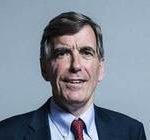
  • David Rutley – 2022 Statement on the Benefit Cap

    David Rutley – 2022 Statement on the Benefit Cap

    The statement made by David Rutley, the Parliamentary Under-Secretary of State for Work and Pensions, in the House of Commons on 1 March 2022.

    I congratulate the hon. Member for Glasgow East (David Linden) on securing the debate. I know that he has strong views on this issue—that is very clear from the debate. This was second time lucky for him in terms of having this debate, which is thanks to the Chair and the Speaker. I am really pleased that he was able to get through his coronavirus unscathed, hopefully, and is now able to participate. I am also grateful to him for mentioning how important these democratic processes are, however much we might disagree—as he and I do on a lot. None the less, this is the way to express our differences—through debate and through the democratic processes. This stands in marked contrast to the unacceptable and abhorrent actions of President Putin, which both he and I roundly condemn, along with the whole House. Our thoughts and prayers are with the people of Ukraine and for peace.

    The Government remain committed to providing a financial safety net for those who need it, with support available for those on low incomes or who are unable to work at all. We will, this year, spend more than £250 billion through the welfare system, including £41 billion on universal credit and more than £110 billion on working age benefits. The Government have focused on making sure that more money gets to those vulnerable people who need it most, with over £58 billion of welfare support going to people with disabilities and health conditions this year alone.

    The pandemic has been a very challenging time for many, and universal credit has stood up to the challenge of covid-19, providing a vital safety net for 6 million people. I know that the hon. Gentleman has concerns about universal credit, but the system stood up well; it was resilient and it was able to pay people on time.

    David Linden

    I am grateful to the Minister for giving way. Yes, like everybody on these Benches, I welcome the fact that the universal credit payment was uplifted by £20 a week, but does he not accept that that was a clear concession and recognition that social security in its current form was inadequate before the pandemic, and if it was inadequate then, what has changed since?

    David Rutley

    As the Chancellor spelled out clearly during the pandemic, this was a response to the worst parts of the pandemic and the shock it would provide to people. The hard-working staff in the Department for Work and Pensions, including thousands of work coaches, worked tirelessly to ensure that the benefits system did its job.

    Since the start of the pandemic, we have spent more than £400 billion protecting people’s lives and livelihoods, and supporting businesses and public services. As well as providing support where it is needed, the Government have a responsibility to taxpayers. We must ensure that we use our resources in the most effective and efficient way possible, and the benefit cap is a vital part of that.

    The hon. Gentleman and I probably disagree on this, but let me set it out and we will see how it takes the debate further forward.

    Alan Brown

    It is a few years since the National Audit Office said that there was no system in place to measure the outcomes associated with universal credit. For years the Government have continued to say that UC helps people into work. So what changes in the assessment process for measuring outcomes have the Government made since that NAO report?

    David Rutley

    The internal assessments we have produced—and we have produced several—showed that UC does help more people get into work. At the moment, in an economic environment where there are record vacancies, which I will touch on later, we are helping more people get into work.

    The benefit cap was introduced as part of a strategy to reform the system of benefits for people of working age. The cap limits the combined sum of prescribed welfare benefits that households may be entitled to. The aims of the benefit cap policy are: to incentivise behaviours; to encourage people to work and to reduce long-term dependency on benefits; and to introduce greater fairness in the welfare system between those receiving out-of-work benefits and those in work, by putting in place a reasonable limit on the amount a household can receive in welfare benefits. For context, let me say that about four in 10 households earn less than the annual benefit cap’s limits of £23,000 in London and about £20,000 in the rest of Great Britain. The final aim is to make the system more affordable, better balancing the burden on taxpayers. Let us not forget that households can still receive benefits up to the equivalent salary of £24,000—or £28,000 in London.

    We continue to protect vulnerable claimants for whom work may not currently be a viable option. In recognition of the additional costs related to a disability, households are exempt from the cap if someone is receiving disability living allowance or a personal independence payment. UC claimants who receive the limited capability for work-related activity element—that phrase is a bit of a mouthful—or employment and support allowance claimants in receipt of the support component are also exempt from the cap.

    The Government recognise and appreciate the vital contribution made by carers, which is why there are exemptions for those entitled to carer’s allowance, the carer’s element in UC and guardian’s allowance. Households in receipt of UC are exempt from the cap if their earnings reach just £617 a month, to help encourage people into work. Those who still receive housing benefit are also exempt if they are entitled to working tax credits. Eligible childcare costs that are repaid through UC payments are exempt from the cap. That also supports people getting into work and progressing in employment.

    I also want to support those with a strong recent work history who find themselves without work or whose earnings reduce. As a result, the benefit cap is not applied for nine months for those receiving UC where the claimant, their partner or ex-partner has received at least the benefit cap earnings threshold of £617 in each of the previous 12 consecutive months.

    I should also remind the House that the proportion of capped households remains low in comparison with the overall working-age benefit case load, at 2.7% across Great Britain. In Scotland, the proportion is even lower, at 1.1%. In the last quarter, to August 2021, on average 710 households every week moved off the cap through increasing their earnings or starting work. There is a statutory duty to review the benefit cap levels once in each Parliament; the country has been through very challenging times, which has delayed that statutory review, but it will happen at the appropriate time in this Parliament, to be determined by the Secretary of State. When the Secretary of State decides to undertake that review, which must currently happen by December 2024, she will consider the national economic situation and any other matters she deems vital at that time.

    Chris Stephens rose—

    David Rutley

    I will give way to the esteemed member of the Work and Pensions Committee.

    Chris Stephens

    The Minister is being very generous. Can he tell us then, with the assessments the Department is doing of the benefit cap, whether it will do further assessments alongside its much-awaited review on the drivers of food bank use and food aid provision, which the House has waited 18 months for the Department to place in the Commons Library?

    David Rutley

    That report will come forward—I think there have been exchanges between the Committee and the Secretary of State’s office—but we are talking here about a statutory requirement, which certainly will happen during the course of this Parliament. As the hon. Gentleman, a well-respected member of the Committee, will be aware, we have gone through very uncertain times; we must ensure that review is done when we have the proper body of evidence and at the right time. I am sure he will seek to hold the Secretary of State to account during that process, as he rightly should as a member of the Select Committee.

    There is clear evidence that work, particularly full-time work, substantially reduces the likelihood of being in poverty. Children living in workless households were around six times more likely to be in absolute poverty before housing costs in 2019-20 than those where all adults worked. At a time of record vacancies, we are not only focusing on getting people into jobs, but taking action to boost the take-home pay of lower-income working households by giving nearly 2 million families an extra £1,000 a year through our cut—

    David Linden

    Cut to universal credit.

    David Rutley

    Through our cut to the universal credit taper rate, if I may finish, and the increase in work allowances. The hon. Gentleman is being incredibly cheeky, but we will let him get away with it once. In addition, the national living wage will increase to £9.50 from April, meaning an extra £1,000 a year for full-time workers.

    Getting claimants back into work remains the primary focus of the Secretary of State and the whole ministerial team, myself included. We know that having a job has many benefits, including a routine, a sense of purpose and increased confidence. We would also like as many people as possible to feel those positive effects—not forgetting, of course, that people on UC securing employment will significantly decrease the likelihood of their household’s being affected by the cap.

    There are nearly 1.3 million vacancies across the United Kingdom, 43,000 more than last month and 513,000 more than at the start of the pandemic. Those vacancies provide opportunities for people to move into and progress in work, as well as to increase their earnings. To help people to take advantage of that record number of vacancies, our plan for jobs is supporting people at any age and any stage of their career. People currently affected by the benefit cap can access support provided by the “Plan for Jobs”, and since the start of the pandemic we have recruited 13,500 new work coaches to ensure that, no matter where they live across the country, claimants can access support and opportunities to get a job, to progress and to realise their potential.

    David Linden

    The point I want to pick the Minister up on is that, if the Government have put in place all those work coaches—I pay tribute to the work they do—and they all have contracts that go on longer because there is anticipation that the unemployment figures will be higher, why did they cut universal credit when they understood that people were going to be relying on the social security system?

    David Rutley

    I know the hon. Gentleman likes to put the word “cut” into a sentence, but we withdrew a temporary increase in universal credit that was put in place for a specific reason during the pandemic. We have now got into a stage in the economic cycle where there are more vacancies and we want to get people into work so they can stand on their own two feet and be less dependent on benefits. I know we have different views, but I am sure even he would want to get more people standing on their own two feet and given the opportunity to have their own work.

    Another way we are doing that is by working with a specific group of 500,000 benefit claimants, helping them into work by the end of June through the way to work initiative, which will increase communication between employers and claimants to help get people into work faster, so that they can experience the positive benefits associated with it. There is a range of other support available to help those people who may be affected by the cap through the flexible support fund, ensuring they have access to higher support for childcare—up to 85% of the cost of which is available on universal credit—and through the discretionary housing payments and, of course, the household support fund.

    It is not just helping people into work; we have also provided support. The Chancellor set out just recently the additional support that would be available to tackle to cost of energy through the three-part plan, involving a £200 rebate for households that is delivered through their energy bill. We have covered at lot in this debate; we are very keen to help people into work and we are providing support for those who face challenges. I thank Mr Speaker for the opportunity to address this debate.
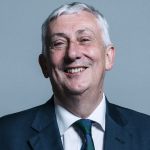
  • Lindsay Hoyle – 2022 Statement on Chris Bryant’s Decision to Withdraw Invite Given to Russian Ambassador

    Lindsay Hoyle – 2022 Statement on Chris Bryant’s Decision to Withdraw Invite Given to Russian Ambassador

    The statement made by Lindsay Hoyle, the Speaker of the House of Commons, in the House on 28 February 2022.

    Before we begin today’s business, I wish to thank the hon. Member for Rhondda (Chris Bryant) for withdrawing his invitation to the Russian ambassador to address the all-party group on Russia. I was very uneasy about the visit and did not think it appropriate to invite a Russian official who had said only weeks before that there would be no invasion. Therefore, I am grateful for that decision.

    I would also like to thank the hon. Member for Henley (John Howell) for his successful efforts in ensuring the suspension of the Russian Federation’s right of representation in the Council of Europe.

    I also say to all hon. Members, and all those who follow our proceedings: we stand in solidarity with Ukraine and its people and have raised their flag at the House of Commons. I will send around an email about further events planned this week to show our support for them and their fight for freedom.

  • Alyn Smith – 2022 Speech on Sanctions on Russia

    Alyn Smith – 2022 Speech on Sanctions on Russia

    The speech made by Alyn Smith, the SNP MP for Stirling, in the House of Commons on 28 February 2022.

    I am grateful for sight of the statement. The SNP is part of the global coalition in defence of Ukraine in international law. I commend the Foreign Secretary and her Ministers on the openness with which they have dealt with Opposition Members. That trust will be reciprocated; this is too serious a time.

    If anything, I urge more. I support the statement and we will support the sanctions measures as they come forward, but I urge more and I urge faster ambition, particularly on refugees. The UK needs to waive visas, not wave flags. The EU has really given the lie to the generosity of the UK’s response on refugees by waiving visas for three years for all Ukrainian nationals. The UK needs to do the same. I appreciate that it is not in the Secretary of State’s remit, but I really urge the Government to act on the issue, because it is certainly the one most raised with me.

    The EU’s response through the civil protection mechanism and the peace facility dwarfs the UK’s. The EU has acted with one voice: 27 member states are acting together. I really urge the UK to complement those efforts and match their scale and ambition in its measures, which we support but wish to see more of.

    I have some specific questions about sanctions. We all agree about tackling oligarchs, but what plans are there to tackle and target the family members of oligarchs? When we were in Kyiv recently, that was mentioned as a particularly effective way of putting on pressure. I also note that there will be an advice facility for UK businesses affected by the sanctions. Is any consideration being given to providing financial aid for UK businesses hit by the sanctions? That seems the morally correct thing to do.

    The Foreign Secretary will be aware of reports of a Russian tanker heading for Orkney to pick up oil. Will the legal powers to impound such vessels be in place in time for us to do so?

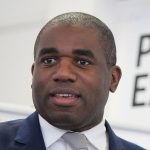
  • David Lammy – 2022 Speech on Sanctions on Russia

    David Lammy – 2022 Speech on Sanctions on Russia

    The speech made by David Lammy, the Shadow Foreign Secretary, in the House of Commons on 28 February 2022.

    I thank the Secretary of State for advance sight of her statement, and for the briefing that she continues to give me on Privy Council terms.

    We have all been inspired by the gallant and tenacious actions of Ukrainians in defence of their country. This is true courage under fire. President Zelensky has epitomised the bravery, dignity and resolve of a nation fighting back, and fighting for values that we all share—democracy, freedom and the rule of law. The Foreign Secretary is right when she says that Putin’s invasion is not so far going to plan, but does she agree that we must not let our focus slip for even a second? We will continue to stand united with our allies and partners, supporting Ukraine and opposing this outrageous campaign of aggression.

    This morning, I had the honour, with the shadow Defence Secretary my right hon. Friend the Member for Wentworth and Dearne (John Healey), of meeting Ukraine’s ambassador. He thanks all sides of this House for the united opposition we have shown to Vladimir Putin’s illegal war and the support we continue to show for Ukrainian sovereignty. Putin is not only facing a united west; he is facing a truly United Kingdom. Together, we have enacted sanctions that are having a strong effect. The rouble has crashed by over 40%, the main borrowing rate is up 20%, and inflation is reportedly hitting about 65% per year. Oligarchs are being frozen out of their bank accounts and the central bank of Russia is being blocked from part of the $640 billion war chest that it holds in foreign reserves. Labour’s priority is to cut off Putin’s rogue state from our economic system and to undermine his campaign of aggression in Ukraine.

    We recognise that on 24 February the European security order changed. Our continent faces a transformed strategic context. Our world is at the start of a new era. I pay tribute to the political courage shown by all our partners, particularly our allies in Germany who have recognised that by taking the difficult and brave decisions to provide Ukraine with lethal weapons for its fight and to commit to the significant increases in defence spending that this new reality demands.

    Yesterday, President Putin raised the alert level of Russian nuclear forces. As the five nuclear weapon states, including Russia, reaffirmed in January, a nuclear war cannot be won and must never be fought. What assessment has the Foreign Secretary made of that decision, given the understandable concern it will have caused among the public?

    Turning to sanctions, we welcome the further steps the Government have announced today. Labour has been calling for some time for progress by the UK, the EU and the US on cutting off Russian banks from SWIFT. The moves finally to clamp down on dirty money—so long demanded by Labour and colleagues across the House—are long overdue. It is regrettable that it has taken so long and a crisis of this nature for such action, but we welcome the steps and will study them carefully. However, there is still more the Government can do.

    The last time I stood at the Dispatch Box, I asked what steps the Government had taken to ensure that members of Russia’s legislature, the Duma, could be sanctioned. Still today, I am waiting for that answer. Similarly, although I welcome the Foreign Secretary’s action against Russia’s financial sector, the Government should go further to ensure sanctions can also be placed against Russia’s extractive industries, energy industries and technological industries. We must ensure that the insurance industry cannot underwrite and de-risk Putin’s war. As I said at my last time at the Dispatch Box, it is vital that the sanctions are broad enough to inflict damage on every aspect of Russia’s economy. We welcome the moves the Government have taken to ensure Russia is cut out of the SWIFT banking system, but can the Foreign Secretary explain what dialogue she has had with our allies on cutting the country out of the Visa-Mastercard system, too?

    Finally, can the Foreign Secretary give assurances that Putin will also feel the consequences of his despicable actions in terms of international opportunities available to the country in sports and culture? The diplomatic unity of the west is crucial, but we must also widen the global coalition opposing the war. Some countries, such as Kenya, have spoken out with clarity and elegance against Putin’s imperialism, but others have stayed silent. Some are even allies of the UK and fellow democracies. What steps is the Foreign Secretary taking to ensure the widest possible range of voices speaks up in opposition to this war?

    As well as commending the bravery of the Ukrainians defending their country, we must also praise the courage of the ordinary Russians taking to the streets of Moscow, St Petersburg and beyond under the threat of repression to show their opposition to this despot. This is the fifth day of fighting. Ukraine is still facing an all-out war from Putin’s army. It is a mark of the bravery of Ukraine’s forces that neither Kyiv nor Kharkiv have fallen. We salute their courage, and this whole House will continue to stand with them.

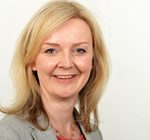
  • Liz Truss – 2022 Statement on Sanctions on Russia

    Liz Truss – 2022 Statement on Sanctions on Russia

    The statement made by Liz Truss, the Foreign Secretary, in the House of Commons on 28 February 2022.

    With permission, Mr Speaker, I wish to update the House on our support for Ukraine in the face of Putin’s premeditated, pre-planned and barbaric invasion. Ukraine has suffered horrific attacks. Missiles and air strikes have torn through apartment blocks. Tanks have rolled into once peaceful cities. Innocent people, including children, have lost their lives.

    The situation is fluid, but as of today, Putin has not taken any major cities. The advance has been slowed by Ukraine’s fierce resistance. Putin’s invasion is not proceeding to plan. He expected to take cities quickly. He expected Ukraine to retreat. And he expected the West to be divided. Instead, his forces were met by the heroism of President Zelensky and the resolute determination of the Ukrainian people. He has been met by a united west, together with our friends around the world, and we have taken decisive action.

    Today, we have acted with the US, the EU, Japan and Canada to cut off Russia’s central bank from our markets. The rouble has fallen by more than 40% as a result. As much as $250 billion has been wiped off the Russian stock market and, today, its stock market is closed. The EU, Germany, Sweden and others are following our lead in providing defensive weapons to Ukraine, and Germany has frozen Nord Stream 2.

    Putin has been confounded by our collective response. That is why he is resorting to more and more extreme rhetoric. But, of course, the situation remains dire. The Government and people of Ukraine are facing a continued onslaught. The days ahead are likely to prove tougher still.

    The UK and our allies will have to undergo some economic hardship as a result of our sanctions, but our hardships are nothing compared to those endured by the people of Ukraine. Casualty numbers are rising, and more than 300,000 people have already been displaced. This is a struggle for Ukraine’s freedom and self-determination, but it is also a struggle for freedom and democracy everywhere and for the survival of a Europe whole and free. We feel a particular responsibility as the UK is a signatory to the 1994 Budapest memorandum, which provided Ukraine with security guarantees.

    This premeditated invasion, in violation of international law and multiple international commitments, cannot succeed. Putin must lose. We are doing everything that we can to stop him and to restore Ukraine’s sovereignty and territorial integrity. We will do this by backing Ukraine against unjustified aggression, by degrading the Russian economy and stopping it from funding Putin’s war machine, and by isolating Putin on the world stage.

    First, we are backing Ukraine with defensive weapons, humanitarian aid and economic support. The UK was the first European nation to send defensive weapons to the country, and those weapons are being used today to halt Russian tanks and defend Ukrainian towns and cities. Our latest consignment of defensive support left Brize Norton over the weekend. We are also leading on humanitarian support. Yesterday, my right hon. Friend the Prime Minister announced a further £40 million of humanitarian aid, which will provide Ukrainians with access to basic necessities and vital medical supplies. We call on Russia to enable humanitarian access and safe passage for civilians to flee the violence. The UK is also supporting Ukraine’s economy, including through £100 million of official development assistance and guarantees of up to $500 million in development bank loans.

    Secondly, we are cutting off funding for Putin’s war machine. We are coming together with the US, the G7 and the EU to take further decisive steps. We have been joined by Australia, Singapore, Switzerland and many more. There is a growing list of countries who are determined that this aggression cannot stand. We have agreed that many Russian banks will be removed from the SWIFT system, kicking them out of international finance. That is the first step towards a total SWIFT ban. Our collective action against Russia’s central bank will prevent it from deploying its international reserves to mitigate the impact of our sanctions.

    We are also launching a joint taskforce to hunt down the assets of oligarchs hit by our sanctions. The UK is proud to lead by example. We have already put in place the largest package of sanctions in our history. We have sanctioned Putin and Lavrov, Russia’s defence industry and a growing list of oligarchs. We have approved asset freezes on several Russian banks and we are banning Russian airlines and private jets from our airspace, but we are determined to go much, much further. We want a situation where they cannot access their funds, their trade cannot flow, their ships cannot dock and their planes cannot land.

    Today, I inform the House that I will be laying two new pieces of sanctions legislation. The first will introduce a set of new powers against Russia’s financial sector, including powers to prevent Russian banks from clearing payments in sterling. With over 50% of Russian trade denominated in dollars or sterling, our co-ordinated action with the United States will damage Russia’s ability to trade with the world, and as soon as this legislation comes into force, we will apply it to Sberbank—Russia’s largest bank.

    I will also be imposing a full asset freeze on three further banks: VEB, Russia’s national development bank; Sovcombank, the third largest privately owned financial institution in Russia; and Otkritie, one of Russia’s largest commercial banks. We will bring in a full asset freeze on all Russian banks in days, looking to co-ordinate with our allies. The same legislation will prevent the Russian state from raising debt here, and will isolate all Russian companies—more than 3 million businesses—from accessing UK capital markets. Global giants such as Gazprom will no longer be able to issue debt or equity in London.

    The second piece of legislation will ban exports to Russia across a range of critical sectors. This includes high-end technological equipment such as microelectronics and marine and navigation equipment. This will blunt Russia’s military-industrial capabilities and act as a drag on Russia’s economy for years to come. I appreciate the consequences of this step for British people and British businesses operating in Russia. The Department for International Trade and the Treasury will offer advice and guidance to affected UK businesses. My consular staff will continue to support British nationals in Russia, as well as those in Ukraine.

    We will keep ratcheting up our response. More legislation will follow in the coming weeks, sanctioning Russian-occupied territories in the Donbas, extending more sanctions to Belarus, and limiting Russian deposits in UK banks. We will continue working through our hit list of oligarchs, focusing on their houses, their yachts, and every aspect of their lives. In addition, we will introduce the economic crime Bill tomorrow; my right hon. Friend the Business Secretary will set out more in the next statement in the House. This is all about flushing out the oligarchs’ dirty money from the United Kingdom. We will continue to work with our G7 allies to cut off the Russian economy and cut the free world’s dependence on Russian gas, depriving Putin of his key source of revenue.

    Finally, we are leading the diplomatic effort to ensure that there is a chorus of condemnation against President Putin. In the Organisation for Security and Co-operation in Europe, a key part of the European security architecture, 45 countries condemned Russia by name. At the UN Security Council on Friday, more than 80 UN members voted for, or co-sponsored, a resolution condemning Russia’s aggression. Russia stood alone in opposing it. Putin is isolated. No one is willing to back his war of choice. In recent days, I have spoken to my counterparts in more than 20 countries around the world. Yesterday, I met G7 Foreign Ministers. We were joined by Ukraine’s brave Foreign Minister, my friend Dmytro Kuleba. Everyone is clear that Putin must lose, and we will carry on increasing the pressure until he does.

    We have all seen Ukraine’s determination to fight. Putin’s war could end up lasting for months and years, so I say to our Ukrainian friends, “We are with you. In Britain, and around the world, we’re prepared to suffer economic sacrifices to support you. However long it takes, we will not rest until Ukraine’s sovereignty is restored.”

    I commend this statement to the House.

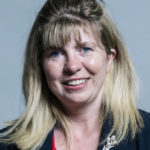
  • Maria Caulfield – 2022 Statement on the Rare Diseases Action Plan

    Maria Caulfield – 2022 Statement on the Rare Diseases Action Plan

    The statement made by Maria Caulfield, the Parliamentary Under-Secretary of State for Health and Social Care, in the House of Commons on 28 February 2022.

    The Government have published the first England Rare Diseases action plan today, on international Rare Disease Day.

    This action plan is part of our continued commitment to improve the lives of those living with rare conditions, such as muscular dystrophies and Huntington’s disease. It follows the UK rare diseases framework, published in January 2021, which set out priorities for all four UK nations to speed up diagnosis, raise awareness of rare diseases among healthcare professionals, provide better co-ordination of care, and improve access to specialist care, treatment and drugs.

    England’s action plan has been developed collaboratively with our delivery partners across the health landscape and in close consultation with members of the rare disease community. Through the action plan we aim to achieve significant breakthroughs for people living with rare diseases, including:

    making it easier for more rare disease patients to access the co-ordinated care of multiple specialists without the need to travel long distances;

    developing world-class new-born screening so diagnoses can be made earlier, and patients can benefit from groundbreaking new therapies as they become available;

    ensuring all healthcare professionals are aware of rare diseases and know where to go to access further information and advice; and

    supporting rapid and affordable access to cutting-edge therapies across all regions of England.

    Building on advances in therapeutics during the covid-19 pandemic, we will also continue investing in the development of nucleic acid therapies, for example, through the world-class gene therapy innovation hubs and the nucleic acid therapy accelerator. These initiatives have the potential to allow rapid development of new therapies, transforming care for millions of patients, including those with rare and life-threatening genetic diseases.

    Under the action plan, the millions of people with rare diseases in England will see more efficient access to care and new treatments introduced. Over the course of the coming year, we will monitor the progress of these actions closely, seeking input from those living with rare diseases to ensure we are measuring the outcomes that matter most.

    Since the UK rare diseases framework runs over five years, implementation will be phased, with this first action plan focused primarily on actions taking place over the coming year. While delivery of this first action plan is underway, we will therefore also continue to explore future directions and develop new actions, informed by the needs of the diverse rare disease community.

    Through this action plan we will take the first steps in England towards achieving our overarching vision: delivering improvements in diagnosis, awareness, treatment and care, and creating lasting positive change for those living with rare diseases.

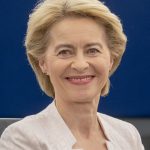
  • Ursula von der Leyen – 2022 Statement on European Union Funding Weapons for Ukraine

    Ursula von der Leyen – 2022 Statement on European Union Funding Weapons for Ukraine

    The statement made by Ursula von der Leyen, the President of the European Commission, on 27 February 2022.

    As the war in Ukraine rages on, and Ukrainians fight bravely for their country, the European Union steps up once more its support for Ukraine and the sanctions against the aggressor – Putin’s Russia.

    For the first time ever, the European Union will finance the purchase and delivery of weapons and other equipment to a country that is under attack.

    This is a watershed moment.

    HRVP Borrell will present to you the proposal in a few minutes.

    At the same time, we are strengthening once more our sanctions against the Kremlin and its collaborator, Lukashenko’s regime.

    First, we are shutting down the EU airspace for Russians.

    We are proposing a prohibition on all Russian-owned, Russian registered or Russian-controlled aircraft.

    These aircraft will no more be able to land in, take off or overfly the territory of the EU.

    This will apply to any plane owned, chartered or otherwise controlled by a Russian legal or natural person.

    So let me be very clear.

    Our airspace will be closed to every Russian plane – and that includes the private jets of oligarchs.

    Second, in another unprecedented step, we will ban in the EU the Kremlin’s media machine.

    The state-owned Russia Today and Sputnik, as well as their subsidiaries will no longer be able to spread their lies to justify Putin’s war and to sow division in our Union.

    So we are developing tools to ban their toxic and harmful disinformation in Europe.

    Third, we will target the other aggressor in this war – Lukashenko’s regime.

    Lukashenko’s regime is complicit in this vicious attack against Ukraine.

    So we will hit Lukashenko’s regime with a new package of sanctions.

    We will introduce restrictive measures against their most important sectors.

    This will stop their exports of products from mineral fuels to tobacco, wood and timber, cement, iron and steel.

    We will also extend to Belarus the export restrictions we introduced on dual-use goods for Russia.

    This will also avoid any risks of circumvention of our measures against Russia.

    In addition, we will sanction those Belarusians helping the Russian war effort.

    All these measures come on top of the strong package that I presented to you yesterday, agreed by our international partners.

    Under this package, important Russian banks will be excluded from the SWIFT system.

    We will also ban the transactions of Russia’s central bank and freeze all its assets, to prevent it from financing Putin’s war.

    And we will target the assets of Russian oligarchs.

    We continue to coordinate closely with partners around the globe.

    And we remain in close contacts with our Ukrainian friends.

    President Zelensky’s leadership and his bravery and the resilience of the Ukrainian people are outstanding and impressive.

    They are an inspiration to us all.

    We welcome with open arms those Ukrainians who have to flee from Putin’s bombs and I am proud of the warm welcome that Europeans have given them.

    We are mobilising every effort and every euro to support our Eastern Member States – to host and take care of these refugees.

    We will do this in full solidarity.

    With this, I invite HRVP Borrell to present more details.

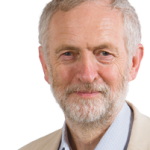
  • Jeremy Corbyn – 2022 Comments on Opposing NATO Expansion

    Jeremy Corbyn – 2022 Comments on Opposing NATO Expansion

    The comments made by Jeremy Corbyn, the Independent MP for Islington North, on 22 February 2022.

    The Russian forces that have entered Eastern Ukraine should immediately withdraw.

    The UK government should encourage a return to the Minsk-2 agreement to end the crisis and oppose further eastward NATO expansion.

    Diplomacy must resume.

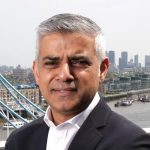
  • Sadiq Khan – 2022 Comments on Violence Towards Women and Girls

    Sadiq Khan – 2022 Comments on Violence Towards Women and Girls

    The comments made by Sadiq Khan, the Mayor of London, on 27 February 2022.

    It is simply not right that women and girls across our country feel unsafe going about their daily lives. We have to be clear – these problems are caused by the unacceptable attitudes and behaviours of too many men. This is not just an issue with the minority of men who are violent, but also with those men who are sexist, who continue to behave inappropriately around women, who perpetuate a toxic form of masculinity or who just stand by silently when women feel threatened or are being threatened. Men must change.

    That is why I am launching a new campaign to help tackle the appalling attitudes and behaviours that need to change. If we are going to truly fix the problem of violence against women and girls we need to see a fundamental cultural shift which puts the onus of responsibility on men. It must include men calling out and choosing to reject sexism and misogyny, which if left unchecked or unchallenged can lead to abuse and violence towards women and girls.

  • Sadiq Khan – 2022 Comments on Leaseholders Getting Information on Building Safety

    Sadiq Khan – 2022 Comments on Leaseholders Getting Information on Building Safety

    The comments made by Sadiq Khan, the Mayor of London, on 28 February 2022.

    Nearly five years after the Grenfell Tower fire there are still too many Londoners who don’t feel safe in their homes.

    For too long now Londoners trapped in unsafe flats have faced a drawn out and complicated process to get an EWS1 form. The guidance published today will help leaseholders get this vital information by improving the way landlords and managing agents commission EWS1 forms and share those findings with the leaseholders who need them.

    The building safety crisis is a national crisis and it requires national solutions. While some progress is now belatedly being made by the Government, leaseholders are still facing huge bills for problems they played no part in causing. I’m determined to continue to fight for the rights of leaseholders to feel safe in their homes and to prevent them paying for a building safety crisis that is not of their making. That includes putting pressure on the private sector, the developers, the Government and those who manage these sites to ensure Londoners can feel safe in their homes again.