Tag: 2022

  • Louise Haigh – 2022 Speech on P&O Ferries

    Louise Haigh – 2022 Speech on P&O Ferries

    The speech made by Louise Haigh, the Shadow Transport Secretary, in the House of Commons on 28 March 2022.

    I thank the Minister for that response. As he said, on Thursday the chief executive of P&O Ferries made a mockery of the rule of law in this country. As a result, seven of P&O’s eight ferries are now stuck in port, and on Saturday the European Causeway—the only passenger ship in Europe to be prevented from sailing over safety concerns—was seized.

    P&O Ferries must face the most serious consequences for its misconduct. I know that the Minister and the Secretary of State feel the same way, and I appreciate the contact they have made with the Opposition and trade unions, but every available tool at the Government’s disposal must now be used to force P&O Ferries to reinstate workers on the previous terms and conditions.

    Will the Minister provide some urgent clarity? First, the Prime Minister said very clearly on Wednesday:

    “we are taking legal action…against the company concerned”.—[Official Report, 23 March 2022; Vol. 711, c. 326.]

    So has the Secretary of State given his direction to prosecute? If not, why not?

    Secondly, given that the chief executive has shown no respect for the law, will the Secretary of State seek his removal under the Company Directors Disqualification Act 1986, and the removal of all those who authorised this unlawful action?

    Thirdly, the Secretary of State has said he will review contracts, but livelihoods are on the line now, so will he suspend all contracts and licences of P&O and DP World today? Why is DP World still listed as a member of the Government’s trade advisory group?

    Finally, time is running out. The deadline set by P&O for this Thursday for workers to agree severance amounts to extortion and has no legal basis. What powers do the Government have to extend that unlawful deadline? As the Minister said, workers must be reinstated on the same terms as before. Many are paid above the minimum wage, so will he commit to working with the unions and all ferry companies to agree a binding framework that will prevent a race to the bottom to the lowest international standards?

    I know the House agrees that we must send a clear message that rogue employers cannot get away with trampling over the laws of this country. It is time to throw the book at P&O and save this loyal workforce.

  • Robert Courts – 2022 Speech on P&O Ferries

    Robert Courts – 2022 Speech on P&O Ferries

    The speech made by Robert Courts, the Parliamentary Under-Secretary of State for Transport, in the House of Commons on 28 March 2022.

    I know that the whole House has been left appalled and angered by the behaviour exhibited by P&O Ferries towards its workers over the last week. As a Government, we will not stand by and allow hard-working, dedicated British staff to be treated in such a manner.

    This morning, my right hon. Friend the Transport Secretary wrote to the chief executive of P&O asking him to pause and reconsider and to offer his workers their jobs back on their previous terms, conditions and wages, should they want them. That is because we will return to the House to announce a package of measures that will ensure that the outcomes that P&O Ferries is seeking to achieve through this disastrous move to pay less than the minimum wage cannot be seen through. As a result, it will have no reason left not to reconsider its move.

    As I said to the Transport Committee and the Business, Energy and Industrial Strategy Committee last week, as soon as the package of measures has been finalised, we intend to return to the House so that Members can rightly scrutinise it. In the meantime, we continue to review the contracts that P&O Ferries has with the Government, and the Insolvency Service continues to investigate the actions of Peter Hebblethwaite, who brazenly admitted to breaking the law before two Committees of this House last week.

    I am clear that P&O Ferries cannot and will not be allowed to get away with its actions. I hope the whole House will now support our efforts to ensure just that.

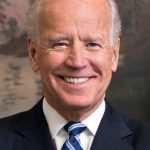
  • Joe Biden – 2022 Speech in Warsaw on the Russian Military Attack on Ukraine

    Joe Biden – 2022 Speech in Warsaw on the Russian Military Attack on Ukraine

    The speech made by Joe Biden, the President of the United States, in Warsaw on 26 March 2022.

    Thank you very much. It’s a great honor to be here. Mr. President, they tell me you’re over there somewhere. There you are. Thank you, Mr. President.

    “Be not afraid.” They were the first words at the first public address of the first Polish Pope after his election on October of 1978. They were words that would come to define Pope John Paul II. Words that would change the world.

    John Paul brought the message here to Warsaw in his first trip back home as Pope in June of 1979. It was a message about the power — the power of faith, the power of resilience, and the power of the people.

    In the face of a cruel and brutal system of government, it was a message that helped end the Soviet repression in the Central land and Eastern Europe 30 years ago. It was a message that will overcome the cruelty and brutality of this unjust war.

    When Pope John Paul brought that message in 1979, the Soviet Union ruled with an iron fist behind an Iron Curtain.

    Then a year later, the Solidarity movement took hold in Poland. And while I know he couldn’t be here tonight, we’re all grateful in America and around the world for Lech Wałęsa. (Applause.)

    It reminds me of that phrase of philosopher Kierkegaard: “[F]aith sees best in the dark.” And there were dark moments.

    Ten years later, the Soviet Union collapsed, and Poland and Central and Eastern Europe would soon be free. Nothing about that battle for freedom was simple or easy. It was a long, painful slog fought over not days and months, but years and decades.

    But we emerged anew in the great battle for freedom: a battle between democracy and autocracy, between liberty and repression, between a rules-based order and one governed by brute force.

    In this battle, we need to be clear-eyed. This battle will not be won in days or months either. We need to steel ourselves for the long fight ahead.

    Mr. President, Mr. Prime Minister, Mr. Mayor, members of the Parliament, distinguished guests, and the people of Poland, and I suspect some people of Ukraine that are here: We’re — (applause) — we are gathered here at the Royal Castle in this city that holds a sacred place in the history of not only of Europe, but humankind’s unending search for freedom.

    For generations, Warsaw has stood where liberty has been challenged and liberty has prevailed.

    In fact, it was here in Warsaw when a young refugee, who fled her home country from Czechoslovakia was under Soviet domination, came back to speak and stand in solidarity with dissidents.

    Her name was Madeleine Korbel Albright. She became — (applause) — one of the most ardent supporters of democracy in the world. She was a friend with whom I served. America’s first woman Secretary of State. She passed away three days ago.

    She fought her whole life for essential democratic principles. And now, in the perennial struggle for democracy and freedom, Ukraine and its people are on the frontlines fighting to save their nation.

    And their brave resistance is part of a larger fight for an essential democratic principles that unite all free people: the rule of law; free and fair elections; the freedom to speak, to write, and to assemble; the freedom to worship as one chooses; freedom of the press.

    These principles are essential in a free society. (Applause.) But they have always — they have always been under siege. They’ve always been embattled. Every generation has had to defeat democracy’s mortal foes. That’s the way of the world — for the world is imperfect, as we know. Where the appetites and ambitions of a few forever seek to dominate the lives and liberties of many.

    My message to the people of Ukraine is the message I delivered today to Ukraine’s Foreign Minister and Defense Minister, who I believe are here tonight: We stand with you. Period. (Applause.)

    Today’s fighting in Kyiv and Mariupol and Kharkiv are the latest battle in a long struggle: Hungary, 1956; Poland, 1956 then again 1981; Czechoslovakia, 1968.

    Soviet tanks crushed democratic uprisings, but the resistance continued until finally, in 1989, the Berlin Wall and all of the walls of Soviet domination — they fell. They fell. And the people prevailed. (Applause.)

    But the battle for democracy could not conclude and did not conclude with the end of the Cold War.

    Over the last 30 years, the forces of autocracy have revived all across the globe. Its hallmarks are familiar ones: contempt for the rule of law, contempt for democratic freedom, contempt for the truth itself.

    Today, Russia has strangled democracy — has sought to do so elsewhere, not only in its homeland. Under false claims of ethnic solidarity, it has invalidated [invaded] neighboring nations.

    Putin has the gall to say he’s “de-Nazifying” Ukraine. It’s a lie. It’s just cynical. He knows that. And it’s also obscene.

    President Zelenskyy was democratically elected. He’s Jewish. His father’s family was wiped out in the Nazi Holocaust. And Putin has the audacity, like all autocrats before him, to believe that might will make right.

    In my own country, a former president named Abraham Lincoln voiced the opposing spirit to save our Union in the midst of a civil war. He said, “Let us have faith that right makes might.” “Right makes might.” (Applause.)

    Today, let us now have that faith again. Let us resolve to put the strength of democracies into action to thwart the denigns [sic] of our — the designs of autocracy. Let us remember that the test of this moment is the test of all time.

    The Kremlin wants to portray NATO enlargement as an imperial project aimed at destabilizing Russia. Nothing is further from the truth. NATO is a defensive alliance. It has never sought the demise of Russia.

    In the lead-up to the current crisis, the United States and NATO worked for months to engage Russia to avert a war. I met with him in person and talked to him many times on the phone.

    Time and again, we offered real diplomacy and concrete proposals to strengthen European security, enhance transparency, and build confidence on all sides.

    But Putin and Russia met each of the proposals with disinterest in any negotiation, with lies and ultimatums. Russia was bent on violence from the start.

    I know not all of you believed me and us when we kept saying, “They are going to cross the border. They are going to attack.”

    Repeatedly, he asserted, “We have no interest in war.” Guaranteed he would not move.

    Repeatedly saying he would not invade Ukraine.

    Repeatedly saying Russian troops along the border were there for “training” — all 180,000 of them.

    There is simply no justification or provocation for Russia’s choice of war. It’s an example of one of the oldest of human impulses: using brute force and disinformation to satisfy a craving for absolute power and control.

    It’s nothing less than a direct challenge to the rule-based international order established since the end of World War Two.

    And it threatens to return to decades of war that ravaged Europe before the international rule-based order was put in place. We cannot go back to that. We cannot.

    The gravity of the threat is why the response of the West has been so swift and so powerful and so unified, unprecedented, and overwhelming.

    Swift and punishing costs are the only things that are going to get Russia to change its course.

    Within days of its invasion, the West had moved jointly with sanctions to damage Russia’s economy.

    Russia’s Central Bank is now blocked from the global financial systems, denying Kremlin’s access to the war fund it stashed around the globe.

    We’ve aimed at the heart of Russia’s economy by stopping the imports of Russian energy to the United States.

    To date, the United States has sanctioned 140 Russian oligarchs and their family members, seizing their ill-begotten gains: their yachts, their luxury apartments, their mansions.

    We’ve sanctioned more than 400 Russian government officials, including key architects of this war.

    These officials and oligarchs have reaped enormous benefit from the corruption connected to the Kremlin, and now they have to share in the pain.

    The private sector is acting as well. Over 400 private multinational companies have pulled out of doing business in Russia — left Russia completely — from oil companies to McDonald’s.

    As a result of these unprecedented sanctions, the ruble almost is immediately reduced to rubble. The Russian economy — (applause) — that’s true, by the way. It takes about 200 rubles to equal one dollar.

    The economy is on track to be cut in half in the coming years. It was ranked — Russia’s economy was ranked the 11th biggest economy in the world before this evasion [sic] — invasion. It will soon not even rank among the top 20 in the world. (Applause.)

    Taken together, these economic sanctions are a new kind of economic statecraft with the power to inflict damage that rivals military might.

    These international sanctions are sapping Russian strength, its ability to replenish its military, and its ability — its ability to project power. And it is Putin — it is Vladimir Putin who is to blame, period.

    At the same time, alongside these economic sanctions, the Western world has come together to provide for the people of Ukraine with incredible levels of military, economic, and humanitarian assistance.

    In the years before the invasion, we, America, had sent over $650 million, before they crossed the border, in weapons to Ukraine, including anti-air and anti-armor equipment.

    Since the invasion, America has committed another $1.35 billion in weapons and ammunition.

    And thanks to the courage and bravery of the Ukrainian people — (applause) — the equipment we’ve sent and our colleagues have sent have been used to devastating effect to defend Ukrainian land and airspace. Our Allies and partners have stepped up as well.

    But as I’ve made clear: American forces are in Europe — not in Europe to engage in conflict with Russian forces. American forces are here to defend NATO Allies.

    Yesterday, I met with the troops that are serving alongside our Polish allies to bolster NATO’s frontline defenses. The reason we wanted to make clear is their movement on Ukraine: Don’t even think about moving on one single inch of NATO territory.

    We have a sacred obligation — (applause) — we have a sacred obligation under Article 5 to defend each and every inch of NATO territory with the full force of our collective power.

    And earlier today, I visited your National Stadium, where thousands of Ukrainian refugees are now trying to answer the toughest questions a human can ask: “My God, what’s going to happen to me? What’s going to happen to my family?”

    I saw tears in many of the mothers’ eyes as I embraced them; their young children — their young children not sure whether to smile or cry. One little girl said, “Mr. President” — she spoke a little English — “is my brother and my daddy — are they going to be okay? Will I see them again?” Without their husbands, their fathers, in many cases, their brothers or sisters who stayed back to fight for their country.

    I didn’t have to speak the language or understand the language to feel the emotion in their eyes, the way they gripped my hand, and little kids hung on to my leg, praying with a desperate hope that all this is temporary; apprehension that they may be perhaps forever away from their homes, almost with debilitating sadness that this is happening all over again.

    But I was also struck by the generosity of the people of Warsaw — for that matter, all the Polish people — for the depths of their compassion, their willingness to reach out — (applause) — opening their hearts.

    I was saying to the Mayor they’re preparing to open their hearts and their homes simply to help. I also want to thank my friend, the great American chef, José Andrés, and his team who helped feeling [sic] those — (applause) — feeding those who are yearning to be free.

    But helping these refugees is not something Poland or any other nation should carry alone. All the world democracies have a responsibility to help. All of them. And the people of Ukraine can count on the United States to meet its responsibility.

    I’ve announced, two days ago, we will welcome 100,000 Ukrainian refugees. We already have 8,000 a week coming to the United States of other nat- — nationalities.

    We’ll provide nearly $300 million of humanitarian assistance, providing tens of thousands of tons of food, water, medicine, and other basic supplies.

    In Brussels, I announced the United States is prepared to provide more than $1 billion, in addition, in humanitarian aid.

    The World Food Programme told us that despite significant obstacles, at least some relief is getting to major cities in Ukraine, but not Metropol [sic] — no, excuse me, Mar- — not Mariupol, because Russian forces are blocking relief supplies.

    But we’ll not cease our efforts to get humanitarian relief wherever it is needed in Ukraine and for the people who’ve made it out of Ukraine.

    Notwithstanding the brutality of Vladimir Putin, let there be no doubt that this war has already been a strategic failure for Russia already. (Applause.) Having lost children myself — I know that’s no solace to the people who’ve lost family.

    But he, Putin, thought Ukrainians would roll over and not fight. Not much of a student of history. Instead, Russian forces have met their match with brave and stiff Ukrainian resistance.

    Rather than breaking Ukrainian resolve, Russia’s brutal tactics have strengthened the resolve. (Applause.)

    Rather than driving NATO apart, the West is now stronger and more united than it has ever been. (Applause.)

    Russia wanted less of a NATO presence on its border, but now he has [we have] a stronger presence, a larger presence, with over a hundred thousand American troops here, along with all the other members of NATO.

    In fact — (applause) — Russia has managed to cause something I’m sure he never intended: The democracies of the world are revitalized with purpose and unity found in months that we’d once taken years to accomplish.

    It’s not only Russia’s actions in Ukraine that are reminding us of democracy’s blessing. It’s our own country — his own country, the Kremlin, is jailing protestors. Two hundred thousand people have allegedly already left. There’s a brain drain — leaving Russia. Shutting down independent news. State media is all propaganda, blocking the image of civilian targets, mass graves, starvation tactics of the Russian forces in Ukraine.

    Is it any wonder, as I said, that 200,000 Russians have all left their country in one month? A remarkable brain drain in such a short period of time, which brings me to my message to the Russian people:

    I’ve worked with Russian leaders for decades. I sat across the negotiating table going all the way back to Soviet Premier Alexei Kosygin to talk arms control at the height of the Cold War.

    I’ve always spoken directly and honestly to you, the Russian people.

    Let me say this, if you’re able to listen: You, the Russian people, are not our enemy.

    I refuse to believe that you welcome the killing of innocent children and grandparents or that you accept hospitals, schools, maternity wards that, for God’s sake, are being pummeled with Russian missiles and bombs; or cities being surrounded so that civilians cannot flee; supplies cut off and attempting to starve Ukrainians into submission.

    Millions of families are being driven from their homes, including half of all Ukraine’s children. These are not the actions of a great nation.

    Of all people, you, the Russian people, as well as all people across Europe, still have the memory of being in a similar situation in the late thirties and forties — the situation of World War Two — still fresh in the minds of many grandparents in the region.

    What — whatever your generation experienced — whether it experienced the Siege of Leningrad or heard about it from your parents and grandparents — train stations overflowing with terrified families fleeing their homes; nights sheltering in basements and cellars; mornings sitting through the rubble in your homes — these are not memories of the past. Not anymore. Because it’s exactly what the Russian army is doing in Ukraine right now.

    March 26, 2022. Just days before — we’re at the twenty-fir- — you were a 21st century nation with hopes and dreams that people all over the world have for themselves and their family.

    Now, Vladimir Putin’s aggression have cut you, the Russian people, off from the rest of the world, and it’s taking Russia back to the 19th century.

    This is not who you are. This is not the future reserve — you deserve for your families and your children. I’m telling you the truth: This war is not worthy of you, the Russian people.

    Putin can and must end this war. The American people stand with you and the brave citizens of Ukraine who want peace.

    And my message to the rest of Europe: This new battle for freedom has already made a few things crystal clear.

    First, Europe must end its dependence on Russian fossil fuels. And we, the United States, will help. (Applause.) That’s why just yesterday, in Brussels, I announced a plan with the President of the European Commission to get Europe through the immediate energy crisis.

    Over the long term, as a matter of economic security and national security and for the survivability of the planet, we all need to move as quickly as possible to clean, renewable energy. And we’ll work together to help get that done so that the days of any nation being subject to the whims of a tyrant for its energy needs are over. They must end. They must end.

    And second, we have to fight the corruption coming from the Kremlin to give the Russian people a fair chance.

    And finally, and most urgently, we maintain absolute unity — we must — among the world’s democracies.

    It’s not enough to speak with rhetorical flourish, of ennobling words of democracy, of freedom, equality, and liberty. All of us, including here in Poland, must do the hard work of democracy each and every day. My country as well.

    That’s why — (applause) — that’s why I came to Europe again this week with a clear and determined message for NATO, for the G7, for the European Union, for all freedom-loving nations: We must commit now to be in this fight for the long haul. We must remain unified today and tomorrow and the day after and for the years and decades to come. (Applause.)

    It will not be easy. There will be costs. But it’s a price we have to pay. Because the darkness that drives autocracy is ultimately no match for the flame of liberty that lights the souls of free people everywhere.

    Time and again, history shows that it’s from the darkest moments that the greatest progress follows. And history shows this is the task of our time, the task of this generation.

    Let’s remember: The hammer blow that brought down the Berlin Wall, the might that lifted the Iron Curtain were not the words of a single leader; it was the people of Europe who, for decades, fought to free themselves.

    Their sheer bravery opened the border between Austria and Hungary for the Pan-European Picnic. They joined hands for the Baltic Way. They stood for Solidarity here in Poland. And together, it was an unmistakable and undeniable force of the people that the Soviet Union could not withstand.

    And we’re seeing it once again today with the brave Ukrainian people, showing that their power of many is greater than the will of any one dictator. (Applause.)

    So, in this hour, let the words of Pope John Paul burn as brightly today: “Never, ever give up hope, never doubt, never tire, never become discouraged. Be not afraid.” (Applause.)

    A dictator bent on rebuilding an empire will never erase a people’s love for liberty. Brutality will never grind down their will to be free. Ukraine will never be a victory for Russia — for free people refuse to live in a world of hopelessness and darkness.

    We will have a different future — a brighter future rooted in democracy and principle, hope and light, of decency and dignity, of freedom and possibilities.

    For God’s sake, this man cannot remain in power.

    God bless you all. And may God defend our freedom. (Applause.) And may God protect our troops. Thank you for your patience. Thank you. (Applause.) Thank you. Thank you.


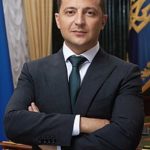
  • Volodymyr Zelenskyy – 2022 Statement on the Situation in Ukraine (26/03/2022)

    Volodymyr Zelenskyy – 2022 Statement on the Situation in Ukraine (26/03/2022)

    The statement made by Volodymyr Zelenskyy, the President of Ukraine, on 26 March 2022.

    Free people of a free country!

    Free Slavutych who will not be conquered by the invaders!

    Today we were all with you – on your streets, in your protest. And all together we tell the occupiers one thing: go home while you can still walk.

    The Russian invaders entered Slavutych and faced the same reaction there as in the south of our state, as in the east of our country.

    Ukraine is united in its desire to live freely, to live independently and for the sake of its own dreams, not other people’s sick fantasies. Every day of our struggle for Ukraine, every manifestation of our resistance in all areas the occupiers have entered so far proves that Ukraine is a state full of life, which has historical roots and moral foundations throughout its territory.

    Nothing they do will help the occupiers in the Ukrainian territory they temporarily entered. Disconnection of our television and activation of passionate nonsense speeches by Moscow TV presenters, leaflets with propaganda, distribution of rubles. Rubles, which in Russia will soon be weighed instead of assessing them at face value.

    Bribing outcasts whom the occupiers are looking for in all the dumps to portray the allegedly pro-Russian government will not help as well.

    The answer to Russian troops will be one – hatred and contempt. And our Armed Forces of Ukraine will inevitably come.

    That is why ordinary Ukrainian peasants take captive the pilots of downed Russian planes that fall to our land. That is why our “tractor troops” – Ukrainian farmers take Russian equipment in the fields and give it to our Armed Forces of Ukraine. In particular, the latest models that Russia has tried to keep secret. And now the occupiers leave them on our land and just run away…

    Actually, they do the right thing. Because it is better for them to escape than to die. And there are not and will not be other alternatives.

    Everyone in Ukraine has united and has been devoting all their energy to the defense of our state for more than a month already. Together with the Armed Forces, together with all our defenders, together with our National Guard.

    I would like to once again congratulate the National Guard of Ukraine on its day with great respect. I am sincerely grateful for everything you do to protect the state, to protect Ukrainians! Thank you for all the steps to victory that will come and that were made possible thanks to you.

    Today I presented awards to soldiers of the National Guard who distinguished themselves in battles with the Russian occupiers. I also awarded the rank of brigadier general to five colonels of the National Guard of Ukraine.

    In total, during the full-scale war since February 24, 476 soldiers of the National Guard have been awarded state awards already.

    I also spoke today with Polish President Andrzej Duda. Twice. About our people who found protection in Poland. And the need to strengthen our common security. Security of our states. Security for all Europeans actually.

    What is the price of this security? This is very specific. These are planes for Ukraine. These are tanks for our state. This is anti-missile defense. This is anti-ship weaponry. This is what our partners have. This is what is covered with dust at their storage facilities. After all, this is all for freedom not only in Ukraine – this is for freedom in Europe.

    Because it cannot be acceptable for everyone on the continent if the Baltic states, Poland, Slovakia and the whole of Eastern Europe are at risk of a clash with the Russian invaders.

    At risk only because they left only one percent of all NATO aircraft and one percent of all NATO tanks somewhere in their hangars. One percent! We did not ask for more. And we do not ask for more. And we have already been waiting for 31 days!

    So who runs the Euro-Atlantic community? Is it still Moscow because of intimidation?

    Partners need to step up assistance to Ukraine. These are the words: partners need! Because this is the security of Europe. And this is exactly what we agreed on in Kyiv when the three prime ministers of Eastern European countries, as well as Mr. Kaczynski, arrived in our capital. It was in mid-March. Today, immediately after the conversation with the President of Poland, I contacted the defenders of Mariupol. I am in constant contact with them. Their determination, their heroism and resilience are impressive. I am grateful to each of them! I wish at least a percentage of their courage to those who have been thinking for 31 days how to transfer a dozen or two of planes or tanks…

    And, by the way, we talked today with our military in Mariupol, with our heroes who defend this city, in Russian.

    Because there is no language problem in Ukraine and there never was.

    But now you, the Russian occupiers, are creating this problem. You are doing everything to make our people stop speaking Russian themselves. Because the Russian language will be associated with you. Only with you. With these explosions and killings. With your crimes. You are deporting our people. You are bullying our teachers, forcing them to repeat everything after your propagandists. You are taking our mayors and Ukrainian activists hostage. You are placing billboards in the occupied territories with appeals (they appeared today) not to be afraid to speak Russian. Just think about what it means. Where Russian has always been a part of everyday life, like Ukrainian, in the east of our state, and where you are turning peaceful cities into ruins today. Russia itself is doing everything to ensure that de-russification takes place on the territory of our state. You are doing it. In one generation. And forever. This is another manifestation of your suicide policy.

    Our representatives – the Minister of Foreign Affairs and the Minister of Defense of Ukraine – met today in Poland with colleagues from the United States. They were joined by US President Joseph Biden. As I was informed, the negotiations concerned, in particular, these vital interests, which I mentioned above. Concerned what we really need while this ping-pong continues – who should give us planes and other protection tools and how. Ukraine cannot shoot down Russian missiles using shotguns, machine guns, which are too much in supplies.

    And it is impossible to unblock Mariupol without a sufficient number of tanks, other armored vehicles and, of course, aircraft. All defenders of Ukraine know that. All defenders of Mariupol know that. Thousands of people know that – citizens, civilians who are dying there in the blockade.

    The United States knows that. All European politicians know. We told everyone. And this should be known as soon as possible by as many people on earth as possible. So that everyone understands who and why was simply afraid to prevent this tragedy. Afraid to simply make a decision. Vital decision.

    Of course, we have already seized a number of Russian tanks, which the military command of this country keeps sending to be burned here.

    However, the nations of the world will not understand for sure if the battlefield in Ukraine will be a larger supplier of tanks to protect freedom in Europe than our partners.

    Ukraine’s position must be heard. I want to emphasize: this is not only our position.

    This is the position of the vast majority of Europe’s population, the majority of Europeans.

    If someone does not believe me, look at current public opinion polls in the world.

    And if you do not want to hear the opinion of the people, then hear the strikes of Russian missiles hitting right next to the Polish border. Are you waiting for the roar of Russian tanks?

    I also spoke with Prime Minister of Bulgaria Kiril Petkov. In particular, about the humanitarian catastrophe due to the actions of Russian troops and how to save our people.

    I spoke today at the Doha Forum in the capital of Qatar. This is a respectable meeting that is important not only for the Islamic world, but also for many other countries in Latin America and Africa. These are the regions where Russian propaganda still has great influence. But we are working against lies all over the world. Let Russia know that the truth will not remain silent. And let every nation in the world feel the depth of Russia’s injustice against Ukraine. Against everything that keeps the world within morality and humanity.

    The occupiers committed another crime against history. Against historical justice.

    Near Kharkiv, Russian troops in their branded inhuman style “denazified” the Holocaust Memorial in Drobytsky Yar.

    During World War II, the Nazis executed about 20,000 people there. 80 years later they are killed a second time. And Russia is doing it.

    The menorah in Drobytsky Yar destroyed by Russian projectiles today is another question to the entire Jewish community of the world: how many more crimes against our common memory of the Holocaust will be allowed to be committed by Russia on our Ukrainian land?

    Russian troops are deliberately killing civilians, destroying residential neighborhoods, targeting shelters and hospitals, schools and universities. Even churches, even Holocaust memorials!

    Russian troops receive just such orders: to destroy everything that makes our nation nation, our people – people, our culture – culture. This is exactly how the Nazis tried to capture Europe 80 years ago. This is exactly how the occupiers act in Ukraine. No one will forgive them. There will be responsibility. Just like 77 years ago. Most likely not in Nuremberg. But the meaning will be similar. You will see.

    Everyone will see. Everyone. We guarantee.

    Glory to all our heroes!

    Glory to Ukraine!

  • Boris Johnson – 2022 Statement at NATO Press Conference

    Boris Johnson – 2022 Statement at NATO Press Conference

    The statement made by Boris Johnson, the Prime Minister, in Brussels on 24 March 2022.

    It is scarcely believable as we stand here today that just a month ago, the Ukrainian people were living ordinary, peaceful lives. Now, they are locked in an extraordinary battle for survival against an unprovoked onslaught from their neighbours.

    Ukrainians have taken up the fight and taught the world the meaning of bravery. Against the odds, they have snarled up Russia’s invading army, inflicting defeat after defeat. The heroism of Ukraine has changed the geopolitics of Europe.

    Vladimir Putin has badly miscalculated in Ukraine, and I believe he knows it. But now that Putin’s Plan A has foundered, he is already escalating by intensifying his attacks on civilians.

    Maternity wards, schools and homes and have been bombed without any regard for civilian life. Families are being starved out in freezing basement shelters, and targeted as they flee.

    The United Kingdom – and our allies in NATO and the G7 here today – are clear: we will not stand by while Putin vents his fury on Ukraine.

    I have rarely seen our nations more united in recent years than we are now. Putin’s failure in Ukraine is vital for the peace and prosperity of all of us, and his barbaric invasion has galvanised the international community into collective action.

    We will work with likeminded allies to ramp up lethal aid to Ukraine at scale, providing kit to President Zelenskyy in the quantity and with the quality and quantity that he needs to defend his country from its bullying neighbour.

    Today, I have announced we in the UK will send an additional 6,000 missiles and provide £25 million in unrestricted funding for Ukraine’s armed forces, more than doubling the lethal aid we have provided to date.

    We are bolstering our support for the NATO countries on the frontline, sending a new deployment of UK troops to Bulgaria on top of the doubling our troops both in Poland and in Estonia.

    This is just the beginning. We must support a free and democratic Ukraine in the long term. This is a fellow European democracy fighting a war of national defence.

    NATO and G7 leaders were also united today in our determination to continue turning the screws on the Kremlin’s war machine, including by weaning ourselves off Russian oil and gas and reshaping global energy security.

    The UK has already hit over 1,000 Russian individuals and entities in our toughest-ever sanctions, and the Foreign Secretary has announced 65 new sanctions against Russian banks, weapons manufacturers and oligarchs just this morning.

    I also discussed the humanitarian response with our allies and partners today, as we continue to see huge numbers of Ukrainians flee their homes.

    And the message that President Putin can take from today’s extraordinary meeting of NATO and the G7 is this: Ukraine is not alone.

    We stand with the people of Kyiv, of Mairupol, of Lviv and Donetsk. And as President Zelenskyy has said himself – the people of Ukraine will prevail and Putin must fail and he will fail.

  • Dominic Raab – 2022 Comments on Victim Support

    Dominic Raab – 2022 Comments on Victim Support

    The comments made by Dominic Raab, the Deputy Prime Minister, in the House of Commons on 25 March 2022.

    We want more victims to have the confidence to come forward, so that more criminals can be prosecuted and victims can get the justice they deserve.

    We’re increasing transparency through local scorecards, rolling out pre-recorded cross-examination for rape victims to more Crown Courts, and boosting funding for vital support services to £440 million over the next three years so that victims get the support they need.

  • Greg Hands – 2022 Comments on the Energy Entrepreneurs Fund

    Greg Hands – 2022 Comments on the Energy Entrepreneurs Fund

    The comments made by Greg Hands, the Energy Minister, on 25 March 2022.

    Our innovation has made the UK a green energy world leader and we are unleashing that now to help us further secure greater clean energy independence.

    The Energy Entrepreneurs Fund is backing the next generation of inventors and innovators to drive forward cheap and reliable low-carbon technologies, create jobs and reduce our reliance on expensive fossil fuels.

  • George Freeman – 2022 Statement on Support for Ukrainian Researchers

    George Freeman – 2022 Statement on Support for Ukrainian Researchers

    The statement made by George Freeman, the Minister for Science, Research and Innovation, on 27 March 2022.

    Science is an overwhelming force for peaceful cooperation. Through free and open academic discourse we can deliver benefits for humanity and the globe as we seek to address the most pressing challenges of our time.

    The appalling invasion demands that we all take a stand and show our solidarity and support for Ukraine. The government has taken the decision to suspend publicly funded research and innovation collaborations with Russian Universities and companies of strategic benefit to the Russian state. Our aim is to introduce measures that will negatively impact the Russian state, and individuals and organisations with strong links to the Kremlin, but not to sanction individual Russian scientists or innovators with benign research interests.

    We are therefore today taking action:

    1. All payments for projects delivered through UK public research funds with a Russian dimension have been paused. I have commissioned an assessment, on top of the existing and strong due diligence processes of UK public research funders, to isolate and freeze activities which benefit the Russian regime.

    2. We will not fund any new collaborative projects with Russia through our research and innovation organisations.

    3. We have suspended existing government to government dialogue through our science and innovation network team in Russia including their collaborative science projects.

    4. Where the UK is a member of multilateral organisations, we are working at pace with partners to respond appropriately – holding Russia to account for its actions while diminishing and isolating its influence.

    5. We are standing up a £3 million package of support for Ukrainian researchers at risk. We stand with Ukraine, its democratically elected government and its brave people at this awful time.

  • Adam Holloway – 2022 Speech on the Lower Thames Crossing

    Adam Holloway – 2022 Speech on the Lower Thames Crossing

    The speech made by Adam Holloway, the Conservative MP for Gravesham, in the House of Commons on 24 March 2022.

    Mr Deputy Speaker, perhaps you will pass on my thanks to Mr Speaker for granting this important debate. I welcome the Under-Secretary of State for Transport, the hon. Member for Copeland (Trudy Harrison), to her place, although I am sorry that the roads Minister is a Member of the other place and cannot reply.

    There is truly an opportunity for us to save billions of pounds that we are about to spend, unnecessarily in my view, on a new crossing of the Thames to the east of the current one at Dartford, to the east of Gravesend. The original idea behind having another crossing of the Thames was to ease the appalling congestion at Dartford. There cannot be anybody watching the debate or in the Chamber who has not sat for hours and hours trying to cross the Thames at Dartford. As is the way of Government, there have been endless studies and consultations on the best way to stop this awful gridlock on the M25. For years, Ministers have told me privately that the solution is to build another bridge at Dartford to ease the pressure caused by the inadequate north-bound tunnels. After all, the M25 runs through Dartford—it always has and it always will.

    There is a huge problem that needs fixing, and that is how the traffic gets past the River Thames at Dartford and through Thurrock. During the course of those years of study, other options were explored—one would expect that—including a crossing some miles further down the river to the east of Gravesend. When Kent and Essex County Councils realised that a crossing further down the Thames from Dartford was in the offing, they made sure that the consideration was turbocharged, seeing massive economic benefits to both counties if they had a link road between them—that is understandable. So, slowly, the project morphed from one about how to fix the traffic at Dartford to one about economic development for Kent and Essex, with, to them, the secondary consideration that this economic development tunnel and new road network would also have the effect of reducing some of the pressure at Dartford, and also providing resilience.

    Jackie Doyle-Price (Thurrock) (Con)

    Will my hon. Friend give way?

    Adam Holloway

    Yes, of course, I will give way. I did mention my hon. Friend’s constituency.

    Jackie Doyle-Price

    I do not disagree with my hon. Friend’s analysis of how we ended up with this route, but does he agree that it is all very well for Kent and Essex to draw a line as to where that road should go when it actually goes through Thurrock, to which they are not accountable? If they were really genuinely interested in supporting it, they should work towards the optimum route.

    Adam Holloway

    That is an extremely good point, and I wish that I had included it in my speech. If I have to speak about this again, I will make that point. I thank my hon. Friend and I totally agree with her.

    This all became about economic development. The original purpose of easing traffic became secondary. The aims of the project changed completely, which meant that the problems at Dartford were no longer the priority—in fact, they became a secondary consideration. Then, my right hon. Friend the Member for Epsom and Ewell (Chris Grayling), the then Transport Secretary, opted for Kent and Essex’s preferred option, which will do nothing to ameliorate the situation at Dartford and will be yet another massive piece of Government spending on road infrastructure just at the moment in our history when roads are to be optimised by level 5 autonomous vehicles. The way I think of it is that if we look across the rooftops of London we see thousands of chimneys, none of them used any more. This road will end up a white elephant like them in future—and not far in the future.

    First, the lower Thames crossing does not address the problems on the M25 at the Dartford crossing or provide any resilience in any way, shape or form. I will explain why. The M25 northbound at Dartford remains one of Europe’s worst traffic jams on a major national road—I imagine all hon. Members, even the Minister, can picture themselves there, having sat in those traffic jams.

    The problems at the Dartford crossing are primarily caused by the outdated and undersized northbound tunnels. The southbound traffic coming over the bridge moves at pretty much the same speed as the rest of the motorway; it is not immune to traffic jams, but neither is the rest of the system. The problem is the tunnels. The left-hand one is 4.8 metres high and the right-hand one is 5 metres high. They are the cause of the horrendous jams, because no fuel tankers or hazardous loads are permitted unescorted, and no vehicles over 5 metres high are permitted at all.

    What happens is that we end up with traffic, including very large vehicles, weaving and causing frequent accidents and incidents, as well as frequent red traffic lights to hold the rest of the traffic in order to extract an over-height vehicle that has managed to go through. Then, of course, a couple of times an hour all the traffic on the M25 going north is stopped, because they have to run the convoys with fuel tankers and hazardous materials in them. That causes congestion and queuing, and hardly a day goes by without a major incident bringing the M25 to a complete standstill and causing gridlock at Dartford.

    The lower Thames crossing, the one to the east of Gravesend, does not address those problems at all, nor does it provide a satisfactory alternate route for M25 traffic. Let us note, by the way, that the M25 is not complete—it stops just before Dartford and becomes an A road, and then becomes the M25 again. We have not actually finished building the M25 yet.

    Once the lower Thames crossing is built, the Dartford crossing will still be operating at capacity and the problems there will continue. The long-suffering residents and businesses of Dartford will continue to suffer, and I believe they are being hoodwinked. We must sort out the problem of Dartford first and foremost, either with the originally promised relatively cheap and cheerful bridge for northbound traffic, or with a variant of option A14, which is the idea to have a big tunnel going underneath Dartford and Thurrock, separating all the national, long-range traffic, so the existing crossings could be used by residents of Dartford, Thurrock and so on.

    Secondly, we have been assured that having a completely different crossing will provide resilience, so what will happen when the incidents continue to happen on the northbound bit of the Dartford tunnel approaches? As soon as traffic on the M25 comes to a standstill, it will seek an alternate route to the lower Thames crossing, but to exit the M25 at junction 2, the junction just before, it will have to go through a traffic light-controlled roundabout, which will be totally inadequate for the volume of traffic.

    Having negotiated that obstacle, traffic will head east towards Gravesend only to find that, unbelievably, there will be just one lane from the A2 to the lower Thames crossing tunnel to take traffic into Essex. Not only will Dartford be gridlocked, but so will Gravesend and the whole of the A2 eastbound from M25 junction 2.

    Jackie Doyle-Price

    My hon. Friend is being very generous in giving way, and he is now getting to the nub of the problems with the design of the lower Thames crossing. It is being applied as a piece of national infrastructure without sufficient thought to the impact on the local road networks in his constituency and mine and that of my hon. Friend the Member for South Basildon and East Thurrock (Stephen Metcalfe). He highlights the lack of connectivity beautifully. For my residents in South Ockendon, if we have a tailback going south and the traffic backs up, not only do they face congestion at the Dartford crossing, but the lower Thames crossing arrives at Ockendon, so residents there will be subject to congestion from both crossings.

    Adam Holloway

    Absolutely. In a sense, my hon. Friend’s residents and those over in Essex are having it very badly with all the additional roads to be built as well, so I completely concur. We have established that when Dartford is gridlocked, so will Gravesend be, and her area at Ockendon.

    With junction 2 of the M25 blocked, the M25 traffic will seek an alternative route to the lower Thames crossing. We will then find that the A227, and all the villages and lanes approaching the new crossing, will become choked with traffic. Just to be clear, although the project is terminal for my hamlet of Thong and terrible for the people of much of Riverview Park and the villages that will become rat-runs, the worst will be for the residents of Dartford—more on that later.

    Of course it is absolutely correct that the new crossing will provide a useful alternative for traffic heading to and from the ferry port of Dover, but that is all. Channel tunnel traffic will still try to use the M20 and the M25 and so will still use the Dartford crossing. There is more. National Highways is busy planning another kick in the teeth to motorists once the new crossing is built. In its wisdom, it intends to split the A2 and M2 into two separate two-lane highways midway between the A227 and Marling Cross. The outer two lanes will be for M2 traffic going down deeper into Kent; the inner two lanes will be for the A2 to Strood and the lower Thames crossing, and the Hoo peninsula. That is a recipe for disaster. Not only will it cause dangerous weaving and accidents while the traffic tries to get into the correct lane, but the A2 will be narrowed to two lanes, which is completely inadequate for traffic heading towards the M2 at peak periods. It is ridiculous. In 2009, Highways England actually widened the A2 at this point from three lanes to four lanes to cope with increased volumes, and now the proposal is to narrow it to two lanes.

    Let me return to the contention of Kent and Essex County Councils that this crossing would bring large economic benefits. The cost of the project for central Government has increased from £3.72 billion in 2016 to £8.2 billion now. We make these throwaway comments about billions, but imagine having a stack of a million £1 coins and then creating 8,200 stacks of £1 coins. That is an enormous amount of money, and because the project is no longer being privately funded, it is taxpayers’ money. We have a cost of living crisis. Every time people go into a garage or a shop, or pay their income tax, the money for this white elephant is coming off them. It is a financial turkey right now and truly it will be a transport white elephant in a decade—and it will inevitably end up costing more.

    The cost-benefit analysis carried out in 2016 had mysteriously changed from the analysis carried out in 2013 to show a benefit of the lower Thames crossing of 2.4. But in 2013, the cost-benefit analysis supported the Dartford option and was against a crossing east of Gravesend, which then apparently provided a benefit of 1.1. Somewhere along the way the figures magically changed to suit the argument. Anyway, at a new cost of £8 billion, any benefit must now be marginal at best. I can completely understand why that might not matter too much to Kent and Essex County Councils, because it is not money from their budgets, but it is the money of hundreds of millions of people who will remain sitting snarled in their cars in traffic jams at Dartford over the coming decades. Far from a new crossing away from Dartford being a victory for the people of Dartford, they are now condemned to decades more noise and pollution. An intergenerational chance to sort out the M25 has been blown by muddled thinking and a political class in local government thinking only of their own political lifetimes. Now would seem to be an appropriate time to carry out an in-depth review to determine whether to proceed with the lower Thames crossing or to go back to the drawing board, sort out the M25 at Dartford and relieve the taxpayer of accruing yet more unnecessary debt for their children and great-grandchildren to repay.

    The crossing will not prevent the delays, incidents and gridlock at Dartford, and it will not provide an alternate route for M25 traffic. It is a massive missed opportunity for the people of Dartford, who will have to endure more decades of misery until finally either the northbound bridge or the long tunnel under Dartford and Thurrock is built—one or the other will have to be built eventually. Indeed, I believe that the current tunnels are close to the end of their design life, so why are we building a white elephant further down?

    The crossing is far too expensive at £8.2 billion and does not represent value for money for taxpayers. As we have discussed and I have outlined, better, less expensive solutions are available. I urge the Minister to think it through herself and stop listening to Highways England before it is too late and we commit all that money unnecessarily. If there were ever an opportunity for a Secretary of State to put a red line through a massive piece of spending, this is it.

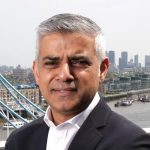
  • Sadiq Khan – 2022 Comments on Policing in London

    Sadiq Khan – 2022 Comments on Policing in London

    The comments made by Sadiq Khan, the Mayor of London, on 24 March 2022.

    Tackling crime and making London safer is my number one priority. Thanks to our relentless efforts over recent years and record investment from City Hall, violent crime continues to fall. But there’s still much more to do to prevent violence and to stop the terrible loss of young lives in our city.

    My new Police and Crime Plan outlines how I will continue to be both tough on crime and tough on the complex causes of crime, taking the action needed to make our city safer and to ensure victims of crime are supported.

    We have a long-standing tradition in this country of policing by consent. But a series of deeply concerning incidents have seriously damaged public trust and confidence in our police. When trust is eroded, it makes it harder to tackle crime, with victims failing to report crime and witnesses discouraged from coming forward when they see criminal activity. That’s why my plan is also focused on ensuring the Met and the next Commissioner urgently make the changes and reforms necessary to rebuild trust and confidence with Londoners.

    As Mayor, I’m determined to ensure that we restore trust in the police and that we continue to build on the progress we have made in tackling violent crime across our city.