Tag: 2022

  • Liz Truss – 2022 Comments on Visit to India

    Liz Truss – 2022 Comments on Visit to India

    The comments made by Liz Truss, the Foreign Secretary, on 31 March 2022.

    Deeper ties between Britain and India will boost security in the Indo-Pacific and globally, and create jobs and opportunities in both countries.

    This matters even more in the context of Russia’s unprovoked invasion of Ukraine and underlines the need for free democracies to work closer together in areas like defence, trade and cyber security.

    India is an economic and tech powerhouse, the world’s largest democracy and a great friend of Britain, and I want to build an even closer relationship between our two nations.

  • Steve Reed – 2022 Speech on the Parole System

    Steve Reed – 2022 Speech on the Parole System

    The speech made by Steve Reed, the Shadow Secretary of State for Justice, in the House of Commons on 30 March 2022.

    I thank the Secretary of State for advance sight of his statement earlier today. It is hugely timely, given the disturbing news about the potential release of Baby P’s killer. I fully support the Secretary of State in seeking a review of that. In broad terms, I welcome his statement too. It is crucial that public protection is paramount and that victims are right at the heart of the criminal justice system. Currently, too many victims feel that their views are not taken sufficiently into account, either in parole decisions or in sentencing, and that leads directly to public safety concerns, which must be taken more seriously. Labour will put public safety at the core of our contract with the British people. Sadly, the same cannot be said of this Government.

    It is less than two months since the convicted sex abuser Paul Robson walked out of a low-category open prison in Lincolnshire. After he escaped, the public were warned that Robson was a serious danger to women and children. He clearly should never have been in a low-security prison in the first place. The Parole Board made that recommendation, but it was the Secretary of State who approved it. He or his predecessors already had the necessary powers, they just did not use them. So what will stop him making serious mistakes like that again when he exercises his new check and oversight powers in, potentially, hundreds more cases? Labour wants victims to have the right to make a new personal statement saying how they would feel if the prisoner is released. We would like any assessment of the risk to the public to include the risk of re-traumatising the victim, and to prevent released prisoners from living near their victim if that is against the victim’s wishes. Will the Secretary of State consider those additional proposals?

    The appalling decision to release the multiple rapist John Worboys was only stopped after the Centre for Women’s Justice sued the Government, using rights established by the last Labour Government. Sir Peter Gross’s review made sensible proposals to improve these rights, including the UK’s margin of appreciation over interpretations we would all object to. But the Secretary of State will be throwing the baby out with the bathwater if he uses that concern as an excuse to take away British rights that protect British people from dangerous criminals, as they did in that case. Too many victims of crime do not get a say over what happens to criminals because those criminals are never prosecuted in the first place. That is because this Conservative Government cut 21,000 police officers and still have not replaced them, despite imposing the highest rates of personal taxation for 70 years—that is 21,000 people with law enforcement experience that his party sacked, whom he might now approach to sit on parole boards, as he suggests.

    The Secretary of State spoke about rape cases in this statement, but only 1.5% of reported rape cases ever make it to court. Those that do now take more than 1,000 days, on average, before the trial starts—these are the longest delays in British legal history. What message does he think that sends about public safety and public protection? Under this Government, prosecution rates for crimes including burglary, robbery, car crime and fraud are so low that they have, in effect, been decriminalised. There are so few police left that victims are told to fill in a form online and hardly any of them ever hear anything again. It is no wonder that the Government stand accused of going soft on these crimes. Does he recognise that letting criminals get away with crime damages public safety and erodes confidence in the justice system, which is something he is telling us this afternoon that he wants to strengthen? The Victims’ Commissioner has called on the Government to establish a new victims’ right to review. That would give victims the power to challenge decisions by the police and the Crown Prosecution Service not to prosecute or to drop prosecutions. The Secretary of State did not mention that in his statement, so will he tell us whether he intends to introduce proposals along those lines in future?

    Public protection requires victims to be active participants throughout the criminal justice process, including in parole decisions. Their insights strengthen public safety and public confidence in the system. Today’s statement is a step forward and it recognises some of the Government’s mistakes, but it could have been bigger.

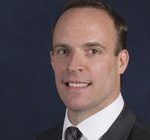
  • Dominic Raab – 2022 Statement on the Parole System

    Dominic Raab – 2022 Statement on the Parole System

    The statement made by Dominic Raab, the Secretary of State for Justice, in the House of Commons on 30 March 2022.

    Today I am publishing the root and branch review of the parole system, and copies have been deposited in the Library.

    I start by paying tribute to the chief executive officer and the chair of the Parole Board for England and Wales, Martin Jones and Caroline Corby, and to all the staff who work so tirelessly to discharge their important responsibilities. They are dedicated and committed public servants.

    Before I address the detail of the statement, and with your forbearance, Madam Deputy Speaker, I will update the House on this morning’s news. In the light of the Parole Board’s direction to release Tracey Connelly, and having carefully read the decision, I have decided to apply to the Parole Board seeking its reconsideration.

    More generally, the role of the Parole Board in deciding on the appropriateness of releasing a criminal offender from prison, including many convicted of very serious violent and sexual offences, is clearly of paramount importance to protecting the public and to maintaining and sustaining public confidence in our justice system. It is the first duty of Government to protect the public.

    In recent years, a number of decisions to release offenders who committed heinous crimes have led to disquiet, concern and, regrettably, an erosion of public confidence. Take the case of John Worboys, who is serving a discretionary life sentence for rape and other sexual offences. The Parole Board’s decision in January 2018 to release him on licence caused deep concern among his victims and the wider public. It was subject to a successful legal challenge, after which the Crown Prosecution Service successfully prosecuted him for attacking four further women.

    I know that hon. Members on both sides of the House have raised the case of Colin Pitchfork, who was convicted of the rape and murder of Lynda Mann and Dawn Ashworth. The Parole Board decided to release Pitchfork in 2021, and it rejected the challenge by the then Justice Secretary, my right hon. and learned Friend the Member for South Swindon (Sir Robert Buckland). The understandable public anxiety was further compounded when Pitchfork was recalled to prison just two months after release for approaching women in breach of his licence conditions.

    I make a broader point that in these kinds of cases, and in many others that do not attract the same level of media attention or public interest, victims feel their trauma and raw fear are neither recognised nor understood. Likewise, the public inevitably begin to question the reliability of decision making when serious offenders are recalled to prison for breaches of their licence or for committing further offences on release.

    To give the House a sense of scale, in 2020-21 the Parole Board’s annual report stated that 27 offenders went on to be charged with a serious further offence following release directed by the Parole Board panel. There were 40 cases of serious further offences being charged in each of the preceding two years. Placed in context, it is fair to say this is only a fraction of all cases, but more than once a fortnight an offender goes on to commit a serious offence while subject to supervision.

    At present, victims who wish to challenge a decision by the Parole Board to release a prisoner have the option of asking the Justice Secretary to apply for the decision to be reconsidered, which is an important innovation that I exercised today for a person convicted in the harrowing case of Baby P. There have been 39 interventions since the challenge mechanism was set up two years ago, with four leading to a change in the release decision.

    Following the review published today, I believe the case for reform is clear and made out. In arriving at this conclusion, it is worth pausing to acknowledge the shift in the Parole Board’s approach over time. The statutory test was established in 1991 and states

    “The Parole Board must not give a direction”—

    for release—

    “unless the Board is satisfied that it is no longer necessary for the protection of the public that the person should be confined.”

    It is clear from this that the overriding test focuses on public protection. However, in the absence of further guidance from Parliament, the way in which the release test has been interpreted and applied over time has shifted, moving away from Parliament’s original intention. In fact, as early as the Bradley judgment in 1991, the High Court concluded:

    “The Parole Board have to carry out a balancing exercise between the legitimate conflicting interests of both prisoner and public.”

    To summarise, the statutory test has morphed over time from a strict public protection test to a balancing exercise between, on the one hand, the responsibility of the state to protect the public and, on the other hand, the rights of the prisoner. Whatever the rights and wrongs, that was palpably not the original intention of Parliament.

    I make it clear that I am not criticising the courts, which have sought to apply a generic statutory test without more prescriptive guidance from Parliament, nor am I criticising members of the Parole Board, as I hope I have made clear. It is worth saying that, contrary to public perception, it is often fiendishly difficult to come to a reliable assessment of an offender’s risk many years after their original crimes. Although psychiatric assessments and social science can offer guidance, risk assessments in such cases are inherently uncertain and imprecise. We need to be more honest and open about that in our public debate.

    In any case, I believe the focus in this critical decision making has become adrift from its original moorings. This Government will again anchor Parole Board decision making on the cardinal principle of public protection. When it comes to assessing the risk to victims and public safety, we will introduce a precautionary principle to reinforce public confidence in the system. In cases involving those who have committed the most serious crimes, we will introduce a ministerial check on release decisions, exercised by the Justice Secretary.

    The package of reforms published today will strengthen the focus on public protection at every stage. First, we will revise the statutory test for release and replace the current approach that balances the rights of dangerous offenders against public safety with an overriding focus on public protection, by providing in primary legislation further detailed criteria for the application of the statutory test.

    Secondly, we will make sure that the Parole Board is better equipped to make credible and realistic assessments of risk. It is striking that, as of last year, only 5% of all Parole Board panel members come from a law enforcement background. Again, I make no criticism of the current panel members, but that is a significant deficit. I believe the deficit is wrong, and our reforms will ensure that the people we charge with making finely balanced assessments of future risk have greater first-hand operational experience of protecting the public from serious offenders. We will change this imbalance by mandating the Parole Board to recruit more members with operational law enforcement experience, and the Ministry of Justice will run a recruitment campaign to bolster its numbers. Critically, in Parole Board cases involving the top-tier cohort of serious violent and sexual offenders, we will require by law that at least one of the three panel members has a law enforcement background.

    The third key reform is that, for the top-tier cohort of high-risk offenders who have committed the most serious offences, we will introduce ministerial oversight of Parole Board decisions to release such offenders back into the community, based on our assessment of the dangerousness of the offender, the risk of serious further offending and public confidence. These top-tier offenders will comprise those serving sentences for murder, rape, terrorism and causing or allowing the death of a child. In those cases, we will make two specific changes. The Parole Board will be able to refer a case to the Justice Secretary if it cannot confidently conclude whether, on the evidence, the statutory test for release has been met. In addition, we will introduce ministerial oversight over any decision to release any offender in the top-tier cohort of serious offenders. Under our reforms, in that top tier of cases the Justice Secretary will have the power to refuse release, subject to judicial challenge, on very clearly prescribed grounds, in the upper tribunal. I believe that is warranted as an extra check and safeguard to protect the public. I have not yet ruled out entirely an alternative model that could establish a three-person panel chaired by the Justice Secretary with the same power to refuse release, subject to judicial review in the normal way. We will consider further detail of the mechanism in order to strike the most effective balance.

    We are making these reforms because the concept of risk is notoriously difficult to assess in these kinds of cases. We are doing it because the public expect their safety to be the overriding consideration and because, ultimately, it involves a judgment call about public protection, and the public expect Ministers to take responsibility for their safety. Let me be equally clear that there is no such thing as a risk-free society; we cannot guarantee that no one released from prison will go on to commit a serious crime. Let us be very clear about that as we have a more honest debate about the assessment of risk. Nevertheless, I believe that these measures are necessary to reinforce public safety and public confidence, and we will legislate for them as soon as possible. I should also say that we will do so alongside our proposed Bill of Rights, to ensure that the will of Parliament and that focus on public protection is not undermined by the Human Rights Act. Indeed, our reforms to parole yet again highlight the compelling case for a Bill of Rights.

    Our fourth reform will increase victim participation in parole hearings, thereby delivering on this Government’s manifesto commitment. I recognise that parole decisions will be immensely and acutely traumatic moments for many victims, as they are forced to remember, go through and revisit the ordeal and suffering that they have already been though. Some will not wish to be involved, whereas others will want their voices to be heard, and I believe they should have that right. So we will give victims the right to attend a parole hearing in full, for the first time, should they wish to do so. In addition, we will require the board to take into account submissions made by victims and allow victims to ask questions through those submissions. The voice of victims will be at the centre of the process, not just some lingering afterthought.

    Finally, although separate from parole decision making, similar considerations of risk and public concern have arisen in the context of decisions to transfer prisoners to prisons in open conditions. That is why in December 2021 I changed the process to introduce a ministerial check on such decisions, guided by similar principles to those that I have already set out. That is what led to my decision this month to reject the Parole Board’s recommendation to move Steven Ling, who raped and killed a woman, to an open prison. I declined the move in the interest of public protection and public confidence.

    In sum, our reforms will ensure that those offenders who present the highest risk to public safety are reviewed more rigorously, with additional ministerial oversight. Protecting the public is the Government’s top priority. The proposals in this review will reinforce public safety. I commend this statement to the House.

  • Louise Haigh – 2022 Speech on P&O Ferries

    Louise Haigh – 2022 Speech on P&O Ferries

    The speech made by Louise Haigh, the Shadow Secretary of State for Transport, in the House of Commons on 30 March 2022.

    I thank the Secretary of State for advance sight of his statement, and for the briefing he gave me on these measures last week.

    I know the whole House agrees that the action taken by P&O Ferries was beneath contempt. A sense of fair play and decency runs deep in this country—it is part of who we are—so the sight of a rogue employer who has made a mockery of the rule of law, trashed the reputation of a great British brand and upended the lives of 800 families saying that he would do it all again offends people deeply. The test, therefore, for this Government in the eyes of the country is simple: do not let them get away with it—because for too long, they have. The warning sirens have been sounding for years. P&O Ferries has been exploiting workers in plain sight. In this House, the Government were told repeatedly of seafarers on destitution wages, some earning just £1.74 an hour. My hon. Friend the Member for Kingston upon Hull East (Karl Turner) warned:

    “If the Government fail to act, how long will it be before we see the same thing happen…on other critical shipping lanes?”

    The gate was left wide open, and P&O Ferries has sailed straight through it.

    The steps announced by the Government, insisting on the bare minimum, cannot come a moment too soon. This is a move we warmly welcome, and which has our wholehearted support. However, can the Secretary of State confirm that under the harbour legislation he mentioned, the national minimum wage will apply on the entirety of all UK international routes, and not just in British waters, as P&O seemed to suggest yesterday? I very much welcome his action to instruct the Insolvency Service to consider the CEO’s disqualification. When will the Insolvency Service respond, so that the Business Secretary can seek an order for his disqualification in the courts?

    Yesterday’s letter from P&O showed in black and white that regardless of the proposed legislation, it still intends to carry out its outrageous plan to sack 800 workers, to trample over the laws of this country, and to take an axe to the pay and conditions of these workers’ replacements and force through a 60% pay cut. This is, as the joint Select Committee was told last week, fire and rehire on steroids—and P&O Ferries must not get away with it. That is why the Government’s reluctance to use every tool at their disposal to force it to change course is bewildering. No prosecution has been brought, despite the Prime Minister’s announcement last week, and the deadline to act to protect these workers is tomorrow. The Chancellor confirmed yesterday to my hon. Friend the Member for Kingston upon Hull West and Hessle (Emma Hardy) that the review of the relationship with DP World has already concluded—and it will keep every single taxpayer-funded contract.

    Even with these very welcome steps announced today, the Government still risk giving the green light to P&O and other exploitative employers. Will the Secretary of State now guarantee that he will prosecute, disqualify the directors, and suspend their lucrative contracts? If P&O continues to proceed with this unlawful action, and to risk safety, is it not time to suspend its licence to operate? Will he introduce powers to allow the Government to step in and stop any such illegal behaviour in future and force employers back to the negotiating table? Will he amend the Trade Union Act 2016 so that employees can seek unlimited punitive damages against such unlawful action in future?

    P&O Ferries has written the blueprint for bad business the world over. It must know that there will be consequences, because this scandal extends well beyond P&O. It is the consequence of a decade in which an axe has been taken to workers’ rights. The balance has tipped far away from working people. Fire and rehire has become commonplace, and millions of people are thinking, “Will I be next?”

    The measures announced yesterday by the Under-Secretary of State for Business, Energy and Industrial Strategy, the hon. Member for Sutton and Cheam (Paul Scully), show, I am afraid, that the Government still do not get it. The measures may mean extra compensation, but only after people have gone through a tribunal process that is beset with delays and backlogs—and this is a price that bad bosses have already shown they are prepared to pay. If Ministers mean what they say—if this is going to be a line in the sand—they will bring forward an emergency employment Bill straight after recess. No more half measures, no more excuses—they must ban fire and rehire for good. They will also guarantee that not a penny of public money will be handed out to companies that disregard workers’ rights, and will work with the RMT and Nautilus International to pursue a binding agreement on pay and conditions to end the race to the bottom that P&O is determined to lead.

    We will work constructively with the Government on the measures announced today, but 13 days on from this scandalous act, key shipping routes are still suspended, 800 workers are still without their jobs, those responsible have no regrets, and time is almost out. The stakes could not be higher. To reverse this scandalous act, the actions of Ministers must now match their words.

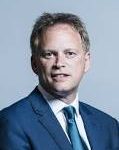
  • Grant Shapps – 2022 Statement on P&O Ferries

    Grant Shapps – 2022 Statement on P&O Ferries

    The statement made by Grant Shapps, the Secretary of State for Transport, in the House of Commons on 30 March 2022.

    Madam Deputy Speaker, I wish to make a statement on P&O Ferries.

    Last week, I stood at this Dispatch Box to address the House on the shameful sacking of 800 seafarers by P&O Ferries. No British worker should be treated in this way, devoid of dignity and respect. Our maritime workers, who supported this country during the pandemic with great dedication and sacrifice, deserved far better than to be dismissed via a pre-recorded Zoom in favour of cheaper overseas labour.

    In response, we urged P&O Ferries to reconsider. Those calls have fallen on deaf ears. Instead, chief executive Peter Hebblethwaite—in front of Parliament, no less—set out how he deliberately broke the law and, in an act of breathtaking indifference, suggested he would do the same thing again.

    The failure of P&O Ferries to see reason, to recognise the public anger and to do the right thing by its staff has left the Government with no choice. Today, I am announcing a package of nine measures that will force it to fundamentally rethink its decision and send a clear message to the maritime industry that we will not allow this to happen again: that where new laws are needed, we will create them, that where legal loopholes are cynically exploited, we will close them, and that where employment rights are too weak, we will strengthen them.

    I start with the enforcement action we are taking. Far too many irregularities exist between those who work at sea and those who work on land. Even where workers have rights, they are not always enforced. The first measure I can announce is that Her Majesty’s Revenue and Customs will be dedicating significant resource to checking that all UK ferry operators are compliant with the national minimum wage—no ifs, no buts.

    Secondly, I have asked the Maritime and Coastguard Agency to review its enforcement policies, checking they are fit for purpose, both now and into the future. The House will recall that the MCA is already, at my request, carrying out inspections of P&O’s ferries. So far two ships, the European Causeway and the Pride of Kent, have been detained after failing safety inspections. I will not compromise the safety of any vessel, and P&O will not be able to rush new crews through training and expect those ships to sail. That work is ongoing.

    Thirdly, we will take action to prevent employers who have not made reasonable efforts to reach agreement through consultation, from using fire and rehire tactics. A new statutory code will allow a court or employment tribunal to take the manner of dismissal into account and, if an employer fails to comply with the code, to impose a 25% uplift to a worker’s compensation.

    Fourthly, I have made no secret of my view that P&O Ferries’ boss Peter Hebblethwaite should resign. He set out to break the law and boasted about it to Parliament. I have written to the chief executive officer of the Insolvency Service, conveying my firm belief that Peter Hebblethwaite is unfit to lead a British company, and have asked it to consider his disqualification. The Insolvency Service has the legal powers to pursue complaints where a company has engaged in “sharp practice”. Surely the whole House agrees that nothing could be sharper than dismissing 800 staff and deliberately breaking the law while doing so. It is, of course, for the Insolvency Service to decide what happens next, but in taking this step I want to ensure that such outrageous behaviour is challenged.

    It is a hard truth that those working at sea do not enjoy the same benefits as those working on land, which brings me to the fifth element of the package today: a renewed focus on the training and welfare elements of our flagship maritime strategy. We are already investing £30 million through the maritime training fund to grow our seafarer population, but I will go further, pursuing worldwide agreements at the International Labour Organisation. We will push for a common set of principles to support maritime workers, including an international minimum wage, a global framework for maritime training, and skills and tools to support seafarer mental health.

    Sixthly, we know that P&O Ferries exploited a loophole, flagging its vessels in Cyprus to escape UK laws. We will take action on that too. From next week, our reforms to tonnage tax will come into effect, meaning that maritime businesses set up in the UK will have unnecessary red tape removed, as well as any provisions from the EU that are no longer required. By doing so, we will increasing the attractiveness of UK flagging and bring more ships under our control, thereby protecting the welfare of seafarers.

    Much of the maritime sector is governed by international laws, obligations and treaties. That means that we cannot hope to solve all these problems alone. The seventh plank of our package today is therefore to engage with our international partners. This week, I have contacted my counterparts in France, Denmark, the Netherlands, Ireland and Germany to discuss the idea that maritime workers on direct routes between our countries should receive a minimum wage. I am delighted to say that the response, particularly from the French Minister for Transport, has already been positive. I will now work quickly with my counterparts to explore the creation of minimum wage corridors between our nations, and we will also ask unions and operators to agree common levels of seafarer protection on those routes.

    I have set out how we will step up enforcement, how we will support the workforce in the long term, how we will get more vessels under the British flag, and how we are working with international partners to create minimum wage corridors, but I know the House is expecting legislative changes, too. Although we had originally intended to come to the Chamber today to announce changes to the National Minimum Wage Act 1998, after seeking expert maritime legal advice it has become clear that that will not be possible. The issue is that maritime law is governed by international conventions that would too easily override changes to domestic laws. However, I will not let that stop us. Seafarers deserve the same wage certainty as onshore workers. They deserve to be safe in the knowledge that they will not be undercut at a moment’s notice by cheaper overseas labour. Today, we are providing that certainty.

    I can announce to the House our eighth measure: our intention to give British ports new statutory powers to refuse access to regular ferry services that do not pay their crew the national minimum wage. We will achieve that through primary legislation to amend the Harbours Act 1964. It will mean that if companies such as P&O Ferries want to dock in ports such as Dover, Hull or Liverpool, they will have no choice but to comply. Crucially, that also means that P&O Ferries can derive no benefit from the action it has disgracefully taken. It has fired its workers to replace them with those who are paid below minimum wage but, as a result of this measure, that cynical attempt will fail. My message to P&O Ferries is this: “The game is up. Rehire those who want to return, and pay your workers—all your workers—a decent wage.”

    The Government want to bring that legislation forward as quickly as possible, but it is important to get it right. We are legally bound to consult the sector on any changes and, unlike P&O, we take that consultation seriously. Legislative changes will not be possible overnight. To that end, I can announce the ninth and final measure we will be taking. Today I will write to all ports in the UK, explaining our intention to bring forward legislation as quickly as possible, but in the meantime instructing them not to wait. I want to see British ports refusing access to ferry companies that do not pay a fair wage as soon as is practical. They will have the full backing of the Government. I have also instructed the Maritime and Coastguard Agency to get behind that action, and it has indicated that it will do so.

    This issue has united the whole House, and indeed the whole country, in anger at those responsible and in sympathy for those affected. We are a proudly pro-business Government, but we will never support those who treat workers with such callousness and disrespect as we have seen here. British workers are not expendable; they are the backbone of this country.

    The robust package of measures announced today will give our maritime workers the rights they deserve, while destroying the supposed gains P&O Ferries hoped to obtain. It will send a clear message that those using British waters and British ports to ply their trade must accept British laws. I commend this statement to the House.

  • Brendan O’Hara – 2022 Speech on Lord Lebedev Joining the House of Lords

    Brendan O’Hara – 2022 Speech on Lord Lebedev Joining the House of Lords

    The speech made by Brendan O’Hara, the SNP MP for Argyll and Bute, in the House of Commons on 29 March 2022.

    I shall heed the warning about moderation and good temper, which I am sure my SNP colleagues would say is in my DNA and runs through me like the writing in a stock of rock. Should I stray, I am sure that you would bring me back into line, Madam Deputy Speaker.

    I was fascinated by the start of the Minister’s speech and I tried to intervene, but he would not take my multiple attempts to do so. When he got to his feet, he began by questioning the appropriateness of the Opposition holding such a debate on this topic. Literally minutes before he questioned how appropriate it was, Lord Lebedev said:

    “There’s a war in Europe”—

    hon. Members will recognise the phrase—

    “Britain is facing the highest cost of living since the 1950s. And you choose to debate me based on no facts and pure innuendo.”

    That was precisely the Minister’s opening gambit, which prompts the question: did he write the Minister’s speech or did the Minister write his tweet?

    That assertion was absurd, because we have come to learn, often through painful experience in this place, that when this Government and this Prime Minister assure us that there is nothing to see, it is wise to keep looking. That is why we fully support the motion and why, when the House divides, we will vote for the Government to hand over all documents, all minutes of meetings and all electronic communications containing or relating to the advice that they received about the appointment of Evgeny Lebedev to the House of Lords.

    I reiterate in the strongest possible terms that today’s debate is absolutely not about being Russophobic, as the Minister would shamefully have us believe. He said that to try to throw up a smokescreen cover for his beleaguered Prime Minister, and it does the Prime Minister and this House no service whatever to try to suggest otherwise. As has been said many, many times in this Chamber, our fight is not with the ordinary Russian citizen, but with Putin, his political leadership in the Kremlin and his friends, including the oligarch billionaires who have plundered Russia’s wealth and resources and shipped them overseas, all too often to the UK and the City of London. Once they were in the UK, those billionaire oligarchs found many people in business and politics who, in return for their slice of the cake, were only too willing to facilitate the kleptocracy by hiding the oligarchs’ plunder for them while providing them with what they desired most: a cloak of respectability.

    The UK’s willingness to welcome vast amounts of Russian money with very few questions asked about the source of that wealth means that there are now many Russians with close links to Putin who are very well integrated into the UK and who simply, because of that enormous wealth, have attained significant influence among the UK’s business, social and political elites.

    Since this Prime Minister came into office in 2019, £2.3 million of Russian-linked cash has been funnelled directly into the Conservative party. That has happened to such an extent that even the Intelligence and Security Committee raised serious concerns about undue influence being sought and, indeed, gained by friends of President Putin with the UK governing party.

    That influence of dirty Russian money has not gone unnoticed abroad. Professor Sadiq Isah Radda, the most senior adviser to Nigeria’s President on all matters of anti-corruption, described London as

    “the most notorious safe haven for looted funds in the world today”.

    That is where we currently are in the world standings.

    In January this year, as Putin prepared to invade Ukraine, the Centre for American Progress warned the City of London that

    “uprooting Kremlin-linked oligarchs will be a challenge given the close ties between Russian money and the United Kingdom’s ruling Conservative party, the press, and its real estate and financial industry”.

    It was always going to be the case that when Putin finally did unleash his illegal war in Ukraine, the UK would be forced to look at our role and how we have facilitated his gangster regime.

    Stewart Hosie

    My hon. Friend will have noticed that the Minister described the motion as a misuse of powers, implied that it would impede the Prime Minister in his constitutional role and argued that it is about a witch hunt against a single person. Is the truth not that the motion is about allowing us to understand whether or not the process of appointment has been corrupted? As my hon. Friend has mentioned Russian money, can he throw some light on why the Minister has doubled down on those ridiculous arguments?

    Brendan O’Hara

    Perhaps the Minister could reply for himself. I have no idea why he would double down on those ridiculous arguments.

    My right hon. Friend is right that this is not about an individual. It is about a corruption of process, and that was always going to lead us to a re-examination of the Prime Minister’s decision to send Evgeny Lebedev to the House of Lords for philanthropy and services to the media, as he put it. As we have heard, Mr Lebedev is a Russian businessman who derives his enormous wealth from his father, Alexander Lebedev, a former London-based KGB spy turned oligarch who still has investments in illegally occupied Crimea. At the start of this month, The New York Times said of Evgeny:

    “Nobody is a better example of the cozy ties between Russians and the establishment than Mr. Lebedev.”

    Just how cosy that relationship is can be seen from the fact that the British Prime Minister personally campaigned for a peerage to turn plain old Evgeny into Baron Lebedev, of Hampton in the London Borough of Richmond upon Thames and of Siberia in the Russian Federation, for the rest of his life.

    I could go on about the absurdity of the House of Lords—the absurdity of a so-called democratic Parliament having an unelected upper Chamber into which family chieftains, high-ranking clerics of one denomination, failed and retired politicians and those with deep pockets who are prepared to bankroll a political party are thrust—but I will resist.

    Jerome Mayhew (Broadland) (Con)

    I make it clear that I have never met Lord Lebedev; I do not think I have ever been in the same room as him—but Dmitry Muratov has. He is editor-in-chief of Novaya Gazeta, an independent newspaper in Russia. The House will remember that he is also a Nobel peace laureate. He has said:

    “The narrative being peddled in parts of the British media about him and his family is not only misjudged but actively dangerous. I urge you to consider who benefits from such untruths being told about a family that is known to be vocally critical of the Kremlin.”

    Is the Scottish National party doing the same thing?

    Brendan O’Hara

    With the greatest respect, we most certainly are not. If this Government are so scared of shining a light that has to be shone, at this of all times, there will be accusations of a cover-up and a belief that there is something to be hidden—something that this Government do not want seen. The debate today is all about allowing transparency. That is what this House should be all about, but unfortunately the Government and Conservative Members seem to be terrified of it.

    Karl Turner (Kingston upon Hull East) (Lab)

    The hon. Gentleman is making an excellent speech. Is not the real concern that the Prime Minister seemingly ignored Security Service advice? That is the issue. We do not make criticism of appointing the person as a peer; the concern is that the Prime Minister ignored security advice and appointed him despite that advice.

    Brendan O’Hara

    The hon. Member is absolutely right. This is about why the Prime Minister chose to ignore the advice of the security services, but there is also a hugely important back story about what got us into the position where he did so, and the implications of that.

    Drew Hendry (Inverness, Nairn, Badenoch and Strathspey) (SNP)

    My point is a rather similar one: if there was no problem with Lebedev being appointed as a peer and if the guidance from the security services was benign, what is the problem with scrutiny of that advice, which would put to rest all the concerns that people have?

    Brendan O’Hara

    That is right. A theme appears to be emerging on this side of the House. All we want to do is see what was there. All we want is to be reassured that the advice of the security services was not ignored, and that the appointment of Lord Lebedev was above board and beyond reproach. I do not think that, in a democratic system, that is too much for the House to ask.

    As Putin’s army continues to commit its war crimes in Ukraine, we have to get to the bottom of how a man with such close connections to the Kremlin was parachuted into this Parliament. We have to establish exactly what advice was given to the Prime Minister by the security and intelligence services in the summer of 2020, and whether or not he chose to overrule that advice, or sought to alter it in any way, in order to get the outcome that he required.

    We know that this was not a straightforward appointment. It could not possibly have been, particularly since, almost a decade ago, the head of MI6, Sir John Sawers, made it clear that he did not consider it at all appropriate for Mr Lebedev, then the owner of the Evening Standard and The Independent, to join him at MI6 headquarters for lunch. Advisers to the Prime Minister would have known for years of those security service concerns, and one would have hoped that an aspiring politician—or an aspiring Prime Minister—might be wary of becoming too close to Mr Lebedev, but that was not the case. It would appear that in return for favourable headlines in the Evening Standard, Mr Lebedev gained access to the centre of power in the Conservative party, and, particularly after 2019, the centre of the UK Government itself.

    Surely Mr Lebedev’s very public utterings about the illegal annexation of Crimea should have set alarm bells ringing in the Conservative party. Did no one in the Conservative party hear or take notice of him calling on western Governments to “stop cold war rhetoric” when they condemned Russia for its aggression in Crimea? Did no one notice his justification that because Crimea had been Russian “for many years”, this was not something to get overly upset about? Did his claim in 2014 that Russia would not be making

    “any further incursions into any land”

    fall on deaf ears?

    The clues were all there, if people chose to look for them. On Syria, Mr Lebedev said that Putin had “shown leadership” in the conflict, and urged the west to accept his offer of a coalition. He followed that up by saying, “Let us keep Assad in power”, because it would be the least worst option, and he doubled down on that by saying:

    “On this point I am emphatically with Putin.”

    The list is endless. Where was the condemnation of the events surrounding the poisoning of Sergei Skripal, and how in the name of the wee man did our Prime Minister end up having an off-the-record talk with Lord Lebedev—or Evgeny Lebedev, as he was then—48 hours after the Skripal poisonings?

    Claire Coutinho (East Surrey) (Con)

    Will the hon. Gentleman at least concede that it was the Conservative Government who led a very robust international effort to respond to the Skripal poisonings, and that the Labour party was, at that time, led by someone who refused to condemn them?

    Brendan O’Hara

    The Skripal poisonings fit into this debate beautifully, because the fact is that an off-the-record meeting was held between the Prime Minister and Mr Lebedev within 48 hours, at the time of an international crisis, and we do not know why. [Interruption.] I am sorry; I thought that Members wished to intervene, but they are just chuntering.

    Mr Lebedev and the Prime Minister socialised. They are widely known to have socialised in Mr Lebedev’s castles in Italy and elsewhere, and in London regularly. Mr Lebedev was present in 2016 at the private dinner when the now Prime Minister decided he was going to back the Brexit campaign. I have no idea what Mr Lebedev’s view on Brexit is, but I do know that, in the year before, he wrote this in his newspaper:

    “I have no doubt, based on conversations with senior figures in Moscow, that the Kremlin wants to make an ally rather than an enemy of Britain. And I also believe that it is in Britain’s best interest not only to work constructively with Moscow, but to be an active, engaged player on the world stage.”

    I opened this speech by saying that when the Government tell us there is “nothing to see here”, we should keep looking. The danger here, however, is that there is almost too much to see to make sense of. We know that the Prime Minister has been absolutely compromised by his relationship with Lord Lebedev. The public have a right to know if the Prime Minister gave an individual a seat for life in this Parliament against the advice of the security services. Desperately not wanting that to be the case is no reason for Conservative Members to block the release of this material. If there is nothing untoward, the Government should publish the material and put the matter to bed for once and for all. Then we could let Baron Lebedev return to doing hee-haw in the other place, as he has done with aplomb since he arrived there 18 months ago.

  • Michael Ellis – 2022 Speech on Lord Lebedev Joining the House of Lords

    Michael Ellis – 2022 Speech on Lord Lebedev Joining the House of Lords

    The speech made by Michael Ellis, the Paymaster General, in the House of Commons on 29 March 2022.

    Let me first address the situation in Ukraine. President Volodymyr Zelensky has spoken of the Prime Minister and people of the United Kingdom as being among his greatest allies, and the Kremlin has spoken of the United Kingdom as a leading opponent. I am proud of that position, and we will continue to support Ukraine—as I know will the whole House—and the courageous people of that sovereign and independent country.

    The motion before the House calls on the Government to release advice provided by or to the House of Lords Appointments Commission, and relevant communications thereto. The Government regret today’s motion for any number of reasons—I will come on to those—but particularly because, for the first time in many decades there is a war in Europe, and there are many pressing domestic concerns and issues. It is somewhat surprising that the Opposition have brought forward for discussion this afternoon an ad hominem attack on a single individual.

    Although Parliament has unlimited power to call for papers, persons and records, historically the House has exercised restraint in the use of that power, and for good reason. That the motion seeks not to show restraint is, in my submission, unfortunate. I accept that Parliament has a vital scrutiny role and should use its power to facilitate it, but that does not extend to making use of the procedures of this place to single out an individual by making unsavoury and ad hominem attacks of the kind we have heard and will be hearing this afternoon.

    Several hon. Members rose—

    Michael Ellis

    Before I give way, which I will be happy to do, may I gently point out to the Opposition that—and I say this in all candour—they ought to be careful of intolerant messaging? Not all Russians are our enemy. Many British citizens of Russian extraction came to this country with a view to an opposition to President Putin. People cancelling Tchaikovsky concerts is not appropriate, and Labour seeking to whip up anti-Russian feeling or casting all persons of Russian extraction in a negative light is wrong.

    Furthermore, the disclosure of the information sought here today would undermine the very role of the House of Lords Appointments Commission. Labour is asking for something that would break the appointments process in the House of Lords. It would chip away at the careful vetting procedures and the exchange of information that necessarily has to be discreet.

    Matt Western (Warwick and Leamington) (Lab)

    Will the Minister give way?

    Michael Ellis

    If I may, I will just finish this thought.

    Let us not forget that the commission of which we are speaking is independent, expert, advisory, and cross-party, with Labour, Liberal and Conservative members, and it was set up by Tony Blair and the Labour party in the year 2000—more than 20 years ago.

    Stephen Kinnock (Aberavon) (Lab)

    On the Minister’s point about Labour being Russophobic, I lived and worked in Russia for three years as director of the British Council in St Petersburg, and we worked every day with ordinary Russians—good people—who want that country to be a normal country connected to the rest of the world. The people we are talking about today are not ordinary Russians. We are talking about a former KGB spy and the woman who was married to a former deputy Finance Minister who has given millions of pounds to the Conservative party. I humbly ask the Minister to withdraw the comment about Russophobia. We have no problem with the Russian people; we have a big problem with what he is talking about today.

    Michael Ellis

    No, I do not accept what the hon. Gentleman says. In fact, the noble Lord who is the subject of this debate is not a Conservative party donor and never has been, so the hon. Gentleman is quite wrong on all those fronts. The motion before the House today is what I have said it is.

    Shaun Bailey

    Further to the point of the right hon. Member for Exeter (Mr Bradshaw), I wonder whether my right hon. Friend and learned Friend could give me his thoughts on this tweet that has just come through, which contains this from the Leader of the Opposition:

    “Congratulations on your elevation to the House of Lords. All best wishes, Keir”?

    Is what is good for the goose good for the gander? What does the Minister think about that?

    Michael Ellis

    It has been mentioned that Lord Lebedev has been tweeting this afternoon, and I understand that he has tweeted in the past few minutes that the Leader of the Opposition congratulated him on his appointment as a peer. That must be rather embarrassing for the Labour party.

    Matt Western

    I sometimes think that the Minister must be the Derek Underwood of the Front Bench in that he is the nightwatchman defending the indefensible.

    As my hon. Friend the Member for Aberavon (Stephen Kinnock) just said, we are clearly talking about someone with huge influence who has worked closely with the Prime Minister and collaborated in delivering certain election victories for him as the Mayor of London.

    Michael Ellis

    Lord Lebedev is a British citizen of Russian extraction who, I understand, had his primary and secondary education in this country. I see no logic in the Labour party’s assessment.

    In order to put this issue in its true context, it is necessary to remind hon. Members of the process for nominations for peerages. The power to confer a peerage, with the entitlement to sit in the House of Lords, is vested in Her Majesty the Queen and is exercised on the advice of the Prime Minister. It is a long-established feature of our constitutional arrangements. The Prime Minister is ultimately responsible to Parliament, as he is in all matters, and to the people of the country for any nominations he makes.

    Two events have served to shape that process. First, the House of Lords Act 1999 ended the right of hereditary peers to pass membership of the other place down through their families. Secondly, the House of Lords Appointments Commission was created in May 2000—under Labour, which now wishes to break it—and it recommends individuals for appointment as non-party political life peers, such as those on the Cross Benches, and has political representation from the three parties within its members. The vetting process is at the heart of its work. The commission seeks to ensure the highest standards of propriety, and I include party political nominees within that.

    It does not apply in the instant case, but it should not be a matter of opprobrium that somebody be a party political supporter. Labour has hundreds of peers in the House of Lords. The Liberal Democrats have some 83 peers despite them having barely enough Members of Parliament to fill a minicab. There is nothing wrong with having a political affiliation.

    The House of Lords Appointments Commission seeks advice from a number of sources during its deliberations. Any time we ask any independent advisory body to obtain advice, and it does so discreetly and in confidence, if we seek to break that process, said body will not be able to function. Once all the evidence has been considered, the commission will either advise the Prime Minister that it has no concerns about an appointment or will draw its concerns to the Prime Minister’s attention. It is a long-standing position that it is for the Prime Minister of the day to recommend appointments to the House of Lords. For that reason, the Prime Minister continues to place great weight on the commission’s careful and considered advice before making any recommendations. That arrangement has served successive Prime Ministers of both parties but, as in other areas, they must carefully balance a range of evidence.

    Layla Moran (Oxford West and Abingdon) (LD)

    I am grateful to the Minister for giving way to a Liberal Democrat, few as we are. Nevertheless, I draw his attention to another tweet from Lord Lebedev:

    “Openness and transparency are pillars of our democratic system, so I welcome the call for security advice about me…to be released. I have nothing to hide.”

    The Minister is highlighting the fact that the appointment was questioned by that commission, so I do not see his argument, because it sounds like there were concerns. If Lord Lebedev has nothing to hide and the commission made its recommendation, that prompts the question: what do the Government have to hide?

    Michael Ellis

    I thank the hon. Lady for asking that question. This is not about any one individual. The Opposition are seeking it to be about one individual who cannot answer for himself in this House, which is wrong. The Government are seeking to protect the system, so even if Lord Lebedev has said that he does not mind, it is not, with the greatest respect, only about him; this is about protecting the system, because the House of Lords Appointments Commission would not be able to function.

    The Leader of the Opposition wrote to the commission earlier this month and received a reply a week or two ago, which I believe is in the public domain, in which it outlined the process and did not highlight any problems. The reality is that the Government are seeking to protect a system that has worked well for 22 years, so I ask the House to bear that in mind.

    Stewart Hosie (Dundee East) (SNP)

    The Minister has said that the House of Lords Appointments Commission takes a variety of information from a variety of sources and organisations. That is perfectly reasonable. Is he suggesting, however, that the opinions or information of the intelligence services should somehow be of less importance than information from another body?

    Michael Ellis

    No, I am not suggesting anything of the sort. In fact, I have no personal knowledge of those from whom the commission obtains its information. It is for the commission, which has Labour, Conservative and Liberal Democrat and independent members, to make its own judgments, and we heard from the commission in the letter I mentioned, which I think was from Lord Bew.

    Duncan Baker (North Norfolk) (Con)

    Quite rightly, we should be concerned about Russian money coming into our political system, but my right hon. and learned Friend at the Dispatch Box is right in what he says. We really should point out who the Prime Minister was who let the fox into the chicken coup. Who was it, for instance, in 2003 when Roman Abramovich bought Chelsea football club? It was none other than the new Labour Prime Minister, Tony Blair.

    Michael Ellis

    Yes, well, I will leave the House to draw its own conclusions about that.

    I have to say that the individual who is the subject of this debate is a British citizen. He happens to be of Russian extraction. I understand that he has been in this country since primary school age. It is important to emphasise that this is about British people whose ancestry and heritage should not be relevant. As the owner of a regional newspaper, I understand that the London Evening Standard has raised £300,000 for its Ukraine appeal, £3 million for its AIDSfree campaign, and £13 million for its Dispossessed fund for persons in poverty in London and the Grenfell tragedy. I think that is something to be applauded.

    Lee Anderson (Ashfield) (Con)

    Let us just get this right: this Lord Lebedev is educated here at primary school and senior school, he does not donate to political parties, he donates to charities and he is a good citizen. That lot over there on the Opposition Benches do not want to be involved in democracy. Is it the case that they just do not like foreign names? [Interruption.]

    Michael Ellis

    Well, I will invite the House to draw its own conclusion. [Interruption.]

    Madam Deputy Speaker (Dame Eleanor Laing)

    Order. I did say at the beginning that we must have good temper in this debate. Shouting at the Minister or anyone else does not help.

    Shaun Bailey

    On a point of order, Madam Deputy Speaker. In a bit of chuntering from the hon. Member for Twickenham (Munira Wilson), she referred to this as the most xenophobic Conservative party. Can I just say to the hon. Lady that I am certainly not a xenophobe and I take real exception to that? I invite her to withdraw those comments. [Interruption.]

    Madam Deputy Speaker

    Let me make this absolutely clear: nobody in this Chamber is calling anybody xenophobic. If anybody has used phrases like that, stop it now. I am not having it repeated. I am taking it that these things have not been said, because it would be better if they have not. Now, let us keep this at the right level. There is no need for superlative insults to go from one side to the other.

    Michael Ellis

    To return to where I started, there are so many issues that affect people’s lives that we could be debating today, for example: my right hon. Friend the Chancellor of the Exchequer’s income tax cuts, the first in 16 years; the 5p cut in fuel duty; or my right hon. Friend the Education Secretary’s plans to make sure that any child who falls behind in English or maths gets the support they need to get back on track. I find it surprising, at the very least, that the Opposition have chosen this particular motion, one that, at best, would compromise the ability of an independent body, which is respected for its independence, to fulfil its mandate simply to make a short-term political point. At worst, it would be negligent of the long-term consequences to the key role of the House of Lords in scrutinising the Executive and being a revising Chamber, and the valued expertise and specialist knowledge and experience of its Members.

    Debbie Abrahams (Oldham East and Saddleworth) (Lab)

    I think lots of my colleagues would say that we have tabled the motion because it gets to the heart of who we are as a country and a democracy. Given the Prime Minister’s long-term relationship with the Lebedev family, what does the Minister think it looks like not to have published the Intelligence and Security Committee report before the 2019 general election?

    Michael Ellis

    That is not relevant to this debate. I will tell the hon. Lady what this debate looks like: it looks like the Labour party is focusing on an individual because of who he is. It is doing so unfairly and improperly, and it is seeking to break a process. The reality, as we have heard, is that Labour Members have also supported this individual, socialised with him and sent him messages of support. There is nothing wrong with that. I do not criticise Labour Members if they have sent supportive text messages to Lord Lebedev. I do not criticise anyone in this House for doing so. As the owner of newspapers, no doubt he interacts with a large number of individuals, even though he is a Cross Bencher. What I criticise, and what I urge the House to exercise with considerable caution, is how it looks to attack an individual because of his heritage or because of his extraction. That is the key point.

    The other key point to make here is that confidentiality in respect of the process ensures that it operates in the interests of the Labour party and the Conservative party, and that the process of appointing peers of this realm is a fair and dutiful one. The probity and the confidence of the system would be compromised if we broke it. If we said that henceforth we cannot ask people to send in confidence their opinions of individuals whom the Leader of the Opposition or the Conservative party have put forward for a peerage, anyone would know in future that if they wrote to the commission in confidence it could then be out in the public domain. They would not do it and that would damage the process. I would have thought that is rather obvious.

    The Government believe that to ensure the ability of the commission to conduct robust vetting and to provide advice that is not compromised, the process should continue to be conducted confidentially, with disclosure at the discretion of the Prime Minister, who is ultimately responsible for making recommendations to Her Majesty on appointments to the Lords, or of the commission, as a body independent of Government and responsible for the vetting of nominations.

    Before I sit, I would like to address, if I may, the use today of the Humble Address procedure. The House itself has recognised the need for this process to be used responsibly. The Government response to the Public Administration and Constitutional Affairs Committee’s 15th report said:

    “The Government therefore agrees with PACAC that this device should not be used irresponsibly or over-used.”

    The Procedure Committee observed in its May 2019 report:

    “The House, by its practice, has observed limitations on the power: it does not use the power to call for papers which Ministers do not have the authority to obtain, nor does it use it to obtain papers of a personal nature.”

    That is a fundamental point. Today’s motion is a breach of that process. It demonstrates why the motion is unwise and irresponsible. Motions such as the one before us today crystallise the potential tension between the use of the Humble Address procedure and the responsibility of Ministers not to release information where disclosure would not be in the public interest. We have heard it said that the particular peer himself does not mind whether that information is released, but I submit that that is irrelevant. What we seek to do is protect the process, more than the individual, and that verifies that. The responsibility of Ministers, which I take very seriously, is carefully to balance and weigh up the need for the transparency and openness that we all try to achieve against the equally important, long-standing and competing principle in respect of data protection legislation, which the motion challenges. The Government reiterated, in our response to the Procedure Committee report, the principle of restraint and caution in recognition of the importance of ensuring that the wider public interest is protected.

    Matt Western

    I thank the Minister for giving way a second time; he is being generous. I am sure we all agree how critical transparency is to our democracy. Would that in part of the process there had been any transparency in the origin or source of Lord Lebedev’s wealth, which is particularly pertinent today and has been for the past five weeks since the Russian invasion of Ukraine. The Minister may refer to a message texted to Lord Lebedev 18 months ago, but that was before the Russian invasion of Ukraine.

    Michael Ellis

    Were the hon. Gentleman to look into the matter, he would find that Lord Lebedev has, through his newspapers, publicly criticised the Putin invasion of Ukraine, as one would expect him to do. He has done so on the record.

    The motion provides a saving in respect of national security considerations, in that it would allow for the redaction of material

    “for the purposes of national security.”

    For that reason, I shall not dwell on the national security considerations in depth. I remind the House that Ministers do not comment on national security issues; nevertheless, I stress that weighty public issues are in play that should not be treated lightly.

    As I say, when we balance a commitment to transparency against the protection of information when disclosure is not in the public interest, national security is one consideration that the Government must weigh up. Rather than engage in insinuation and speculation—I am afraid that is what has been happening—in respect of matters of national security that must be handled with care and caution, I emphasise that it is and always will be Her Majesty’s Government’s absolute priority to protect the United Kingdom against foreign interference.

    It is easy for those in the media or on the Opposition Benches to cast aspersions and invite people to draw assumptions. We cannot answer points about national security in detail, but I emphasise that we in the Government will always give absolute priority to the protection of the United Kingdom from foreign interference. As proof of that, I remind the House that, as announced in the Queen’s Speech, we will introduce new legislation to provide the security services and law enforcement agencies with the tools they need to disrupt state threats.

    In conclusion, the passing of the motion would have long-term and damaging consequences for the system of appointments to the peerage. It would breach the principles of confidentiality that underpin the process; impugn the reputation of an independent body and damage its ability to undertake its role; and impact on the right of individuals not to have their private lives splashed across the media at the whim of the Opposition Front-Bench team.

    Sarah Owen (Luton North) (Lab)

    If the motion is as potentially damaging as the Minister says it is, why will Government Members not vote against it this afternoon?

    Michael Ellis

    It is quite normal practice to ignore Opposition motions; they are given the careful attention they deserve. That is common practice.

    The Government regret the fact that the official Opposition have sought to use the procedures of the House to call for the release of information which, if released, would have lasting consequences and undermine the established system of appointments to the peerage. That system has served successive Governments and it is vital to preserving the commission’s ability to undertake its role.

    Shaun Bailey

    In her speech, the right hon. Member for Ashton-under-Lyne (Angela Rayner) articulated quite an interesting point. I tried to prise an answer out of her in my intervention, when I asked about the idea of the commission perhaps having a veto. Whether or not we disagree with that idea, does my right hon. and learned Friend not find it interesting that the Labour party will not state its definitive position on that? What is his opinion of that? Perhaps it is because Labour wants to use the existing system at some future point to benefit itself.

    Michael Ellis

    I have the feeling it will be a very long time before the Labour party is in a position to do that from the Government Benches.

    The broader point is that the privacy rights of individuals need to be protected. The information shared to facilitate the vetting process is and must be handled carefully. It would be unwelcome for this House to set a precedent that such information is released, because, as I have said, to do so could deter individuals from putting themselves forward for such positions. I urge the House to reflect on whether the motion before us accords with the principle of restraint that Parliament has characteristically applied to the use of its powers. The passing of the motion would risk compromising the ability of an independent body to perform its role and, constitutionally, would impede the role of the Prime Minister in advising the sovereign on appointments. The process is necessarily confidential and the Government think it is unwise for the House to call for such information.

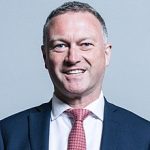
  • Angela Rayner – 2022 Speech on Lord Lebedev Joining the House of Lords

    Angela Rayner – 2022 Speech on Lord Lebedev Joining the House of Lords

    The speech made by Angela Rayner, the Deputy Leader of the Labour Party, on 29 March 2022.

    Thank you, Madam Deputy Speaker, and I heard you loud and clear.

    I beg to move,

    That, given the concerns raised about the appropriateness of, and process for, appointing Lord Lebedev as a member of the House of Lords and the role of the Prime Minister in that process, an humble Address be presented to Her Majesty that she will be graciously pleased to give directions that there be laid before this House, no later than 28 April,

    (a) any document held by the Cabinet Office or the Prime Minister’s Office containing or relating to advice from, or provided to, the House of Lords Appointments Commission concerning the appointment of Evgeny Alexandrovich Lebedev as a Member of the House of Lords; and

    (b) the minutes of, submissions relevant to and electronic communications relating to, any meeting within the Cabinet Office or the Prime Minister’s Office at which the appointment of Lord Lebedev, or advice relating to that appointment, was discussed in a form which may contain redactions, but such redactions shall be solely for the purposes of national security.

    May I start by noting the latest news from Ukraine? I know the whole House will be united in our outrage at the atrocities that have been reported, our deepest sympathy to the victims, and our ongoing support and our solidarity with the people of Ukraine. We will be united, too, in the message that we send to Putin. We will not waver in standing firm against his aggression, and the unity in this House reflects that in the country and among the constituents whom we represent.

    It is all the more important, in that context, that we make sure that we do all we can to protect our country’s security and our people’s safety. This Government’s ultimate responsibility to this House is to keep people safe, and it is all the more important that we stand up for the fundamental values of democracy in stark contrast to authoritarian regimes and dictatorships such as that in the Kremlin today. That is why we are here today—to defend our country’s security and its democracy, and to hold our Government to the highest standards in doing the same.

    Every Minister has a fundamental duty to protect the people of this country and to prioritise their safety above all else. We have tabled this motion because serious questions have been asked about whether the current Prime Minister upheld that duty to the standard that we would expect, and because those questions have not been answered with the transparency that we would expect.

    We must get to the facts of the case. An investigation by The Sunday Times found that, on 17 March 2020, British intelligence warned the House of Lords Appointments Commission against granting a peerage to the Prime Minister’s close friend, now the Lord Lebedev of Hampton and Siberia. The commission concluded it could not support his nomination. Forty-eight hours later, the Prime Minister visited Lebedev at his home in London. Details of that meeting have never been released to the public, and questions remain about whether the security services knew about this meeting, or whether their assessments show that the Kremlin was keeping tabs on these activities.

    In July 2020, Lebedev’s appointment as a peer was announced, so the question is this: what changed between the security warning and the appointment? The British public have a right to know if, and how, an individual of apparent concern to our intelligence services was granted a seat at the heart of Parliament by personal order of the Prime Minister, and whether the Prime Minister was aware of that security advice, but chose to ignore it, overrule it or even demand that it be changed.

    This is not the first time concerns have been raised about Lebedev by the British security services. As long as a decade ago, Sir John Sawers, the head of MI6, made it clear that he did not deem Lebedev a suitable person to meet. It remains unclear if the Prime Minister—then Foreign Secretary—was made aware of these security concerns, but his deeply concerning links to Putin are well known. He has been open about them on Twitter, where he has promoted the worst conspiracy theories and defences of Vladimir Putin, and raised questions over the murder of Alexander Litvinenko, the Kremlin critic poisoned in a London hotel.

    Lebedev’s father and business partner is a former KGB spy turned billionaire oligarch, who continues to fill his coffers with investments in occupied Crimea and in Russian munitions. We have heard worrying reports about the existence of a private back channel between our Prime Minister and President Putin, facilitated by Lebedev. Can the Minister shed light on this deeply concerning allegation and rule out the existence of such a back channel? As the bombing of Ukraine and the tragedy continue and the threat from Russia in the west intensifies, does the Minister think this appointment, in apparent opposition to the security services, was appropriate?

    The Cabinet Office plays a central role in the vetting process of Lords appointments. In Lord Lebedev’s case, Cabinet Office security officials were responsible for relaying the intelligence and guidance to the House of Lords Appointments Commission that formed the basis of its objections to his appointment. However, reports by The Sunday Times and a written statement by the then chief of staff to the Prime Minister allege that he “cut a deal” to provide the appointments commission with a “sanitised” version of the advice.

    Could the Minister outline how, when and why the guidance changed after communication with the Prime Minister, and could he confirm whether the Cabinet Office had sight of security advice warnings against the appointment of Lord Lebedev? This is a matter of national security, and there can be no delay in getting transparency in this case. There are also serious questions about whether the Prime Minister put his personal interests before the public interest in this case. The Prime Minister’s apparent cavalier disregard for those serious security warnings speaks to a wider culture at the heart of this Government where the rules do not apply when it comes to appointing friends and donors to public office.

    If the Prime Minister himself is willing to overrule British intelligence agencies, this raises serious questions about appointments more generally, and specifically in the House of Lords. Appointments to the Lords should be made based on integrity and contribution to our country. They are not some free pass. They are not a golden ticket for Prime Ministers to grant to their mates, like a membership of some posh London boys club, or a way to say thanks to billionaire mates after years of wining and dining, and champagne receptions and holidaying, not to mention the favourable headlines. But seriously, appointment to this Parliament should be on the basis of dedication, integrity and contribution to public life in Britain.

    Jamie Stone (Caithness, Sutherland and Easter Ross) (LD)

    Clearly, I represent a far-flung part of the United Kingdom, and there are good and hard-working citizens who give their entire working lives for such communities. In the past, this has been recognised by means of an honour—Order of the British Empire, British Empire Medal or whatever. Can I suggest to the right hon. Lady and to everyone in this place that the Lebedev peerage cheapens the whole system of honours and reduces its value to those people who genuinely deserve to be recognised in civil society?

    Angela Rayner

    Absolutely. I fully agree with the hon. Member’s contribution. During the pandemic, we saw such dedication by our key workers, with doctors and nurses putting their lives on the line to save the lives of others.

    Instead, we see reports that the Prime Minister parachuted his close friend Lord Lebedev into the heart of the UK’s Parliament, a man with whom the Prime Minister has enjoyed a decade-long courtship, which included a stay at the oligarch’s castle in 2018, where he is reported to have attended a party over the course of a weekend, with all his flights and accommodation paid for by Lebedev. An investigation by The Guardian revealed that during his stay, the Prime Minister, who was then Foreign Secretary, is reported to have met Alexander Lebedev, the former KGB agent and father of Lord Lebedev. The party took place just days after the Prime Minister—then Foreign Secretary—attended a NATO meeting to discuss the response to the Salisbury poisoning, in which the nerve agent Novichok was used in an assassination attempt on the Skripals. Immediately following the meeting in which Putin’s deadly attack on British soil was discussed, the Prime Minister reportedly ditched his security protection to attend the Lebedev party, where a former KGB agent was in attendance. The Prime Minister seems more interested in attending parties with his Russian billionaire mates than listening to the concerns of the British security services.

    Culture is set from the top. Appointments matter. Politicians come and go, but Lord Lebedev will be a permanent fixture of our Parliament in the other place for decades. There is a serious precedent to be set in this case about how Parliament chooses to appoint those who represent us. It also raises serious questions about the relaxed vetting process of Lords appointments, creating a security risk at the heart of our democracy. This must be taken seriously, and for that reason I ask the Minister this: will there be a review of the House of Lords appointment process?

    We must ensure that a robust vetting system is in place that safeguards our democracy and ensures transparency for the public. Indeed, the Lord Speaker recently called for a more rigorous appointment process for peers. We have a Prime Minister who appears willing to jeopardise the security of the British public for the sake of a personal friendship. The culture is set from the top, and in this case it raises much wider concerns about public appointments. It is time for the Prime Minister to come clean today about whether and why he interfered with British intelligence to award a peerage to his close personal friend. The full Cabinet Office guidance about a peerage for Mr Lebedev, which was mysteriously airbrushed, must now be published in the national interest. The Prime Minister claims that that advice cannot be published because it will undermine confidence in the appointments process. Well, it is a bit late for that. This is about his actions. He has run roughshod over the integrity of the process, and put his own interests before those of Britain.

    Mr Ben Bradshaw (Exeter) (Lab)

    I am sorry to intervene on my right hon. Friend and I hope speak later in the debate, but I thought she should be aware that since this debate started, Lord Lebedev has been tweeting furiously, implying the inappropriateness of this House to even have this debate. That from a Member of the other place is completely unacceptable and, if I may advise Lord Lebedev, extremely unwise.

    Madam Deputy Speaker (Dame Eleanor Laing)

    If what the right hon. Gentleman says is correct—I have no reason to doubt him although I have not seen the content of the tweets—let me say that if it was inappropriate for any debate to be occurring in this Chamber, it would not be occurring.

    Hon. Members

    Hear, hear.

    Angela Rayner

    Thank you, Madam Deputy Speaker. Woe betide anyone who tells Madam Deputy Speaker what is or is not appropriate for debate in this Chamber.

    By his actions the Prime Minister has run roughshod over the integrity of the process, and put his own interests before those of Britain. The suggestion that questions of suitability are for the Prime Minister alone will not cut it. When it is a clear as day that he so flagrantly disregarded advice and intervened in this process, I suggest that it is he who has undermined that process time and again.

    Shaun Bailey (West Bromwich West) (Con)

    I thank the right hon. Lady for giving way and apologise for interrupting her. Is it the Labour party’s position that the House of Lords Appointments Commission should have a veto? Given that it is part of her shadow portfolio, I am keen to understand. She is talking about the Prime Minister’s role in this, but does she believe that the House of Lords Appointments Commission should have that veto?

    Angela Rayner

    The hon. Gentleman makes a point, but the point I am making is that security advice was given, and the commission made a recommendation. If the Prime Minister overrides that advice, surely we should have a reason and transparency about why he went against the advice of the security services and the commission. That is very important and a robust way of dealing with things.

    Munira Wilson (Twickenham) (LD)

    According to allegations in The Sunday Times, the Prime Minister went to visit the now Lord Lebedev about the advice he had been given by security services, and to assure him that he wanted to give him this peerage, at a time when coronavirus was raging, businesses were being asked to close, and schools were about to be asked to shut. That was a priority for the Prime Minister when the rest of us were having to put our entire lives on hold. Does the right hon. Lady think that is an appropriate priority for the Prime Minister in the middle of a national and global crisis?

    Angela Rayner

    The hon. Lady makes a good point, and no, I do not think that is a good priority. I cannot get into concerns about what the Prime Minister thought was appropriate under his own lockdown rules during this debate, because it is not on the motion.

    These dangerous links to Putin’s oligarchs threaten our national security, but today we can take a step to defend it. There can be no better answer to the aggression of a dictator than to show that in a democracy, our leaders answer to the country they serve. The Minister should stop hiding behind the excuses and denials that we have heard about why we cannot have this transparency. I urge the House: let us get to the facts behind this whole murky business, publish the advice, and come clean with the British people. I commend the motion to the House.

  • Vicky Ford – 2022 Comments on Supporting Free Trade in Africa

    Vicky Ford – 2022 Comments on Supporting Free Trade in Africa

    The comments made by Vicky Ford, the Minister for Africa, on 29 March 2022.

    Closer integration between African economies boosts growth across the continent creates opportunities and helps lift people out of poverty.

    The UK is a committed partner in this mission. This UK funding will promote long-term partnerships between African countries and support a more prosperous, greener continent.

    I am delighted to be supporting the AfCFTA Secretariat and its Member States to deliver freer and fairer trade systems in Africa.

  • Anne-Marie Trevelyan – 2022 Comments on Supporting Free Trade in Africa

    Anne-Marie Trevelyan – 2022 Comments on Supporting Free Trade in Africa

    The comments made by Anne-Marie Trevelyan, the Secretary of State for International Trade, on 29 March 2022.

    As an independent free trading nation, the UK strongly supports the AfCFTA – the largest free trade area in the world.

    We’re keen to see continued momentum on outstanding negotiations, and on practical implementation of the agreement on the ground.

    This new aid programme shows that trade is a force for good, and will lead to increased trade, investment, and prosperity for both Africa and the UK.