Tag: 2022

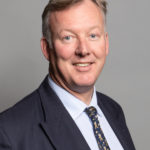
  • Victoria Prentis – 2022 Comments on Selling Pork to Chile

    Victoria Prentis – 2022 Comments on Selling Pork to Chile

    The comments made by Victoria Prentis, the Farming Minister, on 31 March 2022.

    The pig sector is facing a range of challenges and we must make use of all levers available to us. That includes new export markets, and it is great to see the Chilean market open its doors to our pig producers.

    This will be worth £20 million over the next five years and will build on other measures we have introduced to bolster the industry.

  • Volodymyr Zelenskyy – 2022 Statement on the Situation in Ukraine (30/03/2022)

    Volodymyr Zelenskyy – 2022 Statement on the Situation in Ukraine (30/03/2022)

    The statement made by Volodymyr Zelenskyy, the President of Ukraine, on 30 March 2022.

    Dear Ukrainians!

    Today I have few words, not much time, a lot of emotions and even more tasks. It is that kind of moment. A turning point, when we can and should talk only about the most important thing.

    Yes, there is an ongoing negotiation process. But these are still words. So far no specifics.

    There are also other words about the alleged withdrawal of Russian troops from Kyiv and Chernihiv. About the alleged reduction of activity of occupiers in these directions. We know that this is not a withdrawal, but the consequences of exile. Consequences of the work of our defenders. But we also see that at the same time there is an accumulation of Russian troops for new strikes in Donbas. And we are preparing for this.

    We do not believe anyone – we do not trust any beautiful verbal constructions. There is a real situation on the battlefield. And now – this is the most important thing. We will not give up anything. And we will fight for every meter of our land, for every our person.

    In the current situation of our state, there should be no such discussions to which society and our politicians are accustomed in peacetime.

    If someone pretends to be able to teach our Armed Forces how to fight, how to resist the enemy, the best way to do it is to go to the battlefield directly.

    Not from a chair at home or from the place where you left for safety. But from the area of real hostilities. If you are not ready for this, you should not even start teaching our defenders.

    Today was a very active diplomatic day for me. A difficult one. Priorities are known. There are three of them: weapons for Ukraine, new sanctions against Russia and financial support for our state.

    A conversation took place with US President Biden. Very detailed, lasted an hour.

    Of course, I thanked the United States for a new $ 1 billion humanitarian aid package and additional $ 500 million in direct budget support. And I stressed that right now is a turning point.

    I told President Biden what Ukraine needs. And I was as sincere as possible with him. The support of the United States is vital for us. And now it is especially important to lend a hand to Ukraine, to show all the power of the democratic world.

    And if we want to fight for freedom together, then we ask our partners … And if we really fight for freedom and protection for democracies together, then we have the right to demand help in this crucial difficult moment. Tanks, planes, artillery systems… Freedom must be armed no worse than tyranny.

    I also spoke about this today in an address to the Norwegian parliament and people. To one of the states that supported us significantly. I called for more help to Ukraine. With weapons and sanctions against Russia as well.

    I spoke today with the President of Egypt and the Crown Prince of the United Arab Emirates. I have done, am doing and will do my best so that our people can defend themselves until justice is restored.

    On Ukrainian soil and in the Black Sea region. This is our fundamental interest. This is our survival. It is for the survival of the Ukrainian people that we are now fighting. In this war, without exaggeration, the Patriotic War against Russia.

    And now I want to mention a few more important things.

    First. There are those who work together with everyone to defend the state. So that Ukraine can gain its future. We appreciate the work of each such person. And there are those who waste time and work only to stay in office. Today I signed the first decree to recall such a person. Such an Ambassador of Ukraine. From Morocco. The Ambassador from Georgia was also recalled.

    With all due respect: if there are no weapons, no sanctions, no restrictions for Russian business – please look for another job.

    I look forward to concrete results in the coming days from our representatives in Latin America, the Middle East, Southeast Asia and Africa.

    I expect the same results from military attaches in the coming days. The diplomatic frontline is one of the key frontlines. And everyone there must work as efficiently as possible to win and help the army. Each on the diplomatic frontline must work just as each of our defenders on the battlefield.

    And the second point. Traditionally, today, before delivering this address, at the request of the Commander-in-Chief, I signed a decree on state awards to our military. 122 defenders, 23 of them posthumously.

    Eternal memory to all who died for Ukraine!

    Eternal glory to all our heroes!

    Glory to Ukraine!

  • Volodymyr Zelenskyy – 2022 Statement on the Situation in Ukraine (29/03/2022)

    Volodymyr Zelenskyy – 2022 Statement on the Situation in Ukraine (29/03/2022)

    The statement made by Volodymyr Zelenskyy, the President of Ukraine, on 29 March 2022.

    Wise people of a strong country!

    The 34th day of the full-scale invasion of Russia and our full-scale defense is coming to an end. Successful defense.

    I’m sure you saw the news today that the Russian military command allegedly decided to “reduce hostilities in the directions of Kyiv and Chernihiv.”

    Well, the same can be said about Chornobaivka – as if the Russian aviation simply decided to fly less, and the Russian military vehicles – to drive less. I am grateful to all our defenders, to all those who ensure the defense of Kyiv. It is their brave and effective actions that force the enemy to retreat in this direction.

    However, we should not lose vigilance. The situation has not become easier. The scale of the challenges has not diminished. The Russian army still has significant potential to continue attacks against our state. They still have a lot of equipment and enough people completely deprived of rights whom they can send to the cauldron of war.

    Therefore, we stay alert and do not reduce our defense efforts. Both in the north of our state and in all other regions of Ukraine, where Russian troops have temporarily entered. The defense of Ukraine is the number one task now, and everything else is derived from it.

    It is on this basis that I consider the messages on the negotiation process, which is underway at various levels with representatives of the Russian Federation.

    The enemy is still in our territory. The shelling of our cities continues. Mariupol is blocked. Missile and air strikes do not stop. This is the reality. These are the facts.

    That is why the Armed Forces of Ukraine, our intelligence and all those who have joined the defense of the state are the only guarantee of our survival today. As a nation. As a state.

    The guarantee that works.

    Yes, we can call positive the signals we hear from the negotiating platform. But these signals do not silence the explosion of Russian shells.

    Of course, we see all the risks. Of course, we see no reason to trust the words of certain representatives of a state that continues to fight for our destruction. Ukrainians are not naive people. Ukrainians have already learned during these 34 days of invasion and over the past eight years of the war in Donbas that only a concrete result can be trusted. The facts – if they change on our land.

    Of course, Ukraine is willing to negotiate and will continue the negotiation process. To the extent that really depends on us. We expect to get the result. There must be real security for us, for our state, for sovereignty, for our people. Russian troops must leave the occupied territories. Ukraine’s sovereignty and territorial integrity must be guaranteed. There can be no compromise on sovereignty and our territorial integrity. And there will not be any.

    These are clear principles. This is a clear vision of the possible outcome. And to those on social networks who perceive words as if they are facts already, I want to remind one thing: we live in a democratic state and fight for our freedom. For freedom for our people.

    Therefore, any decisions that are important for all our people must be made not by one person or a group of people with any political views, but by all our people. The wise people of Ukraine.

    And certain countries should not even expect that certain negotiations will facilitate the lifting of sanctions against the Russian Federation. The question of sanctions cannot even be raised until the war is over, until we get back what’s ours and until we restore justice.

    On the contrary, sanctions must be strengthened. Intensified weekly. And they must be effective. Not just for headlines in the media that sanctions have been imposed, but for real peace. Real.

    And to ensure this, a team of Ukrainian and international experts has already begun work to assess the effectiveness of the sanctions imposed on Russia. On the Ukrainian side, this area is coordinated by Head of the President’s Office Andriy Yermak, and on the international side by Michael McFaul.

    During the day the rescue operation was ongoing in Mykolaiv. The debris of the building of the regional administration destroyed by Russian missile strikes was dismantled. As of now, 8 people have been reported killed and 30 wounded. It is likely that these are not final figures.

    The Russian troops hit Mykolaiv very insidiously. At a time when people came to their workplaces in the morning. Thank God, most of those in the building managed to evacuate when they heard an air alarm.

    This one more act of the Russian so-called denazification of Mykolaiv took place in the morning after the anniversary of liberation of the city from Nazi invaders. Mykolaiv residents remember the day of March 28, 1944. And they see who the Russian troops trying to capture their city now look like.

    I spoke about Mykolaiv today in my address to the Danish Parliament and the Danish people. I invited the society of this country to take part in the reconstruction of the city and the region after the war. In the framework of our program of Ukraine’s reconstruction, we involve partner states, leading companies and the best specialists in order to guarantee the speed and quality of the reconstruction of our state.

    As I was told, this proposal was very positively received in Denmark.

    There is also important news from our government officials. As of today, the new functionality of our “Diia” state service will be available. As I promised, the state will compensate for the loss of a house or apartment as a result of hostilities. Every citizen of ours can already submit an application in “Diia”.

    Applications are already available in the mobile application. You need to update the app to see this new service. And in a week it will be available offline – in the centers of administrative services. In itself, the functionality in “Diia” is quite convenient. But all the necessary details will still be clarified by our government.

    The main thing is that the state will compensate for every meter of lost real estate.

    In addition, government officials today expanded the program to help those institutions that support IDPs from the areas of hostilities.

    Another important decision was to allocate 426 million hryvnias to pay the miners’ salaries.

    Traditionally, I signed several important decrees before delivering this evening address. The first is about awarding communications service employees. I am sincerely grateful to everyone who provides the fundamental basis of our lives. Who gives us connection.

    By the way, on the day of the beginning of the Russian invasion, the first missile strike in the JFO area was made against them.

    12 people were awarded state awards, 4 – posthumously.

    The second signed decree is on awarding 126 servicemen of the Armed Forces of Ukraine, 34 of them – posthumously.

    We will always be grateful to each of our defenders for the defense of our state in the Ukrainian Patriotic War against Russia.

    May the memory of everyone who gave life for Ukraine live forever!

    Glory to each of our heroes!

    Glory to Ukraine!

  • Volodymyr Zelenskyy – 2022 Statement on the Situation in Ukraine (28/03/2022)

    Volodymyr Zelenskyy – 2022 Statement on the Situation in Ukraine (28/03/2022)

    The statement made by Volodymyr Zelenskyy, the President of Ukraine, on 28 March 2022.

    Wise people of a strong country!

    Today we have good news. Our defenders are advancing in the Kyiv region, regaining control over Ukrainian territory.

    Irpin was liberated. Well done! I am grateful to everyone who worked for this result. The occupiers are pushed away from Irpin. Pushed away from Kyiv.

    However, it is too early to talk about security in this part of our region. The fighting continues.

    Russian troops control the north of Kyiv region, have the resources and manpower. They are trying to restore the destroyed units. The level of their losses, even at 90%, is not an argument for them to stop. Hundreds and hundreds of units of burned and abandoned enemy equipment do not convince them that this will happen to everyone.

    Chernihiv, Sumy, Kharkiv regions, Donbas, southern Ukraine – the situation everywhere remains tense, very difficult.

    This is a ruthless war against our nation, against our people, against our children.

    As of today, 143 children are known to have died. Mariupol remains blocked. Russian troops did not allow any humanitarian corridor to be organized today, they did not allow “silence”. Therefore, the situation must now be perceived in a balanced, wise way. As much as possible. Without excessive euphoria from success. But also without getting yourself worked up. We still need time. We still need weapons. We still have to fight, we have to be patient. We can’t burn emotions right now. We can’t set expectations too high. Just so as not to burn out.

    I spoke with the leaders of the partner countries. It was a very active diplomatic day.

    Prime Minister of the United Kingdom Johnson, Prime Minister of Canada Trudeau, Chancellor of Germany Scholz, Prime Minister of Italy Draghi and President of Azerbaijan Ilham Aliyev.

    We agreed with Britain to further support our defense and strengthen sanctions against the Russian Federation. Canada also supports a tougher response from the world to the catastrophe created by Russian troops in Ukrainian cities.

    In a conversation with German Chancellor Scholz, I also paid considerable attention to the need to increase sanction pressure on Russia.

    I thanked the President of Azerbaijan for the humanitarian support provided to Ukraine, informed about the state of affairs in the territories where Russian troops entered.

    Italy has agreed to become one of the guarantors of Ukraine’s security in the relevant new system of guarantees that we are elaborating.

    I will continue this activity tomorrow. I will talk to other world leaders. I will work with international organizations, with the nations of Europe and the world.

    Ukraine cannot and will not agree with the passive sanctions position of some entities towards Russia. There should be no “suspended” sanctions packages – that if the Russian troops do something, then there will be some answer…

    We went through this story last year when we said that strong preventive sanctions against Russia were needed to prevent an invasion. The preventive package was not made. A full-scale war has begun. There are now many hints and warnings that sanctions will be tightened, such as an embargo on Russian oil supplies to Europe, if Russia uses chemical weapons. There are simply no words.

    Just think about what it all came down to. Waiting for chemical weapons… We, living people, have to wait… Doesn’t everything that the Russian military is doing and has already done deserve an oil embargo? Don’t phosphorus bombs deserve that? Don’t the shelled chemical production or nuclear power plant deserve that?

    It is important for us that the sanctions packages are effective and substantial enough, given what is already being done against Ukraine by the Russian Federation.

    If the sanctions packages are weak or do not work enough, if they can be circumvented, it creates a dangerous illusion for the Russian leadership that they can continue to afford what they are doing now. And Ukrainians pay for it with their lives. Thousands of lives.

    Therefore, starting this week, we are creating a group of experts at the President’s Office – Ukrainian and international, who will constantly analyze the sanctions against Russia – what they really influence.

    Our goal is for the sanctions to work as intended. And so that there is no possibility to circumvent them. This must be a goal for the whole democratic world, without exception. No exception.

    During the week I will speak in the parliaments of the partner countries: Denmark, Norway, the Netherlands, Greece, Australia. It is important that these are speeches not only in front of politicians, but also in front of societies.

    In front of millions of people who want to hear Ukraine and are ready to hear it to help and support. Who feel that we are fighting for our common freedom. One for all people on our earth.

    I will emphasize everywhere that no one has the right to use the lives of Ukrainians to save any income in Russia or income common with Russia. And Ukrainians should not die just because someone cannot find enough courage to hand over the necessary weapons to Ukraine.

    Fear always makes you an accomplice. If someone is afraid of Russia, if he or she is afraid to make the necessary decisions that are important to us, in particular for us to get planes, tanks, necessary artillery, shells, it makes these people responsible for the catastrophe created by Russian troops in our cities, too.

    Because if you could save, you had to save.

    The peoples of Europe, the peoples of the world will definitely hear and support me. And all politicians should think now what they will have left if they do not correspond to the position of their people.

    And finally. Already traditional.

    Just before delivering this address to you, dear Ukrainians, I signed two important decrees on awarding servicemen of the Armed Forces of Ukraine with state awards. At the request of our Commander-in-Chief, 302 of our defenders are awarded.

    I am grateful to all of you for your service!

    Glory to all our heroes!

    Glory to Ukraine!

  • Volodymyr Zelenskyy – 2022 Statement on the Situation in Ukraine (28/03/2022)

    Volodymyr Zelenskyy – 2022 Statement on the Situation in Ukraine (28/03/2022)

    The statement made by Volodymyr Zelenskyy, the President of Ukraine, on 28 March 2022.

    Strong people of our strong country!

    Today is the day when we see again and again how far we are from the Russian Federation. Imagine, they were frightened there in Moscow because of my interview to Russian journalists. To those of them who can afford to tell the truth. When journalists were preparing to publish our interview – and we spoke with them this afternoon – the Russian censorship agency came out with a threat. That’s what they wrote – they demand not to publish the conversation. It would be ridiculous if it wasn’t so tragic.

    They destroyed freedom of speech in their state, they are trying to destroy the neighboring state. They portray themselves as global players. And they themselves are afraid of a relatively short conversation with several journalists.

    Well, if there is such a reaction, then we are doing everything right, then they are nervous. Apparently, they have seen that their citizens have more and more questions about the state of affairs in their country.

    The maximum contrast is my conversation with our favorite Ukrainian TV media representatives. I held a zoom conference with almost five hundred of our media representatives who are creating a telethon “United News”. I am grateful to them.

    Although we were limited in time, we talked quite thoroughly. I felt that everyone cares about Ukraine, cares about us and you, cares about our future. I wrote down a lot of questions and suggestions – we will work them out.

    Today I supported the global marathon for peace in Ukraine. Not just a television one. In dozens of cities around the world, people gathered in support of our state, in support of freedom. That’s a pleasure!

    An impressive number of people in the squares of Europe, on other continents. And this is extremely important. Because when people are in the square, politicians will no longer pretend not to hear us and you, not to hear Ukraine.

    I will continue to appeal to the parliaments of other countries. The week is planned to be very busy from a diplomatic point of view. Therefore, no one will be able to hide the Ukrainian interest somewhere in political offices or in bureaucratic loopholes.

    We will not let anyone forget about our cities, about Mariupol and other Ukrainian cities that the Russian militaries are destroying. More and more people in the world are on the side of Ukraine, on the side of good in this battle with evil. And if politicians don’t know how to follow people, we will teach them. This is the basis of democracy and our national character.

    Once again I want to thank our people in Kherson, Kakhovka, Slavutych and other cities who do not stop resisting the occupiers. If the occupiers had temporarily entered Ukrainian cities, it only means that they would have to leave.

    And I want to remind those phenomenal fools who are trying to cooperate with Russian troops that they are leaving their own people behind. What will they do to other people’s traitors? I would tell them: think about it. But I know that these people don’t have anything to think with. Otherwise they would not have become traitors.

    Of course, this week we will work for new sanctions against the Russian Federation, against the aggression, sanctions that are needed as long as Russian troops remain on the territory of Ukraine.

    A new round of negotiations is ahead, because we are looking for peace. Really. Without delay. As I was informed, there is an opportunity and a need for a face-to-face meeting already in Turkey. This is not bad. Let’s look at the result.

    Our priorities in the negotiations are known. Ukraine’s sovereignty and territorial integrity are beyond doubt. Effective security guarantees for our state are mandatory. Our goal is obvious – peace and the restoration of normal life in our native state as soon as possible.

    The Armed Forces of our state are holding back the occupiers, and in some areas they are even taking steps forward. Well done. The courage of our defenders, how wisely they behave on the battlefield… This is so important that no words of gratitude will be enough. But again and again I never tire of thanking. To each of our defenders… To all who fight for our future, for our children, for our people.

    I signed decrees conferring the title of Hero of Ukraine upon 15 servicemen of the Armed Forces of Ukraine, 3 of them posthumously.

    As well as a decree on state awards to 142 servicemen of the Armed Forces of Ukraine and 5 servicemen of the Department of State Protection of Ukraine.

    It is a great honor for me to sign such decrees.

    May the memory of all our heroes live forever. May the memory of everyone who gave life for Ukraine, for us, live forever.

    Glory to you all!

    Glory to all our heroes!

    Glory to Ukraine!

  • Trudy Harrison – 2022 Speech on the Electric Vehicle Charging Infrastructure

    Trudy Harrison – 2022 Speech on the Electric Vehicle Charging Infrastructure

    The speech made by Trudy Harrison, the Parliamentary Under-Secretary of State for Transport, in the House of Commons on 30 March 2022.

    It gives me great pleasure to respond to the debate. I thank my hon. Friend the Member for North Herefordshire (Sir Bill Wiggin) for initiating it, and I thank the hon. Member for Strangford (Jim Shannon) and my hon. Friend the Member for Windsor (Adam Afriyie) for their interventions, because this is a really important issue. For decades, we have talked about moving away from fossil fuels. As we move towards green technologies and set ambitious targets to end the sale of petrol and diesel vehicles in 2030, we know we need an infrastructure to match it.

    I would like to begin by adding to my hon. Friend’s already impressive set of statistics—he has clearly done his homework—covering the entirety of Herefordshire. There are indeed 68 public devices, 15 of which are rapid—that is over 50 kW—and there are 848 grant-funded domestic services in Herefordshire, plus a further 77 workplace charge points. What we do not have from Herefordshire Council, I am afraid, are any applications to the on-street charging fund. I therefore encourage my hon. Friend to work with me in trying to encourage the council.

    On the quality and reliability of charge points, my hon. Friend is absolutely spot on. We have already identified a number of improvements that must be mandated if we are to secure the transition we want away from fossil fuel vehicles to a far more electrified transport network. On reliability, we are ensuring that public charge points will be reliable by mandating a 99% reliability charging requirement across the rapid network, which will include trunk roads and motorway service areas, of which there are 114. That means that the rapid charging network must be maintained to a high standard. Where operators fall short of that standard, we will work with our enforcement body—to be set up— to ensure consumers get the very best experience. We are also going to publish a league table of all charge point operators in the UK and we are mandating a 24/7 helpline that must be free for consumers to use at every charge point in the UK. The helplines must be available within one year after the legislation comes into effect. We hope to bring forward that legislation later this year.

    My hon. Friend referred to the apps that need to be downloaded. We in my Department agree that that is unacceptable, so we are mandating that a non-proprietary, non-phone payment method, such as contactless, should be available for all newly installed fast and rapid charge points and existing rapid charge points over 7.1 kW. That will come into effect one year after the legislation is laid.

    We want to make sure that operators open up their charge points to a roaming provider. We simply do not care whether that is a charge point operator, a third-party roaming provider or a Government-accredited roaming provider, but we want it done quickly. Industry is already making tremendous progress. We will set the enforcement date as 31 December 2023 to ensure that any industry actors that are reluctant to offer roaming are forced to offer it to their consumers.

    My hon. Friend spoke about how motorists will find the right charge point for their needs. That is critical. We will also mandate open data to enable consumers to find a reliable, working and available charge point. We will mandate a data standard, the open charge point interface protocol, to standardise industry data and to specify how the data will be made openly available. We will allow a one-year lead time for those regulations to come into effect to allow for the development of an industry data solution.

    And we will go further by mandating pricing transparency through a single pricing metric—pence per kilowatt-hour—that must be offered to consumers at each public charge point. That will exclude payment bundles, where pricing can be offered alongside another service. The total bundle cost, however, must provide the consumer with the equivalent cost in pence per kilowatt-hour to charge their EV. That will come into effect immediately after the regulations come into force.

    I hope that I have set out how seriously we are taking this issue. We have listened to the feedback from motorists and consumers, and our ambition is matched only by our incentivisation. We will provide support to local authorities, organisations and householders through a range of funding streams that are available for homes, streets, workplaces, local authorities, motorway service areas, individuals, organisations companies and motorway service area operators. That support is available right across the UK.

    The hon. Member for Strangford referred to the pitiful amount of charge points, and I encourage him to work with his local authority, because those schemes are UK-wide, whether we are talking about the plug-in grant for cars, vans, motorcycles or taxis, the electric vehicle homecharge scheme, the workplace charging scheme, the on-street residential charge point scheme, any of the infrastructure support or our hydrogen transport programme. I repeat that our ambition is matched only by our financial incentivisation.

    Adam Afriyie

    The Minister is making it clear that the Government are utterly committed to getting this right and we very much appreciate that. The Royal Borough of Windsor and Maidenhead, where I am, has taken advantage of some of the Government schemes. We have some pretty good fast charging points, and really good preference is given to local residents who use them. Some of the schemes are working, but it is important that we look at home charging unit subsidies, as my hon. Friend the Member for North Herefordshire (Sir Bill Wiggin) said, because they are definitely just being skimmed off by a lot of the suppliers.

    Trudy Harrison

    I thank my hon. Friend for that intervention and I am certainly happy to meet him. We have discussed at length some of the benefits that he experienced for his electric vehicle. There is nothing like speaking to the motorists, who explain some of the challenges and how we will improve on the charging infrastructure to ensure that it is world-leading and fit for the Government’s ambitions as we decarbonise transport.

    It is important to recognise the crucial role of local authorities in developing local EV charging strategies and facilitating local provision, especially for residents who do not have access to off-street charging. We are pledging at least £500 million to support local charge point provision. As part of that, the local EV infrastructure fund will provide approximately £400 million of capital and £50 million of resource funding to support local authorities.

    We are developing a toolkit and assessing how local authorities can best be supported with extra resources. We have launched a £10 million pilot as a springboard for the development of the full fund. We are working with the Energy Saving Trust to run the local government support programme, which provides free impartial advice to local authorities in England to help them to develop local policies and strategies to support zero-emission vehicle uptake.

    Our electric vehicle infrastructure strategy, which was launched just last Friday, sets out our direction of travel. It has put flesh on the bones of the transport decarbonisation plan and our net zero strategy. We need to go further—and we are doing just that. Last year, we launched a consultation on improving the consumer experience at public charge points; I have set out the results of that consultation, which I think demonstrate that we have listened and are taking action.

    We cannot take our foot off the clean, sustainable gas as we roll our plans out across the country. We have a responsibility to protect our future and make it cleaner and greener as fast as possible. In the light of the situation in Ukraine, switching to our own clean, cheap energy is no longer just about hitting net zero targets; it is a matter of national security. We will shortly publish a new energy security strategy to accelerate clean power in the UK from offshore wind and solar to hydrogen, nuclear and more.

    The Government have set out a clear plan to support the transition to electric vehicles. We have set out our role with partners, and are committing funding and continuing to work with industry to make sure that we have a world-leading charging network up and down the country. This transition is a team effort. I welcome challenge from Members across the House, because no body or sector can do this alone. It is only together that we can meet our ambitious targets to reach net zero carbon emissions by 2050.

  • Bill Wiggin – 2022 Speech on the Electric Vehicle Charging Infrastructure

    Bill Wiggin – 2022 Speech on the Electric Vehicle Charging Infrastructure

    The speech made by Bill Wiggin, the Conservative MP for North Herefordshire, in the House of Commons on 30 March 2022.

    I must declare my entry in the Register of Members’ Financial Interests and, more importantly, the fact that I am an electric car driver. I am delighted with the performance of the Hyundai Kona, although it is due for a battery recall, which I hope will happen very soon. I have driven it for a while, and it is fast—very fast—and a joy to drive. It is no wonder that at the end of November 2021 there were more than 365,000 fully electric cars on UK roads. More than 20,000 electric vehicles were registered in that month last year, and it is expected that over 6 million families will have purchased an electric vehicle by 2030. In addition, National Grid is preparing for the need to power 36 million cars by 2040.

    There are some giant challenges facing this area. For example, the amount of electricity needed to travel will increase massively as the number of electric cars grows by some 30% as we swap our energy source from petrol to electricity. We are nowhere near ready for such a step change in demand for electricity yet.

    Jim Shannon (Strangford) (DUP)

    In Northern Ireland, the rise in electric car ownership has been dramatic, but what has not risen is the number of charging points. Does the hon. Gentleman agree that if we are going to have take-up of electric cars, the number of charging points will have to match that? Does he also agree that they need to be not only in shopping centres but in town centres?

    Sir Bill Wiggin

    They also need to have sufficient speed of charge. For me, the 50 kW ones are the meaningful ones. I will come on to this later in my speech. When we look online, it is difficult to identify the ones that will get us home, as opposed to the ones that are in people’s drives for their overnight charging.

    Coupled with a decrease in VAT on fuel tax as we embrace the opportunities that electric vehicles present, we need to build parking and charging spaces and opportunities into our new housing stock, for no less a reason than that the national car pool could, with smart chargers, be a part of a national battery network. Over a quarter of the UK’s net greenhouse gas emissions come from the transport sector. It is therefore clear that getting the public into electric cars is a key part of the Government’s ambition to reach net zero emissions by 2050. However, we all want the public to be persuaded to abandon their fossil fuel-powered cars, rather than be forced to do so. To help to achieve this, we need to ensure that owning an electric vehicle is as convenient as owning a traditionally powered vehicle.

    The main way of fulfilling this ambition must be a focus on range anxiety, and part of the solution to this serious concern is the ability to recharge electric cars easily and quickly. This is what the hon. Member for Strangford (Jim Shannon) was talking about. The Government should therefore regard the prevalence and proper function of EV chargers to be just as important as petrol stations are for fossil fuel vehicles.

    The Government have already invested heavily in developing a network of fast chargers across the UK: £950 million has been committed to ensure that a motorist is never more than 30 miles away from a rapid charging site. Largely due to this support, more than 500 new fast charging points are being installed in the UK every month. However, those fast charging points suffer from a multitude of issues that prevent consumers from buying into the technology, not least being that “fast chargers” can range from 7.5 kW to 22 kW. These are not fast, and that is one of the massive key failings in the Government support.

    Other issues include reliability, ease of use, and the impossibility of tracking down chargers when the need arises. Just the other day, I found to my horror that every fast charger at Membury services on the M4 westbound was broken or would not fit my vehicle. One looked like it had been hit by a car. The next looked like it worked until I downloaded the app, plugged it in and took a photograph of the code, only to be told that it was out of order. The last one was unwilling to accept a payment card, and the instruction screen was so scratched that it was almost impossible to read. Next to them was an immaculate Tesla charging area, with eight unoccupied chargers, which had no screens and so were unavailable to us mere mortals.

    The inability to find a fast charger is especially distressing for the electric vehicle owner—it is worse late at night in the freezing cold, although in my case, thankfully, it was not raining—because running out of charge in an electric vehicle is not an option. First, there is no comparable technology to the jerry can, which can be used with fossil-fuelled vehicles. To make matters worse, most electric cars should not be towed, as they lack a true neutral gear, which means that once the vehicle has run out of charge, it is stranded and has to be retrieved by a low-loader lorry. Happily, I was lucky enough to find an operational charging point in Swindon, although it was not listed on any website I could find. I just happened to see it.

    It is incidents like that one that rightly damage the public’s perception of the utility of electric vehicles and prevent their further adoption. It is clear that my experience is not unique. Channel 4’s “Dispatches” programme found that last year over 10% of car charging bays in the UK were out of order on a given day. Many charging points consist of only two bays, so a single broken bay plus one other customer in the next-door bay adds to the risk and misery of trying to find a working charging point. The charging process already takes a little longer than refuelling fossil-fuelled cars, and having someone in the queue ahead makes matters doubly worse.

    Infrastructure concerns are especially worrying in rural areas like my North Herefordshire constituency, which is home to just four fast charging locations. I am not even sure where they are, but I really would like to know.

    Adam Afriyie (Windsor) (Con)

    I was delighted to give my hon. Friend a lift in an electric vehicle to his home last night. I am less anxious about charging because we have a home charger and we use the Tesla superchargers, but does my hon. Friend agree that the electric vehicle charging infrastructure should be regarded as part of our national security infrastructure? Should it not be included in the consideration of ways not only to reduce our carbon emissions, but to ensure that our nation’s transport is secure, even in a crisis?

    Sir Bill Wiggin

    My hon. Friend is not only extremely generous to have given me a lift in his very smart Tesla, but absolutely right in everything he says. This message to the public that we can move away from fossil fuels and enjoy electric vehicles—they are great—comes to nothing if the security of the sites is not adequate.

    Despite the vast subsidies—almost £1 billion—given to install EV charging points, sufficiently high standards have still not been set for their maintenance, which I think is what my hon. Friend was talking about. The Government would not accept a scenario where 10% of petrol stations were not in working order. During the fuel protests in 2001, the Government provided police escorts to fuel tankers to ensure security of supply, and just last September, the Army was called in to deliver fuel to petrol stations running low on petrol and diesel. So the public know that the Government take the refuelling of traditionally powered cars very seriously. As it stands, the same confidence cannot be had in their backing for electric vehicle charging. That lack of confidence is holding back the widespread adoption of EV technology. Range anxiety is not only real but justified.

    The Government’s own figures show that 75% of motorists are reluctant to purchase an electric vehicle as they are concerned about being able to charge it, and 67% of people stated that they thought it was not possible to charge an electric vehicle conveniently and quickly on long journeys. The problem is only exacerbated by the poor quality of information available to those wishing to charge their cars.

    Jim Shannon

    To back up what the hon. Gentleman is saying, in my constituency of Strangford, which has about 70,000 people, we have only two charging points.

    Sir Bill Wiggin

    To encourage people to adopt electric vehicles, we will need considerably more. However, equally important is the ability to find those two charging points, and at the moment not a single map—electronic or physical—can display every fast-charging station and whether it is in working order, the size of the charger available and a route to get to it. We should be able to do that. Zap-Map claims to have recorded 95% of public charging points in the UK, but there is accurate information on the condition of only 70% of them. Zap-Map also requires members of the public to report when a fast-charging station is broken, so the information is far too often outdated or incorrect. It is also hard to remove red herring chargers—the little ones below 50 kW —and EV owners do not necessarily have time to use a slow charger. It is so bad that when I visited Manchester for the party conference, there were parking bays allocated for electric vehicles, but they had no chargers, so they were completely useless, yet they shone out of the map invitingly. It is not right to expect electric vehicle owners to roll the dice. Charge point operators must be made to provide a better service in return for the large public subsidies that they receive.

    We look to the Government to set strong standards for the maintenance of charge points. That must be paired with penalties for companies that fail to meet them. Now, I am not calling for the return of the death penalty, but I could be persuaded to support its reintroduction for the failure to maintain an EV charging site. In addition, I call for more and better information to be made available to EV owners about where they can charge their cars, as well as all fast-charging locations to be made available on all common map applications and car sat-navs. Clear details on what types of chargers, how many bays are available and their operating condition must be readily available. That information should be shown on forecourt display signs in the same way that petrol and diesel prices are advertised.

    Providers who do not follow those common-sense regulations are holding back EV technology across the country and hindering progress towards our net zero emissions target. There is no better example of that than the £350 subsidy for home chargers. It is possible to buy one on eBay for £269, yet that will not be eligible for the subsidy, so the contractors simply add £350 on to their bills. Even when EV charge points do work, they are still somewhat inconvenient to use. Each charging point is operated by a particular company, and each company requires its own subscription and/or app to use it. Despite many previous discussions on this matter, it is hard to know whether the chargers with blue “I’m free” lights showing are actually available to someone who wants to pay with their credit card. EV drivers in the Netherlands can charge their cars on any operator’s network using a unified payment system. I see no reason why we have not already regulated for a similar system in Britain. There is no problem with charge point operators offering preferential rates to their subscribers, but they must also offer a simple contactless or mobile payment option to other motorists.

    It is clear that if we are to continue to offer such large subsidies to charge point operators, we must ensure that they are doing more for consumers. In return for public money, these companies owe the Government—and therefore the public—better maintenance, better ease of use and better information. The same is true for local authorities who are exploiting this situation to some extent, too. For example, Hammersmith and Fulham Council provides lots of chargers. When the charger works, the light is green and while charging it is blue. Finally, it turns red, signalling to any passing traffic warden that a fat fine is available. That is hardly encouraging, and as a result the bays are mostly empty.

    The Government should now use legislation to ensure that 50 kW charge points should be easy to find on all common map applications and car sat-navs. There is a proper need to identify fast chargers so people are able to get home, rather than the 7.5 kW chargers or the little ones, which may take many hours to charge a car. The quality and availability of that information needs to be clear so that we can find it from the car. Sitting in a warm office is really not an acceptable alternative, but that is how the Government’s report reads. Information listing types of adaptors, how many bays there are and if they are working should be easily available, both online and on petrol price-style display boards.

    We also need to enforce standards to ensure that EV charging points are consistently and properly maintained and we must take the power to impose penalties on companies that do not deliver. Taxpayer-funded charging points mean standards, and standards need to be delivered and enforced. Only then will we see consumer confidence grow, more EVs bought and our net zero goals met on time.

  • Dominic Raab – 2022 Statement on the Parole System and Public Protection

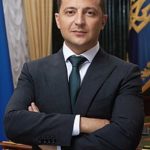
    Dominic Raab – 2022 Statement on the Parole System and Public Protection

    The statement made by Dominic Raab, the Secretary of State for Justice, in the House of Commons on 30 March 2022.

    Today, the Government are publishing the “Root and Branch Review of the Parole System: The Future of the Parole System in England and Wales”.

    As Secretary of State for Justice, I am committed to protecting the public and improving victims’ experience of the criminal justice system. The parole system has a critical part to play in ensuring both aims are met; it prevents criminals that continue to pose a threat from leaving prison and helps victims to feel they have the information they need and a voice in the process. So, it is paramount to maintaining public confidence that our parole process functions effectively. In recent years, a number of decisions to release offenders who have committed heinous crimes have led to a loss of public confidence in the parole system. People have questioned how safe it really is to release certain offenders and why those recalled to prison were allowed to leave in the first place. I share these concerns, which is why I am determined to refocus the system to put public protection at the forefront of all parole decisions.

    I want to see the parole process take a more precautionary approach when it comes to decisions affecting public protection. In particular, in cases which involve those who have committed the most serious crimes, it is right that Ministers should provide a measure of oversight and be able to intervene more directly in decisions on release. The key proposed reforms set out in this review will ensure public protection is the overriding consideration for release decisions.

    The current release test used by the parole board has moved away from Parliament’s original intention. A court judgment in the case of Bradley in 1991 stated that the role of the Board is to

    “carry out a balancing exercise between the legitimate conflicting interests of both prisoner and public”.

    The statutory test has therefore changed over time to become a “balancing exercise” between public protection and the rights of the prisoner. We will revise the test to reinforce it, so its overriding focus is on public protection.

    At present, 5% of all parole board members come from a law enforcement background. We will increase substantially that number, because those with operational law enforcement experience have greater first-hand experience in dealing with serious offenders and the risk they present. This will ensure a greater focus on public protection.

    The review also announces our intention to introduce ministerial oversight over parole decisions to release serious offenders in the top-tier of higher risk cases. That top-tier will be defined as offenders serving sentences for murder, rape, terrorism and causing or allowing the death of a child. Where the parole board has directed release, the Secretary of State will be able to review the release decision of any “top-tier” cohort offender. We will further consider the details of the procedural mechanism and set out two options in this review for how this power could operate in practice.

    Alongside this is the Government commitment to increase victim participation in the parole process. For the first time, we will allow victims to attend a parole hearing in full should they wish to do so. In addition, we will require the board to take account of submissions made by victims and allow for victims to ask questions in those submissions.

    The review also outlines the new process on the transfer of life and other indeterminate sentenced prisoners to open prison conditions. Similar considerations of risk and public concern arise here, and in December 2021,1 changed the process to introduce a ministerial check on such decisions, delivering greater oversight to the process in the interests of public protection and public confidence.

    Protecting the public is this Government’s top priority and the proposals in this review will reinforce public safety and increase confidence in our justice system. As we continue to develop policy and begin legislating, we will consider fully the impact of the proposals and have due regard to the requirements of section 149 of the Equality Act 2010.

  • Priti Patel – 2022 Statement on the Domestic Abuse Plan

    Priti Patel – 2022 Statement on the Domestic Abuse Plan

    The statement made by Priti Patel, the Home Secretary, in the House of Commons on 30 March 2022.

    Today, I am pleased to announce we are publishing the new cross-Government tackling domestic abuse plan.

    The plan sets out the Government’s vision to drive down domestic abuse and domestic homicide cases. And ensure that those who experience domestic abuse get the support they need.

    It was developed using responses to the tackling violence against women and girls call for evidence, which included the brave and harrowing testimonies of domestic abuse victims and survivors. These were invaluable in the development of the plan. It is also closely aligned with the tackling violence against women and girls strategy and shares the same four pillars:

    Prioritising Prevention, which includes measures to identify and address the root causes of domestic abuse, including teaching children about healthy relationships.

    Supporting Victims, which sets out a wide-ranging package of support for victims and survivors, including a minimum of £15.7 million per annum ringfenced for community-based services supporting victims and survivors of domestic abuse and sexual violence, with the offer of multi-year funding for providers to aid delivery of high-quality support. In addition, there will be a minimum of £81 million to fund 700 independent domestic violence advocate and independent sexual violence advocate roles, with more funding for an additional 300 roles to be confirmed later this year. The pillar also includes a commitment to review whether the existing statutory leave provisions do enough to support domestic abuse victims and survivors.

    Pursuing Perpetrators, which, along with the wider plan, delivers the statutory requirement to produce a strategy for the prosecution and management of domestic abuse perpetrators. The approach it outlines is uncompromising and unrelenting. It involves electronic monitoring, £75 million for perpetrator interventions and research, as well as a commitment to explore tougher ways of managing perpetrators including the creation of a register of domestic abusers.

    A Stronger System, which explains how we will identify more cases, improve co-ordination and collaboration between agencies, and improve our data on and knowledge of domestic abuse. This will be done through up to £7.5 million investment in interventions in healthcare settings, trialling the innovative Ask for ANI codeword scheme in Jobcentre Plus offices and reforms to Domestic Homicide Reviews (DHRs), including steps to increase the number of suicide cases referred for DHRs.

    Today, we are also publishing updated versions of the violence against women and girls national statement of expectations and violence against women and girls commissioning toolkit. These documents will support local areas in commissioning effective support services.

    We are also publishing a supporting male victims document today in recognition of the specific challenges which may be faced by men and boys who experience crimes considered violence against women and girls, including domestic abuse.

    The tackling domestic abuse plan has been laid before Parliament as a Command Paper (CP 639). The national statement of expectations, the commissioning toolkit and the supporting male victims document will be placed in the Libraries of both Houses. All documents will be made available on gov.uk.

  • Liz Truss – 2022 Statement on the Hong Kong Court of Final Appeal

    Liz Truss – 2022 Statement on the Hong Kong Court of Final Appeal

    The statement made by Liz Truss, the Foreign Secretary, in the House of Commons on 30 March 2022.

    British judges have played an important role in supporting the judiciary in Hong Kong for many years. Since 1997 judges from other common law jurisdictions, including the UK, have sat on the Hong Kong Court of Final Appeal as part of the continuing commitment to safeguarding the rule of law.

    However, since Beijing’s imposition of the national security law in 2020, our assessment of the legal environment in Hong Kong has been increasingly finely balanced. China has continued to use the national security law and its related institutions to undermine the fundamental rights and freedoms promised in the joint declaration. As national security law cases proceed through the courts, we are seeing the implications of this sweeping legislation, including the chilling effect on freedom of expression, the stifling of opposition voices, and the criminalising of dissent.

    Given this concerning downward trajectory, the Foreign Secretary has agreed with the Deputy Prime Minister and Lord Chancellor, and the President of the UK Supreme Court Lord Reed, that the political and legal situation in Hong Kong has reached the point at which it is no longer tenable for serving UK judges to participate on the Court of Final Appeal. As such Lord Reed and Lord Hodge submitted their resignations to the Hong Kong authorities today. We are grateful for their service, and that of their predecessors.

    The UK remains committed to stand up for the people of Hong Kong, to call out the violation of their rights and freedoms, and to hold China to their international obligations.