Tag: 2022

  • PRESS RELEASE : UK signs Plan for Defence Cooperation with Saudi Arabia [December 2022]

    PRESS RELEASE : UK signs Plan for Defence Cooperation with Saudi Arabia [December 2022]

    The press release issued by the Ministry of Defence on 13 December 2022.

    The Secretary of State for Defence, the Rt Hon Ben Wallace MP, met His Royal Highness Prince Khalid bin Salman, the Minister for Defence of the Kingdom of Saudi Arabia, in London today (13 December 2022).

    The Defence Ministers reflected on the strength of the historic UK-Saudi defence partnership of over half a century, based on a shared commitment to peace, stability, and the strengthening of mutual and regional security.

    The Defence Secretary and His Royal Highness welcomed the signing of a Plan for Defence Cooperation which will enhance bilateral defence and security cooperation to address shared security challenges, including through regular dialogue and consultation, education and training, and capability-building. It reaffirms the UK’s enduring commitment to working with the Kingdom of Saudi Arabia on promoting regional security and stability.

    Defence Secretary Ben Wallace said:

    It is a pleasure to sign this Plan for Defence Cooperation, bringing us even closer to one of our most important partners. It is a key milestone between our two nations, as we look to enhance our defence partnership further in support of mutual and regional security.

  • Stephen Parkinson – 2022 Speech to Mark 70 years of the Waverley Criteria (Lord Parkinson)

    Stephen Parkinson – 2022 Speech to Mark 70 years of the Waverley Criteria (Lord Parkinson)

    The speech made by Stephen Parkinson, Lord Parkinson, on 12 December 2022.

    Thank you for joining us this evening. The 70th anniversary of the Waverley Criteria – and the establishment of the Reviewing Committee on the Export of Works of Art and Objects of Cultural Interest – might seem a rather rechercé reason to gather you all together (even for an Arts & Heritage Minister with a strong interest in history) but I was keen to mark this occasion for a number of reasons.

    The first is to celebrate the wide-reaching impact of the Committee’s work, and the extraordinary works of art and cultural objects it has saved for the nation.

    The second is to thank Sir Hayden Phillips, who steps down as Chairman after eight years – and to welcome his successor, Andrew Hochhauser.

    The third is to take the opportunity to reflect on the effectiveness of the criteria, and how we can make sure they remain relevant and effective for the next seventy years.

    As many of you will know, the Waverley Criteria arose from a 1952 report by John Anderson, 1st Viscount Waverley, who chaired a committee appointed to investigate a means of controlling the export of works of art from the UK.

    But their roots are in another anniversary we marked this year. When Thomas Gainsborough’s Blue Boy was sold to an American collector in 1922, the sale symbolised for some the end of England. Coming so soon after the end of the First World War, its loss seemed to echo the loss of a whole generation of young men. The ‘farewell’ exhibition held here in the National Gallery attracted 90,000 people, many of them moved to tears.

    In January – 100 years to the day since he left – the Blue Boy returned to London, and dazzled crowds here in the National Gallery once more.

    One of the reasons the loss of the Blue Boy captured such headlines in the 1920s was that no legal mechanism existed to prevent it. Export controls introduced as an emergency measure at the outbreak of the Second World War presented an opportunity – but they were not designed with the art market in mind, which is where Lord Waverley came in.

    His Committee considered the difficult issues involved, and concluded that export control should be limited to objects of high importance. It recommended the introduction of three criteria – connection to our history, aesthetic importance, and significance for further study – to help prevent the loss of objects distinguishable as “national treasures”, without placing undue hindrance on the free trade of cultural material.

    Over the last seven decades, those criteria have saved many hundreds of important works for the nation.

    And they have truly been enjoyed by everyone. The rolling slide presentation of outstanding works saved from export show how museum collections throughout the United Kingdom have been enriched thanks to the Waverley Criteria.

    It is an important reminder of the breadth and impact of the scheme. I am delighted that curators from institutions across the country who have benefited from it are here this evening.

    The Annual Report which has been published today details the most recent pieces which have been saved – including, appropriately enough for this Advent season, a beautiful Nativity by Baldassare Tommaso Peruzzi of the English School from around 1650.

    The quality of the advice, and depth of understanding, of the Committee and its expert advisors is impressive. Its annual reports are always a delightful read and a particular treat for a Minister.

    Of course, national treasures do not come cheap. Key funding organisations play a crucial role in supporting acquisitions saved as a result of the Waverley Criteria. I am delighted that representatives from the National Heritage Memorial Fund and the Art Fund are able to join us today. Thank you for the vital role you play.

    The current fundraising campaign, involving a number of funding bodies, to keep Sir Joshua Reynolds’s Portrait of Omai in the UK is a prime example of this. I commend the National Portrait Gallery for all it is doing to keep this spectacular work in this country for the public to enjoy and learn from – and I was thrilled to see that the National Portrait Gallery is almost halfway to raising the funds needed.

    But cases like this give rise to questions which this 70th anniversary is an appropriate moment to ask. Only around a third of the items placed under an export bar end up being bought and kept in the UK – a proportion which has stayed about the same over time and certainly over the last 10 years, although figures are somewhat down for 2021/22. With sharp inflation in the art market, and pressures on acquisition budgets, how can we ensure that precious works can still be afforded in the decades to come? While I, as the Minister presented with the Committee’s recommendations, am rightly not told who is selling or who might be buying, are we considering items’ connection to the history of other countries, or whether they are destined for public display rather than private collection?

    For seven decades, the Waverley Criteria have worked very well to preserve our cultural heritage and secure public access to national treasures. But the scheme has also been adapted to keep up with an evolving cultural landscape.

    The recent introduction of legally binding offers is a key example of how the process has been updated to safeguard museum funding and enable more items to find homes across the UK.

    So, as we mark this anniversary, I am keen to hear thoughts about how we can make sure the process works just as effectively over the next seventy years.

    I have asked Sir Hayden, as the outgoing Chairman, to give me his views – and I would like to hear more, from the people in this room and from across the sector. So I’m very grateful to the colleagues from DCMS, the Arts Council, and the National Gallery for organising this event tonight – and hope we can all mark the 70th anniversary of the Waverley Criteria by recommitting ourselves to ensure that they continue to save extraordinary works and share them with the widest public audience.


  • Stephen Parkinson – 2022 Speech on the Arts and Creative Industries Strategy (Lord Parkinson)

    Stephen Parkinson – 2022 Speech on the Arts and Creative Industries Strategy (Lord Parkinson)

    The speech made by Stephen Parkinson, Lord Parkinson of Whitley Bay, on 8 December 2022.

    The terms of the Motion imply that protecting our world-leading creative industries and ensuring that more people have the opportunity to enjoy or take part in them through levelling up are somehow in opposition, and I must disagree. The point of levelling up is to make sure that everyone, in every part of the United Kingdom, can be part of the arts and creative industries’ success story. That is a story that many noble Lords have told eloquently again today. The noble Viscount’s Motion talks of “the case for” a strategy towards the arts and creative industries, implying that there is not one already. I am happy to reassure him that there is, and glad to have the opportunity to explain how it is shaping the approach taken by the Government and our partners, such as Arts Council England.

    Specifically, I point noble Lords to: the levelling-up White Paper, which was published in February; the work we are conducting with the Creative Industries Council to develop a sector Vision; and Arts Council England’s 10-year strategy, Let’s Create, which was developed in consultation with the public and people from across the arts and cultural sectors, and approved by government Ministers when it was published in 2020.

    For more than three-quarters of a century, the Arts Council has nurtured cultural life in this country and kept it separate from party politics. It is a cross-party legacy; it succeeds the Council for the Encouragement of Music and the Arts, which was set up in the dark days at the beginning of the Second World War by the national Government led by Neville Chamberlain. As noble Lords rightly reminded us, it was given its royal charter and new name in 1946, under Labour’s Attlee Government. It is a cross-party model of which we should be proud and which has been emulated across the world. Its decisions about which organisations to fund and by how much are taken at arm’s length from government Ministers, so if I do not go into detail on some of the specific organisations raised by noble Lords today, that is not to be slopey-shouldered but to defend that arm’s-length principle, which the noble Baroness, Lady Andrews, and others extolled.

    As a number of noble Lords noted, Arts Council England plays a central role in supporting arts and culture in this country. It recently announced the outcome of its investment programme for 2023 to 2026, investing £446 million each year in arts and culture across England. It is doing that in a slightly different way to previous rounds, but in line with the trend the Arts Council itself has been pursuing for a number of years and over a number of rounds. It might be helpful to take a step back to provide a bit of context.

    Most cultural organisations in this country do not rely on funding from the Government or from the Arts Council. As the noble Baroness, Lady McIntosh, said, it is just one piece of the jigsaw, albeit a vital one. We saw the Culture Recovery Fund, the emergency support of more than £1.5 billion that the Government provided during the pandemic, helping more than 5,000 cultural organisations across England. Many of them had little relationship with the Government or the Arts Council until the pandemic hit—or indeed with the British Film Institute, Historic England or the National Lottery Heritage Fund, which helped us to distribute that emergency funding—but they were grateful for the help that came when they needed it. As a result of the work we did in the pandemic, we have a sort of Domesday Book of culture, showing the full range of organisations across England that weave the rich tapestry of cultural life in this country.

    More than 5,000 organisations received support through the Culture Recovery Fund. Only 1,700 applied for Arts Council funding in the next investment programme. While noble Lords are right to probe how that money is being spent, it is important to remember that it is only one way in which arts and culture are supported in this country. None the less, 1,700 represents a record number of applications for the Arts Council’s competitive funding and a record number of organisations, 990, will receive funding as a result—more organisations than ever before and in more parts of the country. Some 276 organisations are set to join the portfolio for the first time, with 215 of them outside London. This reflects our commitment to distribute funding and access to arts and culture more fairly. However, in London more organisations will be funded in the next round than the last—283 compared with 268.

    The noble Viscount, Lord Chandos, talked about the size of the pie that is available in funding. I am pleased that my right honourable friends Oliver Dowden and Nadine Dorries secured an uplift for the Arts Council at the last spending review. There was an additional £43 million for the Arts Council’s grant in aid. We did not succumb to the macro temptation mentioned by the noble Lord, Lord Londesborough. Thanks to this larger pie and increases from the National Lottery, Arts Council England will be spending £30 million per year more through its core investment programme than in the previous NPO round.

    The question is how that larger pie should be sliced. In the last portfolio London benefited disproportionately, receiving around £21 per capita compared to an average of £6 per capita in the rest of the country. Even accounting for the important role that London plays as our capital and the wonderful organisations housed here, that is a stark discrepancy. Some 133 local authorities across England did not receive any funding—not a penny. A national portfolio should be based across the nation. I am sure that noble Lords would agree that it is not the case that there is no culture of note in places like Bolsover, Mansfield or Blackburn. These areas are all now represented in the new portfolio, which covers 217 local authorities compared to 180 last time.

    Working with the Arts Council, DCMS identified 109 levelling-up for culture places which received historically lower levels of funding, or which had lower levels of participation through metrics we set out transparently and published on the Arts Council’s website. Because of that decision, investments in those levelling-up for culture places were more than doubled.

    The noble Baroness, Lady McIntosh, asked about the instruction to the Arts Council. The letter from the previous Secretary of State to the Arts Council was published and set out precisely what she asked it to do. It is important to stress that it was not giving instructions based on specific institutions or art forms, but it was asking the Arts Council to ensure that the taxpayer subsidy—which comes from taxpayers across the country—is spread more equitably across England. That is consistent with the arm’s-length principle we all cherish.

    As a result, towns like Mansfield will receive funding for the first time. Mansfield District Council will receive £1.7 million over three years to manage Mansfield Museum and Mansfield Palace Theatre. Unanima Theatre, which brings young people and adults with intellectual and developmental disabilities together, will benefit from nearly £700,000 over three years—something I hope noble Lords welcome.

    We have seen an increase in the number of organisations led by people with disabilities in the new portfolio to 32. I had the pleasure of visiting one of them, DASH in Shropshire, three weeks ago. We have also seen a huge increase in the number of organisations led by people from black, Asian and ethnic-minority backgrounds, from 53 in the last portfolio to 1483 in the next. Arts, culture and creativity are all enriched when everybody is able to tell and share their stories. I congratulate the Arts Council on its work to enable that.

    At the same time, we recognise the special role played by our nation’s capital. It houses world-class institutions. People visit them from all over this country, and indeed from all over the world. We see that particularly at the moment as tourists flock to London to enjoy the cultural offering. Those institutions perform a levelling-up function in providing a national stage on which people can perform. For the fictional Billy Elliot, it was dancing with the Royal Ballet which persuaded his family of the value of dance as an artistic medium. That story is based on “Dancer”, a play by Geordie playwright Lee Hall, which premiered at the Live Theatre in Newcastle and was heavily influenced by the photographer Sirkka-Liisa Konttinen’s book Step by Step, about a dancing school in nearby North Shields, the town of my birth. The film “Billy Elliot” made over $100 million at the box office. It won three BAFTAs and was nominated for three Oscars, which is an illustration of the economic benefit and soft power of UK culture. We want to see more films and plays like it. That is why I am proud to see an additional £90,000 going to New Writing North to encourage new playwrights like Lee Hall and continued funding of £640,000 for the Live Theatre and its connected organisations. Like the noble Lord, Lord Shipley, I am delighted by the cultural renaissance we are seeing on Tyneside.

    Noble Lords and people beyond this House may disagree with some of the individual funding decisions taken by the Arts Council. They were made entirely independently of the Government, so, as I said, I cannot comment in detail on individual outcomes. They were taken against well-established criteria and expectations, with careful consideration taken by employees and the regional and national councils of the Arts Council, who have a deep understanding of the sector. Some of them are appointed by the Government; some are appointed by other politicians such as the Mayor of London. Many others are simply drawn from people with expertise across the sector and in their regions.

    A number of noble Lords have mentioned the English National Opera. I saw earlier that its excellent chairman Dr Harry Brünjes and its excellent chief executive Stuart Murphy were here watching our debate. I think one of their colleagues has stayed behind; they are all very welcome. The English National Opera has done tremendous work. I pay tribute to it and all the staff for the work they have done, including the fantastic ENO Breathe programme, which has been helping people with respiratory problems as we emerge from the pandemic. The noble Viscount, Lord Chandos, asked about transitional funding for the ENO. I confirm that Arts Council England has offered the ENO a package of support. We are keen that the Arts Council and ENO work together on the possibilities for the future of the organisation.

    My right honourable friend the Secretary of State encouraged the Arts Council to provide a larger and longer pot of transitional funding, which will be available to all organisations affected by the decisions in this portfolio. [N.B. this reference is to the Arts Council England Transition Programme for organisations previously in the National Portfolio, but who were unsuccessful in their application for the 2023-26 Investment Programme.] I reassure noble Lords that in the new investment programme, Arts Council England’s investment in opera, orchestras and other classical organisations will represent around 80% of all investment in music. I hope that will be music to the ears of the noble Baroness, Lady Wheatcroft.

    Through this programme, opera will continue to be well funded, remaining at around 40% of overall investment in music. Organisations such as English Touring Opera and the Birmingham Opera Company will receive increased funding. There are many new joiners such as Opera Up Close and Pegasus Opera Company based in Brixton, which I had the pleasure of visiting yesterday. The Royal Opera House will continue to be funded, receiving the largest amount of any organisation in the portfolio of more than £22 million—about the same as all of the east Midlands.

    London’s role as a global cultural centre is clearly reflected in the next investment programme, with 61 London organisations receiving funding for the first time, including the Jewish Museum and the Foundling Museum. Arts Council priority places in the capital such as Croydon and Brent will receive £18.8 million over the next three years. In Croydon alone investment will double, and the borough will see three organisations join the portfolio. We are levelling up within London as well as between London and the rest of the country.

    As noble Lords have noted, this funding round was extremely competitive. With a record number of applications, it was inevitable that some organisations would be disappointed. As the noble Baroness, Lady McIntosh, said, it was ever thus. There is no automatic entitlement for arts organisations to continue receiving public funding in perpetuity. We recognise that leaving the portfolio can be an anxious and challenging experience, particularly as we emerge from the pandemic and with the challenges of the winter we all face. But this can also lead to organisational innovation and development in the organisations that did not get as much as they were bidding for. As the noble Viscount, Lord Chandos, said at the start, the nature of the arts is to be open to dynamic change, and I agree with him that this should be encouraged carefully, mindful of the need for balance.

    A number of noble Lords mentioned the Creative Industries Sector Vision that we are developing, which will set out our 2030 ambitions to drive growth and employment in our world-renowned creative industries as well as increase the positive impact that they can play in our lives. I recognise that the delays in publication have been frustrating, but we will publish it early in the new year—I hope that is better than “in due course”. At the heart of the sector vision is £50 million of investment from DCMS to drive growth across the country through the Create Growth programme, the UK Games Fund and the UK Global Screen Fund. UKRI has announced over £100 million of support for R&D and innovation in the creative industries, including the Creative Catalyst and CoSTAR programmes.

    In August last year, we announced our flexi-job apprenticeship offer, including a £7 million fund to support sectors with flexible employment patterns and project-based working, which is particularly the case in the creative industries. Five active flexi-job apprenticeship pilots are currently under way, with creative employers such as the BBC and the National Theatre. The ScreenSkills apprenticeship pilot, supported by DCMS, Netflix and Warner Media, also focuses on widening participation and diversifying the talent pipeline in the TV and film sectors. Both the Department for Education and DCMS continue to work closely with the creative sectors through the creative advisory group to explore further possibilities and flexibilities for apprenticeships, alongside other post-16 pathways, including T-levels, higher technical qualifications and skills boot camps. I am delighted that the noble Baroness, Lady Bull, has agreed to chair the expert panel to inform the new cultural education plan.

    The noble Lord, Lord Storey, spoke with passion about ensuring that everyone, whatever their background, has the opportunity to take part in arts and culture. You should not have to sofa-surf in London or know someone already in the business in order to pursue a career in the arts that can be rewarding in every sense of the word. As a former comprehensive schoolboy who grew up in Tyneside and rural Suffolk, I feel passionately about this and welcome the expertise that the noble Baroness, Lady Bull, will bring, along with her fellow panel members, to help us to deliver that. She is right to highlight the commission of the Local Government Association, chaired by the noble Baroness, Lady Young of Hornsey—I am pleased to say that I will attend its launch later this afternoon.

    A number of noble Lords talked about the international reputation of UK arts and creativity. The cultural sector is a key asset that boosts perceptions of this country abroad, with both a financial and a reputational return on investment. Research shows that people who have been exposed to UK culture and education report more interest in doing business with the UK than those who have not—an average difference of 11 percentage points.

    The noble Viscount, Lord Stansgate, talked importantly about the two cultures, which have never been closer, and the importance of science and scientific researchers. He may have seen the new exhibition at the Science Museum, “Injecting Hope”, about the search for a Covid vaccine. This will move from London to tour China and India. Earlier this week, I was at the Grant Museum of Zoology at University College London, which benefited from the £4 million pot of funding from the DCMS/Wolfson Foundation.

    The noble Viscount and the noble Baroness, Lady Crawley, mentioned the importance of touring. We have supported the sector to adapt to new arrangements with the European Union, and we worked extensively with it and directly with EU member states to clarify arrangements on the movement of people, goods and haulage. We have worked across Government and with the industry to develop guidance on landing pages on GOV.UK specifically for touring musicians and other creative professionals. We have worked to ensure that that is clear, accessible and available to people, and we continue to work with the sector to make sure that it is.

    I mentioned the Government’s commitment through the Culture Recovery Fund, but a number of noble Lords asked about freelancers. The Omicron strain hit about this time last year, and I am glad to say that we provided £1.5 million of emergency funding specifically for freelancers, matched by £1.35 million from the theatre sector, which was distributed through the Theatre Artists Fund, Help Musicians and the Artists Information Company. This helped in addition to the money provided to organisations to ensure that they were able to open their doors and employ freelancers when the pandemic abated.

    The last Budget increased tax reliefs for theatres, orchestras, museums and galleries until 2024. These additional tax reliefs are worth almost £250 million to the sector and are a fantastic boost to it to keep producing the content for which we are world famous. Taken together, along with the other pan-economy support measures that the Treasury provided, these interventions supported the cultural sector throughout the challenges of Covid. Furthermore, the £500 million Film and TV Restart Scheme helped us to ensure that our screen sector could continue to produce content safety, protecting over 100,000 jobs and more than £3 billion of production spending.

    We continue to be aware that arts and cultural organisations face new challenges because of the increase in energy prices. I recently hosted a series of round-table discussions with people from the performing arts, heritage and museum sectors to ensure that we maintain our focus on the ongoing impact of energy price increases and inflation as well as identifying opportunities to improve energy efficiencies. The Government continue to support all sectors in the economy this winter with the Energy Bill Relief Scheme, but I have heard first-hand how important this support has been to our cultural organisations. DCMS has worked closely to inform the Treasury-led review of the scheme, which will be published by the end of this year, and we have provided evidence on the nuanced challenges faced particularly by the cultural sector as part of this review.

    In the Autumn Statement last month, the Chancellor set out his plans to restore stability to the economy, protect high-quality public services and build long-term prosperity. He also announced a £13.6 billion package of support for payers of business rates in England, which will support people in the cultural sector too. Plans for the second round of the Levelling Up Fund were confirmed, with at least £1.7 billion to be allocated to infrastructure projects around the UK before the end of the year. One of the themes for that fund is supporting cultural and heritage assets, which will give another important boost to the sector.

    The noble Lord, Lord Leong, asked about text and data mining, and we recognise the concerns that the sector raised about this. My honourable friend Julia Lopez raised this with the IP Minister in the Department for Business, Energy and Industrial Strategy, who has agreed to engage further on the text and data mining exemption. We will consider all of the evidence before making a decision.

    The noble Lord, Lord Foster, asked about creative clusters programmes. Since the last spending review, UKRI has announced more than £100 million of support for the creative industries to support innovation. The decision to fund Creative Clusters is made by UKRI, but I am keen to work with it to look at the results of the programme and other interventions to see what has worked and ought to be replicated.

    So the Government recognise and appreciate that London is a leading cultural centre, with organisations that benefit not just the capital but the whole country and that are enjoyed the world over. But that is true of other towns and cities too: only last night, Veronica Ryan won the Turner Prize—I congratulate her—which was announced at Tate Liverpool. Next year, the eyes of the world will be on that city as it hosts the Eurovision Song Contest, inspiring people around the world about the power of music.

    Through the Arts Council’s next investment portfolio, by increasing investment outside London, it will help to generate culture and creative opportunities for more people in places that have been underserved for too long. In doing so, it will help to redress an historic imbalance in arts funding. I firmly believe that that work, alongside the investments and other programmes that I outlined, can ensure that our world-class arts and culture can continue to thrive into the future.this specific contribution

    I thank all noble Lords who have spoken in this debate and the Minister for summing up. I endorse the comments of many noble Lords who welcomed his return to the Front Bench with this portfolio. The richness and breadth of the contributions from the 20 or so speakers are a symbol of the richness and breadth of the creative industries and the arts and culture sector. I have certainly learned a great deal and been challenged to think in a new way about many things.

    I mentioned that there had been 20-odd speakers, but my noble friend Lady McIntosh and the noble Baroness, Lady Bull, probably represent the experience of about six people between them, whether as performers, producers or academics.

    The Minister picked me up on implying or suggesting that levelling up was in conflict with maintaining our world-leading position. I had meant to make it clearer in my opening remarks that, at least in the medium and long term, I think that they are not in conflict—but in what we are seeing in the clumsy and ill-planned implementation, at the very least, in the short term, there is that danger.

    I also wanted to make it clear that this is not about us metropolitan Londoners going out, educating and bringing culture to the north or any other part of the country. As has been mentioned, there are wonderful and long-established institutions all over the country. The noble Lord, Lord Shipley, talked about Sage Gateshead, which is one of the great cultural achievements of the past 25 years, and was very much the initiative of the local community. Indeed, it is two-way traffic; the wonderful Kings Place office building with its two concert halls was the result of a Newcastle property developer, Peter Millican.

    I welcome the Minister’s indication that the Secretary of State is pushing—if I understood him correctly—to make the transitional payments available widely to affected organisations and to make them larger and longer, although anything that is transitional rather than ongoing will clearly still be only some small consolation.

    The noble Lord, Lord Foster, was I think the first of several noble Lords to mention the absence of the creative industries from the five sectors prioritised in the Autumn Statement. I found that depressing and a bit ominous. This month’s Chancellor was the Secretary of State at the beginning of the coalition Government for what is now DCMS. His ruthless pruning of the departmental budget may have aided his ascent up the slippery pole of his political career, but it did nothing for the sector. That is when so much of the damage was done, whatever modest adjustments there have been to funding more recently.

    At the heart of many noble Lords’ concerns is the question of the arm’s-length nature of the Arts Council’s position, and whether it has been dented or breached. I have a different view from my noble friend Lady McIntosh, but I guess I am a bit defeatist, and the reality may be that the arm’s length is not being and will not be maintained, so it is better to acknowledge it by bringing more direct into the department.

    I will wind up with one last comment. My noble friend Lord Leong, my newest colleague, said that he sometimes wondered whether he had found himself in Hogwarts. This is my 40th or 41st year in the House, and the only difference is that I know that it is Hogwarts.

  • Tom Tugendhat – 2022 Speech to Policy Exchange

    Tom Tugendhat – 2022 Speech to Policy Exchange

    The speech made by Tom Tugendhat, the Security Minister, at Policy Exchange on 13 December 2022.

    I’d like to talk about an evolving threat that we are seeing, an emerging threat, which is of course state threats to our democracy and indeed others.

    I think we should start by recognising what a remarkable achievement the United Kingdom is. It’s not just four nations come together but actually a patchwork of many more nations than that under a single flag.

    It wasn’t that long ago in historical terms, just over a thousand years ago that people owed allegiance to kings in Kent and Fife, in Ulster and Strathclyde. But those kingdoms have intertwined and through a combination of stories and law we’ve made ourselves into one of the most extraordinary countries in the world. We’ve exported stability, we’ve exported principles and the regulations that have constructed a world of free trade and freedom that has made so many prosperous and enabled so much happiness.

    Now this unity was built on shared stories of our past, creating what has become a firm foundation for our future. And it was only possible because the stories that we were able to tell each other, the stories, the myths, the histories turned around to bind the people together. To give us a common foundation. A common root. But those stories that unite can also divide, and today we are seeing that shared understanding fray, we are seeing stories twisted and corrupted deliberately to sow confusion and division.

    We’re seeing threats to our politics and, because of that, to our nation.

    And, I’m not saying this just because I happen to be a very strong unionist, and I believe that our union is one of the pillars of liberty in the world. I don’t need to make that argument – our role in the United Nations, in NATO, in the Commonwealth, in the World Trade Organisation and many, many other organisations besides points to the essential role that our union has had in creating a safer and more prosperous world. I make the argument because we’re not just dealing with just competing narratives today, we’re dealing with false ones.

    Disinformation matters. It can shape debate and it can change outcomes.

    Now this is because democracy isn’t just an event, it’s a process. It’s how we talk to each other, not just how we decide the future in a ballot box. But how we shape that future through discussion. It’s as much about journalists, lawyers, businesses and civic activists as it is about politicians.

    Fundamentally, it’s about citizens. How we participate, what we do, in every community, is just as important as what is done to us.

    That’s why joining political parties, getting together with friends and neighbours, championing ideas and choosing candidates, is the bedrock of our democracy and the heart of our freedom.

    Because democracy can no more be reduced to an election than an economy can be reduced to a market.

    Defending it demands us to understand what matters throughout our society, not just on polling day.

    Now, some have understood this better than many in free countries. They see the source of our strength and have understood the levers that can be used to weaken us.

    Spreading division and lies, challenging the narratives that enable our national conversation and debate, make us less resilient, more brittle and at greater risk.

    And our response must be about more than just protecting politicians or elections.

    I don’t want to confuse however debate for division. It’s entirely right for us to debate our constitution and our laws. It is essential for our freedom that we do.

    We should argue and disagree. A 99% approval rating may sound wonderful if you’re North Korean, but it is truly the sign of a dictatorship not of a democracy.

    What is critical is that we should know where the arguments are coming from. We should know that these debates are triggered by the interests of our nation and our communities. By the peoples who we should rightly be representing.

    We shouldn’t be having them triggered by outside forces and a hidden hand. For too long, foreign interference has been slowly creeping into British democracy.

    And as Security Minister, much of what comes across my desk is acute threats. Quite obviously those are the ones that we respond to immediately.

    But it is the strategic threats to our democracy – because the acts are part of a systematic campaign over a long period of time, to degrade our sovereignty – that concern me most.

    They are threats not just to life; they are threats to our way of life.

    This emerging era of state-based threats isn’t just Le Carré – it’s not the silent battle of shadows – but a challenge to our future and to our society.

    And it’s not a secret that state-based threats are growing and coming from many different sources as competition intensifies, impacting countries across the world including the United Kingdom and our allies.

    Now we’ve seen Russia’s abhorrent and illegal invasion of Ukraine. We’ve seen the attacks around Europe, indeed, the Estonian Ambassador is here and who can talk about the attacks we’ve seen on his great country over the last decade or so. We’ve even seen attacks here in London and in Salisbury, that have sadly cost the life of one British individual and one Russian.

    Now from China we’ve seen increased militarisation, and the growing tension over Taiwan.

    And Iran’s malign behaviour in the Middle East directly threatens our partners and our interests, they are brutally suppressing courageous people in the streets who are calling for an end to the control of a corrupt and corrupted religious and security elite claiming authority from God.

    All of this is clear, much of it has been clear for some time.

    What’s new is that we’re seeing this grow at home.

    During the Covid pandemic, we saw Moscow try to sow disinformation. We saw fake news bots, trying to promote different arguments, false arguments on social media.

    In our universities we’ve seen debate silenced by voices controlled by Beijing, and now, we’re seeing Tehran try to exploit similar routes.

    As the head of MI5 put it recently, the Iranian regime is projecting its campaign to silence dissent directly to the UK, with at least ten such threats since January, as he said. Now, as recently as last month, I – along with other MPs – were sadly given security guidance because of the Iranian threat.

    Since Ken McCallum’s speech just a few weeks ago, we have seen even more out of Iran. This has is not and has not yet finished.

    And we’ve seen states including China and their United Front Work Department try to silence incredibly courageous academics, who are trying to exercise the freedom that every academic in the United Kingdom should enjoy.

    All those are attempts to silence our national debate and to shape our democracies.

    All of those demand responses.

    There is a deeper layer. The activity that hides itself in online platforms and undermines our democratic discourse is like a poison seeping through the body politic. It’s degrading the media environment and attacking our free speech.

    Russian disinformation on Twitter is increasingly obvious. And the bots that we’re seeing attack Ukrainian voices or try to silence those calling out the Kremlin’s human rights abuses in Syria are now often, thank goodness, written about.

    And as the Foreign Affairs Committee, which I was privileged to chair, reported in 2019, Chinese-encouraged smothering of dissent, even beyond its borders, is another.

    That’s why we need to look beyond the sources of disinformation and to its channels.

    As Ofcom reported, only recently, the reach of newspapers and online sources has fallen from roughly a half in 2020, to below 40 percent in just two years. Over that same period, TikTok has gone as a news source, from having 1 percent to 7 percent take up.

    Now that may not sound like a lot, but when you look at the group of younger people, 16-24 year olds, you’ll see that the figure is much higher. Instagram, YouTube and TikTok are all about a third of the news sources young people turn to, outstripping their reliance on the ITV or BBC networks.

    The influence of social media platforms on our younger generations here in the United Kingdom and around the world is pervasive. The content on these platforms will, of course, influence minds. Yet it’s worth noting that foreign states hold considerable sway over the algorithms that are the editor on these sources.

    The challenge for a free country like ours is how we manage this debate. How we keep a society free and open as the last Integrated Review committed us to, quite rightly, while defending ourselves from the dishonesty that could tear us apart.

    The same challenge applies to the platforms themselves. They profit from the liberty that allows the trade in ideas and goods. Ensuring they defend that liberty is not asking them to be altruistic, it’s asking them to invest in their own futures.

    We believe in the liberty of shared views, we believe in the liberty of ideas, we also believe in the liberty of cat videos. But we also need to balance all of this with the reality of the world that we live in.

    To update to the Integrated Review, we are going to have to consider many of these issues in the round and the challenges that they pose to us all.

    And when it comes to tackling foreign influence and malign activity, our National Security Bill, currently in the House of Lords, will modernise our outdated laws and provide the foundations for being better able to protect our people and our institutions from state-based threats.

    Specifically, our Foreign Influence Registration Scheme has been created to tackle covert influence in the United Kingdom.

    The scheme’s aims are twofold, to strengthen the resilience of the United Kingdom political system against covert foreign influence and to provide greater assurance around the activities of specified foreign powers or entities.

    Those who are working on covert political interference will I’m afraid face a simple choice: they will have to register and highlight the activities they seek to hide, or not – and risk prosecution.

    The scheme will not impose restrictions on legitimate activities of people or businesses – it is here to encourage openness and transparency – and it is necessary precisely because we know that those who wish to do us harm are using the shadows to evolve new techniques.

    Together, these threats challenge our democracy. Some are state threats, others are from groups trying to distort us for other reasons.

    This government – is taking them all extremely seriously.

    The Prime Minister has demonstrated he’s serious about it and about tackling state threats, and the specific threat to our democratic resilience, by asking me to lead the Defending Democracy Taskforce.

    Now, this is not just about guarding ministers or protecting technology. Nor even about MPs and those elected across our country to serve our communities in the parliaments and assemblies and councils. Despite the tragedies that all of us have seen in recent years, despite the recognition that is so important, that is not only what this is about. It’s about making sure that all of us, as citizens, are free and able to debate the ideas and choose the future that makes us strong.

    Its primary focus will be to protect the democratic integrity of the United Kingdom from threats of foreign influence.

    We will work across government and with Parliament, the United Kingdom’s intelligence community, the devolved administrations, local authorities, the private sector and civil society on the full range of threats facing our democratic institutions.

    It will be looking at foreign interference in our elections and electoral process; disinformation; physical and cyber threats to the democratic institutions and those who represent them; foreign interference in public office, political parties and universities; and what we call transnational repression. What we mean by that is the activity of those who seek to stifle free expression in diaspora communities in the UK, those who try to silence the debate that they, as anyone else in the United Kingdom, should be able to enjoy. We have seen the most recent example of this in the so-called overseas police stations that China has set up around the country, and indeed around the world.

    I’ve reached out to Five Eyes partners and I am keen to work closely with European and other international friends to tackle state threats together. This is not just a British problem. This is a problem that all democracies face and sadly too many autocracies are trying to use.

    Over the past decade we have seen the evolving threat to our national life and begun to understand the form it is truly taking.

    The challenges we face to our democracy and national security from state-based foreign threats, now and in the years to come, are serious, complex and abundant.

    They will not be solved quickly. They will not be solved by government acting alone.

    All of us, individuals and organisations, have a role in defending our freedoms, and we best start by understanding and debating the threats that we face.

    For all of our achievements as a country – from innovation and scientific discovery, to economic prosperity, cultural wealth and the cohesion that has made this country so extraordinarily rich and strong – it is our freedom that enables it all.

    As we look to the challenges of the future – and yes, there are many – the essential lesson of the past is that dictatorships may look solid in the short term, but they can’t manage change. Real stability, real resilience, comes from debate, from discussion and the democracy that flows from it.

    Protecting democracy is essential to us all.

  • PRESS RELEASE : Investing in the health and protection of women and girls in humanitarian crises – UK Statement at UNFPA Humanitarian Action 2023 Overview [December 2022]

    PRESS RELEASE : Investing in the health and protection of women and girls in humanitarian crises – UK Statement at UNFPA Humanitarian Action 2023 Overview [December 2022]

    The press release issued by the Foreign Office on 13 December 2022.

    Statement by Ambassador James Kariuki at the UNFPA Humanitarian Action 2023 Overview.

    Thanks very much, good morning, and good morning to all colleagues on the call.

    First of all, let me just thank Executive Director Kanem and UNFPA staff for everything they do to provide life-saving services to the millions of women and girls in crisis-affected countries. You have the UK’s full admiration and support.

    We are faced with a sobering picture and a bleak trajectory. In 2023, 339 million people will be in need of humanitarian assistance. Conflict and crises are increasingly trapping marginalised people, in particular women and girls, in cycles of vulnerability.  70% of women in crisis settings experience gender-based violence; adolescent girls in conflict zones are 90% more likely to be out of school; and 60% of preventable maternal deaths take place in conflict, displacement and natural disaster settings. These are not just numbers. They represent individual lives.

    It is why the UK funds humanitarian efforts aimed at the health and protection of women and girls. It is why UNFPA’s work is so critical. The UK is proud to be one of your top humanitarian donors, supporting life-saving Gender Based Violence (GBV) and sexual and reproductive health interventions this year in Afghanistan, Somalia, Syria, and Ukraine. We are also proud to be the largest donor to UNFPA’s Supplies Programme, ensuring contraceptives and life-saving maternal, new-born and child health commodities reach those most in need.

    But it’s not just about funding. The UK uses all levers at our disposal to ensure the health and protection of women and girls, including our convening power. Just two weeks ago, at the Preventing Sexual Violence in Conflict Conference in London, we led efforts to strengthen the global response to conflict related sexual violence, including through prevention, justice and accountability and support to survivors. Alongside our partners, we committed:

    • First, to strengthen humanitarian responses to gender-based violence (GBV), including by ensuring access to clinical management of rape and by championing the Call to Action on Protection from GBV in Emergencies;
    • and, second, to ensure access to comprehensive sexual and reproductive health, including safe abortion, at the outset and throughout crises.

    We are grateful to you, Dr. Kanem, and UNFPA colleagues for engaging in the conference and using your platform to highlight the critical role of women-led organisations in preventing GBV and supporting survivors’ access to SRHR and GBV services, including the life-saving role of safe abortion emergencies. The UK is committed to bolstering our support to local, women-led organisations – the true experts on the needs of their communities.

    The UK’s aim is to strengthen people’s ability to recover from crises, to protect and prioritise the most vulnerable when crises occur, and to amplify the voices of the most marginalised, in particular women and girls, to ensure their needs are met.

    Only if we work collectively can we better prepare, take early action and respond to safeguard the rights, health and lives of women and girls in emergencies. We have seen first-hand the critical role UNFPA plays in this regard, and I urge other donors to continue to step up so that UNFPA has the funding it needs to continue leading the global response to GBV in emergencies and to prepare and respond flexibly when those crises hit.

    Thank you very much.

  • PRESS RELEASE : Social housing tenants to receive training and support to make their voices heard [December 2022]

    PRESS RELEASE : Social housing tenants to receive training and support to make their voices heard [December 2022]

    The press release issued by the Department for Levelling Up, Housing and Communities on 13 December 2022.

    People living in social housing will have access to new government-backed training scheme, helping them to raise issues with their landlord.

    • Residents in England to get new advice on how to hold their landlord to account
    • £500,000 government grant awarded to training provider for launching new scheme in Spring
    • Part of wider reforms that will give social housing residents a stronger voice.

    Social housing tenants will be better empowered to raise issues with their landlords and help hold them to account, as a result of new guidance and support announced by the Department for Levelling Up, Housing and Communities today.

    A partnership of experts in the sector has received a £500,000 government grant to roll out a new training package open to anyone living in social housing in England. The scheme aims to help residents engage effectively with their landlord to demand a higher quality of service, where needed.

    Residents will learn how to take an active role in how their home is managed – through a series of workshops, forums and online resources that will run over the next two and a half years. For example, this could include advice on how to set up a residents panel or how to challenge a landlord if they fail to meet required standards.

    The Levelling Up, Housing and Communities Secretary Michael Gove last month called for all landlords to meet their responsibility in providing decent homes for tenants. The warning came as he took action against Rochdale Boroughwide Housing for failing to treat hazardous mould that contributed to the tragic death of Awaab Ishak.

    The Social Housing Regulation Bill, currently making its way through Parliament, will also mean that tenants’ complaints are listened to and dealt with quickly and fairly, with stronger powers for the Regulator to hold landlords to account.

    Minister for Social Housing Baroness Scott said:

    Landlords are responsible for giving tenants the decent home they deserve and the government is taking action to ensure tough consequences for any who fall short.

    We also want to make sure every resident is heard and has the opportunity to be actively involved in how their home is managed.

    This new government-backed scheme will help to do just that – empowering residents to challenge their landlord where needed and contribute to positive change in their homes and communities.

    The government-backed training will be provided by two organisations – the Confederation of Co-operative Housing (CCH) and the Public Participation, Consultation and Research (PPCR). Both have expertise in empowering residents within the social housing sector.

    CCH Chief Executive Officer, Blase Lambert, said:

    CCH and PPCR is receiving support from government to enhance our work empowering and inspiring social housing residents in England.

    We exist to promote resident empowerment and control and want all residents to understand their rights, be able to raise issues with their landlords and hold them to account and to be able to shape and improve the services they receive and the homes they live in.

    Our vision for this programme is for it to be a catalyst for change, complementing other government action outlined in the Social Housing White Paper and helping to drive a process of cultural change in the social housing sector leading to a better balance of power between landlords and residents.

    Last month, social housing residents from across the country came together to launch a new 250-strong panel, which will advise the government on its plans to raise social housing standards.

    This new training will now form part of the government’s work to address issues raised by the panel, such as the handling of repairs and maintenance, as well as landlord accountability.

    Details of the programme and how to participate in training will be provided by CCH before the scheme launches for social residents across England, in Spring 2023.

    To make sure tenants know their rights and can hold housing providers to account, the government is also launching a £1 million public information campaign early next year.

    The Social Housing Regulation Bill will introduce new powers for the Housing Ombudsman to take action on complaints. It will also provide the regulator with tougher powers to enter properties with only 48 hours’ notice and make emergency repairs where there is a serious risk to tenants and the landlord has failed to act, with landlords footing the bill.

  • Helen Morgan – 2022 Speech on Voter ID at Elections

    Helen Morgan – 2022 Speech on Voter ID at Elections

    The speech made by Helen Morgan, the Liberal Democrat MP for North Shropshire, in the House of Commons on 12 December 2022.

    In mid-October, the Chancellor of the Exchequer stood here and warned us that eye-wateringly difficult decisions would need to be made by the Government to stabilise public finances following the disastrous October mini-Budget, yet today we are being asked to pass regulations and put the final touches to a scheme that will cost £180 million over the next 10 years to solve the issue of just 33 allegations of voter fraud in 2019, with only one conviction and one caution. That might look like good value for money to the Conservatives, but the truth is that it is a staggering waste of money. In the midst of a cost of living crisis and a self-inflicted financial disaster, it beggars belief that this scheme is going ahead. Our councils are cutting critical services because of extreme financial pressure and we should not be burdening them with the additional cost of a scheme that is totally unnecessary. Whether it is for mirrors, privacy screens or ID cards, it is all a complete waste of their time.

    But is worse than that: not only is photo ID for voting not really needed, but the plan is not even expected to work particularly well. The chair of the Electoral Commission has told Ministers that the plans cannot be delivered in a way that is

    “fully secure, accessible, and workable”

    in time for next May’s local elections. The Conservative chair of the Local Government Association is calling for the implementation of voter ID to be delayed because the LGA simply does not have time to get the plans in place for May without access to votes being put at risk.

    The most worrying element, as colleagues have pointed out, is that the likely effect of all this will be selective voter suppression. Research has shown that there might be around 3.5 million people without the right ID and that those people are more likely to be the most vulnerable in society, such as those with limiting disabilities, as well as younger voters, black and ethnic minorities and the least well off in society. The Cabinet Office has already admitted that around 42% of those without photo ID are estimated to be unlikely to apply for a voter ID card. The proposed acceptable forms of ID include a 60+ Oyster card or bus pass, but not the young person’s equivalent. This will disproportionately disadvantage students and young people. The Government have shown no concern at all about the possibility of postal voter fraud, which will not require any form of ID; I fear that is down to the fact that postal voters are most likely to be older and to vote Conservative, while the young and the other groups I have mentioned are more likely to support an Opposition party.

    There is no need to go into any further detail. In summary, I urge the House to consider the facts: we do not need photo ID, we cannot afford to implement the scheme and the proposals will simply lead to voter suppression. This Government should be trying to give the next generation a reason to vote for them, not to suppress their view because they have offered them nothing. Scrapping this legislation is not an eye-wateringly difficult decision. It would be a common-sense course of action. The Liberal Democrats are determined to end this legislation and I therefore urge all Members to vote against it today.

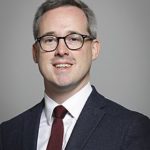
  • Luke Pollard – 2022 Speech on Voter ID at Elections

    Luke Pollard – 2022 Speech on Voter ID at Elections

    The speech made by Luke Pollard, the Labour MP for Plymouth Sutton and Devonport, in the House of Commons on 12 December 2022.

    The proposal will result in voter suppression, and I want to raise a number of concerns about its implementation, based on feedback from colleagues on Plymouth City Council, which represents one of the poorest communities in the country. Being in the south-west of England, surrounded by lovely beaches and gorgeous countryside, we are often not considered to be one of the poorest communities, but many of the problems experienced by some of the poorest communities in the north and the midlands are also present in the south-west.

    I greatly fear that this proposal will not increase turnout, and I think that any Government who seek to introduce electoral reforms with the objective of not increasing turnout should look again at why they are doing it. What is their motivation? The proposal will cut turnout; in certain target demographics, the Conservative party will have a partisan advantage over other parties, which should also make us look again at the reasons for the proposal.

    Many of the concerns were expressed during a group discussion between Councillor Tudor Evans, the leader of the Labour opposition on Plymouth City Council, and his councillors. I think they are genuinely meaningful, and I should be grateful if the Minister responded to them when he sums up the debate. One of them relates to the number of people who might be unable to obtain voter ID. On the basis of Government figures, the council estimates that about 4% of voters—8,000 people in Plymouth—will not have access to the photo ID that will be required for them to vote, which means that a great many people will not be able to cast their ballot without embarking on a bureaucratic process to secure it.

    The concern in this regard is that councils will not be able, in the time that is allowed, to process the necessary number of applications. Councils are not full of staff twiddling their thumbs and looking idle, but they do not have the capacity to enable electoral officers to work flat out to process these IDs. Even if it were possible for that to be done on time—which it is not—resources would be diverted from jobs on which councils should be focusing.

    Mike Amesbury (Weaver Vale) (Lab)

    My hon. Friend is right to say that this is about the disenfranchisement of, in particular, young people and black and ethnic minorities. As he also said, it is impractical too. The Local Government Association has talked of delaying the timetable beyond the local elections. I am fundamentally against the proposal and will vote accordingly, but I hope my hon. Friend agrees that we need to look again at this unrealistic timetable.

    Luke Pollard

    I agree that the timetable is important. Regardless of party, we should all be seeking to make good legislation, with a good outcome. Rushed legislation will not lead to a good outcome, and I fear that rushed legislation is exactly what we have before us.

    One of the concerns that many councils have is that the software required for them to produce valid certificates enabling people to vote if they do not have what legislation defines as legitimate forms of photo ID will not arrive until the start of next year, and has not been tested and integrated into other local IT systems that councils possess. Even councils that want to process the IDs for as many people as possible cannot yet do so. Plymouth City Council estimates that it will take eight minutes to process a single piece of voter ID for someone who does not have one, and 8,000 people in Plymouth do not have one. That means an awful lot of work: someone will be working their socks off to be able to deliver it.

    This will also involve additional bureaucracy and cost. I asked a parliamentary question about the number of mirrors that would be required for the legislation to work, which produced some very puzzled faces. Why was I asking about mirrors? The answer is that the legislation will require 40,000 mirrors to be purchased by local councils to enable people in polling stations to readjust their masks or religious garments after taking them off to demonstrate that they are who they are, should they be asked to do so. It will also require the purchase of 40,000 privacy screens so that people can do that outside the public gaze, particularly for religious reasons.

    Furthermore, the legislation will require a woman to be present as one of the polling clerk staff throughout the day. I think we should be seeking more women to be polling clerks, but we know that many polling stations do not have female coverage across the entirety of the day. That would now be required, under these regulations, so we are asking councils that are deeply in debt and struggling to afford social care for some of our poorest people to go on to eBay and buy mirrors. We would need one mirror for every polling station and we would probably need some spares in case one got smashed along the way.

    It is a warped priority for councils to be buying mirrors, so can the Minister say whether the Government will be providing privacy screens and mirrors for every single polling station, or whether that cost will be put on to hard-pressed council taxpayers? I suspect that if the parties were in opposite positions and we were introducing this, Conservative Members would be saying, “Look at this Labour Government waste, buying mirrors and privacy screens.” Why is that not being said here? The £180 million cost is a significant amount of money that should be being spent on social care. The Tory-run Plymouth City Council is £37 million in deficit at the moment, and I want it to spend every single penny on essential public services, not on this type of bureaucracy.

    Another concern I would like the Minister to address is the safety of polling clerks at the polling stations. We have to assume that refusing people or asking them for ID will generate a certain level of friction among some of the people seeking to cast their vote. Plymouth has 105 polling stations and there is real concern about what advice has been and will be given to those polling clerks about what happens if that friction turns into violence. Will there be adequate policing resources available on polling day to ensure that those polling clerks are safe when they ask people for ID or when they have to refuse them? What about the people who do not return when they have been refused? Our SNP colleague, the hon. Member for Inverclyde (Ronnie Cowan), estimated that this would involve nearly a third of the people. That is an enormous number of people who might be in possession of the correct form of identification but do not have it with them when they go to vote. That is an awful lot of people who simply will not return, and not just for that election, because it will damage their voting experience for the rest of their lives.

    I want to put on record a concern about the rural impact of the proposal. People who live in an urban area who are refused because they have left their ID at home might be able to walk back to their polling station easily, but those who live in a rural area and must travel large distances to get to their polling station are less likely to return. There is an urban-rural divide.

    How will the Minister judge the success or failure of this measure? We know that there has been only one conviction, so in the Minister’s eyes, how many people being refused their right to vote will class the proposal a success, and what is the level at which it tips over to be a failure? I think that a single person being denied the right to vote is a failure, but I understand that the Government have taken a different view, and I would like to understand how many people must be turned away for this not to be successful.

    This is not a piece of legislation of which the House can be proud. More importantly, it is not a piece of legislation of which the Minister should be proud. After this piece of voter suppression delivers partisan advantage in May and turns out to be a failure because people are refused their right to vote on a widespread basis—heaven help us if there is violence or if a poll clerk gets injured because of this—what do the Government think success looks like? Denying people their vote is never a success; it is always a failure, and I think that is what this piece of legislation will be.

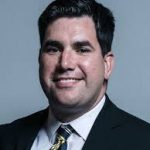
  • Richard Burgon – 2022 Speech on Voter ID at Elections

    Richard Burgon – 2022 Speech on Voter ID at Elections

    The speech made by Richard Burgon, the Labour MP for Leeds East, in the House of Commons on 12 December 2022.

    I have listened with great interest to the Minister’s assurances to the House and the country, but it will not surprise Conservative Members to learn that I am not assured, nor will my constituents be assured.

    Tony Benn talked of the importance of the vote. He talked very movingly of the way in which universal suffrage had helped to transfer power from the marketplace to the ballot box, giving our citizens the right to obtain through voting what they could not obtain through their wallets, whether it be free healthcare, free education, or a say in our country’s laws. That right is under threat from these regulations, which are littered with discriminatory inconsistencies. They are not, in fact, a sledgehammer to crack a nut, but, in my view, a deliberate voter suppression strategy—a strategy not to suppress just any voters, but to suppress certain groups of voters in particular.

    These regulations are straight out of the right-wing United States Republican playbook. Over there, they try to find ways of stopping people being able to vote. How else can we explain the way in which young people are discriminated against in the regulations? I believe they are a deliberate voter suppression strategy against working-class communities in particular, and, in particular, black and ethnic minority working-class communities and young working-class people, because the Conservatives have taken the view that those are the people who are less likely to vote for them.

    The regulations also have a broader context that should disturb all of us who are concerned about hard-won British democratic freedoms. In our society, there are three main ways for people to fight back against unpopular policies or express discontent with a Government they do not like, or an employer they do not like. There is the right to protest peacefully, the right to take industrial action and withdraw labour, and, of course, the right to vote. These regulations on voter ID need to be seen within the context of an authoritarian drift on the part of a Government who have in their sights the right to protest peacefully, the right to take strike action, and the right to vote with ease. That is profoundly disturbing. The Members on the other side of the debate are probably split between those who believe that this is necessary and desirable and those who do not really believe that it is necessary and desirable, but are going along with it because they are going along with that authoritarian drift.

    Even if we were to accept the introduction of voter ID, which I and others certainly do not, when we look at the inconsistencies in the regulations with regard to which voter ID is acceptable and which is not, we see that it is a real dog’s dinner—a real anti-democratic dog’s dinner. These regulations should send a shiver down the spines of all those who believe in civil and democratic liberties in our society. They should send a shiver down the spines of people, regardless of their political views, who believe that the right of every citizen to vote, the right of every worker to withdraw labour and the right of every citizen to engage in peaceful protest are rights that were hard won and should be cherished and defended. It is because we defend those hard-won civil liberties and principles that we oppose these regulations, and oppose this Government’s disgraceful authoritarian drift.

  • Ronnie Cowan – 2022 Speech on Voter ID at Elections

    Ronnie Cowan – 2022 Speech on Voter ID at Elections

    The speech made by Ronnie Cowan, the SNP MP for Inverclyde, in the House of Commons on 12 December 2022.

    When we stand for election, every one of us appeals to the electorate to get out and vote. We impress on them how important it is that they use their democratic right to express their will through the ballot box. We want bigger turnouts and we seek more and better engagement, yet voter ID will have a detrimental effect on turnouts. We know that because we can measure it.

    The UK Government have tried on several occasions to justify voter identification cards by stating that they already exist within the UK: they are used in Northern Ireland. What they cannot say with any conviction is that they have been a success in Northern Ireland. In fact, the turnout in the first election in Northern Ireland after photographic ID was introduced was 2.3% down. If we extrapolate from the data to a UK general election, approximately 1.1 million people would not vote. That would not fall evenly across the population, so who is it that we are disenfranchising?

    Angela Kitching, head of external affairs at Age UK, points out that the Government’s own research has found that 6% of people over 70 would have problems with presenting the right kind of ID. It is reasonable to believe that that estimate is low, because the UK Government did not include the 500,000 people in care homes and sheltered accommodation in their research. It is no surprise that Angela Kitching has described the idea as being “for the fairies”.

    The Royal National Institute of Blind People says that

    “this will disproportionately disenfranchise blind and partially sighted people, particularly older blind and partially sighted people.”

    The Royal Mencap Society has raised concerns that

    “voter ID could simply result in yet another barrier to people with a learning disability participating in elections.”

    Sense, the national charity that supports people with complex disabilities, has also raised concerns, saying:

    “Given the barriers that already face disabled people while voting, Sense is concerned that this could make it harder for some disabled people to vote.”

    Concerns have been raised by groups representing LGBTQ+ communities, including the LGBT Foundation, Mermaids and Stonewall. The Runnymede Trust has raised concerns that introducing a voter ID requirement would add further barriers to voting for black and ethnic minority groups.

    Those groups should not be disadvantaged. Their votes and their views are not worth less. Pilots have shown that 30% of people who had their ballot paper refused for lack of ID did not return later with an ID to vote. Were all those people trying to impersonate someone? I do not think so.

    As has been mentioned, this measure will disproportionately impact younger voters. ID such as an Oyster 60+ card is valid, but an Oyster 18+ card is not. Despite the calls for railcards or student IDs to be accepted, the Government have refused.

    Of course, change attracts a financial cost. Disappointingly, the UK Government do not know how much this change will cost. Their assessment is £150 million, based on an assumed take-up of 2%, but a UK Government survey found that 31% of people said they would apply for a voter ID card. The impact assessment estimates that an additional £10.2 million should be added for each additional percentage point, which brings the cost of that 31% to £450 million.

    In truth, we do not know, because the people surveyed were not informed of the existing photographic ID that would be acceptable, nor were they informed that out-of-date photographic ID would be acceptable. There is more confusion on which we are supposed to legislate: we need a clearer explanation of how having a period of validity for a voter card could work if its expiry date was not a bar to using it for its sole purpose at a polling station.

    What is driving this change? Photographic voter ID is supposed to be required to address the issue of personation —occasions when somebody pretends to be another elector and votes on their behalf. We are asking people who work a very long day in polling places to verify visually that each voter looks like the photo ID that they present and, if they are not happy, to refuse that person the right to vote. That is a burden that will weigh heavily on many of those who, until now, have diligently staffed polling places.

    For us to go to such lengths as introducing photographic voter ID, placing such a burden on electoral staff and risking disenfranchising 1.1 million voters, personation would have to be a massive problem. Yet, as the right hon. Member for Ashton-under-Lyne (Angela Rayner) said, with more than 58 million votes cast in elections in 2019, there were 33 counts of personation at a polling station. As we have heard, that comprises 0.000057%. When we consider the number of people cautioned for or convicted of personation, the proportion is reduced to 0.0000035% of votes cast. This is a sledgehammer looking for a nut to crack. It is a solution looking for a problem. The long and short of it is that this legislation has been pushed through with little substantial evidence of its value.

    For as long as Scotland remains part of the United Kingdom and Westminster has the power to affect the voting franchise and the electoral process in Scotland—even if that involves elections to this place—we in the Scottish National party will hold Westminster to account, and will demand that any changes must be transparent, considered, constructive and inclusive. The motion does not satisfy those criteria.