Tag: 2022

  • Tom Pursglove – 2022 Statement on HM Passport Office Backlogs

    Tom Pursglove – 2022 Statement on HM Passport Office Backlogs

    The statement made by Tom Pursglove, the Parliamentary Under-Secretary of State for the Home Department, in the House of Commons on 12 May 2022.

    Due to covid-19, more than 5 million people delayed their passport applications in 2020 and 2021. With demand for international travel having returned, Her Majesty’s Passport Office is currently receiving a higher number of passport applications than ever before; 9.5 million applications are expected in 2022 compared with approximately 7 million in a normal year.

    Since April 2021, 500 new staff have joined and a further 700 will join by the summer. As a result, the vast majority of passport applications are being processed within the 10-week timeframe and more than 90% within six weeks. Less than 1.4% of the passports printed last week for UK applications had been in the system for longer than 10 weeks.

    With a record number of applications in the system, customer inquiries have increased accordingly. However, the passport advice line, which is run by Teleperformance, is not currently meeting the needs of passport customers. Clearly, that is not acceptable. The Home Office has clear standards for the level of service that suppliers are expected to provide.

    Her Majesty’s Passport Office has engaged with Teleperformance at its most senior levels to emphasise the need to significantly improve performance as soon as possible. Alongside steps to bring the operation of the passport advice line, email and call-back functions within the required standard, Teleperformance is urgently bolstering staff numbers in response to the recent surge in customer contact, with 500 additional staff due to be added by mid-June.

    We recognise that hon. Members will wish to raise cases and queries on behalf of their constituents, as is, of course, right and proper. Her Majesty’s Passport Office staff have therefore been deployed to answer passport-related inquiries to the Home Office’s dedicated MPs hotline and, for the most urgent cases, they will also be available to conduct in-person passport surgeries in Portcullis House.

    Although we acknowledge that there have been issues with customer contact that must and will be resolved, I take the opportunity to recognise the work of Her Majesty’s Passport Office staff who continue to ensure that the vast majority of passport applications are processed in under 10 weeks. Their efforts, alongside the extensive work that went into preparing for record demand, have ensured that passport applications continue to be processed in higher numbers than ever before.

    Across March and April 2022, Her Majesty’s Passport Office completed the processing of nearly 2 million applications. As that output demonstrates, HMPO staff are firmly focused on maintaining a high level of service and are fully committed to ensuring that people receive their passports in good time for their summer holidays.

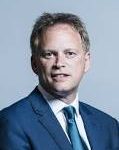
  • Grant Shapps – 2022 Comments on Potholes

    Grant Shapps – 2022 Comments on Potholes

    The comments made by Grant Shapps, the Secretary of State for Transport, on 13 May 2022.

    The plague of potholes is the menace of our roads. That’s why I’m ensuring companies who create them and leave roads in a poor state can be held to account more easily – protecting drivers from unfair repair costs.

    We’ve already invested billions of pounds into roads maintenance, helping local authorities keep their highways well maintained and I’ll continue working to make sure all road-users around the country can enjoy the safe, world-class infrastructure they deserve.

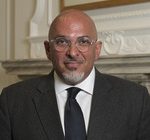
  • Nadhim Zahawi – 2022 Comments on Levelling Up Premium

    Nadhim Zahawi – 2022 Comments on Levelling Up Premium

    The comments made by Nadhim Zahawi, the Secretary of State for Education, on 13 May 2022.

    The quality of pupils’ education in crucial subjects like maths and science should not be dependent on where they live, and teachers shouldn’t feel that they must leave their local area for a better paid job.

    Our Levelling Up Premium will help give children and young people the best specialist teaching in maths, physics, chemistry and computing, while supporting jobs in low-income areas, helping to level up education for all and grow the economy.

  • Sajid Javid – 2022 Comments on Mental Health and the Black Community

    Sajid Javid – 2022 Comments on Mental Health and the Black Community

    The comments made by Sajid Javid, the Secretary of State for Health and Social Care, on 12 May 2022.

    It was great to visit the ACCI today and see the fantastic work they’re doing to support the local community’s mental health.

    I’m continuing to level up health across the country –this includes mental health and ensuring it is on an equal footing to physical health.

    In order to make sure our 10 year mental health plan works for all, it’s important that the Black community share their views and experiences on how we can improve the support and services available. Your voices will shape our plan to promote positive mental wellbeing across the nation.

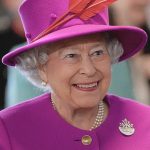
  • Queen Elizabeth II – 2022 Statement on Damehood for Deborah James

    Queen Elizabeth II – 2022 Statement on Damehood for Deborah James

    The statement made by Queen Elizabeth II on 12 May 2022.

    The Queen has been pleased to approve that the honour of Damehood be conferred upon Deborah James.

  • Brandon Lewis – 2022 Statement on the Northern Ireland Assembly Election

    Brandon Lewis – 2022 Statement on the Northern Ireland Assembly Election

    The statement made by Brandon Lewis, the Secretary of State for Northern Ireland, in the House of Commons on 11 May 2022.

    Last Thursday, the people of Northern Ireland went to the polls to choose their elected representatives. The results of that election were confirmed on Sunday 8 May 2022.

    I want to offer my congratulations to all those who were elected and encourage the parties to form an Executive as soon as possible. The people of Northern Ireland deserve a stable and accountable devolved Government that delivers on the issues that matter most to them.

    Earlier this year, the Northern Ireland (Ministers, Elections and Petitions of Concern) Act passed through Parliament. That legislation provides for a period of up to 24 weeks after an election for Northern Ireland’s political representatives to restore the devolved institutions. During this time, Northern Ireland Ministers in post before the election who were re-elected can remain as Ministers to support the delivery of public services.

    I met with the leaders of the five largest parties in Northern Ireland on Monday 9 May and urged them to restore a fully functioning Executive and Assembly at the earliest possible moment, starting with the nomination of an Assembly Speaker. An Executive will only be formed if Sinn Fein nominates a First Minister and if the DUP nominates a deputy First Minister. The two roles are joint and equal, with neither office holder able to exercise functions or make decisions without the other.

    The Northern Ireland protocol remains a barrier to stability in Northern Ireland and the Government will do whatever it takes to protect the Belfast (Good Friday) agreement in all its dimensions. We are clear that the protocol does not have the support of many in the Unionist community and is not working for many people and businesses in Northern Ireland. We have to address the outstanding issues and we want to do that by agreement with the EU, but as we have always made clear we will not shy away from taking unilateral action if necessary.

    Furthermore, while Unionism is set to remain the largest designation in the Northern Ireland Assembly with 37 seats, followed by Nationalism on 35 seats, parties which designate as neither will now constitute 20% of the Assembly. This is a significant development in Northern Irish politics and its implications are the subject of growing discussion and debate.

    Together, we must move forward towards a brighter future. That means a strong, functioning Executive delivering for all the people of Northern Ireland. My priority is to provide the space for an agreement to be reached.

  • Mark Spencer – 2022 Statement on the Government’s Legislative Programme

    Mark Spencer – 2022 Statement on the Government’s Legislative Programme

    The statement made by Mark Spencer, the Leader of the House of Commons, on 11 May 2022.

    Following the state opening of Parliament, and for the convenience of the House, I am listing the Bills that were announced:

    Animal Welfare (Kept Animals) Bill

    Bill of Rights

    Boycotts, Divestment and Sanctions Bill

    Brexit Freedoms Bill

    Conversion Therapy Bill

    Data Reform Bill

    Economic Crime and Corporate Transparency Bill

    Energy Security Bill

    Financial Services and Markets Bill

    Genetic Technology (Precision Breeding) Bill

    Harbours (Seafarers’ Remuneration) Bill

    High Speed Rail (Crewe – Manchester) Bill

    Higher Education Bill

    Higher Education (Freedom of Speech) Bill

    Identity and Language (Northern Ireland) Bill

    Levelling Up and Regeneration Bill

    Media Bill

    Modern Slavery Bill

    National Security Bill

    Non-Domestic Ratings Bill

    Northern Ireland Troubles (Legacy and Reconciliation) Bill Online Safety Bill Procurement Bill

    Products Security and Telecommunications Infrastructure Bill

    Public Order Bill

    Renters Reform Bill Schools Bill

    Social Housing Regulation Bill

    Social Security (Special Rules for End of Life) Bill

    Trade (Australia and New Zealand) Bill

    Transport Bill

    UK Infrastructure Bank Bill

    The programme will also include Finance Bills to implement budget policy decisions. This list does not include draft Bills or Law Commission Bills.

    Detailed information about each of these Bills can be accessed from the gov.uk website at: https://www.gov.uk/government/publications/queens-speech-2022-background-briefing-notes.

  • Anne-Marie Trevelyan – 2022 Statement on Russian Trade Sanctions (11/05/2022)

    Anne-Marie Trevelyan – 2022 Statement on Russian Trade Sanctions (11/05/2022)

    The statement made by Anne-Marie Trevelyan, the Secretary of State for International Trade, in the House of Commons on 11 May 2022.

    On May 9 2022, the Department for International Trade and HM Treasury announced a fresh package of trade sanctions targeting £1.7 billion worth of trade with Russia.

    These measures, bringing the total value of products subjected to full or partial trade sanctions to over £4 billion, are designed to thwart Putin’s aims in Ukraine and undermine his illegal invasion.

    The import tariffs announced today will target £1.4 billion worth of goods imported from Russia, including certain metals such as platinum, chemicals and plastics to put further pressure on Putin and his illegal invasion of Ukraine. Further detail on the products impacted by these new measures can be found at:.

    https://www.gov.uk/government/news/uk-punishes-putin-with-new-round-of-sanctions-on-17-billion-of-goods.

    New export bans will target over £250 million worth of trade in the sectors of the Russian economy most dependent on UK goods the hardest, including certain chemicals, materials—such as plastics, rubbers, textiles, base metals and wood products, machinery, precision instruments, and electrical products. These bans will target Russia’s manufacturing and heavy machinery sectors, effectively contributing to the debilitation of the Putin war machine. Further detail on the products impacted by these new measures will be shared in June.

    This is the third wave of trade sanctions announced by the UK Government and, excluding gold and energy, will bring the proportion of goods imports from Russia hit by restrictions to over 96%, with over 60% of goods exports to Russia under whole or partial restrictions. Legislation will be laid in due course to implement these measures. The UK Government will continue to consider additional measures to further weaken Putin’s war effort. I encourage all importers that use Russian imports to source alternative supplies. As with all sanctions, these measures will be kept under review.

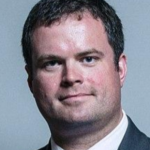
  • Kevin Foster – 2022 Announcement of Statement of Changes in Immigration Rules

    Kevin Foster – 2022 Announcement of Statement of Changes in Immigration Rules

    The statement made by Kevin Foster, the Parliamentary Under-Secretary of State for the Home Office, in the House of Commons on 11 May 2022.

    The Secretary of State for the Home Department, my right hon. Friend the Member for Witham (Priti Patel) is today laying before the House a statement of changes in immigration rules.

    The changes reflect amendments required as a result of the Nationality and Borders Act 2022, to implement the reformed asylum system.

    Significantly, we will introduce a differentiated asylum system as provided for by Section 12 of the 2022 Act. In order to do this, we will also introduce three new types of permission to stay where a person is granted on a protection route:

    refugee permission to stay for group 1 refugees:

    temporary refugee permission to stay for group 2 refugees: and

    temporary humanitarian permission to stay for recipients of humanitarian protection

    Different entitlements, in terms of period of grant, conditions of stay and access to family reunion, will be provided to refugees who did not come directly to the UK, did not claim asylum without delay or, in some cases, have not shown good cause for any illegal entry or presence in the UK. This supports our key principle of deterring dangerous journeys and encouraging asylum claims to be made in the first safe country an asylum seeker reaches: this is the fastest route to safety.

    The current immigration rules do not define a “claim for humanitarian protection”, therefore we will clearly outline the Government’s definition of such a claim. Furthermore, some of the changes to humanitarian protection in the rules are necessary for the effective operation of the migration and economic development partnership with Rwanda in preventing unnecessary delays to removal. Currently, individuals may make a humanitarian protection claim against country of return (which under the definition would include Rwanda), that would require an assessment of whether the individual is a refugee. This runs counter to the object and purpose of the partnership, where responsibility for refugee status determination is transferred to Rwanda. We intend to clarify that a claim for humanitarian protection can only be made against country of origin (as is the case with asylum claims). The change does not prevent individuals from raising safety concerns about their removal and the specific circumstances of any individual will be considered before removal to ensure the removal is safe and meets the UK’s legal obligations, including under the ECHR. These changes will be made from 11 May 2022. This is necessary and proportionate in order to provide clarity to applicants on the circumstances in which they can lodge a claim for humanitarian protection and to prevent unnecessary delays to removal under the UK-Rwanda partnership. Given the anticipated deterrent effect of the partnership on people smuggling, this will help to quickly reduce the number of dangerous journeys and save lives.

    We will also introduce a provision to clarify the exceptional circumstances that may warrant a grant of permission to enter or stay in the UK for children seeking to join a refugee parent or relative. This change will help create more fairness, transparency, and consistency in decision making.

    In addition, new immigration rules will come into effect which impose a visa regime on nationals of El Salvador.

    Salvadoran nationals wishing to visit the UK will be required to obtain a visit visa from 11 May 2022. There will be a transition period: Salvadoran nationals who have pre-booked travel before 16:00 BST on 11 May, and will arrive in the UK before 8 June, will still be able to enter the UK without a visa. Any passengers with pre-booked travel arriving in the UK after 8 June and those who did not book travel before 16:00 on 11 May, will still require a visa to enter the UK.

    This decision has been taken by Ministers across Government in light of increasing asylum claims from Salvadoran nationals in UK ports in recent years. There were 38 asylum claims made by Salvadoran nationals in 2017. This figure has sharply increased by 1,750% to reach 703 in 2021.

    Due to public policy reasons, the UK Government unilaterally suspended the existing visa treaty (1962) between the UK and El Salvador and will implement the immigration rules changes to impose the visa requirement immediately at 16:00 on 11 May.

    Finally, eligible nationals from Bahrain and Saudi Arabia, will have access to the electronic visa waiver scheme. Nationals of Bahrain and Saudi Arabia will be able to visit the UK for up to six months for tourism, business, study or medical treatment. This brings the status of Bahrain and Saudi Arabia in line with Oman, UAE, Qatar and Kuwait who already benefit from the electronic visa waiver scheme. There is no requirement for applicants to provide biometrics, attend a visa application centre or hand in passports in advance of travel for an EVW as there is with visas. An EVW allows the holder to travel to the UK once and costs £30. Applicants only need to provide their travel details for pre-clearance 48 hours in advance of travel.

    Visit visas are an important part of securing the UK’s border and are an effective tool for the UK in reducing illegal immigration, tackling organised crime and protecting national security. The UK keeps its visa system under regular review. Decisions on changes are always taken in the round and reflect a range of factors. These will vary globally, but often include security, compliance, returns and prosperity.

    The necessary changes to the immigration rules are being laid on 11 May 2022. For the changes regarding El Salvador, due to safeguarding the operation of the national immigration system, those changes will come into effect on 11 May 2022. The necessary changes to allow Bahrain and Saudi Arabia to access EVW come into effect on 1 June 2022. Given the anticipated deterrent effect of the partnership on people smuggling, and the need to quickly reduce the number of dangerous journeys and save lives, those changes to humanitarian protection claims necessary for the effective operation of the migration and economic development partnership with Rwanda in preventing unnecessary delays to removal will come into effect on 11 May 2022. The wider asylum changes come into effect on 28 June 2022.

  • Priti Patel – 2022 Statement on the Public Order Bill

    Priti Patel – 2022 Statement on the Public Order Bill

    The statement made by Priti Patel, the Home Secretary, in the House of Commons on 11 May 2022.

    The right to protest peacefully, for people to exercise their rights to freedom of speech and assembly, is a cornerstone of our democratic values and will always be defended by this Government. However, the rights of protesters must be balanced with the rights of the general public to go about their daily lives free from serious disruption or harm. In recent months, we have seen a minority of protesters using guerrilla tactics that cause misery to the hard-working public, disrupt businesses, interfere with emergency services, cost millions in taxpayers’ money, divert the police from tackling crime and put lives at risk.

    The Public Order Bill, introduced in the House of Commons today, builds on the public order measures in part 3 of the Police, Crime, Sentencing and Courts Act 2022 which, among other things, updates the powers in the Public Order Act 1986 enabling the police to impose conditions on a protest, provides for a statutory offence of intentionally or recklessly causing public nuisance and increases the maximum penalty for the offence of wilful obstruction of a highway. The Government had originally sought to include the majority of the new measures announced today in the Police, Crime, Sentencing and Courts Bill, but the Government’s amendments to that Bill were blocked by the House of Lords. Since then, we have seen the Just Stop Oil protests which threatened fuel shortages across the country.

    The Public Order Bill includes the following measures:

    Offences related to locking on—creating two new offences designed to deter individuals from “locking on” and “going equipped to lock on”. Locking-on is the tactic in which protesters attach themselves to other individuals, objects or land, or attach objects together or to land, creating an obstruction which is capable of causing serious disruption and is difficult and time consuming for the police to remove.

    Obstruction of major transport works—creating a new offence of obstructing the construction or maintenance of major transport works

    Interference with key national infrastructure—creating a new offence which covers any behaviour which prevents or significantly delays the use or operation of key infrastructure, such as roads, railways, airports, oil refineries (which we have seen an increase of in the last few months), gas installations, power plants and printing presses.

    Powers to stop and search—extending existing stop and search powers to allow the police to search and seize objects made, adapted, or intended for use in the course of specified protest- related offences (including the new offences listed above). There will be both a suspicion-led power, amending section 1 of the Police and Criminal Evidence Act 1984, and a suspicion-less power, based on section 60 of the Criminal Justice and Public Order Act 1994.

    Serious disruption prevention orders—introducing a new preventative court order—the serious disruption prevention order (SDPO), aimed at tackling repeated highly disruptive behaviour by prolific protesters. The new Bill now includes provision for the electronic tagging of persons subject to an SDPO.

    Power of chief officers of police to delegate certain functions under the Public Order Act 1986—equalising the seniority of police officer in London who may attach conditions to an upcoming protest or prohibit a trespassory assembly to match that applicable in forces outside of London. The current minimum rank of assistant commissioner will be changed to that of commander, which is equivalent to assistant chief constables outside of London. This is a new measure included in this Bill.

    To support the parliamentary scrutiny of the Bill, I am publishing the following documents on gov.uk:

    Impact assessment;

    Policy equality statement;

    Delegated powers memorandum;

    ECHR memorandum; and

    Fact sheet.