Tag: 2022

  • Robin Walker – 2022 Comments on Government’s Plans on Education for Gypsy, Roma and Traveller Pupils

    Robin Walker – 2022 Comments on Government’s Plans on Education for Gypsy, Roma and Traveller Pupils

    The comments made by Robin Walker, the Minister of State for School Standards, at the Education Committee meeting on 15 March 2022.

    The first thing is to look at attendance across the piece. We discussed previously the work that we are doing with the attendance alliance, some of the excellent work the Children’s Commissioner has been doing in this space and learning from some of the good practice that I think we have seen in some schools at reaching out to the local Gypsy, Roma and Traveller community and engaging them and supporting attendance in that space.

    Also, we need to look at intergenerational literacy as a challenge. There is money in the adult education budget to support adult literacy, but at the moment I think this is a community that isn’t being effectively engaged on that. There is more that we could do on that front because I think that is very important. Part of it is also to show that we take the concerns of the Gypsy, Roma and Traveller community, where they have those concerns, seriously. We are spending money on anti-bullying activities, including some specific work targeted towards that community, because it is right that they should not have to be concerned about their children being in schools. That is one of the things that may in turn affect attendance.

  • Robin Walker – 2022 Comments on GCSEs and A-Levels in 2022

    Robin Walker – 2022 Comments on GCSEs and A-Levels in 2022

    The comments made by Robin Walker, the Minister of State for School Standards, at the Education Committee meeting on 15 March 2022.

    It is very important that GCSE and A-level examinations do go ahead this year. I will be meeting Ofqual later today for ongoing work, and to talk about how we support those students and how we make sure that this series of examinations can go ahead effectively and with the right support in place.

    In terms of the adaptions, you will be aware that grades will be based around the mid-point between 2021 and pre-pandemic grades for GCSEs and some A levels, with results therefore likely to be higher than pre-pandemic, providing a safety net for some of this year’s students.

    The package of measures, along with the exams, includes four elements: a choice of topics or content on which pupils will be assessed in English literature, history, ancient history and geography; in all other GCSEs and A levels that have exams, advance information about the focus of the content of the exams, which was published on 7 February; changes to some assessment requirements for practical assessments in some subjects to take account of public health measures that were in place; and allowing students to have access to support materials in the exam room for maths, combined science and physics.

    Combined with the choice of content and the other measures, another thing that I think is important in the context of people still possibly suffering from Covid absence is spacing exams. Where we have multiple exams in the same subjects, we are having a 10-day space in between them to make sure that pupils have the best opportunity of being able to sit them.

    We think that package will mean that we can go ahead with the exams and that we can do so in a fair way. Since taking on this job, many of the conversations that I have had with teachers have been very clear about the downsides of the teacher-assessed grades process. It is something that people recognise was necessary at the time we had it, during the height of the pandemic, but many teachers are very keen to move away from it to something that is independently assessed. That is something that will be welcomed by the system more generally. I think it sets us on a path to restoring independently assessed exams as the best way forward for most people.

  • Robin Walker – 2022 Comments on Teaching Gender Identity in Schools

    Robin Walker – 2022 Comments on Teaching Gender Identity in Schools

    The comments made by Robin Walker, the Minister of State for School Standards, at the Education Committee meeting on 15 March 2022.

    Schools should be teaching facts and information in that respect. As you said, quite a lot of the allegations or suggestions here are anecdotal. It is important to get to the bottom of each individual issue. We want schools to be able to support pupils, including the small number of pupils who may have gender identity issues and may need support in that respect. It is important that if they approach members of staff, they can be signposted to the right advice and support—which will not always be people in their school, by the way. I think it is important to reflect on that.

    We also need to make sure that issues around sex and gender and identity are taught in an age-appropriate way, listening to the concerns of parents. That is one of the responsibilities we have set out in our guidance around RSHE, so that schools engage in that. I recognise that there are some really complex legal issues to do with the Equality Act in this space and I know that there are concerns about protecting, for instance, single-sex spaces in some schools.

    We are doing a piece of work with the Equality and Human Rights Commission to look into this space to see if we can provide any further guidance and support in this area. That will take some time because these are not straightforward and simple things, but it is important that we balance responsibility to protect the characteristics of sex with the protected characteristic of gender reassignment, which is also protected under the Equality Act, and we make sure that we address the concerns that parents may have in this space.

    There have been some examples where parents have had concerns—those have been raised—where Ofsted has stepped in from a safeguarding perspective or an improvement perspective. It is important that we look at those and take the evidence from those.

    With regard to the political impartiality guidance, it is very clear that what we are setting out is that there should never be an attempt to indoctrinate or impose a particular view on children. Equally, we do have to respect protected characteristics under the Equality Act. That is the difficult area that schools are trying to navigate. I think we should be doing more as a Department to support them in that and I am very keen that we do that. That is why the Secretary of State undertaking to do this work with the Equality and Human Rights Commission is an important step forward on that.

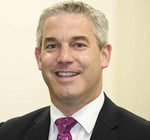
  • Steve Barclay – 2022 Comments on Levelling-Up in Derby

    Steve Barclay – 2022 Comments on Levelling-Up in Derby

    The comments made by Steve Barclay, the Chancellor of the Duchy of Lancaster, on 14 May 2022.

    Derby is a city of real vibrancy and it was fantastic to see the ambitious regeneration projects taking place across the city centre.

    The redevelopment of the Market Hall is really starting to take shape and the £15 million Future High Streets funding will help develop other parts of the St Peter’s Quarter.

    Levelling up is a central part of the Government’s ambition because we want to ensure people and communities up and down the country are able to thrive, so it was great to see how Derby has been able to access funding that will drive inward investment into the city centre and create opportunity for people.

  • Michelle Donelan – 2022 Statement on Antisemitism in the NUS

    Michelle Donelan – 2022 Statement on Antisemitism in the NUS

    The statement made by Michelle Donelan, the Higher and Further Education Minister, on 14 May 2022.

    I am horrified by the thought of Jewish students feeling ostracised by an organisation which should be a voice for their community and an advocate of equality for all students.

    Although this was a decision that the Department did not take lightly, we have been clear that antisemitism must be stamped out of the sector and are treating these allegations with the utmost seriousness.

    Whilst our door is not closed to the NUS, our message could not be simpler. We need decisive and effective action in response to these repeated allegations of antisemitic behaviour. We are glad that the NUS has started to respond and are ready to work with them again when sufficient action has been taken.

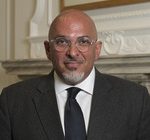
  • Nadhim Zahawi – 2022 Statement on Antisemitism in the NUS

    Nadhim Zahawi – 2022 Statement on Antisemitism in the NUS

    The statement made by Nadhim Zahawi, the Secretary of State for Education, on 14 May 2022.

    I am seriously concerned to hear of so many reports of alleged antisemitism linked to the NUS.

    Jewish students need to have confidence that this is a body that represents them, and we need to be sure that the student bodies that we engage with are speaking fairly for all students, which is why we are disengaging with the NUS until the issues have been addressed.

    From the NUS’s initial response to our concerns, I am confident that they are keen to take action and welcome further updates from them. Antisemitism has no place in our society and we will stamp it out, wherever it occurs.

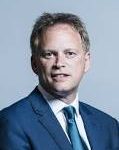
  • Grant Shapps – 2022 Comments on the First Net Zero Transatlantic Flight

    Grant Shapps – 2022 Comments on the First Net Zero Transatlantic Flight

    The comments made by Grant Shapps, the Secretary of State for Transport, on 14 May 2022.

    This trailblazing net zero emissions flight, a world first, will demonstrate the vital role that sustainable aviation fuel can play in decarbonising aviation in line with our ambitious net zero targets.

    That’s not just great news for the environment, it’s great news for passengers who will be able to visit the Big Apple without increasing damaging greenhouse gas emissions.

    It’s crucial that we place sustainability at the heart of the aviation industry’s recovery from COVID-19 and I look forward to working with them on this challenge, which will lower the impact flying across the Atlantic has on the planet.

  • Julia Lopez – 2022 Comments on Delay to Ban Multibuy Deals

    Julia Lopez – 2022 Comments on Delay to Ban Multibuy Deals

    The comments made by Julia Lopez, the Media, Data and Digital Minister, on 14 May 2022.

    We are determined to tackle childhood obesity and are working hard to improve young people’s health, including by investing £550 million of government and lottery cash to level up access to sport and physical activity right across the country

    We have listened to the concerns which have been raised and will not be bringing in restrictions on junk food advertising until confident that the time is right.

  • John Glen – 2022 Speech on Safe Hands Funeral Plans

    John Glen – 2022 Speech on Safe Hands Funeral Plans

    The speech made by John Glen, the Economic Secretary to the Treasury, in the House of Commons on 12 May 2022.

    I thank the hon. Member for Rutherglen and Hamilton West (Margaret Ferrier) for securing this important and timely debate on an incredibly emotive subject. I thank colleagues on both sides of the House for their contributions, including the hon. Members for Glenrothes (Peter Grant) and for Llanelli (Nia Griffith). I will specifically address the points raised by my hon. Friend the Member for Blackpool North and Cleveleys (Paul Maynard), and I thank my hon. Friend the Member for Harrogate and Knaresborough (Andrew Jones) for raising his constituent’s case.

    I take this opportunity to remember our former colleague Sir David Amess. He was a friend to many of us here today, and he cared very much about helping people manage the financial impact of funerals. I thank hon. Members who have campaigned over the past few years in support of regulation. I recall conversations with Neil Gray, the former hon. Member for Airdrie and Shotts, who first tabled a private Member’s Bill to this effect in 2016.

    Finally, I am grateful to hon. Members here today for the points they have raised. I think I will be able to address many of those points, and I will write to them on anything that I do not address.

    As has been said, funerals are painful experiences, but they can also provide people with a degree of mental closure, because they help us to adjust to the reality of the loss of a loved one. We are all very much agreed that at such a moment mourners should be able to focus on their memories of their loved one and on their own emotions; no one should be consumed by money worries. Clearly, therefore, Safe Hands’ entering administration, as the hon. Lady accurately set out, is very distressing for its customers and their families. Obviously, she mentions eloquently the case of Mr Hughes and what he has experienced in recent weeks. Our thoughts should be with those who have recently lost someone close to them and now find themselves affected by Safe Hands’ failure. As has been mentioned, Dignity, one of the UK’s largest funeral plan providers, has stepped in to provide funerals on behalf of Safe Hands’ customers in the immediate period after the firm entered into administration. I echo the hon. Lady’s words in expressing gratitude that it has stepped up to the mark and agreed to do that for a further six months. I regret the fact that her constituent does not have clarity on exactly where that leaves him, but of course Safe Hands will be entering the administration process and that will need to be concluded before wider issues can be looked at. I met people from Dignity yesterday, along with my Treasury officials, and they reiterated their commitment for the next six months. It has been very welcome to see a funeral plan provider taking that responsibility for protecting the sector’s customers and upholding the industry’s reputation.

    I had the privilege of meeting my right hon. Friend the Member for South Holland and The Deepings (Sir John Hayes), and members of the all-party group and of the industry a few weeks ago to discuss what was happening with this difficult case. Although the Financial Conduct Authority does not yet regulate funeral plan providers, it is supporting the industry and administrators as they look to find a longer-term solution for Safe Hands’ customers. I am very hopeful that customers will not need to wait too much longer before they see further progress on this longer-term approach. However, I strongly believe that what has happened to Safe Hands is clear evidence of the pressing need for a better-regulated funeral plan market that will provide customers with the stability they need at such a difficult time and will allow us, as Members of Parliament with constituents who have been affected by Safe Hands’ demise, the reassurance and confidence that we can see them not worry in future.

    Although the sector provides a valuable service, there is still some distance to travel when it comes to ensuring that all funeral plan customers are shielded from harm. Indeed, major reports and work carried out by the Treasury and the FCA revealed examples of consumer detriment in the sector. As a result, last year, we legislated to bring providers and intermediaries within the regulatory remit of the FCA. That change means that from 29 July funeral plan providers will be subject to robust and enforceable standards for the first time. These standards will benefit consumers in a number of ways, for instance, by giving them clarity about what is covered by their plans, and ending high-pressure and misleading sales tactics. In addition, for the first time funeral plan customers will be able to access a redress scheme, which will be provided by the Financial Ombudsman Service. Ultimately, we believe a well-regulated market will promote effective competition and drive better long-term consumer outcomes. I recognise that this industry does have an important role to play; the demise of Safe Hands will be dealt with through the administration process and there may well then be further examination of what happened, but my determination is that we will get this regulation right and provide security to the industry. The vast majority of firms in the industry are doing the right thing at the moment and I am clear that once they have adjusted to that new regime, we will have confidence going forward.

    The Government recognise that the new regulation presents a major change for providers, which is why we introduced an 18-month transition period before the new rules came into effect. That has given businesses time to take the right steps to familiarise themselves with the new requirements and prepare to adopt them.

    We of course recognise that it is paramount that we minimise any disruption to customers as a result of the changes, which is why the FCA has said that providers that decide not to or cannot obtain authorisation should transfer their plans to a provider that will operate under the new rules. Alternatively, businesses should wind down in an orderly way before the regulation comes into force.

    On that note, Members may be aware that last month the Government made a supplementary statutory instrument that will make it easier for funeral plan providers that seek to exit the market to transfer their existing funeral plan to a regulated funeral plan provider. I discussed that change with Dignity yesterday, and it welcomed it. It should ease the process for the relatively small number of people who find themselves subject to a plan the provider of which will not go into regulation: they will be able to port their plan to one of the bigger industry providers.

    When we bring a sector into regulation for the first time, there is clearly a possibility that some providers will be unable to meet the authorisation threshold. In addition, the process may reveal that some businesses are unable to deliver on promises they have made to their customers.

    Peter Grant

    The Minister is understandably focusing on the new regulatory regime—I think he is aware of some of my concerns about the adequacy of the FCA as currently set up—but there should have been other regulation. Who should have been regulating the activities of the trust? Who should have prevented it from engaging in wildly speculative, insecure investments, directly against the promises that were made? Safe Hands Plans Ltd’s first two years of accounts contained demonstrably and obviously false statements, which were never picked up on by Companies House. Who should have been regulating that? Does the Minister accept that regardless of the changes to the regulation of funeral plan companies, there appear to have been serious regulatory failures elsewhere, again?

    John Glen

    The hon. Gentleman makes his points somewhat speculatively, but expresses some valid specific concerns about the journey that Safe Hands went on. Other investigations cannot take place until the administration process is concluded. The driver for the regulations that we are to introduce was the fear among Members from all parties a few years ago. The important thing is to give reassurance going forward. There will be a day of reckoning for the directors of Safe Hands, who will have to account for what happened, but the administration process must happen first. I cannot say any more on that, but the hon. Gentleman’s relevant points are noted.

    I must stress that an inability to meet the new standards of regulation—because of issues with conduct, business models or trust arrangements—does not mean that the regulation is at fault; rather, by bringing the sector into regulation, we expose unsustainable practices that, left unchecked, could ultimately worsen and impact more consumers. As the famous adage says, sunlight is the best disinfectant. In this instance, by regulating we will turn the spotlight on businesses that operate with unworkable models, and will prevent consumer harm.

    My hon. Friend the Member for Blackpool North and Cleveleys (Paul Maynard) asked about the low-interest loan scheme that we have been piloting with South Manchester Credit Union. I hope to visit Manchester in the week after next. My hon. Friend is absolutely right that there is a wider agenda in terms of affordable credit, and I am still very much committed to developing that instrument and making it widely available, alongside making other interventions in respect of credit unions that we can talk about when the financial services and markets Bill comes to the House shortly.

    It is right that the Government act to protect consumers, many of whom will be elderly or vulnerable, with a robust, proportionate regulatory framework. In addition, a well-regulated market will promote effective competition and drive better long-term outcomes for consumers. As I have said, Safe Hands customers can be assured that they will be covered for at least another six months. I encourage other providers and market participants to take further action, as Dignity has done, to protect consumers of firms that will not become authorised.

    I assure the House that the Government and the Financial Conduct Authority continue to work closely with each other and with the sector—I have mentioned those two meetings that I have personally held, and meetings that my officials have held, with industry representatives—to ensure that that shift to regulation is as smooth as possible. I take account of the several valid points raised this afternoon. We all have a moral obligation to ensure that funeral plan customers and their loved ones receive the certainty that they need and deserve.

  • Margaret Ferrier – 2022 Speech on Safe Hands Funeral Plans

    Margaret Ferrier – 2022 Speech on Safe Hands Funeral Plans

    The speech made by Margaret Ferrier, the Independent MP for Rutherglen and Hamilton West, in the House of Commons on 12 May 2022.

    I thank Mr Speaker for granting this important Adjournment debate. I know that my constituents and other hon. Members’ constituents who have been affected will be grateful that the situation has been recognised with due seriousness.

    On the first day of the Easter recess, my constituent Patrick Hughes called my office following the collapse of Safe Hands Funeral Plans, which had gone into administration the week before. Quite understandably, he was extremely anxious about what would happen next. Some years ago, Mr Hughes had bought a policy or plan with Safe Hands at an initial cost of about £6,300. It was a significant investment, but it was worth it: he was paying for peace of mind that his family would not have to worry about finding the money for a funeral when the time came.

    Funerals do not come cheap, but we all want to be able to give our loved ones the best send-off we can. A key attraction for Mr Hughes and for so many like him was the security that they were being offered. “Nothing can go wrong,” they were assured. “This is a smart investment: your plan is guaranteed and your family will be grateful that they won’t have to worry about it at their time of grieving.”

    To date, Mr Hughes has been contacted exactly once since the business went into administration: with the initial letter informing him of the collapse. Like the many thousands of policyholders in the same boat, Mr Hughes tried to make contact with Safe Hands or its administrators to get some answers about what would happen next. His letters went unanswered. The phone lines would not connect, or the phone would just ring out. Panic began to set in.

    Customers were told that the company was

    “uncertain that the funeral plans will be able to be fulfilled”

    and that they should consider their plans

    “terminated with immediate effect”.

    People were realising that it was becoming very likely that their life savings had been lost. Safe Hands was not regulated by the Financial Conduct Authority. Anecdotally, I understand that it was regarded in the wider funeral industry as a cowboy—a reputation that did not reach its customers in time for them to reconsider their investments.

    The thing is that such plans, if provided by reputable companies and regulated properly, could be immensely beneficial. They really could give some peace of mind. That is why, along with the sector and colleagues, I wholeheartedly welcome the Government’s plans to bring funeral planning services under the remit of the Financial Conduct Authority this July. The plans, which include assessments of providers, fund protection measures, stricter advertising rules and bans on cold calling, will hopefully protect future customers from falling victim to the scams of unscrupulous companies such as Safe Hands. I appreciate the letter that the FCA sent me in advance of this debate, setting out how the regulatory reforms will work; I look forward to taking up its offer of a meeting to discuss them in more detail.

    Peter Grant (Glenrothes) (SNP)

    I commend my hon. Friend for securing this debate. As an example of the kind of advertising that the company has been doing, it promised that customers’ money would be kept by an entirely separate and independent company. Is she aware that the trustees set up a company called SHFT Properties Ltd and that every single person who has ever been a director of that company was also a director of Safe Hands Plans Ltd? Does she share my frustration that directors of companies that repeatedly tell such blatant lies to con their customers are allowed to carry on as directors of other companies to this very day despite the chaos left behind in the wreckage, as has happened with Safe Hands Funeral Plans?

    Margaret Ferrier

    I thank my hon. Friend for his intervention—and I shall have more specific thanks to give him a little later in my speech. I completely agree with the points that he has made. I know that the Government intend to introduce legislation relating to economic crime and impropriety during the current Session, and I hope the Minister can confirm that it is something they are seriously considering.

    I was particularly happy to note the FCA’s clear focus on consumer protections, and I fully agree with their approach in wishing to ensure that customers pay a fair price, that the plan meets their needs, that the money is looked after responsibly, and that they have all the information they need in order to make an informed decision. Unfortunately, however, that announcement is just too little, too late for many of Safe Hands’ customers.

    Let me provide some context by explaining the way in which Safe Hands worked. Customers’ money was put into a trust and then reinvested. These funds are supposed to protect customer investments, and, indeed, that is how the plan was sold to my constituent Mr Hughes. The trust should have been overseen by independent trustees whose job is to make sure that funds are not misappropriated, and are ring-fenced from the funeral provider’s business assets. When Safe Hands suddenly left the market after withdrawing its application to be an approved seller under the upcoming FCA rules, administrators found a significant shortfall between the value of this trust and the cost of the funeral plans that it would need to finance.

    Apparently, what the administrators found was that the trust’s assets had been wildly overvalued. What was even more concerning was that most of the assets were actually owned by third parties, as was mentioned by my hon. Friend the Member for Glenrothes (Peter Grant). Reports indicate that over £60 million of the trust’s reported £64 million valued assets were high-risk investments based offshore. If that is true, we are talking about fraudulent misappropriation of the trust’s assets. I will refrain from speculating on who might have benefited from all of this, which can only be described as a scam.

    Andrew Jones (Harrogate and Knaresborough) (Con)

    The hon. Lady has made an important point. The constituents of many of our colleagues will be affected by this I have been contacted by a Mrs Hall of Knaresborough, who has been caught up in it. Does the hon. Lady agree that it is critical for funds that are supposedly secure to be managed in an effective way, and that there should be regulatory consumer protections to ensure that those who are looking for certainty at what will be a very difficult time for their families can have that certainty?

    Margaret Ferrier

    As the hon. Gentleman says, many constituents of Members have been affected, throughout the UK. It is very important for people to have that certainty, because uncertainty is an extra worry for them.

    It is likely that a number of similar smaller funeral plan providers will soon exit the market before regulatory measures become effective. They may be unwilling, or even unable, to meet the requirements for regulatory approval, and that has the potential to leave customers of those companies in the same position as the customers who went with Safe Hands, with no plans and no guarantees about retrieving the money that they have put in. I know that the FCA is also looking at this issue pre-emptively, with the aim of minimising risk to people who have already invested in plans with such firms. Hopefully the work that it is already undertaking will mitigate any potential further harm to vulnerable consumers, but for customers of prepaid funeral plan companies that will shortly be exiting the market, the proof of the pudding will be in the eating.

    Nia Griffith (Llanelli) (Lab)

    I congratulate the hon. Member on securing a debate that affects so many of our constituents. As she has said, there were plans in the offing for the FCA to have a role with companies such as Safe Hands. Does she share my concern that more was not done to warn people, given that this had already been flagged up? It seems to me that not enough was done in that interim period, and, as she has said, we could see even more people affected by other companies acting in a similar way.

    Margaret Ferrier

    I entirely agree. As I said earlier, it was a case of too little, too late. More people need to be aware of these plans and what they may mean. I look forward to the FCA’s introducing that regulation at the end of July, which is not too far in the future.

    For customers of Safe Hands, there is the potential for some support in the form of Dignity plc, one of the UK’s largest providers of plans. Dignity has put a plan to the administrators which would allow them to step up and cover some of the shortfall left by Safe Hands, providing immediate support where it is needed most urgently, and planning to work with other customers and their families in the longer term to find solutions that will not leave customers with nothing in place. Dignity believes that, because of its business model as a plan provider with a wide network of funeral directors, it is uniquely placed to offer that support. It has already fulfilled in full the funeral plans of all Safe Hands customers in the four weeks following the collapse of the firm.

    Dignity is also already preparing for the regulation requirements that will come into effect, but even as of last night, at my last check, the information offered by the administrators through the frequently asked questions page on the Safe Hands website was insufficiently clear or reassuring. They make numerous references to Dignity’s offerings, but reiterate that customers should consider their plans cancelled with no guarantees around how much money customers will see returned, if any at all. There is a lot of “options being explored”, and “updates will be provided”, but a disappointing lack of commitment.

    My constituent, Mr Hughes, really only has one immediate plea, and that is for some clarity and some willingness to proactively engage with customers. Maybe it is impossible for administrators to provide reassurances in the true sense of the word—maybe the financial realities of the situation just will not allow for that—but how difficult can it really be to ensure that the victims of this unfortunate situation are kept abreast of updates and to let them know periodically how the work is developing and that they are not being overlooked or forgotten? Mr Hughes has explained that there is so much information, so much speculating and so many customers shouting in the hope of being heard that he struggles to cut through the noise. What he needs is reliable, clear information to enable him to understand what has happened, why it has happened, and what might happen next, not only for him but for his family and his children. He worries about the worst happening while all this remains unresolved, and about the additional distress that this uncertainty will cause.

    When people decide to invest in a prepaid funeral plan, it is often on the back of an event in their life that has made them come to terms with their own mortality. Maybe they are just reaching old age, maybe they have had a worrying medical diagnosis or maybe they have recently lost a loved one. That means that they are emotionally vulnerable and that they need to be sure that their investment is protected, particularly when the majority of those that choose a prepaid plan are doing so because their estate might not leave much more for their children or family than the cost of a funeral, and perhaps not even cover that.

    We are in a cost of living crisis. At a time when people are struggling with the stress of paying their energy bills, putting food on the table or meeting their general living costs, it is unthinkable that, resulting from the collapse of Safe Hands, some of those people will face the added stress of trying to finance the funeral of someone they care about—a funeral that, as far as they were concerned, was already paid for, either partially or, in many cases, in full. I understand that any business needs to turn a profit. That is the nature of the game, but in this emotionally charged market based on one of the few guarantees we have in life—death—sensitivity is required. To prey on that customer base is absolutely disgusting.

    While Safe Hands certainly does not represent the standards of the industry as a whole, we know that, intentionally or not, other firms have put their customers’ money and funeral plans at risk by not seeking approval ahead of the regulations. For reasons I hope Dignity understands, I am cautious about enthusiastically throwing my support behind any company in the currently unregulated pre-paid sector at the moment, but I would like to thank Dignity for proactively reaching out and sharing some information with me ahead of this debate. I would also like to thank the all-party parliamentary group for funerals and bereavement and its chair, the right hon. Member for South Holland and The Deepings (Sir John Hayes). I know that it continues to engage with the Treasury on this matter to try to ensure that dignity is maintained. I also want to thank the hon. Member for Glenrothes (Peter Grant), who organised the cross-party letter to the Secretary of State for Business, Energy and Industrial Strategy last month. This provided a co-ordinated display of the feelings held by constituents.

    I hope the Minister will be in a position to provide the assurances that Safe Hands and its administrators have been unable to provide, and I urge him and his colleagues in the Treasury and across Whitehall to find a way to ensure that these people who have lost hard-earned money do not miss out on a dignified goodbye when that time sadly comes, for the sake of Mr Hughes and the 46,000 others like him, their families and friends and the people who love them most in the world.