Tag: 2022

  • Steve Rotheram – 2022 Comments on Bradford’s City of Culture Bid

    Steve Rotheram – 2022 Comments on Bradford’s City of Culture Bid

    The comments made by Steve Rotheram, the Metro Mayor of the Liverpool City Region, on 16 May 2022.

    Liverpool’s Capital of Culture year was a catalyst for transformation across our whole city region, and we’re still reaping the rewards almost 15 years on. Bradford’s bid could be a boost for the whole North.

  • Simon Lightwood – 2022 Comments on Selection as Labour Candidate for Wakefield

    Simon Lightwood – 2022 Comments on Selection as Labour Candidate for Wakefield

    The comments made by Simon Lightwood on 15 May 2022 following his selection as the Labour candidate for the Wakefield by-election.

    I’ve lived, worked and studied in Wakefield. Twenty years ago, I joined the Labour Party right here in the city.

    It is the privilege of my life to be selected by local members as Labour’s candidate for the Wakefield by-election.

    Thank you for your support.

  • Colm Gildernew – 2022 Comments on Bank Closures in Northern Ireland

    Colm Gildernew – 2022 Comments on Bank Closures in Northern Ireland

    The comments made by Colm Gildernew, the Sinn Féin MLA for Fermanagh and South Tyrone, on 16 May 2022.

    These latest closures are a hammer blow to rural communities which will be deprived of banking services and I would urge Dankse Bank to listen to customers and maintain services.

    It is Sinn Féin’s view that there should be no bank branch closures and planned closures should be paused to evaluate customer behaviour post-pandemic.

    While the trend is towards increasing digital banking, for some customers this is not convenient or possible and for rural communities, important services are disappearing.

    Sinn Féin would like to see a future banking forum so that policy makers, banks and other stakeholders can discuss issues including banking in a digital age and how banks and other service providers can best respond to serve customers and communities that rely on their services.

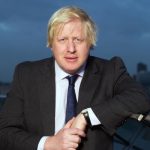
  • Boris Johnson – 2022 Article in the Belfast Telegraph on the Way Forward in Northern Ireland

    Boris Johnson – 2022 Article in the Belfast Telegraph on the Way Forward in Northern Ireland

    The article written by Boris Johnson, the Prime Minister, and issued as a press notice by Downing Street on 16 May 2022.

    I am visiting Northern Ireland today at a time of considerable political change. The Assembly elections brought forth a new generation of voters and representatives who are confident and optimistic about the future.

    The Northern Ireland of today does not see itself as a post-conflict society but one that is maturing into a story of sustained success. One in ten of the population were not born here. Local people have thrown open their doors to those fleeing Ukraine. A sizeable portion of the electorate were not even born in 1998. They are at ease with change, and at ease with each other.

    The Northern Ireland of today is a place that has rediscovered the manufacturing verve that once made it the biggest shipyard in the world. Harland & Wolff is cutting steel again. Belfast is host to some of the world’s most innovative companies in biotechnology and the creative industries, and the No1 international investment location for US cyber security firms.

    This means Northern Ireland contributes a huge amount to the rest of the UK. When the pandemic hit, it was a County Antrim diagnostic company, Randox, that was at the forefront of the UK’s Covid testing regime. Today, I will visit Thales, the high tech company which has played a vital role in the defence of Ukraine.

    But there is more to be done to level up this place with the rest of the UK. If NI’s productivity grew to match the UK average by 2030, its goods exports could be around double the level recorded in 2020. The Government will do its part with record investment, funding and the new City Deals. But I know from my time as Mayor of London that there is no substitute for strong local leadership. I will tell party leaders today that this progress will be stalled without a functioning Assembly and Executive.

    Restating our commitments

    In a time of change, against the backdrop of European war and a cost of living crisis, I also want to use my visit today to affirm some core principles about the UK Government’s approach to Northern Ireland.

    Thirty-two years ago, the then Secretary of State for Northern Ireland made a speech which many see as playing an important role in the initiation of the peace process.

    Peter Brooke argued that Britain had “no selfish strategic or economic interest” in Northern Ireland. Not no strategic or economic interest – but no selfish strategic or economic interest.

    It was a concept that became a pillar of the peace process – the basis of “rigorous impartiality” and “the principle of consent”, from the Downing Street Declaration of 1993 to the Belfast Good Friday Agreement itself.

    Times have changed, at home and overseas. But our commitment to these principles is as strong as ever.

    Equally I want to be clear that this Government is not neutral on the Union.

    Indeed I was heartened to hear that Sir Keir Starmer made clear in a recent interview here that the Labour Party under his leadership would campaign for the Union, should there ever be a border poll.

    There should be nothing controversial or surprising about that.

    The Government’s commitment to the Union is above politics.

    It was proved – with no politics attached – during the pandemic, with one of the fastest vaccine roll-outs in the world. It was proved – with no politics attached – by the remarkable furlough scheme that kept so many businesses and families afloat.

    It is partly because of the Belfast Good Friday Agreement that the benefits that accrue from being part of the fifth largest economy in the world need not be a source of controversy, or eternal debate in political life.

    They just exist, like Samson and Goliath on the Belfast skyline. They are the structural facts of economic life here, welded even more tightly by the rapid evolution of a high-skilled and high-tech economy.

    Embracing change

    But nor is there some perfect constitutional clockwork version of how the Union should be. Northern Ireland has always been a place in its own right, in which governance has been contested, broken, re-imagined and carefully nurtured.

    Those arrangements continue to evolve. And far better, I think, is the Northern Ireland of today in which people look any way they want (north-south, east-west, or both) – depending on their identity, and their family, and their economic interests.

    In today’s debates about Brexit and the Protocol, let us embrace that hybridity. Let us make it work.

    We stand above all else for the 1998 Agreement. Its three strands. Its commitment to harmonious relations across all these islands.

    We do so, first and foremost, as co-signatories and as co-guarantors. And as partners of the Irish Government.

    And we do so, next, with a commitment to work with the democratically elected parties in Northern Ireland, whom I see will today.

    That means abiding by the rules that have previously been agreed, including those around the title of First Minister.

    So I want to repeat my congratulations to Sinn Fein as the largest party. Respect for the rights and aspirations of all communities are an essential part of the Belfast Good Friday Agreement.

    And I think it is testimony to the path that Sinn Fein have taken from 1998 that Michelle O’Neill is now awarded the position of First Minister. I have no doubt we will work together well.

    But it is equally clear that the balance on which the Northern Ireland institutions have been built has not been fundamentally transformed by these elections.

    The unionist and nationalist blocs are largely matched, as they have been at every election since 1998, with the unionist electorate remaining slightly larger. Unionist parties performed well in the recent election, affirming overwhelming support for power-sharing on the basis of consent.

    The most significant development in recent years has been the growth of a third grouping in Northern Ireland, represented by the Alliance Party – to whom I also pay tribute. They are an important voice in the new Northern Ireland but also, let’s be clear, a party which stuck to its principles in a darker and more difficult past.

    Taken together, what the election results tell me is that the basis for successful power-sharing and stability is actually enhanced. Whichever way you cut it, there is a large majority for making Northern Ireland work.

    And every single party and MLA has heard the same message from their constituents.

    Focus on everyday issues. Schools. Hospitals. Cost of Living.

    So it is time for all of the local parties to get back to Stormont. Elect a Speaker. Create an Executive. Get back to work.

    Unique responsibilities on the British government

    But the 1998 Agreement bestows other commitments on the British Government that go beyond its position as a co-guarantor.

    One of those is to take difficult decisions: to assume a burden of responsibility, and indeed unpopularity, when consensus cannot be reached.

    That is why we will deliver on three pre-existing commitments in the coming weeks.

    We will take forward the Language and Culture Package agreed as part of the New Decade New Approach agreement, thereby addressing an issue that has prevented the formation of the Executive in the past.

    We will intervene to ensure that women and girls have access to abortion services in Northern Ireland that are their legal right, following the failure of the Executive to deliver this.

    And this week we will introduce into Parliament new measures to deal with the legacy of the past. These are different from those in our Command Paper last year. We have listened to many people in recent months and reflected on what we heard. Dealing with the past will still require difficult decisions but there will be no blanket amnesty. Immunity will only be available to those who co-operate and prosecutions could follow for those who do not.

    Addressing the issues with the Protocol

    In the international agreement that sits alongside the Belfast Agreement, as the sovereign government of Northern Ireland the UK also assumes specific responsibilities that go beyond its role as co-guarantor.

    To protect the “economic rights” of the people of Northern Ireland. And to ensure “just and equal treatment for the identity, ethos and aspirations of both communities”.

    We must admit that those commitments have sometimes been difficult to navigate through Brexit.

    We insisted throughout that there would be no scenario in which a hard border would be allowed to emerge. And we have delivered that 100%, as we said we would, protecting in full the rights that were enshrined in 1998.

    We told the Irish Government that we would take special measures within the UK’s internal economy to protect their place in the EU single market. And we have done that.

    We committed to maintain the Common Travel Area and associated rights. It is another commitment that British Government has kept, even throughout the pandemic when so many restrictions were enforced.

    Seeking changes to the Protocol

    It is because of these complexities that the Protocol exists. It is why the Protocol was agreed in good faith. And it is why those who want to scrap the Protocol, rather than seeking changes, are focusing on the wrong thing.

    But there is no disguising the fact that the delicate balance created in 1998 has been upset. One part of the political community in Northern Ireland feels like its aspirations and identity are threatened by the working of the Protocol.

    And the Protocol involves other responsibilities which also need to be lived up to by all sides, including the commitment to protect the Belfast Good Friday Agreement in all its dimensions.

    We cannot allow the impression that one strand is deemed more important than others; or that EU custom codes – designed for vast container ships coming from Shanghai to Rotterdam, not supermarket lorries from Liverpool to Belfast – somehow trump everything else.

    We must remember that all parties to the Protocol made a commitment to be willing to revisit, adapt and change these arrangements over time – and to protect the internal market of the UK.

    In the absence of change, the prior commitments made by the British Government – to protect all three strands of the Belfast Good Friday Agreement, to protect economic rights and parity of esteem – are coming into sharper focus.

    Every unionist representative campaigned against the Protocol, as currently constituted. More importantly, every party, across the divide, seeks mitigations and change. None support a zealous zero risk approach to its implementation. None wants to see grace periods terminated, as the EU insist they must be in return for limited mitigations elsewhere. Some feel that their economic rights as members of the United Kingdom are threatened, which the 1998 Agreement is supposed to protect.

    The simple reason for this is that the East-West dimension – by far and away the principal artery in Northern Ireland’s economic life – is taking too much of the strain.

    Strand 3 of the Agreement, which promised the “harmonious and mutually beneficial development of the totality of the relationship among the people of these islands”, is not functioning as it must. And Strands 1 and 2 – of equal importance and mutually dependent – are now being negatively impacted too.

    Many things have changed since the Protocol was agreed. It was designed in the absence of a Trade and Cooperation Agreement and when it was unclear one would be agreed. It has not been adapted to reflect the realities of the TCA.

    It was designed before a global pandemic and a European war which has created a cost of living crisis on a scale not seen for half a century.

    For there even to be a question about the fast availability of medicines or medical testing in Northern Ireland (between two constituent parts of the same National Health Service) is incompatible with the post-Covid era.

    For the Chancellor of the Exchequer to say in his Spring Statement that people in Northern Ireland could not be granted the same benefits in terms of tax and VAT as those in the rest of the same country is a serious issue. It means that our ability to assist with post-Covid recovery and – moreover, the long-term economic development of Northern Ireland – is restricted.

    We have been told by the EU that it is impossible to make the changes to the Protocol text to actually solve these problems in negotiations – because there is no mandate to do so.

    We will always keep the door wide open to genuine dialogue. And we will continue to protect the single market – as it has been protected throughout the existence of the Protocol so far – and the open border with the Republic of Ireland which will always be of paramount importance.

    There is without question a sensible landing spot in which everyone’s interests are protected. Our shared objective must be to the create the broadest possible cross-community support for a reformed Protocol in 2024.

    I hope the EU’s position changes. If it does not, there will be a necessity to act. The Government has a responsibility to provide assurance that the consumers, citizens and businesses of Northern Ireland are protected in the long-term. We will set out a more detailed assessment and next steps to Parliament in the coming days, once I return from discussions with the local parties.

    In doing our part, we expect all elected representatives to get back to work and deliver for the people of Northern Ireland.


  • Priti Patel – 2022 Comments on Increasing Stop and Search Powers

    Priti Patel – 2022 Comments on Increasing Stop and Search Powers

    The comments made by Priti Patel, the Home Secretary, on 16 May 2022.

    The devastating impact of knife crime on families who have lost their loved one is unbearable. No one should have to endure the pain and suffering of the victims of these appalling crimes and we have a responsibility to them to do everything in our power to prevent future tragedies.

    Since 2019, the police have removed over 50,000 knives and offensive weapons from our streets and in the 2 years to March 2021, over 150,000 arrests were made following stop and search, preventing thousands of possible fatal injuries.

    I stand wholeheartedly behind the police so that they can build on their work to drive down knife crime by making it easier for officers to use these powers to seize more weapons, arrest more suspects and save more lives.

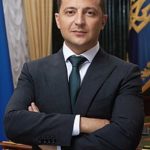
  • Volodymyr Zelenskyy – 2022 Speech at The Atlantic Council’s Distinguished Leadership Awards

    Volodymyr Zelenskyy – 2022 Speech at The Atlantic Council’s Distinguished Leadership Awards

    The speech made by Volodymyr Zelenskyy, the President of Ukraine, on 12 May 2022.

    Ladies and Gentlemen!

    On behalf of all Ukrainians, I would like to thank you for this award. It is a fair and correct gesture to honor with this award all the people of Ukraine, because courage is our national trait of character. Today the whole world witnesses this and admires the heroism of Ukrainians.

    At the same time, I want it not to become something ordinary for everyone. And for this we must say and remember that behind the courage and wisdom of our people, there are thousands of real stories, names and heroic feats.

    The world should know about them and to have a clear idea and understanding about the people of Ukraine. First of all, we are the nation of the best defenders. These are our ground forces, air and naval forces, airborne assault troops, special operations forces, the National Guard, intelligence, border guards, and territorial defense fighters.

    This is Vitalii Skakun, who blew up a bridge sacrificing himself to stop a column of Russian tanks.

    This is 21-year-old lieutenant Vitalii Sapilo, who neutralized 30 units of equipment of the enemy and died from an air strike.

    Serhiy Pantelyuk, who was injured while repelling the attack and died at the hospital while his first daughter was being born.

    These are the border guards of Zmiinyi Island, who were not afraid of the flagship of the Russian fleet – cruiser Moskva – and sent a Russian ship in a direction that became world-famous.

    These are the indomitable defenders of Mariupol and Azovstal, who have been holding the line there for several months.

    These are all our fighters who died defending Ukraine, hence defending Europe. I would like to ask you to honor their memory with a moment of silence.

    Thank you.

    The Ukrainian people are people who do not spare themselves for the sake of others. This is combat medic Diana Kukurudziak, who pulled 16 wounded soldiers off the battlefield in one day.

    Paramedic Serhiy Chornobryvets in Mariupol, who has been on duty for 22 days since the beginning of the war.

    The Ukrainian people are a nation of courageous children.

    This is 11-year-old Maksym, who said nothing to his mother, ran away from home and came to ask for permission to be a part of territorial defense.

    This is 7-year-old Varya from Kropyvnytskyi who gave her money saved for a smartphone to buy bulletproof vests, and then sold flowers and drawings.

    This is a 15-year-old girl from the Luhansk region who was driving a car with shot legs and took out four wounded.

    A 15-year-old boy who carried his wounded mother in his arms for 3 kilometers to the evacuation point.

    Our people are also elderly people who have experienced too many ordeals.

    This is Borys Romanchenko, who passed through the hell of Buchenwald and died at the age of 96, at home, during the shelling of Kharkiv by the Russian Federation.

    This is Vanda Obiedkova, who as a child, hiding in the basement, survived the Holocaust and the Nazi occupation of Mariupol, saw the second occupation of the city in 2014, and the third – this year. At the age of 91, she had to hide in the basement again, where she died on the 40th day of the war.

    This is 87-year-old Halyna Kotubey from Mykolaiv region, who remained the only and last resident of her village, but refused to leave.

    The Ukrainian people are a nation where hundreds of thousands fight and millions help.

    This is a business that has shifted to the needs of the country. Clothing designers sew military uniforms, restaurateurs feed free lunches, bakeries bake bread for IDPs and lonely people.

    This is a university professor who continues to lecture to his students in the trenches. A violinist playing for people during an air alarm in a bomb shelter.

    These are civilians of Ukrainian cities and villages, who became a living wall on the way of the occupiers – stopping military machines and turning tanks in the opposite direction.

    These are inhabitants of Demydivka, who flooded their own village not to let the occupier into Kyiv.

    Those who despite threats, shots and stun grenades go to peaceful rallies, reminding the occupants that this is Ukraine: Kherson, Melitopol, Berdyansk, Enerhodar, Mariupol and all other cities and villages of Ukraine occupied not for a long time.

    These are millions of Ukrainians who are now defending their Homeland and the whole world.

    Do not be afraid and come to Ukraine. Hear thousands of similar stories about us, Ukrainians. Look into their brave eyes, shake their strong hands, and you will see that they are doing all this not for glory, that they need not only awards, but also concrete help and support.

    Weapons, equipment, financial support, sanctions on Russia, and the most important: the feeling that in this difficult struggle they are not alone, that they are supported by you, by the whole world – free states and free nations of our planet.

    Thank you!

    Thank you for your attention!

    Thank you for your support!

    Thank you for the award and welcome to Ukraine!

  • Declan Kearney – 2022 Statement on the Northern Ireland Assembly Elections

    Declan Kearney – 2022 Statement on the Northern Ireland Assembly Elections

    The statement made by Declan Kearney, the Sinn Féin National Chairperson, on 14 May 2022.

    The 5 May election has indeed proved to be the most important of a generation. It was a watershed.

    Brexit changed everything, and now the political and societal landscape has changed again.

    There can now be a First Minister for all – for the first time in 101 years.

    And there is now the potential for proper power sharing to be established.

    However, that positive democratic agenda is now being directly threatened with a refusal by the DUP to allow the power sharing and the north/south political institutions to be restored.

    The most serious and profound political crisis of the post-GFA era is currently unfolding in plain sight.

    The entire basis of power sharing is being imperilled by the tactics of both the DUP and the Tory government; and in particular, a toxic alliance between the Tory Foreign Secretary, the Economic Research Group (ERG) and the DUP.

    International treaties and international law in the form of the Protocol and GFA are under direct attack.

    A wrecker’s charter is being used to dismantle the GFA by stealth, alongside the use of a phoneywar against the EU, ostensibly to dismantle the Protocol.

    But the fact is that the Tories’ objective is all about shoring up its electoral coalition in England; while the DUP’s objective is to try to reassert itself as the dominant force within political unionism, and stem the hemorrhage of its political power and influence in the north.

    The current Tory administration has no investment in, or attachment to the Irish peace process. The Tory fat cats in Whitehall don’t care about anyone in the north.

    This current leadership of the DUP is unable and unwilling to adapt to the changed political landscape.

    The Tories and the DUP are outliers in terms of respect for international treaties and all forms of democratic conventions, principles and values.

    The Tories and DUP must not be allowed to drag us all into their race to the bottom.

    This is a defining moment.

    The EU, and the US administration, must hold firm on the GFA, and the primacy of international treaties and international law.

    There should be no renegotiation of either the Protocol or GFA.

    It is time for the Irish government to step firmly up to the mark, and adopt an unequivocal position against the destructive behaviour of both the DUP and the Tories.

    The united voice of wider civic society across the north must also be heard loudly.

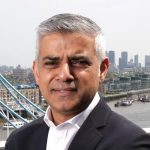
  • Sadiq Khan – 2022 Comments on Affordable Homes in London

    Sadiq Khan – 2022 Comments on Affordable Homes in London

    The comments made by Sadiq Khan, the Mayor of London, on 13 May 2022.

    I am delighted to be able to announce that record-breaking numbers of genuinely affordable homes are being built in London. Fixing the housing crisis is an enormous challenge, but these latest figures show that even in the face of the pandemic, Brexit and soaring construction costs, we are continuing to turn the tide.

    I would like to thank councils, housing associations and the wider London housing sector for their work in helping us to continue building a better, more affordable London for everyone.

    We have once again exceeded our annual targets, but we still have a mountain to climb. I urge the Government to recognise the progress we are making in London and to provide the additional funding for housing we need to go even further and faster.

  • Boris Johnson – 2022 Statement on the Death of Sheikh Khalifa bin Zayed Al Nahyan

    Boris Johnson – 2022 Statement on the Death of Sheikh Khalifa bin Zayed Al Nahyan

    The statement made by Boris Johnson, the Prime Minister, on 14 May 2022.

    I am deeply saddened to hear of the death of His Highness Sheikh Khalifa bin Zayed Al Nahyan, President of the United Arab Emirates and ruler of Abu Dhabi.

    He was a wise and respected leader who will be missed enormously. Through his work as President and Sheikh he has made a personal contribution to regional stability and conservation which will long be remembered. I know that the long and deep ties, which unite our countries, will continue and through our cooperation and friendship, we can ensure peace, prosperity and justice in the world.

    I would like to offer my sincere condolences to the people of the United Arab Emirates.

  • G7 – 2022 Joint Statement on Russia’s War Against Ukraine

    G7 – 2022 Joint Statement on Russia’s War Against Ukraine

    The joint statement made by the G7 Foreign Ministers on 14 May 2022.

    We, the G7 Foreign Ministers of Canada, France, Germany, Italy, Japan, the United Kingdom, the United States of America, and the High Representative of the European Union, are steadfast in our solidarity with and our support for Ukraine as it defends itself against Russia’s unjustifiable, unprovoked and illegal war of aggression, a war in which Belarus is complicit. We are committed to helping Ukraine, a democracy and a UN member, uphold its sovereignty and territorial integrity, to defend itself and resist future attacks or coercion, choose its own future and prosper.

    In the presence of the Foreign Ministers of Ukraine and Moldova, we underscore Ukraine’s sovereignty, territorial integrity, independence and right for self-defence under the UN Charter. This war of aggression has reaffirmed our determination to reject outright attempts to redraw borders by force in violation of sovereignty and territorial integrity.

    We are providing significant humanitarian assistance to Ukraine and its neighbours to meet urgent protection and other lifesaving needs. We continue to make substantial financial and economic support available to Ukraine to strengthen the resilience of its economy. We reaffirm our commitment to support Ukraine, including in the reconstruction of the country, and call on all partners to join our efforts to ensure support for Ukraine in meeting its immediate humanitarian and financial needs and for Ukraine to rebuild its future. We will pursue our ongoing military and defense assistance to Ukraine as long as necessary.

    We reiterate our demand that Russia put an end to the war it started unprovoked and to end the tragic suffering and loss of life it continues to cause. We also continue to call on Belarus to stop enabling Russia’s aggression and to abide by its international obligations. We urge full compliance with international humanitarian law, allowing and facilitating rapid, safe and unimpeded humanitarian access as well as the humanitarian evacuation of civilians safeguarding evacuees’ freedom to choose their destination. We call on Russia to immediately comply with the legally binding order of the International Court of Justice of 16 March 2022 and to abide by the relevant resolutions of the UN General Assembly and stop its military aggression – to cease fire, and immediately and unconditionally withdraw its troops from the entire territory of Ukraine within its internationally recognised borders.

    Russia has violated the UN Charter, undermined the fundamental principles of the European security architecture as enshrined in the Helsinki Final Act and the Charter of Paris and will have to face consequences for its actions. We reject any notion of spheres of influence and any use of force that is not in compliance with international law. We will never recognize borders Russia has attempted to change by military aggression, and will uphold our engagement in the support of the sovereignty and territorial integrity of Ukraine, including Crimea, and all states. We condemn as irresponsible threats of use of chemical, biological or nuclear weapons or related materials by Russia and reiterate that any use of such weapons would be met with severe consequences.

    Russia’s war of aggression against Ukraine as well as its unilateral actions restraining Ukrainian agricultural exports, are leading to steep price rises in commodity markets and the threats we are now seeing to global food security. As global markets suffer from Russia’s war of choice by rising food and commodity prices, thus affecting the lives of people around the world and exacerbating existing humanitarian and protection needs, we are determined to contribute additional resources to and support all relevant efforts that aim to ensure availability and accessibility of food, energy and financial resources as well as basic commodities for all. We call on Russia to cease immediately its attacks on key transport infrastructure in Ukraine, including ports, so that they can be used for exporting Ukrainian agricultural products. We will address the causes and consequences of the global food crisis through a Global Alliance for Food Security, that is to be launched officially at the G7 Development Ministers meeting, and other efforts in close cooperation with international partners and organisations beyond the G7. We will closely cooperate with international parters and organisations beyond the G7, and, with the aim of transforming political commitments into concrete actions as planned by various international initiatives such as the Food and Agricultural Resilience Mission (FARM) and key regional outreach initiatives, including towards African and Mediterranean countries.

    We underscore that our sanctions and export controls against Russia do not and will not target essential exports of food and agricultural inputs to developing countries and to this end include measures to avoid any negative consequences for the production and distribution of food. We reaffirm our commitment to protect the most vulnerable countries and people suffering from Russia’s war against Ukraine and its global repercussions.

    We condemn and will systematically expose Russia’s policy of information manipulation and interference, including disinformation which it employs to justify and support its war of aggression against Ukraine and which deliberately aims at manipulating public opinions domestically and worldwide with a view to covering its responsibilities in the ongoing war. We will continue to work together to address this manipulative behavior, in particular within the G7 Rapid Response Mechanism, and promote the exercise of freedom of opinion and expression and access to reliable information from free, pluralistic and independent media, notably on the war and its consequences for the world.

    We stand united against Russia’s violation of the UN Charter and other fundamental principles of international law. We condemn in the strongest terms the ongoing attacks killing and wounding civilians and non-combatants, the systematic targeting of critical infrastructure and the extensive harm to healthcare personnel and facilities, as well as conflict-related sexual and gender-based violence in Ukraine. We will continue to support the ongoing investigations into violations of international law, including violations of international humanitarian law, and human rights violations and potential war crimes and crimes against humanity committed in Ukraine. We support investigations by the Prosecutor of the International Criminal Court, the Prosecutor-General of Ukraine, and other national prosecutors who are able to establish jurisdiction under national law. Further, we fully support the Commission of Inquiry mandated by the UN Human Rights Council, the UN Human Rights Monitoring Mission in Ukraine and efforts of civil society organizations to investigate violations and document potential war crimes. We commit to providing investigative support, technical expertise, funding and other assistance to work towards ensuring the accountability of those who are responsible for the atrocities and crimes committed.

    A number of countries have shown solidarity and provided safe haven for those who have fled from Russia’s war of aggression. We particularly commend Moldova’s remarkable efforts in hosting so many refugees, both in relative and absolute terms. Through the Moldova Support Platform launched in Berlin on 5 April and other formats, we will support Moldova to meet short-term needs and its longer-term development and reform programme. We express our concern regarding the recent attempts to destabilise the Transnistrian region and emphasize our support to Moldova’s stability, sovereignty and territorial integrity.

    We reaffirm our determination to further increase economic and political pressure on Russia, continuing to act in unity. We will do so, as underlined by G7 Leaders on 8 May, by imposing coordinated further restrictive measures on Russia‘s economy and financial system; by further targeting Russian elites including economic actors, the central government institutions and the military, that enable President Putin to lead his war of choice; and by isolating Russia from our economies, the international financial system, and within global institutions. We will broaden our sanctions measures to include sectors on which Russia has a particular dependence.

    We commend partners that have aligned with us, and encourage others to adopt measures to increase the cost of the war for Russia by isolating it, and Belarus for its support, from the global economy, and to prevent sanctions evasion, circumvention and backfilling. We will listen to and work with partners around the world through increased outreach to mitigate any impacts to their own economies caused by Putin’s war, and pledge our support in mitigating the costs.

    We will expedite our efforts to reduce and end reliance on Russian energy supplies as quickly as possible, building on G7 commitments to phase out or ban imports of Russian coal and oil. We will accelerate the energy transition and enhance energy efficiency in the context of the accelerated phasing out of our dependency on Russian energy, in accordance with our climate objectives and energy security imperatives, thereby steadily reducing foreign currency flows into Russia and restricting the financial means available to fund Russia’s war machinery. We will ensure that we do so in a timely and orderly fashion, and in ways that provide time for the world to secure alternative supplies.

    We deplore the domestic repressions in Russia and Belarus against independent media, civil society, the opposition and citizens who peacefully express their disapproval of Russia’s war against Ukraine. The Russians and Belarusians deserve better: They should be able to make full use of fundamental human rights, most basically the right to decide their own fate and the fate of their countries. We, the G7, are not at war with Russia or the Russian people. The Russian decision to attack Ukraine was taken by leaders who reject democratic responsibility. We lend our support to those who have fallen victim to repression. We reaffirm the right of Russians and Belarusians to seek, receive and impart fact-based information from free, pluralistic and independent media and condemn the Russian government’s and Belarusian regime’s recourse to censorship and other methods of hampering Russians’ and Belarusians’ access to independent media, including through restrictions on access to the internet and social media platforms.

    We condemn actions perpetrated by Russia, which compromise the safety and security of nuclear material and facilities in Ukraine and consequently pose serious risks to human life and the environment. We underline our full support for the efforts of the IAEA and its Director-General to ensure the nuclear safety and security of, and the application of safeguards to, nuclear material and facilities in Ukraine. We call on Russia to immediately withdraw its forces from Ukraine’s nuclear facilities and to return full control to legitimate Ukrainian authorities. We reiterate that the IAEA must be able to access all nuclear facilities in Ukraine safely and without any impediments.