Tag: 2022

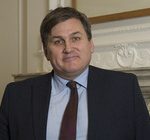
  • Kieran Mullan – 2022 Speech on Child Maintenance Arrears

    Kieran Mullan – 2022 Speech on Child Maintenance Arrears

    The speech made by Kieran Mullan, the Conservative MP for Crewe and Nantwich, in the House of Commons on 17 May 2022.

    I am grateful to have this opportunity to talk about this incredibly important issue. While the topic is very broad, my speech is very focused.

    I am seeking to encourage the Government to move forward rapidly and robustly with proposals for home detention for people who do not pay child maintenance—something I have concentrated on campaigning for in my short time in the House. When discussing this issue, we are talking about the most important building block in our society: the need for parents take responsibility for their own children. The overwhelming majority of parents do exactly that. Whether together or separated, they take care of their financial responsibilities. My parents are divorced, and that had no bearing whatsoever on both of them continuing to look after me and my siblings. But sadly, not every parent does.

    As a Conservative, I am of course wary of the state’s unnecessary involvement in family life. It is disheartening that the Government have to be involved in this issue at all, and whatever failings I might go on to talk about, the people who most deserve our frustration, unlike campaigners who put all their effort and energy into blaming the Government for everything, are the people not living up to their responsibilities. Unsurprisingly, that sort of campaign does not get brand endorsements and social media favour.

    One thing we all agree on in this place is that part of the role of the state is to penalise the worst kinds of behaviour when that behaviour is beyond the pale. We do that most commonly in criminal law, but we also have civil law. In both, we right wrongs and punish people who behave in a way that the rest of society has decided we will not accept. Let me be clear: people who do not contribute to the upkeep of their own children when they could are the lowest of the low, but there is absolutely no system of punishment for that. Do we really think that, as unacceptable as it is, graffitiing a wall or vandalising a park bench is a graver offence than having children and refusing to contribute to their upkeep? I think the latter is one of the most deplorable things someone can do, but absolutely nothing is done to punish people for it—nothing. We fine people who do not send their children to school. We punish that, but not failing to support them.

    In a completely perverse contrast, if someone has the much more onerous responsibility of having primary custody of their children and they neglect them, they are punished. What kind of contrast is that? What kind of message does that send?

    For all the tough talk about sanctions, which I expect the Minister will cover, all they are aimed at is recovering moneys owed to children. How is that narrow approach working? Certainly there has been some improvement, as described by a recent National Audit Office report. The Department collected a record £54 million in the quarter ending September 2021. The percentage of paying parents contributing more than 90% of ongoing maintenance due in a quarter increased from under one third in March 2016 to around half in September 2021.

    Jim Shannon (Strangford) (DUP)

    I thank the hon. Gentleman for bringing this debate forward. Child maintenance arrears are a massive issue in my constituency, as they are in his. Does he not agree that with the cost of living crisis, single-parent families are under more pressure? There are 20,000 children in Northern Ireland alone whose cases are with the Child Maintenance Service’s advisers, and they deserve an up-to-date, functional service to ensure that payments are adequate, correct and timely.

    Dr Mullan

    I thank the hon. Gentleman for raising that issue. My focus today is on the need to change regulations, but I accept the wider concern about the functioning and efficiency of the agency. I will go on to talk about his point about the cost of living crisis. Figures suggest that 16% of children who are not in receipt of maintenance payments would be lifted out of poverty if they were, and that shows the level of concern we are trying to address.

    We have seen some improvements. The NAO found that the internal processes for moving towards enforcing compliance were better, but the bigger picture is not positive. Of separated families who have a Government-mediated arrangement in place, the NAO found that only one in three see it paid in full, so two in three are not getting the payments in full to which they are entitled. Sometimes, the sums people are expected to pay are incredibly small. At the end of September 2021, total cumulative arrears under the current child maintenance scheme were £436 million. That amount is increasing at roughly £1 million a week, and the total will hit £1 billion by 2031. That is a huge amount of money that is not being paid by non-residential parents, and we have a responsibility to hold to account and punish individuals who behave in this deplorable manner.

    Marion Fellows (Motherwell and Wishaw) (SNP)

    Does the hon. Gentleman agree that it is the children who suffer most? The way that the Child Maintenance Service is writing off arrears means that these children will be permanently disadvantaged, with no more holidays and no more of the things that most children would take for granted.

    Dr Mullan

    The hon. Member pre-empts the exact point I was going to go on to make, which is that between December 2018 and March 2021, the predecessor agency wrote off about £2.6 billion of owed maintenance. That is the Government stepping in and legally excusing a parent of their responsibilities to their child. Whether or not it is realistic to recover it, morally I am not sure the Government should be doing that in a child and parent relationship. That is not a success in my book.

    As of September 2021, 38,000 paying parents with an ongoing arrangement had not paid any maintenance for more than three months, and 22,000 had not paid for more than six months. That is tens of thousands of individuals happy to let other people pick up their most fundamental responsibility of providing for their child. All too often, it is strangers picking up the pieces through the tax system. In theory, the Department has some tough powers, including imprisonment, but the figures I have quoted clearly show that they are not working. Imprisoning someone, although perhaps morally warranted, stops them being able to earn and is not a practical solution to use at the scale needed to tackle the tens of thousands of non-payers. Those delinquent individuals have learned that if they just start paying a bit again, the whole system resets.

    The Department’s civil enforcements are restricted to the collection of arrears at the time when a liability order is granted and cannot be used to enforce ongoing maintenance, which is another reason why an element of punishment would serve a wider purpose. It is not surprising that the evidence shows that overall, maintenance arrears continue to build up, even when the Department begins enforcement action. The NAO found that on average, parents had arrears of £2,200 before the enforcement action began and £2,600 afterwards. As if it were not bad enough that taxpayers have to top up the income of less well-off families when one parent is not contributing, we have to put time, money and effort into chasing up payments with no consequences for those who are not paying.

    Taking stronger steps is broadly supported. According to a survey by Mumsnet and Gingerbread, 93% of parents believe that those who regularly avoid paying child maintenance should face more serious penalties. Not only would punishment be morally warranted, but I expect that it would have a powerful effect on compliance and put people off not paying in the first place. As I said, tougher restrictions to ensure that people are paying their child maintenance could lift 60% of children not in receipt of payments out of poverty. With the cost of living crisis, there is no better time to tackle the issue.

    A change needs to be made to the system to ensure that the continuous rise in non-payments is tackled, and that is where home curfew can play a role. When the Government originally introduced enforcement measures, they crafted the legal framework to introduce home curfew measures but the powers were never enacted. I am not clear why, but I have campaigned for some time for those powers to be put to use, so I was delighted that, earlier this year, the Secretary of State announced plans to do exactly that. I hope that today’s debate helps to encourage the Government to make progress towards that commitment.

    I would welcome the opportunity for my constituents to contribute to a consultation; perhaps the Minister could meet me and some of them as plans are developed. It will be no surprise to him that I think it is important that we use this power not just as a mechanism to encourage payments but to punish. If we could meet ahead of the consultation so that we can ensure that that is part of the proposals, it would be appreciated.

    Home curfew could remain in place for the designated period regardless of whether a parent started to pay—for example, for three months. I imagine that spending three months at home every night, pondering their responsibilities, would be a powerful reality check. People need to understand that we as a society do not find non-payment acceptable and that they will be punished for not paying for the upkeep of their children.

    On a related note, not earning any money should be accepted as an excuse for not paying maintenance only when there has been a genuine attempt to find work, which should be determined in the same way that the Department assesses that as part of the wider work of the welfare state. If someone has responsibility for children, they should be out there doing everything they can to find a job. If they are not doing that, they should not be out socialising of an evening.

    Importantly, unlike imprisonment, home curfew can be used in a way that does not prevent a person from looking for a job and earning, as it can be tailored to their circumstances. It would typically be an evening and overnight curfew to allow people to find and take work during the day, but it could be switched around for people who find night work.

    I sound a note of caution. As constituency MPs, we have all had cases of people for whom the administration of maintenance by CMS has gone wrong. Of course, if we are seeking powers to restrict someone’s liberty, we need to ensure that the cases are watertight, but we know that tens of thousands of people are not paying and would be fair targets of this policy.

    I understand that home detention equipment is available, so we can make the change work. I would welcome people who are not paying having to explain why they have an ankle tag and cannot go to the pub in the evening. I have no doubt that many would say that they are guilty of a minor crime before admitting that they do not pay for their own kids, which tells us all we need to know about how badly we have got it wrong.

    I acknowledge that there are many loving parents who would and do contribute to the care of their children but who are prevented from seeing them by the parent who has primary custody. When I first raised the issue of home detention for non-payers, many such parents contacted me and were clearly distressed. I make it clear that I am in no way minimising that and I fully support every parent in exercising their clear legal right to secure access to their children. Of course, it is abhorrent for any parent not to act in good faith when it comes to access, but two wrongs do not make a right and, as with every MP, I have to choose what I campaign on.

    I am clear that every child deserves parents who step up and look after them and that no taxpayer should be left filling the void when they do not. On behalf of a society that I believe wants to see tougher action, the Government need to proceed at speed to secure it.

  • Priti Patel – 2022 Statement on the Ratification of the Istanbul Convention

    Priti Patel – 2022 Statement on the Ratification of the Istanbul Convention

    The statement made by Priti Patel, the Home Secretary, in the House of Commons on 17 May 2022.

    Tackling violence against women and girls—VAWG—is a Government priority and these crimes have no place in our society. Last July, we published our new cross-Government “Tackling violence against women and girls strategy” to help ensure that women and girls are safe everywhere—at home, online and on the streets. We are committed to radically changing how we end VAWG with a whole-system approach focusing on prioritising prevention, supporting survivors and pursuing perpetrators. And in March we published the first ever dedicated and complementary “Tackling Domestic Abuse Plan”, which seeks to transform the whole of society’s response to domestic abuse.

    The Council of Europe convention on combating violence against women and domestic violence, commonly known as the Istanbul convention, is a gold-standard international charter for the protection of women and girls. This Government were proud to sign it in 2012, to signal our strong commitment to tackling VAWG. The Government have always remained committed to ratifying the convention and since signing it we have worked to significantly strengthen our legislative framework and have introduced a wide range of tools to protect victims better. Our measures to protect women and girls from violence are some of the most robust in the world, and in some respects we go further than the convention requires.

    The Government are now satisfied that they have the legislative framework and other necessary measures in place to meet the requirements of the convention. I am therefore now pleased to confirm, as required by section 1(3)(a) of the Preventing and Combating Violence Against Women and Domestic Violence (Ratification of Convention) Act 2017, that the UK is compliant with the Istanbul convention and in a position to seek Parliament’s approval to ratify it. Ratification will send a strong message to women and girls in this country that the Government are committed to ensuring their safety and to ending VAWG. It will also send an equally strong message to our partners internationally which confirms that the UK remains at the forefront of tackling VAWG across the globe.

    I am pleased also to confirm that the Government are today laying the text of the Istanbul convention in the form of a Command Paper in both Houses, alongside an explanatory memorandum. If no objections are raised to ratification of the convention in either House within the next 21 joint sitting days, the Government will arrange to deposit their instrument of ratification. In line with the requirement under section 1(3)(b) of the 2017 Act, I can therefore confirm that I would expect the UK to have ratified the convention by 31 July 2022.

    Article 78(2) of the convention allows countries to make a reservation on certain provisions of the convention. This means that the country will not be bound by that particular provision. The Government have decided to make reservations on two of those provisions. We will be applying a reservation on part of article 44, which relates to the prosecution of UK residents for committing acts in another country which are crimes in UK law but not under the law of that other country, and which reflects the provisions of the Sexual Offences Act 2003 and the Domestic Abuse Act 2021. We will also be applying a reservation on article 59, which relates to migrant victims, to enable us to ratify the convention before the evaluation of the Support for Migrant Victims scheme concludes, at which point we will consider the policy issues involved substantively, and whether that reservation should continue. Further detail on the reservations is contained within the explanatory memorandum published today.

    I know that ratifying this convention will send a strong message about the UK’s commitment to tackling domestic abuse and violence against women and girls, and will help us to continue to lead the way in tackling these terrible crimes.

  • Kit Malthouse – 2022 Statement on Extracting Data from Electronic Devices

    Kit Malthouse – 2022 Statement on Extracting Data from Electronic Devices

    The statement made by Kit Malthouse, the Minister for Crime and Policing, in the House of Commons on 17 May 2022.

    Following the successful passage of the Police, Crime, Sentencing and Courts Act 2022, I am pleased to announce that today I am launching a public consultation on the draft code of practice for the extraction of information from electronic devices.

    It is vital that victims feel confident in coming forward to report crime, but we know that fear of intrusive demands for information can deter victims from reporting offences or from continuing to support investigations. The powers in chapter 3 of part 2 of the Act therefore strengthen the law to ensure that there is a consistent approach to requesting information from phones and other electronic devices which puts respect for an individual’s privacy at the centre of every investigation.

    This code of practice will be a vital tool in ensuring that all use of these powers is lawful and that the powers are used only where it is necessary and proportionate. The draft code makes it clear that the powers must be used only as a last resort. This will ensure that all those who are asked to voluntarily provide their devices and give agreement to the extraction of information, are given all the necessary information to enable them to make the decision that is right for them.

    All authorised persons have a duty to have regard to the code when exercising, or deciding whether to exercise, the power. The code will also be admissible in evidence in criminal or civil proceedings and failure to act in accordance with it may be taken into account by the court.

    Those who have an interest in the use of these powers and the protection of privacy for complainants are strongly encouraged to respond to the consultation, and I welcome the views of all colleagues on this important guidance.

    I will arrange for a copy of the consultation and draft code to be placed in the Libraries of both Houses.

  • Priti Patel – 2022 Speech to the Police Federation Conference

    Priti Patel – 2022 Speech to the Police Federation Conference

    The speech made by Priti Patel, the Home Secretary, to the Police Federation Conference in Manchester on 17 May 2022.

    It’s great to be here and really nice to see you all, as last year, we were all confined to being online and on the internet. And Steve Hartshorn, it’s a pleasure to meet you today properly as well for the first time.

    And as ever, this is just a wonderful opportunity for me personally to say something to you all, to thank you for the incredible work that you do and the way in which you engage and work with us.

    And I have to say, Steve, as well, you know I’m a Home Secretary that calls a spade a spade, having a very direct approach, because that’ll be absolutely my approach in terms of our way of working going forward as well.

    We are here to find solutions to challenges and no challenge is undeliverable. So it is all about how we can find solutions and outcomes and also about being honest and open because that is the only way forward to achieve the change that all your members, everyone here and the rank and file and our brilliant officers, want to see.

    And it’s also worth pointing out that we show a huge, deep admiration when it comes to policing and of course it’s my absolute desire and imperative to ensure that not only we finance and resource policing, but that we make sure policing remains as Steve has already said, the best it possibly can be, the most rewarding profession and a first-class public service.

    And Steve, I know you, working with me, will strain every single sinew to do exactly that.

    Some of you may think, when you read about our work more broadly in government and my role as Home Secretary, we always have a bit going on. But what I would say for me coming here today but also in respect of my work and the work of the government when it comes to policing, it is just so valuable and vitally important.

    It’s a statement of the obvious to say that being Home Secretary is an incredible job and I’m sure some of you are thinking ‘what is she talking about?’, judging from the press coverage that she receives; but it does hold a tremendous responsibility and a privilege.

    And I say that in the sense that even if you look over the last few years, we have seen in policing, all sorts of good things happen and challenging things happen like the pandemic; but also from my perspective I have been present when history is being made in policing but also more broadly in terms of the changes that you’ve seen in policing as well.

    So I do have a ringside seat. But actually I’m also in the arena with you all when it comes to bringing in some fundamental changes.

    Now it goes without saying – in fact, I was at City of London Police this morning – , that each day I meet the very best of you across the country. Yes, in London predominantly, but even last week, I was actually in Stoke and meeting officers there.

    And it is fair to say – and I think Steve has touched on this with some of the statistics that he has highlighted and public opinions voiced – that nobody does a harder job or a better one than the police.

    And no one does more, in my view, to make our country great. And nobody gives greater public service.

    Of course, it’s that essence of public service that actually unites all of us. And that is why Steve, many of the points that you’ve made are so pertient and that is why coming together and finding a different way of working is going to be so important to deliver for your members.

    Like many of you, my values and beliefs obviously in my case have shaped my political work, but also my approach to public service. And Steve has just touched on a range of issues, some of which cost money, some of which don’t.

    Actually a philosophy is about more than money and economics, but deciding, in my case, the choices that we make as politicians, and as your Home Secretary, have to reflect naturally, the matters which govern us each day, but also the ability to exercise judgement and decision-making, like you all do every day, sometimes in the most challenging of circumstances that are really fundamental to who we are and what we do; that actually applies to what you do every day, which is the rule of law and the safety of our country.

    Now, the leaders that I’ve always admired have always stood up for law and order and human rights in particular. And when I say this, I very much put this in the context of human rights are not just for criminals, but for the law-abiding majority – something that I know you will all stand by and feel very strongly about.

    And that means standing squarely with you, our police. I think actually when you look at the wider public discourse, yes in politics, but as someone that is a legislator as well, I see it with commentators. I quite frankly have always held many politicians and commentators with a degree of contempt who constantly undermine the police and the work that you do day in, day out, because I’ve seen this now for almost three years in my role.

    I could have changed my mind about policing. I spend a lot of time with police officers. I have nothing but pure respect and admiration and gratitude for all you do. And in my case that has only deepened.

    I can say this – and I know some of you may have heard me say this previously when I’ve attended your conference – but in my first two weeks as Home Secretary, I saw some of the most appalling things happen.

    I saw an assault on a police officer who had been attacked with a machete. I also saw the most tragic murder of PC Andrew Harper. And on top of that of course, like many of you, I’ve visited major terrorist incidents and tragedies. I’ve actually seen your unique combination of clinical professionalism, alongside human warmth and kindness, and I’ve also been alongside some of you when we’ve been there on dawn raids, also watching you run to danger.

    And with that, Steve has already touched on this, there is and I have a greater appreciation of the sacrifices made by you and also by your loved ones. Yes, by visiting memorials, and obviously the National Policing Memorial, the arboretum is just one example of that; but also when it comes to speaking to bereaved family members.

    That has probably been one of the most painful aspects of my job, but in terms of the sacrifices that officers and their families have made, probably one of the greatest privileges that I have also experienced.

    It’s fair to say, and I’m very conscious of Steve’s remarks and the requests, if I may put it that way, that have been presented today, that I’ve also sat down with you, your members, the Federation, to work alongside you and plan and negotiate to find the right way forward together.

    And with that note, the Police Federation plays an absolutely central role in this when it comes to giving officers from forces across England and Wales that very voice, so I’m actually very grateful to you for your way of working, but also your respectful and reassuring presence in the dialogue that we have.

    I think it goes without saying – and those of you that know me or have even met me and been out on raids with me and been on the front line occasionally when we’ve been together – that I’m very proudly pro-police. And I say this to a lot of people in Westminster, by the way, that anyone who feels differently should certainly vote for someone else.

    One of the differences that you’ll find with me is that distinction between politicians who prioritise systems and process and those who put people first – and I’m simply in that category of putting people first because policing is not just an institution. Just like the army or the NHS or even the teaching profession, it is a collection of dedicated professionals.

    So the reforms that I have driven in the last two and a half years – working with the Federation, working with policing leaders, working with the National Policing Board – have all been based upon that belief, and the investments that I have overseen, just over recent years, £17billion in policing, is also an investment in people – in each and every officer, and with the new recruits as well, and including you all, the next generation of policing leaders.

    So you’ve heard me and you’ve heard others in government speak about the 20,000 extra recruits. To me, this isn’t just the number. It is actually an infusement and an investment in new talent, the foundations of policing for generations to come.

    I also recognise the fact that of course many of you wear a uniform, but your backgrounds and experiences are far from uniform. And I think that is one of the greatest joys of policing. And it’s crucial that we continue to shape police forces that represent the community that are the best crime-fighting, protective organisations – but also proactive organisations.

    I know many of you have seen this already and I meet new recruits very, very frequently: we have younger officers – and it says something when a Home Secretary says that recruits are getting younger and the police officers are getting younger; but also we have second career officers, men and women from different backgrounds and actually different professional backgrounds as well; graduates and a whole mixture all aspiring to lead their communities, but also be leaders in policing.

    I’m also one of those that actually believes that you don’t have to hold high rank to be a leader, nor inspire others. I think that just comes as second nature to what you do.

    I also recognise that everything I’ve learned from being amongst policing and police officers and working with you has shaped the changes that I have led and government has led and actually our direction of travel.

    I’ve also learned that the courage you have shown and the sacrifices you make, are even greater than I think members of the public and people realise. And that’s why the Police Covenant matters so much to me – and Steve has touched on this and your former Chairs have been very strong advocates of this and in fact the day that I became Home Secretary, I very much said that I would not just bring this into legislation, I would deliver this for you.

    The Police Covenant matters. And that’s why I’m very grateful to you all, to the membership of the Police Federation and the leadership of the Police Federation for working with me on the Police Covenant Oversight Board.

    Because there’s no point in just speaking about legislation and policies. It is about the practical delivery that matters and makes a difference to you and your family. And I think together we have set the right priorities, driven delivery, but also done something else: we continue to challenge each other to do better and constantly learn from each other. And the Federation has actually played a huge role in gathering evidence on how best the Covenant can support families, but also jointly leading on considering new areas for the Covenant to address.

    So we can never stand still, we have to keep on developing this and of course in relation to death in service, there is no doubt that every life lost on duty and in the line of duty is an enormous tragedy. And I’m absolutely determined that in future this sacrifice will be recognised.

    Steve has also just touched on pay and pensions and if I may, I’d like to say a few words about this as well. If I may, Steve, I strongly urge the Federation to engage with us directly and the Police Renumeration Review Body, which does have a key role as you’ve touched on in advising the government on pay and conditions and the wider spectrum of pensions as well.

    But I think it’s important that your voices are heard, the voices of your members must be represented in that process. And as you know, the main public sector pension scheme including the police pensions, was reformed following recommendations of the Independent Public Service Pensions Commission,

    All police officers will continue to have that lower pension age compared to other public servants which is linked to state pension age and I will continue to work with you absolutely in terms of being a voice but getting the representation that you need into those discussions to reflect the unique nature of policing.

    That distinction is incredibly important. And Steve, I look forward to working with you and getting this right because it’s never straightforward, but it’s imperative that we work together to really make sure your members and your members’ voices are heard in Whitehall on this issue.

    We’ve also made great progress, substantial progress, in policing since this time last year when we were speaking together virtually online. Yes, the plan to recruit 20,000 additional police officers is on track and in fact many of you are followers of the Police Uplift Programme. I know because some of you contact me directly.

    We already have over 13,000 – in fact 13,576 – police officers and I have to say I want to thank you for the example that you’ve all set not just in supporting the Police Uplift Programme but actually helping to make this an attractive career path.

    And I’m someone that has been very vocal, in fact from day one, not just about recruitment, but retention. And that is something I know that over the last few years, we’ve discussed and we will continue to ensure that we can make sure that we’re constantly investing in training, career development, making sure that we can retain our officers. Because there’s no point actually going out there recruiting more where the attrition rate just goes up and up and up.

    But as you know, I believe in investing in officers. I believe in giving you the resources and the training and I’ve also made it easier for you to use vital powers such as stop and search to keep our streets and communities safe. And in particular, when it comes to making those carrying weapons and drugs to think twice, I want to do everything possible to give you the confidence and the assurance you need to make sure that you can use your powers fairly, appropriately in the right places, but also bring communities alongside you as well.

    And that’s why we’re working with policing partners to develop a new national framework for how the use of police power should be scrutinised at a local level. So that we can give you the backing you need to use your powers proportionately and effectively. It’s the right thing to do.

    And of course, that means enhanced use of body -video, which also protects you from those spurious claims, saying that you’ve misused your powers, and I think actually it was last year at this very conference where I made a commitment that I would not let you be subjected to trial by social media. And I absolutely meant that.

    Steve has actually touched on a couple of areas linked to that as well in terms of IPC, but areas where we absolutely need to stand shoulder to shoulder and that 15-second representation of someone taking snapshots on social media does not do justice to the incredible work that you do every single day.

    And with that, of course the two-part Police and Crime Commissioners Review is delivering on our own commitments – the commitments of our manifesto and the government – to strengthen and expand the roles of PCCs to help them deliver effective police forces – yes, to cut crime and make our streets safer, but also to work with you in terms of protecting your ability to do your jobs.

    The recommendations from Part Two were announced in March this year, all on strengthening and expanding the role of PCCs in the criminal justice system specifically, and of course this includes setting up the foundations for a greater role for PCCs in offender management, improving the levers PCCs hold in terms of local partnerships and also the facilitation of data sharing.

    PCCs will also have access to the best possible evidence to support their efforts to improve public confidence in policing and also the criminal justice system.

    Steve, you touched on this as well, there is so much more that has taken place now within government to join up policing, the CPS and the courts so that we can protect victims and deliver for victims against some of the most appalling crimes that victims have been subjected to.

    And I think it’s fair to say we should pay recognition and celebrate the fact that more than 8,900 Specials in England and Wales will soon be able to join the Police Federation and that is something that was one of the early requests that came to me and we’ve worked together to ensure that we’ve made that possible.

    But if I may just touch on a few areas of policy which I know will be of interest to you. The Police, Crime, Sentencing and Courts Act contains several important measures, many of which were requested by the Federation. And it’s extremely important to me that the law empowers and protects police officers so that you can carry out your duties effectively.

    That is why we introduced the new test to assess the standards of driving of police officers. Should any officer be involved in a collision, the courts will now be able to judge their standard of driving against a competent and careful peer with the same prescribed training rather than alongside a member of the public.

    I want our highly trained officers to have the confidence that they need to fight crime effectively but also to be represented effectively. I also want to commend the excellent work that DCC Terry Woods has been leading on behalf of the National Police Chief Council to encourage police forces to standardise police driver training.

    When it comes to legislation and policy, I also recognise that the law needed to change to better balance the right to protest with the rights of everyone else. As ever, you’ve never hesitated to put yourself in harm’s way while a selfish minority of protesters have used guerrilla tactics such as blocking motorways and locking on to oil tankers.

    And I can tell you now I know whose side I’m on.

    The increase in the maximum penalty for wilful obstruction of the highway came into force this month, and other public order measures in the Act will come into force on 28 June.

    But we need to build upon these changes so I brought forward the Public Order Bill, which reintroduces measures such as the new locking on offence rejected by the House of Lords in January.

    Under the Police, Crime, Sentencing and Courts Act, a Police Covenant report will be prepared and laid in Parliament each financial year. And the first report will be published in 2023 to cover 2022-23.

    And like you all, I’m especially proud that Harper’s Law will come into force from the end of June. I think we should pay tribute to Lissie Harper for the way in which she campaigned bravely and effectively but also with your support and I do want to commend the Police Federation for the support that you gave her in bringing that case directly to government.

    Harper’s Law means mandatory life sentences for people who kill an emergency worker while committing a crime will come into force.

    And there will also be increases in the maximum penalty for assaults on police officers and other emergency workers from 12 months to two years in prison for common assault or battery.

    I’ve also listened carefully to Steve’s requests that we look at legislation to protect off-duty police officers and believe you me, I absolutely believe in that. I’m not going to lie to you or provide you with government speak right now saying that we’ve reached agreements or that there’s more work to be done. But I can tell you now, without any hesitation or equivocation that I stand with you and that if I can, I will bring legislation forward.

    And I will do so with the same pride and dignity that policing displays day in, day out through the service you give and through the sacrifices that you make.

    One of the most disturbing sets of crimes you deal with, and I’m afraid has been at the forefront of policing in the last 12 months, is violence against women and girls. And dealing with this, of course, is our shared priority.

    None of us in this room will ever let women and girls down. And as you’ve all seen through our new Domestic Abuse Act; our new cross-government Tackling Violence Against Women and Girls Strategy and the complementary Domestic Abuse Plan; and the recent ‘Enough’ communications campaign which was launched in March, and the outstanding work from Maggie Blyth, who is leading this in policing. All of this now sets a new direction and a new framework when it comes to protecting women and girls and tackling some of the hardest issues around domestic violence.

    And Steve has just touched on in his own remarks the point about victims in the criminal justice system. We have a very significant commitment now through the Rape Review to do so much more in bringing the perpetrators of violence and sexual abuse to justice. So we have the new 24 Phone Commitment to ensure that no adult rape victim is left without a phone for more than 24 hours during a rape investigation, a policy that stems from the Rape Review and I have to say a policy that has come together by working with you all, working with policing leaders, but also working with some of the technology providers that I’ve already met today in the exhibition hall.

    This has also been backed up with a substantial funding package. So there is a plan and it is a sustained funding package so that we can absolutely deliver for victims. And you will also hear in the weeks to come from the Lord Chancellor Dominic Raab who will be speaking about the changes that we’re making to give victims the right in law to the protection that they need.

    So having police officers and prosecutors with the right skills is absolutely crucial. And that is essential when it comes to managing cases, not just effectively, but sensitively and in the right way so that we can ensure that justice is served. Yes, this means increasing the number of police officers and prosecutors focused in this area, but also ensuring that they have the right experience.

    Some of you may be familiar already with Operation Soteria and I’m already working closely with Chief Constable Sarah Crew. Many of you will know the great work Sarah is leading on to test a new model for the investigation of sexual offences where we can identify the specialist skills required for those offences and determine not just the right way but the optimal way to deliver the skills and lead to the right justice outcomes.

    I’m also pleased to announce two further measures this week. Following our pilot programme, I am relaxing the five voluntary conditions on the use of Section 60 Stop and Search. Having listened to you all very clearly, very frequently – in fact, you have all articulated day in, day out that Stop and Search is a vital tool in getting knives off our streets, and importantly in saving lives.

    I can also announce today that I’m also authorising Special Constables to carry Tasers and your voice has called for these important changes. And it actually speaks to a point that Steve has made about the investment in training, investment in our officers, but also the investment in the skills and the resources when it comes to policing.

    I know many of you feel that you’ve waited a long time for a Home Secretary to be on your side and listen to your calls for change. Not only have I listened, I’ve acted and I’ll continue to work with you because I do think it’s important that you have a Home Secretary that champions many of your calls in government.

    Of course, we should not only celebrate success, we need to work together to create a better culture and higher standards. Giving officers every possible support includes giving them the confidence to blow the whistle when things go wrong, so that we can root out misconduct and corruption and some of the issues I’m afraid that have dominated the headlines too frequently over recent months.

    The whole country was absolutely shattered and horrified by Sarah Everard’s abduction, rape and murder by a serving officer. And this horrendous case – and I’ll never forget it, getting the day to day reports and the other revelations that came forward – undermined confidence in policing and the public are in urgent need of reassurance.

    I’m unequivocal that unacceptable behaviour must be rooted out and at the same time called out. That is where we will work together to bring about that change, and of course lessons must be learned, and every necessary change must be made without fear or favour. That is absolutely I know what you want to do.

    And so on that basis, it’s right that we work together to take action to improve public confidence in policing at a time when we are investing in policing, recruiting more officers, working hard to retain officers, investing in training and everything else.

    Taking action to build confidence and improve confidence in policing with the public is absolutely vital. That of course speaks to Steve’s point about boosting police professionalism, but in particular the focus on leadership and training and skills.

    That also means a particular focus on leadership at Sergeant and Inspector levels, and working with policing partners to tackle disparities when it comes to policing and the criminal justice system.

    Of course, across policing, we also need to raise the bar so that women and girls feel confident in reporting crimes. And that is why I have established the Inquiry that is now led by Dame Elish Angiolini QC, which will be carried out in two phases.

    First, it will establish whether previous allegations when it came to Sarah Everard’s killer were handled appropriately, providing an account of his conduct and the circumstances around his continued employment as a police officer.

    There are many questions left unanswered right now.

    Phase Two will consider the broader issues raised by this case for policing as a whole but also for the protection of women. Dame Elish has my total support to get all the answers which the Everard family and the public desperately and rightly want to find out.

    I have also commissioned Her Majesty’s Inspectorate of Constabulary and Fire and Rescue Services to carry out a review of vetting and counter-corruption arrangements in England and Wales, looking at what forces are doing to identify and deal with predatory and misogynistic behaviour.

    This effort is underway, and I think it will provide us an evidence base to inform Part Two of the Angiolini Inquiry.

    The Inspectorate will also conduct an inspection into the Metropolitan Police to investigate the devastating findings of the Daniel Morgan Independent Panel and to assess the current counter-corruption capability of the force.

    The inspection report was published in March and it painted a distressing and disturbing picture of the force, particularly of its inability proactively to tackle corruption issues.

    So it’s vital that we work together and we support each other on this. But also it’s vital that the Mayor of London works closely with the incoming Commissioner to ensure that the full response to this is one of their first priorities.

    Of course, there is so much more to do when it comes to not just public confidence, but effectively improving the trust in the police complaints system. And of course, when it comes to the awareness of the IOPC’s role, especially with young people and those communities with the lowest confidence in policing.

    Police misconduct statistics have been completely revamped, and will now cover the protected characteristics of officers involved, which will allow us to understand and answer some of those challenging issues around disproportionality in the discipline system.

    The rise in cases of officers misusing social media or abusing positions of trust for sexual purposes, is concerning. And we have seen egregious examples in recent months.

    But it’s also vital that our officers speak up when they witness misconduct by their colleagues, which is why two years ago we strengthened the duty on officers to report wrongdoing.

    All institutions require scrutiny. And anyone and everyone within those institutions should welcome this. Hard-working, dedicated and decent police officers like you all, are dreadfully undermined by such intolerable behaviour and it is the worst type of behaviour.

    I know you will feel deeply about this – I know Steve and all your colleagues do too. I also know – and I’ve heard this from too many officers – that it hits you all incredibly hard when a minority have abused the greatest privilege of being a police officer with such appalling behaviour. Public confidence in the police could not matter more. And you cannot do your jobs if that consent and support breaks down, and I know you want, as I do, for the public to feel safe and secure. And that’s why you choose this career path.

    So, of course together, we want to ensure that policing is dynamic, professional, attractive, and that go-to career choice that people want to choose. The police officer workforce is more representative than ever before. And the latest data does show that the highest proportion of ethnic minority and female officers are in place since records began.

    However, more work is evidently needed to recruit more black officers.

    We must do everything we possibly can to ensure that policing has an inclusive culture. And that’s just a basic principle of fairness. Everyone should have access to the same opportunities. I’m a great believer in that and talent should be recognised wherever exists earlier and in a more consistent way.

    And the Uplift Programme in particular is that once-in-a-generation opportunity to not just increase diversity in policing, but so much more; to allow us to level up to give people that ladder of opportunity in policing so that you can achieve every single goal that you wish in your career.

    And, that includes improvements in workforce data engagement, sharing best practice, but ultimately giving you the freedom to succeed. And I believe in that because experienced officers are incredibly valuable.

    I’ve given the College of Policing further funding to create a National Leadership Centre to not just improve standards but drive standards so that we can see that continual investment and professionalism and in training and also to support better talent management.

    There are now leadership standards for Sergeant and inspector rank, and more are on the way. And that means talent management and promotions will be fairer and better – and I’m hoping swifter too.

    The total number of new recruits is greater than the uplift because of the retiring officers. Overall, 31,000 new recruits have joined since November 2019. And there are many new colleagues among you. They all need support from each of you.

    I’m sure you could look back and reflect upon your time from when you first joined, all of you were new officers once. So I ask you to look back and think about what would have helped you then and how you can be supportive of your newer colleagues, but also be the type of inspirational leaders that they will also seek to be.

    So in conclusion, as your champion in Westminster and in government, I can tell you now, I will not hold back. I will call a spade a spade and I will do everything that I possibly can to make policing as attractive and dynamic and as rewarding, and rightly so, to make sure that policing represents the very best of you all.

    The public overwhelmingly recognises that our safety, democracy and civil society depend on you. And I have to say that is something you should all be incredibly proud of. And that’s something that I’m very proud of about you too.


  • Lee Rowley – 2022 Comments on the Smart Manufacturing Data Hub

    Lee Rowley – 2022 Comments on the Smart Manufacturing Data Hub

    The comments made by Lee Rowley, the UK Industry Minister, on 18 May 2022.

    As we embrace the digital manufacturing revolution, it is vital manufacturers across the UK can capitalise on the productivity and growth gains that come with the adopting the latest data-led digital technologies.

    The Smart Manufacturing Data Hub, backed by £20 million of government funds, will support companies to implement cutting edge production and process techniques themselves, helping bring the next generation of products to our shelves in a more efficient and sustainable way.

  • Rishi Sunak – 2022 Speech on the Cost of Living Crisis

    Rishi Sunak – 2022 Speech on the Cost of Living Crisis

    The speech made by Rishi Sunak, the Chancellor of the Exchequer, in the House of Commons on 17 May 2022.

    I am proud to speak today in support of a Queen’s Speech that will both ease the cost of living with billions of pounds of support for families and grow the economy, creating more jobs, more investment and higher wages.

    The International Monetary Fund, the OECD and the World Bank have all warned that high inflation is the most acute challenge facing not just the UK, but the global economy. We are not alone in facing these challenges: covid has disrupted supply chains; Putin’s invasion of Ukraine has exacerbated the shock in energy prices; and businesses are facing shortages. The causes are indeed global, but, of course, the consequences are being felt here at home. Families up and down the country are being hit hard by the rise in prices of fuel, of food and of heating. I cannot say to people that this will be easy; the next few months will be difficult. There is no measure any Government can take and no law we can pass that can make these global forces disappear overnight. No honest Chancellor could stand here and promise that prices will not rise further, or that the Government can cover every extra pound on people’s bills.

    Several hon. Members rose—

    Rishi Sunak

    I will give way in a second.

    To suggest that no help is available, as some have said today, is both misleading and irresponsible.

    Stephen Timms (East Ham) (Lab)

    The other day, the Chancellor said that he could not increase benefits because of IT problems. At the start of the pandemic, quite rightly, he increased universal credit by £20 a week. Will he do that again?

    Rishi Sunak

    Given the right hon. Gentleman’s experience, he will know, perhaps better than me, that there are multiple different benefits on multiple different systems, and while universal credit does have the flexibility of being changed at different times—a policy, by the way, that the Labour party opposed at every step of the way—the remainder of benefits and pensions cannot be uprated mid-year. I am sure that my right hon. Friend the Secretary of State for Work and Pensions will speak to that later.

    The Secretary of State for Work and Pensions (Dr Thérèse Coffey) indicated assent.

    Rishi Sunak

    None the less, I am glad to see that the right hon. Gentleman supports universal credit. That is one thing that the Government are proud of introducing. The benefit can respond in a crisis, as it so admirably did.

    John Cryer (Leyton and Wanstead) (Lab)

    The Chancellor has just admitted that he could increase universal credit by £20, so why does he not do it?

    Rishi Sunak

    Because we want to make sure that we get support to everyone in a way that suits them. What we did do—and we heard this from the right hon. Member for Doncaster North (Edward Miliband) when he gave a case study on universal credit—is cut the universal credit taper by the biggest amount ever. That was the biggest tax cut that we have seen for people on low incomes, which is in contrast to the cherrypicked example that we heard from right hon. Gentleman. What does that mean for a single mother on universal credit, working on the national living wage, renting, and with two children? It means that that mum will be £1,600 a year better off this year. That is what this Government are doing. Help is there, and anyone seeking to pretend otherwise is simply causing more worry and more anxiety.

    Robert Halfon (Harlow) (Con)

    There is no recognition from Labour Members of the £22 billion that the Government put in to help with the cost of living, particularly the 5p cut in fuel duty. However, I do have one ask of my right hon. Friend. The oil companies are not passing the cuts to the pumps. They take ages to reduce the prices when the international oil price falls, but oil bosses are earning multi-million pound salaries and getting multi-million pound bonuses. They are, in essence, the new oligarchs. I urge him to consider both a windfall tax on the oil companies, which we can then use to cut taxes for the lower paid or to cut energy bills, and a pump-watch monitor to make sure that there is fair competition and that consumers get a fair deal at the pumps. None the less, I genuinely recognise all the work that he has done thus far to cut the cost of living.

    Rishi Sunak

    I thank my right hon. Friend for his advice and support, and I will come on to both of his points momentarily. He is right to remind the House that so far we have provided £22 billion of direct support. That is not a trivial figure; it is £22 billion of support to help families up and down our country at a time of challenge. We have taken action, as we heard, to cut people’s bills, starting with fuel duty—I commend him for his campaigns on that. It has been cut by 5p a litre, which is worth £100 this year together with the freeze, and council tax, cut by £150.

    What the right hon. Member for Doncaster North did not mention was that that £150 of support, which, as we heard from my right hon. Friend the Member for Harlow (Robert Halfon), has made a huge difference to families, came faster than any support the Labour party was offering in its proposal, and it went to a far broader group of people than their proposal, because we wanted to support those on middle incomes as well.

    Edward Miliband

    VAT!

    Rishi Sunak

    VAT would have been worth about, I think, £8 a month at the time. This is £150 in people’s bank accounts in April.

    We also cut the taper rate on universal credit, giving an extra £1,000 to the average household. The warm home discount increased to £150, the national living wage increased, giving low-paid workers a pay rise of £1,000, and we will go further.

    David Linden (Glasgow East) (SNP)

    I want to take the Chancellor back to what he said earlier in his speech about the Government’s acting quickly on the covid crisis. Does he recognise that many of our constituents are in a crisis now? I know he is installing a new swimming pool in the house he lives in, but I can tell him that people in Glasgow East are struggling and his Government need to do more.

    Rishi Sunak

    This Government have always acted to protect this country at times of challenge; we have done so through the past two years and we continue to do so now. As has been said, £9 billion of support on energy bills was announced in February at the same time as the price cap was increased, and it covered 50% of the rise in bills—accepting and being honest with the House, as we discussed at the time, that no Government could cover every pound of an increase when we are in a situation with global inflationary forces, and that it would be both irresponsible and misleading to pretend to the British people that that was possible.

    But we are going further: in October, a further discount on energy bills worth £200 and, in just a few weeks’ time, a massive tax cut for workers when the national insurance threshold is increased to £12,500. That is a £6 billion tax cut for working people, the biggest increase in a personal tax threshold ever, and it will mean that everyone in this country can earn £12,500 without paying a penny of income tax or national insurance. That means, in contrast with what we have heard, that 70% of working people will pay less tax this year than they did last year.

    Taken together, all the measures I have just mentioned equate to a £22 billion plan to help cut costs for families and help people with the cost of living. Of course, as the situation evolves, our response will also evolve. I have always been clear that we stand ready to do more.

    That brings me to the topic of a windfall tax. Unlike the Labour party, we Conservatives do not believe that windfall taxes are the simple and easy answer to every problem. However, we are pragmatic, and we want to see our energy companies, which have made extraordinary profits at a time of acutely elevated prices, investing those profits back into British jobs, growth and energy security. I have made it clear and said repeatedly that, if that does not happen soon and at significant scale, no option is off the table.

    Global economic forces are indeed hitting the British people hard, and that is why the Government are stepping in to help. Ultimately, however, over the long term we on the Conservative side know that the best way to raise living standards is to grow the economy. That is why our economic plan and this Queen’s Speech will create more jobs, more investment and, crucially, higher wages.

    During the pandemic, we provided billions in support not only to the economy, but specifically to businesses. Because of schemes such as furlough we were able to keep millions and millions of people in work, and the success of our plan for jobs is clear. As we heard from my right hon. Friend the Member for Forest of Dean (Mr Harper), unemployment right now is the lowest it has been in almost half a century, job vacancies are the highest they have ever been, and total pay is rising in real terms and is more than 4% higher than before the pandemic, even adjusted for the inflation we are seeing.

    That does not happen by accident. It is the result of a responsible Conservative Government delivering a stronger economy—an economy that grew faster last year than any of our competitors. That strong recovery is making a difference to people’s finances. Taken together, the combination of policy measures the Government have announced and the growth in the economy offset around half the shock to incomes caused by higher global energy and goods prices. Half of that shock has been offset by the result of our actions to grow the economy and support people directly.

    Of course we need to do more to create further economic growth. That is why this Queen’s Speech includes measures to do exactly that.

    Dame Angela Eagle (Wallasey) (Lab)

    Given that the right hon. Gentleman was just talking about growth in the economy, he will be aware that the Governor of the Bank of England and the Monetary Policy Committee told the Treasury Committee yesterday that growth would be negative in the fourth quarter of this year. Growth is slowing, unemployment is rising and inflation is soaring—is that not correct?

    Rishi Sunak

    I think the hon. Lady said unemployment is rising. No—it just fell this morning to the lowest level in almost half a century. I will come on to our growth figures in just a second, but we have had a strong recovery and are forecast to continue growing strongly relative to peers.

    We do need to do more, and that is why the Queen’s Speech includes measures to boost our national infrastructure, to level up, to back financial services—one of our biggest and most successful sectors, employing millions of people across the country—to cut red tape, to use our new Brexit freedoms, to back British businesses, to reform higher education and to strengthen our energy security. We on the Conservative side know that over the longer term, the best way to create growth is to have an economy where businesses can invest more, train more and innovate more.

    Dan Carden (Liverpool, Walton) (Lab)

    While the Chancellor is still considering a windfall tax, I want to tell him about one constituent of mine who got in touch: a 62-year-old woman in Walton, who decided to disconnect from British Gas for fear of a bill coming through her door in a few months’ time.

    Rishi Sunak

    I am very sorry to hear about the circumstances of the individual concerned. I would be happy to talk to her directly, if that would help, but I hope the hon. Gentleman, in his role, can explain to her the support that is in place to support families such as hers, whether that is direct support with her energy bills, the £150, the fact that her national living wage may well be increased depending on her situation or, as my right hon. Friend the Secretary of State for Work and Pensions reminds me, the fact that she can talk to her local council to access the household support fund that is being doubled to £1 billion to provide direct support to those who are most vulnerable.

    Several hon. Members rose—

    Rishi Sunak

    I am now going to make some progress. Our plan is to build the economy of the future. That is why, this autumn, we will cut taxes on capital, on people and on ideas to drive up growth and support businesses to do so.

    While we are talking about growth, we have heard a lot during these debates—I think the right hon. Member for Doncaster North also mentioned it—about the Labour growth that we experienced between 1997 and 2010. It was obviously a very long time ago that we last had a Labour Government, so let me remind the House of the facts.

    Under the Labour Government, the UK’s cumulative economic growth was third in the G7. Under this Government, despite having lived through the worst recession in more than 300 years, our cumulative growth is also third in the G7. Let us also remember that when the Opposition last arrived in office, unemployment was 7%. When they left, 13 years later, it was of course higher at 8%. New figures out this morning, as we have heard, show that today, the UK’s unemployment rate is less than half that, at 3.7%, the lowest in almost half a century.

    The story is the same on public finances. The deficit in 1997 was 2% of GDP. By 2010, it was nearly 10%, and £1 in every £4 the Government spent was borrowed. There was, as we heard, no money left.

    Richard Fuller (North East Bedfordshire) (Con)

    May I add to what the Chancellor says that under this Conservative Government we introduced the living wage, which has increased wages for the poorest in our country at a higher rate than the last Labour Government ever had the courage to do, and we now have the lowest unemployment rate for 50 years?

    Rishi Sunak

    My hon. Friend is absolutely right. This year’s increase in the national living wage is worth £1,000 to someone working full-time who is on the national living wage. That will benefit millions of people, particularly those on a low income. That is our priority and those are our values.

    The approach to borrowing that I have described is not the approach of this responsible Conservative Government. Today, despite having spent hundreds of billions throughout the pandemic, we are providing the highest sustained level of public sector investment in decades and investing record amounts in public services such as the NHS. This Government are on track to have borrowing low and debt falling again. That is our record: robust growth, more jobs and being responsible with the country’s finances.

    History reminds us that, at times when we face severe supply problems, an unconstrained fiscal stimulus risks making the problem worse, pushing up prices still further and ingraining expectations of higher inflation—a vicious cycle leading inexorably to even higher interest rates and more pain for tens of millions of mortgage holders and small businesses. Let us be in no doubt, simply trying to borrow and spend our way out of this situation is the wrong approach; those paying the highest price would be the poorest in our society. Instead, the Government are taking a careful, deliberate approach. We will act to cut costs for those people without making the situation worse. We will continue to back people who work hard, as we always have, and we will do more to support the most vulnerable—and, unlike others, we will not simply borrow our way out.

    So yes, we are helping families by cutting their costs, and it is irresponsible to suggest otherwise. That support will always be part of a broader plan to grow the economy, encourage investment and create more high-skilled, high-wage jobs, all built on the foundation of strong public finances. That is our economic plan. We are providing £22 billion-worth of support to help families with the cost of living. We are creating more jobs, more investment and higher wages. That is what this Queen’s Speech is all about, and I commend it to the House.

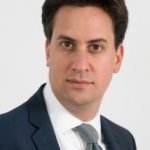
  • Ed Miliband – 2022 Speech on the Cost of Living Crisis

    Ed Miliband – 2022 Speech on the Cost of Living Crisis

    The speech made by Ed Miliband, the Labour MP for Doncaster North, in the House of Commons on 17 May 2022.

    I beg to move an amendment, at the end of the Question to add:

    “but respectfully regret that the Gracious Speech fails to announce a windfall tax on the profits of oil and gas producers, in order to provide much-needed relief from energy price increases for households.”

    The cost of living crisis is the biggest issue facing our country, which is why we have chosen it as the subject of today’s debate, and I welcome the Chancellor’s participation. We should start by being sober about the unprecedented social emergency our country faces. According to a report that has just been published by the Food Foundation, 2 million of our fellow citizens went without food for a whole day in the past month because they could not afford to eat; 7 million families had to skip a meal, and that was true of nearly half of those on universal credit. This is not just about families out of work; it is about families in work too. This is a social emergency and it is also a looming economic threat, depriving our economy of the spending power it needs. The question at the heart of this debate is whether this Gracious Speech, this Government and, yes, this Chancellor are up to the challenge this emergency represents.

    The Chancellor wants us to believe that his measures in response are the best we can do, but they are not—not by a long shot. The cost of living crisis is driven most of all by what is happening to energy bills, so let us look at the three chances he has had in the past seven months to act on energy bills. Last August, nine months ago, the first energy price rise was announced—this was a £139 increase in the price cap. So way back then he knew what was happening. Then in October he delivered the Budget. Wholesale energy prices were rocketing and the warning signals were flashing, but the Chancellor did nothing. He should re-read that Budget speech, because I think it would make even him wince. It is a model of complacency. He had drunk his own Kool-Aid. He told the country back then that “wages are rising”, that we have “growth up” and that on inflation we have

    “a Government…ready and willing to act”—[Official Report, 27 October 2021; Vol. 702, c. 275.]

    He said that the “plan is working”.

    Where are we now? On wages, the Office for Budget Responsibility is this year forecasting the biggest fall in living standards for 45 years. Growth turned negative in March, with the Bank of England suggesting that the economy is going to shrink through the winter. We are now set for the highest level of inflation for 40 years. The plan is not working; it is failing.

    Several hon. Members rose—

    Edward Miliband

    I will make some progress but then give way later.

    The Chancellor did not act when he could have done. In February he had another chance, as the largest energy price rise in our history, at 52%, was announced. He could have responded in a way commensurate with the crisis—[Interruption.] Members say that he did, but let us look at this. What was his grand offer to the country? It was a £150 council tax discount based on outdated property values, which missed out hundreds of thousands of the poorest families, and of course there was his £200 “buy now, pay later” loan scheme. This is a loan scheme that he risibly claims is not a loan, although it has to be paid back, and it does not even come in until October. What are families supposed to do in the meantime while they wait for his loan? It is almost as though the Chancellor is so out of touch that he does not realise that 10 million families in our country have no savings at all.

    Aaron Bell (Newcastle-under-Lyme) (Con)

    The £150 that was given out by Newcastle-under-Lyme Borough Council was gratefully received on the doorsteps, as was the money given out by Westminster City Council. Perhaps the right hon. Gentleman should speak to his council leaders in Barrow, Hyndburn, South Derbyshire and Bassetlaw, all councils that failed to get that £150 out into people’s bank accounts. If he is so concerned about the cost of living, why are his council leaders holding that money in their bank accounts instead of returning it to the people?

    Edward Miliband

    The hon. Gentleman anticipates a later part of my speech. That is the Conservative party today: it will blame anyone else and never take responsibility. The hon. Gentleman should have been supporting our measures, because in his constituency 11,353 people would get our combination of a VAT cut and the warm home discount of £600. If he votes against us tonight, he will have to explain to them why he is denying them the help they need.

    Caroline Lucas (Brighton, Pavilion) (Green)

    The right hon. Gentleman is making a powerful speech. I wonder whether he shares my anger at the news this week that the Government have underspent their net zero budget by a staggering quarter of a billion pounds, at exactly the same time as our constituents are struggling to keep their homes warm and deal with accelerating fuel poverty.

    Edward Miliband

    I completely agree with the hon. Lady. At every step of the way, the Government have had the chance to act, and they have not done so.

    Jim Shannon (Strangford) (DUP)

    The figures for Northern Ireland are very interesting: 241,000 people—13% of people—in Northern Ireland are in poverty. Some 17% of all children, 14% of all pensioners and 11% of the whole working-age population are in poverty. Those figures scare me; do they scare the right hon. Gentleman?

    Edward Miliband

    The hon. Gentleman is absolutely right. I have been around politics for a long time, as the House knows, but I cannot remember—nobody in the House can remember—facing the kind of emergency that we do currently.

    The spring statement was the most recent chance for the Chancellor to redeem himself; it was just days before the April energy price rise came into effect. It was apparent to everyone across this House and in the country that what he had offered was woefully inadequate. People were literally pleading with him to do more on energy bills, but he just doubled down on his failure. He has had three chances in the past seven months, and none of his responses has been equal to the emergency. The truth about this Chancellor is that at every step of the way he has been in denial, slow to act and wholly out of touch in his response.

    Laura Trott (Sevenoaks) (Con)

    It is right that we debate what more we can do, but does the right hon. Gentleman accept that the measures that we have put forward on the national living wage and universal credit, and the national insurance threshold changes, add up to more than he is suggesting?

    Edward Miliband

    No, I do not accept that, and I can tell the hon. Lady that 8,014 families in her constituency will benefit from the changes we are suggesting if she votes for them tonight. Let me tell her and the House what the Chancellor’s failure means in reality. This year, the basic level of universal credit for a single person aged over 25 is £334 a month. The Chancellor’s measures this April were so feeble that someone on that benefit will be expected to find as much as £50 or more a month simply to cover the increase in their energy bills. That is leaving aside the soaring costs of food and other goods. That £50 is around 15% of their income, so what are they going to do? They will not be able to afford to pay their bills, they will get deeply into debt and they will go without food. It is already happening to millions.

    On Friday, in the citizens advice bureau in my constituency, I met someone who is in circumstances similar to those I described. Let me be honest: I have no idea how I would cope in those circumstances. Does any Member of this House? Maybe the Chancellor can tell us what somebody in those circumstances is supposed to do. If he cannot answer that question, it should tell him something—that he is failing in his duty to the people of this country who most need his help.

    What makes the Chancellor even more culpable is that something that could help is staring him right in the face. It is something on which the case has become unanswerable, and on which the Government have run out of excuses, while oil and gas producers are making billions: a windfall tax. It is so hard to keep track of the Government’s position on a windfall tax that I have given up, but I think the Chancellor has said he is prepared to look at the idea. Honestly, the British people cannot afford to wait for him and his dithering anymore, or for his hopeless excuses.

    I want to go through the hopeless excuses, because this is an important argument that this House and this country need to have. What are the Government’s excuses for not applying a windfall tax? First, they said in January that the oil and gas companies were, in the words of the Education Secretary, “struggling”. BP has its highest profits for a decade, Shell has its highest profits ever, and the boss of BP, Bernard Looney, describes the price hike as a “cash machine”—and these people say the companies are struggling. Perhaps we can have a show of hands: does anyone on the Government Benches still believe that those companies are struggling? What is the Government’s next excuse? They argue that a windfall tax will hurt investment—

    Andrew Bowie (West Aberdeenshire and Kincardine) (Con)

    It will.

    Edward Miliband

    Oh, it will, says the hon. Gentleman from a sedentary position. Right, here we go. The problem is that the companies themselves say that is nonsense. BP’s chief executive officer, Bernard Looney—whom I take as more of an authority than the hon. Gentleman—was asked two weeks ago which investments he would not proceed with if a windfall tax was levied. What was his answer?

    “There are none that we wouldn’t do.”

    Even BP does not buy the Tory arguments against a windfall tax on BP.

    Andrew Bowie

    Will the right hon. Gentleman give way?

    Edward Miliband

    No; I will make some progress. The final excuse—[Interruption.] I want to come to this because it is important, and I am perhaps anticipating the Chancellor. The final excuse is that it is somehow anti-business to levy a windfall tax. Let us dispose of that argument, too. I strongly recommend that Members who believe that argument read an article that I have with me—I am happy to put a copy in the Library of the House—by Mr Irwin Stelzer, a long-time confidant of Rupert Murdoch. This is the first time I have quoted him in the House. A few days ago, in an article entitled, “Now is the time for a windfall profits tax”, he wrote:

    “People who believe in capitalism believe that private sector companies should be rewarded for taking risks…not be rewarded for happening to be around when some disruption drives up prices, producing windfalls.”

    That is the point: these profits are unearned and unexpected, and the British people are paying for that windfall. These companies are profiting not from decisions they have made, risks they have taken or wealth they have created, but from a global spike in prices to which Britain is badly exposed—a spike exacerbated by Putin’s invasion of Ukraine.

    What is the principle that the Government are defending here? What is their hill to die on? Is the principle that they really wish to defend that oil and gas companies should pocket any profits, however bad the geopolitical instability? Is that however large the crisis and however gigantic the windfall, taxation must not change? That proposition was rejected by Margaret Thatcher, Geoffrey Howe and George Osborne—remember him?—all of whom levied windfall taxes. Who else do we see supporting a windfall tax today? I have to say, it is a pretty big tent: John Allan, the guy who runs Tesco; Sharon White, the woman who runs John Lewis; Lord Browne, the guy who used to run BP; and Lord Hague, the guy who used to run the Conservative party—the usual leftie suspects.

    The truth is that the Government have run out of excuses and, amid the chaos and confusion about their position, I think a massive U-turn is lumbering slowly over the hill. I say this to the Chancellor: “Swallow your pride and get on with it.” Every day he delays is another day when the British people are denied the help they need. Millions of families are having sleepless nights because the Chancellor will not act. What is he waiting for? As proposed by the shadow Chancellor, my hon. Friend the Member for Leeds West (Rachel Reeves), the Chancellor should come to the House with an emergency Budget that has a windfall tax, gets rid of VAT on energy bills, increases the warm home discount to £400, includes an emergency plan to insulate 2 million homes this year, and cuts business rates.

    Alan Brown (Kilmarnock and Loudoun) (SNP)

    Will the right hon. Gentleman give way on that point?

    Edward Miliband

    I will not for the moment. The Government’s position on the windfall tax is part of a wider problem with this Chancellor and this Government. Just look at the political choices he is making: he leaves non-doms shielding their millions while millions of families and pensioners face a cut in their incomes; he whacks up taxes on tenants and lets landlords off the hook; and he makes young people at work pay more, but those getting money from capital gains pay not a penny extra. Wrong, unfair, unjust, out of touch—that is who he is.

    Several hon. Members rose—

    Edward Miliband

    I will not give way. Of course, being this Government, they always try to blame someone else, as we heard earlier. It is hard to keep track, but this is the roll call of people who the Conservative party have tried to frame in just the past few days: the Bank of England; civil servants working from home; and, shamefully, the British people for being unable to cook properly. That, apparently, is the cause of food banks. Yesterday, there was also the ludicrous suggestion from a Minister that people were not working enough hours. The Chancellor, of all people, is also at it. Who does he blame for the massive cut to benefits? He blames the IT system—the dude from Silicon Valley. Who is he trying to kid? If he had got his act together early enough, of course he could have raised benefits properly. The thing I do not get is this: he found it perfectly possible to cut universal credit by £20 in the middle of the year—in September. It is not a case of “Computer says no”; it is “Chancellor says no.” It is not that a computer system is not up to it; the Chancellor is not up to it.

    The story of the past few months is this: crypto has crashed, and so has the Chancellor—and how similar they are. The Chancellor and cryptocurrency came out of nowhere. The value surged, and it looked like the future, but it has all turned out to be one giant Ponzi scheme. The Chancellor has just been found out. He has been rumbled. Let us be honest, his colleagues all know it. He is out of touch with what is happening in the country. He is out of ideas when it comes to doing the right thing. He is out of his depth when it comes to the challenges that this country faces.

    The problem, of course, is that today’s cost of living crisis does not stand alone; it comes on top of a decade of failure. That is why families and our economy are so vulnerable. Over the past 12 years, growth has averaged just 1.4%—the worst record of any Government since the second world war. This is the worst decade for living standards since the 1920s, according to the Institute for Fiscal Studies. Indeed, wages would be £7,000 higher on average if wage growth under this Government had matched the rate of growth under the last Labour Government. Taxes are at their highest level since the 1950s. Public services are struggling. Never have so many paid so much for so little. Twelve years of Tory economics have failed, and what does the Chancellor offer in the future? More of the same: anaemic growth at just 1.7%, and squeezed wages as far as the eye can see.

    This is the plan for growth that we need: we should tackle the cost of living crisis, so that people have more money in their pockets. We need to put in place an industrial strategy, so that we have good jobs in the industries of the future; that is what Governments all around the world are doing. We need a plan to give people proper rights, to boost wages at work, and to make our economy fair. Where is the employment Bill? It was promised in 2019, but it is still not here. When it comes to being on the side of the workers, Conservatives may mouth the words, but their actions tell the real story.

    Mr Mark Harper (Forest of Dean) (Con)

    I am glad that the right hon. Gentleman mentioned jobs, particularly as today unemployment has fallen to its lowest level. The number of people out of work is now lower than the number of vacancies in the economy. He has just made an extraordinary number of unfunded spending commitments at the Dispatch Box. I want to highlight the big difference between the Labour party and the Chancellor. I remember the spring statement; the shadow Chancellor made a commitment to raising benefits early, because, she said, it would cost no money. It would actually have cost £24 billion across the spending period. There was no sense of how to pay for it. That is Labour from start to finish.

    Edward Miliband

    It is good to see that the right hon. Gentleman has clambered back onto the career bandwagon. I thought that he was no longer a loyalist. The truth is that it was the Resolution Foundation that pointed that out, and I can give him the reference.

    I will wind up now. I have mentioned the basics of a modern economy, and this Government are failing on all of them; they have no cost of living plan, no growth plan, and no plan for rights at work. They have not learned from the mistakes of the past decade, and they are condemned to repeat them. The truth is that this Gracious Speech does not remotely rise to the short or long-term challenges that the British people face, but this House can make a difference tonight. I say this to Conservative MPs directly: we have all heard from our constituencies what families are facing. This is an emergency for millions of people. A windfall tax could make a difference.

    Mike Wood (Dudley South) (Con)

    Will the right hon. Gentleman give way?

    Edward Miliband

    No, I will not. Conservative Members should use this opportunity to tell the Chancellor to act. It is the right and fair thing to do. The case is unanswerable. If they do not act, they will have to explain to their constituents why they refused to support help that could make a difference now. I urge Members to vote for our amendment tonight to help tackle the social emergency that our country is facing.

  • Jeffrey Donaldson – 2022 Speech on the Northern Ireland Protocol

    Jeffrey Donaldson – 2022 Speech on the Northern Ireland Protocol

    The speech made by Jeffrey Donaldson, the DUP MP for Lagan Valley, in the House of Commons on 17 May 2022.

    From the outset, the Democratic Unionist party warned this House of the consequences of the protocol, and that is why we opposed it from the beginning; we recognised the political and economic instability it would cause, and the harm that it would create for the Union.

    Today’s statement is a welcome, if overdue, step. It is a significant move towards addressing the problems created by the protocol, and towards getting power-sharing based on cross-community consensus up and running again. We hope to see progress on a Bill to deal with these matters in days or weeks, not months. As the legislation progresses, we will take a graduated and cautious approach.

    We want the Irish sea border removed, and we want the Government to honour their commitment in the New Decade, New Approach agreement to protect Northern Ireland’s place in the UK internal market. The statement today indicates that that will be covered in legislation that brings about revised arrangements. Under the Belfast/Good Friday agreement, power sharing can be stable only if there is cross-community consensus, but there is not consensus on this at the moment on the part of the Unionist community. We want the political institutions functioning properly as soon as possible, but to restore Unionist confidence, decisive action is now needed in the form of legislation, in order to repair the harm that the protocol has done to the Acts of Union, and in order to put in place sensible arrangements that, in the words of the Queen’s Speech, ensure the

    “continued success and integrity of the whole of the United Kingdom…including the internal economic bonds between all of its parts.”—[Official Report, House of Lords, 10 May 2022; Vol. 822, c. 3.]

    The words today are a good start, but the Foreign Secretary will know that actions speak louder than words. I welcome her commitment to decisive action in her statement to the House.

  • Richard Thomson – 2022 Speech on the Northern Ireland Protocol

    Richard Thomson – 2022 Speech on the Northern Ireland Protocol

    The speech made by Richard Thomson, the SNP MP for Gordon, in the House of Commons on 17 May 2022.

    I thank the Foreign Secretary for advance sight of her statement. We have heard plenty about the alleged shortcomings of the protocol, but there should be acknowledgement of the Government’s role in negotiating it; that does not even seem to have reached the level of being limited and specific, from what we have heard today. Ultimately the problem this legislation purports to deal with is not to do with the protocol, which was made necessary by the kind of Brexit that the Government eventually negotiated; the seed of the problem was in the very nature of the settlement.

    Neither my colleagues nor I deny for one moment the hurt and upset caused to many in Northern Ireland by the protocol, but we must not forget that Scotland and Northern Ireland as a whole both voted against Brexit, and that there was not cross-Union consent for where we are now. If the consequences of that deal are judged to be not in the best interests of the people of Northern Ireland, we need to be honest and recognise that the consequences of the entire withdrawal agreement are not in the interests of any place in the UK, because “getting Brexit done” has meant border checks for goods going from Great Britain to the EU or to Northern Ireland, but an absolute free-for-all for anything coming into Great Britain.

    We on the SNP Benches have said all along that a stable agreement needs to be reached with the EU that works for all parts of the UK, and I genuinely wish the UK Government well in that, but with the crisis in Ukraine, the last thing we need to be doing is thrashing around here pointlessly in a snare of our own making. Domestic legislation will, even if passed, not wash away the need to comply with international commitments; nor will it change the fact that if the UK is neither in nor aligned with the single market and customs union, that still creates a trade border that needs to go somewhere.

    Restoring devolved government in Northern Ireland and resolving the self-inflicted wounds of Brexit will require good will, trust and a negotiated settlement. I am sorry to say that the threats of unilateral legislative action by this Government to override their own deal are unlikely to be taken seriously in Belfast, and will not be taken seriously in Brussels; there is absolutely no reason why they should be taken seriously in this place either.

  • Stephen Doughty – 2022 Speech on the Northern Ireland Protocol

    Stephen Doughty – 2022 Speech on the Northern Ireland Protocol

    The speech made by Stephen Doughty, the Labour MP for Cardiff South and Penarth, in the House of Commons on 17 May 2022.

    We are grateful for advance sight of the statement from the Foreign Secretary, and I apologise on behalf of the shadow Foreign Secretary, who is unfortunately self-isolating due to covid.

    It is over two and a half years since the Government negotiated and signed the withdrawal agreement. That deal included the Northern Ireland protocol, which required, by its design, some trade barriers and checks in the Irish sea. That was clear from the outset and it was a choice by this Prime Minister and by the Government, yet now, barely two years later, the Government are trying to convince people that their flagship achievement was not a negotiating triumph, but a deal so flawed that they cannot abide by it. Either they did not understand their own agreement, they were not up front about the reality of it, or they intended to break it all along. The Prime Minister negotiated this deal, signed it and ran an election campaign on it. He must take responsibility for it and make it work.

    The situation in Northern Ireland is incredibly serious. Power sharing has broken down, Stormont is not functioning and political tensions have risen, while people in communities across Northern Ireland face rising bills as the cost of living crisis deepens. The operation of the protocol has created new tensions that do need to be addressed by listening to all sides, as well as to business and to consumers, and both the UK Government and the EU need to show willing and good faith. This is not a time for political posturing or high-stakes brinkmanship.

    Everyone recognises that the situation in Northern Ireland is unique, and we want checks to be reduced to their absolute necessary minimum and for them to properly reflect trade-related risks. It cannot be right, for example, that goods leaving Great Britain that have no realistic prospect of leaving Northern Ireland, such as supermarket sandwiches, face excessive burdens, and the EU needs to understand that practical reality. Unnecessary barriers will only hamper business, inhibit trade and undermine confidence and consent.

    The Good Friday agreement was one of the proudest achievements of the last Labour Government. It is absolutely essential that it is protected. That is why we need calm heads and responsible leadership. We need a UK Government capable of the hard diplomatic graft to find solutions and an EU willing to show flexibility. The right response to these challenges cannot simply be to breach our commitments. It is deeply troubling for the Foreign Secretary to be proposing a Bill to apparently break the treaty that the Government themselves signed just two years ago. That will not resolve issues in Northern Ireland in the long term; rather, it will undermine trust and make a breakthrough more difficult. It would drive a downward spiral in our relationship with the EU that will have damaging consequences for British businesses and consumers. It is Cornish fisherman, County Down farmers and Scotch whisky makers who will lose out, holding back the economy while growth forecasts are already being revised down.

    But this goes beyond matters of trade. Britain should be a country that keeps its word. The rest of the world is looking at us and wondering whether we are a country that they want to do business with. When we seek to negotiate new deals abroad, do the Government want to make other countries question whether we will keep our end of the bargain? There are wide-ranging and damaging repercussions, undermining our ability to hold others to account for their own commitments, when we should be pulling together in support of Ukraine, for example, not fuelling divisions with our European allies.

    The right approach is for the Government and the EU to work together to find practical solutions to these problems, and to brief the media less and to negotiate more. There is no long-term unilateral solution, and only a solution that works for all sides and delivers for the people and businesses of Northern Ireland will have durability and provide the political stability that businesses crave and the public deserve. We believe that should begin with a veterinary agreement that would eliminate the vast majority of checks on produce going from Great Britain to Northern Ireland. New Zealand has an equivalence agreement, and it should not be beyond the Government and the EU to negotiate one that reflects the unique circumstances in Northern Ireland.

    We would also negotiate with the EU for more flexibility on VAT in Northern Ireland, to fully align Northern Ireland VAT rules with those of Great Britain. We would use that to take VAT off Northern Ireland energy bills, funded by a one-off windfall tax on oil and gas producer profits, to help ease the cost of living crisis.

    If the Government are determined to plough on with the Bill that the Foreign Secretary has proposed, will they agree to prelegislative scrutiny by the Foreign Affairs Committee, and will they set out clearly to the House why this does not break international law?

    Labour wants to make Brexit work and for Britain to flourish outside the EU. We want the Government to take responsibility for the deal they signed, to negotiate in good faith and to find practical solutions, not take reckless steps to prolong uncertainty in Northern Ireland and damage Britain’s reputation. We want the EU to show the necessary flexibility, to minimise all barriers, and to work with the UK Government and listen to all sides in Northern Ireland. That is the right approach, that is the responsible approach, and it is what is in the long-term interests of the people of Northern Ireland, and indeed of the whole of the United Kingdom.