Tag: 2022

  • Chris Whitty – 2022 Statement on Shifting Covid Level 4 to Level 3

    Chris Whitty – 2022 Statement on Shifting Covid Level 4 to Level 3

    The statement made by Chris Whitty and others, on 20 May 2022.

    Based on advice from UKHSA, we the UK Chief Medical Officers and NHS England Medical Director have recommended to ministers that COVID Alert Level should move from level 4 to level 3.

    The current BA.2 driven Omicron wave is subsiding. Direct COVID-19 healthcare pressures continue to decrease in all nations and ONS community positivity estimates continue to decrease.

    We would like to thank healthcare staff for their remarkable efforts during a challenging time. Whilst it is reasonable to expect the number of cases to increase due to BA.4, BA.5 or BA2.12.1, it is unlikely in the immediate future to lead to significant direct COVID pressures. This will continue to be kept under review.

    Chief Medical Officer for England, Professor Chris Whitty

    Chief Medical Officer for Northern Ireland, Dr Michael McBride

    Chief Medical Officer for Scotland, Dr Gregor Smith

    Chief Medical Officer for Wales, Dr Frank Atherton

    NHS England National Medical Director, Professor Stephen Powis

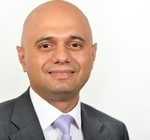
  • Sajid Javid – 2022 Comments at G7 Meeting on Protecting Countries from Another Pandemic

    Sajid Javid – 2022 Comments at G7 Meeting on Protecting Countries from Another Pandemic

    The comments made by Sajid Javid, the Secretary of State for Health, on 21 May 2022.

    This meeting was a crucial moment for G7 member countries as we learn the lessons of Covid and how to live with the virus.

    I am committed to ensuring we are all better prepared against future health threats including another pandemic and antimicrobial resistance, which is why it was so important we united today to protect the world’s health.

    The UK’s leading the way with our living with Covid approach, and it was great to exchange ideas with my G7 counterparts on how we all move out of the pandemic.

  • Stuart Andrew – 2022 Comments on Garden Communities

    Stuart Andrew – 2022 Comments on Garden Communities

    The comments made by Stuart Andrew, the Housing Minister, on 21 May 2022.

    Building beautiful new homes in the places they are most needed lies at the heart of the government’s levelling up mission.

    Garden villages and towns are perfect examples of the vibrant, green communities we want to see right across the country and today’s funding will allow us to work hand-in-hand with local leaders and industry to deliver the high-quality new homes that we need.

  • James Heappey – 2022 Speech on NATO and International Security

    James Heappey – 2022 Speech on NATO and International Security

    The speech made by James Heappey, the Minister for the Armed Forces, in the House of Commons on 19 May 2022.

    I thank all colleagues for their contributions to the debate. As ever over the past four or five months, it has been defined by gentle disagreement politely put by well-informed contributors to the debate around defence and security in the Euro-Atlantic.

    NATO is inescapably the foundation on which Euro-Atlantic security is based. It is, always was and has proven itself over the past three months still to be the most enormous deterrent, even against Putin at his most belligerent. Other multinational fora, many of which have been mentioned today—the UN, the European Union, the G7, the coalition of donors that sit outside NATO and the coalition of those who have imposed sanctions on Russia—have all been able confidently to make interventions to try to resolve the conflict, safe in the knowledge that NATO’s overwhelming firepower keeps the conflict contained within Ukraine. That has enabled many international fora to take measures to impose cost on Russia and try to persuade it to change course.

    Not only does NATO have an enormous technological and numerical advantage but, as my right hon. Friend the Member for New Forest East (Dr Lewis) and my hon. Friend the Member for Basildon and Billericay (Mr Baron) made clear, the nuclear deterrent is inescapably important to the deterrence that NATO provides. That is why the SNP’s positions on nuclear and on NATO are so contradictory. Scotland’s geography is the gatepost on the southern side of the Greenland-Iceland-UK gap. That is the most strategic gateway to the north Atlantic and is essential to all NATO’s plans. Right now, at the very tip of Scotland, some of the most advanced anti-submarine warfare capabilities are based at RAF Lossiemouth. They are there because one of Europe’s best-funded and biggest air forces is able to have those capabilities alongside the fast air that polices threats in the Norwegian and northern seas and beyond.

    Of course, Scotland hosts the nuclear deterrent on which so many countries around NATO depend, because it is the only nuclear deterrent that is assigned to NATO. It therefore seems to me more than a little contradictory that a party that wants to expel the UK’s nuclear deterrent from Scotland wants to apply to join an alliance that is ultimately underpinned by that very same deterrent.

    Stewart Malcolm McDonald

    I will be brief. After a vote for independence, who will the nuclear deterrent belong to?

    James Heappey

    I am trying hard to follow the question. The answer is either that it belongs to the United Kingdom and the Scottish Government would insist on its removal—

    Stewart Malcolm McDonald

    Yes—so it is not ours.

    James Heappey

    Yet the hon. Gentleman’s position and that of his party is that he would want to join an alliance whose deterrence is underpinned by that deterrent. It feels inconsistent. To NATO countries around the alliance, the idea that that pivotal geography on the southern end of the Greenland-Iceland-UK gap should wish to break away from one of the world’s biggest, best-resourced and best-trained armed forces seems like absolute nonsense.

    Mr Kevan Jones

    I agree. The argument is clear: NATO is a nuclear alliance. SNP Members always refer to other countries in NATO that do not have nuclear weapons, but those countries have a commitment not only to receive nuclear weapons but, in some cases, to have aircraft that deliver them. Would a future Scottish air force have to deliver the nuclear deterrent?

    James Heappey

    That is an interesting point. It seems to me that NATO is one of the most powerful arguments for the Union, because if one supports NATO, surely one continues to support the Union.

    Many colleagues have discussed the Madrid conference and shown particular interest in the strategic concept. Fundamentally, the strategic concept has three key elements for which we should be looking out and in which the UK has particular interests.

    The first key element of the strategic concept relates to the resilience of member states and the wider alliance, and to the interweaving of national security plans, reinforced by a wider NATO mass at appropriately high readiness, with robust enablers and industrial bases to get NATO into the fight and sustain it once it is there.

    The second element is adapting and modernising around advanced technologies. Inescapably, the battle space is changing. Everyone harks back to the armour-on-armour conflict of the past, and, of course, as we have seen in Ukraine, there is still a place for it, but, inescapably, there are technological advances that cannot be avoided and that the alliance must embrace. Missile technology is in the ascendancy. Cyber and space remain pivotal, even if their role in Ukraine has not been as great as we expected, and the alliance must embrace them.

    The third element is competing and integrating across domains using both military and non-military tools. Far too often in discussion, NATO is viewed through a military lens when the nature of competition is now more than just military mass on mass; it is the ability to bring to bear the full effects of the state, and all states within the alliance, to impose cost on the adversary.

    It is a selective retelling of history if the UK’s own increase in defence spending is ignored. I would argue that the UK led the way in encouraging people to increase defence spending in anticipation of the way the world was developing. Many countries have now followed, which is enormously welcome. That has changed the Euro-Atlantic security situation beyond recognition. In particular, Germany’s spending as a large continental power in the middle of Europe has massively changed things. It gives the UK and others a lot to reflect on around the capabilities that we should seek, given the mass that Germany and Poland will have in the centre of Europe.

    It is not just the cash spent on military mass that has changed; there has been a huge geo-strategic shift. As Members across the House have remarked, the fact that Finland and Sweden have abandoned decades of neutrality to join the alliance is a quite remarkable development—perhaps the most vivid example of just how badly Putin has miscalculated in his strategic aims for this conflict.

    I do not accept the Opposition’s charge that the integrated review has been overtaken by events. The IR was fundamentally about a return to systemic competition. I have an awful lot of time for the shadow Secretary of State, as he knows, but when he said that there was a section on the Indo-Pacific but not on Russia, I had a quick flick through the IR and the defence Command Papers since the IR. I found that almost every paragraph mentions NATO, Russia or the Euro-Atlantic. The one part that does not is the section on the Indo-Pacific to which he refers.

    In any case, the argument that the UK can focus only on the Euro-Atlantic is just not sound. The reality—this feels rather like watching my son’s football team play the Cheddar under-10s, where they all run around following the ball—is that there is lots to distract us in Europe right now, but there is a world beyond that is increasingly unstable and insecure. It is struggling with high food and fuel prices, which brings instability, as we saw in the Arab spring. The UK needs to keep an eye on that beyond Europe and remain engaged with it, because Iran, China, Russia and violent extremist organisations are all looking to use the west being distracted as an opportunity to stake their claim.

    Mr Baron

    Will my hon. Friend give way?

    James Heappey

    If my hon. Friend does not mind, I will push on because I have only a minute and a half to go.

    I pay tribute to our armed forces deployed right now across the entire eastern flank of NATO, in Finland, Estonia, Latvia, Lithuania, Poland, Slovakia, Romania and Bulgaria, in the sea as well as in the air. Thousands of them are deployed, and they are enjoying their service alongside their NATO allies. They are coming to understand exactly what it is to be a part of NATO, believing in the collective defence of countries on the other side of Europe and being willing to give their lives in their defence, as the NATO treaty requires.

    We will continue lethal aid to Ukraine for as long as it is required. We are sending in a great deal of our own stuff, but we are also bringing influence to bear to encourage others around the world to send theirs. Then there is the race for Ukraine to rearm more quickly than a sanction-ridden Russia. We are working hard with the Ukrainians to understand what their requirements will be, work out how to get them the platforms and deliver the training that they will need to operate them. Of course, colleagues in the rest of Government are working to rebuild Ukraine when the conflict finishes. We must not get carried away by any of the successes for Ukraine in recent weeks. A great deal of hard fighting remains. There is no celebration when Russia fails, but Russia is failing far too often. We will continue to do everything we can to support Ukraine. NATO will continue to reinforce its eastern flank to reassure our allies there, and the UK will continue to do all we can to ensure that Putin fails.

  • Luke Pollard – 2022 Speech on NATO and International Security

    Luke Pollard – 2022 Speech on NATO and International Security

    The speech made by Luke Pollard, the Labour MP for Plymouth Sutton and Devonport, in the House of Commons on 19 May 2022.

    Labour’s commitment to NATO is unshakable. Eighty-five days ago, when Russia illegally invaded Ukraine, we faced a choice as a Parliament, a country and an alliance—to let Putin divide us or to stand strong with our allies in Ukraine—and we chose well. Eighty-five days later, NATO is more united than ever before, with historic bids from Finland and Sweden and with member state after member state rebooting its defence plans. Let us say very clearly that Putin’s gamble to fracture us has backfired.

    Labour is proud to be part of this united front, as we have heard today, just as we are proud of the men and women in Britain’s armed forces who are deployed across the NATO alliance and further afield. We are also proud that NATO and the principle of collective security are stitched into the history of the Labour party, thanks to the Attlee Government playing such a pivotal role in bringing the alliance into being in 1949.

    Just as we look to the history of NATO, we must look to its future, too. There are some big questions. How do we best support our Ukrainian friends through the new phases of this conflict? How should we approach NATO 2030, the new Strategic Concept for the alliance? How do we keep Britain a leader in international security and truly a force for good? As my right hon. Friend the Member for North Durham (Mr Jones) said, how do we protect the rules-based order? As my hon. Friend the Member for Caerphilly (Wayne David) and the hon. Member for Basildon and Billericay (Mr Baron) said, how do we make sure that there is renewed cross-party unity of purpose to make this case, free from the party political distractions that do the debate no service?

    I am grateful to the hon. Member for Basildon and Billericay for his speech. I am interested in reading the 1922 defence committee’s report, but he may have summarised it so effectively that he does not need to leak a copy to the Opposition. He will find that, on both sides of the House, an awful lot of people were nodding during his speech, and I hope the Ministers heard what he said loud and clear.

    Yesterday I attended the unveiling of the memorial to lost submariners. Since the Submarine Service came into existence, the United Kingdom has lost 5,960 submariners. The unveiling of the memorial at the National Memorial Arboretum in Staffordshire shows just how important their sacrifice has been, and it sits alongside memorials to fallen comrades in every single service, representing people from across our country and, indeed, across the world who made the sacrifice in support of the freedoms we enjoy today. It is worth remembering those who came before us and those who served.

    On the challenge before us, let us be in no doubt that NATO is the best way for western democracies to stand united and together in the face of renewed Russian aggression and an uncertain future. As the hon. Member for Wolverhampton South West (Stuart Anderson) and the Secretary of State both said, agility and flexibility are important to our alliance, but we now need to think carefully about how we shift from crisis management in the early stages of this war to medium-term military support.

    That means the UK Government, NATO and our allies continuing to reinforce our Ukrainian friends with weapons and ammunition while also setting up the conditions for economic recovery and providing hope and determination to deliver the brighter future of a free, democratic and peaceful Ukraine, with Russian forces, defeated and withdrawn, unable to threaten that country and its people ever again. It means supplying more next-generation light anti-tank weaponry, loitering munitions, armour and artillery pieces, alongside defence equipment and medical packs—that is something we must do across the alliance—but it also means renewing our own strategic approach, as mentioned by Members on both sides of the House. I think it has been done without a partisan spirit, and in the best interests of our country and our collective defence.

    Mr Deputy Speaker, you and I will have had one thing in common: watching the TV last Saturday, because we are both fans of Eurovision. I echo the congratulations of the hon. Member for Glasgow South (Stewart Malcolm McDonald) to the Kalush Orchestra on Ukraine’s winning entry. I am not certain that President Putin is a fan of Eurovision or whether he was watching on Saturday, but if he was, he would have seen a great evening of costumes, song and solidarity. Uniting NATO against his criminal invasion is quite an achievement for the Russian President, but uniting Europe and Australia on Eurovision is an achievement equally worthy of song. I like the Secretary of State’s words, “One way or another, it will take place in Ukraine.” I look forward to watching it from Ukraine with him next year.

    Turning to events closer to home, the NATO conference in Madrid next month will mark a crucial juncture in international security, establishing NATO’s vision for the next decade or so. As the shadow Defence Secretary says, it is important that the doors are not closed to civil society or to Opposition parties, because this is the moment to bring more players together in the solidarity and common endeavour that Members on both sides of the House have spoken about today. I would be grateful if the Minister for the Armed Forces set out how the Government plan to approach that conference, what the strategic concept will do and how it will fit with the integrated review, especially if it is such a departure from NATO’s current operating procedures.

    Britain must also put democratic resilience on the agenda in Madrid. Liberal democracies must be better attuned to non-conventional threats, from election meddling to the spreading of misinformation online. There is a new home front in our defence against hostile actors: it is a digital home front, and we must not ignore it. We also need strong UK leadership in NATO to pre-empt Putin’s next steps, including in the Baltic, the Balkans, Kaliningrad and the high north. A new strategic concept must also have a plan for the Arctic, as the climate means that new shipping routes are opened there and new threats exist.

    Britain must champion co-ordination and interoperability among NATO friends and allies, because as NATO members rightly raise their defence spending and invest in their inventory, there is a risk that that new investment will be nation-specific and will not have the interoperability that we are seeing across the alliance. That must mean weaponry, bullets, vehicles and communication. For instance, the US is moving its bullet calibre from a NATO standard to a new US standard. We need to be aware that this is already happening. How will that interoperability work in the next decade? We need to ensure that we all stand together.

    Labour places the highest priority on security in Europe, the north Atlantic and the Arctic. Before we tilt to the Indo-Pacific, we must first secure our own backyard. The illegal invasion of Ukraine reinforces NATO as our primary UK security obligation. We want Britain to be NATO’s leading European nation, but our place at the front of the pack is not automatic or guaranteed and we should not be complacent. As our allies reboot defence spending, the question must be why the UK Government have not done so and why the flaws in the integrated review are not being fixed. Ministers should rewrite defence plans, review defence spending, rethink cuts to the Army, reform defence procurement and renew our international friendships.

    Finally, let us not forget what NATO represents. It is about peace over war, democracy over tyranny, collective security over individual vulnerability, and hope over fear. We derive our strength from those principles and values. As President Obama once said, it is not might that makes right. Quite the reverse: right makes might. NATO is Britain’s best option for defence. It is our best option for international security. It is our best option for collective defence. It is our best option for upholding our values. For those reasons, Labour’s commitment to NATO will remain unshakeable.

  • John Baron – 2022 Speech on NATO and International Security

    John Baron – 2022 Speech on NATO and International Security

    The speech made by John Baron, the Conservative MP for Basildon and Billericay, in the House of Commons on 19 May 2022.

    Let me start by commending the Secretary of State and his Front-Bench team for their leadership on Ukraine. I also commend those on both Front Benches for their contributions to the debate. Indeed, I commend all the contributions. This is important, because if we are to move the dial on this issue when it comes to defence spending, it will require collaboration on a cross-party basis. We should not underestimate the importance of that if we are to convince the country that we need to spend more on defence. As we all know, the defence of the realm is the first duty of Government. We need our leadership—our respective party leaders—to wake up to that.

    Having myself served in the 1980s in Germany, including Berlin, in Northern Ireland and with the United Nations elsewhere, I think we are all very much in agreement in wanting to commend the men and women serving in our armed forces—now and in the past—who have been prepared, and are prepared, to put their lives on the line and make the ultimate sacrifice in the defence of the liberties that we enjoy in this country today.

    As some colleagues have already mentioned, the invasion of Ukraine is a wake-up call. It has, perhaps, given NATO a fresh purpose, and it has certainly reminded NATO of its original purpose. I would contend that for too long the west has been complacent. At the end of the cold war, we believed that the very concept of democracy would sweep the field. Everything was right about it: who could argue against it? However, democracy is a fragile concept; we need only look at what happened on Capitol Hill in the United States a few years ago to be reminded of that fact. Democracy needs nurturing; it needs encouraging; it needs defending. That was brought into sharp contrast by the recent vote in the United Nations when more than half the world’s population, as represented by their Governments, failed to condemn the invasion of Ukraine. It is a stark lesson that perhaps, with the coming of the new cold war, we need to resource properly —and, I would argue, spend more on—both our hard and soft power capabilities in order to win the argument.

    A number of us in this place, on both sides of the House—for this is not a party political issue—have been warning of the dangers of potentially hostile states, including Russia, for some time. I know that many would disagree, but I would humbly suggest that this country became distracted, as did the west generally, by a number of what I would term foolish interventions, starting with Iraq in 2003. That is now history, but we need to remember that Russia still occupies roughly a fifth of Georgia, which it invaded in 2008. These are very real dangers now, and it is the present with which we have to deal.

    Against that backdrop, I was appointed chair of the 1922 defence committee, and was tasked with soliciting the views of Conservative Back Benchers on what our defence priorities should be. Our report was released last week, and is now with the Government. We had a good discussion with the Defence Secretary on Monday, and I look forward to continuing that discussion with the policy unit at No. 10 and, indeed, with the Prime Minister.

    In the few minutes that are left to me, it may be helpful if I give a brief summary of the main themes that emerged from the report. There was a wide consensus that the integrated review—and perhaps more importantly, the associated documents that followed it, such as the Defence Command Paper—required revisiting. The integrated review was predicated on peacetime conditions, which frankly no longer exist. It does not need to be torn up and rewritten from scratch, but it does need updating, with an examination carried out as to what equipment and manpower Britain needs to protect its own and its allies’ security. We suggest in the report that there should be a moratorium on any defence cuts until that exercise is complete. There is little point in shedding personnel, weapons, tanks, aircraft or whatever and then finding out that we might need them.

    Conservative Back Benchers are adamant that Defence spending should be meaningfully and substantially increased. Instead of targeting a certain percentage of GDP, which is affected by the ebb and flow of the economy, Britain should, in the light of this review exercise, work out which specific capabilities it requires in manpower and matériel, and bid to achieve those. In addition, the report suggests that the cost of military and MOD civilian pensions should not come out of the Defence budget. Neither should the costs of the nuclear deterrent come out of the Defence budget. It is after all a strategic asset; it should be completely separate. The games that have been played in the past by including the nuclear deterrent cost in the Defence budget to ensure that we hit a certain percentage should, frankly, be left in the playground. We are dealing with the defence of the realm and we need to attach to this debate the severity and sincerity that is required to ensure that we do what is right. We should not be playing politics with figures.

    The report made a number of other recommendations. It concluded that the Government should take steps to expand homegrown talent and skills in our defence industry. That would boost the defence sector as well as our sovereign defence capabilities. It also makes the point that we should adopt a more strategic view when deciding whether to allow foreign bids for defence companies. On procurement, it recognises that reform is being introduced to the MOD’s procurement system, which does not have the best reputation, as we know. The committee also concluded that the MOD should give greater thought to buying off-the-shelf equipment rather than going down the bespoke route. A weapons system that is 80% perfect and available at speed and scale is sometimes preferable to a system that is 100% perfect but unavailable. We talked about having a deep stockpile of advanced weapons and ammunition. Ukraine has shown just how quickly we can get through our stockpiles. We have run out of serious weaponry in this country, and we need to ensure that we learn the lessons from that. At the bare minimum, we need to ensure that a rock-solid supply chain is in existence so that these weapons can be produced even in wartime conditions.

    We suggested that consideration should be given to improving pay and accommodation, because this is not just about weaponry; it is very much about personnel, and we should never forget those on the frontline. Improving pay and accommodation is of great importance, as is ensuring that greater support is available to support soldiers’ mental health. We also suggested—like everyone else in this place who has served, I have a vested interest, and I declare it—that recruitment should be taken back in-house and associated with the county associations that made the regimental system so strong and a major source of endurance on the regimental front. Outsourcing has not been a success.

    We stand at a pivotal point. Given how fragile the concept of democracy is, we need a rounded, all-encompassing approach incorporating both hard and soft power assets—which require additional funding—to ensure that we do indeed talk softly but carry a big stick. If we do not embrace the concept of ensuring that we have a full range of capabilities relative to our assessment of the risks—risks that have increased since Ukraine—while always pursuing diplomacy, conflict will become more likely. I sincerely hope, as we all do, that the lesson of Ukraine will be the wake-up call that it is.

  • Jack Lopresti – 2022 Speech on NATO and International Security

    Jack Lopresti – 2022 Speech on NATO and International Security

    The speech made by Jack Lopresti, the Conservative MP for Filton and Bradley Stoke, in the House of Commons on 19 May 2022.

    The ongoing terrible events in Ukraine remind us that we need to make sure that we not only maintain our defence expenditure, but invest wisely in capability that will ensure that we remain a credible NATO ally. We have seen recently in Ukraine how good equipment can blunt the attacks of the most aggressive invader. Op Orbital, which began in 2015 in response to Russian aggression in the Donbas and Crimea, has been a successful training mission to equip Ukrainian forces and is paying huge dividends now as Ukraine’s army has risen magnificently to the challenge. This is the best possible example of the value of investing in training and equipment.

    The history of the last century shows us what happens when countries seek to appease dictators and are willing to trade other people’s freedoms for their own security. It is for this reason that the Washington treaty signed in 1949 bound the founding members of the Atlantic alliance together with a pledge enshrined in article 5 that an attack on one member was an attack on all. Since then, the Atlantic alliance, the most successful military alliance in history, has helped to ensure the freedom of this country and western Europe, especially during the cold war, in the face of an aggressive Soviet Union. A mark of its success is that the original group of 12 founding nations has expanded to 30 today. It is no coincidence that, as soon as they were able to escape the yoke of Soviet tyranny, our neighbours in central and eastern Europe sought to join NATO. The fact that now both Finland and Sweden—long bywords for neutrality—have taken the first steps to join the NATO alliance shows the attraction of it as well as its reputation.

    This country has always placed NATO at the heart of its defence policy, and the Ministry of Defence characterises the UK’s armed forces as “Allied by design”. Unlike Russia, this country has allies and partners around the world, and our NATO allies know that the UK will stand with them. We train together on a regular basis—something which should never be sacrificed on the altar of savings by the Treasury. We must increase our defence expenditure.

    As a former British Defence Secretary, Denis Healey—another gunner—who was the military beach commander at Anzio said in 1969:

    “Once we cut defence expenditure to the extent where our security is imperilled, we have no houses, we have no hospitals, we have no schools. We have a heap of cinders.” —[Official Report, 5 March 1969; Vol. 779, c. 551.]

    Or, as we are seeing in the Ukraine, piles of rubble.

    The invasion of Crimea by Russia in 2014 was a much-needed wake-up call for the Atlantic alliance, but it was not an easy matter to stir up all of its members. In 2016 President Obama spoke of “European free riders” who relied far too much on the United States for their security under the nuclear umbrella. In 2019 President Macron accused the alliance of being brain dead.

    Since 2014 the UK has contributed elements in the air policing mission in the Baltic on five occasions, as well as on the ground in Estonia, in the NATO battlegroup, since it was established in 2017. One of my sons, Michael, a fourth generation gunner, a Bombardier with 1 Royal Horse Artillery, has served in Estonia with his regiment and has just returned from a major exercise in Germany. I am pleased to see that we now have a brigade headquarters in Estonia.

    If Putin thinks that he can unsettle the NATO alliance by his casual reference to Russia’s “massive nuclear” forces, he is very much mistaken. Predictably, that has led to calls from some in this House, namely the Scottish National party, that we should rid ourselves of the nuclear deterrent. To those who say that we can never use it, I gently remind them that we are deploying it and relying on it every single day. Talk of the use of tactical nuclear weapons by Russia must also be dealt with by leaders being firm in their resolve to maintain the alliance’s undertaking that an attack on one is an attack on all.

    Events in Ukraine have given the international community a shock, but Russia’s actions remind us all that rogue nation states still retain the capacity to act violently when they think they can get away with it. We were beginning to get used to the idea of counter-insurgency, grey zone and cyber warfare, believing that this was the pattern for future conflicts. Putin may have been encouraged by the weak western response to the situation in Syria and the weak response to his initial aggression in Georgia and Crimea. It is worth reminding ourselves that the mission in Afghanistan was a NATO one. It was begun as an article 5 mission—the only time article 5 has been invoked so far after the 9/11 terrorist attacks, so the shambolic abandonment of Afghanistan created a very dangerous perception of weakness of the west and NATO among our enemies around the world.

    Russia is attempting to weaponise its gas supplies. This has long been foretold by those of us who warned of the dangers posed by the Nordstream gas pipeline. So alongside deterrence, we must relearn the need for resilience, in our supply chains as well as our food and energy security. I hope that the Government will give serious consideration to reinforcing our sovereign defence manufacturing capability.

    While we congratulate ourselves on our united stance against Putin’s aggression, some members of the NATO alliance were initially reluctant to commit to it. In the Ministry of Defence Command Paper, the Government announced the creation of the Ranger Regiment. This, and the sort of training missions that we have seen in Operation Orbital, will boost the ability of our NATO allies to defend themselves.

    The message from the House to our allies must be that for as long as the UK remains a leading member of NATO, we will invest in our security to ensure our freedom, and we recommend that all our NATO allies do the same.

  • Wayne David – 2022 Speech on NATO and International Security

    Wayne David – 2022 Speech on NATO and International Security

    The speech made by Wayne David, the Labour MP for Caerphilly, in the House of Commons on 19 May 2022.

    Yesterday afternoon, I had the privilege to chair a fascinating discussion with Members of both Houses through the auspices of the British group of the Inter-Parliamentary Union. We also had with us the British ambassadors to Poland and Ukraine. A number of things came across very clearly in that discussion.

    First, it was pretty clear to the participants that the war in Ukraine will not be over quickly. That has already been said by my right hon. Friend the Member for North Durham (Mr Jones). The fundamental challenge from Vladimir Putin is not just to Ukraine, but to the entire rules-based international order and its significance cannot be underestimated. People are unclear what Putin’s objectives may be, but it seems highly likely that his objective really is to defeat Ukraine and to occupy, by hook or by crook, in whatever timescale is necessary, the entire country. The implications of that are very serious and they are implications for us all.

    Of immediate concern is what may be happening in the south of Ukraine, with Russia’s slow but steady advance towards Odesa and then a possible link up with Transnistria, which has made a kind of unilateral declaration of independence at the behest of the Russians. Destabilisation would follow for Moldova as a whole, with implications for NATO and the European Union. These are big issues that we have to consider carefully and soberly, and—let us be honest—over a significant period of time.

    It is also very clear that it is not too early for us to learn some lessons about what has happened and what is happening as we speak. The lessons have already been learned in Finland and Sweden. They have put forward their applications for membership of NATO. I am sure, despite the reservations expressed by Turkey, that they will be accepted—something we all must welcome.

    A number of countries are rebooting their financial commitments to defence. In particular, Germany, as we have heard, is reorientating the whole scope of its economic development away from dependence on Russian energy to more self-sufficiency and a greater inclination towards the west rather than the east. Significantly—this is a pretty profound change for Germany—it has committed to a €100 billion increase to its defence budget, in the current financial situation in Germany. It has also committed itself to increasing its defence budget from 2022 to 2% of GDP. What is also significant is not just those pretty bold and emphatic statements, but the fact that there is in Germany cross-party consensus to a large extent about the need to do that. That underlines that we, too, accept that a fundamental realignment of foreign policy is taking place, which we must engage in, and we must be fully aware of its implications.

    For the United Kingdom, too, there are very important issues that we must get to grips with very soon. One of the most important is that the cuts to our armed forces, in particular the Army, have to be reversed. Quite frankly, it is indefensible that the Government are still entertaining the idea of reducing the size of the British Army by 10,000; in the present context, such a reduction is ridiculous. As the Defence Committee has been saying consistently for some time, there also needs to be a consistent, strategic increase in the moneys we allocate to defence, and I believe that 3% should be the absolute minimum for our future commitments.

    We also need to set in train a fundamental sorting out of our defence procurement process. Okay, it has been a problem for a long time, and fingers can be pointed in a whole host of directions, but given the importance of defence procurement it really does need to be sorted out once and for all. A cornerstone of any new strategy must be the development of sovereign capability; we must have a proper, well-thought-out, well-structured and strategic industrial strategy for developing the defence capability of this country, and that must be based on our indigenous entrepreneurship, workforce and talents.

    A number of Members have referred to the integrated review, and it is clearly important. The tilt to the east, which has been referred to by many Members, is all well and good, and I understand that we must not turn a blind eye to what is happening with China—of course we should not; that is a long-term, possibly real threat. However, we must recognise that the priority here and now is what is being imposed by Russia, and our alliance with our allies in Europe must be reinforced and deepened. That requires going beyond the debates about Brexit and so on; let us put that on one side, because it has happened—we all accept that. We really need to co-operate with our European partners, who take a like-minded view on defence matters and foreign affairs generally, so that we speak and act with our allies in the United States with one concerted, determined voice.

    We need to do something else as well, although my list is by no means exhaustive. It is of critical importance long term that we make a real effort to engage with the population of this country. All too often it has been easy for people to see defence as being in one place and the population’s priorities as being somewhere else. We must find a way to ensure consistently and over a long period—as they have in the Scandinavian countries and in Sweden in particular—that everybody understands that the country as a whole has a stake in its own defence. We need to have a discussion on that—cross-party if necessary—to make sure that that begins to happen in the United Kingdom. In other words, we need to develop national unity of purpose and the events in Ukraine make that an absolute necessity.

    To conclude, it is well worth going back to what Ernie Bevin, the United Kingdom’s Labour Foreign Secretary, said in May 1949. He said that we support NATO and that

    “we shall act as custodians of peace and as determined opponents of aggression”—[Official Report, 12 May 1949; Vol. 464, c. 2022.]

    That was absolutely true in 1949, but it must be true also in 2022.

  • Stuart Anderson – 2022 Speech on NATO and International Security

    Stuart Anderson – 2022 Speech on NATO and International Security

    The speech made by Stuart Anderson, the Conservative MP for Wolverhampton South West, in the House of Commons on 19 May 2022.

    It is an honour to follow the right hon. Member for North Durham (Mr Jones), from whom I have learned a lot when sitting with him on different Committees, including on the Armed Forces Bill, and the Parliamentary Assembly. He raises the very good point that we can have different views and not always agree, but we can do so in a respectful way, and ultimately the people here are looking to see that we have the best armed forces we can possibly have.

    There is nothing I am going to say about the formation of NATO that has not already been said or will be said, but I want to get across my personal experience with NATO, both past and present. Looking back to when I was a young, fresh-faced soldier many years ago, I served on operations under NATO in both Bosnia and Kosovo, and I got to see the front end of what that looks like. Now, over 20 years later, I am in Parliament, and I sit on the Defence Committee and I am hugely honoured to sit on the NATO Parliamentary Assembly.

    I thank the Secretary of State for what he said about the Parliamentary Assembly, because some of the information we get and the access we have to other MPs from NATO members is priceless. Last week, when we were in Latvia, I had an MP from Latvia telling me that, yes, Latvians take this seriously because he does not know if he is going to be fighting on his streets, defending his family and his country. That is how really seriously they take it. He said that all the words we say have such an implication for what happens over there, so we must choose our words carefully.

    I have talked about some of the recent experiences we have had in the NATO Parliamentary Assembly, and I have had the fortunate experience to look, on the Russian border from Norway down further south and on the Ukrainian border, at the build-up of troops. In 1999, I witnessed the build-up of NATO in Kosovo, and it was a strange experience to see the might of a mass military organisation taking over normal towns and villages to set that up. We lived in derelict buildings or old factories as there were no bases at that time. In 2003, I witnessed that on a bigger scale in Baghdad when the might of the US military and many other NATO members was around. That was on a different level—they were even setting up Burger Kings—and in that I saw how the military moves forward.

    On what we are now calling the eastern flank, I have witnessed a build-up of multiple NATO member states across not one country as we saw in Bosnia or Iraq but multiple countries. We need to get our heads around that and understand it, because that has not been seen since the second world war. I have experienced how they are working in unison and pulling together for a common goal that they take seriously.

    I am proud to represent the UK and the House when I go overseas. I hold my head up high, and we are always met with great respect because of the UK’s leadership in the response to Ukraine. I thank the Secretary of State, Defence Ministers and the whole team, who have got it right every step of the way. We are told that very clearly when we are overseas with other MPs. They hold us in such high regard and look to us to see what we are doing. I have not wavered in my belief that we have the most professional armed forces in the world—now and looking forward.

    I have a couple of key points to put to the MOD for discussion. We always hear about numbers and percentages, and I take nothing away from people with those viewpoints. I was only elected in 2019, so this is really the first time that I have had the chance to analyse an integrated review—before that, I did not go into much detail; I just carried out the requirements or changes—and I probably look at it quite differently from a lot of people. I see it as a quite revolutionary change in mindset and way of thinking, and I believe that, in 10 years, we will look back and think, “That was a pivotal time in the defence of our nation.” It focuses on how we will be preparing warfare with our NATO allies and what we will look at.

    I understand the points about the Indo-Pacific tilt and everything else, and I do not want to mistake threat and risk. The threat, which was identified as acute, still remains, and there is still a long-term threat from China that we must keep one eye on instead of miscalculating as we did long ago by giving Putin a free rein. I respect what Members say about the clear and present danger on the Russian border and about how we have got to identify that. We need to look at the integrated review, but not necessarily for lessons learned because there is evolution in warfare and we cannot take what is happening in Ukraine as a blueprint for the next battle that we will face. We need to look at evolution and short-term lessons to learn, but I believe that the concept of the integrated review is bang-on. The arguments around numbers and things like that must not come at the cost of lethality and agility.

    One question raised on the enhanced forward presence in Estonia is about putting a division there. Do we want to put a division in such a confined space? There is a whole strategic argument around different areas for that, but the one thing that we must look at is what is now called permanent presence. Five months of pre-deployment training and six months over there is almost a year for the troops, once we have put in the rest and recuperation. The Secretary of State and I both served in Germany, and we could look to permanent deployment like that with a shift in mindset in line with the integrated review to set us up better. With the numbers that we have got, we could use our deployment around the world cleverly to create that agility and lethality. It is not an open and shut discussion. There are debates about how we move on that. I would always ask for more money and more troops, but not at the cost of agility and lethality, looking at the real world and where we are today.

    I have been delighted to speak on this matter and to watch the evolution, from a young soldier to a politician being able to contribute.

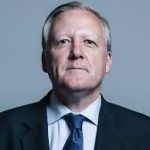
  • Kevan Jones – 2022 Speech on NATO and International Security

    Kevan Jones – 2022 Speech on NATO and International Security

    The speech made by Kevan Jones, the Labour MP for North Durham, in the House of Commons on 19 May 2022.

    I begin by thanking the members of our armed forces—the men and women who work 24 hours a day, 365 days a year, to keep us safe. I also put on the record my thanks to our NATO partners and the men and women of their armed forces. Today, however, our thoughts have to be with the people of Ukraine and the brave members of their armed forces, who are fighting Russian aggression in their homeland.

    We are at a dangerous and pivotal point in Europe’s history since the second world war. The attack going on in Ukraine is not just about contesting territory; it is about—more dangerously—undermining the rules-based order that we live with and have come to accept. It came out of the dark days and destruction of the second world war, and Russia is making a fundamental attack on that rules-based order, on the values of democratic governance, the rule of law and freedom of speech—things that we all take for granted.

    Occasionally, we should all take a step back to think about the privileges that we have in this country. I sometimes get concerned that some populist agendas these days attack alternative opinions because they do not agree with them. That is the beauty of democracy, that we can have that disagreement. It does not make those people wrong; it makes the point that we are allowed to have those different opinions in our democracy. Do not shout people down, but listen and argue. We do not want to reach the point where we have just one narrative, as there is in Russia, which is state controlled.

    There has been a lot of talk about increases in defence expenditure, but one of the downsides of the invasion has been the lovely armies of armchair generals—including some on my own Defence Committee—coming up with instant solutions for what should be done. I accept the point about increased defence expenditure, although I would not argue for it yet; we need a sombre look at the lessons of Ukraine. The integrated review was right in its analysis, but the Government will have to admit that they need to update it at some point, and that will have to be done in a thoughtful and fact-based way.

    I am sorry that the relevant Minister is not in his place, but I want to make the point that we must ensure that the Treasury pays for our support for the Ukrainian armed forces. It should not come out of the defence budget, which would limit what we can do. That message should be given loud and clear from across the House to the Treasury: the money has to come out of the special reserve and not out of the defence budget.

    The Defence Secretary mentioned the NATO Parliamentary Assembly. I have the privilege of being the deputy leader of our delegation to NATO. Last week, along with the hon. Member for Wolverhampton South West (Stuart Anderson) and the leader of the delegation, the right hon. Member for Elmet and Rothwell (Alec Shelbrooke), we visited Latvia and Estonia. If one clear message is coming from there, it is that they now consider themselves to be on the frontline. They are small former Soviet republics, which have been referred to as the “canary in the coalmine” given the hybrid attacks that have taken place over the past few years. Clear in their minds, however, is the threat of invasion from Russia.

    That leads to some questions for NATO’s Madrid summit. The Latvians have always been supporters of the enhanced forward presence—since 2016—and we had the honour of visiting the EFP group in Latvia. I give credit to all those nine nations, as well as to our forces in Estonia, but I think that the tripwire idea and its reinforcement need to be revisited because of the events in Ukraine. Looking across at events in Bucha and other Ukrainian cities it is unthinkable for the Latvians and Estonians that they should be invaded. Clearly, as the Latvian Deputy Prime Minister and Defence Minister said to us, there is no space in geopolitics but enemies will occupy it. We had a similar message from the secretary-general of the Ministry of Foreign Affairs in Estonia when he said:

    “Estonians don’t want to be liberated.”

    I think we need to take that on board.

    What needs to happen in Madrid, certainly if we get Finland and Sweden applying to join NATO—and I welcome that—is that we come up with a new Baltic security pact. We are playing a very important role in Estonia, but we need to think about how that happens. We will need to have a permanent presence not just in the Baltic states, but across the eastern flank of NATO. I think the idea of rotating troops through is one that has served us well until now, but it certainly does not do so now, after the invasion of Ukraine.

    One key thing that came out of our visit last week is that NATO needs to be united in our response to Putin’s aggression. That is not just through the help and support that we are providing for the people and armed forces in Ukraine; we must be united against destabilisation, cyber, the refugee crisis—the weaponisation of refugees—and the disinformation that takes place. That is not going to be done without investment and, I have to say, a certain amount of pain—this is certainly not going to be free. That will put pressure on all NATO nations, and not just on defence budgets and how we refocus them; it will put pressure on our populations. I give credit to both Latvia and Estonia, which have stepped up to the mark in supporting the efforts in Ukraine.

    I will finish with a quote, which struck me, from Kristi Raik, the director of the Estonian Foreign Policy Institute, who said that “freedom is priceless”. Latvia and Estonia are countries on the border with Russia, and those words from Kristi Raik mean to me that those of us in countries that have the geographical advantage of being further away need to ensure that we fight for the core values we are defending against Russia in Ukraine—freedom, democracy, freedom of speech and the rules-based order that we all live by. They are worth fighting for; they are priceless, and we must defend them. That is what we have to continue to do.